Qabus-nama (A Mirror for Princes) · Companion Guide
卡布斯教诲录
1082 年里海岸边的砖塔里,一个老国王把一辈子拆成四十四章,写给王位继承人的处世清单
Opening: A List for a Prince
A slim book that opens with how to bathe, how to judge a horse, how to play chess, and works its way up to how to rule, how to wage war, how to be remembered after death. The year is 1082, on the Persian plateau. The old king Unsur al-Ma'ali calls himself aging, and sets down, one by one, everything he has learned about how to live, for his son Gilanshah — at that point still a young man waiting to inherit the throne.
What Kind of Book This Is
The book's Persian title is literally Qabus-nama, a manual of instruction written in the late eleventh century by a member of the Ziyarid dynasty for his heir. Western scholarship knows it as A Mirror for Princes. It is not a novel — there is no protagonist, no rising or falling action. It is a book of admonitions arranged as a list: a preface followed by forty-four chapters, one subject per chapter, breaking the education of a king down into everyday skills. In the Persian and Islamic world it was later quoted again and again by the poet Sanai, the historian Nasir Khusraw, and the poet Jami, and has been called a compendium of Islamic philosophy and moral maxims, even an encyclopedia of Islamic civilization. The most widely read Chinese edition appears in the Commercial Press series of Chinese translations of world classics, and readers there often call it the Persian counterpart to the Family Instructions for the Yan Clan.
People and World
Only two names run through the whole book. One is the narrator — the old king Unsur al-Ma'ali, Kai Ka'us, a member of the Ziyarid dynasty, writing in his old age from a brick tower on the southern shore of the Caspian Sea. The other is the recipient — his son Gilanshah, heir to the throne, the one every line of advice in all forty-four chapters is addressed to. There is no other protagonist, no antagonist, no hero's journey. Gilanshah's role is simply to be the reader.
The setting is the northern Iranian plateau in the late eleventh century, along the Caspian shore. Brick towers, carpets, copper ewers, steam baths, the rails and fine horses of the horse market, chessboards and pieces, falcons and leather wrist-guards, orchard channels and pomegranates — this is the shared texture of medieval Persian court life and street life. What the old king wants to teach is not some abstract art of statecraft, but this whole set of concrete, learnable skills.
The Shape of the Book: Five Cuts Through Forty-Four Chapters
Part One: The Preface Sets the Tone
The book opens with a father's letter. The old king calls himself aging and sets down, one by one, his observations on the ways of the world and the principles of conducting affairs, so as to leave behind a good name, and to let you draw full benefit from my affection. One line sets the tone for the whole book — this is not a textbook on kingship, it is a father speaking to his son, terse and warm and patient, feeding a lifetime of skill to the man who will succeed him.
Part Two: On Bathing Etiquette
The first of the forty-four chapters starts with the smallest of manners: how to bathe. A copper ewer, wooden clogs, a soapstone platform — under the vault of the steam bath a man in full bathing dress washes his hands, works up soap, straightens his robe. Even bathing has its rules. It is the first entry on the book's list of life skills: if daily habits are worth this much attention, how much more so is governing a country.
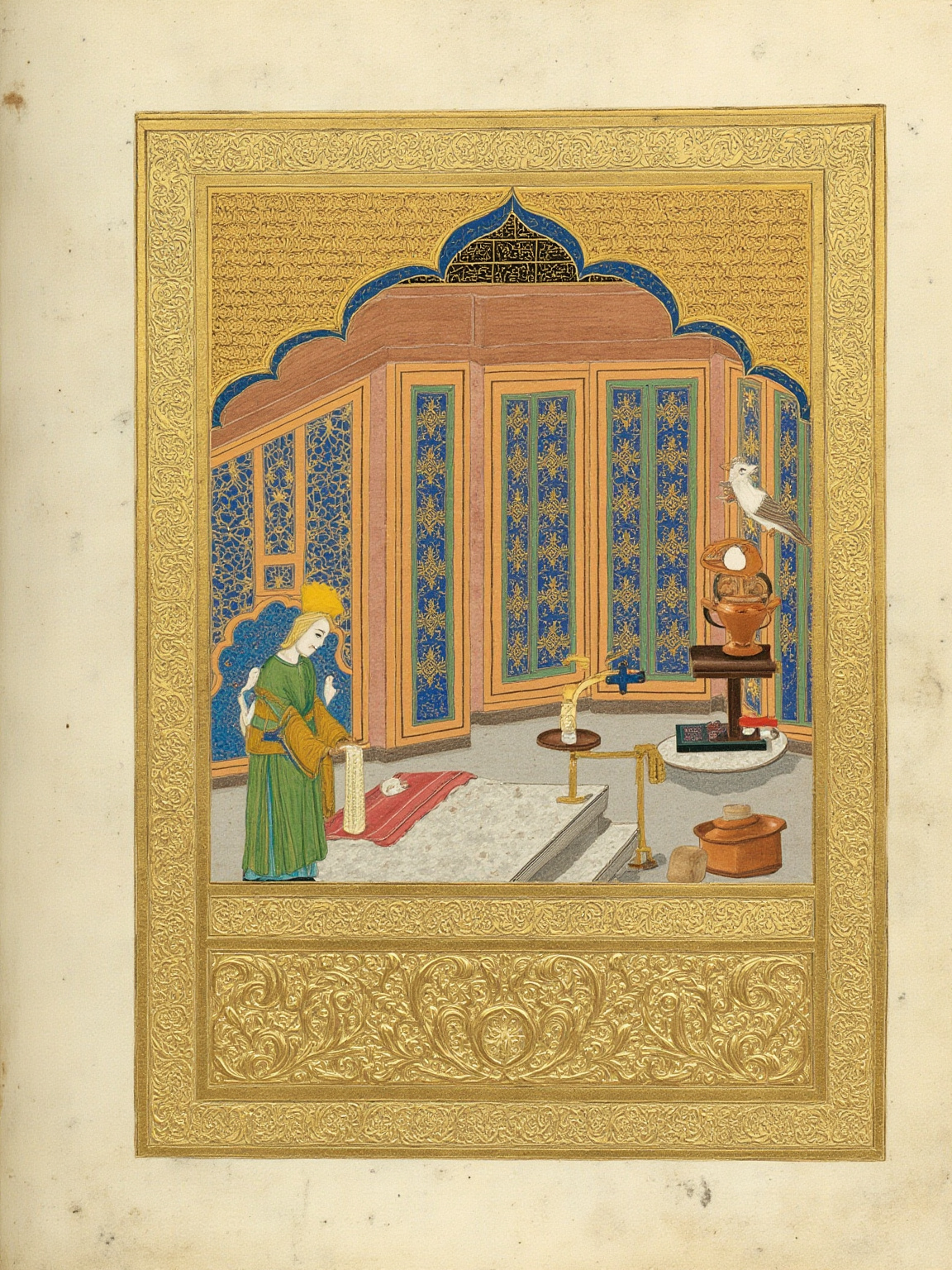
I have recorded, chapter by chapter, my observations upon the affairs of this world and the principles of conduct, so that a fair name may remain of me and you may draw full profit from a father's loving care.
我将世事的评论、办事的原则一条条写下,愿留个美名于身后,也愿你从为父的慈爱之中,受用无穷。
金句 · 绪言
Part Three: On Judging Horses
A few pages on, it is judging horses. At the rail of the horse market a dealer raises a hand to gesture, appraising a fine horse in full harness; outside the rail no one is haggling, there is only the eye and the gesture. A prince needs to know horses — this is basic training for an heir to the throne, and it is also one of the ways the book grounds the abstract education of a king in a concrete skill. Can you read a dynasty's future off a horse's teeth?
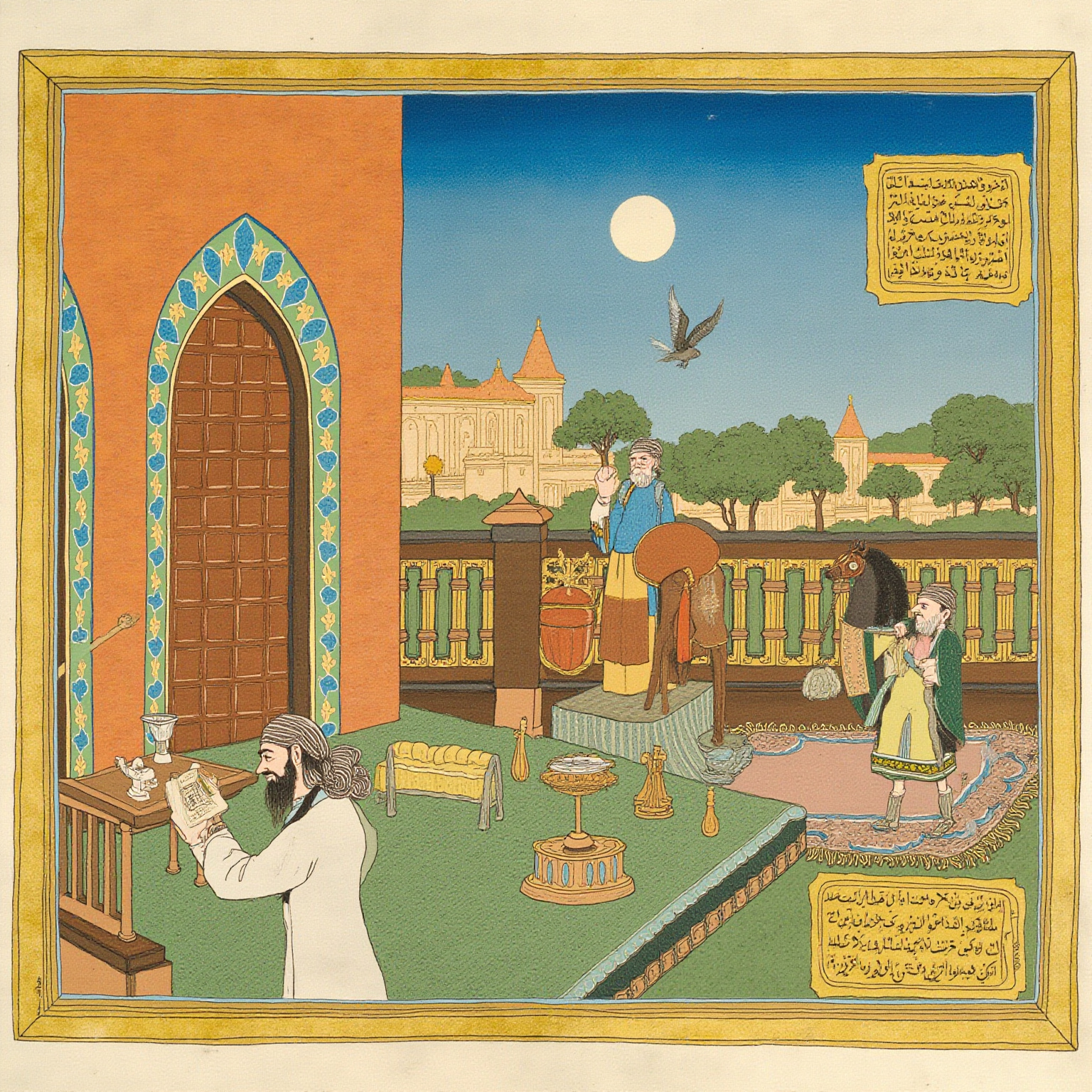
A prince who cannot read the points of a horse cannot read the face of a kingdom.
一国之君若不识马,便也读不懂一国之相。
金句 · 相马章
Part Four: On Playing Chess
Turn again, and it is chess. A board is laid out on the carpet, two players seated across from each other — the older one holds a piece without setting it down, lost in thought; the younger leans in, hand reaching, the piece about to land. The two mirror each other, like the same man's face at two different ages. The board stands for the court, and every move stands for a decision. The old king reasons through chess: knowing when to advance and when to hold back, patience, seeing three moves ahead — these are the skills of a king as much as of a chess player.
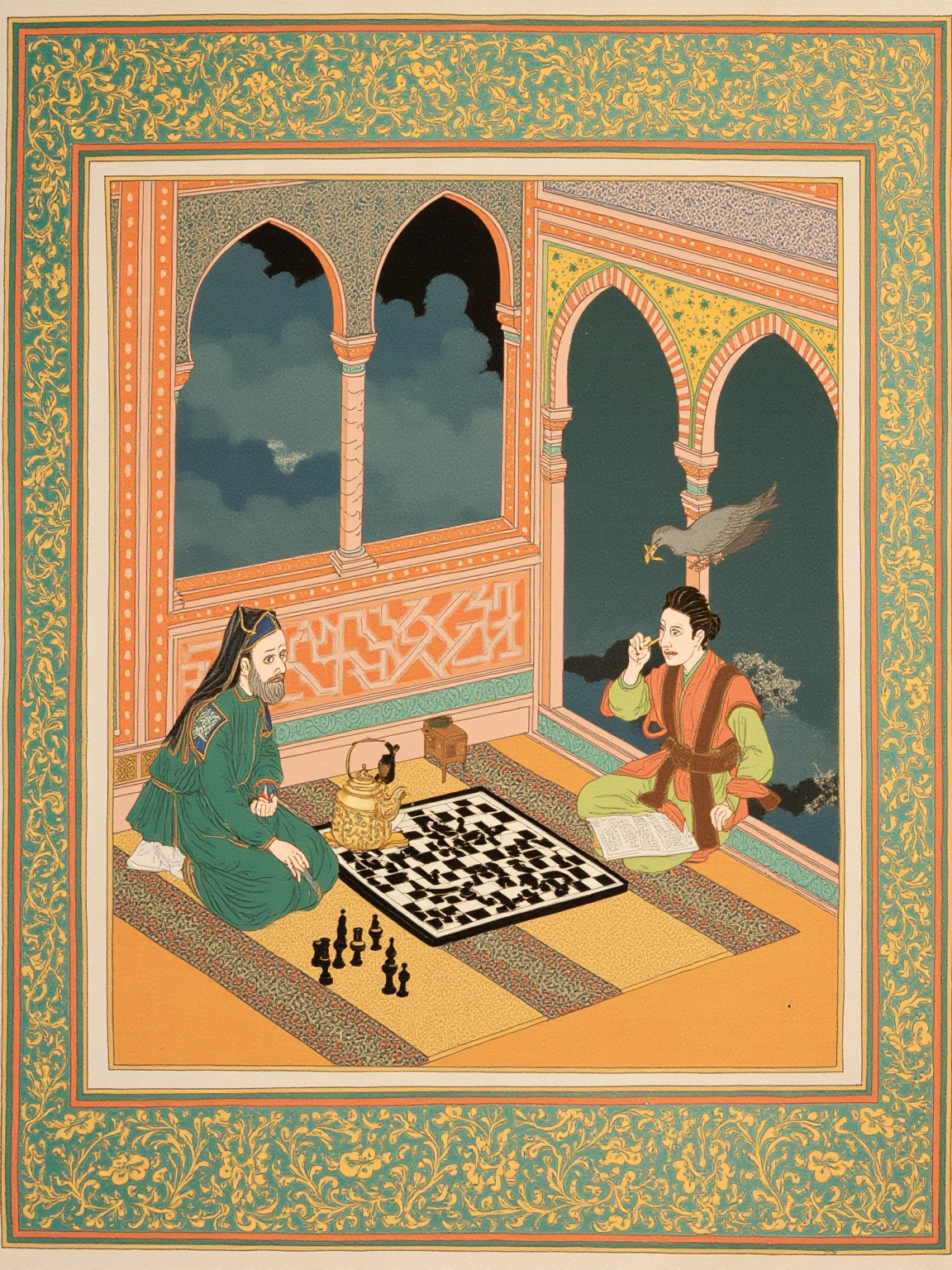
The board is a court, the piece a decision; learn to advance with patience and retreat without shame.
棋盘便是官场,每一子皆为决断;须知进须有耐,退亦不辱。
金句 · 下棋章
Part Five: On Receiving Guests
The chapter on receiving guests pulls the mood back from tension into warmth. A white cloth is spread on a low table, set with a plate of pomegranates and a jug of water; host and guest sit facing each other, talking in low voices; a young attendant leans in with a tray, head bowed, offering tea. How a prince receives a guest can carry an entire ethics of living — there are different kinds of guests, ways to serve tea, things to hold back in conversation, uses for silence, and all of it is a discipline. The old king turns courtesy and consideration into a scene you can study and learn from.
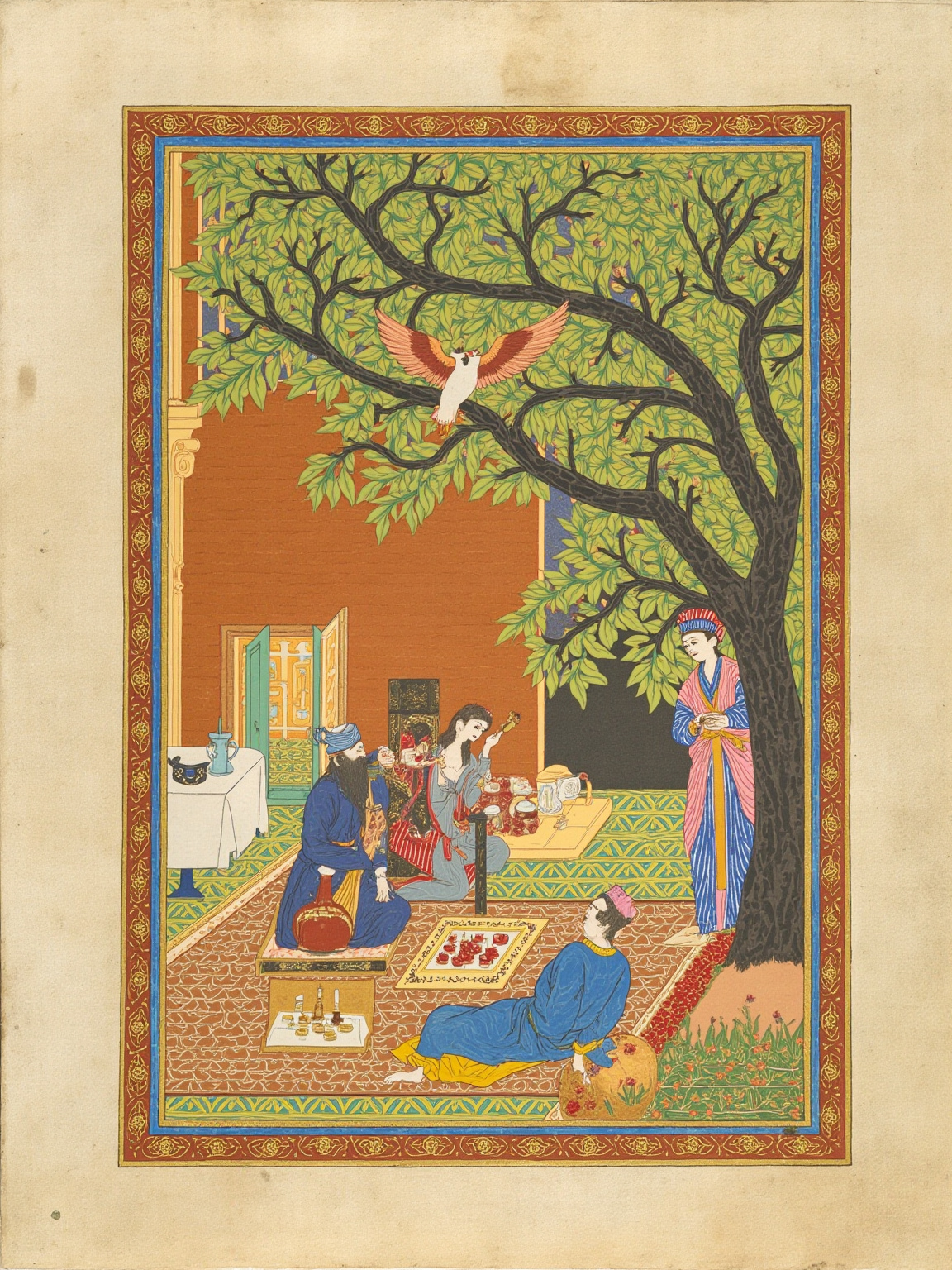
Hospitality is a mirror: the host's heart is shown in the cup he pours and the silence he keeps.
待客即是一面镜子,主人的心,全在那盏茶与那一段沉默之中。
金句 · 待客章
Part Six: On Managing Money
A steward opens the ledger and works the counting beads, an inkwell and a reed pen laid out in front of him — this is the close-up view of the chapter on managing money. A prince has to know how to run a household. Clear accounts, income and spending kept in balance, hard work, thrift, earning your own keep — recited as slogans, these are just moral platitudes; set against a ledger, counting beads, and an inkwell, they become a skill you can actually learn. The foundation of a nation's finances is whether one man can manage his own small household.
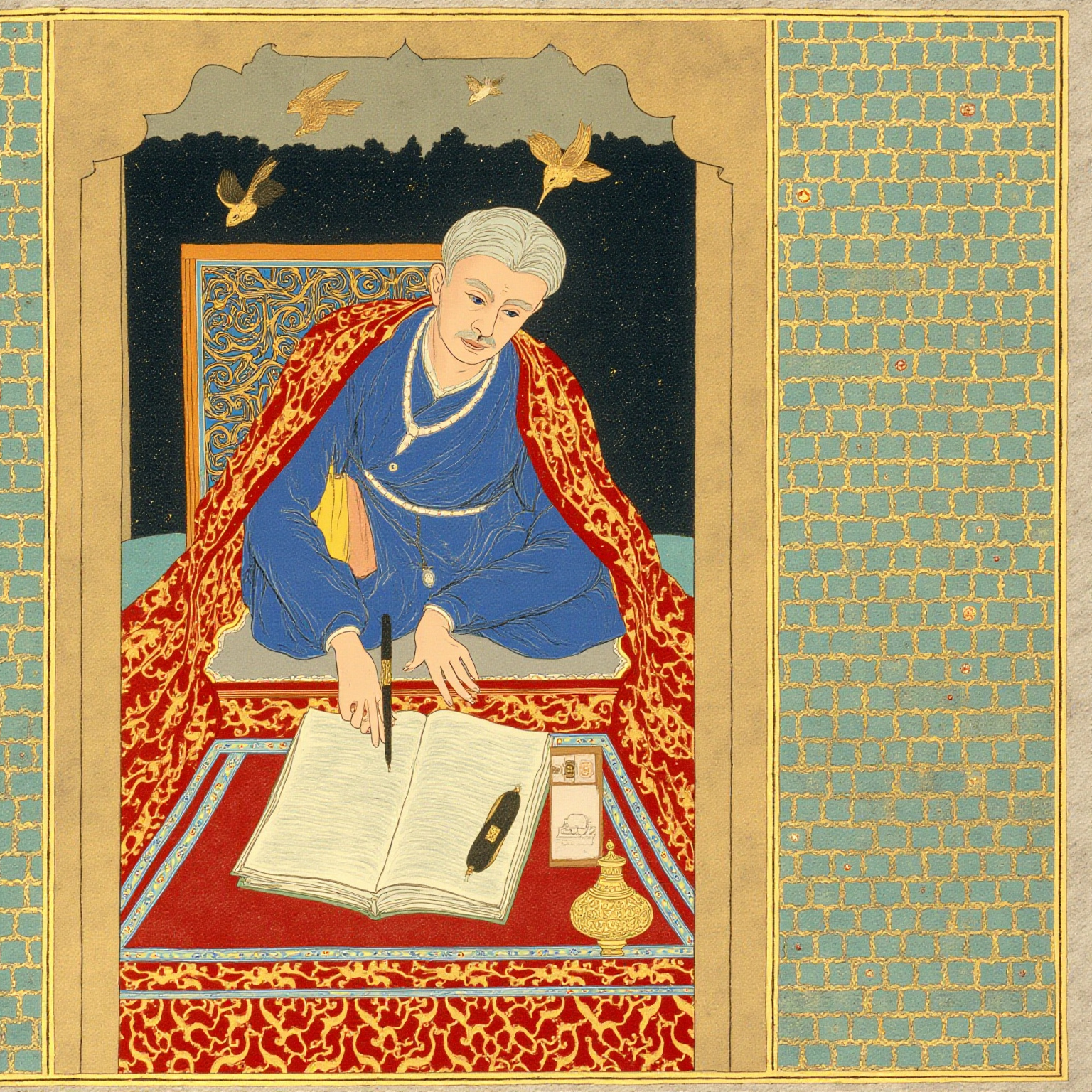
A man who cannot keep his own accounts will never keep a kingdom's trust.
一个人若理不好自家的账目,便也承不起一国的托付。
金句 · 理财章
Part Seven: Zooming Out to All Forty-Four Chapters
Bathing, judging horses, chess, receiving guests, managing money — these are only five chapters picked out of forty-four. Turn from one end of the book to the other and the remaining chapters work their way up to ruling a country and commanding an army: doctrine, law, medicine, astronomy, geography, history, prosody, plus trade, farming, and craft work, down to the skills of a scribe, a judge, a minister, a vizier, a general, a king. One list, and everything a prince needs to know is on it.
One sentence runs through all forty-four chapters like a spine: nobility does not lie in wealth or power, but in devout faith, broad knowledge, deliberate cultivation of character, and good deeds. Wealth and power are only the surface; underneath is a lifetime of discipline. This is the line I most wanted to underline when I finished the book, and it is the one thing the old king really wanted to hand his son through all these pages.
Theme and Craft
What makes this book remarkable is its form. It breaks the education of a king into forty-four learnable skills — from bathing to statecraft, from judging horses to commanding troops — and every chapter can be read and used on its own. Nothing else in eleventh-century Persian didactic prose is built quite this way. Later readers have called it a mirror for princes in list form, meaning: a king's abilities are not handed down from heaven, they are learned one by one.
Rarer still is the voice. Argument is threaded with stories and verse maxims, the reasoning carried inside the writing rather than stated flat. An old king talking to his son — not lecturing, but reading out every wrong turn he has taken; not ordering, but saying, listen to me. That warmth keeps a book of admonitions from ever sounding like one. It reads like an elder reciting, one by one, all the wrong turns of his own life.
For a reader today, it offers an ethic of practicality we rarely see anymore: the skills of daily life and the art of governing were never two different things. Knowing how to bathe properly, judge a horse, play a game of chess, receive a guest well, keep a clean ledger — stack enough of these skills together and you get a person capable of holding things together.
Why Read the Original
A companion guide like this one can give you a map, not the brick corridor itself. The original has the old king's rambling voice — the unpretentious warmth of a father talking to his son; it has specific bodily gestures — washing hands, working up soap, a piece held without landing, a tray offered with a bowed head; it has verse maxims threaded through the argument, reasoning carried inside the writing instead of stated flat. No list can substitute for that texture. The Chinese edition, translated by Zhang Hui, sits in the Commercial Press series of Chinese translations of world classics. Open it, read it. When you finish, you will have one more skill than you started with.
Forty-four chapters, no protagonist — Gilanshah is the reader. One old king's lifetime, written down as a list, and set on a young man's shoulders.
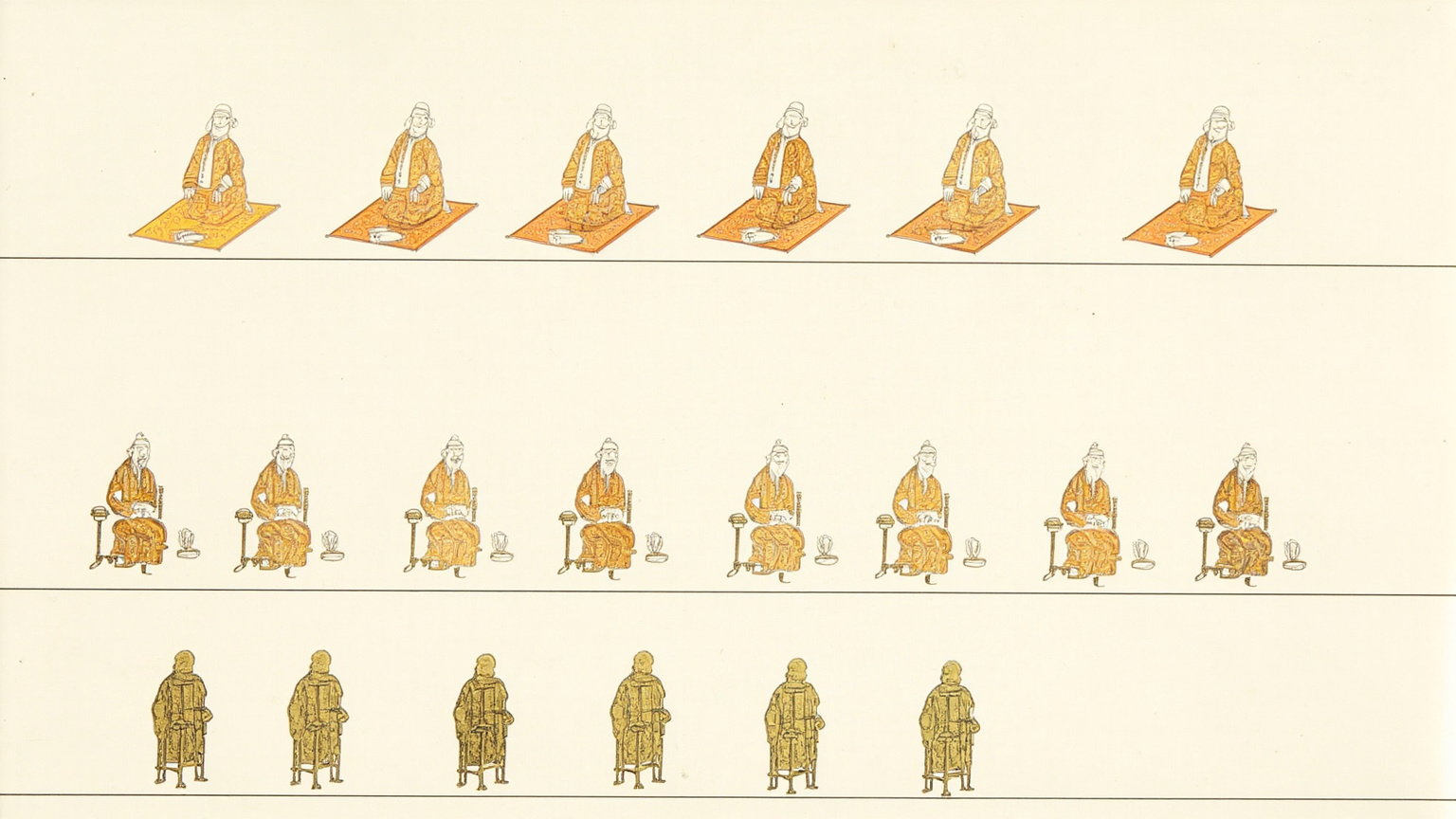
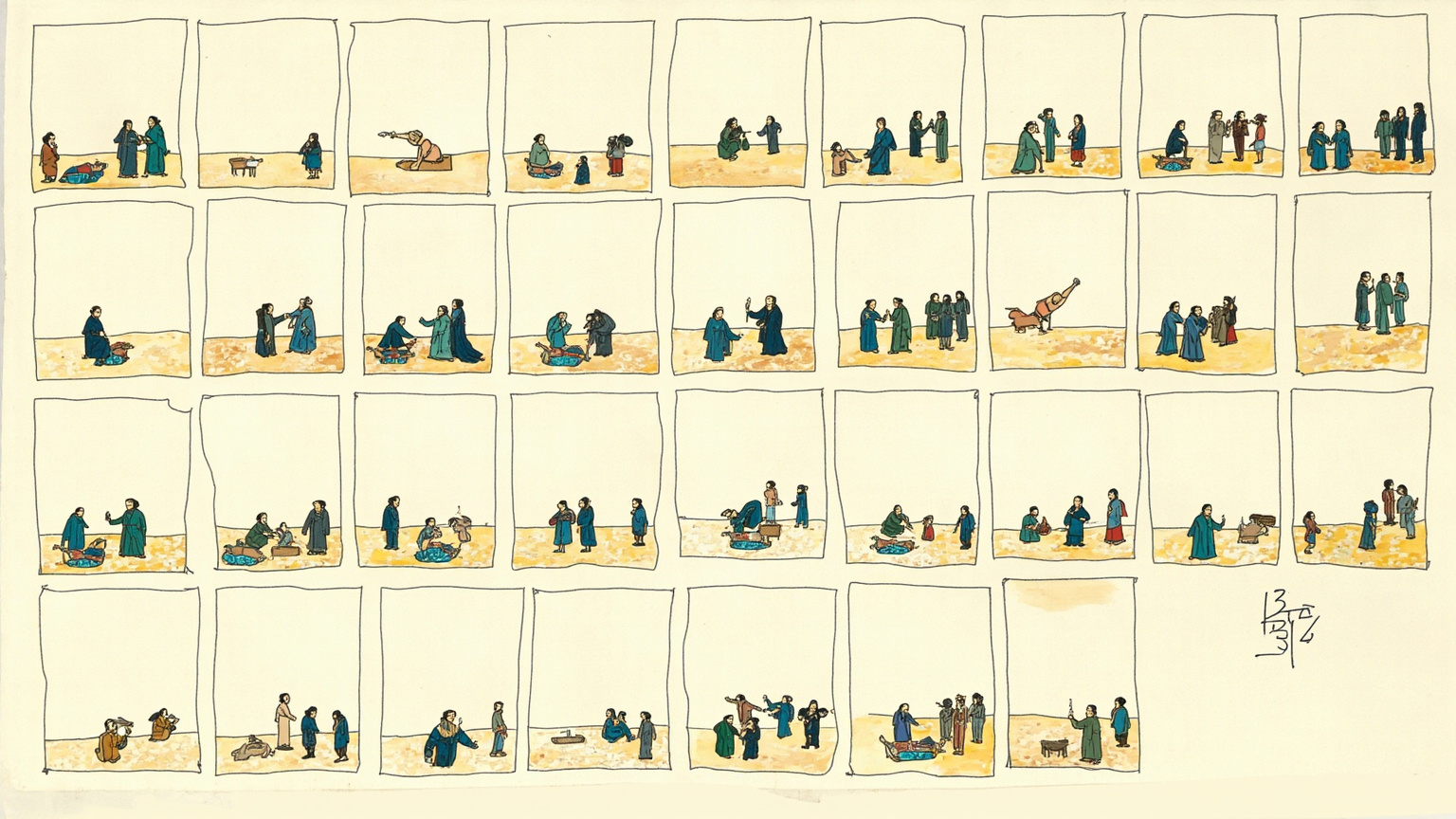
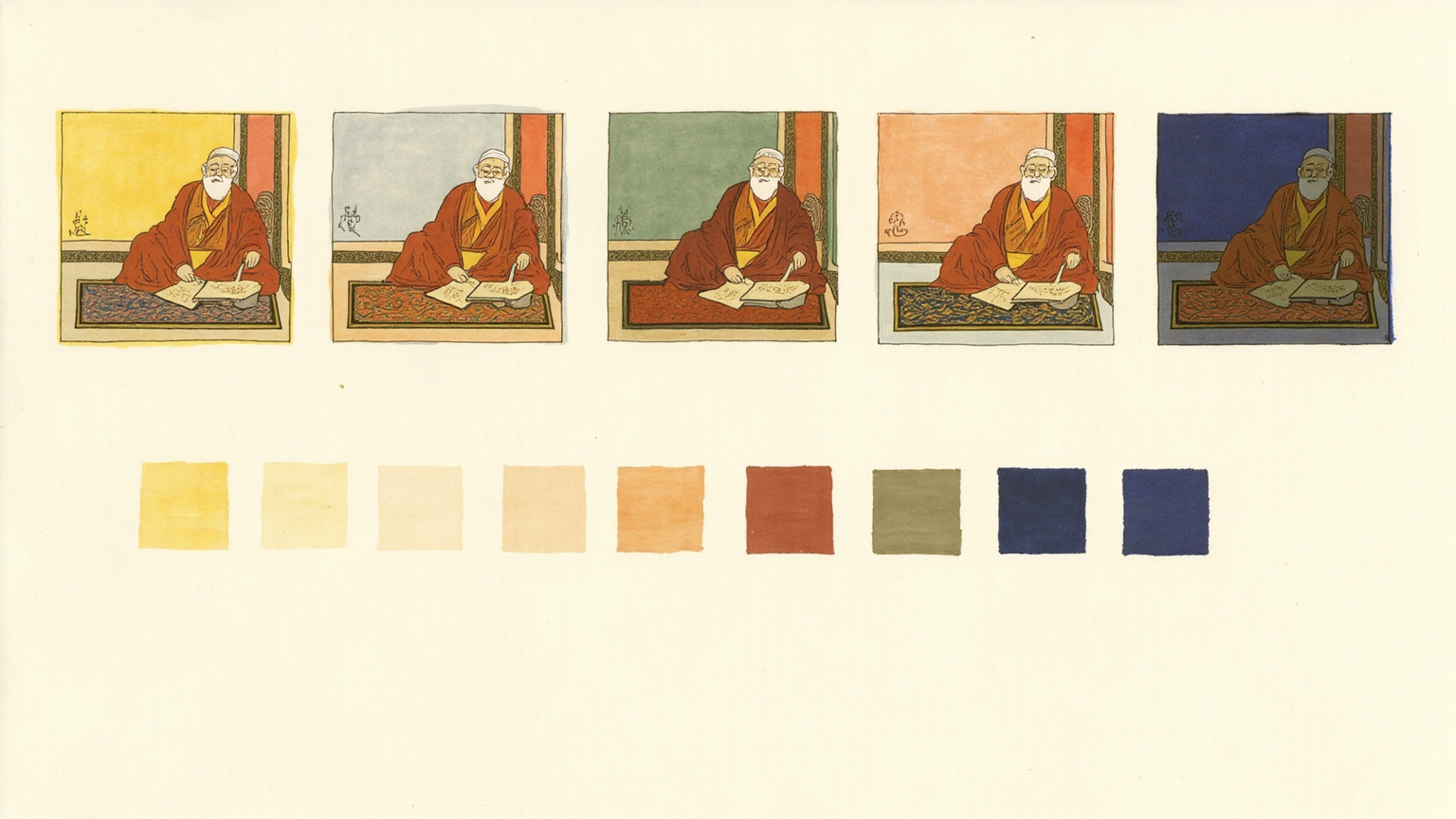
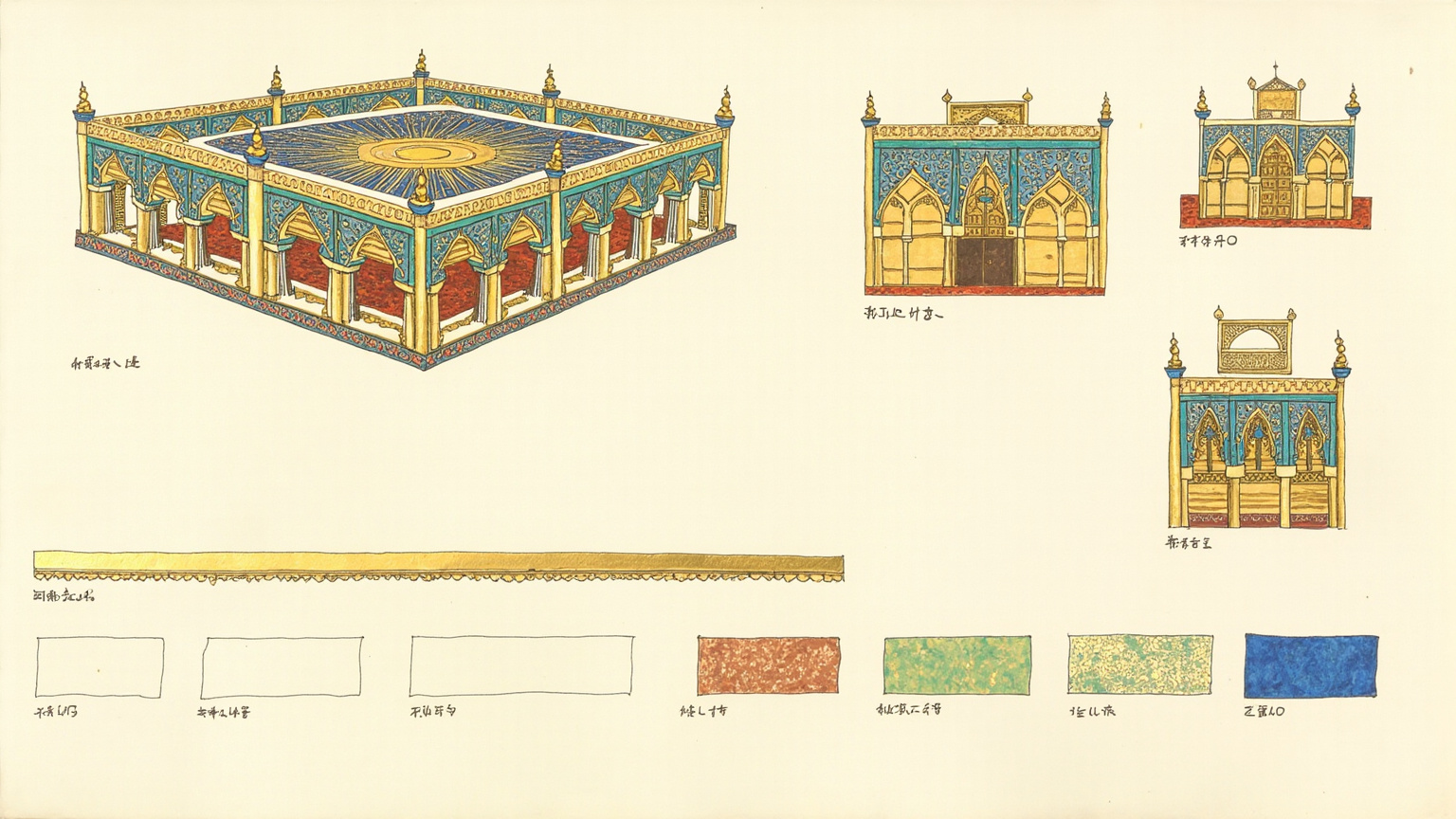
Art Direction4 plates
Before the guide was written, this book got a visual foundation — every illustration you just read grew out of it.