Queen Margot (La Reine Margot) · Companion Guide
玛戈王后
一场用血写就的政治婚礼,新娘在刀锋与情爱之间,为自己抢下最后一点尊严。
The Wedding Where Blood Stained the Bridal Gown
The wedding had barely ended. Margaret had no time to remove her gold-embroidered gown before the Louvre's bells rang — not in celebration, but in murder. On the morning of August 24, 1572, Catholic blades fell upon the Huguenot Protestants. Bodies floated down the Seine, and the St. Bartholomew's Day Massacre began. Margot's husband, Henry of Navarre, was sleeping in the room next door.
This marriage was never about love from the start. Queen Mother Catherine de' Medici married her daughter to the Huguenot leader Henry, hoping to use a wedding canopy to extinguish ten years of religious civil war in France. Margot and Henry each had their own concerns: she carried her old lover, the Duke of Guise, in her heart; he was eager to return to battle. The hands they clasped before the altar were colder than any diplomatic treaty.
Dumas and a "Fake History"
In 1845, Dumas turned this three-hundred-year-old court affair into a novel. The Queen Margot is the first volume of the "Valois Trilogy," followed by The Lady of Monsoreau and The Forty-Five, which complete the story of the same bloodline. This is not a history textbook — Dumas admits in his preface that his material is a "skeleton of history," the flesh is his own invention. The tragic romance between Margot and her lover La Mole is almost entirely literary invention.
But this is precisely why the book is remembered. The French read it to learn about the religious wars; Romantic readers treat it as a love letter; even later films and ballets scrambled to borrow the name. It transformed a murky chapter of court history into a serial drama you can read in one sitting.
Six People on a Chessboard
Catherine de' Medici sits in the deepest chamber of the Louvre, never wielding a blade herself, yet directing where the blades fall. She is the Queen Mother, the true power-broker, using marriages as fire extinguishers and her daughter as sealing wax.
Marguerite was just past twenty when she was married into this political bargain, and she had no intention of quietly playing the piece. She was smart, proud, ambitious, able to walk a narrow path between her mother's spies, her husband's attendants, and her lover's dagger.
Her husband, Henry of Navarre, was just past twenty, practical as a sword left in its sheath. At the wedding he was the groom; in the massacre he was a convert who traded his faith for his life; later he became one of the most praised kings in French history — Henry IV. The novel tells the story of his starting point: from prisoner to king.
The Duke of Guise was Marguerite's old lover, the leader of the Catholic nobility, his ambition written on his brow. La Môle was the Huguenot young man beside Henry, handsome, loyal, later the one Marguerite truly loved. Then there was Charles IX, Marguerite's brother, the young king, weak in body, weaker in will, finally signing under his mother's pressure the word he least wanted to sign. And there was an Italian, Coconnas, a man of Guise, who later became La Môle's blood brother — this friendship between the two is the line in the novel that most defies religious faction.
Plotline One: The wedding is a front, the conspiracy is the real meal
The streets of Paris were packed with Huguenot nobles who had come from outside to attend the wedding. Catherine watched it all from behind a window in the Louvre, her smile gentle. The Duke of Guise and the strategists of the Catholic Church had already begun meeting in secret — what they wanted was not just the wedding, but to gather the Huguenot leaders in one pot, then put on the lid. Marguerite moved through the wedding feast, half-appeasing her husband, half-signaling to her old lover Guise — she thought this marriage was just a political passage, but no sooner had the passage ended than the killing field opened.
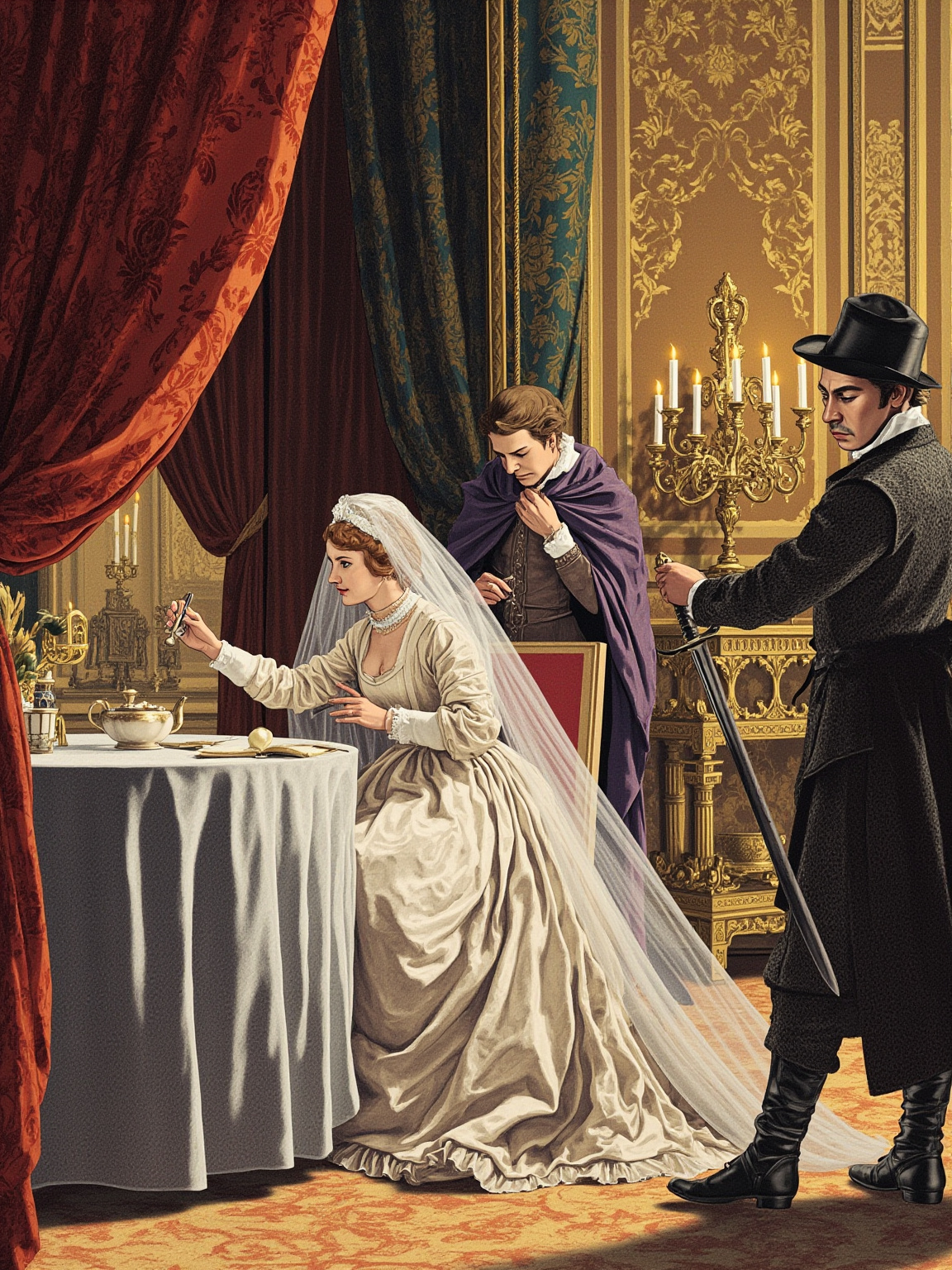
The wedding was a gilded cage, and the nuptial bed a throne from which two strangers watched each other with the eyes of enemies.
婚礼是一座镀金的牢笼,喜床是一把御座,两个陌生人以敌人的目光彼此打量。
金句 · 婚礼章 · 政治之婚
The St. Bartholomew's Day Massacre was not the outbreak of a conspiracy; it was the netting of Catherine and Guise's long plotting. When the bells rang, Protestants were dragged from their beds in their sleep, their bodies thrown into the Seine. Henry was blocked in the Louvre with only one way out — to declare he abandoned the Protestant faith. He knelt, converted, his life was saved, but the Huguenot blood splattered on his marriage bed. Marguerite watched her husband's kneeling back, and for the first time understood how large a game her mother was playing.
Plotline Two: Love in the blade's light
In the chaos of the massacre, a young man covered in blood was carried into Marguerite's room. He was La Môle, the Huguenot attendant beside Henry, stabbed in the chest, barely alive. Marguerite could have handed him over — to her mother's people, as if she had never seen him. Instead she bandaged the wound with her own hands and hid him deep in her chambers. From that night on, she had a true lover besides her husband, and outside the chess game, something she had chosen for herself.
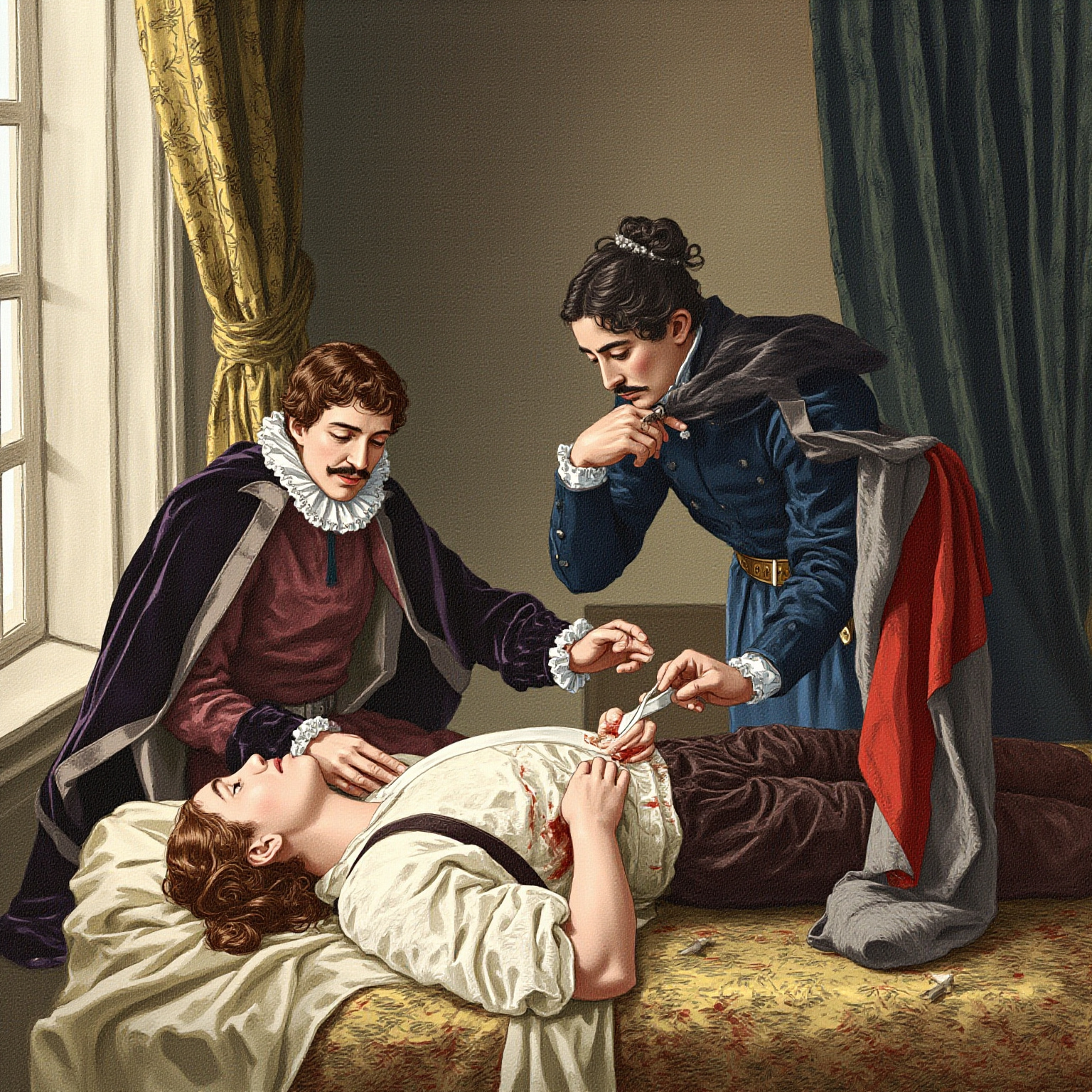
She had but to stretch out her hand to give him up, and she chose instead to bind the bleeding wound with her own veil.
她只消伸一伸手,就能把他交出去;她却亲手用自己的面纱,裹住了那道还在流血的伤口。
金句 · 圣巴托罗缪之夜 · 玛戈救下拉莫尔
Henry is under house arrest in the Louvre and appears to have accepted his fate. After La Mole recovers from his wounds, he secretly meets with another of Henry's friends, Coconnas — these two men who should have been enemies become brothers in a midnight wine cellar. Coconnas is a Catholic, a close confidant of the Guise, yet he's willing to risk having his home raided for a Huguenot youth. This kind of loyalty that crosses religious lines is the moment that makes the reader sit up in their chair.
They begin planning Henry's escape. Route, manpower, the waiting ship — each element is worked out. Margot covers for them at court, passing messages to her husband, conveying signals to her lover. But Catherine's spies are more numerous than she realizes — Catherine also has someone called René around her, a specialist in perfumes and poisons, and every suspicious smell at court passes through his hands first. The conspiracy is smelled out before it even takes shape.
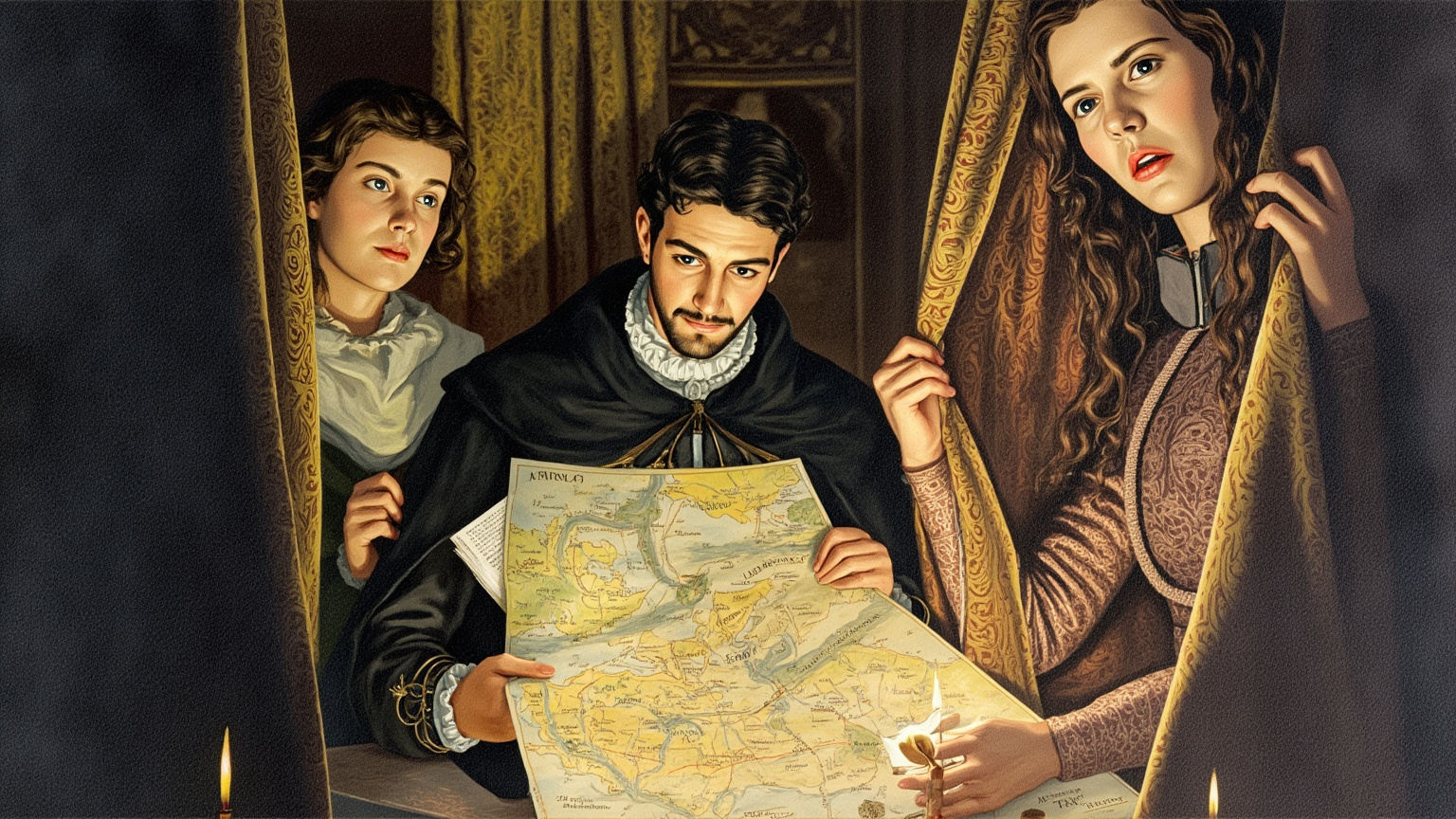
Two men who should have crossed swords sat instead in a cellar, pledging brotherhood over the same cup.
两个本该拔剑相向的人,在酒窖的暗处举起了同一只酒杯,以兄弟相称。
金句 · 密谋章 · 拉莫尔与科科纳结义
Plotline Three: Exposure and Execution
The plot is discovered. La Mole and Coconnas are arrested during a secret meeting, and the letters, weapons, and escape route found on them implicate Margot, Henry, even Charles IX. This time Catherine leaves her daughter no room to maneuver — she needs two heads to warn everyone else who might still think of rebellion. Margot kneels before her mother begging for mercy, crying so hard her makeup runs, and Catherine says only one thing: before royal power, there is no daughter.
Charles IX is pushed to the throne to sign. He doesn't want to sign. He feels guilty toward his sister, guilty toward his brother-in-law, but he cannot resist his mother's grip. The pen falls, the ink spreads, and the death of La Mole and Coconnas is sealed. In this scene, what Dumas writes most harshly is not the executioner — it's Charles IX's trembling fingers as he signs. A young king's conscience, sold off stroke by stroke.
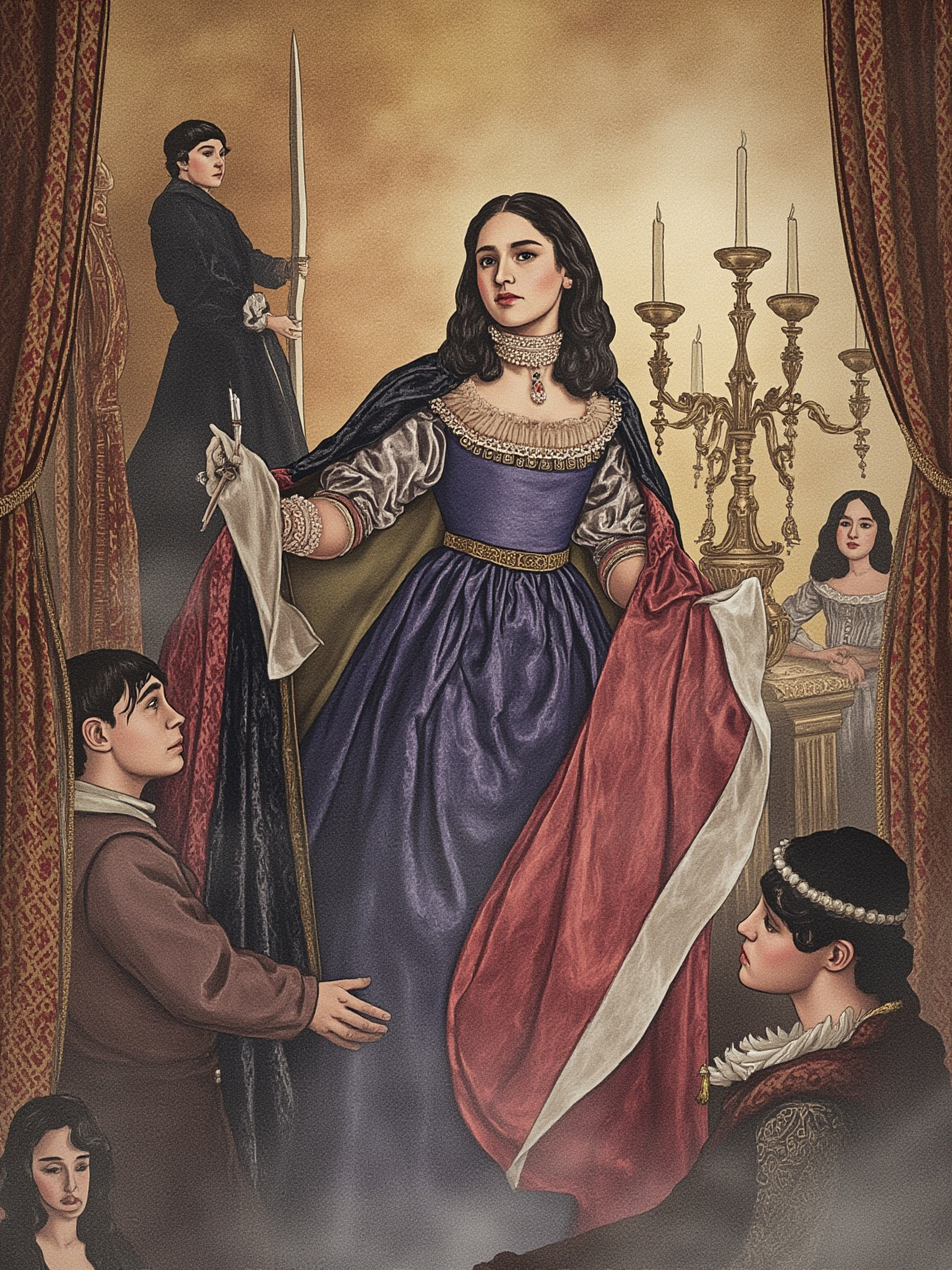
The pen shook in the king's hand; it was not a signature he was tracing, but two lives he was crossing out.
笔在国王手中发抖;他落下的不是一个签名,而是两道被他亲手勾销的性命。
金句 · 死刑章 · 查理九世签字
Plotline Four: Heads and Survival
The day of execution, Paris's square is packed with people. La Mole's final request is to see Margot one last time — refused. Coconnas on the scaffold still jokes with La Mole, saying let's change religions in our next life and be friends again. Two heads fall, and the onlookers of Paris scatter.
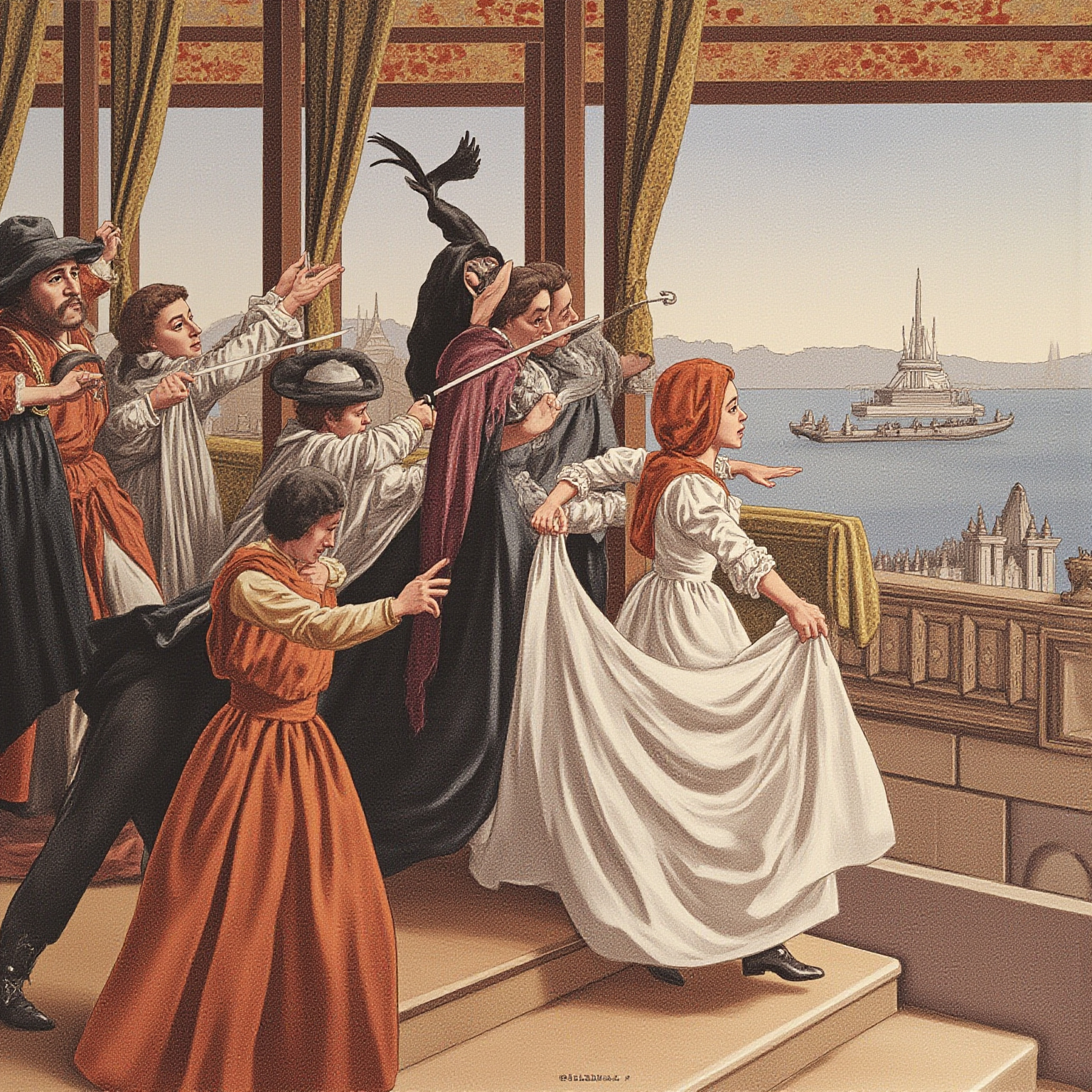
She wrapped his severed head in the folds of her mantle, and the silk drank the blood drop by drop.
她用自己的斗篷裹住那颗被割下的头颅,让血一滴一滴,浸进丝绒的纹理。
金句 · 头颅与活路章 · 玛戈收葬拉莫尔
Margot doesn't hide. She goes to the execution ground in person, wraps La Mole's head in her own cloak, and carries it back to the palace for burial. Dumas writes this passage at length, without any cries or wails — he only describes how the blood on her fingers seeps into the silk threads of the cloak. Loyalty, in this novel, is not a word — it is a cloth soaked through with blood.
La Mole is dead. Henry is still alive. In her grief, Margot does not forget one thing — her husband must return to Navarre, or La Mole's death will have been for nothing. With the last fragment of trust her mother left her, she paves a way for Henry to escape. For several nights Henry pretends to stroll through the palace; after a few mornings, he disappears onto the road south. Years later he returns to Paris with an army, becomes Henry IV, and founds the Bourbon dynasty — only here do all the story's hints finally pay off.
What It's Really Saying
On its surface, La Reine Margot is court intrigue, swords, romance. Dig deeper and it's a book about how people survive inside the machinery of power. Catherine uses her daughter's marriage to douse fires; Margot uses her lover's head to preserve her loyalty; Henry trades humiliation for a future throne — everyone is exchanging what they can spare for a chance not to be crushed.
The situation of women is the layer Dumas writes about with most depth. Margot is no victim, no innocent young girl — she is a political player whose methods are no less than her mother's. She falls in love with La Mole not out of girlish sentiment, but because for the first time, aside from all the political arrangements, she finally owns something she chose herself. This kind of choice, in sixteenth-century French court, is bought with one's life.
Cross-religious friendship is another undercurrent. La Mole is a Huguenot; Coconas is a Catholic, a man of Guise, yet willing to die for him. The novel uses these two men's friendship to refute factional politics — above the faction, there is still one person's loyalty to another. Dumas is a romantic; he believes this loyalty outlasts doctrine.
Why We Still Read It Two Centuries Later
Dumas's gift for the historical novel is turning the few lines of a coup in the history books into a long tracking shot you can run like a film in your head. The Three Musketeers is adventure; The Count of Monte Cristo is revenge; La Reine Margot stuffs love, massacre, and intrigue all into the same wedding's candy box — finish one piece, and inside there's a knife.
The Margot he created is one of the few queens in literary history who doesn't depend on a man to save her. Her tragedy is not being betrayed; it's choosing to dive in anyway — into love, into loyalty, into that sliver of room she can call her own. After finishing this book, you remember one scene: a Paris dawn, the cloak by the guillotine, and the hand beneath the cloak that won't let go.
In Queen Margot, the wedding is candy wrapper — tear it open and there's blood underneath, and the woman swallows both wrapper and blood together, because that's the tiny scrap of dignity she managed to seize for herself in the meat grinder of power.
If you already know the plot, why read the text itself
The commentary gives you a map; the text gives you air. Dumas writes with a nineteenth-century leisure — he will spend an entire chapter on how Margot walks down a corridor, three pages on a servant pouring a glass of wine. These rhythms feel like dead weight when you read fast, but slow down and you taste what the summary cannot deliver: that tension where every second is drawn taut as a bowstring.
And there is something a summary can never give back: smell. On the night of St. Bartholomew, what perfume hung in the Louvre, what color was the earth beneath the guillotine, whether the blood on Margot's cloak was cold or warm as she held La Mole's head — these you can only smell in Dumas's sentences. There is also the wit he buries in his characters' dialogue, three layers of meaning in a single line, which you can never fully unpack without reading the original. The map tells you what happened; the text tells you why those people could not close their eyes.
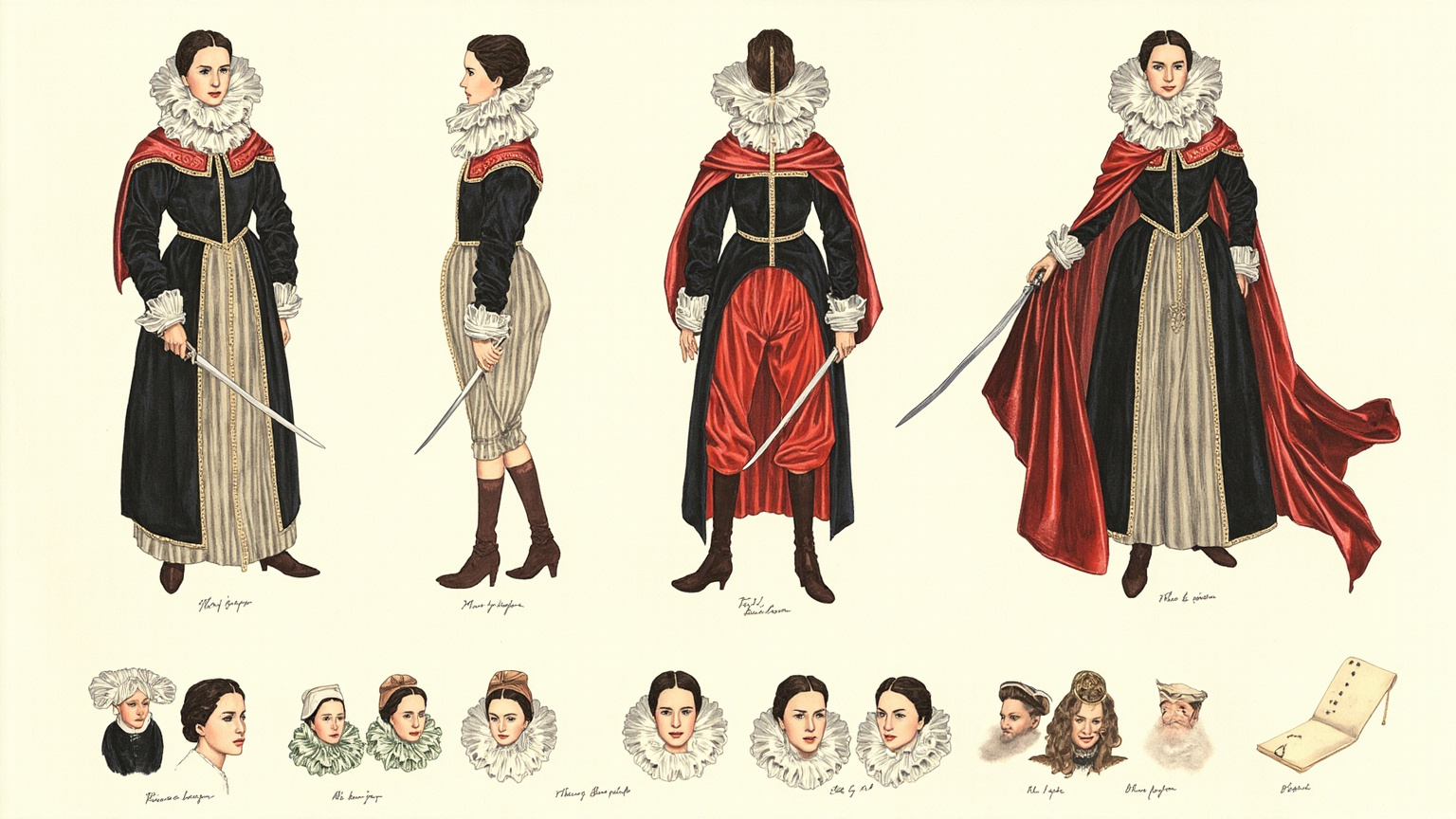
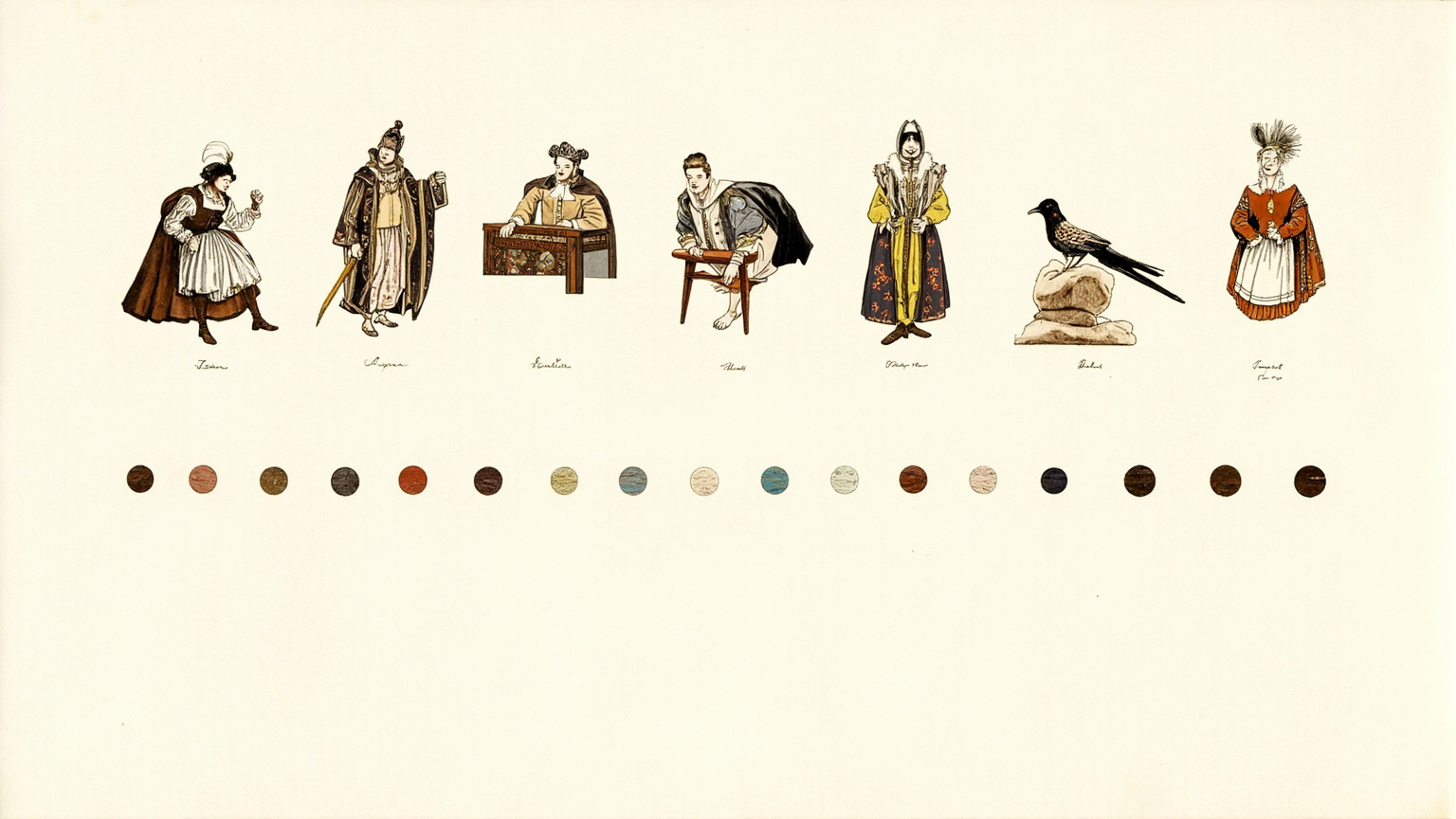
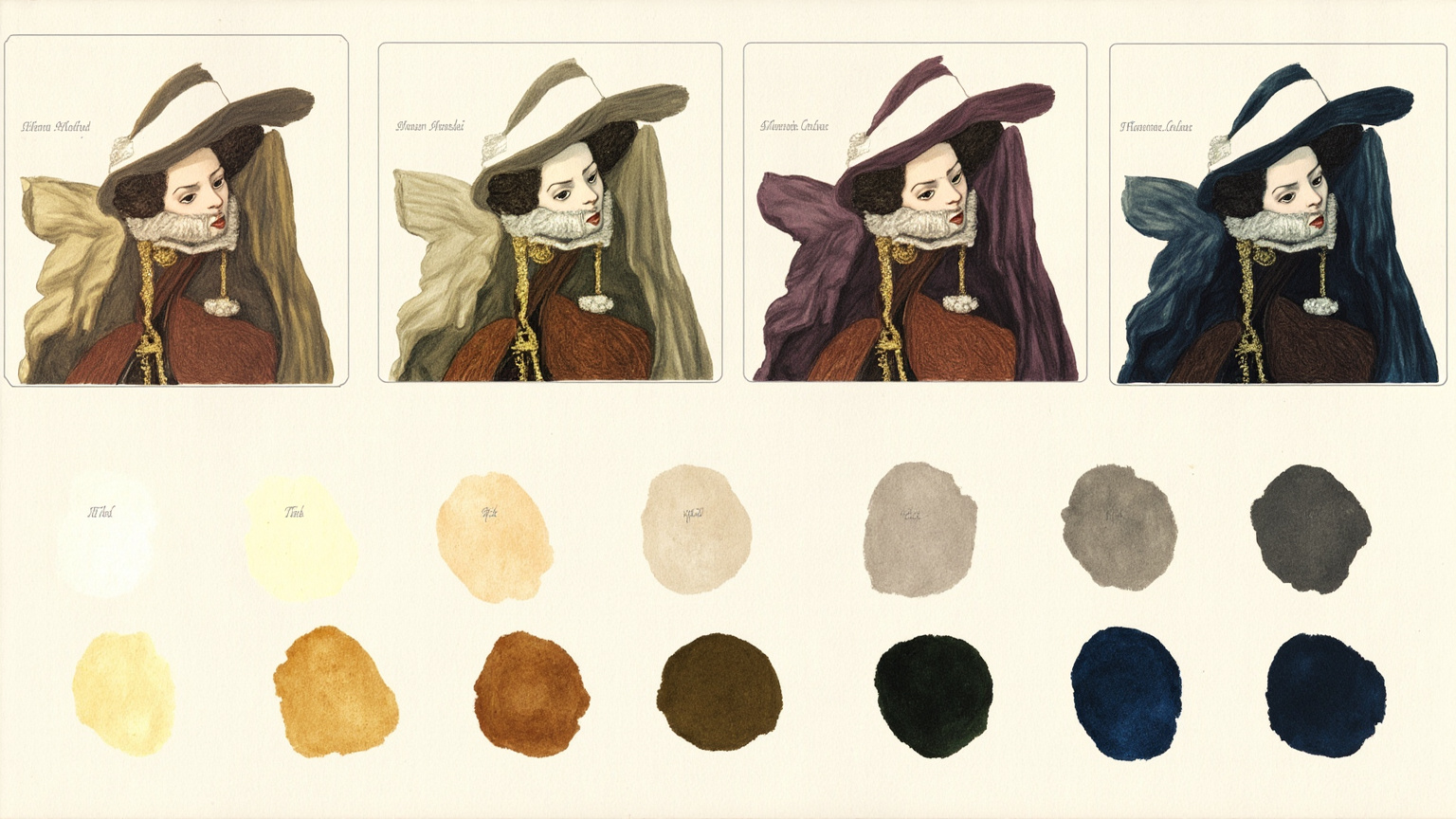
Art Direction4 plates
Before the guide was written, this book got a visual foundation — every illustration you just read grew out of it.