Quincas Borba (Philosopher or Dog?) · Companion Guide
金卡斯·博尔巴
一个外省教师携一笔疯遗产入里约,被体面客厅里的笑容慢慢啃成空镜前的孤家寡人
To begin: a dog, an inheritance, a mad philosophy
Quincas Borba — a mad philosopher — is dead, and on his way out he leaves his entire fortune, along with the dog that shares his name, to Rubião, the disciple who nursed him in the countryside. There is one condition: keep the dog the way you would keep the philosopher himself, alive. Rubião is a provincial schoolteacher, already middle-aged, who has never seen real money in any quantity; he hauls a trunk and a dog into the city and, before he quite understands it, is rich. The dog is named Quincas Borba. The philosopher was named Quincas Borba. One name, hung on a man and a dog alike. The novel can be read under the title Philosopher or Dog? precisely because of this doubling — which one is which, who is whose reincarnation, and Machado keeps you guessing from the first page to the last.
Worth more than the inheritance is the doctrine the philosopher leaves behind: Humanitism. Its core fits in one line — all things are one substance, and to the victor go the potatoes. In plain terms: you eating someone else and someone else eating you are, at bottom, the same event; the loser loses nothing and the winner gains nothing, because everything is only cycling through its forms. It is, in other words, a license for plunder dressed up as philosophy. Win, and you are right — the other person was only potatoes wearing a different shape.
Who is Machado de Assis
Machado de Assis is the greatest novelist nineteenth-century Brazil produced — arguably the greatest Latin America produced — and he never left Rio de Janeiro in his life. He was in his early fifties when he wrote this book, with more than a decade still ahead of him. He built a loose trilogy: the first novel, The Posthumous Memoirs of Brás Cubas, is narrated by a dead man remembering his own life; this book, Quincas Borba, sits in the middle; Dom Casmurro closes it out. Philip Roth once wrote that Machado underlines his funniest moments to mark where the pain is — keep that line close while you read this one.
People and place: Rio de Janeiro in the late 1860s
Rubião is the eye the whole novel sees through. A country schoolteacher, guileless, carrying a worldview borrowed wholesale from the philosopher, never once tested against the city. Rio grinds him down between desire and sophistication in turn, and he ends up mad, crowning himself before a mirror — more on that later.
Cristiano is a Rio operator, forever smiling, forever correct — in Rubião's eyes, the most trustworthy friend he has. In practice, he is a skinner. Sofia, his wife, is beautiful, status-hungry, and writes in the same ledger as her husband, just with a different pen. Between them they move Rubião's money into their own drawer, coin by coin, without the smile ever slipping. The dog, Quincas Borba, kept and fed as though it were the philosopher himself, is the living body of the doctrine that all things are one.
The story is set in a colonial port city — Rio de Janeiro, in the late 1860s, before the empire falls. Hillside streets, wrought-iron balconies, old colonial houses stacked against each other; carriages in the road, a horse-tram, harbor fog. The book really has one setting: the parlor of a respectable household. Silverware, candlesticks, a piano, ledgers, bundles of banknotes — a slaughterhouse wrapped in good manners.
The plot: from rich man to emperor before an empty mirror
Rubião sets out from the small town of Barbacena and arrives in Rio with money and a dog. In the salons he meets the Cristianos — smiles, handshakes, dinner invitations, manners fitted to him as precisely as a tailor's suit. He falls for Sofia and starts living by Humanitism's rule that the victor gets the potatoes: if others can spend, so can he; if others eat him, he'll eat others too. He buys a title, buys a house, throws dinners, and the money runs out of his pocket like wine from a torn skin. The couple's smiles never change — they only keep pulling their chairs closer.
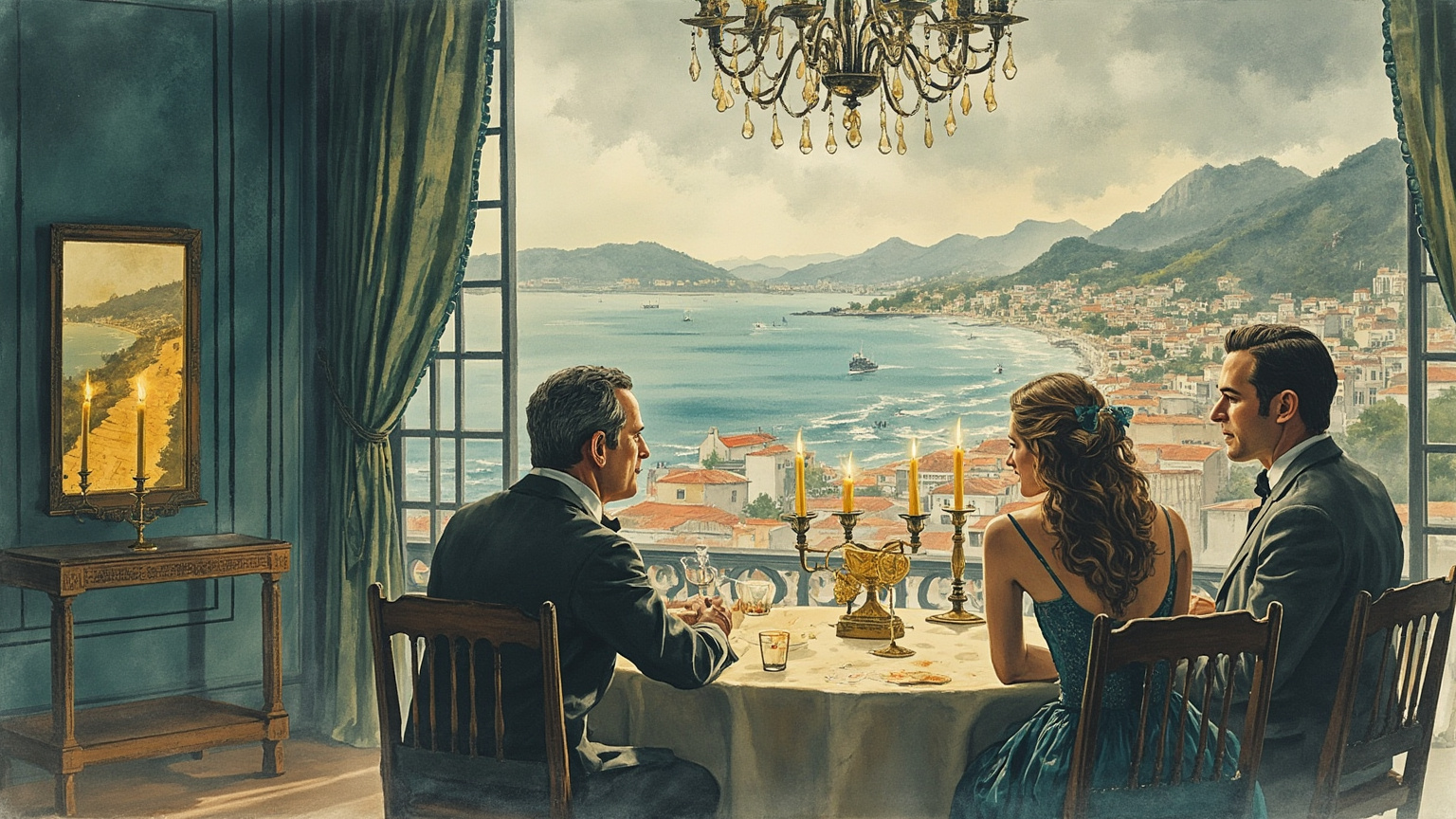
To the victor belong the spoils — that is, the potatoes.
胜者得土豆——败者与胜者原是同一物。
金句 · 第5章 · 人道主义的信条
The couple working in tandem is the coldest stretch in the book. Cristiano handles the smiling, the suggestions, the setups; Sofia handles the sitting close, the conversation, the glances. Every large expense Rubião makes has an invisible thread running back to their pockets. He buys himself a title, buys Sofia gifts, invests in Cristiano's schemes — one entry after another, the numbers in the ledger shrinking while the laughter in the parlor gets louder. Machado writes this stretch in the register of drawing-room comedy, brisk and beautifully spoken — a reader skimming the surface could mistake it for a lively comedy of manners.
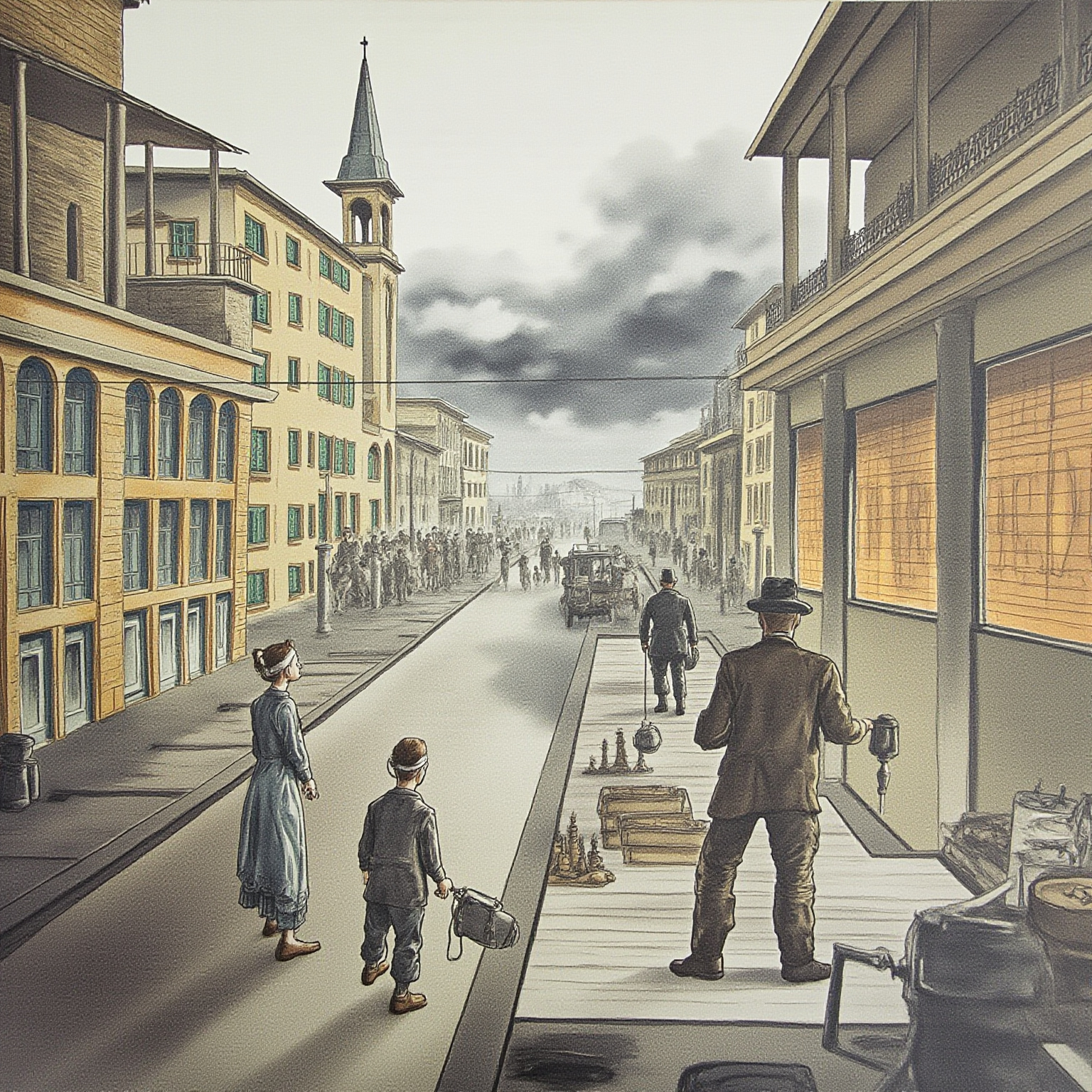
The smile was the same, the eyes were the same; only the word friend began to taste bitter on his tongue.
笑容仍是从前那笑,目光仍是从前那光,唯有「朋友」二字,落进嘴里渐渐发苦。
金句 · 第9章 · 体面的刀
The money starts running out. Rubião keeps up the face of a rich man until he can no longer pay his own servants. Cristiano's smile stays exactly the same; Sofia's gaze stays exactly the same; only the word friend starts to taste bitter in his mouth. The more decorously a process of being hollowed out is written, the more it stings — the brighter the Rio sunlight, the colder the people standing in it. This is Machado's particular gift: he lets comedy slide into desolation on its own, without a single sentimental line.
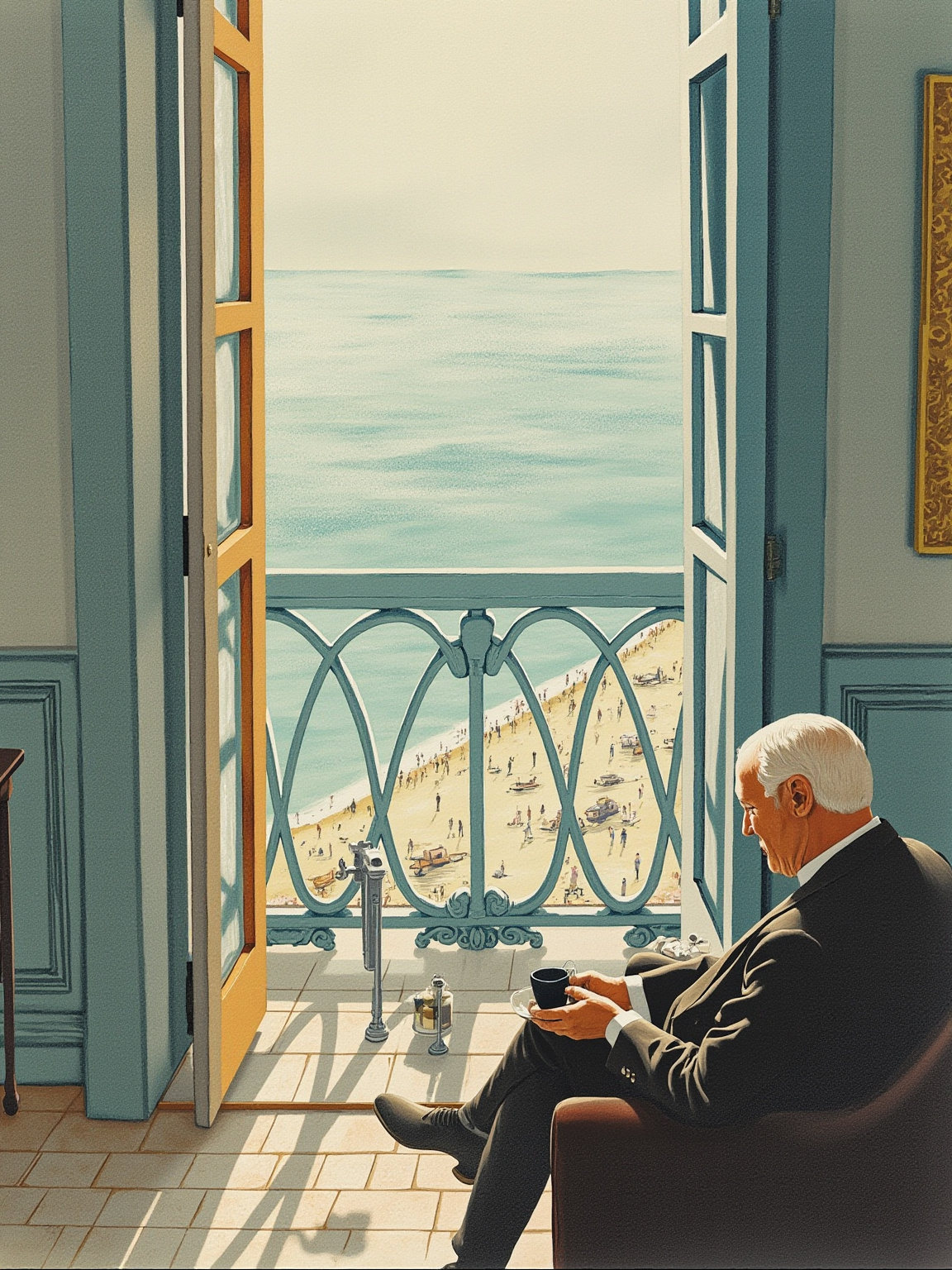
The brighter the light of Rio, the more blinding the process of being stripped clean.
里约的日光越亮,被掏空的过程越刺眼。
金句 · 第11章 · 里约的日光
The finest touch is hidden inside Rubião's own head. Even as he is being eaten alive, he keeps soothing himself with the philosopher's words: I eat them, they eat me — at bottom it's the same thing. Humanitism becomes the painkiller he prescribes himself: grateful for being devoured, because all things are one. The real trick of this absurd philosophy is that it fits next to any act of plunder you care to place beside it, which means it explains nothing at all.
The money is gone entirely. Rubião loses his title, loses his house, and is demoted from honored guest to a man who has to come knocking. He falls from a spendthrift man of means back to a provincial with nothing — the kind of nothing that doesn't even cover the fare home. The face once turned toward him now turns only toward the ledger. Cristiano is still all smiles — the smile simply no longer bothers to pause for him.
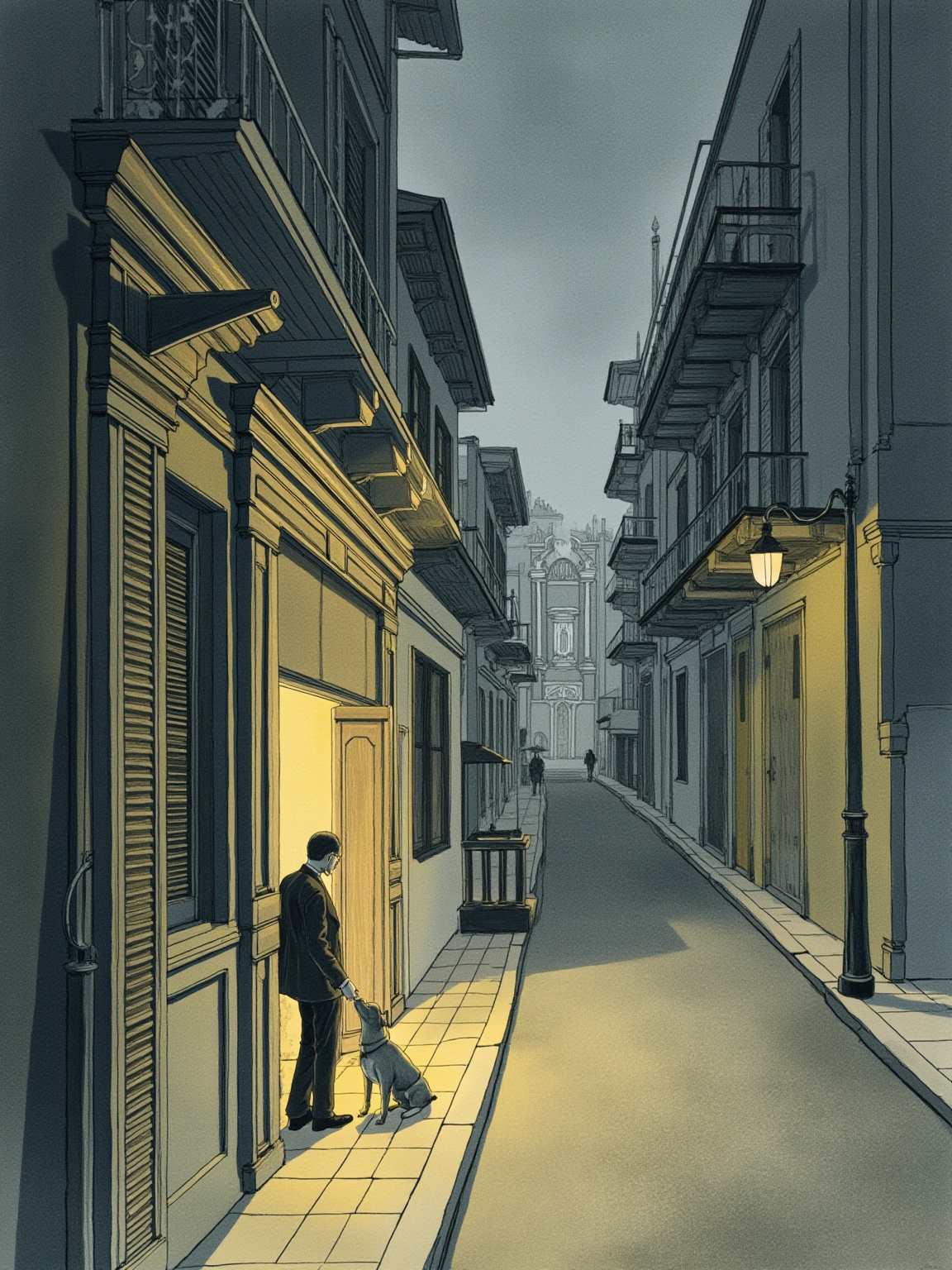
He had been a spendthrift rich man; now he was a provincial man with nothing — not even the fare to go back.
他曾是个挥金如土的富翁;如今是个一无所有的外省人——连回去的车钱都凑不出。
金句 · 第13章 · 空底
Then comes the ending — the hardest passage in the book to read, and its most brilliant. Rubião has gone mad. He shuts himself in a room and crowns himself before an empty mirror. The crown is borrowed, the robe is old, and the mirror shows him only himself. He doesn't shout, doesn't weep; the ceremony still has its manners — and what makes it unbearable is that he genuinely believes he has been crowned. Machado lets the comedy slide all the way to this point without ever taking a hard turn. It is one of the earliest self-coronations before an empty mirror in Latin American fiction, decades ahead of many twentieth-century novels that would use the same device.
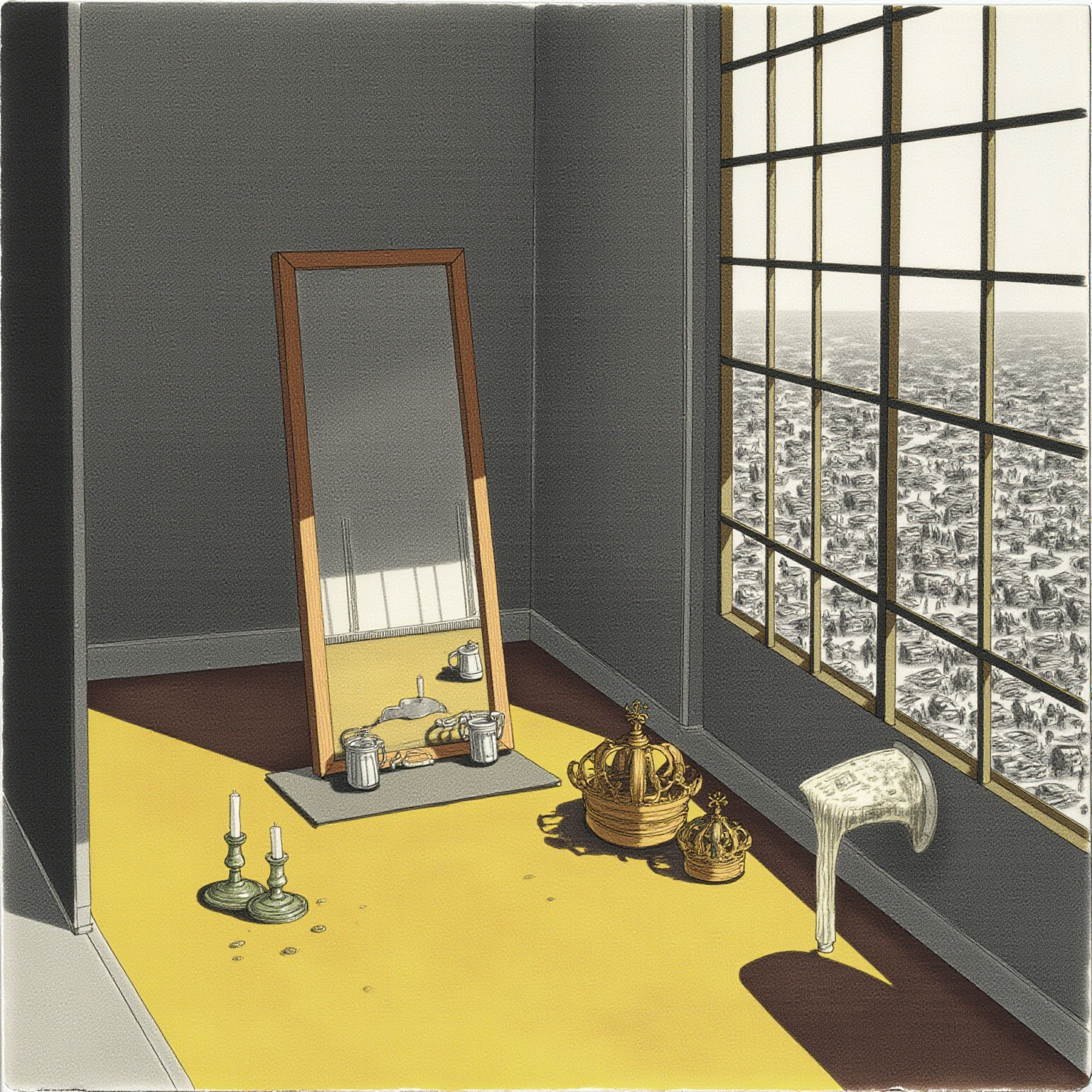
He crowned himself Emperor before a mirror; the crown was borrowed, the coat was old, the ceremony observed every form — and there was no one there but himself.
他对着镜子给自己加冕为帝;王冠是借的,礼服是旧的,礼数一丝不乱——镜中却只他一人。
金句 · 第15章 · 空镜前的加冕
What this book is really about
On the surface it's a comedy of slow butchery set in a Rio parlor; underneath there are three layers. The first: plunder needs no knife or gun. A smile, a dinner invitation, the words dear friend are enough — the more decorous it looks, the colder it is, and decorum itself is the weapon. The second: an absurd philosophy put into practice. Once a doctrine of all things are one and the victor gets the potatoes gets carried to Rio's high society as dinner conversation, it becomes the legal cover for devouring provincials — you were eaten because you lost, and you lost because you deserved to. The third: everyone deceives himself while also seeing straight through it. Rubião knows he is being picked apart, and still consoles himself with the philosopher's words; Cristiano knows he is skinning a man alive, and still seals his conscience shut with the word friendship. It's this third layer that earns Machado the title explorer of the human soul.
Humanitism is a fictional doctrine, but Machado pins it on three real targets: late-nineteenth-century scientism, Social Darwinism, Comtean positivism. High society in Rio at the time loved dressing up its parlors with the newest scientific vocabulary — evolution, positivism, natural law — and Machado grinds those words down into to the victor go the potatoes, letting them show what they really were underneath. He isn't satirizing genuine humanism; he's satirizing the era's habit of using science as parlor decoration. The first time I read this doctrine, I laughed for a long while. Thinking back on it afterward, I couldn't laugh anymore.
Why this book is worth remembering
This is the funniest book in the trilogy written by the greatest novelist nineteenth-century Latin America produced. From a dead man remembering his life in a coffin in the first novel, to a provincial being picked apart in a parlor in this one, to a respectable senator turning out his own affairs before death in the third — the three books grow steadily colder, peeling back the Brazilian Empire's respectability one layer at a time. This one sits in the middle, hinge between the other two, and it's the most absurd of the three — the coronation before the empty mirror is a technique fiction wouldn't fully claim until the twentieth century, and Machado got there decades before most of the writers who would later be credited with inventing it.
Comedy sliding into desolation is Machado's own particular gift — he lets you laugh halfway through before you notice the glass in your hand has gone to ice water.
Why to read the book itself
A guide is a map; the novel is the land. There are things in this book no amount of explaining can replace. The first is rhythm — Machado writes dialogue fast and exact, every line a knife, but the knife draws no visible blood; only reading it line by line yourself will make you feel the cold. The second is the beat at which the word Humanitism keeps returning — treated as fashionable talk in the parlor, as a painkiller in the bedroom, as a farewell benediction before the empty mirror, and it runs at a different temperature every time it appears. The third is the dog named Quincas Borba — present through all of it, silently watching, taken by some as a reincarnation and by others as dead weight; it never speaks, but you will remember it long after you finish the book. One man's madness, two liars' smiles, a dog's silence — the three only stand together in the original.
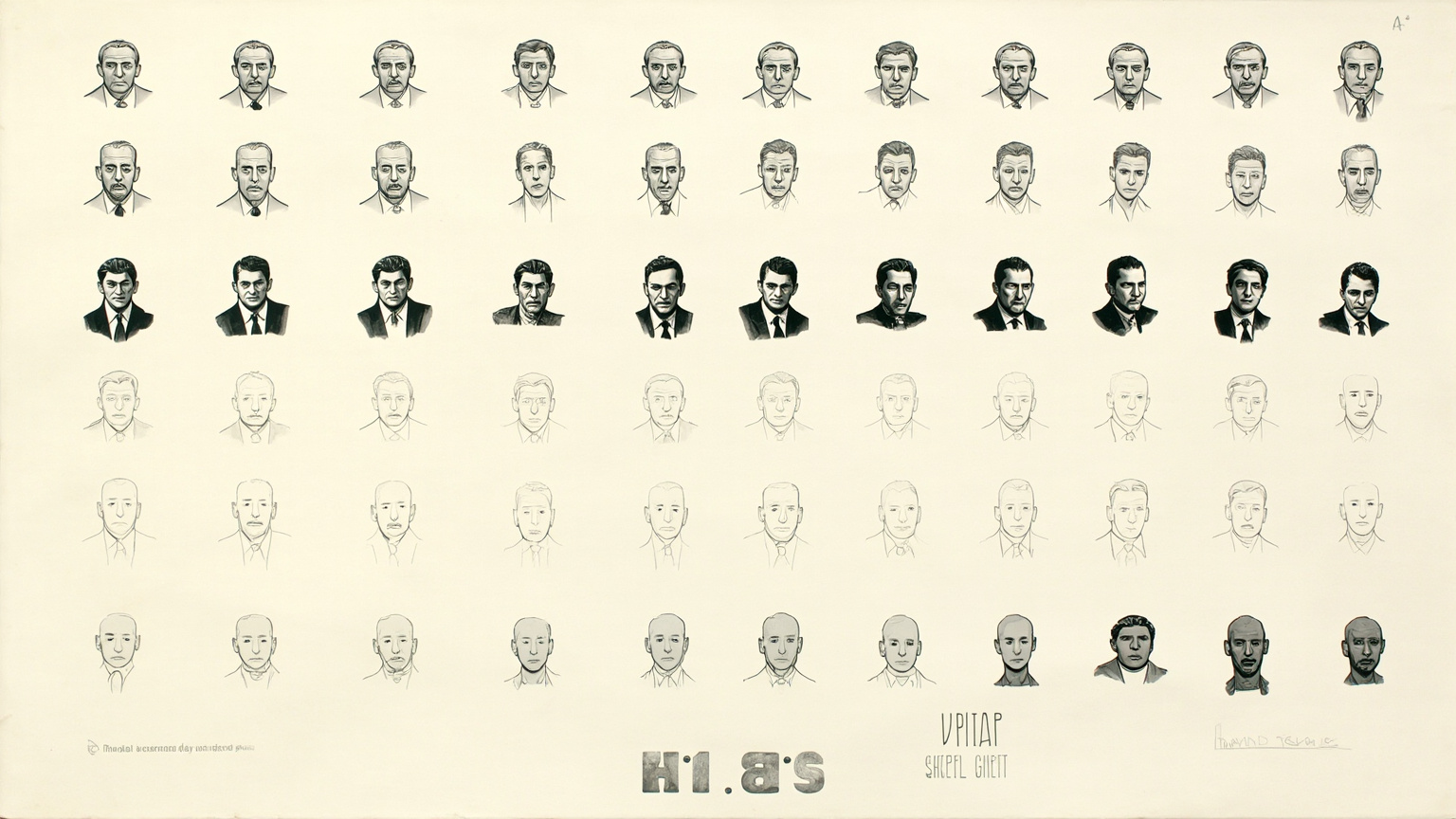
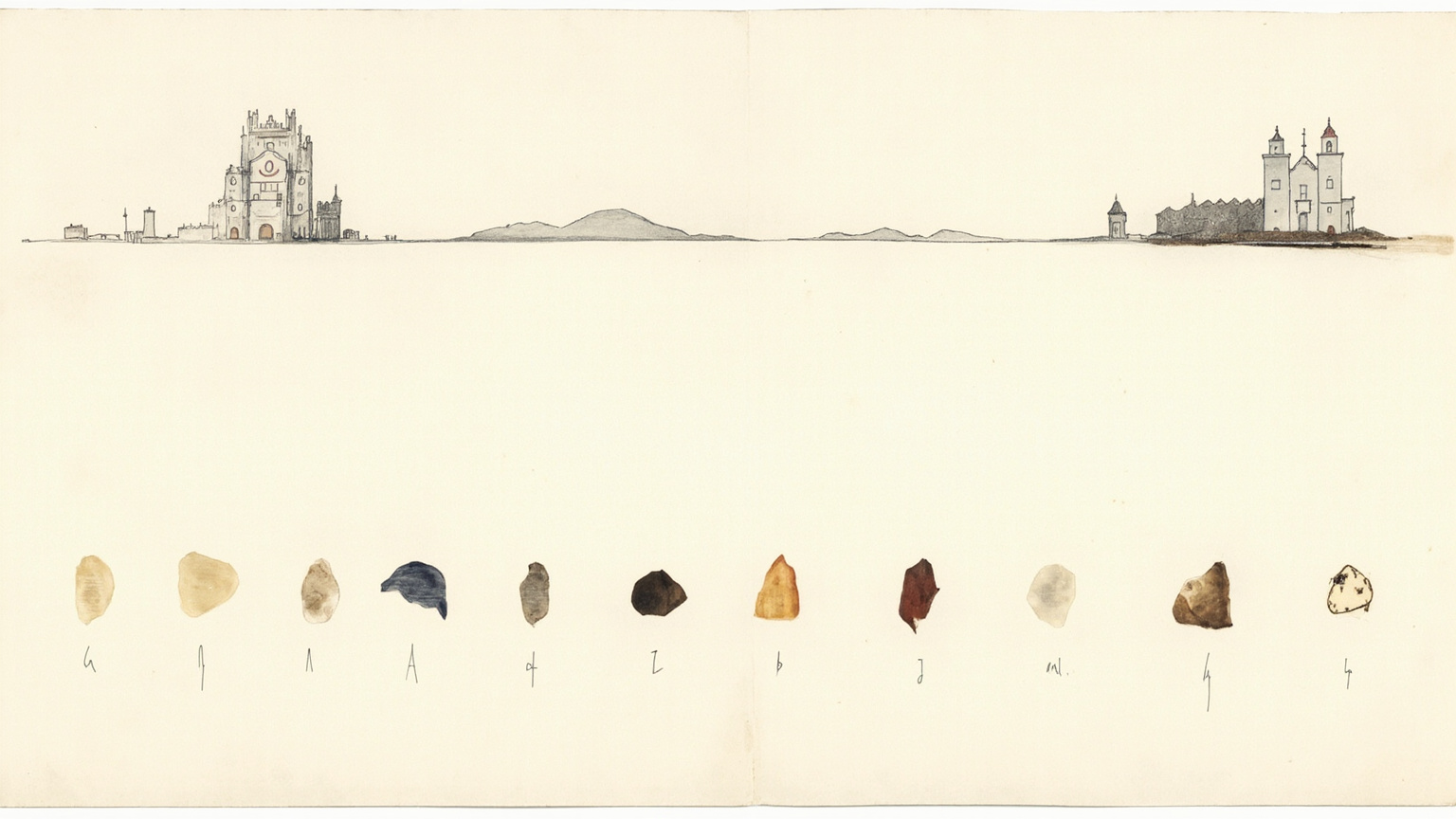
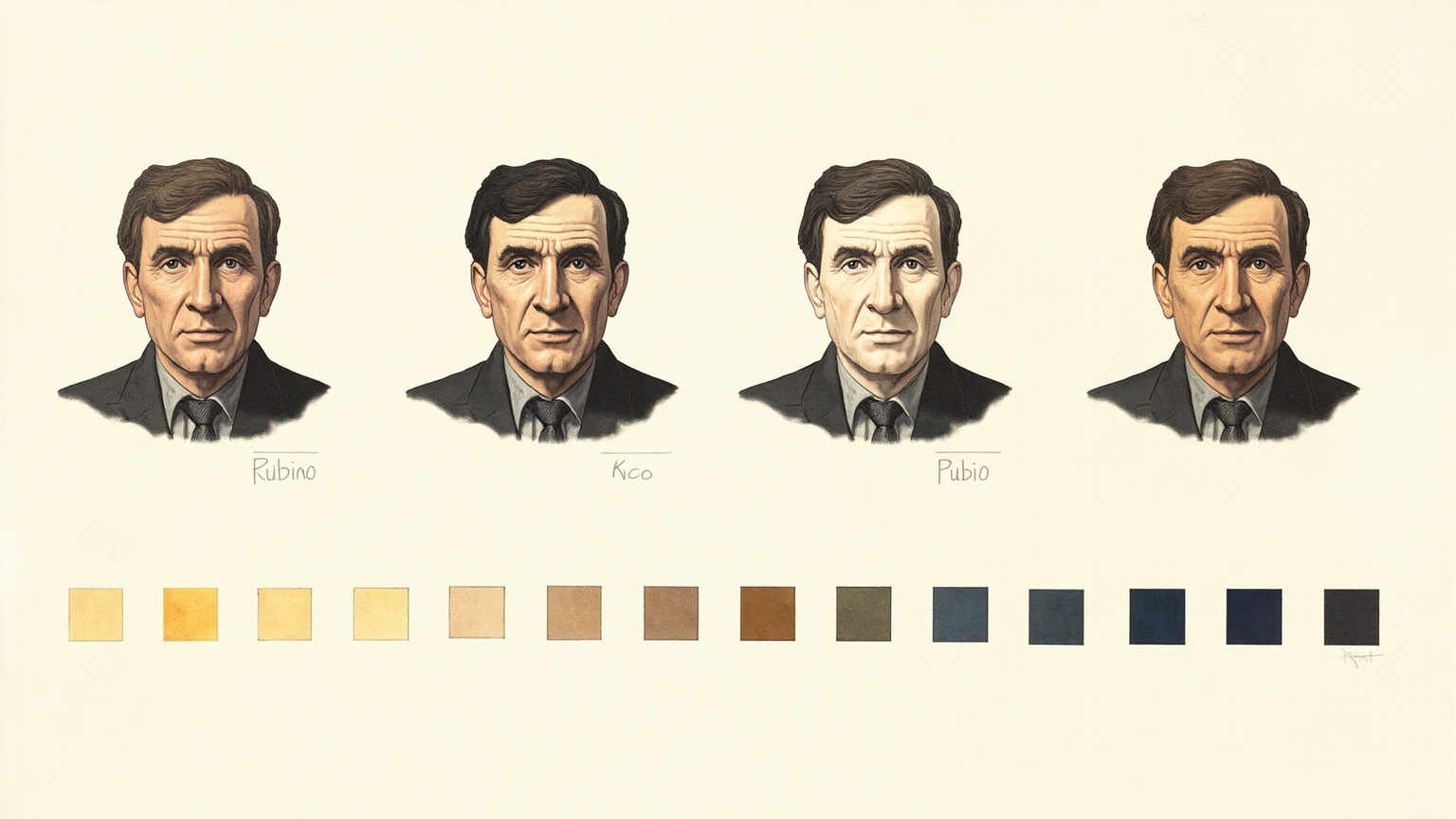
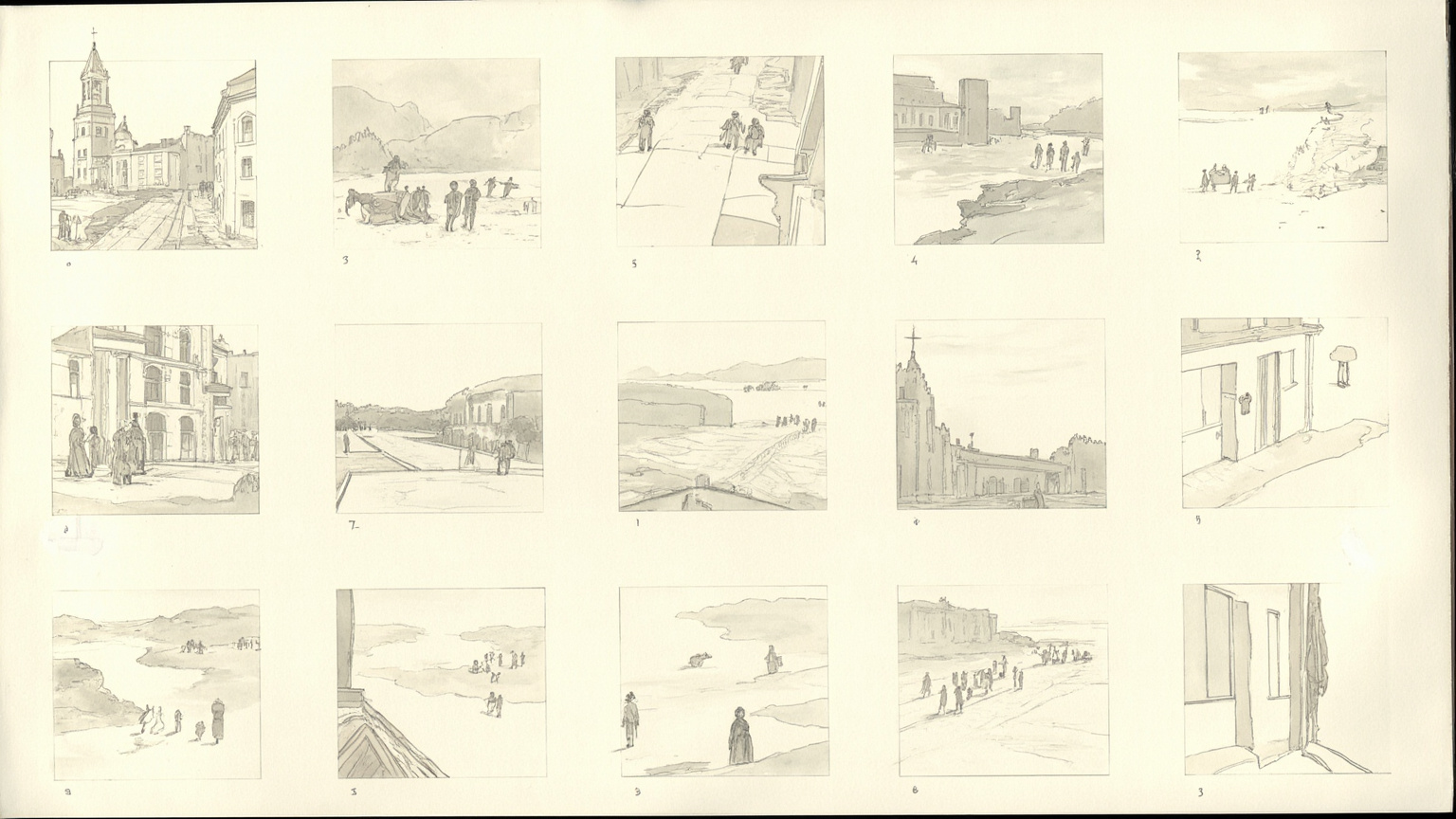
Art Direction4 plates
Before the guide was written, this book got a visual foundation — every illustration you just read grew out of it.