Rashōmon and In a Grove · Companion Guide
Rashomon · In a Grove
Under Rashomon gate on a rainy night, a dismissed servant is starving down to his last excuse; in a bamboo grove outside the capital, seven mouths tell seven truths — how evil talks itself into being, and why the truth never arrives.
Opening: The Gate on That Rainy Night
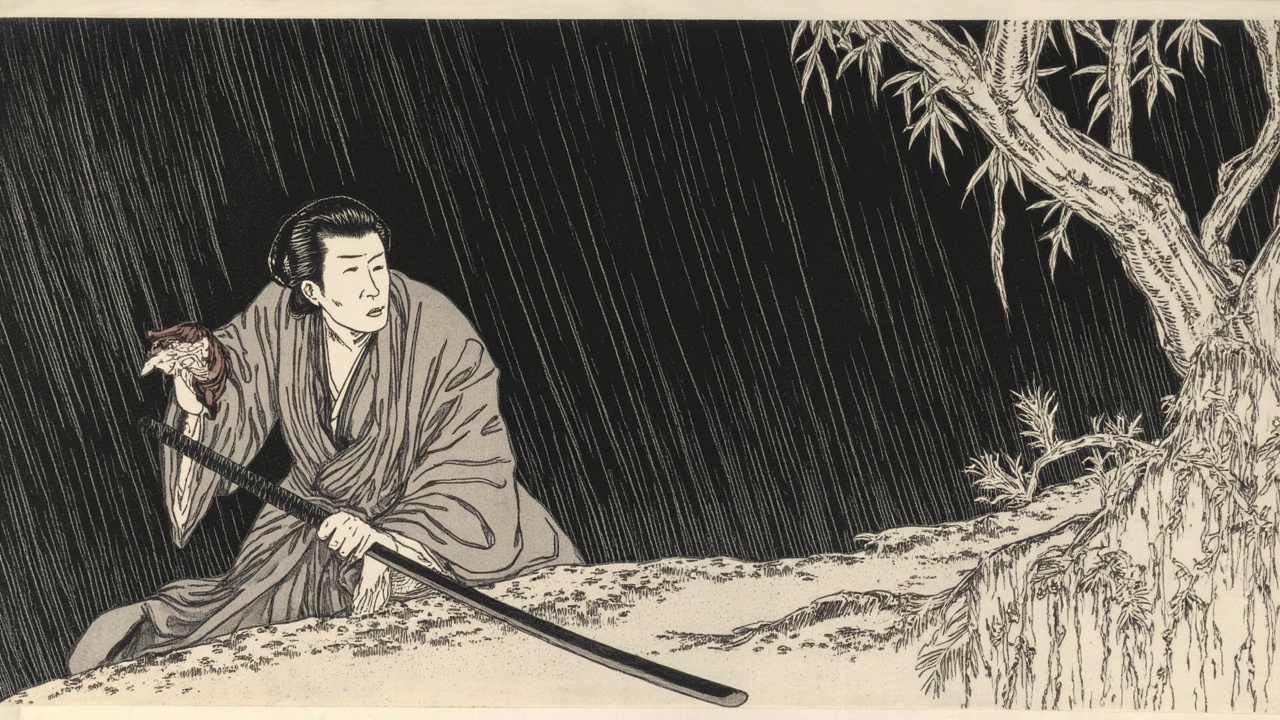
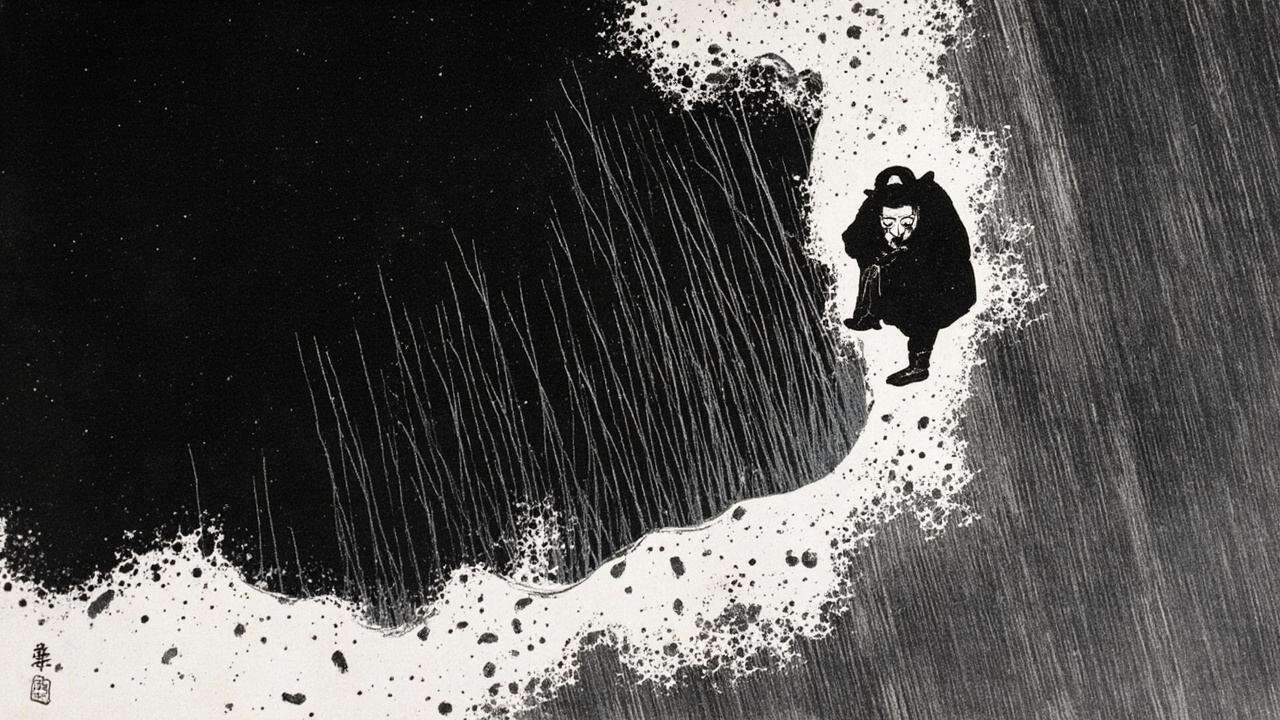
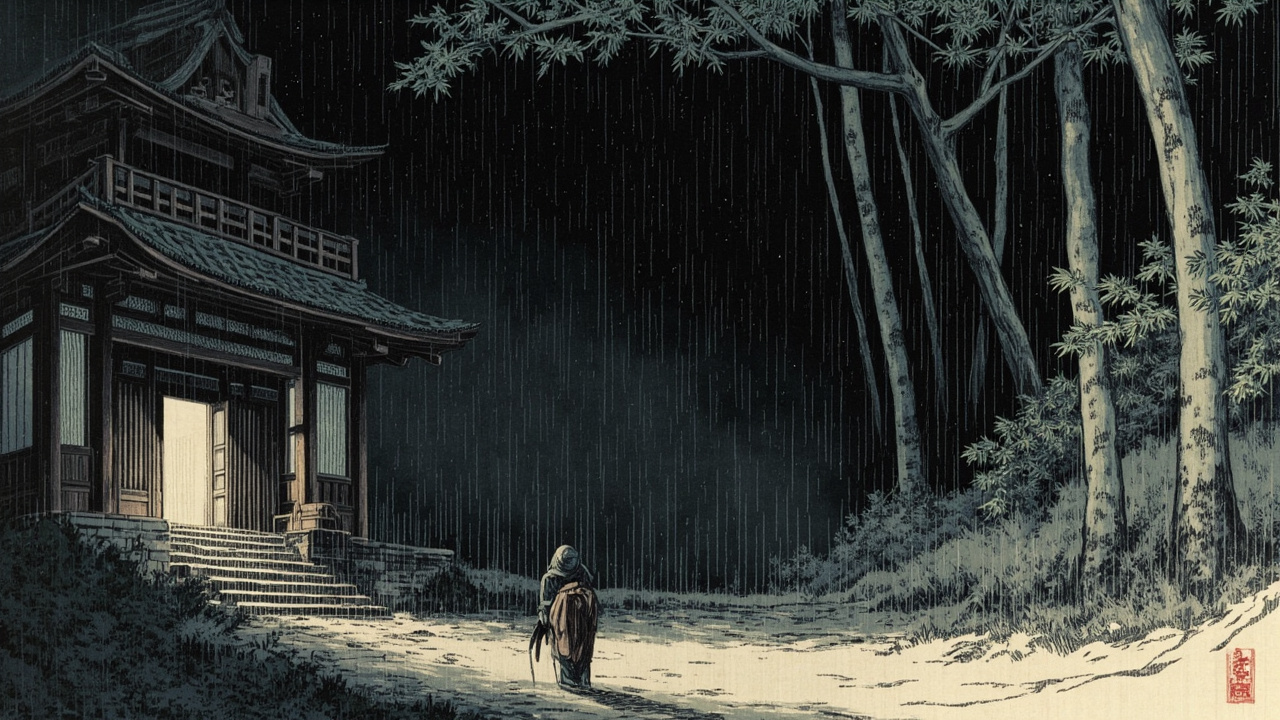
Dusk, rain coming down in sheets. You have just been let go by the whole world, with no idea where your next meal is coming from, so you crouch under the gate of a ruined old city to wait out the storm. The gate tower is said to be haunted, and corpses have been piled at its foot before. Right at the moment you think you have hit bottom, you push the door open to find a dry corner — and see an old woman sitting among a heap of dead bodies, pulling hairs from a corpse one by one.
This is the moment a person faces a choice. It is also the cruelest question in the book: when staying alive costs you something revolting, how do you talk yourself into it?
What Kind of Book Is This
This is really two independent short stories, both by the Japanese writer Ryunosuke Akutagawa. Born in Tokyo, he stunned the literary world in his early twenties with Rashomon, was soon taken on as a disciple by the great novelist Natsume Soseki, and in 1922 reached the peak of his craft with In a Grove. Akutagawa lived only thirty-five years, but in a few dozen short stories he set the template for how the modern Japanese short story is written — Japan's top literary honor, the Akutagawa Prize, is named after him.
Both stories are drawn from the Konjaku Monogatarishu, a collection of tales from the end of Japan's Heian period (794-1185), an age of chaos when the capital was falling apart and the line between the human world and the world of spirits had gone blurry. Akutagawa took the bare bones of a thousand-year-old ghost story and packed them with thoroughly modern psychology and moral interrogation. The Rashomon effect people invoke today — the idea that the truth can never quite be pinned down — traces straight back to these two stories.
People and World: Two Stages, Seven People Who Will Not Shut Up
Rashomon has a tiny stage, with only two people on it: a servant, fired by his master and out of options, and an old woman in the corpse-dumping ground, pulling dead people's hair to sell as wigs. The servant is hungry, and the old woman is hungry too — neither one is a born villain. That is exactly where Akutagawa's malice lies.
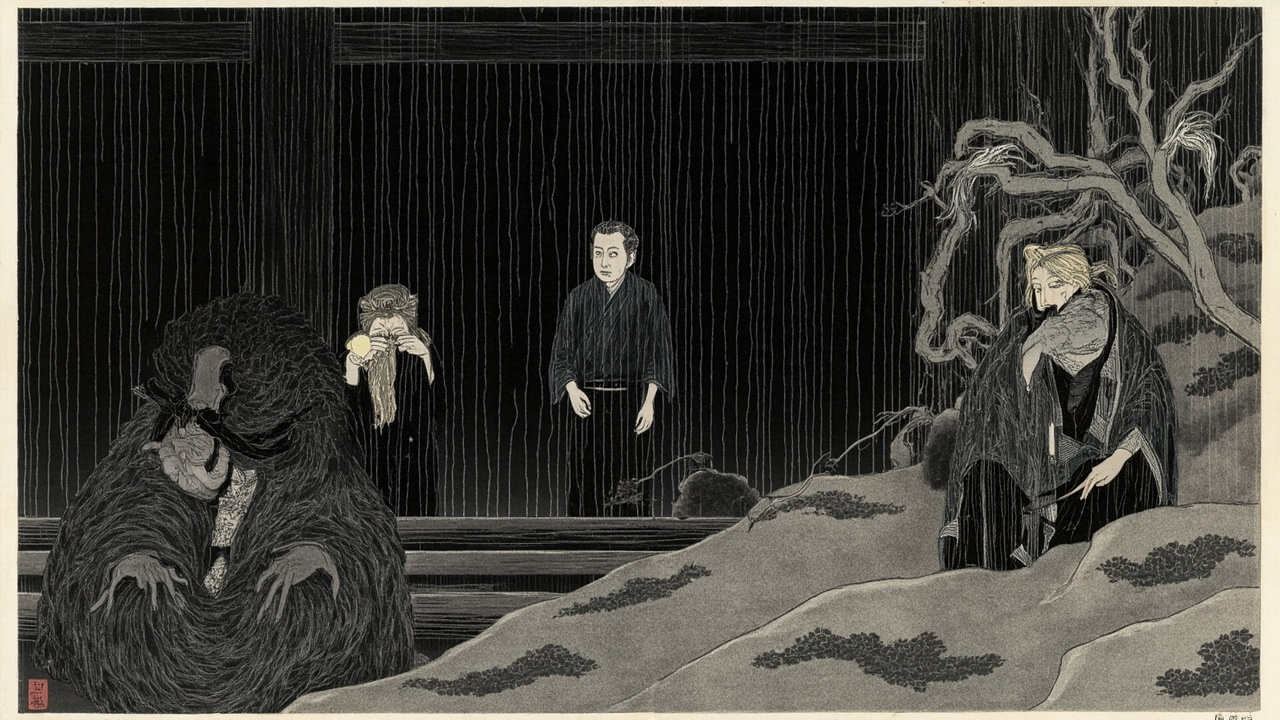
In a Grove has a much bigger stage. In a bamboo grove outside Kyoto, the body of a young samurai, Takehiro Kanazawa, is found, and seven witnesses are summoned before a kebiishi, a Heian-period magistrate. They are a woodcutter, a traveling priest, a police agent, the samurai's mother-in-law, and the three people actually involved: the notorious bandit Tajomaru, the samurai's wife Masago, and the samurai's own ghost, called back to speak through a medium. No one saw the fatal blow with their own eyes — everyone saw only their own version of it.
Rashomon: Evil Is What Rationalization Pushes You Into
The servant is not a bad man to begin with. He only wants a dry place to wait out the rain. He climbs up into the gate tower meaning to see what is really up there in this haunted building — still carrying, if anything, a trace of curiosity and decency.
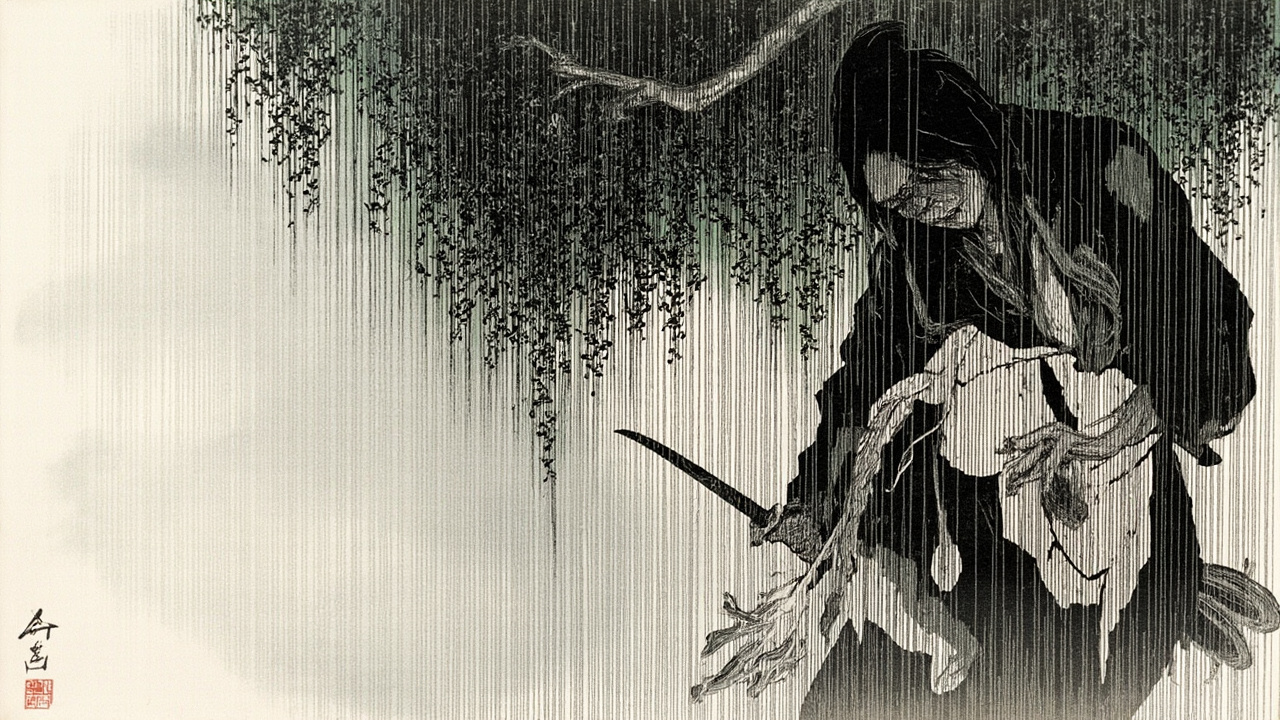
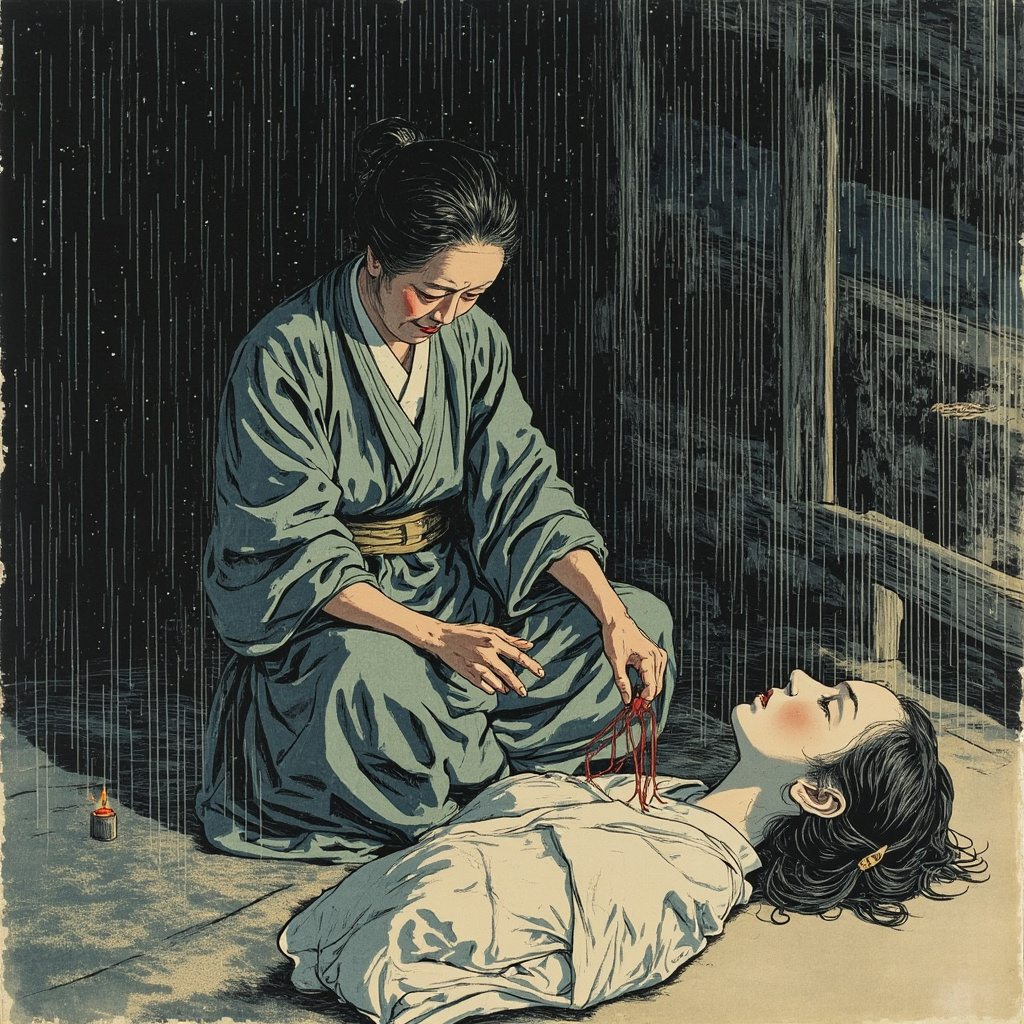
But the moment he gets up there, reality runs him through: a withered old woman crouched beside a young woman's corpse, plucking out hair strand by strand to sell as a wig. The sight hits three nerves at once — fear, disgust, and righteous anger.
He grips his sword and rushes at her demanding an explanation, sure that justice is already on his side. But the moment the old woman opens her mouth, she pins him in place instead — she argues that the young woman, while alive, sold dried snake meat passing it off as fish, and that she herself will starve if she does not do this, that everyone is the same. In one sentence, good, evil, and staying alive get tangled together.
I’m pulling out hair, pulling out this woman’s hair, because I’m going to make wigs.
我在拔头发,拔这女人的头发——我要拿去做假发。
Original line · Rashomon · Atop the gate, the old woman answers the servant's question
The servant still puts up a front at first: "Even so, you—" But his voice is shaking. What is truly frightening is not the old woman's logic but his own stomach, empty all day. He already knows what hunger feels like, he has already thought about turning bandit himself, and all he was missing was a reason. The old woman hands him one, ready-made.
But as he listened, a certain courage was born within him. It was the courage he had lacked under the gate a while before.
可他听着听着,心里竟生出一种勇气来——正是方才在门下他所缺的那种勇气。
Original line · Rashomon · The courage that grows in the servant's heart after he hears the old woman's defense
What happens next takes only a line to tell: he tears the clothes off the old woman's body, snatches the fistful of stolen hair from her hands along with them, and vanishes into the darkness of the gate tower, his footsteps swallowed by the rain. Akutagawa had originally meant to send this servant off to become a bandit, then changed it to where the servant went, no one knows — an open ending that tells you neither whether he went on to do evil nor whether he repented or sank further.
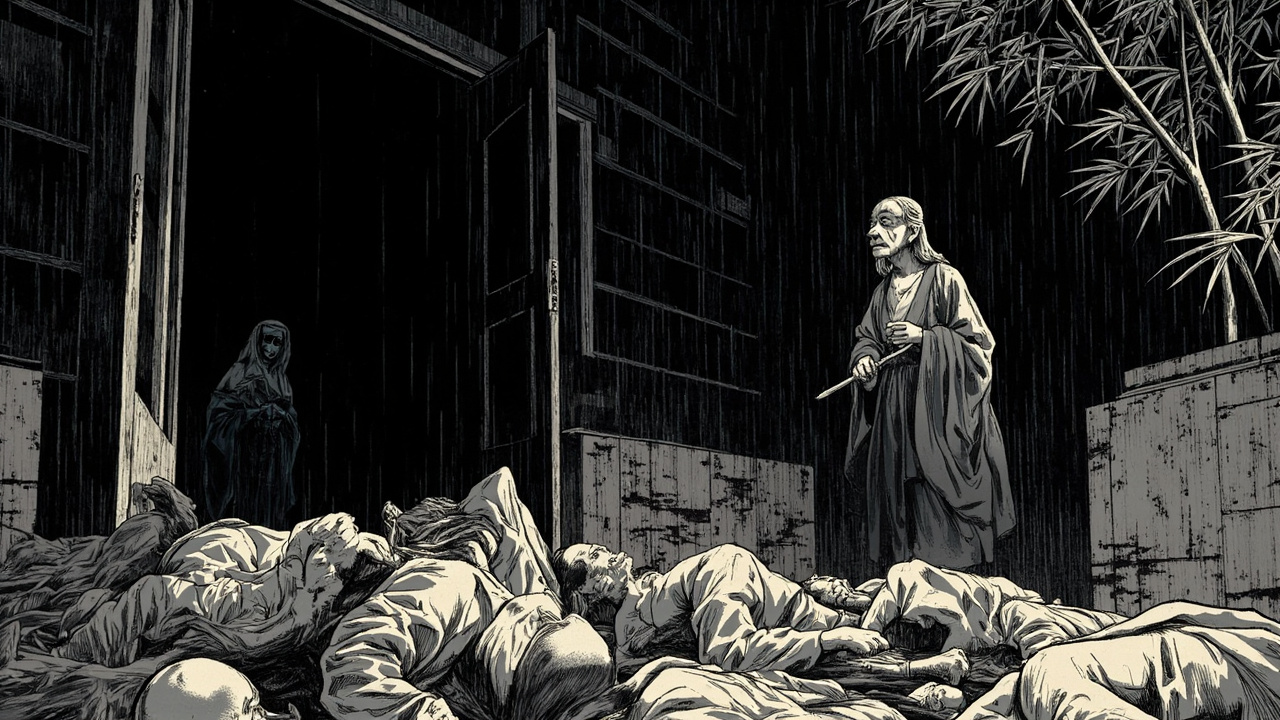
Then I guess you won’t blame me for turning highwayman, will you? I, too, must starve else.
那么,我去做强盗,你也不会怪我吧?我不这么做,一样是要饿死的。
Original line · Rashomon · His last words, just before the robe is stripped and the hair is seized
In a Grove: One Killing, Seven Mouths, Seven Worlds
The scene shifts to a bamboo grove outside Kyoto. A young man's body is found, and the authorities summon witnesses. Before the hearing proper, four peripheral witnesses speak first: a woodcutter says he found the body and a bloodied dagger in the grove; a traveling priest says he passed the couple on the mountain road; a police agent says he caught the notorious bandit Tajomaru off a runaway horse; the mother-in-law describes how her daughter Masago came to be married.
Together they sketch a rough outline: the samurai and his wife were riding along the mountain road when the bandit Tajomaru seized them, and the wife, Masago, was assaulted on the spot. But no one saw how that final blow actually fell — because none of them were there when it happened.
Then the three people directly involved each tell their own, entirely different version. Tajomaru speaks first, and his is the most heroic of the three: he admits to tying up the samurai and violating Masago, but claims the samurai demanded a proper duel between men, and that he cut him down in one clean stroke — even a killing, in his telling, has to be done with style.
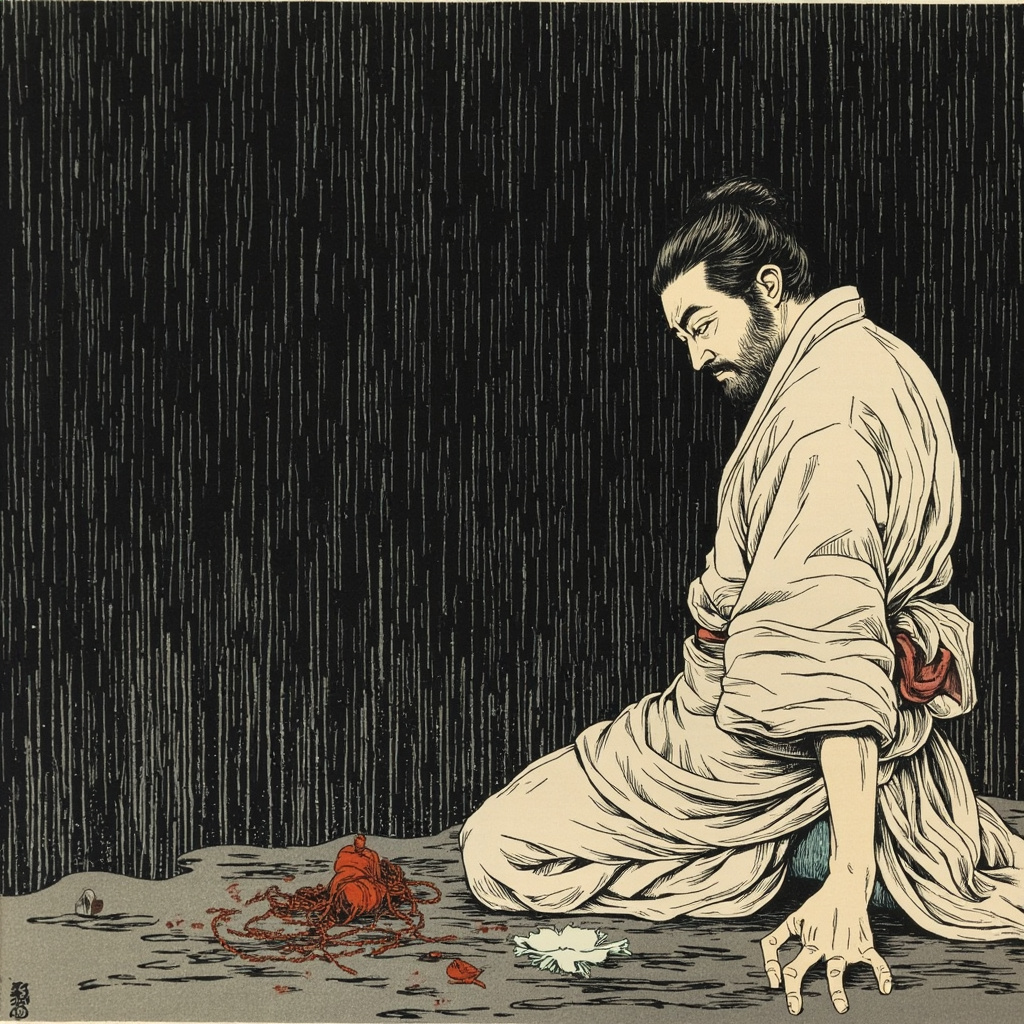
Masago's version, told afterward, runs the opposite way. She says that in her shame she wanted to die, but looking up she saw in her husband's eyes nothing but cold contempt, as if he were telling her to kill him — so, following what she took to be his wish, she drove a blade into him herself. She herself, she says, tried to kill herself several times afterward and failed. A woman trying to preserve her honor through a failed suicide pact.
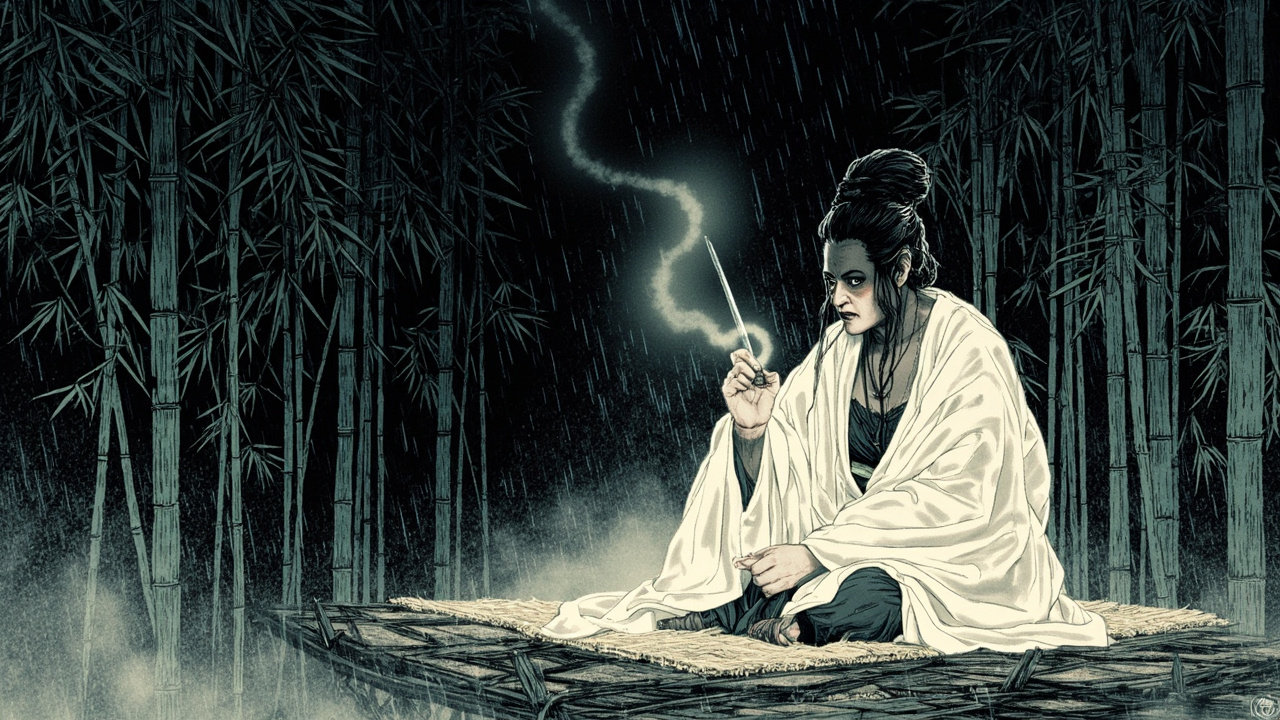
The samurai Takehiro Kanazawa's own version differs again — his testimony comes by way of a medium calling up his ghost. The medium, a miko dressed in white with her eyes closed, speaks the dead man's words through her own mouth. The samurai says that after the assault, his wife asked him to die with her; when he refused, she left him, and full of bitterness he took his own life with the dagger she had dropped. In his telling, he is the victim who was driven to death.
Ending: Nobody Knows the Truth
Akutagawa gives no official answer. The seven testimonies do not line up, and no one actually saw with their own eyes how that blow fell in the bamboo grove.
He turns his pen and simply lays every testimony out before the reader, with no two accounts agreeing, as if to say: a case like this will probably never yield the truth — you cannot even trust people, and once that gate to hell opens, there is no telling what follows. The truth is not out there in the bamboo grove; it is hidden inside the little self-flattering theater each person carries in their own head.
This story later gave its name to the Rashomon effect — whenever several parties each tell a different story and the truth stays a mystery, people call it a Rashomon. But it is worth remembering: the Rashomon effect actually comes from In a Grove, not from the story Rashomon itself. The novella Rashomon has no competing testimonies at all — just two people, on top of a gate tower, pushing each other past a line.
Why These Two Stories Still Sting
Rashomon stings because it demonstrates exactly how evil gets rationalized into being. The old woman's logic — I would starve if I did not do this, everyone is the same — is not just some ghost-story ethics of a chaotic Heian age. Hand someone today a reason like I have kids to feed or the mortgage is due or I need to survive, and it seems like almost anything can be talked into being justified. The book paints moral decline as a sequence of single hairs pulled out one at a time: pull one and nothing happens, pull another and nothing happens, and the next thing you know, you are sitting in the pile of corpses yourself.
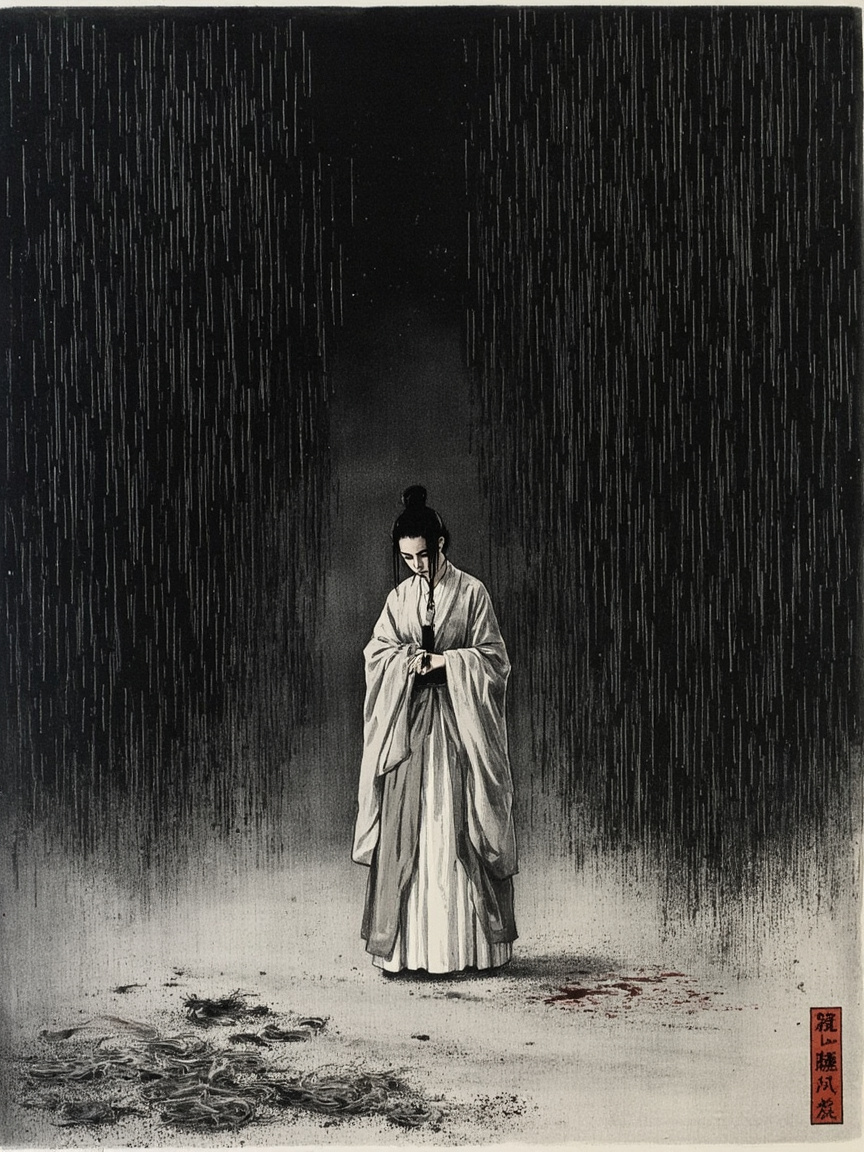
Since this, too, must be done or she would starve, it could not well be helped
她这么做也是非做不可,不然就得饿死,实在是没法子的事
Original line · Rashomon · The old woman's defense: do this or starve, and anyone would
In a Grove stings because it demonstrates exactly why the truth does not exist. Everyone dresses himself up a little in the retelling, even a confession has to be made with the most dignity possible — I did kill him, but I killed him the most honorably anyone could have. What Akutagawa shows us is not this one murder case but the human instinct for self-flattery: however we look at ourselves, we always come out looking a little better than the version the world outside would give us.
Reasons to Read the Original
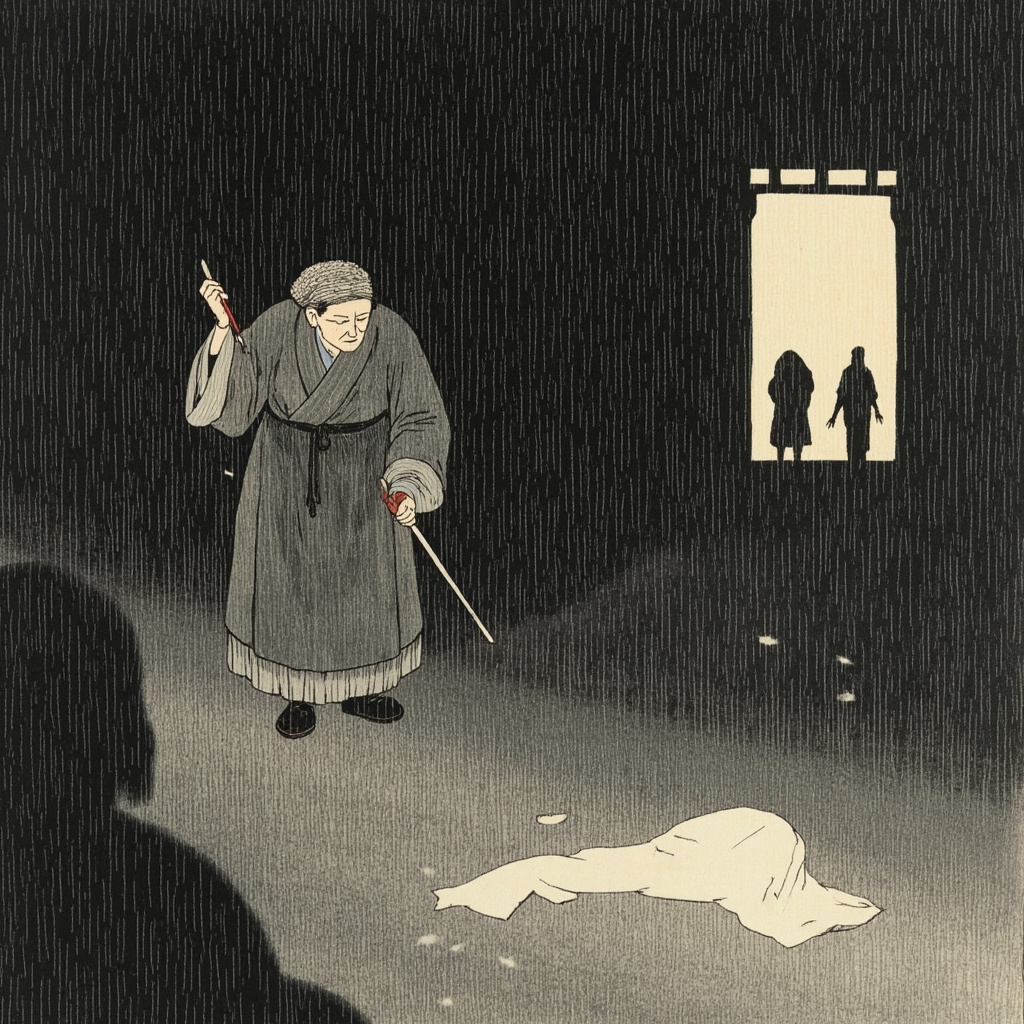
A companion guide can tell you the plot, but it cannot give you the things in Akutagawa's own prose that are almost too fine, too sharp to bear: the catch in the servant's throat when he asks why are you pulling out her hair; the woodcutter secretly wiping a drop of blood off a bamboo leaf before he is questioned, because he too took something from the scene; the one-beat pause before the old woman speaks; the rustle of the straw mat as the medium closes her eyes.
Put together, these two stories run barely ten thousand words, and yet they are a mirror that shows you exactly how people do evil and how they lie to themselves — the companion guide gives you the map, but the original text is the glass that actually cuts you.
Find a quiet half hour some afternoon: read Rashomon first (ten minutes is enough), then In a Grove (twenty minutes). The moment you close the book, you will probably want to go get a glass of water from the kitchen — but you will probably also stop and ask yourself once more: is the reason I gave myself today really so different from the old woman's?
Art Direction4 plates
Before the guide was written, this book got a visual foundation — every illustration you just read grew out of it.