When the war against Japan, desire, and death all burn together in a sorghum field
Text and illustrations produced by the pipeline
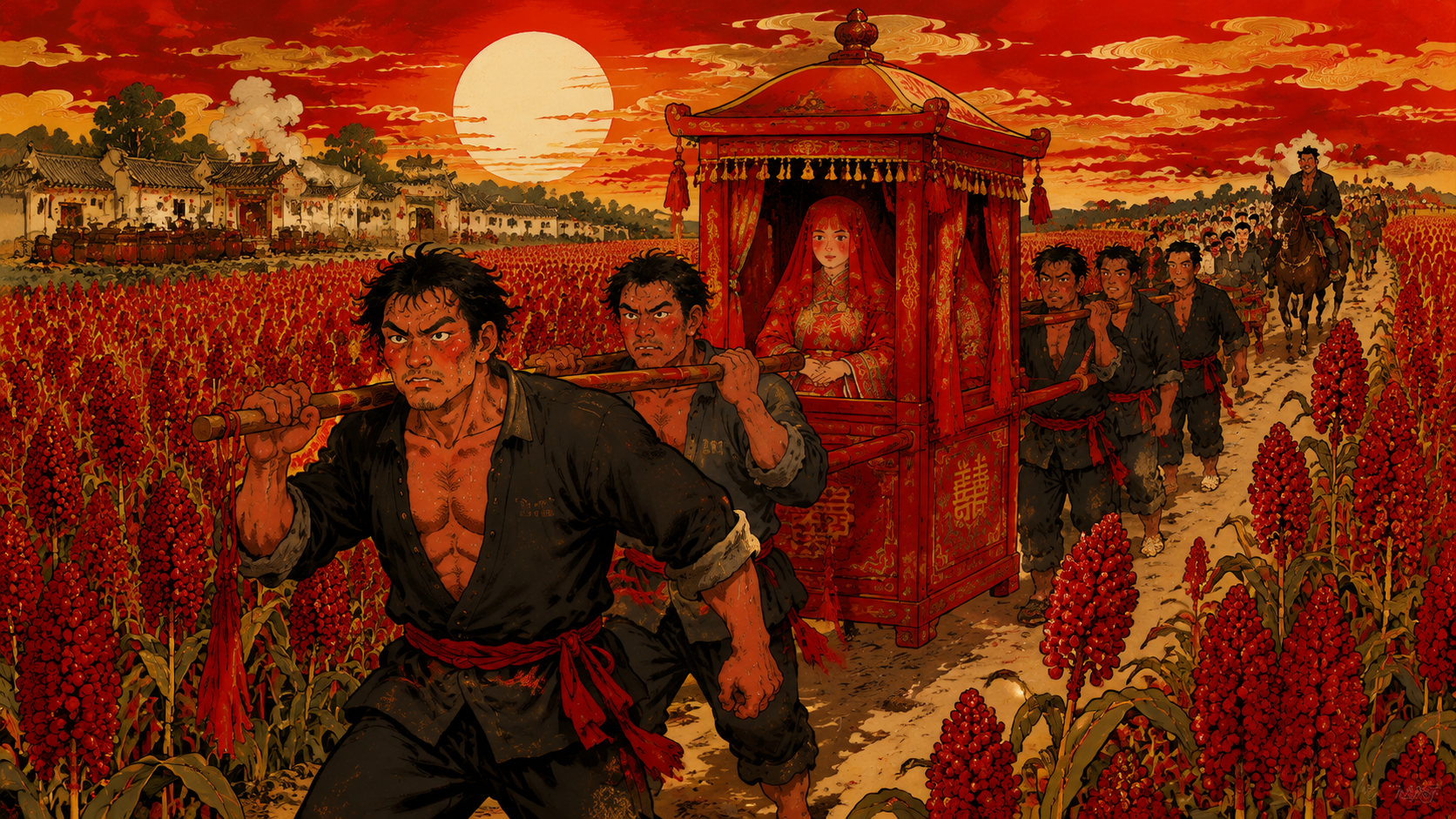
September, and the sorghum in rural Shandong has ripened. It stretches farther than the eye can follow, red as blood, red as fire, red as though something were burning underground. A bridal sedan chair comes carried through that red, and inside it sits a sixteen-year-old girl on her way to marry a man she has never seen, a man said to be rotten with leprosy from head to foot. Sweat drips one bead at a time down the neck of the young bearer carrying her — he has no idea that this one trip will carry off his entire fate along with it. This is the image Red Sorghum throws in your face on page one: thick, scalding, and utterly unreasonable.
Mo Yan wrote this novel with a grievance he couldn't shake: why should the war against Japan get reduced to names carved on a monument? He wanted to put that war back where it happened — back into the smell of sweat, blood, and liquor, back into the raw animal heat of people coupling in the sorghum stalks. So the book doesn't open in an Eighth Route Army command post. It opens with a bride being sold off to a leper.
Red Sorghum is Mo Yan's signature work, published in 1987 by the People's Liberation Army's own literary press. The book is really five novellas stitched into one, and the most famous of them, Red Sorghum itself, had already appeared the year before in the magazine People's Literature. Critics file it under magical realism, but underneath it is pure Chinese countryside: Northeast Gaomi Township in Shandong, red sorghum, an old distillery, bandits and villagers fighting the Japanese side by side. Zhang Yimou later turned it into a film, and Red Sorghum took the Golden Bear at the Berlin Film Festival in 1988 — the first time a Chinese film had won top honors at one of Europe's three major festivals, and the moment the name Mo Yan first reached the wider world. A little over a decade later, this writer born in Gaomi, Shandong won the Nobel Prize in Literature in 2012, and Red Sorghum was the book that first opened that door.
The reason it's remembered is simple: before Mo Yan, Chinese fiction told the war against Japan far too solemnly — heroes, martyrs, strategy, victory. Mo Yan yanked the camera away from all that and threw it into the sorghum field, onto a sedan-chair bearer, onto a woman running a distillery, and said: look, the people who fought this war weren't heroes dropped from the sky, they were your own grandfather and grandmother, wild, unruly, ready to love and ready to die. At the time, that was a rule-breaking way to write.
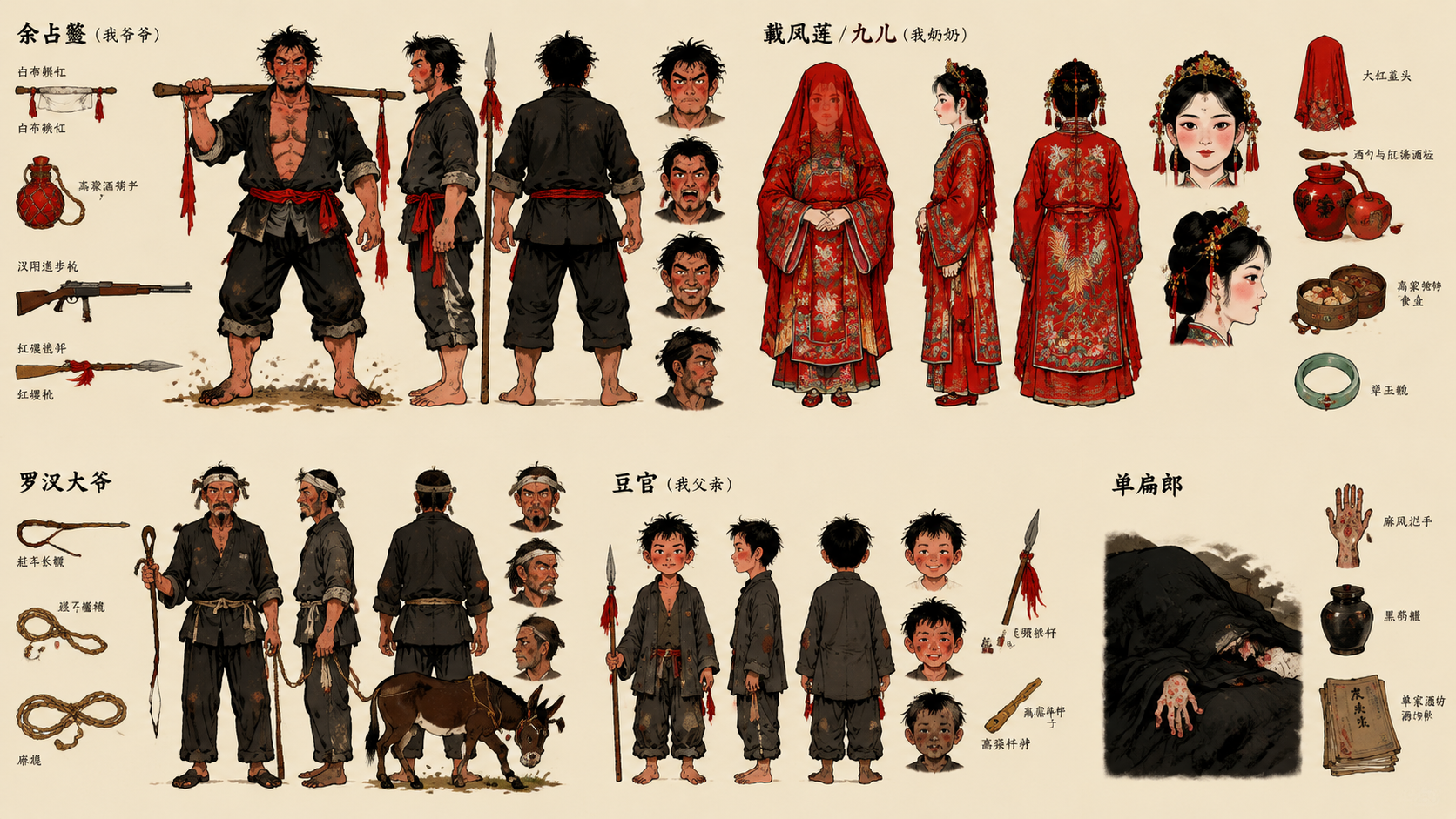
Few people in the story get called by name, but every one of them carries real blood and heat. Yu Zhan'ao is "my grandfather," a wild man who started out as a sedan-chair bearer, with nerve to spare — he'll snatch a bride, kill a man, raise a fighting force and take on the Japanese, and ends up commanding a guerrilla band that carries both bandit swagger and a real will to resist. Dai Fenglian, whom the village calls Jiu'er, is "my grandmother." At sixteen she is carried by bridal chair into the Shan family distillery to marry a leper. But she is nobody's obedient young wife — the moment her husband and father-in-law both die, she takes the distillery over herself and becomes head of the whole household. Uncle Arhat, the Shan family's longtime hired hand, has given the distillery his entire working life. He never gets the quiet death he might have expected — what comes for him instead is worse than leprosy. Douguan, the son of Yu Zhan'ao and Dai Fenglian, is "my father." For the whole span of this story, he is still a child. And the one telling it all is an "I" who never appears on stage — Mo Yan himself, decades later, looking back as a grandson at the generation of his grandparents, as if leafing through a blood-stained family register.
What makes Red Sorghum so merciless is this: it strips away everything refined, proper, and monument-worthy, and lays bare what's underneath in the sorghum field — blood, liquor, sweat, and the sound of someone's breath caught between the stalks.
A companion guide can give you the skeleton, but it can't give you the smell Mo Yan's pen actually burns into the page. What does Dai Fenglian smell the night she's carried into the Shan family distillery? How does the smell of sorghum over the village change in the instant Uncle Arhat is flayed alive? When Yu Zhan'ao empties a whole jar of liquor at Dai Fenglian's grave, is that liquor bitter or scalding? Only the original text can give you that. One more thing: Mo Yan doesn't write war by handing you a verdict on who deserved to die. He pins you down inside the sorghum field itself and makes you hear it, smell it, gasp for breath. When you finally lift your head from the page, there's a moment of disorientation — as if you really had just crawled out of that red field yourself, still carrying the smell of liquor and blood on your skin. No companion guide can give you that experience. So — go read it.
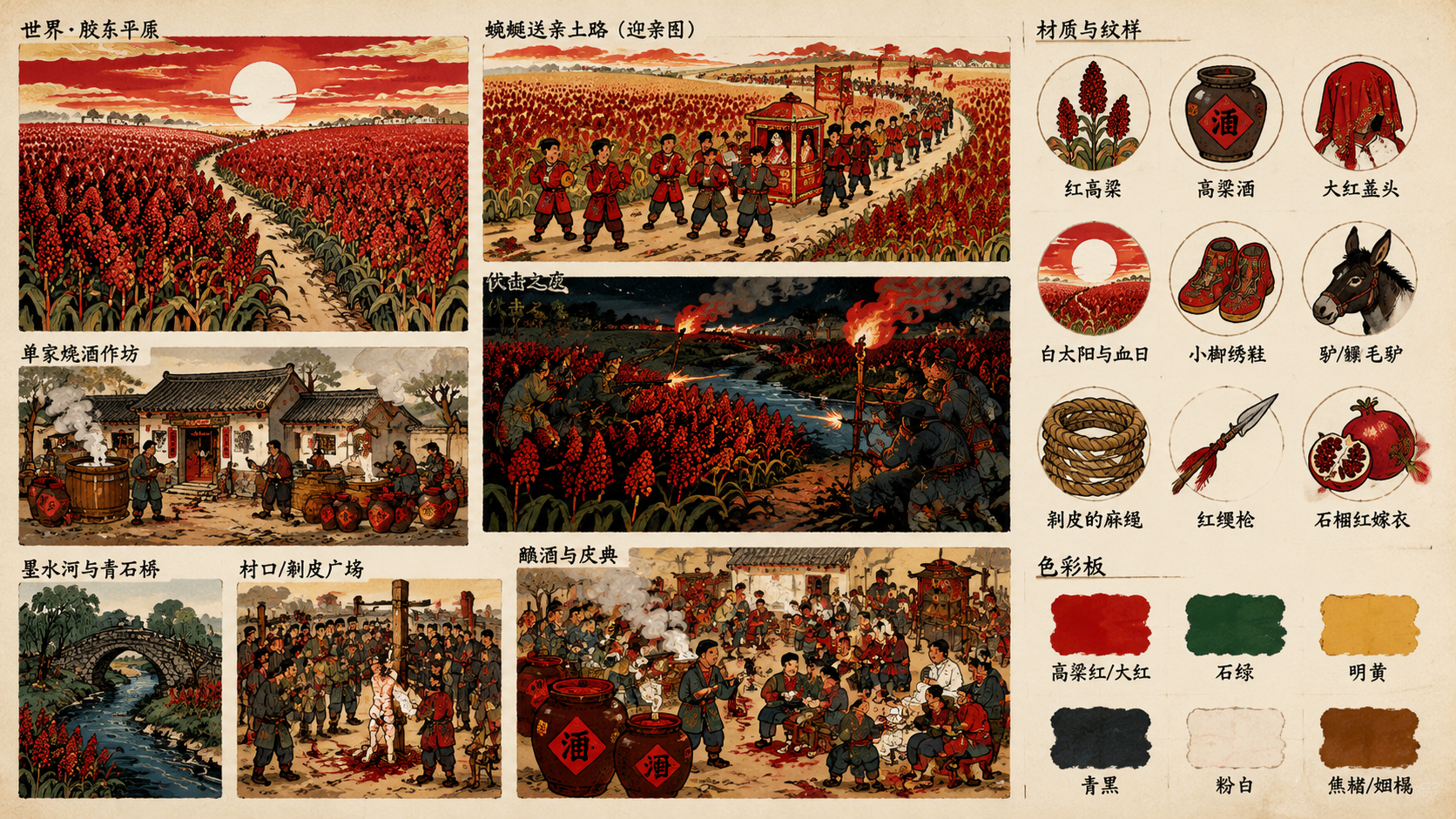
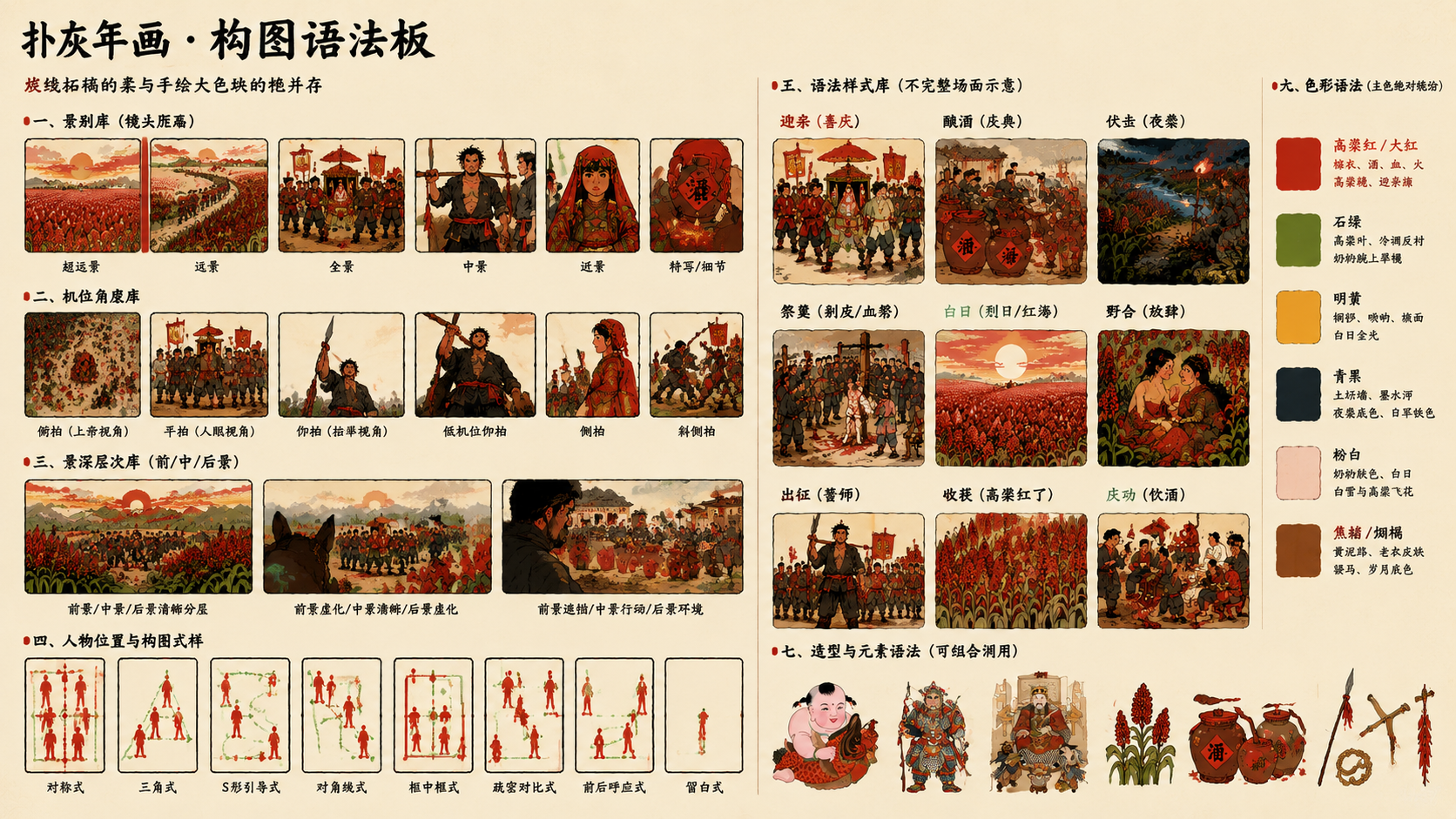
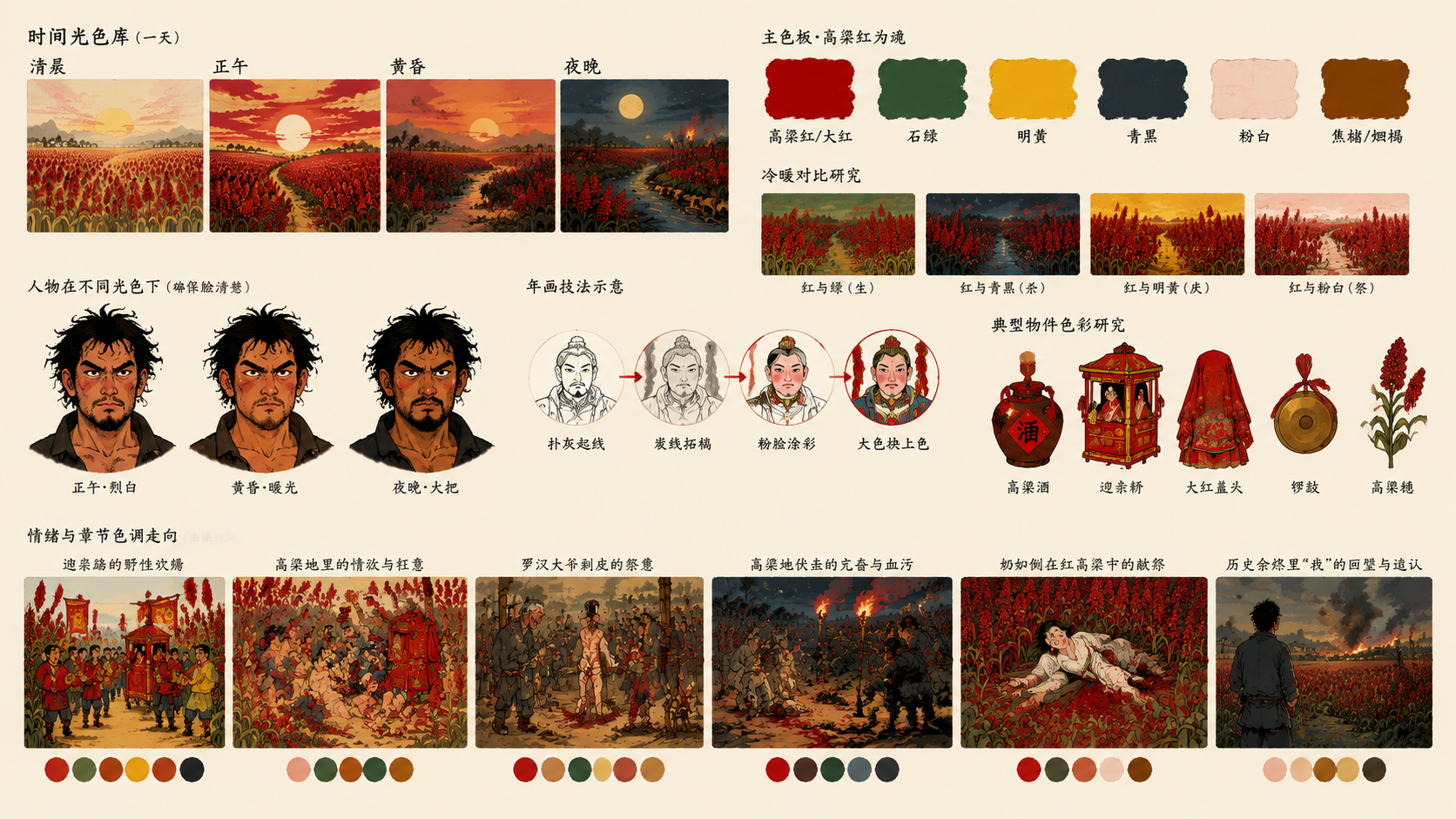
Before the guide was written, this book got a visual foundation — every illustration you just read grew out of it.
The world of the book is simple: Northeast Gaomi Township in Shandong, one vast field of sorghum stretching out of sight, plus one old distillery burning sorghum into liquor. There are no neon lights of Shanghai here, no intellectuals of old Peking — only liquor, sorghum, and a war that is bound, sooner or later, to burn its way in. Every bit of love, lust, death, loyalty, and betrayal in the book plays out on that same red ground.
The story begins with Dai Fenglian, a sixteen-year-old bride. Her family has already promised her to Shan Bianlang, the leprosy-stricken young master of the Shan family distillery. On her wedding day, the bridal chair cuts through the sorghum field, and among the bearers is a young man named Yu Zhan'ao, all raw strength and wild face. The moment that chair passes, the entanglement between Yu Zhan'ao and Dai Fenglian that will run through the rest of their lives is already set in motion — and this is Mo Yan at his most skillful: he never shows you the two of them falling for each other, only a pole trembling under the weight, a bead of sweat falling, and lets the rest ferment in the reader's own head.
Only after entering the Shan household does Dai Fenglian learn that her husband doesn't even have the strength to lift the wedding veil off her face. But she is tough — her father-in-law and her sickly husband both die in short order, and mysteriously enough (Mo Yan writes the cause like a fog he leaves you to puzzle through yourself), so that overnight she goes from new bride to the woman running the Shan family distillery. She doesn't sit around weeping as a widow; she takes brewing, selling, and keeping up appearances all onto her own shoulders. Soon after, she and that same young sedan-chair bearer, Yu Zhan'ao, fall into something out in the sorghum field that is half affair, half alliance — the two of them rolling together in the red stalks, and from that day on, that man becomes the master of the field.
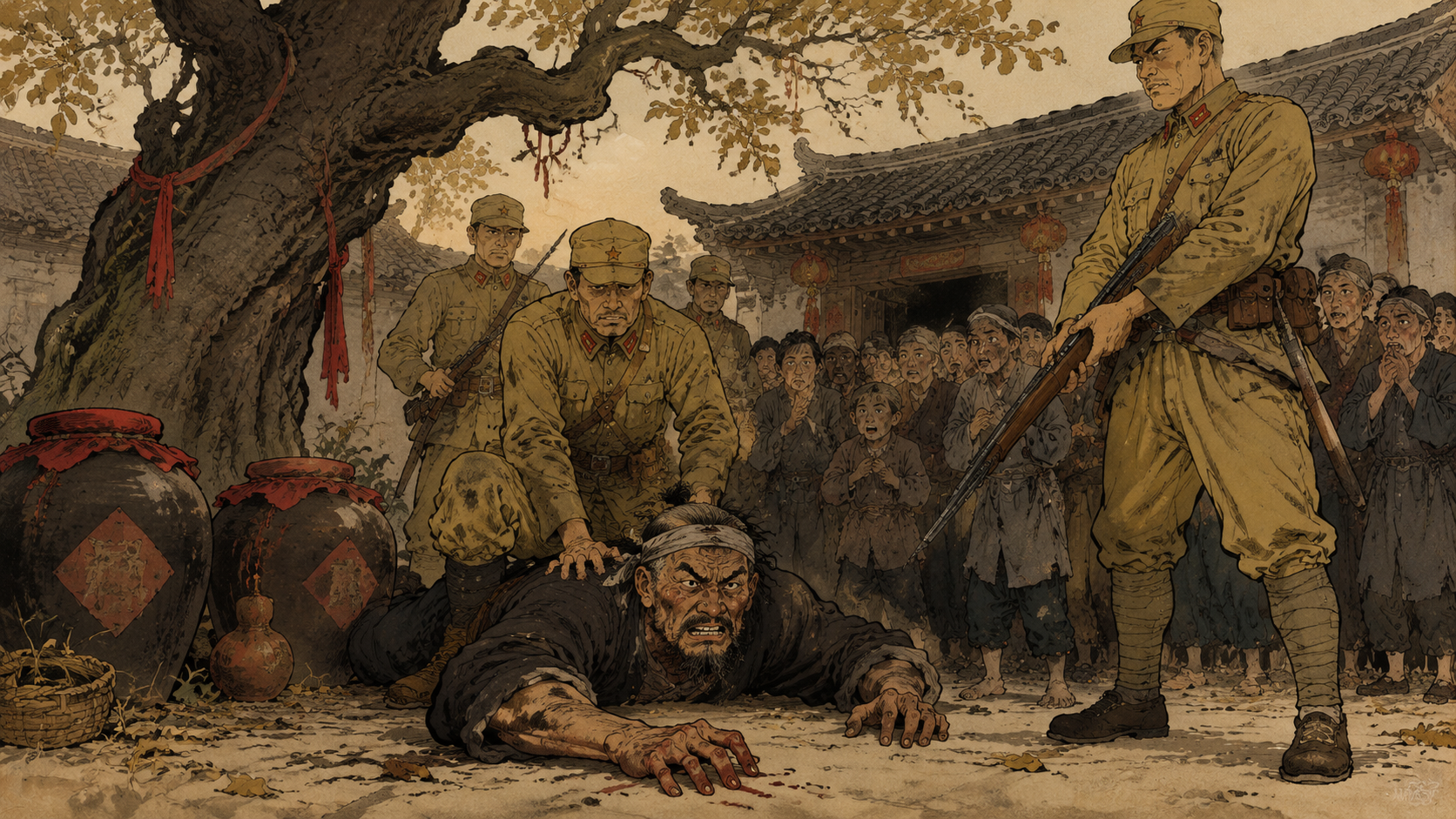
The distillery comes back to life, the sorghum liquor starts burning again, and Yu Zhan'ao and Dai Fenglian's son Douguan is born. If life had simply gone on this way, this would be a rural rags-to-riches story. But then the Japanese arrive. The Japanese march into the village to requisition the villagers' mules and horses for hauling munitions. To a farmer, a mule is more than a livelihood — it is worth more than his own life. Uncle Arhat, the hired hand who has worked for the Shan family his whole life, a quiet old man who barely speaks, stands up to resist. There is something about this character that catches you by the throat: unremarkable in ordinary times, but when the war finally reaches his own doorstep, he holds the line with his life. This section, in Mo Yan's hands, is the coolest and cruelest writing in the whole book.
The Japanese soldiers flay Uncle Arhat alive in front of the whole village. This is not a death on the battlefield — it is humiliation, a warning made of one man's body, meant to make the entire village watch what resistance costs. Mo Yan writes this scene with no hysterical outrage, restraint instead — and the more restrained the prose, the colder it runs down your spine. Uncle Arhat's death is the hinge the whole book turns on: Yu Zhan'ao had been a bandit chief, no stranger to killing and robbery, but this death is what seals, for good, the blood feud between him and the Japanese.
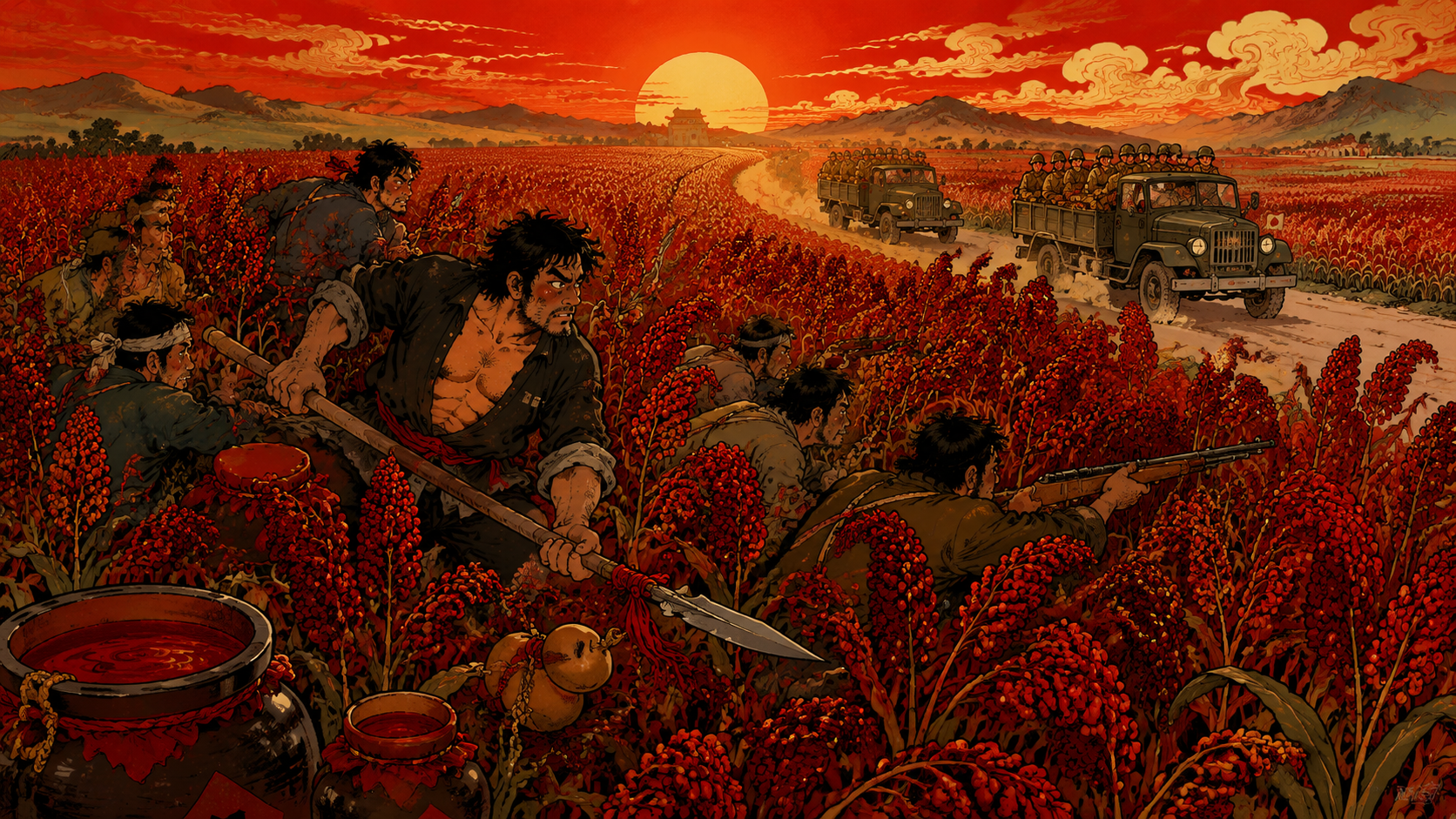
Yu Zhan'ao raises a fighting force of his own. Call it the Eighth Route Army? No. Call it the Nationalists? No. Call it plain bandits? Not quite that either. It is a band of men who grew up in the sorghum fields, backed into a corner, picking up guns and deciding to fight the Japanese to the death. In its ranks are his old bandit brothers, farmers whose houses have been burned down, and men with the same hot blood as Uncle Arhat. This is where Mo Yan's writing on the war against Japan is at its sharpest — he isn't writing the triumph of a regular army, he's writing a band of outlaws' death-defying dance, ambushing a Japanese supply convoy in a field of sorghum.
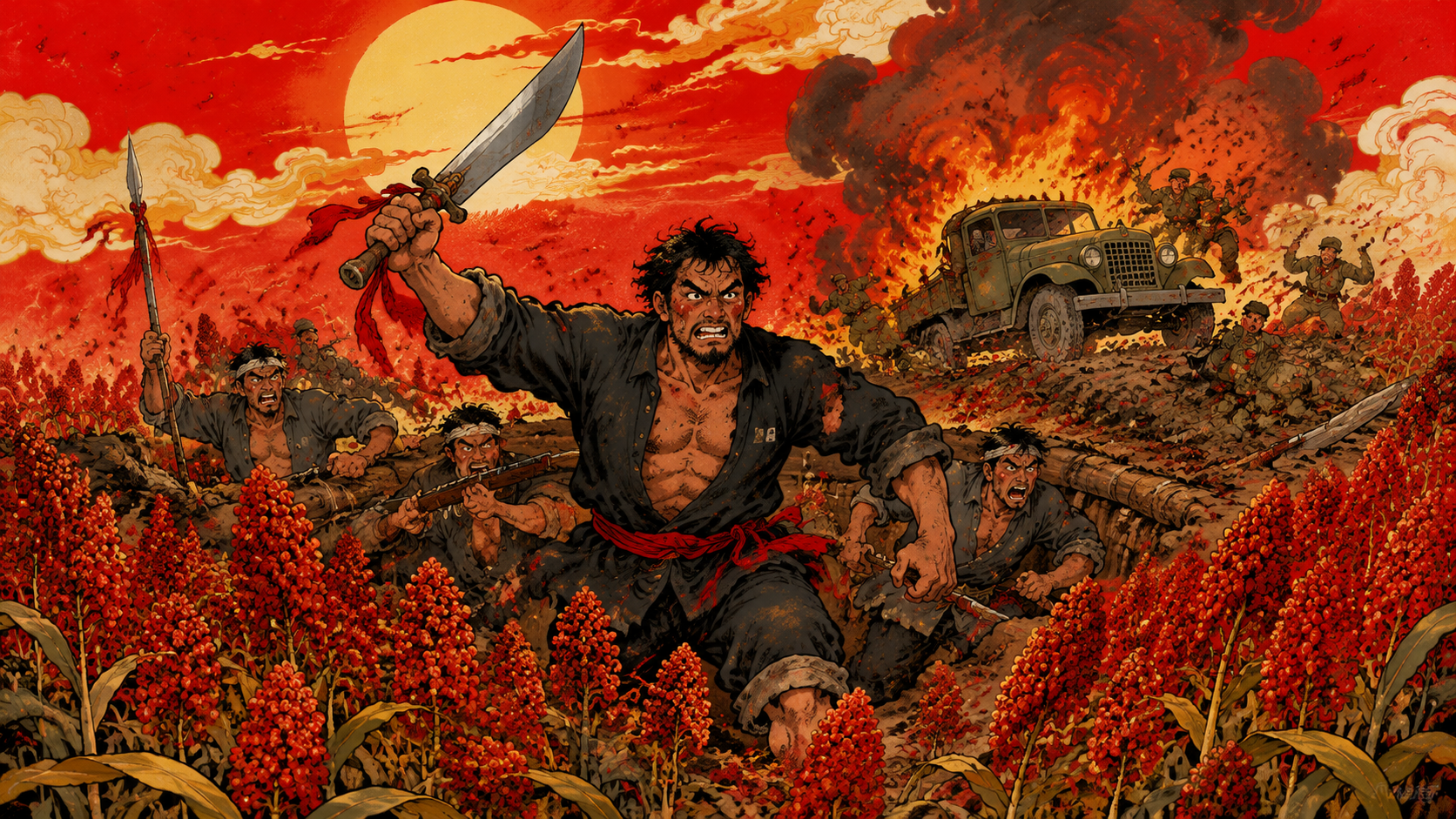
The ambush is fought savagely, and it's also fought beautifully — this is Mo Yan's war writing at its best, turning the battle into a dance staged in the sorghum field, men and women, gunfire and liquor-scent, blood and red sorghum all churned into one. One passage is the most poetic in the whole book: sorghum liquor flung at the enemy like a weapon, its fragrance mixing with the flames until the whole battlefield seems to be burning. But the victory comes at a cost, and the cost outweighs the victory.
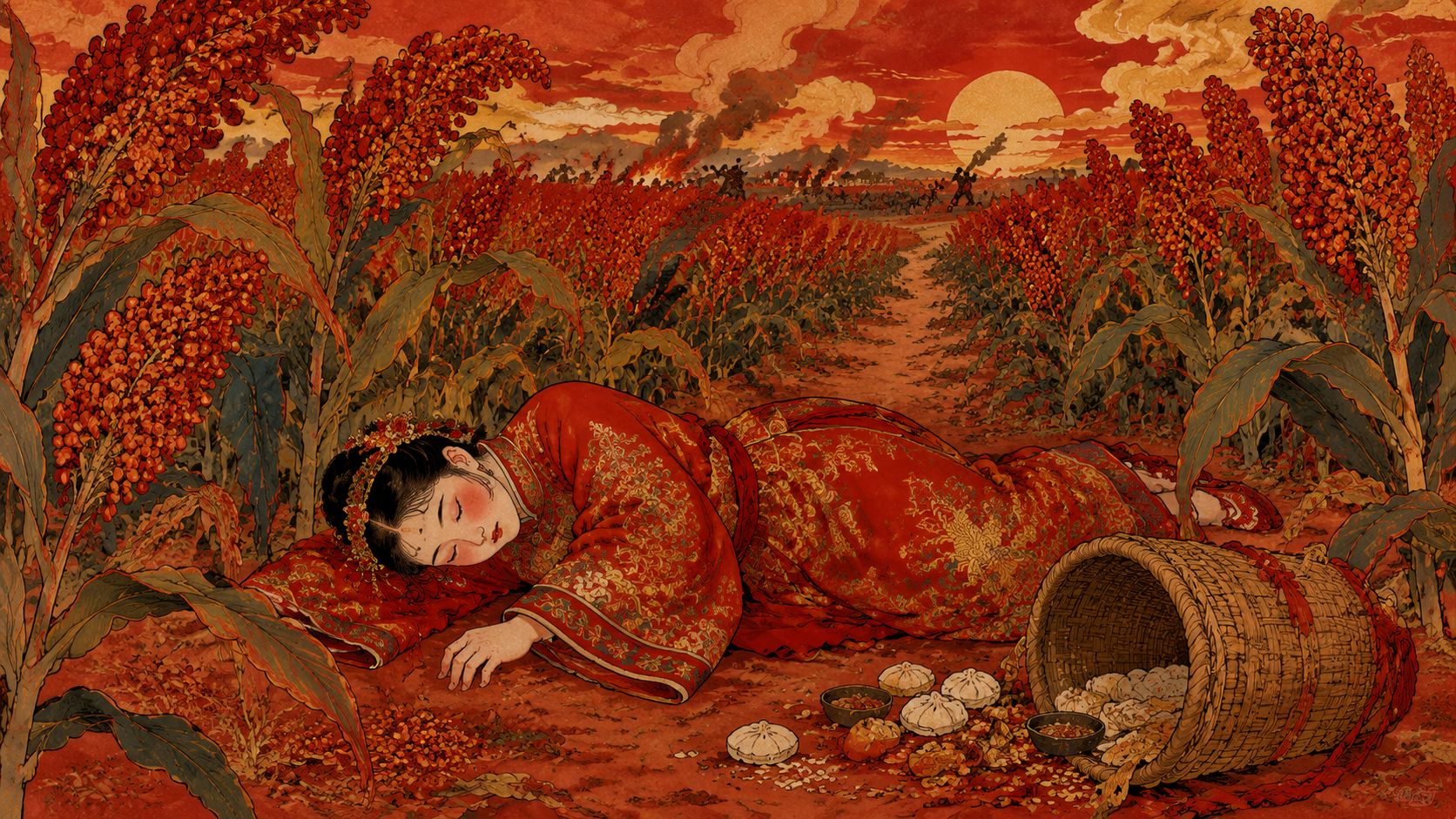
Dai Fenglian dies. She doesn't die on the battlefield — she is struck by a stray Japanese bullet on her way to bring food to the men at the front, and falls in the sorghum field. This is the moment the whole book catches in your chest. She isn't charging heroically into anything; she is simply carrying a basket of food, thinking about the man and the child waiting up ahead, walking down the road, when a bullet from nowhere in particular ends her. A woman who took over a distillery and stood as an equal beside a bandit chief dies like a single sorghum leaf blown down by the wind — light, but glaring red.
Yu Zhan'ao carries on with the men he has left, still fighting the Japanese through the sorghum — Dai Fenglian is dead now. His force keeps shrinking, but the field itself can't be burned away for good — scorch it in September and it grows back by October. He stands in the sorghum looking at the fire on the horizon, and the grief and rage tangled together in that moment come out of Mo Yan's prose like a shout. Here the book's two threads — desire and resistance — finally fold into one: the sorghum field is where they made love and where the dead get buried, where liquor is brewed and where battles are fought. Blood and liquor poured into the same ground.
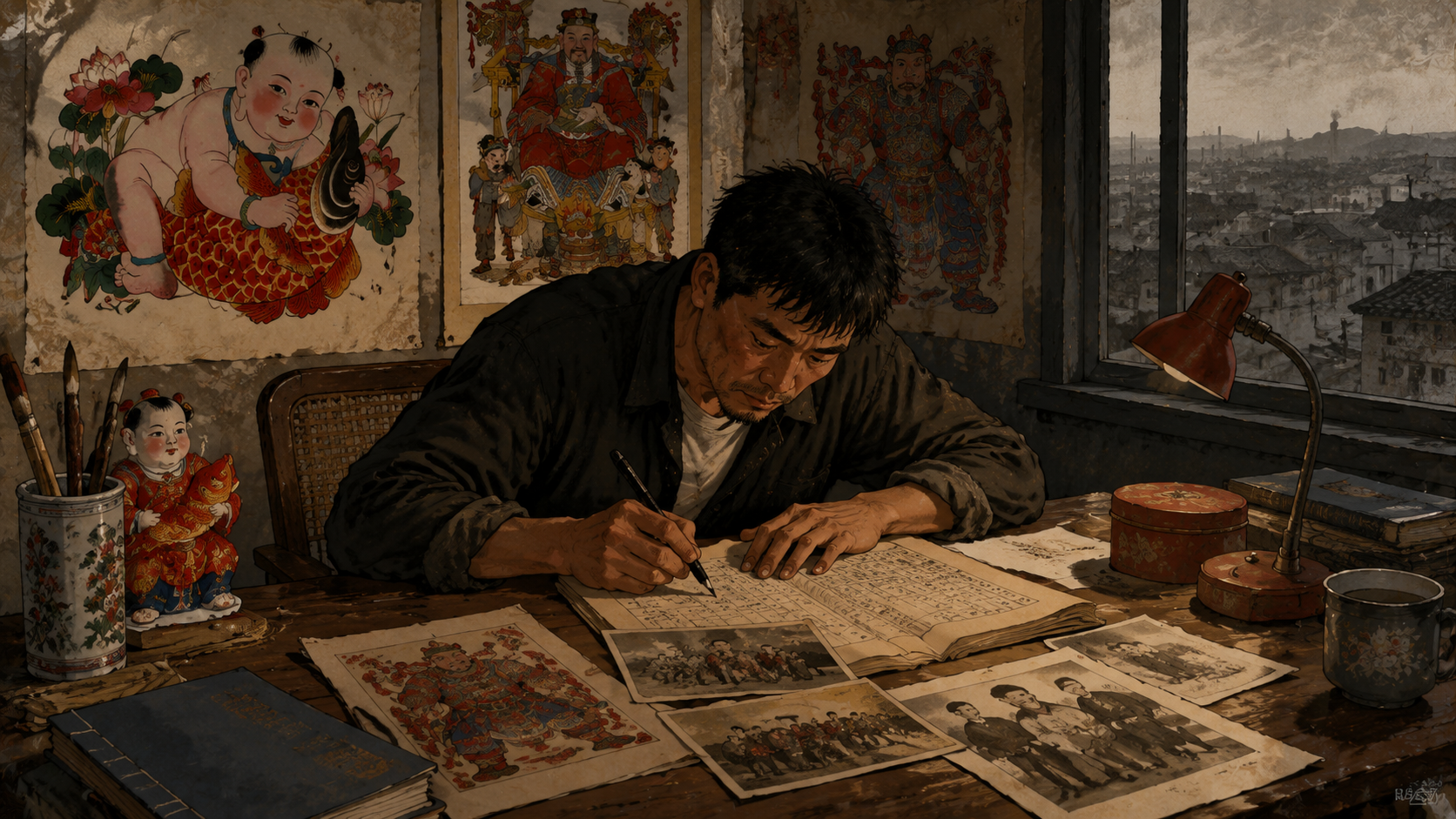
The last to step forward is the "I" who has never once appeared on the page — Mo Yan himself. Telling his grandparents' story as their grandson, his voice carries a strange kind of ache: he admires that generation, admires their wildness, their ferocity, their readiness to stake everything on a fight, and at the same time he knows that this same hot blood has thinned out by the time it reached him. The very act of sitting at his desk writing this book is itself a kind of mourning for something that can never come back.
On the surface, this is a story of resistance against Japan. Underneath, it's about something disappearing — wildness. In Mo Yan's view, the true backbone of rural China was never the people reading documents aloud at meetings, but the wild men willing to fight the Japanese to the death in their own sorghum fields, the women willing to take over a distillery and stand as equals with men, the silent old hired hands willing to stake their lives over a mule. Writing them is Mo Yan's way of reclaiming a folk vitality that official history has scrubbed clean away. So in this book, red sorghum isn't scenery, it's character. Liquor isn't a drink, it's bloodline. That field is both a battleground and a marriage bed, both a distillery and a graveyard — Mo Yan puts every act of living and dying into the same ground and lets them tear at each other.
There's a deeper theme still, and that's memory itself. By opening with terms like 'my grandfather' and 'my grandmother,' Mo Yan is telling you upfront: this is a family register, not a history book. Family memory is selective, emotional, and possibly distorted — but the distorted parts often land closer to the truth than anything in an official record. This way of writing in the gap between fact and fiction went on to shape a whole generation of Chinese writers, and it's the real reason Red Sorghum has held its place in literary history.
Decades on, Red Sorghum is still one of the rare Chinese novels that scalds your hands as you read it. Mo Yan's language carries the reek of sorghum liquor — short sentences, hard words, curses, dialect, all of it thrown in. He doesn't pose as a man of letters, which is rare among Chinese writers. Reading this book, you feel the prose itself has taken on the color of red sorghum — thick, fierce, a little choking, but exhilarating. And the book pulls off something difficult: it gives the words 'resistance against Japan' their body heat back. The heroics in a textbook are cold; Yu Zhan'ao, Dai Fenglian, and Uncle Arhat are hot — they curse, they have affairs, they'll throw their lives away over a single mule. Mo Yan makes you believe that the resistance never dropped out of the sky; it was fought, mouthful of liquor and fistful of blood at a time, by people living in these sorghum fields.