Respuesta a Sor Filotea de la Cruz (Reply to Sister Filotea of the Cross) · Companion Guide
答斐洛特亚修女书
十七世纪新西班牙的石墙里,一个修女用最恭敬的口吻逐条顶回她的主教——那是一座困在四千册藏书与上帝之间、终被没收殆尽的智识牢笼。
Opening: A Ten-Thousand-Word Reply Under the Stone Arches
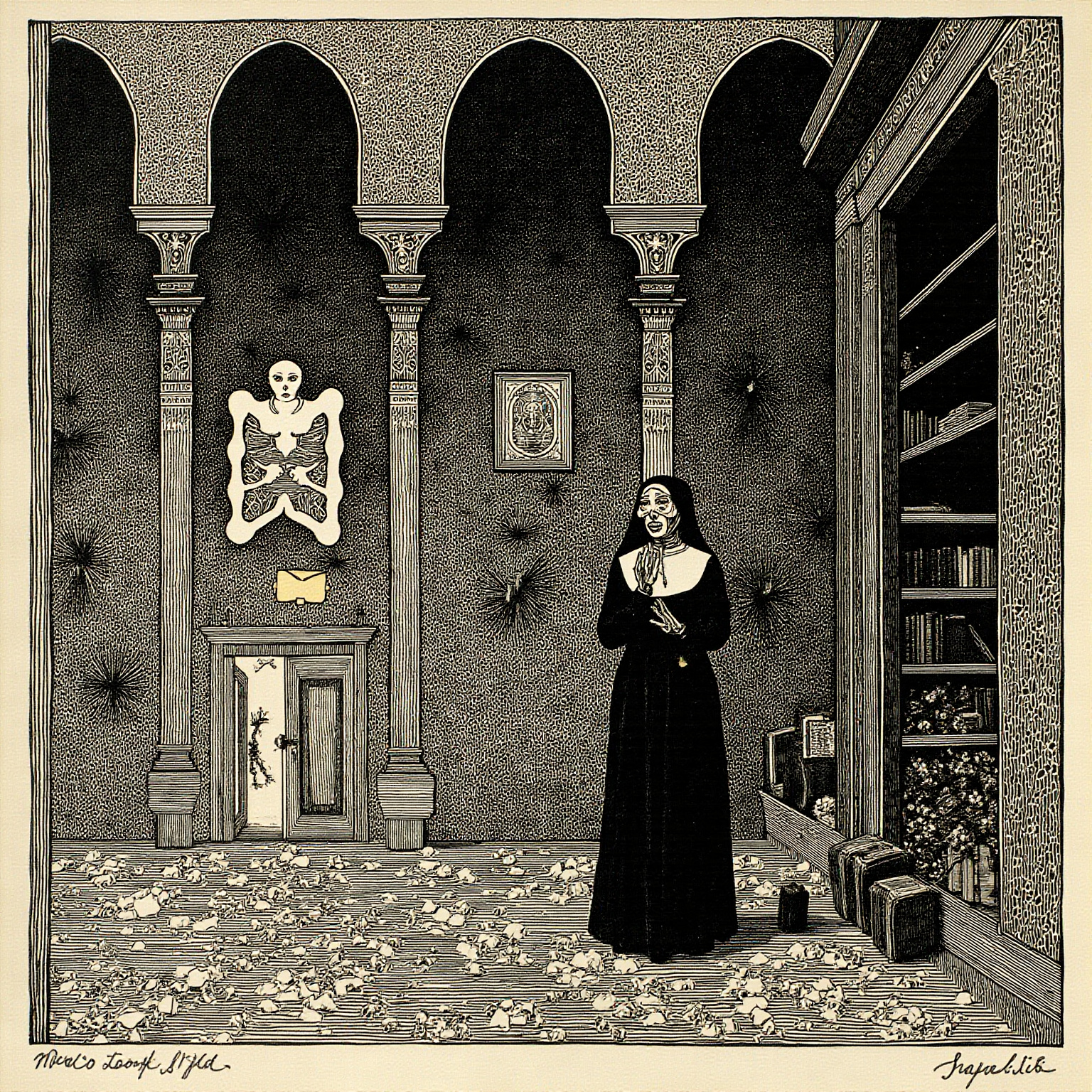
A nun kneels under a stone arcade, a quill spread across her lap. Four thousand books curve around her in a half circle, and a clock ticks in the corner. She has just finished signing a reply tens of thousands of words long. She looks up and sets the pen down. Who is it addressed to? Her bishop. He had gone behind her back, printing without her consent a letter she wrote in defense of a fellow priest, then attaching to it a public rebuke signed under the alias Sor Filotea, urging her to give up secular books and turn to scripture instead. She did not make a scene. She did not appeal to the Inquisition. She simply sat inside the stone walls of the Convent of San Jerónimo and pushed back against him, clause by clause, paragraph by paragraph, word by word.
What Kind of Book Is This
The Reply to Sor Filotea, known in full as Respuesta a Sor Filotea de la Cruz, was written in the closing years of the seventeenth century by Sor Juana Inés de la Cruz. Born Juana de Asbaje, she was the most gifted self-taught woman in colonial Latin America, known as the Phoenix of Mexico. The letter was never published on its own during her lifetime; only after her death was it folded into a memorial volume, Fama y obras póstumas del Fénix de México. Later generations have called it the first feminist manifesto of the Americas — three words she herself would never have used.
It is a letter of self-defense in the form of a spiritual apologia, and half an autobiography besides. It uses the most exacting craft of seventeenth-century New Spanish baroque prose — outwardly deferential to the point of self-deprecation, inwardly razor-sharp — to do something that sounds clumsy on paper: reload the Catholic Church's own theological arsenal with ammunition for a woman's right to knowledge.
Cast and World
There are only four or five central figures, but the author stretches the exchange between two of them — herself and her bishop — into a full drama. Sor Juana was a nun of the Hieronymite order in New Spain, seized from childhood by an appetite for knowledge she could not suppress: she could read at three, at sixteen she was writing Latin essays that stopped scholars in their tracks, at seventeen she entered the viceregal court as a lady-in-waiting, and at nineteen she took the veil — the convent gave her, above all, the freedom to read. Her opponent, and the nominal recipient of the letter, was Manuel Fernández de Santa Cruz, Bishop of Puebla, writing under the alias Sor Filotea de la Cruz. He had once been her protector. Now he had gone behind her back, printed without her consent an essay in which she defended the Jesuit Father António Vieira, and attached to it a rebuke of his own. In a single stroke he collected two reputations at once: the bishop who championed a gifted woman, and the elder who disciplined her.
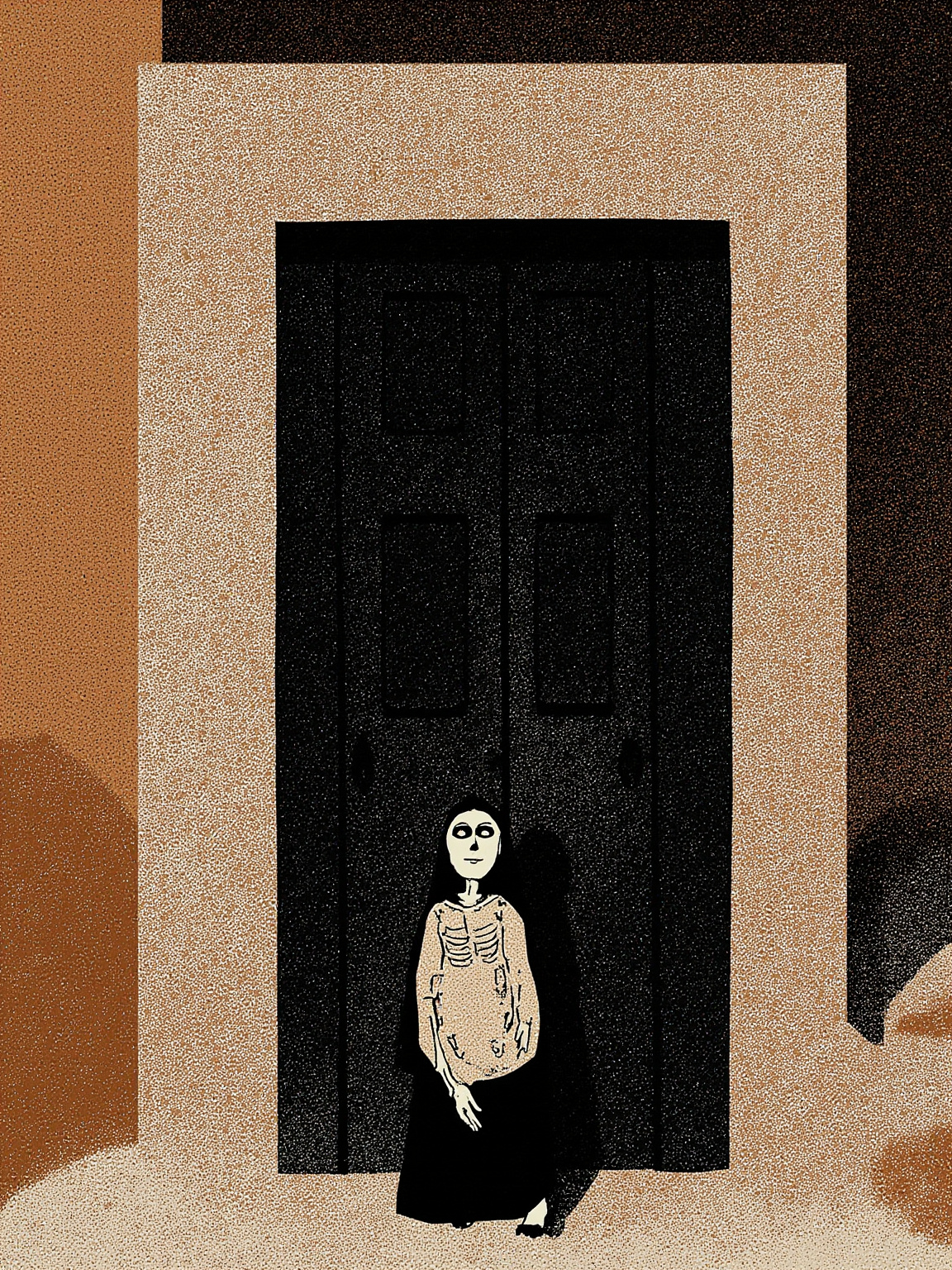
I, Sister Juana Inés de la Cruz, the worst of all the world.
我,胡安娜·伊内斯·德·拉·克鲁斯修女,举世最卑微之人。
金句 · 回信署名开篇 · 自我贬抑下的真名
Two more figures in the letter cannot be left out. One is a classical precedent she invokes to argue that if God allowed a mind this exceptional to exist, then its suppression came from men, not from divine intent: Hypatia of Alexandria, the Neoplatonist philosopher murdered by a Christian mob in 415, a piece of history Sor Juana names herself. The other is the prioress she recalls in the letter, who once forbade her to read for three months. Sor Juana says she truly obeyed: ninety full days without touching a book, during which she studied the kitchen and the garden as her only texts. That account is the real source of her famous line about philosophizing while cooking.
The Spark: A Pseudonymous Preface and a Private Letter
In Puebla in 1690, the bishop printed Sor Juana's Carta Atenagórica, her defense of Vieira, without her consent, and prefaced it with a public letter of his own signed as Sor Filotea. The preface was courteous on its surface: her talent was admirable, only misapplied; a woman's proper path was scripture, and secular philosophy should be set aside. He claimed both rewards for himself, the patron who prized her gift and the elder who reined it in. Once the letter was printed, copies spread through Mexico City fast.
Sor Juana heard the news in Mexico City and picked up her pen inside the convent walls. She knew exactly whose hand had written the pseudonymous preface — she stopped just short of naming him. But she could not expose him outright; doing so to a bishop of New Spain would have marched her straight to the Inquisition. She took a narrower, more dangerous road instead: addressing him with the most respectful titles, holding the most humble posture she could manage, and dismantling his arguments point by point.
First Line of Defense: A Case for Nature, Starting at Age Three
Her opening move is not to argue with the bishop but to lay herself bare first. At three, she followed her sister to a reading school and was sounding out words before the teacher had finished the alphabet. When her grandfather tried to stop a three-year-old from learning, she cried until he gave in. As a girl she eavesdropped on her brothers' Latin lessons, no one teaching her, and taught herself until she could write Latin essays that made trained scholars pause before they dared answer. During her years as a lady-in-waiting at the viceregal court, every free minute went to reading; while others danced, she turned pages — strands of her own hair, she says, still turned up caught in the book from how fast she read.
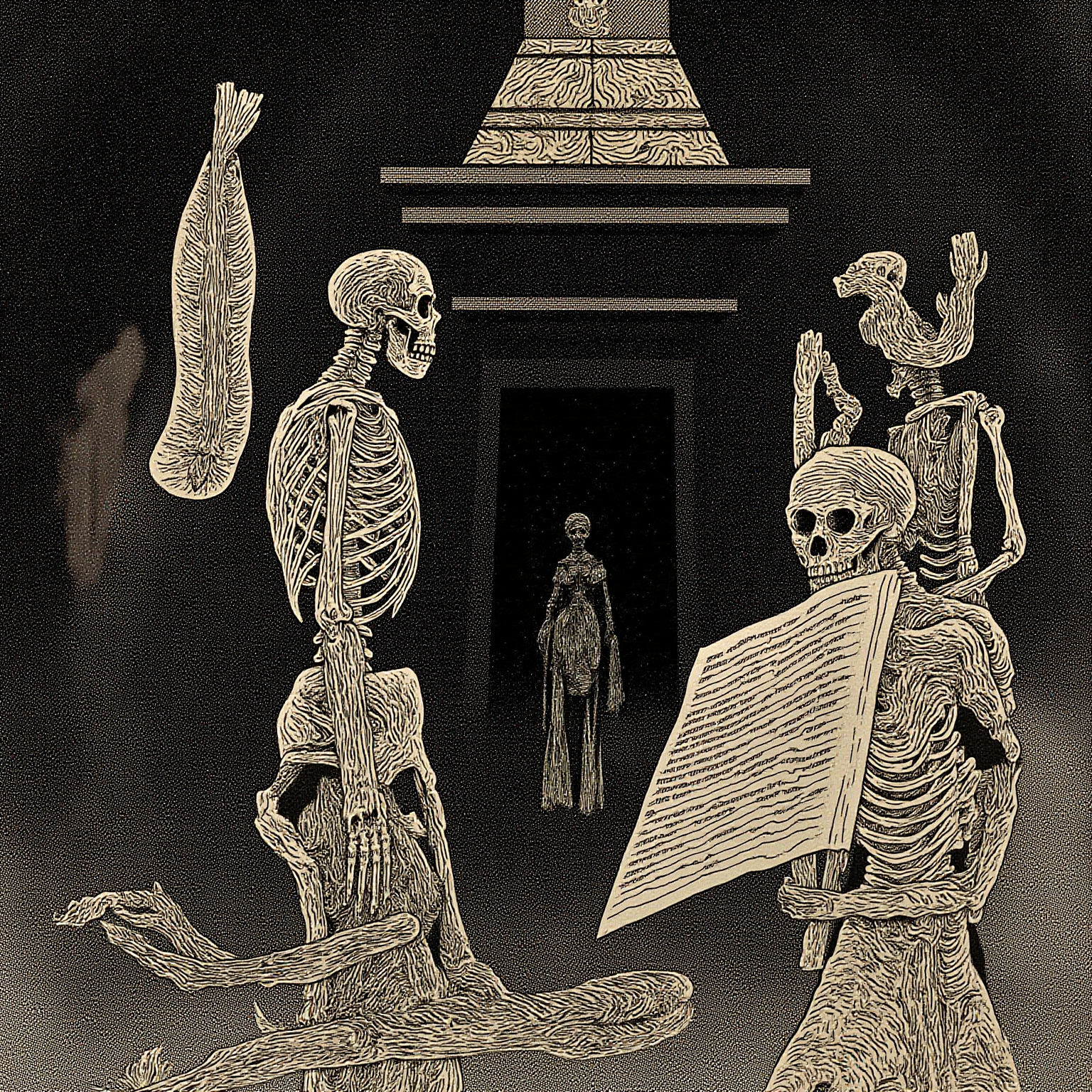
I followed, as it were, a falcon that, by its natural impulse, follows the game, not by instruction.
我不是被教出来的——我是像猎隼那样,凭着天性里的那股冲动,自己追着猎物飞过去的。
金句 · 第一层防线 · 自学拉丁文的少年追述
She is not showing off. She is laying a foundation: the hunger for knowledge is not ambition acquired later, it is a nature given by God, and a nature suppressed only returns with greater force — a point she draws not from her own authority but from the bishop's own writing. If God placed this longing inside a woman's body, is the man who blocks it acting for God's sake, or for his own convenience? Once that question is on the table, everything after it follows.
Second Line of Defense: A Roll Call of Biblical Wise Women, and Hypatia
What she brings forward is a long line of named women. Deborah, the judge of the Book of Judges, who sat under the palm and decided matters of state when the men would not act. The Queen of Sheba, who came to Solomon with hard questions and left even the wisest man alive unable to stump her in return. Abigail, who stopped David from slaughtering her household, showing more quick wit than her own husband. Rahab, a prostitute who hid the spies of Israel and was written into the genealogy of Jesus. And further back still, Hypatia of Alexandria, the Neoplatonist philosopher murdered by a Christian mob in 415, the brightest mind of late antiquity.
Sor Juana lines them up before the bishop one by one, and the logic reduces to a single sentence: if God allowed minds like these to exist in women's bodies, to be written into scripture, even to appear among the Church's own enemies, then the suppression of women is not God's will but men's. It is a list of wise women drawn entirely from inside scripture and the Church, a list no theologian could reject on its own terms — she could not have made it more obedient to doctrine, and she could not have made it hit harder.
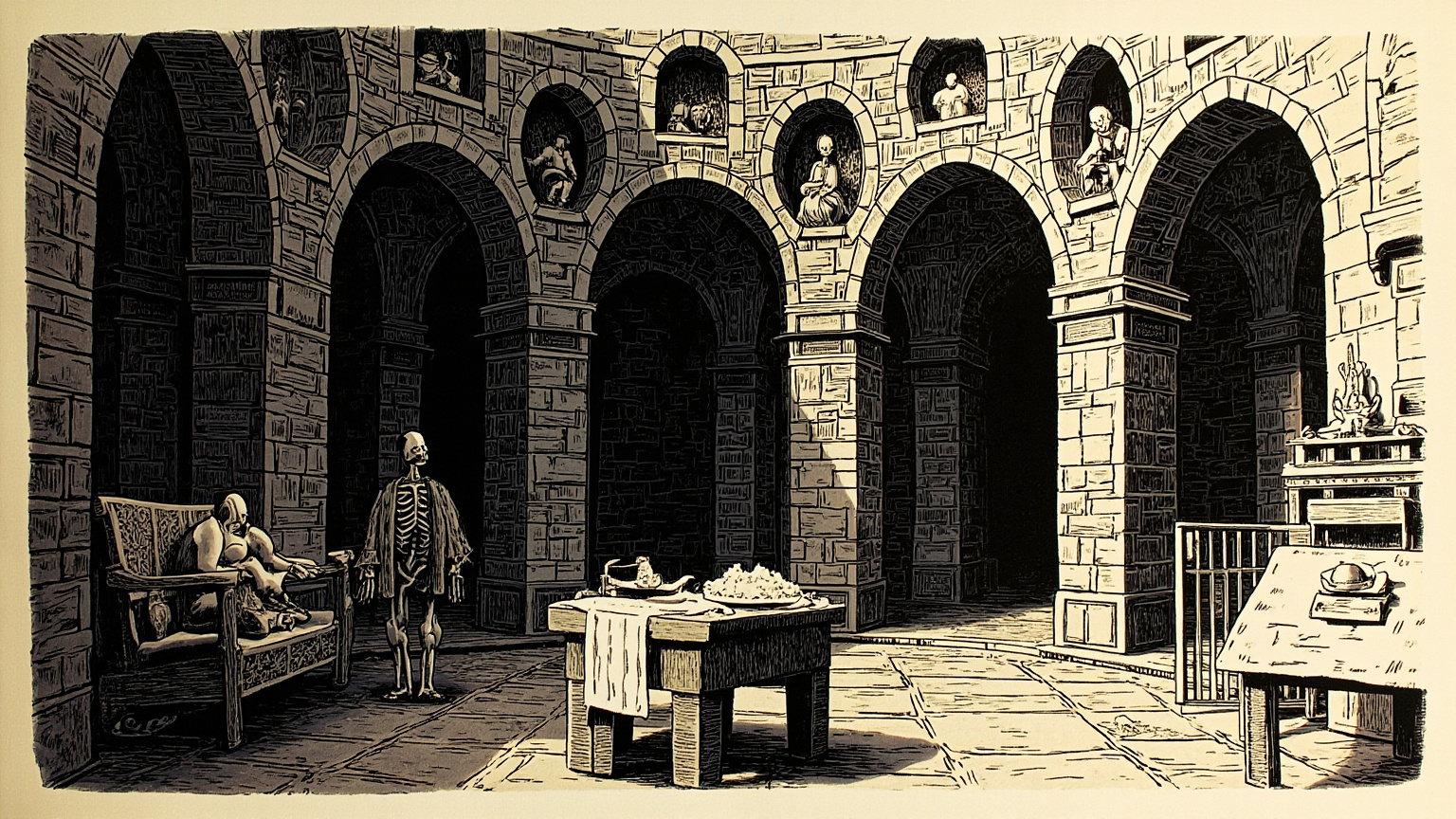
If God had not wished such women to exist, He would not have permitted them to exist.
既然神允许这样杰出的女子存在,她们便是被人的便利压制,而非神意所不容。
金句 · 第二层防线 · 德波拉与希帕提娅名单的结句
Third Line of Defense: Translating Secular Learning into a Gateway to Scripture
The bishop's central charge is that she has crossed a line: theology is not a woman's business. Sor Juana takes the blow and turns it, borrowing the voice of a male scholar, Doctor Arce, to make her case, because in that era a man's voice carried authority hers could not. Doctor Arce's own theological argument supports a central claim: that a gifted woman studying, writing, even teaching scripture in private is among the things most likely to build up the faithful.
This is the turn the whole letter pivots on. She does not plead for secular learning on its own terms; she reclassifies logic, rhetoric, physics, and history as necessary preparation for understanding scripture. You want me to stop reading secular books? I tell you the opposite: secular books are the only tool that lets anyone read your scripture correctly. Then she fires a quiet arrow of her own — having a male teacher instruct girls in reading, writing, and arithmetic brings the real danger of improper closeness to men. With that single line she leaves no room for anyone in the bishop's camp who might have proposed a girls' school taught by men.
Philosophizing While Cooking, and the Shell of Humility
Partway through the letter comes the line, drawn from her own account of the three months the prioress banned her from books and sent her to the kitchen instead: what could a woman understand, besides the philosophy of the kitchen. The line is humble to the point of self-mockery, and it fuses kitchen, housework, and philosophy into one thing. She is not saying a woman should not cook. She is saying that even while cooking, the mind keeps working.
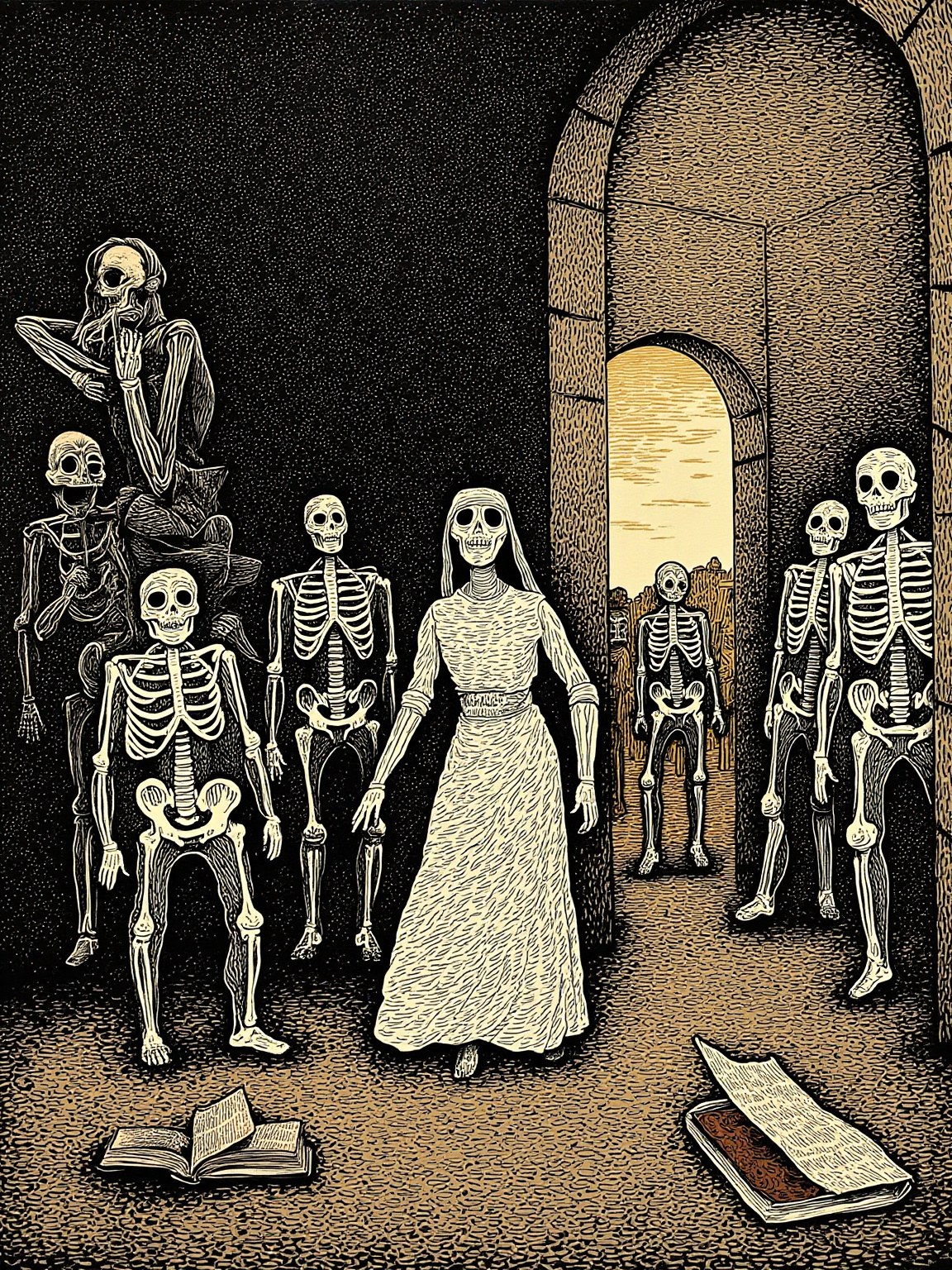
What can we women know, save for philosophies of the kitchen?
我们女人还能懂些什么呢,至多不过是厨房里的哲学罢了。
金句 · 中段厨房自述 · 谦卑外壳里最锋利的一刀
The whole letter's rhetoric is wrapped in this humility. She opens by praising the bishop's talent and his care for her, her posture pitched so low it seems to nail her to the floor. But every compliment is followed by a turn, dismantling the argument point by point and raising a counterexample. The first time I read the middle stretch of this letter, I stopped short too — how could a nun push someone this hard while staying this polite? Then it became clear: in a New Spain where the Inquisition still operated, this was the most dangerous and the most respectable way a letter of self-defense could survive.
The Close: Crediting Every Gift to Grace
In the final passage she returns to the highest point of humility: if she has any talent at all, it is not hers but God's, lent to her; whatever she used, she must account for; whatever she misused, she must answer for twice over. She credits every bit of her learning back to divine grace, and signs even her name as a nun. It is a fine closing move. Anyone speaking for women from inside the Church must first hand herself back to the Church, or be crushed by it.
She restates, in the letter, that she reserves the right to disagree with any male scholar, including Father Vieira, the very man she had once defended and whom the bishop now used as the pretext to attack her. It is the quietest line in the entire letter, and the hardest.
She never appealed to the Inquisition, never wrote a public manifesto. Inside stone walls, in the most respectful tone she could manage, she pushed the bishop back point by point — the most dangerous, most respectable way a nun in seventeenth-century New Spain could survive.
The Irony of the Ending
The letter was finished. She was still alive in the early 1690s. By the middle of the decade she had died of an epidemic. After three years of silence, the Convent of San Jerónimo, acting on orders from above, from the same Manuel Fernández de Santa Cruz who had once rebuked her under a false name, confiscated her entire library of four thousand books, her clock, and every instrument she owned, and sold them off at market. The defense she wrote on behalf of women ended, in the end, by closing out her own writing life for good.
I do not study to know more, but to merit the light I have received.
我读书并非为了知道更多,而是为了不辜负那一点已经落在身上的光。
金句 · 信末推恩于神 · 收束
Today her face is printed on the Mexican 200-peso note, and she has been posthumously named the first woman thinker of the Americas. Her letter has become a cornerstone of Mexican national identity, laid, as it happens, directly on top of her own four thousand books.
Why the Original Text Is Worth Reading
An explainer gives you the map. The letter itself is the land. There are things here no summary can carry over. First, the pleasure of the baroque Spanish sentence itself: the way it pulls you into a maze of clauses and then, at the very end, produces one sharp, precise point. Second, the physical texture of the stories themselves, the childhood reading, the three months without books, the almost nervous energy of the prose describing it, texture that evaporates the moment it gets paraphrased. Third, the double rhetoric, humble on the surface and razor-edged underneath, whose tension only builds properly if you read it from the start. And one more thing: in three hundred years, few readers have done what I did — reaching the passage on Hypatia and turning back a page to reread the part about Deborah.
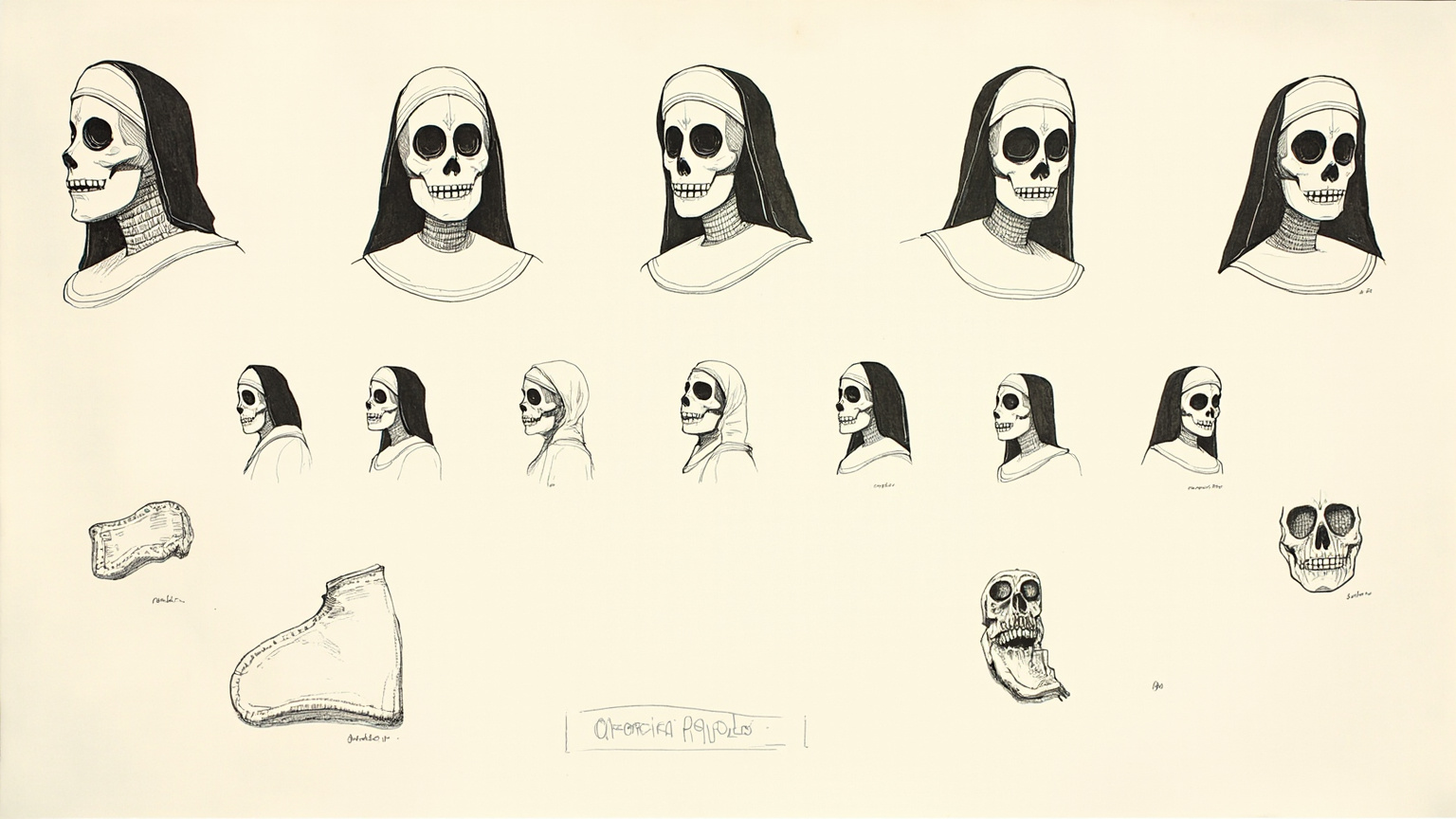
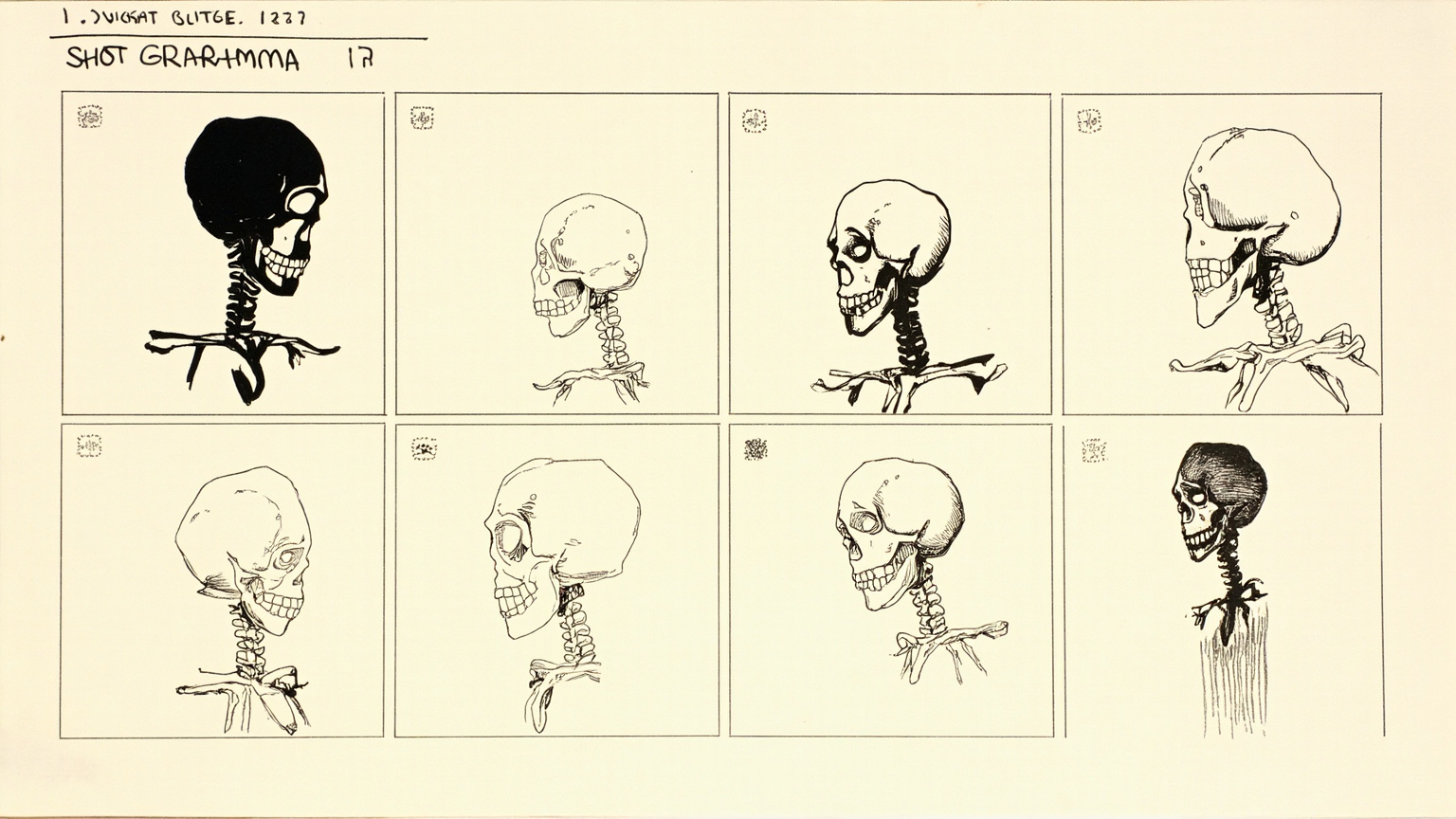
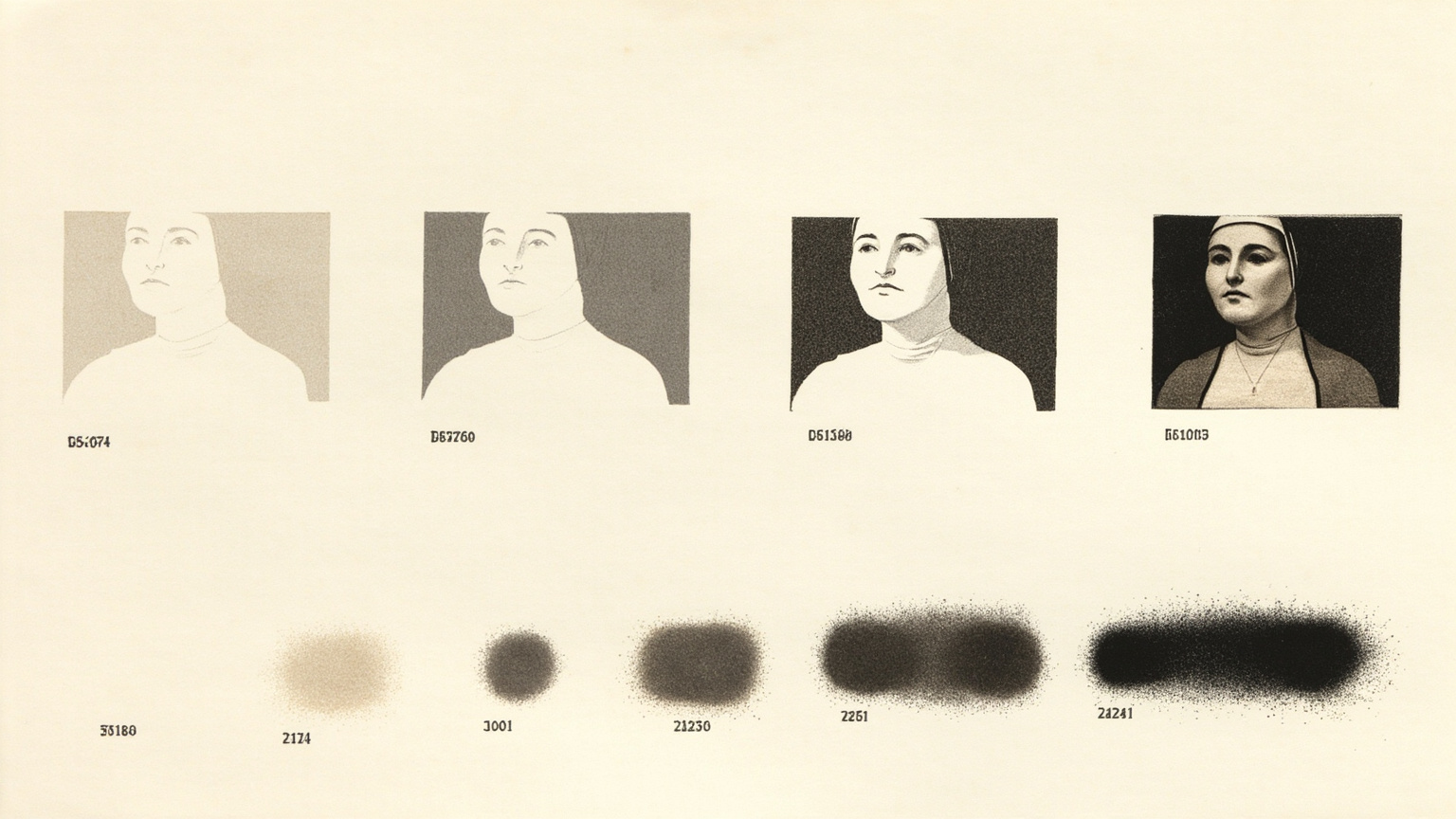
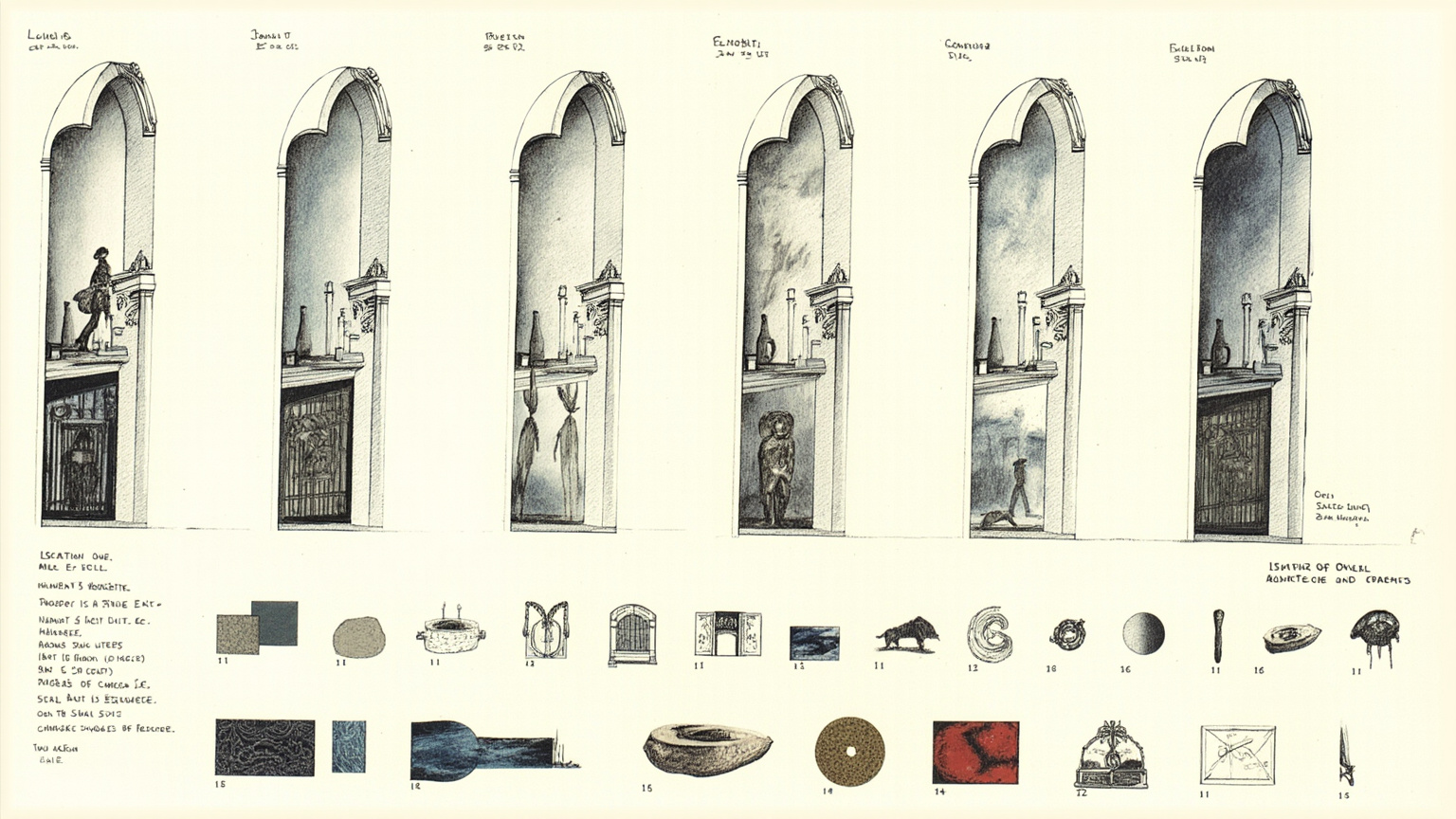
Art Direction4 plates
Before the guide was written, this book got a visual foundation — every illustration you just read grew out of it.