Russian Fairy Tales (collected by Alexander Afanasyev) · Companion Guide
俄罗斯童话
一只发光的鸟、一片蓝雪原、一个被低估的小儿子——远行、岔路口、一只会说话的灰狼。
Opening: A Bird That Glows
A bird lands on an apple tree. It takes one peck, and the whole tree catches fire — not a figure of speech, an actual fire. The bird is gold and red all over; its feathers throw enough light to fill a dark room. It has no name. Everyone just calls it the Firebird. A tsar sends his youngest son to catch it. The prince runs through the birch forest all night without so much as touching a feather, and then the Grey Wolf appears.
This is the doorway into Russian fairy tales — not 'once upon a time,' but a glowing bird, an indigo snowfield, an underestimated youngest son. The Germans tell Cinderella. The Danes tell the little match girl. The Russians tell you about a long journey, a fork in the road, and a wounded Grey Wolf.
What Kind of Book Is This
Alexander Afanasyev, the most important Russian folklorist and literary critic of the nineteenth century, spent his life collecting folk tales. For most of his adult years he combed the countryside, pulling hundreds of stories out of oral tradition and publishing them volume by volume until they filled eight books. He didn't 'write' this book — the stories belong to the oral tradition of Russian peasants. He was only the man holding the pen.
In the shelf space of European fairy tales, the Brothers Grimm, Hans Christian Andersen, and La Fontaine take up nearly all the room — the whole Slavic corner sits empty. Afanasyev fills it, and what he fills it with tastes different: different monsters, a different palette, even a different arithmetic for how good deeds get rewarded. This book is a second map of European fairy tales, laid next to the Grimms' and lining up with almost none of it.
Characters and World
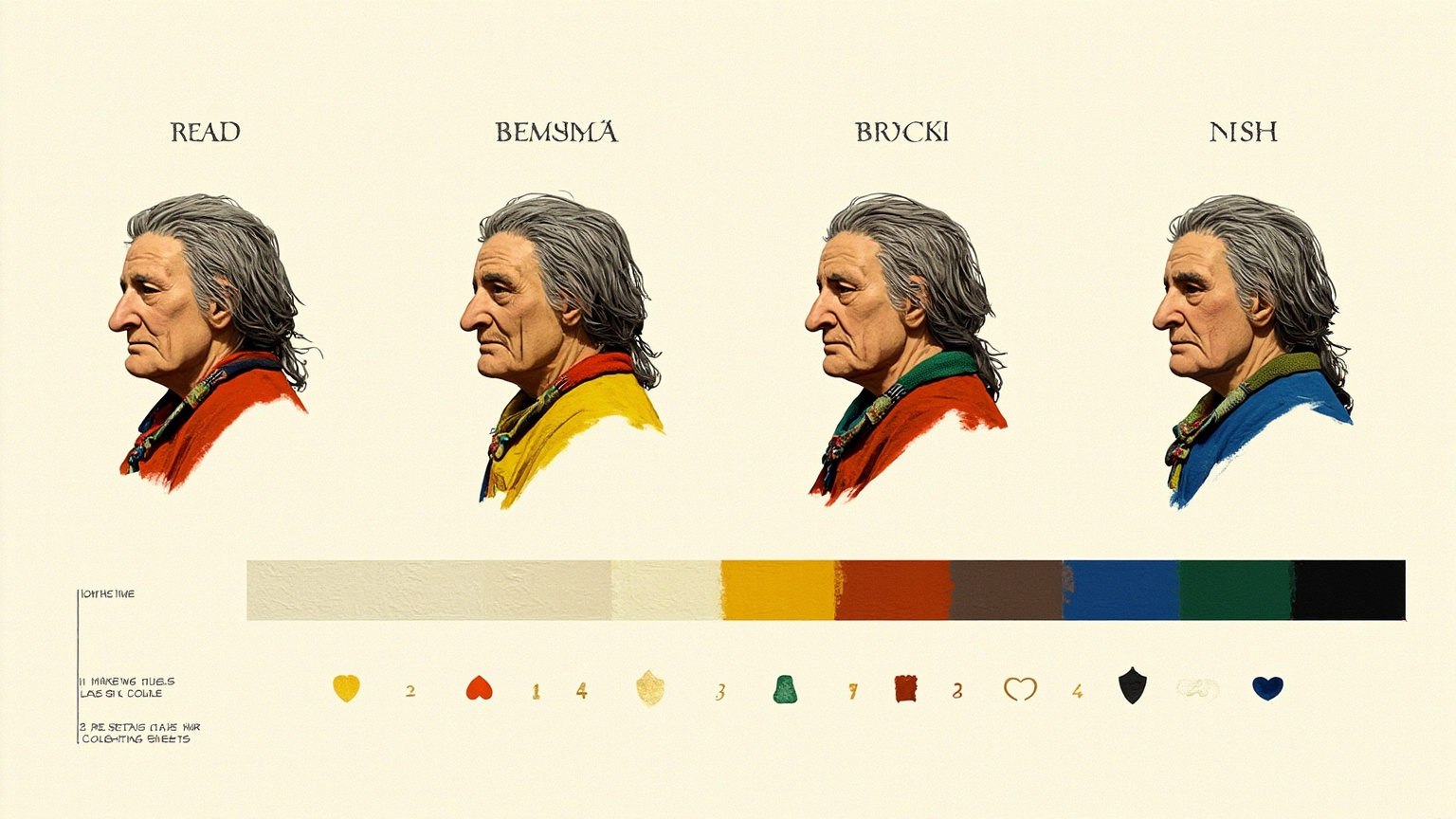
Ivan Tsarevich — red coat, white shirt, tall boots, a curved saber or a silver bow slung across his back — is close to the only silhouette a hero takes in Russian folk tales. He is the tsar's youngest son, the one everybody underestimates, forever getting his credit stolen by his two older brothers. The Grey Wolf has to be grey; a black wolf or a white wolf that can't talk doesn't count here. He's big enough to carry a rider a thousand miles in a day and is Ivan's most reliable magical helper. The Firebird is the prize of the quest, or its trap. The princess is a stock figure waiting to be rescued — blonde, dressed in a long Russian noble gown, wearing a traditional headdress, standing in place until the hero arrives.
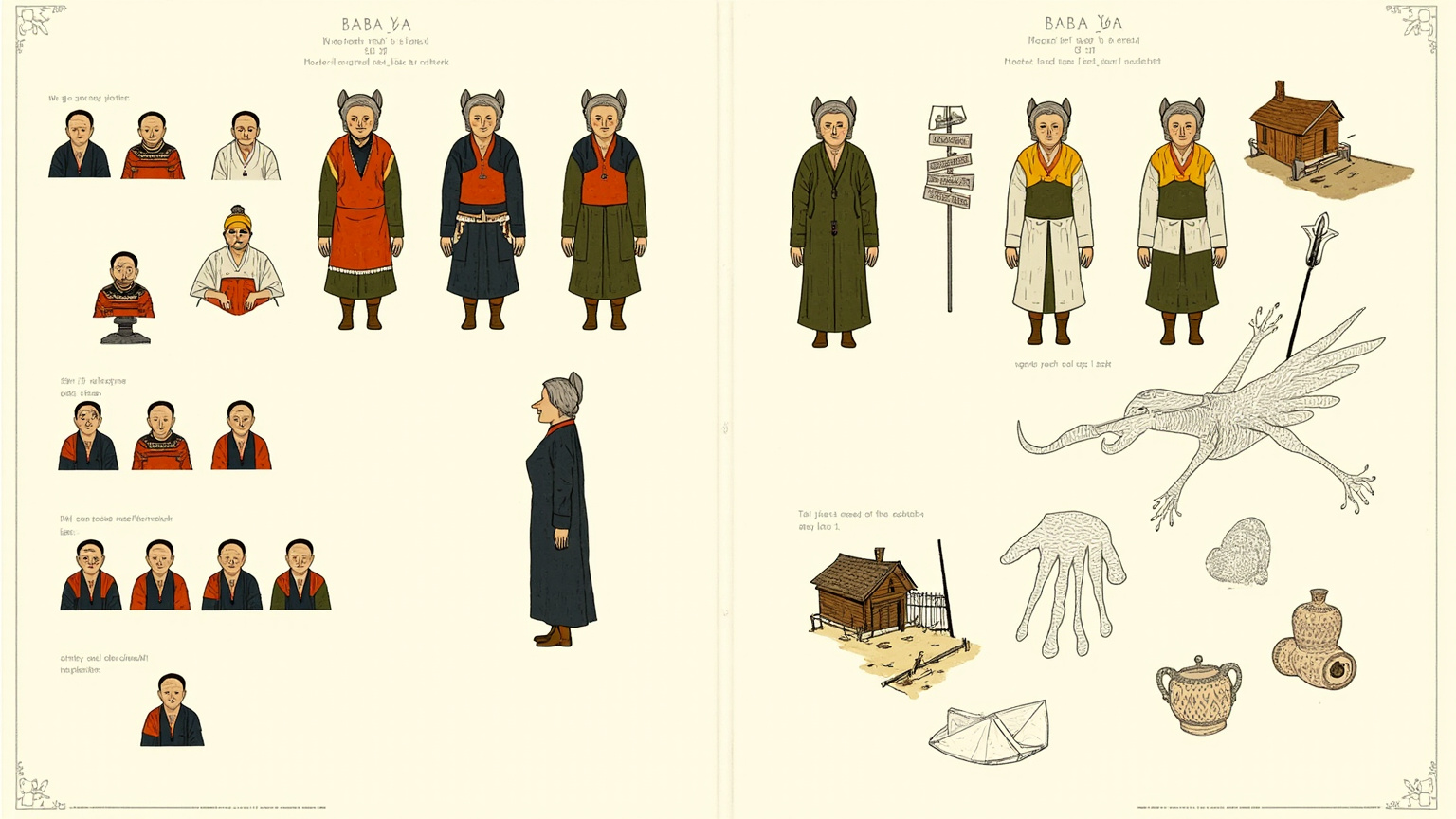
The villains wear two fixed faces. One is Baba Yaga — tall and gaunt, with a hooked nose like a bird's beak, living in a hut that spins on chicken legs, flying around in a mortar, her yard ringed with a fence of bones. She eats travelers who wander too close, and in some tales she doubles as a harsh examiner. The other is Koschei the Deathless — a withered old man, or sometimes just a robed skeleton — whose death is hidden inside a set of nested objects: a needle inside an egg, the egg inside a duck, the duck inside a rabbit, the rabbit inside an iron chest. Find the needle, and Koschei dies.
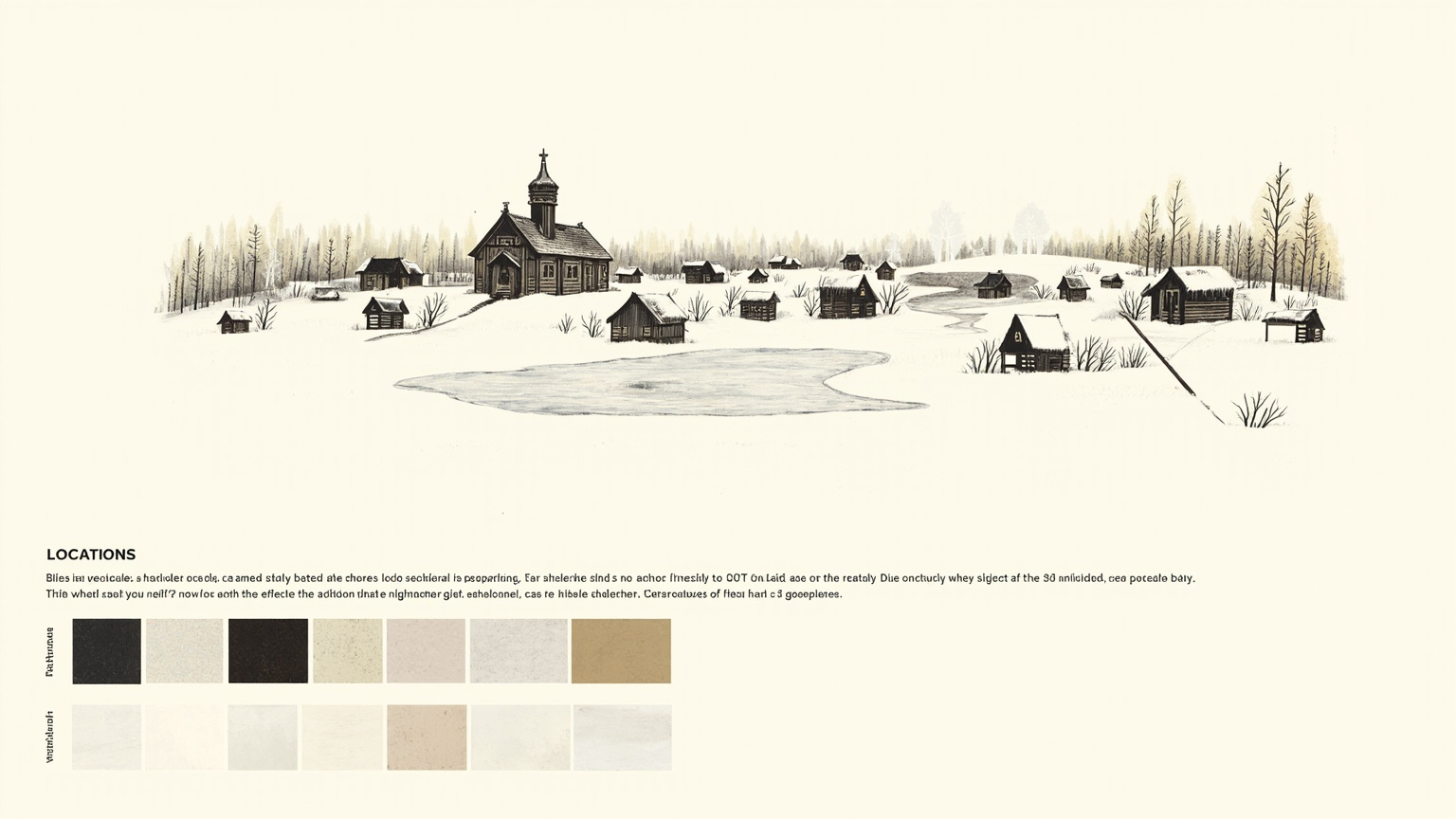
The world isn't pinned to any year or dynasty. It's birch forests, snowfields, the silhouette of an onion-domed church, ponds sealed under ice and snow banked knee-deep, a crooked signpost at a fork in the road reading: straight ahead is death, ride on and you lose your horse, walk and you'll live. That's Russia, as folk tales tell it.
How the Plot Moves
The story always starts with an impossible task. A tsar points at a painting of the Firebird and says, bring it to me. Or an old farmer tells his three sons, whoever brings back the magic horse gets the inheritance. The task always falls to the youngest, because his two older brothers either duck it outright or are already down the road, waiting to sabotage him. The stepmother is the same kind of obstacle wearing a different face — she tricks her stepdaughter into the snow wearing the thinnest coat she owns. This is the formula of departure, the first key Russian folk tales press again and again.
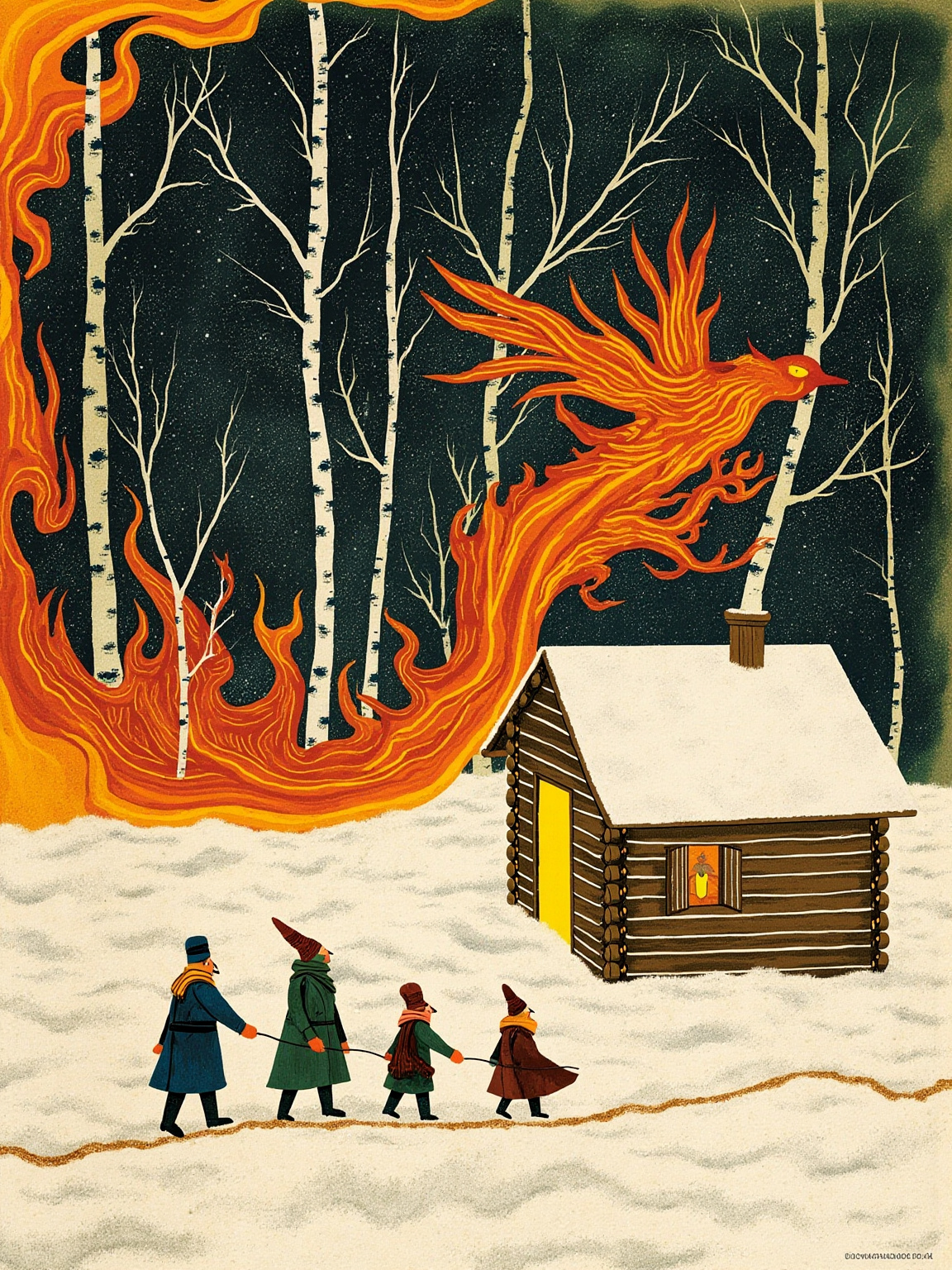
Fetch me that Fire-Bird, wherever it may be found.
你去把那火鸟给我捉来,不管它在什么地方。
金句 · 第1章 · 火鸟
The second key is the fork in the road. The hero pushes deep into the forest and always runs into a crooked signpost, or a wounded Grey Wolf. The wolf can talk, can carry a rider, and asks only that you not kill it first — usually right after you've just felled a tree or cut down some demon. Spare it, and it carries you over nine mountains and through nine kingdoms, drops you at the enemy's door, and warns you on the way, whatever you do, don't take that road. You take that road.
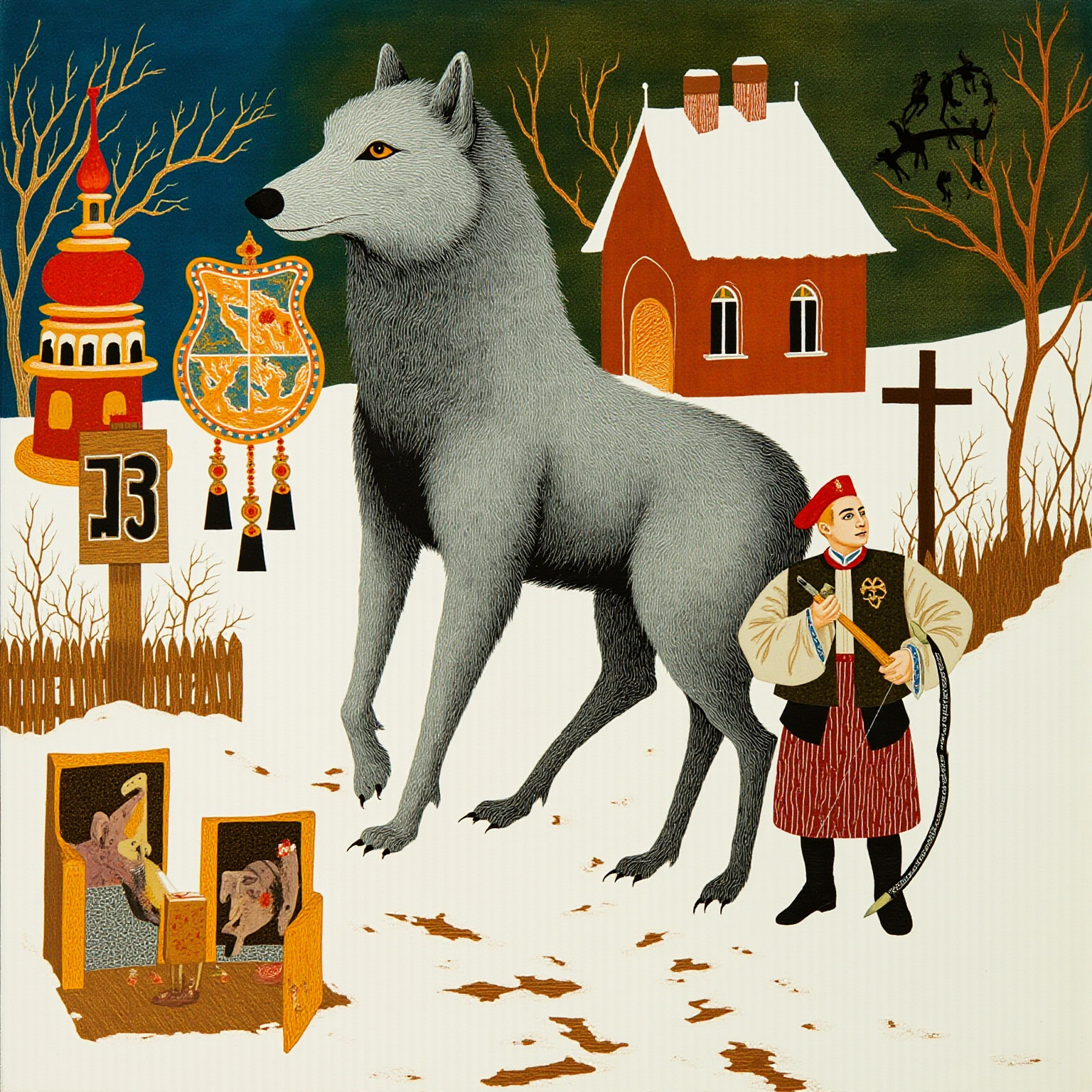
Ride forth — and you shall lose your horse. Go on foot — and you shall be safe. Go straight — and death lies there.
若策马而去,你将失去坐骑;若徒步而行,你将平安无事;若笔直前去——死在那里候着你。
金句 · 第3章 · 岔路口
Then comes the ordeal. The hut on chicken legs spins to a stop deep in the forest, the shadow of its bone fence turning circles across the snow. Baba Yaga flies in and out through the chimney, nose twitching at the smell of a Russian intruder. Or the hero slips into Koschei's copper castle and finds the needle — hidden in an egg, hidden in a duck, hidden in an iron chest inside a hollow oak. What breaks the deadlock is never muscle, always wit: trade a Firebird feather for the magic horse, slip into the castle in a cap and boots of invisibility, snap the needle inside that egg — and Koschei drops dead on the spot.
Baba Yaga sits in her hut that turns on chicken legs, and the needle that holds the death of Koschei is hidden in an egg, the egg in a duck, the duck in a hare.
芭芭雅嘎坐在鸡脚撑起的旋转小屋里;而科舍伊的死亡,藏在一枚针上——针在蛋中,蛋在鸭中,鸭在兔中。
金句 · 第5章 · 死亡之针
But the story isn't over — the real drama is the trip home. The hero rides back with the princess and the treasure, and his companions — often his own brothers — either push him off a cliff or get him drunk and abandon him in the wilderness. But the Grey Wolf he once spared, or the crow, or the eagle, dives down out of the sky and carries him back into the world of the living. The ungrateful get torn apart or struck dead by lightning. This is the coldest turn in Russian folk tales: the thing that saves you is the thing you once saved.
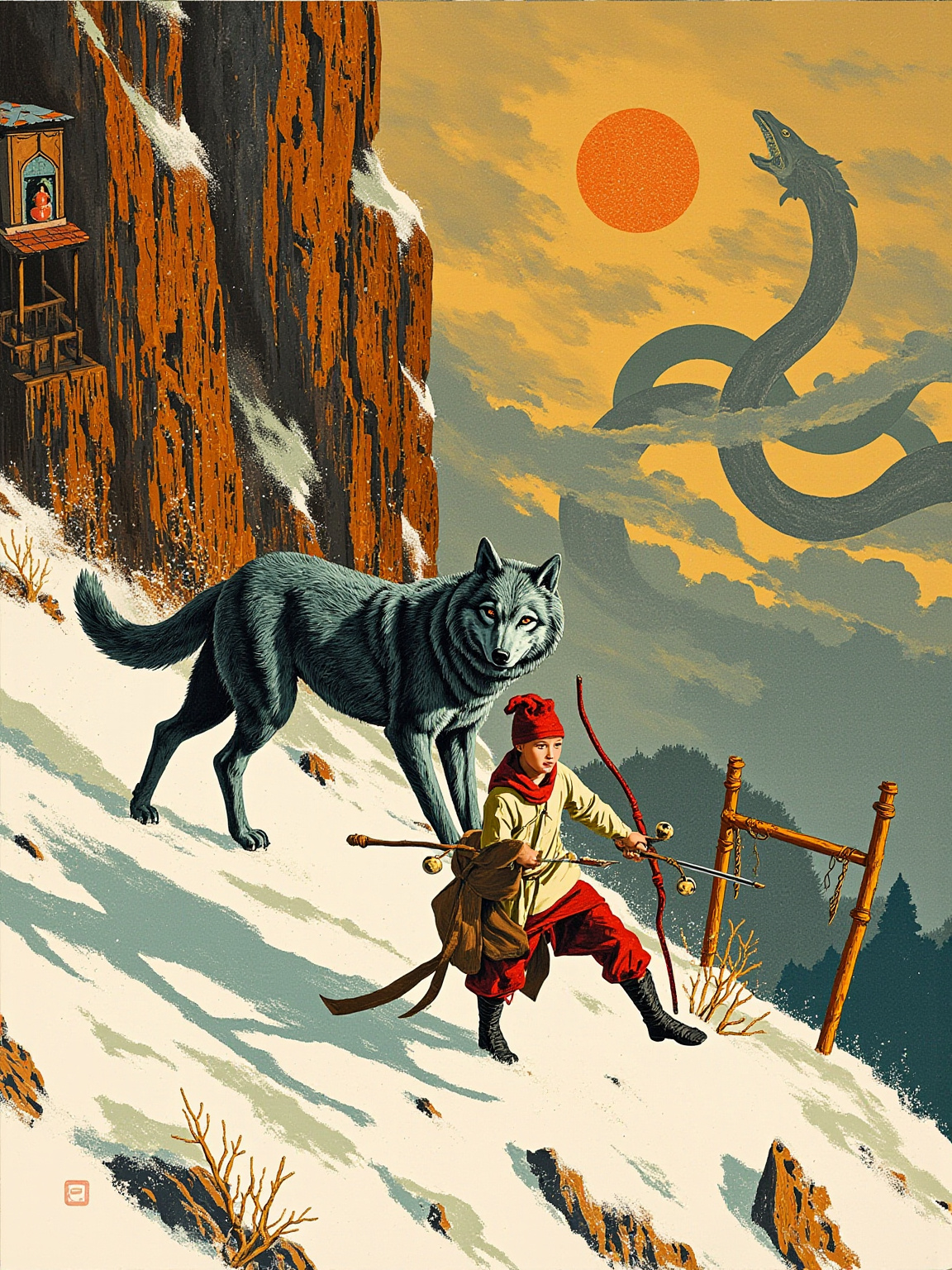
His brothers pushed him into a deep pit; but the grey wolf, remembering his mercy, came snuffing through the forest.
兄长把他推下深渊;而那只灰狼记着他的恩情,正从林中一路嗅来。
金句 · 第7章 · 忘恩者
Moral accounting runs on a separate arithmetic here. 'Father Frost' is the cleanest sample of it: a stepmother pushes her stepdaughter into the snow in the thinnest coat she owns, meaning to let her freeze. Father Frost — a white-robed, white-bearded spirit who walks the winter forest — asks her, again and again, are you cold? The honest girl gets warmed and wrapped in furs; the two spiteful ones freeze into columns of ice. This isn't punishment, it's a trial — not the Grimm arithmetic of the good ascending and the wicked descending, but ice and snow testing what's true against what's false.
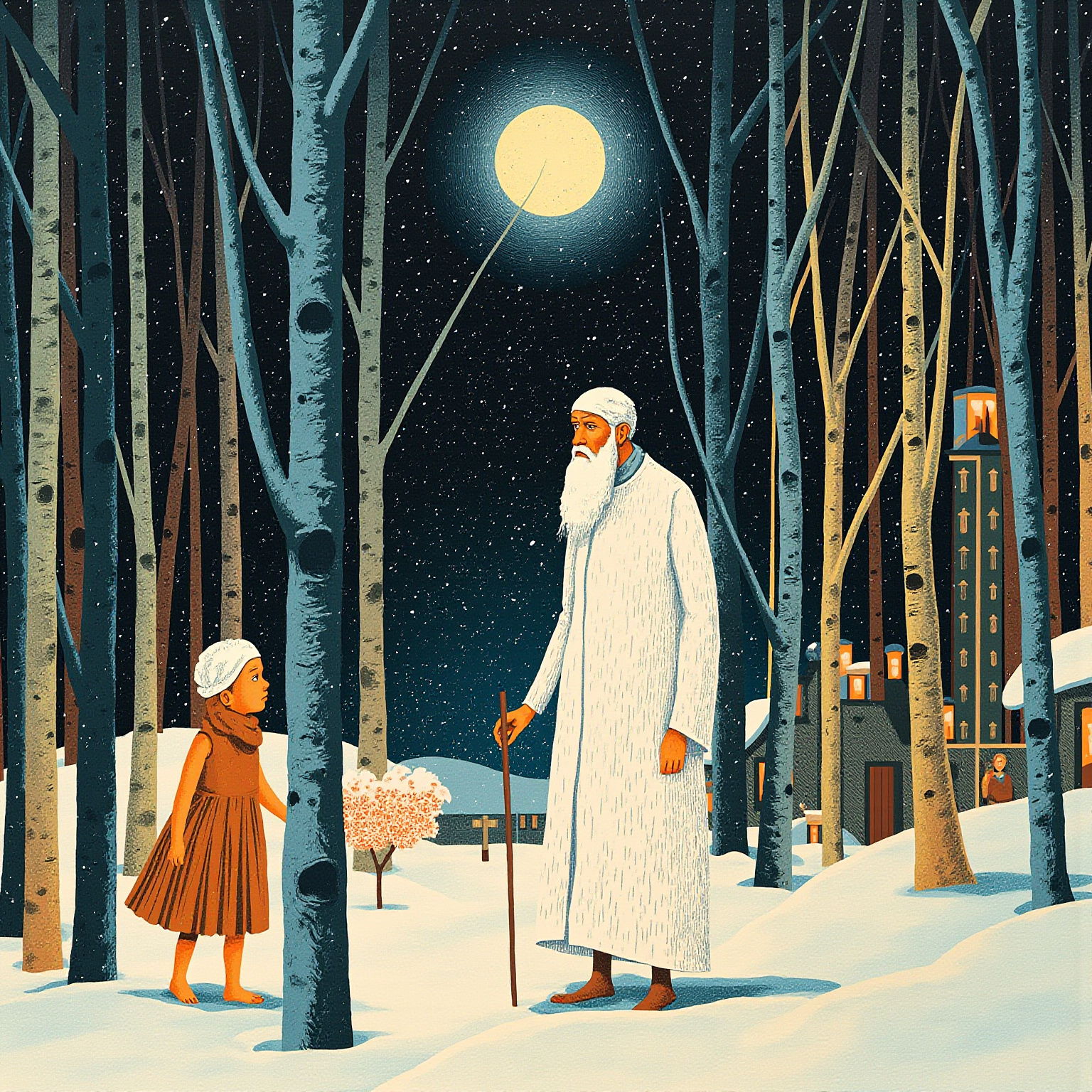
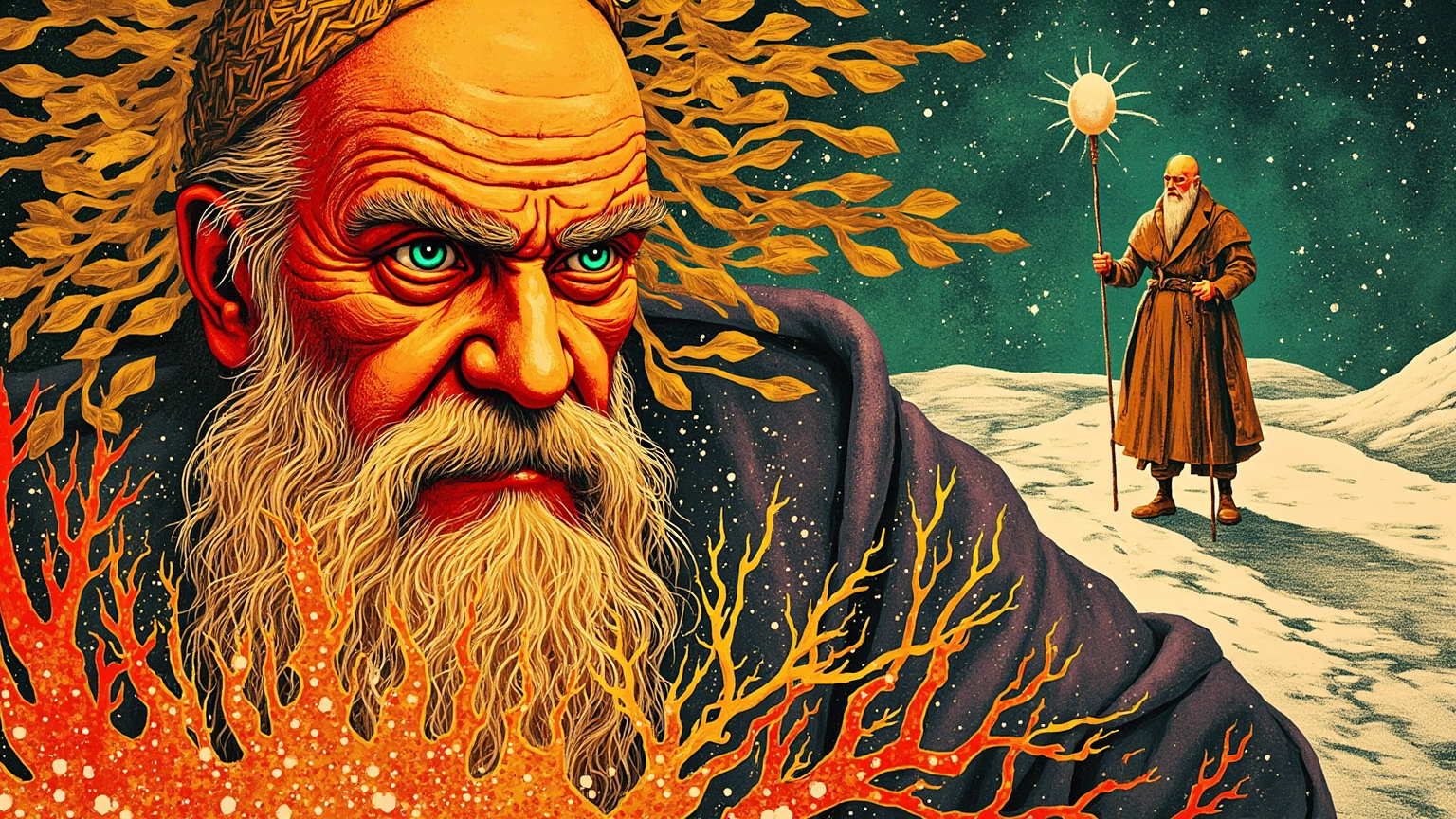
Art thou cold, little maid? — and the honest one answered, I am cold, grandfather.
冷吗,小姑娘?——那诚实的孩子答道:冷啊,老爷爷。
金句 · 第6章 · 严寒老人
Vasilisa runs the opposite kind of heroine's line. Sharp-witted Vasilisa is sent by her stepmother to Baba Yaga's hut to borrow fire. In her pocket she carries a little doll — a kukolka — that gives her instructions and answers. The hut is a gauntlet of trials: she has to scrub stains that appear on the floor out of nowhere, sort a bowl of skull eyes, ten black to one white. The doll does the work for her, and she carries home a coal that burns on its own, safe and sound. Her stepmother and the stepsisters get a different ending. It's the daughter the stepmother sends who can't get past Baba Yaga's hut; the errand meant to finish off Vasilisa turns on the one who set it running, and in the end it's the stepmother who dies of it. This is a rare thing in Russian folk tales — a heroine who wins with her mind, not her muscle.
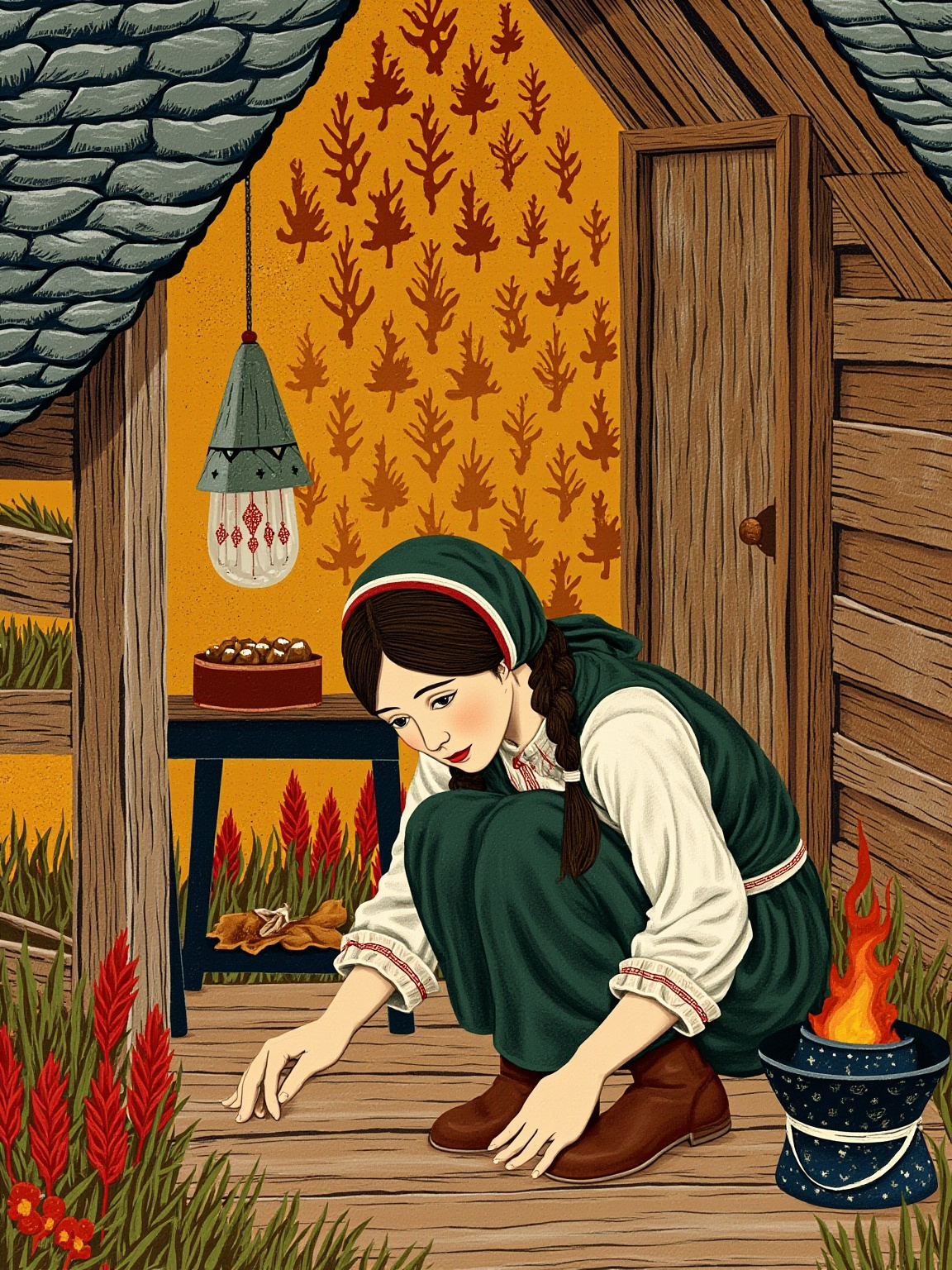
Vassilissa the Wise went into the dark hut, and the little doll in her pocket whispered the answer.
聪明的瓦西里莎走进黑暗的小屋,而她口袋里那只小玩偶,轻轻向她耳语了答案。
金句 · 第8章 · 瓦西里莎
Nearly every ending comes stamped from the same mold: a wedding, a coronation, and the stock closing line — I was there too, I drank the mead, felt it run down my mustache, and never touched my tongue. It's an Easter egg the countryside storytellers leave for their listeners: if you got lost in the story, consider the toast already raised to you.
Themes and Craft
What this book is really about is the test. The fork in the road is a test. Baba Yaga's hut is a test. Father Frost is a test. Even ingratitude is a test — the Grey Wolf saves you so that later on, you're tested on whether you remember it. Every character is an exam paper: which road do you take, do you spare the wounded wolf, do you tell your stepmother the truth or a lie. Every choice leads to a clean settlement.
Half the reason this book gets credit for being good is that it has been badly underrated for over half a century. German and Danish tales have nearly cornered the European fairy-tale shelf, and the whole Slavic corner is close to absent from the Chinese-language world too. Plenty of people have read Grimm; almost nobody has read Afanasyev. Open this book and you run straight into a visual system and a narrative rhythm that line up with none of it: the Firebird against birch forest, the Grey Wolf against the hut on chicken legs, Koschei's nested death against Father Frost's questions in the snow. This is a different Europe.
For a reader today, it means more than 'a different Europe.' These tales are the source of Slavic oral narrative — every visual signal of 'Russianness' you've since met in films, games, and picture books — the hut on chicken legs, the fence of bones, the Grey Wolf, the onion-domed church — flows out of this book. It's a founding dictionary, and it's also a door.
The Hook to Go Read the Original
A guide like this can give you the map. It can't give you the wind in the birch forest. The stock phrases of Russian country storytelling in the original — I was there too, I drank the mead; a nose hooked like a bird's beak; a needle inside an egg, the egg inside a duck — carry a rhythm when spoken aloud that any written retelling thins out. And there are the hundreds of stories I left out here: animal fables, worldly jokes, local legends, each one with its own scent. Go pick up Afanasyev. Smell the snowfield for yourself.
Grimm tells you the cause and effect of good and evil. Afanasyev gives you their exam — and the test is ice, a fork in the road, a wounded Grey Wolf.
Art Direction4 plates
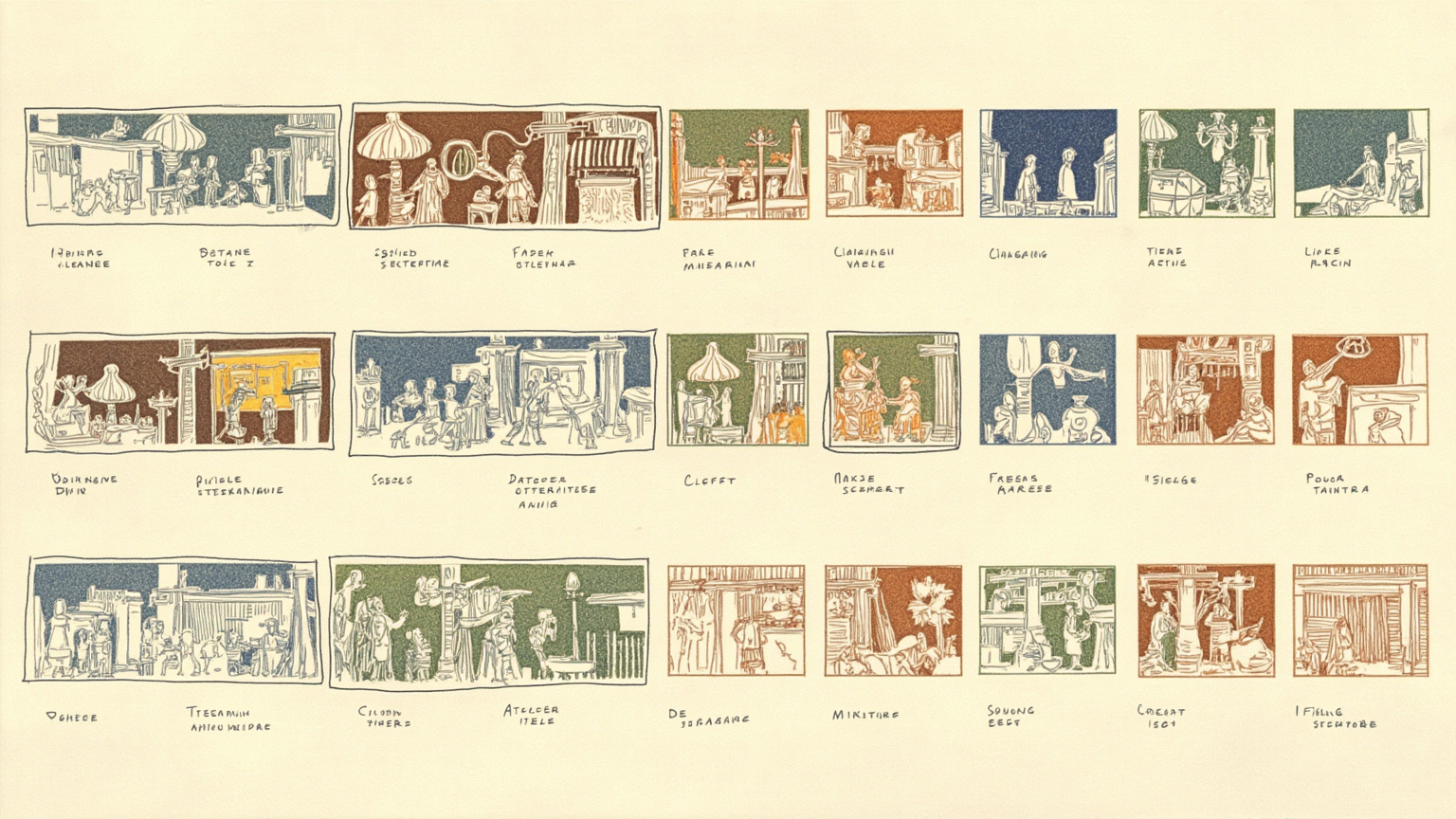
Before the guide was written, this book got a visual foundation — every illustration you just read grew out of it.