Saint Joan: A Chronicle in Six Scenes and an Epilogue · Companion Guide
圣女贞德
一个不识字的农家少女,如何以极度清醒的判断力,让整个法兰西朝廷和教会都无法安放她。
The Hook
A nineteen-year-old shepherd girl stood at the stake in Rouen's old market square, ordered to trade her men's clothes for a dress or there would be no reprieve. She refused. On the thirtieth of May, 1431, she burned. Twenty-five years later, the Church overturned its own verdict. Centuries after that, an Irish playwright wrote a play about her: six scenes and an epilogue, and he had no intention of letting anyone who had judged her off easy.
What Kind of Book This Is
Saint Joan: A Chronicle in Six Scenes and an Epilogue was written in the early twentieth century, published in London in 1923 and staged on Broadway that same year. It is among the most important plays from the years Shaw won the Nobel Prize in Literature, and the least comic thing he ever wrote. He had built a career on wit and sarcasm; here he set the habit aside, pulled an old saint's story down out of the stained-glass window, and planted it on the ground of real history. Ever since, almost any version that tries to make Joan a person rather than an icon has had to get past this one first.
People and World
The play is set in France near the end of the Hundred Years' War. Fifteenth-century France was split three ways: the English held a great stretch of the north, the royal court was barely surviving in the south, and Burgundy wavered in between. Joan is an illiterate farm girl from the Lorraine borderlands, and the first thing Shaw has her say is not a prophecy but a judgment — she knows which way to go, whom to persuade, how to fight. Around her stands a cast of adults who calculate everything down to the bone: the Dauphin Charles, shrewd and cowardly, still tallying costs even as she pushes him toward the throne; Baudricourt, the governor of Vaucouleurs, who treats the "mad girl" from the country as a joke until she simply refuses to leave; Dunois, the Bastard of Orléans, the frontline commander and the first noble officer she wins over; the Archbishop of Reims, who crowns her when it suits him and will not lift a finger for her afterward; and the bishop-judge at Rouen, a canon lawyer who prosecutes her with professional coldness and privately recants only after the fact. There is also a young English officer, Captain John, left alone in his cell with a guilty conscience — Shaw gives him the play's one unbearable line: "I have burned a saint."
A Barren Tree, and the Person It Grew
Scene One is set in Domrémy. Joan says she hears voices. The village women half believe her, half doubt her; the old headman sighs and lets her go. From the very first scene, Shaw refuses to write a miracle — what she hears is a very quiet command inside her, like a river suddenly changing course. There is no hysteria, no golden light, no angel falling out of the sky. All she has is this: she decides on something, and then she goes and does it.
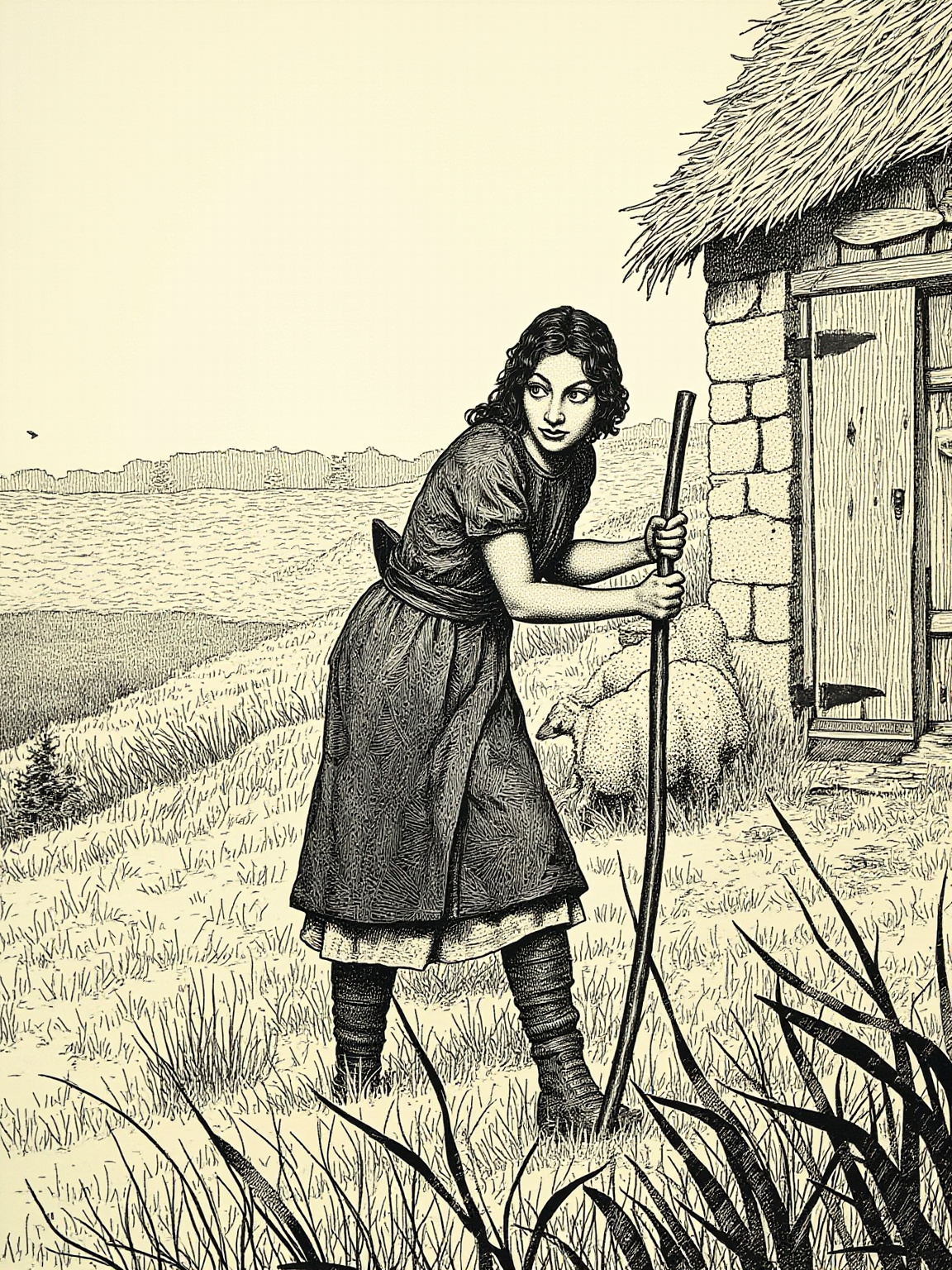
How otherwise could I do what I have done, or have any hope of doing what I would do?
若不是如此,我如何做得了已做之事,又如何敢去做我愿做之事?
金句 · 栋雷米 · 贞德论声音
Outlasting the Laughter of Bureaucrats
Scene Two, Vaucouleurs. When she reaches Baudricourt, the governor treats her request as a drinking-table joke — a farm girl claiming she can lift the siege of France, who's going to believe that? She gets shoved, pushed around, called a madwoman. Shaw writes the scene like a visit to a government office: Joan isn't talking prophecy, she's talking logic, and she talks the official past his own arguments. Baudricourt finally agrees to send an escort, not because he's convinced, but because he's worn down and out of patience. A shepherd girl getting a provincial governor to hand over horses is, in its own small way, a revolution.
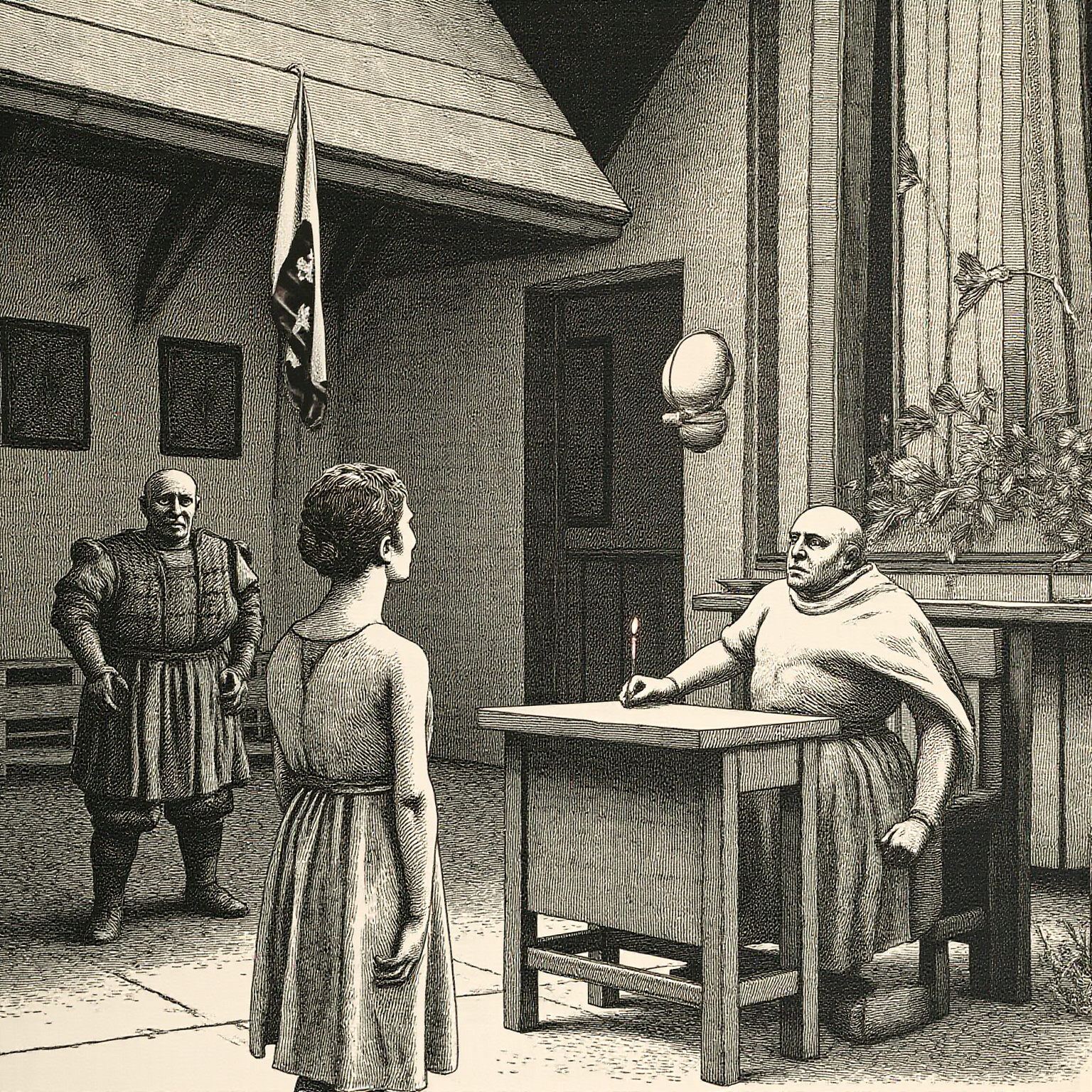
I am not mad; and I am not afraid. I am not used to being refused.
我没疯,我也不怕。我不惯被人回绝。
金句 · 维勒勒伊 · 求见博德里库尔
One Glance, and She Picks Him Out of the Crowd
Scene Three is the finest stroke in the whole play. In the great reception hall of Chinon Castle, the Dauphin Charles wants to test how much truth there is in this girl of legend, so he hides himself among his courtiers and lets her pick him out. Shaw refuses to let the scene rest on a miracle. Joan walks into the hall, sweeps the room with one look, and goes straight to the shabbiest-dressed, most uncomfortable-looking young man in it, pulling the Dauphin himself out of his own disguise. This is not second sight. It is a read on people — she isn't looking at crowns, she's looking at whose knees are shaking. From this moment on, she is no longer a name out of prophecy. She is a piece on the political board that no one can move.
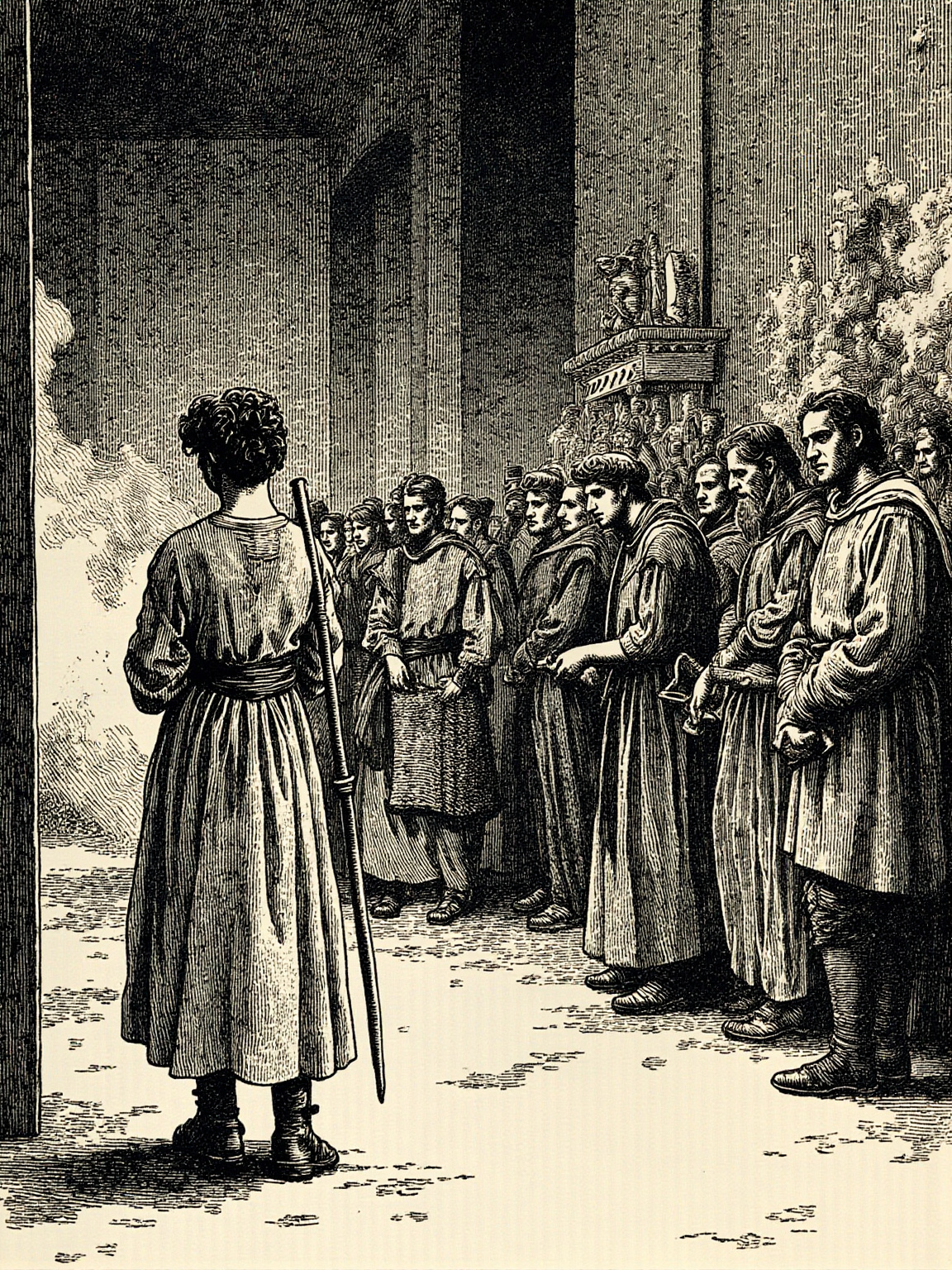
I know you, you Dauphin: you think yourself a clod; but you are not. Will you give me a crown?
我认出你了,王储殿下:你自认是块土疙瘩,其实不是。你肯不肯把一顶王冠交给我?
金句 · 希农 · 觐见王储
Orléans: Noble Officers Take Orders from a Farm Girl
Scene Four, Orléans. Shaw writes the lifting of the siege with restraint — not blood, but judgment. The noble officers start out mocking her: a girl who has never held a sword, giving orders to them? She doesn't argue back. She points out the weak spots in the fortifications, which stretch of wall the English can't hold, which day's wind favors an attack by fire. The judgment lands, and the mockery shrinks. Dunois, the Bastard of Orléans, is the first to be won over, and becomes her steadiest ally from then on. What makes the scene work is that she has no supernatural power on the battlefield, only a clear head under enormous pressure. This isn't a saint descending. It's clarity beating chaos.
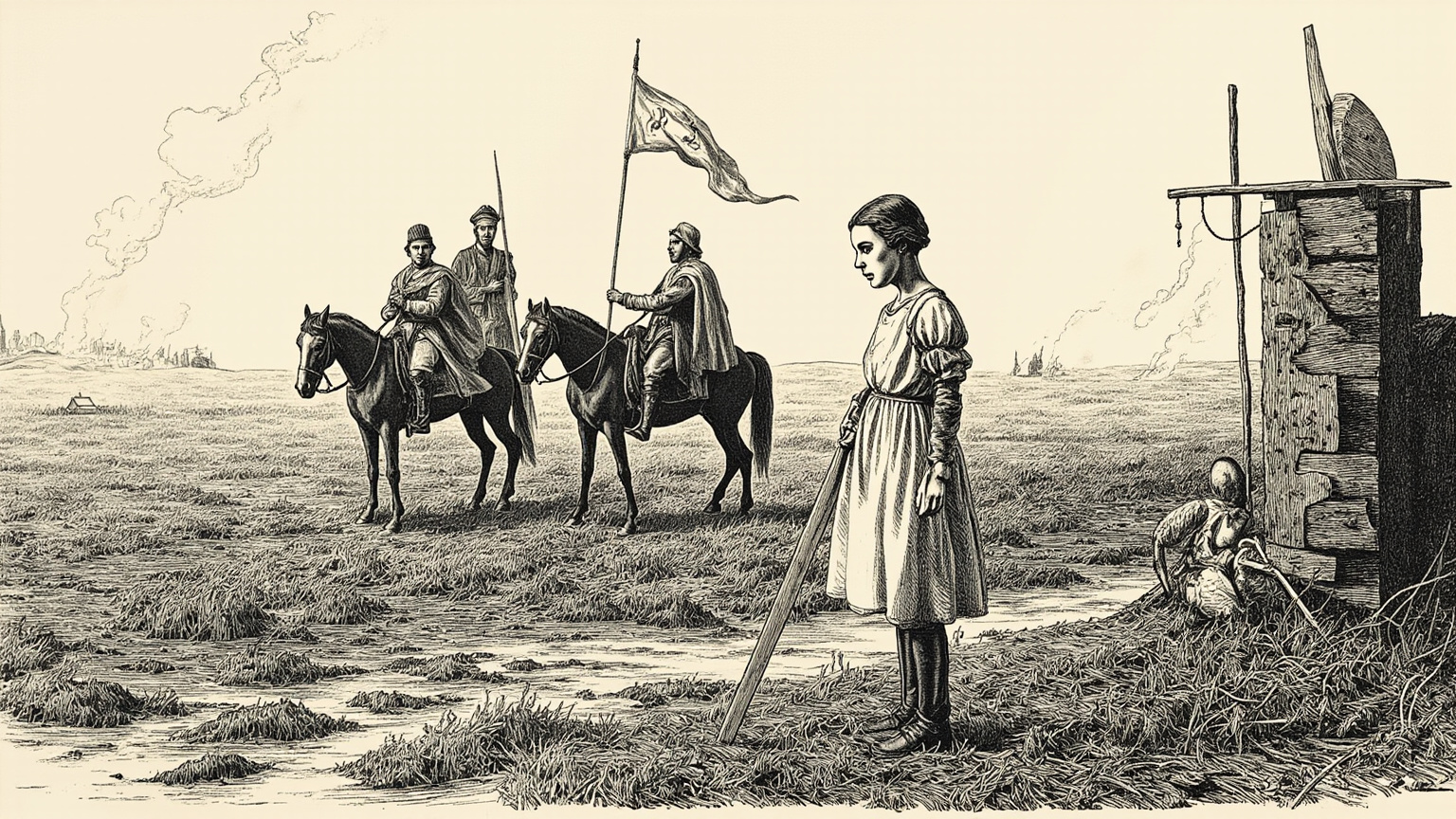
You soldiers think yourselves braver than women. You are not braver; you are only bulkier.
你们当兵的以为自己比女人勇。你们并不更勇,只是块头更大些。
金句 · 奥尔良 · 阵前议事
Reims: The Coronation Done, Reason of State Discards Her at Once
Scene Five, Reims Cathedral. Charles VII is crowned, and Joan stands to one side, watching. As far as she's concerned, her mission is complete. But reason of state has its own pendulum: you wanted the crown, I'm wearing it, and your usefulness ends here. The court starts calculating how to negotiate with the English, how to bargain with Burgundy, how to quietly retire the "miracle girl" label before it gets in the way of diplomacy. What's coldest about this stretch is that no one turns on her to her face; everyone eases her toward the door with perfect gentleness. She doesn't yet realize the next stop is the stake.
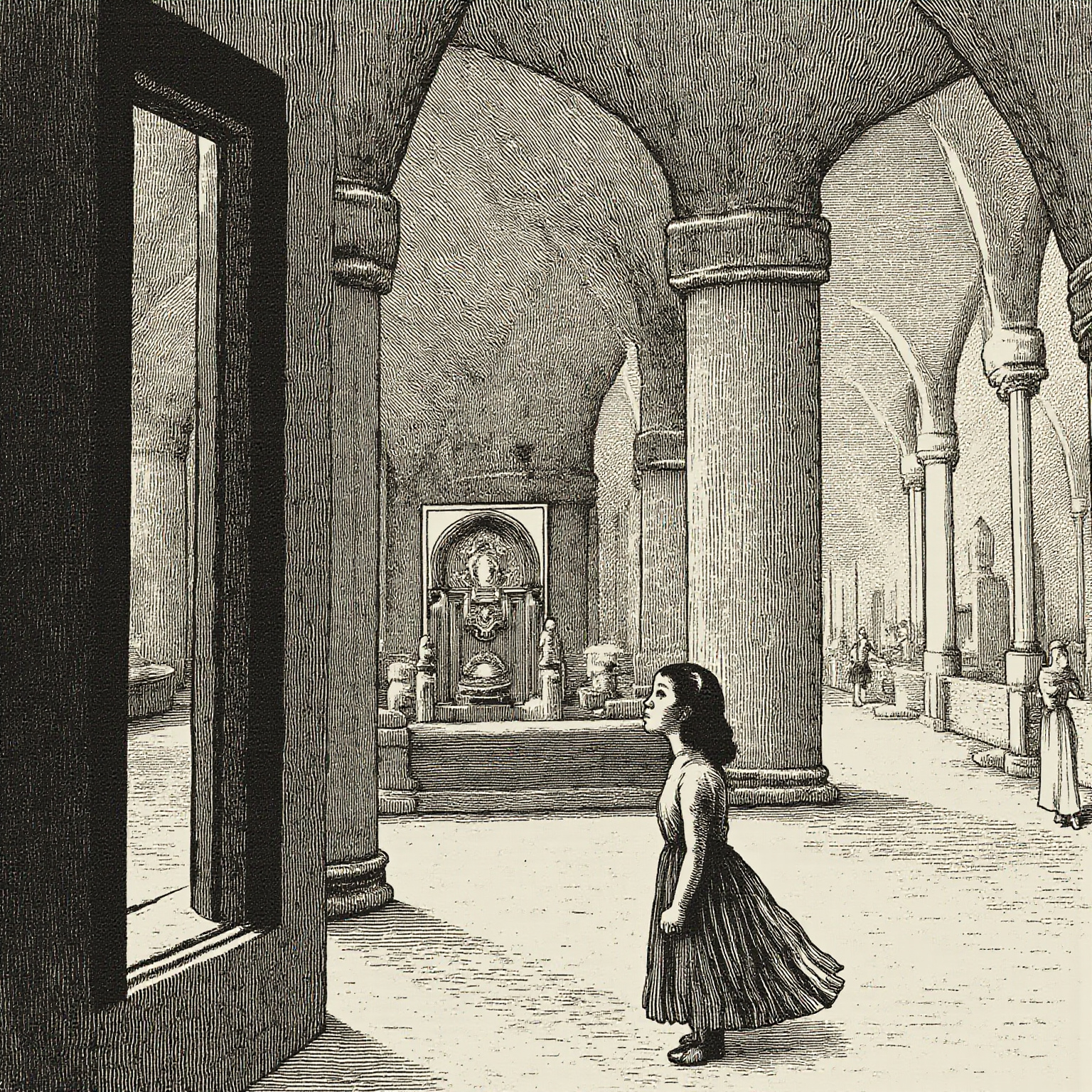
Rouen: Peasant Instinct Against Canon Lawyers' Rhetoric
Scene Six is the play's cutting edge. Joan is captured in a skirmish and sold on to the English. The English occupying authority hands the case to a church court and steps back into the shadows — a division of political labor Shaw draws with real precision: the Earl of Warwick, the military aristocrat, cares only about the outcome; the canon lawyers handle the business of burning her respectably. The bishop-judge presides at Rouen, hostile to her in a professional way, laced with a respect even he can't quite name. Joan refuses to give ground: she won't disavow her visions, won't trade the men's clothes for a dress, won't buy her life with a single "I was wrong." Shaw builds every question in the trial as a trap: admit the visions and you're a heretic, deny them and you've confessed to fraud. She dismantles the lawyers' rhetoric with plain village common sense while refusing to budge from the ground between saint and human being. She doesn't hold that ground. But she loses it so badly that the bishop-judge himself recants, later, in the epilogue.
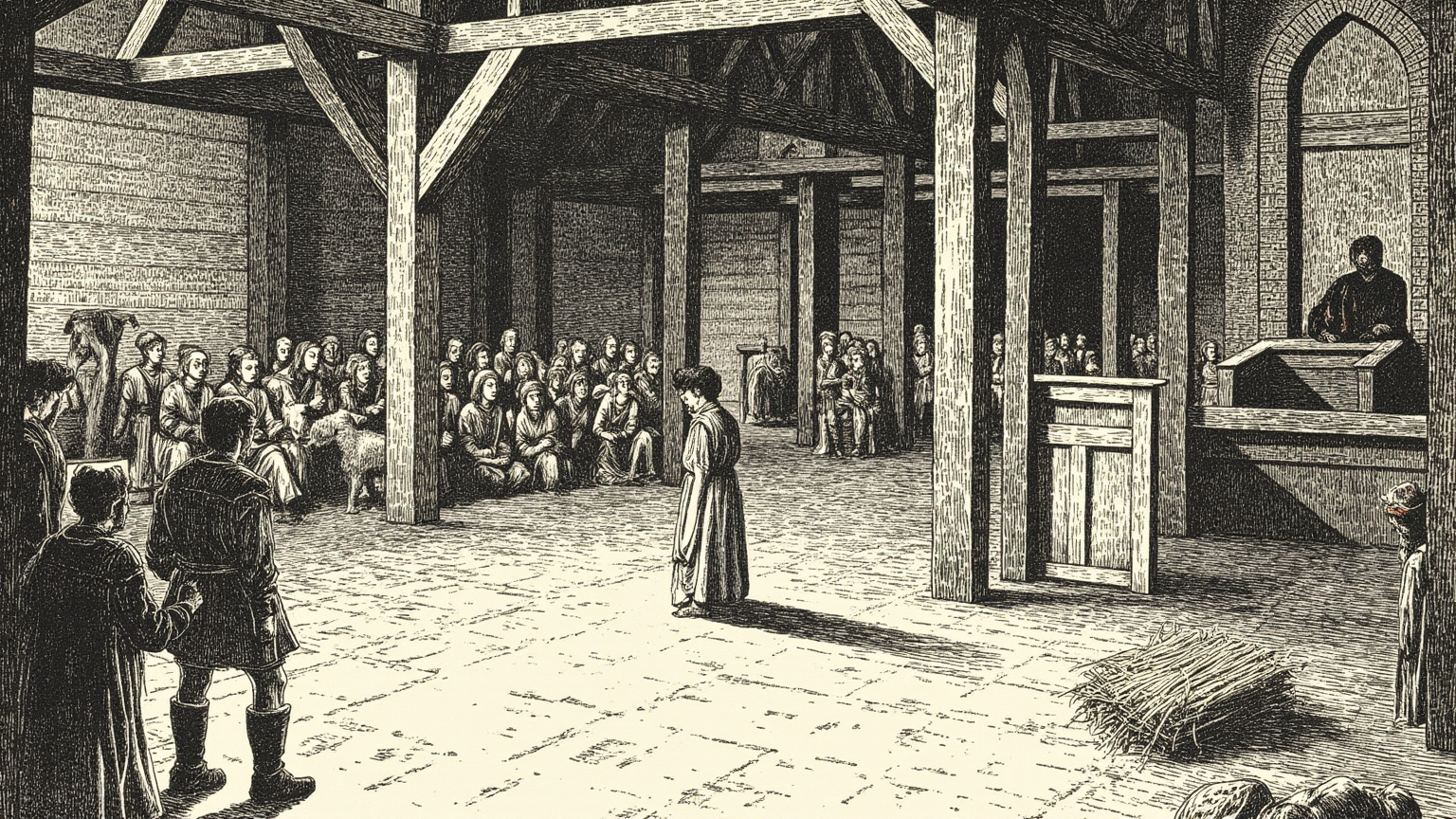
I should rather be torn to pieces by horses than burn. But if I must burn, then burn me.
我宁可让马把我撕碎,也不愿烧。可若是非烧不可,那就烧吧。
金句 · 鲁昂 · 判刑之前
Epilogue: 1456, and Still No Final Verdict
The epilogue is Shaw's cruelest move. Twenty-five years later, the Pope himself overturns Joan's verdict. You would think that settles things. Shaw will not let it settle. He brings one figure after another from different eras onto the stage: a judge, a historian, a priest, a politician, each retrying the case from scratch. Guilty, then not guilty, then guilty again; the labels "saint," "revolutionary," and "political prophet" get stuck on and torn off in turn. Every verdict carries the accent of its own time, and not one of the people delivering it ever met Joan. Watching this retrial repeat itself, you land on an irony: Joan is great precisely because no single generation has ever managed to settle who she was. The play's last line tells you the case still is not closed — there will be another retrial.
What This Book Is Really About
On the surface this is Joan's story. Underneath, Shaw is asking something else: how does a person whose judgment runs too far ahead of her time ever get accommodated by it? His answer is that she doesn't, not at all. Joan is not a saint. She is a reformer who sees too clearly for her own good. Her "visions" are not miracles sent from above. They are the judgment inside her, sharper than everyone else's around her. Her mistake was being two hundred years early. The things she wanted to change — the Church's dignity, the crown's calculations, the logic of war — nobody in that generation wanted touched. She was burned by a conspiracy of convenience, not because she was wrong, but because she embarrassed everyone in the room. When later generations overturned her verdict, it was not because they had finally understood her. It was because time had finally shifted into a position where she was easier to live with. Every reversal is a generation washing its own conscience. The first time this point landed for me, I went back and reread the previous chapter. Shaw is not feeling sorry for Joan. He is putting the entire history of judging her on trial.
What This Means for a Reader Today
Most people reading this play today already know Joan as a single line in a history textbook. What Shaw does is pull her out of the stained-glass saint's portrait and make her a person again — someone who judges, who's stubborn, who grits her teeth in a cell and refuses to recant. She's closer to us than you'd think: this script, of being ground down by a conspiracy of one's own time, keeps replaying itself in different people centuries later. Whether you're one of them, the play won't answer for you.
Why You Should Read the Play Itself
A companion guide can give you a map, but it can't hand you what's actually in the text: Shaw's rhythm of dialogue, the clean way he strips legal rhetoric down to plain speech in the courtroom, the stage energy of a whole room of medieval canon lawyers left speechless by a girl from the country, the comic tension of the epilogue's judges from different centuries taking the stage one after another to undercut each other. You only get those by sitting in the theater, or by reading the original line by line. The most satisfying moment in this play is the feeling of being talked around by Joan's own logic, in real time. In the Rouen trial, which line lands first: the first trap the bishop-judge digs with his legal terms, or the line Joan throws back at him with village common sense? Walk in carrying that question. It will do more for you than any guide.
Joan was burned not because she was wrong, but because she made everyone in the room look bad.
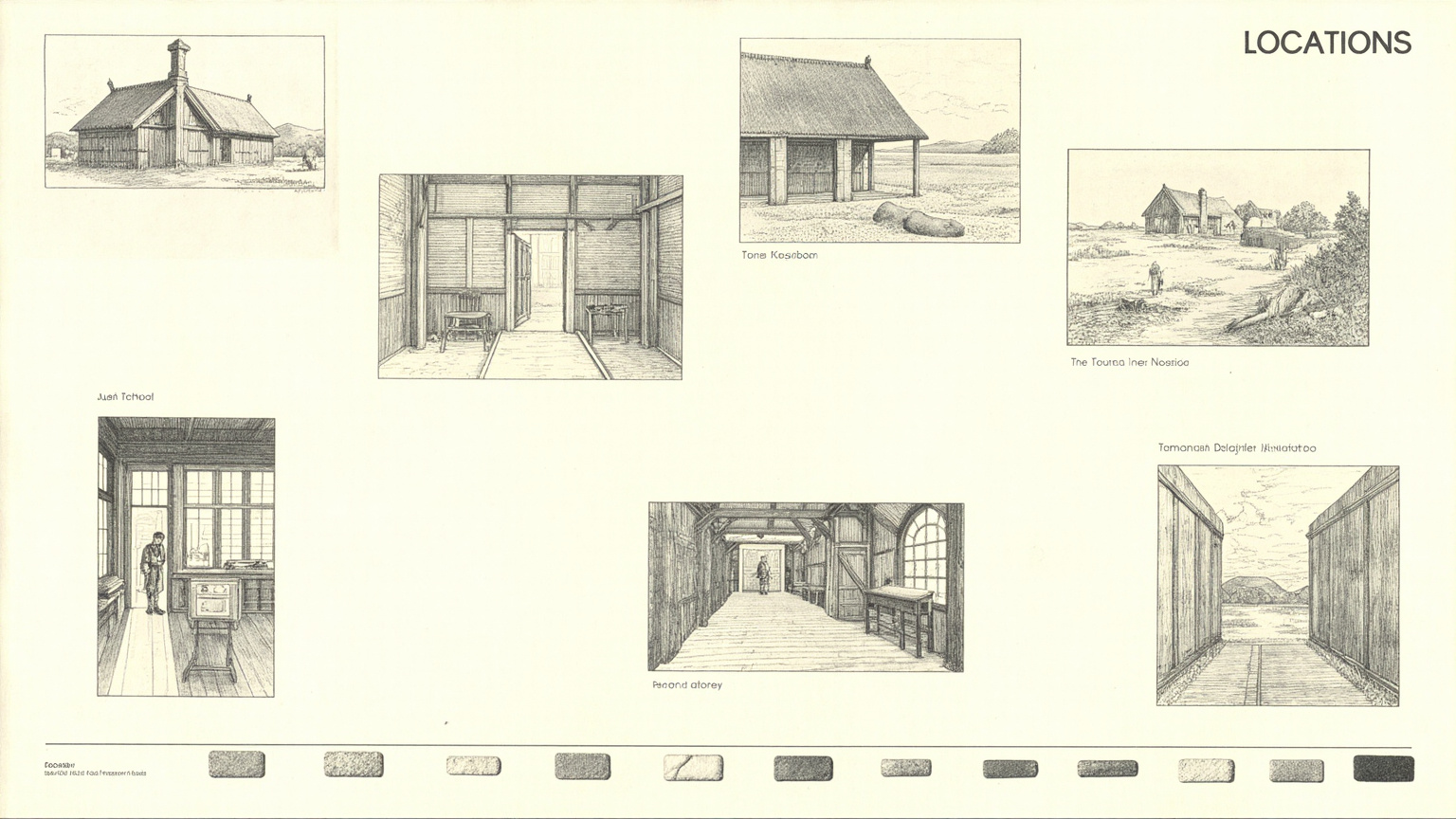
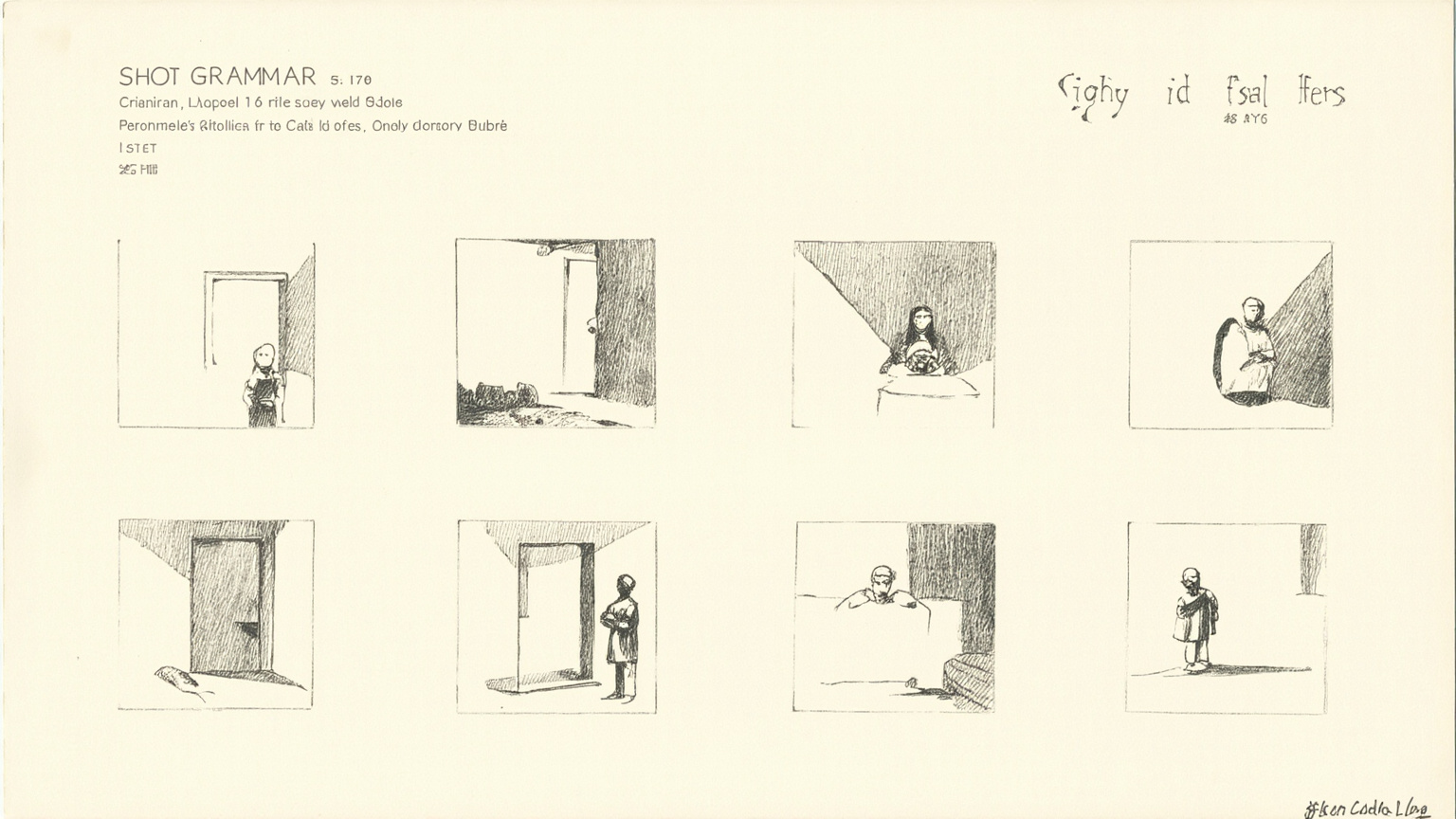
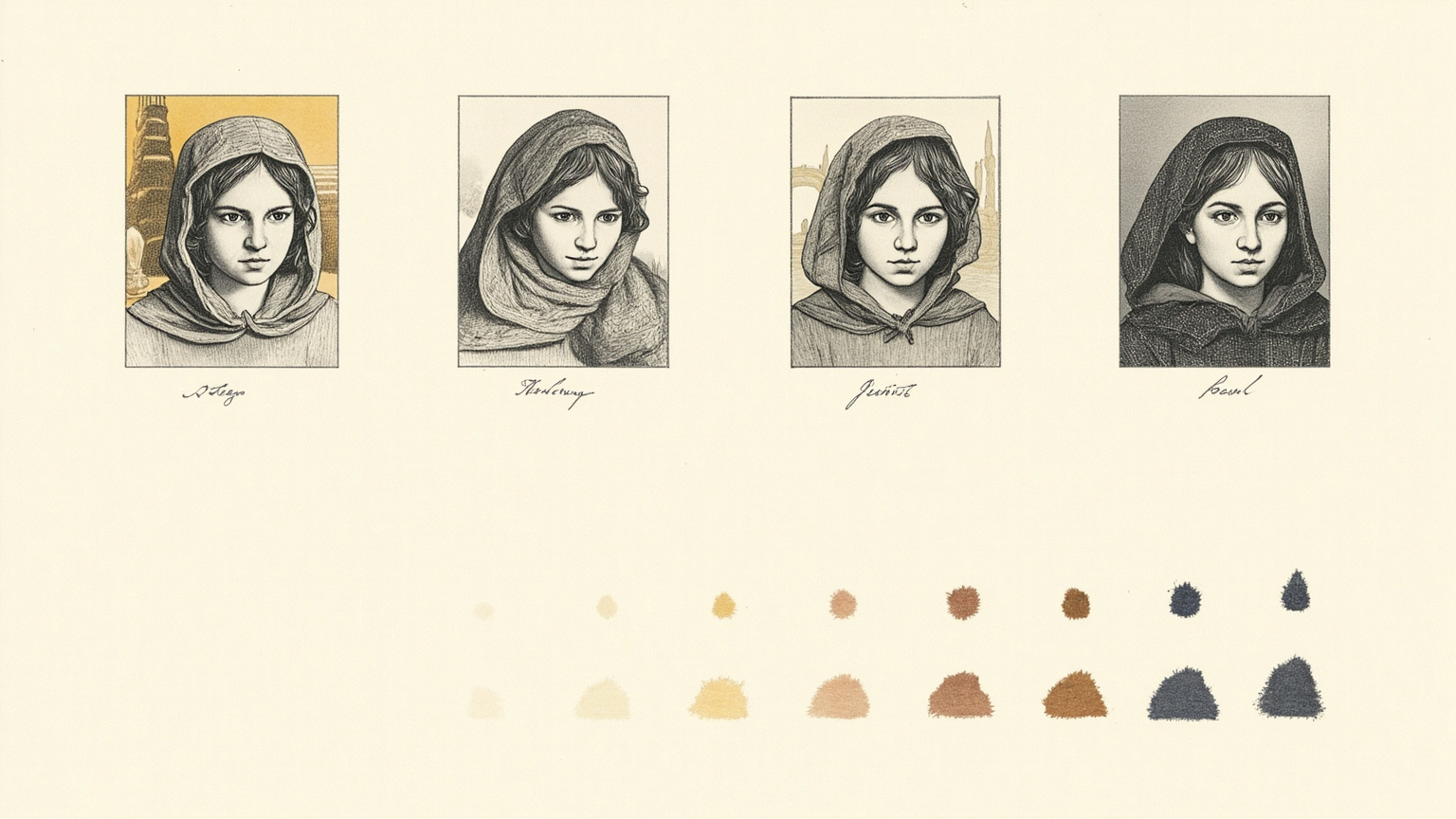
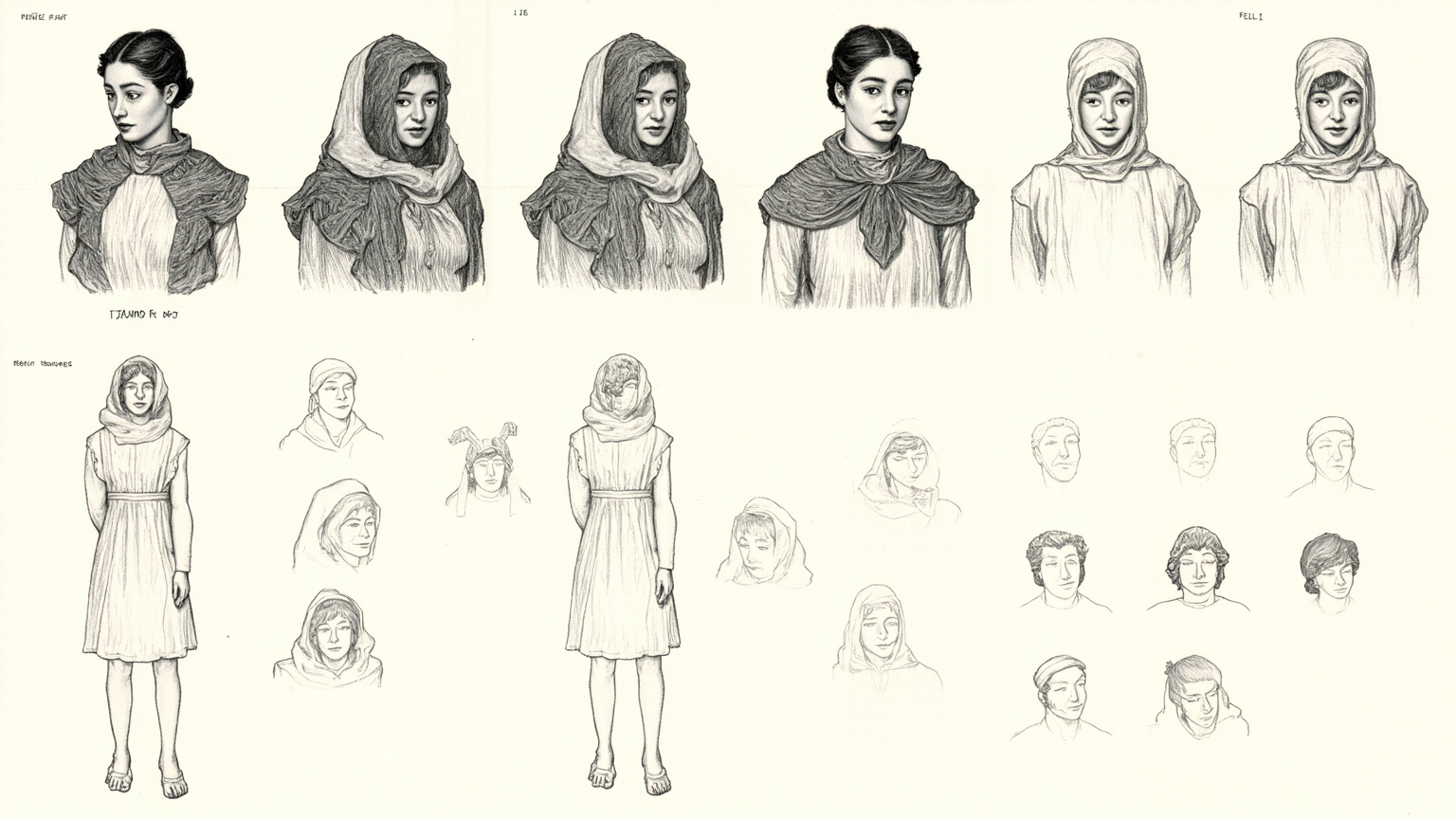
Art Direction4 plates
Before the guide was written, this book got a visual foundation — every illustration you just read grew out of it.