Sentimental Education (L'Éducation sentimentale) · Companion Guide
情感教育
一个外省少年在塞纳河客轮上的一瞥,把他钉在一位已婚妇人的帽影里,终生未愈。
A Packet Boat to Nogent
It was September in the early 1840s. A steamboat on the Seine drifted westward, carrying Frédéric Moreau back to his provincial hometown, Nogent. On the deck, a young man caught a glimpse of a woman in a hat, beneath which floated a pair of gentle eyes — and the rest of his life was pinned in place.
That glance on the boat is the entire fuse of Sentimental Education. The young man was Frédéric Moreau; the woman was Madame Arnoux, wife of the art dealer Jacques Arnoux. Before the boat reached Nogent, Frédéric had already decided she was the love of his life. But when he turned back to speak to her, the crowd on the pier had scattered. The next time they met, it was in Paris.
What This Book Is
Sentimental Education is the novel Flaubert wrote in the late 1860s, and it was his own favorite — he told friends it was more mature than Madame Bovary, the work that made him famous. Written between two revolutions, it follows a provincial young man's rise and fall in Paris: both a personal history of love and a collective portrait of the French middle class from the July Monarchy through the Second Empire. Later critics place it among the peaks of realist fiction; Proust writing In Search of Lost Time and Joyce writing Ulysses would both borrow Flaubert's craft.
A Group of People Drifting in Paris
Frédéric is the center of this novel. His family sends money so he can study law in Paris, but he studies half-heartedly, his mind occupied with literature, art, and Madame Arnoux's hat. He wants to do everything and accomplishes nothing — this is the grundton that Flaubert gives him.
The people who orbit him make up almost an entire social table in 1840s Paris: his childhood friend Delore, an ambitious and poor lawyer, is his mirror in reality; the journalist Hussonet, sharp-tongued and sharp-eyed, is a bystander in the bohemian circle; the socialite Rosanette, beautiful and frivolous, was once Arnoux's lover and later became Frédéric's own mistress; Madame Dambreuze, the banker's wife, cold and calculating, is a ticket to high society. And then there is Madame Arnoux, never quite spoken aloud — gentle, devoutly religious, married, and worshipped by Frédéric all his life. Don't forget the provincial thread either: Louise Roque, the daughter of a local squire in his hometown, has loved Frédéric since childhood and waits quietly in Nogent for him to return. Frédéric does have feelings for her, but he treats those feelings as a retreat — if he fails in Paris, he can always go back and marry her. This use of another person as a backup plan is one of the most damaging things Frédéric ever does. Louise covers for him, but he never turns back to catch her.
These threads together constitute Frédéric's sentimental education: ideal love, lust, money, ambition, plus one old path he can always return to — each one tried, none of them truly completed.
The Glimpse on the Seine
Frédéric meets the Arnoux couple on the boat home. Flaubert writes this moment without saying he fell in love — he only writes the shadow of a hat, a look, the wind on the deck. A young man just out from the provinces thus erects a strange woman in his heart as a goddess — and erects it firmly, for over twenty years.
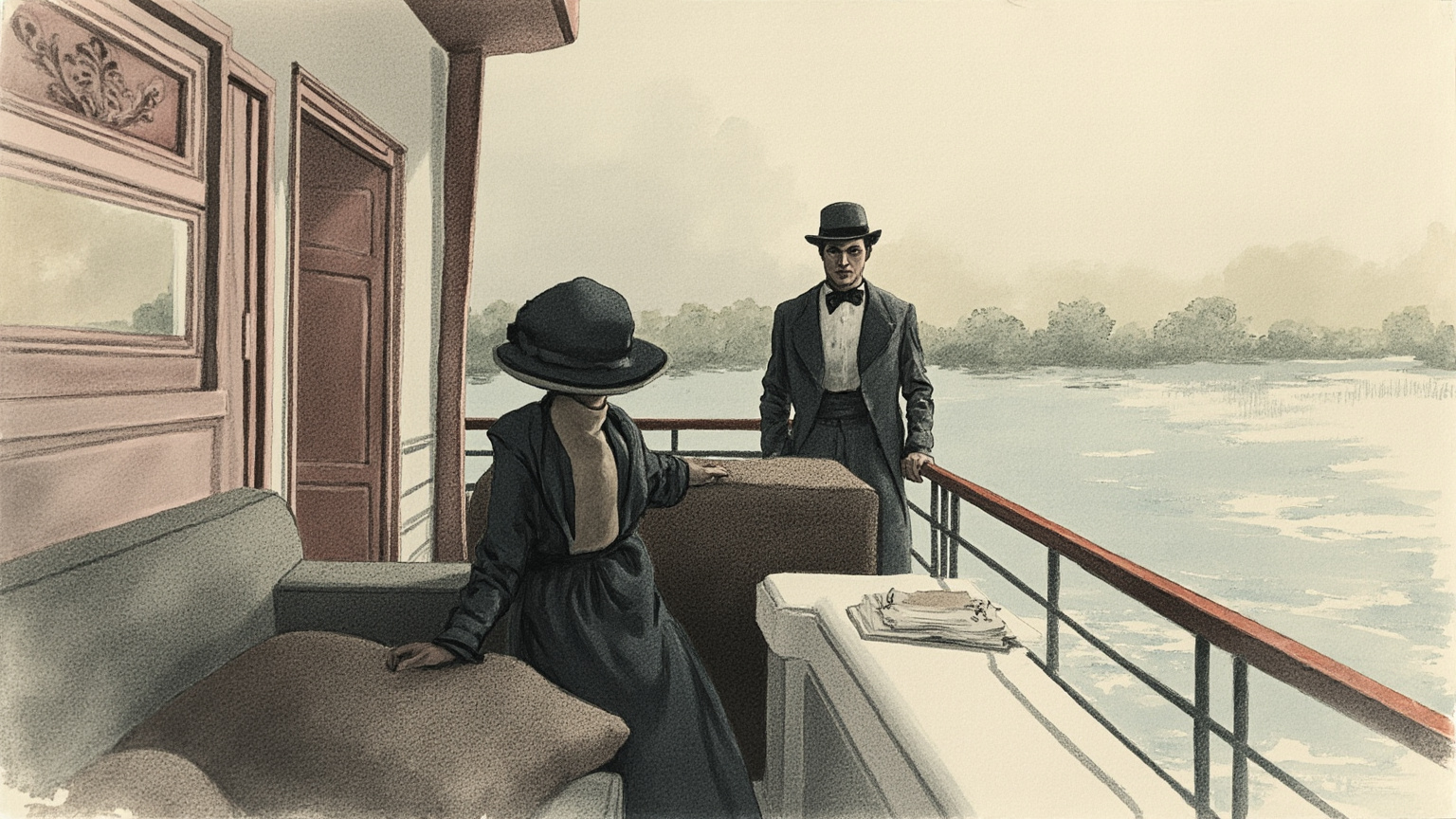
He was in love with her, and she with him, from that moment, without having exchanged a word.
他爱上了她,她也从那一刻起爱上了他——他们甚至还没交谈过一句。
金句 · 第1部第1章 · 塞纳河上的客船
Draw Near in Paris; Draw Away in Paris
After returning to Paris, Frédéric stays on under the pretense of studying law, but what he really has in mind is something else. He befriends Arnoux, often sits in the art shop, using the excuse of looking at paintings to get close to that lady. But each time he reaches that point, the words rise to his lips and he swallows them back. Flaubert writes this suspension with extraordinary patience — a man who wants to declare his love can spend an entire afternoon in the shop, then go home with a belly full of unsaid things.
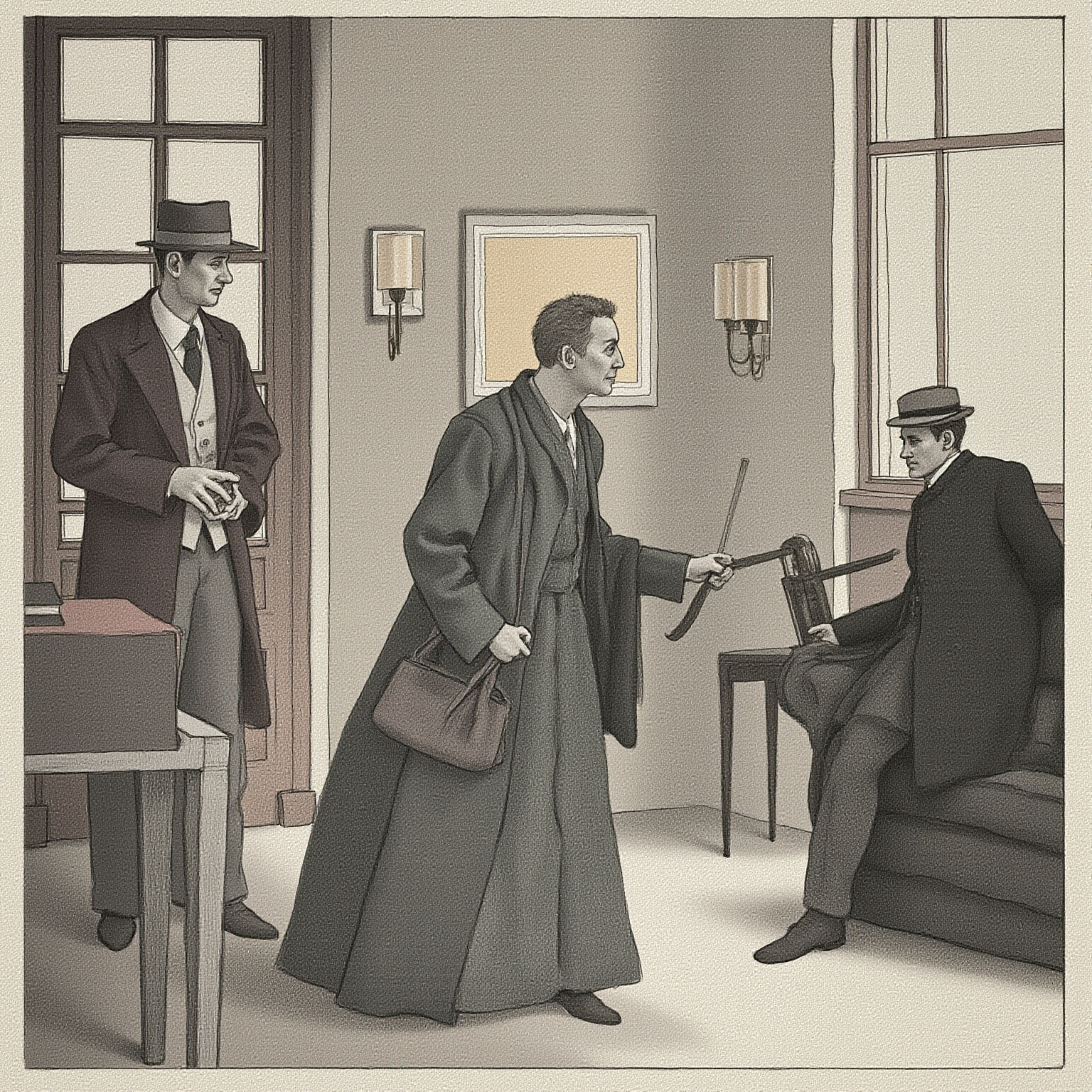
He kept her as one keeps a thought of youth, an ideal.
他把她留作青春的念想,留作一桩理想,供在那里。
金句 · 第1部第3章 · 画店与沙龙
This technique is deliberately anticlimactic. Most novels would write he finally confesses, but Flaubert lets his protagonist go his whole life without truly confessing. What the sentimental education teaches is precisely this — a person can love as if dying for it, yet cannot utter a single word.
Rosanette; Madame Burk: Two Departures Beyond the Ideal
The Arnoux thread hangs too long, and Frédéric cannot hold out himself first. He lives with the socialite Rosanette for a while — she is beautiful, frivolous, of humble birth, the exact opposite of the lady in his heart. She bears him a child that does not survive. Later he climbs into the banker s wife, Madame Burk — this cold, proud noblewoman uses him as a tool, and after her husband dies she even considers remarriage; Frédéric seriously calculates what he could gain by marrying her.
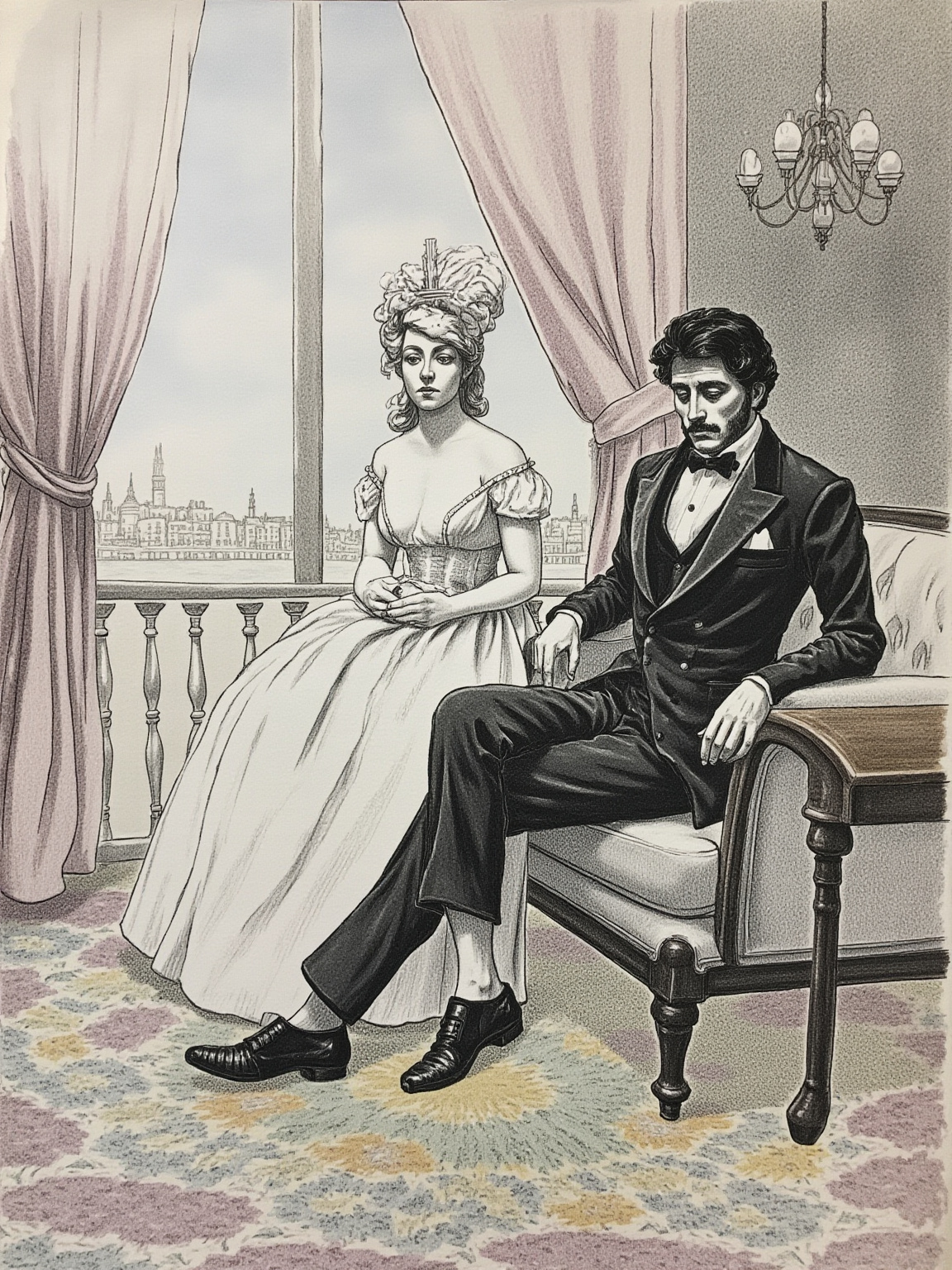
She was like a mistress without the trouble, and a wife without the duties.
她像一个没有麻烦的情妇,又像一个不必尽义务的妻子。
金句 · 第2部第3章 · 当布勒兹夫人的沙龙
This is where Flaubert is masterful: he does not criticize, he simply places these three relationships side by side. Idealism, lust, calculation — in each one Frédéric is genuinely invested, and genuinely detached. He is not a bad man. He is simply — capable of starting anything, capable of finishing nothing.
1848: The Revolution Outside the Window
By 1848, Paris streets were truly in chaos. Barricades went up, gunshots rang out. Flaubert's colleague Balzac would have turned this into a grand scene. Instead, Flaubert only wrote Frédéric pacing back and forth between streets and salons — neither charging toward the barricades nor retreating home to embrace his lover, but standing at the edge of the crowd, watching the spectacle, afraid.
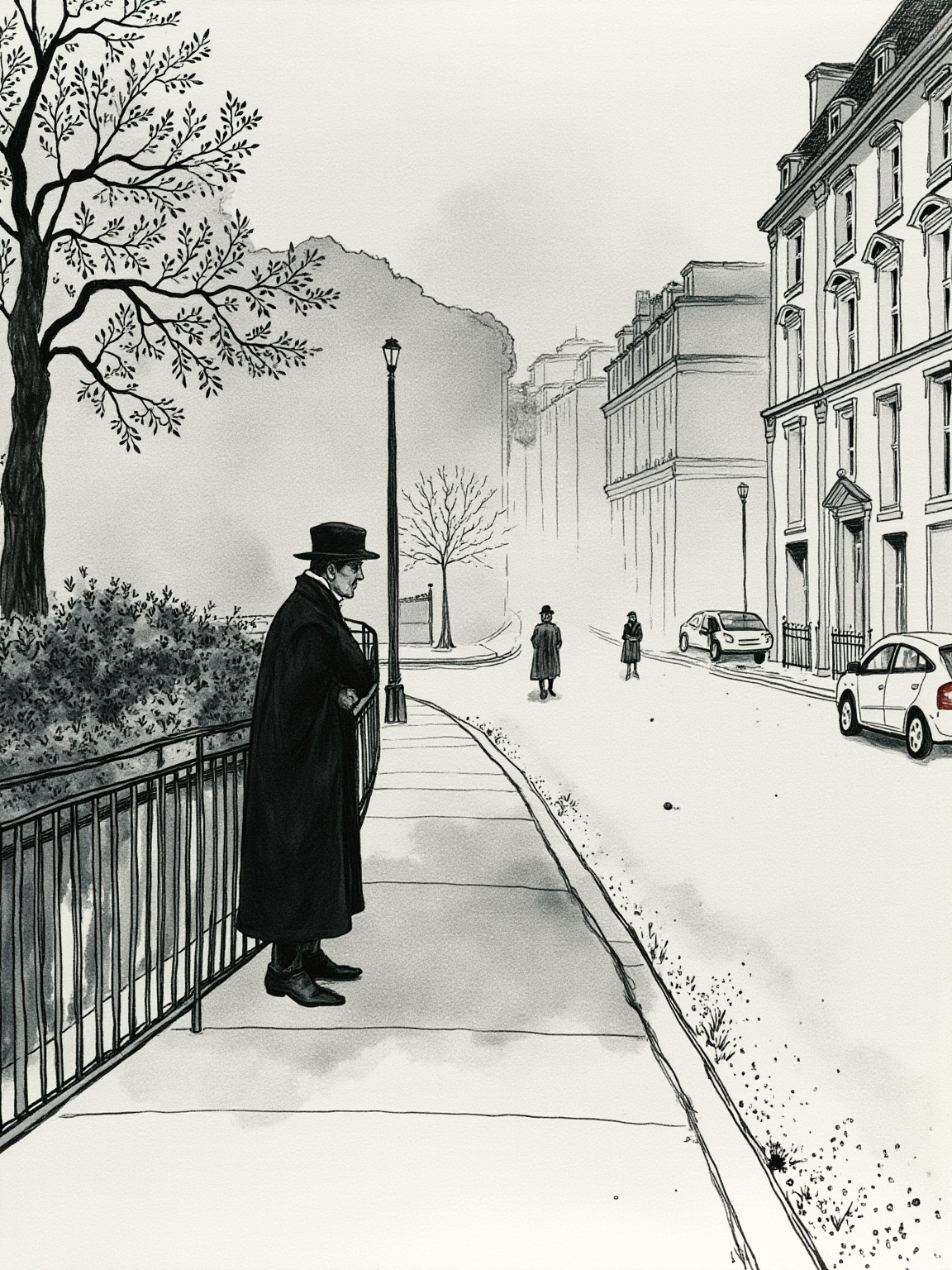
He had, like the rest of France, experienced the folly of the age; but if all men of forty have within them a buried youth, his had not been buried under happiness.
他和当时的法国人一样,染上了这个时代的荒唐;可若说人到四十都怀着一段埋掉的青春,他的青春并不是埋在幸福之下的。
金句 · 第3部第1章 · 1848年的街巷
This passage is restrained to the bone. No heroes, no slogans. Revolution becomes the backdrop of his life — the great era roars past, and he can only attend to his own worries. Yet it is precisely this "nothing happened" approach that cuts deeper than any slogan. That entire generation of hesitating young people in the 1840s — Flaubert fitted them all into Frédéric's silhouette.
One Dream After Another Falls Apart
After the revolution came the Second Empire. Arnoux's speculation failed, his shop went bankrupt, he gradually fell into hardship. When Mr. Bourais died, whatever ambiguity existed between Frédéric and Madame Arnoux also came to an end. His child with Rosanette died young. Finally, even a single opportunity to actually speak with Madame Arnoux was quietly missed by the trivialities of life.
When Flaubert writes these ruinings, he almost never shows emotion. Bankruptcy is bankruptcy; a child's death is a child's death. He does not make you cry. He makes you see — life simply takes these things from you one by one, without even a word of warning.
That Afternoon of Goodbye
Years later, Madame Arnoux, now gray at the temples, suddenly appears at his door. She has come to repay an old debt her husband owed. They are alone, with little said. She removes her hat, puts it back on; tries to speak, then swallows her words. At last she says goodbye, rises, and leaves. Frédéric walks her to the door. It closes, and that love that never began is sealed away forever.
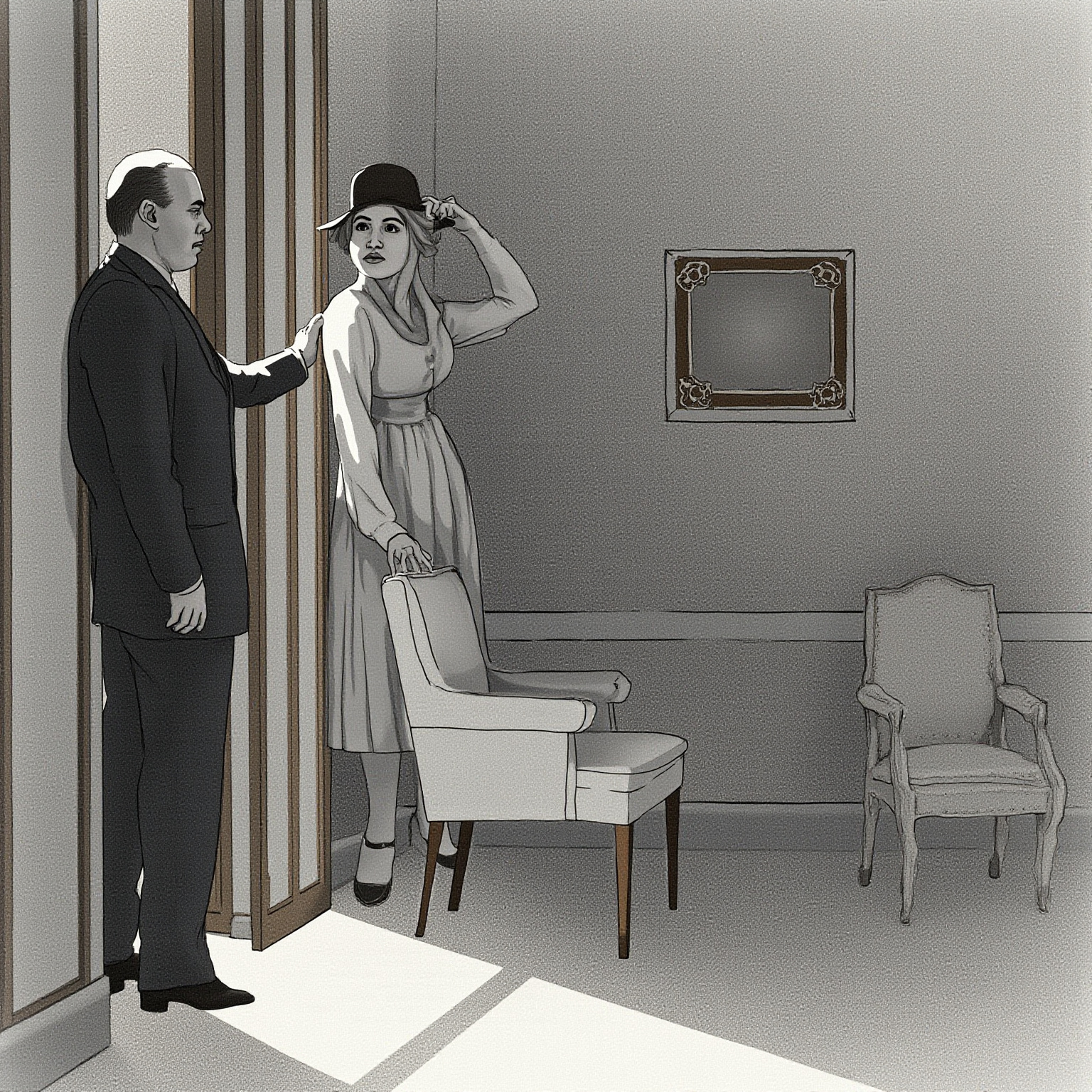
She took off her hat; then she put it back on again.
她摘下帽子,又戴了回去。
金句 · 第3部第6章 · 永别的下午
The hat that is never fully removed is the most important image in the entire book. It is not seduction—it is restraint. Madame Arnoux, throughout her whole life, never crossed that line from beginning to end; the love Frédéric worshiped in his heart for over twenty years simply stops at those two words: "if only."
The hardest thing is not losing love—it is that this feeling never truly began in the first place—yet he wasted his entire life on her.
Coda: The Folly of That Night in Youth
In the book's coda, Frédéric and Delrieu meet again on a middle-aged street. As they talk, they suddenly recall that foolish night in their youth when they first went to a brothel together. They look at each other and smile bitterly, admitting that was already the best time of their lives. The book ends there.
This cut is deeper than all the earlier disappointments. Two ambitious boys, at the end, decide that the brightest days were the most foolish ones. With this single line, Flaubert loops the novel's theme back around—what remains of emotional education when nothing is left?
What It Writes About, and Why It Deserves Reading Today
A Sentimental Education on the surface tells of a man loving a woman, but at its core it depicts an entire generation floating between the old order and the new wave. Flaubert takes no side, offers no critique—he simply watches coldly: how ideals are gradually diluted by desire, stained by money, swallowed by the times. This coldness becomes the underlying tone for realist fiction for a hundred years to come.
To today's readers, Frédéric is no stranger—the one carrying grand ambitions in his heart, doing trivial tasks with his hands; wanting to love someone, then swallowing the words at the tip of his tongue; wanting to rush into some great affair, but his feet are nailed to the spot. This character Flaubert created, nearly two hundred years later, is still those anxious middle-aged people around us.
What makes Flaubert most ruthless is not making people cry—it's making them close the book and sit quietly, then realize they too have become Frédéric.
Knowing the plot, why read the text anyway
By now you know how it ends. But you should still pick up this novel—because Flaubert writes not just "what happened" but "how things were missed, bit by bit, worn down." That meticulous, restrained, understated style can only be felt in the original: how a salon cools from warmth to awkward silence, how an affair drifts from flirtation to weariness, how a city slides from order into chaos. The guide gives you a map; the text is the land—and that land is worth walking yourself.
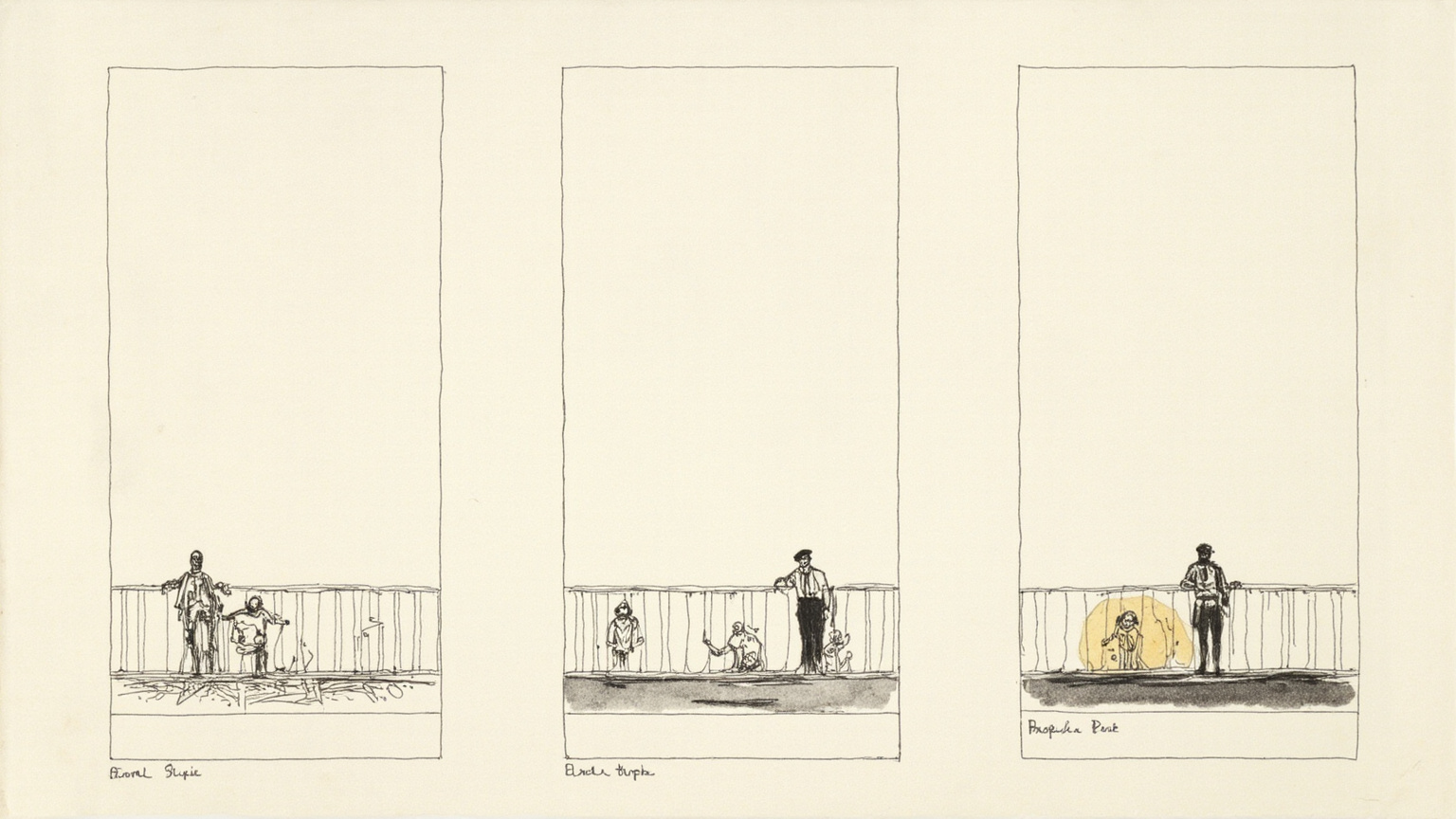
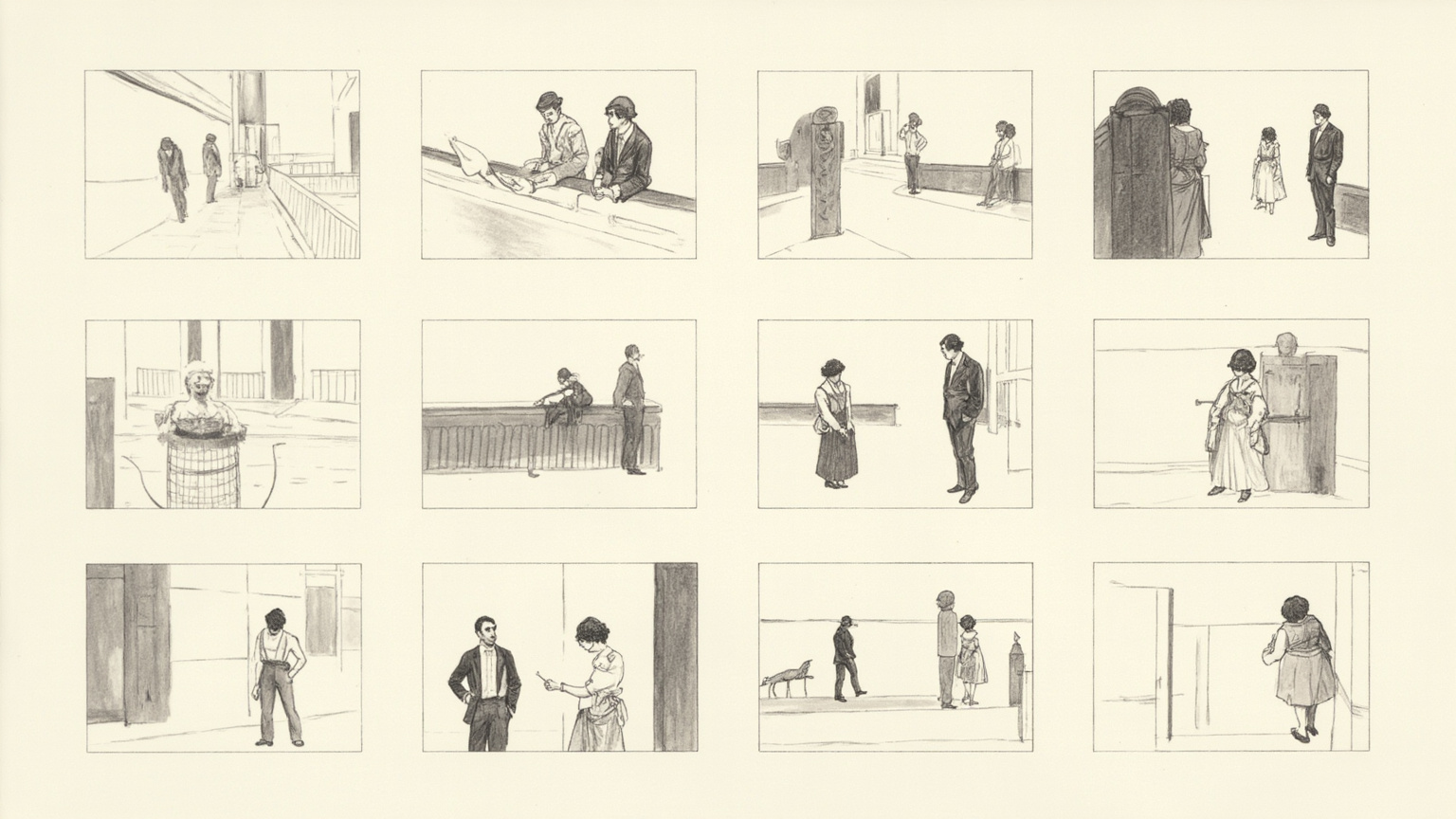
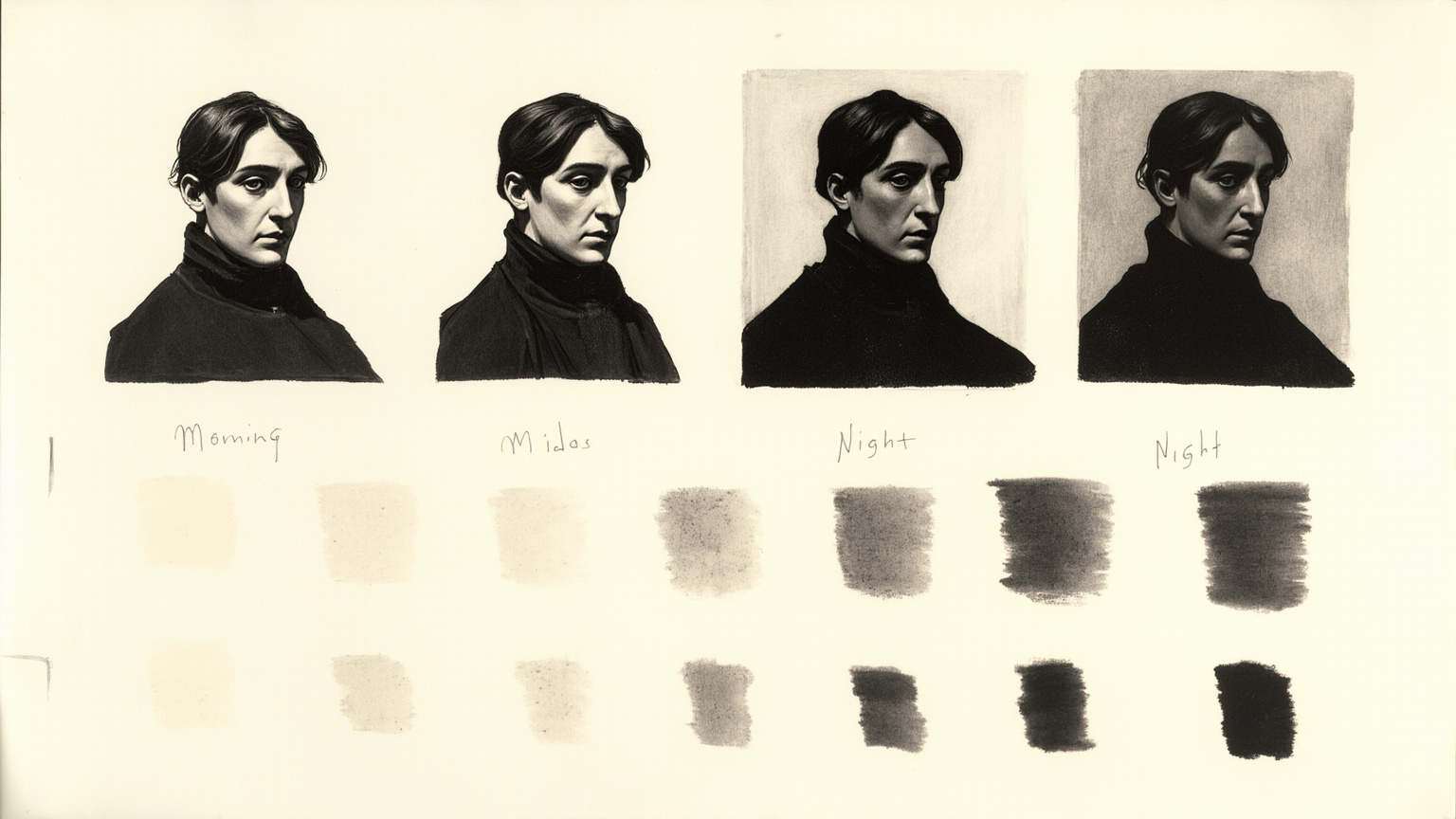
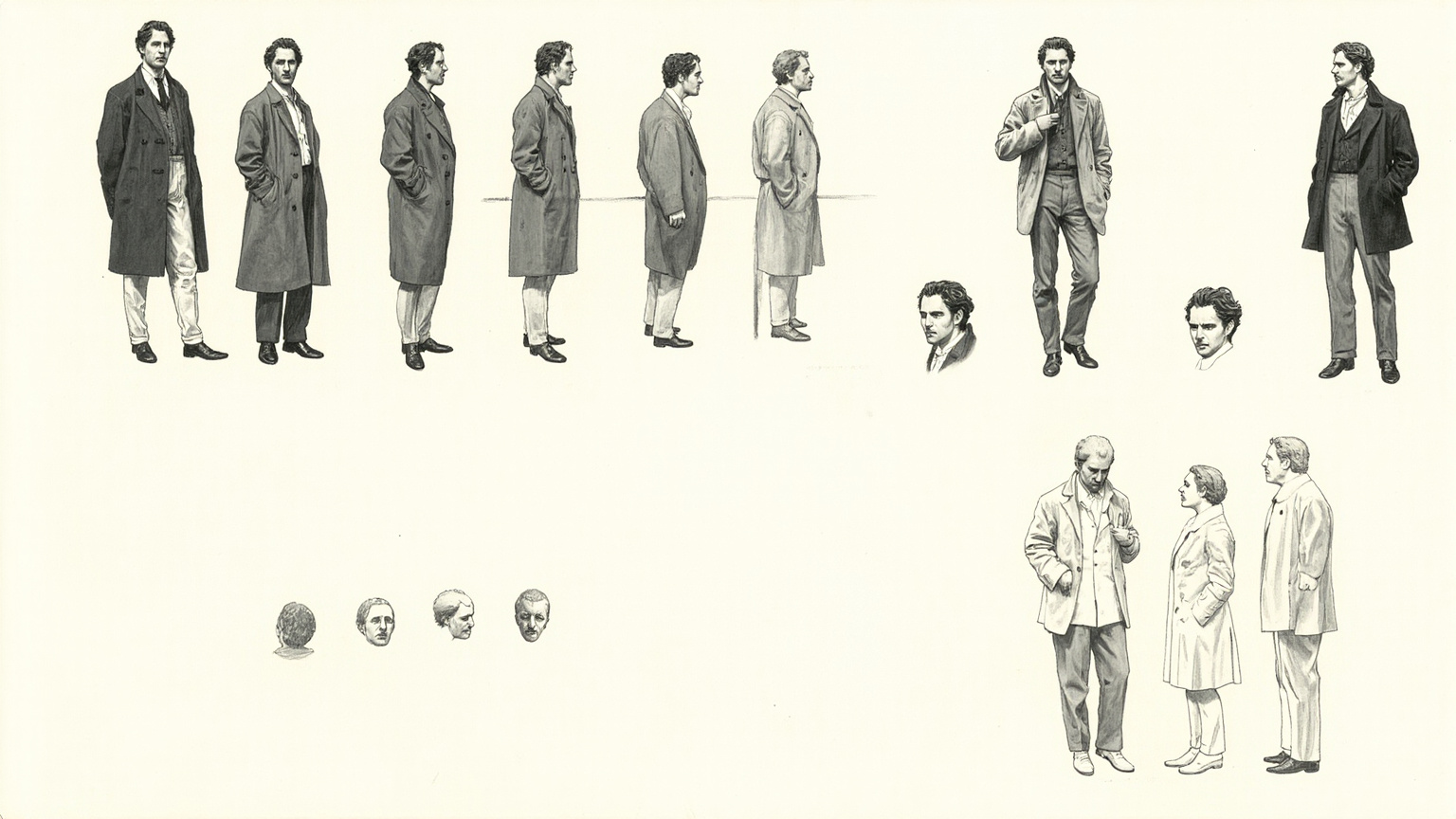
Art Direction4 plates
Before the guide was written, this book got a visual foundation — every illustration you just read grew out of it.