Dogen's Zen is not a method of practice; it is the act of sitting itself
Text and illustrations produced by the pipeline
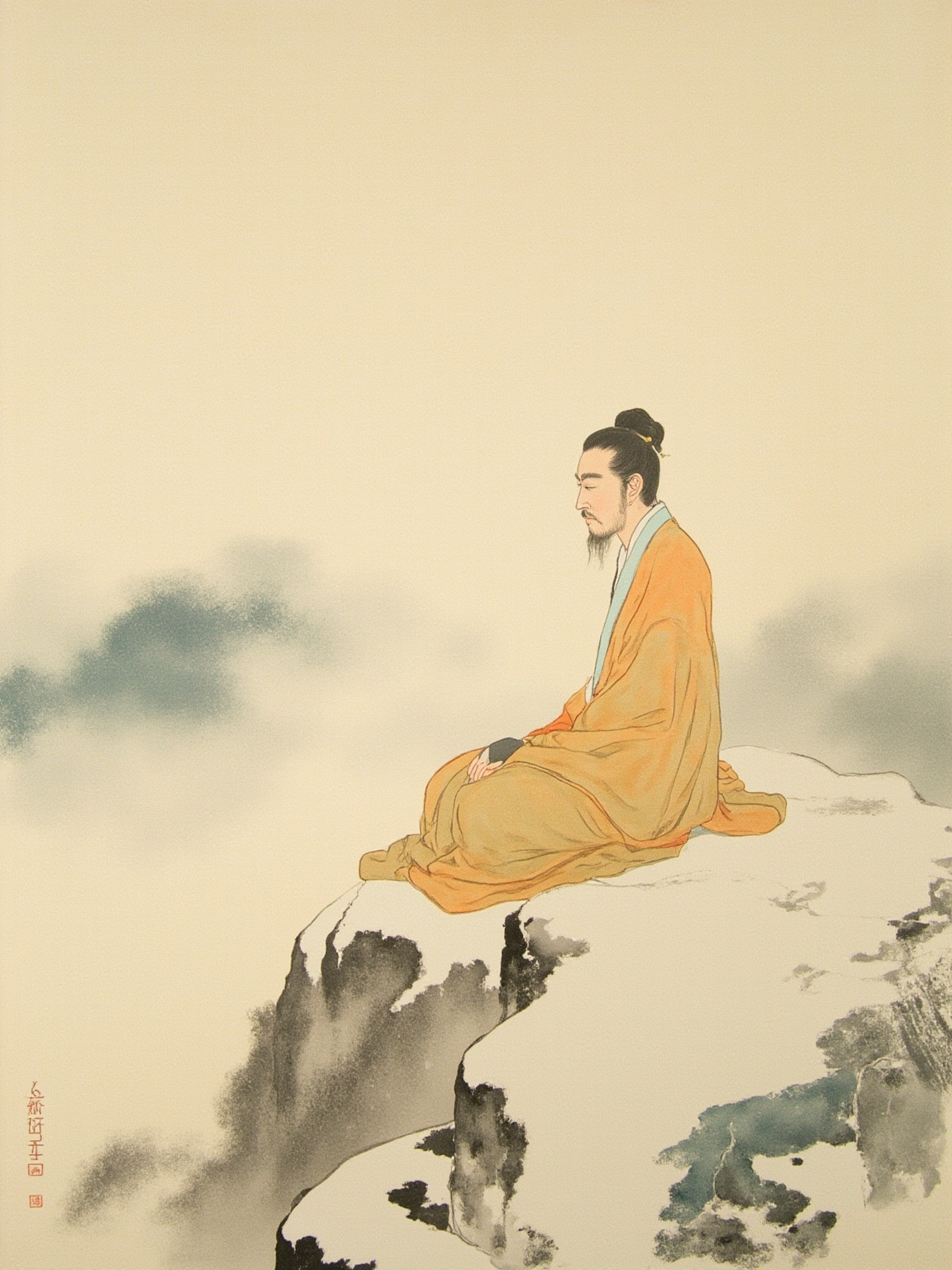
On a snowy mountain, Shakyamuni sits cross-legged. The sitting is not a stage on the way to enlightenment; it is Buddhahood itself. Eight hundred years later, a Japanese monk opens a book with this image, then spends seventy-five fascicles and nearly a million characters telling you: don't read this as a story. This is the whole answer.
The book is called the Shōbōgenzō, written by Dōgen. Don't take the title apart literally: gen, 'eye,' means the mind's eye, not the eye in your skull; zō, 'treasury,' is a storehouse, not a bound volume. So the title really says the true Dharma is stored in that eye you cannot see. Within the history of East Asian Zen, it is one of the very few texts later philosophers have read as the starting point of Japanese philosophy itself.
It is not a biography, not a narrative, and it has no plot with rising and falling action. It is a collection of dharma talks, Dōgen speaking in the first person to his disciples, to the wall, to the monks' hall he built with his own hands in the Echizen valley, on what sitting meditation is and what it means to become Buddha. He began writing in the early thirteenth century and kept at it until his death in the mid-thirteenth century, over twenty years, until it grew into seventy-five fascicles. The three-volume edition commonly read today was compiled after his death by his disciple Ejō.
The language itself is a spectacle. Dōgen wrote Chinese characters pronounced in Japanese, in a strange hybrid style called wakan konkōbun, neither classical Chinese nor modern Japanese but the shape Chinese Chan literature took as it put down roots in Japan. The philosopher Watsuji Tetsurō placed it among the founding texts of Japanese philosophy, and in conversations with Western phenomenology it remains a text no one can skip.
The cast is strange for how small it is. The protagonist is Dōgen himself: born into the Kyoto aristocracy, ordained at thirteen, crossing to Song China at twenty-four, reaching awakening under Master Rujing on Mount Tiantong near Ningbo, returning to Japan at twenty-seven, and founding Eihei-ji in Echizen at forty-two, where he stayed until his death. His role here is not a character in a story; it is the mouth doing the teaching. The book has almost no opponent, no antagonist, no dramatic conflict, only a teacher saying the same thing again and again.


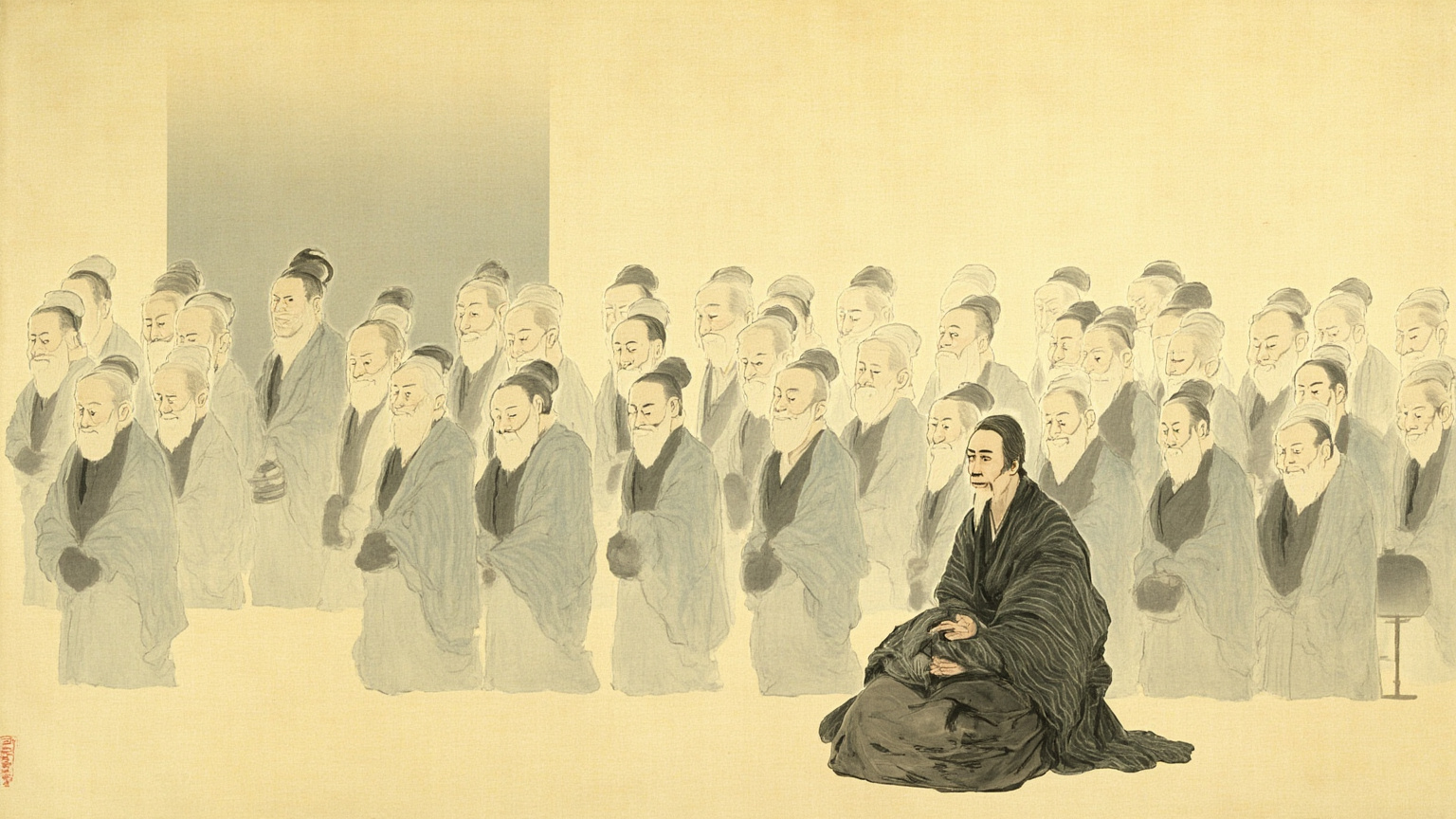
Fascicle four, Entering Caodong, does another job: it lays out Dōgen's own lineage in plain terms, from Bodhidharma down through the generations to Dongshan Liangjie, Caoshan Benji, Yunju Daoying, and onward to Rujing, and then to Dōgen. This is the direct line of the Caodong school, not Linji. Dōgen wants you to understand that he is not a representative of Zen at large. He is the present-day heir of this one branch, the Sōtō lineage.
The Sōtō house style is called silent illumination: just sitting, quietly beholding. It runs parallel to the Rinzai school's koan inquiry, which fixes on a single koan and keeps demanding what is this. Neither is higher than the other. That is simply the historical fact of how the two lineages diverged, not Dōgen's own position.
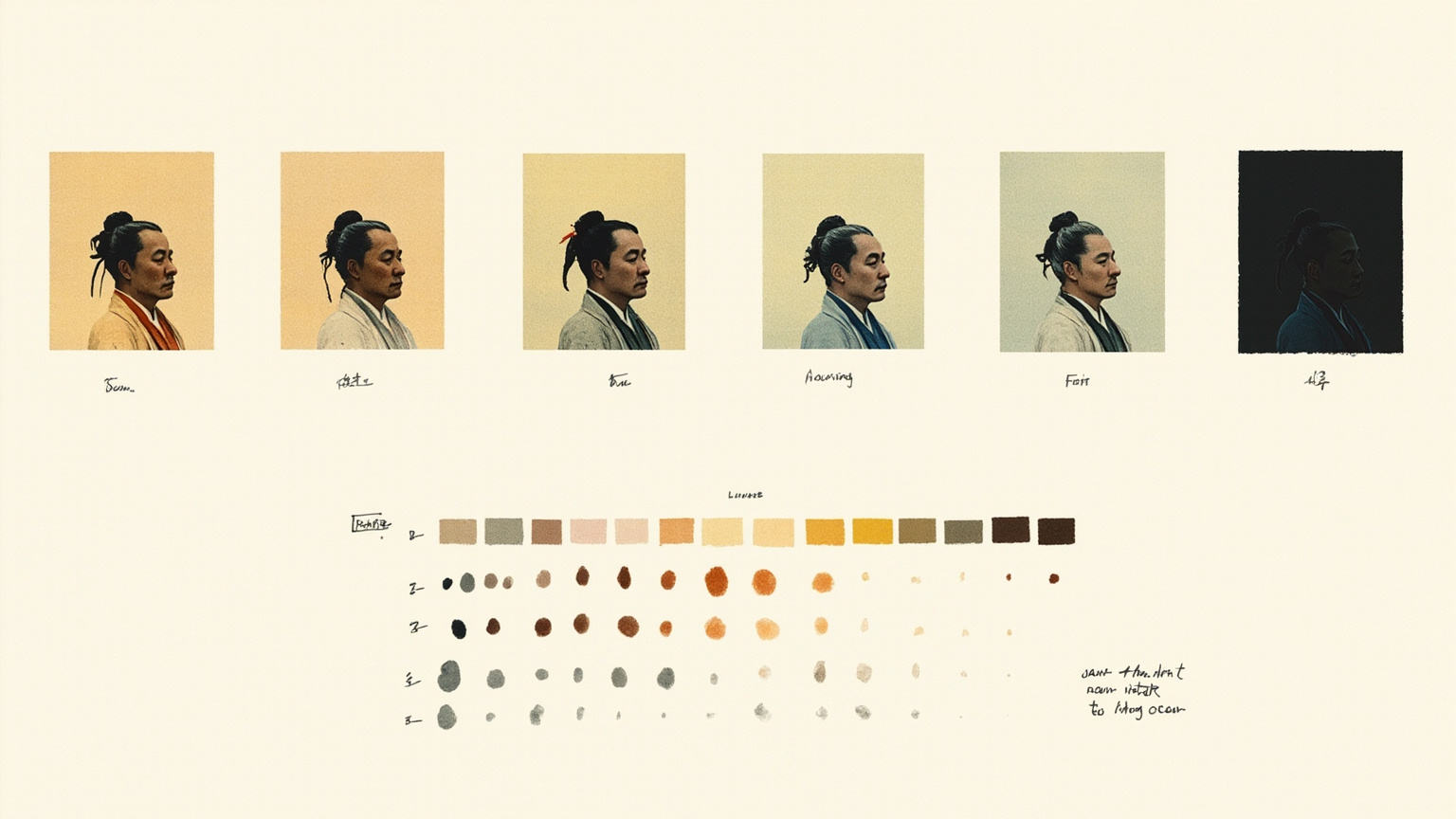
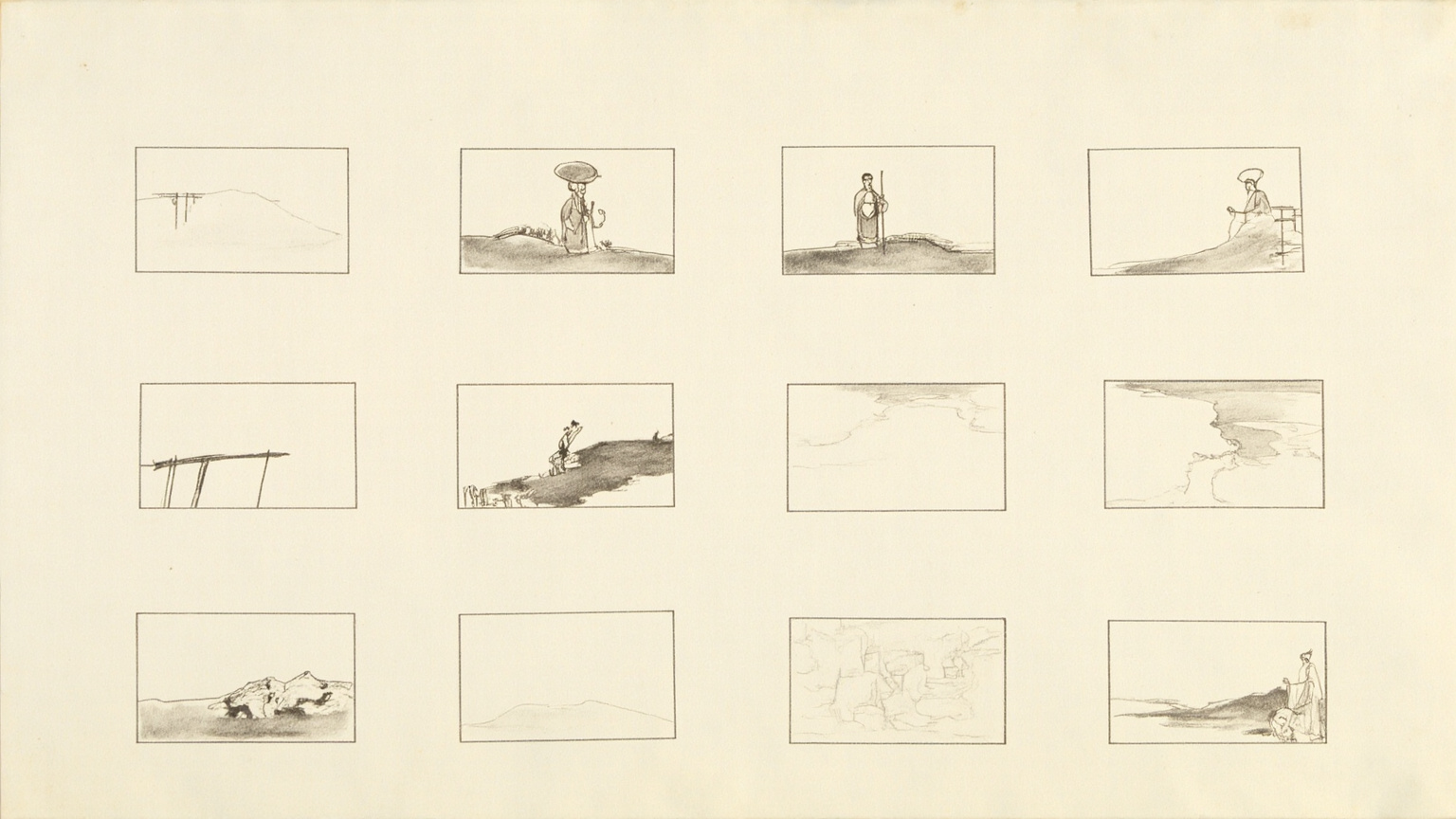
Before the guide was written, this book got a visual foundation — every illustration you just read grew out of it.
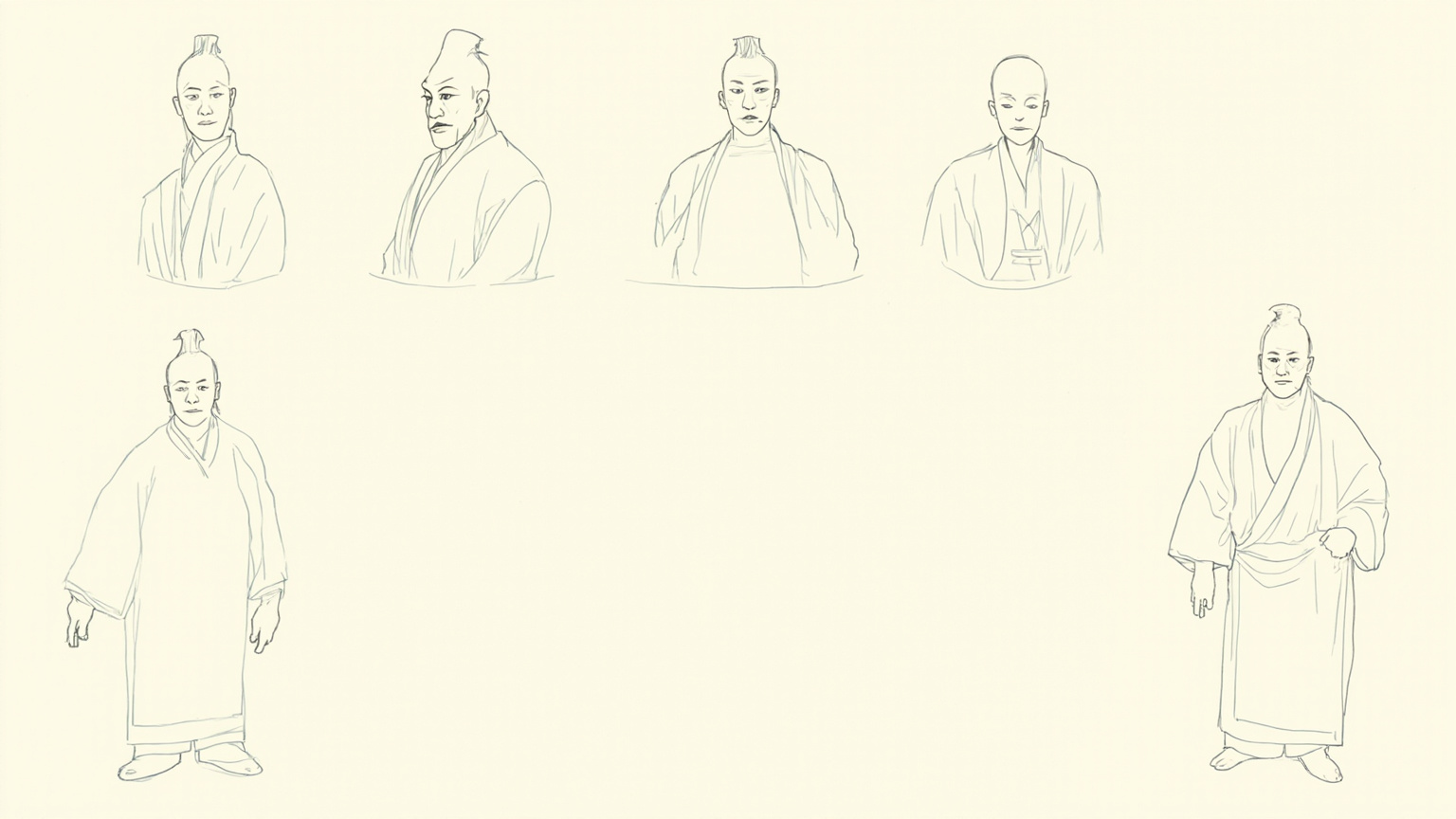
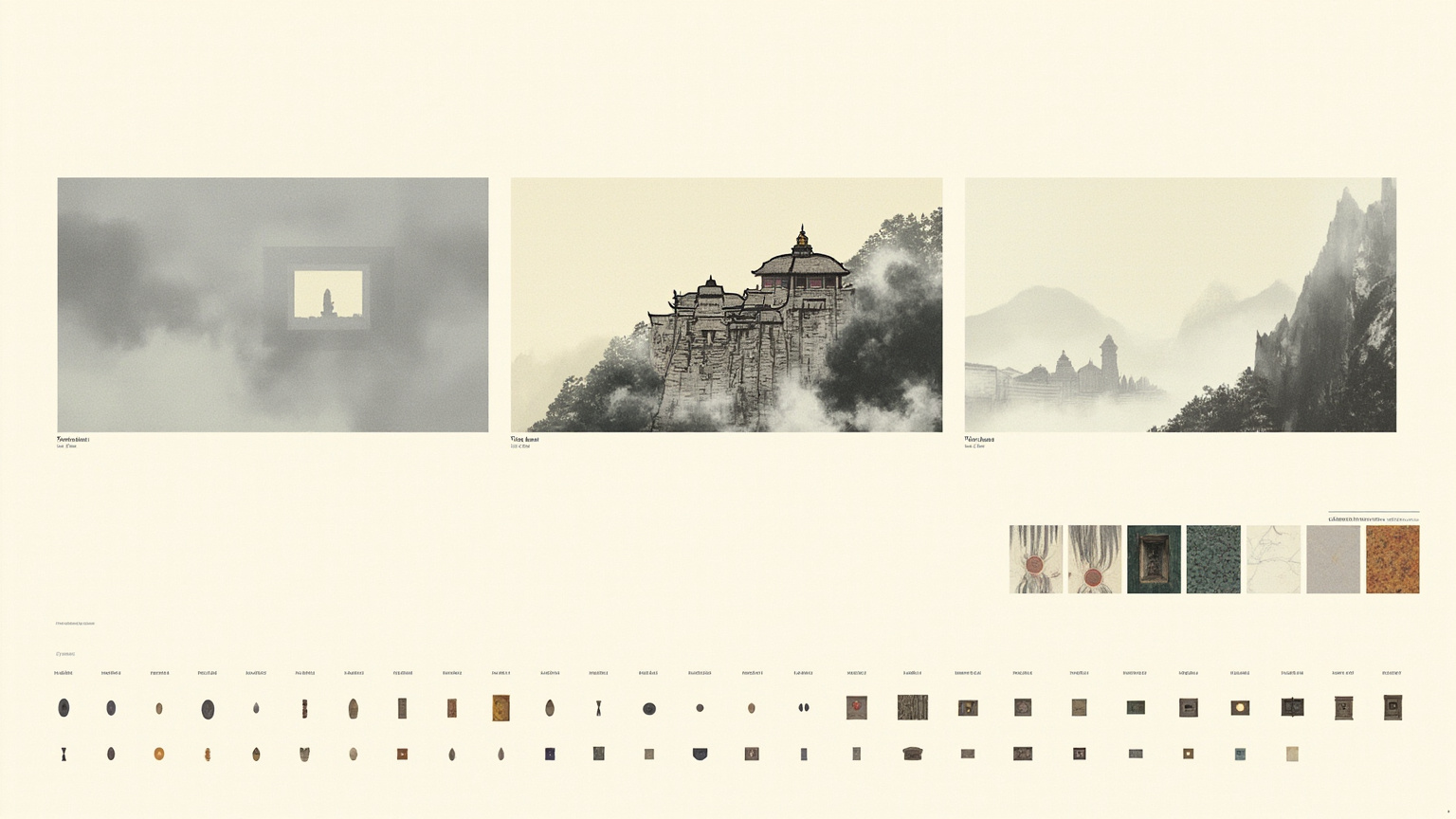
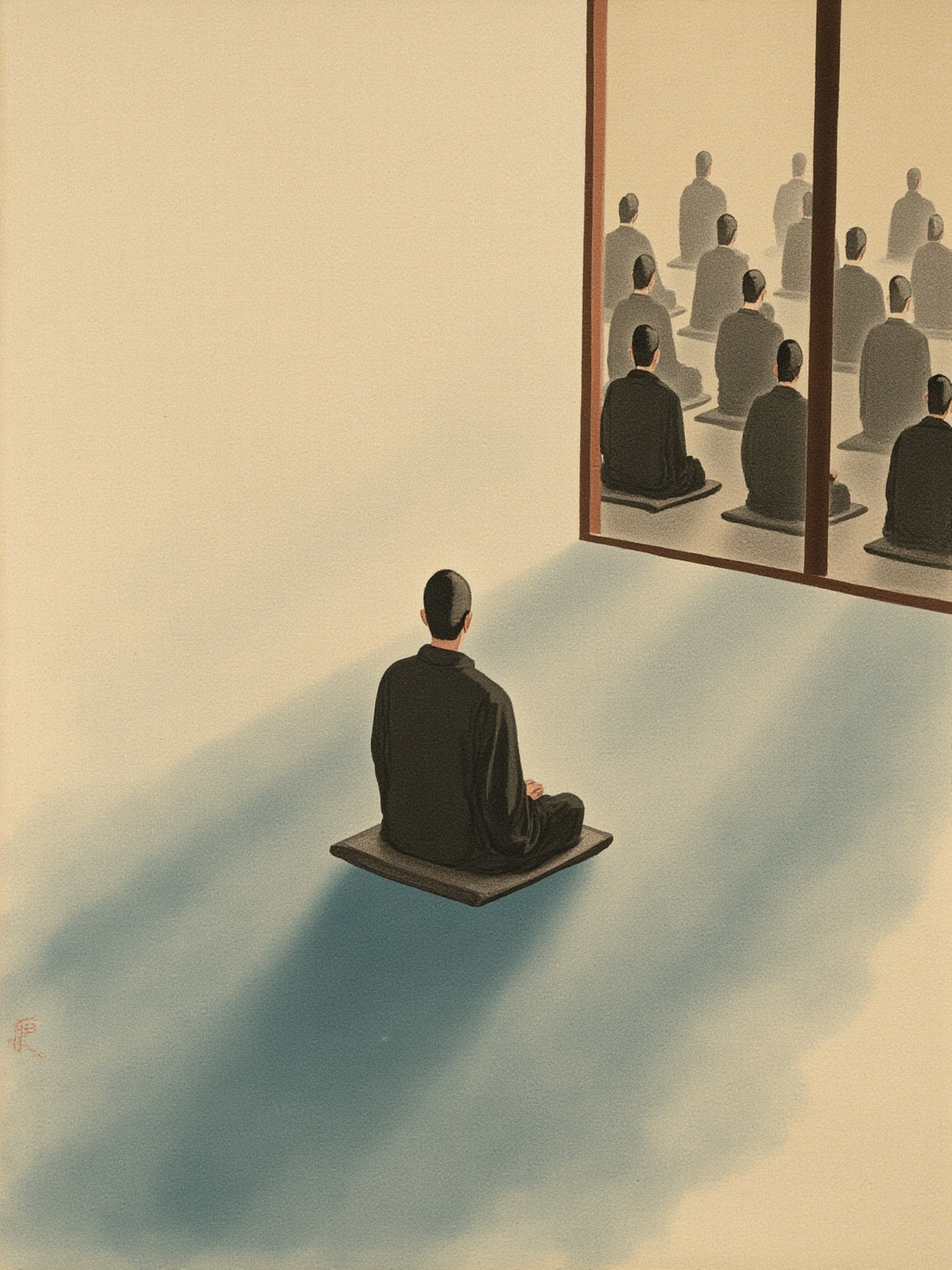
Everyone else is a symbol. The Buddha is the awakened one sitting across from you. Bodhidharma is the figure who faced a wall for nine years. Dongshan Liangjie and Caoshan Benji are ancestor tablets from the Caodong lineage. The hundreds of monks at Eihei-ji are bodies undergoing formation, nameless, just the backs bent day after day over sitting, rounds of the hall, meals, sweeping. The tenzo, the monk who runs the kitchen, is something else again: the act of cooking rice is itself sitting meditation.
The world unfolds along two alternating lines. One is the monastery on Mount Tiantong in the Yangtze delta; the other is Eihei-ji in the Echizen valley. The first is where Dōgen found his answer. The second is where he turned that answer into a way of life. Eihei-ji's buildings (the mountain gate, the Buddha hall, the monks' hall, the tenzo's kitchen, the latrine, the bathhouse) are the backdrop for every scene of practice in the book. The time is the middle of the Kamakura period, just as the warrior class has taken power and Zen has newly crossed the sea from China.
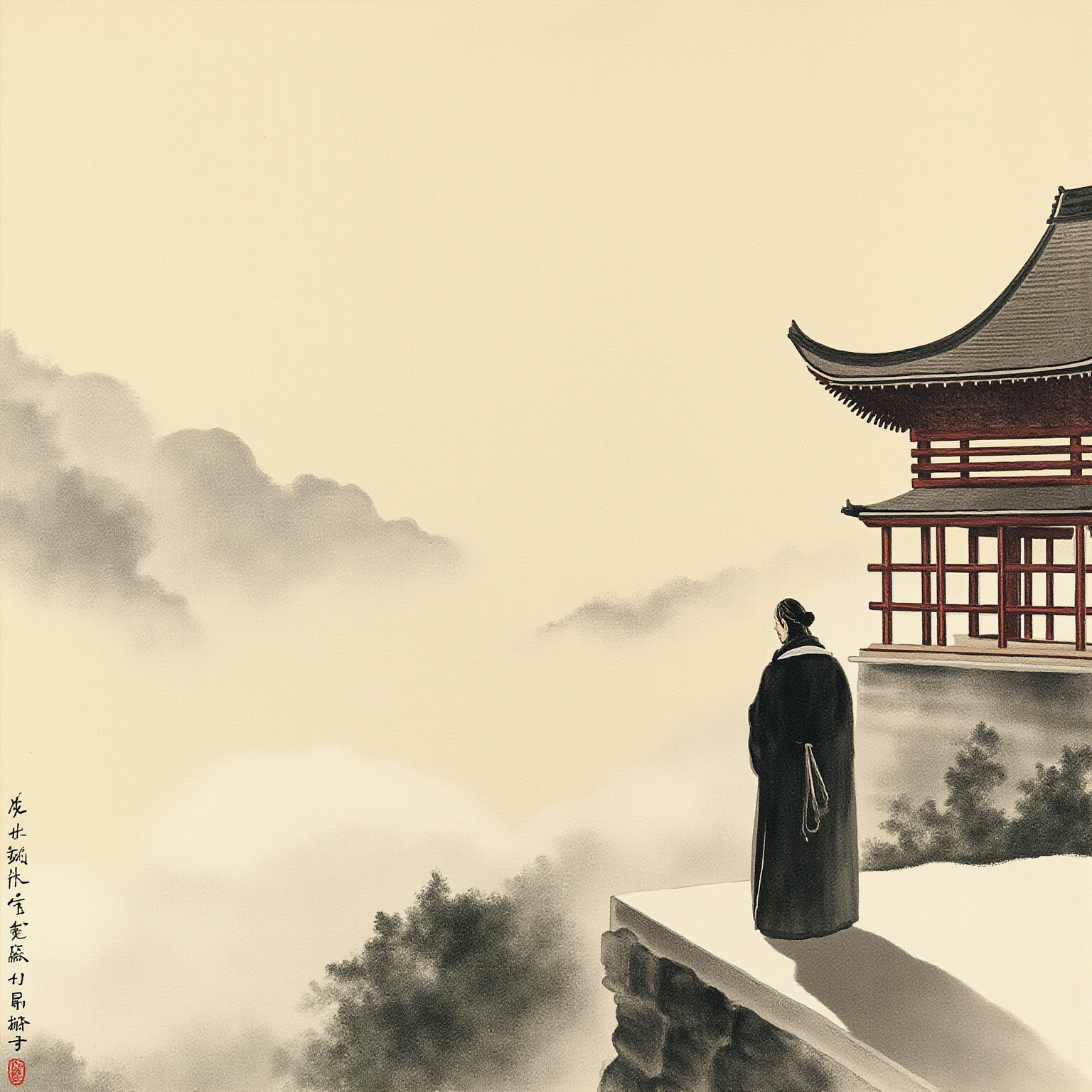
The book's opening image is Shakyamuni sitting on a snowy mountain. Dōgen keeps returning to it: the Buddha sitting there is not preparing to become Buddha; the sitting itself is Buddhahood. It is a proposition that stops you cold. You assume sitting is the means and awakening the result. Dōgen says the means is the result, that to sit down is already the destination.
What is worth noticing in the writing is that Dōgen never argues the point. He simply returns to the same image, again and again, until you have to sit inside it yourself. Reading this book is less like reading an argument and more like watching someone trace the same picture over and over, until the outline of the picture disappears from your mind.
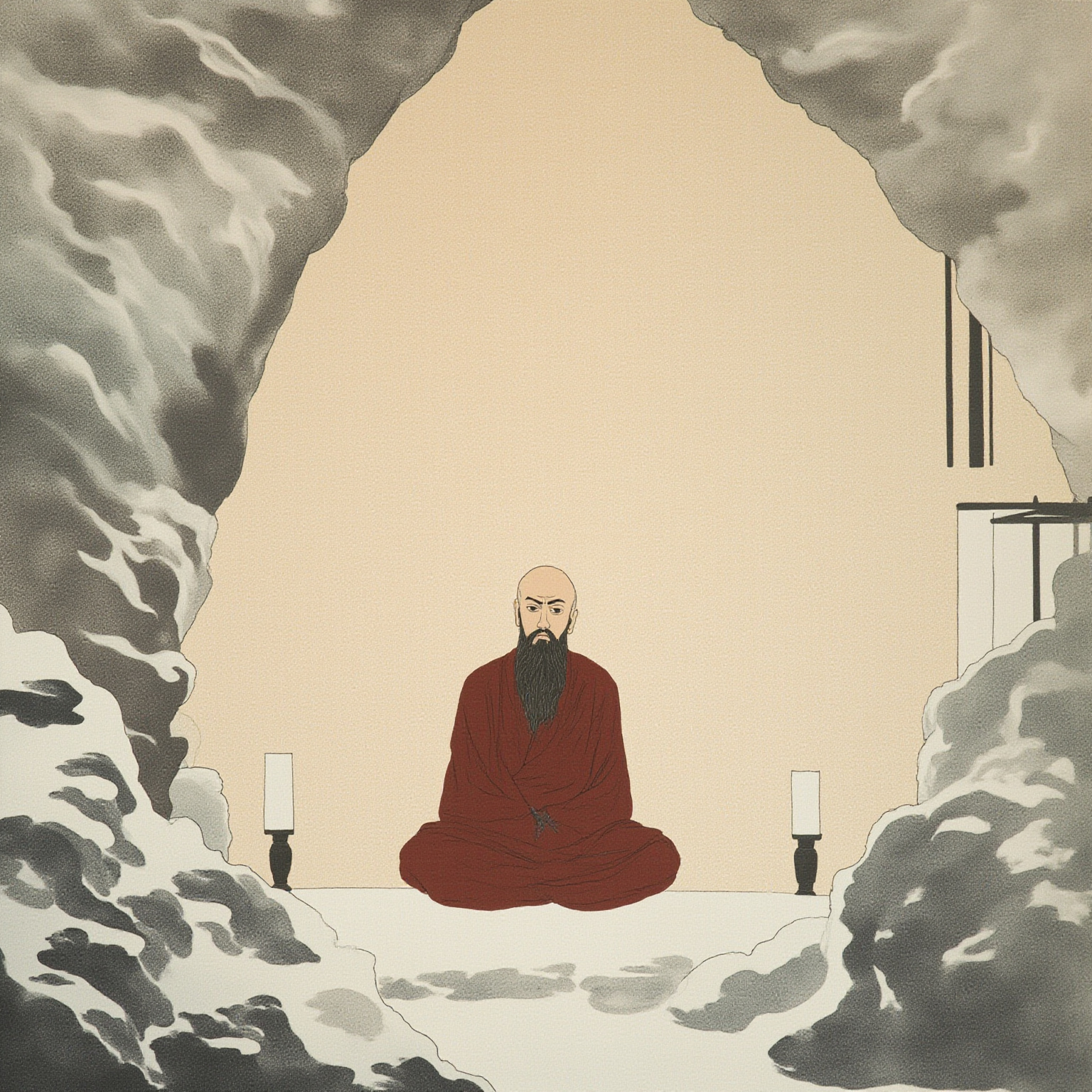
Another recurring image in the first fascicle is Bodhidharma facing a wall for nine years. Zen tradition usually tells his story as the founder who taught without words, outside the scriptures. Dōgen will not tell it that way. He demotes Bodhidharma, or promotes him, depending on how you look at it, from the first patriarch of Zen to one manifestation of original nature. Which means Bodhidharma founded nothing new. He simply let his own original nature show through, completely.
What makes this move so sharp is that it turns the entire history of Zen from a history of transmission into a history of manifestation. No one after Bodhidharma needs to trace some orthodox lineage back through the generations. All that is needed is to let one's own original nature show through.
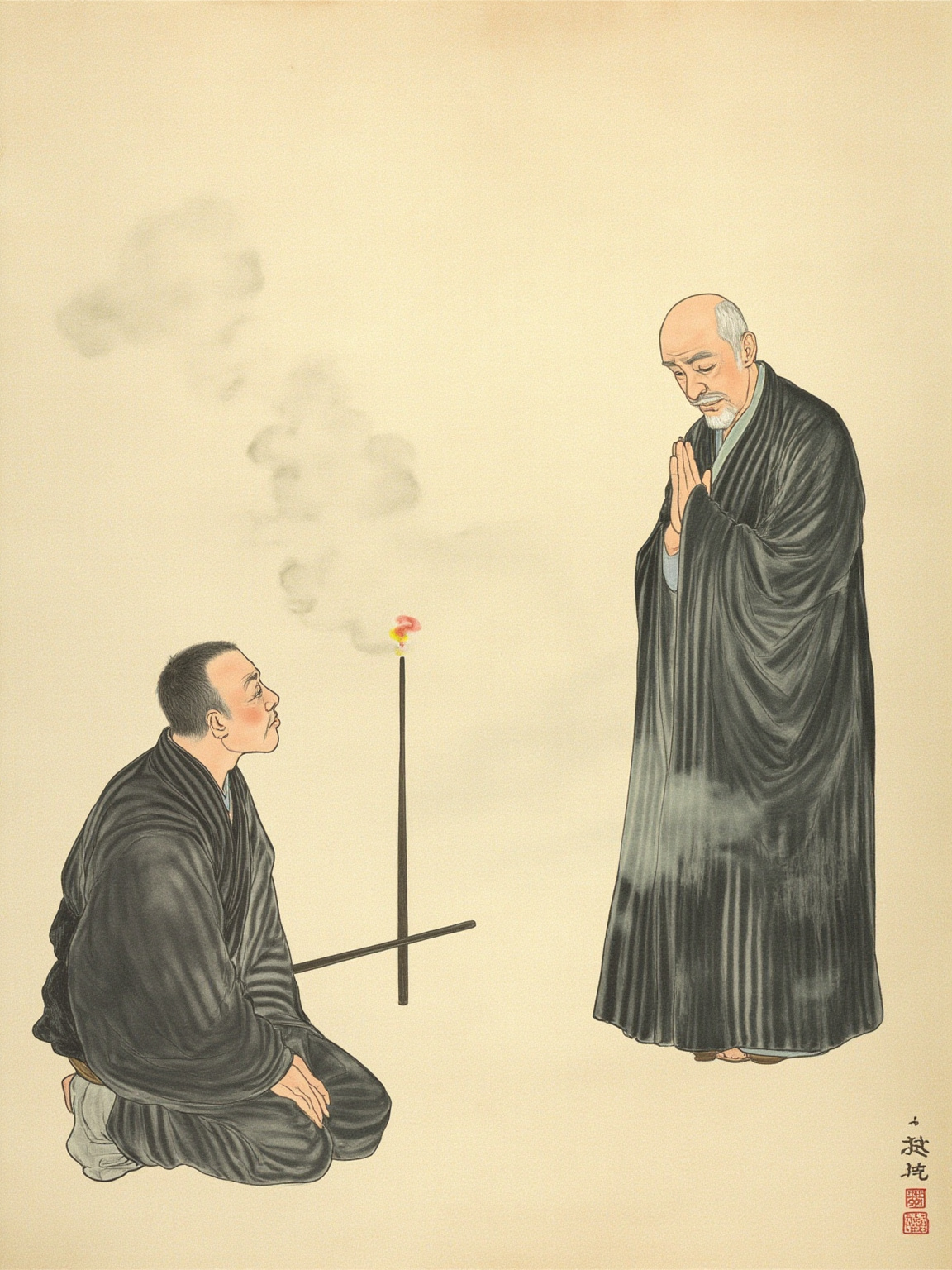
The book's biographical high point sits in fascicle four, Entering Caodong. Dōgen crossed to Song China at twenty-four, made a circuit of the monasteries of the Yangtze delta, and finally, at Jingde Monastery on Mount Tiantong near Ningbo, took Master Rujing as his teacher. Rujing was a severe man, his entire teaching reducible to one line: just sit. No working through koans, no questions, no seeking after awakening.
At twenty-five, in the middle of sitting, Dōgen's body and mind fell away, shinjin datsuraku, one of the most mysterious phrases in Zen literature, meaning literally that body and mind dropped off him. He never described what he had realized; Rujing simply nodded and confirmed it. The passage is written with extraordinary restraint, and for that reason it is one of the most vivid moments in the whole book: a man sitting, and sitting, and then things fall away, and he keeps sitting.
Out of this comes the book's central proposition: practice and realization are one and the same. Practice is the sitting. Realization is awakening, becoming Buddha. One and the same means exactly that, one thing, not two. It sounds like a truism until you see what it cuts against. Most people's default picture of meditation is a chain of cause and effect: I sit, therefore I awaken, therefore I become Buddha, a line with a starting point, a process, and an end. Dōgen severs the chain in one stroke: sitting itself is already Buddha. There is no A to walk from, on the way to B.
What that stroke cuts away is nothing less than the self: the I doing the practicing, the I waiting for awakening. As long as that I still stands between practice and realization, acting as judge, Dōgen holds that body and mind remain split. And the split is exactly what ignorance is.
Fascicle seven, Uji, is the one twentieth-century Japanese philosophy and Western phenomenology cite most often. Uji does not mean sometimes; it means being-time. In Japanese, time and being fold into the same word, so uji says that being itself is the occurring of time. Here Dōgen argues that time is not something flowing past you. Time is the present moment you are standing inside.
He writes: mountains and rivers are the Buddha; the great earth is awakening. This is not a figure of speech. Do not read it as seeing mountains and rivers feels as beautiful as seeing the Buddha. Dōgen means that the mountains and rivers in front of you right now are the Buddha manifesting, with nothing standing behind them. He tears out the seam between the self and the mountains and rivers in front of it as well.
Take the self out of practice completely, and what remains — the act itself — is the answer. This is Dōgen's most radical rewriting of Zen.
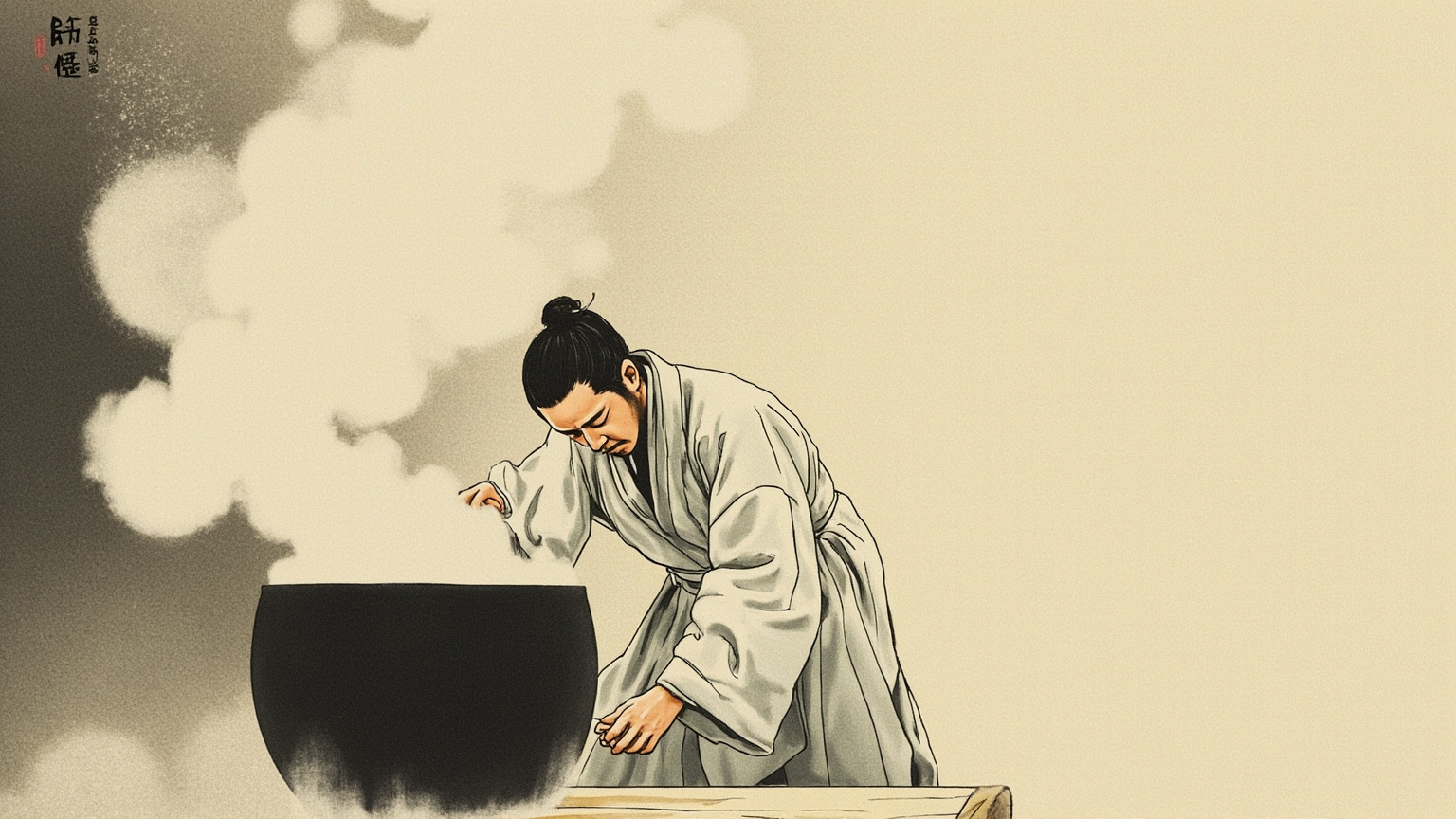
If sitting is not a method, what about cooking? Fascicle one, Tenzo, is a whole chapter on Eihei-ji's kitchen supervisor. The tenzo is not a chef; he is the monk responsible for cooking in the training hall. Dōgen writes that the tenzo cooking rice and the monks sitting in the hall are the same act.
That frees practice from the sitting platform in the monks' hall. Sweeping, washing your face, eating, drawing water, all of it becomes the other face of sitting meditation. This is not the inspirational cliché of practicing through labor. It is the claim that labor and sitting were always the same act. Dōgen's word choice is uncompromising: work is not a preparation for practice, and it is not a byproduct of practice either. No arrow can be drawn from one to the other.
In the twentieth century, Japanese philosophers such as Watsuji Tetsurō and Nishitani Keiji read the Shōbōgenzō as a founding text of Japanese philosophy, not because it argues some novel philosophical thesis, but because its denial of three splits, of body from mind, of subject from object, of time from being, is carried to a completeness unmatched anywhere else in the history of Zen.
Set on the map of Japanese Buddhism, it forms a pair with Shinran's Tannishō. Shinran preaches other-power, preaches faith: you need only trust, completely, that Amida Buddha will come for you. Dōgen preaches self-power, preaches sitting: you must sit down yourself and let body and mind fall away in your own body. If Japanese Buddhism has two poles, Shinran is one and Dōgen is the other. Work through either book, and most of the skeleton of Japanese religious thought stands up in front of you.
For a reader today, its sharpest edge is this: it is not a mindfulness guide. It says nothing about the benefits of focused breathing, promises no relaxation of body or mind. Dōgen's proposition runs the other way: the split between body and mind is itself where ignorance begins. That is what separates it from every wellness product on the market claiming the name of meditation.
An explainer gives you a map; the text is the ground itself. What this book delivers cannot be handed over secondhand. Dōgen's prose has a strange, recursive rhythm: the same statement said one way, then said again in different words, then a third time in words different again, like the ringing of a bell. By the third pass you suddenly notice that your first two passes of listening were wrong. You thought you were understanding the words; really, the words were taking you apart. That can only happen once you are sitting in front of all seventy-five fascicles yourself.