
Six Characters in Search of an Author (Sei personaggi in cerca d'autore) · Companion Guide
六个寻找剧作家的角色
六个被作者遗弃的角色闯进排练厅,逼演员和观众共同回答:虚构之物,是否比扮演它们的人更真实?
Opening: Six people in black walk into the rehearsal hall
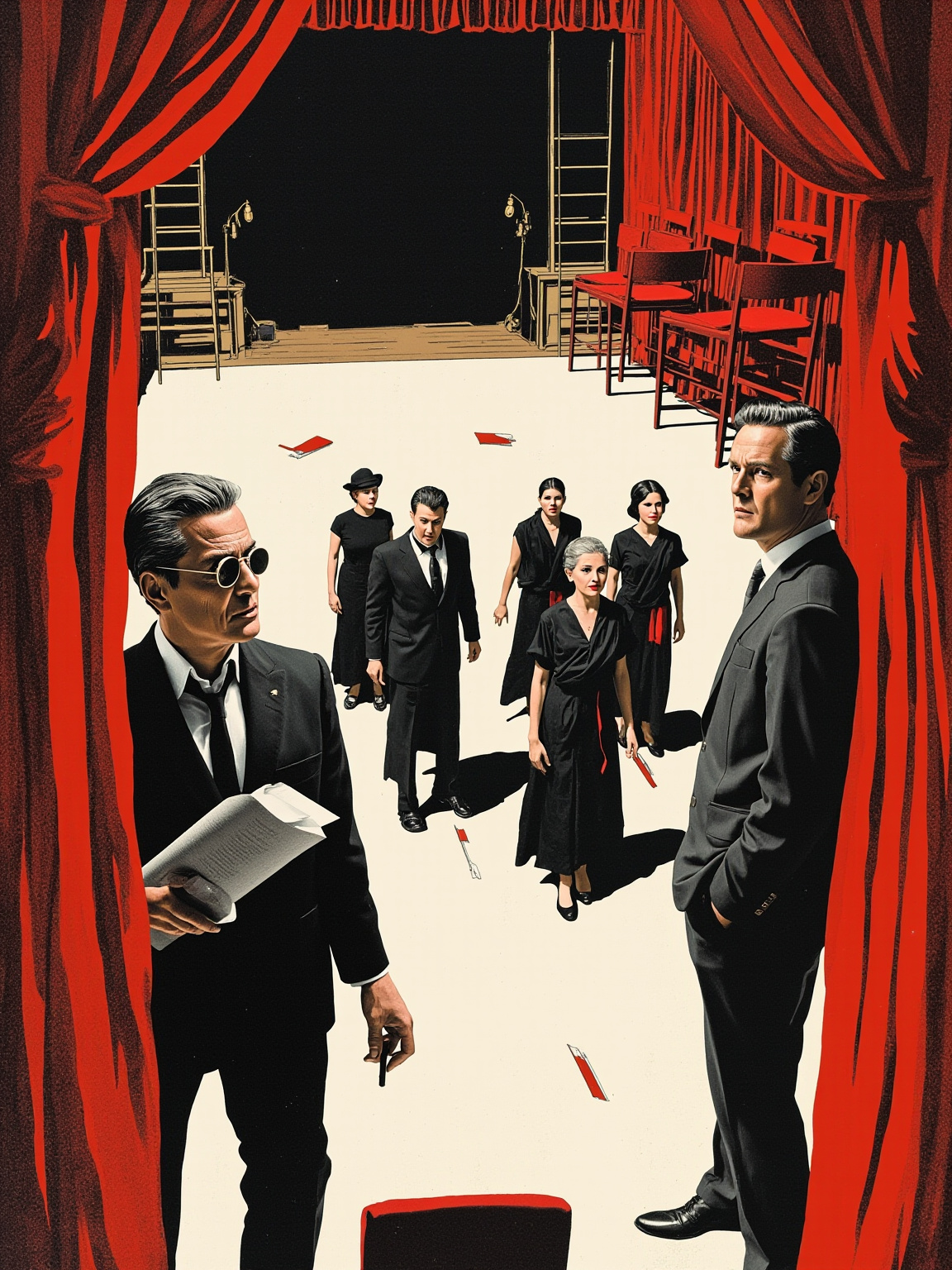
The rehearsal hall lights are still on, a few chairs scattered across the center of the stage. A company is rehearsing a new play, and the director has just finished calling the blocking. Six people approach from the audience side, dressed all in black, as if they have wandered into the wrong room. They are not audience members, and they refuse to say who they are. They will only say this: we are characters from a play, abandoned by our author the moment he finished writing us. Find us a writer.
We are characters in search of an author.
我们是几个寻找作者的剧中人物。
金句 · 开场:六个寻找剧作家的角色
What kind of book is this
Pirandello was already in his early fifties when he wrote the play. When it premiered in Rome in 1921, the story goes that half the audience was applauding while the other half was throwing things at the stage — some felt personally insulted, convinced that drama should not be allowed to expose itself. The play has since been restaged, rewritten, and adapted for film countless times, and its largest legacy is an archetype: letting fictional characters turn around and hunt down their author. From Sartre and Beckett to Pinter, almost everyone has borrowed a spark from here. Pirandello himself received the Nobel Prize in Literature on the strength of it.
Six Characters and One Theater
The six figures in black have clearly defined parts. The Father is the oldest and the most talkative, and he keeps circling back to a philosophical question: between a character and an actor, which one is real? He insists the character possesses an eternal life independent of the author, that the character is the form while the actor is only a temporary imitation. The Stepdaughter is young, sharp, bristling with thorns. What she wants is revenge. She wants the ugliest scene, the one the author cut, finally staged. The Mother barely speaks; she only cries out, again and again, "No, don't stage it." She refuses to take part in the meta-theatrical argument and wants nothing more than to stop the unfinished play from being performed again. Her refusal is not a plea; it is the play itself refusing to be rehearsed a second time. The Boy clings to the Mother, his face frightened; he is the unspeakable wound at the center of this drama. And there is a Son, somewhere in age between the Father and the Stepdaughter, who stands apart the whole time, watching the rest coldly, with contempt. He is convinced the other five characters are nothing but "fictional phantoms," and he refuses to perform the scene with them. His existence splits the six characters' "one shared story" into contradictory versions, so that no one's truth can stand.
We are more real than you are.
我们比你们更真实。
金句 · 第一幕:六个角色与一间剧场
On the other side is the theater company. The theater manager begins the encounter angry and pragmatic; all he wants is to throw the six uninvited guests out. The leading actress is young and pretty; she is the first to step forward and "play" the Stepdaughter, only to be exposed on the spot by the characters, who declare that her tears are false. Between the living people and the six characters, one question hangs in the air: for whom, in the end, is this machine called the theater running?
The author vanishes; the characters come to collect
The story begins in a theater during rehearsal. The Manager and actors are working through the opening of a new play. Six characters in black burst in, claiming to be the entire creative team of an "unfinished play." They are neither passersby nor madmen — they are beings the author wrote with his own hand, and then cast aside with his own hand.

The characters are the truth; the actors are the shadows.
角色才是真实,演员不过是影子。
金句 · 第一幕:作者失踪,角色上门讨债
The Father is the most talkative philosopher of the six. The moment he opens his mouth, he splits the theater in two: we characters are more real than you actors. We are unchanging "forms"; you are temporary imitations, each performance a fresh body, and you will never touch us. The Manager at first finds it absurd. Characters? What characters? I have scripts, stage direction, lighting under me — what are you?
The Manager is hooked, and the conventions of the theater begin to crack
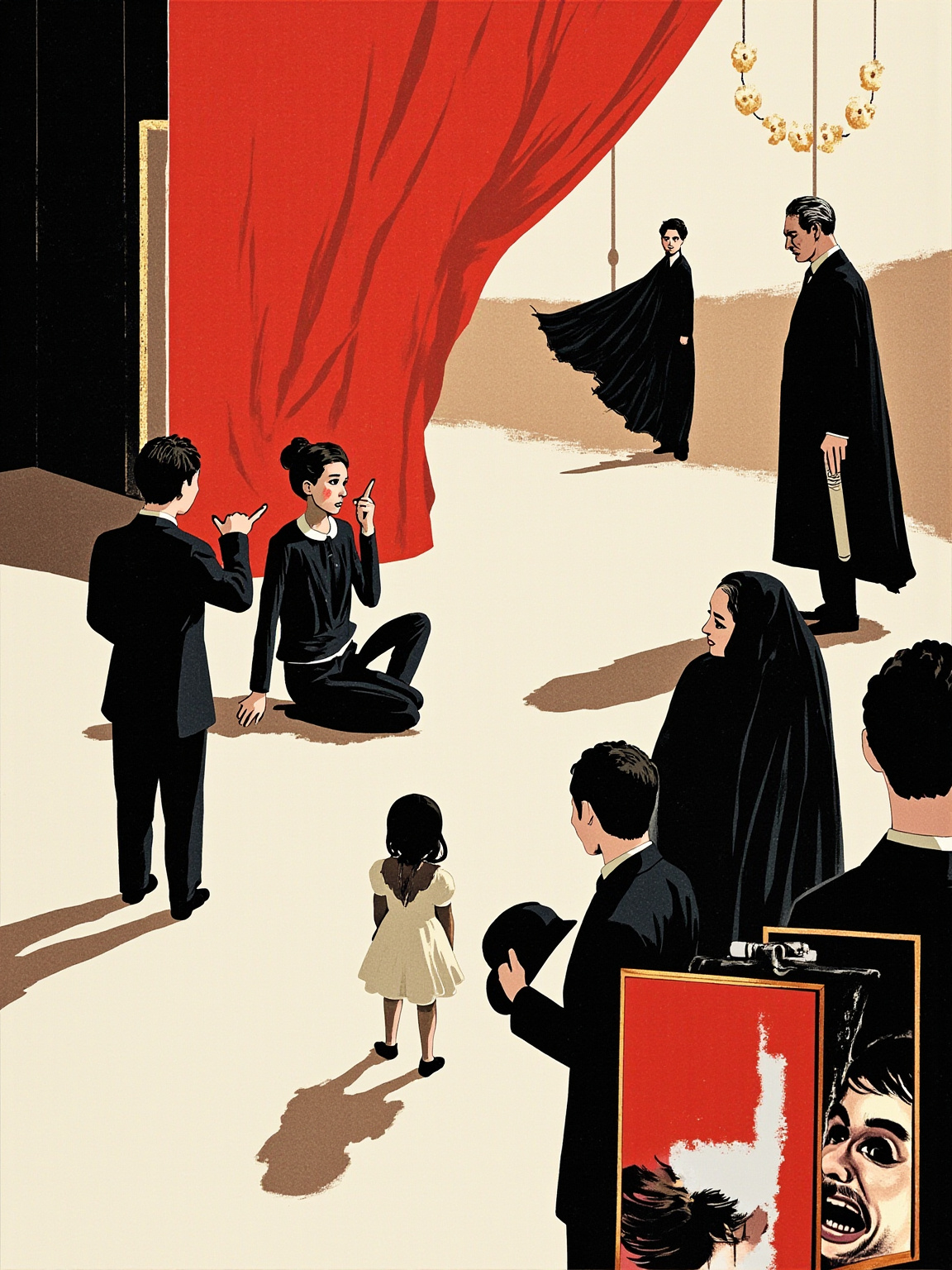
The Manager originally meant to throw them out. But after the Father tossed out "we are more real than you," his curiosity overtook his reason. He thought: maybe I could try, let my actors perform your play? The moment he agreed, the theater's conventions began to unravel piece by piece. The Stepdaughter rushed up to correct the actor's blocking; the leading lady had barely cried twice before the Stepdaughter mocked her: that crying of yours is fake, it is not how I cry. The Manager kept trying to shut things down with "this is theater, this is how it must be performed," and the characters kept pushing back with "you don't understand at all."
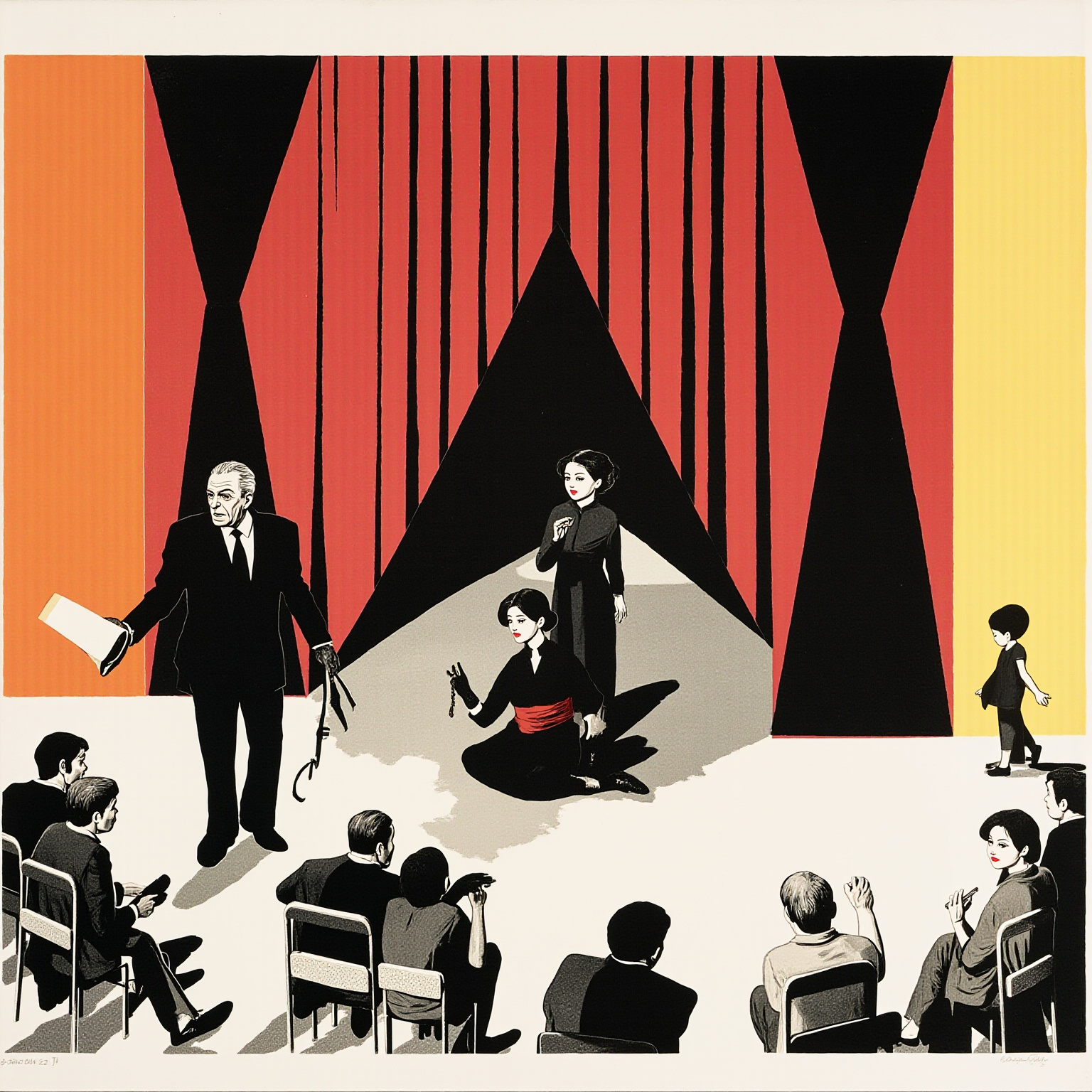
Make us live again, if you can!
要是你们做得到,就让我们重新活过来吧!
金句 · 第二幕:经理动心了,剧场惯例开始崩裂
I was stunned the first time I read this: the conventions of blocking, direction, and dialogue, originally guardrails to protect the performance, have turned into a cage. The more "professional" the actor, the further from truth.
Three truths undermine each other
The Manager's attempt to stage that unfinished play is the most violent scene of the whole thing. The Stepdaughter wants to perform the play her father ruined; the Mother kneels and wails "no, don't perform it"; the Father insists his version is the truth. Three people speak of the same event, but the plot doesn't match, the motives don't match, even who the perpetrator is doesn't match. The theater turns into an interrogation room — each person presents their own version, and the truth is like a puzzle torn into three pieces that none of them can fit back together.
The boundary between the real and the fictional is torn open
At the height of the argument between the three versions, something happened upstage. The script doesn't render it in realistic terms — it only says the boy and the little girl were caught up in 'an irreparable event.' The actors stopped. They couldn't tell whether this was the plot of the play or something really happening. The moment is the blast center of the whole show: the theater, a space designed to hold 'fictions,' is suddenly breached by something real, and the fiction-making machine short-circuits along with it.
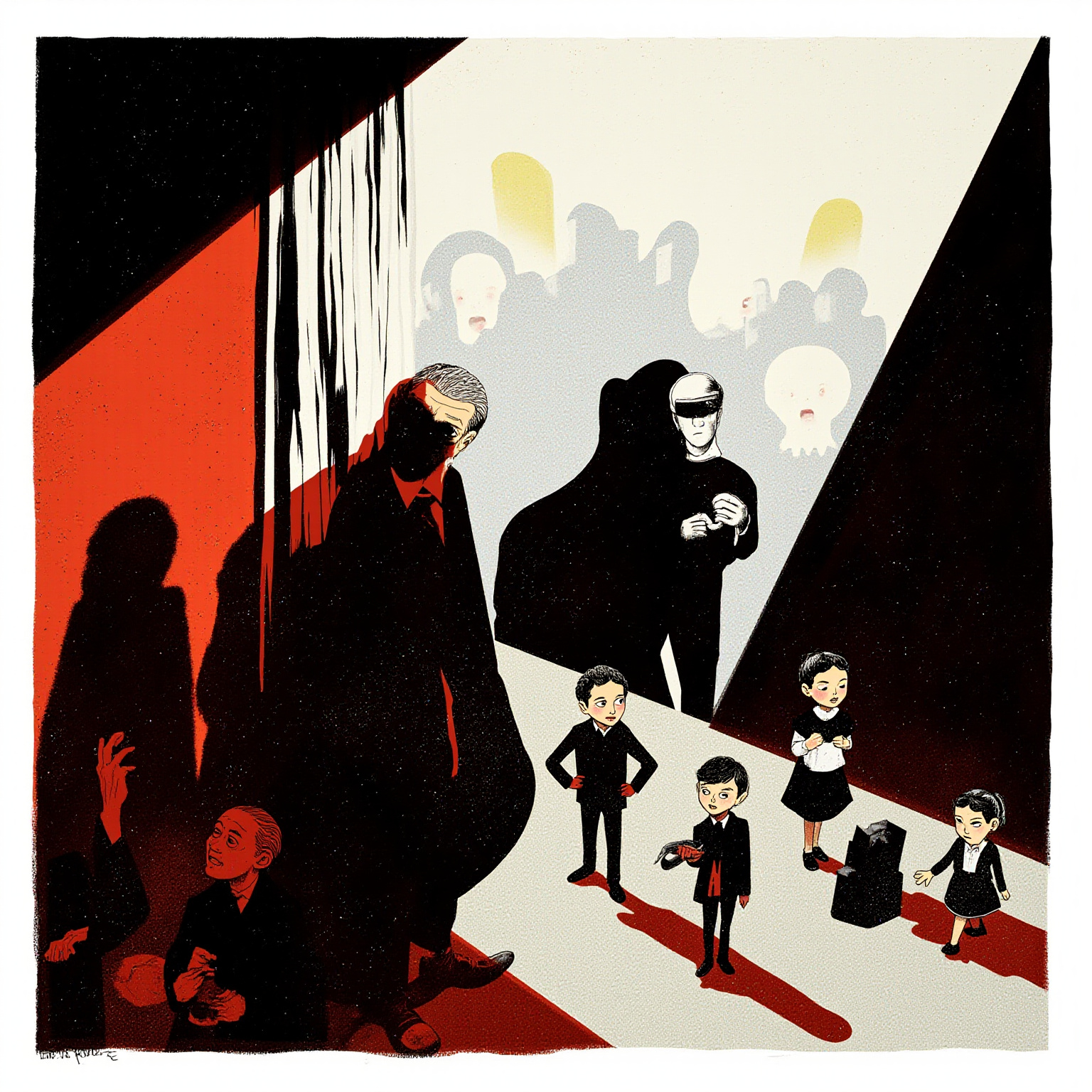
A play is not life, but it is beyond life.
戏剧不是生活,却比生命更长久。
金句 · 第三幕:真实与虚构的边界被撕开
The Manager Shouts Stop; the Characters Vanish; Only the Shadows Remain
The manager panicked. He shouted to stop the show, pulled the curtain wide — he wanted to use the theater's administrative power to seal the crack back up. But when the lights came back on, the six people in black were gone. On the stage remained only a few crooked chairs, a wooden ladder, shadows stretched long, and the hollow light falling once more across the theater. Nothing had happened. Everything had happened.
The theater is a machine for manufacturing fakes — it lets real things happen in fake ways. Pirandello takes this machine apart to show us how it works, and along the way, takes the audience apart too.
What This Play Is Really About
On the surface, it tells an unfinished family tragedy — a man, a woman, a stepdaughter, a boy, a girl. But its true protagonist is fiction itself. Pirandello wants us to face a question head-on: how do people wrap themselves in stories like a shell? Everyone plays their role, rehearses the same gesture every day, delivers the same lines. Actors on stage play you; you, down in the auditorium, play your own life. The play takes what we do every day and blows it up under the theater's spotlight.
Its greatest legacy to what followed is the technique of metadrama — drama unmasking itself, the theater turning the mirror on itself. From that starting point, Sartre wrote No Exit, with three dead people tormenting each other; Beckett wrote Waiting for Godot, with two tramps on an empty stage.
Why It's Worth Reading the Play Itself
A commentary can hand you a map, but the play itself is the territory. The brutal thing about this play is its physicality — sitting in the audience, you're constantly reminded that you're watching a play, and yet you can't believe what's happening on stage is fake. The father's monologue on "eternal form" lands completely differently spoken aloud than it does on the page; the stepdaughter's laugh when she's cut off carries a cruelty in the theater that print can't deliver. Knowing the plot costs you a little suspense, but it won't cost you the unease of being torn open by the theater, and only someone sitting in the dark, roasted by the spotlight, knows what that feels like.
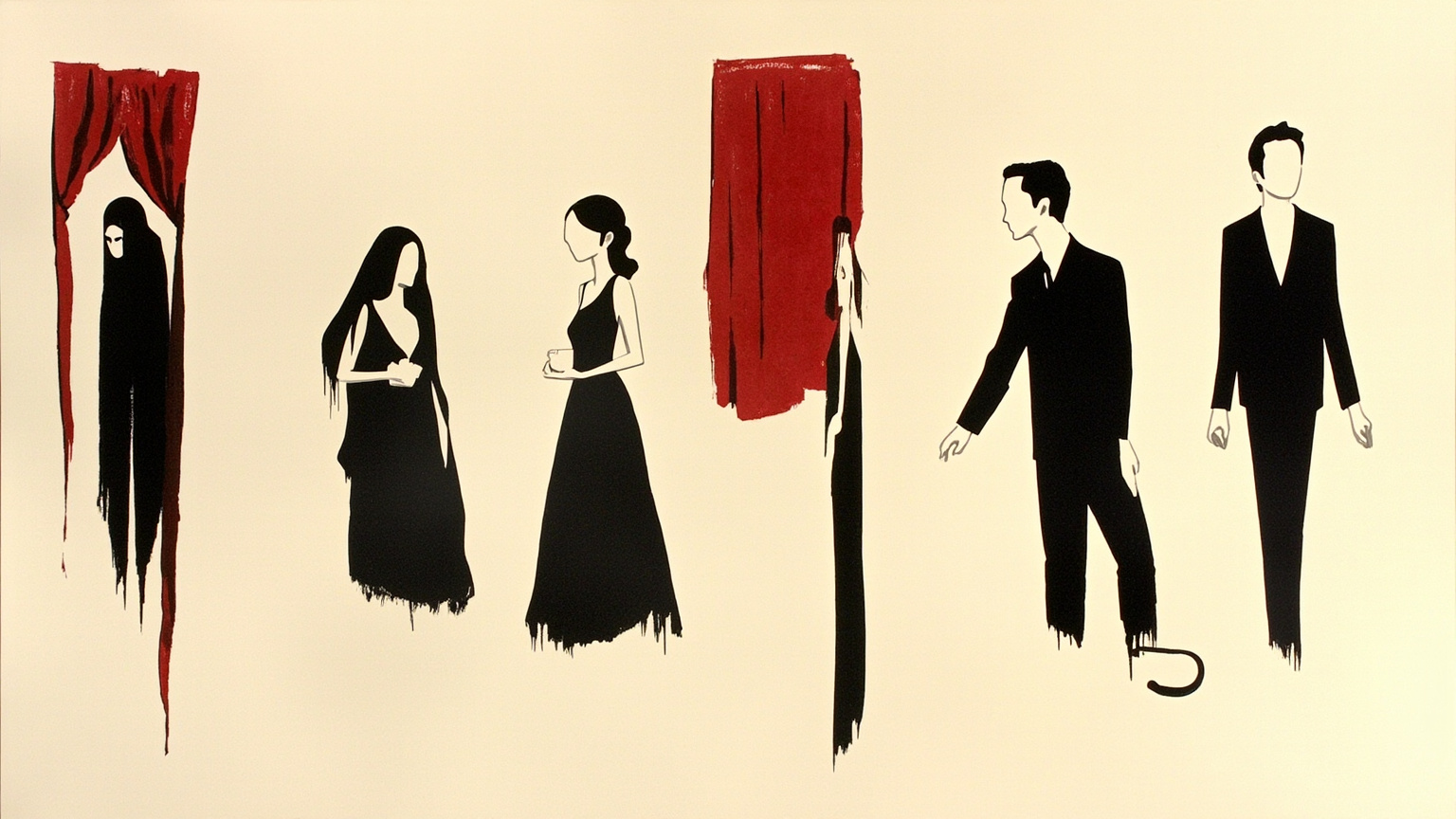
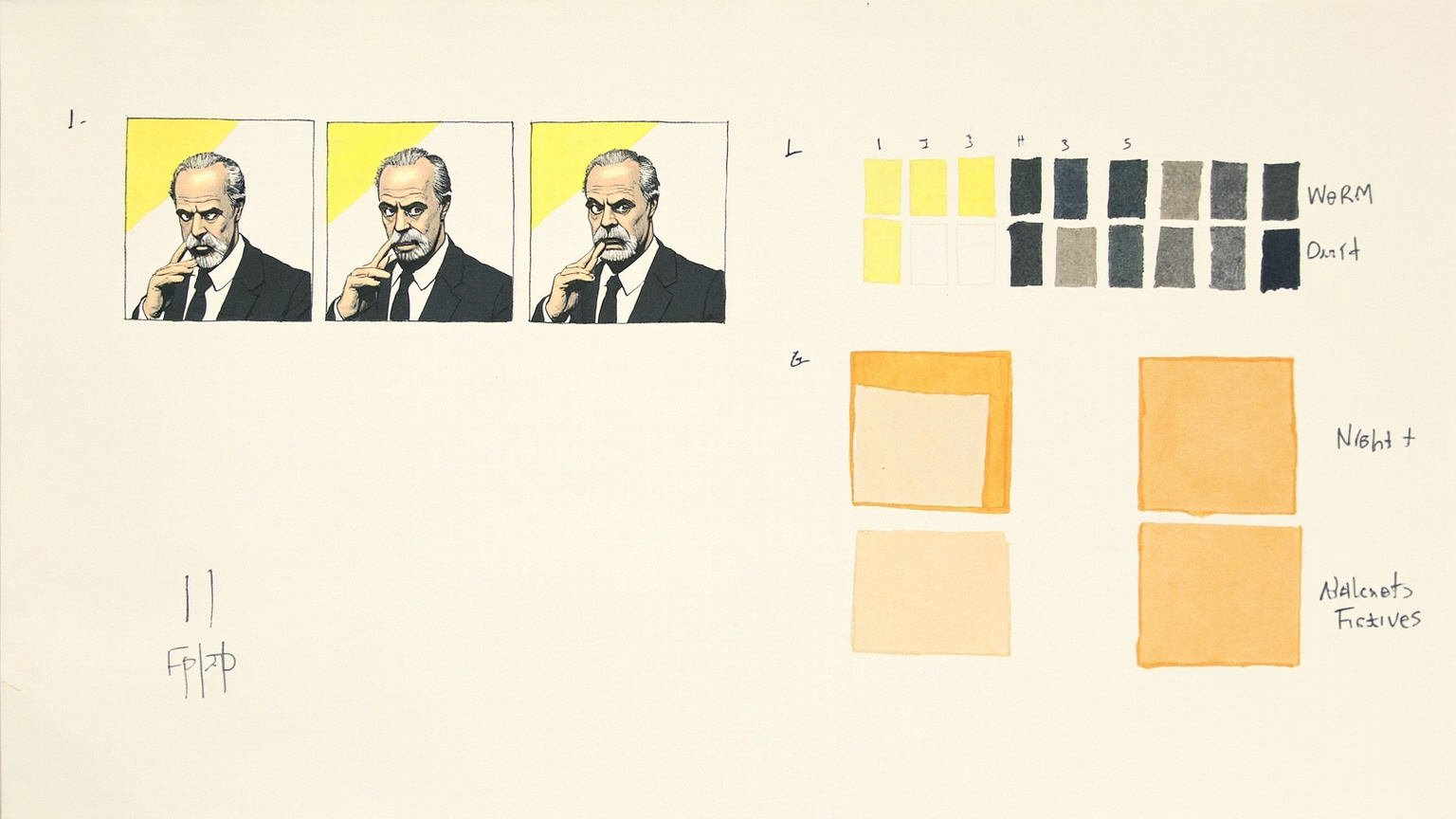
Art Direction4 plates
Before the guide was written, this book got a visual foundation — every illustration you just read grew out of it.