The most affecting marriage memoir of the Qing dynasty.
Text and illustrations produced by the pipeline
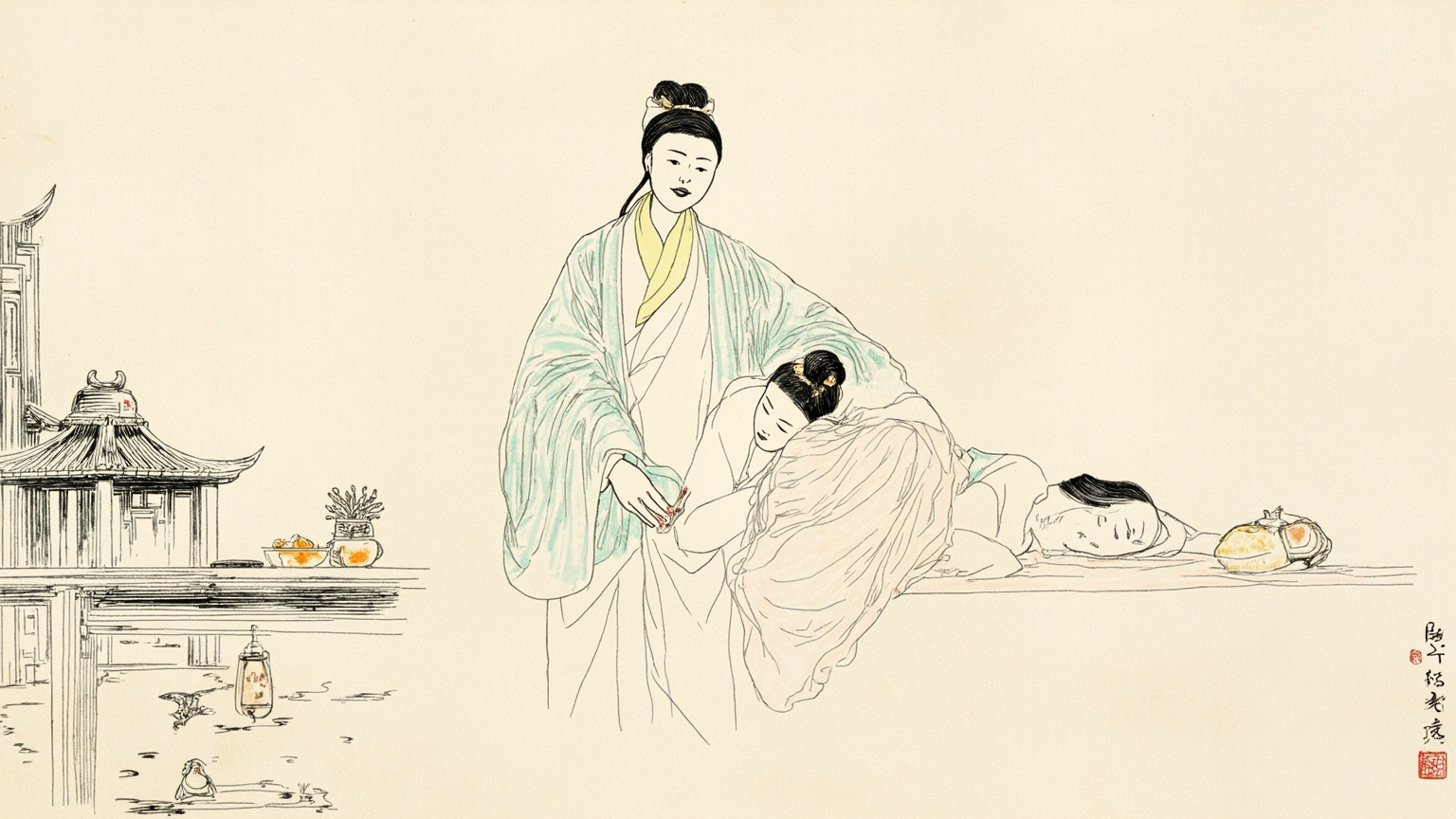
In the old house by Canglang Pavilion, Chen Yun stood at the stove stirring congee while Shen Fu tended a piece of wrinkled limestone on his desk. When the rice grains had just begun to bloom, he looked up and said the porridge tasted a little thicker than yesterday's, and she laughed. That laugh is the lightest and heaviest stroke in the whole book. Heaviest, because poverty and death will keep taking it back later. Lightest, because it belongs to nothing more than one summer evening the two of them shared. Poor, refined, brief — that is the kind of life this book records. There is no rise and fall of dynasties here, no armies mustering for battle, only a husband and wife turning rice congee, lamplight, stone, and flowering branches into something like poetry, before an unreasonable family and an unreasonable case of consumption take it all away, piece by piece.
The author, Shen Fu, courtesy name Sanbai, was born in Suzhou during the Qianlong reign. He failed the imperial examinations again and again, and made his living as a private secretary to local officials and by selling his calligraphy and paintings. He wrote this autobiographical prose memoir sometime around middle age, finishing it during the Jiaqing reign, and it was not pulled out of a pile of old papers and printed until the very end of the Qing dynasty.
The book is remembered because of two names. One is Chen Yun, Shen Fu's cousin and wife; after Lin Yutang translated her into English, he called her one of the most lovable women in Chinese literature. The other is a textbook passage that Lu Xun once had a hand in editing — every Chinese child has read the bit in "Childhood Delights" where a swarm of mosquitoes turns into a flock of cranes, though most never learn it is only a small sliver of the book. The real undertone of the whole work is not childhood delight but the elegy of a marriage.
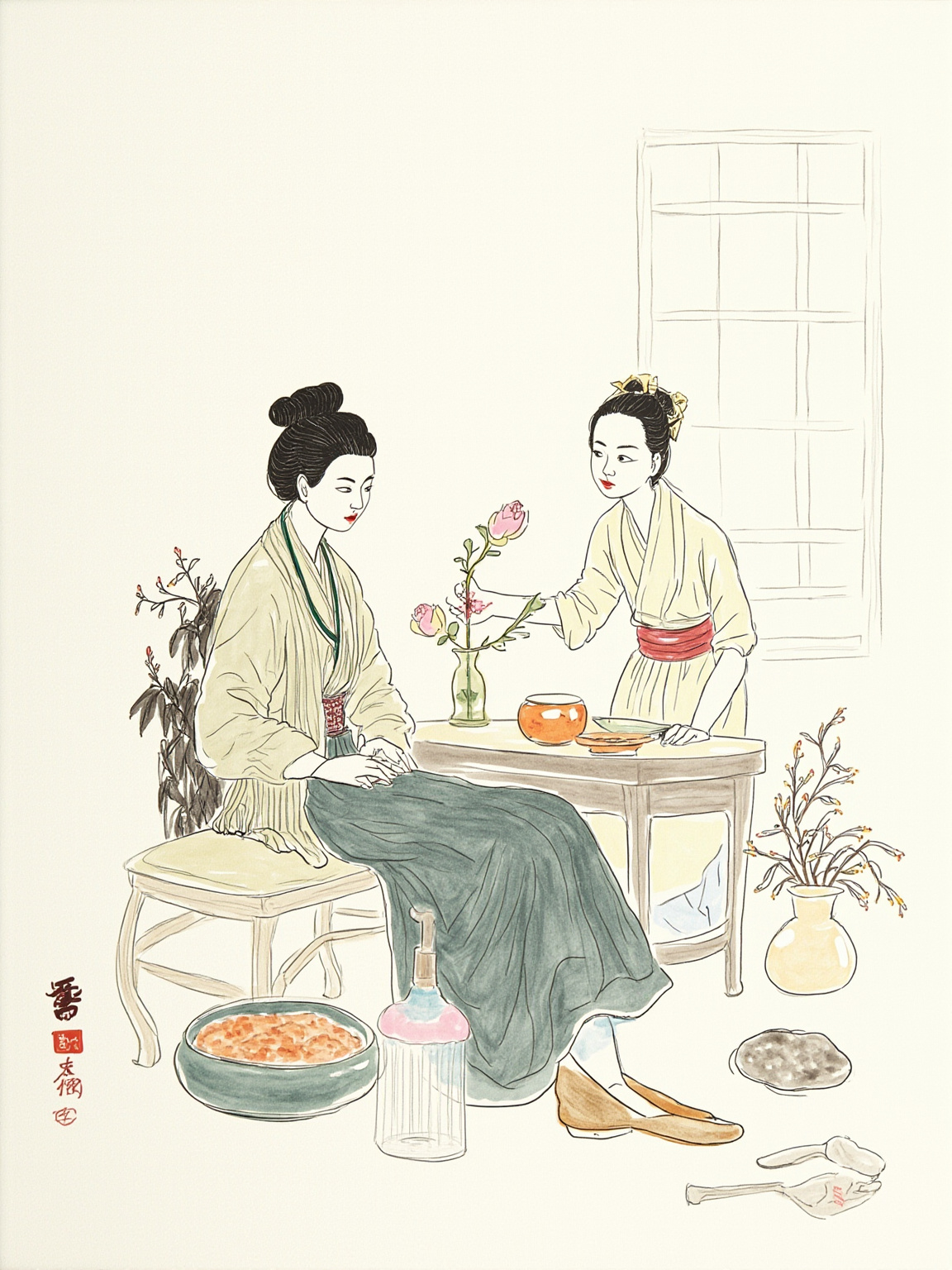
Shen Fu never climbed far in life and never grew rich. He took only three things seriously: calligraphy and painting, growing flowers and collecting rocks, and talking with his wife. Chen Yun was the sharper of the two — skilled at needlework, able to write poetry — and once she married in, she turned the old Xiaoshuang house into a miniature garden all its own: wrinkled limestone and a basin of running water on the desk, flowers changed with the season in their vases, a homemade plum-blossom box and chrysanthemum tower under the window.
The rules of this world are simple: the family has no money but plenty of taste; husband and wife are deeply devoted, yet think nothing of the wife arranging a concubine for her husband — not unusual at all in a scholar's household of the time. Chen Yun herself set her sights on Han Yuan, a famous Suzhou courtesan, and pushed to have her taken in as Shen Fu's concubine, a scheme that later became the first thread pulled from her undoing. The other side of this world is Shen Fu's father, known as Jiafu — an old-fashioned man who worked away from home as a secretary and ran his household with a hard hand — and his half-brother Qitang, a younger brother who caused the family trouble and then let his sister-in-law take the blame.
Before the guide was written, this book got a visual foundation — every illustration you just read grew out of it.
Shen Fu and Chen Yun were cousins who had known each other since childhood. At thirteen he declared he would marry no one but Cousin Shu, and at eighteen he did. For the first three years of their marriage they never traveled far; the longest trip they took was walking from the old house by Canglang Pavilion to Tiger Hill to watch the moon — a small outing they made several times a year.
The particular genius of Shen Fu's restraint here is that he never once lets the reader see the words "we were truly devoted to each other." He writes about Yun slicing freshly pickled lettuce stems thin and dressing them with sesame oil, sugar, and vinegar, the smell so good the old woman next door mistook it for plum blossom. He writes about a lotus he was growing, how its bud opened in the middle of the night and he woke his wife at once, the two of them throwing on robes to watch together as dew rolled off the petals. The more specific the writing, the more the reader believes it. He never says love; he simply lays the evidence of it in front of you, piece by piece.
Yun was never one to sit quietly at home. She had Shen Fu pencil in her eyebrows, bound her chest flat, put on her brother's blue cotton robe, and set a scholar's cap on her head, then went with her husband to see the lantern festival at the Water Immortal Temple. Everyone in the crowd took her for some young friend Shen Fu had brought along; no one saw through it. It is the liveliest page in the whole book — a woman of the Qing dynasty slipping out of her own chamber to walk shoulder to shoulder with her husband through the crowd, looking up at lanterns filling the street.
But the bolder Yun grew, the harder fate seemed set on punishing her. She later set her heart on Han Yuan, a Suzhou courtesan gifted in both looks and talent, and got it into her head to bring her to Shen Fu as a concubine. Han Yuan agreed at first, and she and Yun became close friends, sworn like sisters — the two of them cooling off together in the courtyard, trading verses back and forth, Yun so pleased by it she was nearly beside herself. But before long a wealthy salt merchant cut in and forced Han Yuan into his own household as a concubine, and she broke her promise and married elsewhere. The blow this dealt Yun went far deeper than Shen Fu ever imagined — it is where her long decline begins.
What broke this family was not Han Yuan — it was a small debt. Qitang, Shen Fu's half-brother, secretly borrowed money from a widowed neighbor and had his sister-in-law Chen Yun stand as guarantor. When the widow came to collect, the debt landed on Yun. Old Jiafu heard of it and flew into a rage: in a large household of that era, a daughter-in-law vouching for her brother-in-law's debt to an outsider was as good as reaching outside the family to drag its name through the mud. Jiafu and his wife talked it over and decided to throw Shen Fu and Yun out of the house.
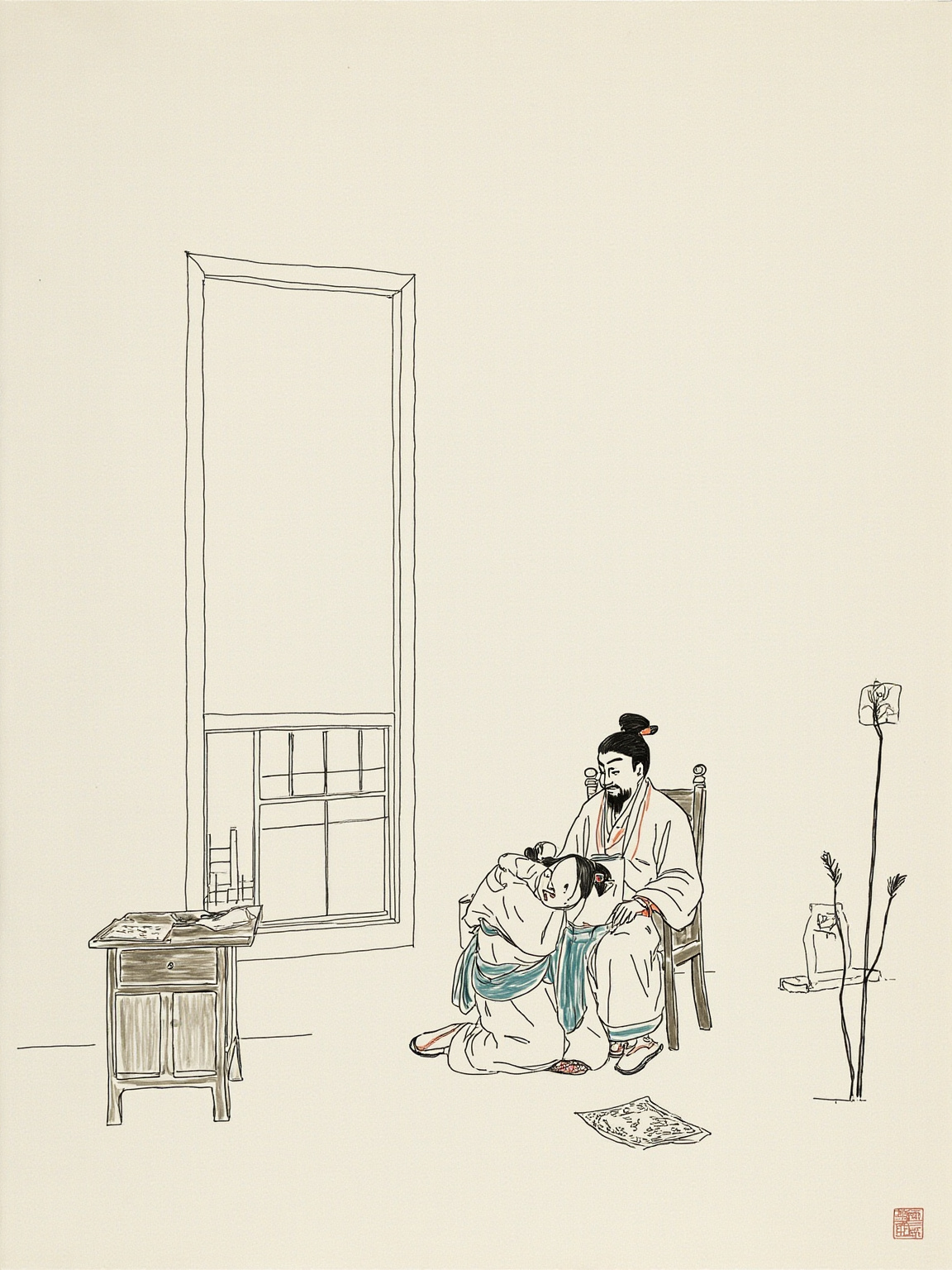
This is the most merciless passage in the entire book, and Shen Fu writes it without any dramatizing. He simply records that Yun knelt on the ground while his parents' words grew harsher by the sentence; that the old woman next door slipped them a bundle in secret; that as they carried their daughter out through the old gate, she turned back for one last look at the door they would never walk through again. At a moment like this the author doesn't need to add a word — the reader is already crying for him. Later his brother felt remorse, and his father too, and the couple was brought back home. But before long a second debt came to light, and Shen Fu and Yun were driven out a second time. This time, no one ever took them back.
After the second banishment, the two of them had no home left at all. Shen Fu went to Yangzhou to rely on a friend, while Yun stayed behind in a shabby, borrowed room to nurse her illness — coughing up blood, mouthful after mouthful, that would not stop. They could not afford a good doctor and had to settle for the cheapest prescriptions available. Only one child stayed by her side; the other had been sent to live with a distant relative. In her final days she longed to see that faraway child, and Shen Fu could not even scrape together the fare to bring her.
Yun was about forty-one when she died. She left Shen Fu with two things, roughly: that it was her fate to be his wife without growing old together with him, and that he was to remember her. From then on, there was only one task left in Shen Fu's life: to remember. Here the author's style changes. In the first three records he wrote of love, of potted landscapes, of moonlight, and all of it was warm. In this record, writing of his wife's death, he uses nothing but a cold hand — cold enough that all the warmth is left for the reader to supply.
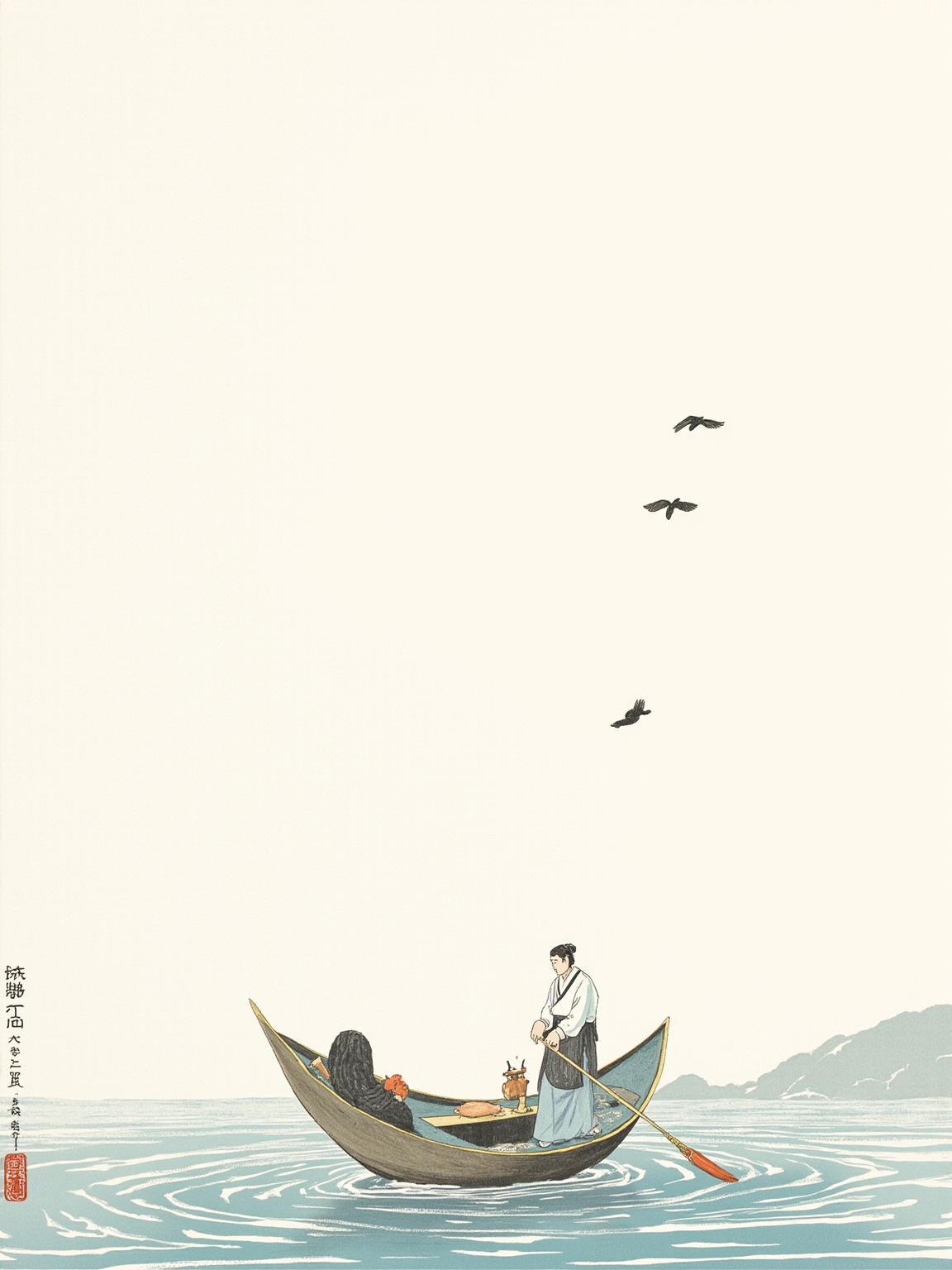
After Yun's death, Shen Fu carried on alone for years. He went back to the old house in Suzhou; the house was still there, the courtyard was still there, the flowerpots were still there, but the person was not, and the old scenery only sharpened the grief. He began traveling far from home — taking a boat out onto Lake Tai to look at its endless mist and water, drinking tea on the painted pleasure boats of Slender West Lake in Yangzhou, and later going as far as Guangzhou, the City of Rams, to see its flower boats. He wrote up what he saw and heard along the way as The Joys of Travel, and combined with the first three records, this is the Six Records of a Floating Life we can read today.
You can probably tell already: the harder he works at the scenery in this record, the more he seems to be running from something. He never says outright, 'I miss her.' He only says that the water of Lake Tai looked unusually clear that night. This trick of substituting landscape for lament is the most affecting part of the book's second half, and the reason critics have singled this record out on its own — he turned the pain of losing his wife into a travel journal, hiding his tears behind mountains and rivers.
On the surface, Six Records of a Floating Life is about a married couple's small domestic joys and the blows fate dealt them. Underneath, it is saying one thing: poverty by itself is not what hurts. What hurts is building a life into something like a flower with your own hands and then watching it wilt, petal by petal. What Shen Fu fears most is not an empty rice jar — it is an empty rice jar sitting next to a piece of wrinkled limestone that no one has watered in days.
The book is also considered well written because it is honest. Qing dynasty writers describing husbands and wives usually wrote of romance between gifted scholars and beautiful women; writing of pain, they usually wrote the bitterness of failing the examinations. What Shen Fu gives us instead is a man who failed the examinations completely, a woman who occasionally stepped outside the lines, a small debt borrowed and never repaid, and a father who would not be reasoned with. He serves up life exactly as it was, neither dressed up into legend nor flattened into melodrama. After Lin Yutang translated it for English-language readers, the West learned for the first time that the most moving side of a Chinese man of letters was not his career in officialdom but the smell of congee in the kitchen and the shadow of flowers under a lamp.
Knowing how it ends is still no reason to skip the original — this book hands you things a summary never can. You can feel the precision of the prose itself. Shen Fu draws a person in the fewest possible strokes: he writes that when Yun's eyes flicker as she speaks, his soul all but leaves his body, and no translation can stand in for that exactness. You will run into sensations felt in the body: moonlight turning the congee in a bowl silver, a lotus petal opening late at night and trembling like a startled child. You have to read it yourself to be struck by description this fine, fine enough to ache. You will also come across the small things a summary always drops — the verses he traded with friends after a few cups of wine, the paw prints his cat left on his manuscript one night, the awkward moment a landlord cornered him at the door over unpaid rent. These small things build an atmosphere that only the whole book can hold up.
What he left the world was not a love story but a knack for turning rice congee into something like a flower — a knack an unreasonable age took back from him far too soon.