You think you are reading the history of philosophy. The history of philosophy is reading you.
Text and illustrations produced by the pipeline
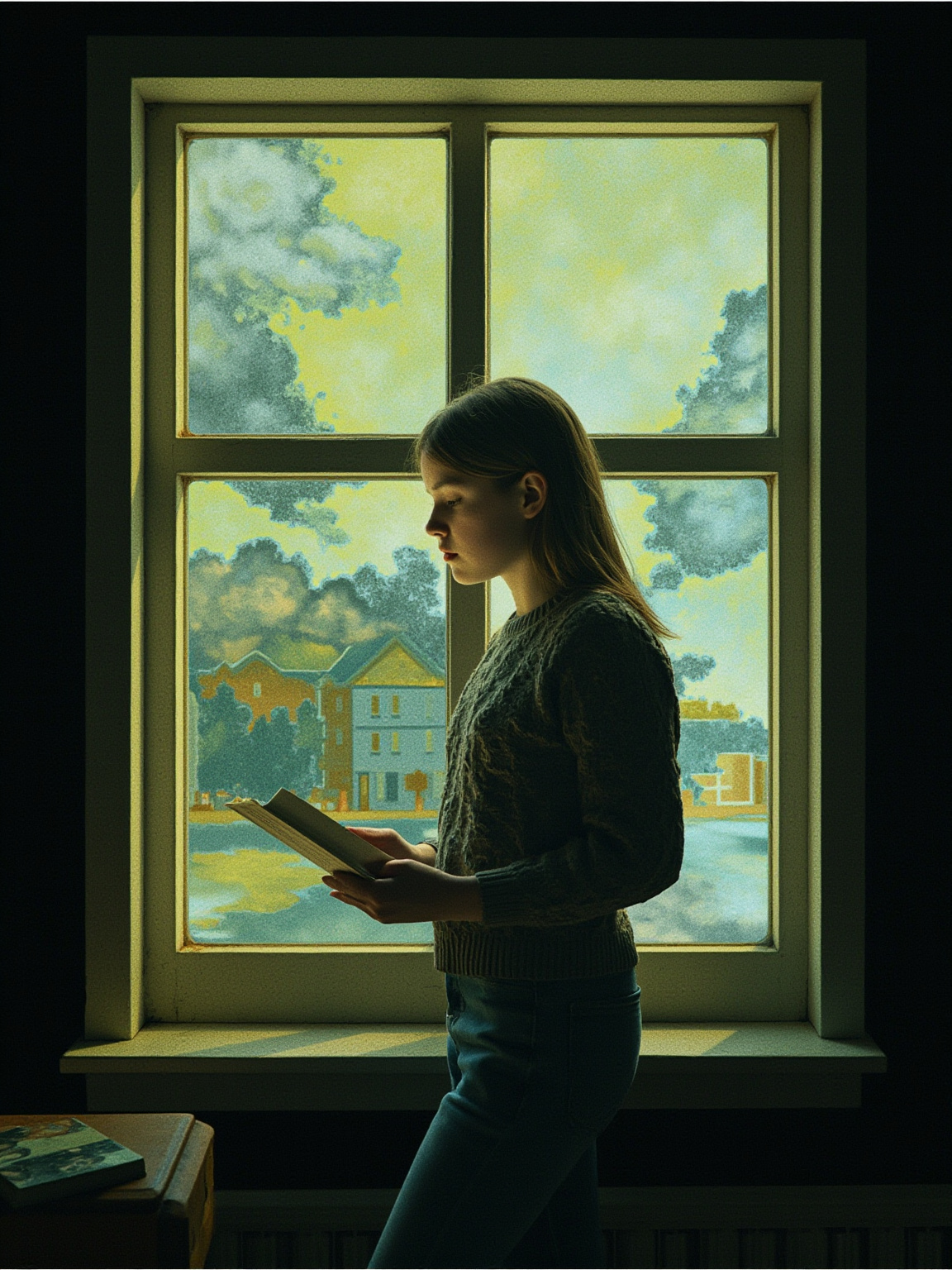
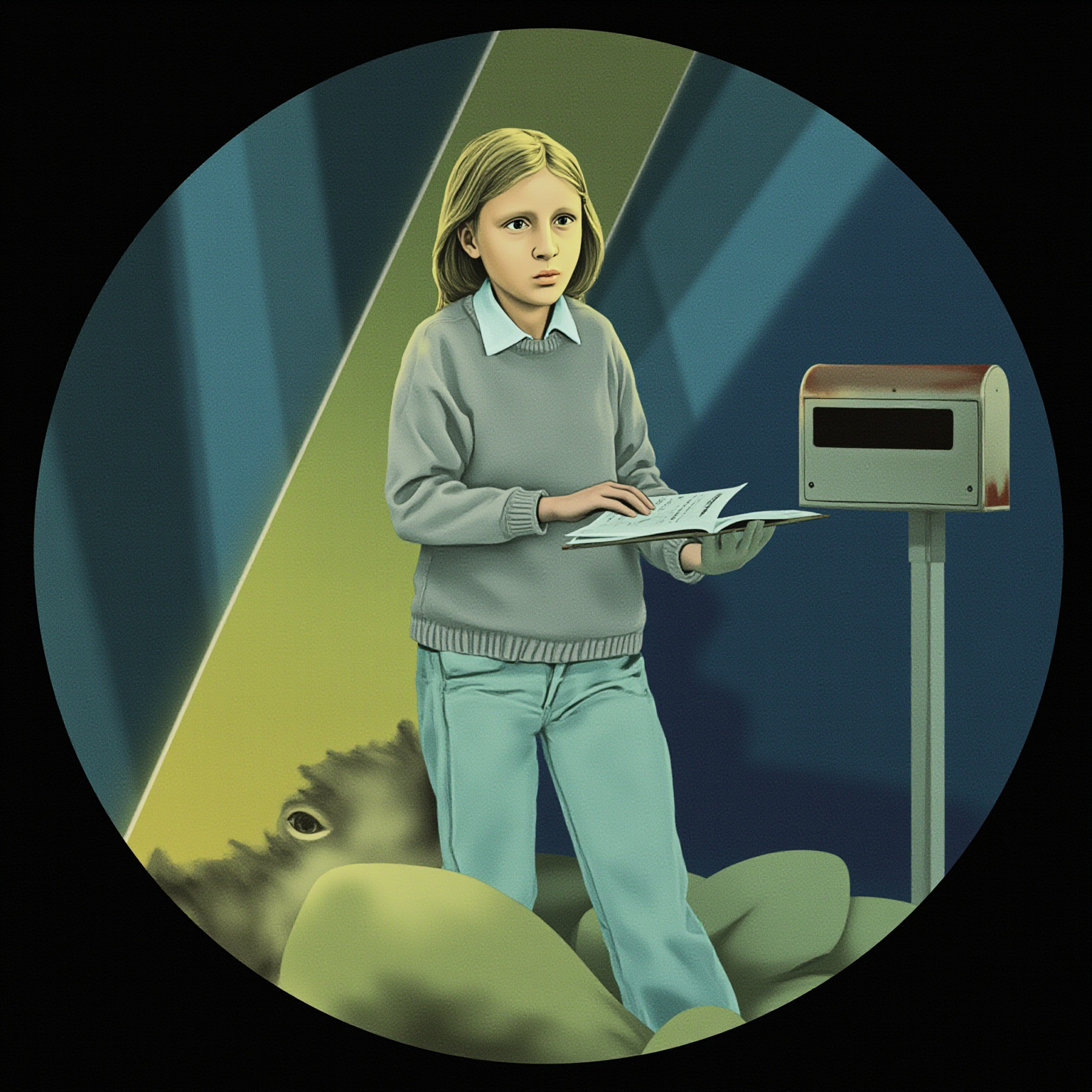
Two unsigned notes were waiting in the mailbox when she got home from school. One asked, 'Who are you?' The other asked, 'Where does the world come from?' Sophie Amundsen, not yet fifteen, turned them over looking for a sender and found none. Then she peeled a banana, and stuck to the inside of the skin was a birthday postcard addressed to someone named Hilde Møller Knag.
This is the puzzle the Norwegian writer Jostein Gaarder throws down at the start. How can a postcard addressed to someone who doesn't exist turn up torn open in a world that, it will turn out, doesn't quite exist either? Sophie doesn't yet know the card wasn't meant for her. She doesn't know that whoever wrote it is waiting one layer further out.
Before he wrote this book, Gaarder taught philosophy at a Norwegian high school, walking students through the whole history of Western thought, from the pre-Socratics to Sartre, more times than he could count. Published in 1991, Sophie's World is the least textbook-shaped container he could find for that course - mysterious letters smuggling philosophy into a teenage girl's summer vacation. It has been translated into more than sixty languages, and in China it was the first taste of philosophy for a couple of generations of readers. On the shelf, it sits under 'popular philosophy,' but what actually keeps readers up at night is the nesting-doll structure underneath: you think you're reading philosophy alongside Sophie, and it turns out you're trapped with her in the same manuscript.
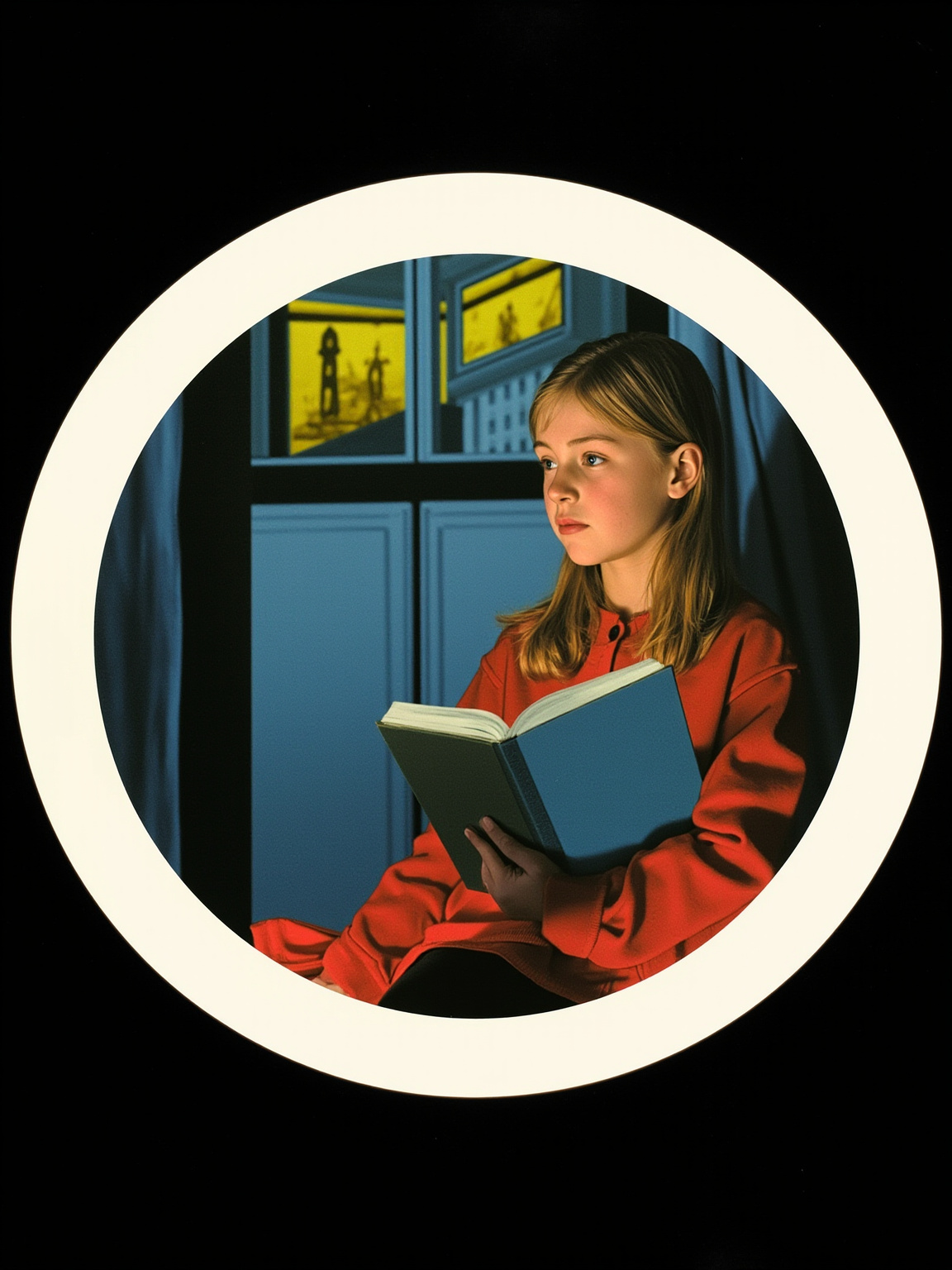
Sophie is the book's questioner and its point of view. She is about to turn fifteen. Her mother is an ordinary homemaker, and her father is a ship's captain who spends most of the year at sea and has no idea about the strange letters piling up in his daughter's mailbox - he assumes it's an early boyfriend or drugs. Walking her home from school and poring over the odd postcards with her is her classmate and best friend, Joanna, who stands in for the ordinary teenage life that hasn't yet been pulled into the philosophy.
A guide like this one is the map; the novel itself is the ground. The real pull of this book isn't the plot - it's the physical sensation of getting pulled in: the rhythm of tearing open one letter after another at the mailbox, the held-breath feeling of a black-and-white screen flickering behind you on a dark walk through the woods, the jolt in your fingertips when a postcard comes off the inside of a banana peel and something in the world suddenly feels cracked. None of that survives a summary. You only get it by reading, line by line.
You think you're keeping a girl company while she reads the history of philosophy. By the end, you find out it was the history of philosophy keeping you company while you read yourself.
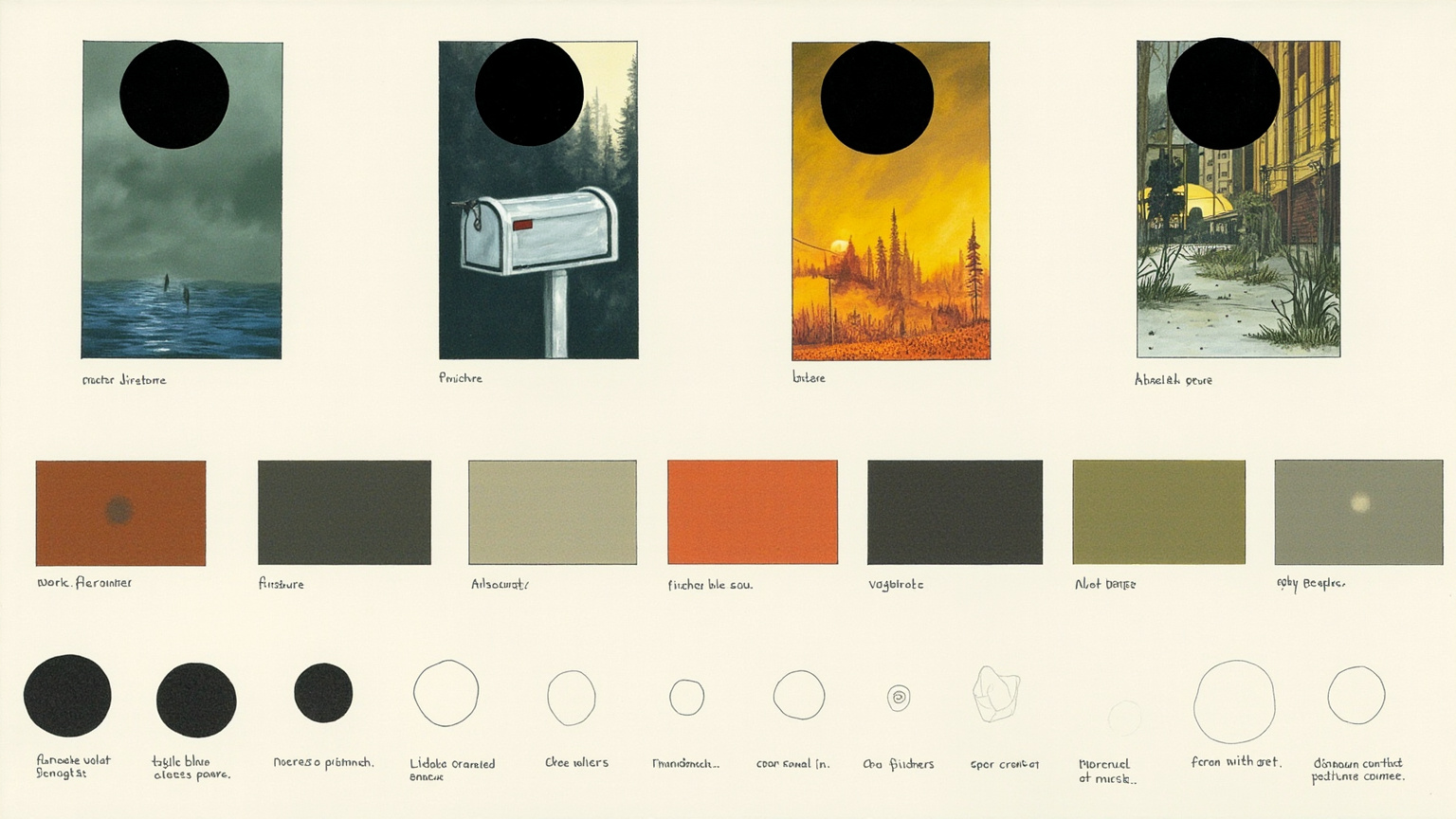
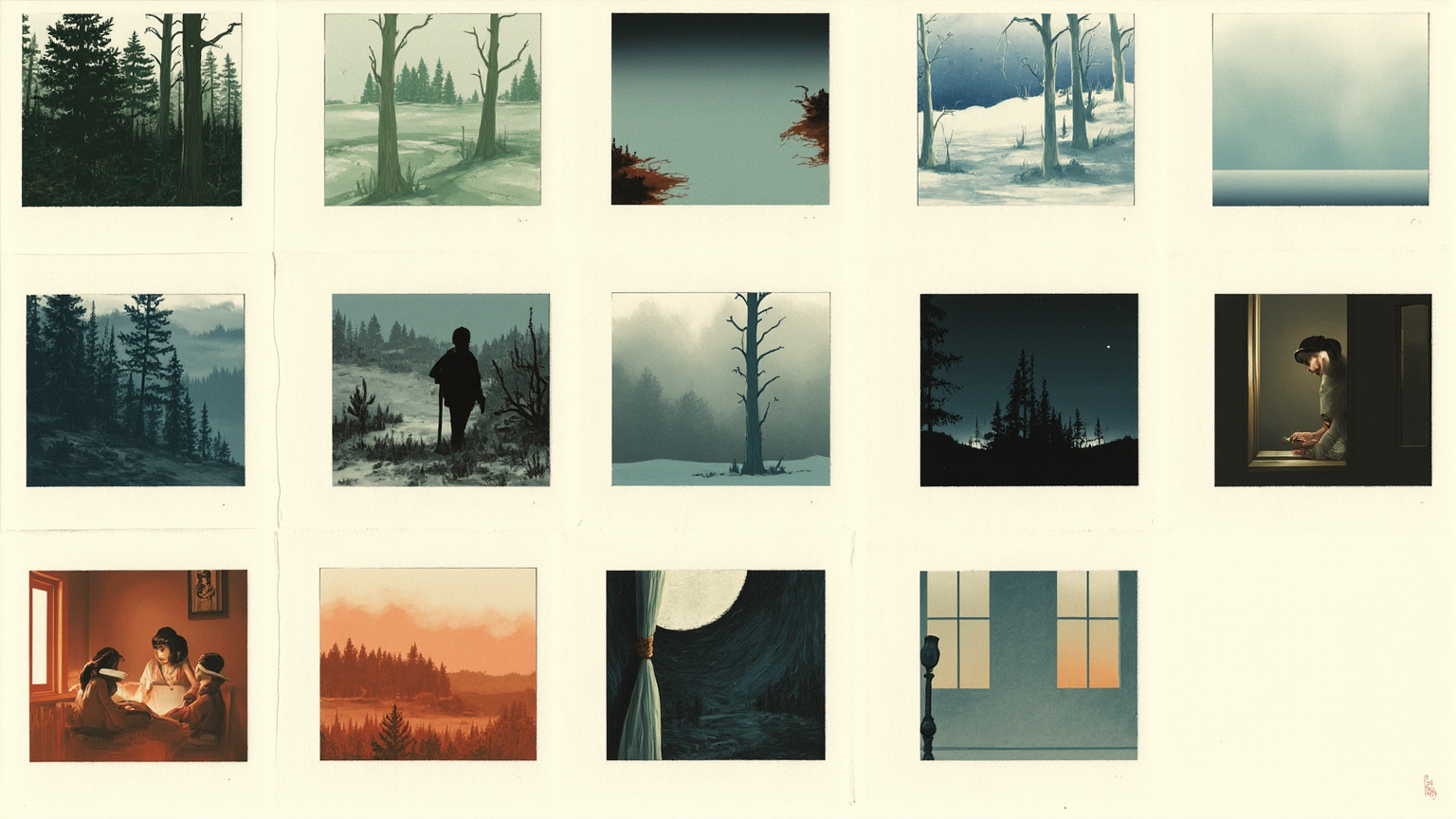
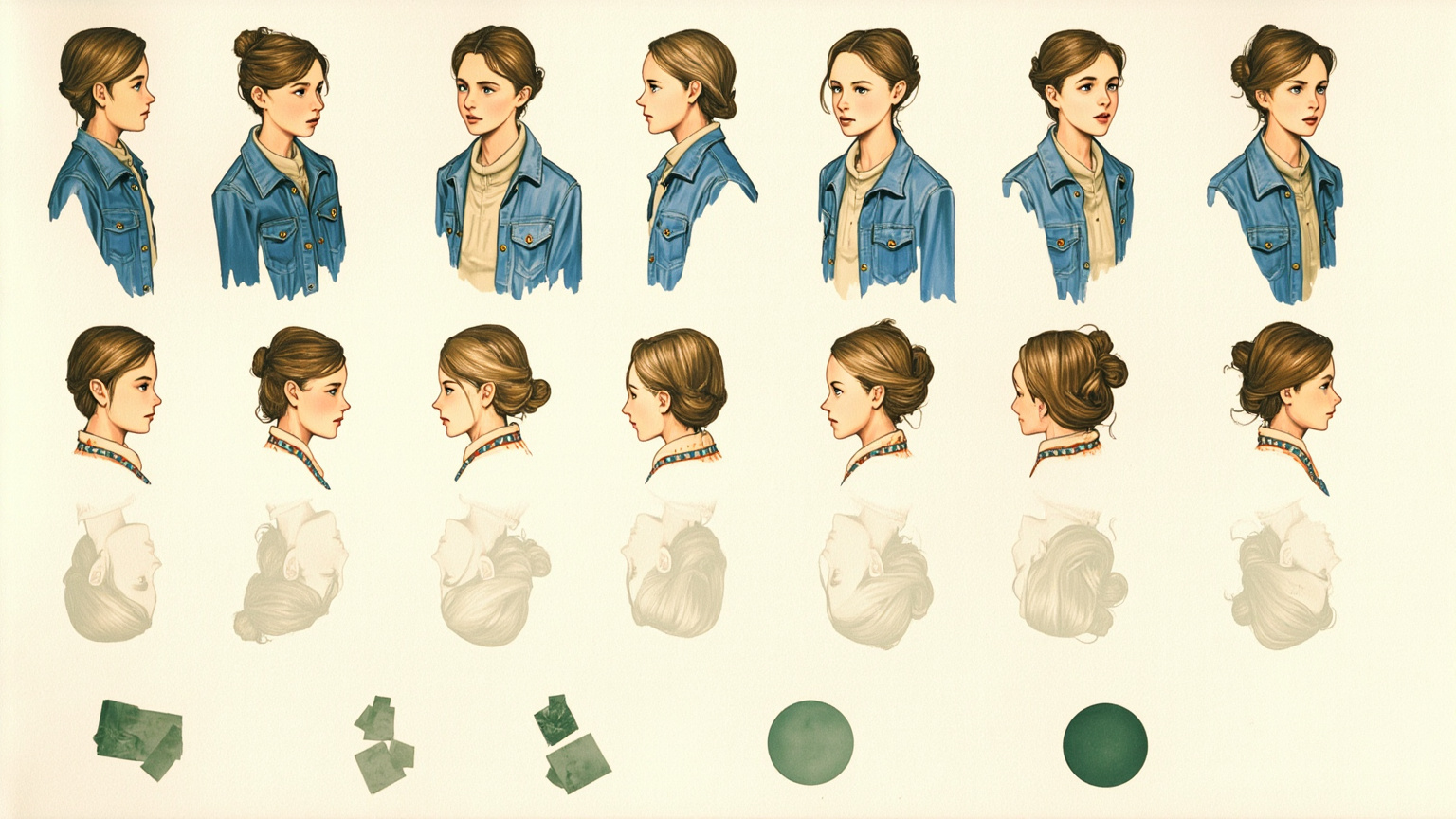
Before the guide was written, this book got a visual foundation — every illustration you just read grew out of it.
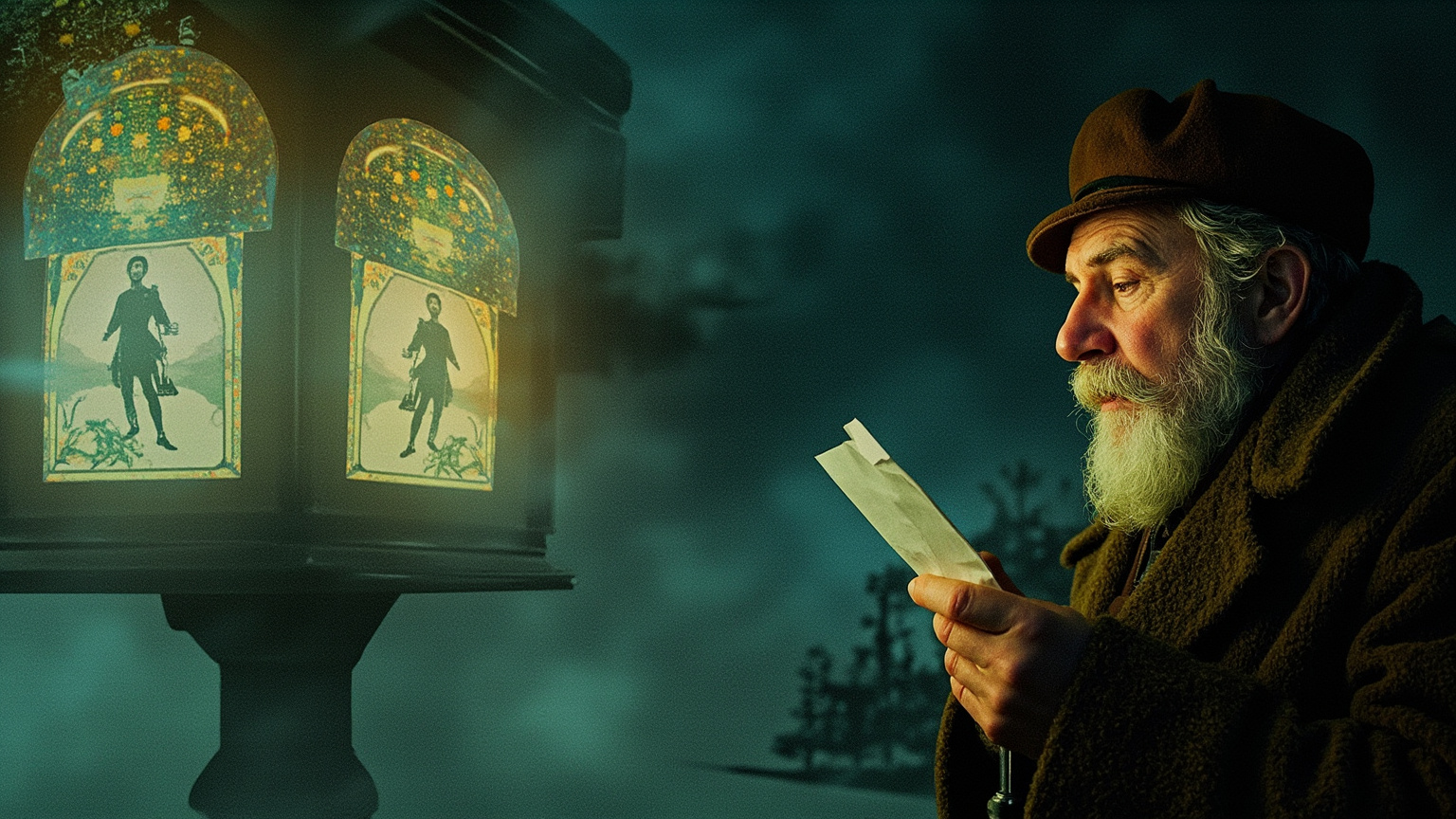
Alberto Knox emerges gradually from behind the anonymous letters, introducing himself as Sophie's philosophy teacher. He lives in an old cabin the Major once used, tucked in the woods behind the small town. He keeps a shaggy dog named Hermes, who can find his way anywhere and drops the letters at Sophie's door right on schedule. Alberto is the one actually teaching the course, and Hermes is the one delivering it - though neither the dog nor the man yet knows that they, too, were written into being by someone else.
In Lillesand, a small town on Norway's southern coast, another teenage girl, Hilde Møller Knag, is reading her way through a thick ring-binder manuscript her father mailed home from the UN peacekeeping front in Lebanon. The manuscript is called Sophie's World. Hilde's father, Major Albert Knag, is a UN peacekeeper stationed in Lebanon, and he is also the book's real author - he wrote the manuscript as his daughter's fifteenth-birthday present. One birthday gift, and two girls' summers end up knotted together.
The philosophy course begins at the mailbox. Every time Sophie walks home from school, another letter is waiting - no stamp, no signature, just a question. She answers it, and the next letter tears a hole in her answer and hands her a harder question underneath. From 'Who are you?' to 'Where does the world come from?', from the natural philosophers to Socrates and his claim that the unexamined life is not worth living, Gaarder times the letters to land inside the ordinary rhythm of a teenage summer - one pulled out before bed, one stuffed into a backpack before a camping trip.
Once she has enough questions stacked up, she follows them to the end of the woods and finds the cabin. The door opens, and the man standing inside introduces himself: Alberto Knox. He presses play on an old video recorder, and black-and-white footage flickers onto the screen, light moving over the Acropolis. From this point on, the lessons stop hiding behind paper; the teacher sits across from her in person, with Hermes dozing at his feet. From the pre-Socratics through the Middle Ages, from Descartes to Hume, from Kant's 'Copernican revolution' to Hegel, Marx, and Sartre - Gaarder crams something close to a three-volume history of Western philosophy into one summer.
What's worth noticing in the craft is that the history of philosophy isn't pasted on like encyclopedia entries - it's wrapped around the growing up of one particular girl. What readers remember isn't a parade of philosophers' positions; it's Sophie walking home through the woods at night, clutching a videotape, moonlight coming down through the trees.
The postcards are where the book really starts to turn. One reads 'Happy Birthday, Hilde Knag' and turns up stuck to the inside of a banana peel Sophie has just opened. Another is tucked into Hermes's collar. She runs to ask her mother and Joanna; neither of them has heard the name. The postcards keep turning up in stranger places - every time she opens something that isn't hers, there's a letter inside addressed to someone else.
The truth comes out in the cabin in the woods. Alberto and Sophie piece the clues together: the postcards were written by Major Albert Knag, on peacekeeping duty in Lebanon, and their addressee, Hilde, is his actual daughter, back home in the town of Lillesand. The Major wrote this philosophy novel as her fifteenth-birthday present - which means Sophie herself, and the teacher who has spent a whole summer teaching her philosophy, are both characters invented inside the thick ring-binder manuscript sitting in Hilde's hands.
This is the philosophical heart of the whole book. Sophie has just finished a crash course in existentialism, and she turns around to find that she herself is nothing but a line someone else wrote - 'existence precedes essence' lands on her own life. Shocked and furious in equal measure, she and Alberto work out a plan that is both ridiculous and dead serious: at the garden party Sophie's mother is throwing in her honor, where every fictional character they've encountered along the way is due to show up, they will use the chaos to slip free of the Major's control over the story.
Gaarder writes the party scene like a dream. Philosophers from every era crowd into a Norwegian backyard; Socrates and Sartre end up crammed at the same table, holding paper plates of cupcakes. Sophie and Alberto slip away on a pretext, and just as the Major believes the story has reached its ending and closes the manuscript, his characters quietly slide off the page.
They never quite gain solid footing in reality. Once they slip out of the manuscript, they become invisible to everyone around them, ghosts who can still nudge the odd small object. Hermes is one of the few things left that can still see them and be touched by them. Sophie unties a boat's mooring line in the yard and lets it drift off; Alberto crouches down and quietly lets the air out of a bicycle tire. The gestures are too small for anyone to trace back to them - except Hilde.
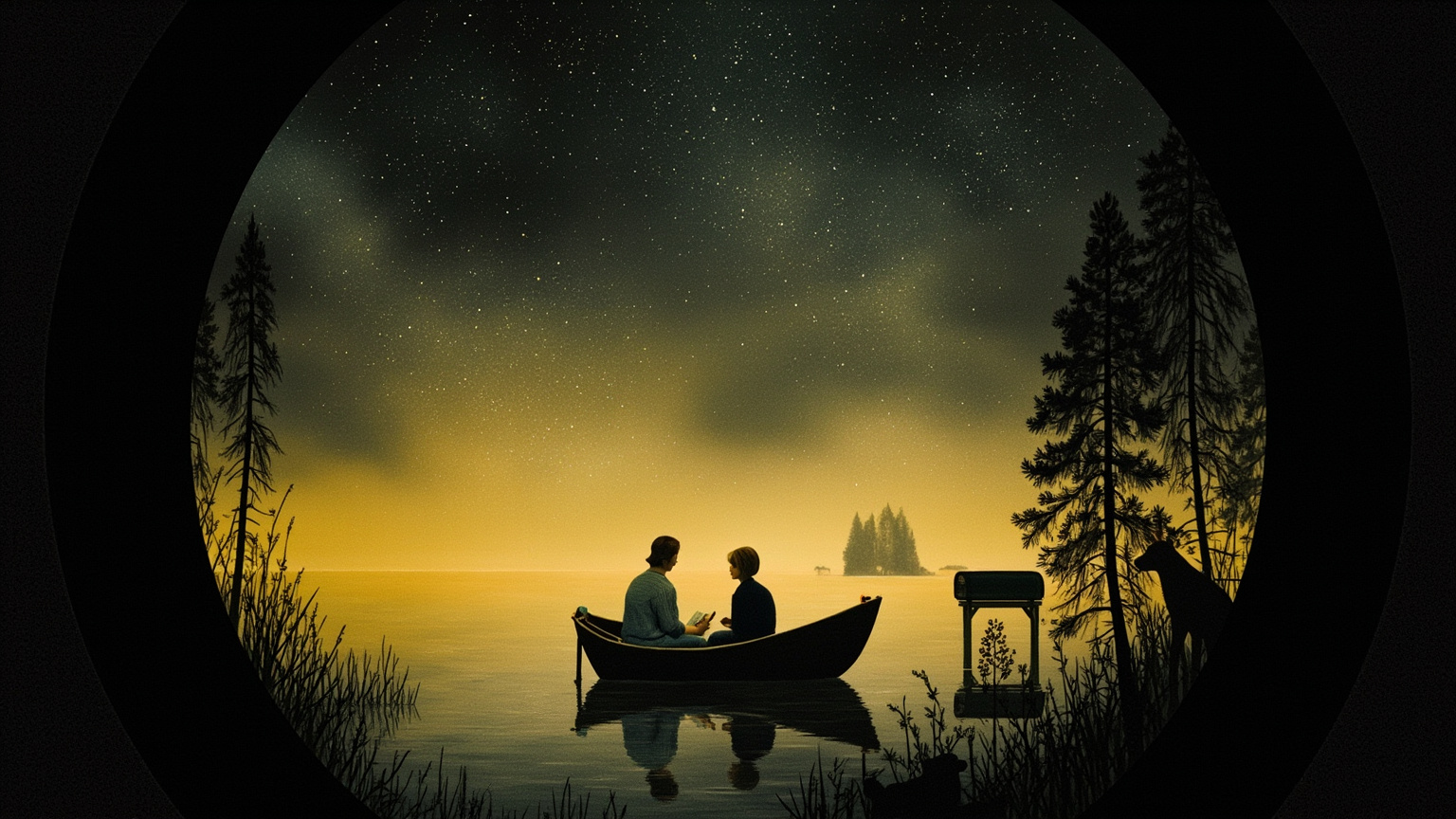
Reading through the manuscript at her family's house in Lillesand, Hilde notices something is off - the postcards, the drifting mooring line, the bicycle valve - and realizes her father has played an elaborate joke on her, dressed up as a birthday present. By the last page her father still hasn't come home from the front, and she is already plotting a string of pranks to spring on him when he's back on leave. As for Sophie and Alberto, they row out onto a lake in the dark and look up at the stars - an echo of the Big Bang that closed out the course.
Gaarder returns again and again to one image: the world is like a white rabbit pulled from a magician's hat, and most people have long since burrowed deep into its fur and fallen asleep, forgetting to look up and ask where any of it came from. Sophie is the rabbit that decides to climb up out of the fur, and the whole history of Western philosophy is the view she sees once she looks up. A sense of wonder is where real philosophy starts, and that image runs through the entire book.
What cuts deeper than the imagery is the structure. Gaarder packs a history of philosophy inside a coming-of-age novel, then wraps that novel in a bigger book-within-a-book: Sophie is a character in the manuscript Hilde is reading, Hilde is the 'real' girl standing outside Sophie's story, and Hilde's father, the Major, is the actual author writing all of it. As readers follow Sophie in peeling back each layer of the mystery, we get placed on some level of reality we can't be sure is the outermost one either - it's one of the cleanest cuts metafiction has ever made.
The first time I read that final image of the rowboat sliding onto the lake, it stopped me too. There's no answer given - the ending stays open. We never learn whether Sophie and Alberto truly manage to exist beyond the page, the same way no one can answer, on our behalf, whether the layer of reality we're standing on is itself just a page in some larger story. That unease is exactly what Gaarder wants to leave behind.