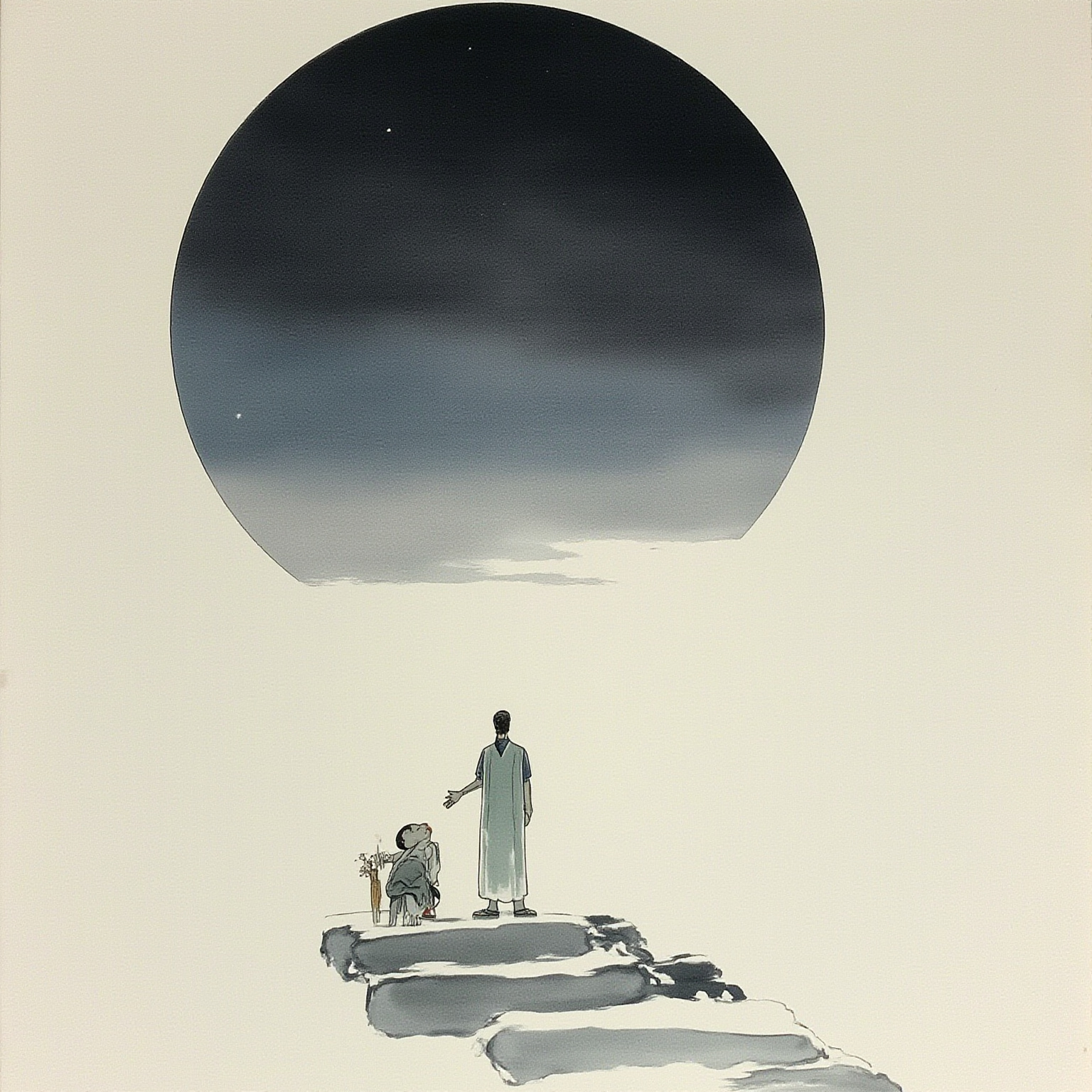
The opening volume of Yukio Mishima's Sea of Fertility tetralogy: self-destruction pursued as an aesthetic ideal.
Text and illustrations produced by the pipeline
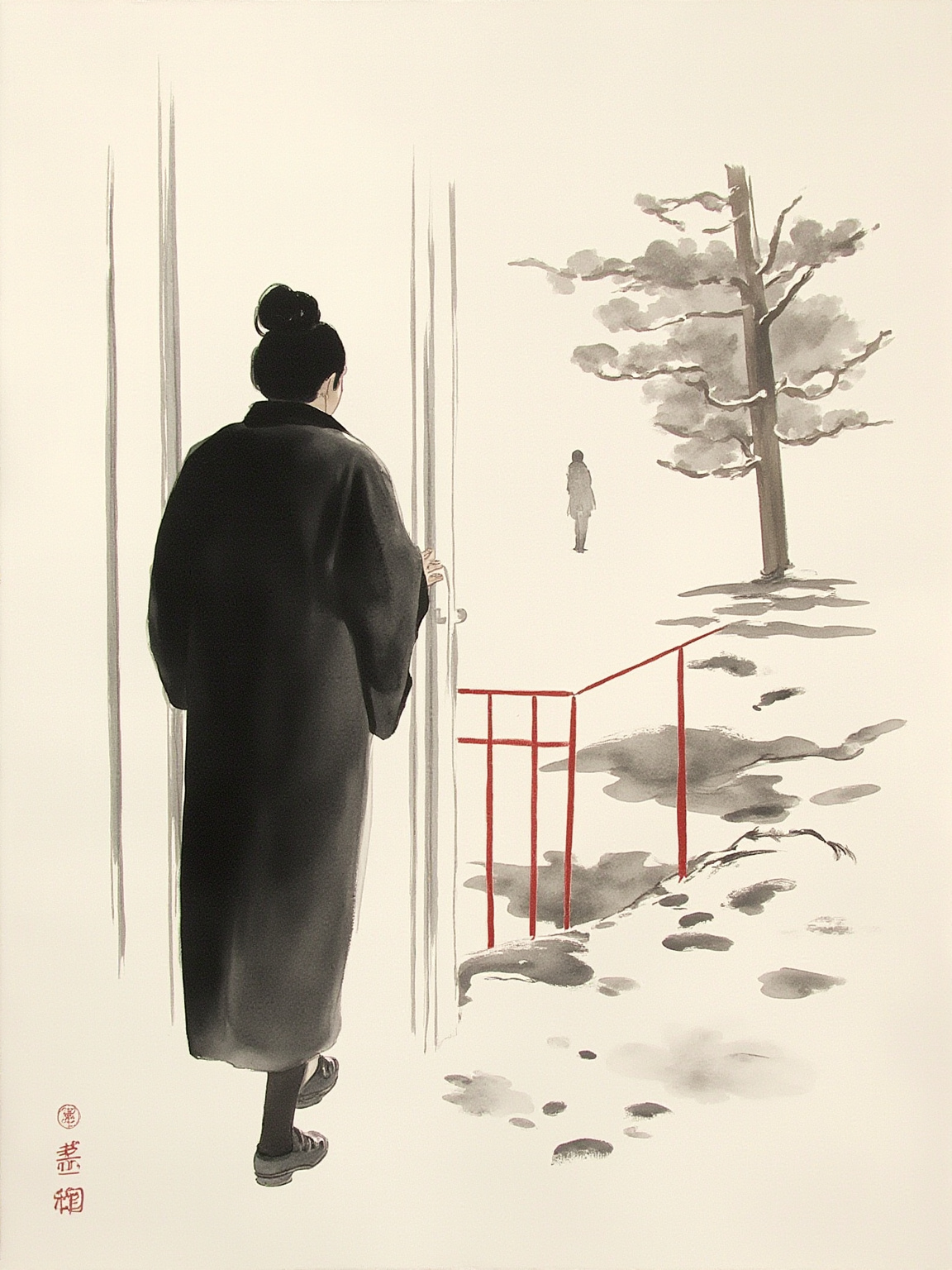
The day an Imperial rescript, sealed with the emperor's own seal, arrived at the Ayakura house, Satoko's old self died. In one stroke she went from an unmarried daughter of a fading court family to the intended bride of an imperial prince — untouchable now, the one woman in Japan no one was permitted to touch. Kiyoaki heard the news leaning against the railing of the west corridor at the Matsugae mansion, snow already knee-deep in the garden. For a moment he felt nothing. Then it hit him: so this is what it is to love her.
Yukio Mishima was, as a writer, close to the face of Japan's second half of the twentieth century. In 1969 he published Spring Snow, the opening volume of his tetralogy The Sea of Fertility, and set it in the fading first years of the Taisho era — an upper-crust Tokyo that had gone Western on the surface while still breathing by the old rules of the court nobility underneath. It was the most ambitious project of his life. On the day he delivered the final volume's manuscript, he committed ritual suicide by disembowelment. Spring Snow, then, is not just a novel. It is the opening drumbeat of his own ending.
The story is short, tightly wound, written with a precision that borders on obsessive. It is remembered not for any twist of plot but because Mishima renders, with something close to cruelty, one plain fact: a person can be entirely blind to his own feeling until the moment it is gone for good — and only then does he see it at all.
The protagonist is Kiyoaki Matsugae, the only son of the Marquis Matsugae — beautiful, precocious, and cold in a way that feels like glass. Oddly, he was raised from childhood in the household of the Ayakuras, a court family in decline, so he belongs fully to neither world: not quite the parvenu manners of the new military aristocracy, and not quite the old nobility's blood either. Satoko, the Ayakura daughter, is two years older, and the two grew up something like childhood sweethearts. She has loved him bitterly for years; he has kept her at arm's length the whole time, letting her letters sit unopened, pretending not to know when she falls ill. This isn't dislike. It's fear, fear so deep that pushing someone away becomes the only way he can confirm he is still worth catching.
Kiyoaki's steadiest companion is Shigekuni Honda, a rational, self-controlled law student. Across all four volumes of The Sea of Fertility he is the clear-eyed observer, resurfacing forty years later as the thread that stitches every reincarnation story together. At Satoko's side is Tadeshina, the old lady-in-waiting who manages everything — shrewd, worldly, in service to the Ayakura family for decades. She is the one who arranges Kiyoaki and Satoko's secret meetings, and later the one who covers up the scandal. Prince Toin, the imperial prince named in the rescript, is himself upright to the point of dullness and never really steps into the story directly, but bound to that single document he becomes the true fuse of the whole book.
Kiyoaki does not survive the winter. He dies at twenty, of sheer exhaustion, he stops eating, stops sleeping, and simply wears himself down to nothing. Before the end he leaves Honda a few last words, more or less: we will meet again in another life. You will recognize me. Don't forget to tell me when you do. Honda holds his friend's hand and nods, saying nothing. This is the lightest passage in the whole of Spring Snow. Mishima deliberately writes death as something faint, like snow dissolving into water, leaving no mark. But go back afterward through the earlier chapters, through all that coldness, all that pushing away, all that studied indifference, and something shifts: the coldness was never indifference at all. It was a twenty-year-old who simply never learned how to hold on to the one thing he wanted most.
Before the guide was written, this book got a visual foundation — every illustration you just read grew out of it.
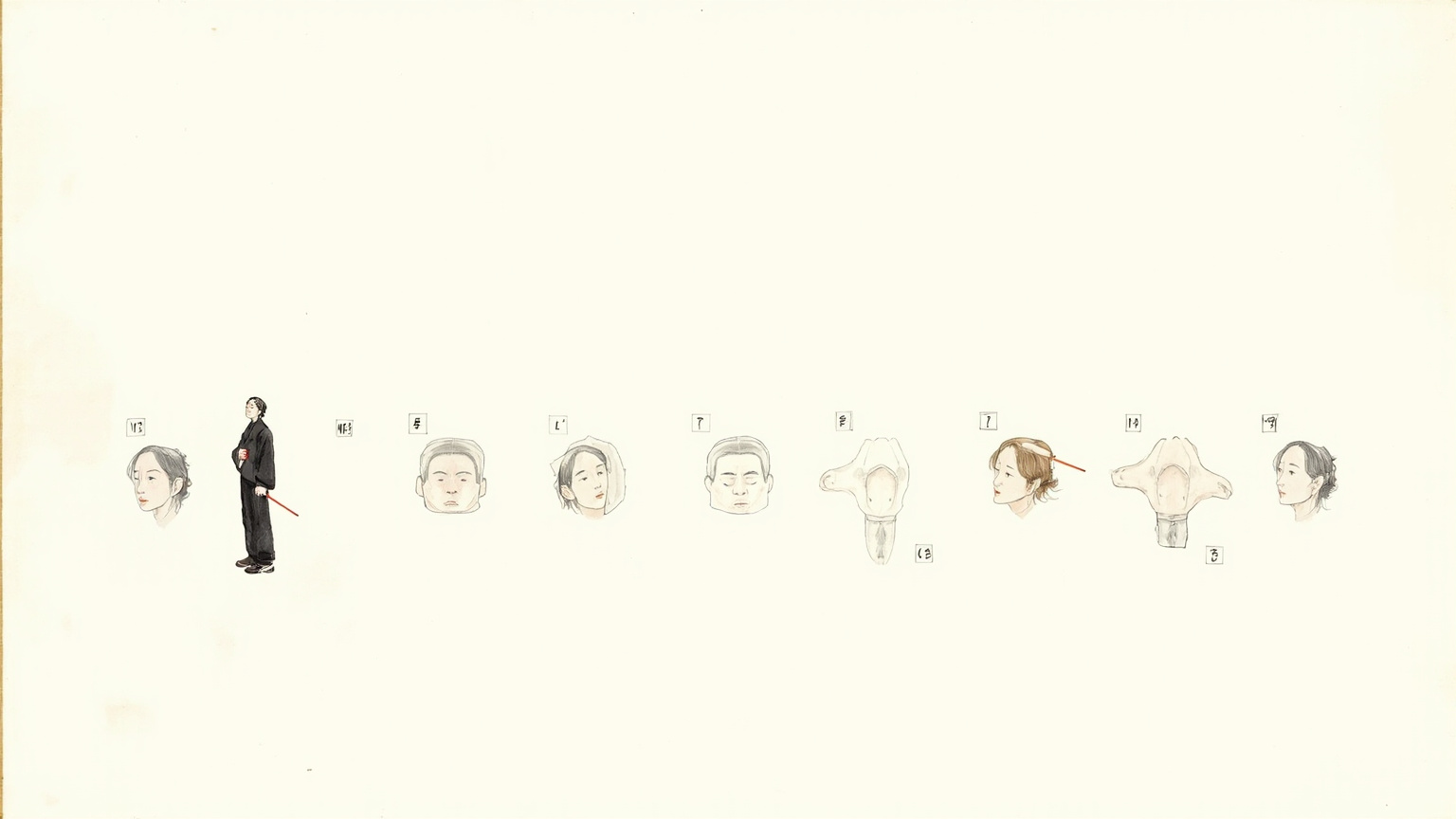
Kiyoaki's treatment of Satoko is the sharpest edge in the book. Mishima doesn't write this coldness as an absence of feeling — the opposite, in fact. Kiyoaki feels too much, senses the danger in it, and strikes first to protect himself. Satoko's letters arrive one after another and sit unopened on the rosewood table. When she falls ill, he hears the maid announce it from the corridor and only shifts the teacup in his hand to a different spot on the tray. When she finally asks him outright whether he has ever loved her, he just smiles and says he doesn't care for that kind of question. This distance, always kept and never closed, is the whole source of Kiyoaki's sense of beauty. What he forgets is that the person on the other end is made of flesh and blood.
The turn comes from the palace. The court selects Satoko Ayakura as the bride for Prince Toin, and once the rescript is issued the matter is settled — no one so much as raises the possibility of refusal, let alone a broken engagement. This kind of match was not unusual in upper-crust Tokyo of that era; for an old court family in decline, marrying a daughter into the imperial line was the fastest route back up. The Ayakuras, having fallen this far, welcome it without hesitation. And Satoko herself? Raised from childhood to believe the imperial will could not be questioned, all that is left to her is silence.
The day the rescript is finalized, Kiyoaki does something entirely out of character: he rushes to the Ayakura house and goes into Satoko's room. Once inside, he does not come out. Mishima writes this scene with remarkable restraint, no sensual staging, just the two of them sitting quietly by the bed, talking. The first thing Kiyoaki says, more or less, is that he only now understands he had been waiting all along for her to be married off. It is a cruel thing to say, cruel in an almost perfect way — what he loves is not her as a person, but the fact that she is about to become unreachable. Satoko doesn't cry when she hears it. She has had long practice.
Over the following months, the two of them meet in secret again and again, all arranged by Tadeshina. She is the sort of woman that old aristocratic households produce — she knows exactly what she is meant to know, and exactly what she must always pretend not to. The meeting places rotate, no letter passes through outside hands, and every loose thread gets smoothed over by her alone. The reader can feel, from the very first meeting, that this relationship was born with a clock already running: Prince Toin's wedding has a date, the rescript is already on record, and the date will not move.
Paper cannot wrap fire forever. Satoko becomes pregnant, and Tadeshina immediately arranges a secret abortion along with a full set of cover stories. For a while it looks contained, until someone in the Ayakura household starts to suspect. Before the scandal can break open, the Ayakuras make the most dignified and most final choice available to them: they send Satoko to Gesshu Temple in Nara to take vows as a nun. It is a clean cut, and a strange kind of mercy — not death, not exile, but a full withdrawal from the secular world. In an aristocratic society whose sense of right and wrong still ran on Buddhist ritual, taking the tonsure was more irreversible than any broken engagement.
Mishima is particularly merciless in this scene. He doesn't write Satoko sobbing or resisting — she simply kneels before the altar and lets the razor take the first strand of her hair. He spends two full pages tracing the path of that blade, all of it silent dispossession. What he's doing, on the page, is pulling a living woman out of the secular world by the roots, one ritual gesture at a time.
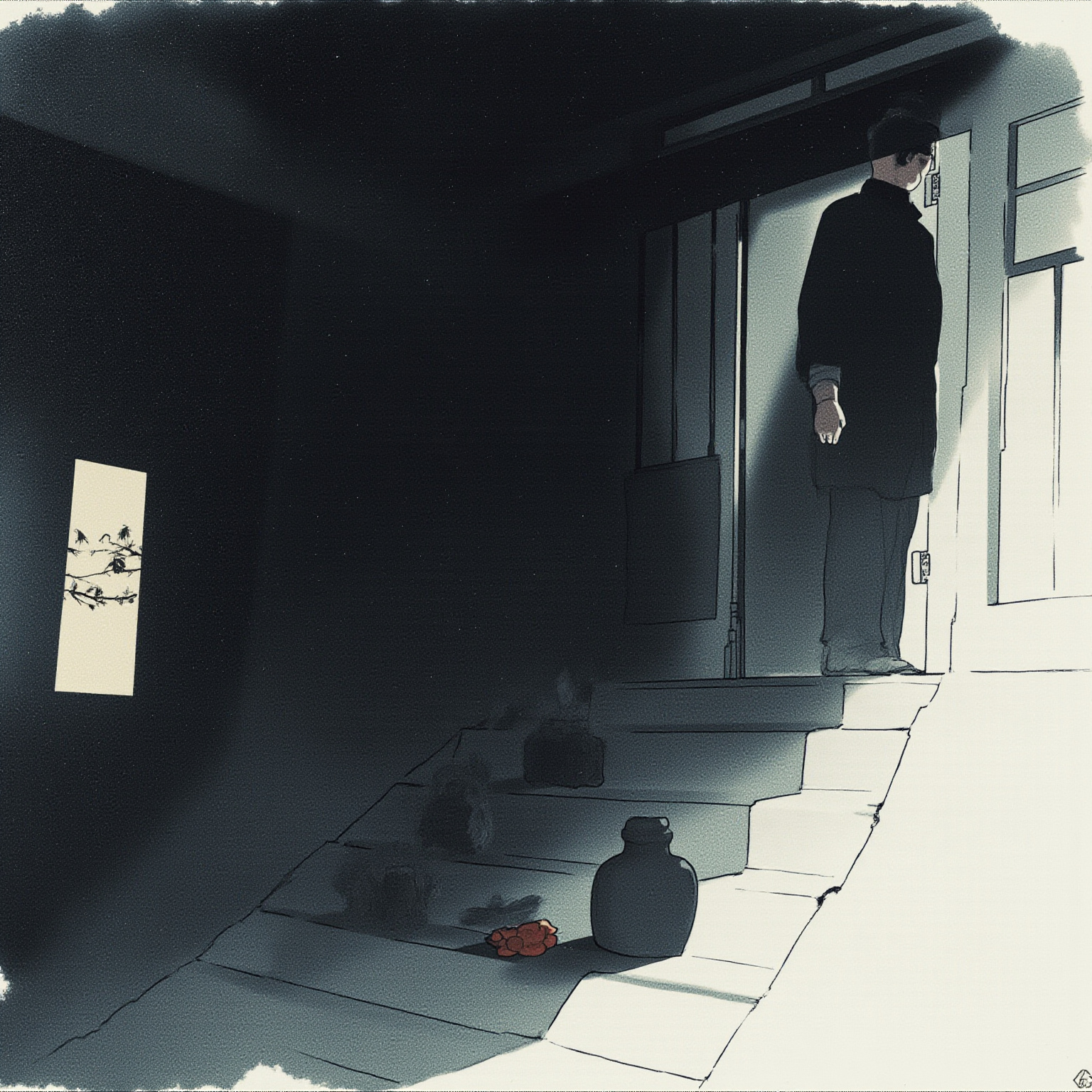
When the news reaches the Matsugae house, Kiyoaki is reading. He closes the book and leaves for Nara at once. What follows is close to a slow torture, repeated: he climbs the stone steps of Gesshu Temple again and again, and is turned away at the gate again and again. The temple gives him the same answer every time — she has left the secular world, and no worldly visitor may see her. Honda goes with him, and the two of them walk the season from autumn into winter, the mountain path's red leaves giving way to snow. Kiyoaki is visibly failing, and Honda can see it happening and cannot stop it.
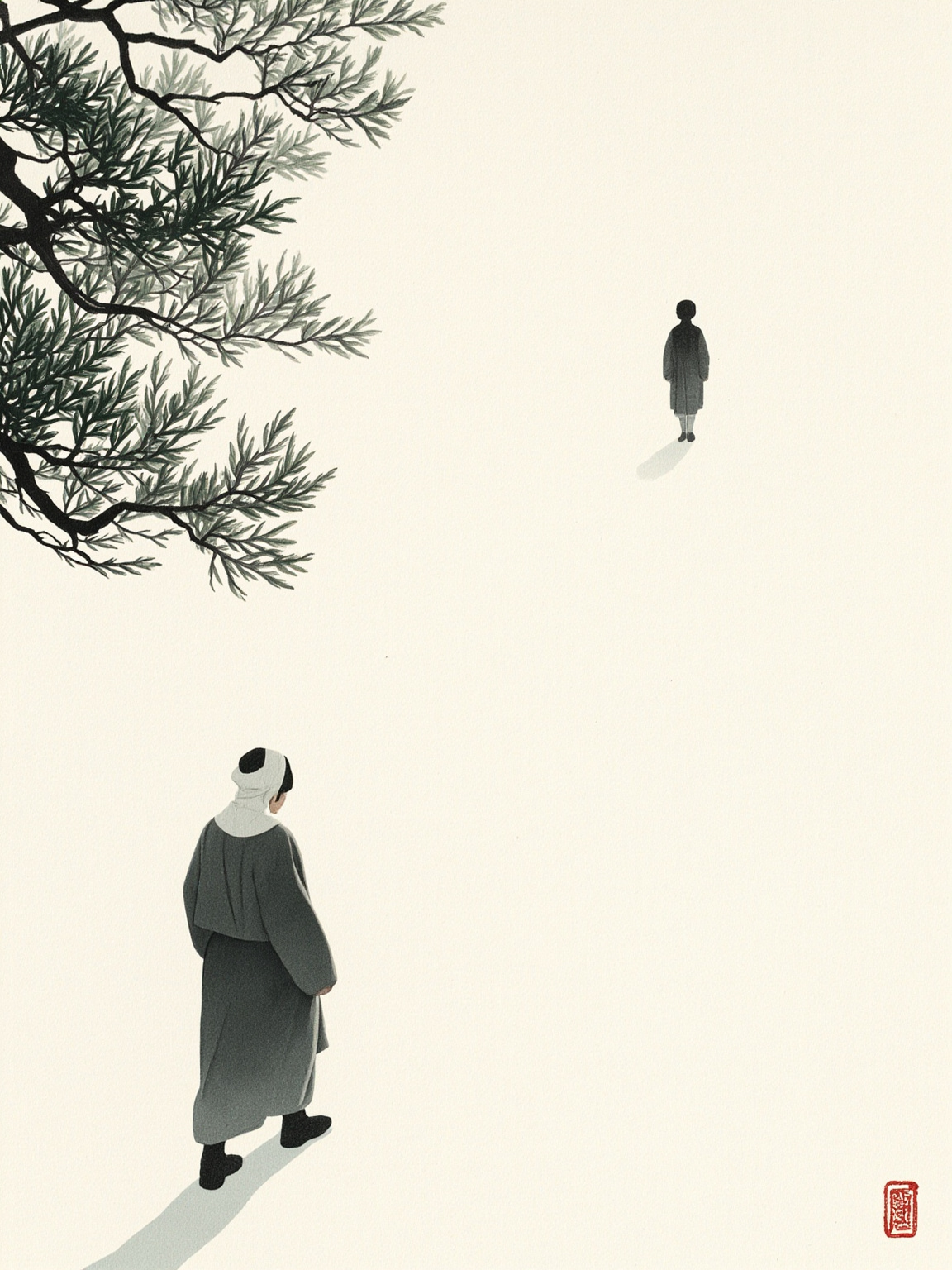
Mishima uses a remarkably restrained device here: he doesn't show Kiyoaki breaking down, he shows Kiyoaki's manners breaking down. This boy, raised on the Ayakura household's careful lessons in gentleness and restraint, has that whole shell stripped away, refusal by refusal. By the last visit, he is nearly kneeling at the gate to beg. When Honda carries him back down the mountain, the path is so quiet that all you can hear is snow slipping off the pine branches.
On the surface, Spring Snow is a story of a forbidden love. Dig deeper and it is the theme Mishima returned to his whole life: the way beauty and destruction turn out to be the same thing wearing two names. For someone like Kiyoaki, to love a thing is to make it unreachable. The moment he could have her, he would stop loving her. The rescript is lethal precisely because it does, on his behalf, the one thing his own unconscious mind needed most: it makes her permanently unattainable. So when he climbs to Gesshu Temple over and over, he isn't really chasing Satoko. He's chasing the version of himself that is now forever out of reach. The book's class backdrop is also worth naming. The Matsugaes are new nobility, risen on military merit, and carry a whiff of the parvenu about them; the Ayakuras are old court aristocracy, fallen on hard times but pure in blood. That gap runs through the whole novel — Kiyoaki being raised in the Ayakura household to learn manners is, at bottom, new money buying the face of old rank. Satoko being chosen for the imperial family is the Ayakuras' last chance to climb back up. And the sacred, untouchable authority of the rescript gives this class transaction something close to religious weight.
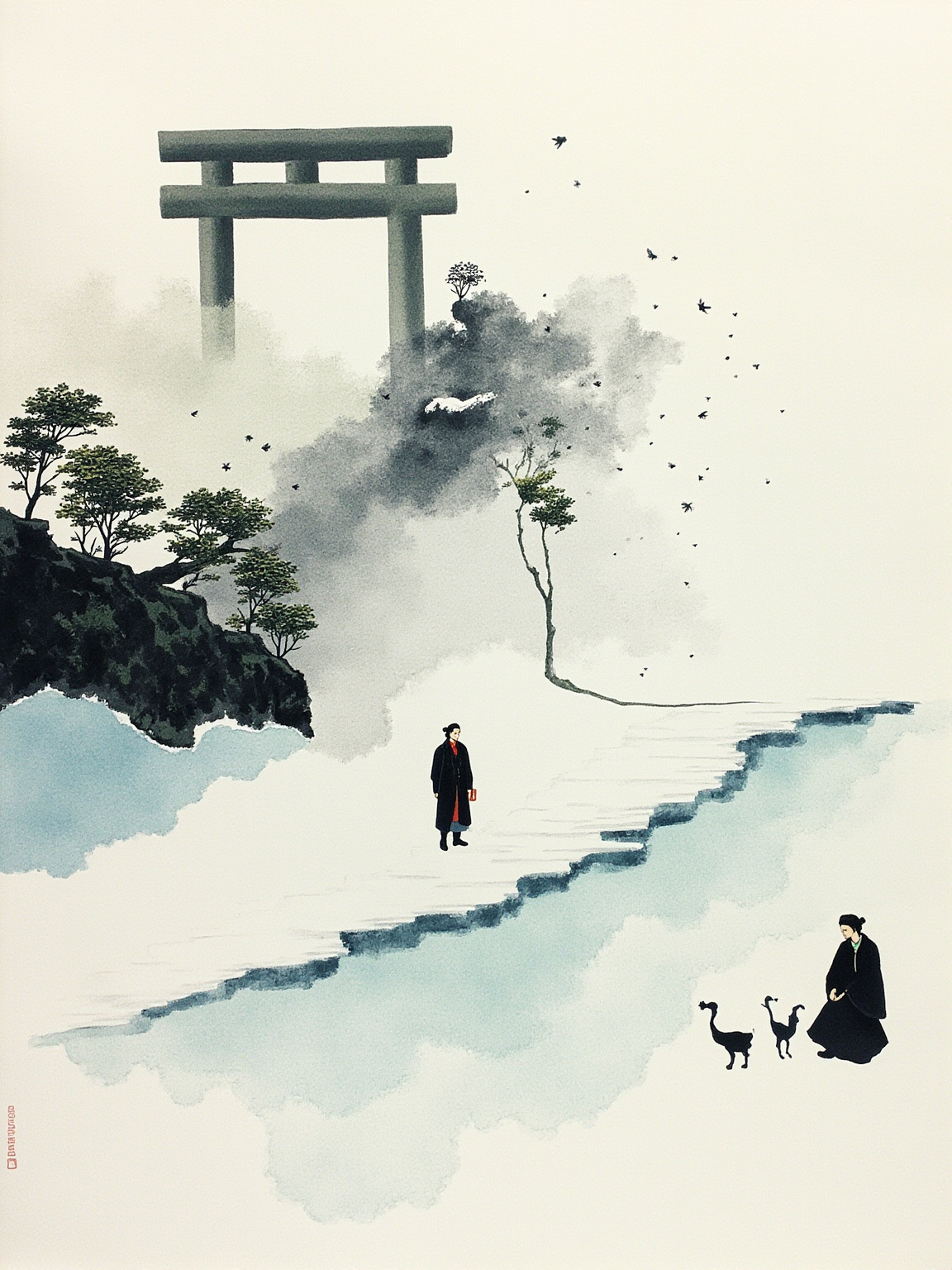
But what Mishima is really doing is driving a stake into the ground for the whole Sea of Fertility tetralogy. Kiyoaki's dying words about meeting again in another life are not thrown away, they are the hook the next three volumes hang on. Honda becomes the observer who, across forty years, keeps recognizing the same soul in new faces, and Satoko's spirit returns again and again wearing different lives. Seen this way, Spring Snow is a sacrifice made for beauty's sake: one love affair that burns a boy down to nothing, in exchange for ground the entire tetralogy can stand on.
The one thing Kiyoaki understood his whole life was how to push away, with his own hands, the thing he loved most. The one thing he never understood was that, once pushed away, it never comes back.
A summary can hand you the plot, but there are three things it cannot hand you. The first is the sheer density of the prose. The way Mishima writes snow, maple leaves, the weave of a kimono, light through a paper door, the detail is packed tight enough that nearly every sentence could stand alone as its own small poem. The Taisho-era Tokyo built out of these details is an atmosphere no summary can rebuild. The second is the exact shape of Kiyoaki's coldness. The letters pushed aside, the feigned ignorance, the one cutting question, the order, the spacing, the rhythm of these moments only lands when you read the original pages, where the sense of suffocation tightens by degrees. The third is the sound of snow falling on the steps of Gesshu Temple. In the scene where Honda carries Kiyoaki down the mountain, Mishima writes almost nothing at all, just the path, and the snow. That silence is the heart of the novel. Pass it through a summary and it dies on the way.