Steppenwolf (Der Steppenwolf) · Companion Guide
荒原狼
一个想死之人被生活绑架,被判必须学会笑,才能走出灵魂的棋局。
Opening: A Potted Plant Polished to a Shine on the Stairs
The landlady keeps an ivy on the stair landing, its leaves wiped down until they shine enough to catch a face. One tenant passes it every day, hates it, and cannot bring himself to move out. His name is Harry Haller, nearly fifty, living alone, sleepless, drifting between libraries and cafés by day and sinking into cheap bars by night. He calls himself the Steppenwolf — one half a respectable bourgeois self, the other a starved and savage one, the two tearing at each other inside his chest.
He has set himself a deadline: his fiftieth birthday.
What Kind of Book This Is
Hermann Hesse finished this novel in 1927. The original title is Der Steppenwolf, German, set in Weimar Germany, after the shadow of the First World War had not yet lifted and before the Nazis took power. Hesse later won the Nobel Prize in Literature, and Steppenwolf is his most translated book — and his most misread. It was one of the earliest novels to turn the idea that we are not one self into a working literary device, decades before that became psychological common sense. In the sixties an American rock band simply took the title for their name, with no connection to the plot at all — they just liked how feral it sounded.
World and Characters: Who Lives Inside the Mirror
The story takes place in an unnamed German city — most scholars think it borrows its shape from Basel, in Switzerland. There is a respectable bourgeois neighborhood, a cheap bar called the Black Eagle, a jazz dance hall, and finally a hallucinatory corridor hung with strange doors: the Magic Theater. Harry is the entry point; the other key figures are really pieces of him. Hermine, the young woman he meets at the Black Eagle, sharp-eyed and boyish, gets called Harry's magic mirror — she sees him more clearly than he sees himself. Maria, the lover he meets later, is warm and direct, uninterested in philosophy, and teaches him how to eat and how to make love. Pablo, the saxophonist at the dance hall, looks like nothing but a dissolute playboy, and everyone takes him for one — but he turns out to be the clearest-headed person in the book, clear in a way that costs him no effort at all. Mozart, who finally appears in the Magic Theater as one of the Immortals to judge Harry, laughs loudest of anyone.
Look at that list of names again and something odd stands out: none of them is really an ordinary other person. Hermine teaches him to dance, Maria teaches him the body, Pablo teaches him the present moment, Mozart teaches him to laugh — each one supplies a part Harry is missing.
How the Plot Moves
One. The Wolf in the Mirror
Harry enters the book already arguing with his own shadow. He despises the landlady's tidy, plant-polishing sort of respectability, and quietly depends on her to keep what little decency he has left; he hates the wolfish, solitary, contemptuous side of himself, and cannot let that wolf go either. Neither life sits right with him, and he has set his own fiftieth birthday as the deadline. Hesse never lets him simply blame fate — he makes him hate and cling in the same breath, so that before the reader finishes feeling sorry for him, it becomes clear that half this misery is self-inflicted.
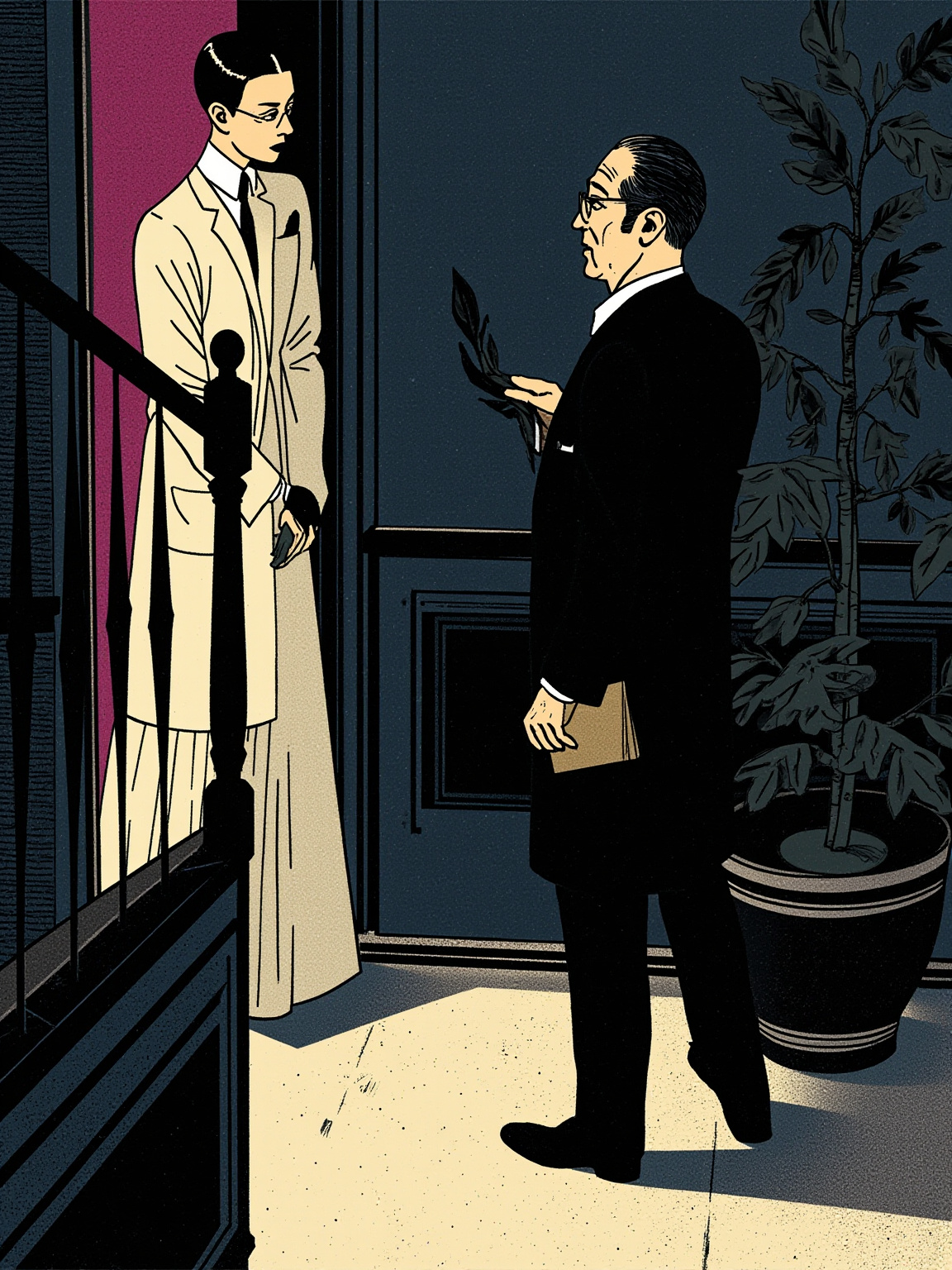
Indeed, he was unsociable to a degree I had never before experienced in anybody.
我这一生从未见过像他这样不愿与人来往的人。
原文金句 · 开篇 · 房东的印象
Two. The Pamphlet on the Corner
A strange man on the street carrying a sandwich board forces a pamphlet into his hands, called Treatise on the Steppenwolf. Harry opens it and goes pale — it lays his split self out like a formula, even naming the plan for his own destruction that he has never said aloud. But the pamphlet also throws out a claim he has never considered: you think you're a man torn between two selves, man and wolf? You're wrong. The soul isn't split in two at all — it's split into countless pieces, and they can be taken apart and rearranged like pieces on a chessboard. That line is the trigger for the whole book; every dance, every hallucination, every trial that follows exists to make Harry swallow it.
Three. Storming Out on Goethe's Portrait
An old acquaintance, a professor, invites him to dinner. On the professor's wall hangs a tasteless portrait of Goethe, painted like a saint, gilt frame, colors laid on thick. Harry stares at it and then, in front of the whole table, starts denouncing it — an insult to Goethe, a monument to bourgeois self-love, the spiritual disease of the age. He throws down his napkin and walks out. The scene is written mercilessly: he is right about everything, right to the point where he has left himself nowhere to go. A man nearly fifty, proving to himself he is still alive by making a scene — and on the walk home he decides, tonight is the night he dies.
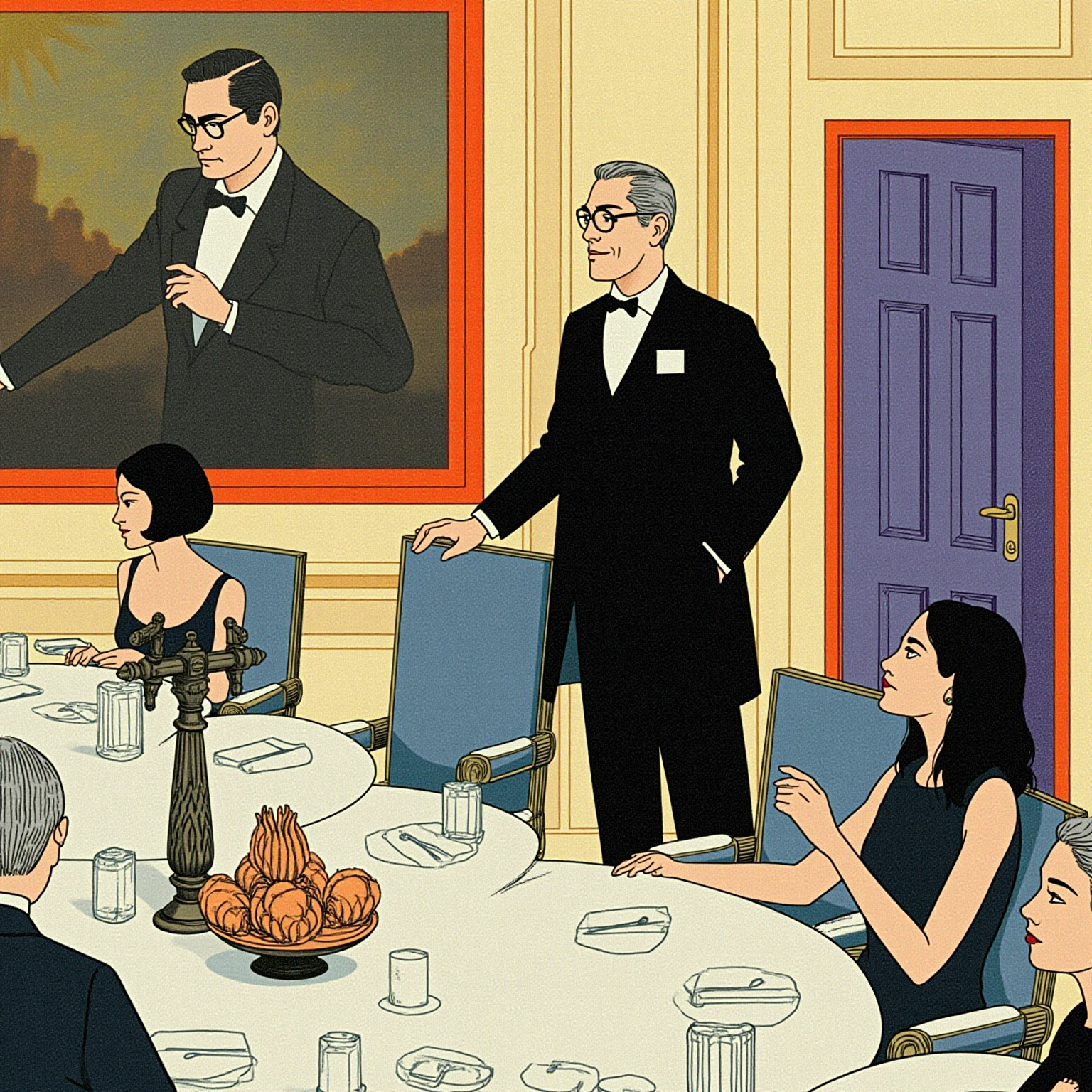
I was sent flying and beaten from the field, bankrupt in my own eyes, dismissed without a shred of credit or a ray of humour to comfort me.
我被彻底击溃,赶出战场;在自己眼中一败涂地,没有一丝体面,没有一星幽默能安慰我。
原文金句 · 晚宴争执后 · 哈里的自白
Four. At the Black Eagle, Hermine Stands Between Him and Death
Harry doesn't go home. He goes down a flight of stairs instead and ducks into the Black Eagle. The room is thick with smoke, musicians tuning up. He is drinking alone when a young woman with a boyish face sits down beside him — Hermine. She doesn't try to talk him out of anything, doesn't cry, doesn't reason with him. She just says, flatly: you are not allowed to die tonight. Harry is stunned. No one has ever vetoed his death plan this plainly before. Starting with that drink, Hermine hands back to him, one at a time, everything he has looked down on: dancing, eating properly, jazz, cards, talking to strangers. She isn't curing him. She's cracking his shell.
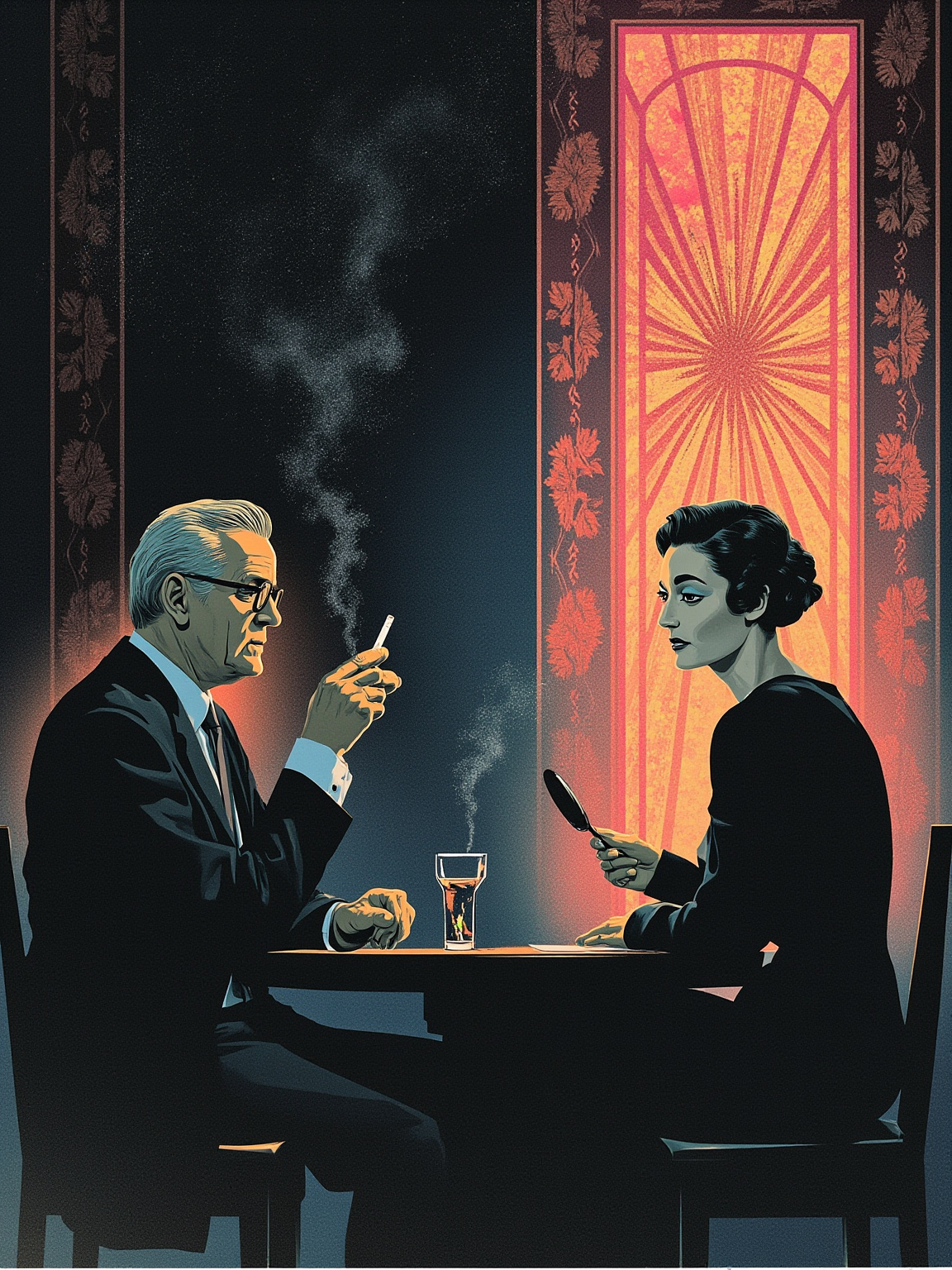
Obediently I shut my eyes, leant my head against the wall and heard the roar of a hundred mingled noises surge around me and smiled at the idea of sleep in such a place.
我顺从地闭上眼睛,将头靠在墙上,任百种声响在周遭轰鸣,心里却笑着想:在这种地方怎么睡得成。
原文金句 · 黑鹰酒馆 · 赫尔米娜的命令
Five. Maria, Pablo, and the Prophecy
Hermine brings Maria into his life, then introduces him to Pablo, the saxophonist from the dance hall. Maria has never read anything Harry has written and has no wish to; she only cares whether he's eaten enough tonight, whether he's warm. Harry hasn't touched anyone warm in years, and this unphilosophical tenderness knocks him flat. Pablo is stranger still — a gorgeous peacock on stage with his saxophone, but when he laughs offstage it feels like he sees straight through everything. One day Hermine says, out of nowhere: someday I will order you to kill me with your own hands. Harry thinks she's joking. She isn't smiling.
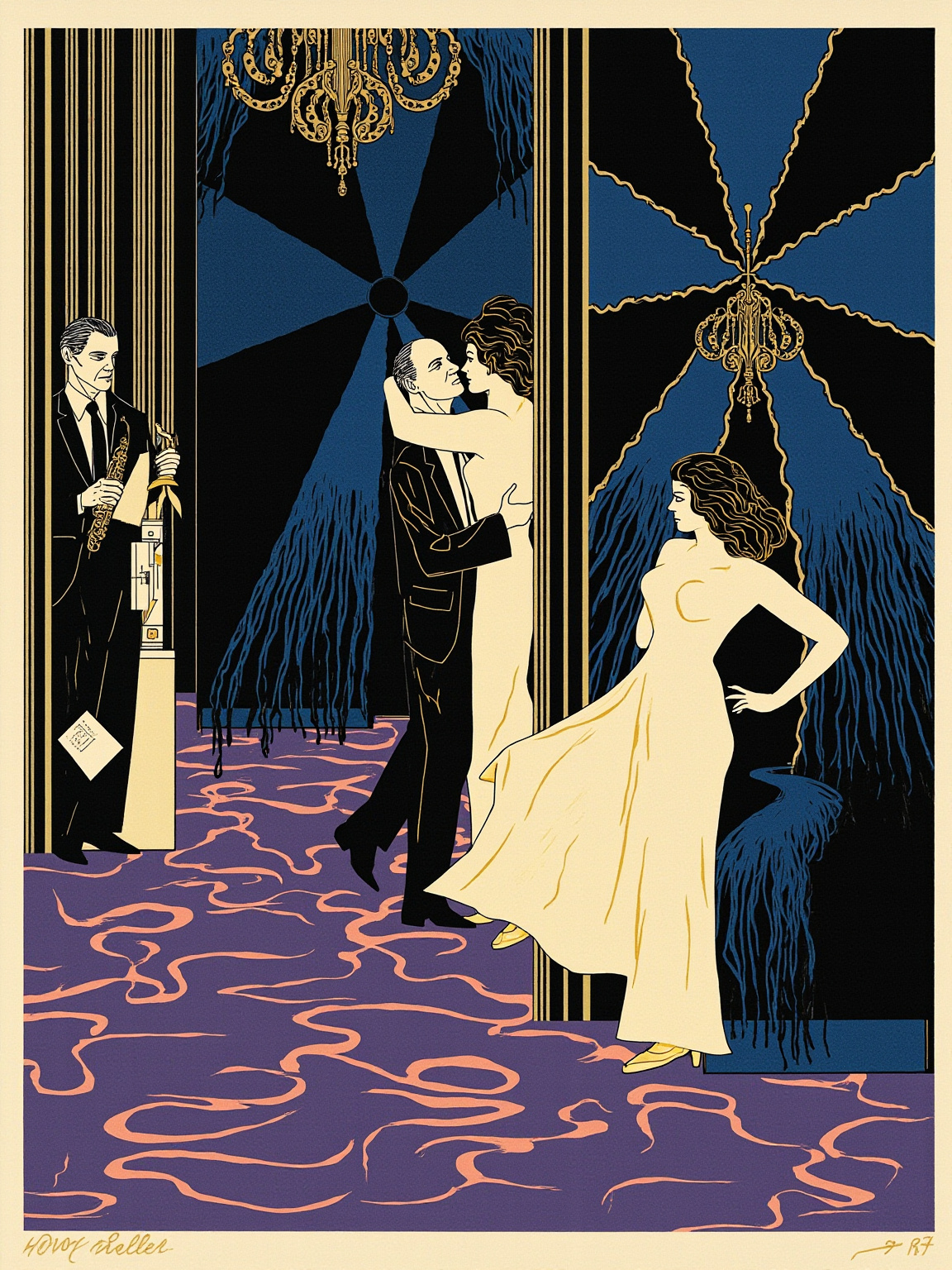
I mean to make you fall in love with me, and it is part of my calling.
我要让你爱上我——这是我的天命。
原文金句 · 赫尔米娜的宣告
Six. The Night of the Masked Ball
The warm-up before the climax is a masked ball. Harry mixes into the crowd in a rented costume, gets pushed along by the beat, jostled by strangers, made to laugh by masked faces — and for the first time in the crowd, he isn't braced. That night he feels, dimly, that the line from the Treatise is true: the self isn't singular, and tonight on the dance floor he is wolf and bourgeois and child and fool all at once. Hesse doesn't build this scene with rhetoric — he builds it with the body: aching feet, loosening shoulders, wine turning over in the stomach. That's what softens an old intellectual's shell.
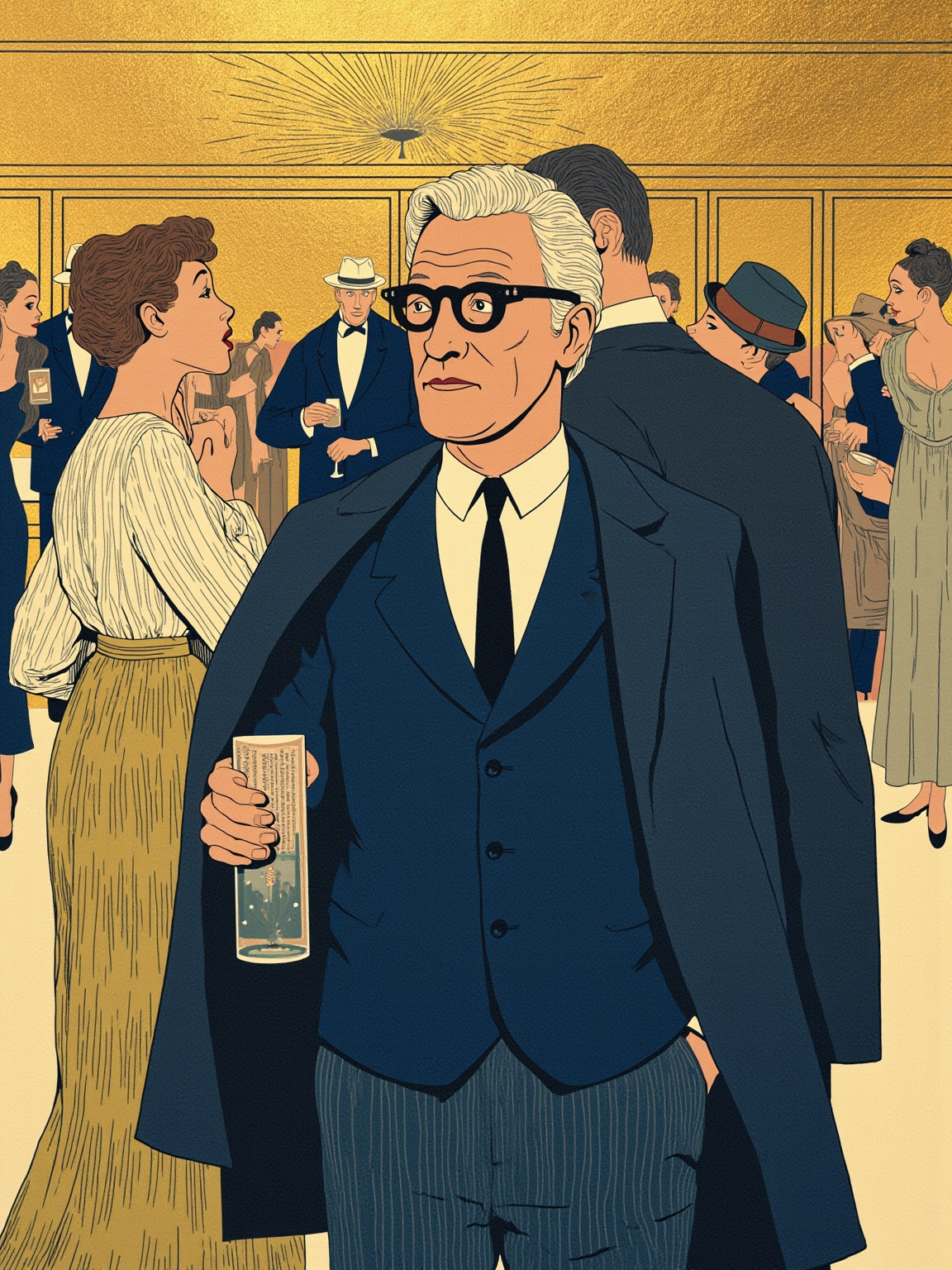
"Is this the costume, Hermine, in which you mean to make me fall in love with you?"
这就是你要用来让我爱上你的装束吗,赫尔米娜?
原文金句 · 化装舞会 · 面具下的倾心
Seven. The Doors of the Magic Theater, and the Chess Game
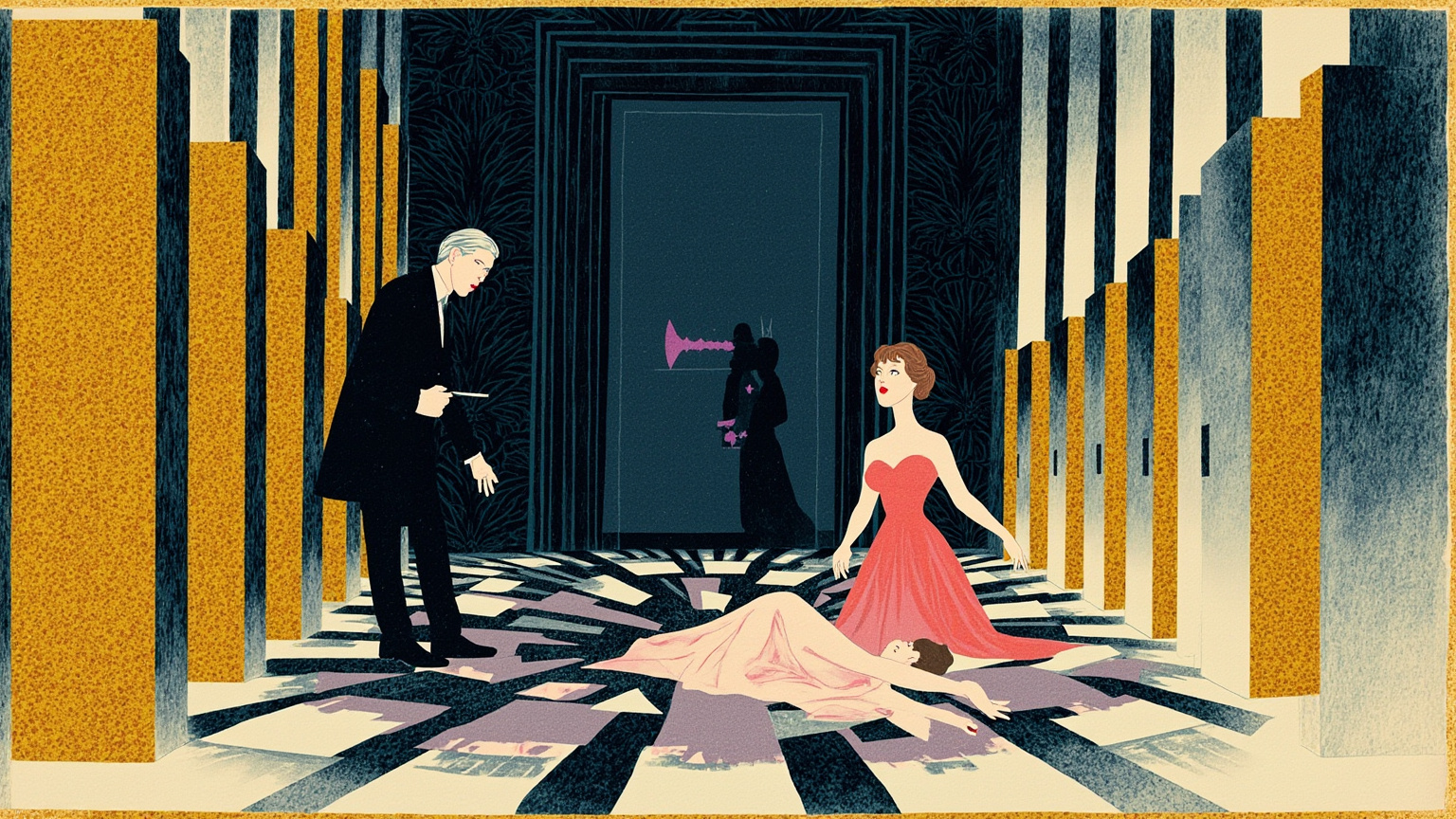
When the ball ends, Pablo leads him through a small door into a dim corridor lined with signs: For Madmen Only. The Price of Admission Is Your Reason. The Cost Is Your Life. Behind each door waits a dream — a grotesque vision of mechanized war, a reunion with every woman he has ever loved, a game of chess where his own personality is taken apart and dealt out like pieces. In the last room, he finds Pablo and Hermine locked naked in each other's arms. Jealousy floods him and he grabs a knife — this is the hardest scene in the book to write, because the blade comes down and no one dies, since none of it was ever real to begin with. Mozart appears, laughing, to pass judgment on him: he mistook a game inside an illusion for something real. The killing was never the point.
Eight. Learning to Laugh
Mozart, laughing, hands down the sentence: he must learn to laugh. Hermine's death dissolves back into illusion, and the ball breaks up. Harry is shaken to the point of buckling, but not destroyed. The novel ends the moment he walks out of the Magic Theater — he hasn't died, hasn't had an epiphany, hasn't become a saint. He has only decided: someday I will play this game better, and laugh better.
The real cruelty of Hesse's design: a man set on dying is sentenced to live, and to laugh while he does it.
What It's Actually Saying
On the surface this is a book about division: man and wolf, refinement and vulgarity, the divine and the animal. But the Treatise on the Steppenwolf itself cuts a level deeper — reducing the soul to two halves is already a kind of naivety. The real remedy isn't picking a side; it's admitting there are countless selves in there and learning to watch them take their turns, laughing. Humor is the cure — that's Hesse's prescription. The Magic Theater isn't a crime scene, it's a rehearsal space for the mind; every door is a slice of the self, and walking through one leaves you an inch bigger.
The historical moment is buried in here too. The shadow of the First World War hadn't lifted, and the Weimar bourgeoisie kept dancing anyway. Through the professor's Goethe portrait and Harry's disgust with the world, Hesse writes a premonition of a Europe about to be swallowed by populism and the worship of the machine. He was a pacifist his whole life, and Steppenwolf is the fiercest literary expression that stance ever got from him.
Why It's Still Worth Reading Today
More middle-aged people than ever feel that something is wrong with their lives. This book turns that wrongness into something almost physical: hating your own respectability and still needing it, wanting to die and still not quite willing to. Harry carries a good deal of Hesse himself — around the time he wrote this, Hesse was living through a collapsing marriage and long stretches of psychiatric treatment, and he forced his darkest low into a novel. The book runs cold to the bone, and still won't let you despair.
The craft is bold too. The first half is realist to the point of cruelty, a cold camera recording bourgeois parlor life; the second half suddenly swerves into surreal hallucination. That gap isn't showing off — the theme demands it. A divided person can't heal without first walking through a door he doesn't even believe in.
You Know the Plot Now — Why Still Read the Book
Because a companion guide can only tell you what's behind the door — it can't push the door open for you. Hesse's prose has a lyricism that stays cold; his sentences cut like the flat of a blade, drawing no blood but leaving a mark. The Magic Theater section especially can only be read slowly — the little labels over each door, the hallucinations arriving one after another, the way the chess game takes a personality apart, all of it runs on a rhythm only the text itself can give you. Read the summary and you miss the scene entirely. Read the whole book and you'll know exactly which kind of laugh you're missing.
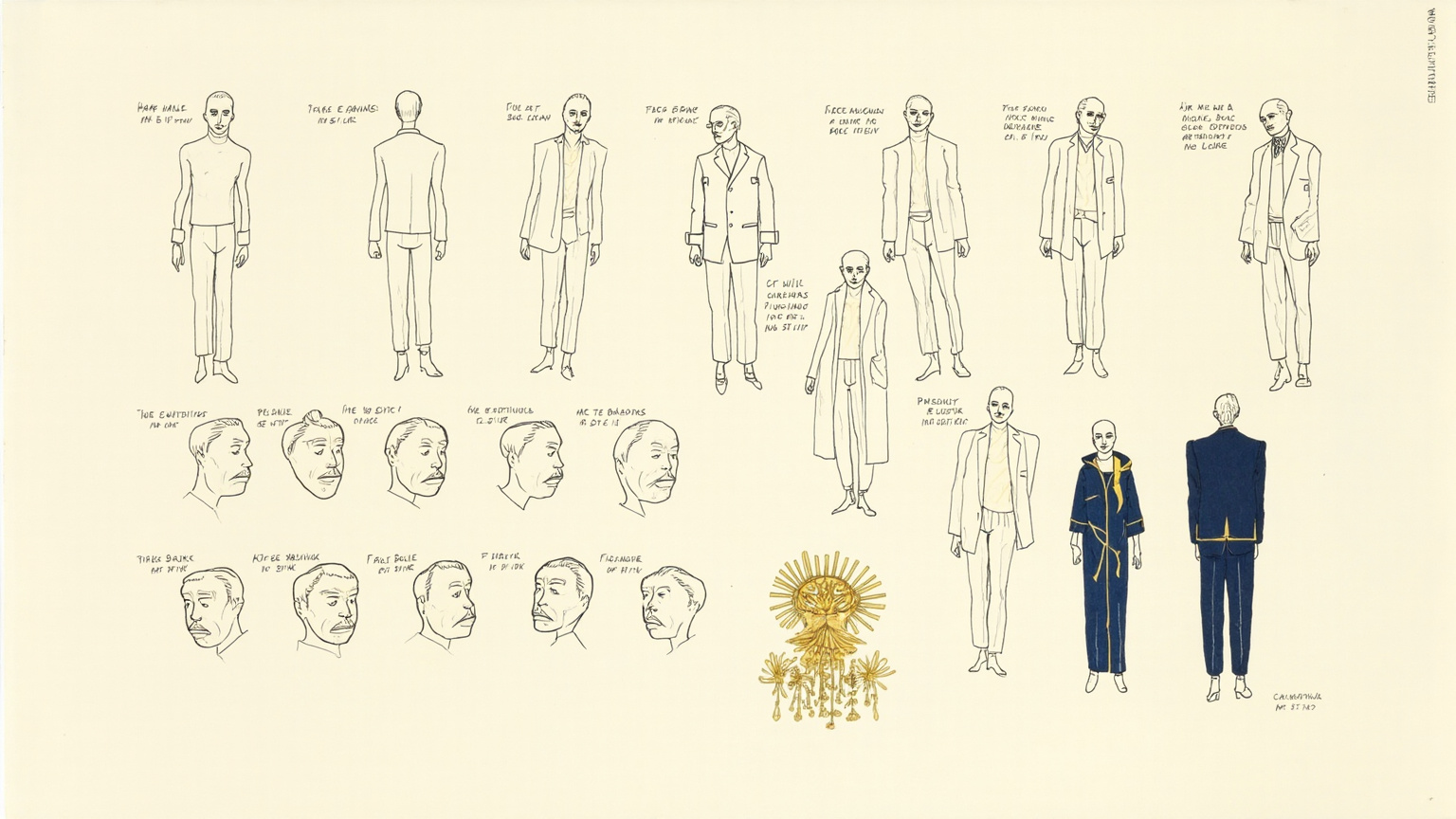
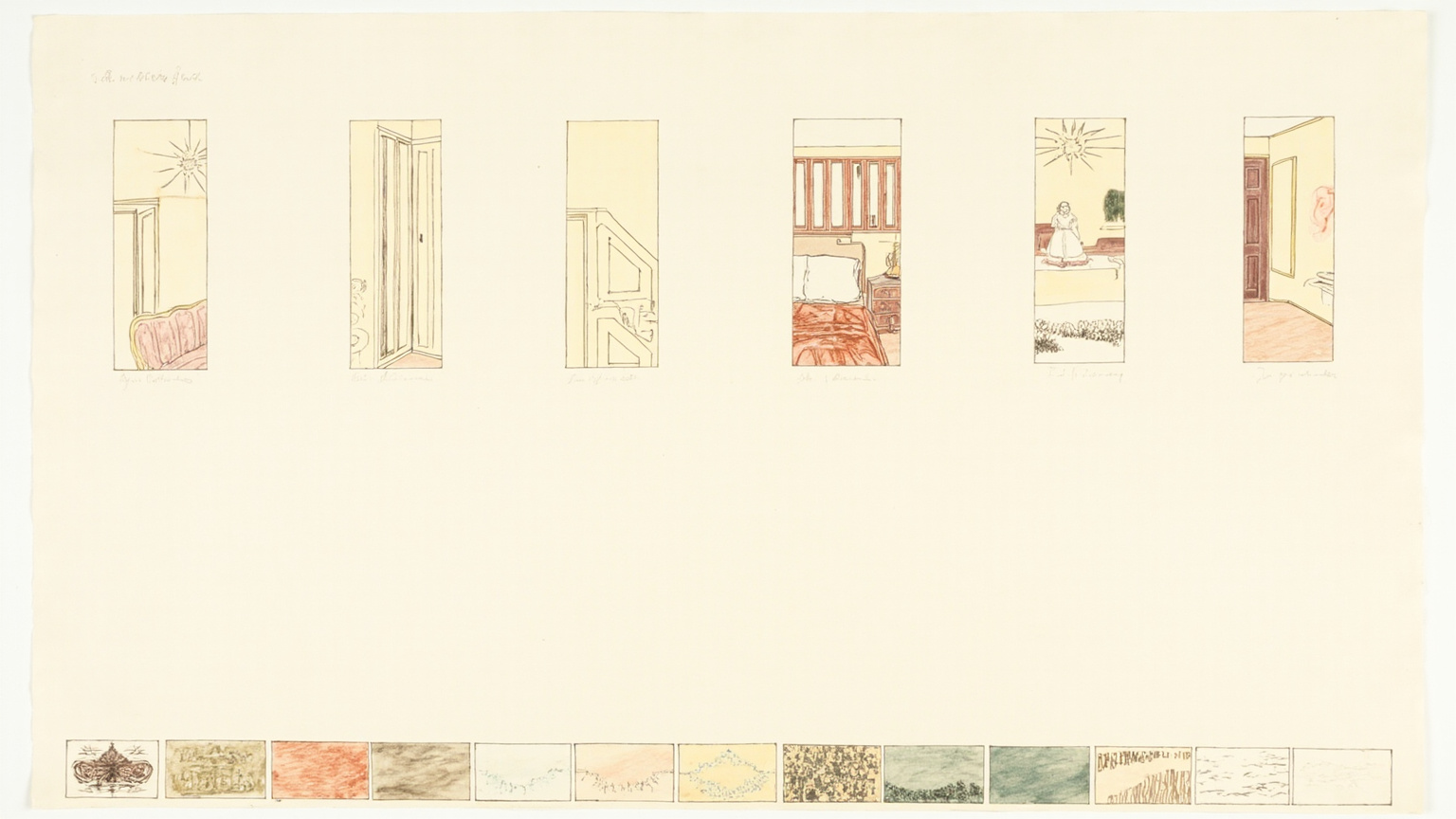
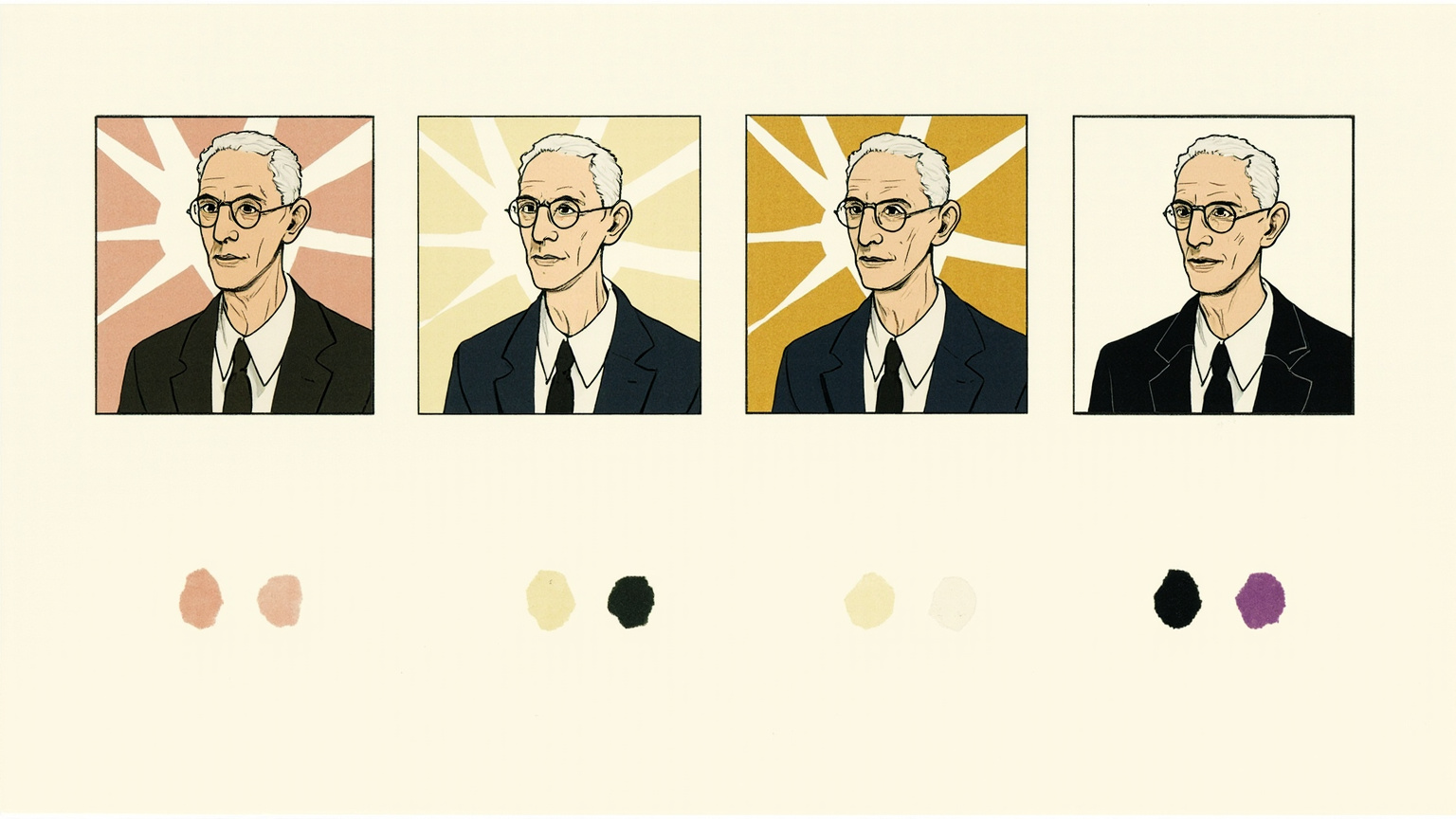
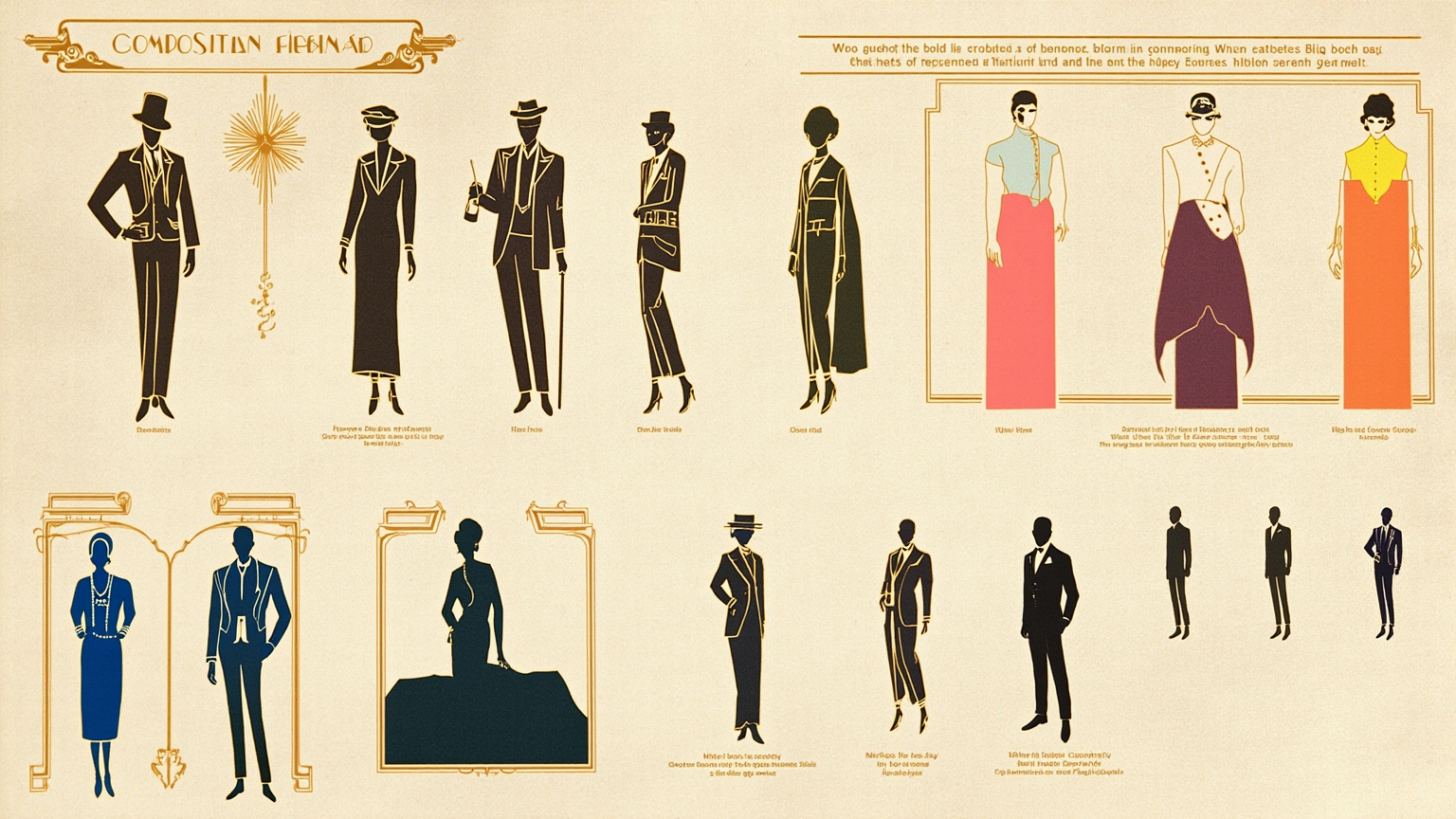
Art Direction4 plates
Before the guide was written, this book got a visual foundation — every illustration you just read grew out of it.