
The Story of Yue Fei (full title: 精忠演义说本岳王全传 / The Complete Story of the Loyal and Righteous King Yue) · Companion Guide
说岳全传
一个打不赢金兵却打不赢自己人的人——背上四个字,一身雪,是千年冤狱的原版。
The Four Characters Tattooed on His Back
A steel needle, a pinch of cinnabar. In Tangyin county, Lady Yao rolled up her son's shirt and tattooed four characters into his back: serve the country with utmost loyalty. It is the single most famous scene of parental instruction in China, and it is the root of the entire Story of Yue Fei. Those four characters never left his skin again.
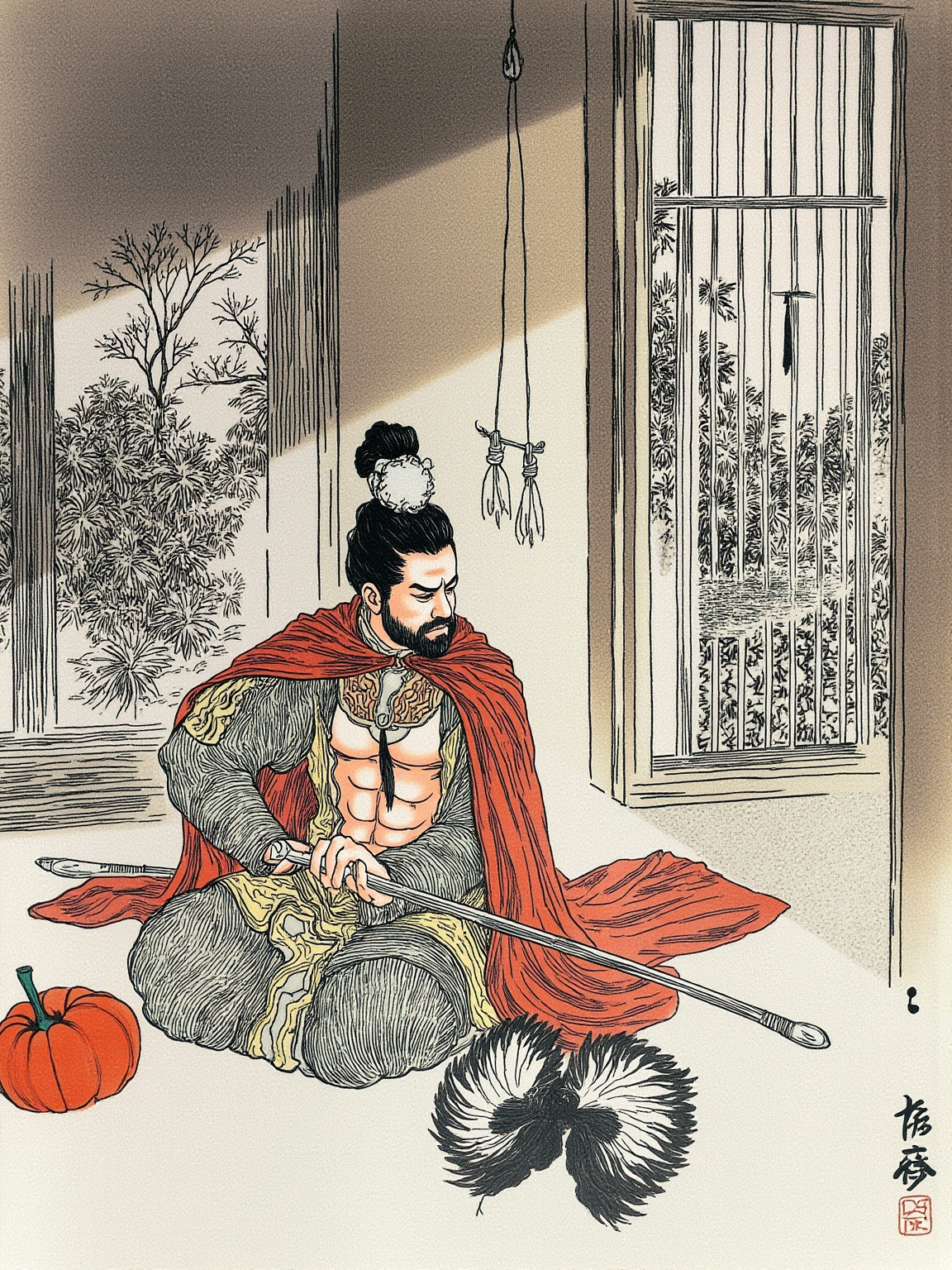
His mother took an iron needle, dipped it in cinnabar ground with ink, and pricked four characters into the skin of his back: Serve the country with uttermost loyalty.
姚氏把针蘸了墨调的朱砂,在他背脊上一笔一画刺下——精忠报国。
金句 · 开卷 · 岳母刺字
So What Kind of Book Is This
The Story of Yue Fei took its final form during the Qianlong era of the Qing dynasty, compiled by Qian Cai and expanded by Jin Feng, eighty chapters of vernacular fiction. It is not a history. It is a historical romance: bones of fact, flesh of folklore. Yue Fei himself was real. But Niu Gao, the fierce brawler in the mold of Wu Song, the Jin soldiers' famous sigh that it is easier to move a mountain than to move the Yue Family Army, the snow falling over Fengbo Pavilion, the Pavilion of Wind and Waves, on New Year's Eve, all of that is the storyteller's craft. In Chinese popular literature, this book stands next to Romance of the Three Kingdoms as a national-scale hero epic. Guan Yu owns the word yi, righteousness; Yue Fei owns the word zhong, loyalty. One was consecrated a god of war, the other posthumously ennobled Prince of E. This book is the single most complete source for how Yue Fei lives in popular memory.
Who Is on the Field, and What They Want
Yue Fei, courtesy name Pengju, was born a tenant farmer's son in Tangyin, Xiangzhou. He learned the spear from Zhou Tong and the art of war from Zong Ze. What he wanted came down to four words: drive straight to Huanglong, strike into the Jin stronghold itself, bring the captive emperors Huizong and Qinzong home, and win back the Han lands. Behind him stood the brothers of the Yue Family Army: Niu Gao, Wang Gui, Tang Huai, Zhang Bao, Wang Heng, sworn brothers since boyhood in Tangyin, each with a gift of his own, following him from a farmer's son to the commander of an army of thousands. Niu Gao was the exception: dark-faced, hot-blooded, immensely strong, fighting with a pair of maces, equal parts comic relief and battlefield swagger. Only one man stood in his way: Qin Hui, chancellor of the Southern Song and leader of the peace faction. Behind him stood his wife, Lady Wang; the lamplight of their plotting beneath an east-facing window; and Moqi Xie, a judge at the Court of Judicial Review, three names later cast in iron, kneeling before the Yue Fei temple at West Lake.
The Jingkang Catastrophe, and a Young Man Enlists
Yue Fei's youth collided with the fall of the Northern Song. Jin cavalry swept south, Emperors Huizong and Qinzong were dragged north as captives, and history remembers it as the Jingkang catastrophe. A tenant farmer's son with no home and no country left had one road open: enlist. He joined Zong Ze in Hebei. Zong Ze, the seasoned defender of the eastern capital, Bianliang, recognized the young man at a glance and handed him a lifetime's study of warfare, holding nothing back. Every victory Yue Fei ever won traces back to this.
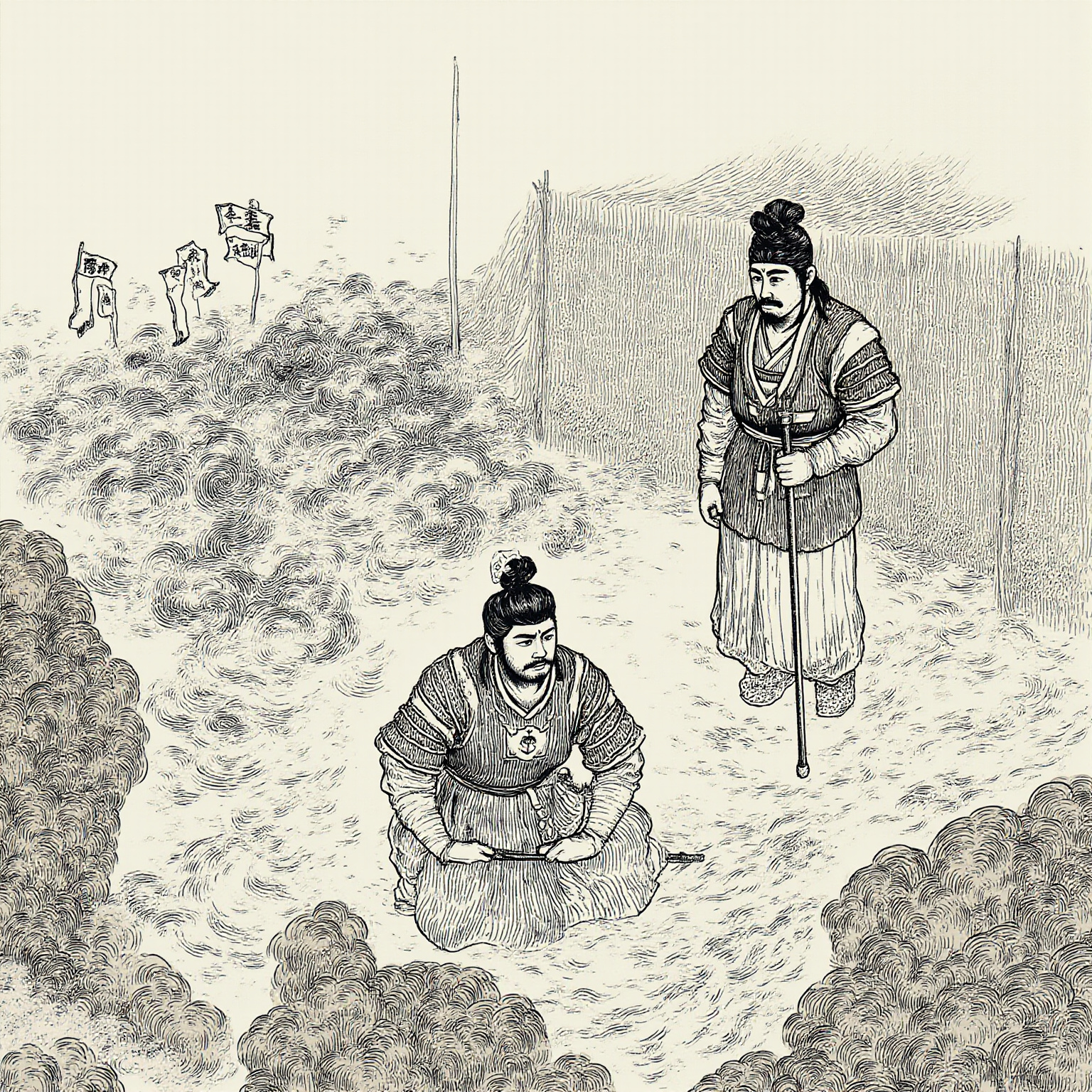
The whole realm fell; the two emperors were dragged north in carts. A farmer's son, with both country and home lost, took the only road left: he took up arms.
国破了,家也亡了,一个佃农的儿子再无别路可走——投军去。
金句 · 靖康之难 · 少年投军
The Central Plains Campaign: The Yue Family Army's Name Strikes Fear
After Zong Ze died, Yue Fei carried his mentor's cause south and took independent command. The Yue Family Army opened a front on both banks of the Yellow River: they recovered Jiankang, then the six commanderies of Xiangyang, and kept pushing north. The Jin commander, Wuzhu, formally Wanyan Zongbi, fourth son of the Jin founding emperor Taizu, threw his best troops at them in turn: the heavy armored cavalry known as the Iron Pagoda, and the flanking light cavalry called guaizima. Both broke against the Yue Family Army at Yancheng and Yingchang. Out of the Jin ranks came a famous, weary line: it is easier to move a mountain than to move the Yue Family Army.
Zhuxian Town, Forty-Five Li From the Old Capital
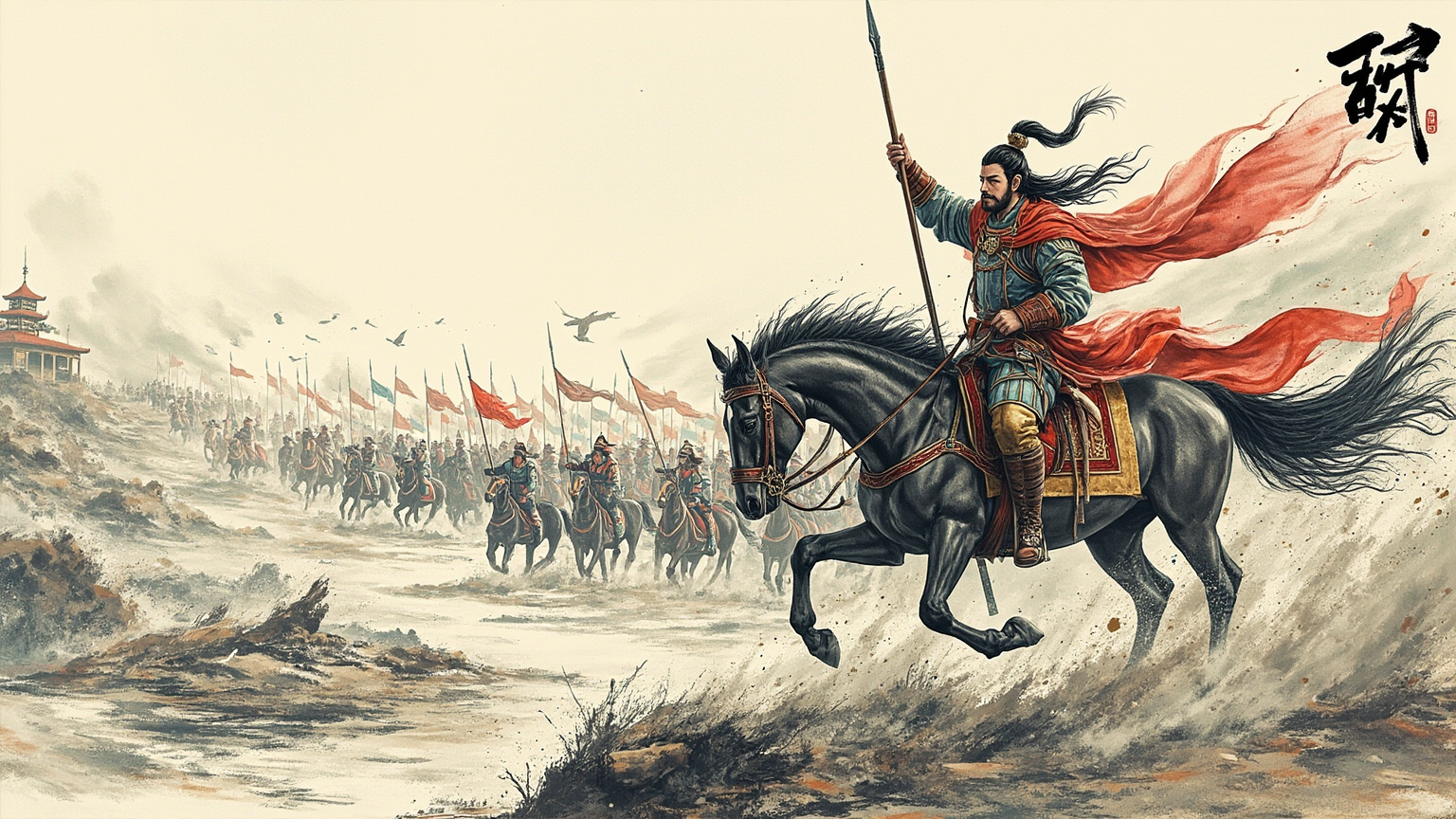
The Yue Family Army advanced to Zhuxian Town, forty-five li from the old capital, Kaifeng. This was not an ordinary forty-five li. Kaifeng was the soul of the Northern Song, the old capital from which Huizong and Qinzong had been dragged away, the place Yue Fei had set his sights on retaking from the day he first enlisted. In the camp tents, his officers were already mapping the road that would drive straight to Huanglong. Yue Fei stood outside the tent looking north. He knew that one more step forward meant crossing into the Jin heartland beyond the Yellow River. Ten years of hard fighting had come down to this.
The Yue army pushed on to Zhu Xian Town — only forty-five li from the old capital, only forty-five li from the heart that had been lost.
朱仙镇一驻,前头四十五里,便是故都汴京——这一颗丢了十五年的心。
金句 · 朱仙镇 · 直捣黄龙之望
Twelve Gold Plaques
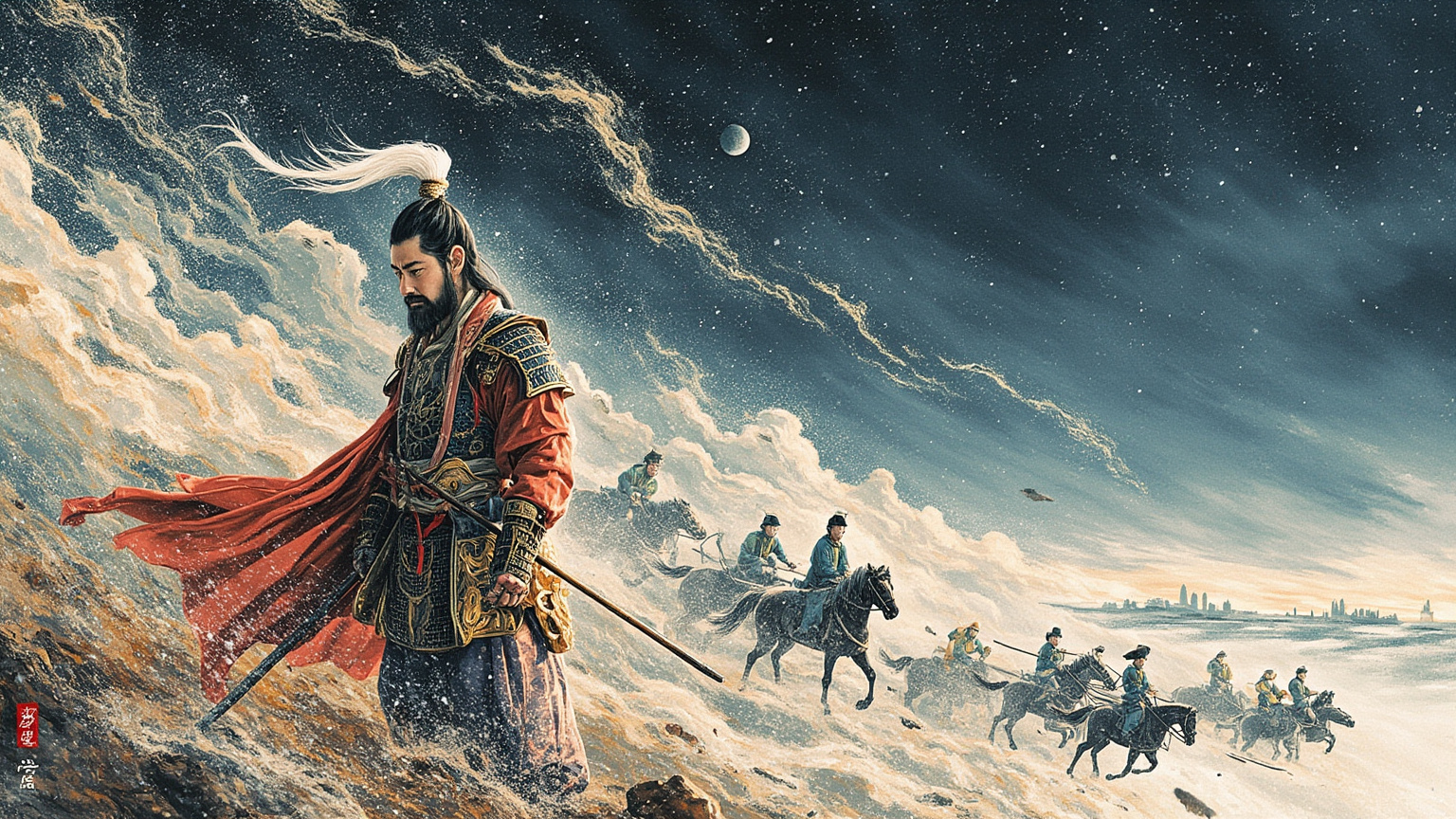
In a single day, the court sent twelve gold plaques. A gold plaque was the highest-priority courier token of the Song dynasty, issued directly by the emperor, and each one carried the same order: withdraw at once, do not delay. Yue Fei took the order and looked up at the sky and sighed: ten years of work, undone in a day. In the camp, a hundred thousand soldiers wept loud enough to shake the fields, and along the road villagers grabbed the reins of his horse and would not let him pass. They knew exactly what it meant: the moment the Yue Family Army withdrew, the Jin would come back. This was not a tactical retreat. This was handing over the Central Plains.
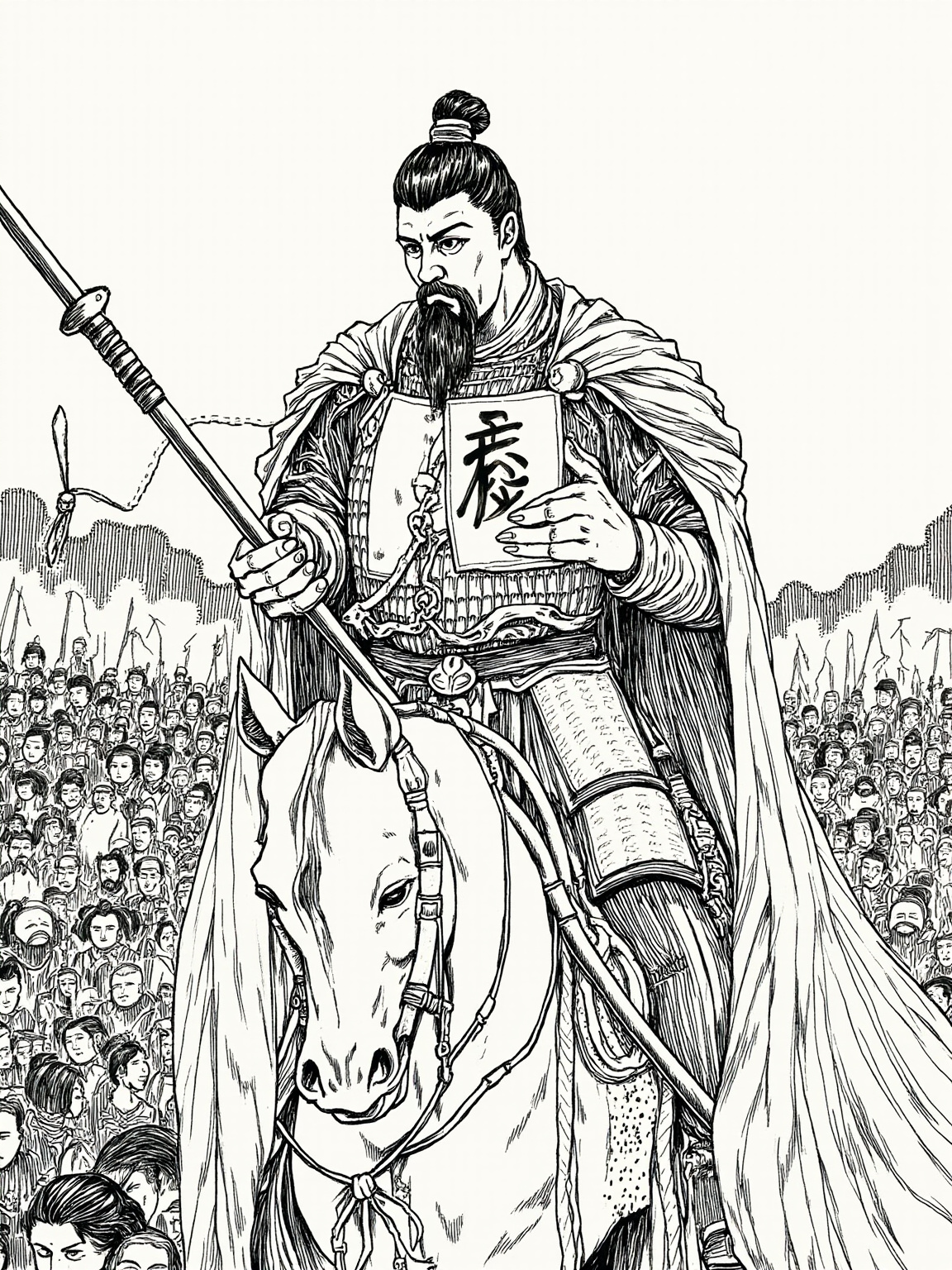
Within a single day, twelve gold tallies came down from the throne. He lifted his face to the sky and sighed: ten years of work, undone in a morning.
一日之内,金牌十二道。他仰天长叹——十年之功,废于一旦。
金句 · 十二道金牌 · 班师
Yue Fei returned to Lin'an and was thrown in prison. Then came what Chinese still call being exposed at the east window, the very origin of the phrase: Qin Hui and his wife, Lady Wang, plotted beneath an east-facing window how to frame Yue Fei for a capital crime. Their conversation has been written into every storyteller's script since. Lady Wang is the key figure here; without her line, binding a tiger is easy, releasing one is hard, Qin Hui might never have gone through with it. The charge was mo xu you, perhaps there is, three characters that appear nowhere in the legal code. It meant, in effect, we say he's guilty, so he is. The presiding judge, Moqi Xie, built an ironclad case out of a fabricated charge of treason. In his cell, Yue Fei wrote four characters in his own blood on the inside of his robe: heaven and sun bear witness. It was a verdict of its own, left for history to read.
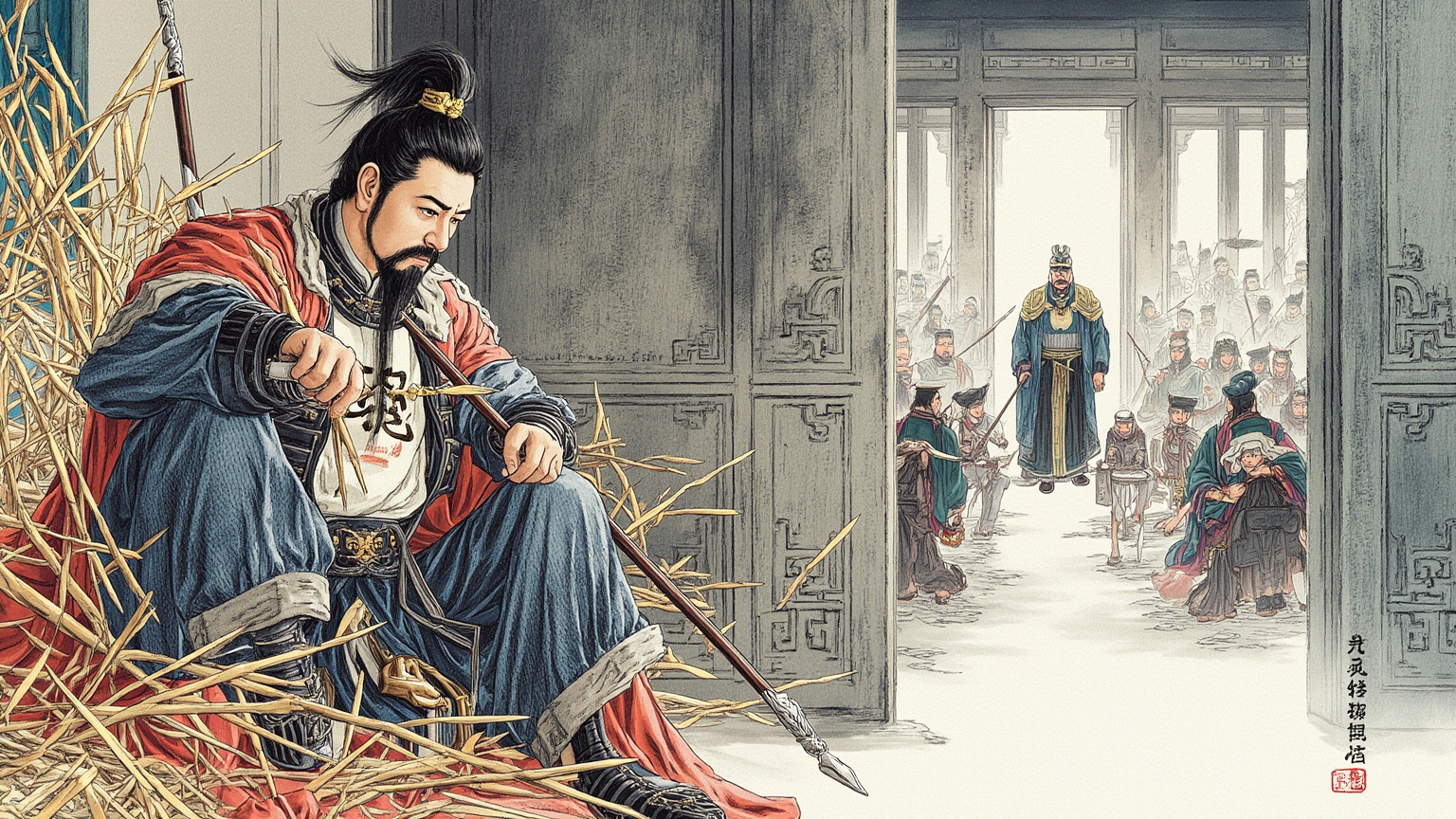
In the twelfth month of the eleventh year of the Shaoxing era, the day before New Year's Eve, a season for family reunions, snow fell over Fengbo Pavilion at the Court of Judicial Review. Yue Fei was executed there at thirty-nine. His eldest son, Yue Yun, the young warrior known as the Ever-Victorious Young Lord, died alongside him. The book renders this moment with extreme restraint: two words, Fei dies. No flashing blade, no blood, no image of an executioner. The real tragedy needs no picture. The picture had already been fixed the instant he took that first gold plaque.
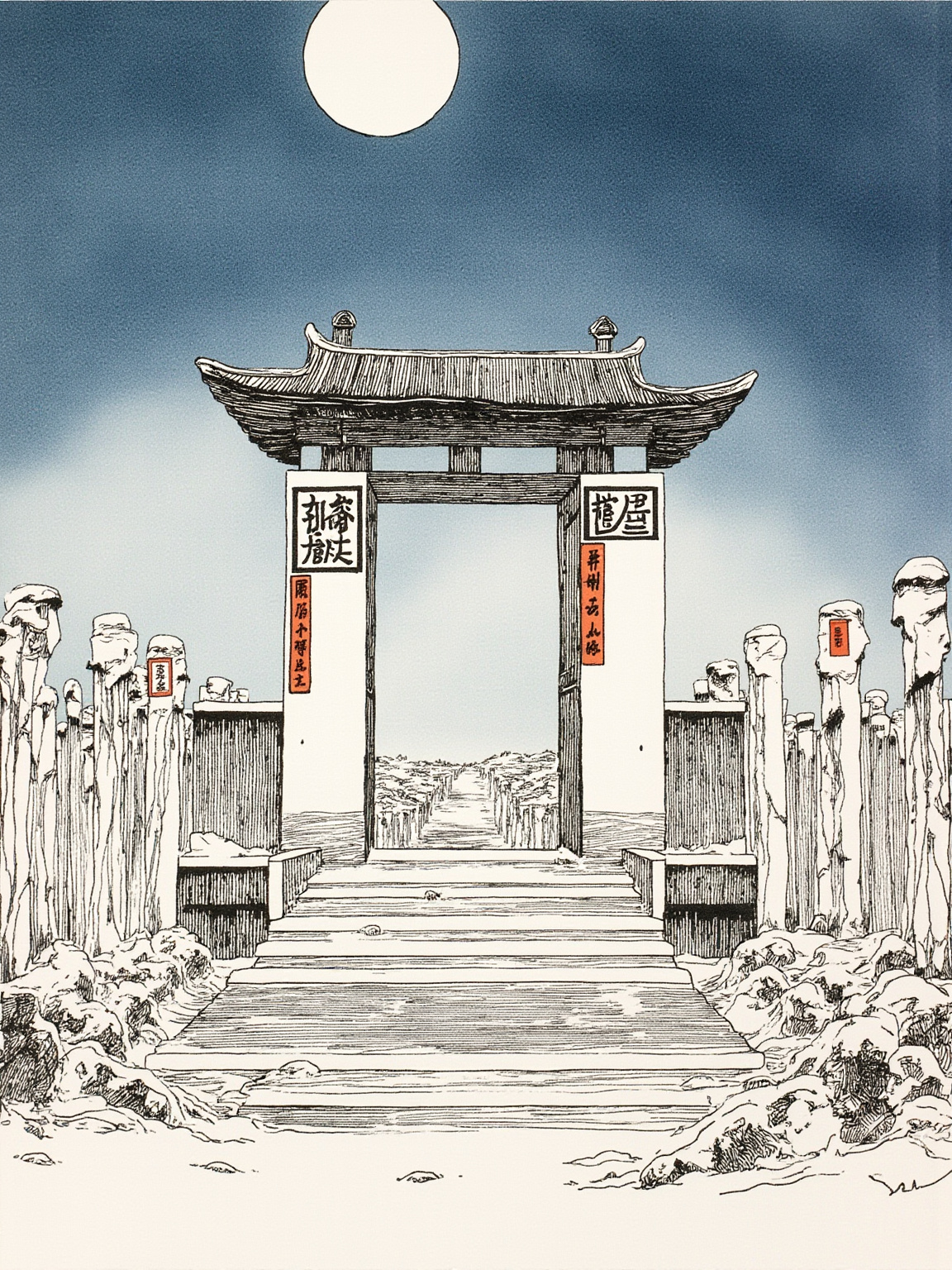
Snow was falling over the Pavilion of the Storm-Waves the day he died. In the small of his back, four characters; on his coat, four more — Heaven's sun, bright and bright.
风波亭那日雪落得极静。背上「精忠报国」,襟上「天日昭昭」——血字映雪。
金句 · 风波亭 · 天日昭昭
Heaven and Sun Bear Witness: Loyal and Treacherous, Divided
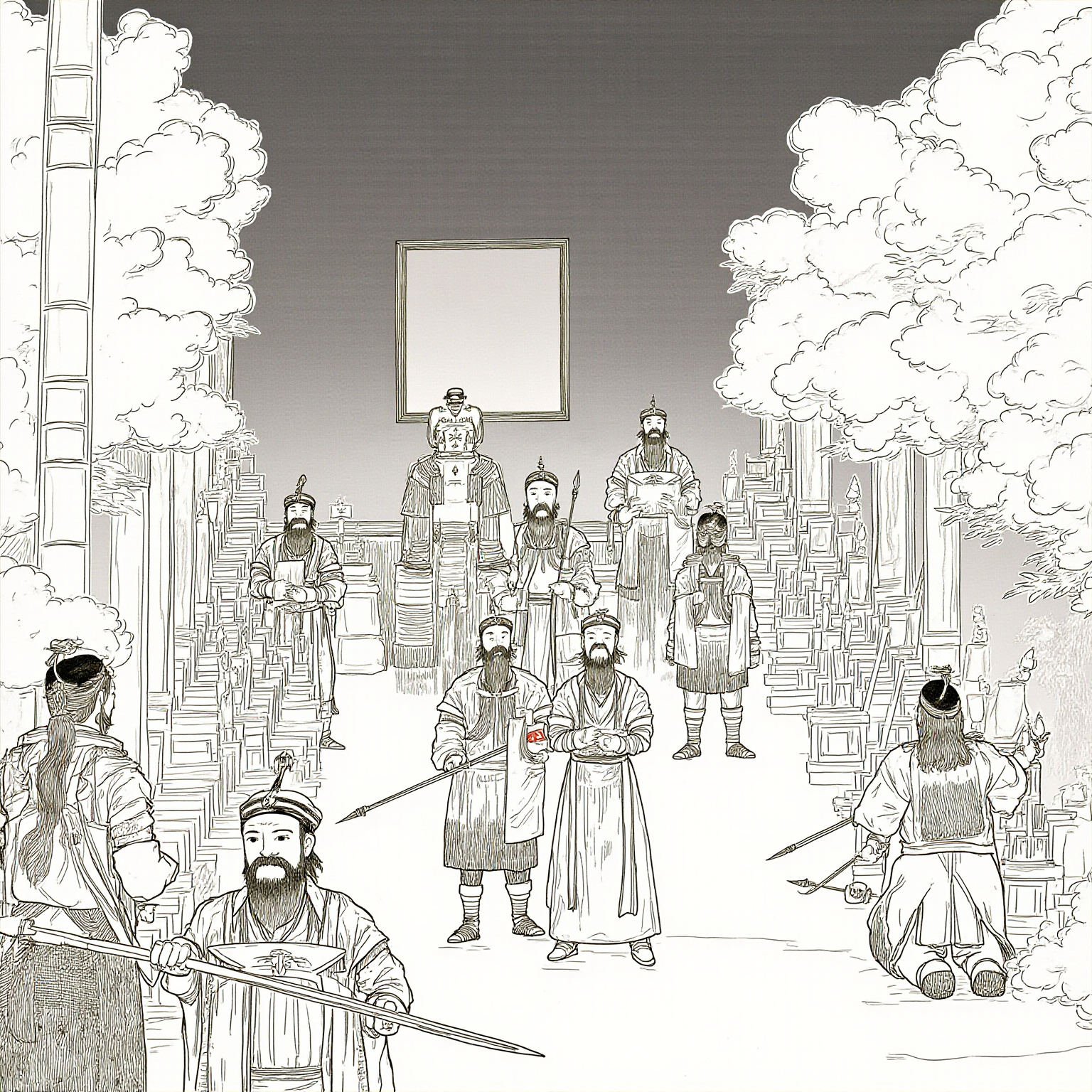
Yue Fei's death was not the end of the story. Word reached the front, and old comrades like Niu Gao were driven half-mad with grief. Later generations kept adding posthumous honors: Prince of E, then the name Wumu, then changed again to Zhongwu, Loyal and Martial. In front of the Yue Fei temple at West Lake in Hangzhou, four iron statues, Qin Hui, Lady Wang, Moqi Xie, and Zhang Jun, kneel forever, spat on by every visitor who passes. Lucky the green hills, to hold loyal bones; innocent the white iron, cast into traitors. That couplet has hung at the temple gate for three hundred years. This is a trial the people ran themselves. Not through law, not through the emperor, but through cast iron, a temple, and a public willing to spit. The whole procedure has run again and again across Chinese history, restarted every time a traitor falls.
What This Book Is Actually About
On the surface this is loyalty against treachery. Underneath is a colder proposition: a loyal general does not die at the enemy's hands, he dies from a knife his own side put in his back. Could Yue Fei have beaten the Jin? The Jin themselves answered that: easier to move a mountain than to move the Yue Family Army. He died on twelve gold plaques issued by his own court. This is the high point of a very Chinese kind of tragedy, the wrongful-conviction tragedy: every external problem gets solved, and the knife that's left is the one behind you. The four characters serve the country with utmost loyalty are the book's spine. Tattooed on a back, they are a private lesson; embroidered on a battle flag, they are a public oath, running from family duty straight into loyalty to the nation. This is Chinese patriotism in its earliest form, not an abstract slogan but something a mother put there with a needle, one stitch at a time. But the sharpest move in The Story of Yue Fei is what it shows about the price of that loyalty. If Yue Fei had been a little more flexible, had not kept shouting about driving to Huanglong, had not insisted on bringing the two emperors home, Qin Hui might have found room for him. He would not bend. What he wanted was the jing in jing zhong, the purity in utmost loyalty: unmixed, undiluted, nothing watered down. A man like that does not last long at court.
The Story of Yue Fei is about a man who could not win, not against the Jin, but against his own side.
Why Read It Today
You think you already know the story of Yue Fei. Everyone knows his mother's tattoo, Fengbo Pavilion, mo xu you. Read The Story of Yue Fei and you will find out that what you know is a handful of set phrases, not the book. Take the moment Niu Gao smashes his head against a pillar and dies in grief before Yue Fei's coffin: the storyteller gives it only a few lines of verse, and the weight of those few lines lands harder than any direct description could. Take the instant the Yue Family Army receives the gold plaques and falls silent together: the storyteller doesn't describe a single face. He describes the flags. None of this survives a summary. Only the original gives you that word, that pause, that exact place where the storyteller leans in.
Go Read the Book Itself
A companion guide gives you the map. The novel is the land. By now you know who Yue Fei was, how he died, and why. But you haven't yet heard the moment Zhou Tong hands the Dripping Spring Spear to Yue Fei, or watched Niu Gao swing his mace for the first time and send a Jin soldier flying, or heard how quietly the snow fell outside Fengbo Pavilion. All of that is waiting in the eighty chapters of The Story of Yue Fei.
Art Direction4 plates
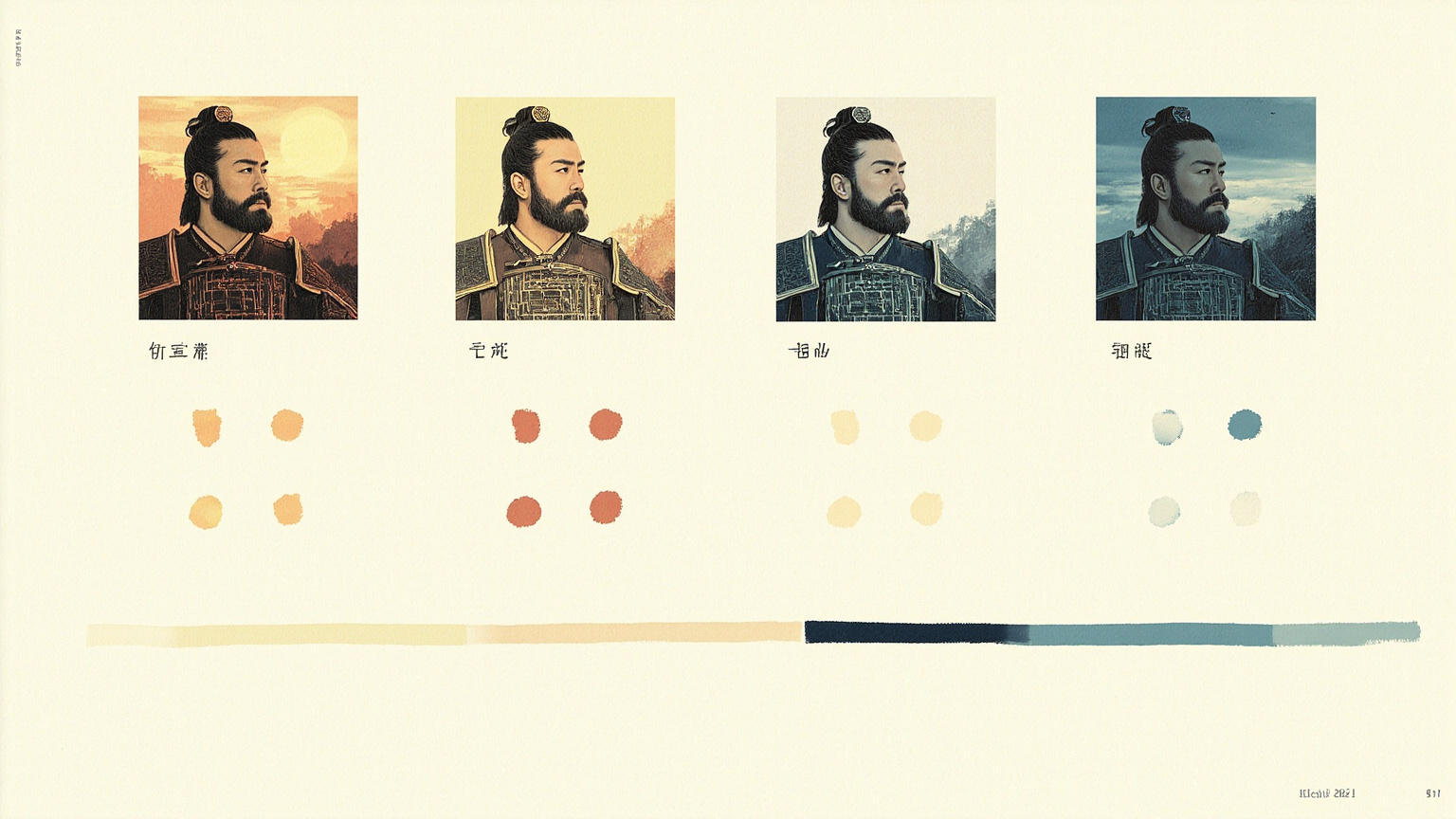
Before the guide was written, this book got a visual foundation — every illustration you just read grew out of it.