Summer 1930: rules written on paper, treaties signed on the water
Text and illustrations produced by the pipeline
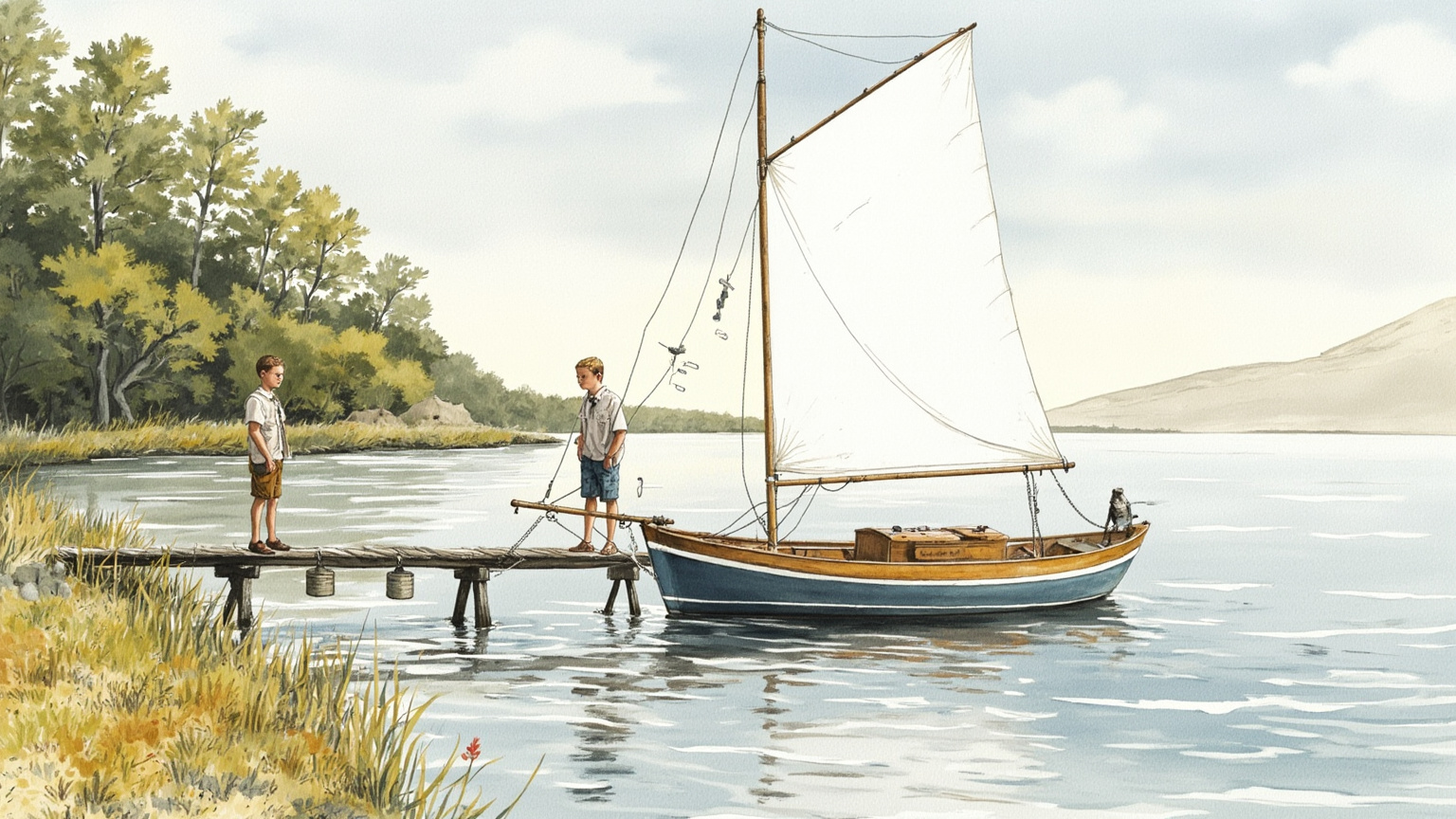
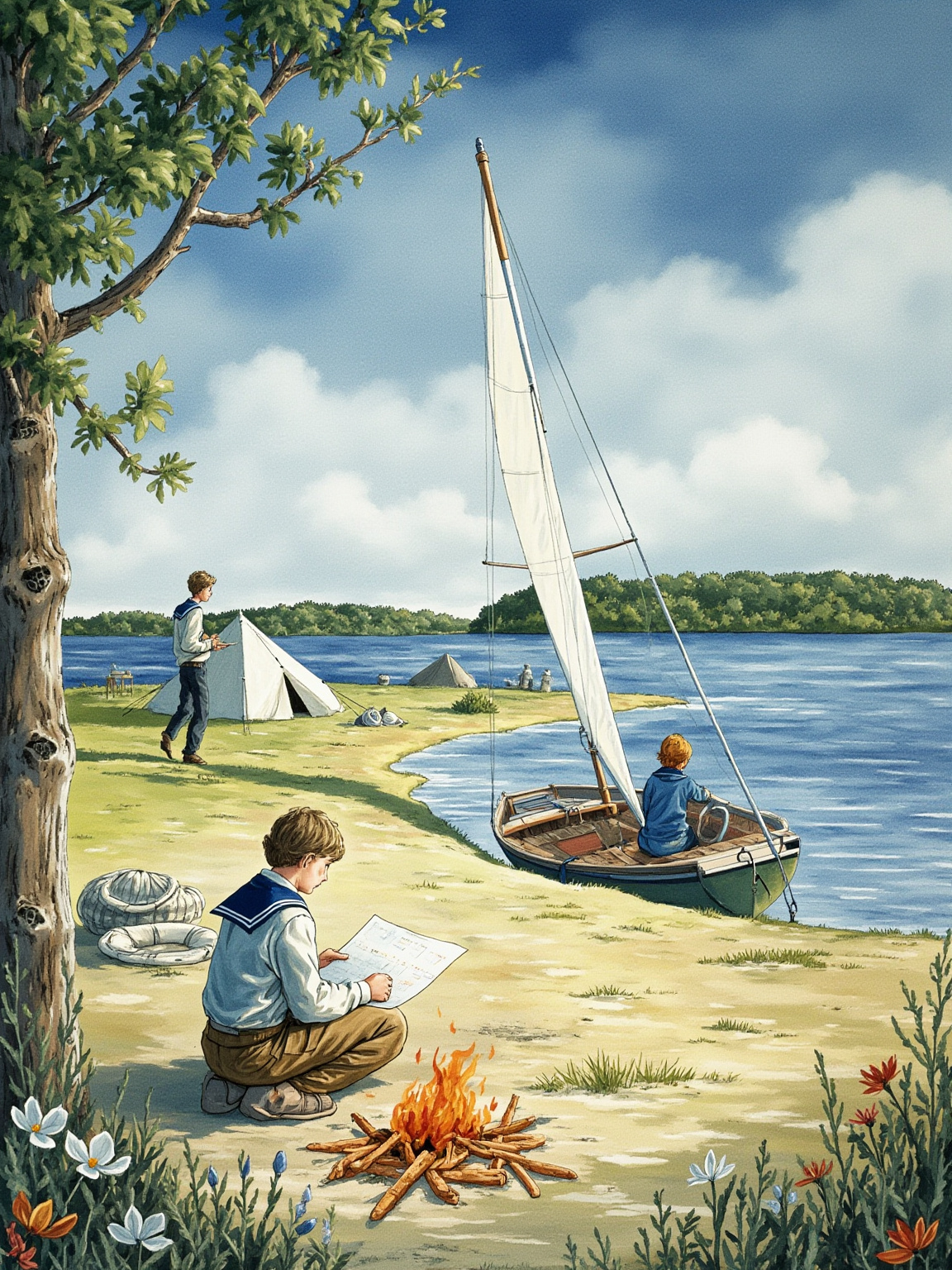
A small sailboat called Swallow is pushed out of the boathouse by a handful of children and glides across a quiet June afternoon on an English lake. A twelve-year-old boy stands at the bow with the tiller rope wound around his wrist. Behind him his older sister is counting tins and blankets, while the youngest crouches in the well, naming a distant conical hill. She calls it the volcano. On the dock there are no parents, only a note their father left before he went away: wear lifejackets, never capsize when alone, wait for someone to come back before setting out.
Arthur Ransome's Swallows and Amazons first appeared in London in 1930. It is the founding text of a whole strand of English-language children's fiction, the kind where children grow up on their own, out of adult reach. Lakes, boats, campfires, maps, telescopes: the book turned all of it into the visual language of childhood self-sufficiency. For more than half a century it has been read and reread, generation after generation, alongside Lake District tourism, the British tradition of family camping holidays, and Scout culture. The series eventually grew to twelve books, but the first has always been the point of origin: one summer, one lake, four rules.
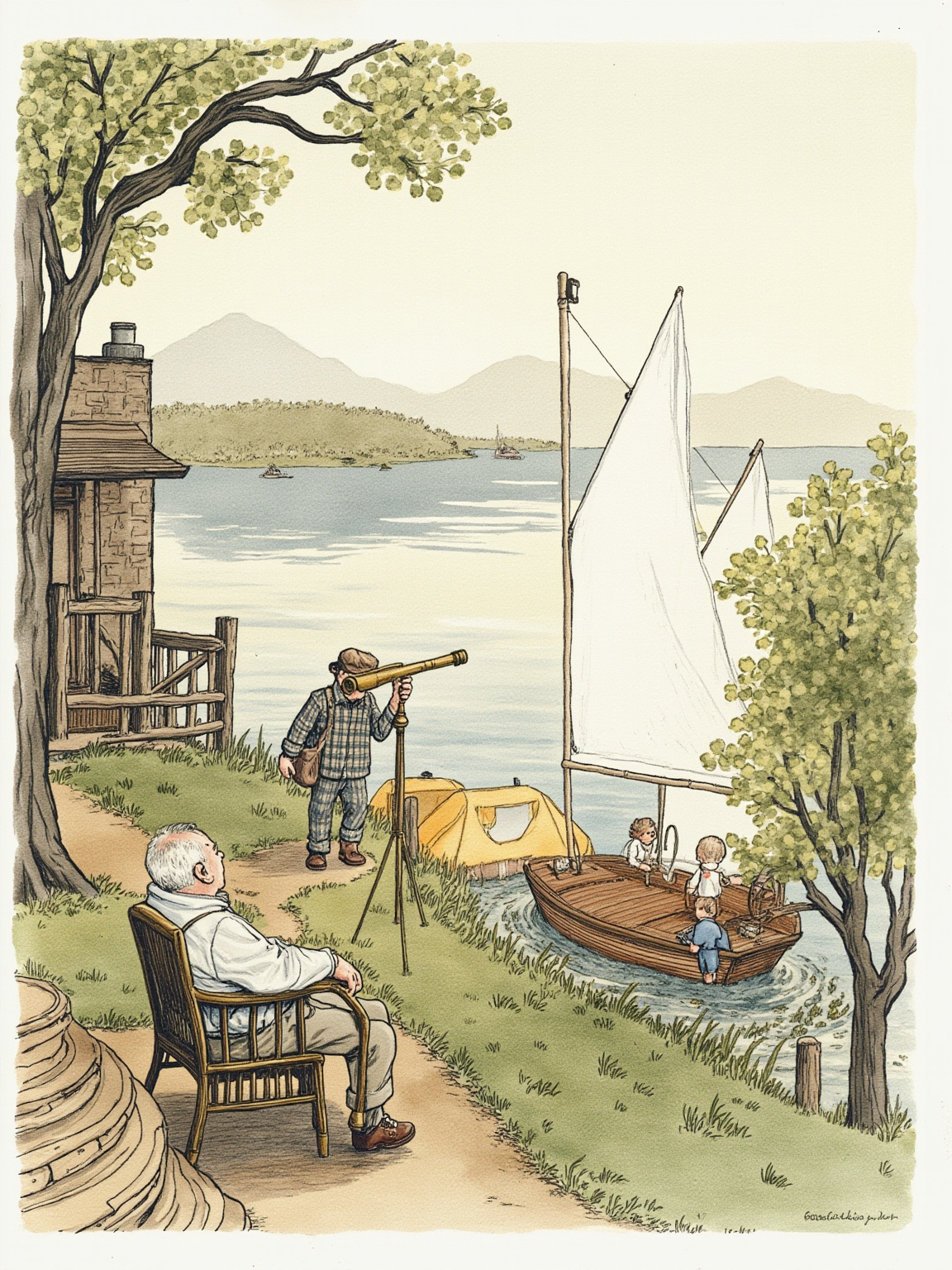
The four Walker children are staying at their great-aunt's farm in the Lake District, and the dock is looked after by an old sailor. John is Swallow's captain, in charge of the sail and every decision underway. Susan runs everything on the ground, the supplies, the rations, who keeps the fire through the night, and she is trusted with the safety rules in a way the others aren't: even their father briefs her separately before he leaves. She is the real head of household in this book. Titty is the youngest, and spends her days half inside the sea stories she invents. She calls the lake the South Seas, the lookout hill a volcano, the camp a ship at anchor. Roger is too small and is left behind on the farm shore, watching his brother and sisters sail off through a telescope.
Across the lake live the Blackett sisters, Nancy and Peggy, who sail Amazon, a bigger boat than Swallow. Nancy is loud, headlong, self-declared chief of the Amazon pirates, and she is the one who issues the challenge to the Walkers. Peggy admires her sister but is quieter and more considerate. Their Uncle Jim is their guardian sailor in name only. He keeps an eye on the boat but never joins them on the island. The whole lake runs on this arrangement: the adults step out of the picture, and the children take the stage.


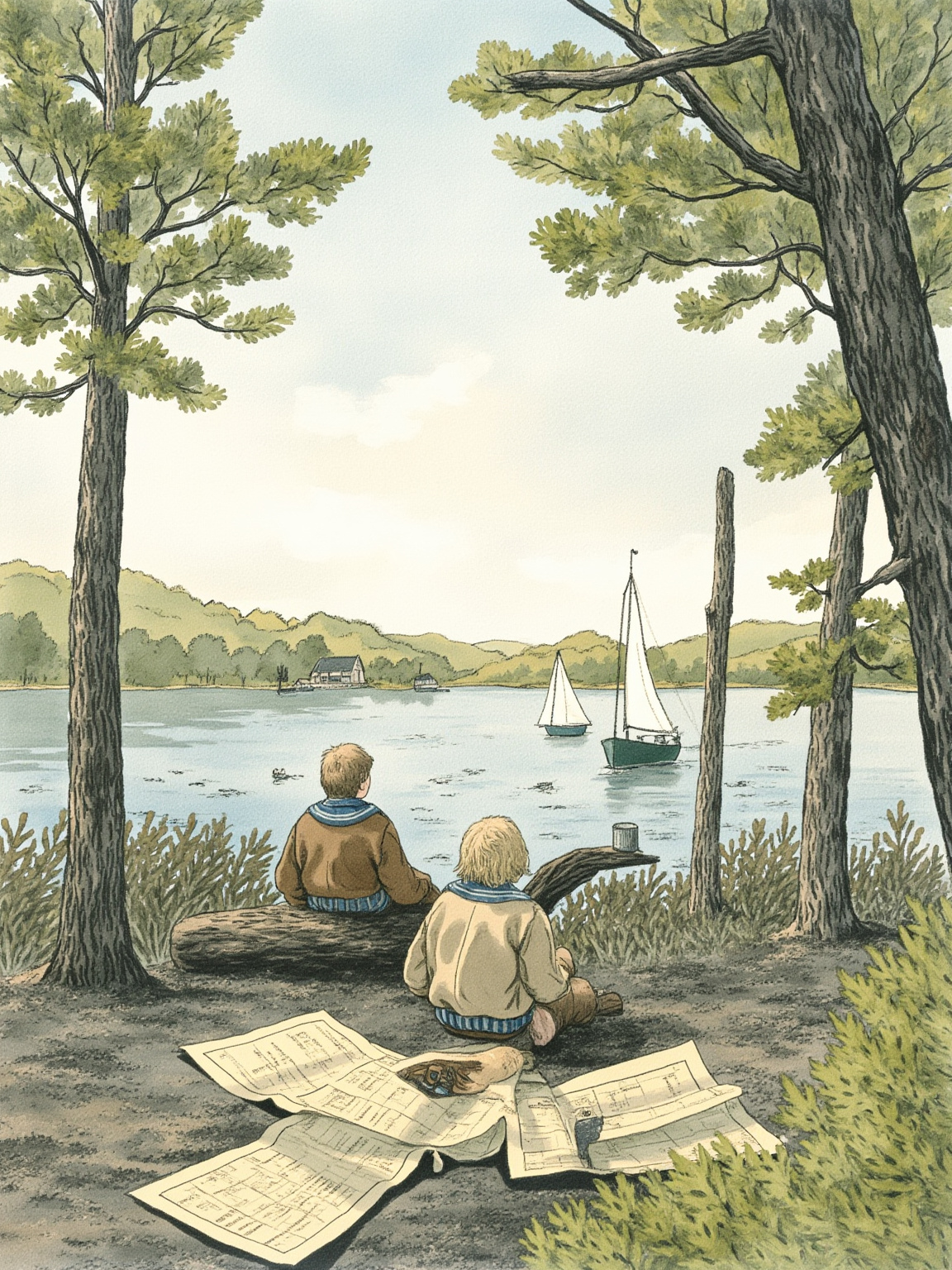
Its virtues are, if anything, clearer today. This is a world with no phones, no GPS, where children navigate by compass and paper charts; the rules live on a sheet of paper, not in a pop-up window; order runs on spoken agreements, not an administrator's ruling. For a young reader surrounded by algorithms and instant messaging, that slow rhythm has become something rare: build your own boat, hold your own meeting, set your own rules. The first time I read the scene where Titty draws a chart in the sand, I went back and reread the page before it. In her eyes that lake was an ocean, and Ransome makes you believe it too.
The plot is only the map; the prose is the land. Knowing that a battle happens, that a treaty gets signed, does not spoil the reading, because what Ransome actually writes is physical sensation: the way wind slides across a sail, the way rain douses a campfire in the middle of the night, the crease in Susan's forehead as she counts tins, the light in Titty's eyes as she names a hill. None of that shows up until you open the book and follow them, day by day, onto the island. The map tells you where. The land tells you what it feels like.
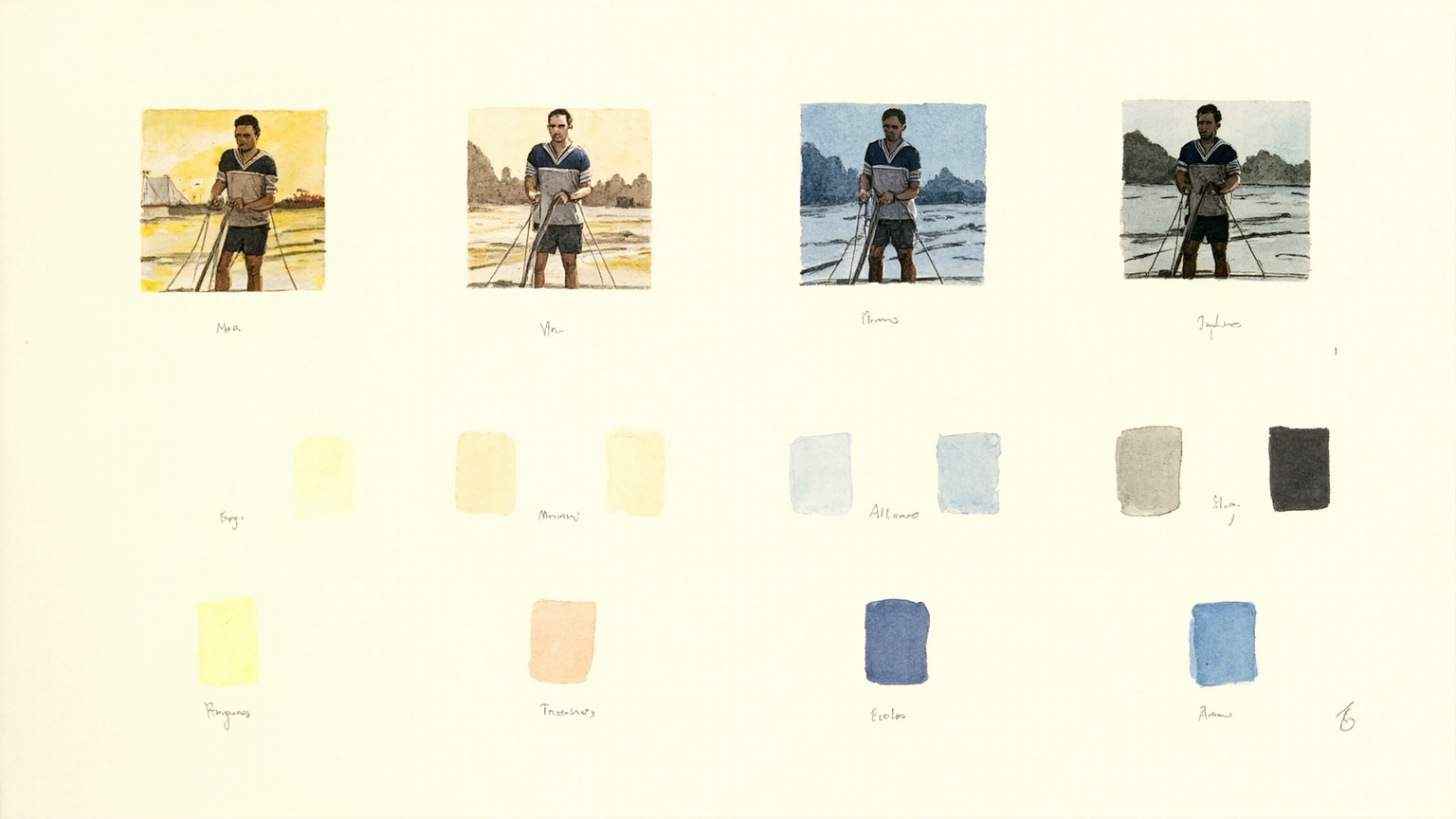
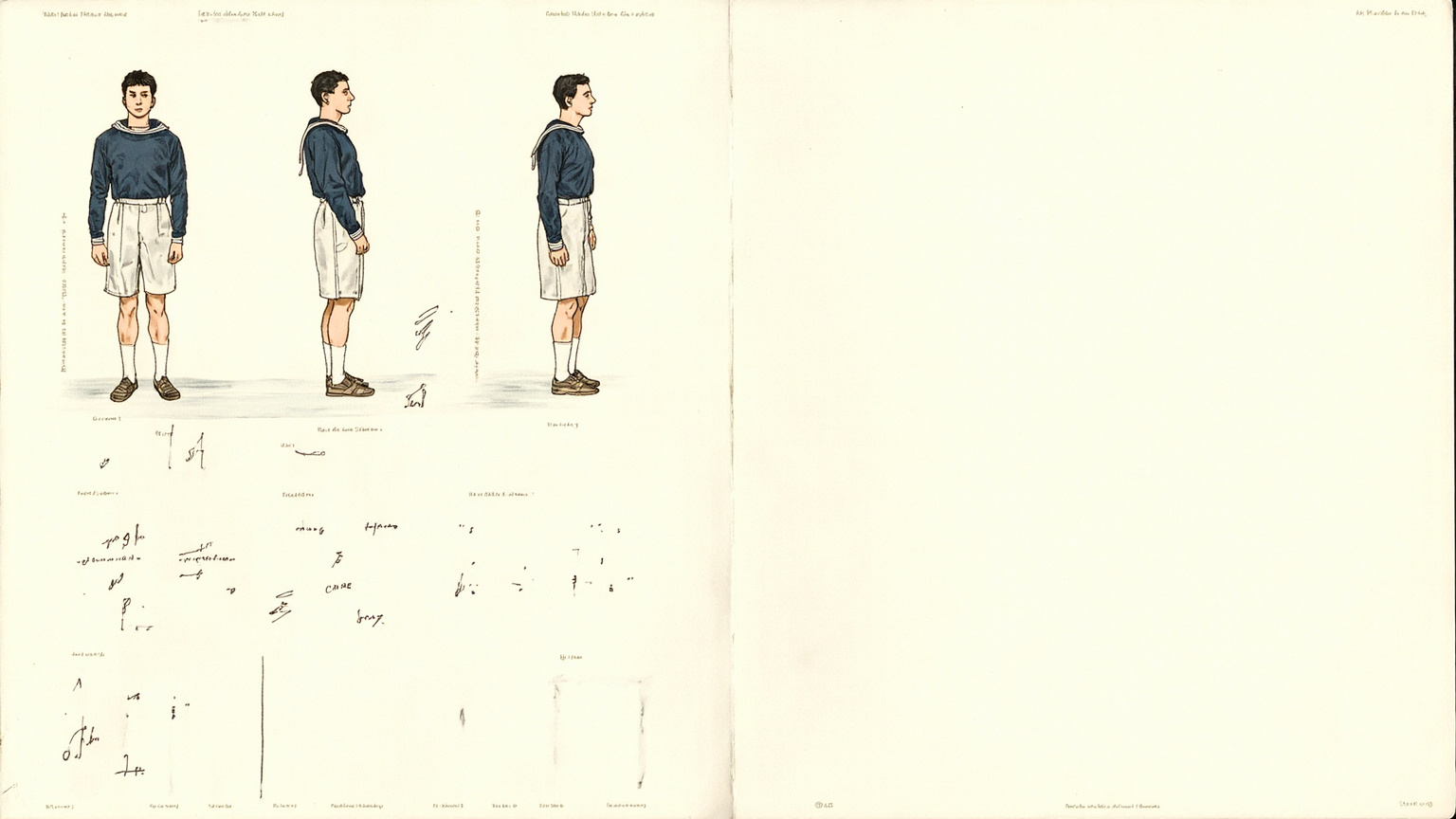
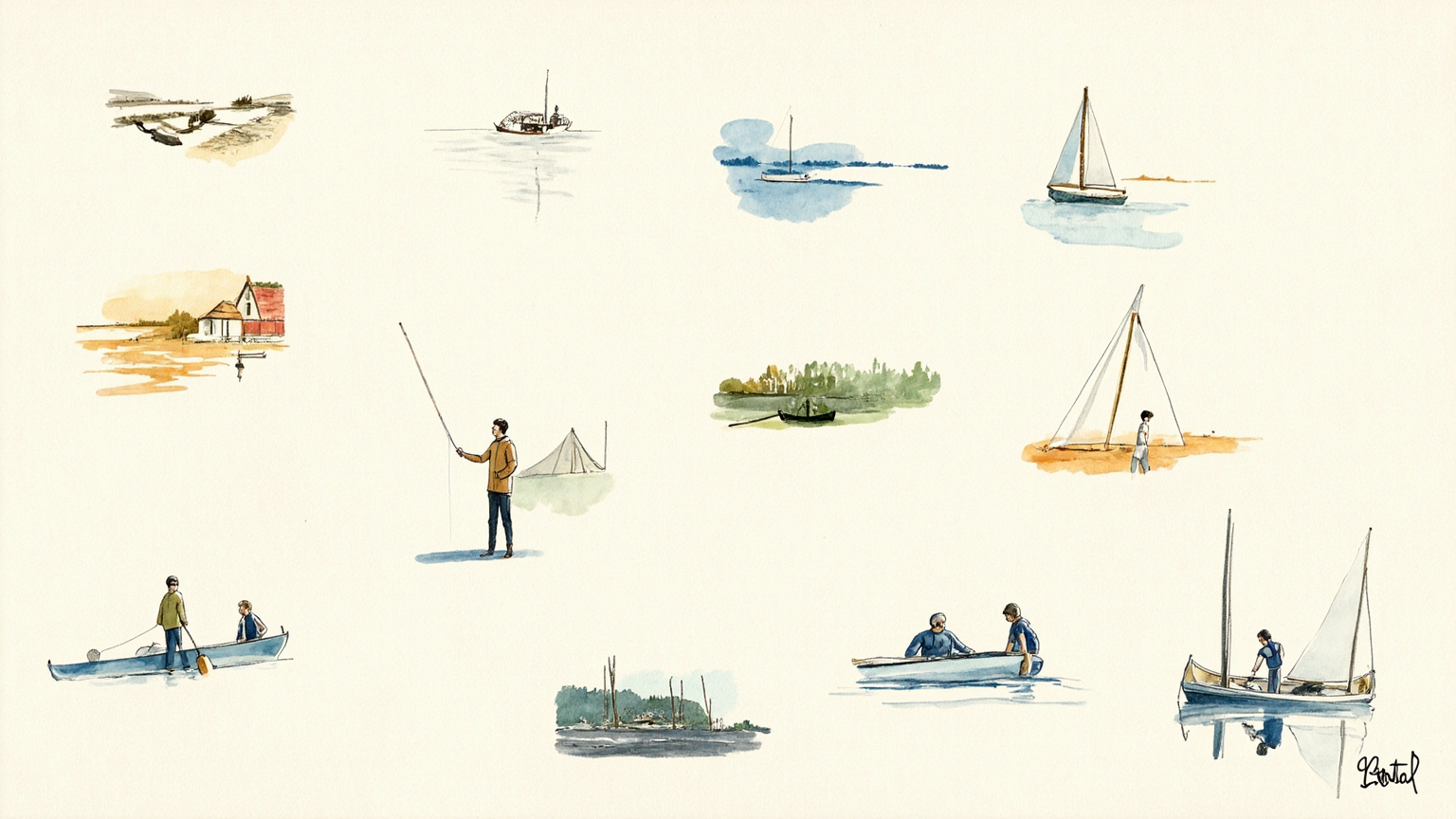
Before the guide was written, this book got a visual foundation — every illustration you just read grew out of it.
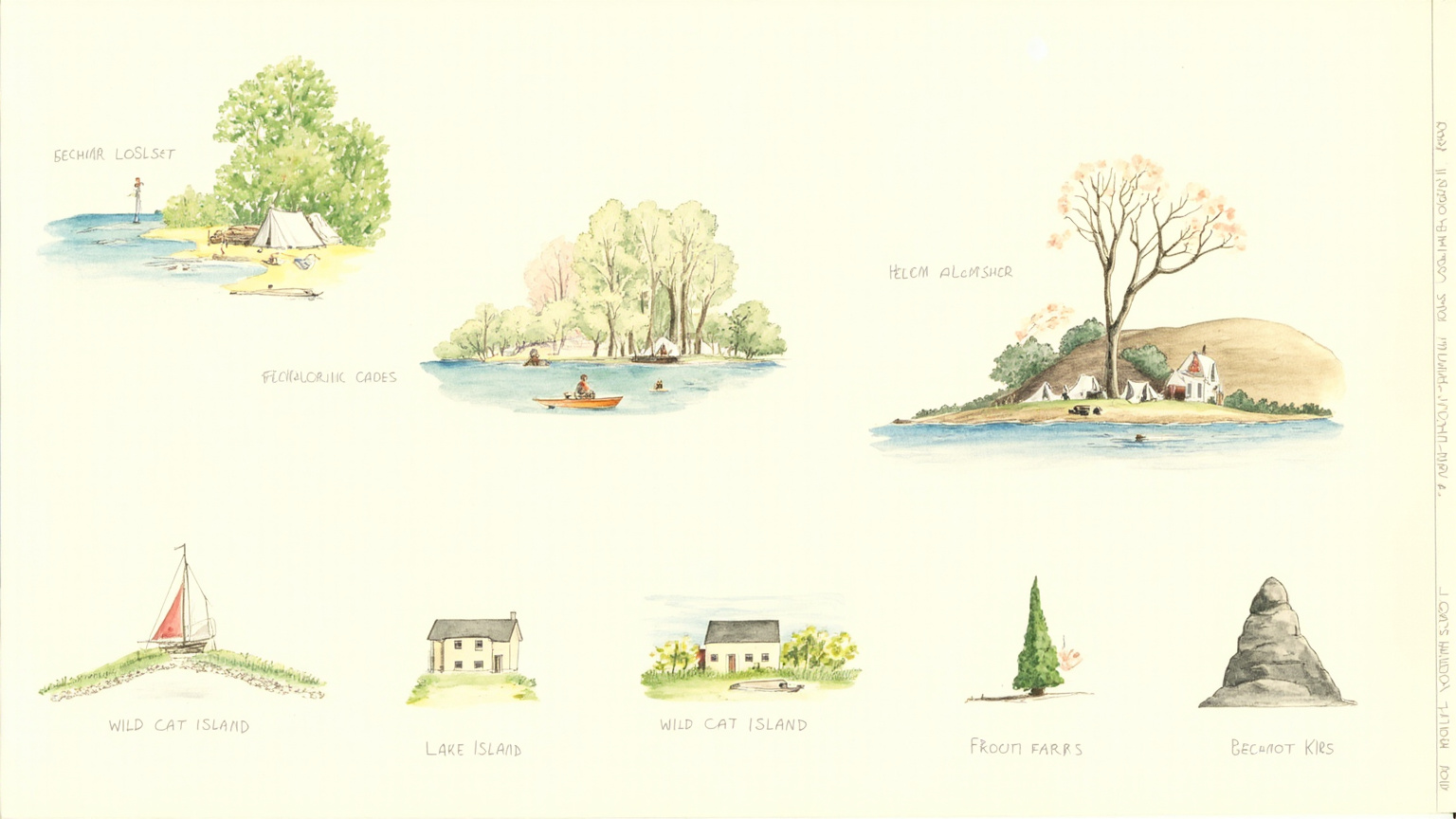
The first movement is the handover of the rules. Before their parents leave for an appointment down south, the four children are sent to stay at their great-aunt's house in the Lake District, with a set of sailing rules left behind: wear lifejackets at all times; never capsize without an adult present; always sail in company; keep watch over the camp at night. Their great-aunt passes on a telegram from their mother: Better drowned than duffers, if not duffers won't drown. It's a line as cold as a blade, but it draws the boundary exactly where it needs to be drawn. It is the most famous sentence in the whole book, and it is also how the adults hand down authority: I won't go with you, but I will put the rules in writing.
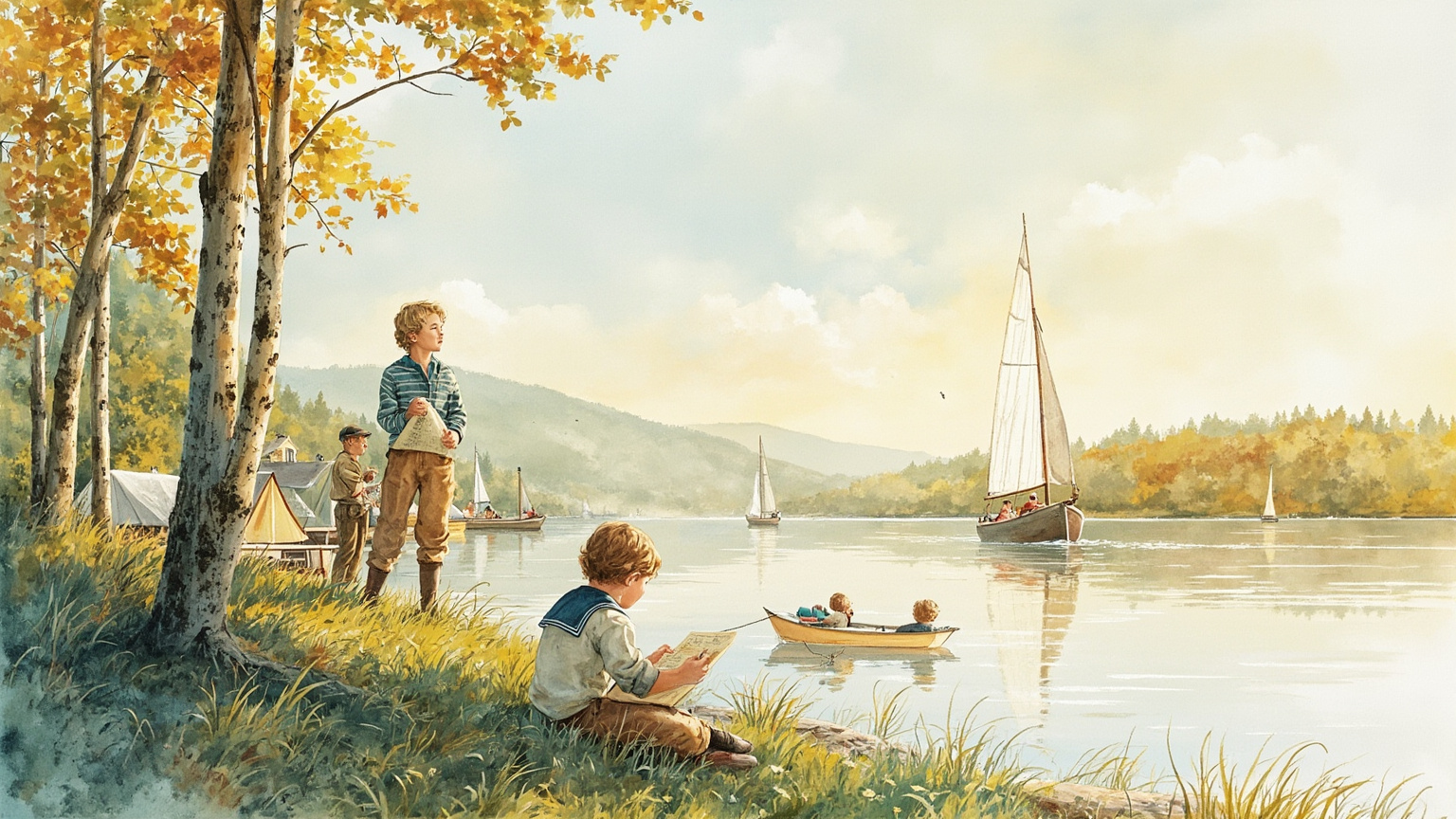
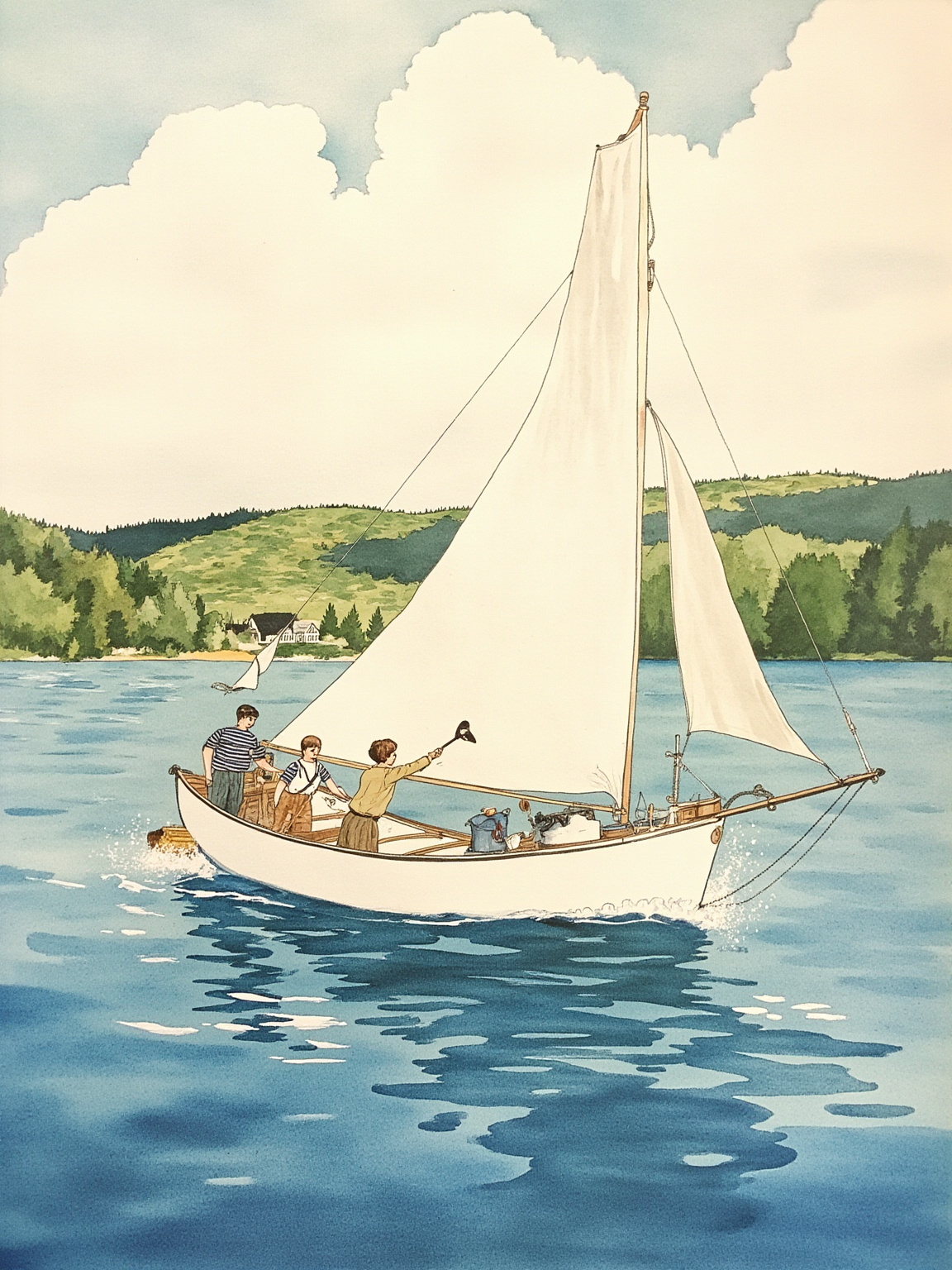
The second movement: John leads the expedition. Over three days, Swallow carries John, Susan, and Titty across the lake to camp on Wild Cat Island. Roger, too young, is left on the farm shore, watching through a telescope. The moment they land, Titty starts naming things: the lake becomes the South Seas, the lookout hill becomes the volcano, the camp becomes a ship at anchor. She opens the whole lake into a second world, and that world is still the real lake, the real island, real fires that have to be lit and real meals that have to be cooked. This kind of pretending is not an escape. It is the quietest and sturdiest engine in the book.
The third movement brings in the other children. Nancy and Peggy sail up in the larger Amazon to issue their challenge, and on the island the standoff between the two families turns into negotiation: who fires first, how prisoners are treated, how the night watch is split, all of it argued out. The way Ransome writes this negotiation is worth noticing. He never lets either side cheat. Every line is pitched at a child's level but carries the full weight of a treaty. It is a rare moment in English children's fiction where children recognize each other as equals.
The fourth movement is the liveliest stretch in the book: the battle on the water and the campfire evening that follows it. Both sides fight by the rules they negotiated themselves, how many hits count as a win, how prisoners must be treated, how the spoils are divided. By the time the campfire is lit, they talk more like friends than enemies. The battle itself is restrained, no real weapons, only the shadows of sails, signal flags, and shouting as the boats come alongside. What matters is that Ransome makes the outcome fair: losing carries no shame, and winning comes with no gloating.
The fifth movement follows Titty's whaling-ship game, which she carries forward on her own. Alone on the island, she builds an entire second world, the Caribbean, the South Seas, a lookout that might erupt as a volcano at any moment, or a whaling ship chasing a pod across the ocean. This is where Ransome's handling of pretending is at its best. He never mocks Titty; he writes her as a serious sailor. The moment she names the lake is the quietest and most magical page in the book, an English lake that is, at the same time, an ocean.
The sixth movement brings the adults back for one last appearance. Curious about a large house across the lake, the children go to scout it out and discover it belongs to an old admiral who has actually seen battle. He is kind to them and makes no move to take over their order of things. He exists only as the great figure of the lake, brought briefly back into the picture before stepping out of it for good. From beginning to end, the order the children live by is one they grew themselves.
The seventh movement closes things out. The treaty is signed, the battle is settled, the camp is struck, and the children return to the rules their parents left behind. The summer ends without a single accident on the lake, not because there was no danger, but because the rules held. This may be the one thing the book most wants to say: children can grow up on their own, as long as someone has written the rules down first.
The book's basic stance is that adults step out of the frame. The parents do not chaperone in person; they make the rules clear through a telegram and a note, and leave the rest to a stand-in grown-up. An old sailor watches the dock, the great-aunt calls the children in for meals, and even the old admiral in the scouting episode is only passing through. The whole lake is a stage carefully cleared for children to hold their own councils, keep their own watches, negotiate their own treaties. This way of lifting childhood up to the same level as the adult world is the deepest reason the book has lasted.
The other thing the book is about is the double layer of imagination and reality. Titty's kind of pretending, calling the lake the South Seas, the lookout the volcano, does not deny reality. It opens reality into a second world. This is the agency that play gives children, and it is why the book never reads like a story about foolish kids. Ransome treats play as a serious matter, without mockery and without discount; the children's treaties and battles carry real weight on the page.
The adults will not go out on the lake with you, but they will put the rules in writing. That is what this book is really saying: children can grow up on their own, as long as someone has written the rules down first.