Swann's Way (Du côté de chez Swann) · Companion Guide
在斯万家那边
一块泡在茶里的玛德莱娜蛋糕,唤回了整座贡布雷的童年世界;在焦灼的等待与渴望中,记忆的迷宫缓缓开启。
A Little Cake Soaked in Tea
A hand breaks off a piece of madeleine cake and dips it in lime-blossom tea. The moment the spoon reaches his mouth, the narrator goes still — all of Combray comes flooding back: the corridors of the provincial house, the murmur from his aunt's bedroom, the two walks, an entire childhood. Nobody summoned the memory. This unremarkable little cake knocked on the door itself. It is the most famous passage in the book, and the key to understanding Proust: he is not writing a memoir. He is writing the mechanics of memory.
More precisely, a specific kind of memory — the kind that needs no deliberate summoning, that taste or smell can haul back whole. The opening scene takes place years later, when the narrator is already a grown man; that vantage point, starting in the present and reaching back into the depths of childhood, runs through the whole book.
What Kind of Book This Is
Swann's Way is the first volume of Proust's seven-volume In Search of Lost Time, published in France in 1913 under the title Du côté de chez Swann. It landed to a lukewarm reception and only later came to be treated as one of the founding works of modernism. The method is unusual: almost no plot in the conventional sense, no complete story arc. The whole book behaves like a mind awake, circling back again and again through smells, tastes, flowers, light, place names. Described that way it sounds like a trance. Reading it feels startlingly lucid.
What Proust can do is turn a spoonful of tea and a piece of cake into the resurrection of an entire world.
A Sensitive Child, and the People Around Him
The book's vantage point belongs to the boy who spends his summers in Combray — the narration is first person throughout, though in this volume he remains an unnamed boy. His world is small: a mother he adores and craves approval from, built around the nightly ritual of her goodnight kiss; Aunt Léonie, bedridden for years and feeding on her own imagined illnesses; Françoise, the family's servant, capable and rough-handed, tender with the family and merciless toward the kitchen maid under her; a grandmother of exacting taste who despises anything vulgar. These are not a supporting cast. They are what fills Combray out into a household of smells and rules.
The child's world extends past family. Monsieur Swann is an old friend of the household — a wealthy Jewish connoisseur of art who moves between aristocratic salons and bourgeois drawing rooms, and it is Swann who eventually carries the whole of Paris into this provincial childhood. A few years further on, in the children's playground on the Champs-Élysées, the boy will run into the girl he falls for — Gilberte Swann, though at that point she is just another child. A first love that hasn't happened yet is already on its way.
The Nightly Ordeal: Waylaying Mother on the Stairs
Every evening in Combray begins with a goodnight. After dinner his mother goes upstairs, and the boy's whole ordeal goes with her — he has to wait for her to stop by and kiss him on her way up. On this particular evening Swann is visiting, and the boy is sent to bed early. He doesn't sleep. He creeps down to the turn of the staircase to waylay her. He knows he'll be punished if he's caught, and he's even more afraid that she'll follow the house rules, kiss him quickly, and leave him alone in the dark. Instead his father unexpectedly gives way. That night his mother stays, with him, until it's nearly light.
This is Proustian childhood time: the longest night of a boy's year is the distance between slipping out of bed and his mother sitting down beside him. Nothing happens in the world outside; the world inside nearly collapses. The craft here is easy to miss — Proust never shows us the instant his mother turns back. Instead he keeps pulling the camera toward and away from the boy's hand gripping the stair rail. The anxiety is physical, not psychological.
That scene of waylaying his mother is also where the emotional life of the childhood section begins. The anxiety of that night, and the small victory that follows it, gives him his first sense that waiting is itself a kind of possession.
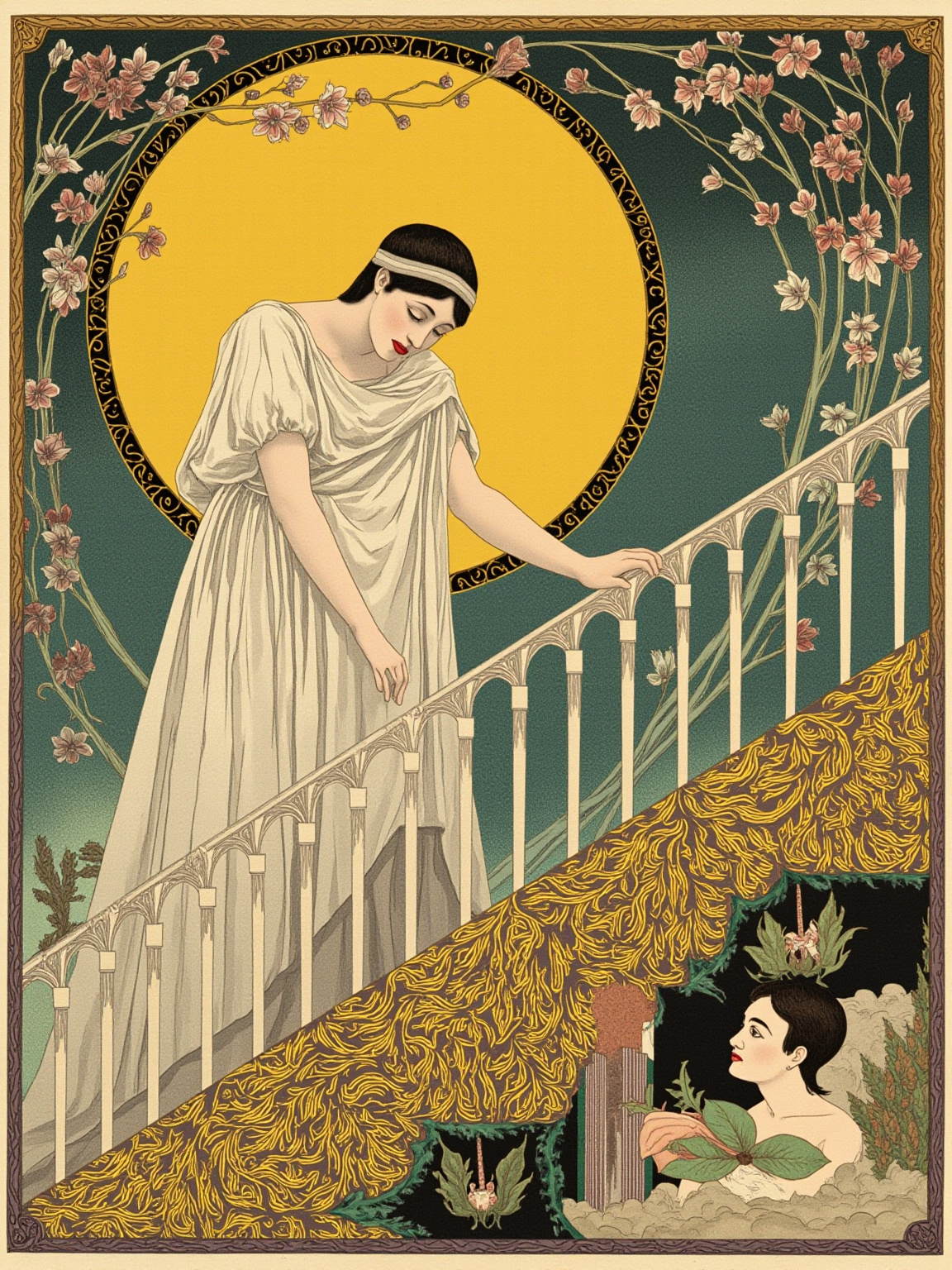
My agony was soothed; I let myself be borne upon the current of this gentle night on which I had my mother by my side.
我的痛苦平息了。我放任自己沉浸在这温柔的夜色中,母亲就在我身边。
原文金句 · 母亲陪伴之夜
Hawthorn Hedges and Water Lilies: Combray's Two Walks
Life in Combray walks on two legs. One way is Swann's way — past a hedge thick with hawthorn blossom, the air sweet to the point of cloying, where the boy catches his first distant glimpse of a girl walking by, the same Gilberte he will meet again years later on the Champs-Élysées in Paris. The other is the Guermantes way — along the Vivonne, its surface scattered with water lilies, leading toward a noble château he can never quite reach. In the boy's mind the two roads come in two colors: one is flowers, the other water; one is the girl next door, the other imagined nobility and adventure.
The texture of daily life comes from the women of the house. Françoise is the soul of the kitchen, a superb cook, fiercely loyal to the family and hard on the kitchen maid under her — she is Combray's everyday life made flesh. Aunt Léonie never leaves her bedroom, living instead off the gossip brought to her by servants and visitors, and the whole house turns around that bed. Between the two of them, Combray is both a home and a slowly turning clock.
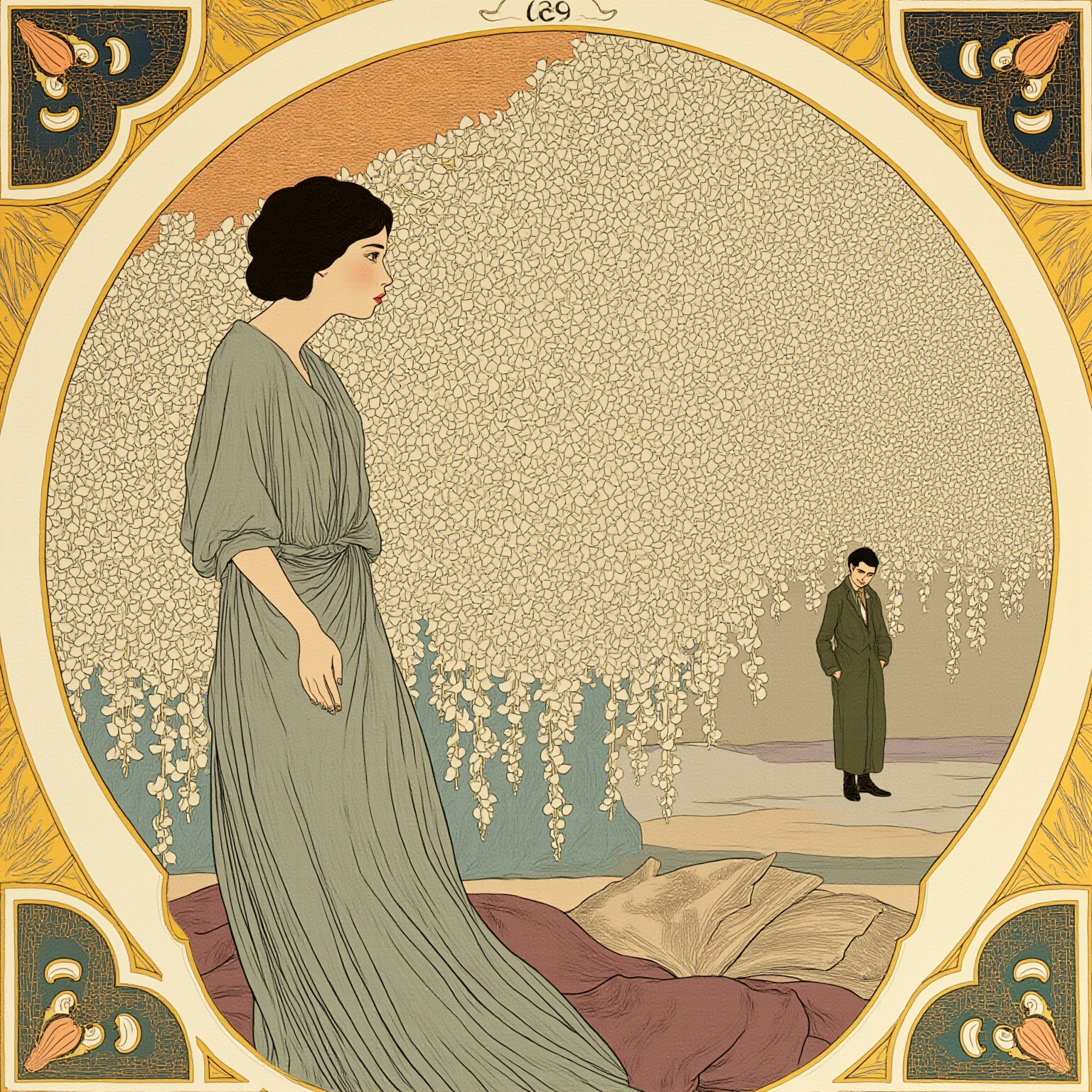
So on by degrees, until Françoise and my aunt, the quarry and the hunter, could never cease from trying to forestall each other's devices.
如此日复一日,弗朗索瓦丝和姑婆,就像猎物与猎人,无休止地彼此算计。
原文金句 · 贡布雷宅院日常
The Window at Montjouvain: Desire's First Appearance
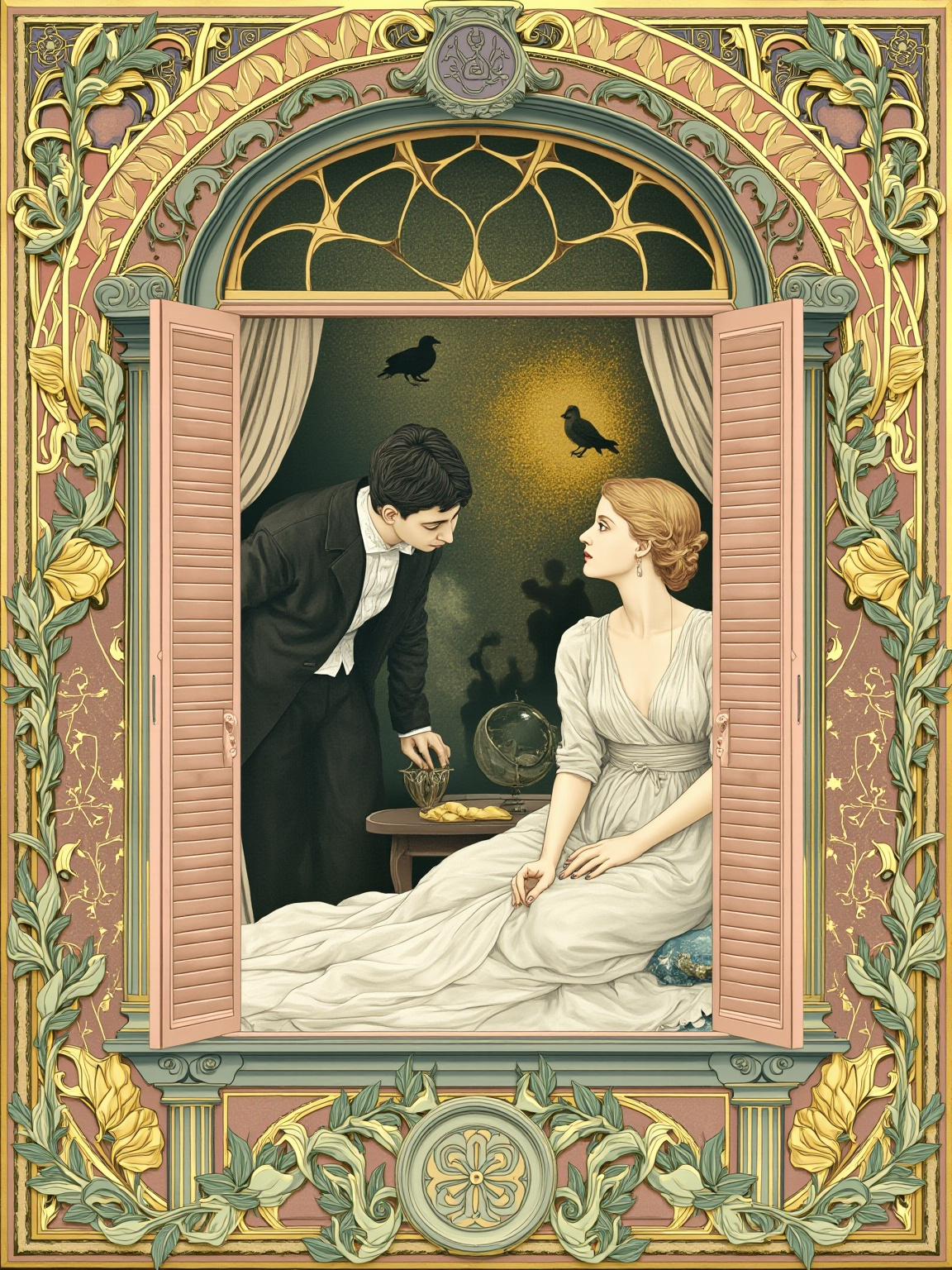
On a country walk with his family, the boy passes a lit window at Montjouvain. Inside, he catches sight of Monsieur Vinteuil's daughter and her companion staging a small profanation in front of her dead father's photograph — an intimate game laced with humiliation. It is a scene he was never meant to see, and one he cannot unsee, the most glaring act of voyeurism in the whole book. What it teaches him is that desire often needs to violate something sacred to feel more alive. Love and cruelty live close together.
Swann in Love: A Novella Told in Flashback
The register shifts without warning. The Combray section isn't even finished when Proust pulls the narrative back to years before the narrator was born, to tell Monsieur Swann's own story — his falling in love with Odette de Crécy. Swann has moved through high society so long that his taste has gone almost cruelly exacting; Odette, at first, isn't remotely his type. It is Madame Verdurin's bourgeois salon, the little clan, that keeps throwing the two of them together. Early in their acquaintance they attend a concert together, and a small phrase from a Vinteuil sonata catches Swann off guard. That brief phrase becomes, from then on, the most private code between them.
The trouble lies in Odette herself. When Swann is introduced to her, she's a woman of somewhat clouded reputation, and he doesn't expect her to draw him in. But in the dim, suggestive light of the Verdurin drawing room, he sinks further in, little by little. The strange beauty of this love is that it is almost entirely a product of Swann's own imagination — the woman he falls for is the one he invents around her, not the one sitting across from him.
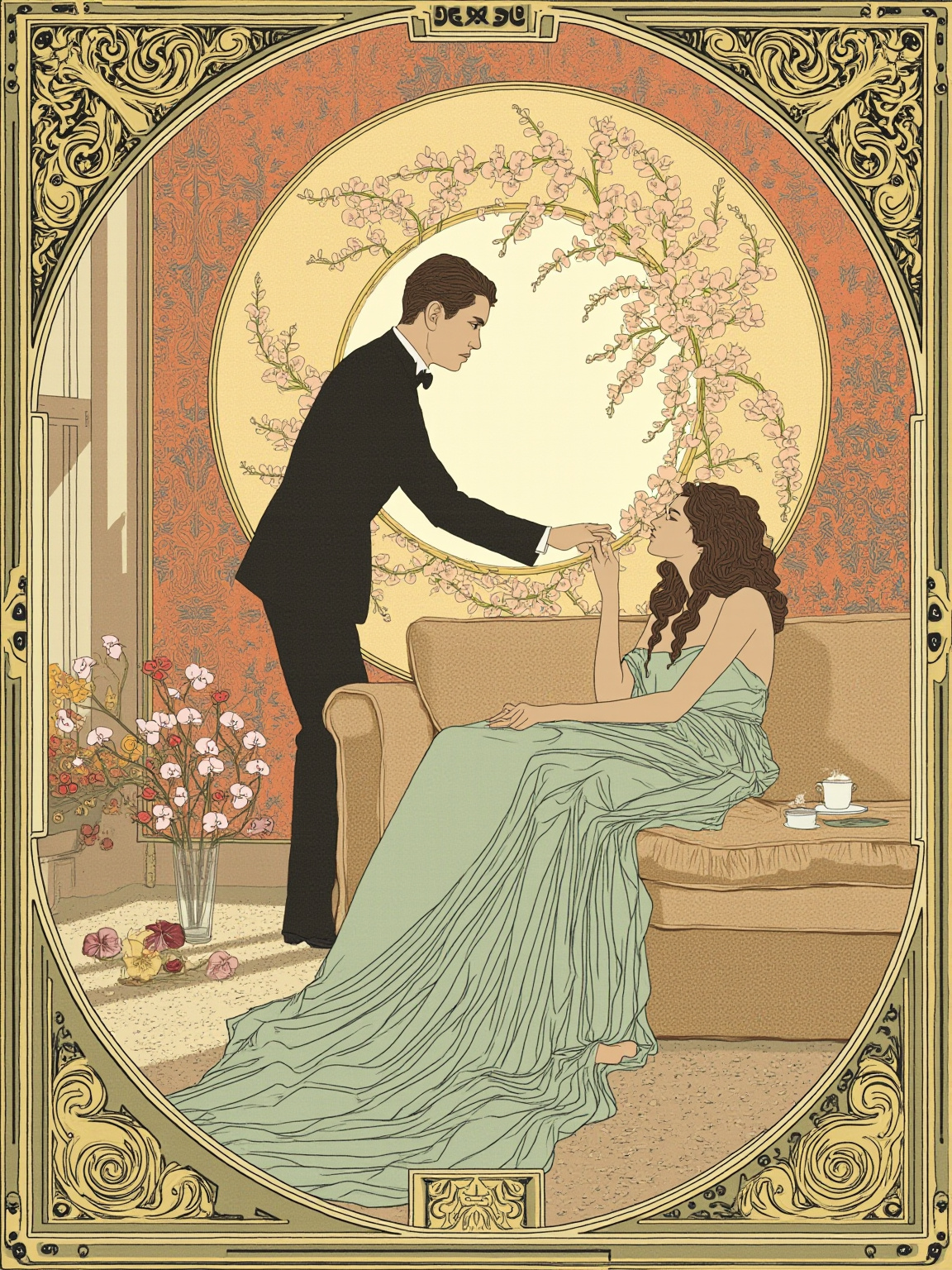
And so, night after night, she would be taken home in Swann's carriage; and one night, after she had got down, and while he stood at the gate and murmured "Till to-morrow, then!"
于是,夜复一夜,她由斯万的马车送回家;有一晚,她下车后,他立在门口低语:‘那么,明天见!’
原文金句 · 斯万坠入情网
Stretched out over its full length, the story demonstrates a brutal equation: the deeper the love, the deeper the suspicion. Swann takes to standing under Odette's window late at night, convinced she is involved with someone else — at one point he even suspects an affair with another woman. He knows perfectly well how absurd the jealousy is, and he cannot stop. Once his rival Forcheville enters the picture, the Verdurin clan grows cool toward him, and Swann finds himself increasingly an outsider in a circle that once took him in. By the time the story closes, Swann has arrived at a bitter recognition: he spent years that belonged to art on a woman who was never even his type, and the piece of music he loved most has gone silent for him.
This section deserves to be read on its own terms: a self-contained novella lodged inside a much larger book, nearly complete enough to stand apart from it. Proust isn't writing about a man deceived. He is writing about love as a disease the sufferer manufactures himself, patient and symptom in one body. It has nothing to do with the familiar plot machinery of a rival, a misunderstanding, and a tidy reconciliation.
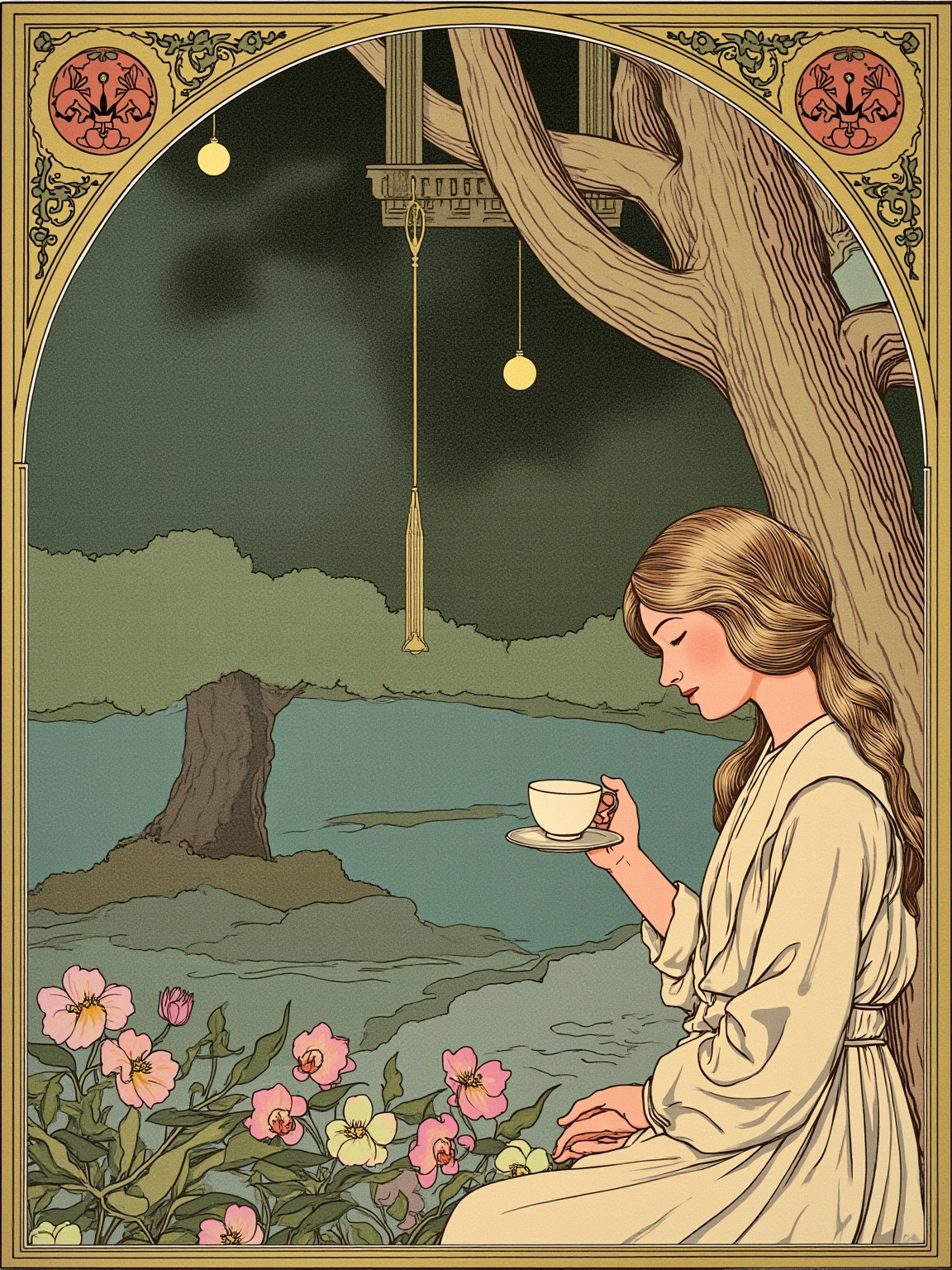
The effort exhausted Swann's brain, until, passing his hand over his eyes, he cried out: "Heaven help me!"
这努力掏空了斯万的大脑,他用手遮住眼睛,喊道:‘天哪!’
原文金句 · 嫉妒的深渊
The Name of a Place
Back to the main thread. A few years older now, the boy meets Gilberte Swann in the children's playground on the Champs-Élysées in Paris — he doesn't yet know she's Swann's daughter, only that something about her surname feels charged. He falls in love with her, and at the same time keeps turning over what that name Swann could possibly mean. Place names and people's names hold more magic for him than the actual people and places they belong to. What Proust wants to say here is that desire is often aimed at a name, at a costume, at a sense of distance, rather than at the person underneath.
The ending is the least expected part of the book. An aging narrator looks out over the Bois de Boulogne — the horses, the fallen leaves, the ruts in the path — and this real, physical wood no longer summons back the one in his memory. He has to admit that the forest of his youth was, in some sense, more real than the one in front of him now. The true subject of this volume has never been a dramatic event. It has been the workings of memory and perception themselves. Nothing happens outside. Everything happens within.
What This Book Is Actually About
Read the whole book from opening to close and it circles three interlocking arguments. The first is memory: our past is never preserved intact, only recreated in the instant some sense triggers it, and what gets rebuilt never quite matches what actually happened. The madeleine and the lime-blossom tea are only the most famous examples — the cloying sweetness of hawthorn, the lukewarm tea, even the faint aristocratic ring of the name Swann, each of them can drag a whole sleeping stretch of life back into the present. The second is jealousy and desire: Proust writes Swann's love affair as a costly act of self-consumption, proof that the people we fall for are often our own imagination's work, and that the more we suspect them, the further out of reach they slip. The third is snobbery in all its forms: from the drawing rooms of Combray to the Verdurin clan to the Guermantes family across the river, unreachable and grand, people at every social level find their own way to hide or reveal their longing for a higher rank.
Why has this book been remembered for nearly a hundred years? It belongs to that rare category of book you can't get out of once you're in, and it changed how novels got written for a century afterward. Proust pulls stream of consciousness away from the density and unease of a writer like Joyce and turns it inward instead. What interests him is memory that arrives unbidden, an entire childhood surging up uninvited, a whole life waking because of a smell caught somewhere in the body. He proves that a novel's power doesn't need an external event to carry it. Make the workings of consciousness itself the protagonist, and plot steps aside for texture.
Why It's Worth Reading the Text Even After You Know the Plot
When I closed the book, the strongest feeling wasn't that I understood the story. It was that a smell, a beam of light, a name had carried me along for a stretch. The plot has only a handful of real turning points, but what Proust does is let the narrator's mind circle each one over and over, doubling back, wandering off, coming home again. What the reader is invited into isn't a story so much as that circling motion itself. There are three specific reasons to go read the text after this. First, the physical sensation of the hawthorn hedges, the water lily river, the lime-blossom tea is something no summary can carry across intact. Second, the way that one night of waylaying his mother on the stairs stretches into page after page of anxiety — how the long sentences bend, where the rhythm breaks, which adjectives he deliberately keeps and which he cuts — you can only watch that craft at work by reading the original prose. Third, in Swann's jealousy he names a mechanism almost everyone recognizes and almost no one can put into words, the pleasure of watching someone else suffer, the strange thrill of suspicion itself. Knowing the spoiler in advance only makes you more curious how he gets it onto the page. Knowing where it's going is exactly what opens the door to the text.
Before you open it, the safest advice is not to rush. Proust isn't a book that rewards speed. The less you hurry, the more interesting he gets.
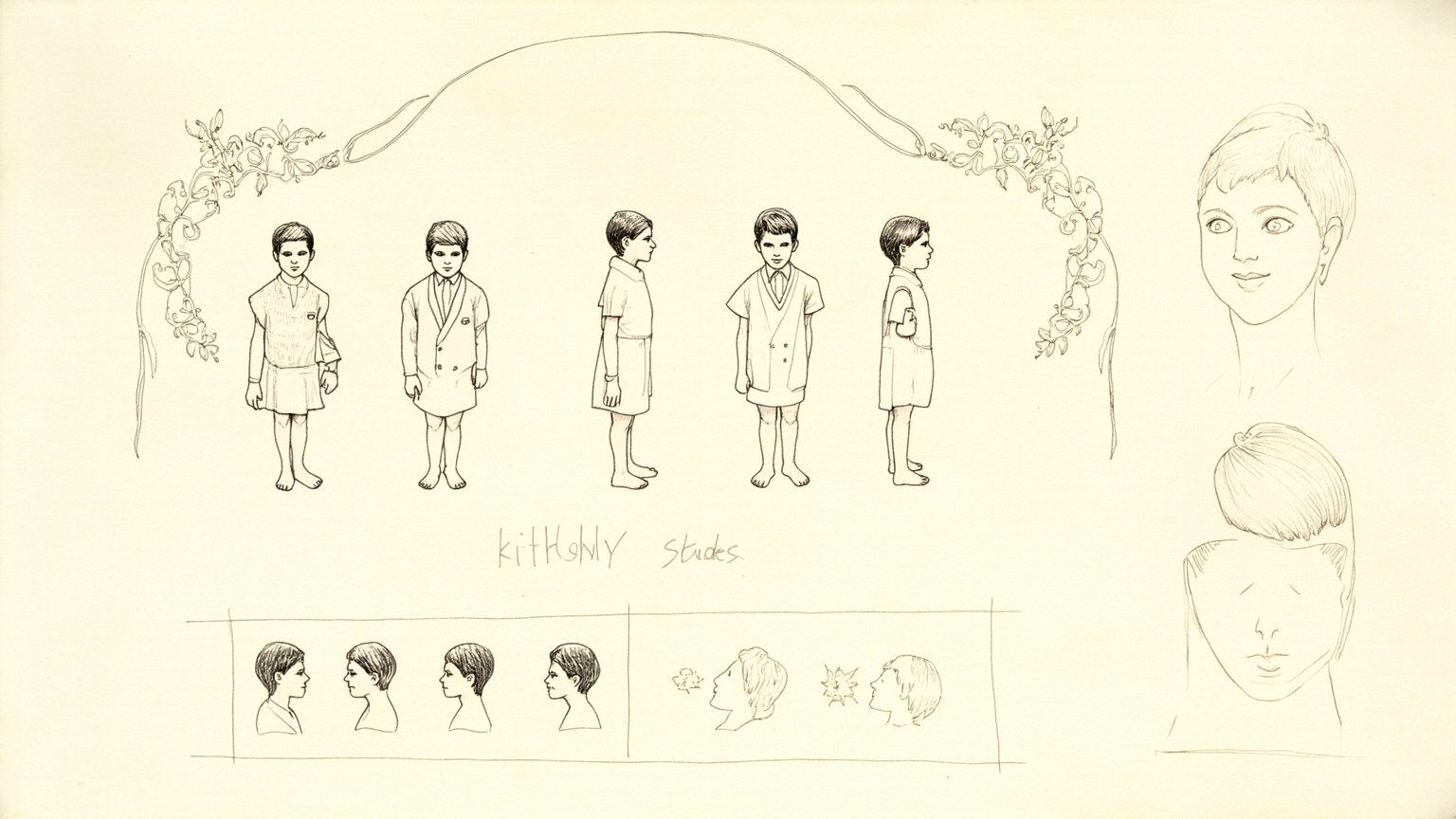
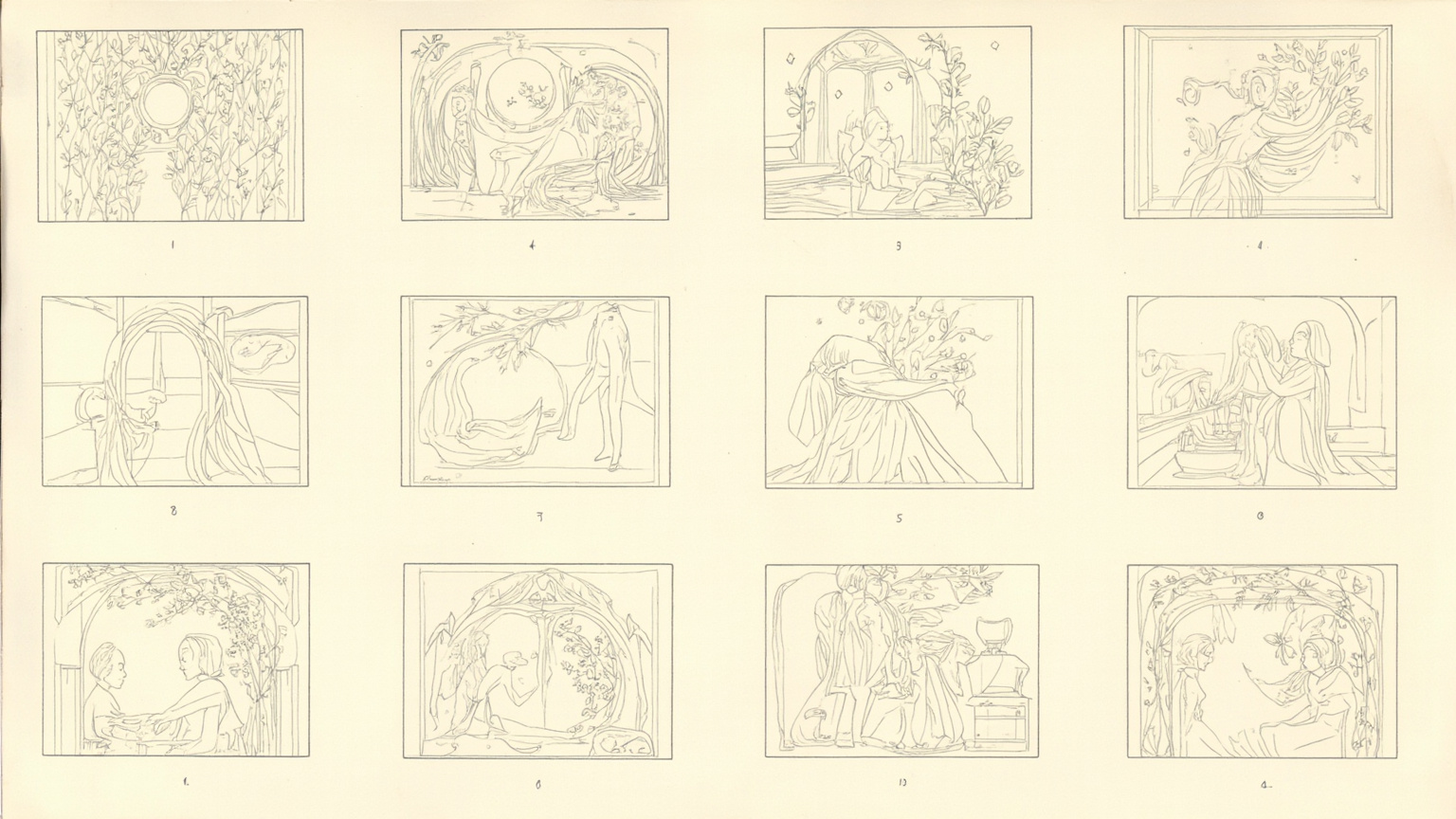
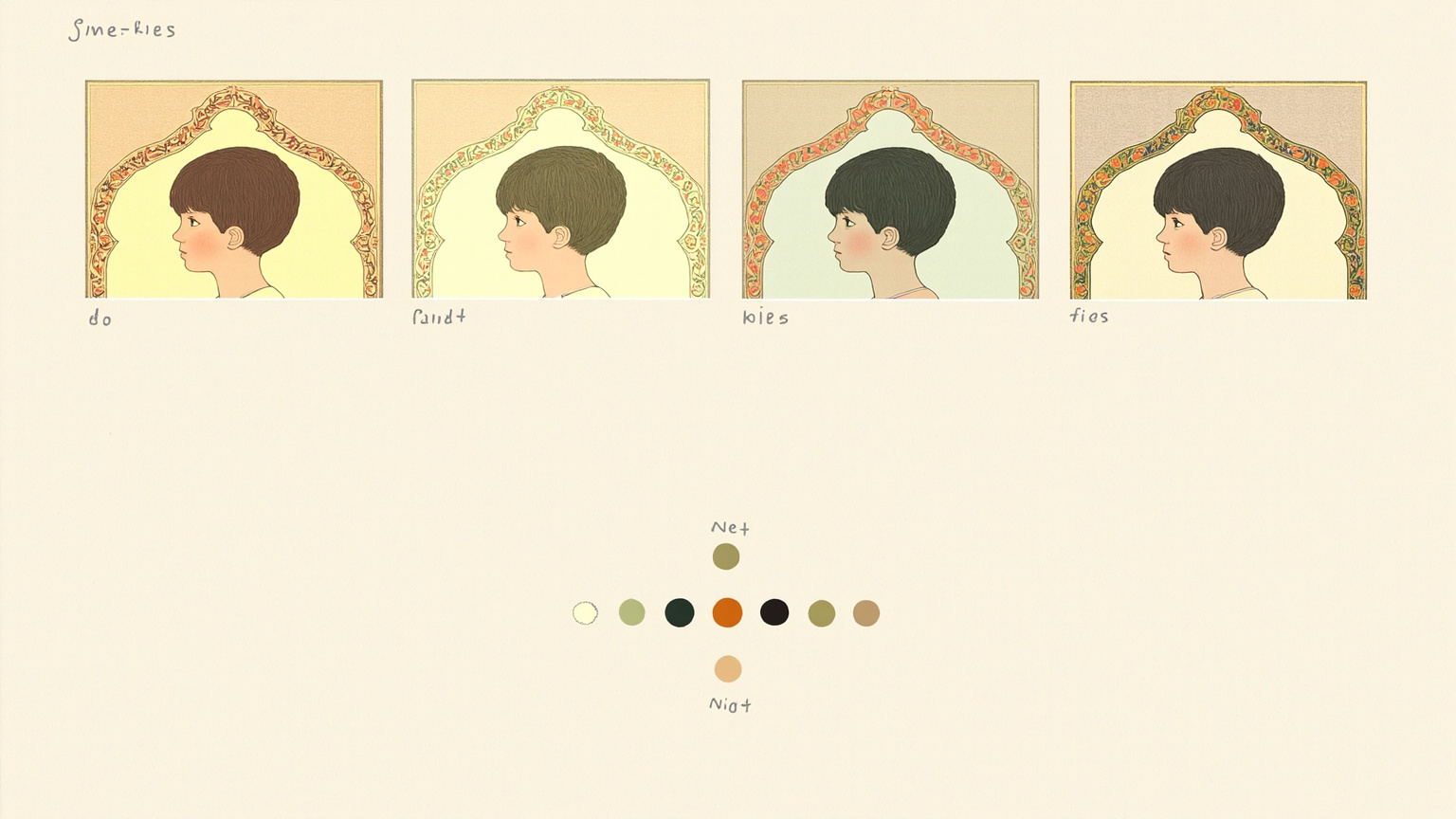
Art Direction4 plates
Before the guide was written, this book got a visual foundation — every illustration you just read grew out of it.