The Tale of Heroic Sons and Daughters (Ernü Yingxiong Zhuan) · Companion Guide
儿女英雄传
一个旗人世家子弟以说书人的酣畅,写女侠弹弓救人、终归礼法的旧式团圆
A donkey, a slingshot, an old-fashioned reunion
A lean donkey, an iron slingshot, a young woman in a blue shirt climbing over the broken wall of Neng Ren Temple — this is probably the most memorable opening in any late Qing vernacular novel. The Tale of Heroes and Heroines doesn't start with a pretentious preface; it lets you see a female knight-errant descend from the heavens. Her name is Thirteen Sister, birth name He Yufeng. Her father was murdered by General Ji Xiantang, and she roams the martial world alone, riding a donkey, carrying a bow, hunting down enemies and rescuing travelers. One thread is vendetta in the Jianghu, the other is romance between men and women — the "heroes" and "heroines" in the title refer to these two storylines braided together.
This book was printed in 1878 at the Beijing Juzhen Tang publisher. The author is Wen Kang, a Manchu from the Bordered Red Banner, who used the pen name Yanbei Xianren — a son of a Banner family whose official career didn't work out, so he turned to writing long chaptered novels. His voice is that of a storyteller, opening with "Dear readers," carrying the straightforward vigor of a teahouse in the marketplace. After The Seven Heroes and Five Gallants, he pulled the chivalric novel toward family ethics — after you save someone, you still have to help them round out their life.
The characters in this book
An Ji is the male protagonist, a typical delicate scholarly gentleman. His father, An Xuehai, was a county magistrate overseeing river engineering. Because he refused to embezzle public funds, his superiors framed him and threw him into prison. An Ji gathered what silver his family could spare and set out south from Beijing with the old servant Hua Zhong to ransom his father. Hua Zhong fell ill halfway, leaving An Ji to travel alone — a young master who couldn't even ride a steady horse, carrying a bag of silver on the road. The image alone makes you fear for him.
He Yufeng is Thirteen Sister. Her father, He Qi, was murdered by General Ji Xiantang. She changed her name, rode a donkey, carried a slingshot, and wandered the martial world. In Chinese popular literature, when a story reaches this point, most female characters wait to be rescued — she reverses it, becoming the one who rescues others. Zhang Jinfeng is the gentle daughter of the old villager Zhang Lesheng. She was kidnapped by a wicked monk at Neng Ren Temple, waiting to be rescued. Another character impossible to ignore: Deng Jiugong, an old hero from the green forest, Thirteen Sister's friend across generations. It was through him that An Xuehai later found people.
First half: a bag of silver, a ruined temple
An Xuehai's trouble began with the river engineering accounts. River engineering was the most lucrative and dangerous post in the Qing dynasty — water projects were awash in silver, and officials who dared not line their pockets were charged with some crime. An Xuehai refused to collude in corruption, was framed and imprisoned, the charges laid out in painstaking detail. An Ji was given this urgent task, packed all the silver his family could gather, and headed south with Hua Zhong. Silver was the capital for rescue, but also the root of trouble — the difficulties this bag of silver attracted on the road were more bothersome than his father in prison.
Huazhong lies sick at the inn, and An Ji travels alone through desolate mountains and wild paths—no village ahead, no settlement behind. Nengren Temple lies along this route—its name suggests a Buddhist sanctuary, but it's actually a black temple, where evil monks, tempted by wealth, capture both An Ji and Zhang Jinfeng and her father. Wenkang tightens the pace here: on one side, people bound in the house; on the other, a female knight-errant riding on a donkey, two threads drawing toward a single point.
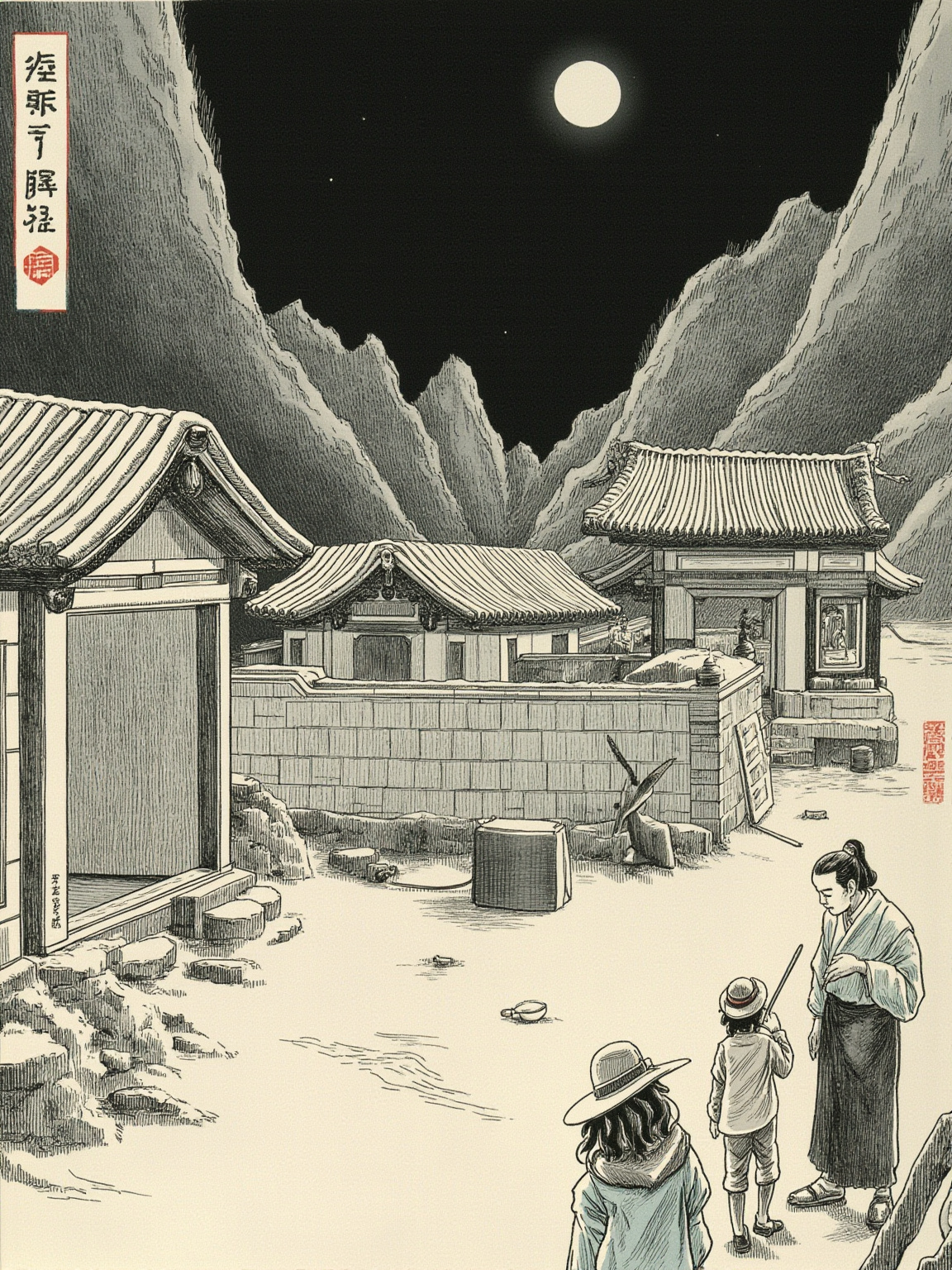
Clutching the family silver, the young master pressed on alone into the wild hills—while behind him, a villain's blade already gleamed in the ruined temple.
公子独自一个,带着那袋银子往前走,却不知前头荒山古寺里,已有人磨刀等着他。
金句 · 能仁寺劫难前的一段赶路
Nengren Temple: one shot from the slingshot, and the old scores take a back seat
Thirteenth Sister arrives. She climbs over the wall—not bursting through the door, but moving softly, footsteps on the rooftops, the way someone from the jianghu does it. She draws her iron slingshot, fires a few iron pellets, and the evil monks fall where they stand. First she frees An Ji from his ropes, then she goes to rescue Zhang Jinfeng and her father. The slingshot is her main weapon, not a long sword or flying daggers—Wenkang is careful with this detail. The slingshot was passed down from her father, carrying memory, carrying grievance.
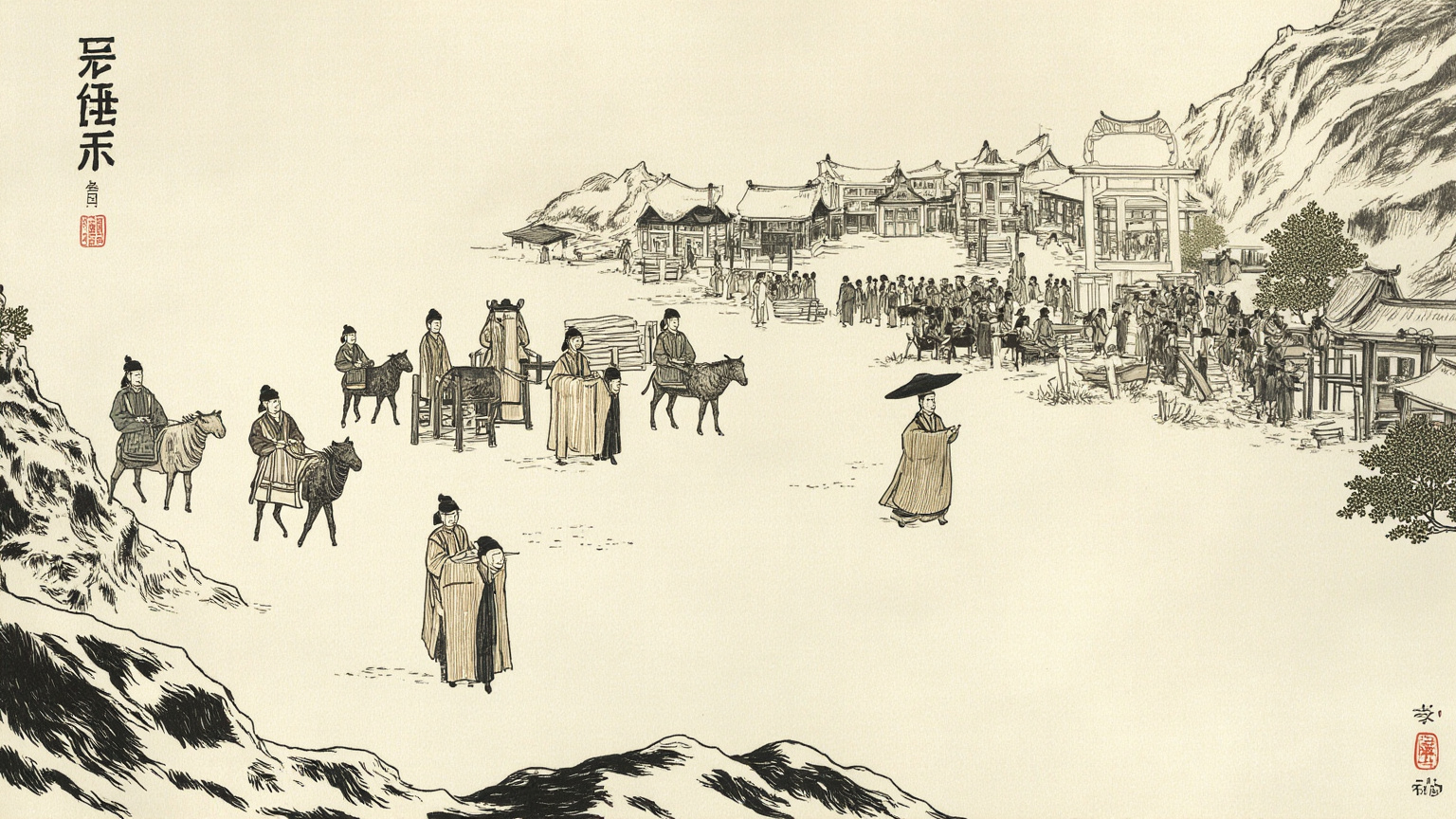
She dropped from the temple roof with an iron sling in hand—not to storm the gate, but to loose those whirring pellets before a single monk could stir.
她从屋脊上翻下来,铁弹弓一撒手,几个恶僧便应声倒地——这便是十三妹的出场。
金句 · 能仁寺破殿夜袭
After freeing them, she does something even less like someone from the jianghu: she immediately plays matchmaker right there in the temple, arranging the marriage between An Ji and Zhang Jinfeng. A young master who just escaped danger, a village girl whose face is still pale with fear—she decides for both of them, without a moment's hesitation in her eyes. This stroke is the linchpin of the book—a swordswoman doesn't only kill, she also sees people settled in life.
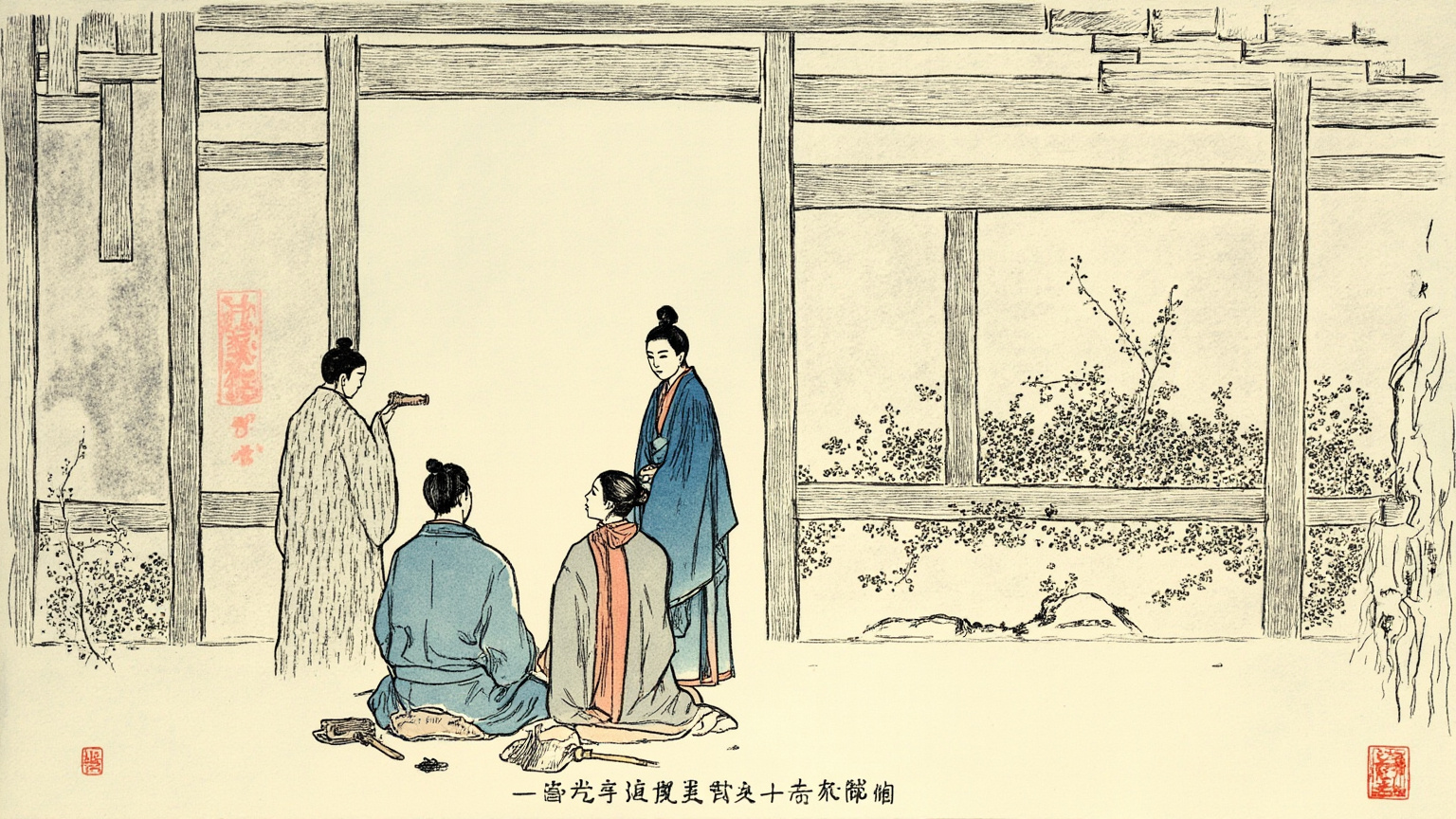
A woman warrior who has just slit a man's throat takes it upon herself to play matchmaker—no sooner are the victims unbound than she ties another knot.
刚把人从绳子里救出来,她便当场做主,把一对少年男女的亲事给定下了。
金句 · 能仁寺撮合订亲
Outside the temple, the group scatters in different directions. Thirteenth Sister doesn't go with them. She mounts her donkey and continues south, looking for Ji Xiantang. What she wants is the enemy's head, not a comfortable life. This parting is written lightly—Thirteenth Sister barely turns her head. Someone who has turned herself into a bow string won't suddenly start longing for days gone by.
Truth lands: the enemy is dead, the bow is set down
An Xuehai's wrongful case is later overturned. The moment he leaves prison he starts looking for Thirteenth Sister—not to thank her, but to pull her back from that road. The trail is handed to Deng Jiugong, an old hand at threading through difficulties, and finally He Yufeng's background is brought to light: He Qi was framed and killed by General Ji Xiantang, and He Yufeng is the orphaned daughter, carrying her father's death for all these years.
The second layer of truth is crueler—Ji Xiantang has already been executed by the imperial court. When An Xuehai tells her this news, Thirteenth Sister freezes first, then breaks into sobs. She has carried that bow for so long, only to discover someone else has already avenged her. This emptiness is worse than if the enemy were still alive. Wenkang doesn't have her draw a knife and seek death on the spot, nor does he have her turn to assassinate the enemy's descendants—he lets a female knight-errant weep in the Buddhist hall, and when the weeping stops, she dries her tears and starts thinking about how to live the next step of her life.
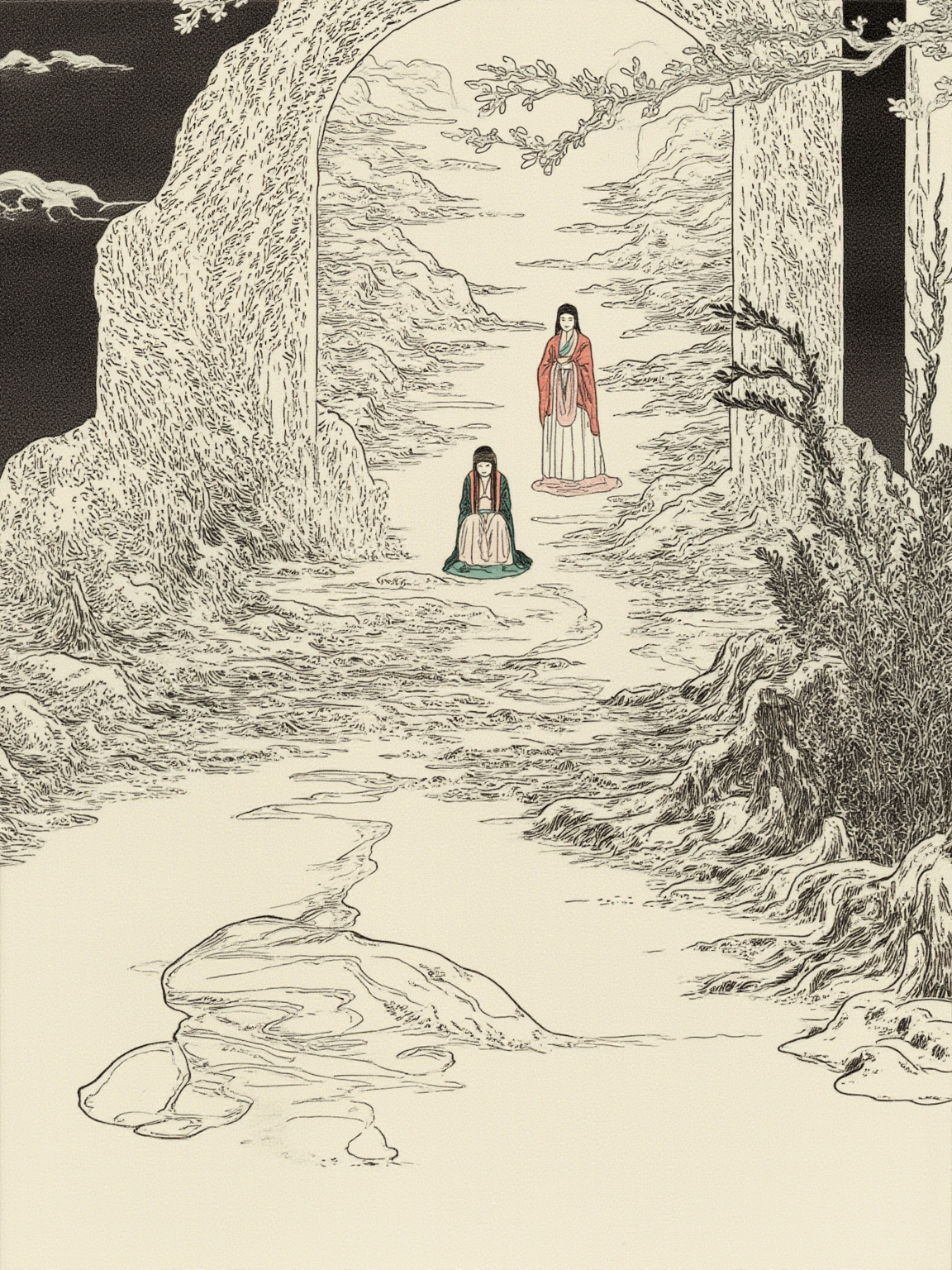
She had borne that sling on her back for years, only to learn the enemy was already dead—emptier than vengeance, and far harder to outlive.
她背着那张弓走了那么些日子,忽然听说仇人已死,那一腔悲愤反倒没了去处。
金句 · 仇人已死的痛哭一场
She set down her revenge, and with it, her bow. At An Xuehai's request, she resumed her birth name He Yufeng, buried her father's spirit, and became a person with a name and surname once more. This is the passage that stopped me cold — the real turning point for a martial arts hero is rarely whether the revenge is fulfilled, but what happens after the revenge is gone. Wen Kang offers an old-fashioned answer: she goes home.
The second half: daily life is harder to write than the jianghu
He Yufeng's return means the back half of the book must turn from blade and shadow into pots and pans. An Ji marries both He Yufeng and Zhang Jinfeng — one man, two wives — and this ending is written according to old-fashioned marriage norms. Each has her place: Zhang Jinfeng entered first, warm and prudent, managing the household; He Yufeng arrived later, bright and forthright. Together they hold up the An family. The one who bears the weight at home is Mother An — An Xuehai's wife, An Ji's mother, a gentle and steady official's wife who handles domestic affairs with clear understanding of duty, a traditional worthy woman. She commands the inner quarters and settles this former female knight-errant and the newly married daughter-in-law each into their slots in ritual and propriety, even arranging the morning and evening greetings and the sister-in-law addresses with care. Wen Kang writes with precision — that sense of order can only come from someone who has lived this life.
An Ji applies himself to his studies, passes the provincial examinations, then the imperial examinations, and receives an official post. An Xuehai and his son are models of loyal officials and filial sons; He Yufeng and Zhang Jinfeng are models of worthy wives. A family that nearly fell apart in prison rises to political success and flourishing prosperity — not through jianghu loyalty, but through the imperial examinations, through ritual and propriety, through every step planted on the moral order. The latter half extensively lays out the examination path and family ethics, as detailed as a ledger — this is the passage modern readers often skip. Yet Wen Kang treats it with complete seriousness. He wants the reader to see: when the knight-errant returns to her children, everything that remains is children's matters.
The first time I read the latter half, I found it tedious too — the rescues were thrilling, so why does daily life drag on? Looking back, I understand: he's writing exactly this. After the hero returns to her children, everything left is children's business.
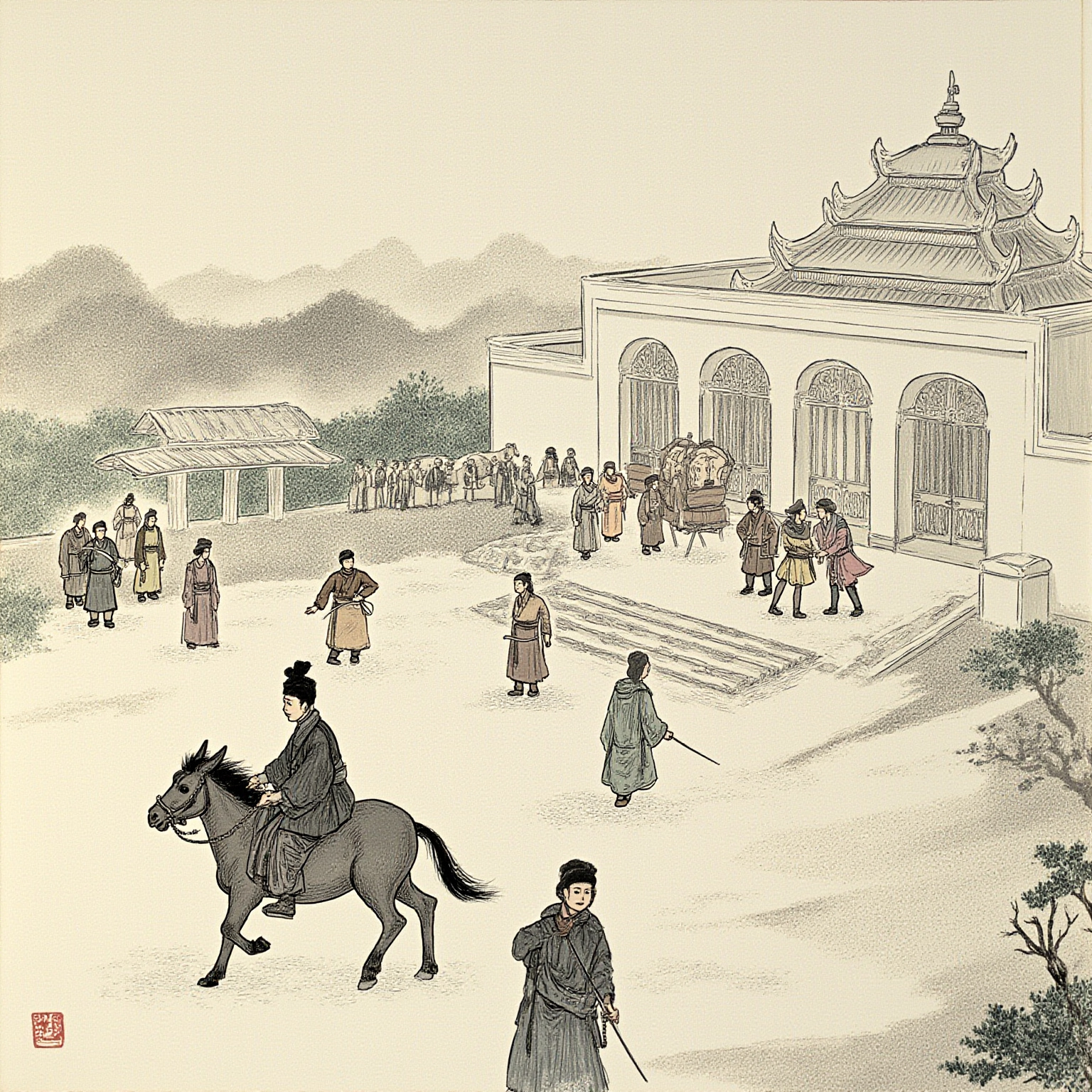
The sling that could save a night in a ruined temple cannot save the rest of her life—what comes after the bow is laid down.
弹弓救得了一夜,救不了一生;弓放下了,剩下的全是过日子的本事。
金句 · 后半部由江湖拐入家庭的转折
A few points on the craft
The storyteller's voice is this book's base color. Wen Kang is full of "ladies and gentlemen" and "now just how did that happen," with a light rhythm and strong visual sense — a fight scene can be broken into action, sound, and psychology in three steps. Reading it doesn't feel like reading a novel, it feels like listening to storytelling in a teahouse, hearing the crisp crack of the wooden gavel. This style was already declining in the late Qing, but in his hands it drew back a breath.
Structurally it follows "two threads merging into one": the hero thread is He Yufeng's revenge and her laying it down; the family thread is An Ji's marriage and career. The two threads collide at Nengren Temple, then merge into one in the An estate. Wen Kang's cleverness is in not letting martial righteousness overwhelm ethics, and not letting ethics cover over martial righteousness — he puts both into the same pot and stews them, and from that emerges a unique flavor.
Thirteen Sister's slingshot can save one night at Neng Ren Temple, but it can't save her own later life — what Wen Kang really wants to write about is the days after the slingshot is put down.
Is it still worth reading today?
Worth it — but you have to be prepared. This isn't a martial arts novel that keeps giving you thrills straight through; it suddenly slows down in the middle, swapping the slingshot for an abacus, the ruined temple for a grand household. If you only want to see Jianghu fights, the second half will drive you away; if you want to see how a female knight retreats from the Jianghu back into the family and gets rearranged by old-fashioned propriety, it gives you a rare complete example. Thirteen Sister is one of the earliest and most vivid female hero images in Chinese popular literature, but her final destination is still marriage — that tension is the book's real weight.
Reasons to read the main text
Commentary can make the story hang together, but it can't capture the way Wen Kang wrote Thirteen Sister with that mixture of pain and love. That scene where she cries — the plot summary makes it seem flat, but read in the vernacular and you see how he wrote, line by line, that numbing feeling when a grievance held for years suddenly vanishes. The family scenes in the second half are the same: knowing the outcome and then reading the text lets you see how he used a single dinner, a single form of address, to slowly build the word "home." Knowing the plot and turning to the book, that's when you can hear the storyteller's sighs hidden between the lines.
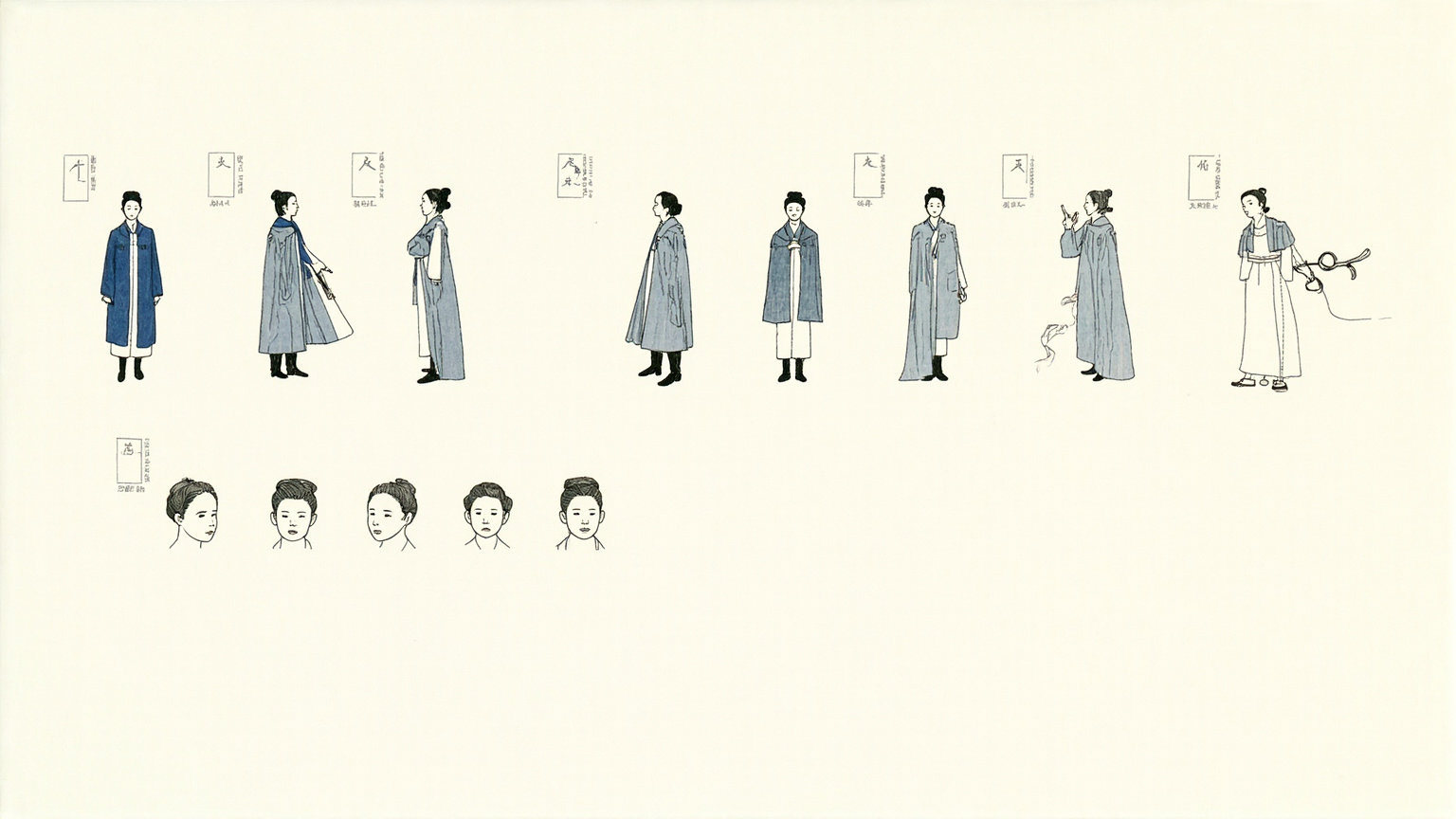
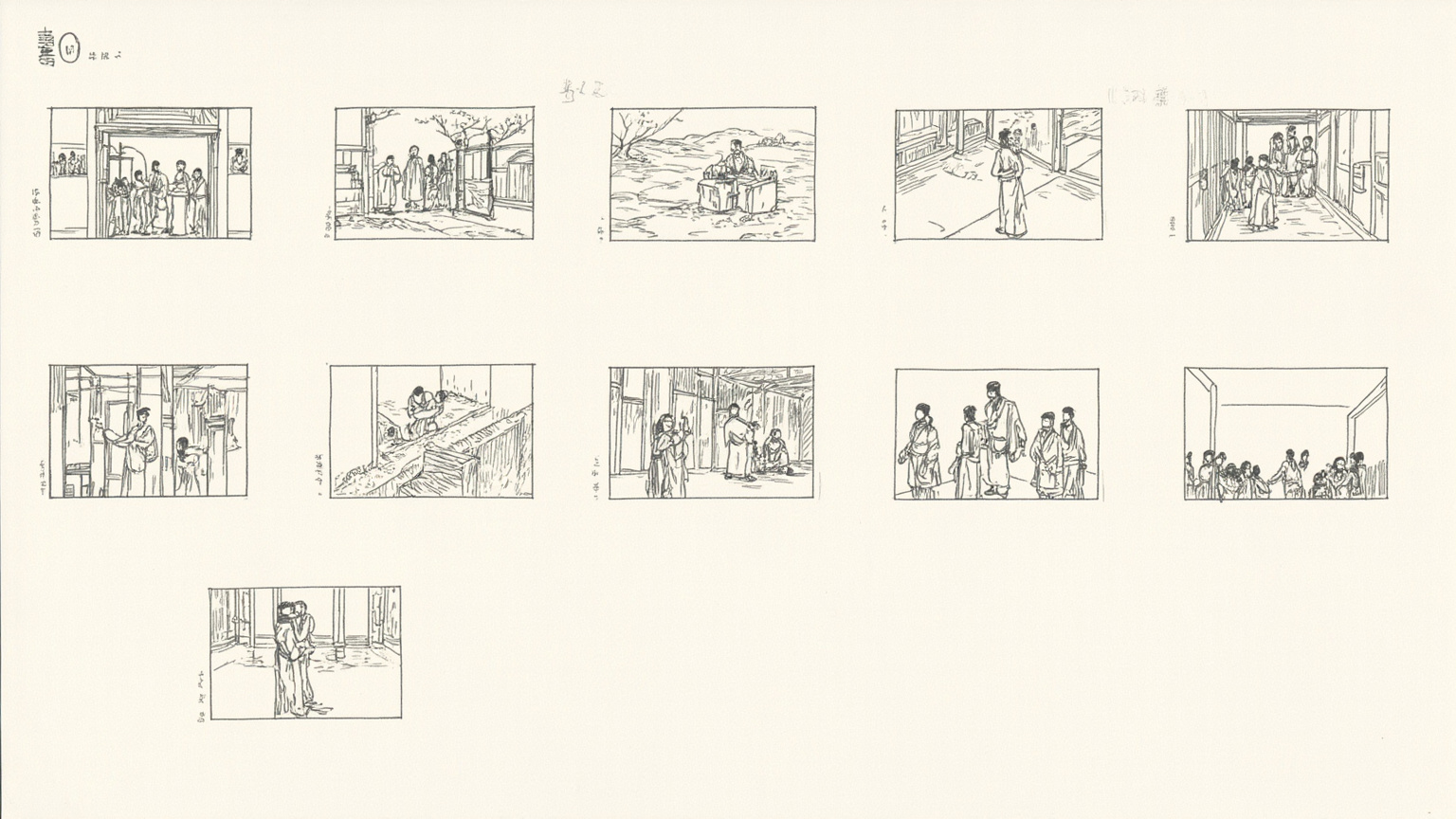
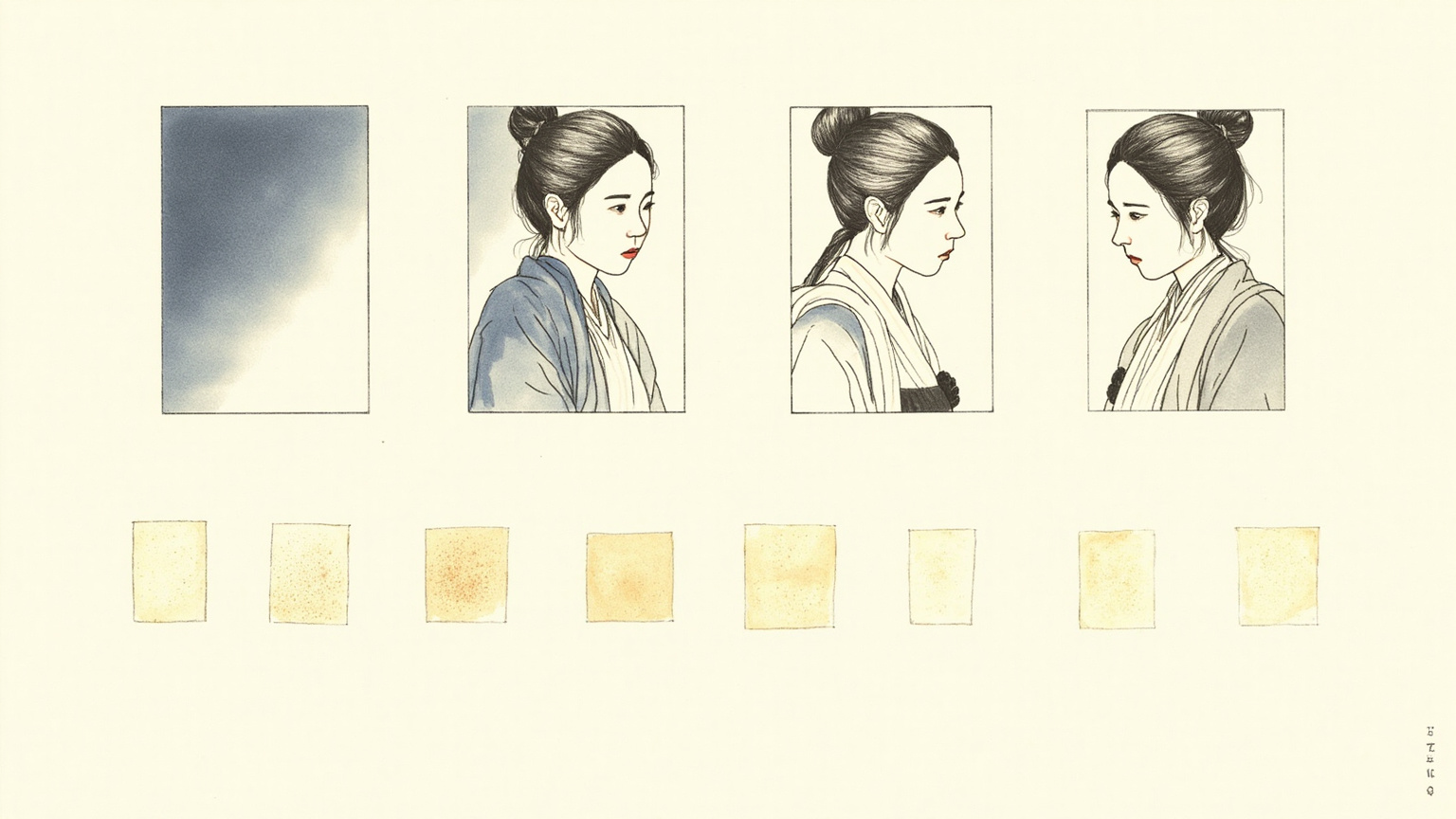
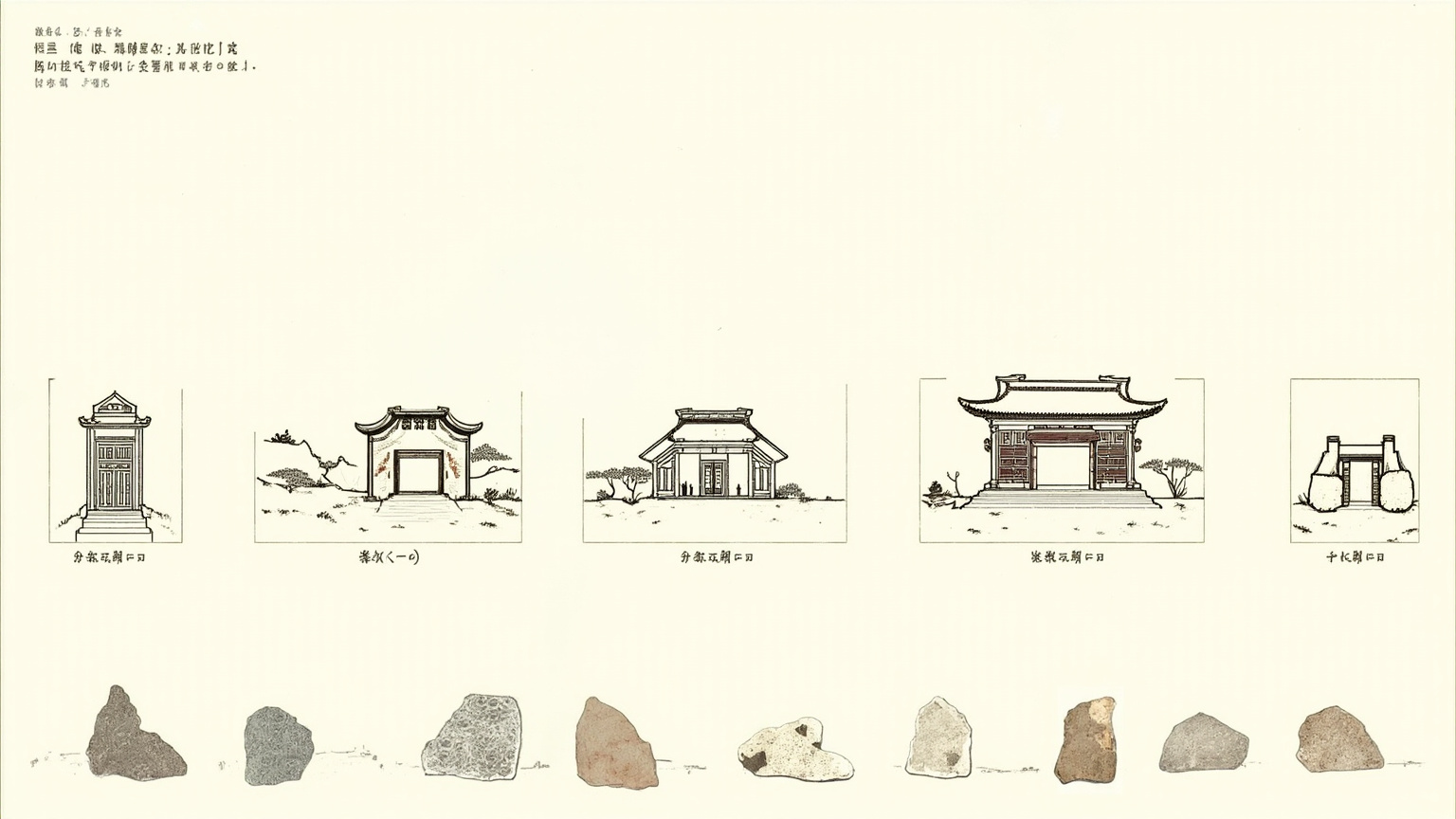
Art Direction4 plates
Before the guide was written, this book got a visual foundation — every illustration you just read grew out of it.