The farewell letter Xiao Hong finished on her sickbed in Hong Kong: how people in a small northern town live, and how they watch each other die.
Text and illustrations produced by the pipeline
A twelve-year-old girl is held by the hair and forced into a scalding vat of water. Neighbors crowd around the rim, all talking over each other, offering advice: pour another ladle, pour another. The girl screams. Her mother-in-law slaps her own thighs and wails: she's possessed, I'm saving her. This is not some curiosity from an old, backward era — it is the scene in a book that is hardest to sit through. And what makes it hardest to sit through isn't the boiling water. It's that everyone standing around the vat believes they are doing something good.
Tales of Hulan River is the last novel Xiao Hong finished in her lifetime, written around 1940 during her exile in Hong Kong, by then too sick to sit up straight. It was first published as a standalone edition in Guilin in May 1941, by which point she was thousands of miles from her home in China's northeast. What she wrote was the small town of her memory — Hulan County in Heilongjiang, a northern county seat in the early twentieth century — in a style nobody had quite used before: less a novel than someone sitting with you at dusk, talking you slowly through how spring turns to summer, how people age, how children die. Mao Dun, writing the preface, called it a narrative poem, a vivid painting of local life, a mournful string of songs, and that description still holds up better than any other. Xiao Hong herself died of illness in Hong Kong at thirty. Every line of this book is a farewell to a home she could never go back to.
The book has no single protagonist who carries it all the way through, and that is the first small expectation to let go of. The eyes watching all of it belong to a child called I, but I is only really the protagonist in the third chapter, in the back garden; in the other chapters she steps aside and hands the camera to someone else. Grandfather is the one warm presence in her childhood, taking her into the back garden to grow vegetables, chase butterflies, recite poems she half understands; by the time I looks back on all this, years later, he has long since died. Grandmother appears only briefly, a cold, rigid counterpoint. The family rents rooms in its courtyard to a few poor households; the mill keeps a quiet, decent hand named Feng Waizuizi, and the courtyard also holds an eccentric, solitary old servant, Second Uncle. These two carry the sixth and seventh chapters between them. The twelve-year-old girl the Hu family bought as a child bride is the most painful chapter of all.
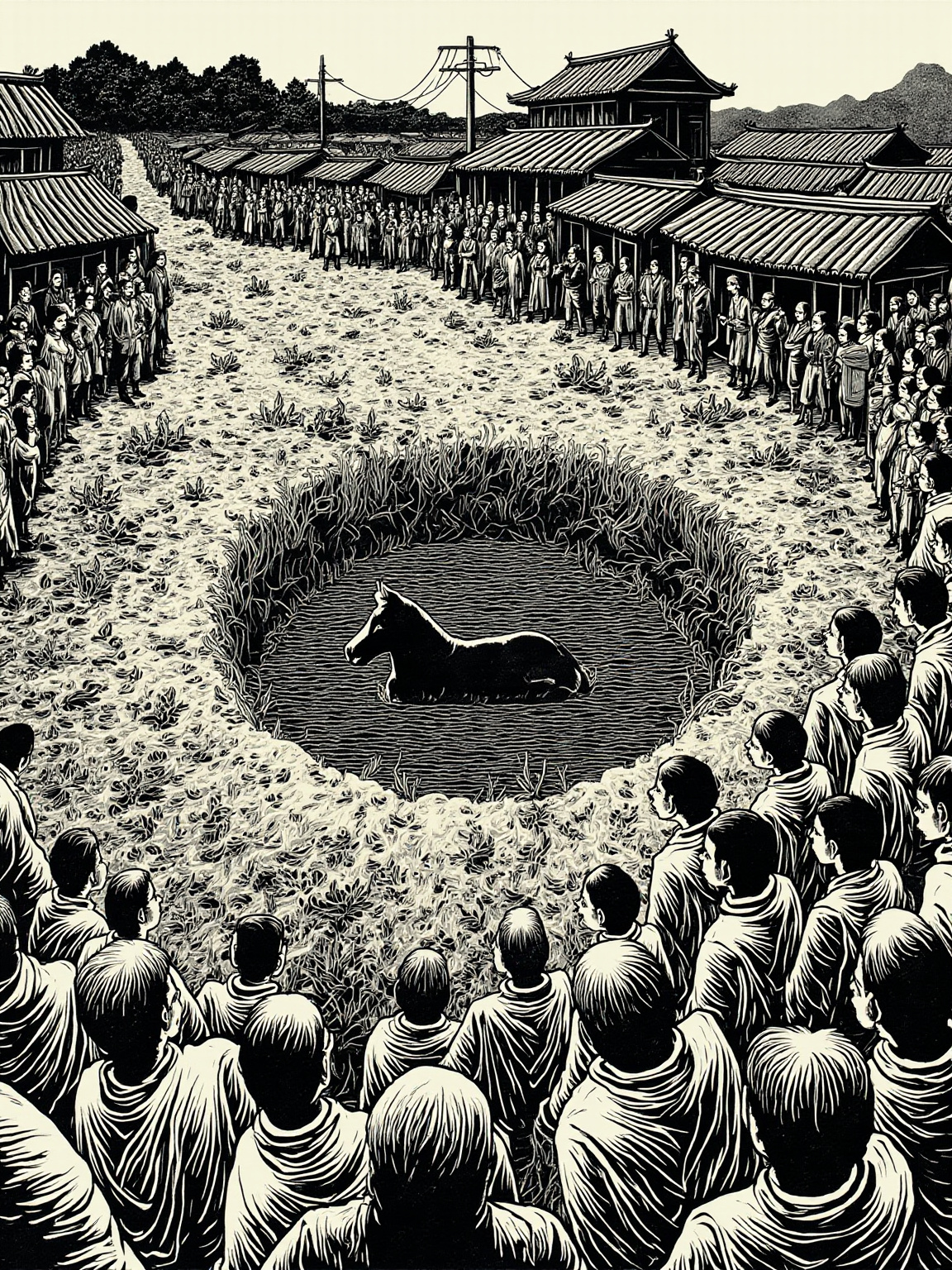
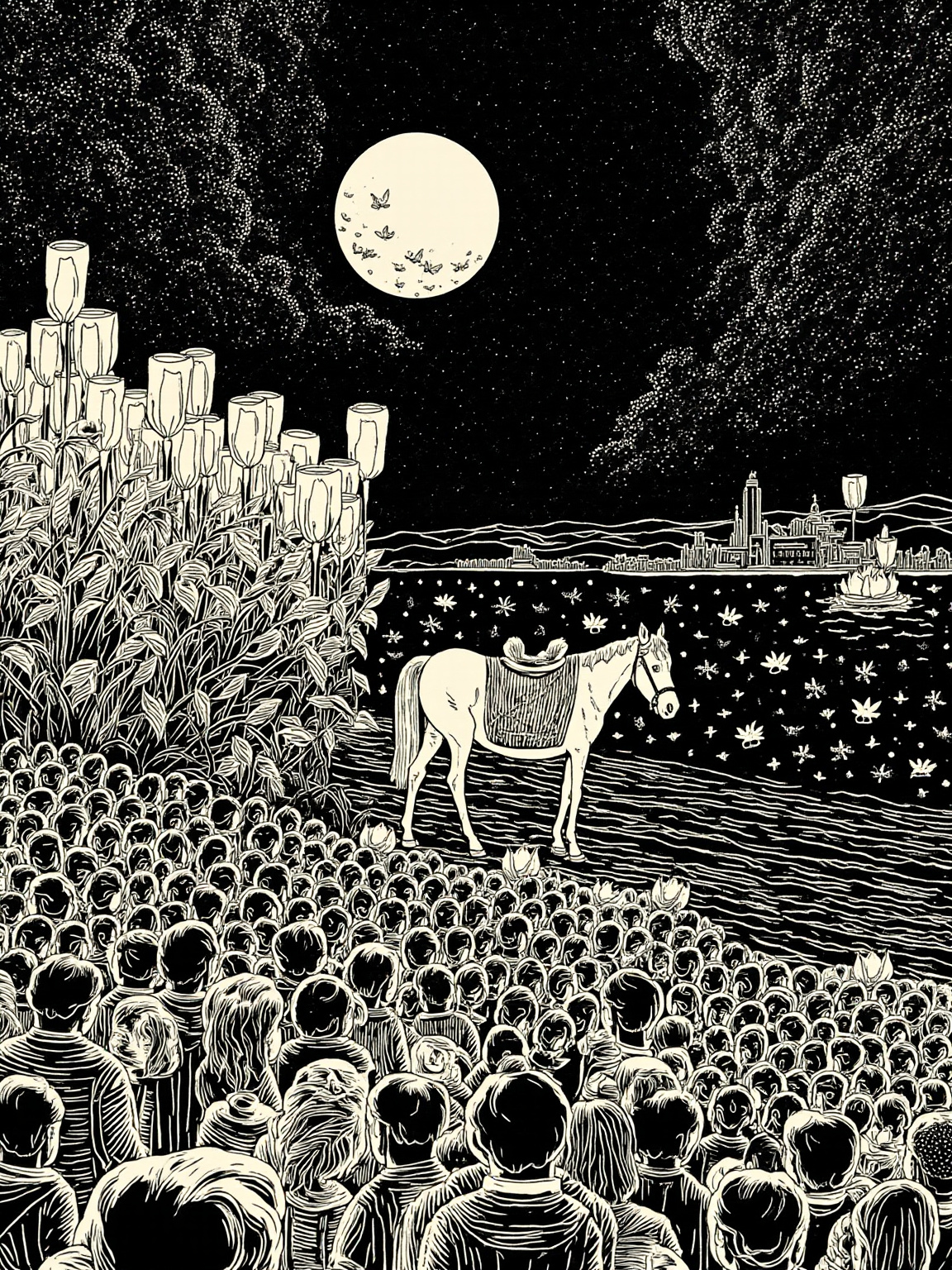
The town of Hulan River runs on its own logic. A great mud pit sits across East Second Street, one that has swallowed horses, drowned pigs, and pulled down sedan-chair carriers. It caves in every summer and freezes over every winter, and nobody has ever thought to fill it in. Shamans summoned to drive out spirits, lanterns floated down the river for the dead, the annual fair at the temple of the fertility goddess — these are the town's yearly great occasions of the spirit, and they are as genuinely festive as they are genuinely benighted. The whole book is built out of these customs, the fates of a few households, and the same days cycling year after year, until they add up to the portrait of a town.
The other thread running through the book is the contrast between warmth and cold. The golden pages of childhood in the back garden are almost the only bright color in the whole book; step outside those pages and everything is cold. That contrast isn't decoration, it's deliberate. Xiao Hong lets you taste a little sweetness first, then makes you watch that sweetness get swallowed, bit by bit, by a larger grayness. For a reader today, this book describes a town in the early twentieth century, but by the end you will notice that the logic of watching as a form of participation, of numbness as the normal state, hasn't really gone away.
Xiao Hong's cruelest stroke isn't an accusation, but onlookers who, to the very end, believe they are doing something good.
A companion guide can give you the story, the characters, the themes, but there is one thing it cannot give you: Xiao Hong's sentences themselves. The feel of this book's language was something no other writer of her time had: vernacular prose threaded through with northeastern speech, sentences of wildly uneven length that move like wind gusting past, a childlike innocence in the narration pressed down under an adult sorrow. Go back to the original after reading a guide, and you'll find that a single line like the mother-in-law beats the child carries three layers of voice at once: the child's, the mother-in-law's, and Xiao Hong's own, watching it happen. No summary of the plot can reconstruct that. Then there are the scattered silences: she writes that someone has died, and the next chapter simply moves on to summoning spirits and floating river lanterns, as if nothing happened at all. That restrained cruelty is something no explainer video can carry. Only the original text has it.
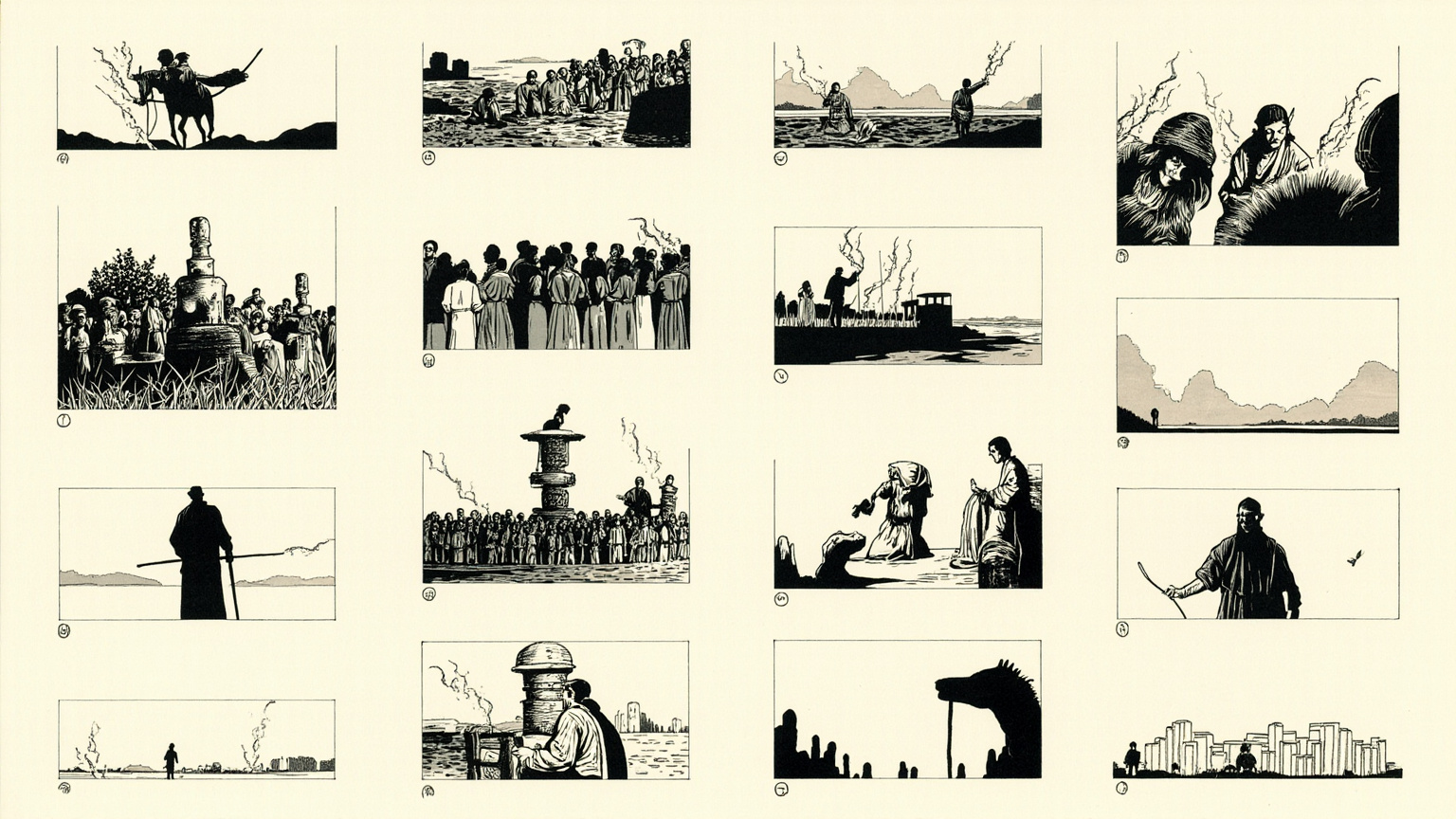
Before the guide was written, this book got a visual foundation — every illustration you just read grew out of it.
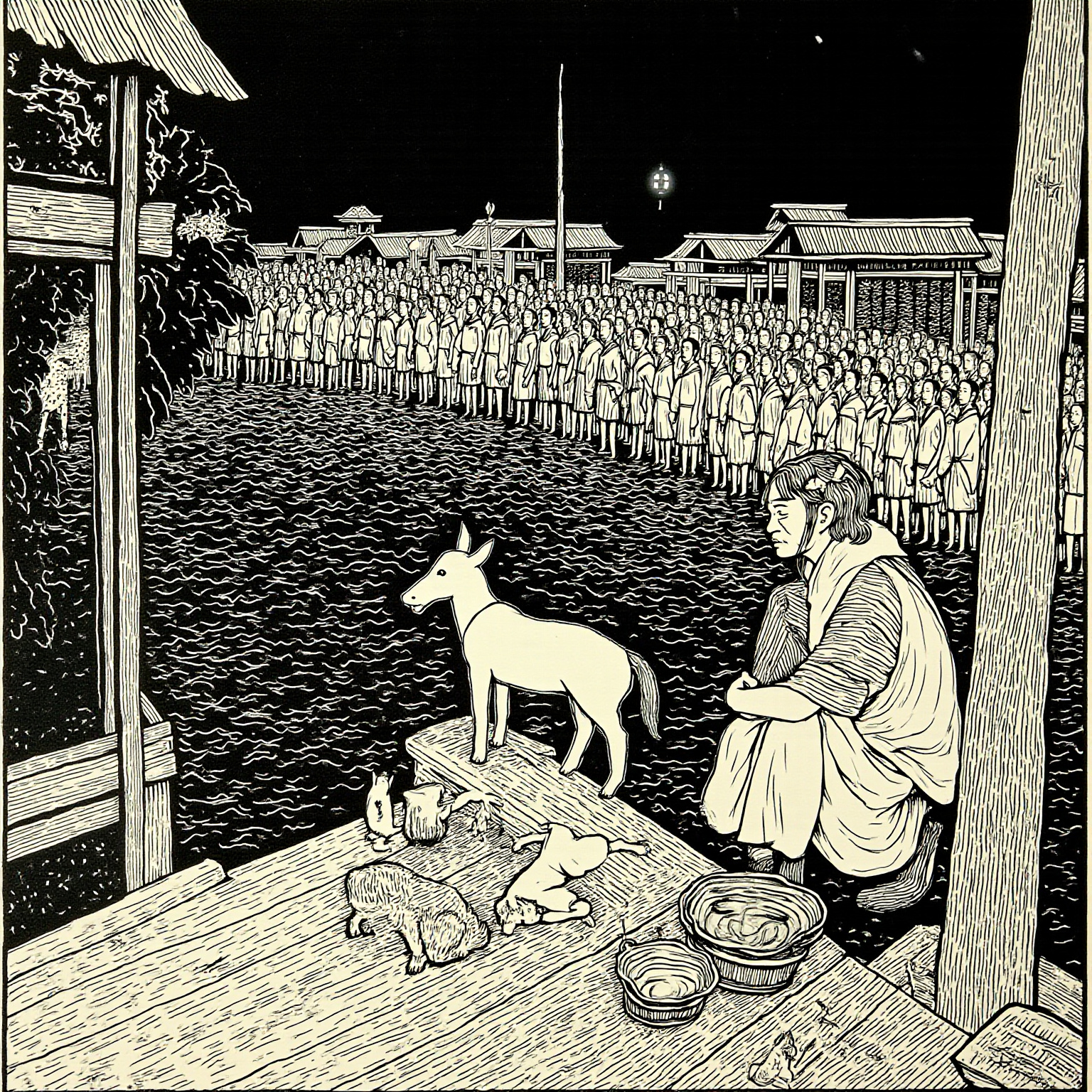
The book opens without raising its voice, simply showing you the mud pit. A cart sinks into it. Sedan-chair carriers sink into it. A pig drowns in it. The whole town gathers to watch, argues over what happened, offers a pile of opinions, and not one person suggests filling it in. Year after year the pit stays where it is, the same carts keep sinking, the same crowd keeps watching. This is the first thing Xiao Hong plants: whatever is wrong with the people of Hulan River isn't lodged in any one of them, it is in all of them. Everything that happens later runs on that same sickness.
This is also where the craft is worth noticing. When Xiao Hong writes a crowd of onlookers, she never writes the words they were numb. She writes how they talk over each other, how they offer advice, how they sigh about it afterward. The reader arrives at that numbness alone, out of these small actions, and it lands harder than any adjective could.
Next come the liveliest events of the Hulan River year: when someone falls sick, a shaman is called in to drive out the spirits; on the fifteenth of the seventh month, lanterns are set adrift on the river for those who drowned in it; on the eighteenth of the fourth month, the temple fair for the fertility goddess draws crowds praying for children, with open-air opera running three days straight. Xiao Hong writes these scenes bright, festive, full of color and noise, as if painting a long scroll of her town's folk life. But the more fully she lays on the festivity, the harder the later contrast lands. The same crowd capable of pouring its grief into a river lantern will, a few years on, gather around a twelve-year-old girl to watch her scalded to death, slapping their thighs and wailing that they are saving her.
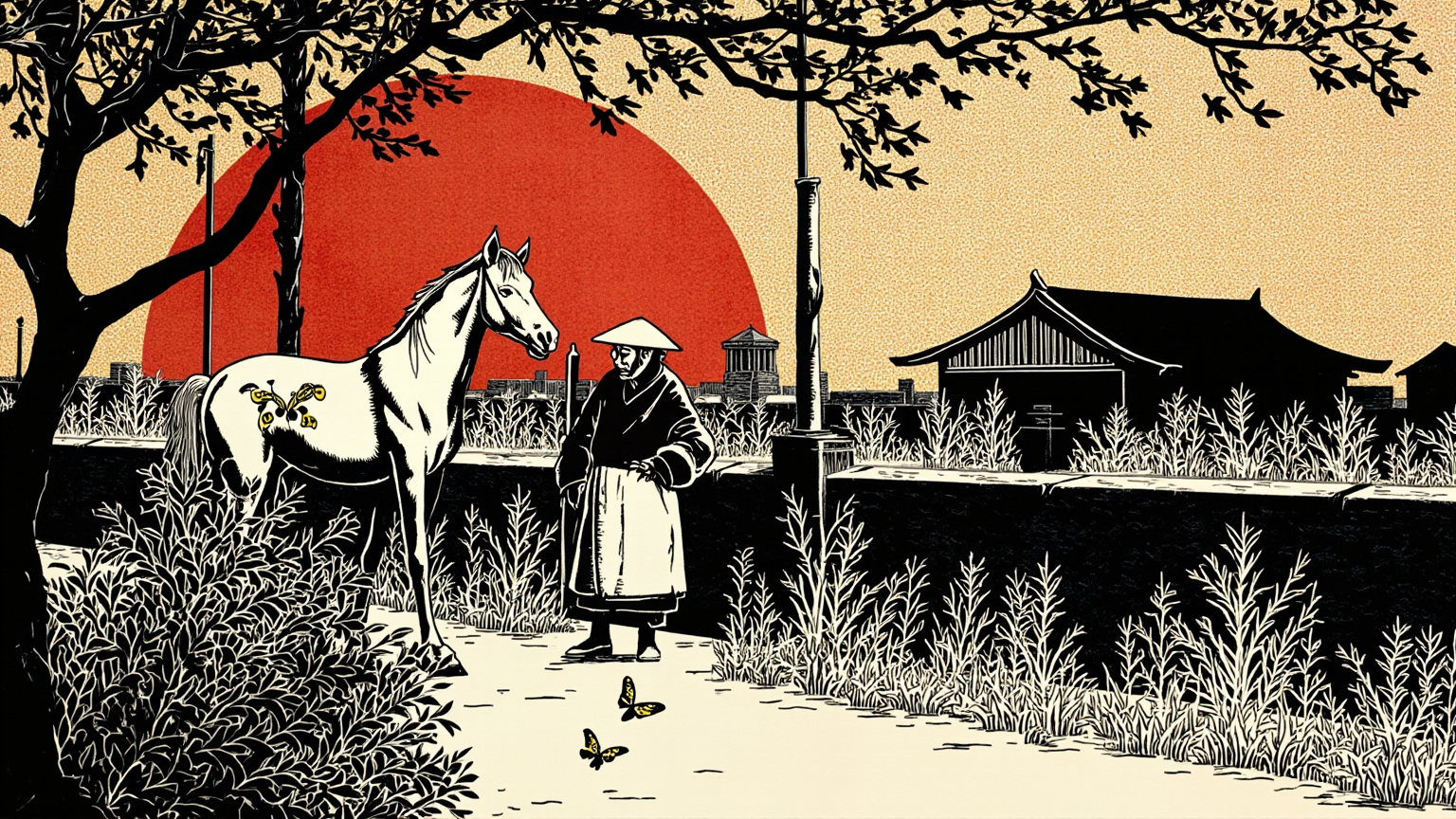
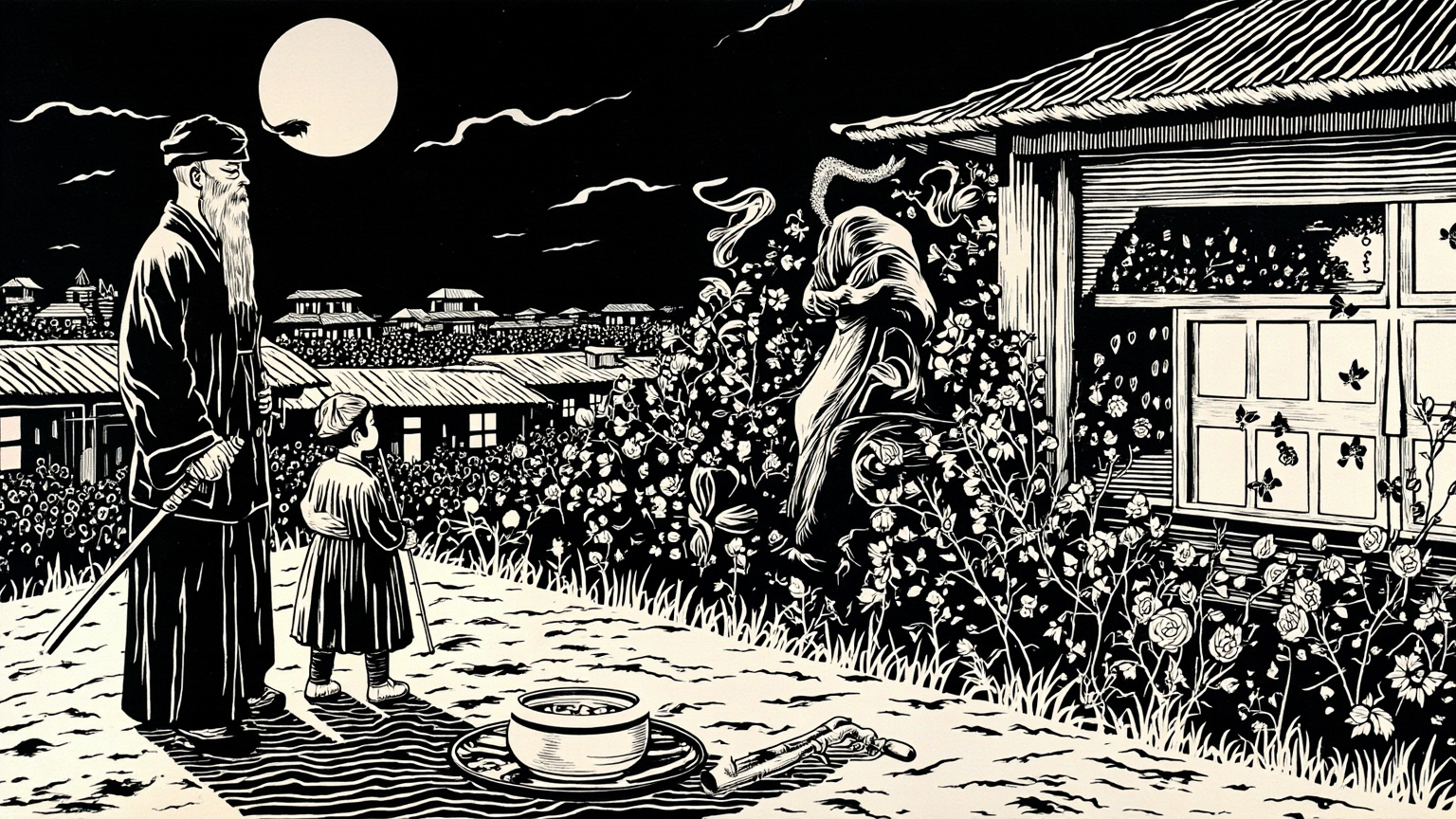
The third chapter suddenly changes color. I spends her days with Grandfather in the family's back garden: small spiky cucumbers hang on the trellis, butterflies drift by and I gives chase, and when she can't catch one, Grandfather just laughs. Her straw hat blows up into a tree, and Grandfather climbs the ladder rung by rung to fetch it down and cheer her up. He teaches her poems, and she recites along, mostly for the fun of the sound. The whole chapter runs gold: soil, sunlight, vegetable blossoms, the drone of cicadas. It is the lightest stretch of writing in the whole book, and nearly the entire source of love in her otherwise gray childhood. Reading this chapter for the first time, I had to stop — how could the same book hold a page this bright.
The Hu family buys a twelve-year-old girl as a child bride. When she arrives she is healthy, lively, and a little tall for her age, and those three qualities are exactly what kill her. Her mother-in-law decides she is too forward, doesn't act like a proper young wife, walks too fast, and beats her daily to correct her, until the beatings make her sick. Once she is sick, the whole household panics: shamans are called in, effigies are burned, every folk remedy going gets tried. The last resort is to bathe the evil out of her in public, in scalding water, again and again. They carry her into a huge vat, hold her head down, pour the boiling water over her, pull her out half-conscious to revive, then push her back in and pour again. A crowd stands around the vat, all talking over each other with advice, while the mother-in-law slaps her thighs and wails, I'm saving her. The girl is scalded to death inside the crowd's good intentions.
The craft in this chapter deserves its own note. Xiao Hong never once raises her voice in protest. She never writes that society was cruel, never writes that the mother-in-law was a monster. She only writes how the onlookers talk, how they offer advice, how they sigh about it afterward. Halfway through, the reader suddenly realizes on their own: the person most deserving of blame believed, the whole time, that she was doing something good. That is the sharpest cut in the whole book. It isn't aimed at one villain, it's aimed at an entire crowd convinced it did nothing wrong. This scene cannot be illustrated; the visuals should stay clear of it.
The sixth chapter turns to a colder angle. Second Uncle, the family's aging manservant, is solitary and strange, forever talking to himself, to the cat in the corner, to the farm tools. Caught red-handed stealing, he becomes the household joke, and yet he sticks out his neck and refuses to admit fault, clinging to the last thin shred of his dignity to the end. He belongs to the saddest category of person in the whole book: insulted, wronged, laughed at, and still holding on to some small thing at the core of him that nobody can take away. Xiao Hong never pleads his case for him. She only lets you watch him sit alone in his corner.
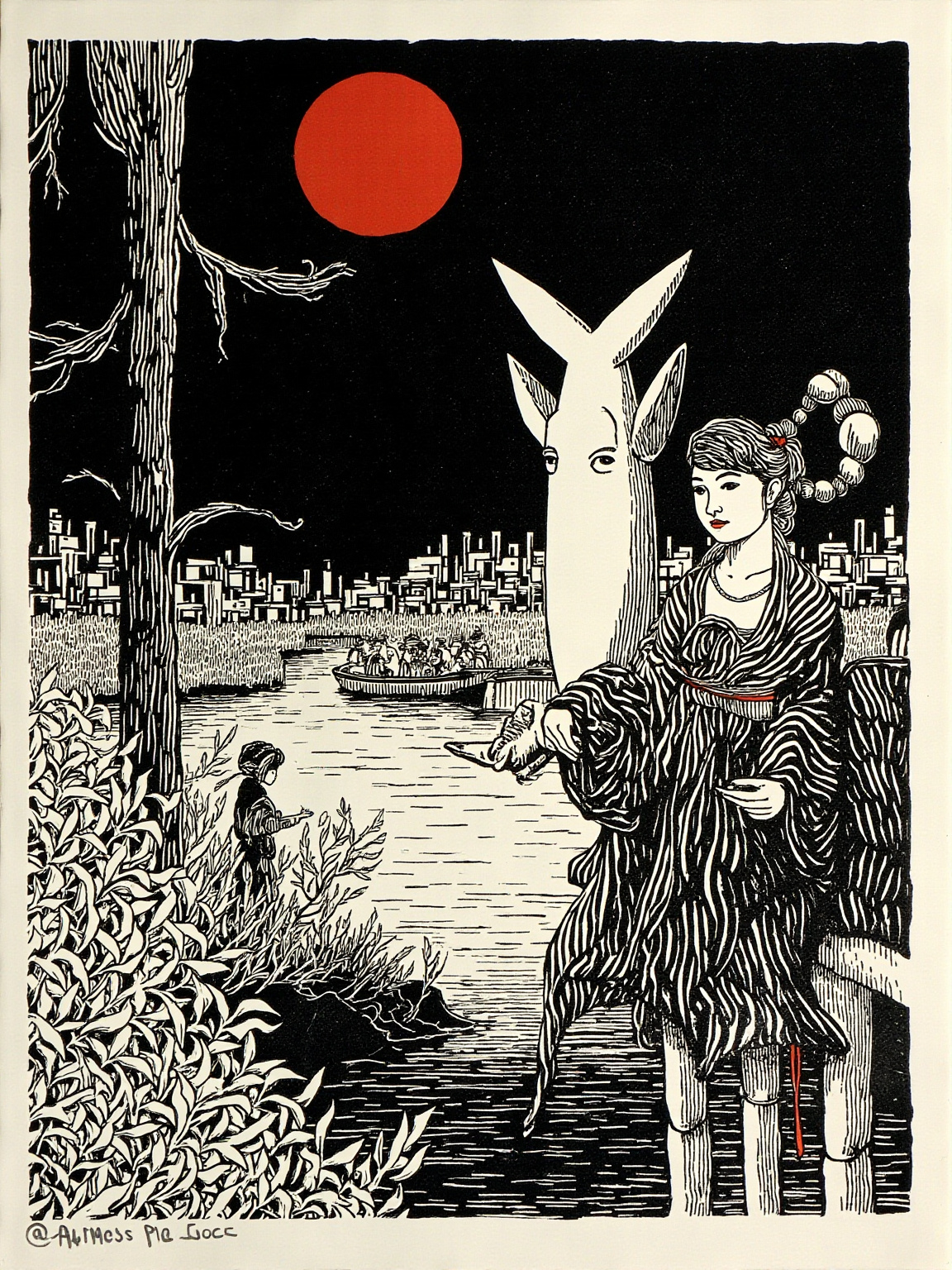
Feng Waizuizi, the mill hand, becomes the book's last steady center. He is quiet, honest, poor, and somehow the landlord's daughter, Wang Dajiangu, falls for him anyway. The two of them move in together without a wedding and have a child. The whole village erupts: a child out of wedlock, no proper standing, shame brought down on the landlord's house, the gossip traveling three streets over. Wang Dajiangu dies in a difficult second labor, and Feng Waizuizi is left alone, one child in his arms and one by the hand, raising them through the village's contempt and his own hardship. Everyone waits for him to fall apart. He doesn't.
Xiao Hong chooses to end here, and that choice is deliberate. So much death has weighed down everything before it, and at the close she offers no happy ending, only Feng Waizuizi waking at the sound of his child crying in the night and getting up to stir a bowl of rice gruel. It is a gesture almost too small to notice. But after all the darkness that came before it, reaching this page feels like the first easy breath in the whole book.
The coda is brief. I has been away from home for years by now, and looking back at the thatched house, the back garden, the people and everything that happened, she finds them scattered or dead; Grandfather has long since passed. Whether the town of Hulan River still stands hardly matters anymore. What matters is that I still remembers. The book closes on that act of memory alone, with no climactic accusation and no reconciled ending, just one person, far away, keeping the record of a town for everyone else.
In the history of modern Chinese literature, Tales of Hulan River gets filed under the Northeastern Writers group, but Xiao Hong isn't writing about resisting Japan or class struggle. She is writing about something older and more everyday: how people live inside a world where everyone believes they are in the right. The mud pit that swallows livestock never gets filled in. The twelve-year-old girl is scalded to death in front of a crowd, and every single person there believes they are helping. That collective blindness to its own cruelty is the real edge of this book.