A parable that has sold tens of millions of copies worldwide and has never once been made into a film.
Text and illustrations produced by the pipeline
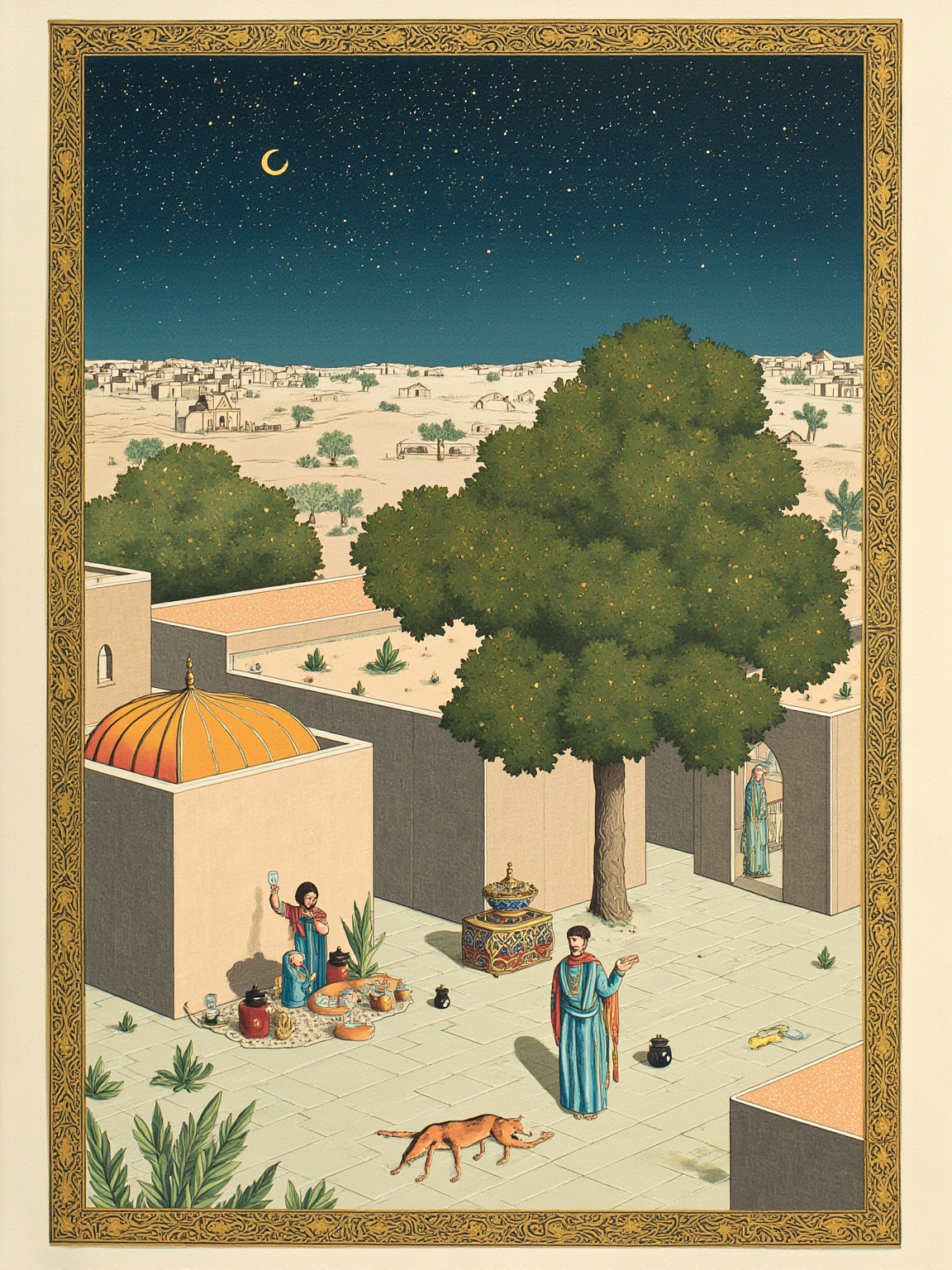
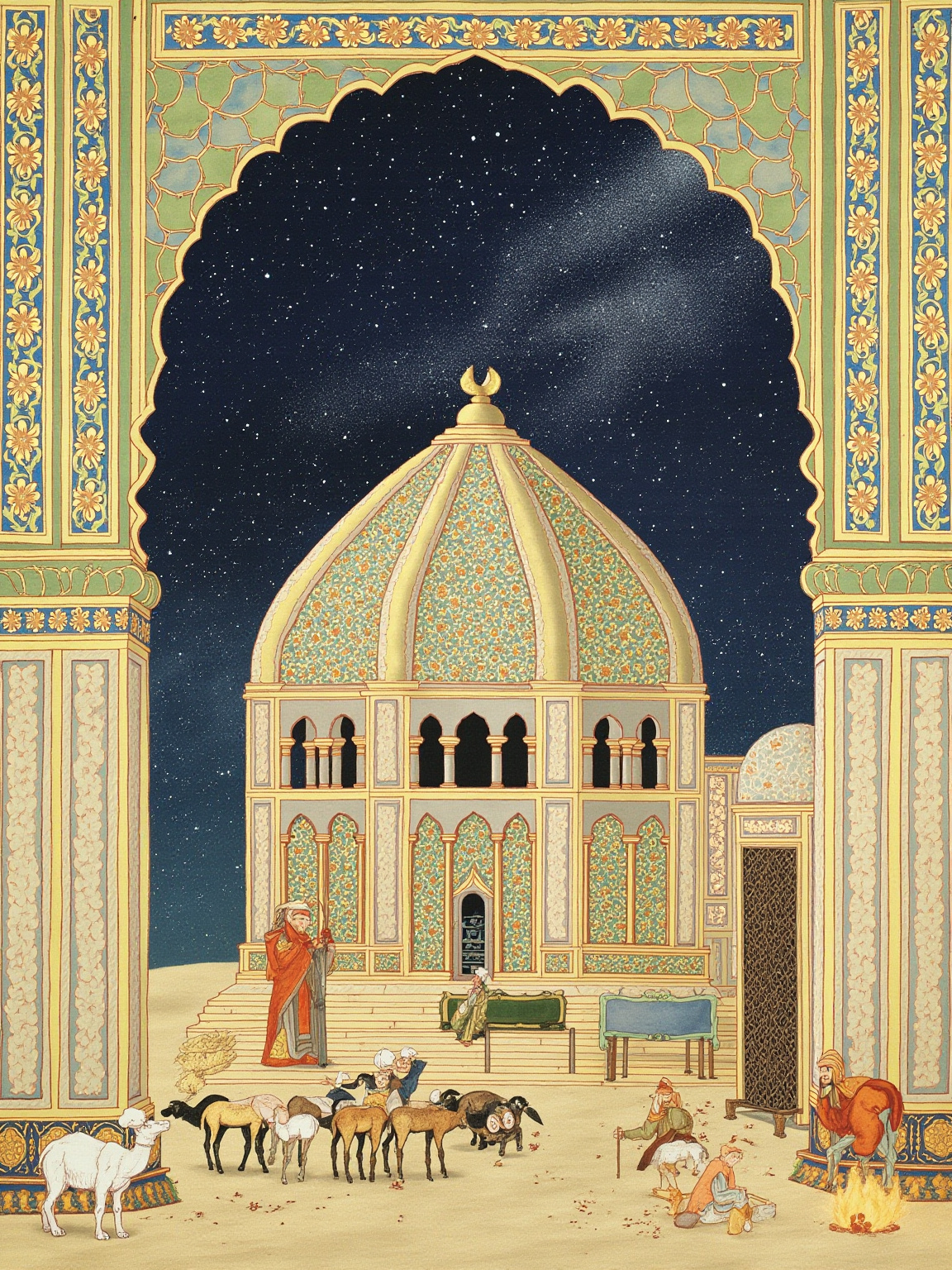
A shepherd boy in Andalusia has the same dream two nights running: a treasure chest buried beneath the Egyptian pyramids. He doesn't shrug it off as a stray fancy. He follows it, sells his sheep, crosses the strait, crosses the Sahara, and ends up beaten black and blue at the foot of the pyramids. As the bandit who beat him turns to leave, he mentions, almost in passing, that he once had a recurring dream of his own: something buried under a sycamore tree beside a ruined church in Spain. The boy freezes. The treasure was there all along.
This is The Alchemist. A treasure hunt that circles half a map to tell you the treasure was buried where you started. The book is short and the plot is simple, but for more than three decades it has sold tens of millions of copies, been translated into more than eighty languages, and become one of the most-read fables of our time, and it still hasn't been made into a film or a series. There's no official face to borrow. Every character has to grow out of the words themselves.
The Brazilian writer Paulo Coelho wrote this slim book in 1988, stringing Sufi allegory, alchemical symbolism, and biblical allusion along the thread of a shepherd boy's treasure hunt. In sales it's a giant; in bulk it's a pamphlet, a fable you can finish in one evening. What makes it work is that it takes a word that usually curdles the moment you say it out loud, chasing your dream, and turns it back into visible geography: the hills of Andalusia, the market in Tangier across the strait from Gibraltar, a caravan crossing the Sahara, an oasis deep in the desert, the pyramids of Egypt, and back around to the church where it began. Readers from their teens to their sixties pick it up, and each of them walks away with something different.
Santiago could have become a priest. Instead he bought a flock of sheep to see the world. At the start he can't even say what he wants, only that he wants to move, to find out whether there's a life out there worth more than tending sheep. The first person to point him anywhere is a strange old man who calls himself Melchizedek, King of Salem, the name lifted straight from Genesis, the priest who brought Abraham bread and wine. Melchizedek wears a gold breastplate and hands the boy two stones, one black and one white, called Urim and Thummim, the same objects ancient Israelite priests used to read yes or no from God. In this book he isn't just a stranger passing through; he's the idea of a Personal Legend walking up and shaking your hand. What he teaches the boy is this: when you want something badly enough, the whole universe conspires to help you get it. He leaves the boy with travel money, five plain truths, and two stones.
The crystal merchant in the Tangier marketplace is the boy's first employer, an old man more afraid of change than of poverty, whose beautiful glassware sits stacked inside where no one can see it. Fatima, the girl at the desert oasis, waits for him by the well, dressed in black, the first person in his life he wants to stay for. The alchemist beyond the oasis, dressed in black himself with a falcon on his shoulder, is the boy's last teacher, but when he says the word alchemy, he doesn't mean anything you'd find in a chemistry lab.
Because it turns a word that sours the moment you say it, chasing your dream, back into visible geography. One line, when you want something badly enough, the whole universe conspires to help you achieve it, has become a cultural touchstone that crosses languages. But what keeps the book alive isn't the maxim itself; it's that the maxim is embedded in a route specific enough to actually walk: hills, a strait, a marketplace, a desert, an oasis, the pyramids. Readers can close their eyes and follow the boy all the way there and all the way back. As a piece of writing, Coelho pulls off something difficult: he folds Sufi allegory, Judeo-Christian alchemical symbolism, and the biblical King of Salem into a story told by a shepherd boy, and none of it turns dense or hard to follow. You can finish it in an afternoon and still remember it twenty years later.
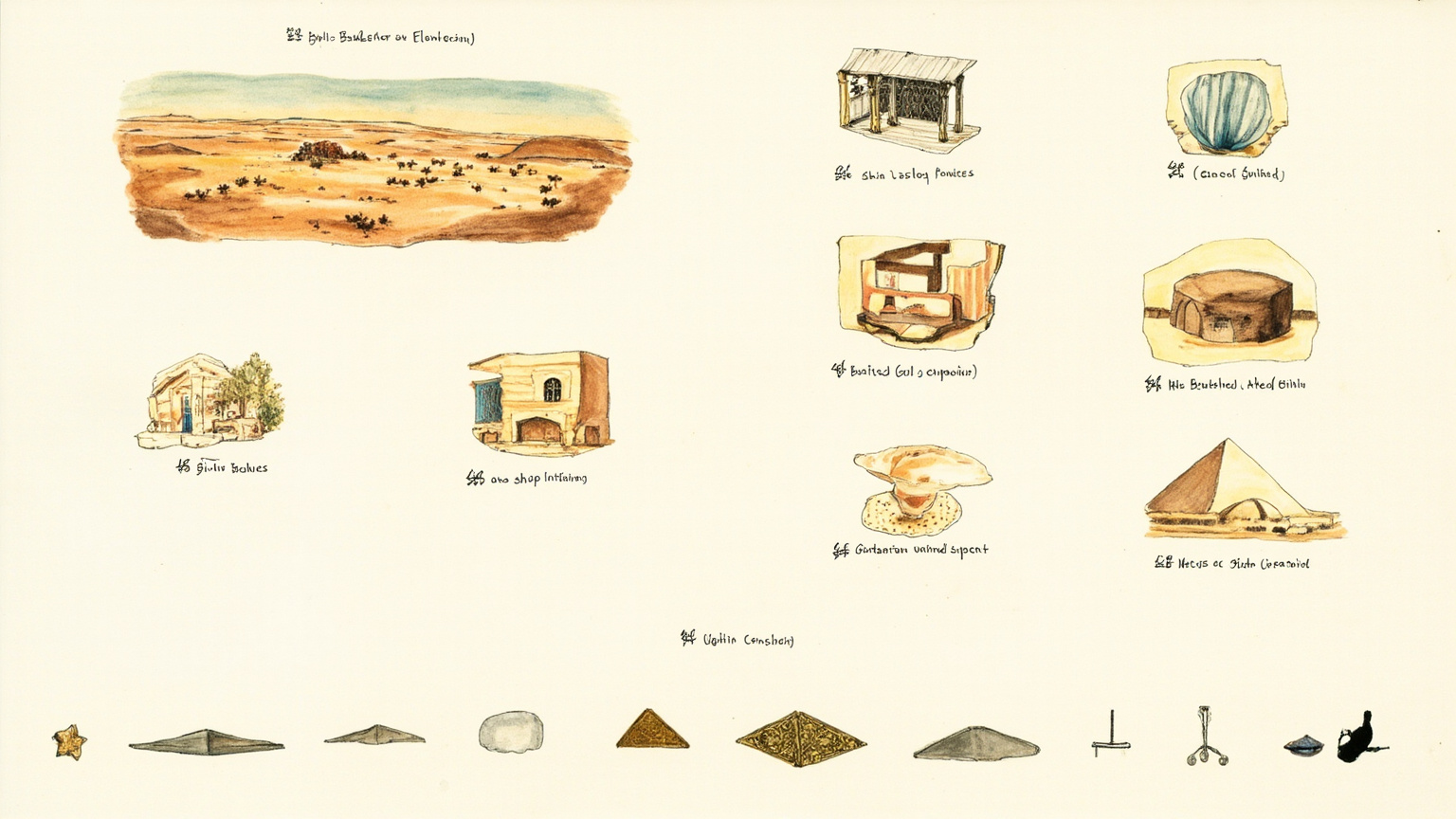
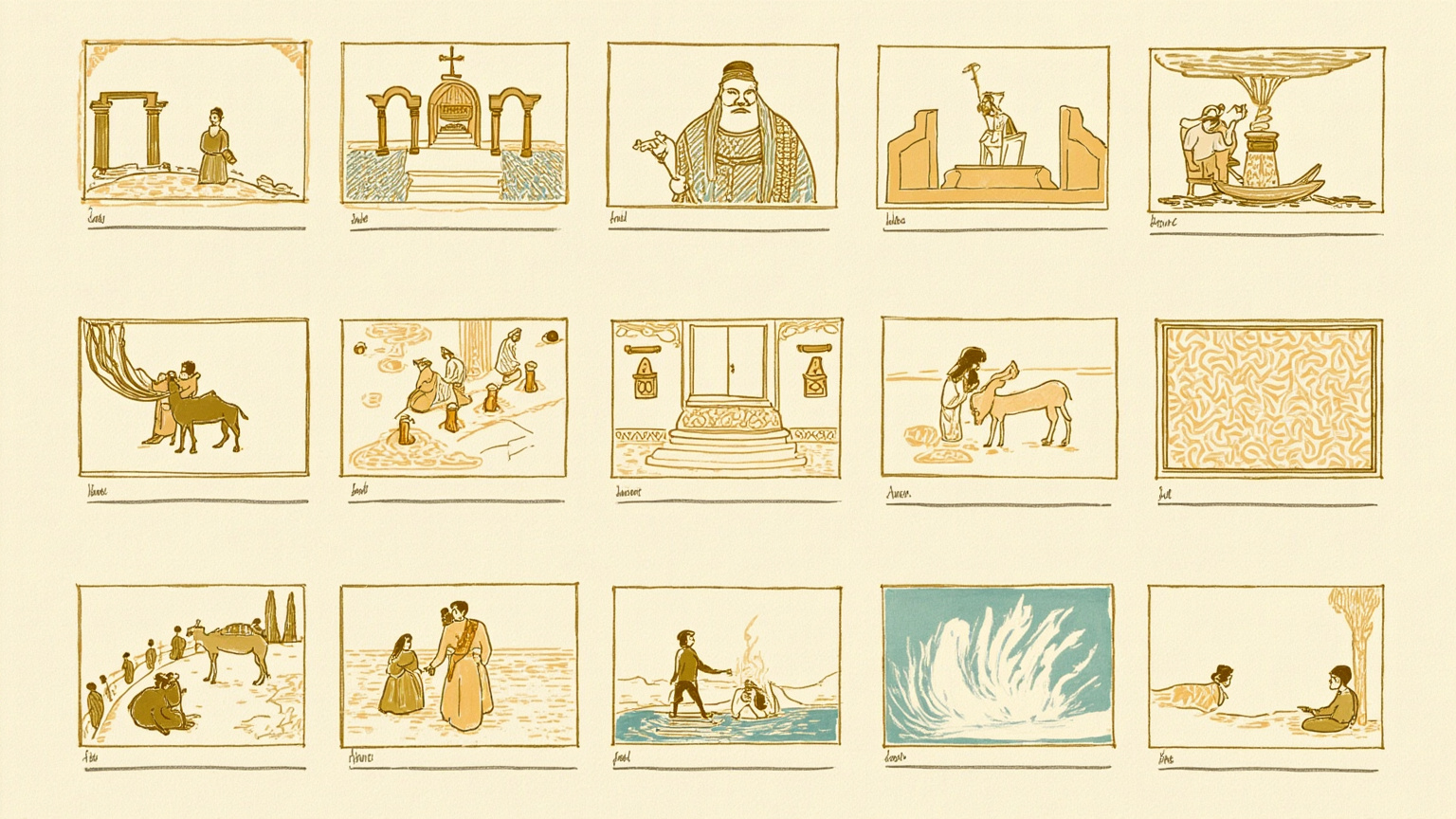
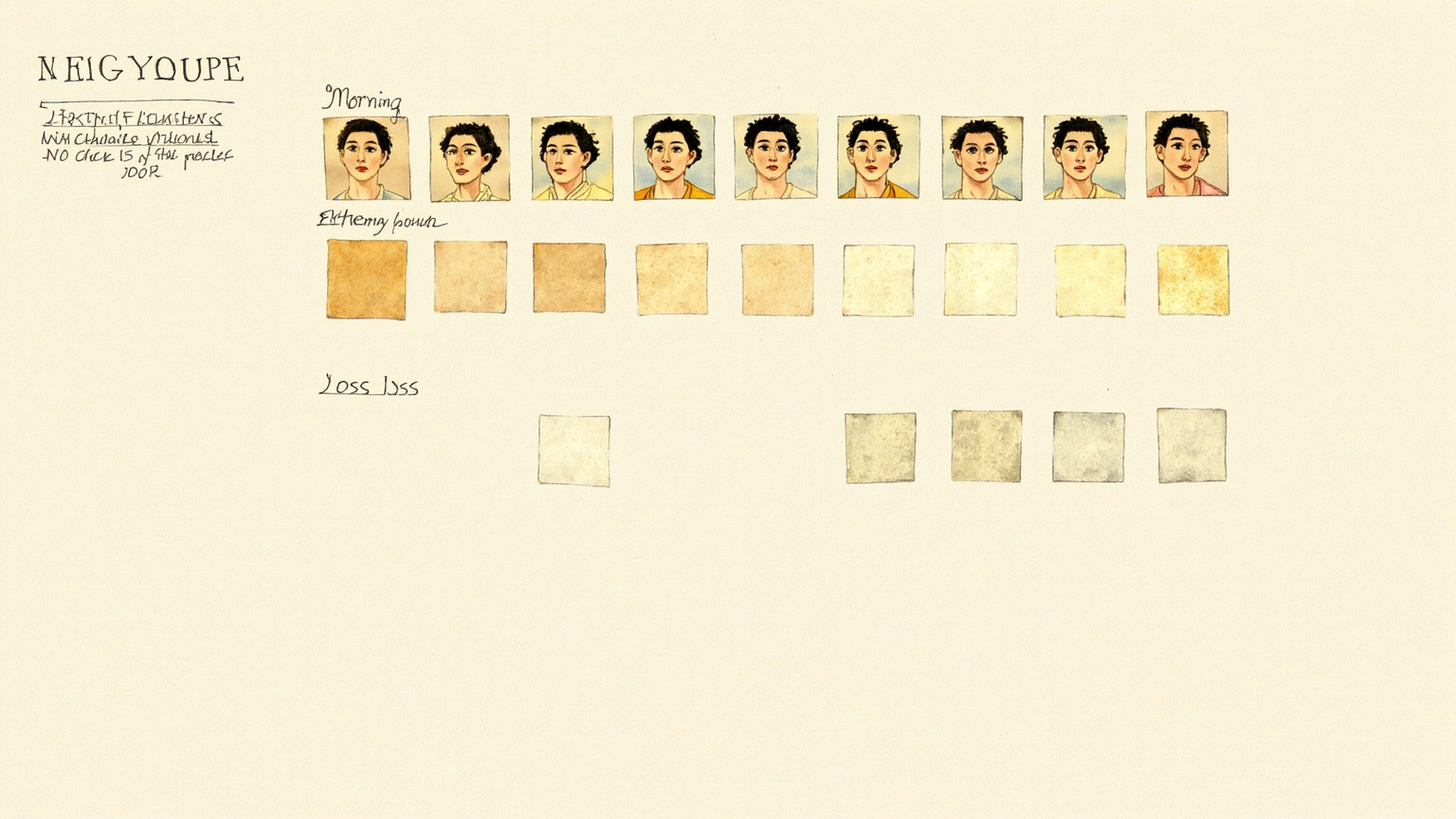
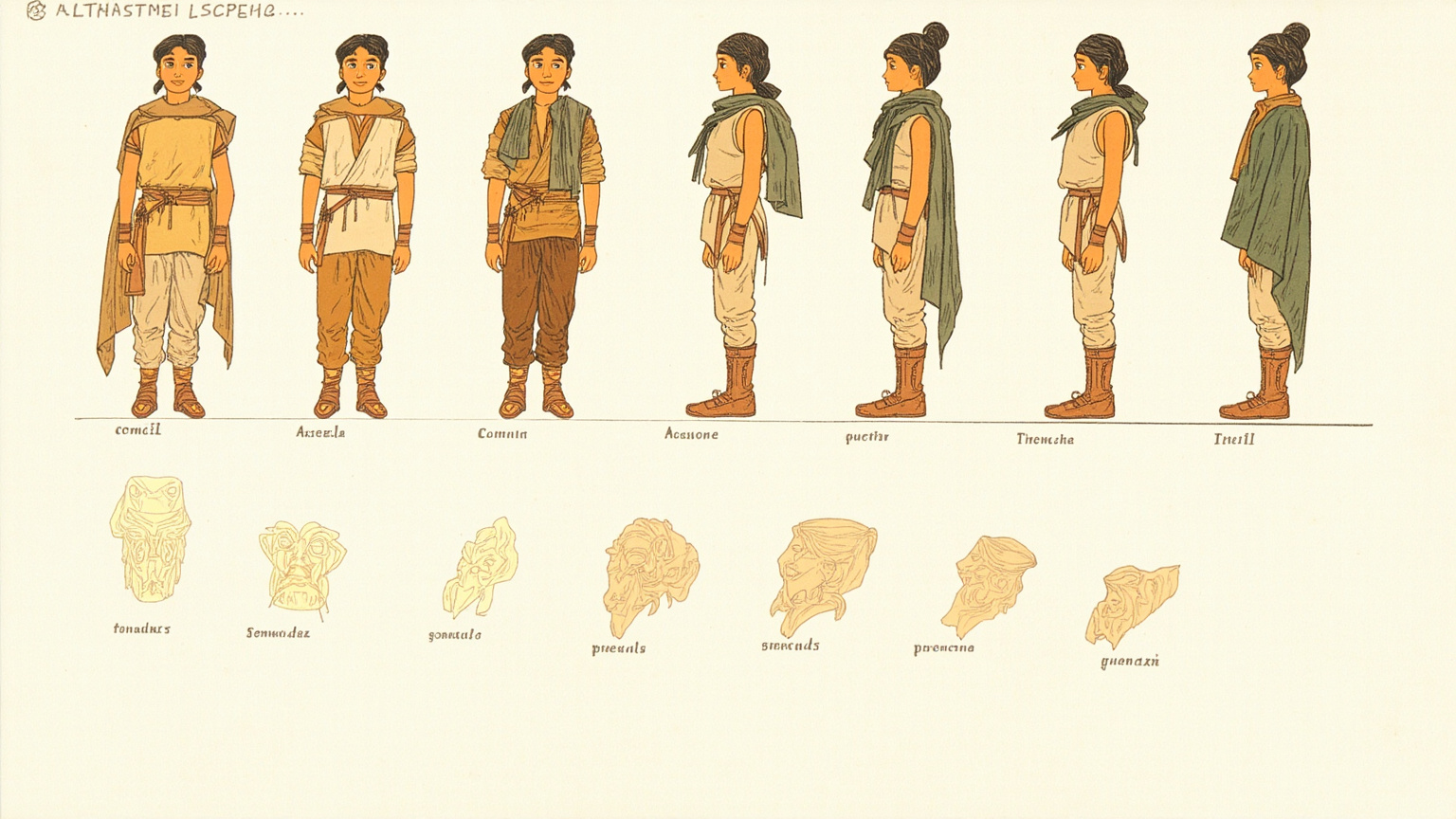
Before the guide was written, this book got a visual foundation — every illustration you just read grew out of it.
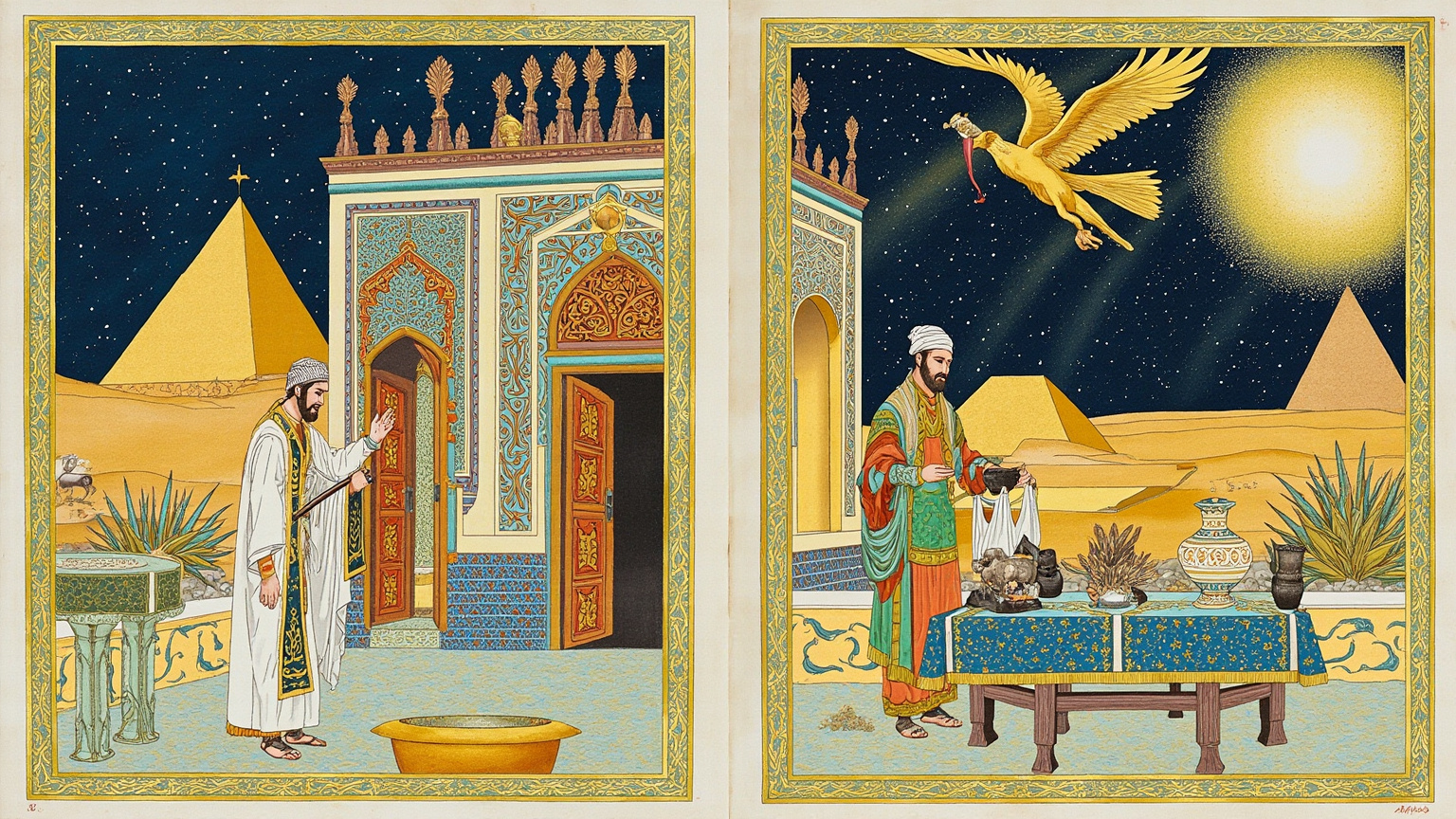
After the dream repeats itself, the boy first goes to town to see a Gypsy woman who interprets dreams. She takes a tenth of his sheep as payment, the first installment on a treasure that doesn't exist yet, and tells him the dream is real: go to Egypt. Then, at an outdoor café table in the square at Tarifa, he meets the old man who calls himself the King of Salem. The old man doesn't sell him a map. He asks one question: why haven't you gone? He explains what a Personal Legend is and what an omen is, and before he leaves he presses a black stone and a white stone into the boy's hand: when you can't decide, put the black one on your right and the white one on your left, and let the stones speak for you. That's the entire fortune the boy carries when he sets out.
The boy sells his sheep and crosses the strait into Morocco. His first night there, his money is stolen. He's left standing in a shabby inn on the Tangier waterfront with no cash, no passport, and nothing left from the sheep he sold. He goes looking for work in the market and lands in a crystal shop with no life in it. The owner is a thin old man who has been putting off his pilgrimage to Mecca for thirty years, and the glassware inside is coated in dust. The boy does something the old man himself would never have thought of: he carries the crystal out to the steps in front of the shop, where passersby can actually see it, and sets up a small tea stand selling mint tea for a coin a glass. Business comes alive overnight. The old man never does leave for Mecca. But something in his face loosens the day he pays the boy his wages. The boy, meanwhile, has saved enough to move on.
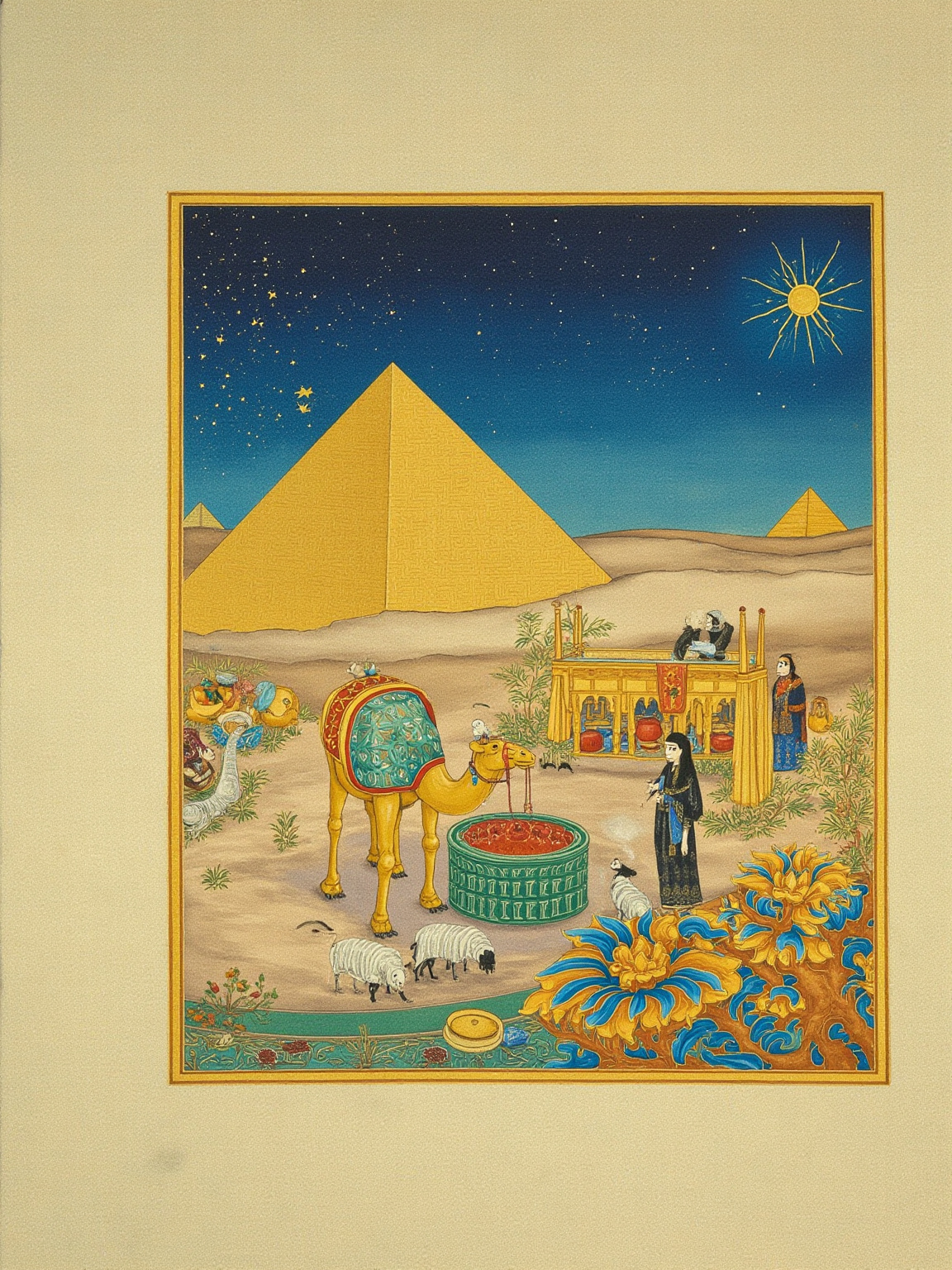
He joins a caravan crossing the Sahara, walking beside an Englishman whose trunk is full of books and whose head is full of terminology, a man hunting a legendary alchemist to learn how lead becomes gold. The boy has no books, only his feet in the sand. From the start the two of them are in a quiet race to see who reads the Soul of the World first. Partway across, tribal war blocks the caravan's path, and it stops to wait it out at the Al-Fayoum Oasis. Drawing water at the well, the boy meets Fatima for the first time, a woman of the desert people, veiled, with deep eyes. They recognize each other on sight. But the romance lasts one afternoon. What Fatima says is among the clearest lines in the whole book: men of the desert are meant to go, and she won't hold him back, finish what he set out to do, then come back and marry her. She isn't a girl waiting to be rescued. She's the one who lets him go.
The oasis survives a massacre because of the boy. It happens like this: watching hawks chase doves out in the desert, he sees one hawk drop out of the sky and somehow reads its meaning, an attack is coming that night. He warns the tribal chief, who half-believes him and posts defenses anyway. The attack comes. The oasis holds. The next day a man dressed entirely in black, with a falcon perched on his shoulder, walks into the oasis and says: I've been waiting for you a long time. This is the alchemist. He takes the boy with him toward the pyramids. Here the book finally answers, in so many words, what alchemy actually is, not flasks, not stills, not a chemistry lab. Alchemy is refining an ordinary life into the gold that a Personal Legend points toward. It's training in how to read the world, how to read omens, how to read your own heart.
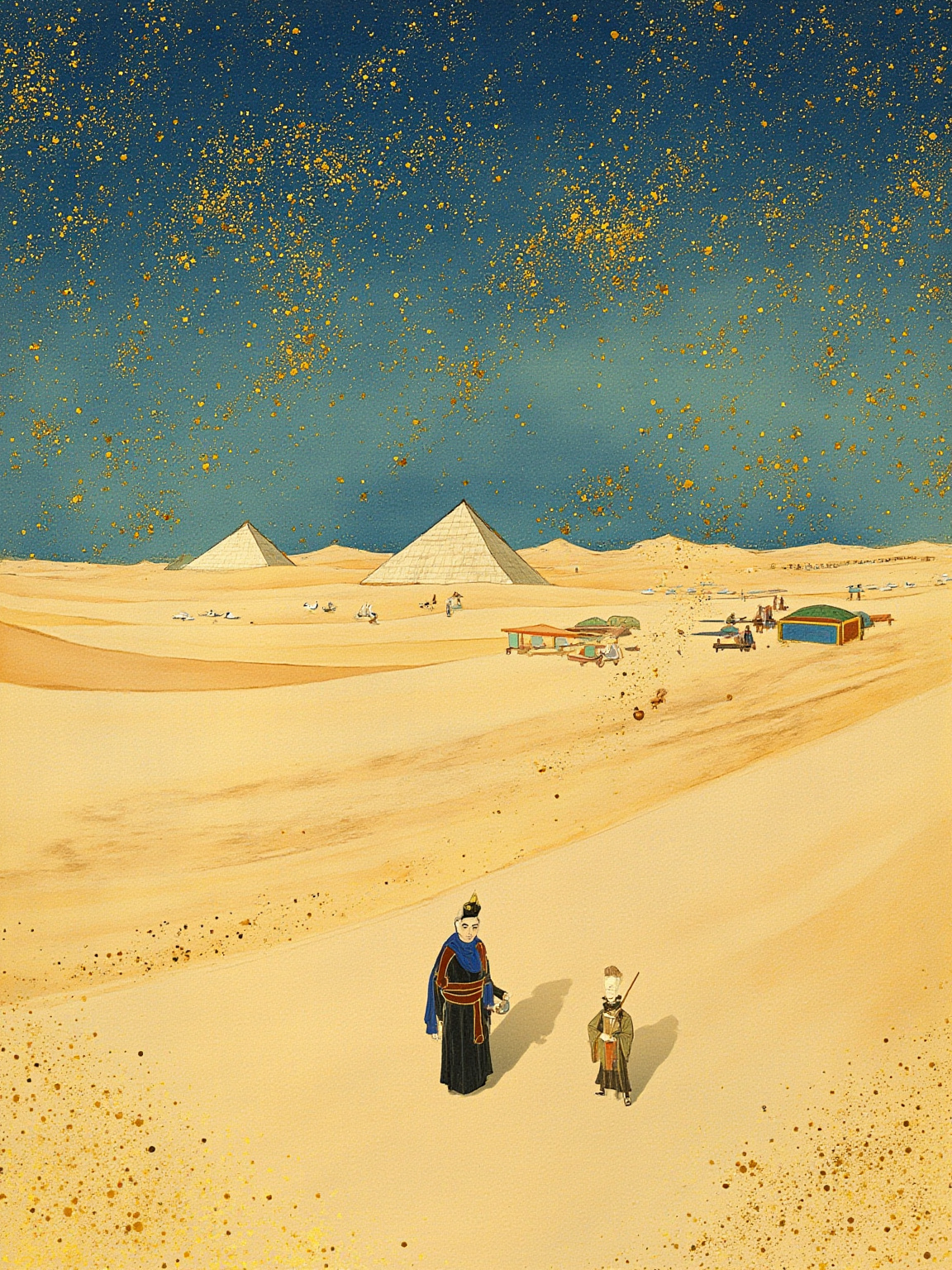
The alchemist leads the boy across a desert at war, teaching him the whole way how to listen: to what the wind is saying, what the sun is saying, what the heart beating under the sand is saying. The last obstacle is a tribe's territory, and its chief won't let them pass. The alchemist says only: prove you deserve to. The proof is turning himself into the wind, in front of everyone. Standing inside the circle the tribesmen form around him, the boy raises his hands and, for the first time, truly hears the wind speak, the sun speak, the mountains speak. He asks the wind for help; the wind says only the sand can grant it. He negotiates with the sand; the sand says only the wind can stop. Three days and nights, and he opens himself completely. The Soul of the World stops being a figure of speech and becomes the ground under his feet. The wind rises and carries him into the sky. When he comes back down, the tribesmen make way, and the alchemist nods.
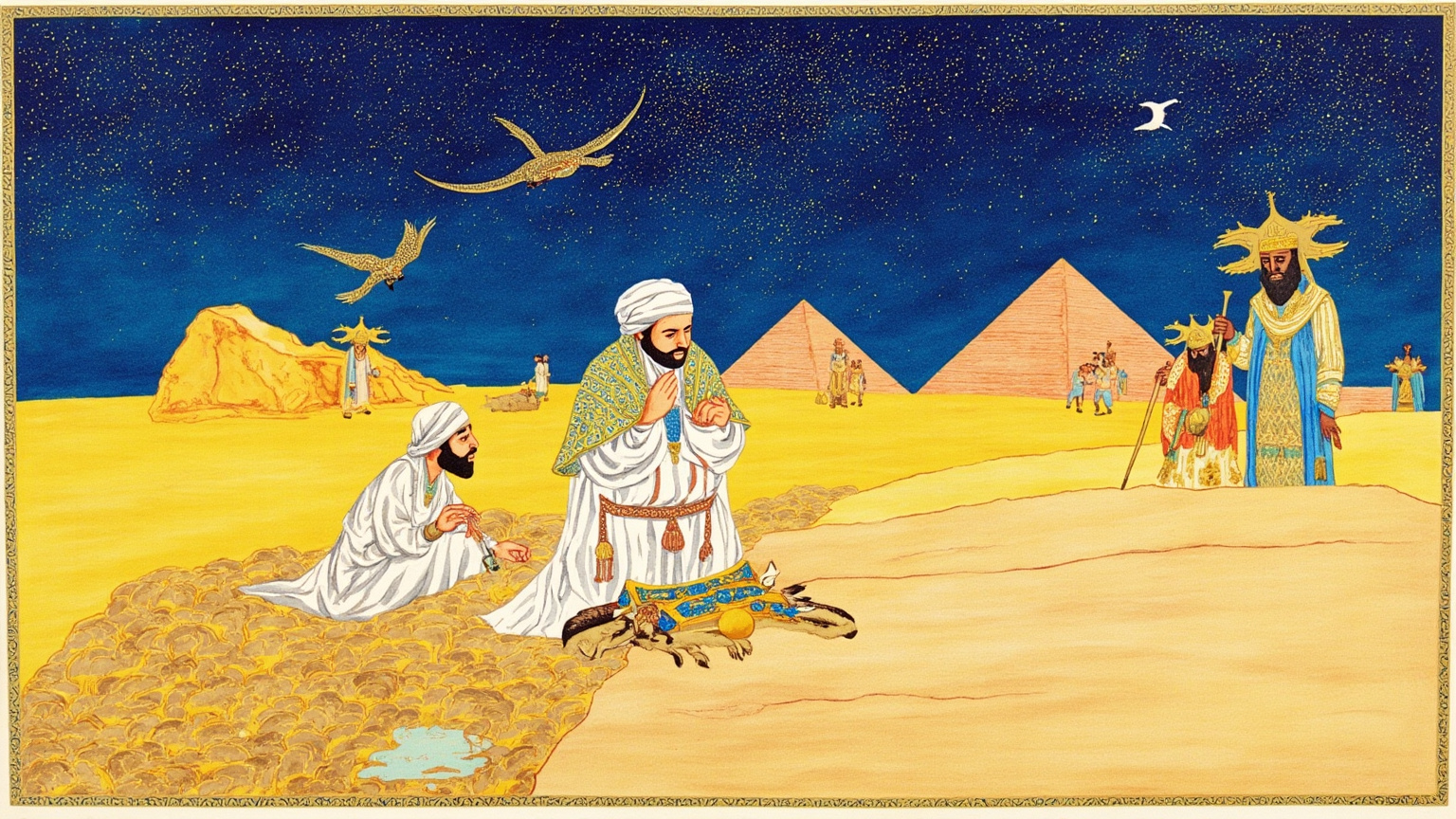
At the foot of the pyramids, the alchemist gives him a handful of gold dust and vanishes into the desert. The boy digs alone among the dunes, and digs, and finds nothing. A band of thieves finds him instead and beats him. Their leader searches his clothes, finds the gold dust, and laughs: you fool, running this far for a dream? I had the same dream once, treasure buried under a sycamore tree beside a ruined church in Spain. The boy gets up already knowing everything.
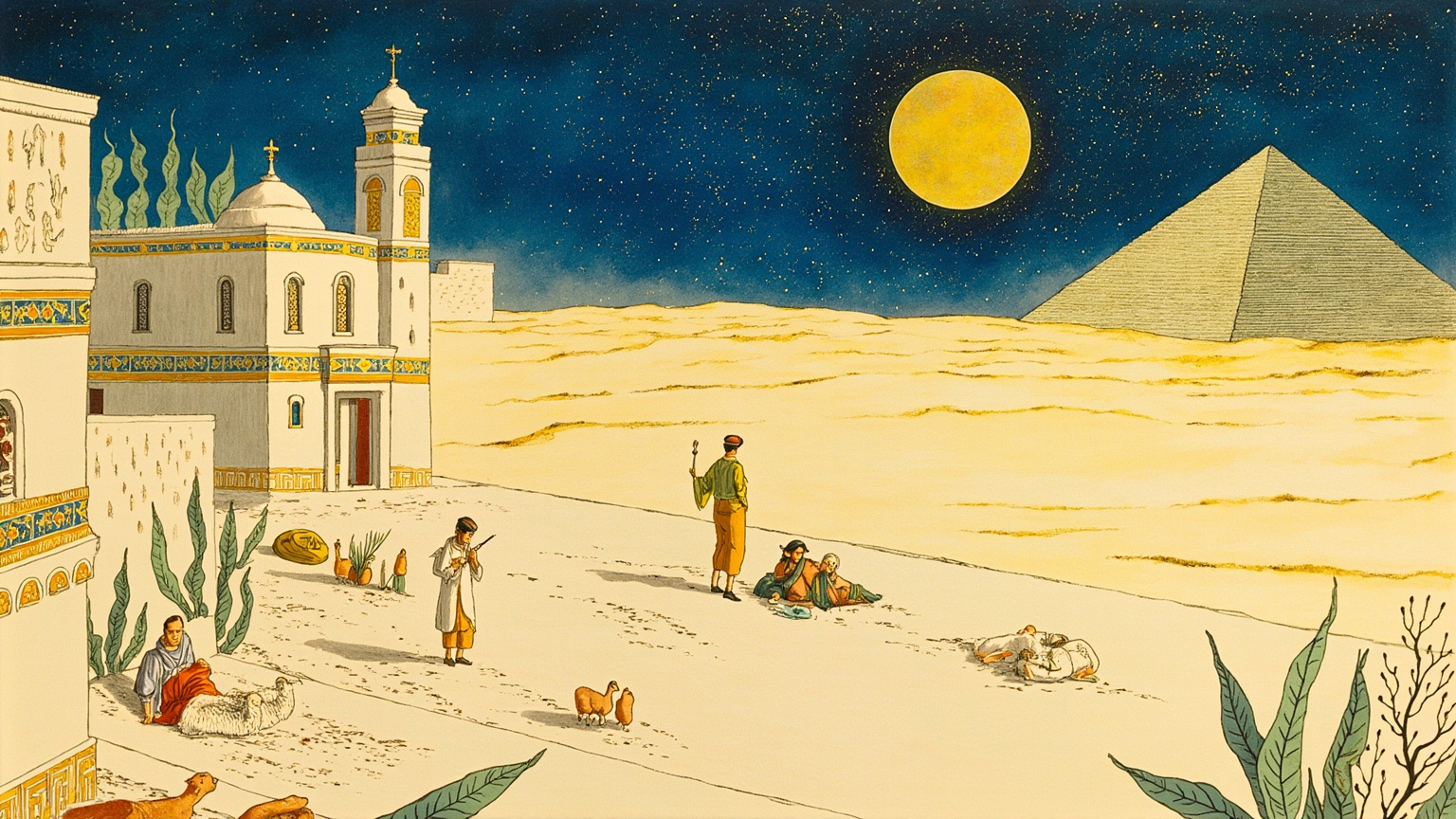
He retraces the whole journey back to Spain, back to the ruined church where he slept the night the story began. Under the sycamore tree, he digs, and a dust-covered chest lies among the roots. Inside are gold coins and a scatter of old Spanish jewelry, enough to become a shepherd again, and enough to ride back to Al-Fayoum in style. The Personal Legend is fulfilled. But anyone who gets this far stops to wonder: he was sleeping under that very tree at the start, why did the treasure require a detour all the way to the pyramids to dig up? Everything learned on that road, how to listen to the wind, how to read a hawk's eyes, how to fall in love with someone from the desert, how to turn yourself into the wind, that is the actual gold.
It's about what a Personal Legend originally means. Coelho isn't telling you to quit your job and chase a dream. What he's saying is that everyone knows, young, exactly what they want to do with their life, and that the years bring a slow pressure convincing you it's impossible and safer to give up. Reclaiming that first desire isn't self-indulgence, it's an obligation. It's about omens. Wind, sun, stones, the human heart all speak the same language, and learning to read it means learning to receive the letters the universe is writing you. Melchizedek's two stones, the beating the boy takes at the foot of the pyramids, both are receipts pressed into his hand.
More than that, the journey itself is the destination. The treasure was never a few pieces of gold. Being robbed in Tangier, reviving a dying crystal shop, learning to read a hawk's eyes at Al-Fayoum, turning himself into the wind at the tribal camp, all of that, together, is worth far more than what's in the chest. Fatima doesn't hold him back precisely because she understands this. It also says something that doesn't sit well with book lovers: the Englishman, with a trunk full of books, understands the desert later than the illiterate camel drivers do. The Englishman has knowledge. The boy has experience. This book sides with experience.
Knowing how it ends actually frees you to pay closer attention to every step along the way, which is where the book actually lives. How the boy holds himself together the moment he's robbed in Tangier, what happens inside him the instant a hawk's eyes save a whole oasis at Al-Fayoum, what he's thinking through the three days and nights he's forced to turn himself into wind at the tribal camp, none of that survives being summarized. Coelho wrote a fable made almost entirely of language, with no film or series to check it against, so every image has to run in your own head. That's what the book leaves you to do: raise that wind yourself.
The boy circles half the earth to come home and dig up a tree that was waiting for him the whole time, but without the long way round, he'd have stayed the shepherd asleep beneath it forever.