An ancient campaign epic with a method behind it, and how to read it without mistaking it for a novel
Text and illustrations produced by the pipeline
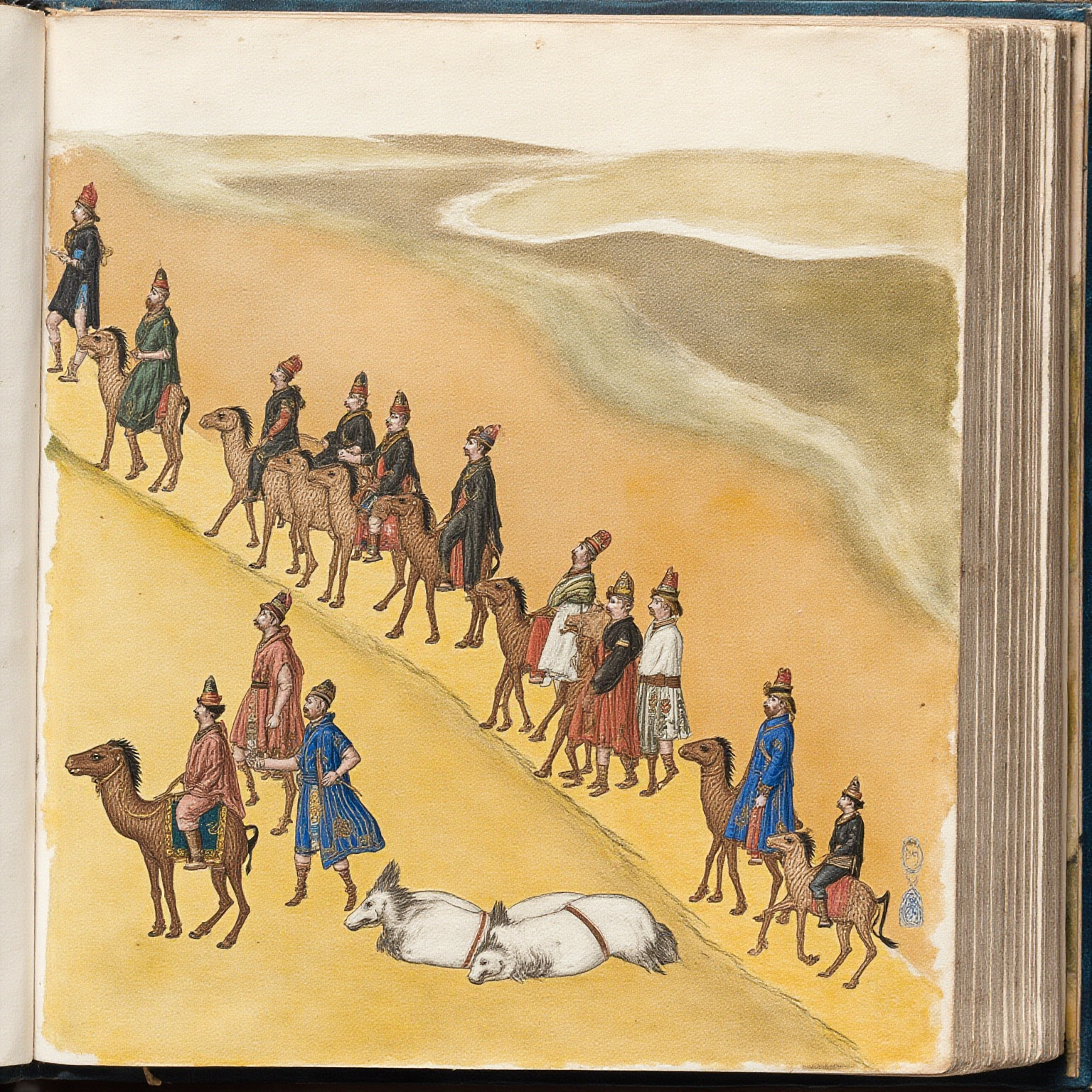
Camels carrying water collapse and die by the roadside. Baggage is left where it falls. Men walk through the sand too thirsty to speak. This is Alexander the Great's army on its way home, having just beaten an army of war elephants on the Indus, now crossing what is today Pakistan's Makran Desert on foot toward Babylon. More than a thousand kilometers of waterless ground still lie ahead. The darkest stretch in the whole book happens while the conqueror himself is still alive.
The man who set this death march down with a restraint that reads almost like a field manual was not a contemporary of Alexander's. He came five hundred years later: a Greek-born provincial governor under Rome, known to posterity as Arrian, and sometimes called a second Xenophon. The book is The Anabasis of Alexander, in Greek Anabasis Alexandrou, literally the march up-country. Anabasis means a march inland and upward from the coast. It is not a retreat. It is setting out.
Arrian was in his forties when he wrote it, serving as Rome's governor on the coast of Asia Minor, more than four hundred years after Alexander crossed the Hellespont. He was not a war correspondent, and he never met Alexander. What he had were two men who had actually been on the march: Ptolemy, later king of Egypt, and Aristobulus, Alexander's engineering adviser. Arrian tells the reader outright in his preface that these two are his main pillars, and where they disagree he lays both versions side by side rather than ruling for the reader. No one before him, not Herodotus, not Thucydides, not Polybius, had stated a method this openly. It is one of the book's lasting contributions to historiography: it is, itself, a demonstration of how history ought to be written.
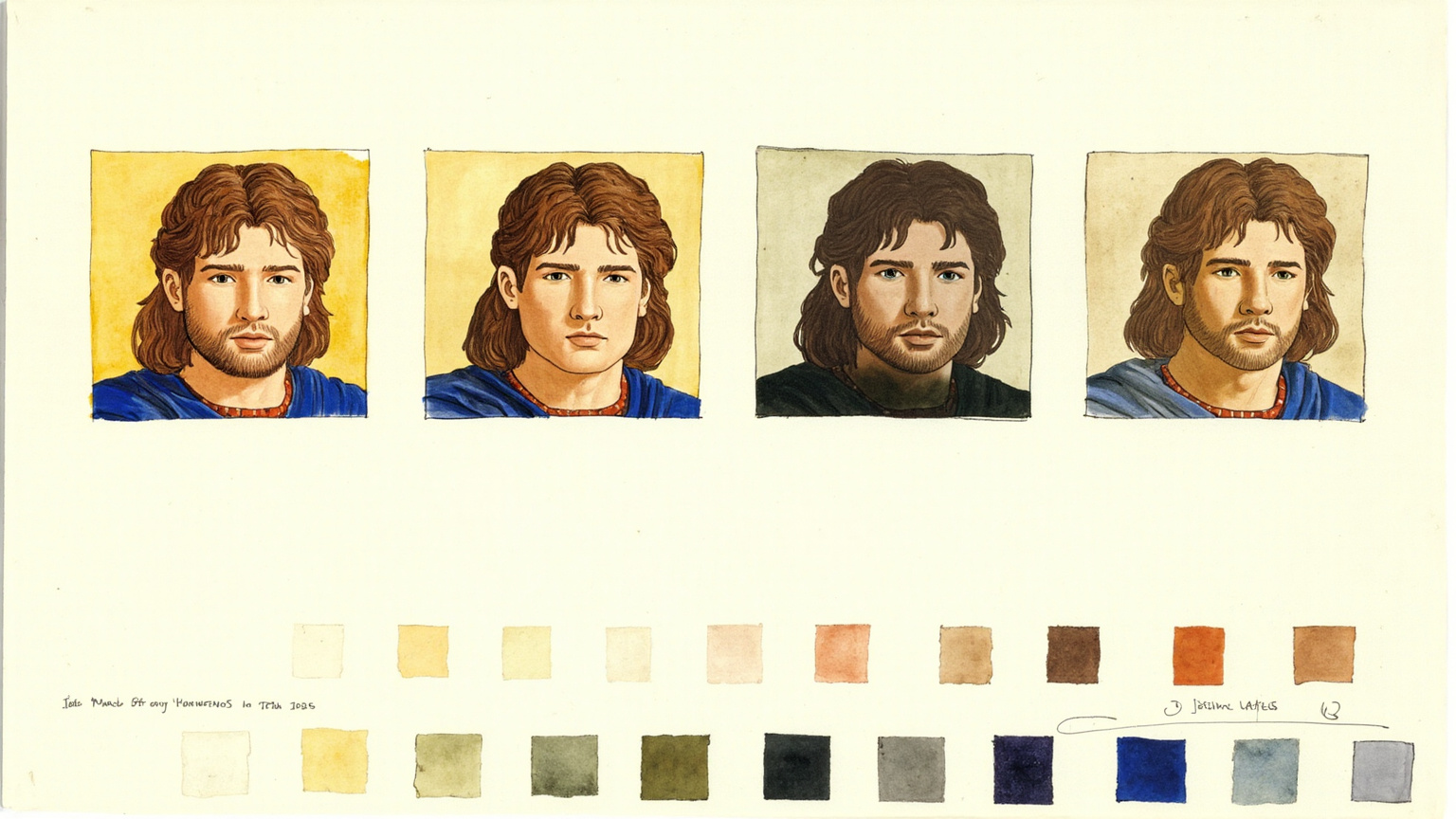
There is only one protagonist: Alexander, son of Philip II of Macedon, student of Aristotle, who crossed the Hellespont into Asia at twenty-two claiming to be a new Achilles. Closest to him was Hephaestion, a friend since boyhood and commander of the cavalry; in this book their bond is that of comrades in arms and in policy, not the romance later fiction made of it. One figure deserves particular mention: Bucephalus, a dark chestnut Thessalian horse with a black mane, said to have cost sixteen talents and to have thrown every rider until the twelve-year-old Alexander broke him. He carried Alexander from the Granicus all the way to the Indus. On the other side of this story stood the empire's last representative, Darius III of the Persian Achaemenid dynasty, beaten once at Issus and again at Gaugamela, finally killed by his own satrap of Bactria, Bessus.
The premise is simple enough: a combined Macedonian-Greek army marches out from the Mediterranean, fights its way east to the Indus, and turns back. Eleven years, crossing what is now Turkey, Syria, Egypt, Iraq, Iran, Afghanistan, and Pakistan. Arrian lays this route out like a long horizontal scroll: the blue-and-white coast of Asia Minor, the sun-white of Egypt, the ochre of Mesopotamia, the cold white snow of the Hindu Kush, and finally the wet green of the Indus. He does not write scenery. He writes fords, passes, rivers, sieges.


Before the guide was written, this book got a visual foundation — every illustration you just read grew out of it.
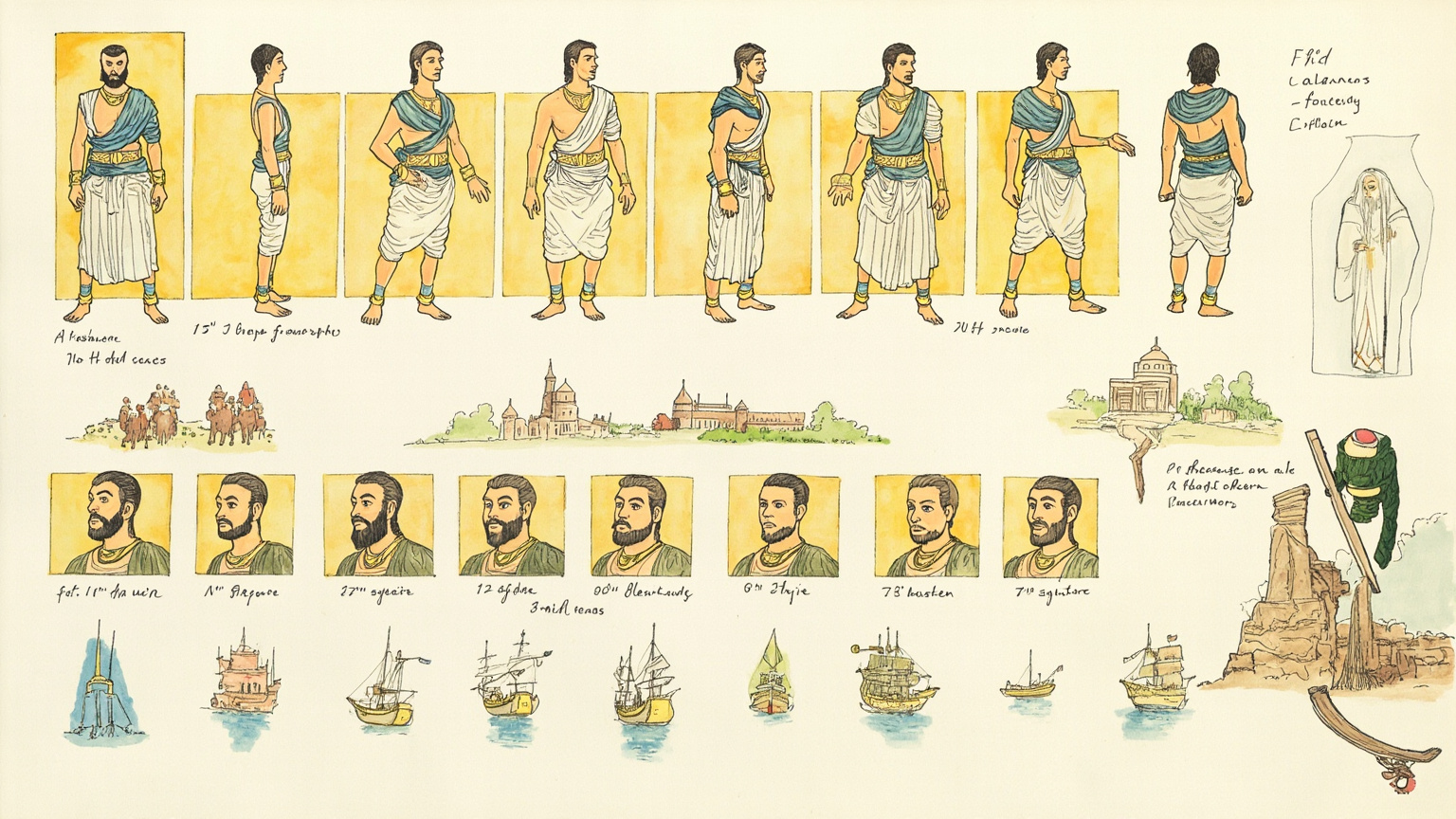
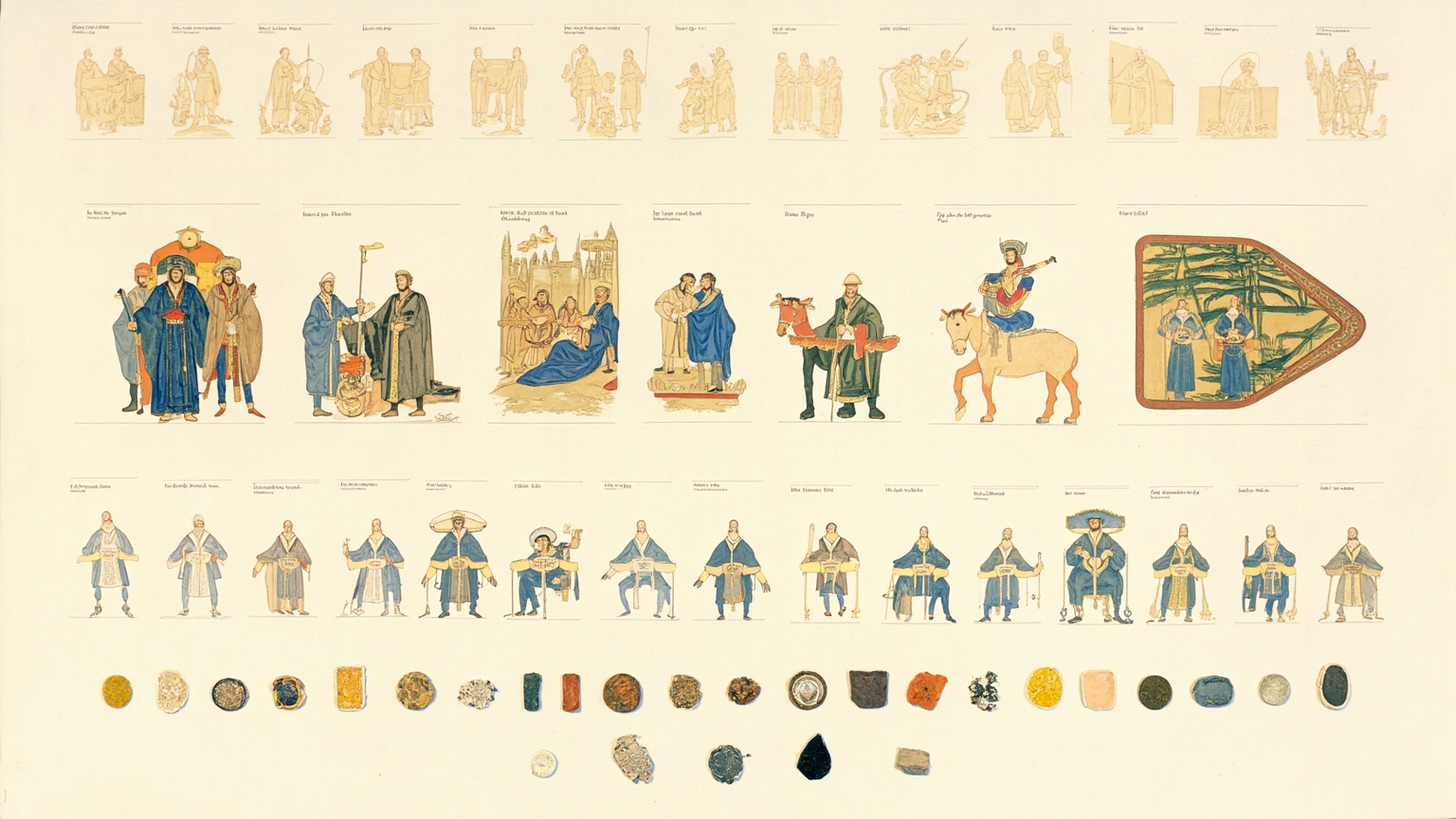
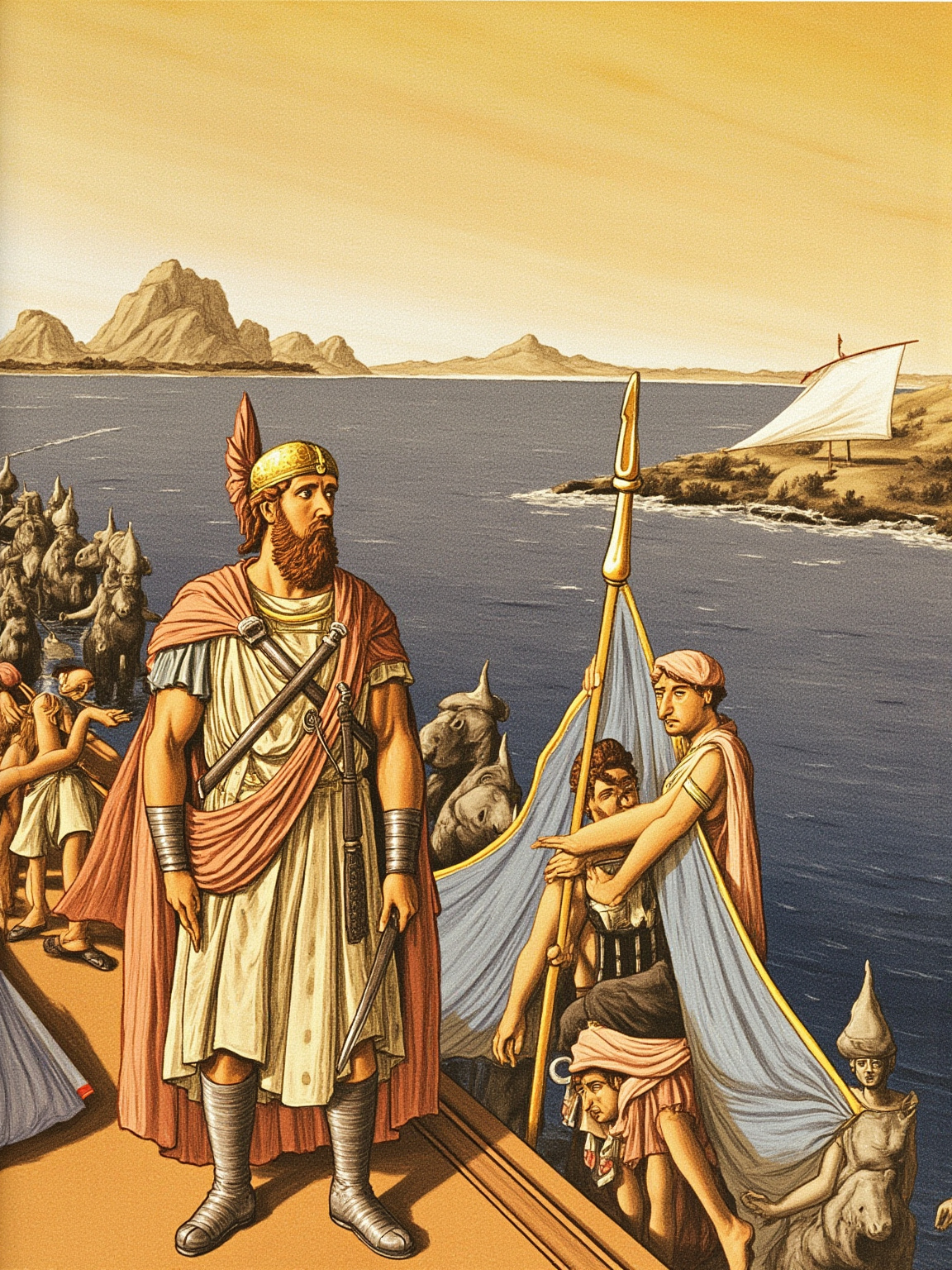
In the spring of 334 BC, twenty-two-year-old Alexander set out from Pella, the old Macedonian capital, and crossed the Hellespont into Asia. Passing what was said to be the tomb of Achilles, he stopped to make an offering, seeing himself as a continuation of Achilles' story. The book begins here: eleven years. Is the line from the Hellespont to the Indus straight? No. It is a string of specific passes and river crossings: the Granicus, the plain of Issus, the causeway at Tyre, the sand ridges of Gedrosia. This book's map is its table of contents.
The Granicus was the opening battle: a shallow river running through the hills of Asia Minor, forced by Alexander at the head of his own cavalry, scattering the Greek mercenaries fighting for Persia. The battle itself was small; what it opened was not. From then on the Greek cities of Asia Minor opened their gates to Macedon. Issus, the next stop, was his first formal meeting with Darius III, fought on a narrow coastal plain in Syria where the mountains against the sea left the Persian chariots and cavalry no room to maneuver. Darius lost again, and fled east, leaving his mother and wife behind. This battle set the rhythm for the next ten years: pursuit.
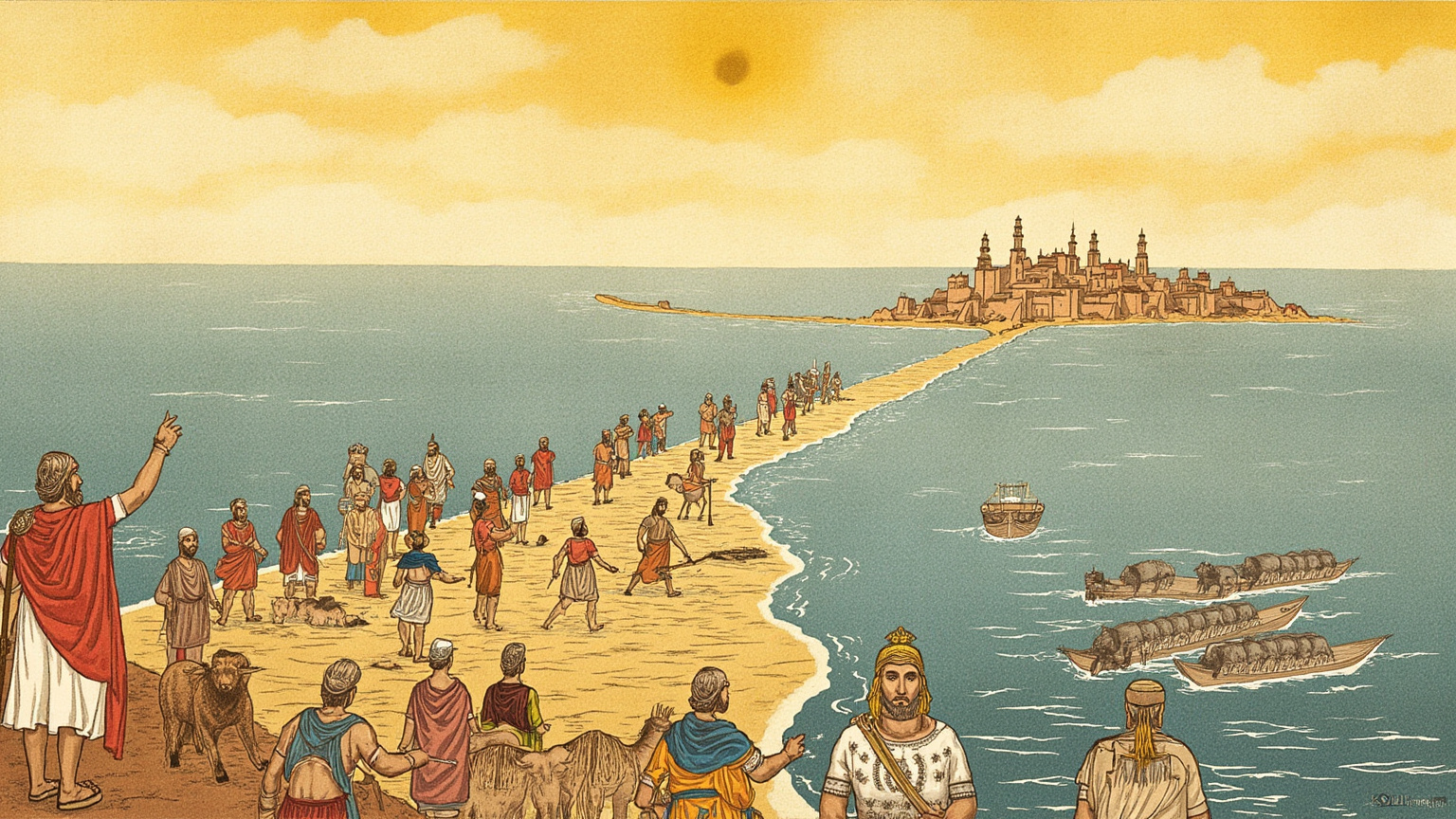
In 332 BC he set his sights on Tyre. The Phoenician city sat on an island about half a mile out to sea. Arrian describes a decision that reads like an engineer's: Alexander had his sappers build a mole roughly two hundred feet wide out from the shore, turning the island into a peninsula, then brought up the siege engines. Seven months. The day the mole reached the city walls is the single most spectacular scene in the book. What happened after the city fell, Arrian states as fact and lets it sit there without dwelling on it. That restraint, stopping the account at the moment of capture, is the book's default register. Gaza fell the same year.
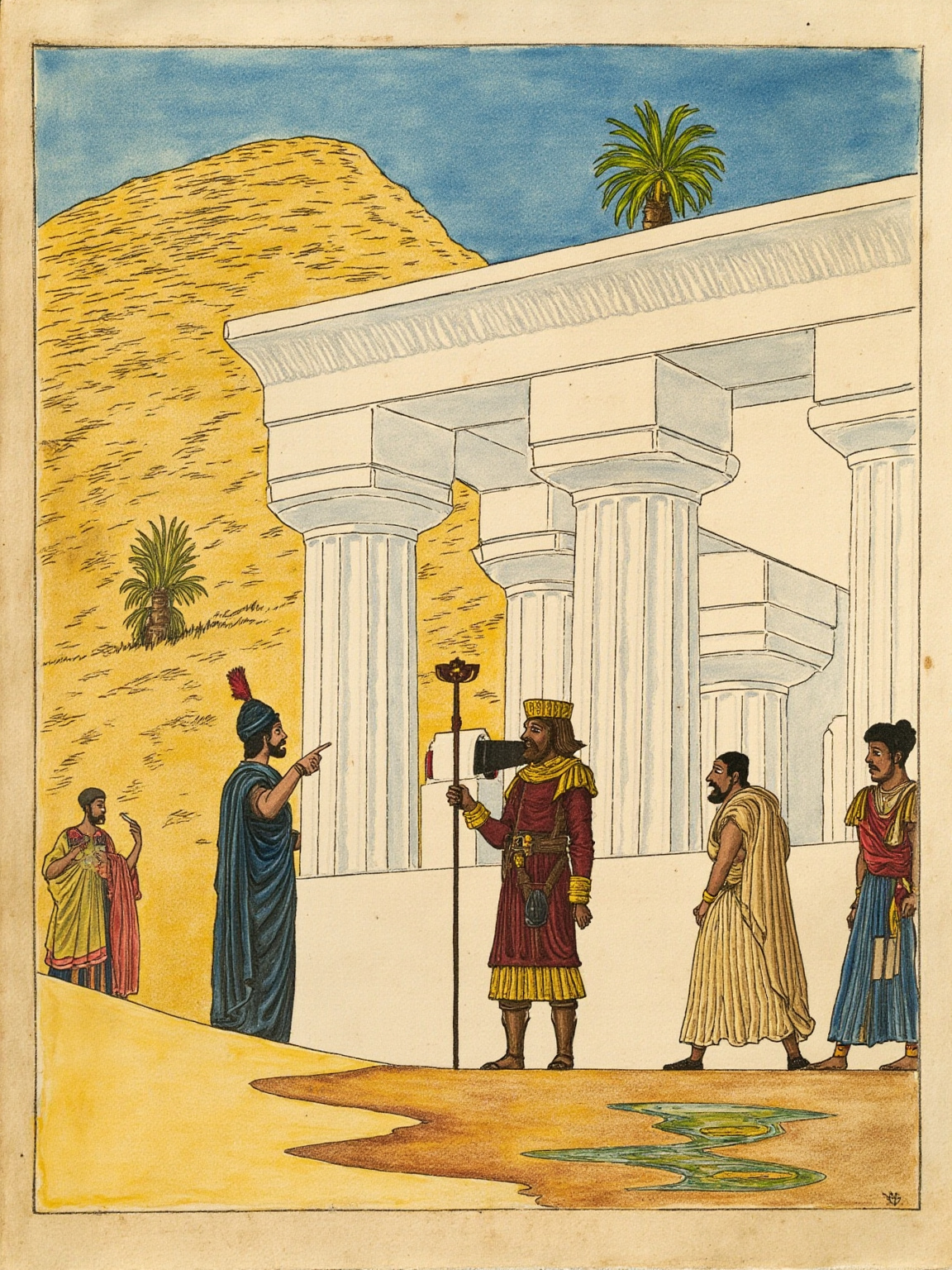
Egypt is where the book's mood turns. He went south to Memphis and was received there with the honors of a pharaoh. Then, against advice, he led a party himself deep into the desert to the Siwa Oasis to consult the oracle at the Temple of Amun. What he was told, Arrian records only as this: the oracle acknowledged him as the son of a god. On the way back he laid out, personally, a new city on the Mediterranean coast west of the Nile Delta, Alexandria, the first place where he nailed his own name into the geography of the East. From here on he stopped calling himself king of Macedon and took the title king of Asia.
In 331 BC, Gaugamela was where East and West finally met on the same field, fought on the plain of northern Mesopotamia when Alexander was twenty-six. This was the battle that actually decided which way the whole war would go. Darius III brought out everything he had, including war elephants and scythed chariots. The Macedonian phalanx held against the Persian breakthrough at the center, while Alexander led the right-wing cavalry in a direct strike at Darius's chariot. Darius ran again, but this time he never came back. Afterward Alexander entered Babylon, which surrendered on its own, then Susa, then Persepolis. At Persepolis he ordered the burning of the palace Xerxes I had built, in what Arrian records as a stated reprisal for Xerxes's burning of Athens. It was the first time the conqueror openly settled a score with the East.
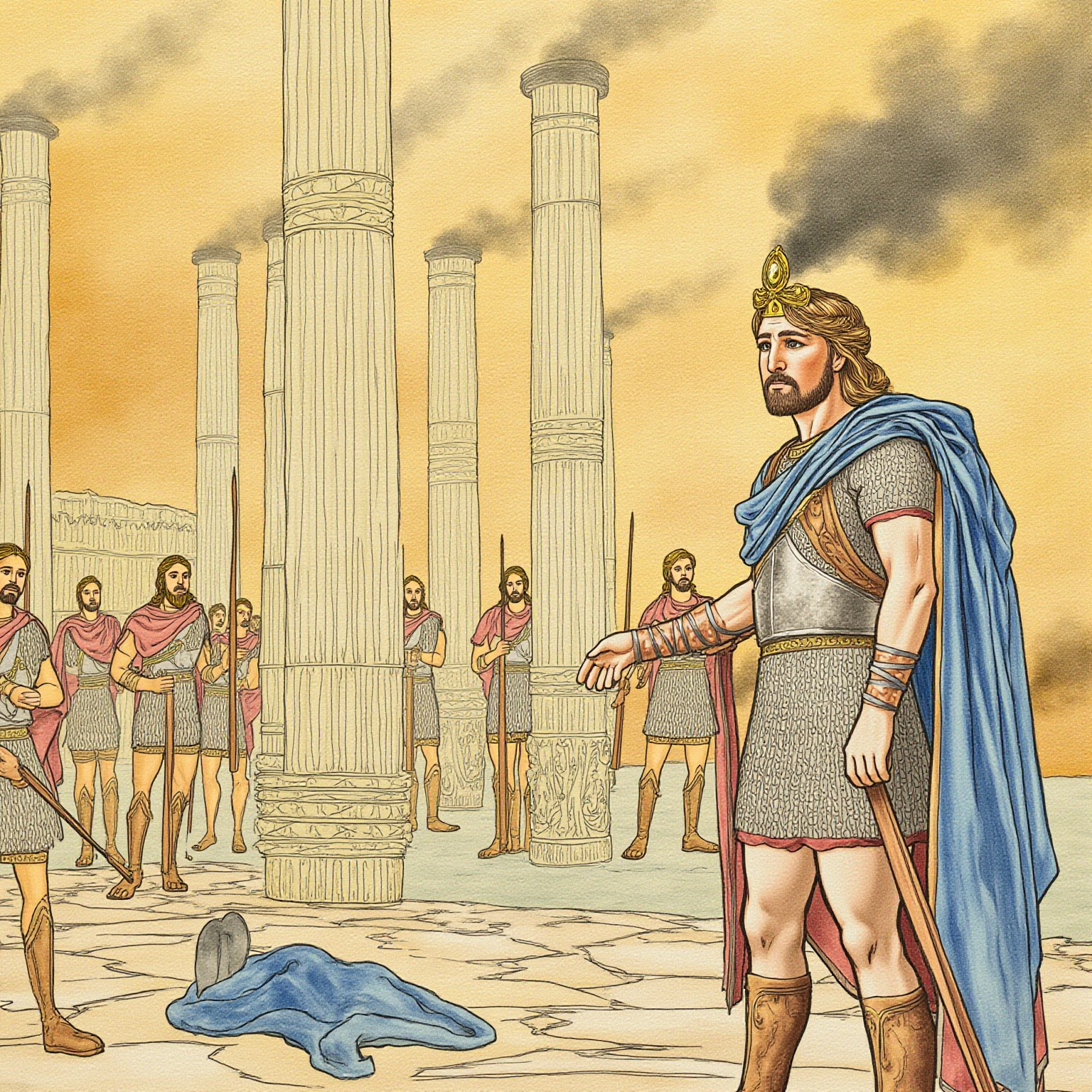
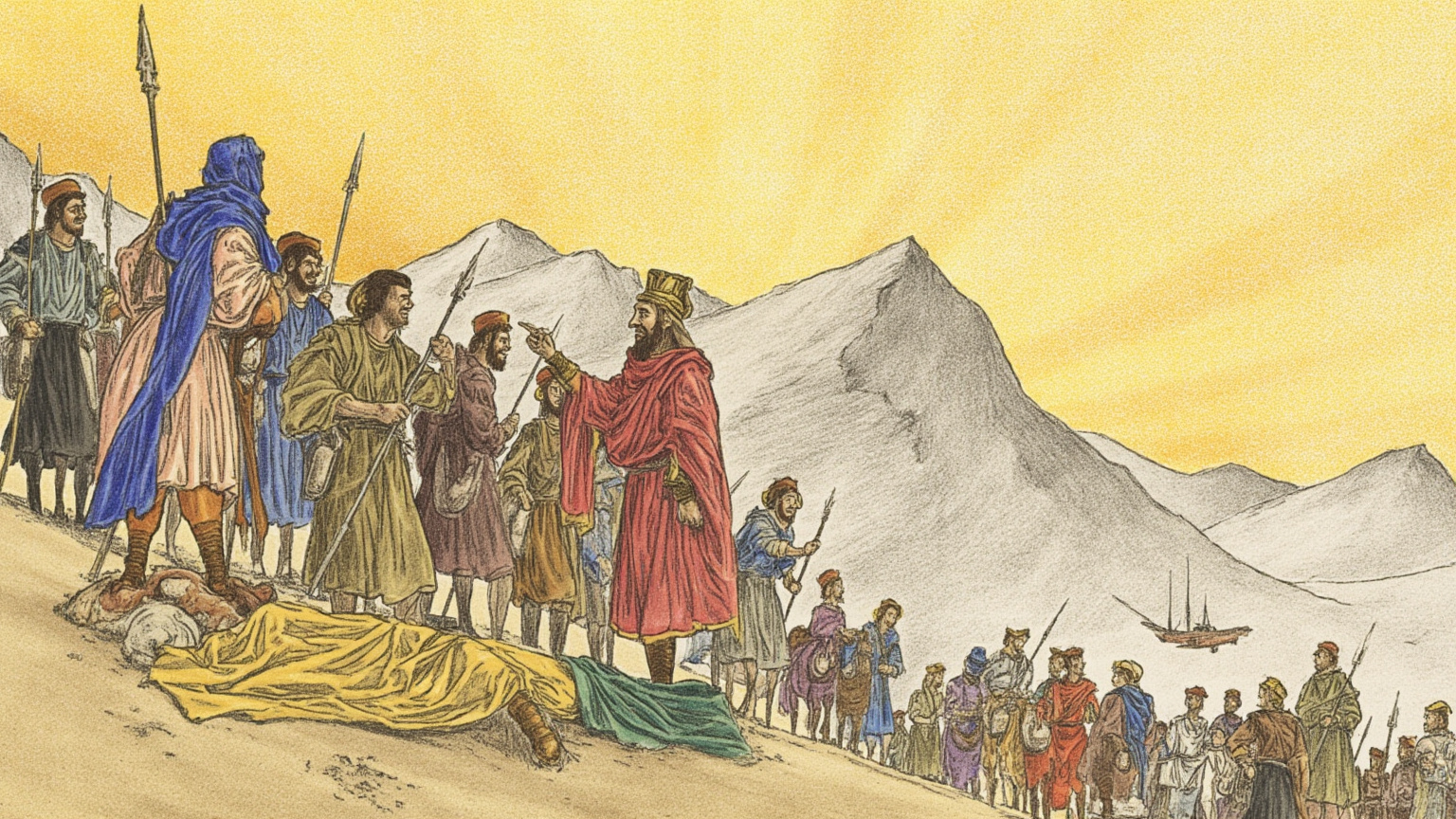
The pursuit of Darius and the guerrilla fighting in Sogdiana form the coldest stretch in the book. Alexander chased east until he stood over Darius's body. Darius had been killed by his own satrap of Bactria, Bessus, and when Alexander arrived he laid his own purple cloak over his enemy's corpse. It became the ancient model for the story of honoring a dead rival. Trouble followed close behind. Alexander took to wearing Persian dress and had his officers marry Persian wives, which his Macedonian veterans read as betrayal. One night, drinking with his old general Cleitus, he killed him with his own hands in the middle of an argument, by lamplight in the tent. It is the heaviest scene in the whole book, and Arrian, again, states it as fact and adds nothing. There is no sense of victory in this section.
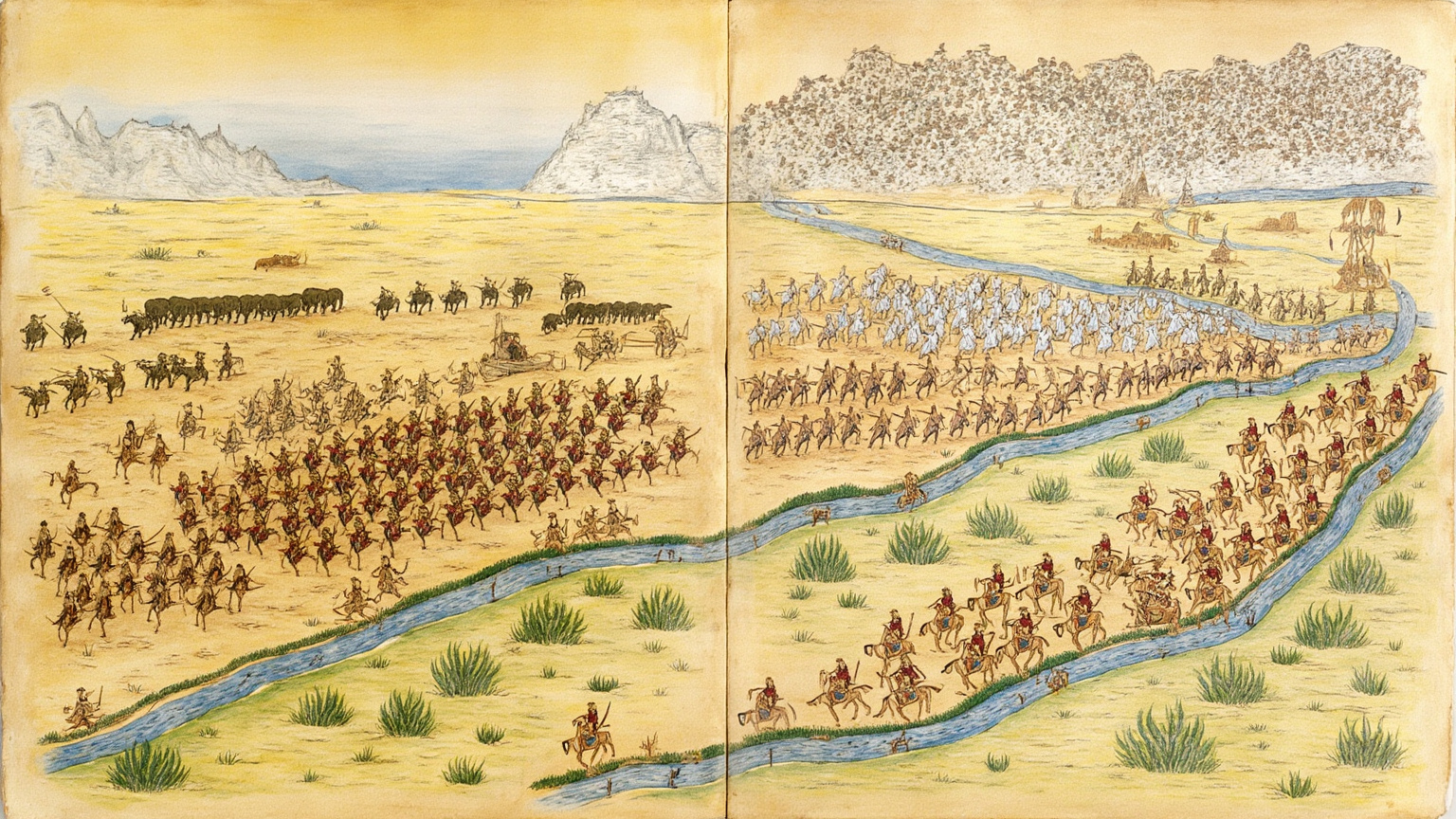
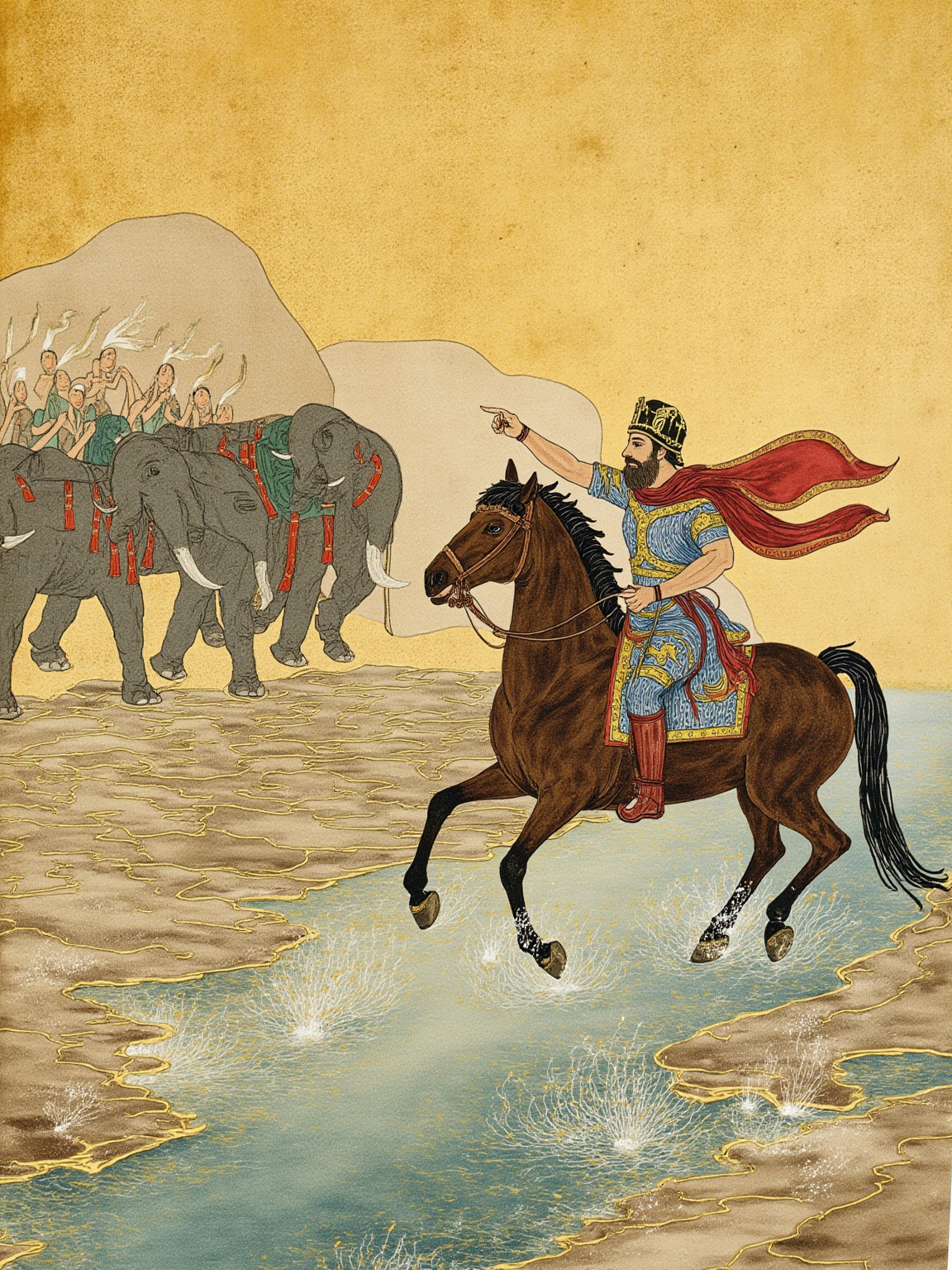
In 326 BC, the battle of the elephants at the Hydaspes is the book's climax, and Bucephalus's final scene. The river is today's Jhelum in Pakistan; across it stood the army of Porus, king of the Indian states beyond the Indus, elephants and chariots and infantry mixed together. Alexander crossed the river in the rain, riding Bucephalus, and caught Porus off balance. The elephants trampled their own lines, and the fighting ran on into the night. He won, but the horse would not get up again. Bucephalus died at his master's feet, at roughly thirty years old. Alexander founded a city on the riverbank and named it Bucephalus. It is the quietest new city in the whole book.
The journey home is where this book truly will not let the reader sit still. The main fleet sailed down the Indus, while Alexander led the bulk of the army overland through the Gedrosian desert, today's Makran in Pakistan. Heat, no water, baggage abandoned along the way. This is the darkest stretch in the entire book, darker even than the march after Gaugamela. He reached Babylon again in 324 BC and set about reordering the administration. In June of 323 BC, Alexander died in Babylon of a fever that followed a banquet and a hangover, at twenty-six. A commander who had fought from twenty-two to twenty-six was simply gone.
Why is this book considered good? Because it does not exaggerate. Arrian's Alexander is not a god, not a great lover, not a tragic hero. He is a commander who kills an old friend by lamplight in his own tent and drives his army to the edge of death in the desert. Restraint is the register Arrian sets for the whole book: he stays clear of the romanticized epic color later writers reached for, says as little as he can get away with, and once he has written that a city fell, he stops there. This is why nearly every modern account of Gaugamela, the siege of Tyre, or the elephant battle at the Hydaspes traces back to Arrian, and not to the more dramatic Plutarch or Curtius.
It is also the first wide-ranging visual record of East meeting West in the ancient world. From the Macedonian phalanx to the Persian purple robe, from the stone towers of Phoenicia to the elephant herds of India, from the blue and white of the Mediterranean to the cold white of the snow peaks to the ochre of the desert, this horizontal scroll is something no Alexander film has managed to reproduce in full. Arrian never set out to write a thrilling book. He set out to write a march with a conscious method behind it, and he succeeded. That is exactly why, two thousand years later, a reader can still watch, in this account of a march, an army walk from the coast all the way to India and nearly die in the desert on the way back.
The Anabasis is not a biography of Alexander. It is the line itself: eleven years of routes, river crossings, sieges, and encounters.