The Awakening · Companion Guide
The Awakening
One summer on the Gulf of Mexico, a young Creole wife hears for the first time what she wants — and the coat called "good wife" never fits again, not until she walks into the sea.
Opening: a woman told how she was supposed to live
You are sitting in a columned house in New Orleans. A bill lies on the table, a piano stands in the parlor, and two children are waiting to be nursed. You are already part of the respectable order your husband imagines, and the servants treat you exactly as you're supposed to be treated. But somewhere inside you a voice keeps saying, quietly and stubbornly: I belong to myself, and I want days that are mine. This book turns that voice — and the flood it sets off — into a novel. More than a century ago, a mother of about thirty learned to swim for the first time one summer on the Gulf of Mexico. What she learned afterward went far beyond swimming. Later still, she swam out into the sea and never turned back.
What kind of book this is
The Awakening was published in the late nineteenth century by the American writer Kate Chopin, and the story is set in Louisiana in the 1890s. Today it is recognized as a landmark of early American feminist fiction — but when it first appeared, it was practically shouted off the shelves. Its frank treatment of a married woman's desire and self-awareness got it condemned as immoral, and it went out of print for decades, waiting until the feminist wave of the 1970s to be dug back out of the archive and read again. In other words, it is remembered for two reasons in equal measure: because it is beautifully written, and because it dared, in that era, to give a woman an 'I want.' Both of those still feel new today.
People and world: a Creole summer, a young wife's cage
The story runs on two tracks: the first half takes place on Grand Isle, a Gulf Coast resort for Creole high society, where Madame Lebrun runs the guest house and the sea breeze, the piano, and a frankness in conversation that would make an outsider blush all mix together; the second half returns to the family's house and the streets of New Orleans. Our protagonist, Edna, is twenty-eight, the mother of two. She comes from a Presbyterian family in Kentucky, an outsider among these Creoles — she has been married into the group for years and has learned the customs, but the reserve underneath was never fully dissolved. Around her stand a handful of other people: Her husband, Léonce, a forty-year-old New Orleans merchant who provides well for her but treats his wife rather like a piece of property that has been damaged — he cares deeply about appearances and keeps to the rules; he isn't a bad man, he simply doesn't understand his wife's heart. Robert, Madame Lebrun's son, young and handsome, forms a smoldering attachment to Edna on Grand Isle and becomes the fuse for her sexual awakening. Adèle, Edna's close friend on the island, is the perfect 'mother-woman' — she adores her husband and lives entirely for her children, and her open, unguarded manner works like a mirror, showing Edna the self she has been holding down all along. Mademoiselle Reisz, an unmarried, childless pianist who lives apart from society and has made art her whole life, becomes Edna's spiritual guide. Alcée Arobin, a New Orleans playboy — Edna's involvement with him is purely physical, and she keeps it on a separate ledger from her feelings for Robert.
Summer on Grand Isle: body and self wake up at the same time
The novel opens with the Pontelliers arriving on Grand Isle for the summer. There Edna does something she has never dared before — one night, with no one teaching her, she swims out on her own. Here is the stroke of craft: Chopin never makes her learning to swim depend on a man. No one holds her up, no one coaches her into it; it is her own muscles that find their way to the surface in the dark. The freeing of her body and the waking of her self happen in the same instant. Meanwhile her attraction to Robert keeps growing. Creole social life runs frank and unguarded, and a man's compliments to a woman don't have to stay hidden — which is exactly what lets Robert's attentions, little by little, pry open the side of Edna that has been shut down for so long.
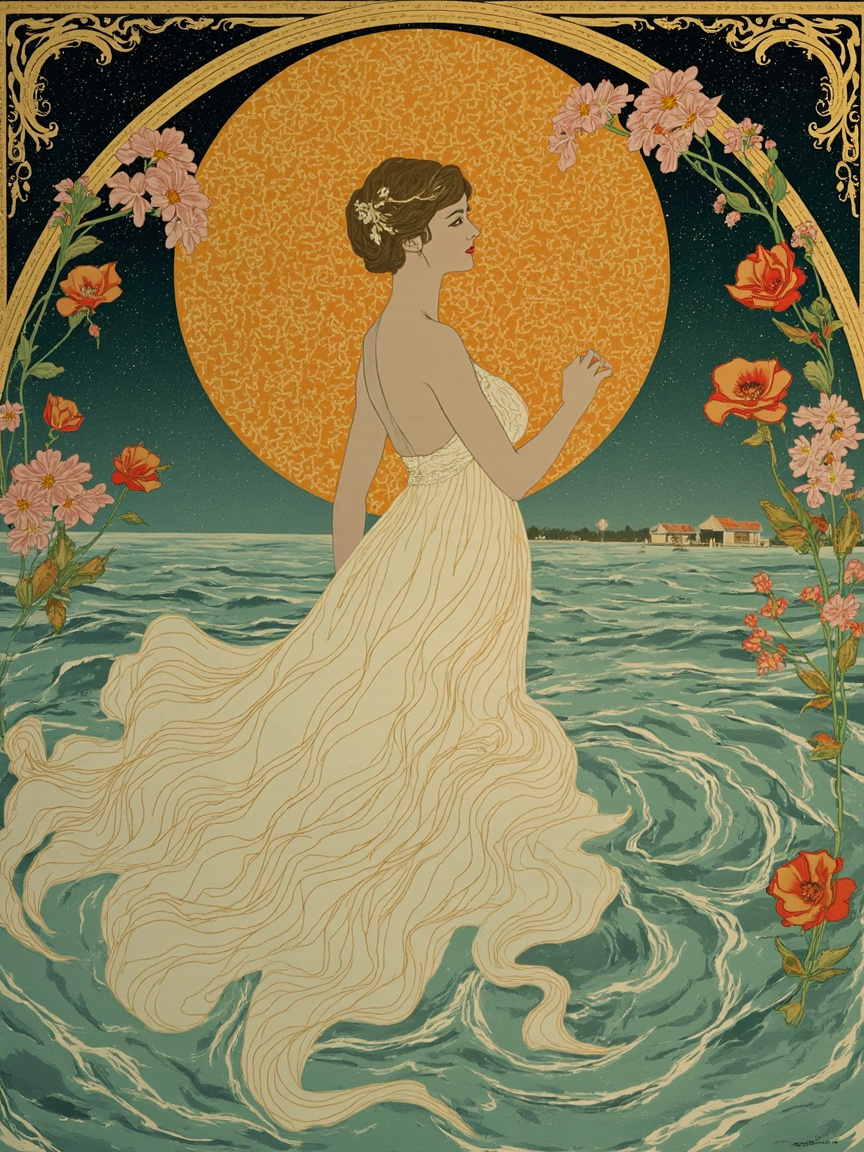
She wanted to swim far out, where no woman had swum before.
她想游向远方,游到从没有女人去过的地方。
Original line · summer at Grand Isle, swimming out alone into open water
Robert's escape: the fuse pulled, no way back to who she was
Just as the flirtation reaches its limit, Robert vanishes — sensing he has crossed a line, he chooses to run off to Mexico instead. On the surface this just looks like a man making his exit. But here is Chopin's real cruelty: with the fuse of desire pulled away, Edna's awakening doesn't go out — it burns brighter. For the rest of her time on Grand Isle she is consumed with thoughts of him, but what is stirring her by now is no longer Robert. It is herself.
Back in New Orleans: starting to say no to a schedule already written for her
In September the family returns to the city. With a set of finely drawn contrasts, Chopin shows Edna departing, bit by bit, from the schedule of a proper Creole wife — Tuesday is meant to be her at-home day for callers, and instead she shuts the door and paints; she used to see to her children's evening prayers herself, and now leaves it to the servant; the social calls Léonce has arranged for her, she starts to skip. The skill here is that the whole book stays pressed against Edna's inner water level rather than reaching for melodrama — it is psychological realism, not a string of scenes. There is no big blowup, just a woman's center of gravity quietly shifting from wherever other people have arranged for her to be, to wherever she actually wants to stand.
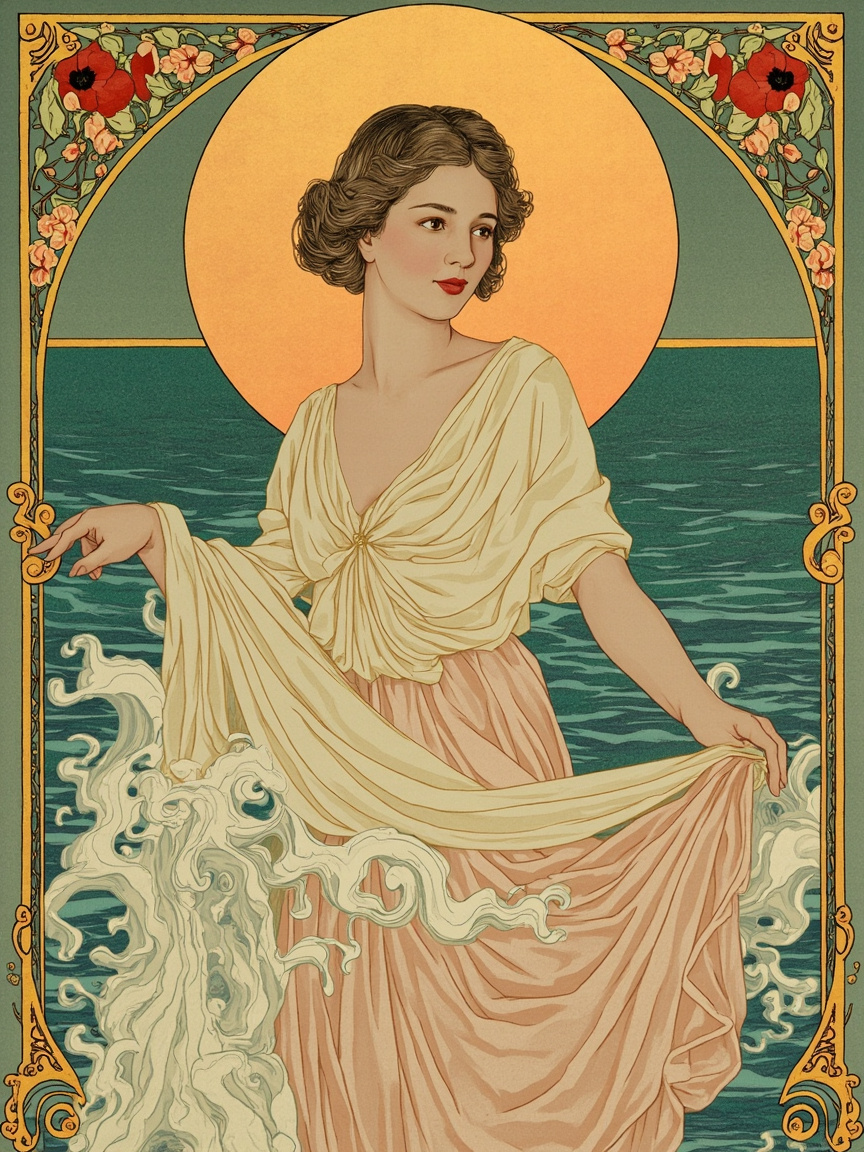
She began to do as she liked and to feel as she liked.
她开始随自己的心意去做、随自己的心意去感受。
Original line · back in New Orleans, saying "no" to the fixed schedule
Mademoiselle Reisz and the pigeon house: a room of her own for the first time
The spiritual centerpiece of the novel is Edna's encounter with the pianist Mademoiselle Reisz. Unmarried, childless, having made art her entire existence, she works like a mirror held up to a utopia — showing Edna another way a woman's life might go. Through her, Chopin delivers the warning that the bird that would soar above convention must have strong wings, a line Edna keeps circling back to afterward. What moves Edna is not only the art but the fact of holding her own life in her own hands. In a window while Léonce is away on business, Edna decisively moves out of the family house and into a small place nearby called the pigeon house, paid for with money she has earned from selling her own paintings. It is the quietest moment in the whole book, and the most complete: my money, my room, my time.
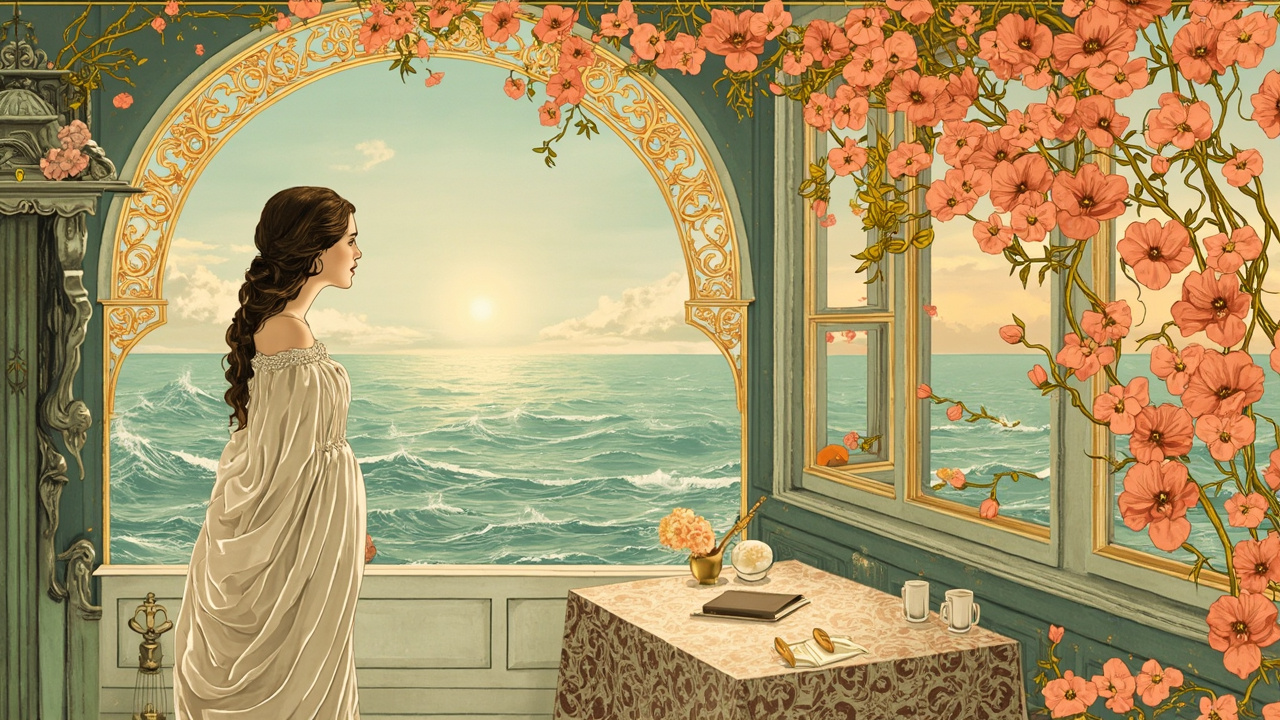
The bird that would soar above the level plain of tradition and prejudice must have strong wings.
要飞越传统与偏见那片平原的鸟,翅膀必须够硬。
Original line · Mademoiselle Reisz on "the bird that dares to fly"
Arobin: desire wakes up, but belongs to no one
Chopin then makes a genuinely bold move: Edna becomes involved with Alcée Arobin, the New Orleans playboy — and the narrator tells us plainly that this is kept on a separate account from what she feels for Robert. This relationship sits purely on the level of the body — no love in it, no name for it. Its only purpose is to prove that Edna's awakening is a waking of desire and selfhood as a whole, not simply falling in love with one particular man. Chopin writes it with an almost clinical precision, laying out with total clarity that a woman can hold sovereignty over her own body.
Robert returns, then leaves again: an 'I love you too' bound by convention
Robert comes back from Mexico. The two of them finally lay out the card they have both been holding. But laying it out only makes things worse: Robert leaves not because he doesn't love her, but precisely because he does. He cannot bring himself to step outside the conventions of Creole society and become the man who runs off with someone else's wife — he loses his nerve, though it is hard to blame him for it. He leaves behind a note whose parting words say that it is exactly because he loves her that he is going. This is the gentlest and most fatal cut in the whole book: the road of romantic love closes too. Chopin never makes this a matter of anyone being at fault — it is a structural despair, one built into the rules themselves.
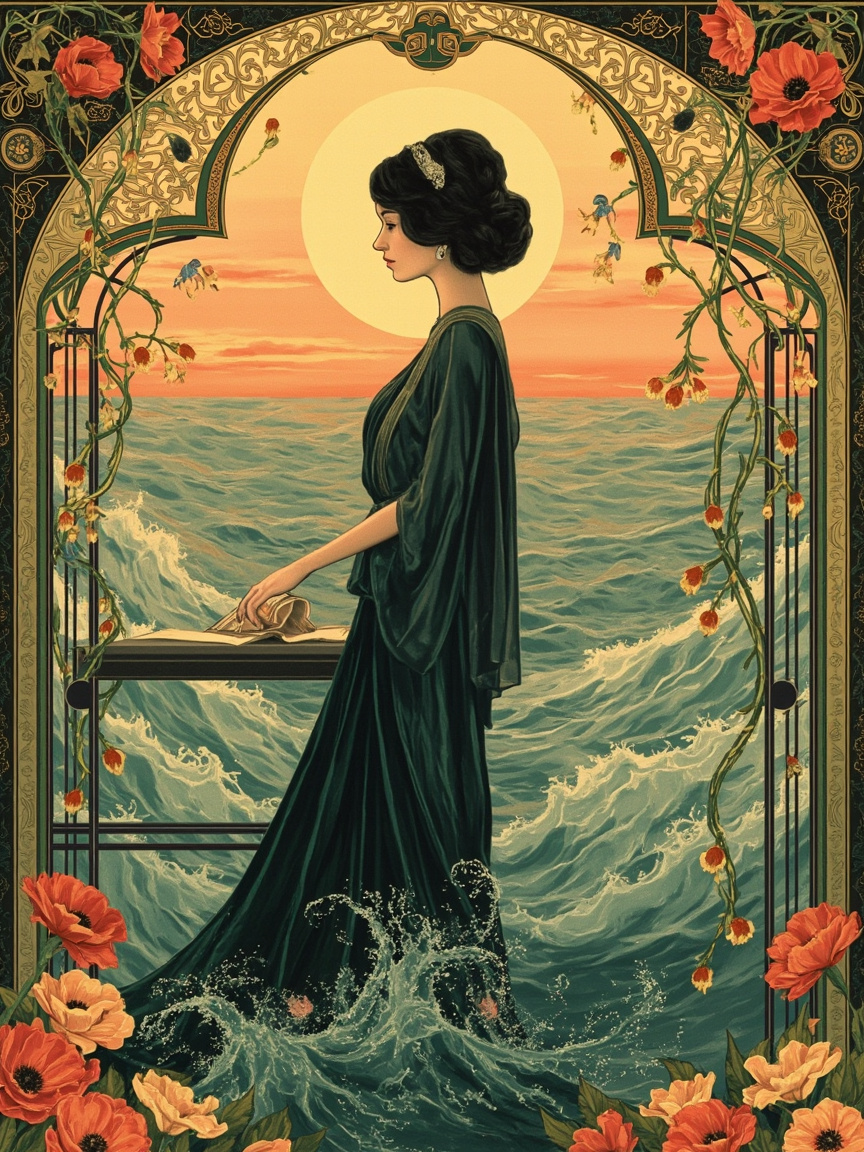
I love you. Good-by—because I love you.
我爱你。别了——正因为我爱你。
Original line · Robert's farewell note
Walking into the sea: the blank space is itself the answer
Edna takes the train back to Grand Isle alone. She sheds her clothes, steps into the water, and swims on and on toward the horizon — without turning back. Here Chopin gives American literature one of its most famous open endings. She never tells us what is actually going through Edna's mind in that moment, and never says whether she goes under or reaches somewhere. That blank space has kept readers arguing for more than a century, splitting into three camps: that this is suicide, that this is total self-liberation, or that it is both at once. The author refuses to hand down a moral verdict — and that refusal is exactly what makes the book so sharp.

The voice of the sea is seductive, never ceasing, whispering, clamoring, murmuring, inviting the soul to wander in abysses of solitude.
大海的声音充满诱惑,永不止息,低语、喧嚷、呢喃,邀请灵魂去孤独的深渊里游荡一程。
Original line · the novel's final chapter · walking into the Gulf of Mexico
The sea has been murmuring in her ear since the first page, until on the last page she walks into it — what this novel does is turn a woman's 'I want' from background noise into the melody.
Themes and craft: an awakening of the whole person
What The Awakening is really saying is that the word 'awakening' means something far bigger than most people assume. This isn't a story about an affair, and it isn't a story about a woman finally finding true love — it is the story of desire, artistic consciousness, and selfhood all opening their eyes at once, of a person beginning to claim ownership over her own body, desire, time, and money. To write this in 1899 was already an act of nerve in itself. The craft is just as deliberate. Chopin is a master of psychological realism, and the novel has no big swings of plot; instead it stays pressed against Edna's inner water level as it loosens, inch by inch. The sea, music, swimming, birds in flight — these images are woven into a tight web of symbol, and the little rented pigeon house that decides her fate becomes, once the door is shut, a place where one person owns twenty-four full hours of her own. The sea, as the motif running through the whole book, is especially precise: it seduces and it swallows, it baptizes and it ends things — the sound of the sea is always alluring, but being lured has never once been free.
Reasons to read the text itself: the map is not the territory
Knowing the plot in advance is no reason to skip the book itself, because there are three things no summary can give you. The first is that sense of breath changing inch by inch inside a body — an awakening isn't a thought experiment, it's a process in which muscle, desire, and social identity all shift at once, and Chopin gets it onto the page in sentences of remarkable restraint. The second is the sound, color, and scent of the Creole world itself: the piano drifting through the seaside guest house, the unguarded murmur of Creole women, the slanting afternoon light and jasmine in the old New Orleans house — the distances, the manners, the taboos running between these people are the soil Edna's awakening grows out of, and only that humid, close air on the page can make you feel truly short of breath. The third is the weight of that blank space at the end. A summary can tell you three answers coexist, but standing on the last page, watching the horizon fill your whole field of vision, you complete that answer yourself, inside yourself — and that is the one part no one can do for the reader.
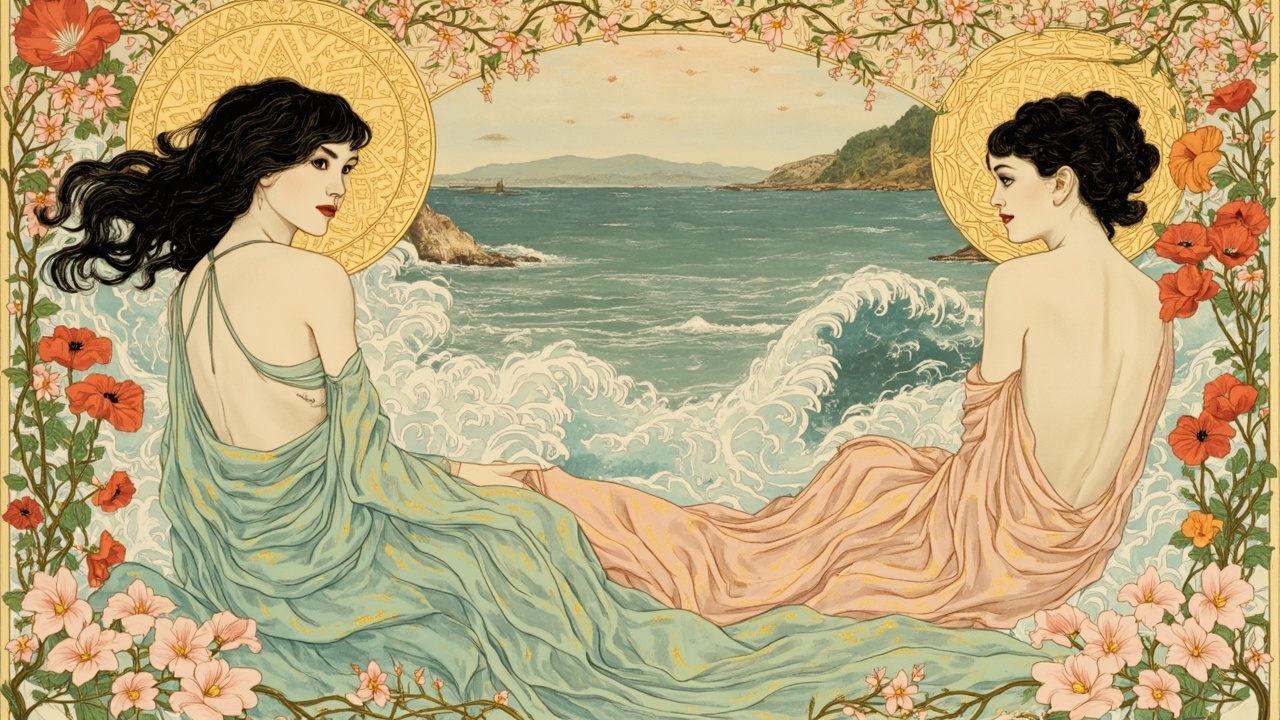
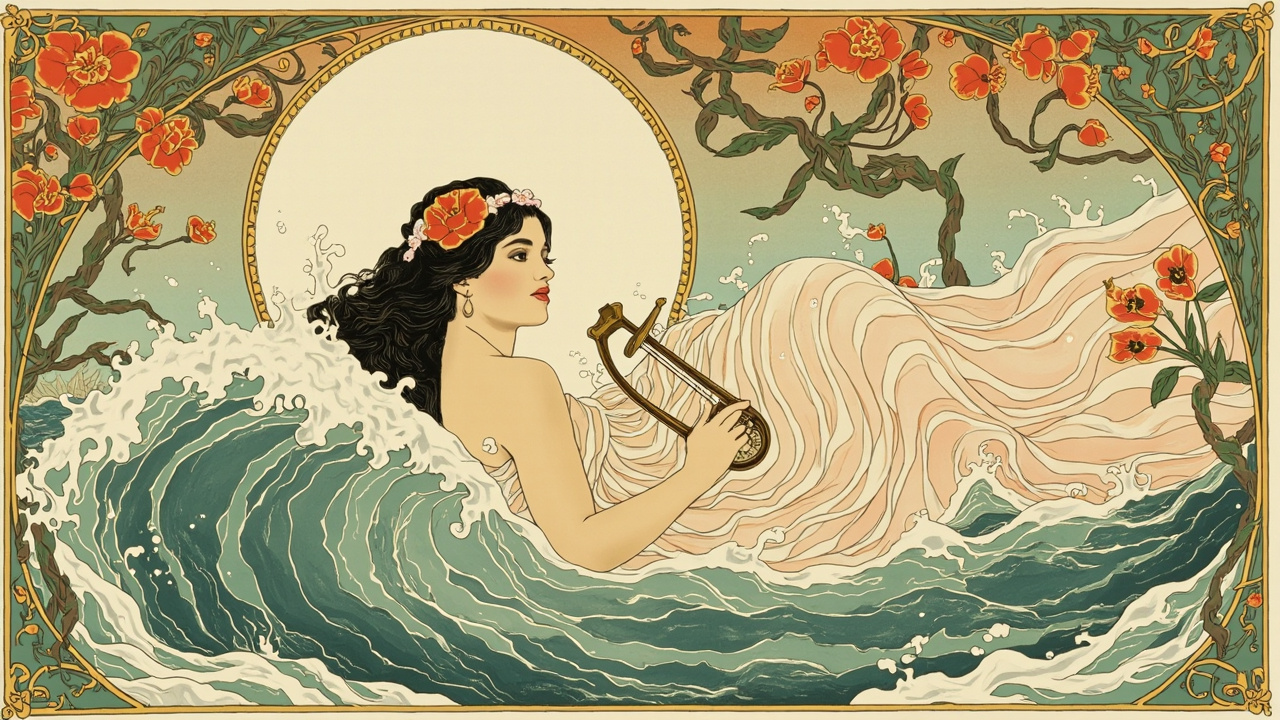
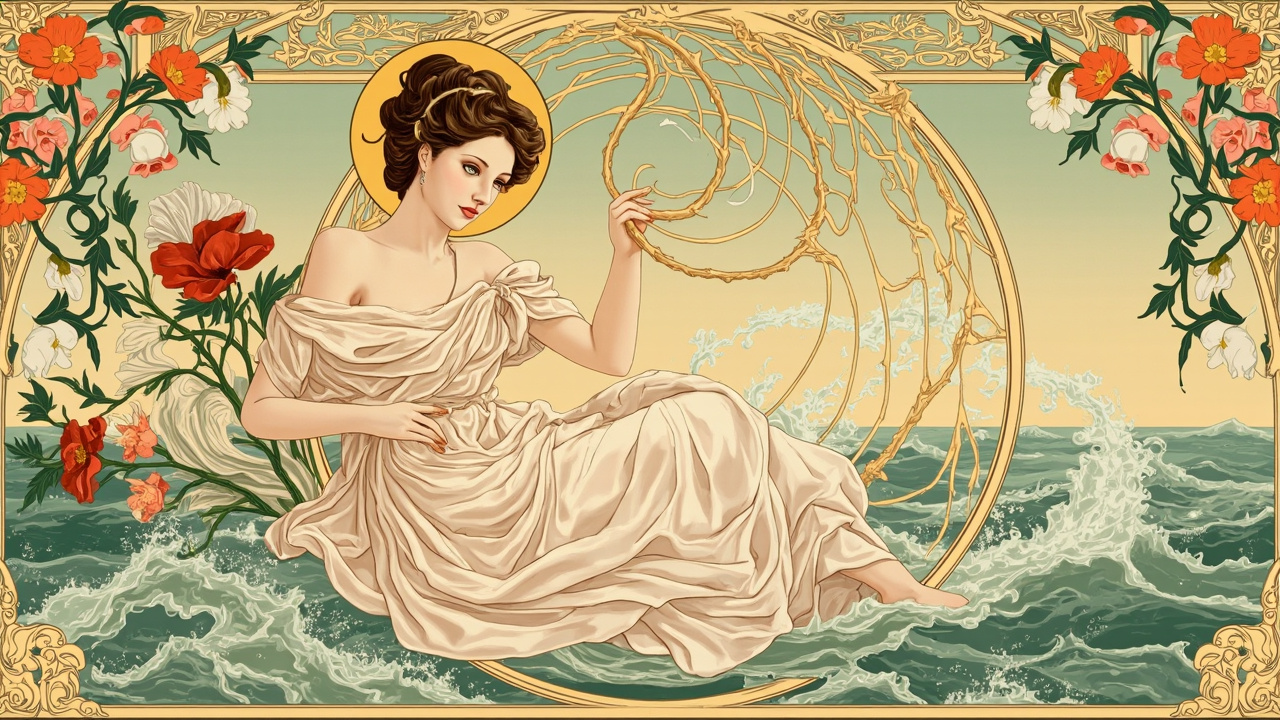
Art Direction4 plates
Before the guide was written, this book got a visual foundation — every illustration you just read grew out of it.