Calvino's lightest fable, and it carries a killing weight.
Text and illustrations produced by the pipeline
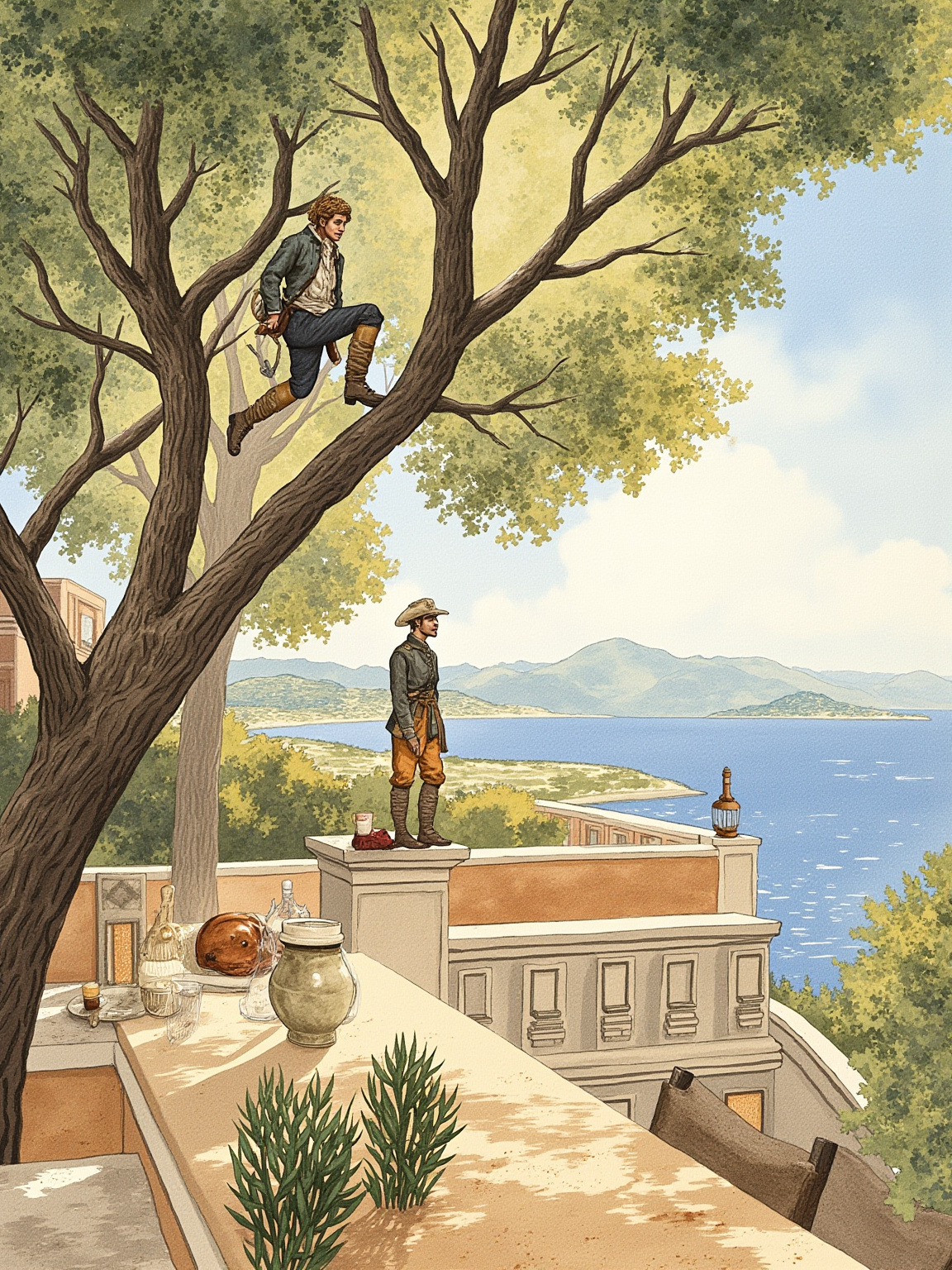
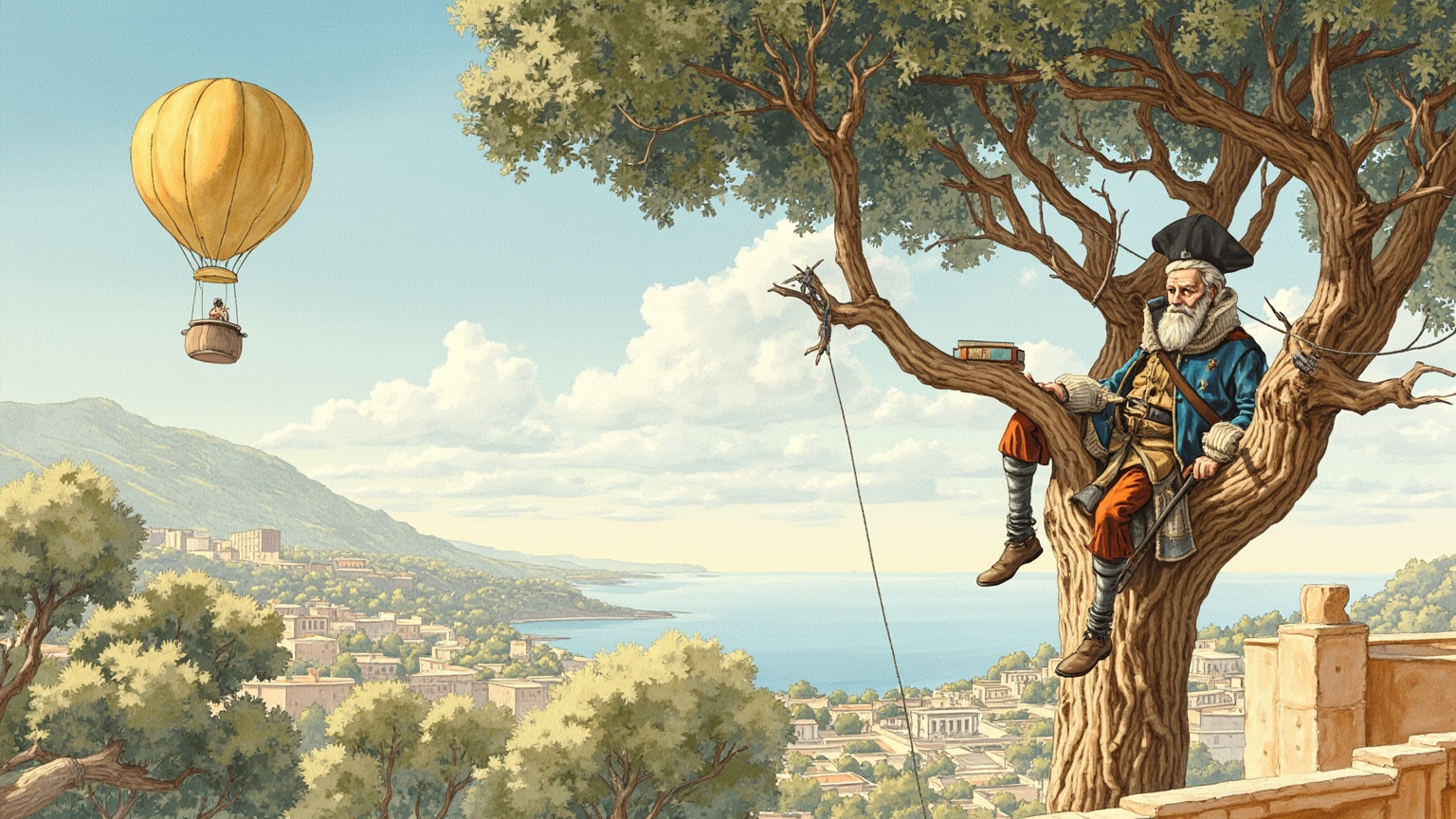
A plate of snails. A twelve-year-old boy. On June 15, 1767, he fell out with his father over that dish, stormed into the garden and up the holm oak, and announced he would never come down again — and he never did.
His name was Cosimo Piovasco di Rondò, eldest son of the Baron of Ombrosa. The book is written by his younger brother Biagio — the elder brother spent his whole life in the trees, and the younger one stayed on the ground to write it all down for him. So every line you read carries the brother's vantage point: close, and yet held at one remove.
Italo Calvino wrote this Italian fable of a novel in the mid-twentieth century; it came out in 1957. It is the middle book of the Our Ancestors trilogy — before it comes The Cloven Viscount, about a nobleman split in two by cannon fire; after it, The Nonexistent Knight, about a suit of armor with nobody inside. The three stand alone, sharing only a touch so light it borders on playful, with something heavy pressing underneath. Calvino himself said he wanted the light thing to carry the heavy one. The Baron in the Trees is probably the cleanest landing of that idea he ever managed.
Ombrosa is a coastal town Calvino invented, stitched together from the eighteenth-century Ligurian coast — it isn't on any map. The story runs from 1767 into the early nineteenth century, tracking almost exactly alongside the French Revolution and the Napoleonic years. Cosimo watches the world underneath him turn over while he stays suspended above it, the whole time.
The household: his father, Baron Arminio, spent his life buried in the family genealogy, chasing a title of his own — Duke of Ombrosa. His mother, a general's daughter everyone called the Generalessa, spoke as if issuing orders. His sister Battista, warped by propriety into something strange, baked pastries shaped like skulls. Odder still was Cosimo's illegitimate uncle, the Cavalier Advocate Carrega, who spent half his life adrift in Turkey, came home and threw himself into hydraulic engineering, and in old age dug a tunnel to signal passing Turkish ships — and was buried in it when it collapsed.
Two names to hold onto. One is Viola, the noble girl next door — stubborn, wild, never taking no for an answer — whom Cosimo loved from the trees his whole life, on and off; in the middle of it she married an Englishman and left, then came back years later. The other is Gian dei Brughi, an outlaw the mountains feared, who became Cosimo's reading companion. Between them, one holds the most private thread of his life, and the other walks to the gallows in front of him.
One day in the early nineteenth century, a hot-air balloon drifted over Ombrosa, trailing a mooring rope. Cosimo — an old man by then — grabbed hold of it, rose like a tower, and drifted into the sky, gone for good.
He didn't fall to his death, and he didn't die of old age on some branch either. Calvino gives him a legend's ending — his feet truly never touched the ground again, not even in death.
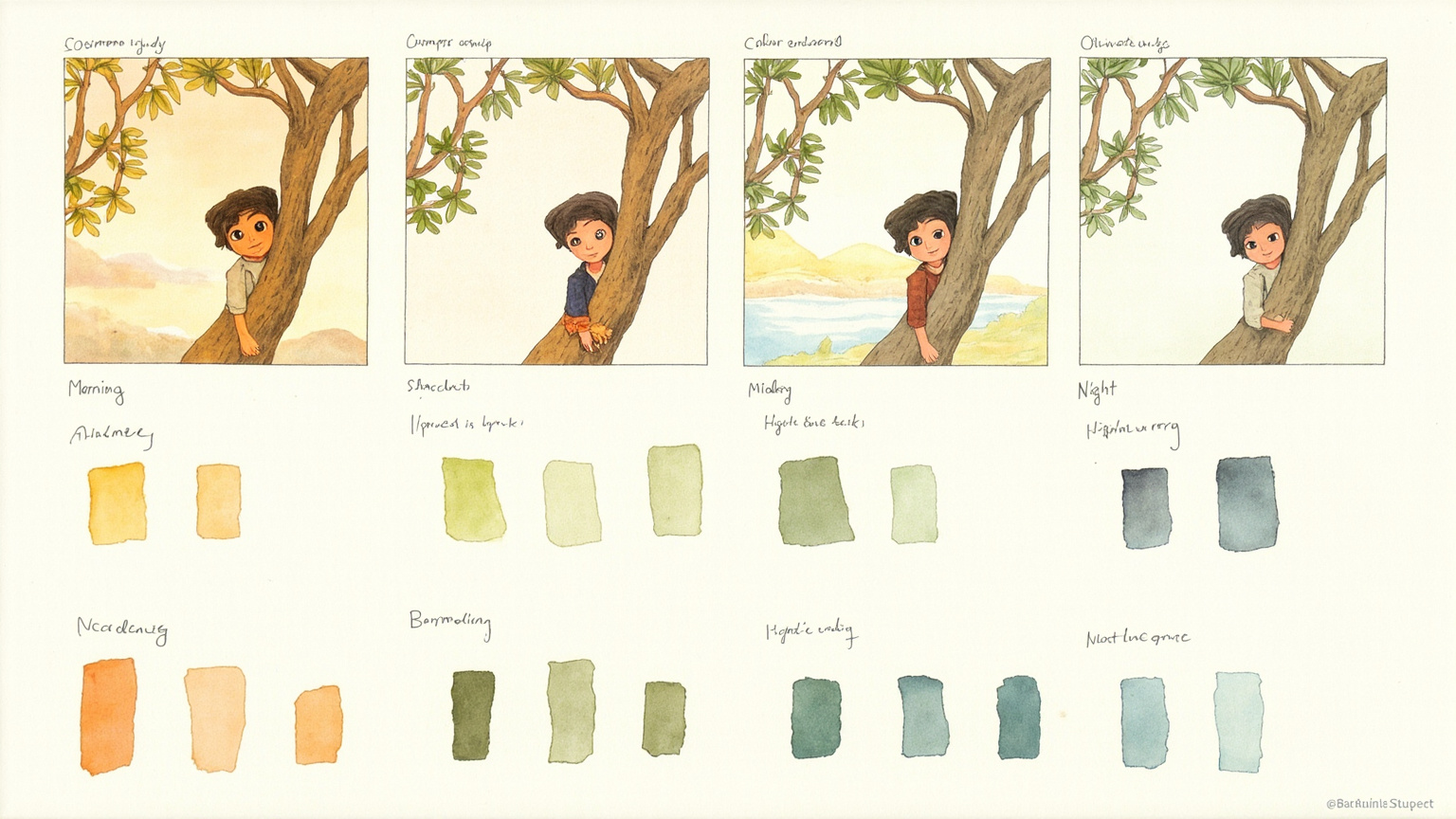
Before the guide was written, this book got a visual foundation — every illustration you just read grew out of it.
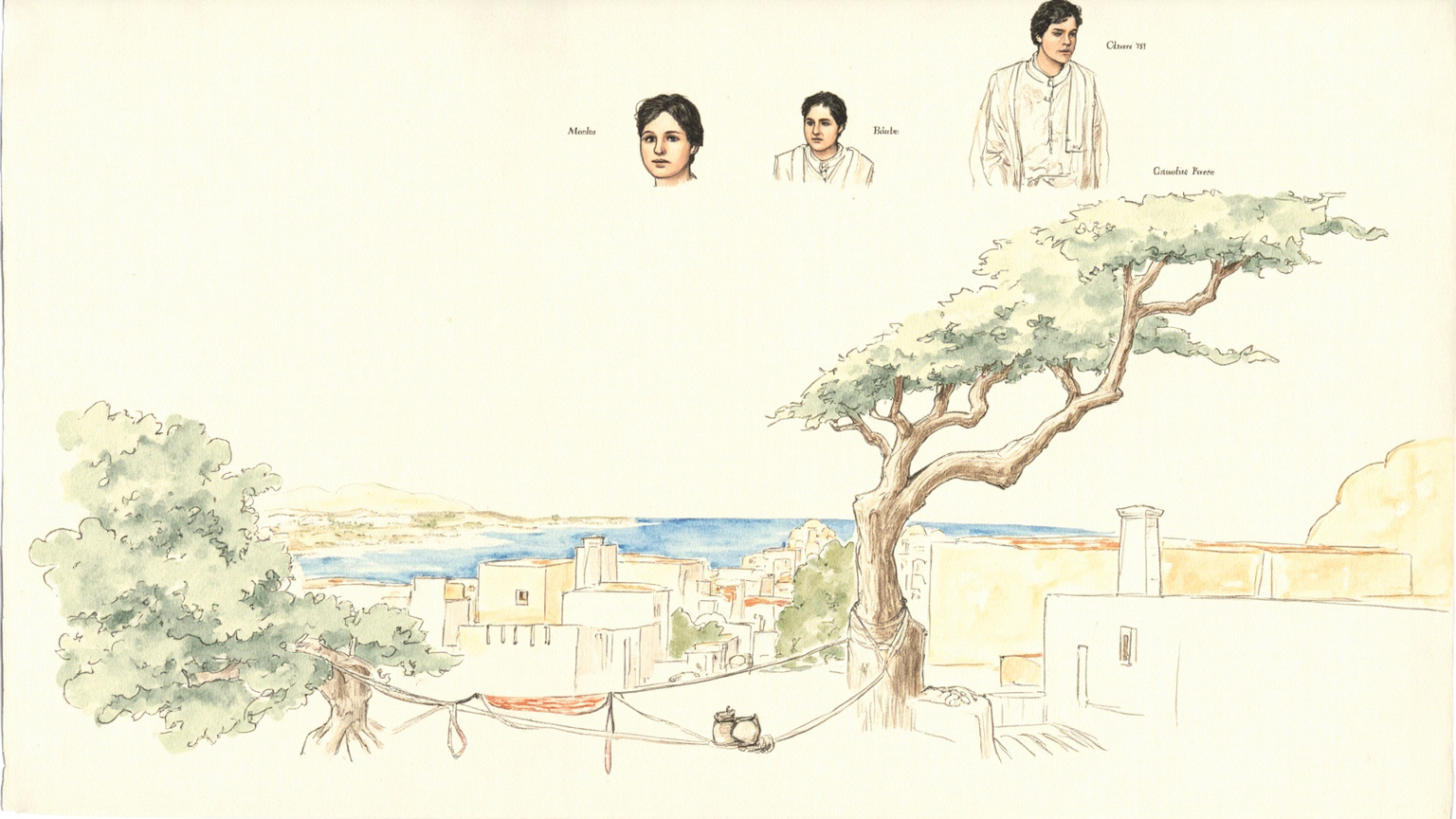
The whole thing starts absurdly small. On June 15, 1767, Cosimo was twelve. His sister served a plate of snails, and he refused to eat them. His father scolded him, he talked back, and he was punished. He walked out from the table, climbed the holm oak in the garden, crouched on a branch, and shouted down that he would never come down again. The family assumed he'd sulk for a while and climb back. Nobody took him seriously.
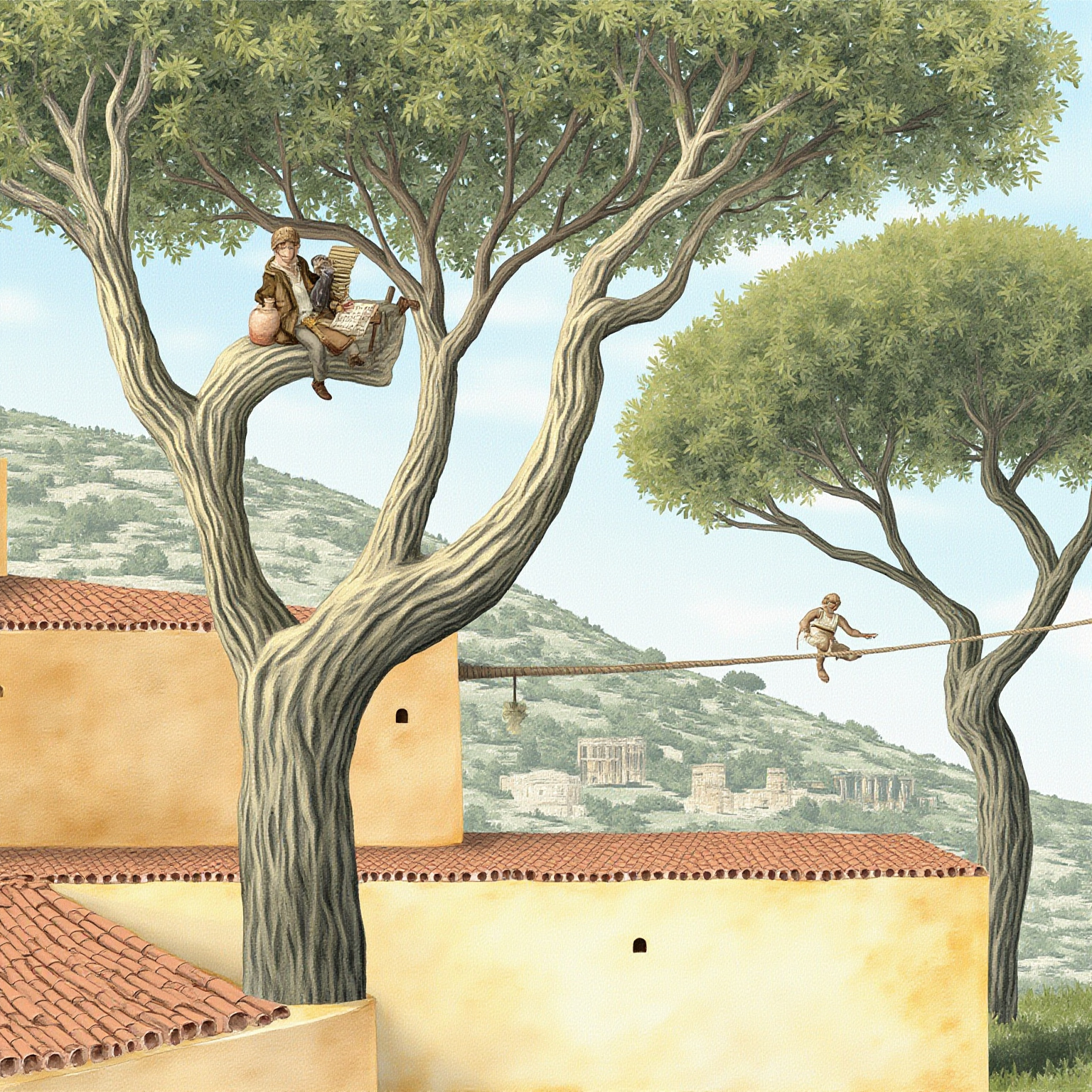
A week passed. Then a month. Cosimo worked out how to move through the canopy — which branch would hold him, which to avoid, how to swing from one holm oak to an elm, how to climb down to the stream for water, how to hunt a hare. He turned the whole forest of Ombrosa into his house, his streets, his city-state. His family tried everything to talk him down; nothing worked. His father even considered burning the woods to smoke him out, and the firemen showed up — but that part you'll read for yourself later.
This is where Calvino is sharpest: he never lets the climb become a retreat. The first thing Cosimo does once he can move around up there is read; the second is fall in love. Leaning down from the branches, he catches hold of more of the world than most people ever do with both feet on the ground.
The young Cosimo soon became a secret man of letters for his age. He corresponded with Enlightenment philosophers like Voltaire and Rousseau, debating philosophy and politics — his return address was simply "Ombrosa, in the treetops." When fire broke out, he organized the villagers to fight it, not shouting instructions from below but perched on the highest branch, signaling the whole brigade with his arms; he teamed up with neighboring villages to hunt wolves, working himself into the fine grain of local governance. Later he even founded something like a mutual-aid society up in the trees, with members ranging from bandits to farmers to disgraced gentlemen. He drafted a constitution from the branches too — not even Napoleon escaped an invitation, and by some accounts the emperor really did detour to Ombrosa during a campaign to meet him.
This is Calvino's signature move — wrapping an almost documentary historical texture (the French Revolution, Napoleon's campaigns, the Enlightenment philosophers) around a premise so light it tips into the absurd (the man genuinely never came down). The style and the subject pull against each other, and neither wins, so the reader gets caught in between: laughing, and laughing again, and stopping mid-laugh.
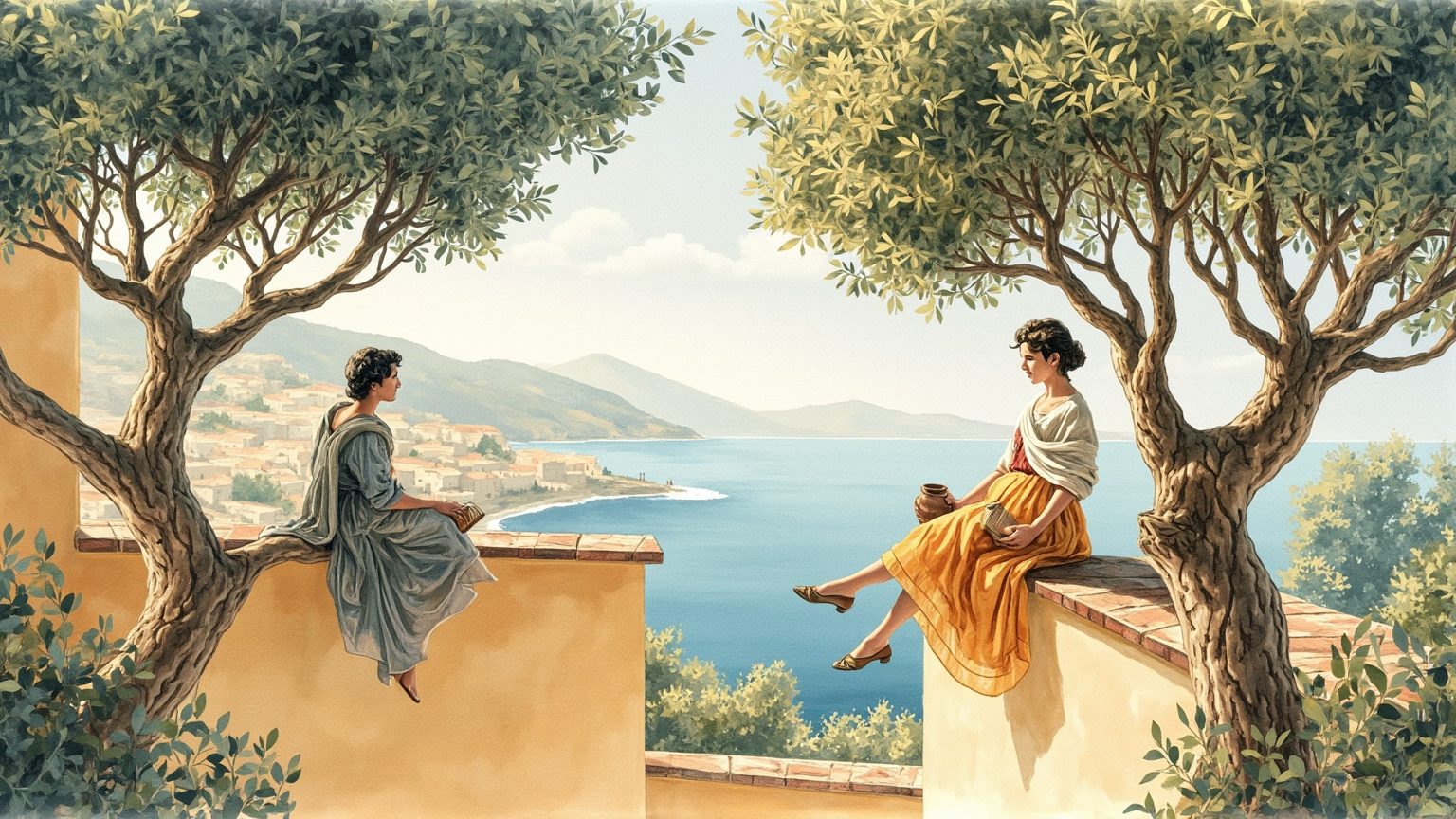
Viola was the daughter of the noble family next door, wilder even than Cosimo. The two of them carried on their romance between the branches and the ground, fighting loudly enough for all of Ombrosa to hear. She couldn't stand that he'd never come down — he couldn't. She eventually married an Englishman and moved away, and Cosimo watched her wedding procession disappear from the treetops. Years later she came back with her husband, and the reunion was awkward. Later still her husband died, and Cosimo stayed in the trees while she stayed on the ground, and the two of them spent the rest of their lives both close and far apart.
This is the most private thread running through the whole book. It mirrors that stubborn vow never to come down — Cosimo won't touch the ground, Viola won't turn back, and both of them guard their freedom with something close to obstinacy. Calvino doesn't write it as a tragedy. He writes it as two equally stubborn people missing each other again and again, and claiming each other anyway.
The other relationship is shorter and crueler. Gian dei Brughi had been an outlaw in the hills, and Cosimo lent him books one day to pass the time while he was under siege — and the brigand fell for novels, letting his robbing slide. Cosimo believed reading could save a man. Brughi was eventually caught and hanged in the square at Ombrosa. Cosimo stood on the nearest branch and watched the execution.
The first time I read this part, I flipped back and read the previous page again. Calvino holds back completely — he never lets Cosimo cry, never lets him shout. And it's exactly that restraint that makes the reader cry the rest of the way for him. Books didn't save the outlaw. It's Calvino pouring cold water straight over the Enlightenment fairy tale.
Uncle Carrega, the Cavalier Advocate, is the book's other border-crosser — except his crossing runs the opposite direction, down into the earth instead of up into the branches. He was obsessed with hydraulic engineering, spending half his life digging ditches, building channels, measuring water pressure. In old age he got it into his head to dig a tunnel underground to signal passing Turkish ships. The tunnel collapsed, and he was buried in it. From the treetops, Cosimo watched another member of the family close out a life built on never coming back.
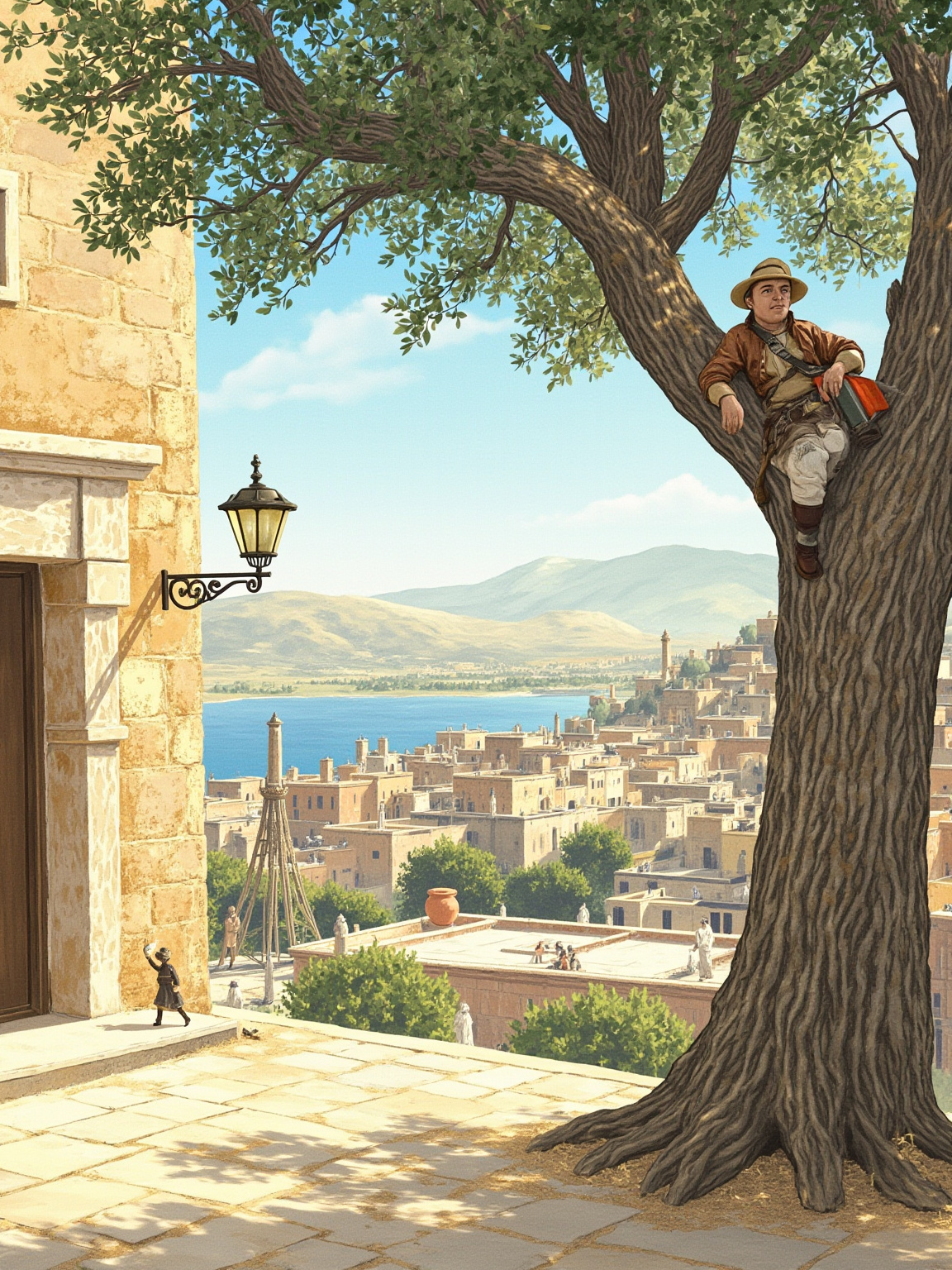
The old world and the new both rolled past beneath him. When the people of Ombrosa chased down a delegate of the French Revolution, Cosimo saved him. He watched Napoleon's army pass at a distance. He wrote essays from the branches answering the Enlightenment debates raging in Paris. Decades went by; the holm oak stayed the same holm oak, and the boy turned into a white-haired old man.
Cosimo doesn't climb the tree to escape the world. The character most easily misread as a misanthropic hermit is, in fact, the person in Ombrosa who cares the most. He reads, writes letters, fights fires, drafts laws, falls in love — engaging with public life more actively than most people who never leave the ground. What Calvino is after is a stance of leaving without fleeing: you can step off the ground, you can refuse the existing order, but the departure itself isn't the end point. It's the start of a deeper kind of involvement.
Underneath that, the old order crumbles bit by bit below him — his father's obsession with a title, his mother's military discipline, his sister's strangeness bred out of propriety. Cosimo lives out his whole life quietly in the trees, casting a silent vote against all of it. This isn't one man's rebellion. It's an entire generation saying goodbye to the old Europe.
He never once came down, and still caught an entire era beneath him — which is why this book stays with you for life, though it takes ten minutes to read.
That's the whole plot laid out on the table. But what Calvino actually pulls off is writing all of it light as a breeze — short sentences, quick cuts, one wisecrack after another, and you're halfway through laughing before you notice the blade underneath. Catching that rhythm is something you have to do for yourself, on the page. And life in the trees can't be summed up as "he did X, then Y, then Z" — it lives in the details: how he crouches on a branch, how he leaps, how he writes letters in the wind, how he falls in love through the gaps in the leaves, how he watches a hanging. Only the actual text lets those details settle into your eyes. Knowing how it ends won't spoil this book — it'll make you love it, because the real question was never whether he'd come down. It's how a person turns his own stubbornness into a life.