Plath's semi-autobiographical novel: a mind coming apart in the stifling summer of 1953.
Text and illustrations produced by the pipeline
In the sweltering summer the Rosenbergs were executed, twelve young college women had just won a month's guest-editor internship at a fashion magazine and moved into a hotel together. Esther Greenwood stood at the center of the group, the most polished-looking of them all. But she felt the air had gone wrong somehow, as if a transparent glass jar were quietly lowering itself over her head.
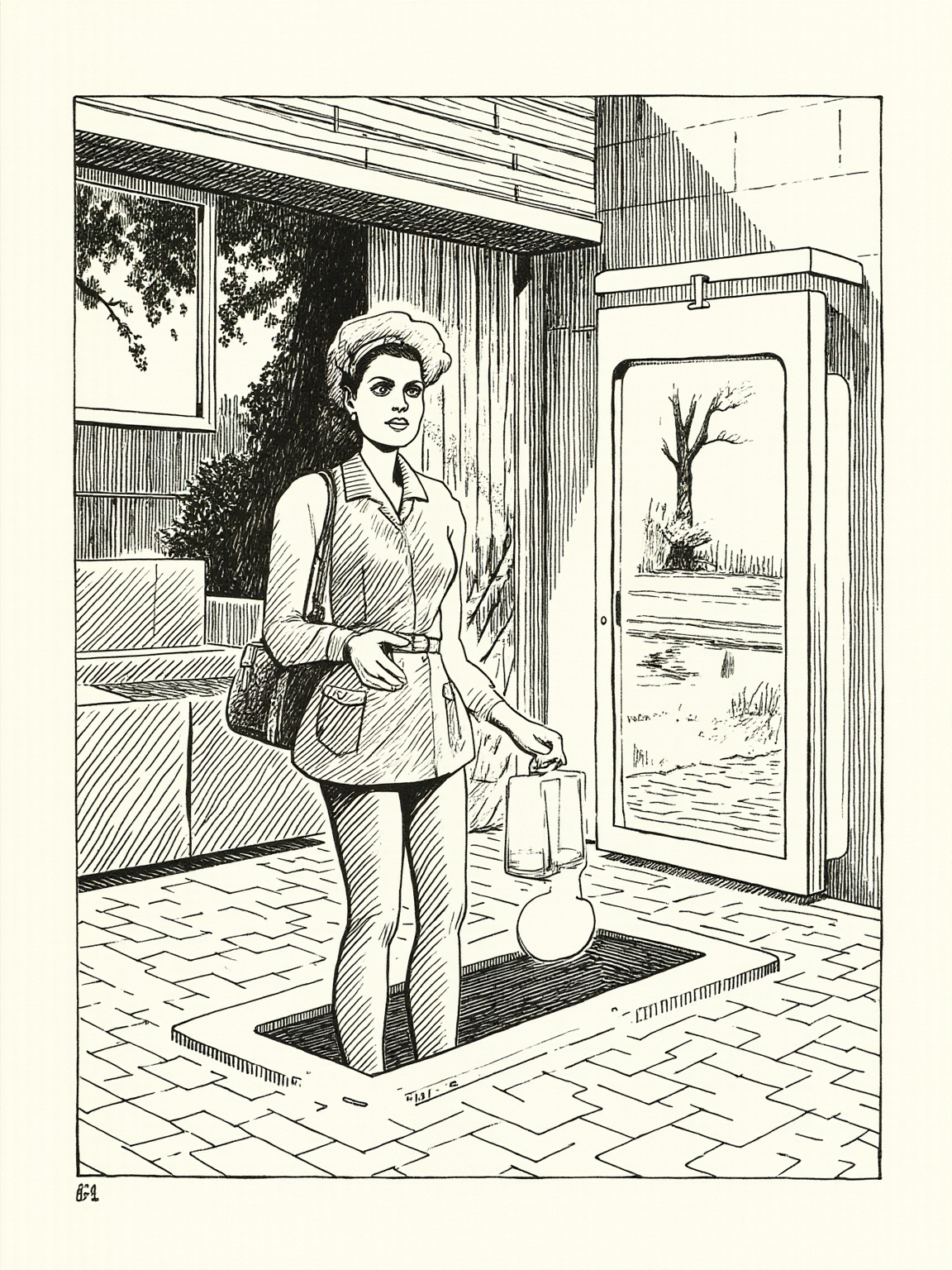
She could see out; nothing outside could see in. The hotel lobby filled and emptied around her, cocktails glittered at every party, and none of it reached her hands. This is not science fiction, it is the most exact metaphor she has for a breakdown, and Plath named the novel after it: The Bell Jar.
Sylvia Plath first published the novel in Britain in January 1963, under the pseudonym Victoria Lucas: she had little confidence in the book and worried the real people it drew on would recognize themselves and cause trouble. It did not appear under her own name until the 1966 British reissue, and American readers had to wait until 1971. The novel is semi-autobiographical; the main action takes place in the summer of 1953, a full decade before publication.
It is remembered for two reasons. The first is how precisely it renders depression from the inside, the airless, warped feeling of it, and the bell jar has since become one of the most borrowed English images for the illness. The second is that in February 1963, a month after publication, Plath killed herself with gas in her London flat. The book and its author's fate fused into one another, and the novel carries a tragic weight that can never quite be separated from her death. It remains a book no account of women's coming-of-age or mental illness in fiction can skip.
The protagonist, Esther Greenwood, is a brilliant, gifted college student who wins a month-long guest-editor internship at a New York fashion magazine modeled closely on the real Mademoiselle. The setting is postwar 1950s America, a society that had narrowed a woman's path down to almost exactly two options: become a devoted wife and mother, or become a career woman. Esther is stuck between them, unable to reach either shore.
The novel stops just before Esther's interview with the hospital board. She is ready to walk out of the institution and back to college, and believes the bell jar has lifted for good. But Plath won't give the ending a clean close; the jar could always come down again. The book was first published in January 1963. A month later, Plath herself died by suicide, using gas, in London. The crack between the novel and its author's fate is one the reader can never fully close again once it's been noticed.
A guide gives you the map, but only the text gives you the airlessness itself. When Plath writes I couldn't sleep, she is pushing your head down into the jar along with Esther's; when she writes Esther laughing in that New York hotel, she makes you feel a hollowness with nobody watching. None of that survives being summarized in a sentence or two; it lives in the rhythm of the prose, in how long or short a sentence runs, in the details that send you flipping back a page to check you read them right. And there's this: it's a semi-autobiographical novel, so reading the text means watching a woman give shape, in words, to a state that is nearly impossible to say out loud. Knowing the story isn't enough. You have to watch her mold the shape herself.
One last note: Esther, the character living through that summer of 1953, is fiction, and cannot simply be equated with Plath herself. Plath's death in London in 1963 is a separate fact. There is a crack between the two, and it's worth leaving that crack exactly where it is as you read.
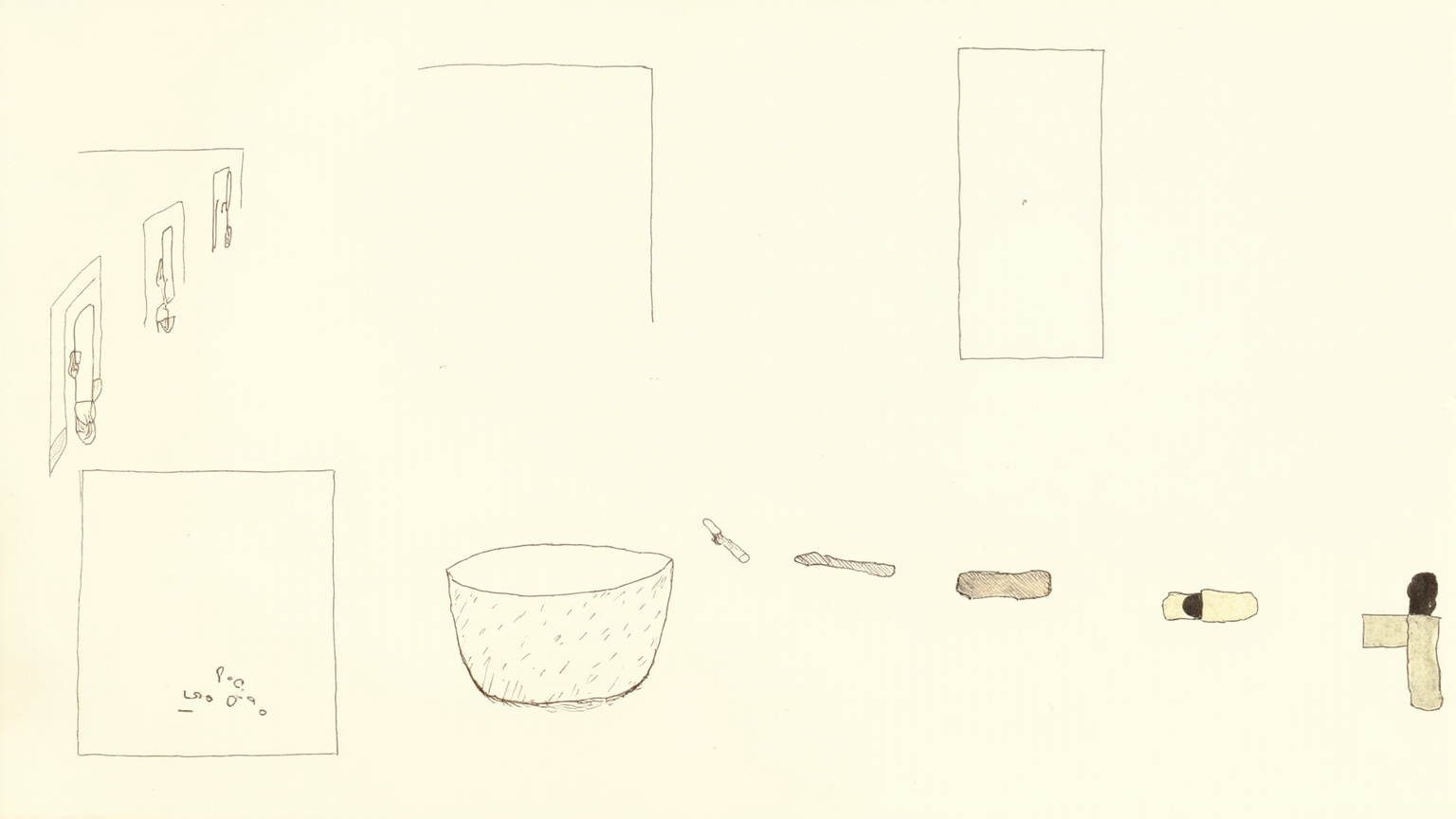
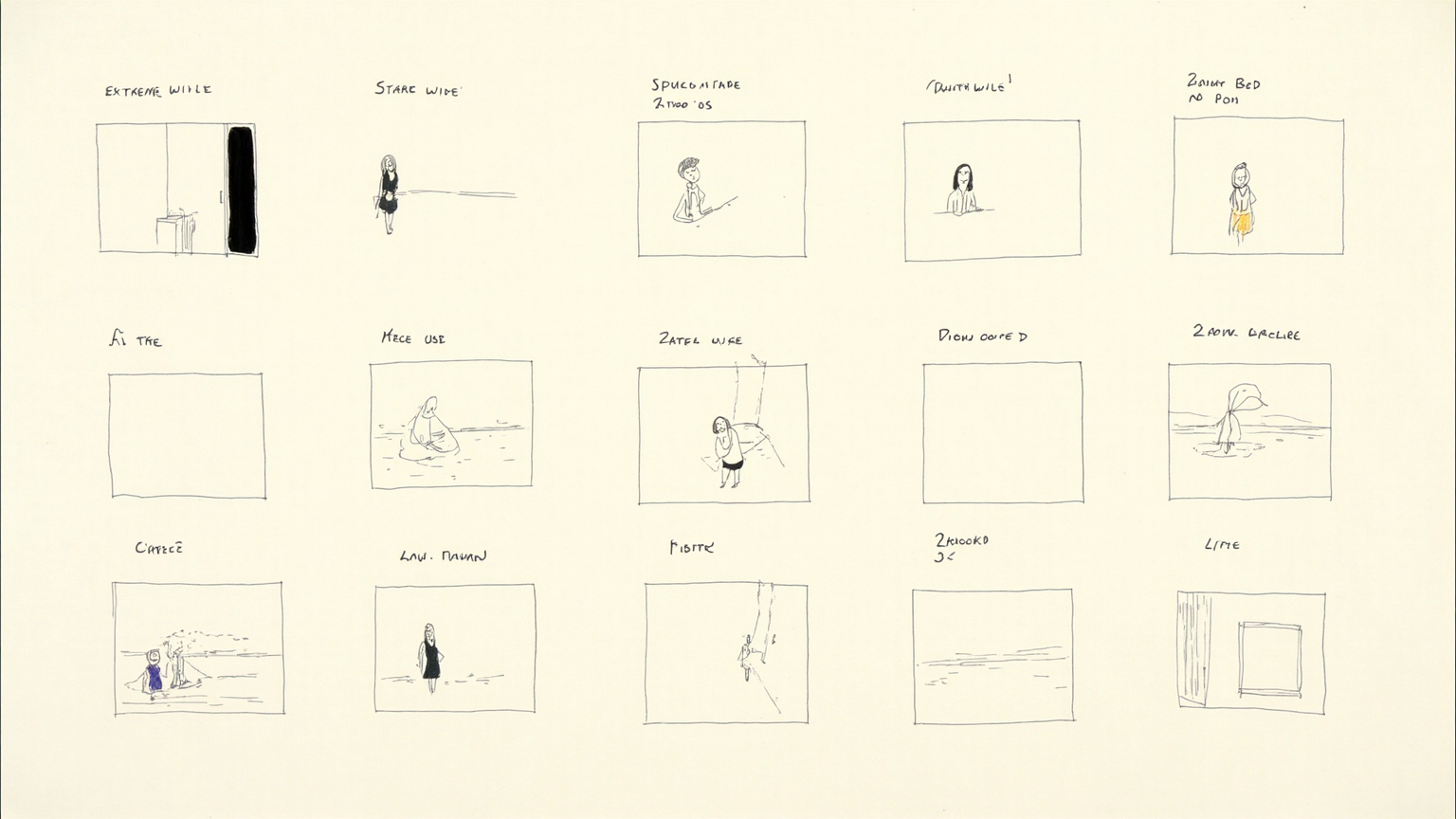
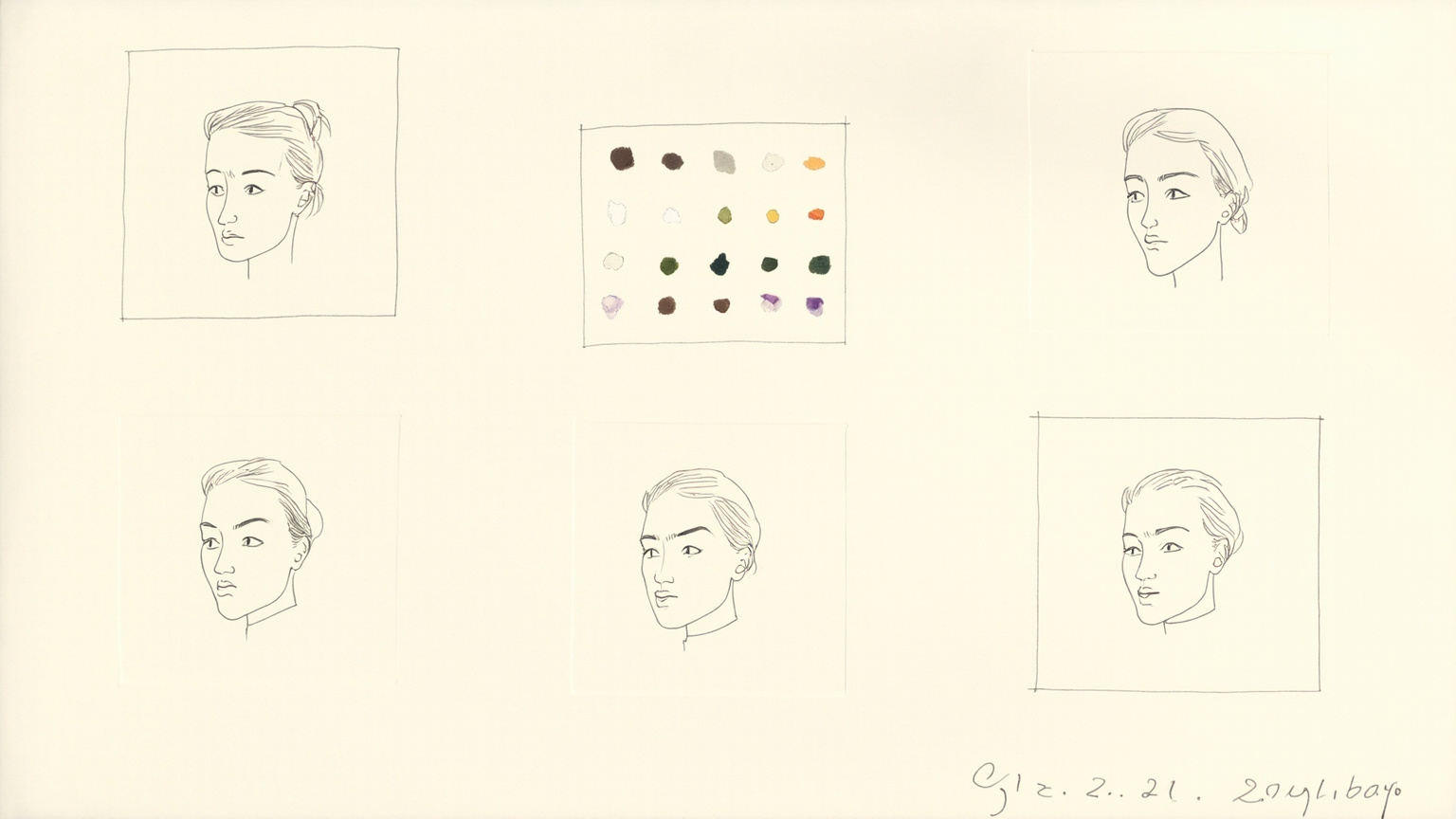
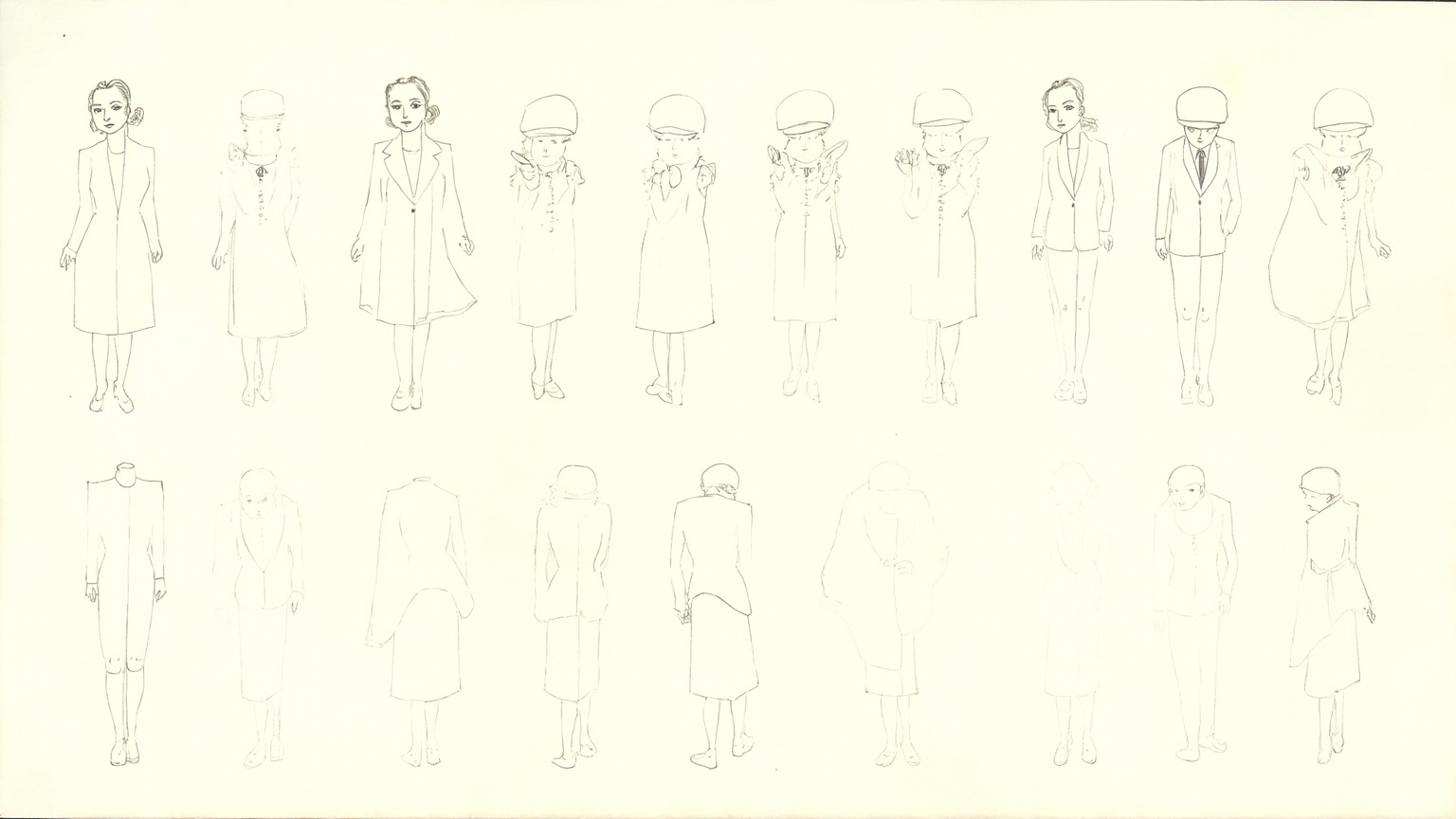
Before the guide was written, this book got a visual foundation — every illustration you just read grew out of it.
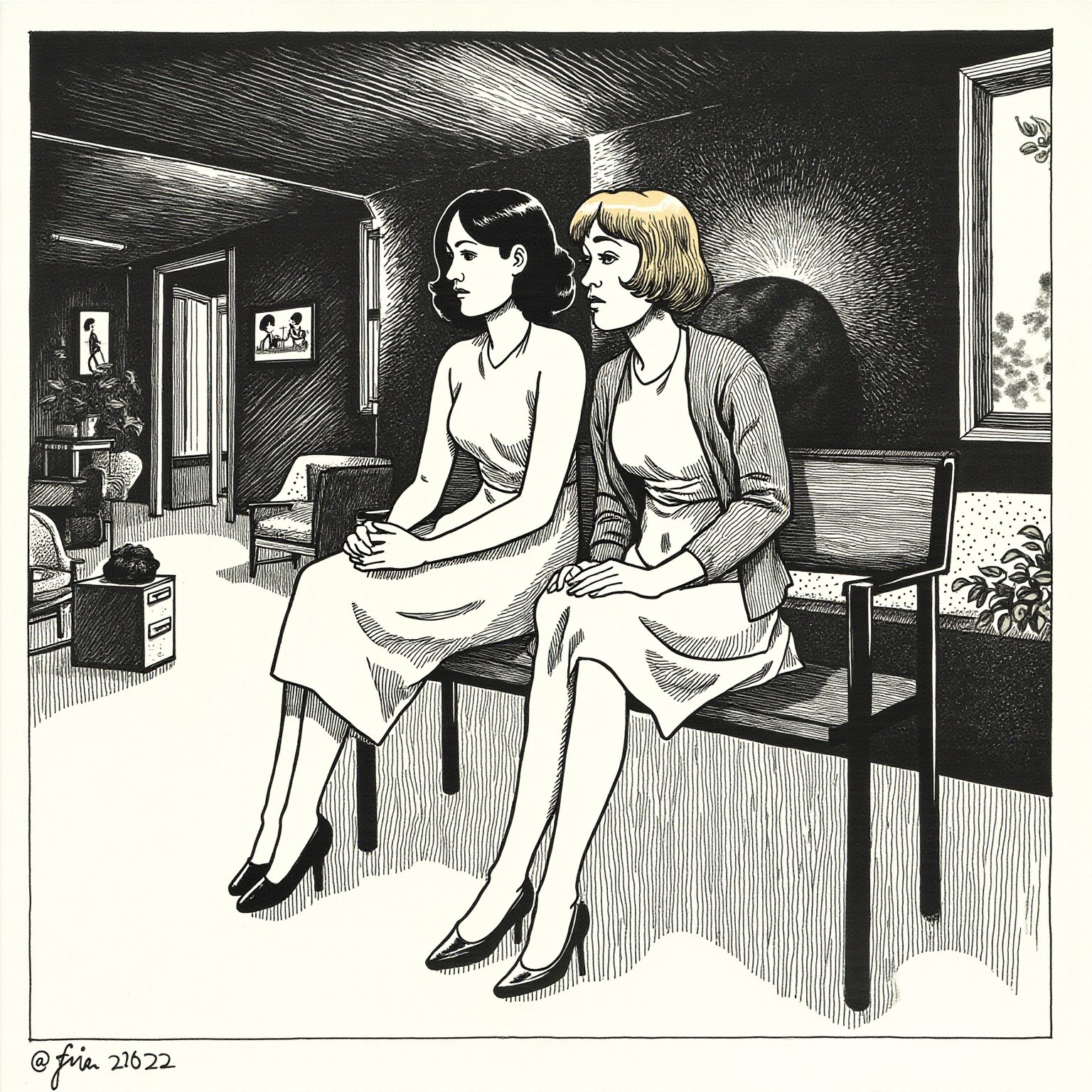
In New York she falls in with two women who mark her two poles. Doreen, from a Southern college, is sexy and defiant, contemptuous of rules, and drags her out to bars past midnight. Betsy, from the Midwest, is sunny and well-behaved, the kind of girl her roommates call a Pollyanna Cowgirl. Esther resembles neither and wants to become neither, so she drifts in the space between them. Outside New York, two more people she cannot get past: Buddy Willard, a Yale medical student and the on-and-off boyfriend she keeps circling back to, sunny in public and holding a double standard in private; and Jay Cee, the magazine's plain-looking, middle-aged editor, who puts her career ahead of marriage and gives Esther her first real look at what a working woman's life could be.
The story opens in the sweltering summer of 1953, the summer the Rosenbergs were executed. Esther arrives in Manhattan as a guest editor, sharing a hotel with eleven other equally accomplished young women. Days go to copy, nights to parties, all of it glossy as a magazine spread. But from the first day she is caught in a strange numbness: she laughs when the crowd laughs, then goes back to her room feeling hollowed out. Plath renders this state of being present yet absent with one merciless detail: Esther counts out the sleeping pills she has swallowed the way you'd count rounds in a gun you already know will be turned on yourself.
The two women represent models she can equally not accept. Doreen takes her to a country club dance, where her blind date Marco gets her drunk, drags her into the mud, and tries to rape her; she fights free and walks home covered in blood. Buddy, meanwhile, confesses he once slept with a waitress, then turns around and expects Esther to stay pure: he has had his desire and used it, but she is not allowed hers. The double standard is the moment Esther sees it plainly for the first time, that men are indulged and women are policed.
When the month's internship ends, she goes home to the Massachusetts suburbs and is rejected from the summer writing course she wanted. Something gives way for good: she stops sleeping, can't get through a line of a book, can't produce a word when she tries to write. The world starts to look like it's seen through warped glass, the bell jar making its first appearance around her. Plath buries the metaphor in the plainest sentences in the book, the kind that leave a chill only after you've read past them.
Her mother panics and sends her to a young male psychiatrist, Doctor Gordon. He is handsome, runs a private practice, and looks exactly like the kind of man who should be able to fix her. After barely a few minutes of consultation, he schedules electroshock therapy, badly explained beforehand, roughly administered, carelessly ended. It pushes Esther further into despair. This is the novel's sharpest indictment of clinical indifference: the same treatment can heal or harm, and that depends entirely on who's holding it.
A few months later, in the small hours of one morning, she crawls into a crawl space beneath the family cellar and swallows an entire bottle of sleeping pills. She had prepared for this before climbing in; the act carries a planned, deliberate calm. She is found barely alive days later and revived. Philomena Guinea, the wealthy novelist who funds her scholarship, steps in and has her transferred to a better-equipped private psychiatric hospital.
At the private hospital she meets Doctor Nolan, a woman psychiatrist who explains the electroshock procedure in full beforehand and stays with her through it. The treatment is the same, but this time Esther slowly starts to breathe again. Two doctors, two rounds of the same therapy, one pushes her down and the other lifts her up. Plath runs it as a controlled experiment in the novel, showing the reader that being heard is itself a form of medicine.
During her hospital stay she runs into Joan Gilling, an old college acquaintance. Their breakdowns run on strikingly similar tracks, the same brilliance, the same talent, the same kind of collapse. Joan seems to be getting better too, but hangs herself the very week Esther begins to see a way out. The news detonates in Esther; for the first time she is forced to ask herself why she survived. Plath writes survivor's guilt light and heavy at once, and it only takes a few words to knock the breath out of you.
Near the end of her recovery, she seeks out a math professor named Irwin and sleeps with him for the first time, then hemorrhages badly enough to be rushed to the emergency room. She treats the act as a bid to take her body back, not romance, but a single cut that seizes the choice away from everyone who had been making it for her. This is the passage most likely to be misread. Plath writes it cold and exact, with no romanticizing at all.
The novel turns on two central images. One is the bell jar itself: depression is not sadness, it is a sealed, warped state of existing that no one else can see into. The other is the fig tree. Esther imagines herself sitting beneath a fig tree where every branch is a possible life, writer, wife, mother, professor, and choosing one means letting all the others wither. She starves to death under that tree not because she cannot choose, but because the world will only let a woman take one branch. The image has since become one of the most quoted metaphors in literature for a woman's impossible choice.
Stylistically, Plath writes in a first-person voice so composed it borders on ruthless. She never cries on Esther's behalf, never explains her away; every line leaves the reader to feel that airlessness firsthand. That is why the book still lands on readers more than sixty years later who never lived through that particular history: it is describing an interior state, and interior states don't keep to a decade.
She is trapped not by one fate but by the posture of every fate opening to her and being refused at once.