The Book of Job · Companion Guide
约伯记
一个无罪的富人被天上的赌局剥光:牲畜尽失、骨肉毒疮,义人向苍天讨一个为何——而苍天以创世反问。
A Conversation That Begins in Fire
Fire from heaven burns up the sheep. Three raiding parties of Chaldeans make off with the camels. Servants run in one after another with the news, and before the first has finished speaking, the next is already gasping at the door. Job tears his robe, shaves his head, falls to the ground, and says the line people still quote more than two thousand years later: the Lord gave, and the Lord has taken away; blessed be the name of the Lord. A man who has just lost everything opens his mouth not to curse but to bless. That is how the Book of Job begins: it shows you what this man is made of, then makes you watch that substance stripped away piece by piece.
Where This Book Comes From
Job is the longest and strangest book in the Hebrew Bible's wisdom literature. Scholarly consensus places its composition somewhere between the late Babylonian exile and the Persian period, written by someone who had lived through the temple's destruction and the shock of return, and who felt the question of why the righteous suffer for no reason in his own skin. The author is unknown; tradition once hung the book on Moses or Solomon, but neither claim holds up. It isn't really a history — it's closer to a verse drama: a prose frame holds it together, the middle is dozens of chapters of back-and-forth argument in verse, then God speaks at length out of a whirlwind, and the book closes back in prose. Most Chinese translations that reach readers here trace back to the King James Version of 1611. The line "I know that my redeemer liveth" lives in chapter nineteen, and it was the King James's voice that welded it into the collective memory of Western literature.
The Land of Uz, and the People Around Job
Uz is a place name no one can pin to a map. Tradition puts it somewhere in the Transjordan or the wilderness of northern Arabia, outside the borders of the covenant people, in land that never entered the covenant. The setting is the age of the patriarchs: no law, no temple, no exodus narrative. Job stands under the same sky as Abraham, Isaac, and Jacob. He is himself one of the great herd-owners of that wilderness — seven sons, three daughters, ten thousand sheep, a thousand camels, servants beyond counting, and he is blameless and upright, one who feared God and turned away from evil. The text stamps this on him at the outset: this is a good man, good in the text's own terms, not the watered-down kind.
Then come his friends. Eliphaz the Temanite is the oldest and carries the most weight, arguing from visions and from what the ancients handed down. Bildad the Shuhite leans hardest on inherited tradition and holds the stiffest line. Zophar the Naamathite is the sharpest of the three, telling Job outright that his sin runs deeper than he thinks. Later a young man, Elihu, breaks in once the three have talked themselves into silence. Up above, Satan, more precisely "the Accuser," and not yet the devil of later Christian theology, moves among the sons of God and lights the fuse: does Job fear God for nothing? Have you not put a hedge around him? God permits the trial but forbids taking his life. The drama tightens from there.
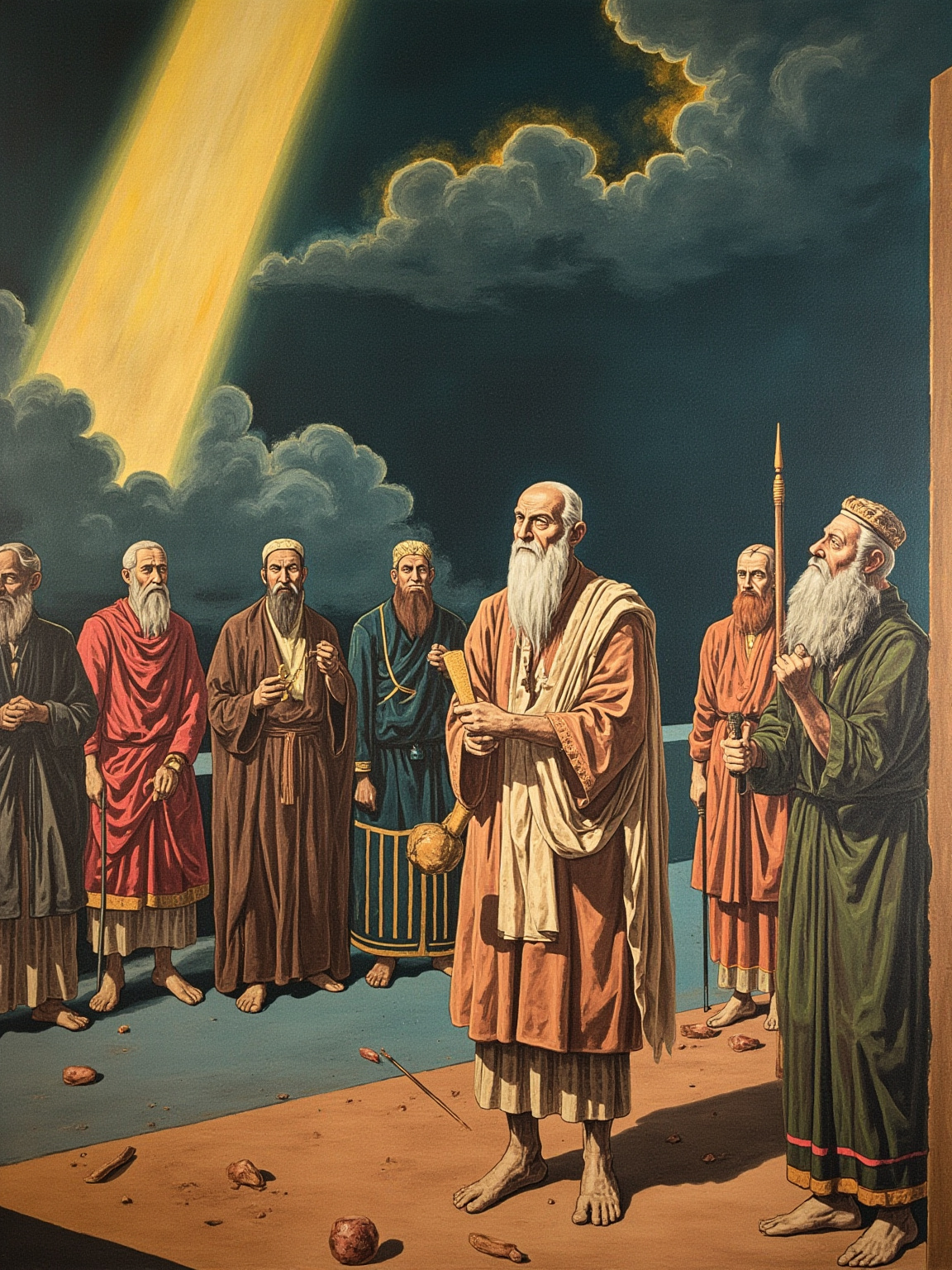
Hast thou considered my servant Job, that there is none like him in the earth, a perfect and an upright man, one that feareth God, and escheweth evil?
你曾用心察看我的仆人约伯没有?地上再没有人像他,完全正直,敬畏神,远离恶事。
金句 · 第1章 · 天上序幕的提名
Round Two: Down to the Bone
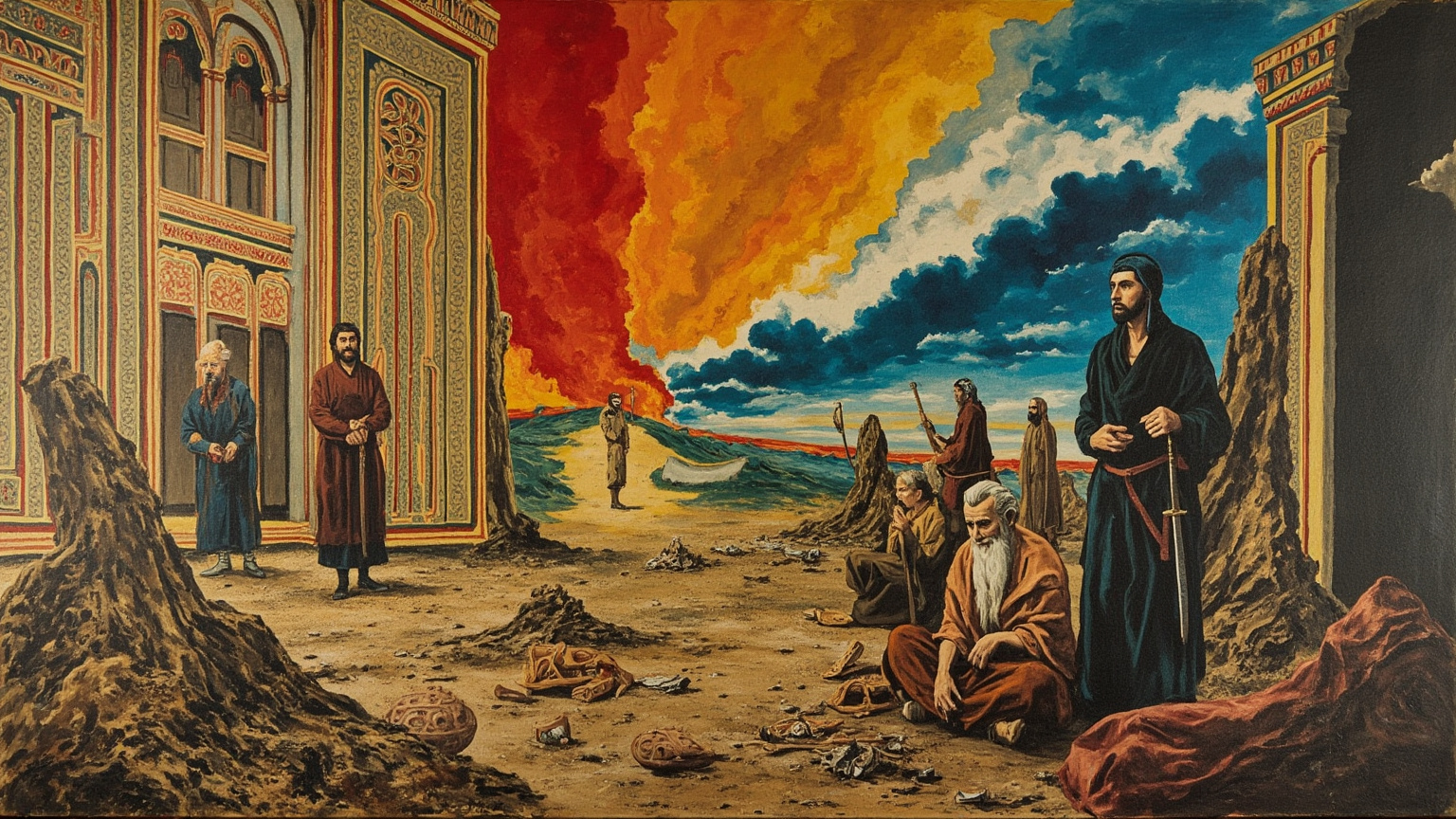
The property is gone, and Job has bowed down. Satan comes again: stretch out your hand and touch his bone and his flesh. God permits it. Job breaks out in sores from head to foot, sits down in the ashes, and scrapes himself with a piece of broken pottery, over and over. His wife comes to him and speaks the only line she gets in the whole book — do you still hold on to your integrity? Curse God and die. It is a curse spoken by a woman pushed past breaking, not a pious wife's counsel. Job answers, you speak as a foolish woman speaks, and refuses to curse God and die. The writing here is merciless in a particular way: it does not describe the pain, it hands you one action, a man sitting in ashes scraping his own skin, and leaves the rest to you.
Word reaches his three friends and they come. They recognize him from a distance — and do not recognize him. That is the text's own paradox: the change in him is so great that they first weep aloud, tear their robes, throw dust in the air onto their own heads, then sit with him on the ground for seven days and seven nights without a word. In the funerary customs of the ancient Near East, seven days carries real weight. The friends acknowledge his pain first in silence. On the seventh day, Job speaks, and curses the day he was born.
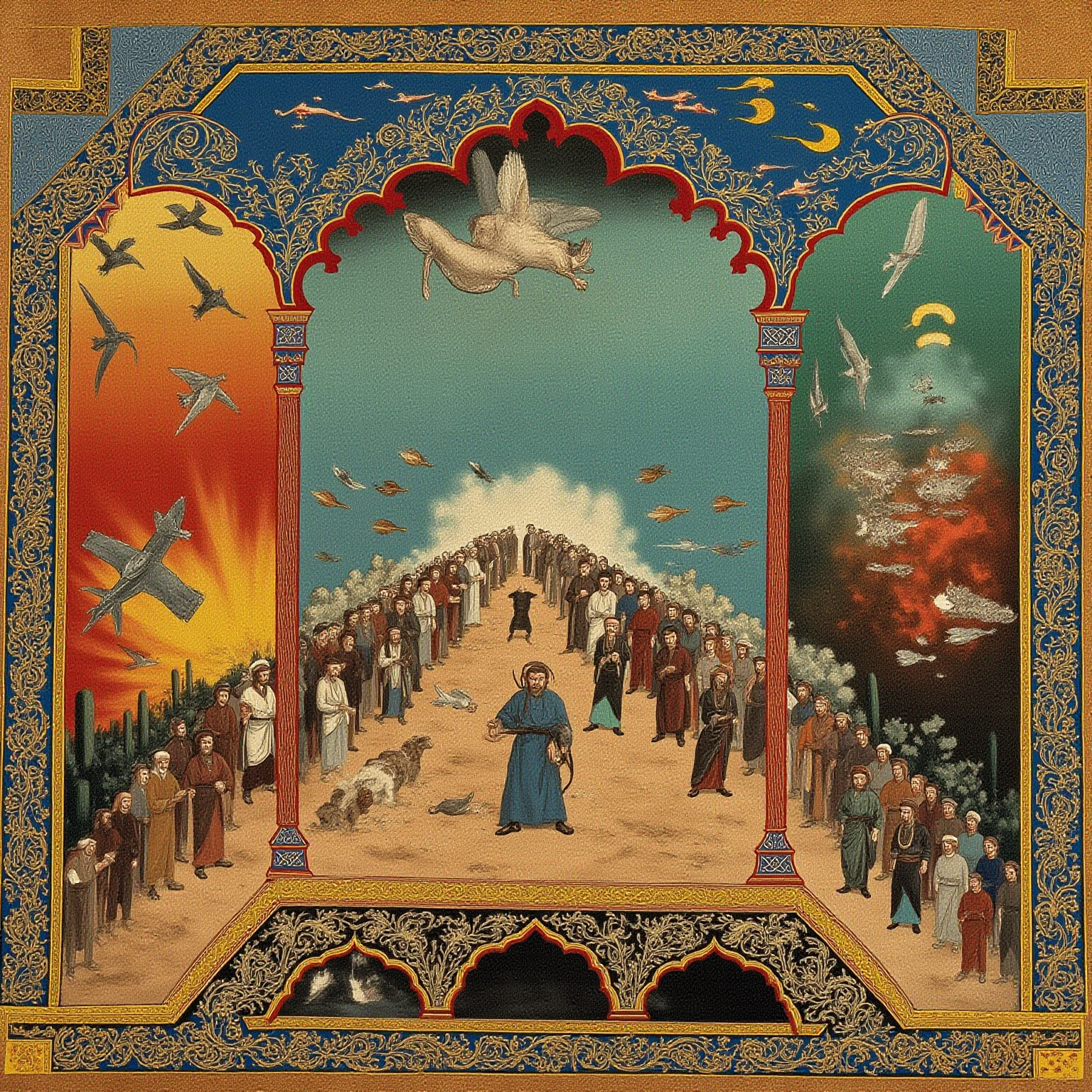
The LORD gave, and the LORD hath taken away; blessed be the name of the LORD.
赏赐的是耶和华,收取的也是耶和华;耶和华的名是应当称颂的。
金句 · 第1章 · 四轮打击后的伏地
Three Rounds of Argument: Putting "Why" on the Table
Starting in chapter three, the whole book shifts into verse. The three rounds of argument follow the same shape: one friend speaks and pronounces judgment, Job answers back and insists on his innocence, then the next friend takes his turn. The three men's arguments are really one logic in three voices: you must have sinned, repent and you'll have peace; how could God pervert justice; the ancestors were never wrong. Job's answer is not confession — it is a demand to face God directly: I would lay my case before him. No one else in the Hebrew Bible speaks to God this way, not pleading, not praising, but issuing a legal summons. I stopped short the first time I read this passage myself: the text lets a man open his mouth like that, and does not strike him down for it.
The climax of the debate is not one side winning — it is the three friends running out of words. They start repeating themselves, start implying that Job's dead children had it coming (some of the most uncomfortable lines in the whole book), start substituting harsher rhetoric for argument. Job stops answering them and shouts straight past them at heaven. The text's verdict is unambiguous: the friends lose, and not by a small margin. Later God says outright that they have not spoken of him what is right, as his servant Job has. It is the sharpest rebuke in the Old Testament of theology used to paper over grief.
A fourth speaker, Elihu, breaks in at this point. He is younger than the other three and waits until they have nothing left to say. He goes on at length about how God's spirit disciplines people through suffering, and also grants them strength. A few of his lines gesture toward some kind of mediator; later Christian tradition has read this as a hint of Christ, but the text itself only touches on it and moves on.
Oh that my words were now written! Oh that they were printed in a book! That they were graven with an iron pen and lead in the rock for ever!
惟愿我的言语如今都写下来,都刻在书上,永久镌在岩石上。
金句 · 第19章 · 约伯越众呼告
The Whirlwind: God Speaks, but Not to Answer
Then God speaks out of a whirlwind. The text never gives him a human form — only the whirlwind, a pillar of cloud, the wilderness, lightning. His first words echo creation itself: when the morning stars sang together, and all the sons of God shouted for joy. What follows is a long string of questions: Where were you when I laid the foundations of the earth? Can you bind the pride of Leviathan? Who shut the sea behind doors? Who strung the sinews of Behemoth? Do you know where light and darkness dwell? Does the eagle fly at your command? He drops Job into the sheer scale of creation and calls the universe itself as a witness.
This answer is theologically dangerous, and honest in equal measure. God never explains the reason for the suffering, never says this was a lesson, never says you'll understand later. He swallows the question of why you suffer inside a bigger one: do you understand the world I made? Job's response is not confession either. It is a recognition. Before, he had only heard of God secondhand; now, in dust and ashes, he has seen him, and it undoes him. Awe replaces argument.
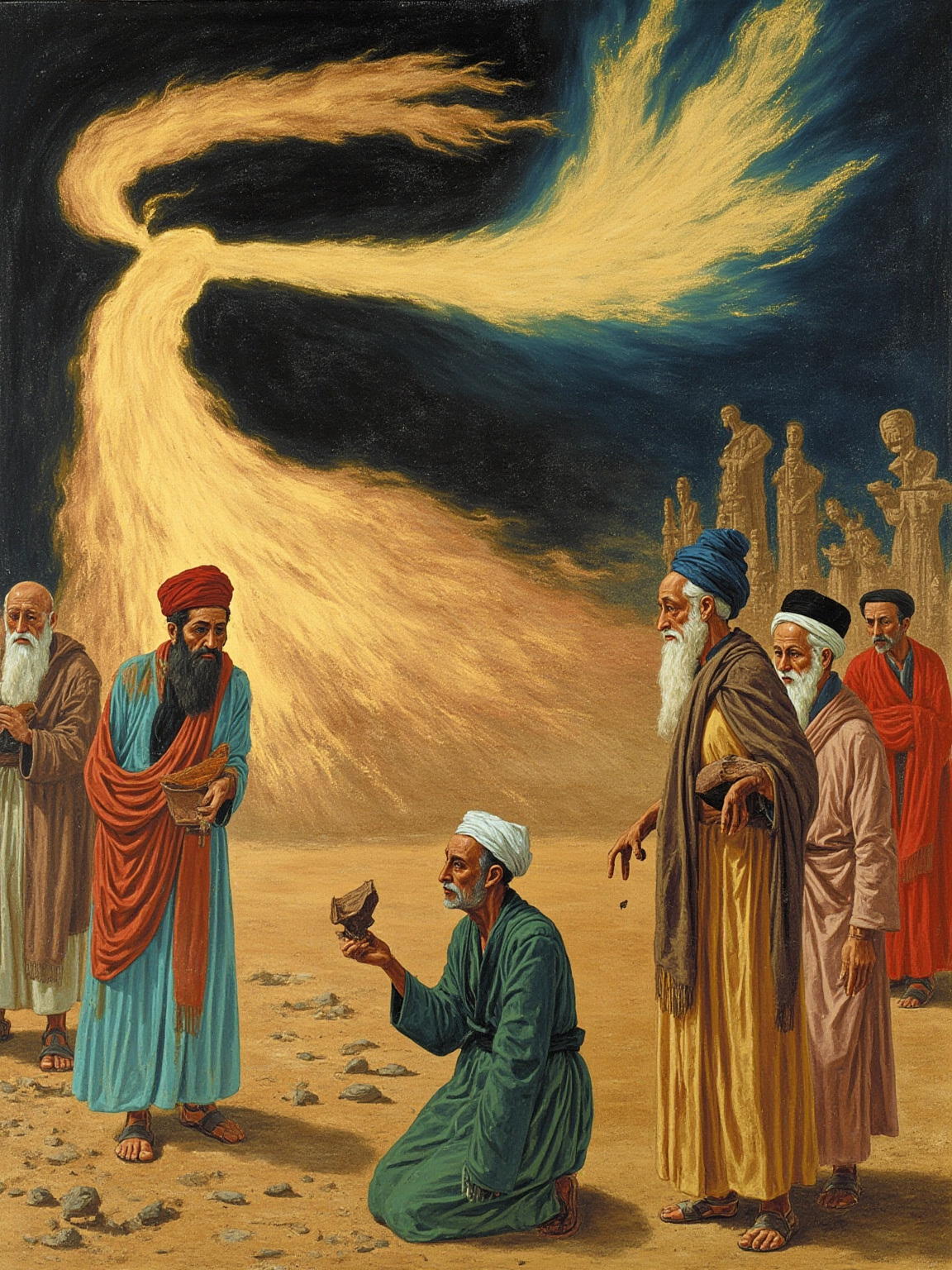
Where wast thou when I laid the foundations of the earth? Declare, if thou hast understanding.
我立大地根基的时候,你在哪里?你若有聪明,就说吧。
金句 · 第38章 · 旋风中的创世反问
The Prose Ending: Job Is Not Left Open
Plenty of people stop telling this story at the whirlwind, and that leaves something out — the last chapter closes in prose. God tells the three friends (Elihu is left out of the rebuke) that they have not spoken rightly, orders them to sacrifice, and has Job pray for them. Then comes the restoration: fourteen thousand sheep, six thousand camels, a thousand yoke of oxen, a thousand female donkeys, seven more sons and three more daughters, the daughters the most beautiful women in the land, and Job dies old and full of days. The text gives itself a concrete ending, not open, not a blank. But that ending does not close the hole torn open earlier. It only says that living on is possible. Understanding was never on offer.
Why You Cannot Get Around This Book
Job is the source text no discussion of theodicy in the West can get around. From Augustine to Thomas Aquinas, from Dostoevsky's Ivan to Tolstoy's The Death of Ivan Ilyich, on through Kafka and Beckett, Job's bones are somewhere under the whole literature of suffering. The Hebrew Bible itself went a long time without a direct reckoning with suffering as its own subject; most of the Western religious writing that takes it on head-on comes from later Christian authors. Job fills that gap from within, letting the Old Testament ask its own most tearing question in its own voice.
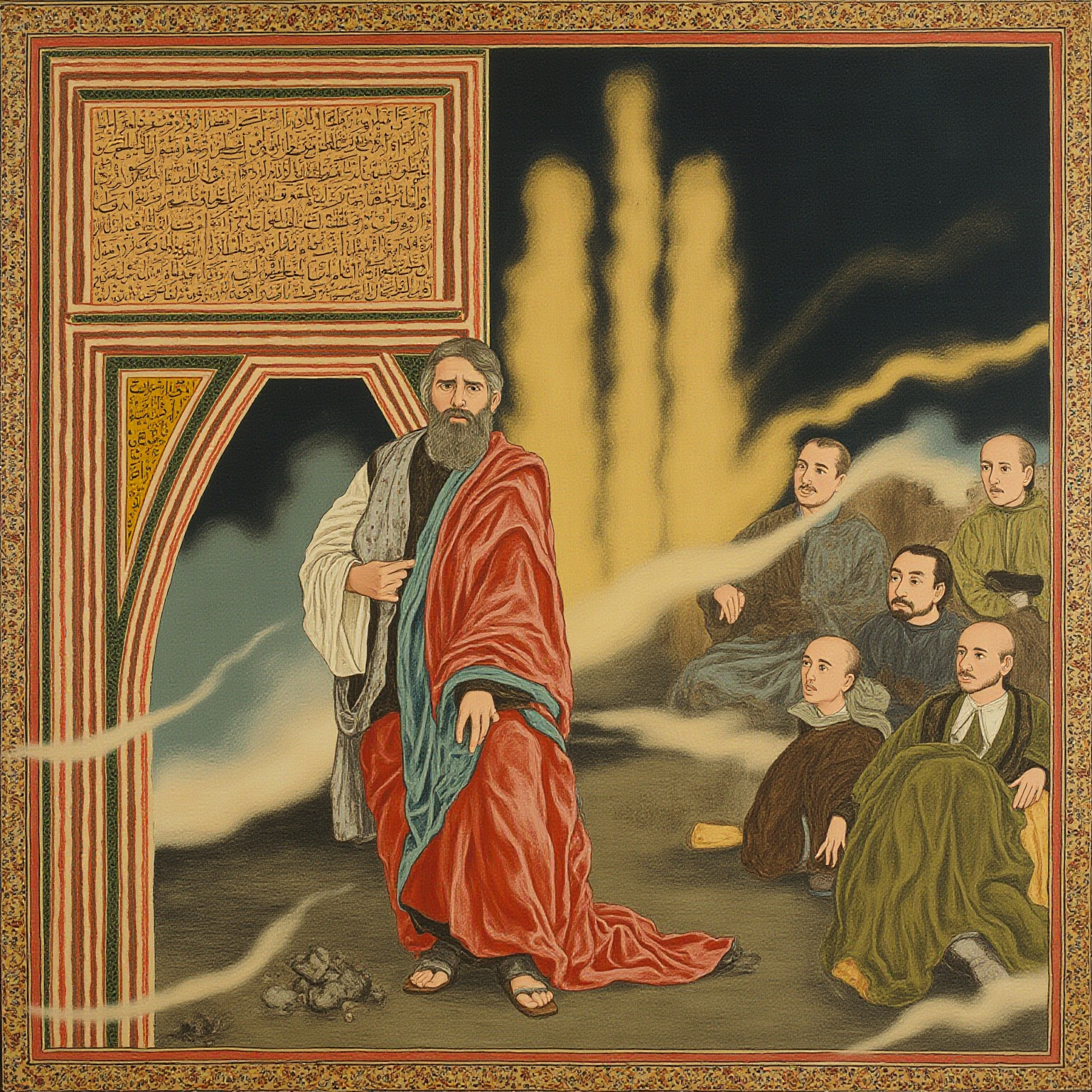
I have heard of thee by the hearing of the ear: but now mine eye seeth thee. Wherefore I abhor myself, and repent in dust and ashes.
我从前风闻有你,现在亲眼看见你;因此我厌恶自己,在尘土和炉灰中懊悔。
金句 · 第42章 · 旋风之后的哑默
One trap people keep falling into: do not read Job as suffering is a hidden blessing or God has a good reason you can't see. That is the friends' position, and the text itself rules it wrong. This book's answer is colder and more honest: the question of why may have no answer at all. What it offers instead is the scale of creation, the friends' injustice, a space where a man can curse the day of his birth and not be struck dead for it, and, at the end, living on.
It never answers why — it swallows the question whole into the throat of creation.
Why You Should Read It Even Knowing How It Ends
A guide like this can hand you a map. It cannot hand you the land. Job's speeches run for dozens of verses of self-defense, and the three friends' rhetoric gets harsher with every round; the King James rhythm burns Hebrew parallelism down into something almost percussive, and that physical charge does not survive being described secondhand. There are also the four chapters of Elihu's speech that most readers skip: the text places them between Job's last word and God's appearance, and that placement is itself a judgment you miss by not reading them. Most of all, there is the whirlwind passage itself: God does not argue, he lets images pass in procession, Leviathan, Behemoth, the morning stars, the eagle, and read aloud it is a gallery, not a proof. What makes this book good is not what it says. It's how it says it. Go read it. Read it out loud.
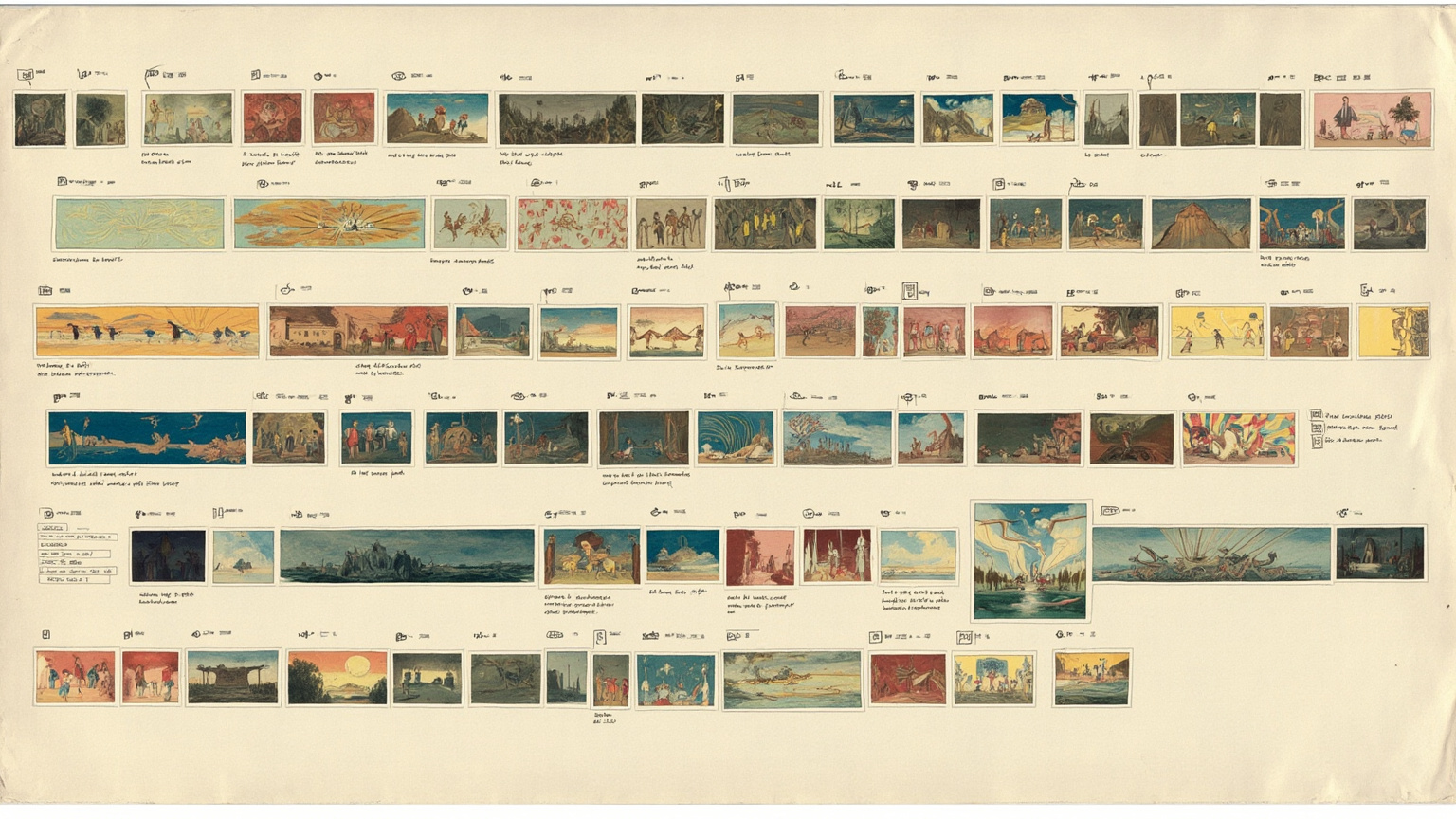
Art Direction4 plates
Before the guide was written, this book got a visual foundation — every illustration you just read grew out of it.