The Box Man · Companion Guide
箱男
一只纸箱套上身,看的自由与暴露的代价,在同一只方孔里同时发生
A Cardboard Box With a Hole in It
The rain has just stopped. A cardboard box sits at the edge of a puddle, a square hole cut dead center in its wall, half an eye showing through the gap. A man climbs inside, pulls the box down to chest height, and from that moment on he has no face. He passes through convenience stores, past vending machines, past salarymen holding umbrellas in the night. He can see everyone, and no one can see him. This perfect one-way gaze was supposed to be his passport.
He was wrong. The little hole was never a one-way valve. It works more like a synchronized camera: press the shutter on this end, and the other side is exposed at the same instant.
So What Is This Strange Book Actually About
The Box Man is a 1973 novella by the Japanese writer Kobo Abe, the most extreme in form of the three novels grouped together as his urban-alienation trilogy, alongside The Wall and The Woman in the Dunes. Abe won the Akutagawa Prize, and no one in postwar Japanese fiction ran more experiments on steel and concrete. What he wrote were not stories but devices: put a person inside a container and see what happens. This time the container is a cardboard box.
The reason it stuck is simple: it gives a philosophical question a physical body. The question is what proves that I exist: being seen, or seeing others? Abe welded that question to a cardboard box and let the reader climb in and feel it firsthand.
Cast of Characters: Four People Without Faces
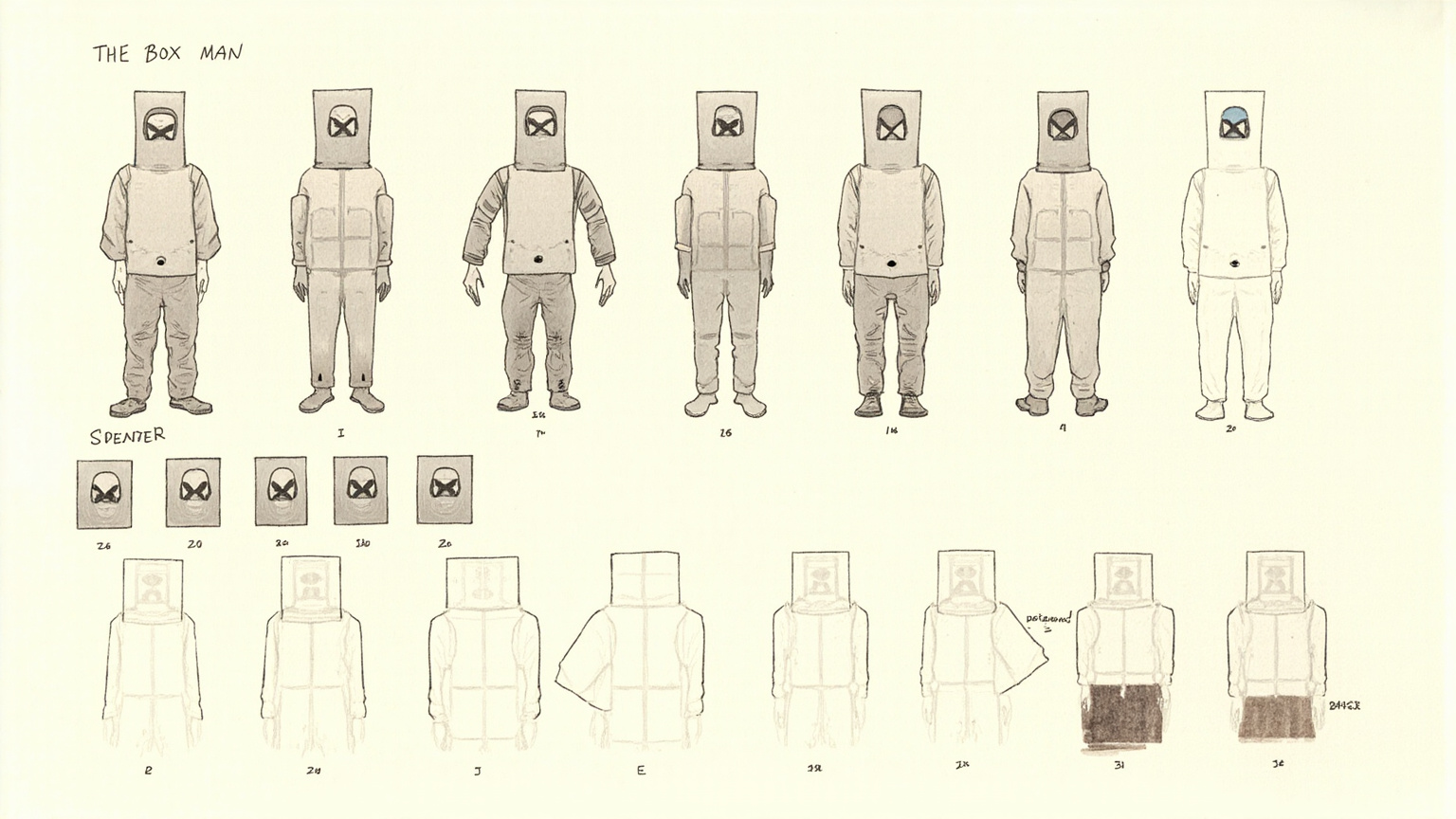
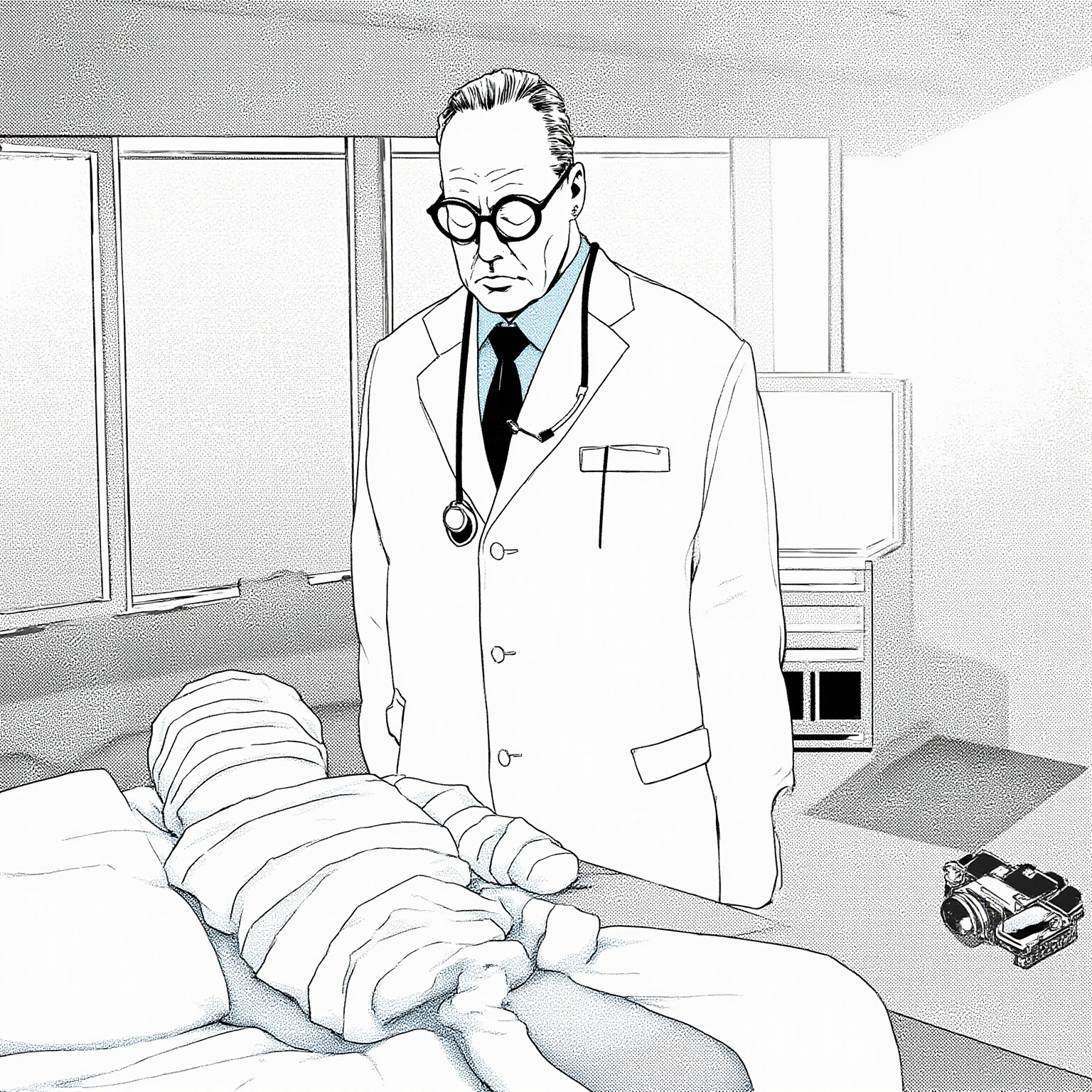
The protagonist has no name; the book calls him only the Box Man, an anonymous title. He gives up his name, his job, his face, pulls a cardboard box with a square hole cut in it over his body, and becomes a permanent anonymity in the city. He thinks hiding inside the box means hiding inside freedom, and then discovers the box itself is a cage. He entrusts a manuscript he has written to a night-shift doctor at an abandoned hospital, a man holding an old camera and a few prescription slips. The doctor is no mere caretaker of loose ends; he is simply another bystander, and the act of watching alone is enough to put him on the same anonymous chain as the Box Man.
Two other shadows move through the manuscript. One is a woman in a plastic raincoat, her relationship to him ambiguous, her identity suspect — you cannot tell whether she is a lure, a trap, or simply the Box Man's own desire with nowhere to go. The other is a second box man who appears on the riverbank, and the two meet like reflections in a mirror. A gunshot goes off. No one falls.
Plot Line: It Starts With a Handoff on a Rainy Night
The story's trigger is a cardboard box soaked by rain. A man wearing the box breaks into a hospital late at night, presses a manuscript, a few personal items, and an old camera into the hands of the night-shift doctor, then turns and vanishes into the dark. Before the doctor can react, he is already holding someone else's life.
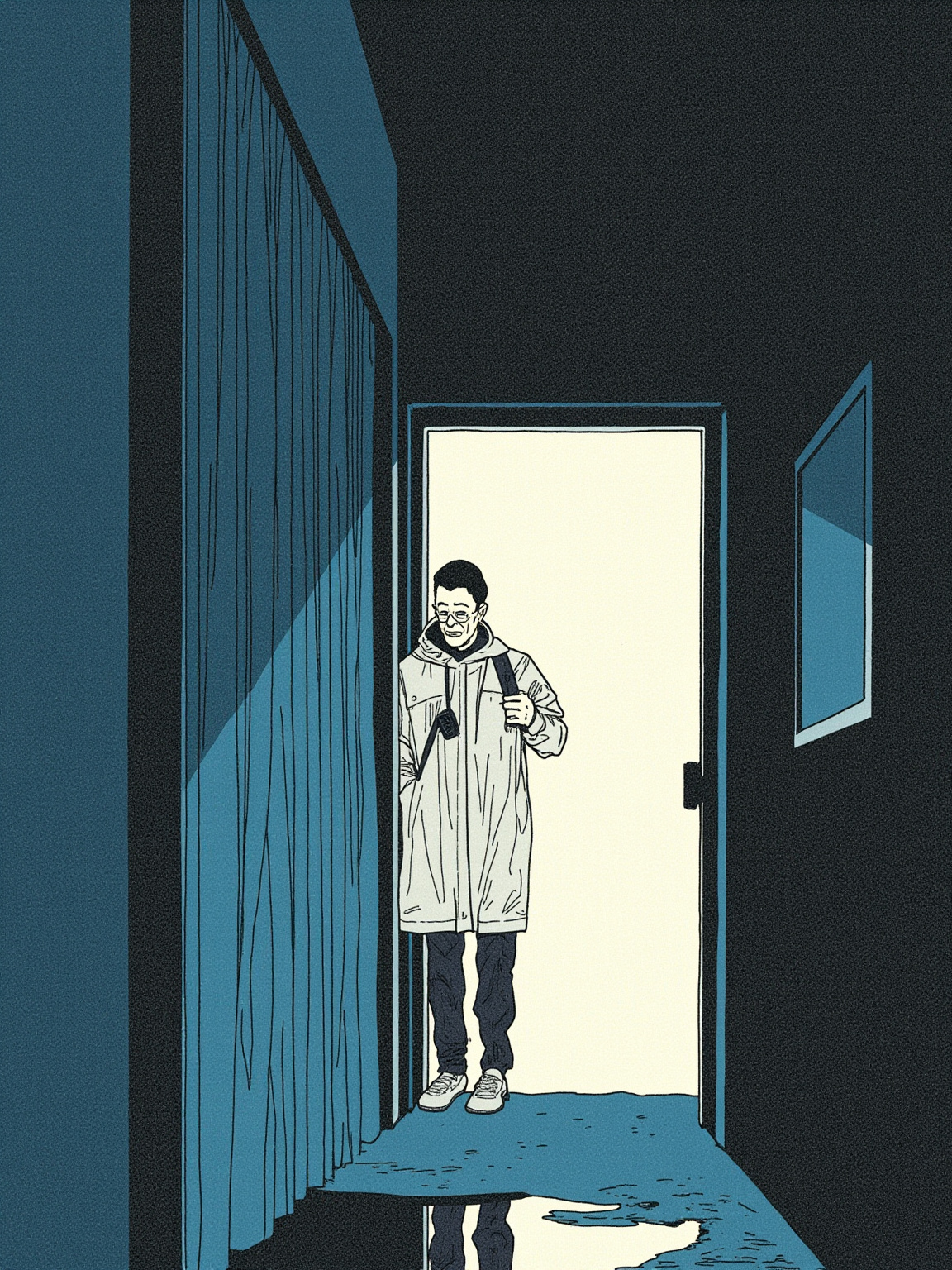
He thrust the manuscript, a few belongings, and an old camera into my hands, then turned and vanished into the night, leaving me holding another man's life.
他把手稿、几件私物、一台旧相机郑重地塞到我手里,转身消失在夜色里——我还没回过神来,手中已捏着另一个人的人生。
金句 · 开篇 · 雨夜托付
The moment the doctor opens the manuscript, the narrative splits in two. In the examination room, he tends to the patient on the bed and fields emergencies at the door; inside the manuscript runs another line entirely: a young man peeling off his name, his job, his identity, step by step, and pulling a cardboard box over his body. He walks out of his house, past convenience stores and vending machines, toward a settlement of cardboard boxes on the riverbank, shedding one more layer of his old self with every step.
Once the box is on, the texture of the city changes. The glass door of a convenience store, the cold white light of a vending machine, salarymen with umbrellas in the rain: seen through the square hole, they all become specimens under observation. He can watch anyone, and no one can watch him. He starts keeping records, writing as he walks, like a camera exposing film with every step.
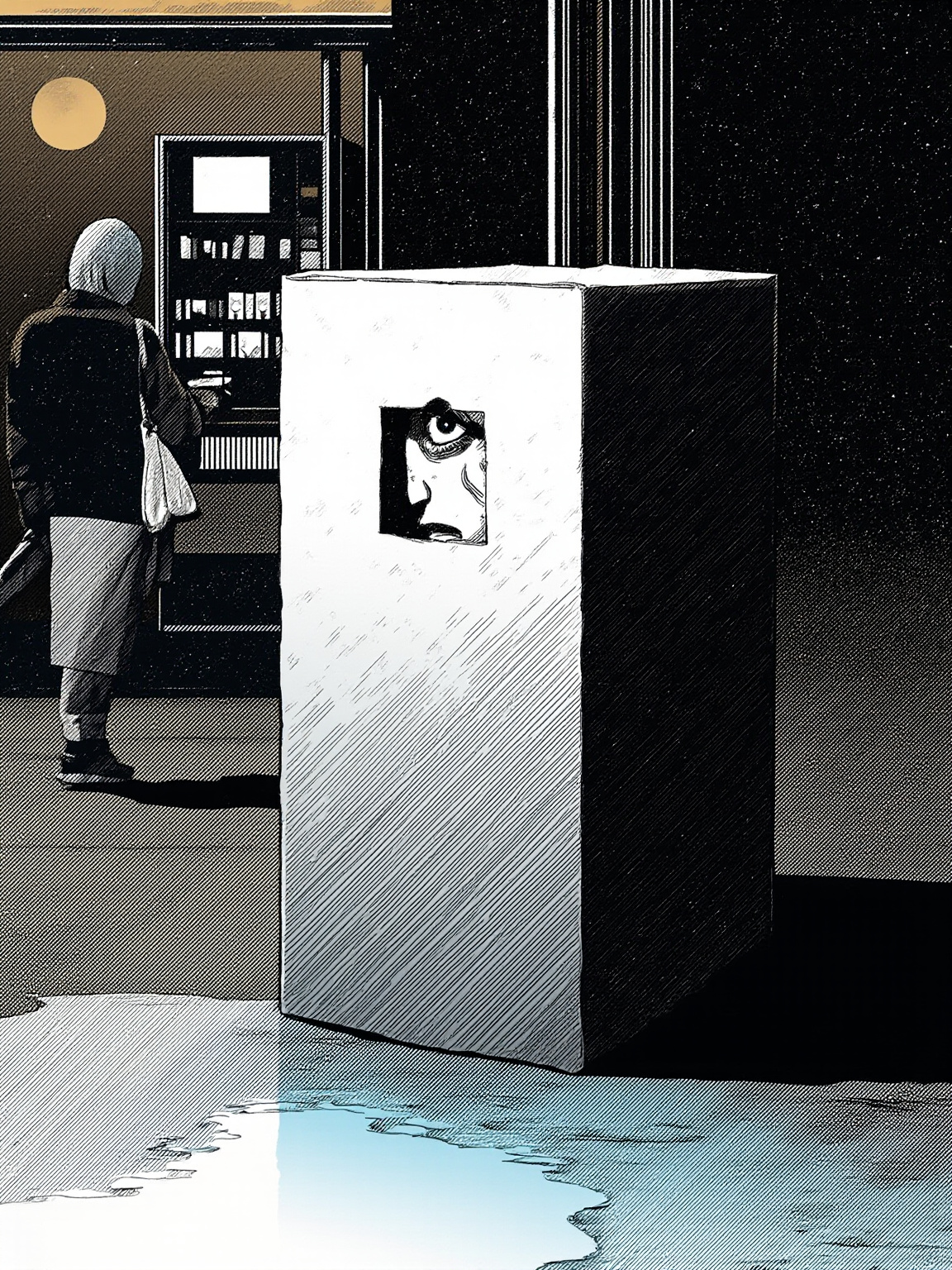
Through the square hole the city was sliced into specimens: the glass door of the convenience store, the cold white of the vending machine, the office workers with their umbrellas in the rain.
透过那只方孔,城市的纹理全变了:便利店的玻璃门、自动贩卖机冷白色的光、雨里撑着伞的上班族——一个一个,都成了被观察的标本。
金句 · 第一章 · 方孔里的街景
What he does not know is that the act of recording is itself an exposure. Every time he presses the shutter, he gives away a little more of his own position. A woman in a plastic raincoat appears in the box settlement. Who she is, he cannot say. She draws close, and just when he thinks he is the one watching her, he realizes he is the one being watched.
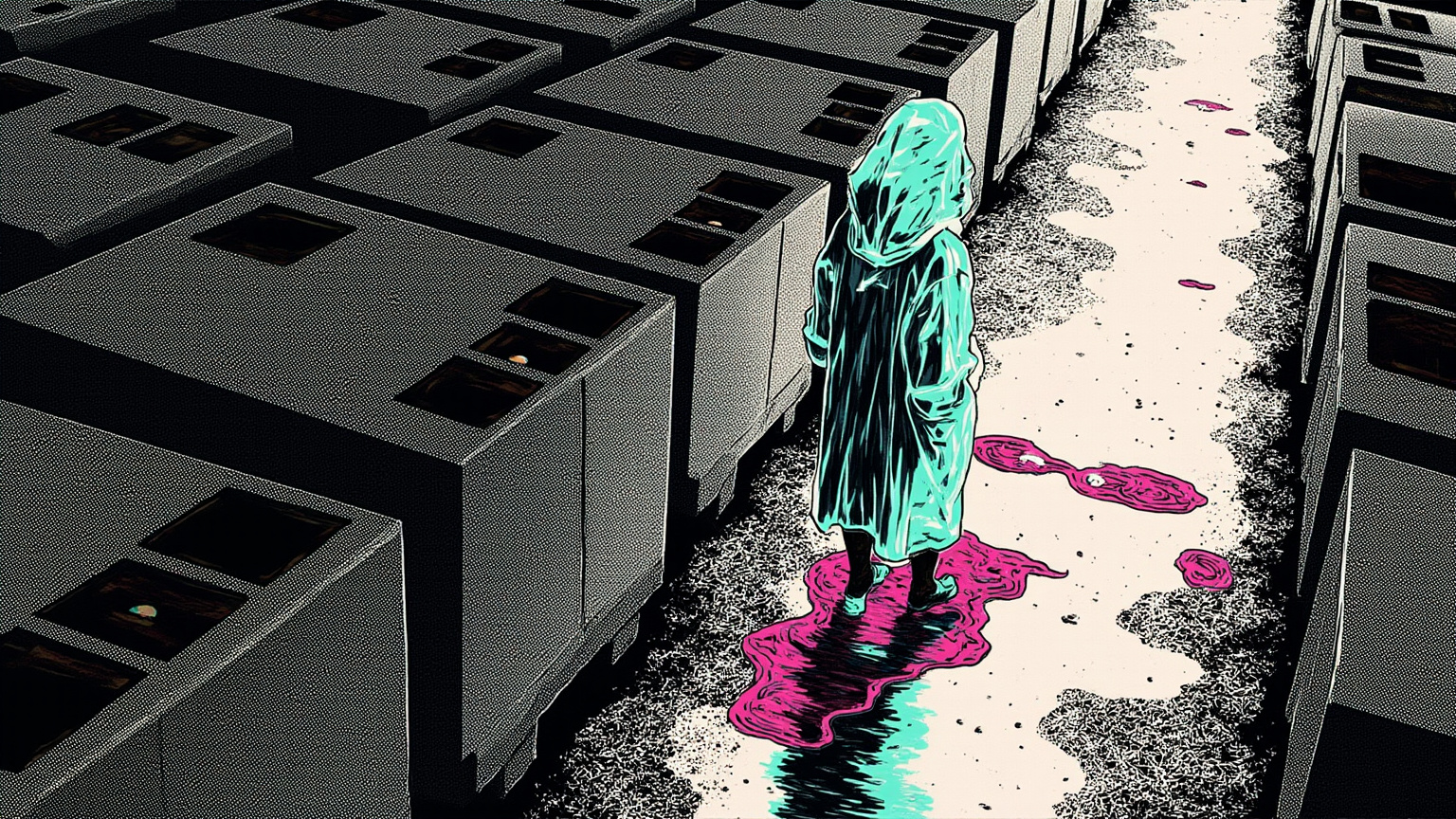
He thought he was watching her; in the next second he realized it was he who had been pinned under her gaze.
他以为自己在窥视她,下一秒钟他发现,被盯住的原来是自己。
金句 · 第二章 · 塑料雨衣的女人
On the riverbank he also runs into another box man. No greeting, no questions: the two of them stare at each other across the dark, as if each were looking at himself in a mirror standing somewhere unlit. A gunshot goes off. No one falls. A spent shell lies smoking on the ground, and the box wall now has a fresh hole torn through it.
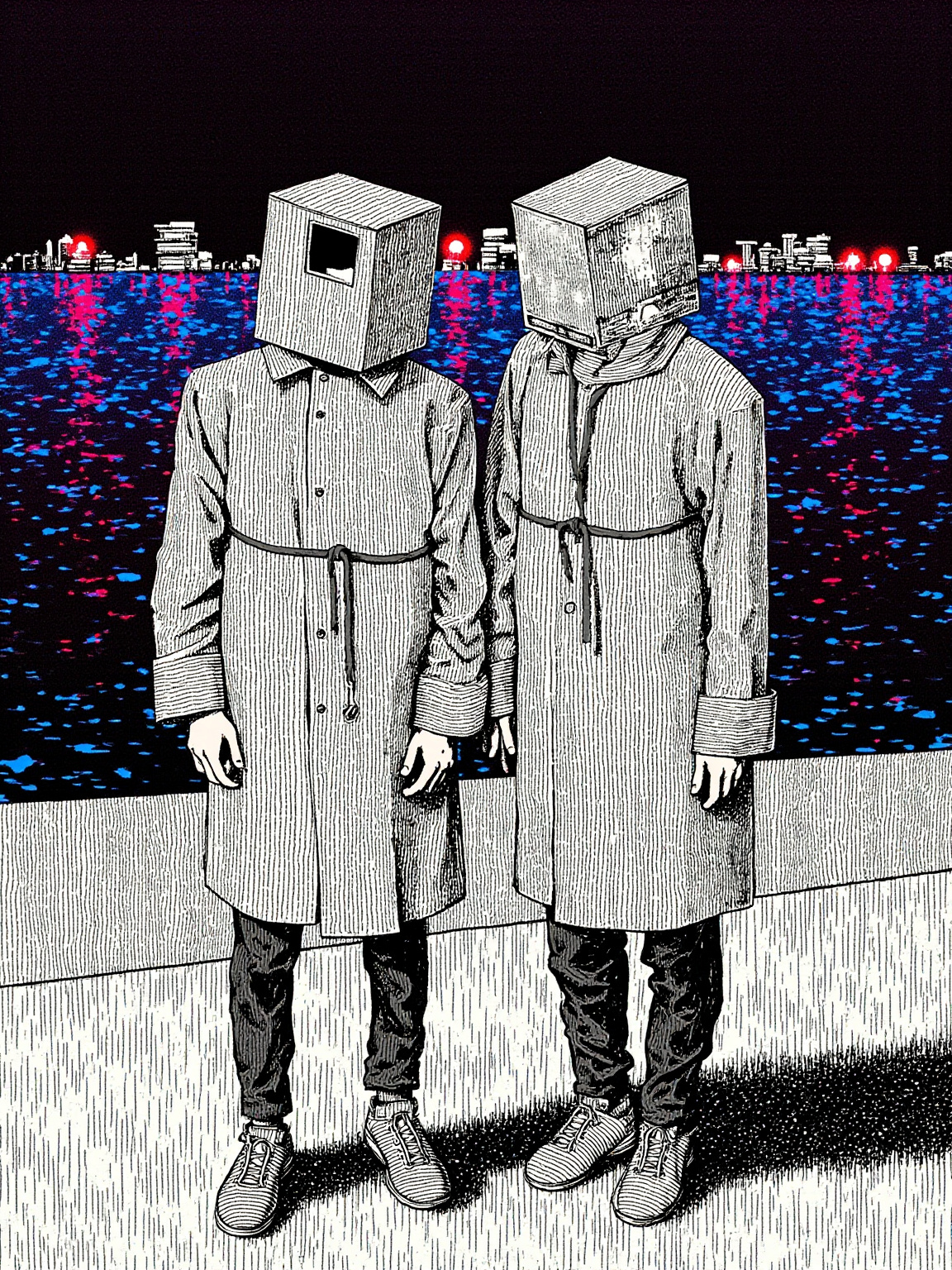
They faced each other through the dark like a single image meeting itself in a hidden mirror; a shot rang out, no one fell, and a hot cartridge case rolled across the ground.
两个人隔着夜色对视,像在一面暗处立着的镜子里看见了同一张脸。一声枪响,没有人倒下,滚烫的弹壳在地面上慢慢转了个弯。
金句 · 第二章 · 河堤上的另一个箱男
In the end, the manuscript and reality converge in the examination room. Pacing the ward at night, the doctor slowly realizes that the patient on the bed, the narrator of the manuscript, and the man inside the box may have been the same person all along. The Box Man is not one man. He is an identity structure that spreads like a contagion.
By this point you may find yourself flipping back a page. The trap is this: you think you are following a straight line, but it is a Möbius strip, and by the end you are standing on the far side of where you began.
The box man is not one person, but a transmissible structure of identity — anyone who reads these pages may already be standing inside the box.
箱男不是一个人,是一种可以传染的身份结构——任何翻开这几页的人,都已经站在了箱子里面。
金句 · 尾声 · 莫比乌斯环
What Is It Actually Asking
On the surface, the book asks a philosophical question: does the self exist only through other people's eyes? Abe turns that question into an experiment inside a cardboard box: dodge every gaze, climb inside, and are you more free, or less yourself? But the sharper edge is one layer down: to observe is itself to be exposed. You think the dark is safe, but every time you look, you give away a little more of where you are. In a world with a phone camera in every pocket, that rule cuts harder now than it did in 1973.
Consider the woman in the plastic raincoat again. Her whole purpose is to let the Box Man see himself being seen. The reader is no different: you think you are simply reading the story of a man hiding in a box, but you are the one being watched through that square hole.
Abe welded a philosophical question to a cardboard box, and the reader who climbs in finds out he is part of the box too.
Why This 1973 Book Still Has Something to Say
The Japanese director Gakuryu Ishii spent decades trying to bring the novel to the screen, and finally did in 2024. That alone got the old book pulled back into conversation in literary circles. But if you're only reading it to keep up, don't bother. It's worth reading because it called so much of the last few years: the masked faces on the subway, the anonymous voices on social media, the surveillance cameras you can never be sure are watching you or not. The city Abe wrote never needed your name. The city itself is one vast, suspect apparatus for watching: you think you're walking down a street, but you've actually stepped into someone else's viewfinder.
You Already Know the Plot. Why Read the Actual Text
A summary can tell you who meets whom, who falls and who disappears, but it cannot give you the weight of a cardboard box pressing on someone's shoulders. In the passages where Abe writes the Box Man walking through the city, the rhythm is cut to the angle of that square hole: the view gets sliced into strips of street by the box wall, and the prose is cut into strips right along with it. No summary can hand you that physical sensation. More important is the vertigo of being stared back at, again and again. The narrator of the manuscript reads as a first person, but keep reading and you notice the first person keeps quietly changing hands: the Box Man one moment, the doctor the next, and then you. That particular pleasure of being fooled only works if you climb in yourself.
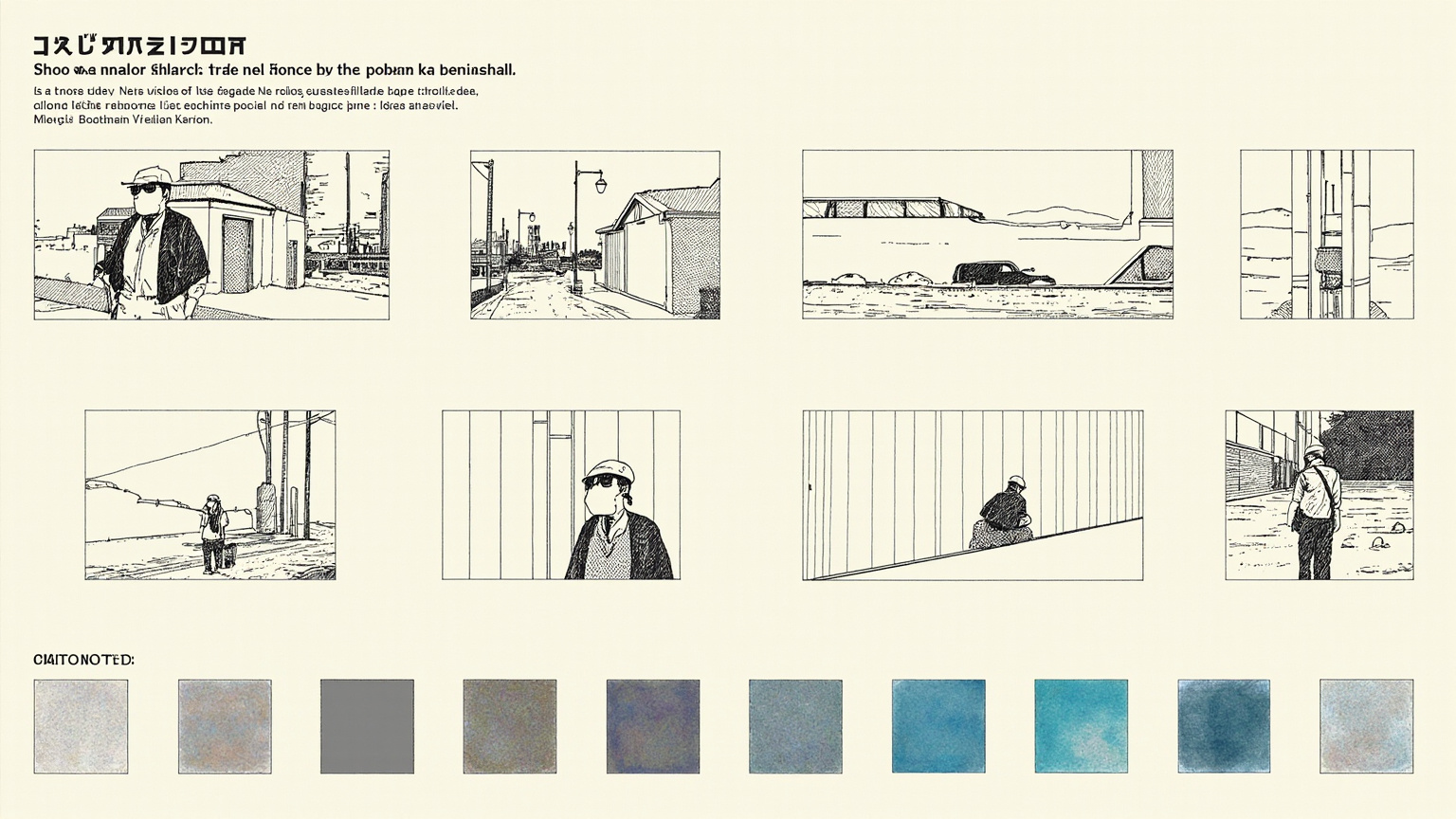
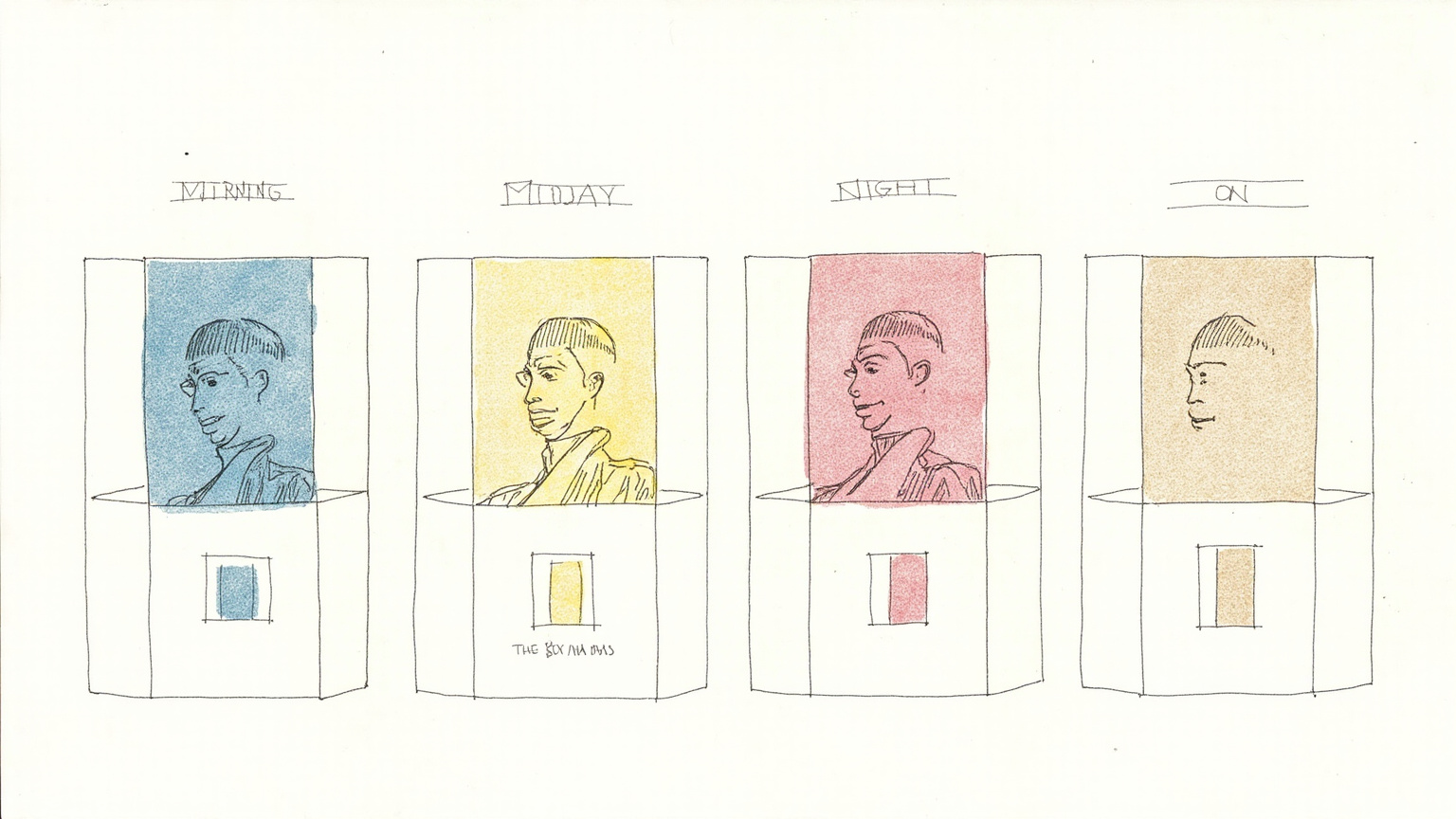
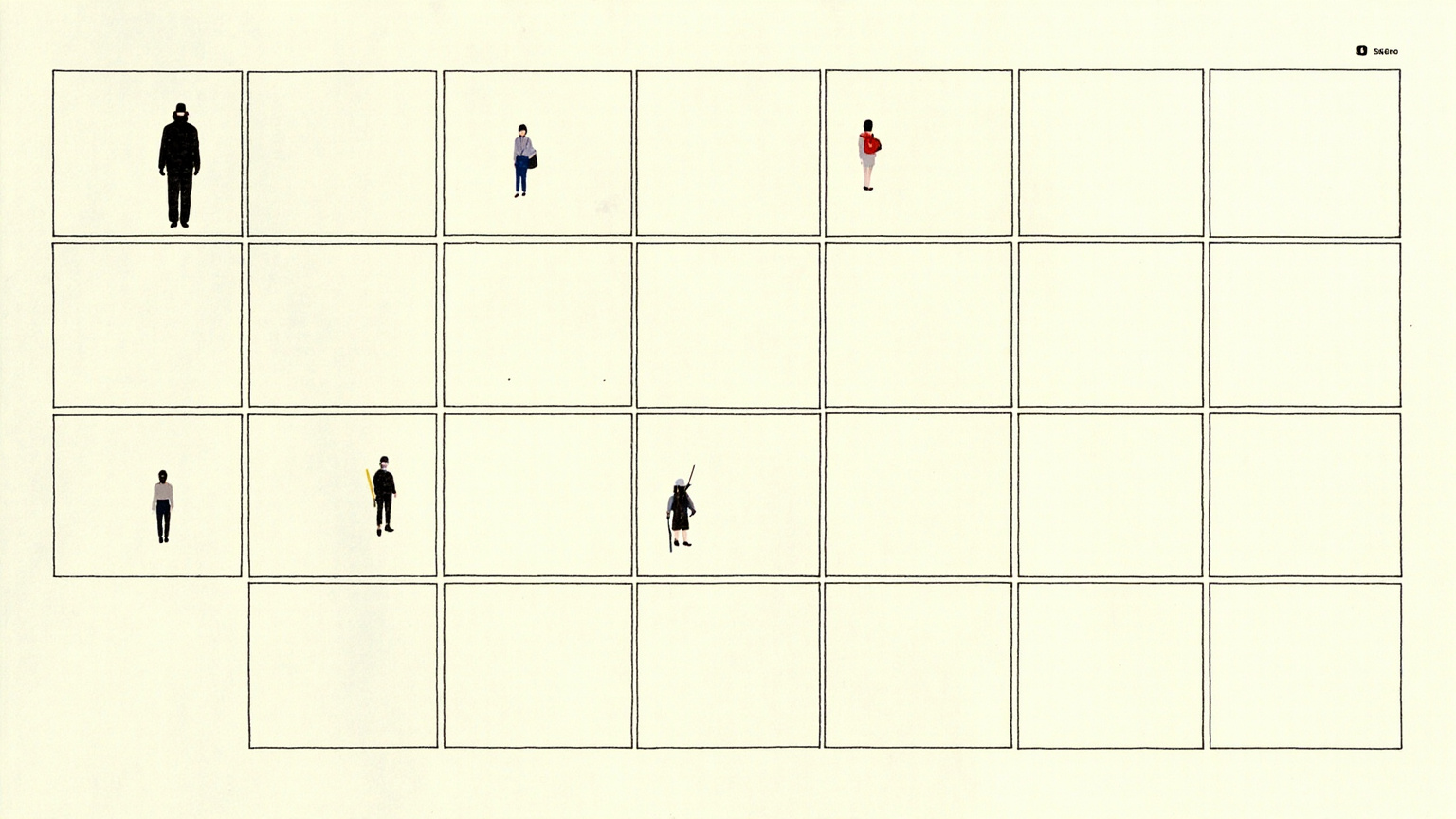
Art Direction4 plates
Before the guide was written, this book got a visual foundation — every illustration you just read grew out of it.