The Call of Cthulhu · Companion Guide
克苏鲁的呼唤
一只阁楼上的灰盒,把波士顿体面青年拽进宇宙冷漠的档案——拼图合上的瞬间,真相便已杀人。
Opening
A dusty box in an attic, the side scrawled with three letters in wobbly red ink — CTHULHU. Inside the box: a clay bas-relief, a scrapbook of newspaper clippings belonging to a dead man, and a few yellowed manuscripts. You came only to sort through your great-uncle's belongings. You don't want to touch them now — but you already have.
This short novel, first published in 1928 in the cheap horror magazine Weird Tales, uses that single box to drag readers into a kind of fear that barely existed in English literature before it. It later got called cosmic horror, then grew into an entire mythological system, and then "Cthulhu" became a everyday word on the internet.
What Book Is This
The author is Howard Phillips Lovecraft, born 1890, died 1937 in Providence — the same city where his fictional great-uncle professor died. He never became a professional writer; he made his living proofreading other people's manuscripts, and most of the stories he wrote weren't republished until years after his death. This is the only piece that was included in a collection during his lifetime and actually got paid for, even if just symbolically.
You read it today not to follow the plot but to understand where a whole kind of story grew from: not vampires leaping out of haunted houses, not killers hidden under drawers, but something older than humans, larger than humans, something humans shouldn't have noticed at all. It shows just how small humans are in the universe.
Character and World
The protagonist is Francis Wayland Thurston, Bostonian, narrator. What moves him is not curiosity but family obligation — he is the grandnephew of George Gammell Angell, the late Brown University professor of Semitic languages. The entire novel's engine is this dead great-uncle's box left in the attic.
A few more names Thurston digs up: Henry Anthony Wilcox, a young Providence sculptor who, beginning in the spring of 1925, kept dreaming of a stone city of impossible geometry and, half-awake, modeled what he saw in clay; John Raymond Legrasse, a police inspector in New Orleans who, in 1908, led a raid into the Louisiana swamps and dragged a statue out of a secret gathering held in the dead of night; Gustav Johansen, second mate of the South Pacific schooner Emma, the only one in the book to see the shadow rise from the sea with his own eyes and live to write down what happened.
The world is split between two places: to the north, New England — old brownstone houses, a scholar's study at the university, boxes of papers in the attic; to the south, the Louisiana swamps and the swells of the South Pacific. The monster never appears on the page. The story runs on manuscripts, clippings, sworn statements, bas-reliefs, and dreams cross-checked against one another. The clues scatter across decades and continents, and it falls to the narrator to thread them together.
The Plot
I. The Box in the Attic
In the winter of 1925, Professor Angell of Brown University dies, and Thurston returns to the old Providence house to sort through his effects. The great-uncle had spent his life studying ancient Semitic inscriptions and esoteric cults; after his death he leaves behind a box of papers labeled Cthulhu — among them a clay bas-relief of indeterminate age, carved with a city that ought not to exist and the outline of something vast, part octopus, part dragon. From this box the whole story takes fire.
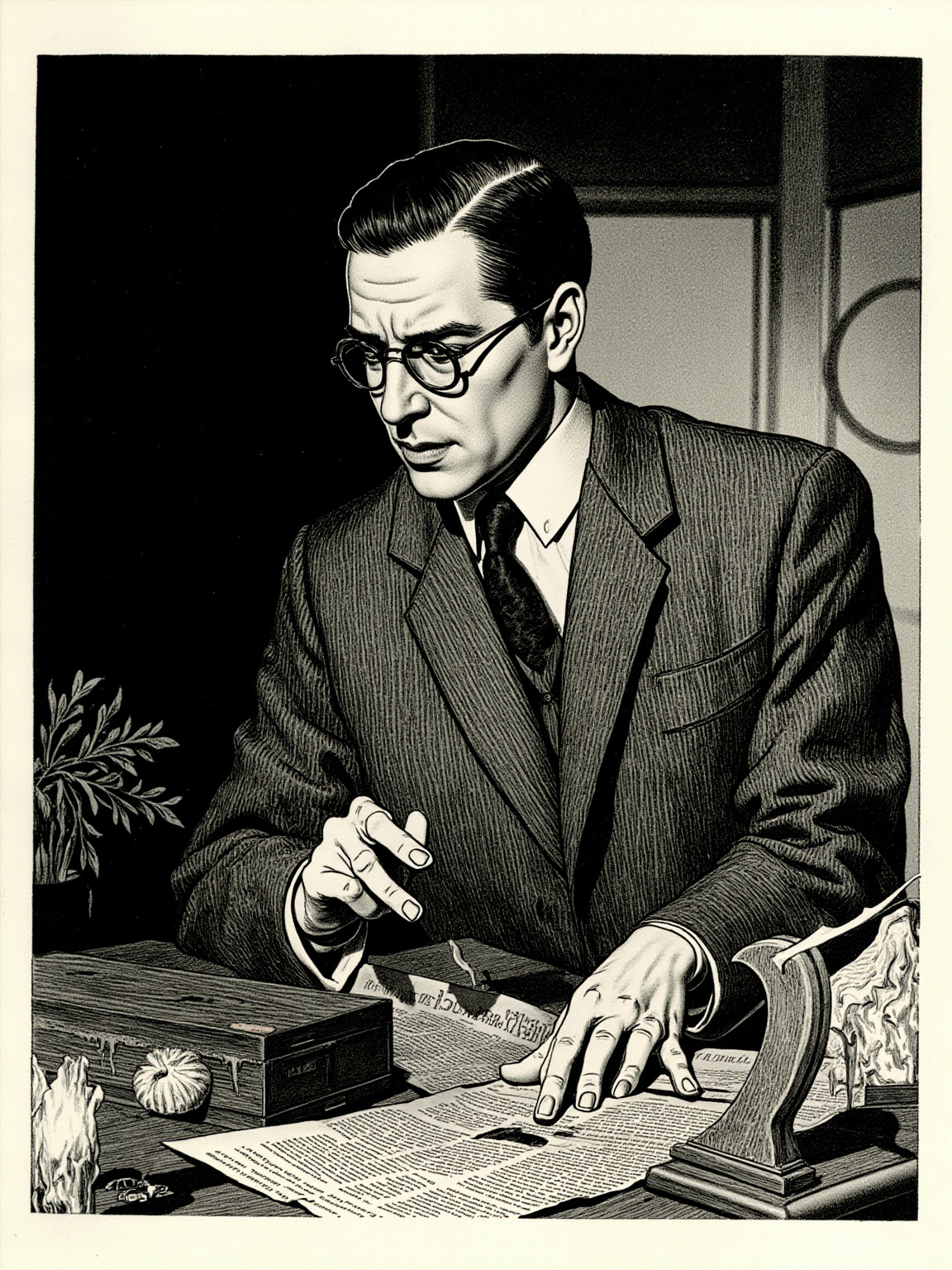
The most merciful thing in the world, I think, is the inability of the human mind to correlate all its contents.
我想,这世上最仁慈的事,莫过于人类的心灵无法将所有内容彼此关联。
金句 · 故事开篇
II. Wilcox's Dream
Following the papers, Thurston traces the bas-relief to Henry Wilcox. A young Providence sculptor who, beginning on some day in March 1925, kept having the same dream — a city of massive stones laid out in crooked geometry, with a vast shadow pressed beneath it. In his half-sleep he carved out what he had seen, along with the strange characters he could not read. Angell had already taken note of the matter in his lifetime and left behind his investigative records.
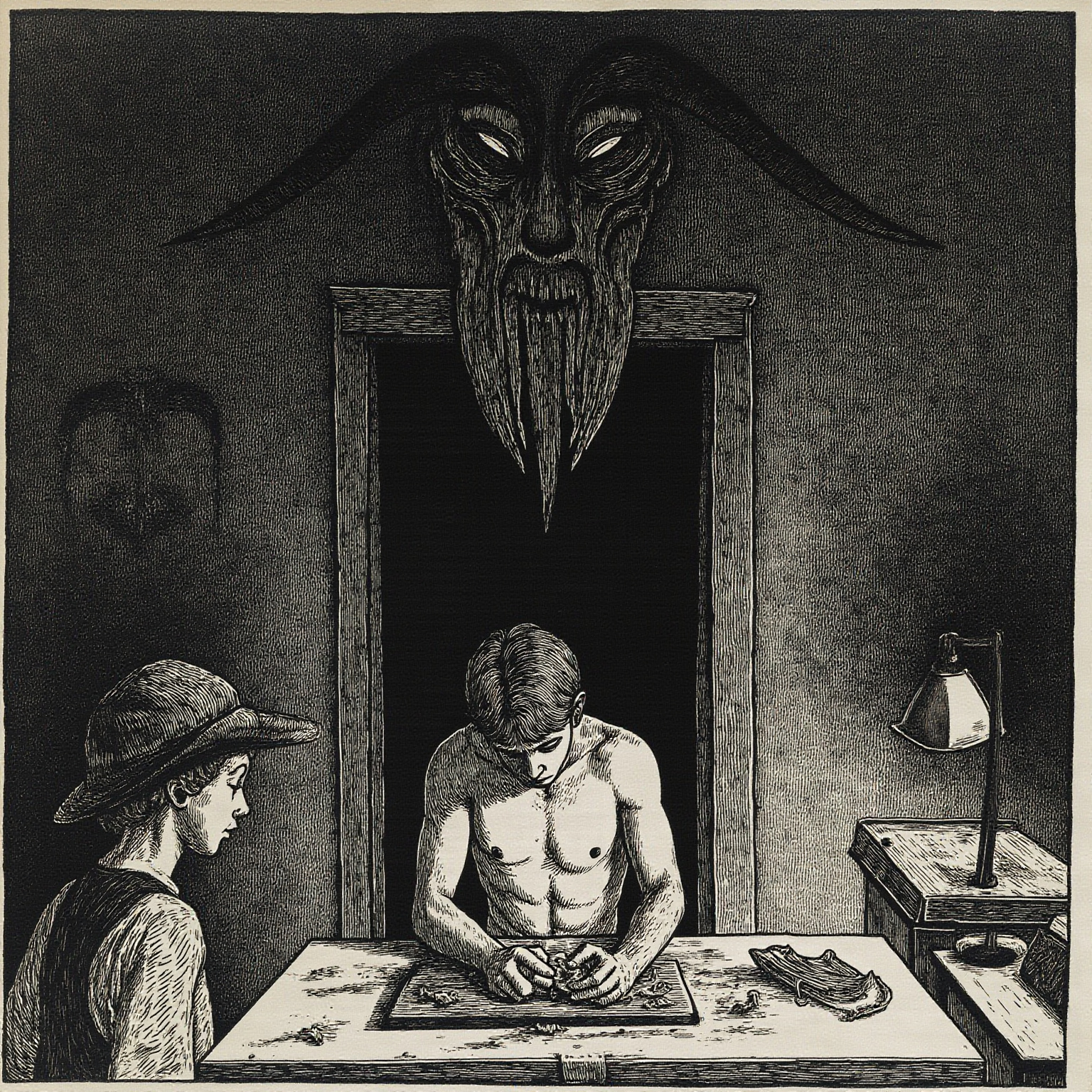
He is alone in the half-light, and the sculptor's dream is already clawing its way out through his hands.
他在半明半暗中独坐,而雕塑家手下的梦,已经自行破土而出。
金句 · 威尔科克斯的梦境与浮雕
III. 1908, The Louisiana Swamp
Tucked into the great-uncle's scrapbook is a police report from 1908. Inspector Legrasse of the New Orleans police led a squad into the Louisiana bayou and kicked open the scene of a late-night gathering — trampled reeds, scattered torches, abandoned ritual objects — and rounded up a group they took for cultists. They also seized a small idol. Its shape was nearly identical to the Wilcox bas-relief. The statement taken that night was the first to mention "the sleeping Cthulhu" and the sunken city of R'lyeh.
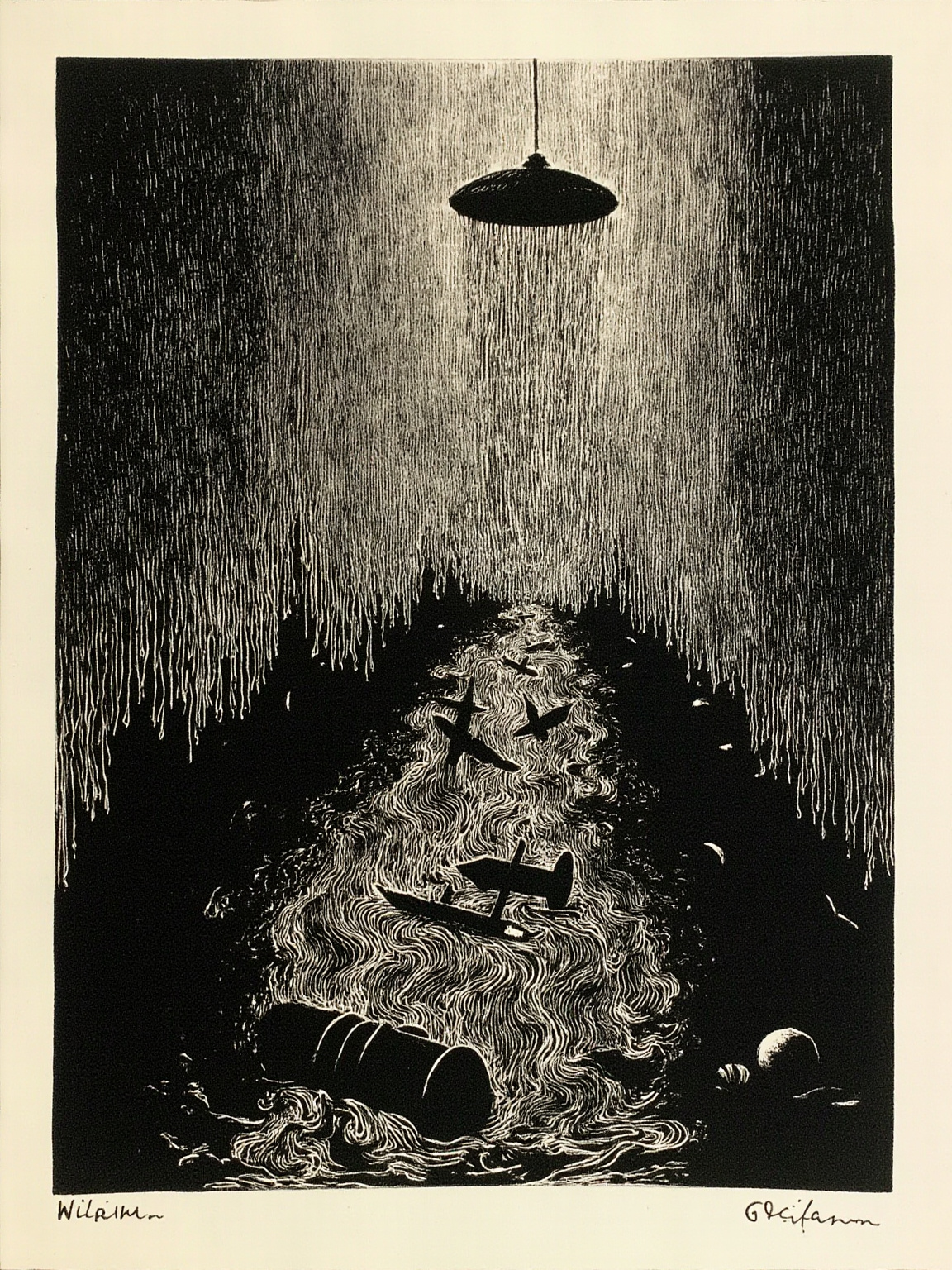
The police of the bayou had found something they could not classify, and so they filed it away with the Voodoo rites.
沼泽地警方挖出了一样无法归类的东西,便随手把它和伏都仪式归进了同一卷档案。
金句 · 一九〇八路易斯安那沼泽
IV. The Emma
The thread then jumps outward, to the South Pacific. In 1925, the schooner Emma drew the attention of something it could not contend with, and her crew was chased to an island no map had ever marked. On the island stood megalithic ruins built along non-Euclidean geometry, their surfaces carved with inscriptions no one could read. The crew should never have opened that door. They opened it anyway.
The heaviest stroke of the whole novella falls here. Johansen, the Emma's second mate, recorded how a vast shadow rose from the sea — a shadow large enough to break geometry itself. The crew sailed the ship straight at it. The shadow broke apart for a moment, then slowly gathered itself together again. On that impossible stretch of ocean, most of them died or went mad; Johansen was picked up by a passing vessel and died in a hospital a few days later. The manuscript was the only thing he left behind.
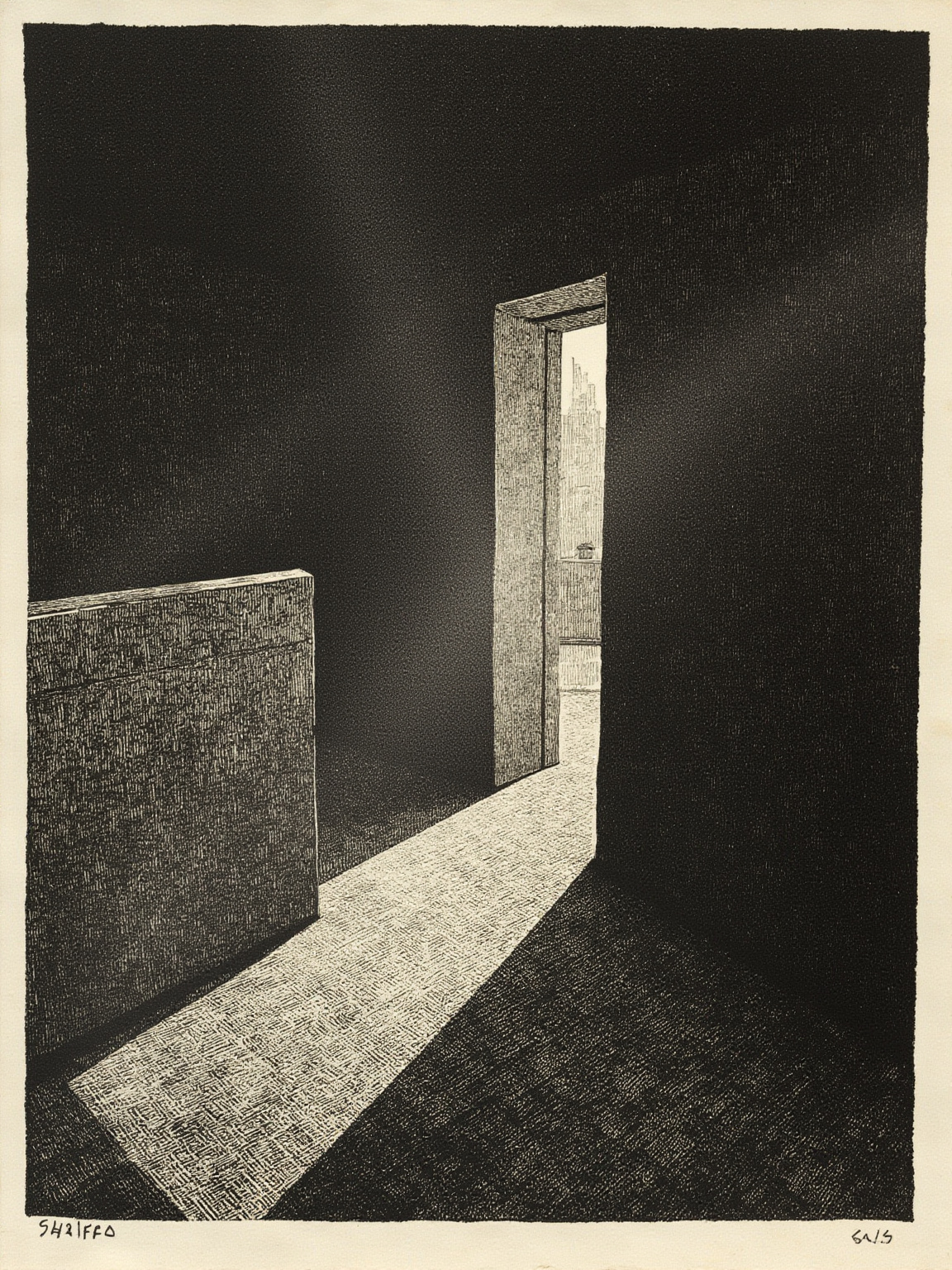
V. The Puzzle and the Truth
Back in his Boston apartment, Thurston spread out every paper he had: Wilcox's dream, the idol seized in the bayou, the Emma's log, the police file, the great-uncle's notes. Each thread on its own sounds like madness; stacked together, they meet without a gap, pointing at one thing — Cthulhu is not dead. It sleeps in R'lyeh at the bottom of the sea, and when the stars come into the right position, it will return. The dreams, the bas-reliefs, the people who suddenly start writing in strange scripts: those are the ways it reaches into the human mind.
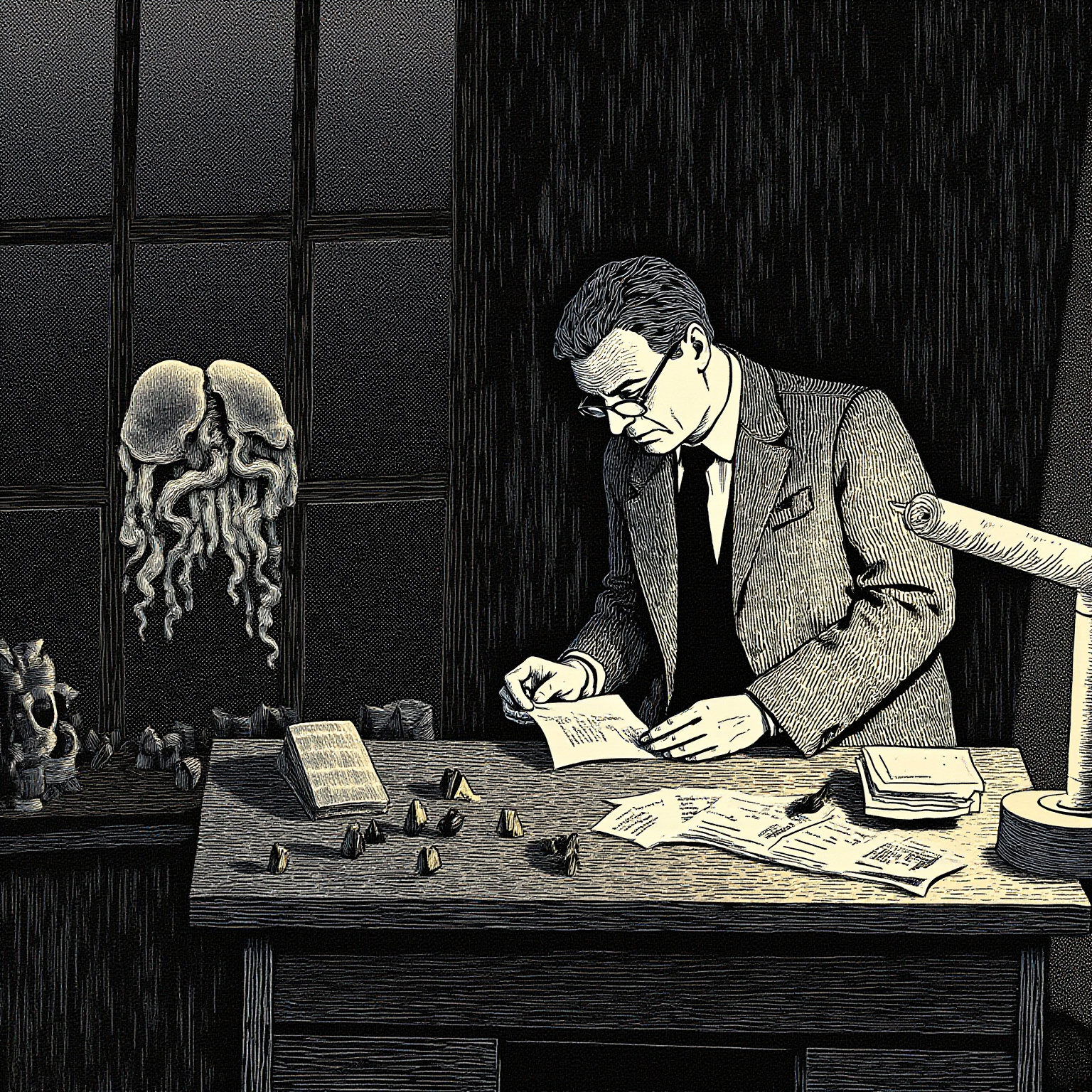
That is not dead which can eternal lie, and with strange aeons even death may die.
那并未死去的东西可以永恒地假寐,而在奇异的纪元里,连死亡亦可能死去。
金句 · 拼图合拢后的真相
VI. The Sealed File
When the puzzle came together, Thurston did not become a hero. He understood he had pieced together something never meant to be joined, and could be erased at any moment — like Wilcox, like Johansen, like his great-uncle. He put the documents back in their box, sealed it, and left it for whoever came after as a letter of warning.
The brilliance of the writing
Not one scene in the whole book puts the monster in front of you. The worst stretch, a vast shadow rising from the sea, is told indirectly, through a manuscript. Lovecraft keeps the horror in the edit: every "I saw it" is filtered through paper, a person, a stretch of memory. The shadow doesn't scare you. What scares you is the hand that wrote it down, shaking.
Another trick later works stole to death: a geometry with no business existing, a stone city piled at skewed angles, writing that won't slot into any known language, statues whose postures make you uneasy. The horror doesn't come from blood. It comes from a set of rules too big for any human brain to hold.
What it's actually saying
This book isn't afraid of ghosts. It's afraid of the cosmos. A man sits in his Providence study, sure the world revolves around him, and the archives tell him the universe has no interest in him, not even contempt. That indifference cuts deeper than any knife-wielding monster.
The second theme is how fragile reason is. Wilcox's body is fine, but his mind has been pried open by a dream; Johansen's body is pulled out alive, but the person inside is already gone. Truth isn't a gift. It's poison. The dose lands, the vessel cracks.
Cthulhu never actually appears. It appears only at the moment you read someone trying to describe it.
Why read the original
The commentary handed you a map; the text itself is the mud. What this novella actually pulls off is the voice it gives the scrapbook—a respectable young Bostonian sorting through his great-uncle's effects, turning pages that grow colder and colder, the colder they grow the harder he finds it to stop. That fine, dense chill is nothing the commentary can stand in for. You have to turn the pages yourself, one at a time, and let it crawl up from the soles of your feet.
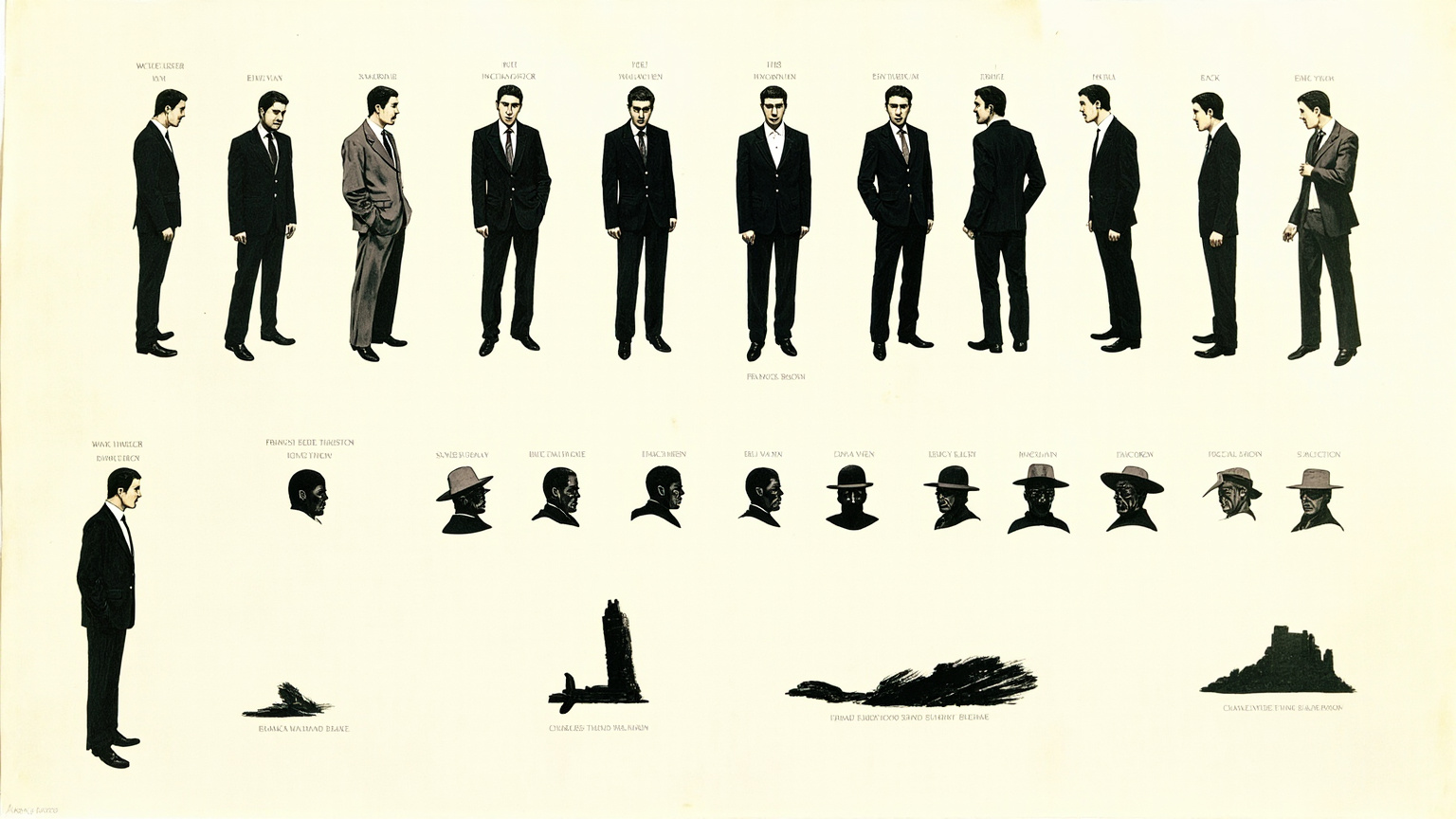
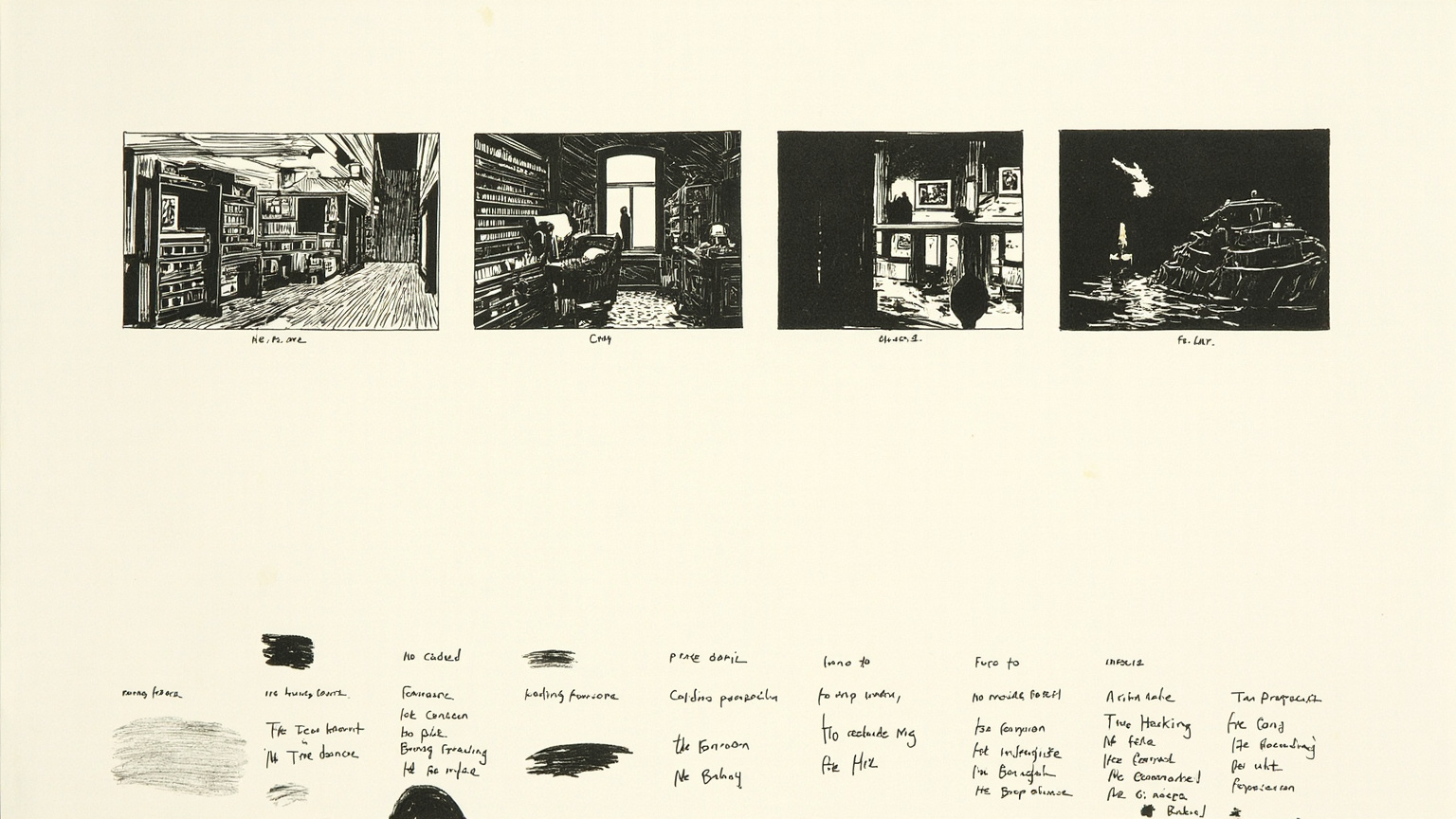
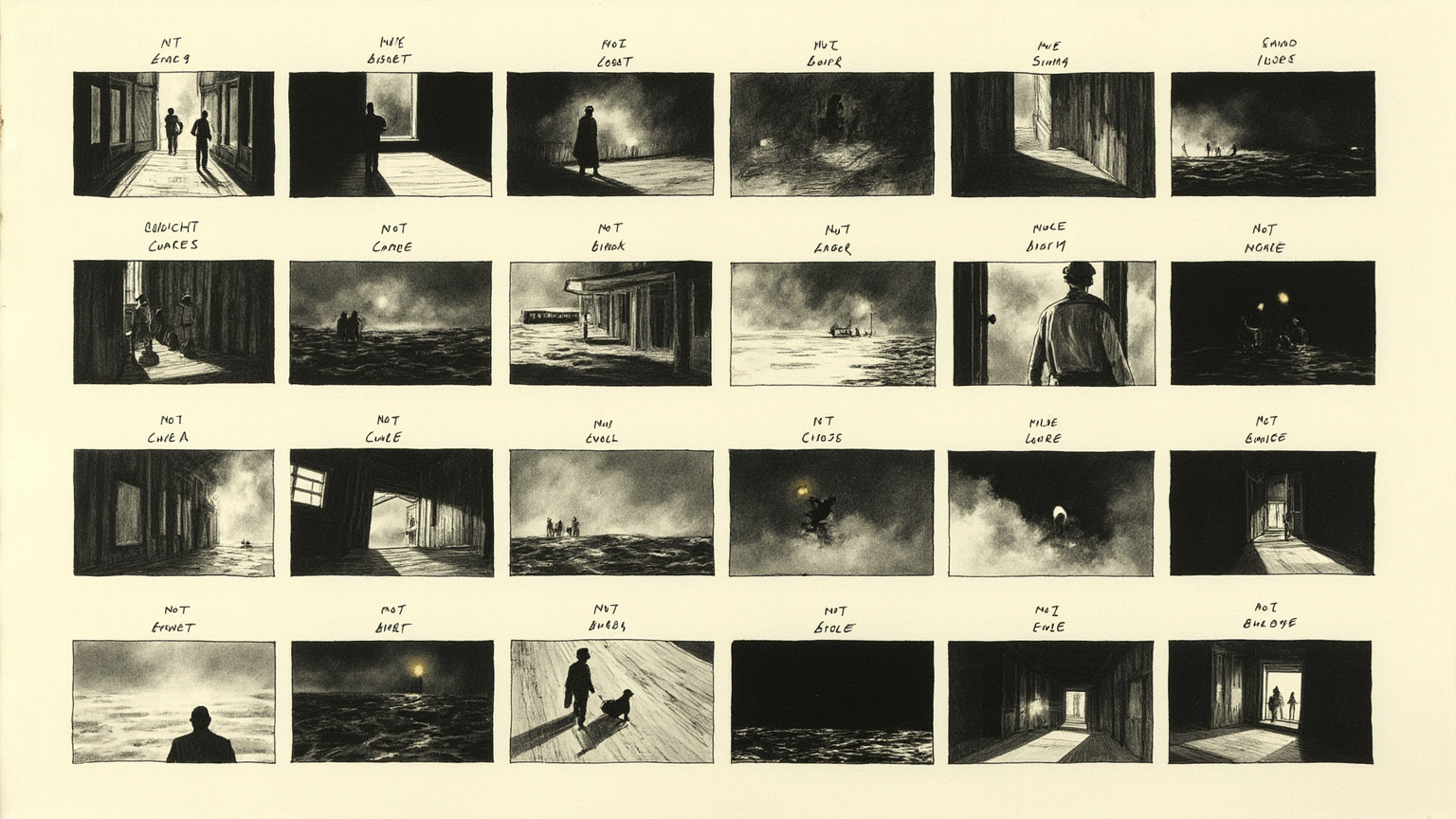
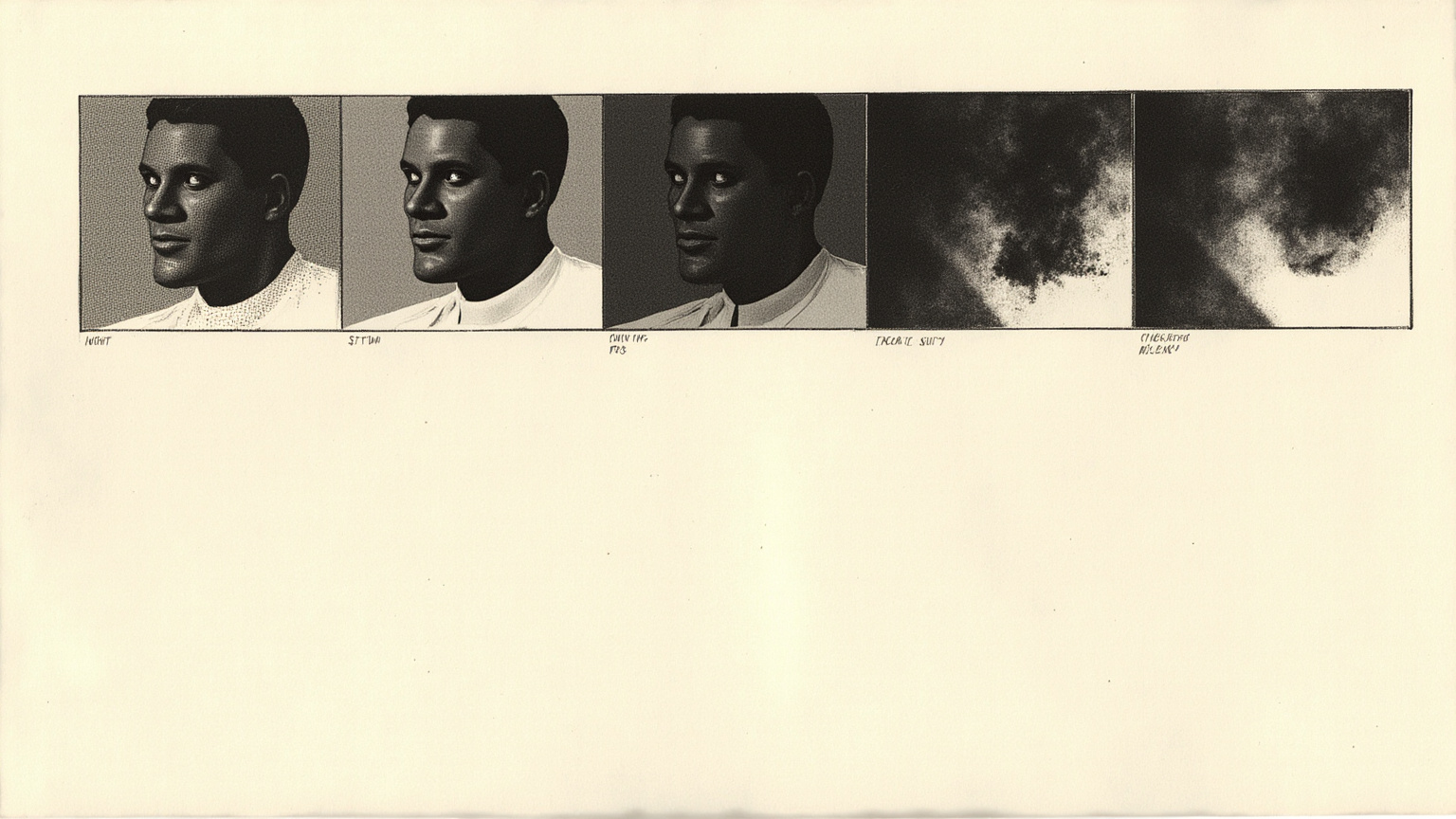
Art Direction4 plates
Before the guide was written, this book got a visual foundation — every illustration you just read grew out of it.