The Captain's Daughter (Kapitanskaya dochka) · Companion Guide
The Captain's Daughter
A seventeen-year-old boy gives his hareskin coat to a ragged stranger in a blizzard. Years later that stranger sits on a pretender tsar's throne, and the gallows are waiting for him — between life and death, nothing but an old coat.
Opening
A blizzard swallows the road, and the sledge is stuck fast in the endless steppe. A man in rags seems to rise straight out of the snow, takes your horse, and leads you home. Before he goes, you strip off your own hareskin coat and press it on him as thanks. You don't know who he is. He doesn't say. You meet him again several chapters later — you're standing under the gallows rope and you look up, and the rebel leader in front of you narrows his eyes just slightly: 'Recognize me now?' That's the first hook Pushkin sets in The Captain's Daughter. A coat given away on a whim comes back to collect its due in blood. You thought it was a kindness returned; fate counted it as destiny.
And the captain's daughter of the title — she isn't the protagonist, she isn't a soldier, she isn't even the character who talks the most. The book is the memoir of an old man looking back, and that old man is the boy who gave away the hareskin coat. This is the misunderstanding readers get backwards more often than any other, and it hides a small trick of Pushkin's: what actually holds the book up is a quiet girl swept into great history.
What kind of book this is
The Captain's Daughter was published in 1836, the only novel Pushkin ever finished, and the wellspring of Russian prose fiction. It's set in the 1770s, under Catherine II (Catherine the Great), and it tells the story of a real peasant uprising on the empire's southeastern frontier — the Pugachev Rebellion. Why does a book about revolt and hangings get read as a love story? Because Pushkin compresses that bloody history down into one boy's emotional arc: a seventeen-year-old nobleman goes off to serve, falls for the daughter of the commandant at a remote frontier post, the rebellion breaks out, the fort falls, the lovers are torn apart, and eventually reunited. This isn't a history textbook, and it isn't costume melodrama either — it's a memoir, plainspoken and cleanly paced, that translates matters of state into a boy's snow, wind, lamplight, and blood.
The people and their world
The cast is small, but every figure in it stands on its own. Pyotr Grinyov is the narrator — the whole novel is an old man looking back on the year he turned seventeen. He's no dashing boy hero: he's naive, rigid about propriety, obsessed with honor, he stammers when he's nervous, he cries when he's hurt, and when he's falsely accused all he can do is stay silent. It's exactly this lack of polish that makes readers willing to follow him into the storm. Masha Mironova is the captain's daughter of the title, the only child of Captain Mironov, commandant of Belogorsk Fortress. She starts out shy and easy to overlook. After the fort falls and both her parents are dead, she's trapped inside a fortress now held by the rebels, facing a forced marriage. This girl who showed no edge at all in peacetime ends up walking alone into the gardens of Tsarskoye Selo outside Petersburg and speaking, to an empress travelling incognito, on behalf of the man she loves — she is where the novel's real moral courage lives. Shvabrin is the true villain of the book, not Pugachev. He's devious, embittered, and quick to turn with the wind: he cheats in his duel with Grinyov, defects to the rebels the instant the fort falls, locks Masha up and pressures her into marrying him, and afterward turns around and falsely accuses Grinyov of treason. He stands for a way of living Pushkin holds in contempt — expedient, self-serving, spineless. And then there's Pugachev — a real historical figure, the Don Cossack rebel leader who claimed to be the murdered Tsar Peter III. He sacks towns and hangs loyal officers who won't swear allegiance to him, and yet twice lets Grinyov go free because of an old debt over a hareskin coat, even riding out himself alongside Grinyov to rescue Masha. This peasant tsar, half wolf and half benefactor, is one of the more complicated figures Pushkin ever put on the page — one that holds its own against any in world literature.
The plot: the coat, the gallows, the garden
The story opens about as unassumingly as a story can: one morning in St. Petersburg, young Grinyov is summoned by his father for a talking-to. The family has served in the army for generations, and rather than see him off in person, his father hands him over to the household's old servant, Savelich, with one cold instruction: mind your spending before you've even reported for duty. And that's how a seventeen-year-old is sent out onto the road, trailed by a grumbling old family retainer. What to notice: from the very first page Pushkin plants two things at once — a boy who knows nothing of the world, and honor as something nailed into his spine by one cold sentence from his father. The opening is deliberately restrained, almost affectless, but the reader will feel its aftershock on every page that follows.
By the time the road reaches the Orenburg steppe, a blizzard has closed in. The driver loses the way, the sledge is on the verge of overturning — and just as Grinyov is sure he'll freeze to death out on the steppe, a ragged stranger walks out of the storm, claims to know the area, and guides them to a waystation. Before parting, Grinyov has Savelich dig the hareskin coat out of the luggage and give it to the guide as thanks. The man takes it without a word of gratitude, and only asks: 'What's your name?' What to notice: the whole scene is rendered in flat, unadorned description, without a shred of interior monologue. Pushkin has you feel exactly what the boy feels — that a thank-you is owed, nothing more — with no idea what that thank-you will cost. The reader knows who this man is well before the character does, and that gap in knowledge is the quietest and most merciless piece of stagecraft in the whole book.
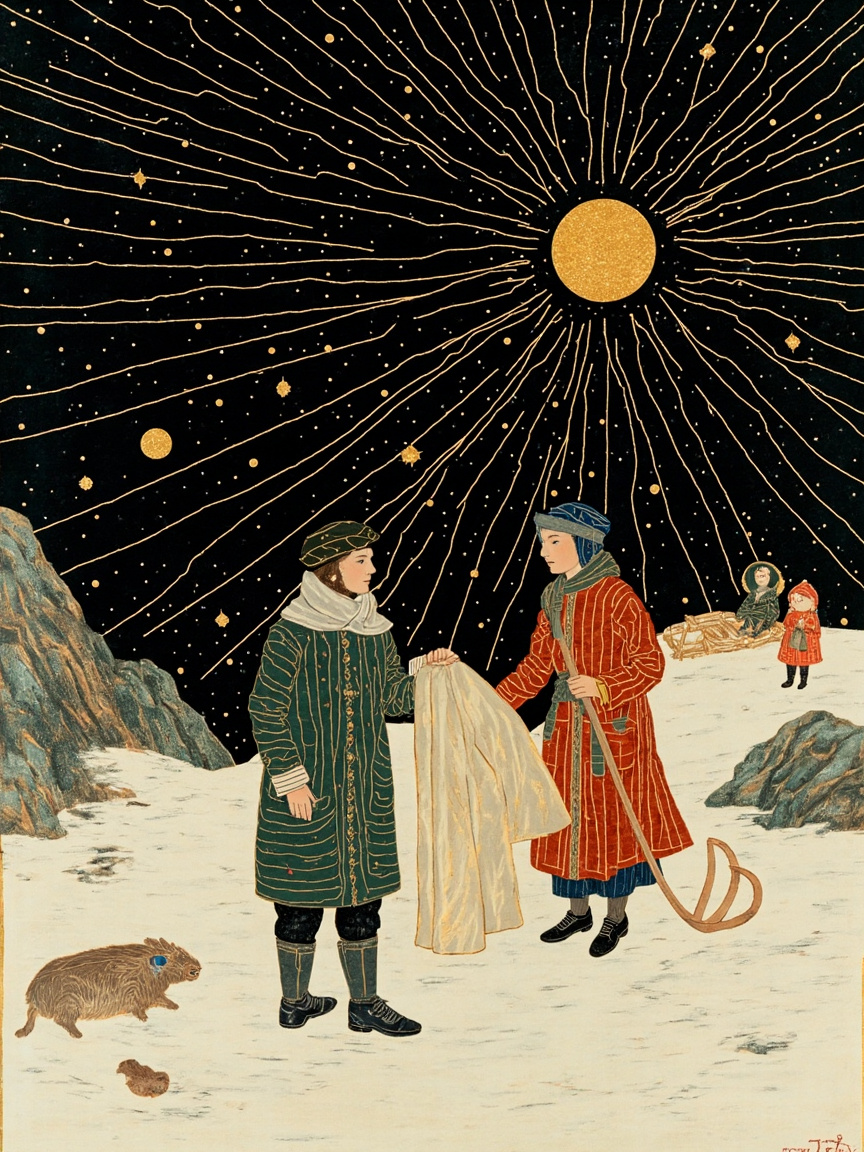
Thanks, your excellency; may Heaven reward you for your goodness; I shall never forget, as long as I live, your kindnesses
多谢您,老爷;愿上天报答您的仁厚——您的恩情,我一辈子都不会忘。
Original line · Chapter 2, The Guide · the parting words of the tramp given the hareskin coat — the seed of everything that follows
At Belogorsk Fortress, Grinyov's first sight is of the captain's daughter, Masha. The fort is a small wooden stockade out on the steppe, so far off the beaten track that no one bothers drawing it on a map. Captain Mironov is a plain, unassuming old soldier; his wife, Vasilisa Yegorovna, is the one who really runs the place — sharp-tongued and capable, keeping this dreary little outpost simultaneously in an uproar and in perfect order. Here Grinyov learns to play cards, learns to miss a girl, and runs into Shvabrin, an officer who's also fallen for Masha. The two men duel; Shvabrin cheats with his blade, and Grinyov goes down wounded. What to notice: Pushkin's touch with this small frontier society is exact and restrained — he makes this little wooden stockade into a home with its own laughter and tears, so that when the fort falls later, the reader's grief is anything but abstract.
The storm that has really been gathering over the steppe breaks: the Pugachev Rebellion. The rebels take town after town and fort after fort, sweeping down on Belogorsk with nothing able to stop them. The Mironov family refuses to swear allegiance to Pugachev, who claims to be the tsar — and in Pugachev's eyes, that refusal to acknowledge him as sovereign is itself a capital crime. On the day the fort falls, the old captain is dragged out in front of his own gate and hanged before everyone; Vasilisa Yegorovna dies in the chaos as well. Grinyov is marched before this self-styled tsar — and the instant he looks up, he recognizes those eyes. What to notice: Pushkin does something quite ruthless here. He doesn't dwell on the gore of the hanging; he lets Grinyov's gaze do all the work of recognition instead. Laying a historic execution and an 'it's you' recognition over the same single second is what sends the chill down the reader's spine.
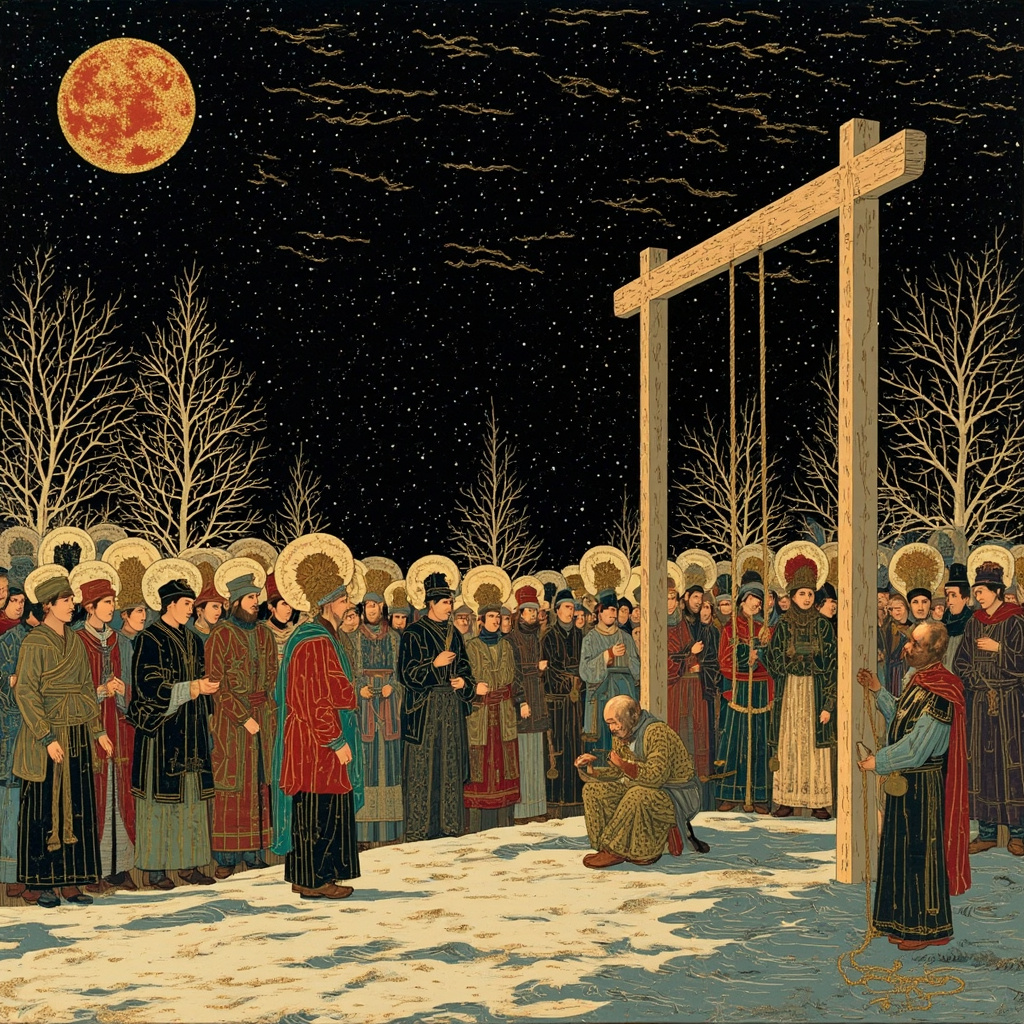
You are not my Emperor; you are a usurper and a robber!
你不是我的皇上;你是个僭号者,是个强盗!
Original line · Chapter 7, The Assault · gravely wounded, Captain Mironov refuses the oath and is dragged to the gallows
Pugachev doesn't kill him. Not only that — once he recognizes the old debt, this rebel leader, half tyrant and half benefactor, gives him a horse and a coat and waves him on his way. It isn't a stirring of conscience so much as the steppe's own accounting: you know who I am, I remember I owe you a coat, and now we're square. What to notice: Pushkin is extremely restrained about letting Pugachev speak — he doesn't give the rebel leader any grand monologue, just one plain, ordinary line. That's more unsettling than any speech could be: a man capable of hanging someone from the gallows is also a man who remembers a hareskin coat.
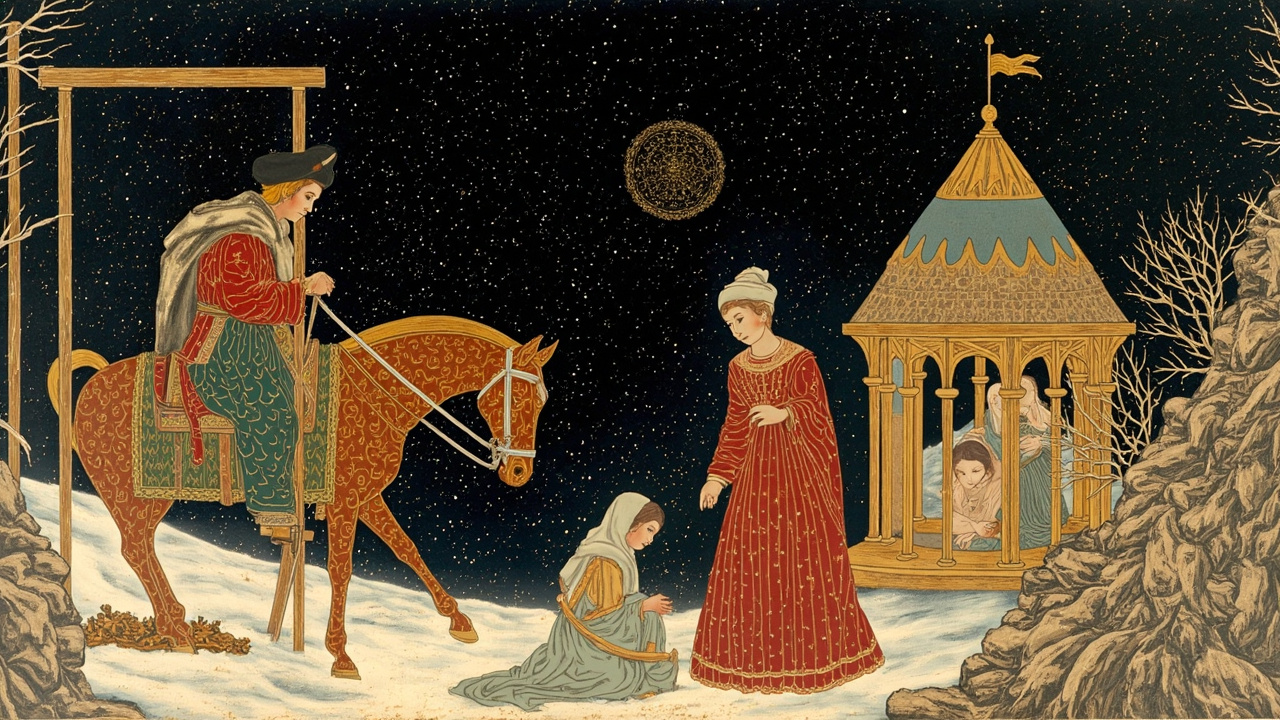
Well, would you ever have thought, sir, that the man who guided you to a lodging in the steppe was the great Tzar himself?
怎么样,老爷,你可曾想到过——当初在草原上给你引路投宿的那个人,就是伟大的沙皇本人?
Original line · Chapter 8, The Uninvited Guest · Pugachev reveals it: he was the guide all along
Grinyov doesn't simply take the chance to escape. He hears that Masha is trapped at Belogorsk Fortress, now in the hands of the turncoat Shvabrin, who is forcing her into marriage. So he makes a mad decision: he turns around, seeks out Pugachev, and asks the rebel leader to rescue his bride. Madder still, Pugachev agrees. This self-proclaimed tsar rides out with his own men, accompanies Grinyov all the way back to Belogorsk Fortress, wrests Masha away from Shvabrin, and lets them both go free. A man who hanged the old captain rides to save the old captain's daughter — there's no logic in it, and that's the point. Pushkin means for the reader to be unable to pin a single label on this man. What to notice: this scene rewards close attention, because Pushkin buries the great historical event entirely in the background. The reader never sees imperial troops or strategy maps, only a boy begging a rebel leader to save a girl. The grand narrative gets moved by private feeling, and that's exactly where this book casts its spell.
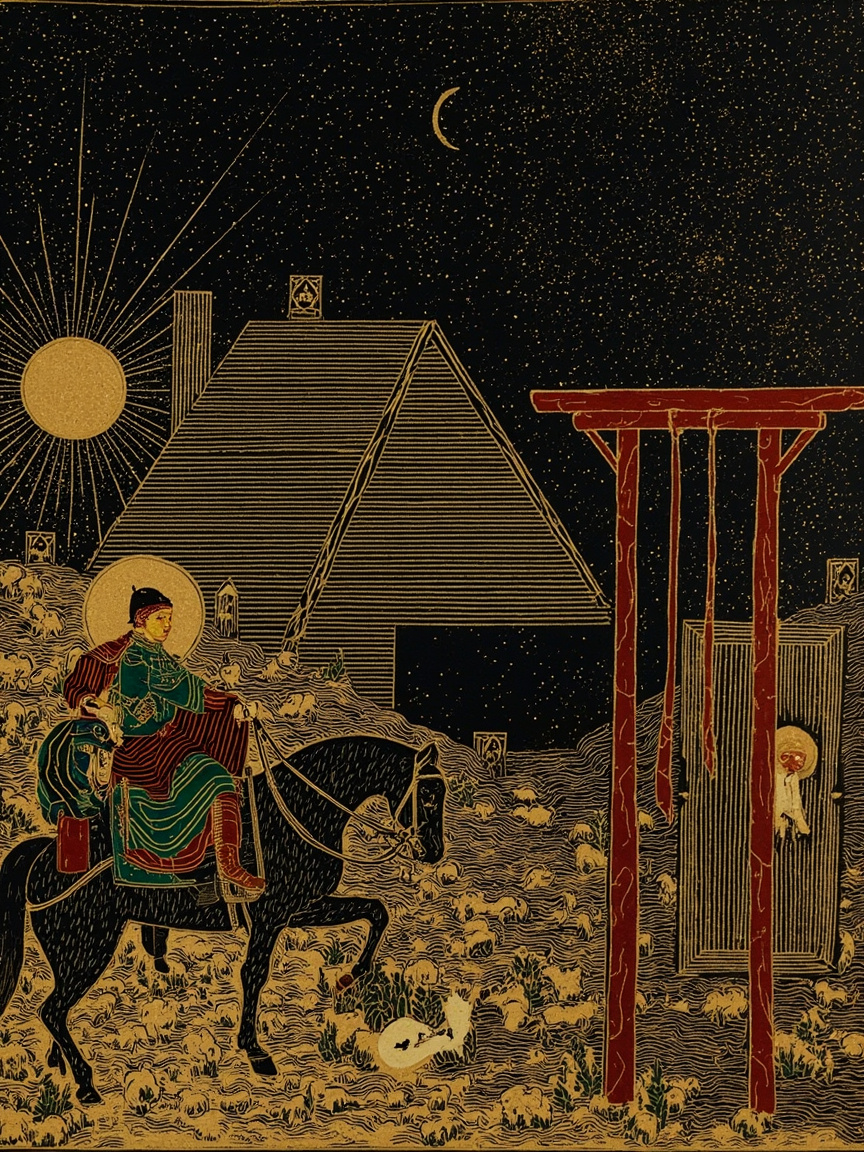
Why didn't you tell me before? We will marry you, and have a fine junket at your wedding.
你怎么不早说?我们给你把亲成了,婚宴上好好乐一场。
Original line · Chapter 11, The Rebel Settlement · on learning the prisoner is his betrothed, the rebel leader agrees at once to rescue her
The rebellion is crushed, and Pugachev is finally executed — Grinyov watches it happen with his own eyes. But the story isn't over. Once arrested, Shvabrin turns and falsely accuses Grinyov of having served the rebels during the occupation. In that era, collaboration was a capital offense. Grinyov is brought to Petersburg to stand trial, and he faces a brutal choice: naming Masha would explain everything — that she'd been trapped in rebel territory, that he'd gone to Pugachev on her account — but it would also put her name into the record of a treason case. He chooses to say nothing at all. What to notice: this is the heaviest passage in the whole book. Pushkin gives Grinyov no impassioned interior speech — he simply has him say, 'I refuse to answer,' and moves on to the next paragraph. That coldness is exactly where Pushkin's skill lives.
It's Masha who breaks the deadlock. She sets out alone from Orenburg and makes her way to Tsarskoye Selo outside Petersburg, the site of the imperial summer residence. A girl with no connections has no way of requesting an audience with the empress, and she isn't planning to ask for one. She only wants to clear her head in the gardens there, and after that — we don't know what she meant to do next. On a bench in the garden, a plainly dressed woman of unmistakable bearing sits down beside her and strikes up small talk about the weather, then about where she's from. Masha tells her everything — Belogorsk Fortress, Pugachev, the man she loves who stands falsely accused. When she finishes, the woman's tone suddenly changes. She is Catherine II. A few days later, the decree arrives: Grinyov is cleared of all charges, Masha is granted noble status, and the two lovers are finally united. What to notice: Pushkin writes this passage like a fairy tale — a garden, a bench, an empress in disguise, a fate rewritten in a few lines of conversation. But it isn't a fairy tale. It's a way of compressing the whole weight of imperial power into a single chance encounter: the real turning points of history often arrive looking like the least likely moment for one.
What it's really about
The whole novel carries a single epigraph: 'Guard your honor from a young age.' That's the key to reading it. Grinyov never does anything heroic across the entire book: he gives away a hareskin coat, he loses a duel, he stands silent at his trial, he watches Pugachev executed with his own eyes. But every small thing he does — not lying, not implicating the girl he loves, not bowing to the rebels, not defending himself against a false accuser — adds up to one thing: honor. What Pushkin is saying is that honor isn't armor. It's a string of small decisions made day after day. And Pugachev's presence in the book is the sharpest irony running against that thread. A usurper who slaughters the innocent still remembers a hareskin coat; a loyal old captain devoted to his tsar is hanged simply for refusing to bow to an impostor. In Pushkin's hands, the idea that good is rewarded is never something that happens automatically — it's a choice people make, not a law of heaven.
On a deeper level, The Captain's Daughter demonstrates a technique that the whole of Russian fiction would go on to use: writing great history through private life. There's a shadow of this war in Tolstoy's War and Peace, a shadow of this kind of trial in Dostoevsky's crowded casts of characters — but the first to fold great events into the eyes of a small, ordinary person was this slim book of Pushkin's. It is clear, quick, unsentimental, and it is the first foundation stone of Russian realist prose. For readers coming to it from Chinese today, the book also offers a rare opportunity: to watch an empire collapse from within, to see that rebellion and justice are never simply the same word, and to watch a seventeen-year-old grow, inch by inch, into a man somewhere between the gallows and love.
Why read the original
A companion guide gives you the map; the text itself is the land. What no amount of spoiling can take from this book is the clean, snow-swept quality of its prose — Pushkin writes in short, plain strokes, and almost every chapter is a scene you can read through in one breath. But every blizzard, every silence before a hanging, every word Masha says to the empress carries ten times the weight on the page that it does in any summary of it. And there's one more thing no summary can give you: read Pushkin closely and you'll find, gradually, that he isn't writing a hero's story at all — he's writing how an honest man holds onto himself in a world coming apart. That kind of holding on can't be replaced by any slogan. You have to walk through it with him, sentence by sentence, before you understand what it means to guard your honor from a young age.
A coat given away on a whim, counted by fate as destiny — that's the wager Pushkin lays down for you: will you believe that every small thing counts?
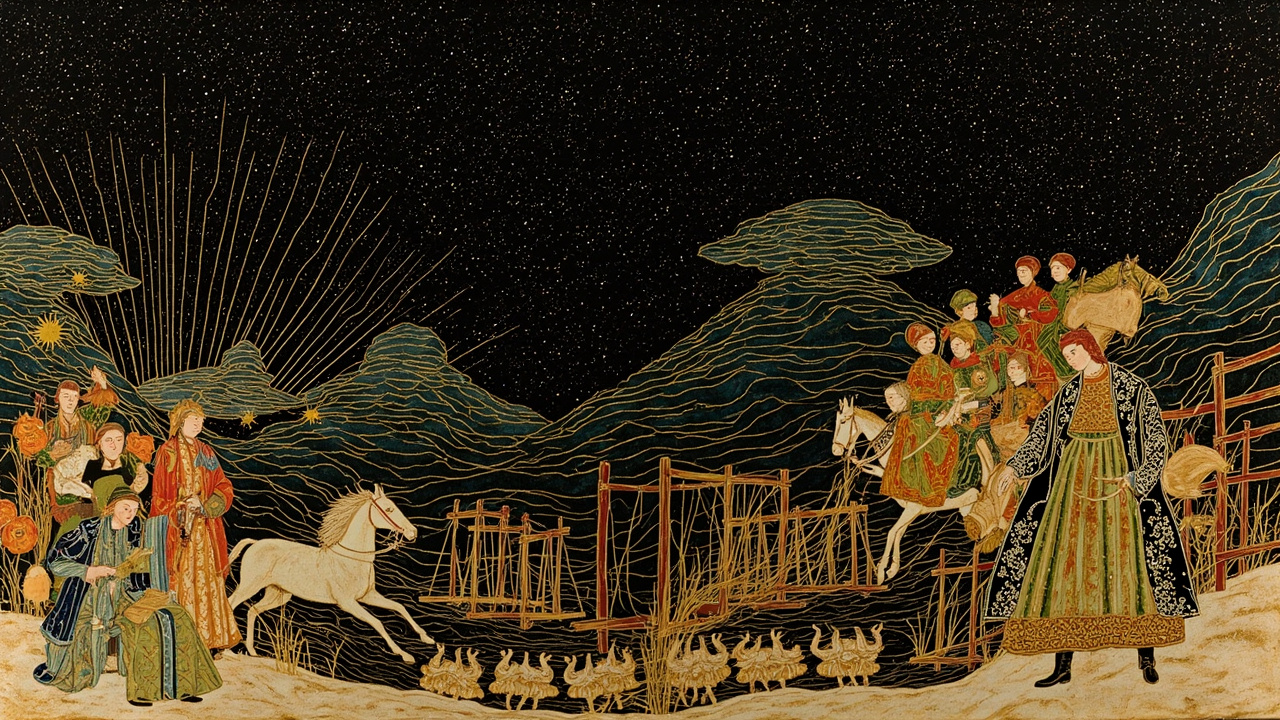
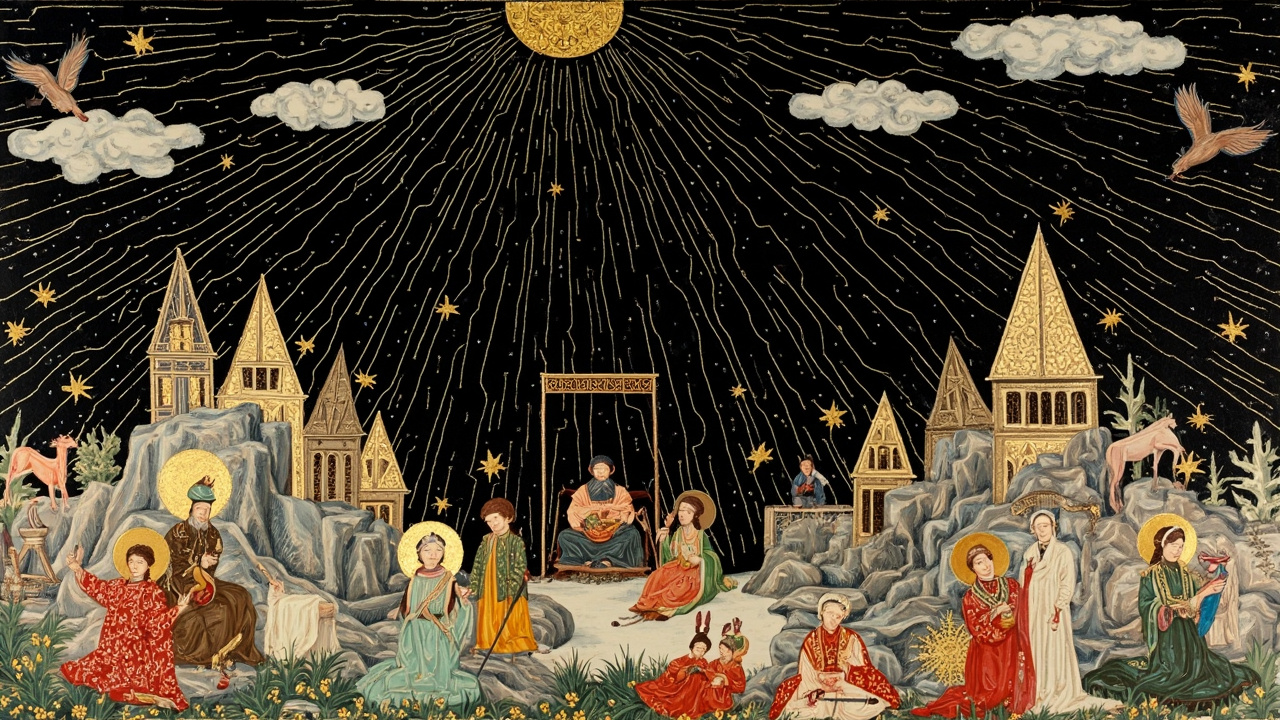
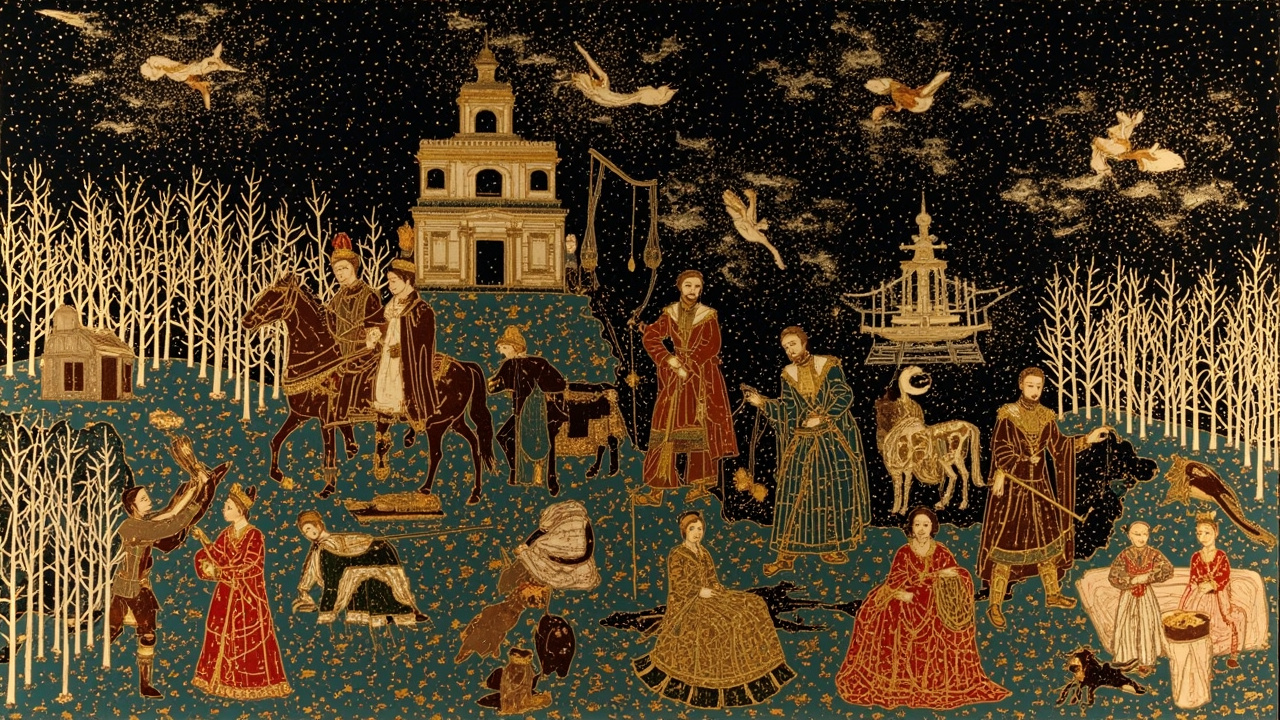
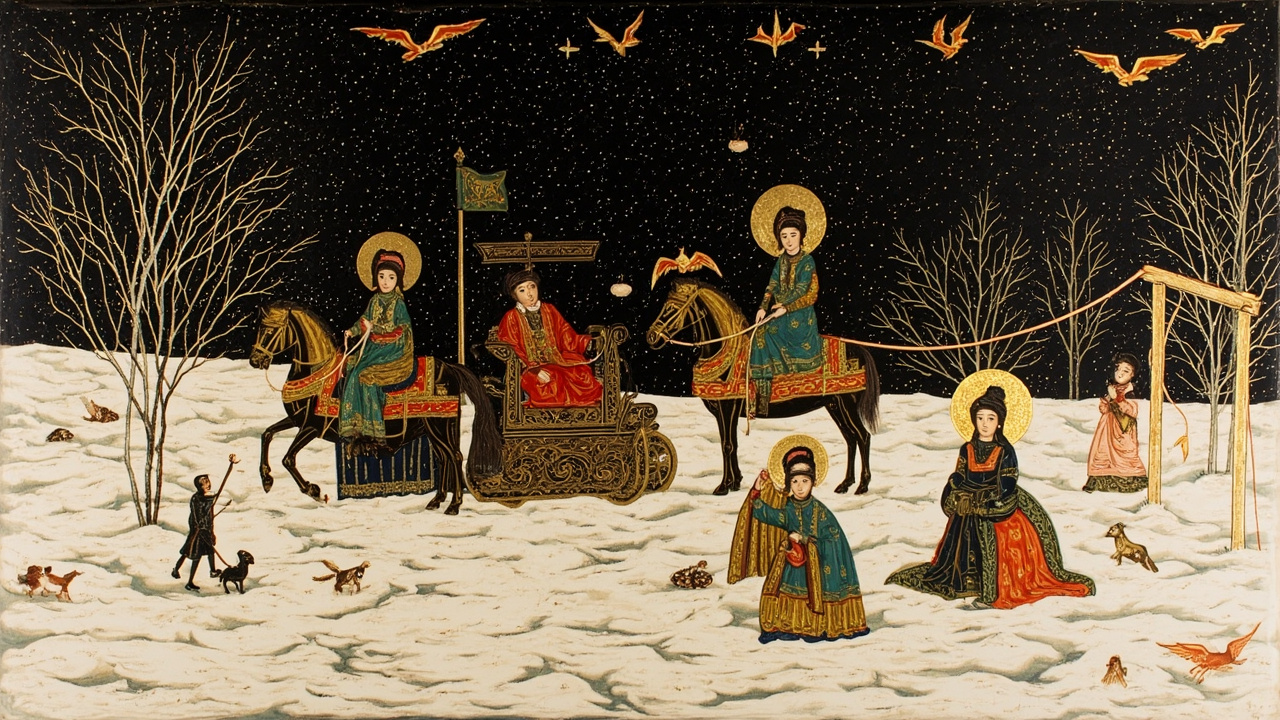
Art Direction4 plates
Before the guide was written, this book got a visual foundation — every illustration you just read grew out of it.