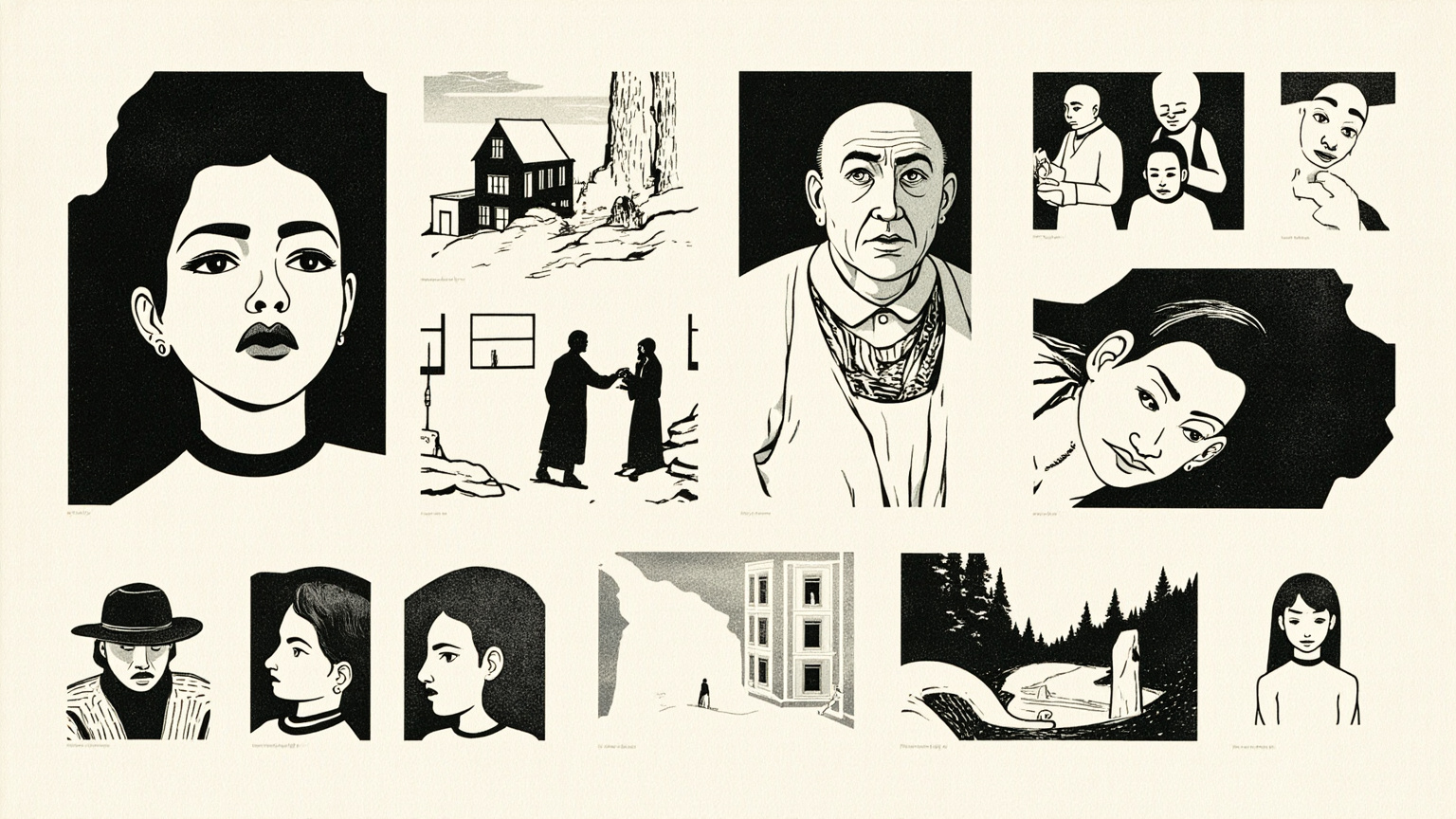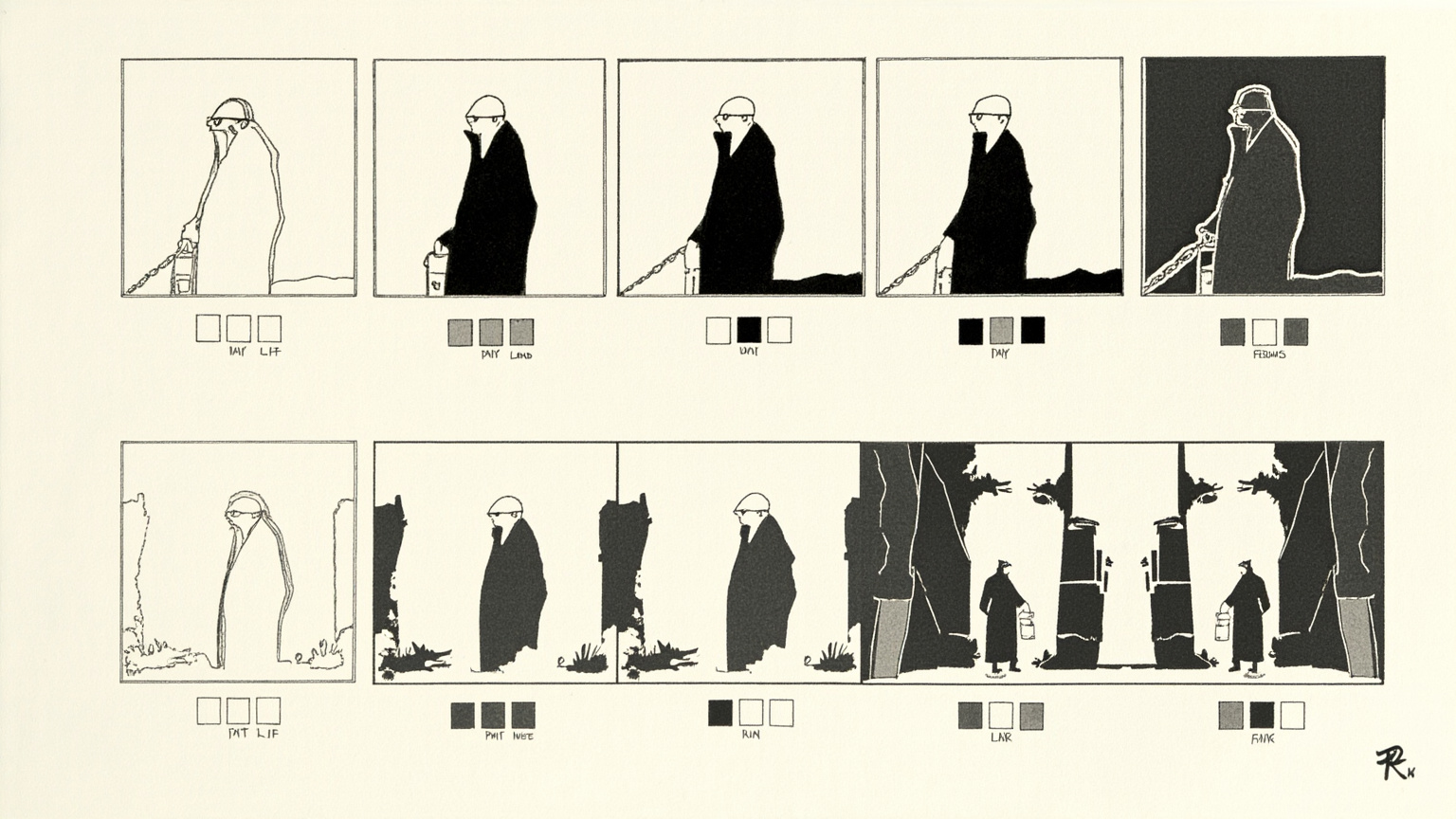
A land surveyor arrives in a snowbound village and discovers he may not exist at all.
Text and illustrations produced by the pipeline
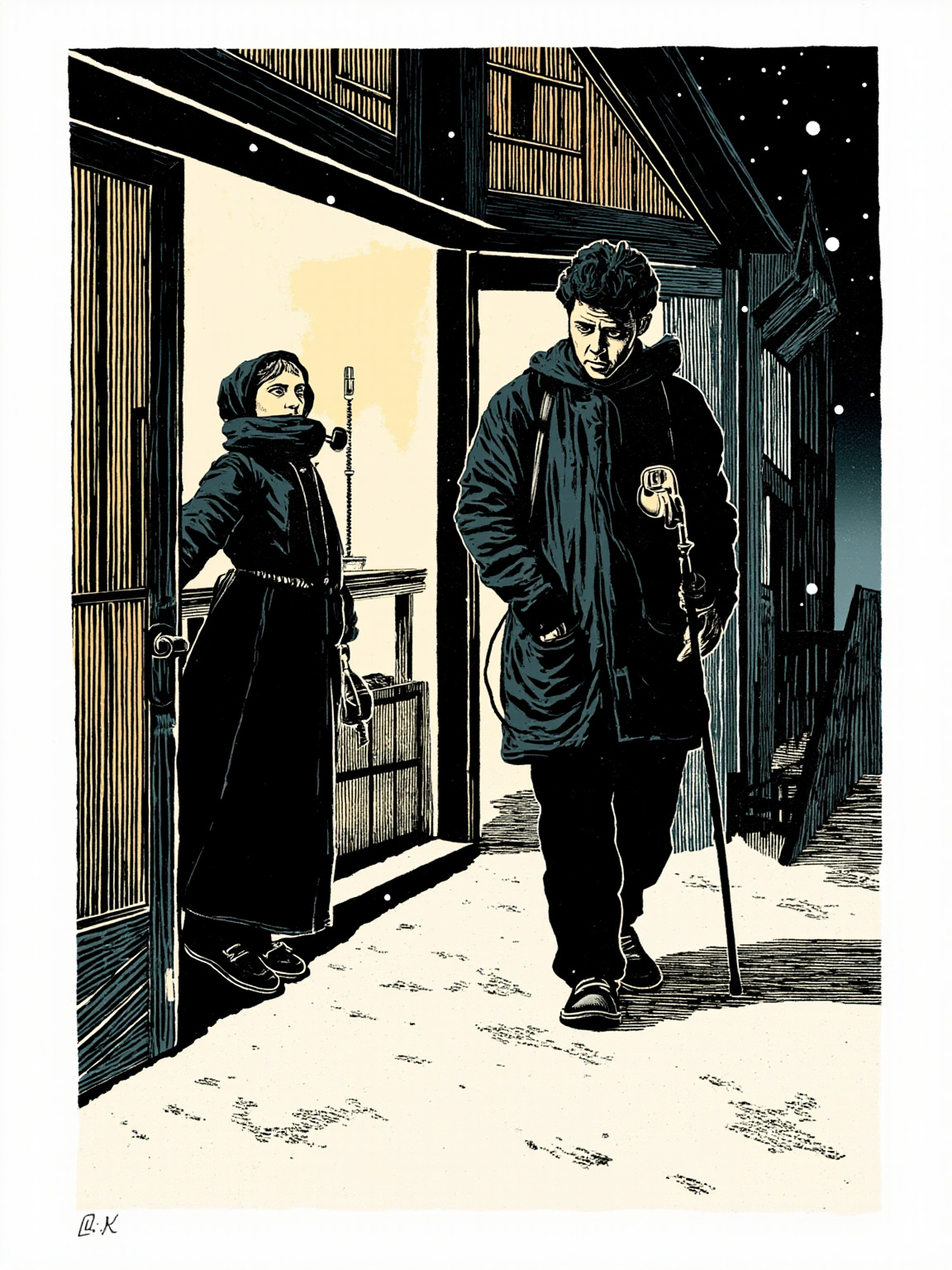
A man trudges into a nameless village on a snowy country road, a ski pole slung over his shoulder like a staff. The little inn at the edge of the village turns him away — not for lack of a room, but because the Castle has just telephoned, saying, vaguely, that someone might be arriving. So he calls the Castle himself, and the answer contradicts itself in the space of one conversation: first that he is the land surveyor, then that no one sent for him. The man gives his name. One letter: K.
That is where the novel gets stuck. A standoff over identity that starts with the first phone call and never resolves. Kafka never meant it to.
Franz Kafka was a Jewish writer born in Prague at the end of the nineteenth century. He was in his early thirties when he wrote this novel, already under the shadow of tuberculosis, with the handful of works that would secure his place in literary history nearly finished. The Castle was his last novel, and he never finished it before he died. It was never published in his lifetime; his close friend Max Brod, defying Kafka's wish that his unpublished manuscripts be burned, edited and published the first edition after his death. The English-language edition most widely read is the Muirs' translation, by Willa and Edwin Muir. Chinese readers have several translations to choose from, including editions by Ye Tingfang and Gao Zhongfu, and the Shanghai Translation Publishing House set — all rendered directly from the German. What keeps this book alive in memory is the word Kafkaesque, which might as well have been coined for it: a man up against a machine he can never quite reach, sinking deeper the harder he struggles. That image became the standard snapshot of the modern condition.
K. is the lead player in all this. A land surveyor, by his own claim — though even he doesn't seem entirely sure of it. He's young, restless, and his first instinct in any situation is to charge at the nearest door and knock it open. Every door in this book happens to be shut. His opponent is the Castle, and the Castle never lets itself be seen clearly. Across the whole novel, the Castle official Klamm shows his face exactly once, through a crack in a door, and even the villagers can't agree on what he looks like — some say heavyset, some say thin. The details don't matter; what matters is that none of it can ever be confirmed. Frieda is a barmaid at the Herrenhof, nominally kept as Klamm's mistress. The village school caretaker's job, an obscure, unwanted post, is one K. stumbles into after enough chaos. Gardena, the landlady of the Bridge Inn, treats three brief visits from Klamm years ago as the high point of her life and never stops talking about them. The two assistants, Arthur and Jeremiah, are sent by the Castle to "help" K.; they look almost identical, and K. can rarely tell them apart. The messenger Barnabas — a young man dressed with an oddly formal neatness — is K.'s only channel to the Castle, and his letters are always out of date, his verbal messages always vague.
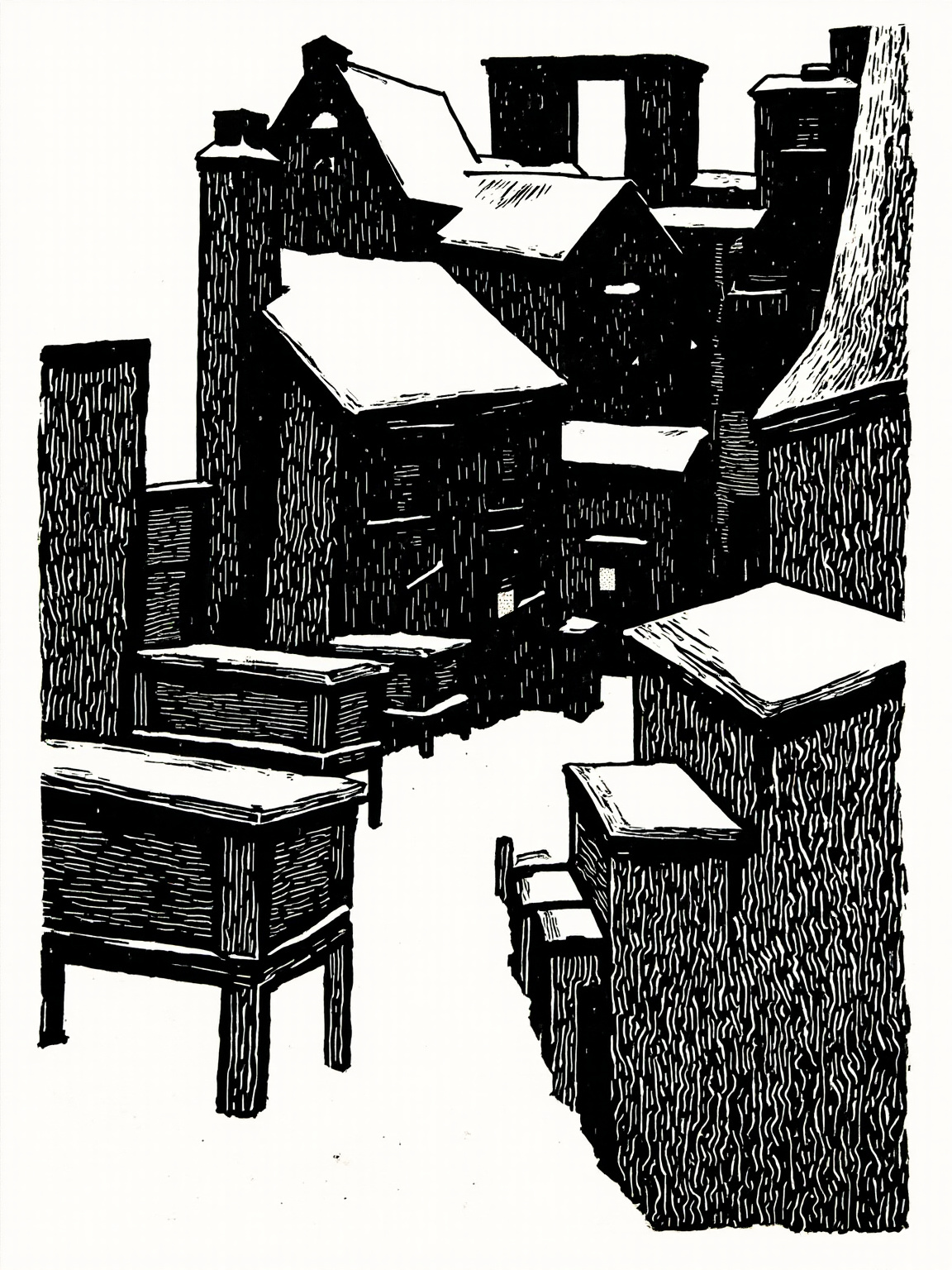
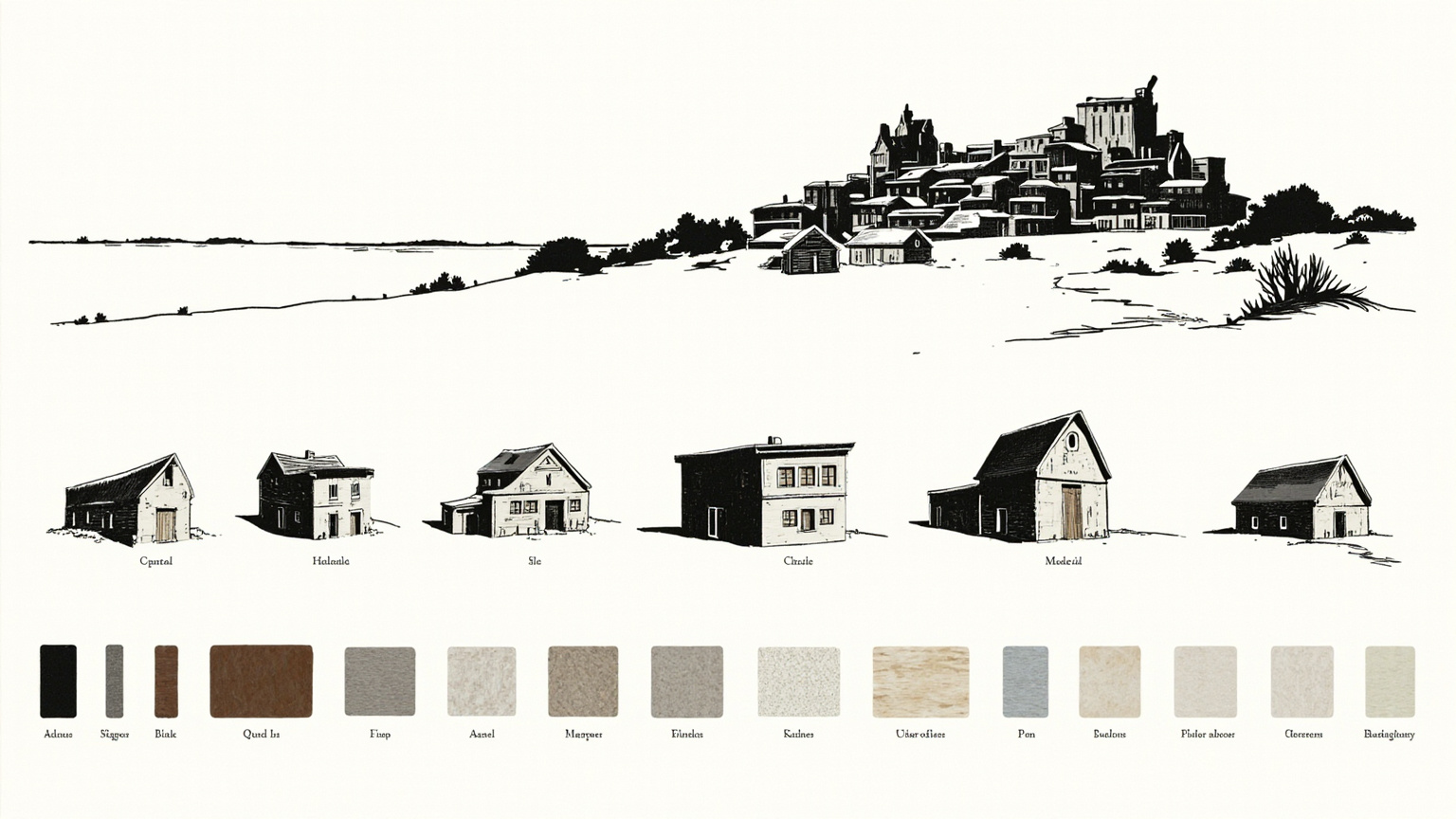
The whole world of the book is snow. A nameless village buried under it, no clear era, no clear geography, with the Castle looking down from the hill above. But it isn't a Disney spire — seen from a distance it's a sprawl of low, cluttered administrative buildings, no visible entrance, nothing to admire. That's Kafka's deliberate refusal to romanticize: you can't accuse a fairy-tale castle of ignoring you.
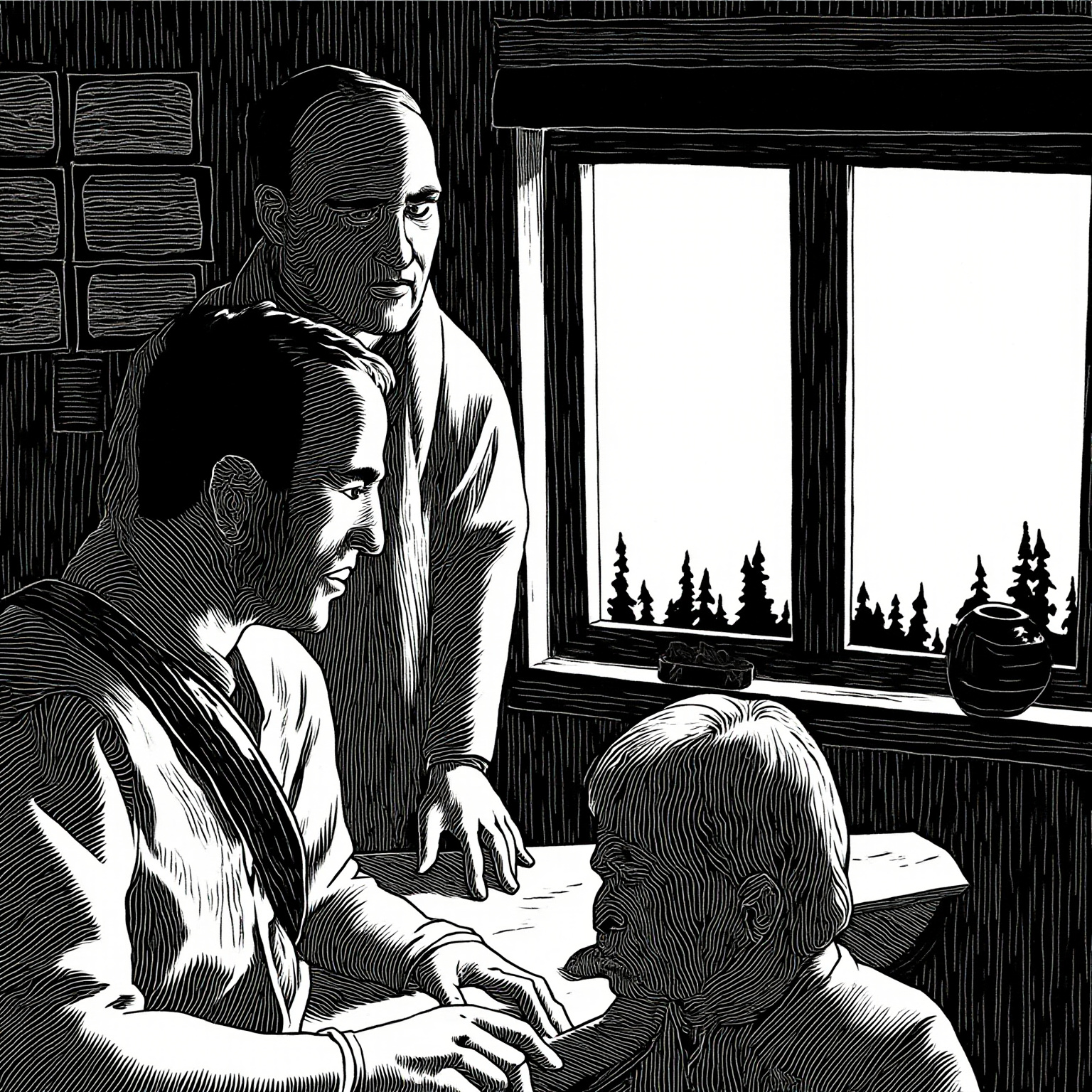
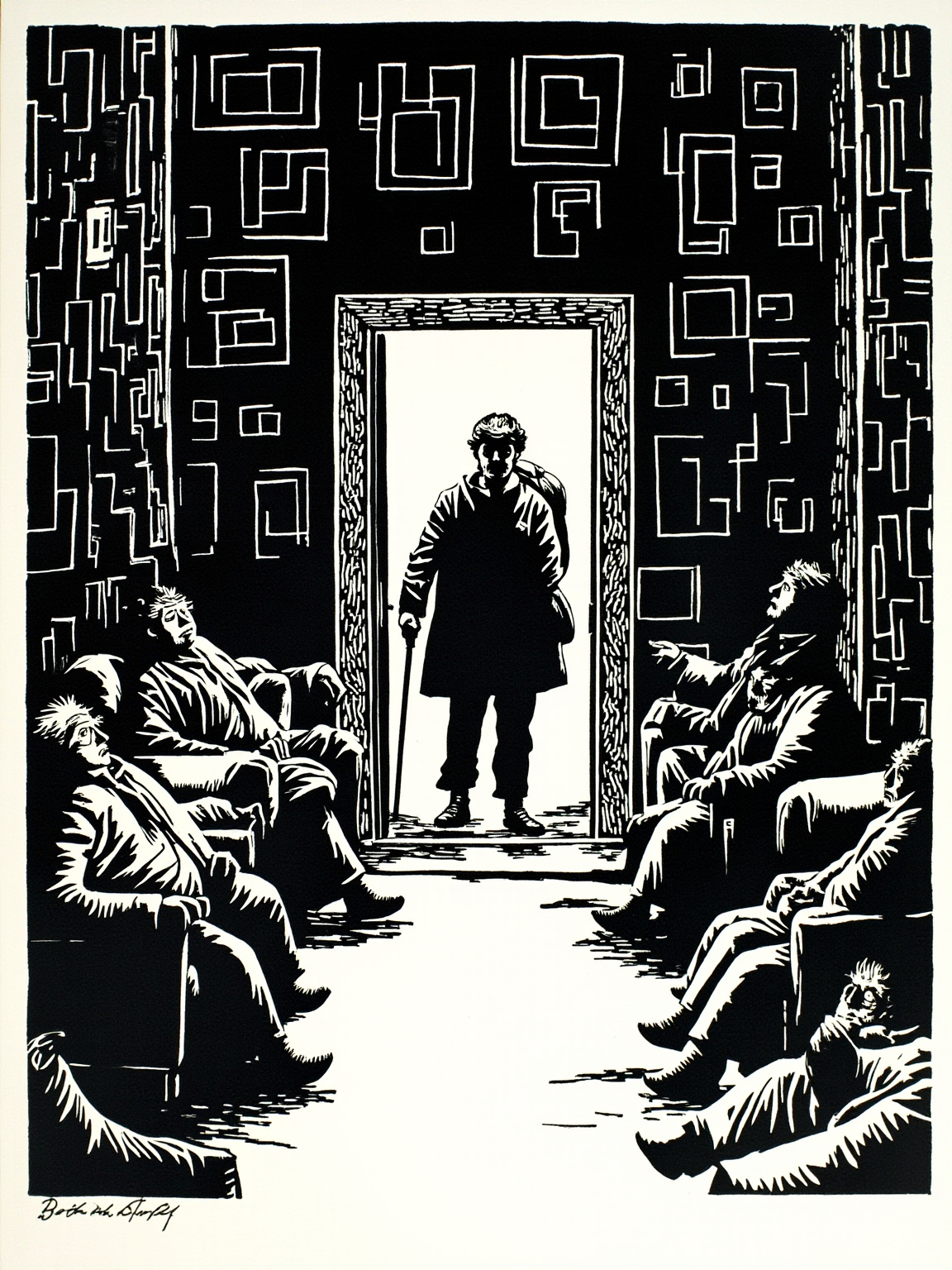
K. won't let it go. He storms back to the Herrenhof, this time after another Castle secretary, Erlanger. Castle officials doze in the corridor deep into the night, and K. barges through doors, flips through registers, chases people down to talk — the whole scene dissolves into chaos. By the time he finally makes it out the front door of the Herrenhof, the staff are physically hauling him out. Nothing comes of the night's humiliation except one thing: it confirms for Frieda that Klamm will always have a hold on him. Frieda has been building up resentment for a while. She can't stand how often K. runs off to the Barnabas family's house, and she can't stand the unguarded warmth in his voice whenever he mentions Olga. Under the kerosene lamp of the caretaker's room, a fight finally pushes her into the arms of Jeremiah, one of the two indistinguishable assistants. She leaves. K. comes home to an empty room.
By now you know what happens to K. But the feel of being inside The Castle is something no explainer can reproduce. Kafka writes the snow itself, the drag of a boot sinking past the knee with every step; the officials dozing in the corridor, heads tilted, shoulders uneven; the held breath at the crack in the bar-room door. His sentences are spare, almost bare of adjectives, and he lets action and object carry every feeling instead of naming it. K. shoves the file back in the drawer, K. stops on the staircase to listen, K. unwinds the scarf from his face — never once does the text say he felt hopeless. The other thing only the original gives you is Gardena telling and retelling her three meetings with Klamm, each version more legendary than the last. Read far enough and you start to suspect that Klamm, as she describes him, is something Gardena has built for herself — that her situation isn't so different from K.'s, except she's replaced the struggle with worship. Critics discuss this at length, but it only really lands once you've read the passage yourself.
On a first read, the novel can feel maddening — why won't it move forward, why does it keep circling back? That's deliberate. Kafka wants you stuck in that night alongside K. Only by walking through those repeating, snowbound nights yourself will you understand why so many readers in the twentieth century looked at The Castle and saw their own portrait. Open the book, start with the man trudging into the village at night with a ski pole on his back, and follow him down the road that never quite reaches the hill.
Before the guide was written, this book got a visual foundation — every illustration you just read grew out of it.
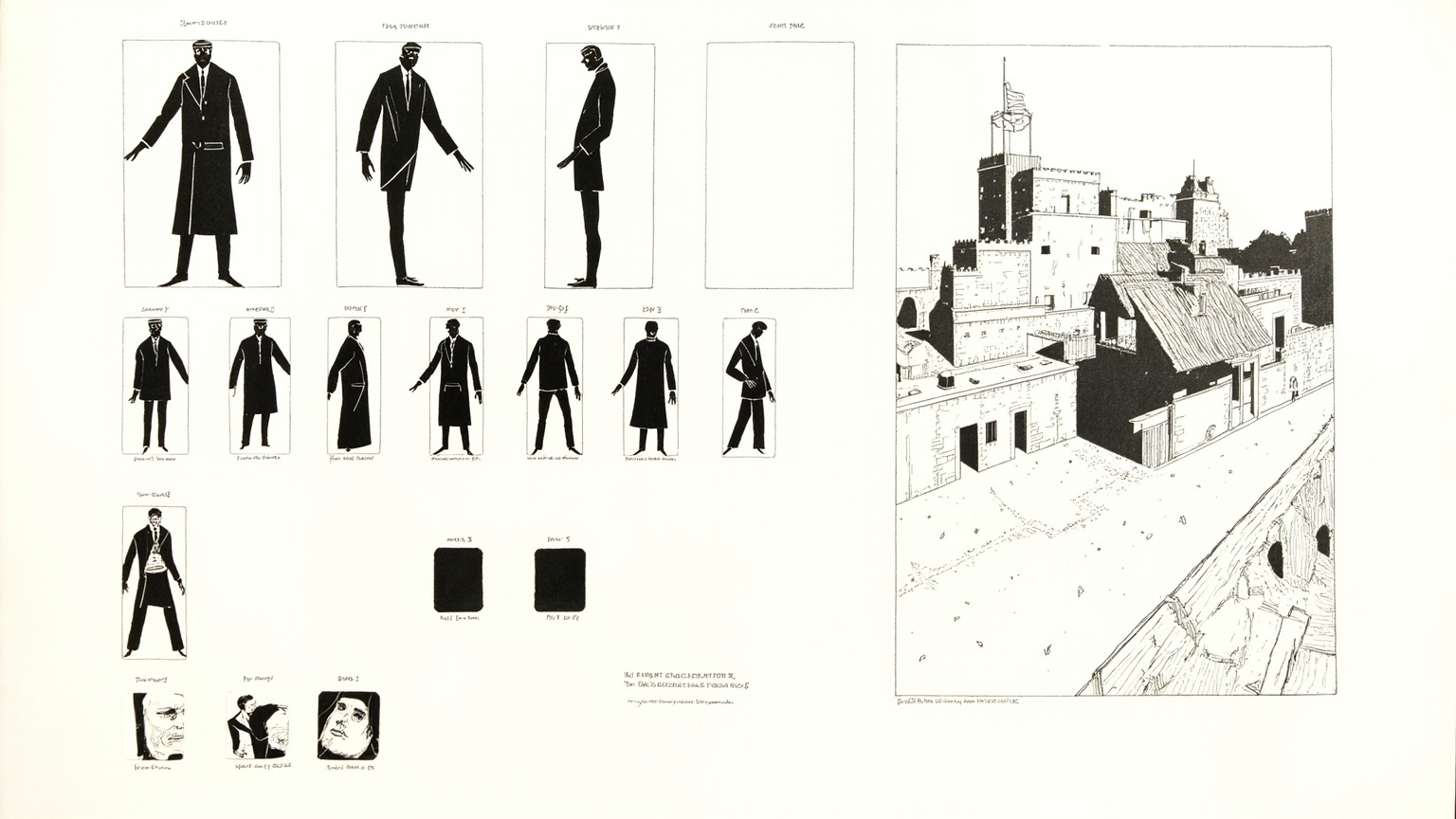
On the first night, K. is turned away at the Bridge Inn the moment he arrives. He calls the Castle, and the answer comes back: no one sent for you. A different voice picks up and says the opposite: then you must be the surveyor. K. refuses to leave, camping out on the straw in the inn's common room, and wears the innkeeper down with a barrage of questions down the phone line. By the end of the exchange, three questions are left hanging in the air: who K. is, whether he has any business being here, and whether the Castle wants him at all.
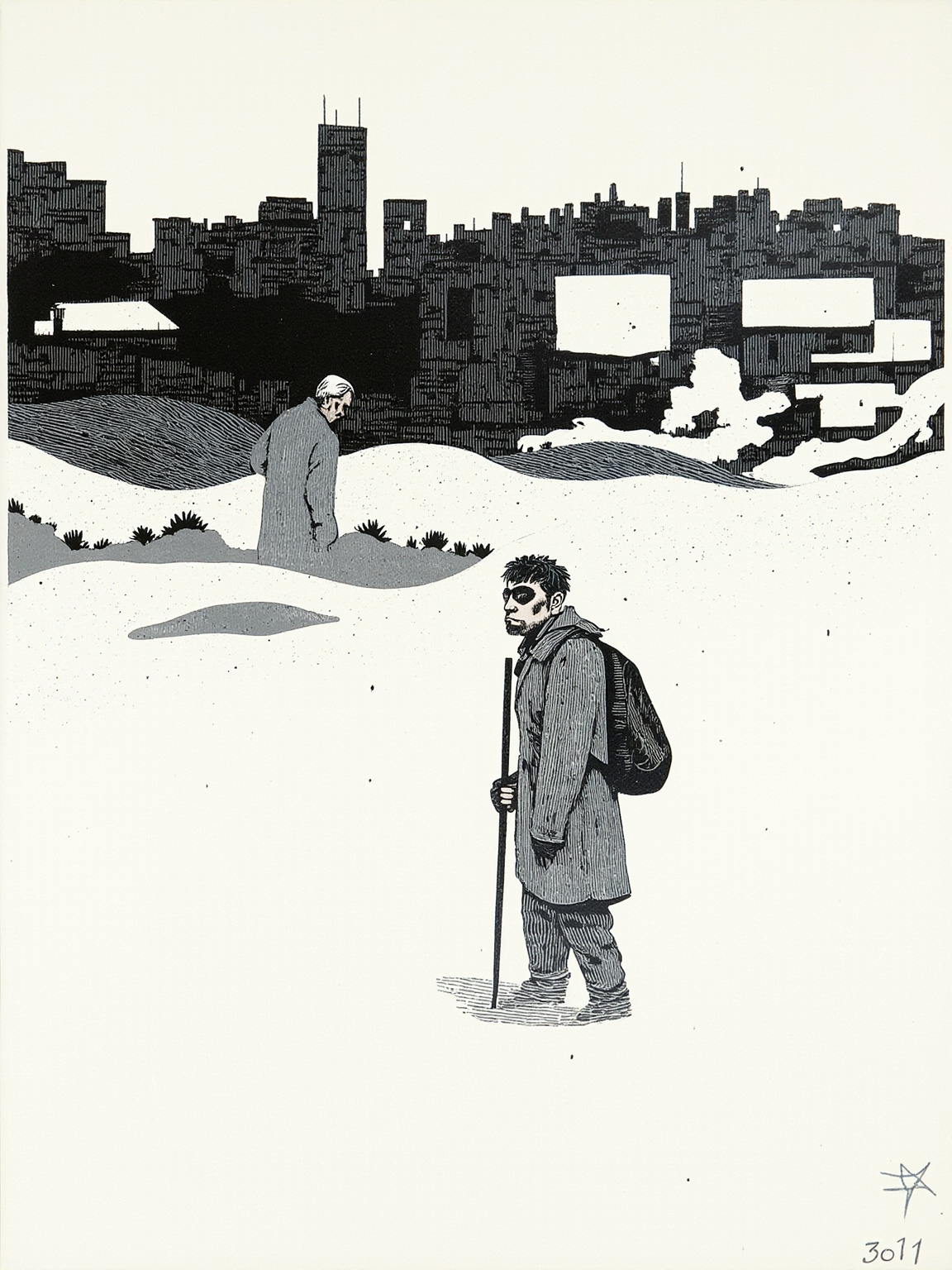
The next day, K. heads straight up the hill for the Castle. No one stops him at the gate — worse, there is no road up at all. He circles, doubles back, and is finally caught by the village schoolteacher and steered onto the snow track home. Nobody exchanges a word with him on this climb, and yet it lays out the novel's central bind in full: nobody is stopping you, but the system was never built with a way in.
Back in the village, K. narrows his target to one specific man inside the Castle: Klamm, the senior official rumored to hold his file. Klamm is known to visit the Herrenhof down in the village, so K. slips into the back of its bar and presses his eye to a crack in the door. He catches a blurred glimpse of a figure — the closest he ever gets to Klamm in the entire novel. He later learns that on the other side of that door, the barmaid Frieda was sitting at Klamm's side.
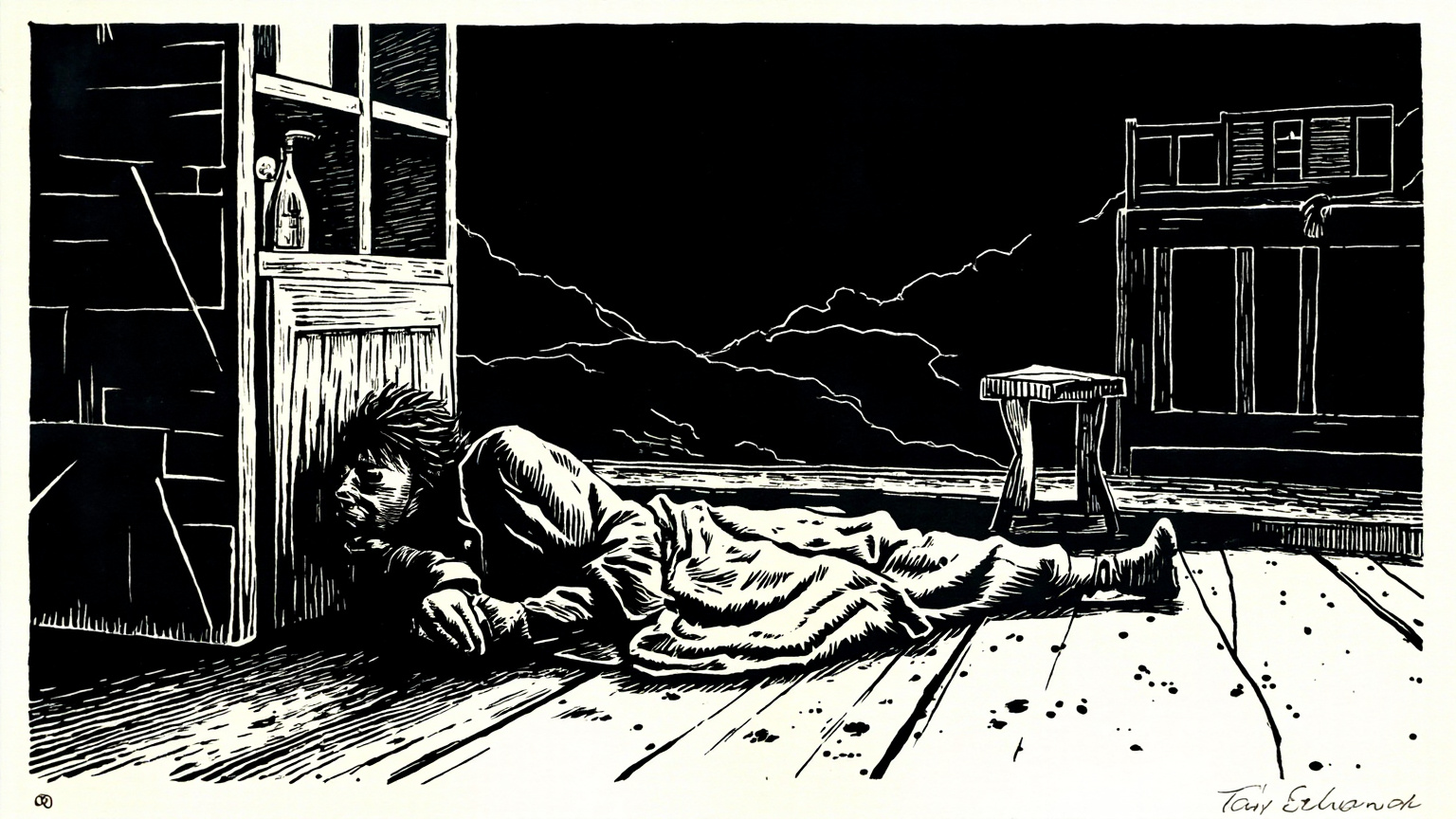
K. and Frieda spend the night together on the beer-stained floor — or more precisely, a hasty, almost anonymous coupling. Frieda isn't beautiful or refined; she's simply a barmaid nominally kept as Klamm's mistress. In one impulsive move, K. turns himself from a stranger hoping to see Klamm into the man who has taken Klamm's mistress — whether that gains him anything, he hasn't really thought through. K. wakes the next day to find Frieda has already given up her job at the bar to stay with him. The village school happens to need a caretaker; the previous one was just dismissed. Through a chain of absurd paperwork, K. ends up filling the post without quite meaning to. The two of them move into the little room next to the classroom — caretaker's quarters doubling as their new home — and that's how they set up house.
What he actually came for is never forgotten. He needs a line into the Castle. A young man named Barnabas turns up — a messenger sent by the Castle to deliver K.'s mail. Barnabas dresses neatly but oddly, somewhere between servant and gentleman, his manners so correct they verge on performance. Most of what he brings amounts to this: some department head has him relay something already out of date, or a spoken message more confusing than silence would have been. The night K. receives an old letter is, for a moment, the first time he feels any warmth at all between himself and the Castle. By the next day, looking at it again, that warmth has cooled into a piece of expired paper.
Barnabas's sister Olga is the key to an entire buried history of the village. She takes K. to meet the whole family and tells him about her sister Amalia — how, years earlier, the Castle official Sortini handed Amalia a crude, obscene proposition at a village festival, and how Amalia tore it up on the spot. The village turned on the family without being asked to: their business dried up, their friends scattered, even the innocent father couldn't hold his head up in public. Whatever threat of power was folded into Sortini's letter, once refused, became a weight the family carried for years. Amalia stays cold-faced through all of it, unrepentant. Olga is the one who grinds out a living for the family year after year, capable to the point of hardness. Sitting in their woodpile-cluttered cottage, K. understands something for the first time: you cannot simply earn your way into this village. What you were born having done wrong here can decide, for good, whether you're treated as a person at all.
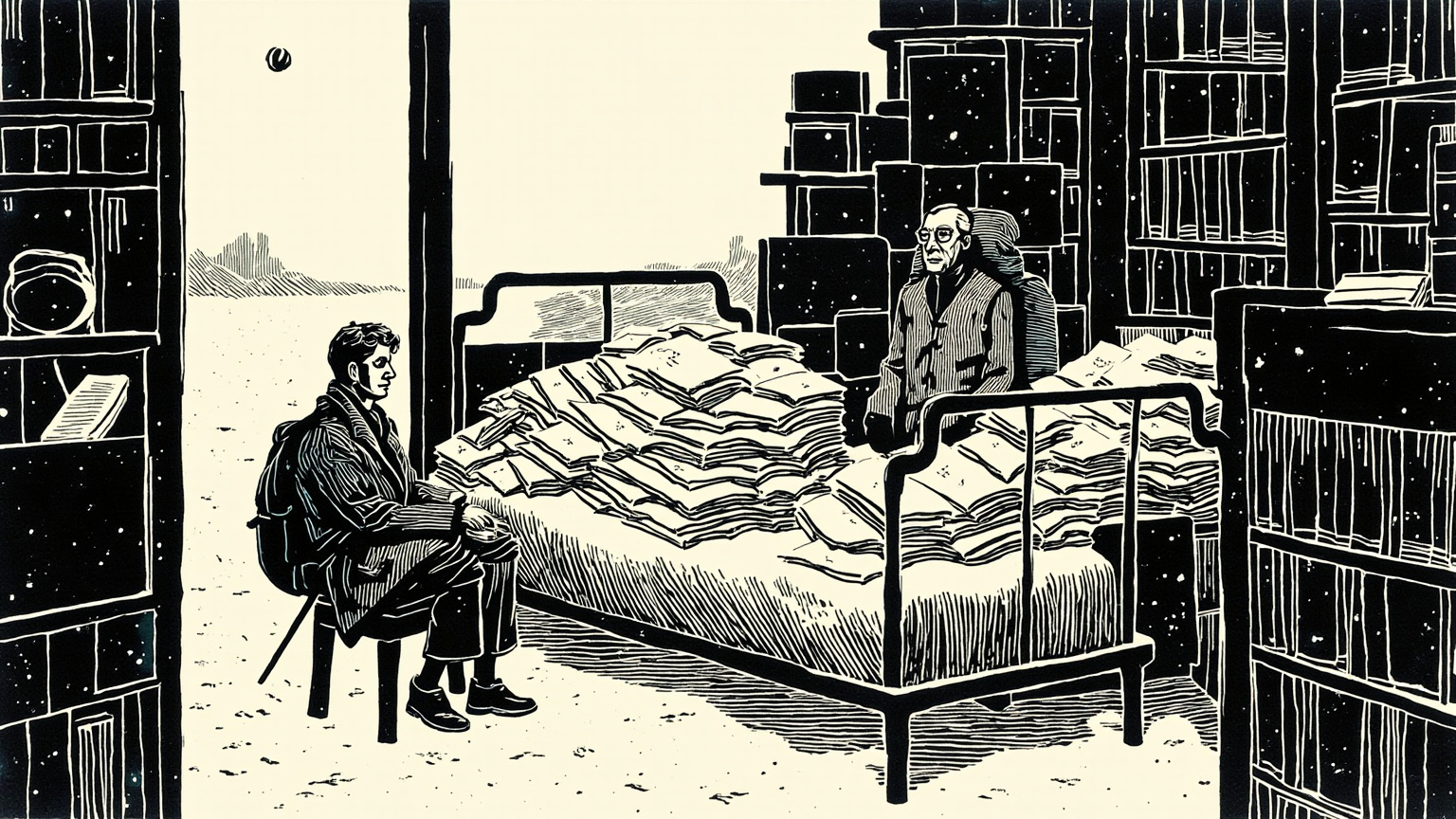
K. decides to go straight to the source and finds the Mayor, a gout-ridden old man who has been bedridden for years and whose sentences trail off mid-thought. Coughing through it, the Mayor lays out the whole matter for him: years ago, the village really did submit a request to the Castle for a land surveyor, and the paperwork climbed the chain of command until, somewhere along the way, it got lost. Eventually everyone assumed nothing would come of it, and no one was actually waiting for K. And then K. showed up anyway. The Castle never denies who he is — his identity was simply never manufactured by the system in the first place. This exchange is the calmest, coldest moment in the whole book. K. doesn't lose his temper. He just listens, then walks out of the Mayor's cottage, stacked with files and medical records, and trudges through the snow back to his caretaker's room. Whether he'll come back, he doesn't say.
This is where the novel breaks off. Kafka is in the middle of a conversation between K. and Gardena — she is retelling, yet again, her three meetings with Klamm all those years ago, the story growing more mythical with each telling — when the sentence stops, unfinished, and the writing simply ends. He never gave the novel a conclusion. According to Max Brod, Kafka once mentioned, privately, an ending he had in mind: K., worn down to exhaustion, dies, and word arrives from the Castle granting him permission to live in the village after all. But that line stayed spoken, never written down. The Castle that readers hold in their hands stops forever in the middle of K.'s conversation with Gardena.
Kafka spent his working life at an insurance company in Prague, nine to five, pushing paperwork. He knew, better than most, that once a bureaucratic machine starts running, the people inside it turn into case numbers. The Castle tightens something in reader after reader precisely because there is nothing supernatural in it — no monster, no ghost, no unexplainable miracle. It's just a man who wants to do his job, walking into a machine he's trying to understand, and getting ground down by the sheer tedium of it. What Klamm looks like doesn't matter. Why Sortini sent that letter doesn't matter. Whether the Castle actually needs a land surveyor doesn't matter. What matters is that the system makes sure none of it can ever be confirmed. You call and ask, and the answer is yes. You call again, same person, and the answer is no. Both statements are true, and neither is. That's the diagnosis of modernity Kafka left behind.
There's a harder layer underneath: K. never actually resists. Nowhere in the book does he shout no. He storms the Herrenhof, rifles through files at midnight, gets thrown out — and goes back anyway. His struggle isn't defiance, it's repetition. That repetition is what chills twentieth-century readers, because it's a mirror. You've seen the same face in your own Monday morning, your expense report, the customer-service call that just hung up on you.
The Castle isn't a villain. It's a slow, circling machine that doesn't even care whether you live or die.
That the novel is unfinished is simply a fact, but it has become part of how it works. K.'s situation is itself an endless deferral — never formally accepted by the Castle, never formally cast out; never declared not to exist, never declared to exist either. A finished Castle would have to give K. at least some kind of answer. The unfinished Castle doesn't even give him that. The novel ends up structurally identical to the machine it describes: to walk in is already to be in the posture of never walking out.