The Cattle Raid of Cooley / Táin Bó Cúailnge · Companion Guide
夺牛记
十七岁少年一人守桥,挡住倾国之兵;同根兄弟终须在战场上以命结清旧账。
Opening: One Bull Brings Down Two Kingdoms
Two bronze cauldrons, a bridge, a seventeen-year-old standing alone on the far bank. This is not a figure of speech — the Táin opens by throwing the hardest image in the whole epic straight at you: Queen Medb of Connacht marches her entire army to steal a sacred bull from Ulster, and every grown man in Ulster is flat on the ground, doubled over in the pains of childbirth. So the loneliest stand in all of European epic falls to a boy who hasn't finished growing his beard.
What Kind of Book Is This
The Cattle Raid of Cooley — Táin Bó Cúailnge in Old Irish, literally 'the driving-off of the cattle of Cooley.' Its place in Celtic myth is roughly what the Iliad is to the Greeks: the central battlefield of the Ulster Cycle, the last flare of pagan Celtic Ireland before Christianity arrived. The tale was carried by word of mouth for longer than it took Homer to be fixed on the page; it was finally written down in the eighth or ninth century, and the version we read today survives mainly through a handful of twelfth-century manuscripts. The first English translation that let the English-speaking world read it arrived in 1904.
Characters and World
The hero is Cú Chulainn, seventeen years old, covered in wounds, the guard dog of Ulster's soil — a title, watchdog of the cattle of Cooley, won in this very war. He is not the kind of hero the gods bless with perfection. He is a boy shoved to the edge of a cliff, an army bearing down on him from the front, and behind him a homeland too crippled to stand.
On the other side sits the most formidable woman in all of Celtic myth — Medb, queen of Connacht. Her real reason for marching to war has nothing to do with wanting beef; she wants a title, and she wants to beat her husband Ailill to it: richest woman in all of Ireland. By Celtic custom, husband and wife split their wealth down the middle, and Medb was short of nothing except one thing — the sacred bull Ulster owned, the Brown Bull of Cooley. She could not swallow that. So she brought her whole army. And she carried one more card up her sleeve: Fergus, the exiled former king of Ulster, Cú Chulainn's half-brother and the very man who had trained the boy into a warrior.
The story is set in Iron Age Ireland. No medieval armor, no knights' lances — only bronze spears, round shields, the yellow dust kicked up by chariots, and one lonely bridge on the moor. The season is autumn, the season for raiding, the season for driving cattle home.
The Plot
I. The Queen's Grudge
The cause of the war is too small for a war between nations. Medb lies in bed with Ailill, tallying up their possessions item by item, and they argue past midnight without settling who has more — until they reach the last item. The most famous bull in all of Ireland belongs to Ulster, not to her. Medb cannot swallow it. The epic opens by handing the reader a strange mismatch: a war that will kill a great many people, rooted in one night's vanity in bed.
II. The Curse Falls, and the Boy Steps Forward Alone
The Connacht army reaches the border, and Ulster is helpless — its grown men lie in their tents one after another, doubled over in pain like women in first labor. It is a curse, the fallout of one of the many wrongs King Conchobar of Ulster once committed. Cú Chulainn, seventeen years old, is the only man left standing with a spear in his hand.
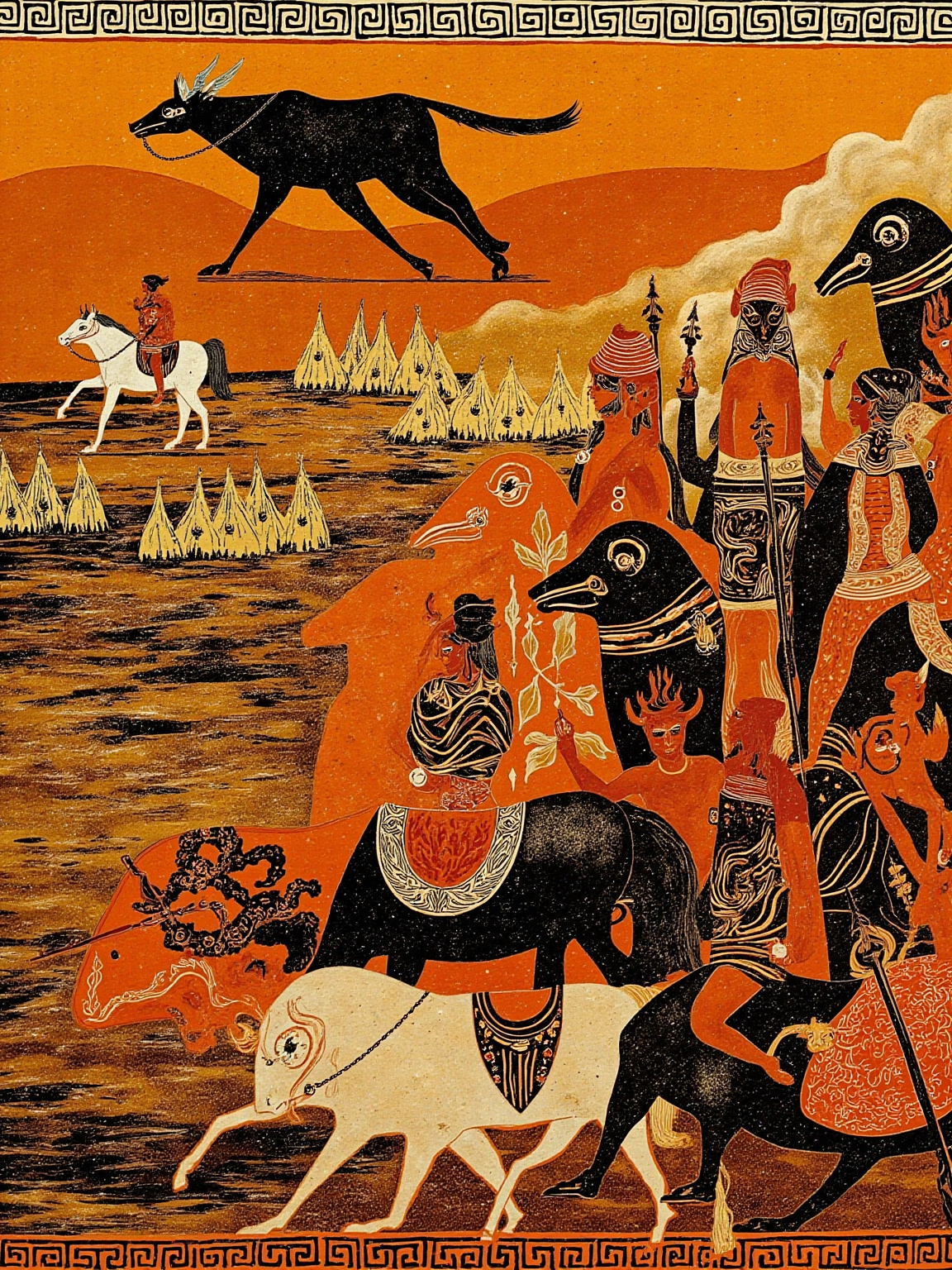
For the men of Ulster were unfit, for they were suffering the pangs of childbirth, and Cúchulainn alone was able to take arms.
乌尔斯特的男丁都不能执矛——那神伤叫他们一个个像临盆妇人般瘫在地上。能站起来的,唯库丘林一人。
金句 · 神伤降临,十七岁少年独上前线
This is the central image of the whole epic, the composition no later painting of Cú Chulainn has ever been able to avoid.
III. One Spear Holds Off a Nation
The days that follow are the most exhilarating stretch of the whole epic. Cú Chulainn does not retreat. He parks his chariot across the bridgehead and fights at a pace that borders on madness: single combat against Connacht's champions by day, raids into the enemy camp by night, dragging the bodies back to the bridge when he's done. Connacht sends its three war-gods against him one after another, and he turns back every one; even when Fergus himself, his old teacher, comes to press the attack, he does not give ground.
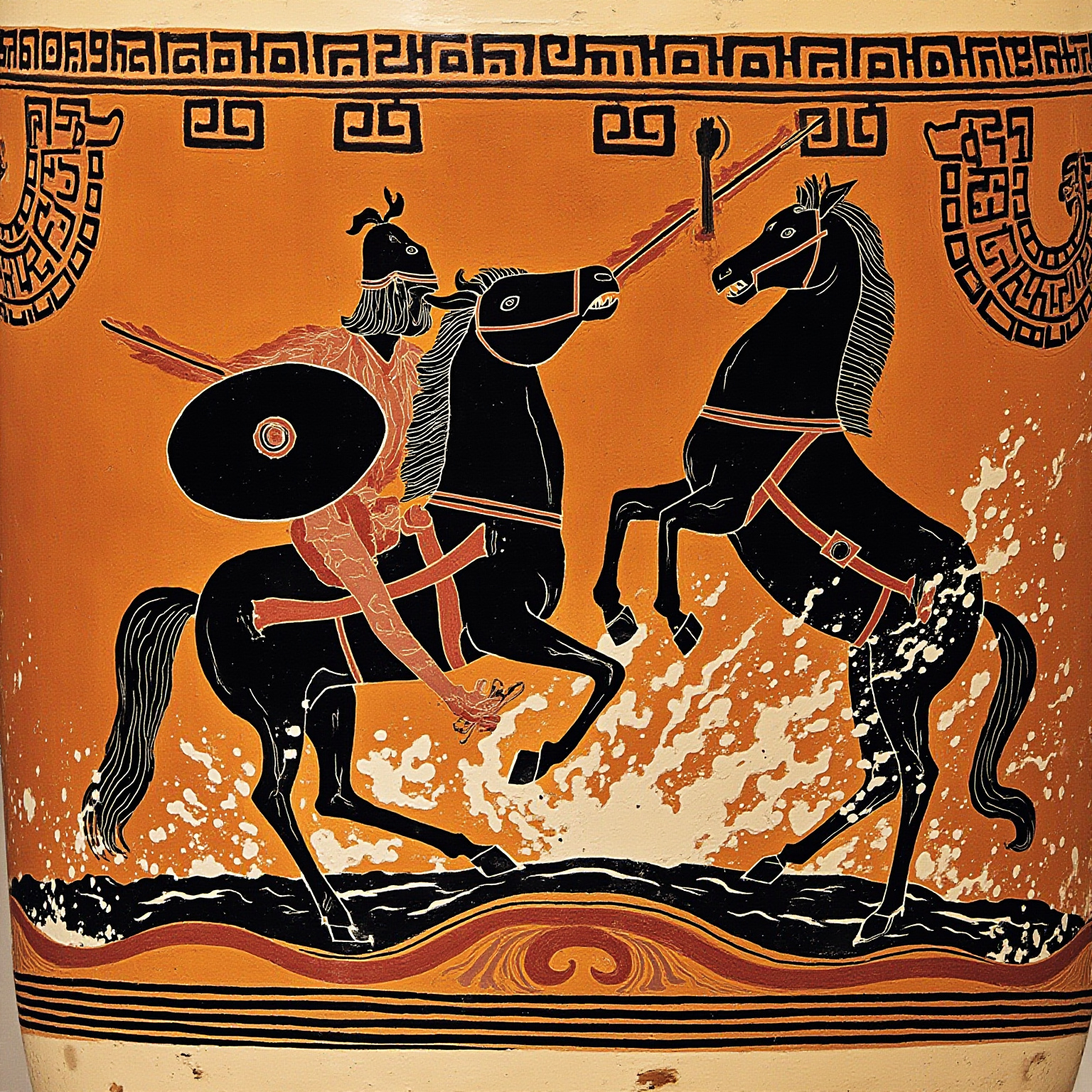
He held the ford alone, fighting each champion who came against him, so that by his single hand he kept back the four great provinces of Ireland.
他一个人守着浅滩,单枪迎击每一个上阵的武士——凭他一人,把爱尔兰四省的大军阻在桥头。
金句 · 一把长矛挡住一国
The epic shows no mercy in this stretch — the pace is relentless, the fighting savage, and no hero his age anywhere in European literature can match him. That one man could hold off a nation is itself the miracle.
IV. The Warp-Spasm Takes Him, and the World Changes Color
At some point in the fighting, Cú Chulainn slips into the state the legends speak of — the warp-spasm. The men around him fall back, the horses scream, the air itself seems to drop, and even his own side dares not come near him. The whole battlefield goes still, as if paused, and everyone knows: one more step forward is death.
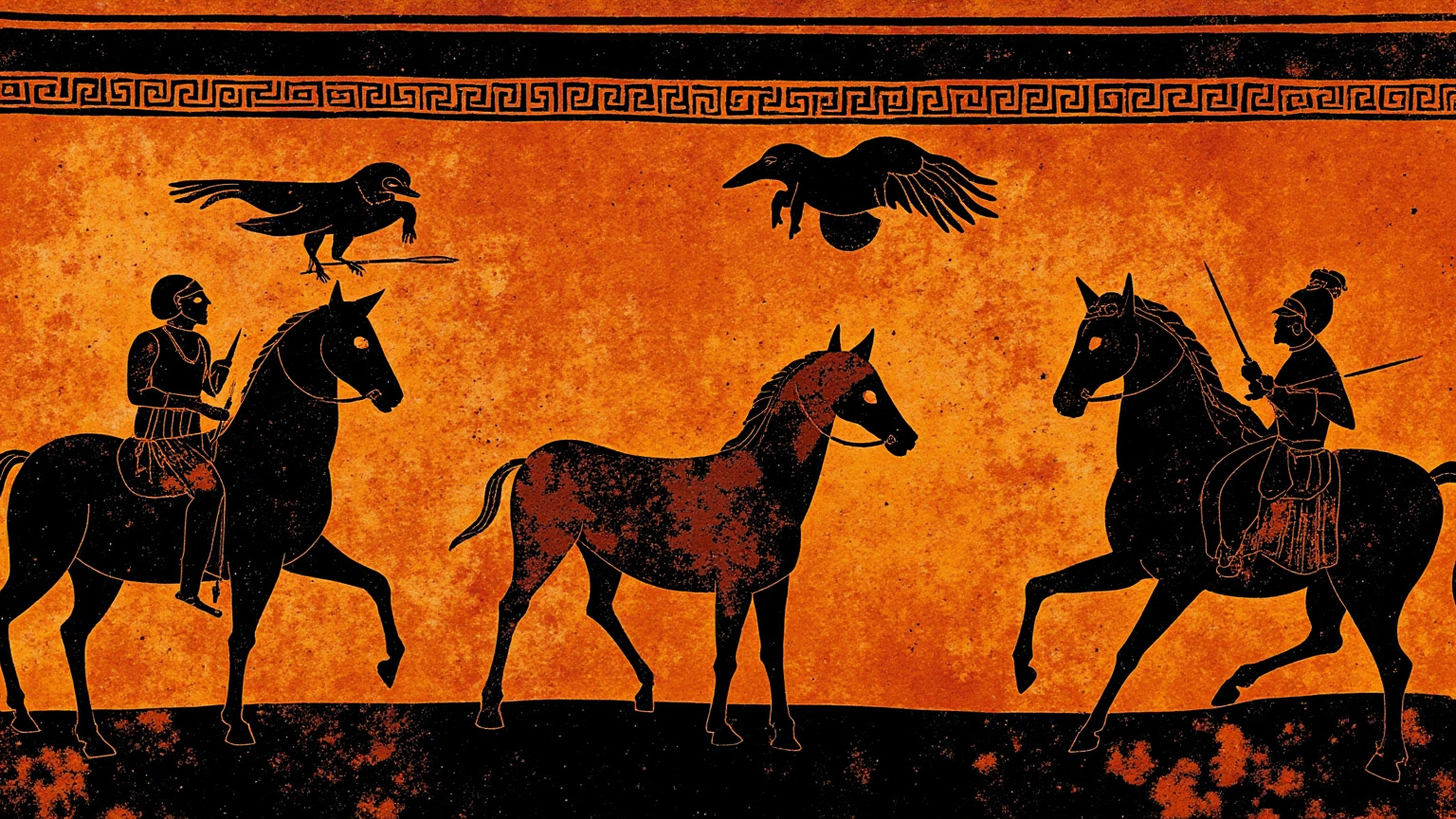
Then the warp-spasm seized him, so that he became a fearful, terrible, many-coloured, wonderful hero, and the host drew back from him in fear.
战狂降在他身上——他成了可怖的、狰狞的、人形难以逼视的英灵,连自己的人都不敢近前,马匹惊嘶着倒退。
金句 · 战狂降临,天地变色
In the end it is the women of Ulster who bring this killing rage down, and they do it in a way no one expects — the epic is startlingly bold here, and no passage has drawn more commentary since. Once the warp-spasm passes, the shame only makes Cú Chulainn fight harder.
V. The Decoy, and War Reaches the Heartland
Medb quickly sees that one boy cannot be worn down forever. She changes tactics: she sends a decoy to draw Cú Chulainn into a distant chase, staging a fight he cannot resist. In the days he is gone, the border stands wide open, and the Connacht army pours into the Ulster heartland, burning villages and driving off herds.
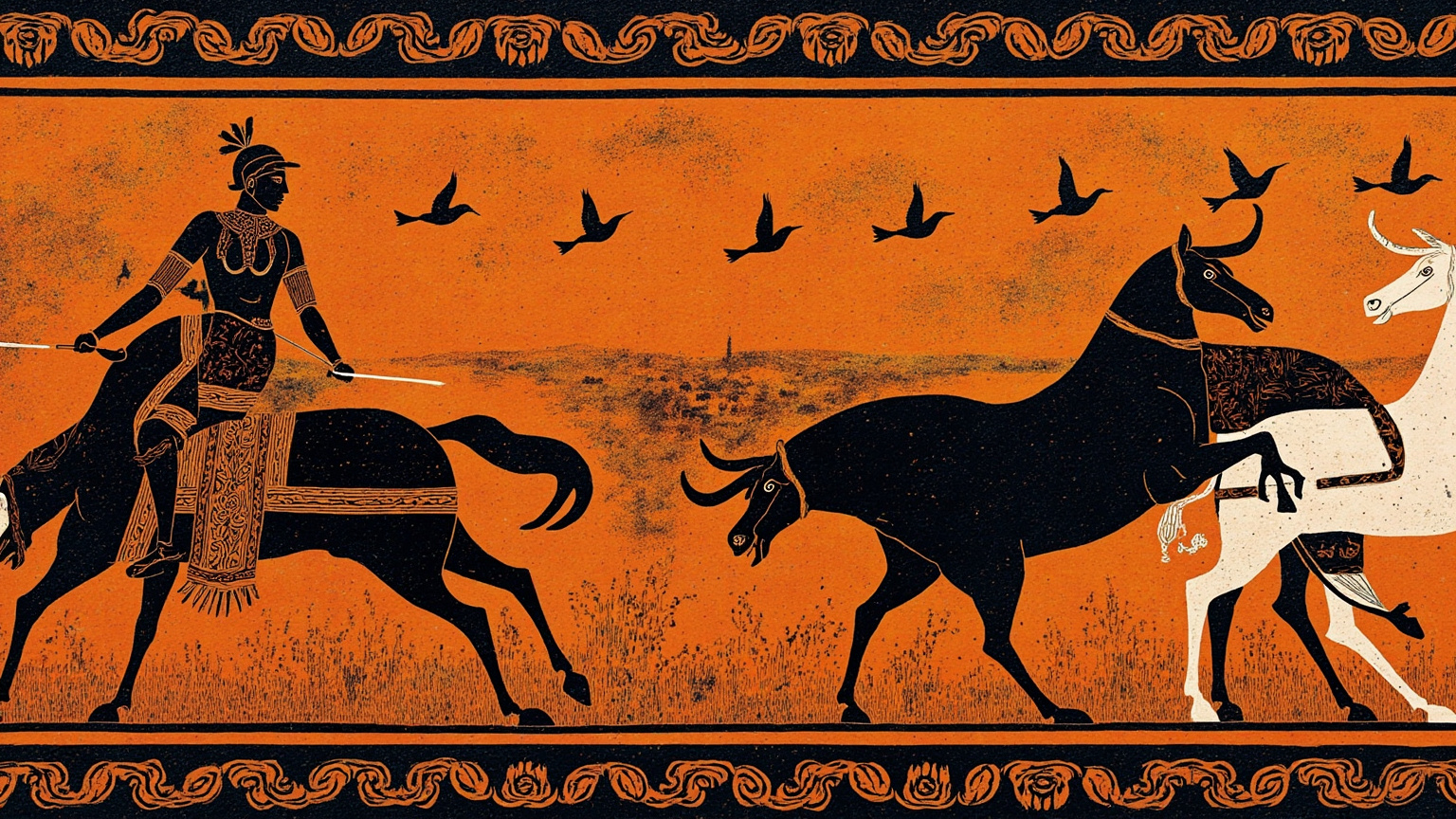
They laid a false trail, that he might follow them far from Ulster, and while Cúchulainn was away, Medb's host poured into the land.
她以假旗诱他远追;库丘林一离开,桥头便空,梅德布的兵锋如潮水涌入阿尔斯特腹地。
金句 · 调虎离山,战火入腹
The standoff at the bridge is broken. The whole epic shifts gears — from one man's stand to a full war of annihilation between two nations.
VI. The Curse Lifts, and the Last Battle
The curse on Ulster slowly lifts, and King Conchobar can finally mount a horse. He musters the full army and marches out; Medb, in turn, calls Cú Chulainn back. On the field, Cú Chulainn faces his half-brother Fergus — the man who once taught him to hold a spear, now the sharpest blade in the enemy line.
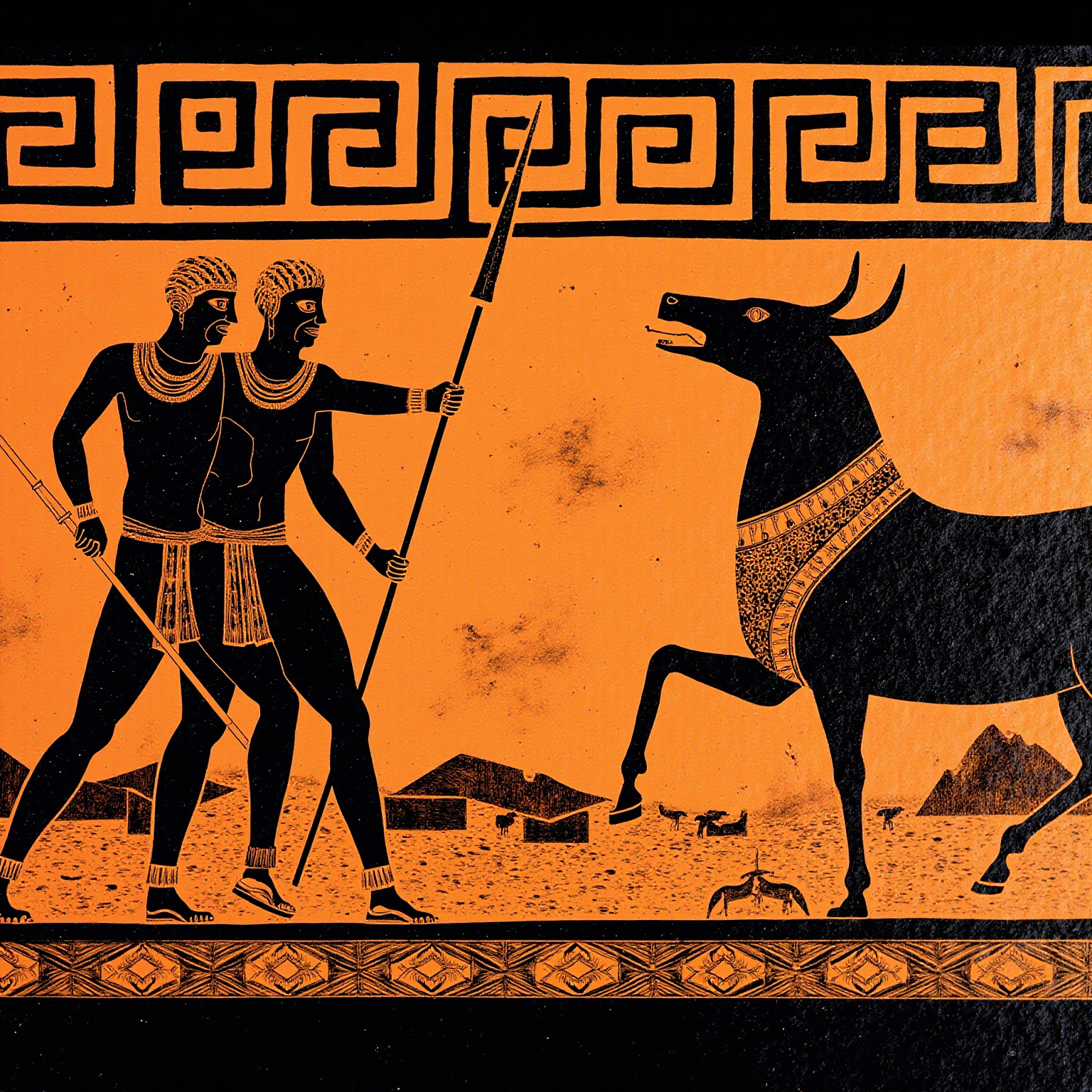
And Cúchulainn met his foster-brother, and each knew the other, and they fought three days upon the ford, and they fell by one another's hands.
库丘林撞上了他同父异母的兄长——彼此一眼便认了出来。浅滩上三日苦战,再难分开。
金句 · 宿业之结:同根相残
The three clash head-on, and all three fall, wounded to death. This is the heaviest reckoning of fate anywhere in the Ulster Cycle: an old debt of kinship and politics, finally settled with lives on the battlefield.
VII. The Two Bulls Destroy Each Other, and Crows Circle Overhead
The war among men is over, but the bargain among gods is not. The Brown Bull of Cooley and Connacht's White-Horned Bull meet for their final contest, as the gods' pact demands, and the two creatures of divine strength fight until nothing is left, running circles around each other's carcass for three days and three nights. The bull Medb fought so hard to win turns out, in the end, to be an empty shell.
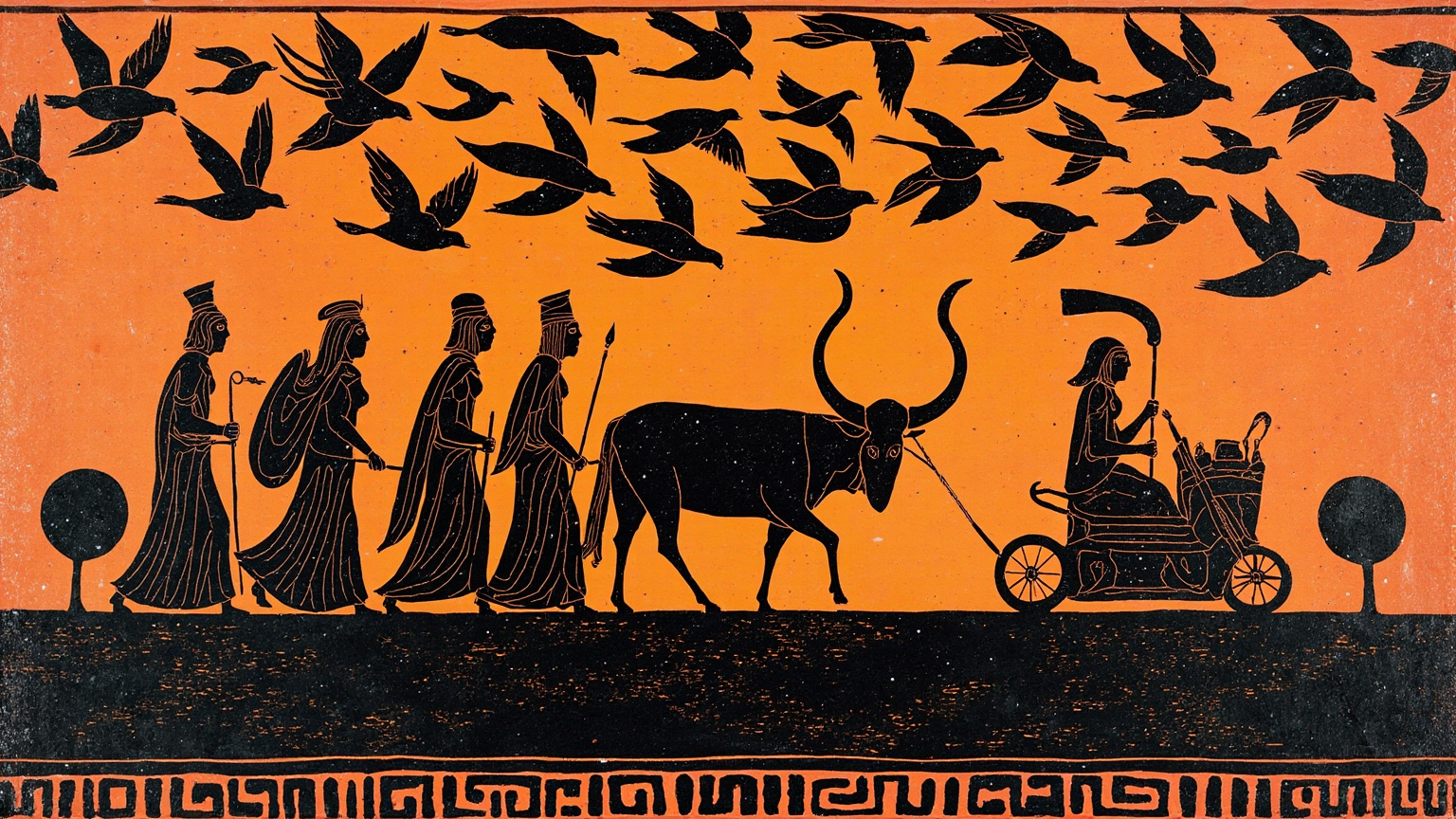
Crows circle over the skies of Ulster. The war goddess Morrígan takes the shape of a crow and comes to the battlefield in person, to bear witness to death. Word of Cú Chulainn's death reaches Ulster, and his companions bring him home on a broken chariot. It is the bleakest funeral procession in all of Celtic epic.
Theme and Craft
Looking back on the whole war, Medb's real motive turns out to be a rare one in literature — not hatred, not land, but vanity in bed. This epic drags two kingdoms into a bloodbath over four words: richest woman alive. That is where it truly cuts: a cause for war absurdly small, a price paid terrifyingly large.
Cú Chulainn holds up as a character not because he wins. He doesn't. He holds off an army and dies on the field himself. He is the archetype of the man who loses but earns everyone's respect — you can catch a trace of him later in the Arthurian Lancelot, guarding the bridge alone. That is the core temperament of the whole Ulster Cycle: magnificent, bleak, and never promising victory.
As a piece of writing, what's most surprising about this epic is its rhythm. It isn't one continuous sweep of narrative; it's built from duel after duel, single combat stitched to single combat, like a lantern wheel spinning at speed. Read it today and it feels ready-made for storyboards — every scene arrives with its own image, its own beginning, turn, and close.
Why the Original Text Still Deserves a Read Today
The epic's most magnificent moment isn't that he held off the army. It's that everyone knew he was going to die, he knew it too, and he still didn't step back.
Art Direction4 plates
Before the guide was written, this book got a visual foundation — every illustration you just read grew out of it.