The Cloud of Unknowing · Companion Guide
未知之云
一间沼泽边的小屋,一朵横在人与神之间的云——只有无知的爱,能穿过去。
Opening
At the edge of the East Midlands fens, a narrow window in a stone cell lets in the first grey light of morning. A director in a rough wool habit sets down his quill on a low table. He is not writing a treatise, nor recording a vision. He has just received a letter. A young recluse he knows has caught a kind of premature spiritual fever, seeing light, believing he has already arrived. The director shakes his head, pulls a sheet of parchment toward him, and dips his pen — not to argue the young man down, but to keep him from being burned by the fire in his own chest.
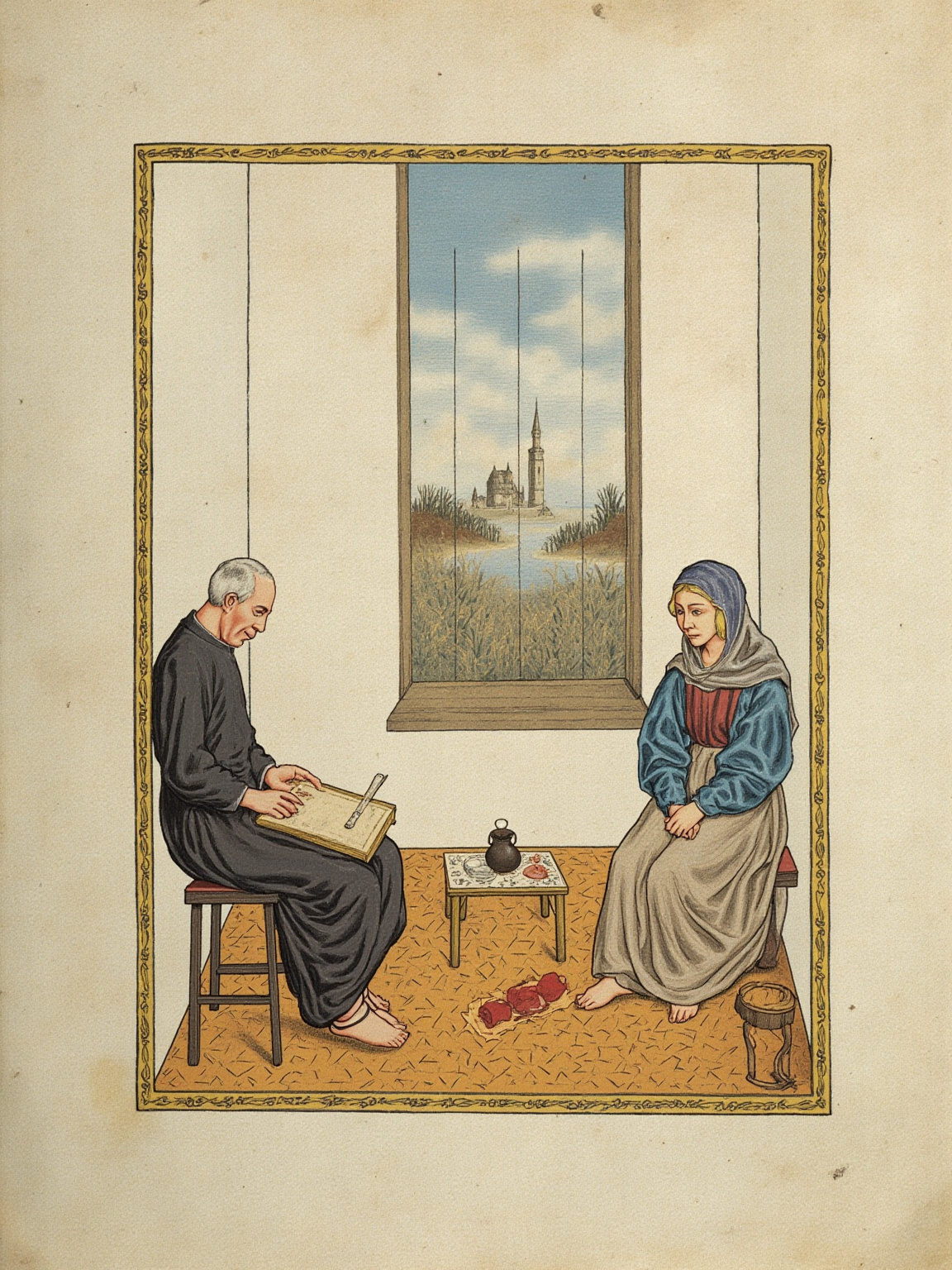
He may not be thought, ne by thoughte come to.
上帝不可思,亦不可以思而达。
金句 · 第3章 · 不可思之神
What Kind of Book Is This
The book carries no author's name. It began as a handful of letters, copied and passed hand to hand for centuries before scholars finally edited and printed it in the nineteenth century. The title comes from a metaphor the author coined himself: between a person and God hangs a cloud. Thought cannot get through it, because God cannot be thought. Only a wordless love can.
It is the first systematic guide to negative theology in English, and it is the root of today's Centering Prayer movement — the twentieth-century Trappist monk Thomas Keating named it as his starting point. Among the great books of medieval English mysticism, Julian of Norwich's Revelations of Divine Love takes the opposite road, full of visions and richly pictured encounters with God. The Cloud does the reverse: every image gets cut away. The two books stand on the same stretch of fen, one signed and one anonymous, like two faces of a mirror.
The Director, the Disciple, and a Woman Seated at His Feet
The director is about forty, learned in scripture but never showing it off. His method is instruction: give a command, offer a metaphor, correct the young man again and again — duck that thought, quick. He allows himself no visions of his own. The disciple is younger, new to solitary life, and dizzy with the light he thinks he sees inside himself. He never appears on the page directly; he only exists as the person the author keeps addressing.
The most important figure in the whole book is a woman who lived two thousand years earlier: Mary Magdalene. In Luke's Gospel she sits at Jesus's feet, listening, while her sister Martha bustles around serving. The director gives her chapters 16 through 23 — eight chapters, nearly a tenth of the whole book. She isn't a symbol here. She is the route through the cloud of unknowing, the path that runs on love and unknowing straight into God.
A Method Folded Into a Letter
The author states his premise up front: God cannot be thought, cannot be known. No concept reaches him, no image, no sense. The harder you try to pin him down with yes or no, the further he slips. So what do you do instead? The author has the disciple raise a stirring of love from somewhere deeper than the self — a prayer made of unknowing — and fire it like an arrow into the cloud.
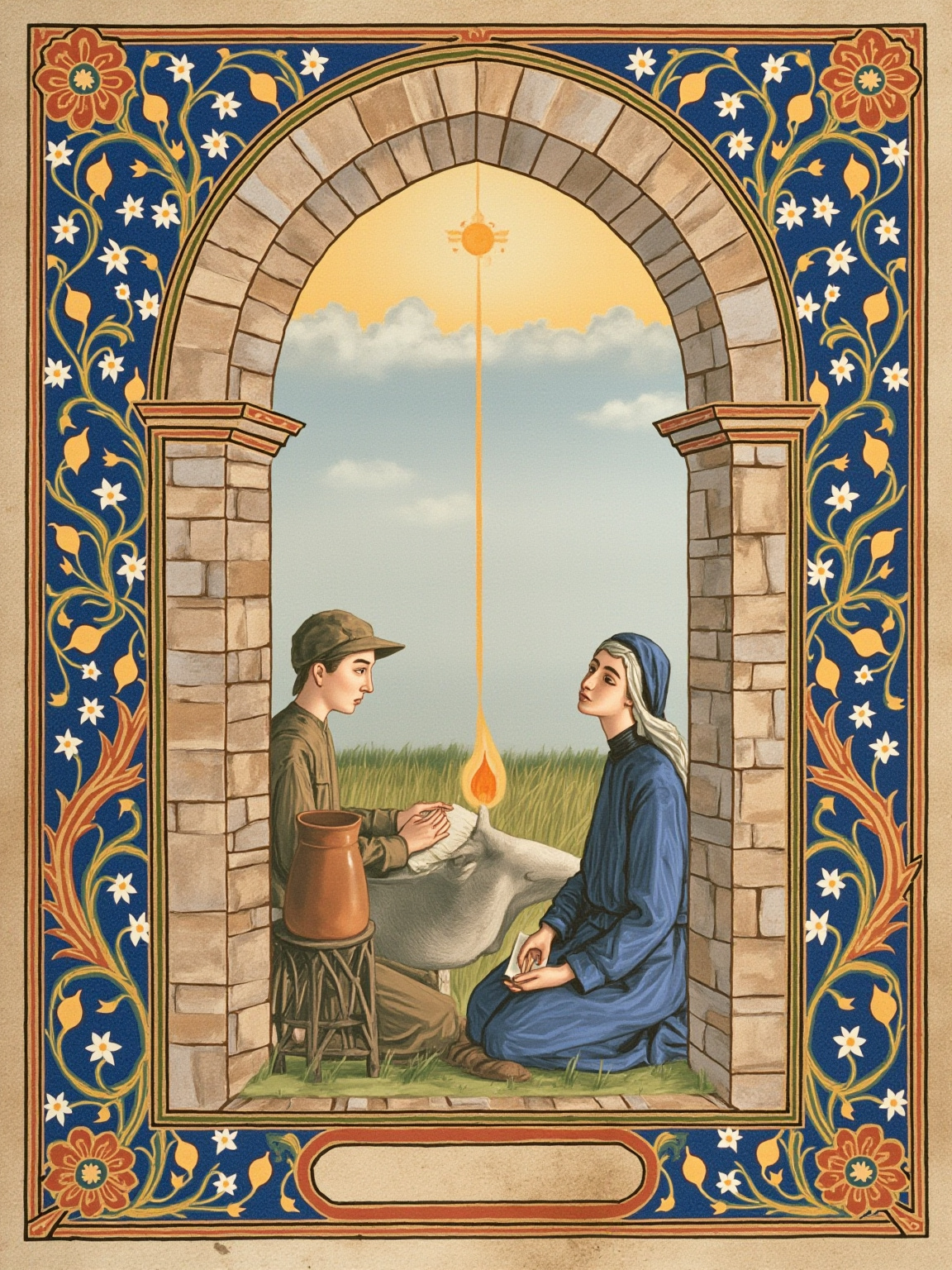
A blind stirring of love, which would fain have had that which it may never have.
一股盲目的爱之冲动——它渴慕的,是它永远不会拥有的那一位。
金句 · 第11章 · 盲爱之箭
The author keeps calling this stirring of love little and blind. Little, because it is only a sigh aimed at nothing in particular. Blind, because it knows no direction, no object, not even its own name. It is not a love that comes from knowledge; it is a love that comes from the will. It is not light in the heart. It is the arrow that goes through the cloud.
Four Steps on the Way
The author lays the whole path out as four steps. The first is work: cutting away sin you commit knowingly. The second is meditation: you can still think about the lives of saints and scenes from scripture, a familiar and careful kind of thinking. The third is inward prayer: gathering every thought under one small word — it can be God, it can be love, it is just a hook to hold on to. Only the fourth step is contemplation, where every thought is set aside and only that blind love moves, inside the cloud of unknowing.
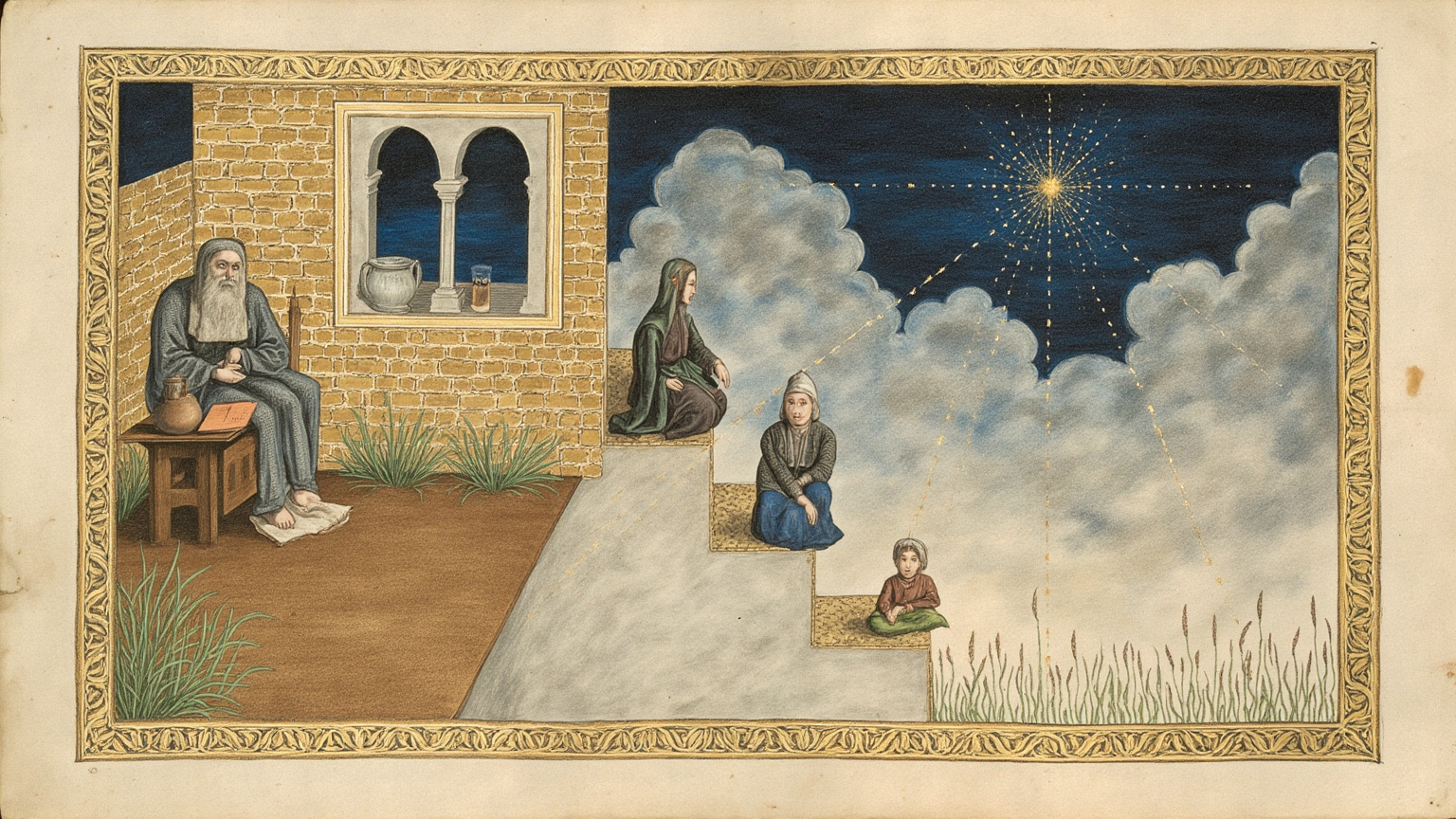
Mary hath chosen the better part, the which shall not be taken away from her.
马利亚已选择了那更好的份;这分,是没有人能从她夺去的。
金句 · 第20章 · 静听之份
Beside every one of these steps the author nails up the same warning sign: do not be fooled by joy that comes too soon. A sudden light in the mind, a sudden warmth, a picture that feels like a visitation from God — he will not let you stop and admire any of it. He knows too well how easily a young man mistakes being early for being ready, mistakes a premature glow for proof of arrival.
One confusion worries the author more than any other: contemplation is not meditation turned up a notch. Meditation belongs to human thinking, however careful. Contemplation belongs to the work of God. The difference is not a matter of degree but of kind, and this fourteenth-century director has no patience for anyone who chases contemplation by simply meditating harder.
Eight Chapters in Defense of Mary
Of the book's seventy-five chapters, the longest run of eight goes entirely to Mary. Luke's scene is spare: she sits, she listens to his teaching. Out of that, the director builds an entire theology. He does not put Martha down. His point is that there is a time to serve and a time to listen, and that listening is not an escape from work. It is another kind of work, the one part that is never taken away.
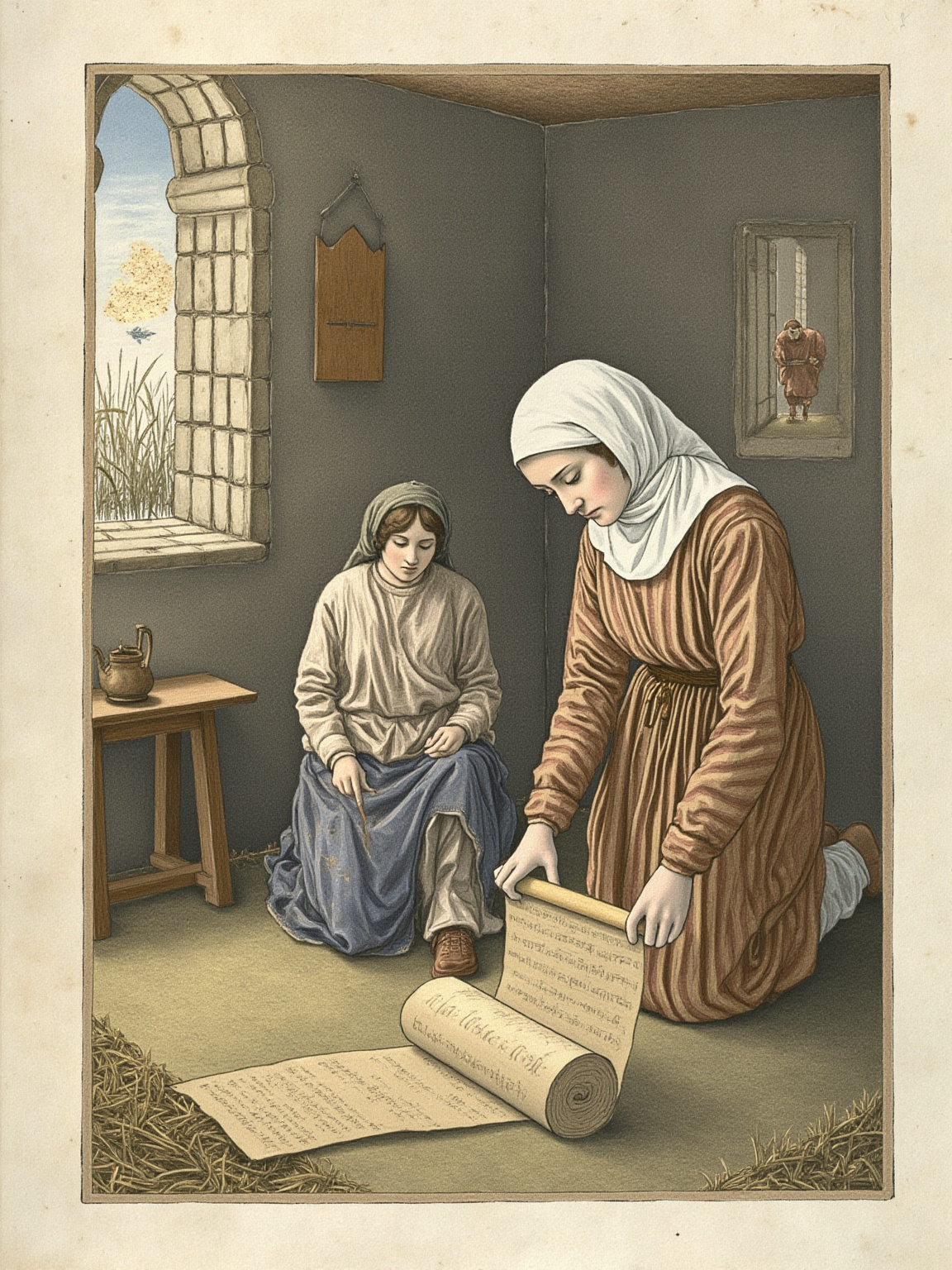
For love it is, and not a knowing, that must pierce this cloud betwixt thee and thy God.
因为穿透你与神之间这朵云的——是爱,不是知。
金句 · 第18章 · 爱之穿透
The author returns again and again to one line: she has chosen the better part, and it will not be taken from her. This is not addressed only to nuns. It is addressed to anyone whose life is full of disciplines and observances: keep doing them if you must, but know there is another road, one that runs through no concept and no vision, only through the cloud, only through unknowing.
These eight chapters are the theological heart of the book. The author's argument is to move past discipline and meditation into contemplation — not to rank love above work, or listening above serving. Read this as a simple case for love over labor and you miss the actual point: every concept, every good deed, every observance is a stone to stand on beneath the cloud. None of them get you through it. Only the blind love does.
Three Traps
The director never softens the path ahead. Three times he warns the disciple in the same words: watch for these two kinds of people. The first are the old-guard religious who fault Mary the way the Pharisees did, calling this laziness, an indulgence in mysticism, an escape from real duty. The second is Satan, dressed as the most pious of angels, especially skilled at throwing tempting light and warm-seeming visions across the path of contemplation. The third is envy, the first of the seven deadly sins, growing under cover of spiritual pride: seeing a companion receive a gift and feeling something sour in your own chest.
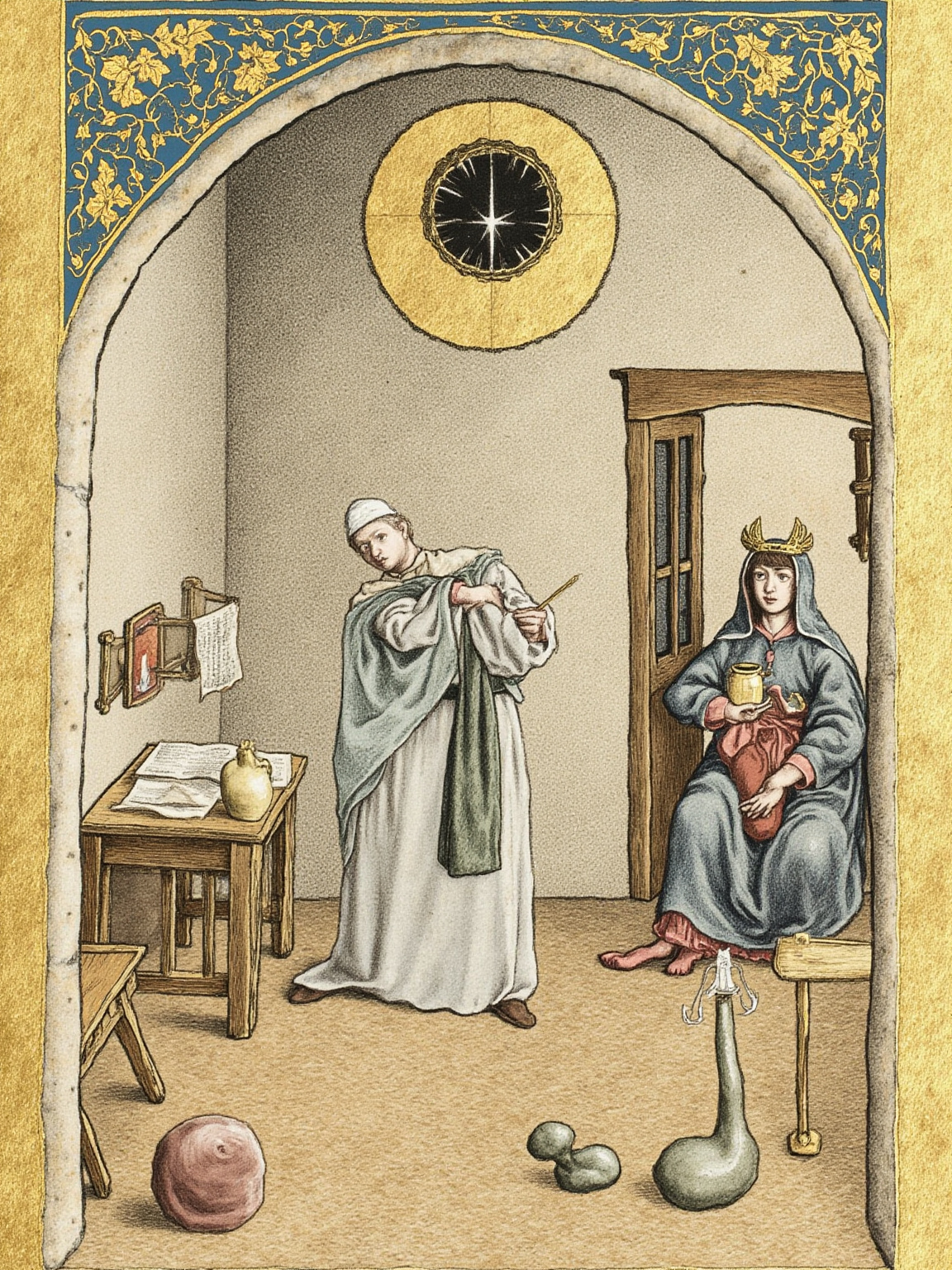
Satan hath full great envy, for he seeth that this gift is so noble and so nigh to his.
撒旦满心嫉恨——他看见这份恩赐如此尊荣,竟与他自己这般相近。
金句 · 第31章 · 三重陷阱
None of this is a museum piece. Every contemplative who goes in far enough runs into all three. The director lists them like trail markers: here is the fork, here is the drop, here is the mud where the fen gives way underfoot. The only thing that holds you steady in that low, hanging fog is the small, faithful prayer of love, kept going beneath the cloud.
No Ending, Only Compline
The book has no plot to resolve. The author says plainly that in this life we never reach full union with God. But the moment the soul breaks through inside the cloud is worth more than anything else on offer. The last chapter closes with three short lines that read like Compline — may God give us a good night, may his virtue rule over us — and then it simply stops.
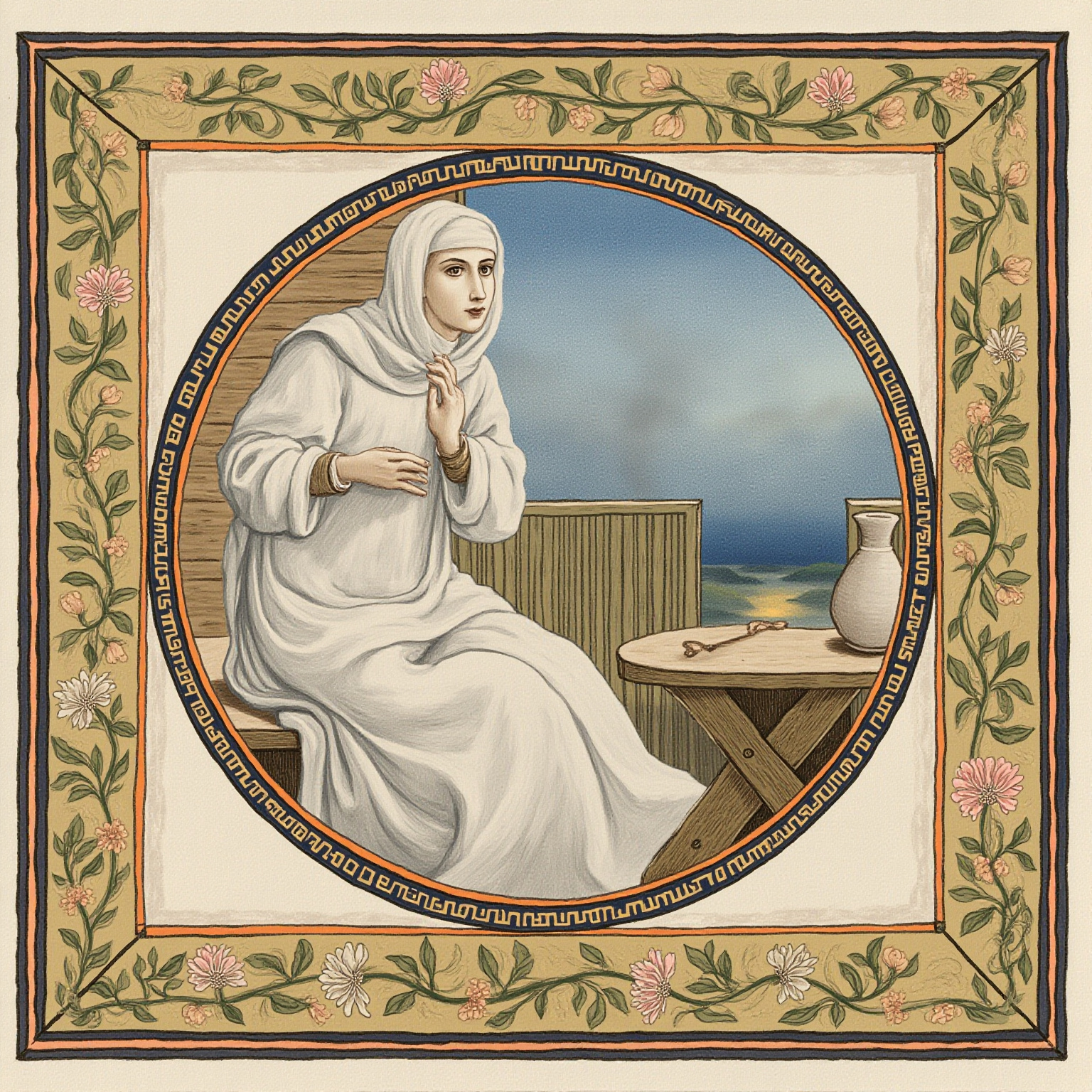
God grant us good night; may his virtues govern us.
愿上帝赐我们晚安;愿他的德性,掌管我们。
金句 · 第75章 · 晚祷之结
There is no ending because this was never a story. It is a practice you keep doing. The repeated goodnight formula, the recurring line about his virtue ruling over us, work like a breathing exercise built into the prose itself — and that structure runs a direct line to the twentieth-century Trappists Thomas Merton and Thomas Keating, and to contemplative reading today.
Theme: Love Pierces, Thought Doesn't
The method of the whole book comes down to this: you cannot know God by thinking, because God cannot be thought. Unknowing is not a failure to know. It is the deeper kind of knowing itself. Reason has to lie down so that a blind love can wake up. The author puts it almost as a jab at his own age: the love of a fool reaches further than the labor of the learned. This is not anti-intellectualism. It is a different road.
Seen from today, the book reads almost like the classical ancestor of mindfulness and meditation practice — Keating's Centering Prayer is close to a modern reissue of it. It is short and it runs deep, one of the rare doors where an old spirituality translates straight into modern language.
There is a neighbor worth remembering: Julian of Norwich's Revelations of Divine Love. She writes sixteen visions, the parable of all shall be well, page after page of pictured encounters with God. The Cloud runs the opposite direction and cuts every picture away. Same century, same stretch of England, one book of visions and one of cloud, facing each other like a mirror. Read only one and the other loses half its meaning.
Knowing the Plot, the Text Still Earns a Read
When I finished this short book, I went back and reread the director's warnings to his disciple. A guide like this one can tell you the method, can explain what Mary's road actually is, can name all three traps. What it cannot give you is the breathing rhythm of that Middle English prose. Read the three closing lines of any chapter out loud and you feel a heartbeat. And there are the images the author keeps rubbing out — the sudden light the disciple thinks he sees, the trap dressed as an angel, envy taking root under the cover of pride — that only settle into your chest once you have turned the pages yourself. Knowing the plot only hands you a map. The text itself is the fen: nothing there but fog, one window, and a pen.
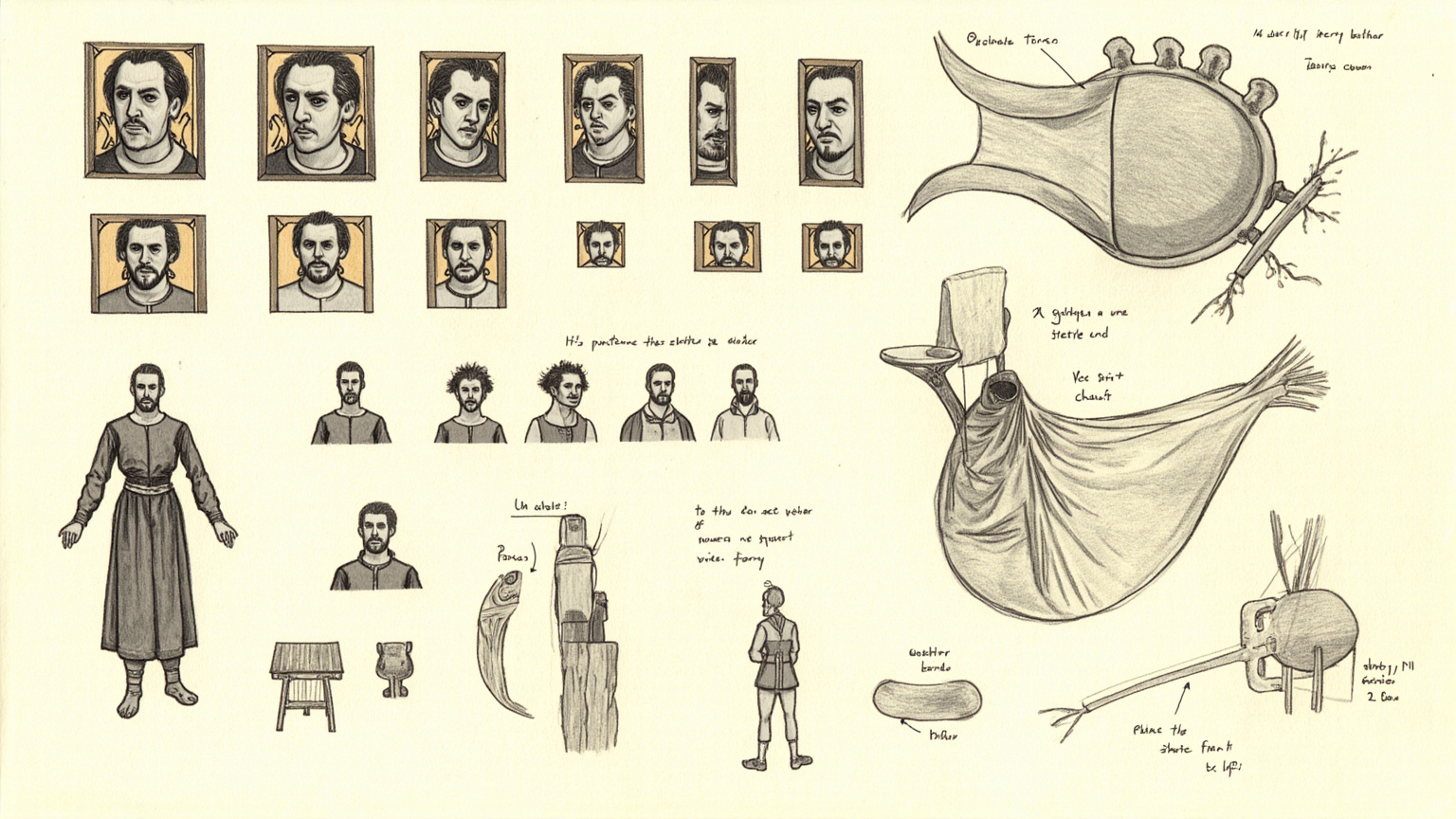
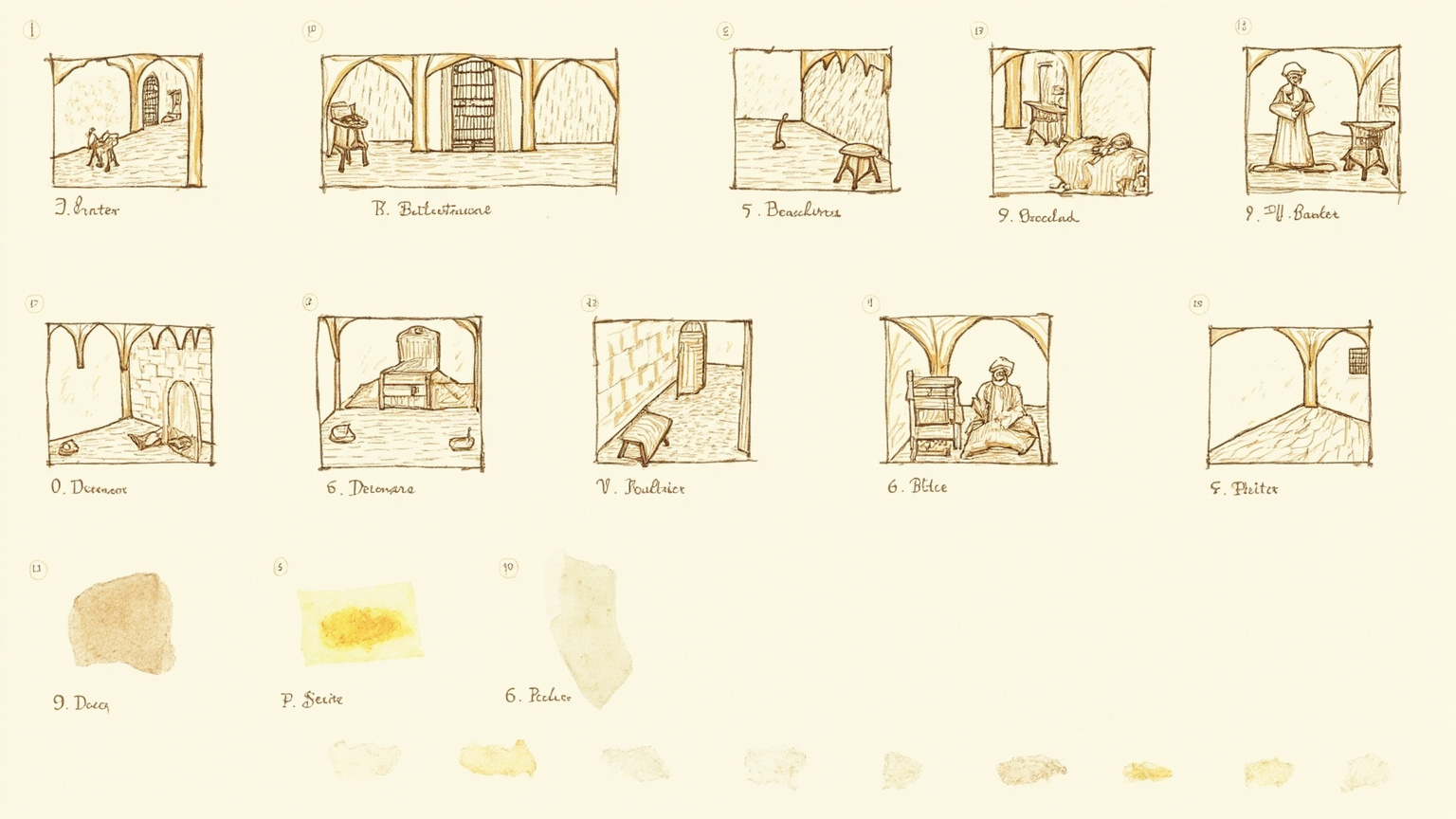
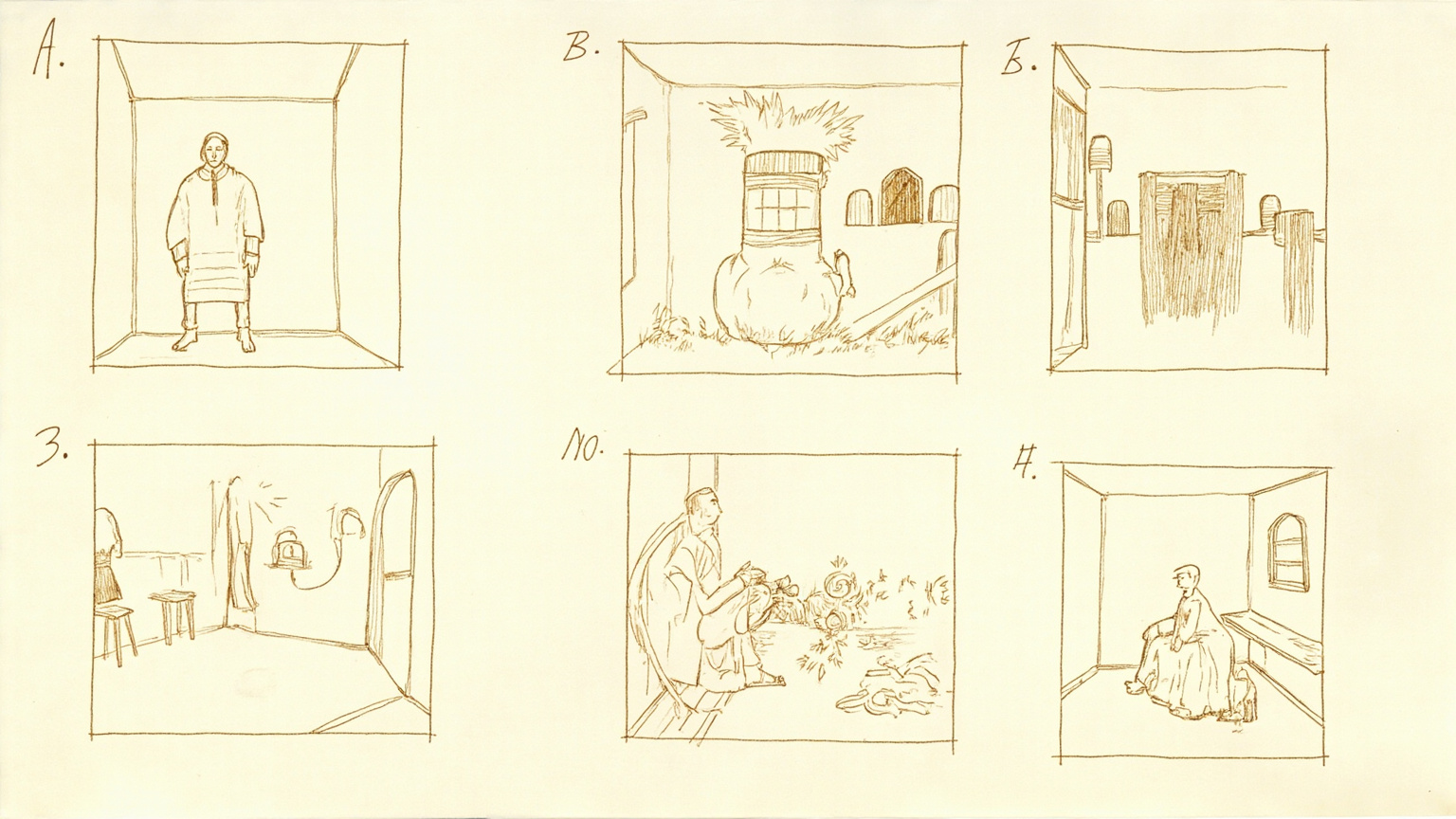
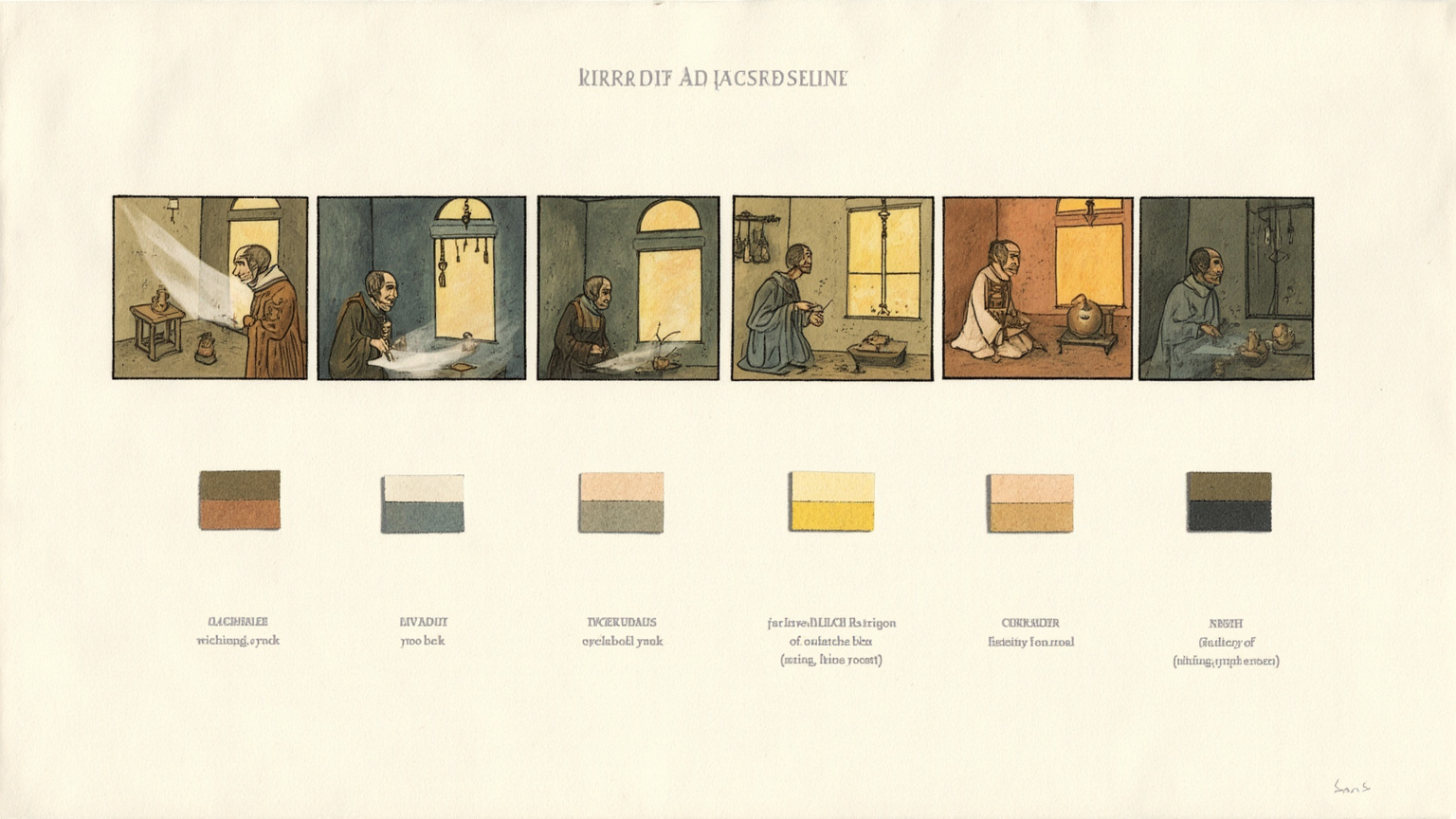
Art Direction4 plates
Before the guide was written, this book got a visual foundation — every illustration you just read grew out of it.