The Consolation of Philosophy · Companion Guide
哲学的慰藉
死牢里的最后一课——哲学以人形走进囚室,擦亮一双被泪雾蒙住的眼睛。
Opening: A Dirge in the Cell
Cold gray stone walls, a candle burning down to nothing. Outside the window, the old Roman colonnades of Pavia go dark. A former Roman consul huddles on straw, waiting for the axe that might fall tomorrow morning or the morning after. He begins to write — not a defense brief, but a dirge against Fortune. Muses hum their elegies at his bedside, and he is about to sink down with them. He does not yet know who is about to walk in.
It is not death he weeps for. A man who served justice his whole life, framed at the end as a traitor and locked in a foreign king's dungeon — that is what actually splits him in two. He writes: highest Good, why do the wicked prosper while the just suffer? The book begins with that one cry.
What Kind of Book This Is
Boethius was a philosopher-statesman of Rome's last years, born into an old aristocratic family, who served as consul under the Ostrogothic kingdom and did more than almost anyone to carry Aristotle's logic and Euclid's geometry into Latin before the Middle Ages began. In the mid-520s, in a cell in Pavia, he finished writing The Consolation of Philosophy. Theodoric then had him put to death — the book and its author's death fall in the same year.
Generation after generation kept this book close: the descent in Dante's Divine Comedy, the story Chaucer retold in English, its echoes in Montaigne's essays, the seed of Milton's Paradise Lost — trace any imprisoned philosopher's passage from despair to consolation far enough back and you land here. It is the ancestor of the Western prison-conversion genre, and the clearest surviving record of that great spiritual turn from late antiquity into the early Middle Ages.
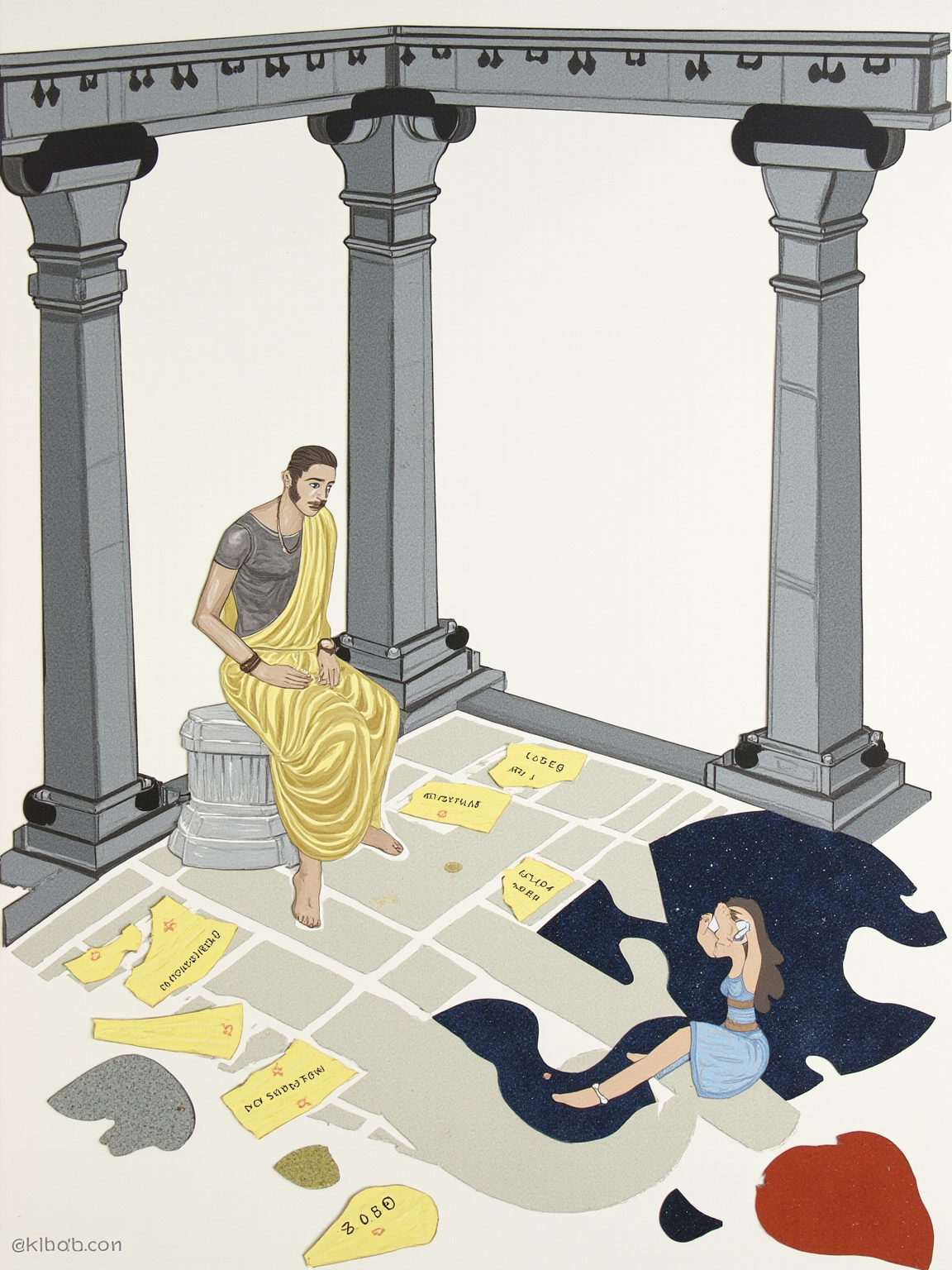
And then I saw the Muses of poetry standing at my bedside, pouring out their grief in words that matched the season of my mourning.
诗神们从两侧掠过我床前,以哀歌之辞,伴我那时节的悲怀,倾泪而诉。
金句 · 第1卷 · 缪斯与挽歌
Characters and World
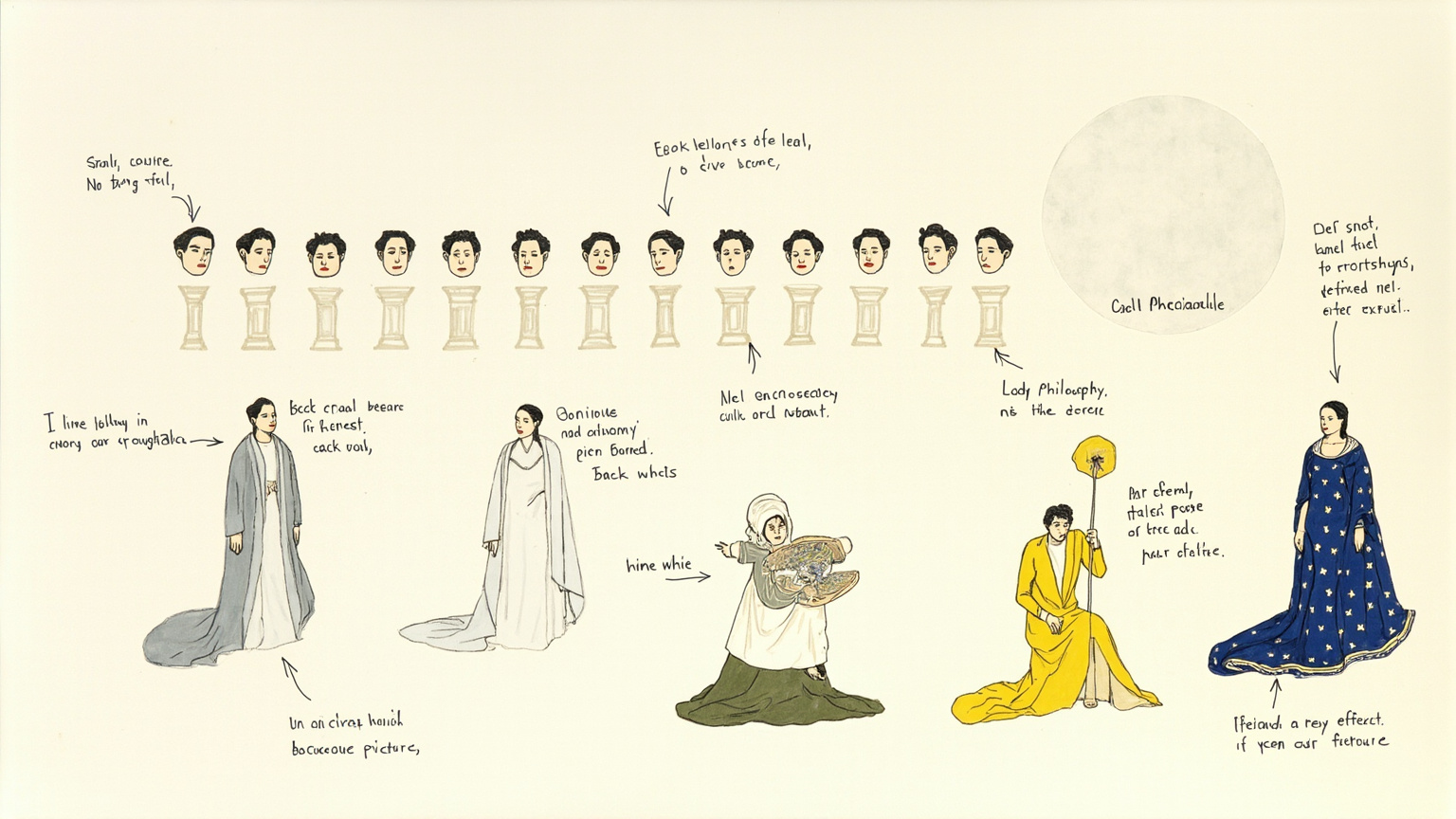
The whole book is a dialogue between two figures, with a third called in now and then. Boethius himself is the narrator in the cell — despairing, furious, hurling questions at heaven in verse. Lady Philosophy is the pagan personification of classical philosophy, pre-Christian in her bearing: visually she is never a nun or an angel but a classical goddess in a robe embroidered with the seven liberal arts — grammar, logic, rhetoric, arithmetic, geometry, music, astronomy — carrying a scepter and books. Boethius was himself a Christian, yet he deliberately let Philosophy enter his cell in pagan female form. That is the book's central visual tension, and the key to reading it.
The third figure is Lady Fortune — Fortuna, mistress of the blind spinning wheel — whom Philosophy herself calls in from outside the door. In Book One, Boethius rails against her fickleness; here she is summoned to answer for herself. Do not conflate the two: Philosophy is the teacher, Fortune is the one on trial, and they are two distinct figures. The story is set in the mid-520s, in Pavia in northern Italy, under the Ostrogothic king Theodoric — the last stretch of Rome under Gothic rule, when the classical order was collapsing and Christianity had already spread widely but had not yet claimed the field alone.
Lady Philosophy Enters the Death Cell
Boethius is at the bottom of his despair, the Muses singing their dirges and pulling him further down, when Lady Philosophy walks in. She sends the mourning Muses away first, then reaches out to wipe the tears from his eyes.
What she wipes away is not tears — it is a fog. Reason's hand clearing away the mist of despair is the single defining image of the whole book. She introduces herself: she is Philosophy, his old nurse. Boethius does not recognize her at first, because grief has clouded his sight. She orders him to state his case, and he launches into that long, famous dirge against Fortune.
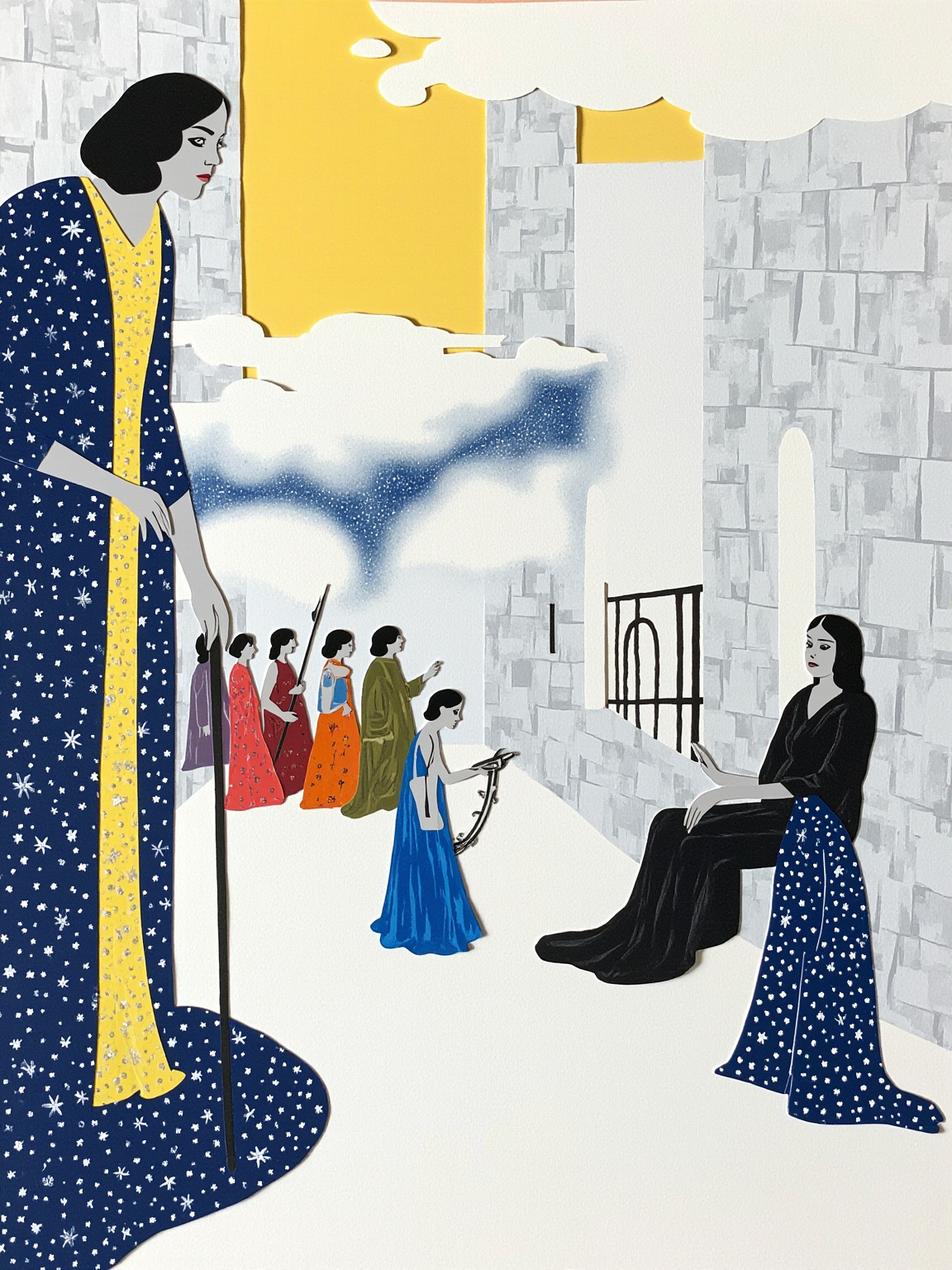
Then she, having dismissed the Muses, put aside their tearful train, and wiped my eyes with her hand; she did not, indeed, wipe away my tears, but rather the fog of grief that clouded my sight.
她遣散缪斯那哀哭的随侍,伸手拭我双目——拭去的不是泪,是那遮眼的雾。
金句 · 第1卷 · 拭泪之手
Facing Down Lady Fortune
Lady Philosophy does not rebut him herself. She calls in the very figure he has been accusing — Lady Fortune — and sets the two women face to face. Boethius charges that Fortune deceived him his whole life. Her answer is blunt enough to stop him cold: she told him from the start exactly what she was, inconstant; the things he chased were hers to begin with, written on her wheel, and the wheel simply turned them off.
This is where the figure of the wheel takes center stage. Glory, power, wealth, reputation, sensual pleasure — the five things Boethius spent his life chasing — none of them carries permanence built in. He has to admit it here: he mistook a moment caught mid-turn for true happiness. Lady Philosophy never says he did not deserve those things. She says they were never true happiness to begin with — the attachment is the source of the suffering.
The Highest Good: A Piece of Geometry
Book Three is the metaphysical leap. Lady Philosophy asks Boethius: what kind of happiness do you actually want? He lists wealth, power, fame, sensual pleasure — the same five things just dismissed. She tells him none of that is true happiness; they are mere partakings, fragments. True happiness has to be whole in itself, unchanging, self-sufficient.
Then she offers a geometric image: do you see this beam of light? Do you see the stairway leading up to it? The highest good is the light itself, and anything else is blessed only by partaking of it — a tight fusion of Plato's theory of participation and Stoic notions of the supreme good. From here Boethius is pulled out of the world of experience and into metaphysics.
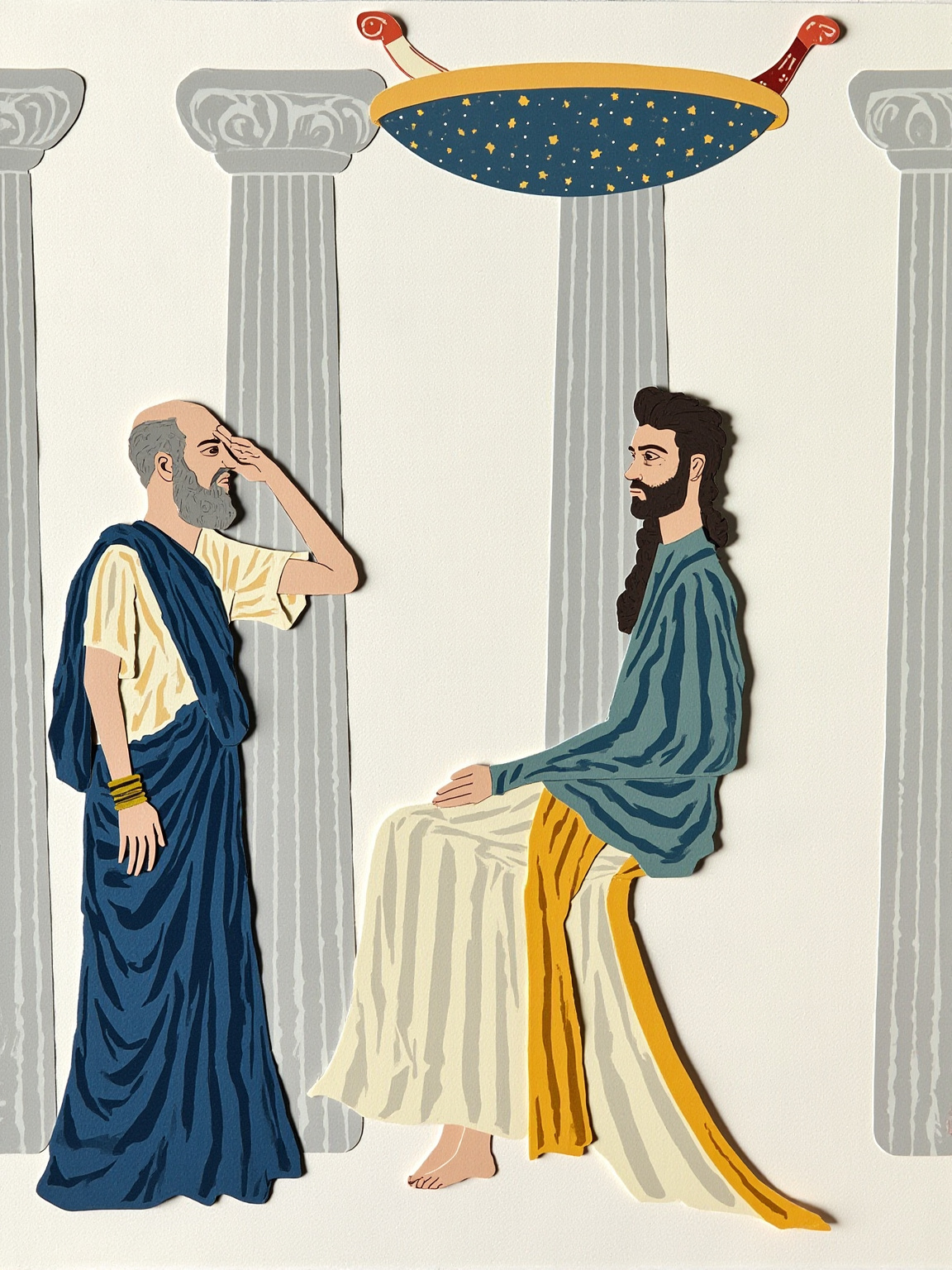
I could give you the clearest proof of this, since the very same thing which you are now complaining about losing I never promised you as permanent.
你今日失去的,我从不曾许你恒久——此事之证,我原可一眼赐你。
金句 · 第2卷 · 命运女神答辞
The Paradox of Evil: The Absence of Good Is Its Own Punishment
Book Four takes on the sharpest question in the whole book: the just suffer, the wicked prosper — how does that add up? By now Boethius has conceded that worldly glory is not true happiness, but the knife still lodged in him is that the wicked keep winning in this world. Lady Philosophy splits it open with a single definition: evil is the privation of good — privatio boni.
The move turns on this: the wicked man never actually gets the good he schemed for — he only lacks it. Good exists; evil is only the hole where it should be. And that hole is itself his punishment. Boethius's original charge — why does the Good let the wicked prosper — gets quietly rewritten into: the wicked never prospered at all, they only lack good. The order of the universe has not broken; his own field of view was just too narrow.
Providence: The Center and the Circle
Book Five pulls the view up to its highest point. Lady Philosophy raises the hardest question of all: how can divine foreknowledge coexist with human free will? This is not posed as Christian theology — Boethius argues it in purely philosophical terms.
She has Boethius picture an ant crawling on a vast disk: the ant can see only the arc of circumference in front of it and mistakes the curve for a cliff edge; the sage standing at the center sees the whole shape at once. Foreknowledge is not fate nailed down in advance — it is seeing the whole from a vantage point above the flow of time. The center is God, the circumference is the mortal. Providence — Providentia, the view of the whole — outranks Fortune — Fortuna, the turning of fragments. Here the book's central opposition gets turned completely on its head.
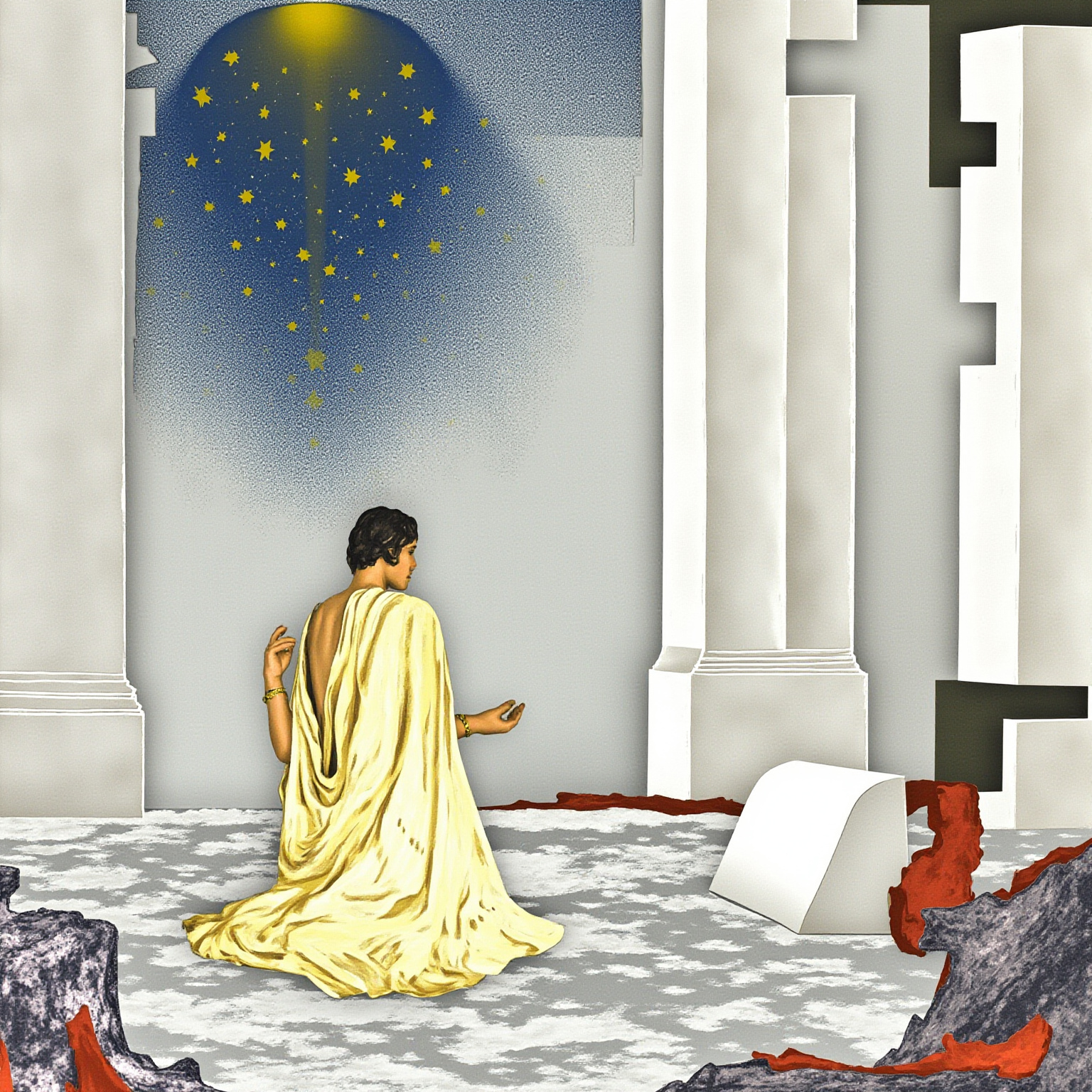
Just as the centre of a circle is touched by every radius, yet is not itself carried round by the motion of the wheel, so God, the centre of all, abides unmoved; yet the things that issue from Him He sees and knows without end.
圆心为一切辐线所触,而自身不为轮转所移;天命之神居此中央,不动而见,无所不知。
金句 · 第5卷 · 圆心与圆周
Consolation Without a Way Out
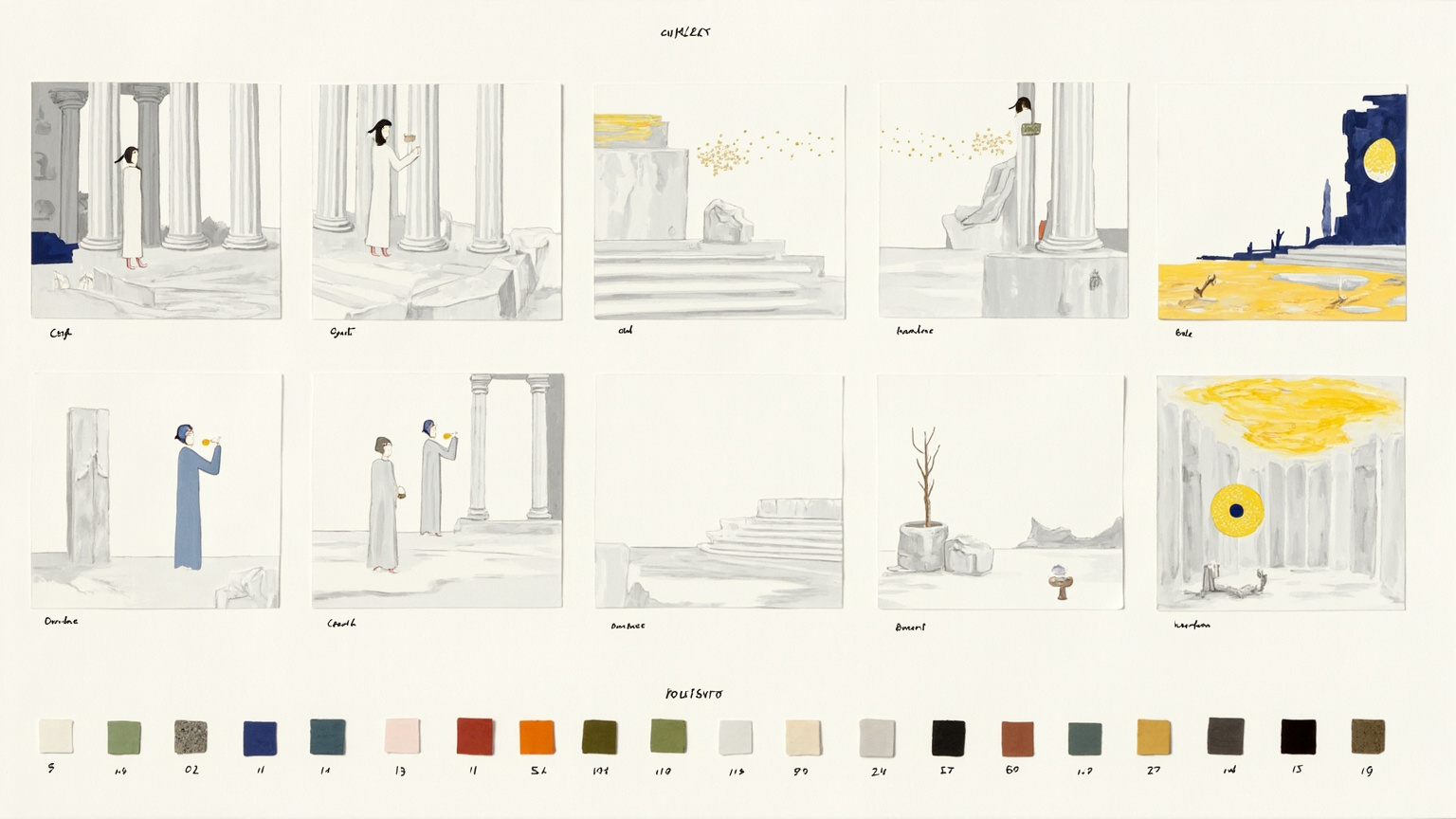
Here the dialogue ends. Boethius is still in his cell. The candle has burned down further; outside the window, the old Roman colonnades of Pavia have not changed at all. Lady Philosophy does not free him from his cell, and no miracle drops from the sky — he will still be executed before long.
But his eyes are not the same. The final book closes on the famous line beginning Deus igitur — gazing on the highest good, settling into a philosophical calm. This is not a plot twist; it is an inward gaze. Consolation is not the problem getting solved — it is the eyes that see the problem getting cleared. This is the book's most counterintuitive, most unsettling move: comfort is not an exit. It is a vantage point.
Why It Is Still Remembered
By the sixth century, Rome had already collapsed halfway, Christianity was becoming the new dominant discourse, but the living current of classical philosophy had not yet run dry. In his death cell, Boethius pulled off a remarkable synthesis: Plato, Aristotle, the Stoics, and Neoplatonism through Plotinus, all fused into one, planting roots that later fed medieval scholasticism. It is an extraordinarily rare transitional document in the history of philosophy — it catches the last bright edge of the classical world at the exact moment the Christian centuries were at their darkest.
In literary terms it also invented a narrative device nobody had used before: Philosophy walking into a cell in human shape, arguing, wiping away tears, guiding — distinct from the first-person confessional monologue of Augustine or Rousseau. The density of quotable lines is extraordinary; the whole book functions almost like a machine for minting aphorisms. On evil, on foreknowledge, on true happiness, a line that can stand entirely on its own turns up every few pages. That is part of why it has crossed more than a dozen centuries without fading.
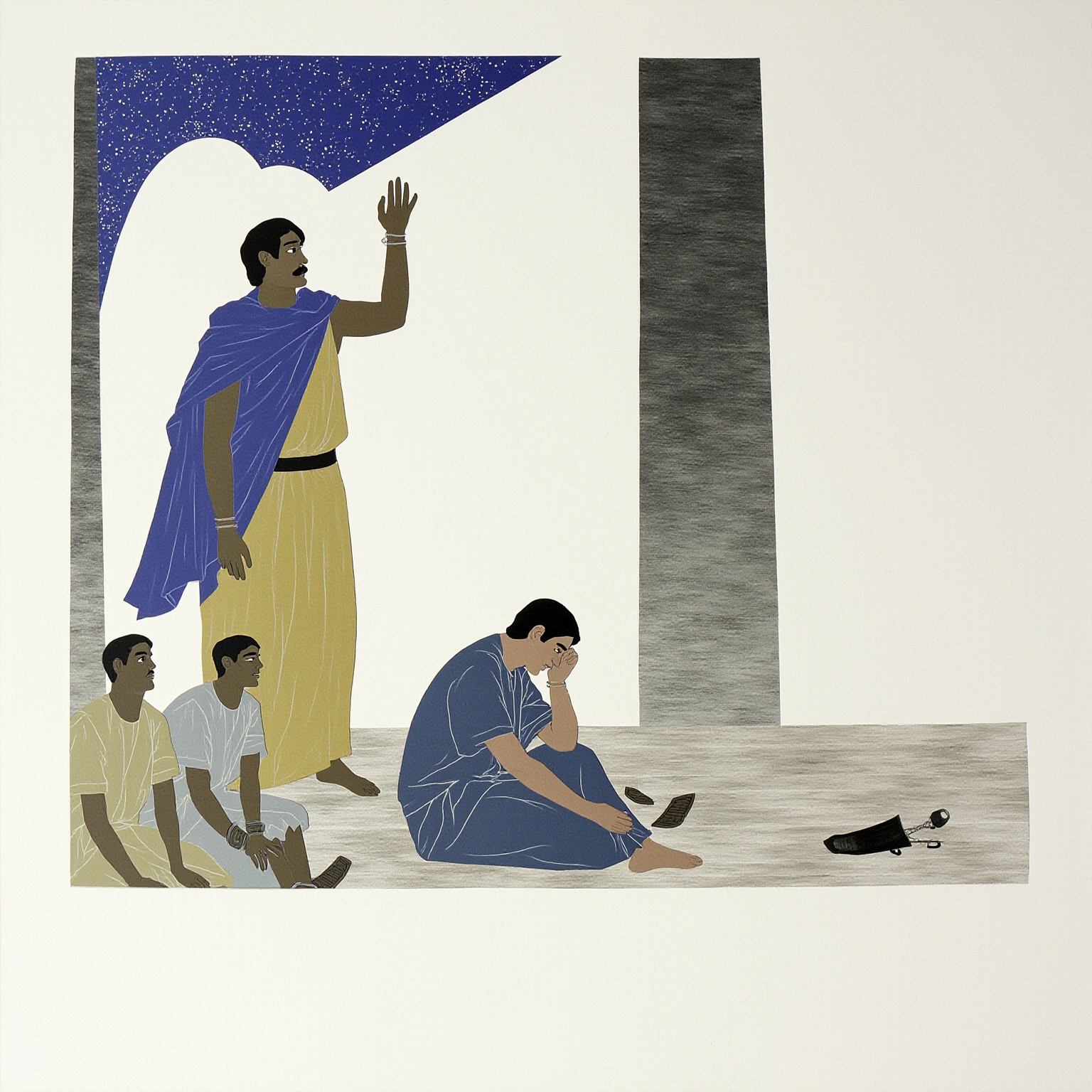
Reasons to Read the Text Itself
An explainer can tell you what Boethius went through and which arguments won him over. What it cannot give you is the breathing rhythm of prose alternating with verse — the book was written as five books braiding prose with poetry, and many of its core arguments are set to meter, meant to be sung. The circling, recurring rhythm in translation, half dirge and half prayer, is something no explainer can reproduce. Nor can it give you the candle burning down to nothing, the narrow window facing the old Roman colonnades — words a dying man carved into stone, still carrying the cold of that cell.
And there is the stillness of the moment in Book Five where Boethius says, look up at the sky — you have to turn to that page yourself, and lift your own eyes.
Consolation is not an exit. It is a vantage point — he will still be executed in that cell, but the eyes he sees the world with have moved from the ant on the circumference to the center itself.
Art Direction4 plates
Before the guide was written, this book got a visual foundation — every illustration you just read grew out of it.