The Decameron · Companion Guide
The Decameron
In 1348, the Black Death swallows Florence. Ten young people retreat to a garden outside the city and, story by story, wrest humanity back from death's grip.
Opening: A Dead City, Seven Hundred Years Ago
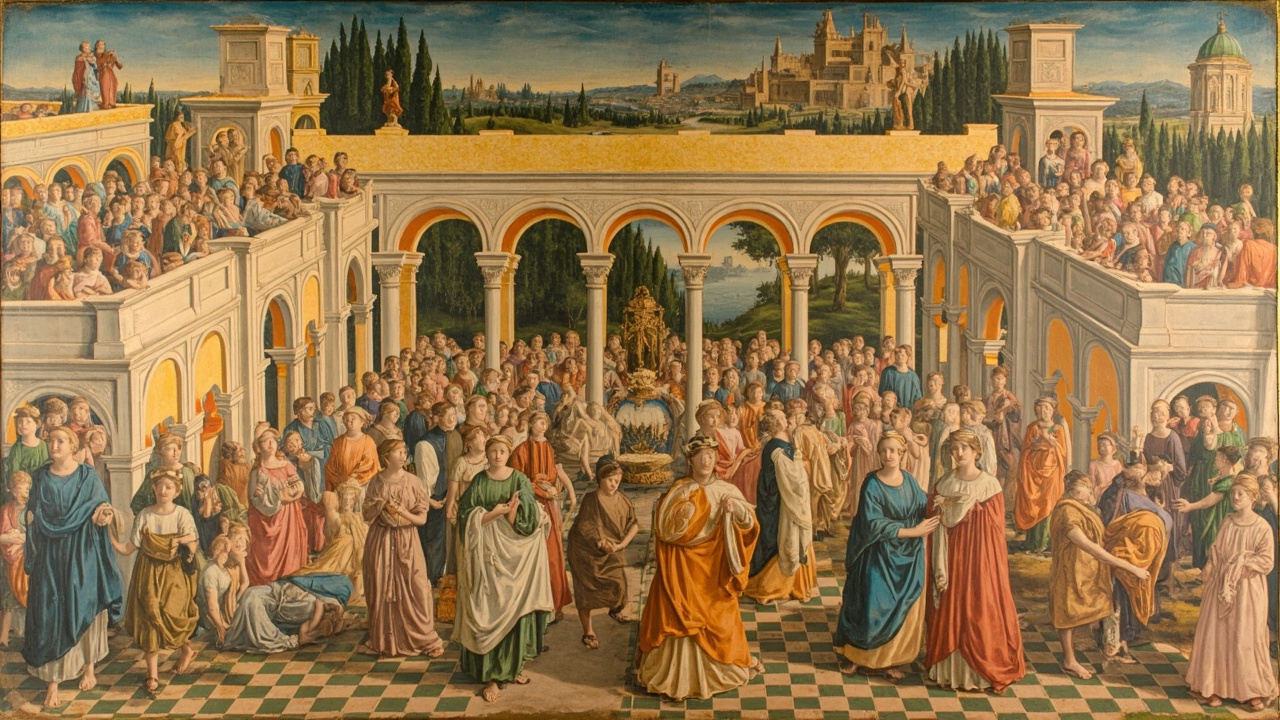
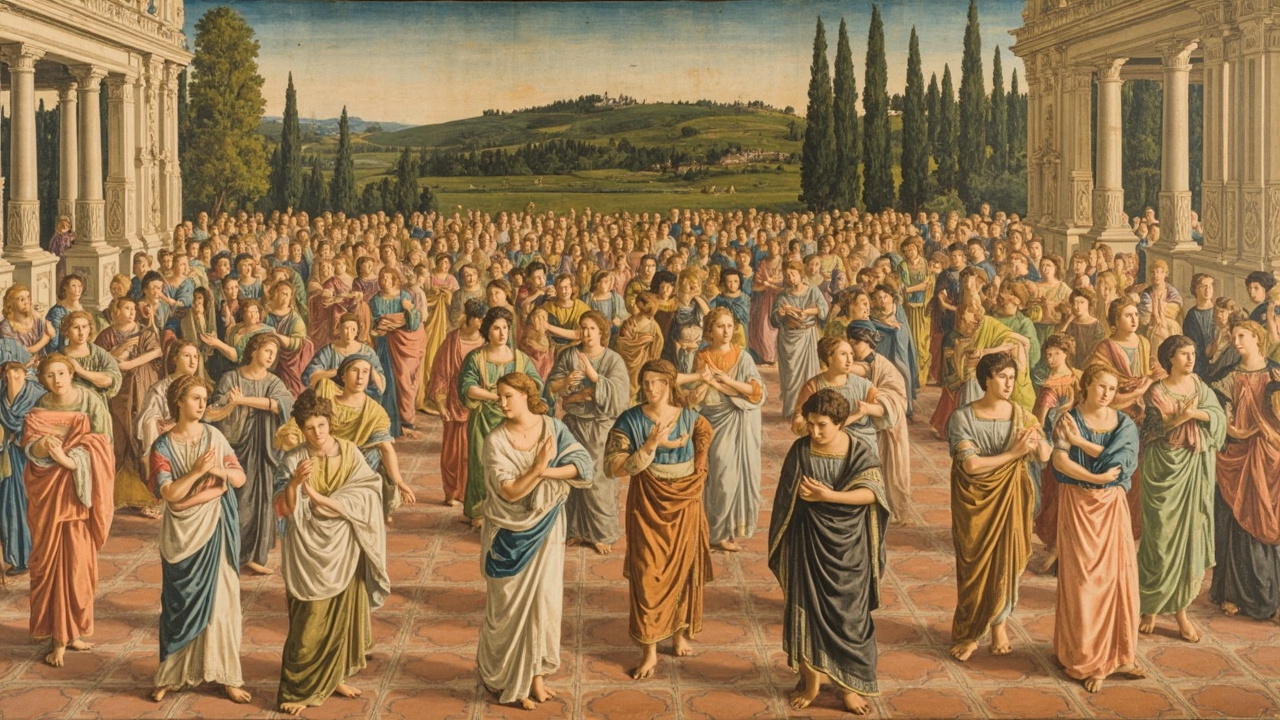
Corpses lay in the streets, uncollected. Families were afraid to go near each other, the churches stood empty, and the law had become a dead letter — not because of war, but because of a disease no one could see. This is no invented scene. It is what Florence actually looked like one summer, seven hundred years ago. That same year, seven young noblewomen met in an empty church and made a decision that still sounds bold today: they would not keep vigil, would not pray, would not wait to die. They would flee the city and go to the countryside to tell stories.
What Kind of Book Is This
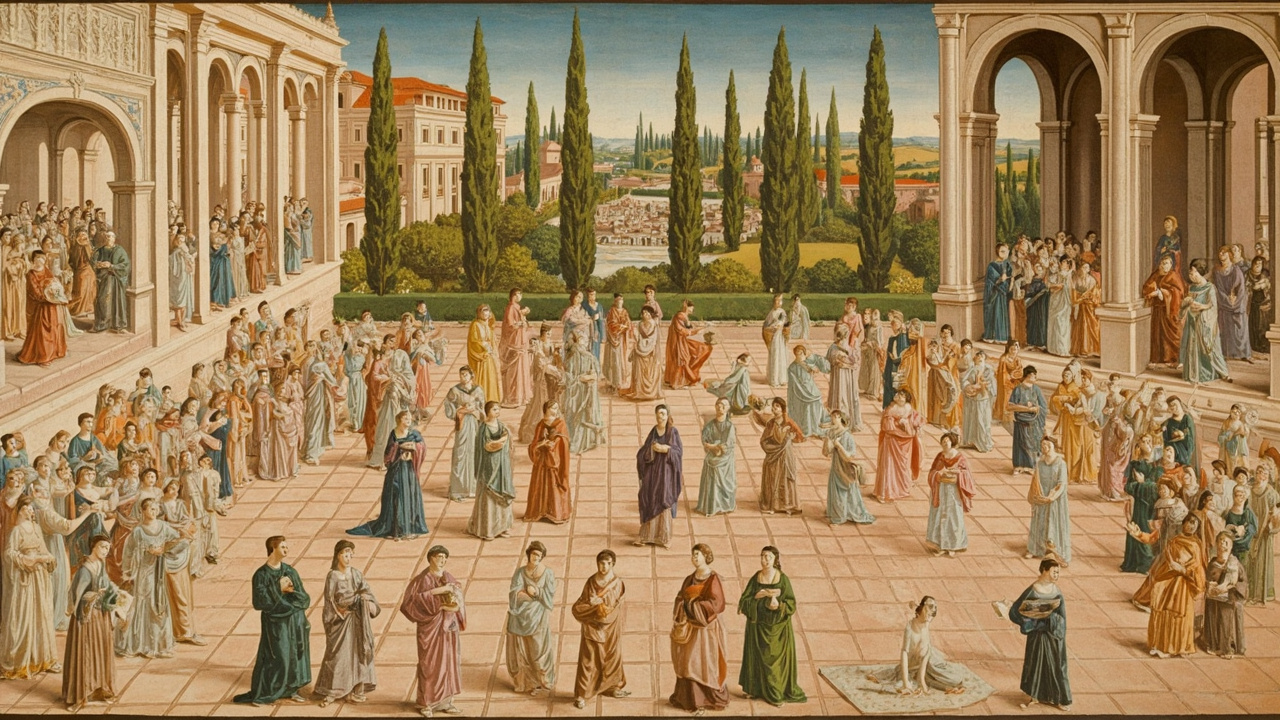
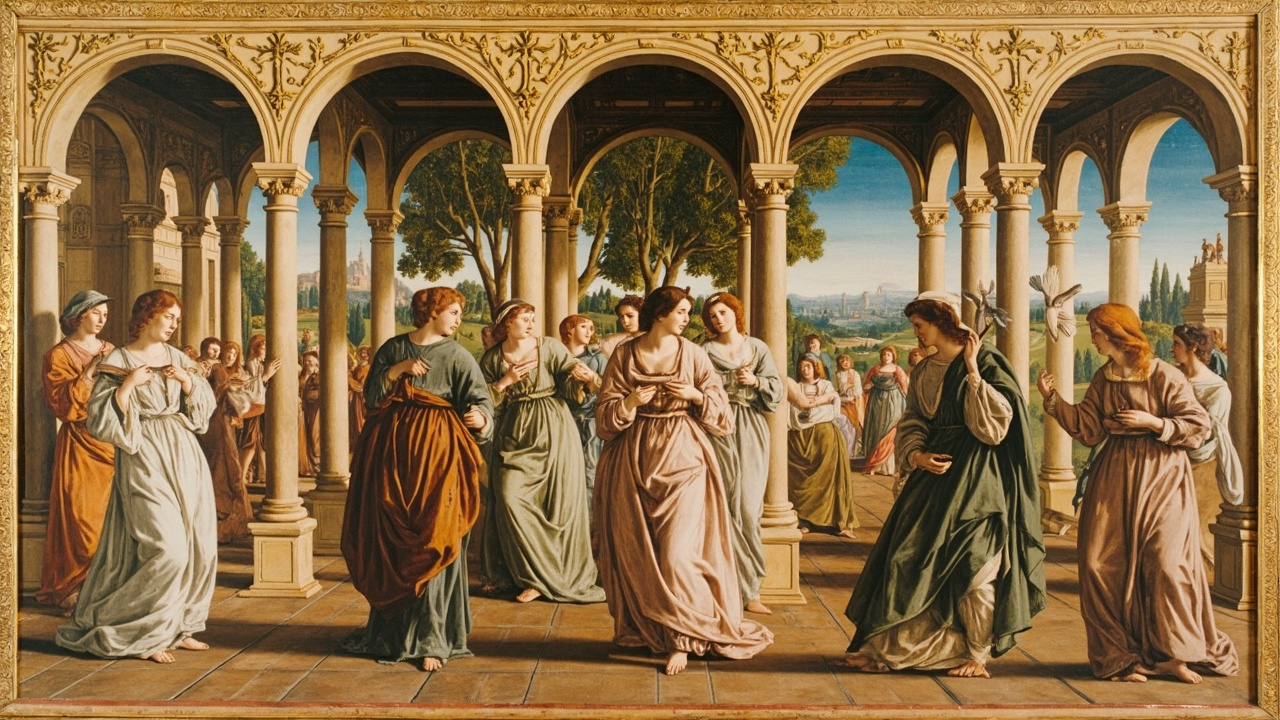
The man who wrote it down was Giovanni Boccaccio, a central figure in the Florentine circle of the early Italian Renaissance, ranked alongside Dante, author of the Divine Comedy, and Petrarch, author of the love sonnets, as one of the era's three towering figures. The book he wrote is called The Decameron — the title itself is Greek, meaning "ten days." It is not a novel but a treasure chest holding a hundred stories, wrapped in an elegant frame: that plague summer, seven women and three men — ten young people in all — take refuge in a villa in the hills outside the city. Each day they elect a king or queen to set the day's theme, and each of the ten tells one story, all set against gardens, fountains, singing, and dancing. Ten full days, a hundred stories told.
The book was finished around 1353, one of the foundational works of European vernacular prose, and the earliest and most brilliant model of the frame-story form. Chaucer's later Canterbury Tales learns directly from it; the Heptameron of the French Renaissance follows in its line. A single work opening up an entire literary lineage — that is the weight it carries in literary history.
Ten People and Their World
The ten young people range in age from eighteen to twenty-eight, seven women and three men, well dressed and well mannered — not refugees, and not revelers either, but a group who decided to go on living with grace in the face of death. The eldest, Pampinea, is the architect of the whole plan: it is she who speaks up in the church and proposes leaving the city, and she who lays down the rules — a rotating king or queen, a theme each day, a story from everyone. Without her, there are no hundred stories. Among the three young men is Dioneo, who holds a standing privilege: he always tells the last story of the day, and he alone is exempt from the day's theme. His stories tend to be the bawdiest, the wittiest, the funniest — a kind of stand-in for Boccaccio's own worldly, comic side.
The hundred stories themselves fly free of Florence, free of that summer: merchants, friars, nobles, farmers, the Sultan Saladin, ships out of Alexandria, judges in Paris — the whole Mediterranean world of the fourteenth century is packed into this frame. The reader hears these stories through the ears of the ten young people, so they are the viewfinder; the real protagonists are the people inside the hundred stories.
Florence, 1348: The Death That Sits Behind the Whole Book
Reading The Decameron, the one thing you cannot skip is the opening's almost journalistic account of the plague. Boccaccio does not wave it off with a line like "the plague was bad that year." He actually writes it out: corpses piling up in the streets with no one to bury them; the sick abandoned by their own families; a priest who gives last rites one day and collapses on his next round; a once orderly city where ritual and law simply give way in the face of death. The account is so precise, so clear-eyed, that historians centuries later have used it to reconstruct the Black Death itself.
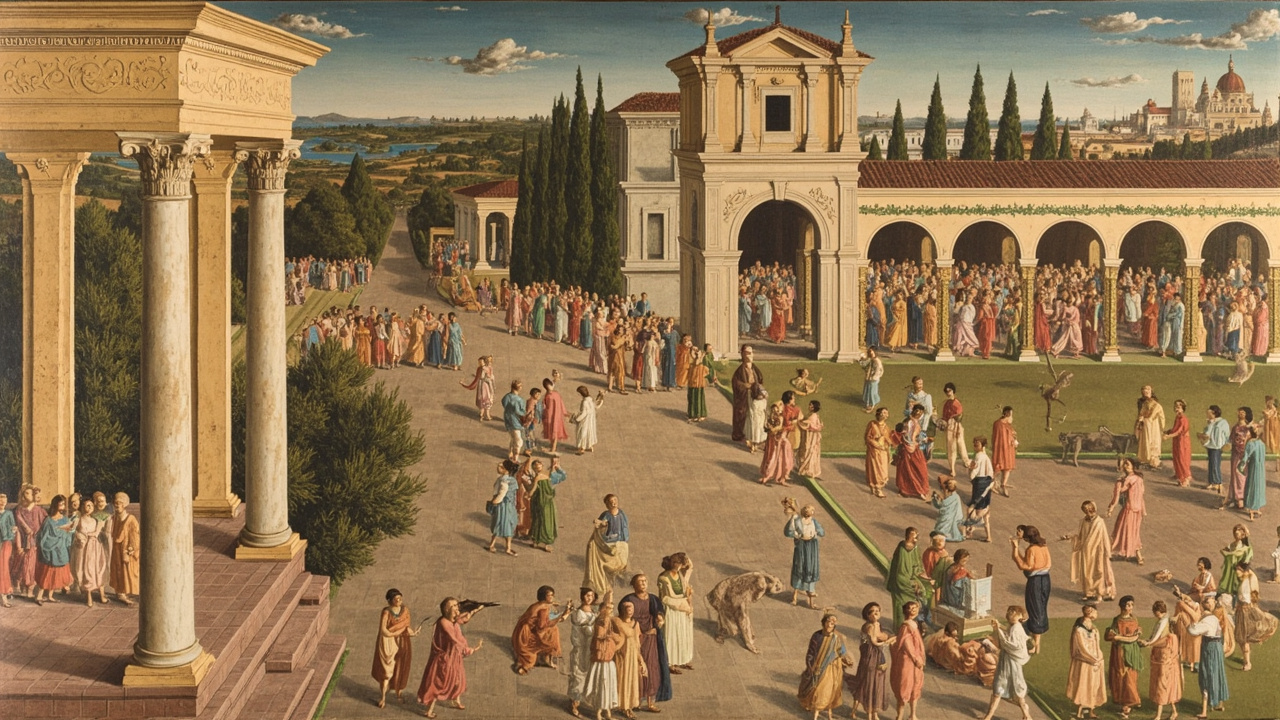
breakfasted in the morning with their kinsfolk, comrades and friends and that same night supped with their ancestors in the other world!
早晨还与亲人、同伴和朋友一同用餐,当夜就已在另一个世界与祖先共进晚餐了!
Original line · Day One, Introduction · The 1348 plague in Florence
This entire backdrop of death is the true hinge of the whole book. Without that shadow, the hundred stories that follow — clever, erotic, joyful, or tragic — would lose their weight. Boccaccio deliberately pushes the reader down into the mud of death first, then lets ten young people pull themselves back out by telling stories.
Flight and Rule: How the Frame Gets Built
The moment the seven young women meet at the church of Santa Maria Novella, the city has already become unlivable. Pampinea — the eldest and steadiest of them — calmly proposes an alternative: rather than sit and wait to die, withdraw to a quiet villa in the hills of Fiesole outside the city and rebuild some order there. Her case is blunt: staying in the city, they can no longer help anyone, and are only throwing themselves away with it; in the countryside they can at least go on living like human beings. The proposal is accepted unanimously, and by chance three young men join them, so seven women and three men set out together.
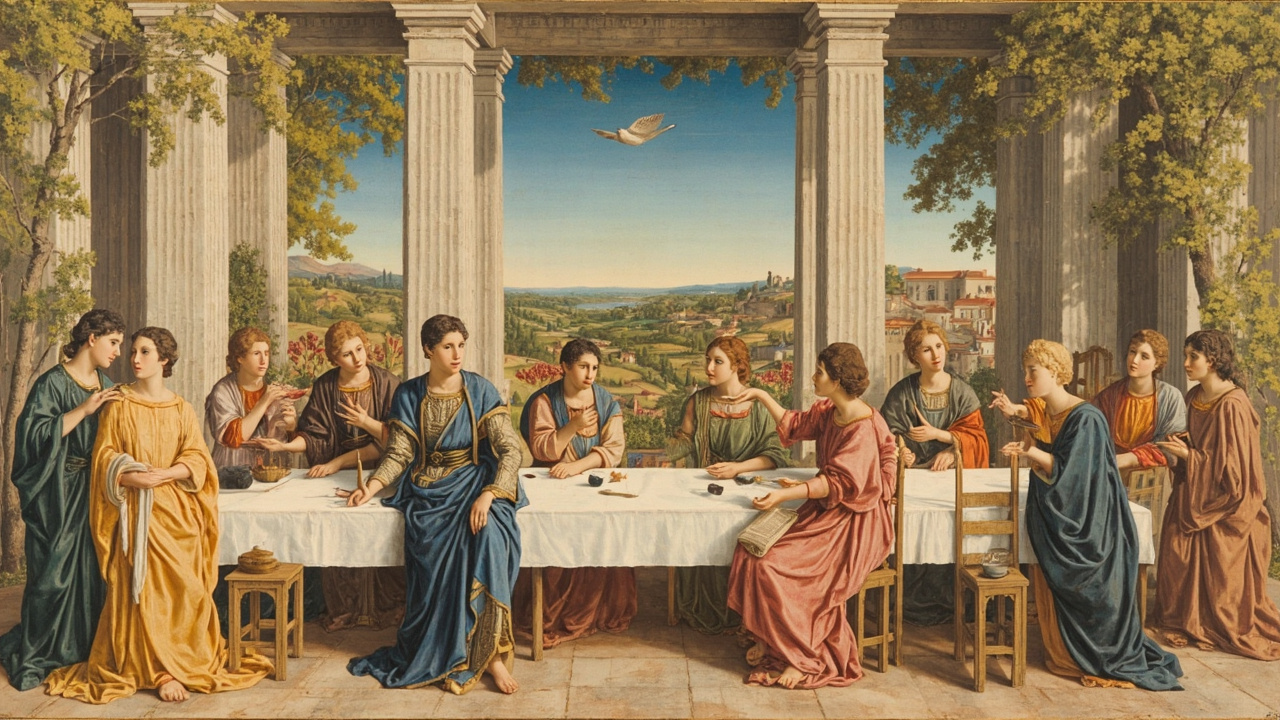
Dioneo, thou sayst well; it behoveth us live merrily, nor hath any other occasion caused us flee from yonder miseries.
迪奥内奥,你说得对;我们理应快活地活着——我们逃离那边的苦难,本就别无他因。
Original line · Day One, Introduction · Pampinea answers Dioneo, setting the merry rule
Once at the villa, they set down three rules: first, a king or queen is chosen by rotation each day; second, that ruler sets the day's theme (open subject, doomed love, love that wins through, wit rewarded, cunning tricks played...); third, all ten tell a story each, accompanied by song, dance, and good food. This small republic of rules is the ten of them staging a gentle rebellion against the collapsing city outside.
Day One: The Opening Shot of Worldly Wit
The first of the hundred stories in the whole book belongs to Ser Ciappelletto, a notary and a thoroughly wicked con man. On his deathbed, he sends for a priest to hear his confession. Dying, he spins his entire vile life into a tale of pious good deeds, laid on so thick that the priest believes him, and then the whole city believes him too — and after he dies, he is venerated as a saint.
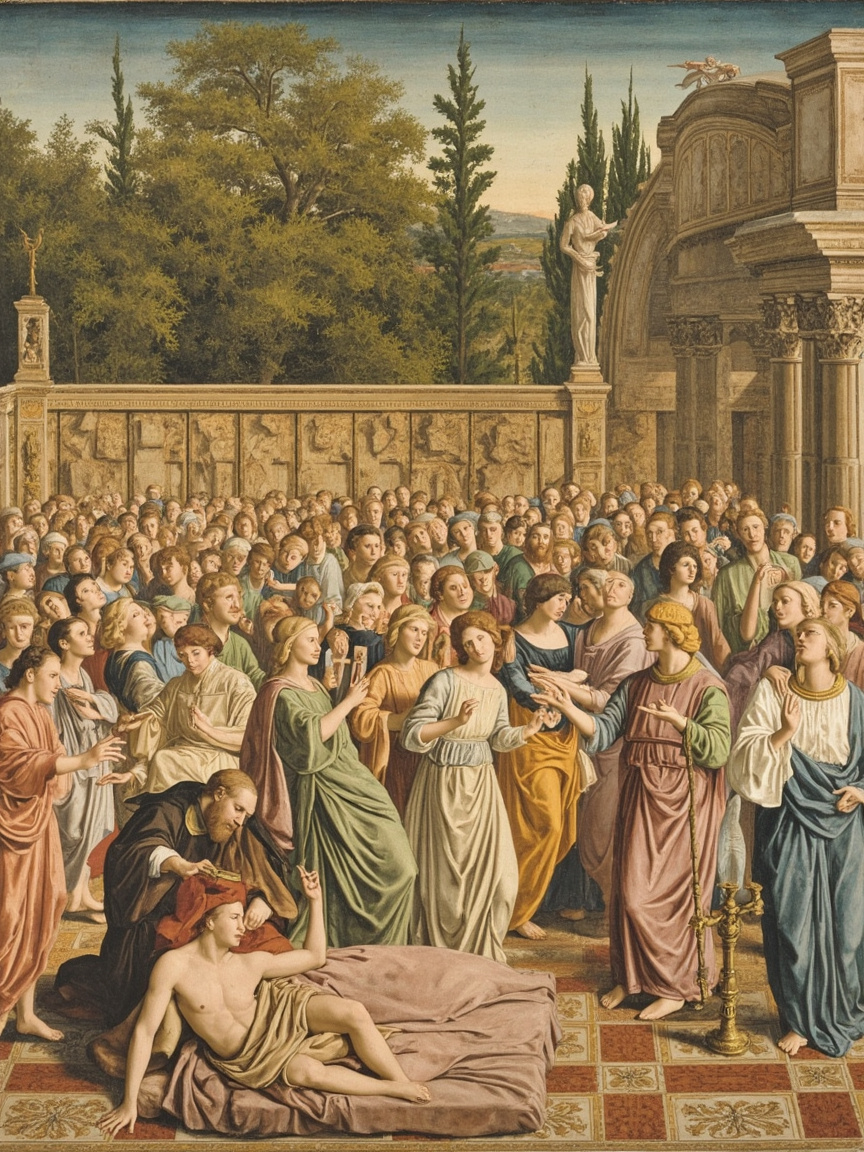
It's a shot fired with precision and no mercy. Boccaccio makes the very first story of this great book a biting satire on the Church's credulity and false sanctity — he is not mocking faith itself, but the frauds who wear faith as a costume. Worldly cleverness, quick thinking, and an eye for hypocrisy outweigh dogmatic piety from page one.
Hell in the Pine Wood and the Falcon on the Plate: Love Driven by the Force of Tragedy
Day Five holds two stories that read almost like archetypes for European love narratives. One belongs to Nastagio degli Onesti, a young man from Ravenna spurned again and again by the woman he loves. Wandering in a pine wood, he stumbles on an eerie vision: a naked woman, a ghost, torn at by savage hounds and bleeding; a knight then rides up, cuts open her chest, and feeds her heart to the dogs. It turns out to be a punishment from hell, reserved for those who were cruel to a lover in life. Nastagio uses the sight to frighten the woman he loves into finally accepting him, and the two are married.
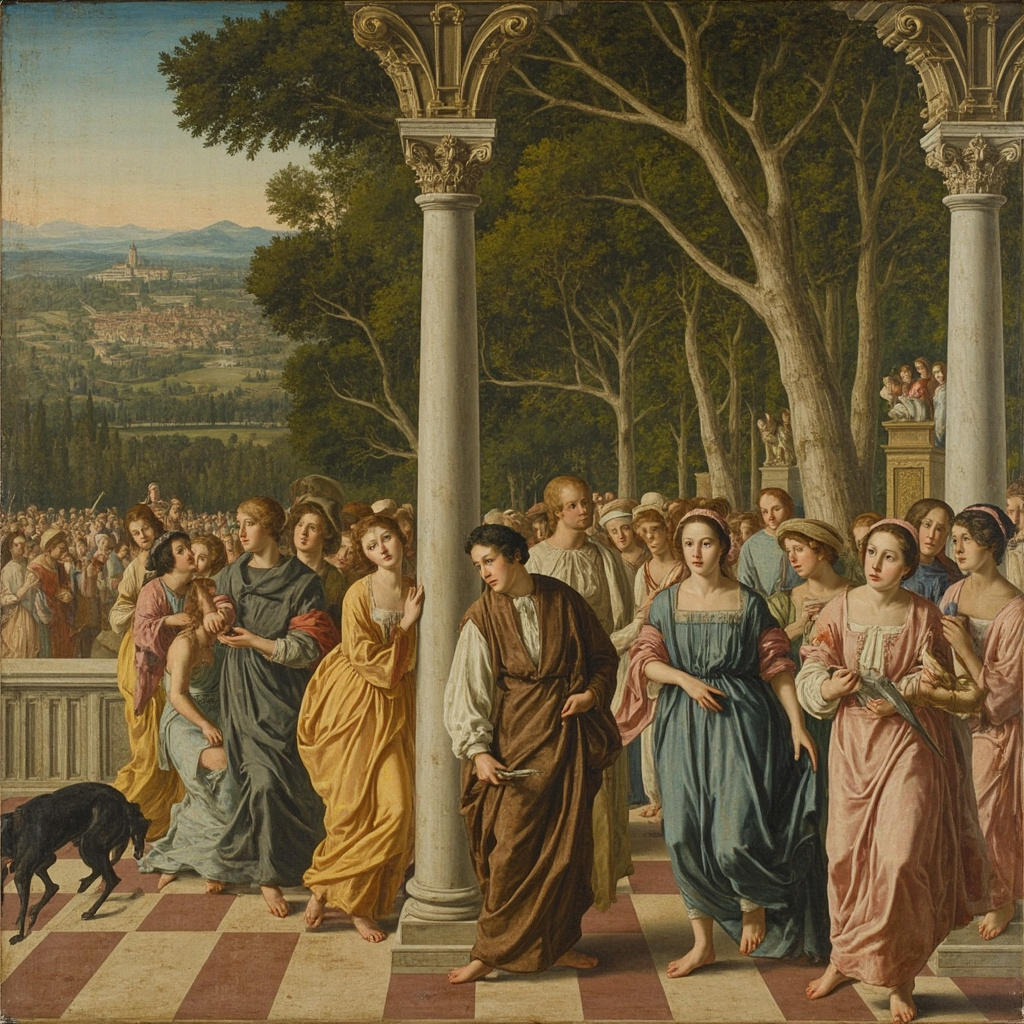
At her heels ran two huge and fierce mastiffs, which followed hard upon her and ofttimes bit her cruelly, whenas they overtook her
两条巨大凶恶的猎犬紧咬着她的脚跟穷追不舍,一旦追上,便狠狠地撕咬她。
Original line · Day Five, Story Eight · Nastagio's infernal vision in the pine forest
The other, more famous and gentler, belongs to Federigo degli Alberighi. This impoverished knight, hoping to give the woman he loves a proper dinner when she comes to visit, kills and cooks the one treasure he has left — his beloved falcon. What he does not know is that she has come precisely to ask for the falcon — her sick husband wants to see it before he dies. By the time dinner is served, the falcon is already the meal.
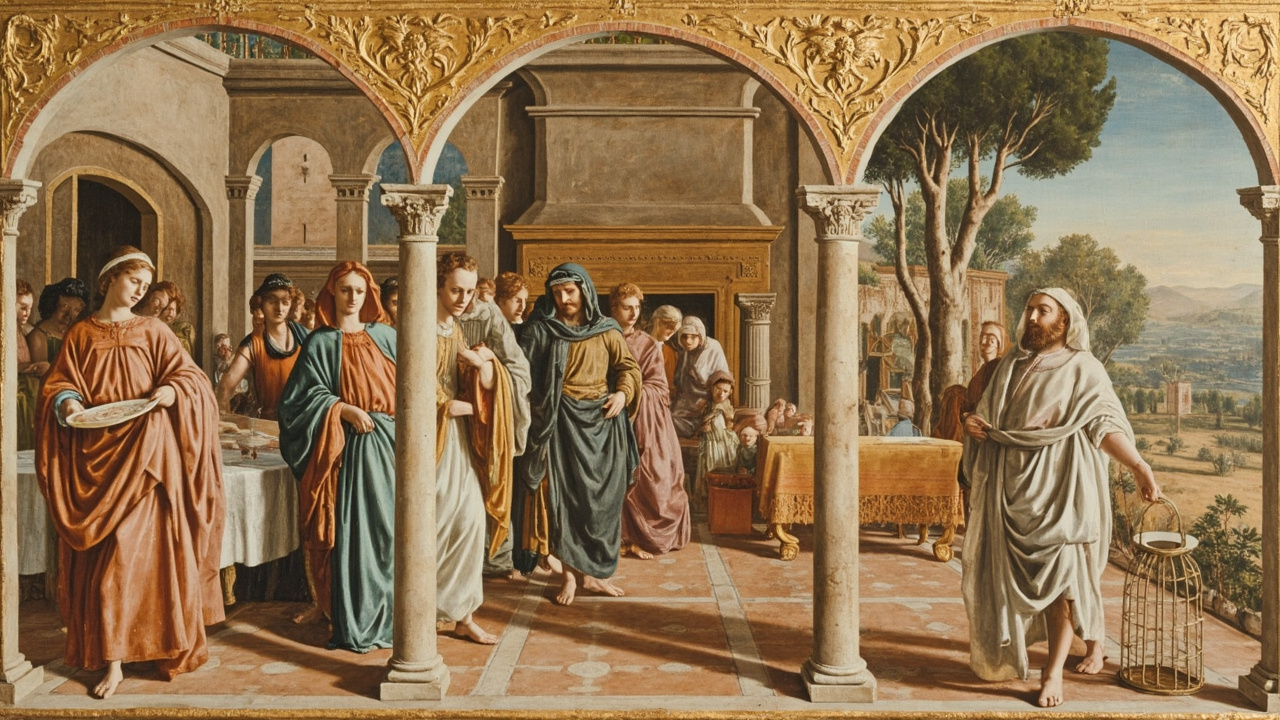
So saying, in witness of this, he let cast before her the falcon's feathers and feet and beak.
说着,为了作证,他把那只猎鹰的羽毛、爪子和喙,一并抛在了她面前。
Original line · Day Five, Story Nine · Federigo kills his falcon to serve his guest
The two stories could not be more different in tone — one runs to horror, the other to restraint — but both push love past its breaking point through something close to extremity.
Clowns and Fake Friars: Comedy at Its Wildest
Days Six through Eight are the noisiest stretch of the whole book, built around the recurring buffoon Calandrino, a painter whose friends keep playing him for a fool: they convince him he has found an invisibility stone and get him to strip and steal in broad daylight; they convince him his wife is pregnant with his own child; he falls for it every time, flies into a rage every time, and nothing ever comes of it.
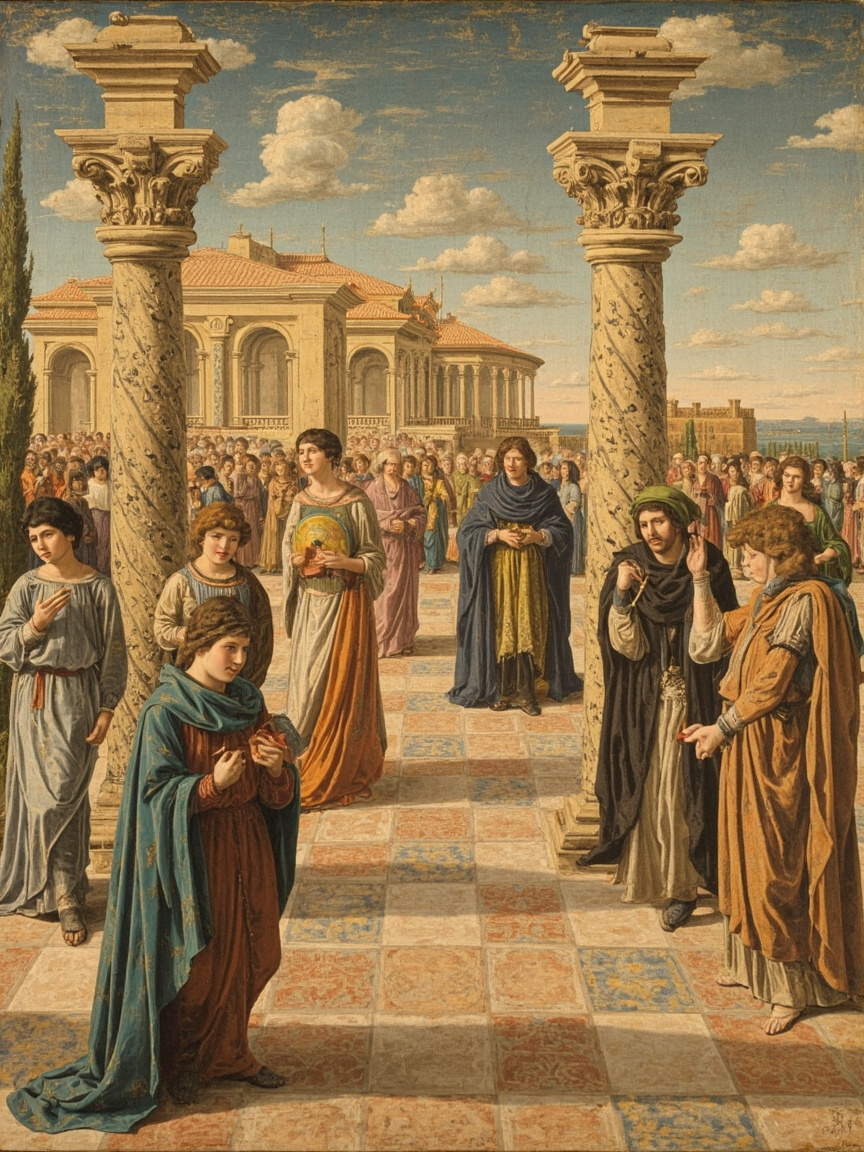
Sharper still is Friar Cipolla. He promises the villagers a rare relic — a feather from the Angel Gabriel, brought all the way from Paris. There are prayers, hymns, incense, the whole show — and when the box is opened, what's inside is a parrot feather. The crowd worships it anyway. With this kind of small story, Boccaccio peels back religious hypocrisy layer by layer for the reader — not denying faith, but mocking the men who turn faith into a business.
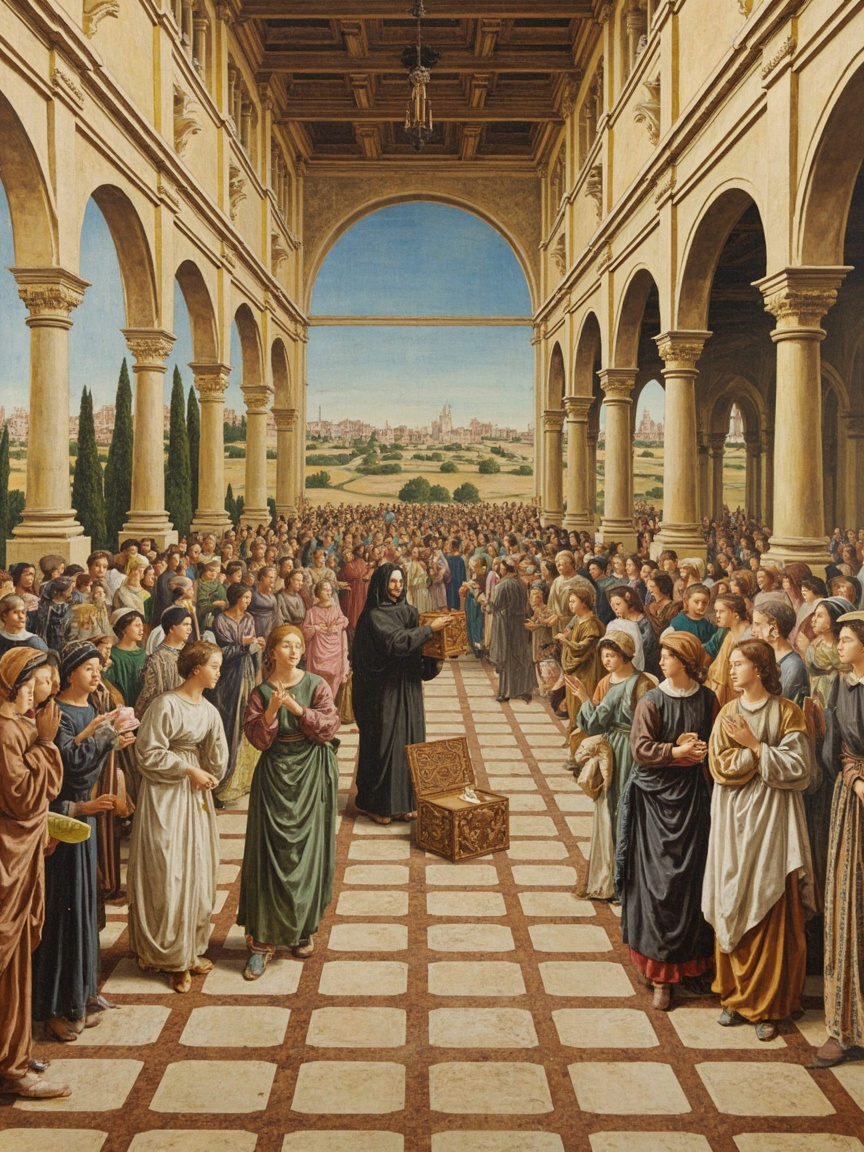
The charm of these stories lies in their lightness — Boccaccio never scolds. He simply plays out human foolishness, vanity, and greed exactly as they are, and lets the reader laugh out loud on their own.
The Finale: Griselda's Extreme Endurance
Day Ten is the book's moment of elevation, its theme set as "generosity and virtue." The hundredth and final story is told by Dioneo to the whole company. Griselda, a peasant girl of humble birth, is married into nobility. Her husband subjects her to a series of trials bordering on cruelty: he takes her children from her one by one, pretends to cast her off, orders her sent back to her father's house stripped of everything, and only twelve years later returns her now-grown children to her and announces she may be his wife again. Every single time, she bears it without a word of complaint.
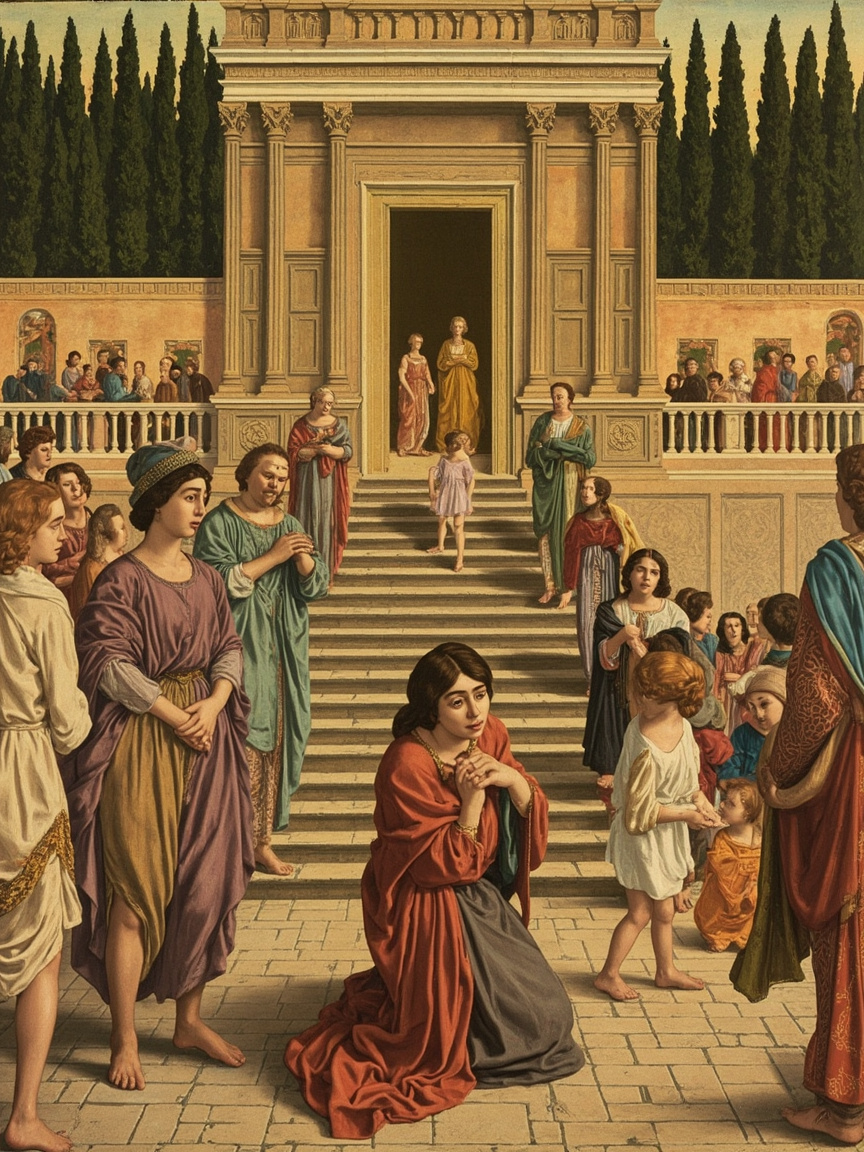
Albeit these words were all daggers to Griselda's heart, who had been unable to lay down the love she bore him as she had laid down her fair fortune, she replied, 'My lord, I am ready and willing.'
这些话字字如刀,扎在格丽塞尔达心上——她放得下泼天的富贵,却放不下对他的爱;她只答道:「我的主君,我甘心情愿。」
Original line · Day Ten, Story Ten · Griselda's trial without limit
This story has always been fiercely contested: is it celebrating a woman's greatness of character, or exposing patriarchy's most extreme exploitation of women? Boccaccio himself may have had no such awareness when he wrote it, but a reader today can perfectly well read it both ways at once. Chaucer rewrote his own version of it for The Canterbury Tales, and it spread across Europe — proof enough that it struck some nerve deep in the age, an extreme story built to carry an extreme moral weight.
The ending of the hundred stories lifts the whole book from farce and laughter into moral gravity — Boccaccio does not send the reader off laughing. He lets them go quiet in this last story instead.
Going Home: The Author's Afterword Defends the "Indecent"
Two weeks pass, and word comes that the plague is easing in the city. The ten young people put their clothes back in order, pack up, and ride their donkeys back to Florence. The frame closes; the stories are done. But Boccaccio has one last passage — he speaks directly to the reader, admitting that some of the stories are written "explicitly," then turns the question back: the hypocrites who condemn him in the name of morality — is what they hide in their own minds really any cleaner than what he has written?
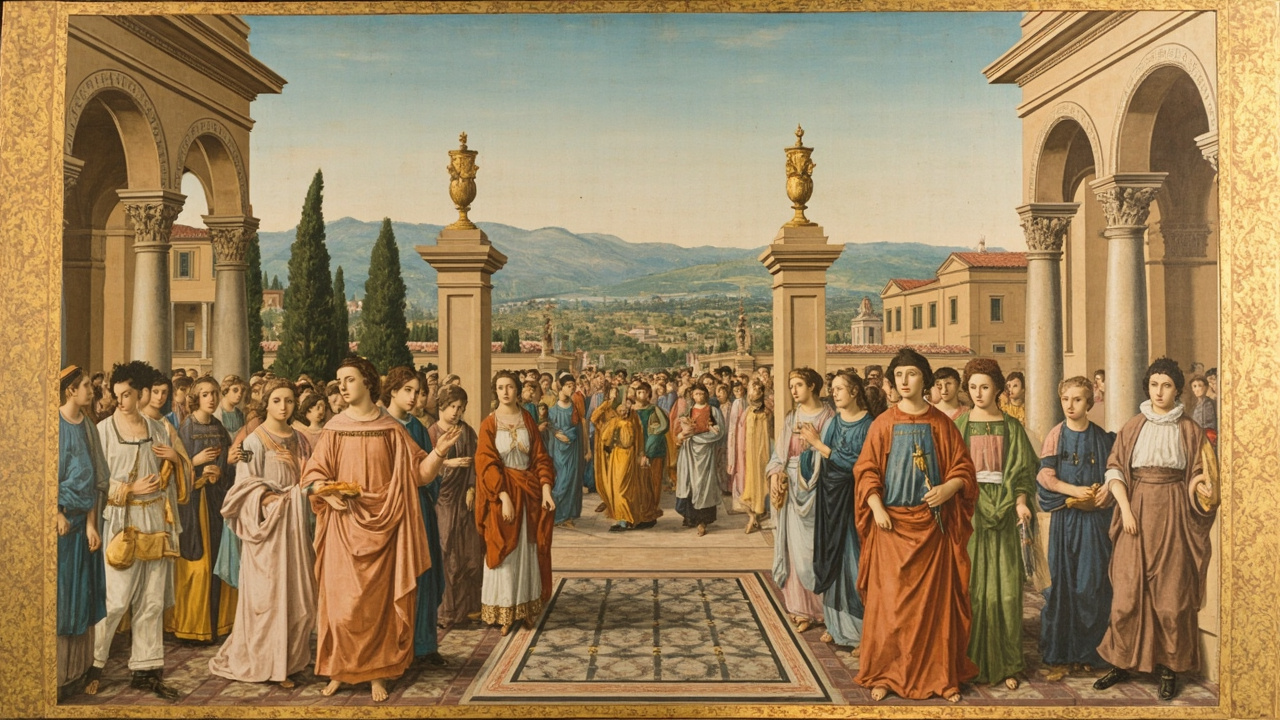
This closing passage is itself one of the most memorable gestures in The Decameron: he does not hide, does not flinch, does not apologize. What the book tells are the real people of this world — their cleverness, their foolishness, their desire, their piety, their baseness, their nobility — and dressing all of that up as a book of saints' lives would be the greatest hypocrisy of all.
Why It Matters, and Whether It's Still Worth Reading Today
Set the book back into the turning point of European intellectual history: it was written just after the Black Death, exactly when the medieval order was starting to crack and the Renaissance was beginning to stir. What Boccaccio does with his hundred stories is simple — he turns the gaze away from the afterlife and back onto this life, trading asceticism for an affirmation of human agency, wit, and pleasure. A person who knows how to think on their feet and talk their way through with cleverness comes off, on his page, as more admirable than a friar who can only recite scripture. This is an early signpost of European humanism, planted well before many of the Renaissance's celebrated peaks.
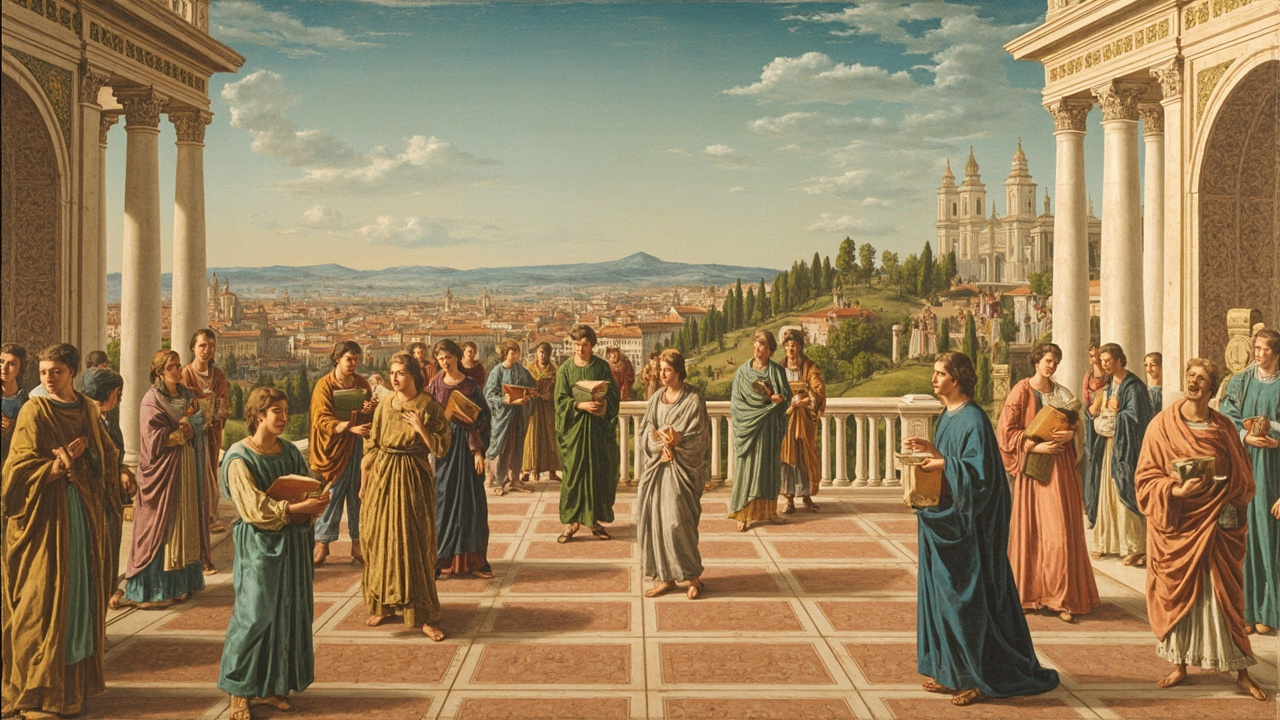
such as they are, these stories, like everything else, can both harm and profit, according to the disposition of the listener.
这些故事就是这个样子——它们和世间万物一样,既能害人也能益人,全看听故事的人是什么心性。
Original line · Author's Conclusion · Boccaccio defends the indecent
The Decameron is not ten days of unbridled indulgence — it is a hundred living people, standing in the face of death, choosing to rebuild what it means to be human, one story at a time.
Why It's Still Worth Reading the Text, Even Once You Know the Plots
A companion guide can tell you what each story is about, but it cannot give you the layered rhythm of all hundred stories together: the same theme, told in turn by ten different voices, comes out in ten different shades; the same joke that has you laughing to tears in one story is followed, in the very next, by a tragedy that pins you back in your seat; the same line that reads as wit on Day Seven turns solemn by Day Ten. That overall breath and rhythm is something you can only feel by turning the pages yourself.
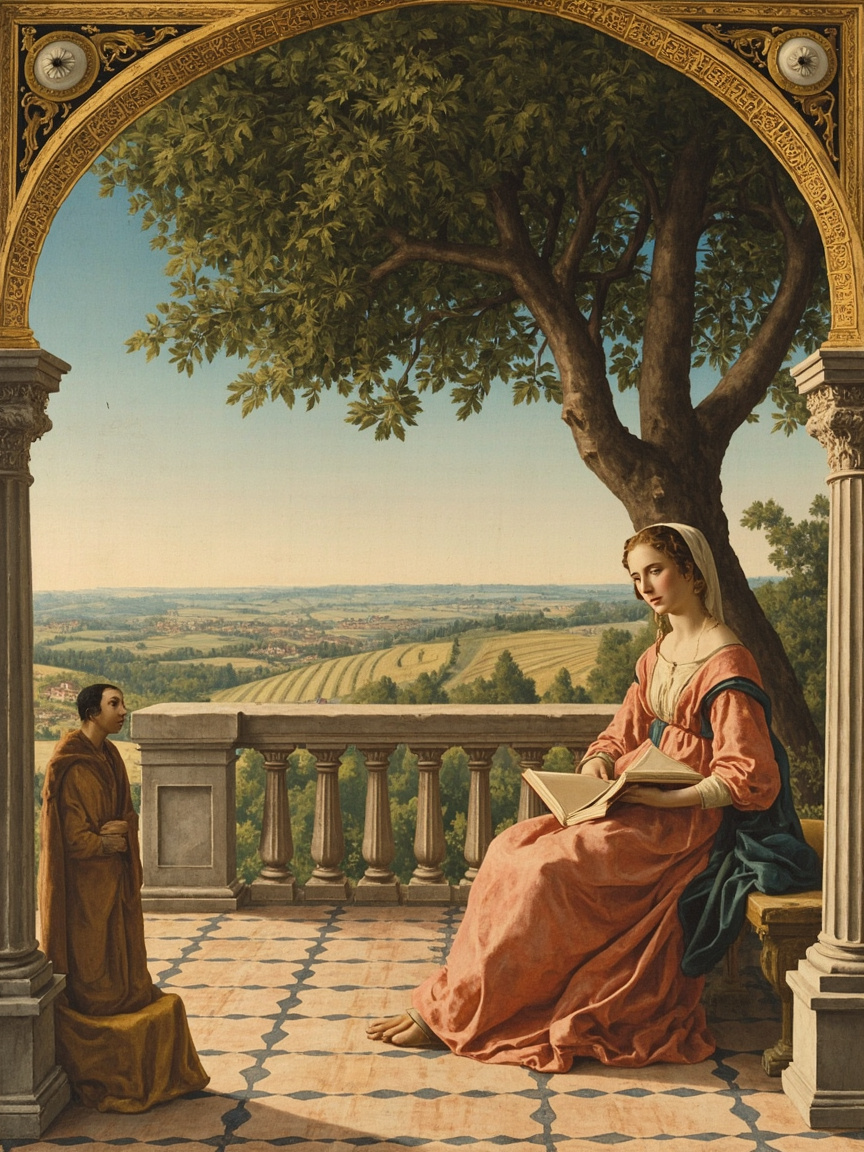
And then there is the needle-fine craft: Boccaccio often flips the sense of a story in its very last line, turning over the moral you thought you'd just grasped one more time. His ear for street speech, his eye for the delicate difference between how women and men each think, his precision in satirizing priests and merchants — these are the moments that only reward reading word by word. Knowing the plot already actually makes you quicker to catch these touches than a first-time reader would be — so this is not a spoiler. It's an appetizer.
The strangest, most wonderful moment in reading The Decameron comes the instant the hundredth story ends and you close the book — you suddenly realize that ten people have just walked you, quietly, all the way through death.
Art Direction4 plates
Before the guide was written, this book got a visual foundation — every illustration you just read grew out of it.