The Doll (Lalka) · Companion Guide
玩偶
华沙商人用整座百货帝国换一桩门第婚姻,却没换来一次对视。
Opening
Warsaw's grandest department store, candlelight in the glass cases catching the streetlamps outside. The ground floor holds the whole city's silk, wool, and fur; upstairs, an abacus clicks in the counting room while the owner writes invitations to aristocratic salons. A young woman in furs passes below. He looks up from behind the counter for one second and does not sleep that night. Twenty years later he drops dead on the stairs of his own shop, on the same steps where he once watched her walk by.
This is the most suffocating one-sided love in Polish fiction. The hero goes unloved from the first page to the last.
What Kind of Book Is This
The Doll, published in Polish as Lalka, was written under the pen name Bolesław Prus by a man born Aleksander Głowacki, one of the most important Polish novelists of the late nineteenth century. It ran as a serial in a Warsaw weekly illustrated magazine starting in 1887 and came out as a book in 1890. Placing it in Polish literary history is like placing Middlemarch in nineteenth-century Central Europe: a city, several classes, a whole generation, all lit up at once across nearly a thousand pages. Poles still say that if you want to know what their great-grandparents wore, argued about, and owed money for in the 1870s and 80s, this novel gets it exactly right.
Do not be fooled by the title. This has nothing to do with Ibsen's A Doll's House. Nora slams the door and walks out; Izabela never leaves the salon at all. She is a beautiful ornament, arranged by her upbringing and left standing exactly where it put her.
Three People, One City
Stanisław Wokulski is a retired officer, a veteran of the January Uprising who served out a sentence of exile in Siberia, and a self-made man who built his fortune first smuggling army provisions, then trading in silk. He owns the grandest department store on Warsaw's main commercial street. He believes in Positivism: reason, work, the "organic work" that was supposed to save Poland. And yet he is a romantic to the bone, a man who turns his entire commercial empire into leverage for one marriage proposal to an aristocrat's daughter.
Izabela Łęcka is the pretty daughter of a family of ruined aristocrats, raised from childhood to be a doll fit only to be married off from a salon. Her uncle, Count Tomecki, despises merchants as men who reek of trade even as he stakes the family's survival on her marriage. Warsaw's grande dames crown Izabela "the first beauty of Warsaw" and dismiss Wokulski as "the suitor who smells of money." What she wants is a name worth keeping. What she is offered is a man's clumsy, burning love, and she does not want it.
There is one more woman in this story, the one Wokulski overlooks: Lizia Wysocka, an orphan who works as a piano teacher. She stood by him in his leanest years, listened for years afterward to his one-sided devotion to an aristocrat's daughter, and was at his side when he died. Hers is the only love in the whole book that runs both ways.
Beat One: Love at First Sight Behind the Glass Counter
Wokulski's department store looks like a cathedral for a new age: bright display windows, glass counters, a counting room and a warehouse all kept in perfect order, the most modern building on the whole street. He stands in the second-floor counting room, where his partner Sucharski keeps a tight grip on the numbers and the old bookkeeper reminisces endlessly about the age of Napoleon, a team steady enough to run the safest business in Warsaw. Then one day an aristocratic young woman in furs walks by below. He glances up from behind the counter, and from that moment he bets the entire empire on this one marriage.
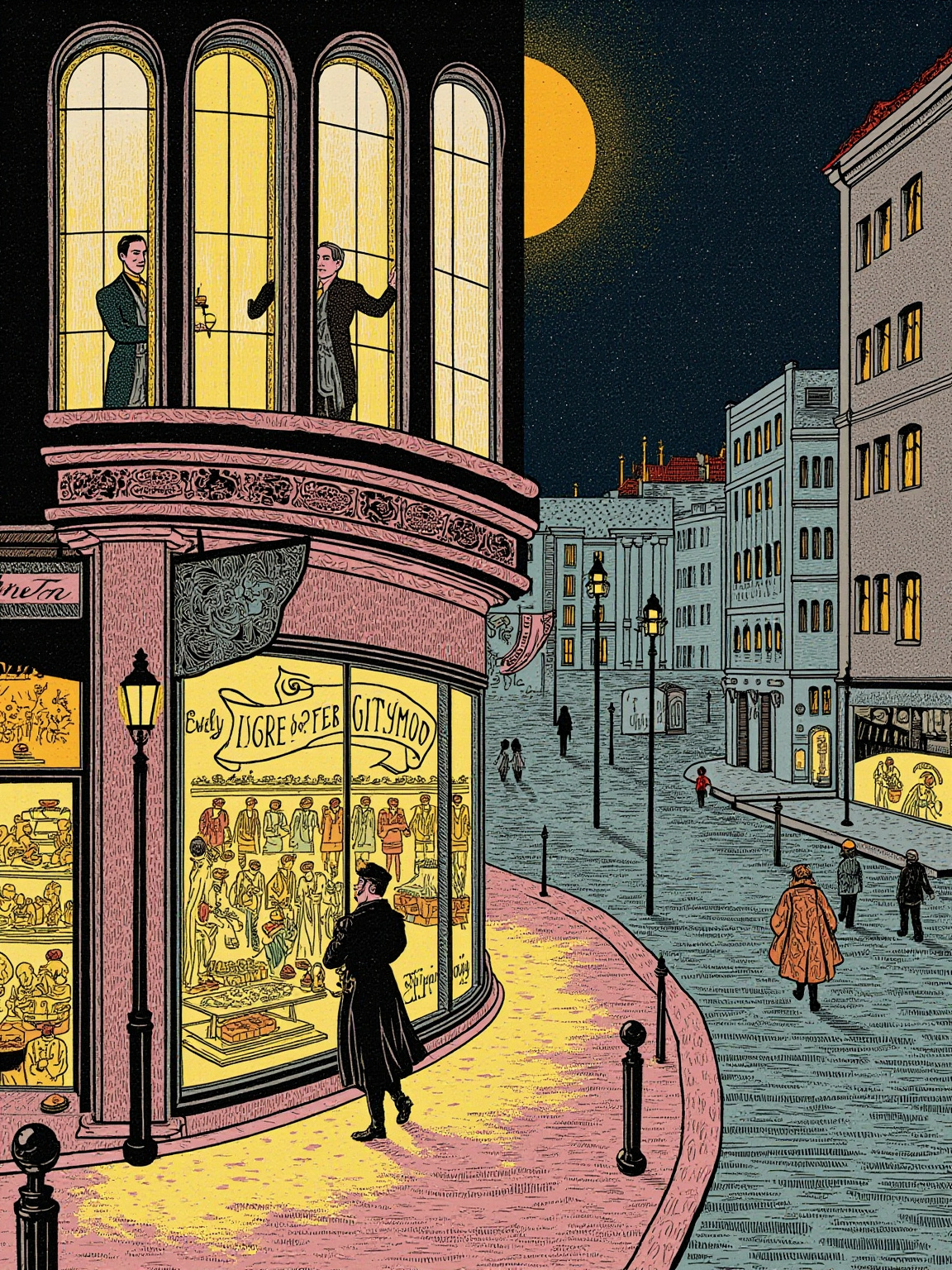
He built a shop that outshone every salon in Warsaw, and kept the door open for one woman who never once walked in.
他替华沙盖起一座比任何沙龙都亮的店,却只为一位从未推门进来的女人,日日把门敞着。
金句 · 第3章 · 玻璃柜台前的一见倾心
He pays off the Łęcki family's debts, restores their estate, buys his way into the salons of the grande dames. He does everything a man can do. All that is missing is one nod from her.
Beat Two: Judgment by Birth in the Salon
The aristocratic salon is a different kind of battlefield: candlelight the color of old gold, threadbare velvet, faded family crests, old-fashioned servants weaving through the room with silver trays. Countess Izwońska-Tomecka's drawing room is the courtroom where this system hands down its verdicts, a circle of old grande dames who run the marriage market on gossip and pedigree, forever recalibrating Izabela into "the first beauty of Warsaw." Wokulski sits at the edge of the sofa, listening to them joke about the smell of trade on him, opening his mouth to speak more than once and being waved off, every time, by the uncle's polite talk of "family standing."
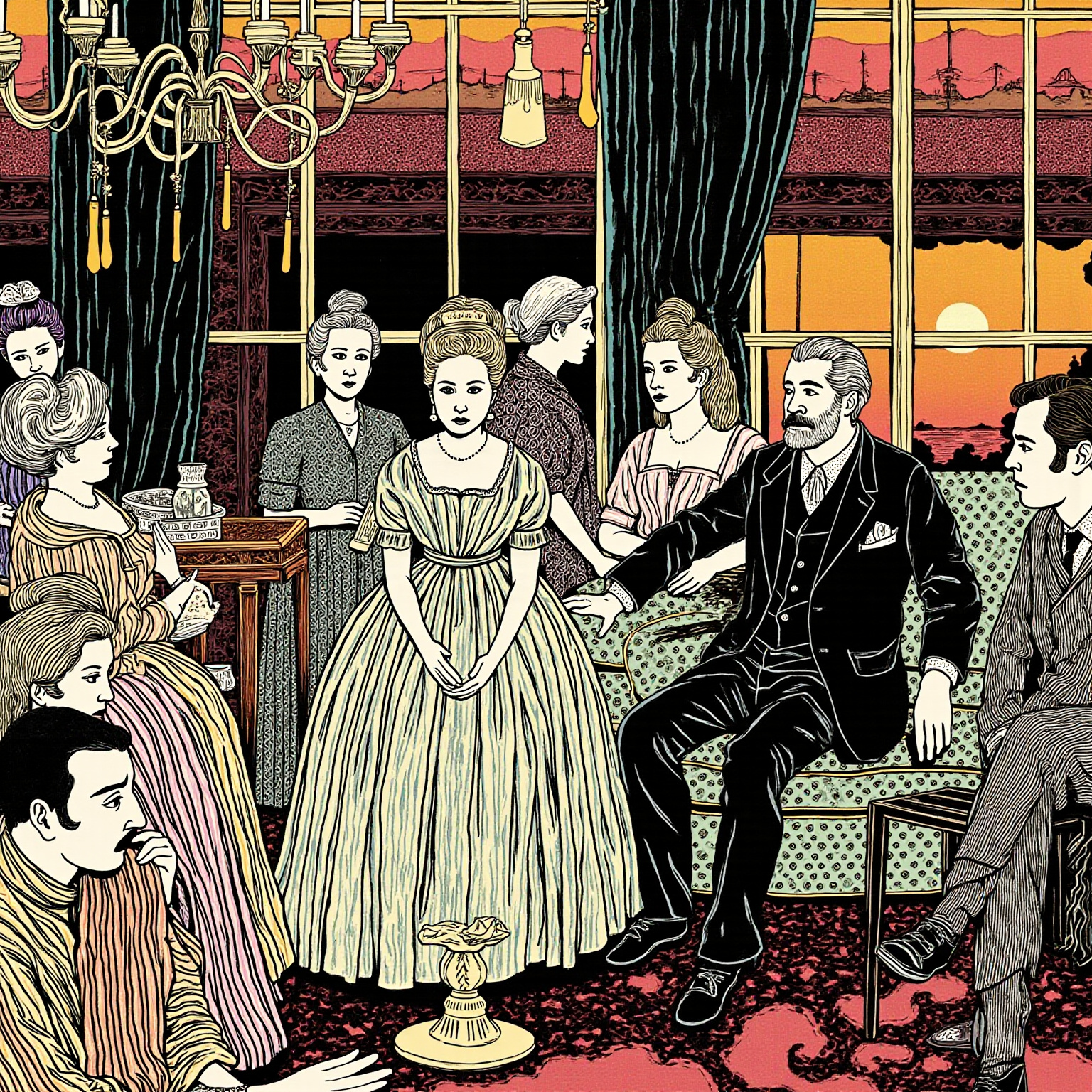
In the Countess's drawing-room a poor girl is appraised like a piece of old porcelain: sound of body, sound of name, never asked what she wants.
在伯爵夫人的客厅里,一个穷姑娘被像旧瓷一样估价——身世完好,门第完好,没人问她自己想要什么。
金句 · 第6章 · 沙龙里的门第审判
Izabela is not the villain here. She is a product of this upbringing. No one ever taught her how to love an actual person; she only learned how to read a marriage as one line on the family's balance sheet.
Beat Three: Gambling for a Medal in Bulgaria
Wokulski decides to go earn a title of his own, so that marrying him would not count as her marrying down. At the end of 1877, he pays his own way to the Bulgarian front of the Russo-Turkish War. The front gives him no honors, only trenches, frostbite, and a head full of thoughts about nation and war that he never asked for. He comes home to Warsaw disappointed and scarred, with nothing new on his shoulders.
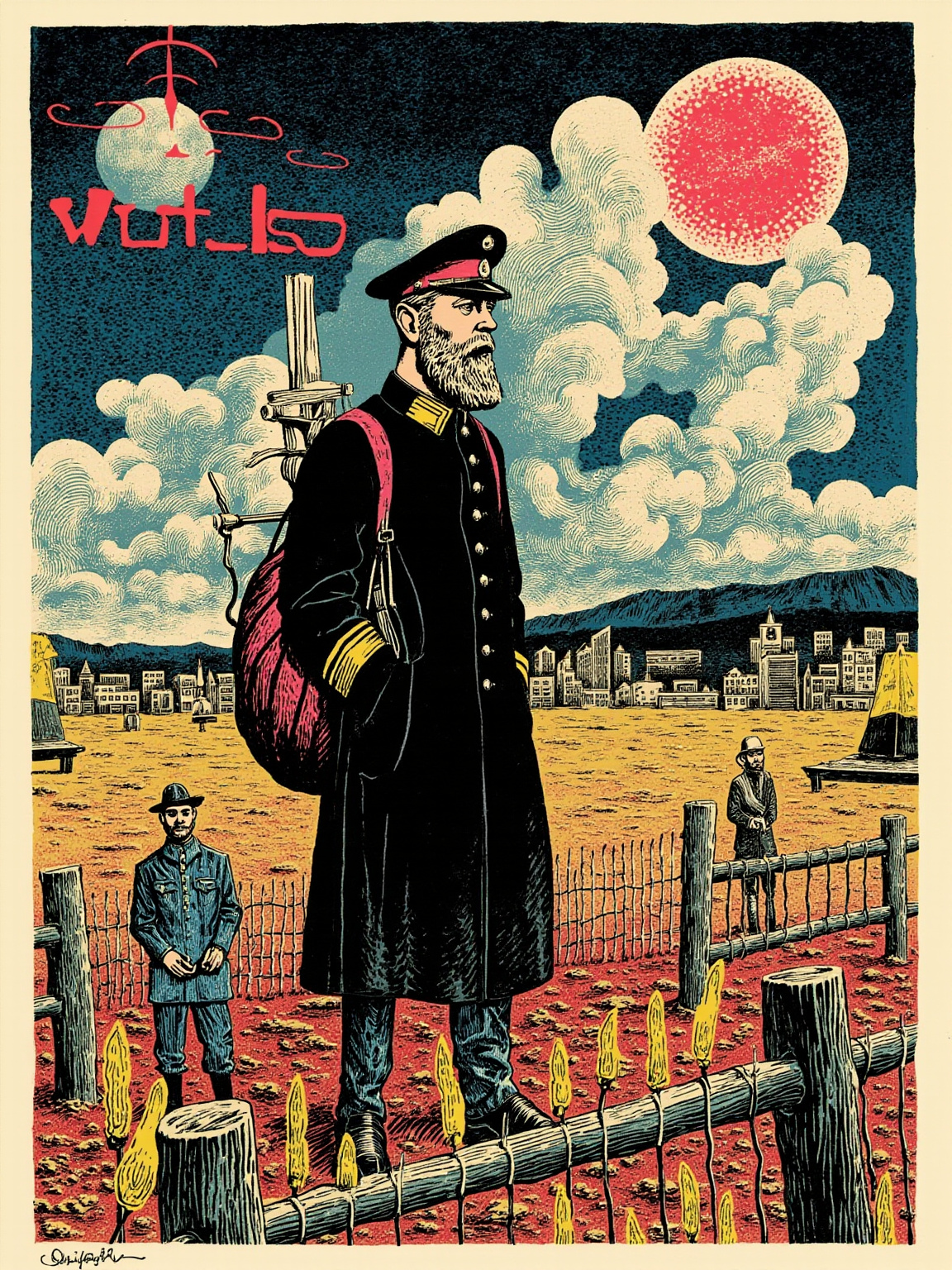
He crossed the Danube to win a medal for her, and the war gave him nothing but frost-bitten hands and a quieter kind of shame.
他渡过多瑙河去为她挣一枚勋章,战争给他的,只有冻伤的手和一种更深、更安静的羞耻。
金句 · 第9章 · 保加利亚前线的战壕
In his letters, his partner Sucharski warns him the shop is being bled dry. The old bookkeeper tucks a blanket around him and keeps talking about the age of Napoleon. Lizia sends a letter with a Chopin score folded inside. He packs all of it into his luggage and carries home nothing but his scars.
Beat Four: Granted, Then Taken Back
Back in the city, Izabela agrees to marry him, for a while. The salon erupts, the uncle paces his study calculating the dowry, the grande dames talk of nothing else. Wokulski treats the proposal as the crowning move of his commercial empire, everything in place, waiting only for her yes. But at the moment she is meant to put her name to it, the old logic of pedigree, her own hollow pride, and the cold eyes of the salon all close in together, and she pulls back. She marries a young aristocrat instead, her equal in birth and far more shallow.
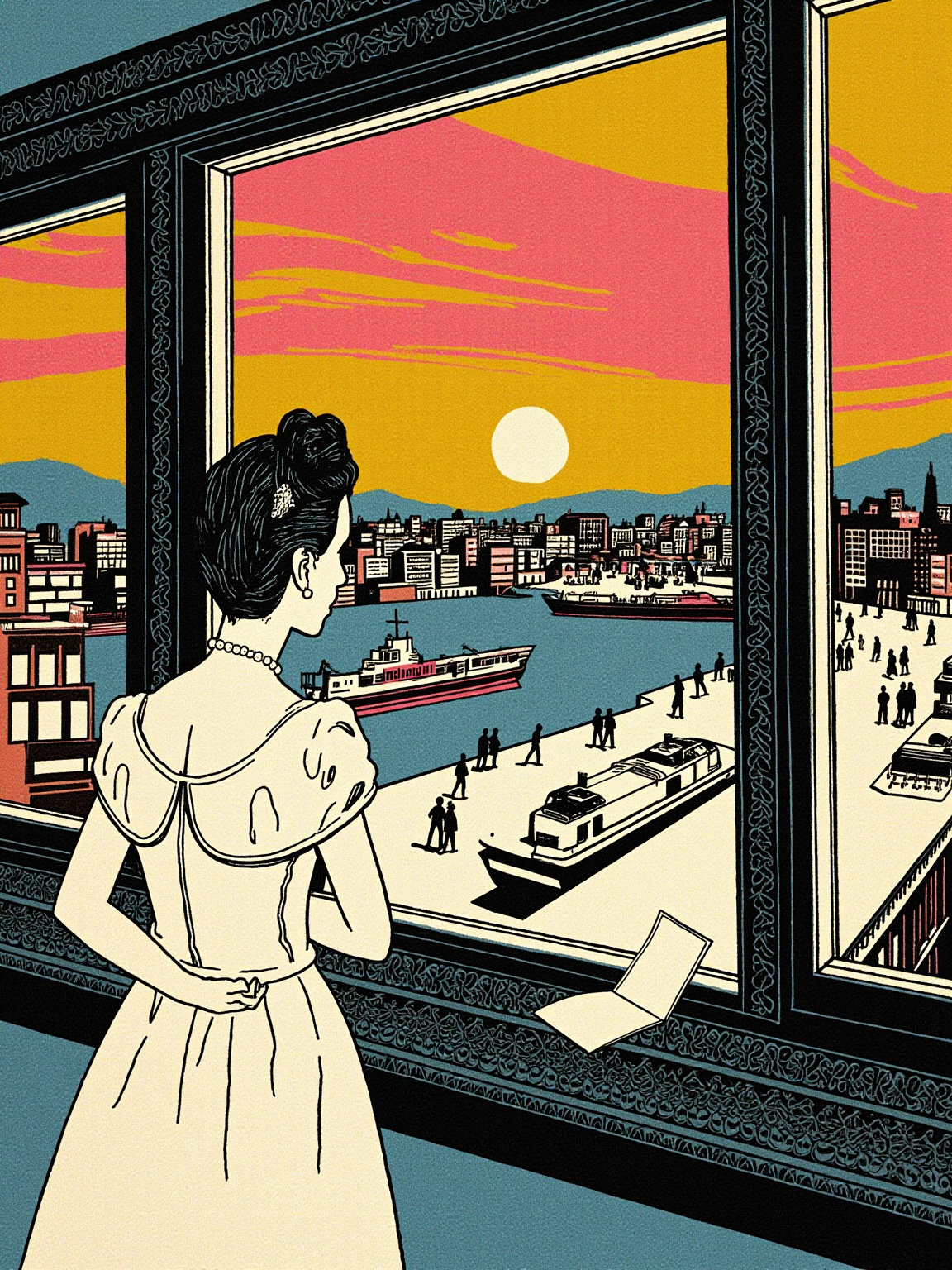
She said yes, and the whole drawing-room held its breath; a week later she said nothing, and the whole drawing-room exhaled.
她说过好,满厅的贵妇屏住气;一星期后她不再开口,满厅的贵妇同时松了口气。
金句 · 第12章 · 被允,又被收回
The proposal was never a fair exchange. One side staked an entire empire on it. The other never meant to accept.
Beat Five: The Business Empire Collapses in Step
Wokulski's commercial empire was already resting on the black hole of the Łęcki family's debts. He paid off aristocrats far more than they ever paid back, and gave away goodwill far more readily than he listened to his partner's warnings. The store's cash keeps running dry. Sucharski sighs in the counting room; the old bookkeeper flips through the ledgers, page after page. The Positivist program of saving Poland through work is hollowed out, little by little, by his own romantic obsession and the aristocracy's hypocrisy.
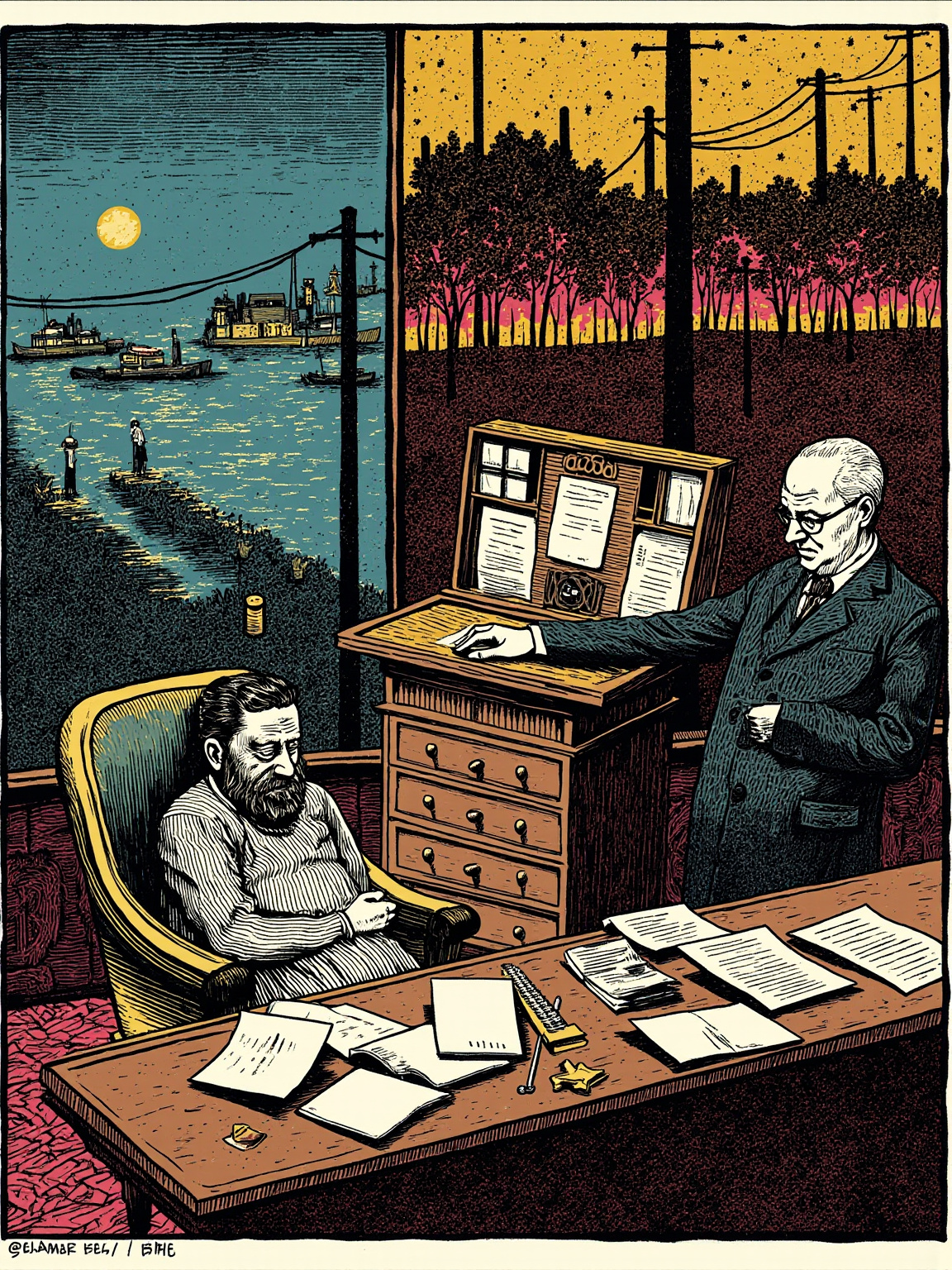
He had borrowed against tomorrow to pay for yesterday, and the ledgers, like the heart, would not balance.
他拿明天的钱去填昨天的窟窿,账本和他的心一样,怎么也对不平。
金句 · 第15章 · 帝国坍塌
Business and love collapse in the same week. In his hands, the ledger and the salon were always the same account.
Beat Six: Heart Failure on the Stairs
The last time Izabela passes his store, she glances at the display windows from inside her carriage and does not get out. Wokulski stands at the top of the stairs, meaning to go to her, and his legs will not move. Not long after she leaves, he collapses on the shop's staircase. No gun, no poison, just a middle-aged merchant whose heart finally gives out after losing both love and business, falling on the same steps where he once watched her walk by.
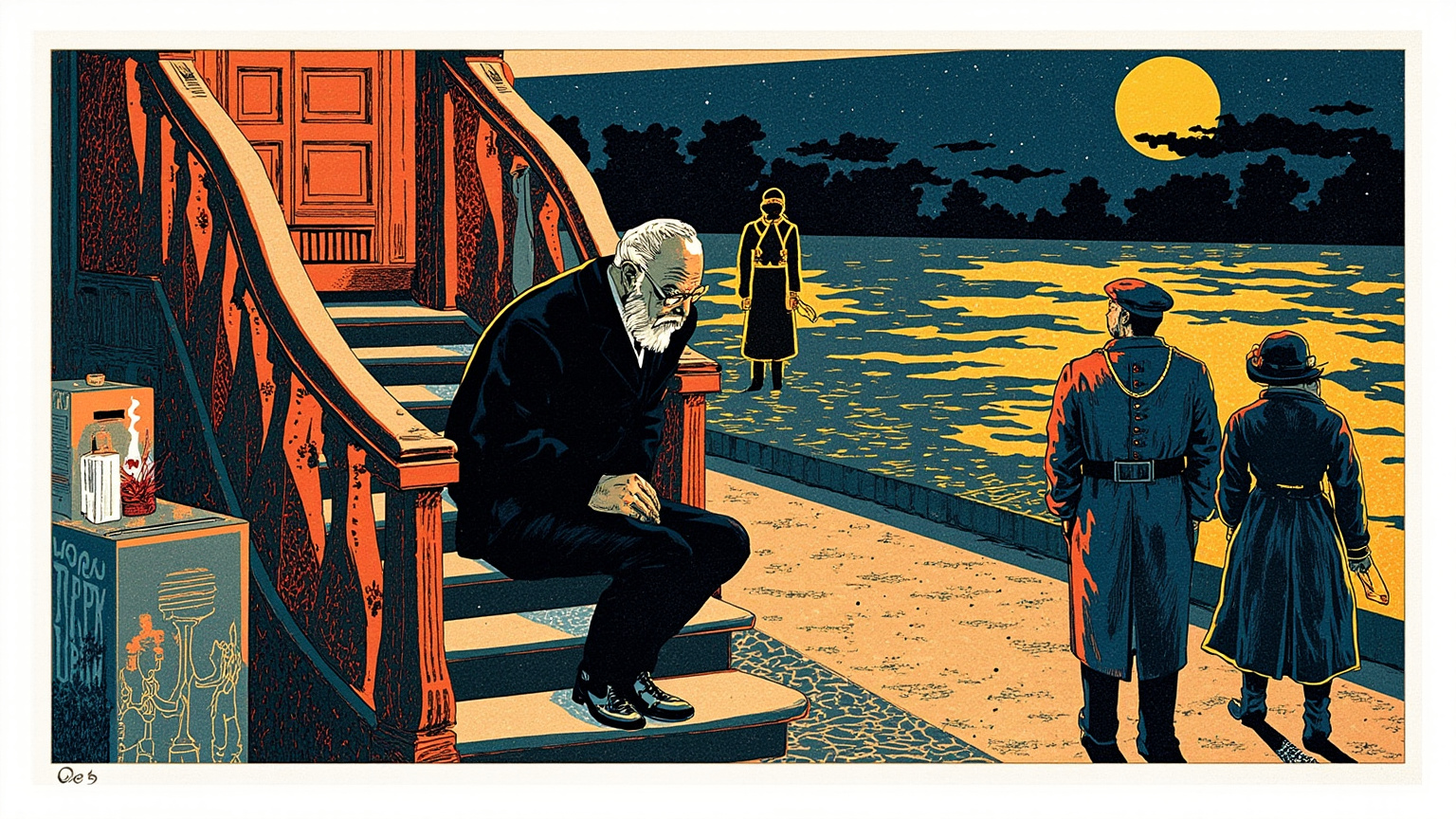
On the staircase where he had first watched her pass, his heart simply stopped asking permission.
就在他头一次看她走过的那段楼梯上,他的心不再请示任何人,自己停了。
金句 · 第18章 · 楼梯上的心力衰竭
It is the quietest moment in the book, and the hardest one to write. He does not die of any single thing. He dies because two things collapsed on him at once.
Afterward: The Woman He Missed, the Shop He Left Behind
Lizia Wysocka stays at his bedside to the end and is the one who closes his eyes. Hers was the one equal love in this whole unrequited affair, and Wokulski never once managed to accept it. The old bookkeeper files the ledgers away, stack by stack. Sucharski takes over the shop's coolest-headed work. Little Maria grows up quietly in the shadow of her stepfather's death. The older generation of "organic workers" carries what remains of Wokulski's unfinished Positivist ideal forward, into the shop floor, the workshops, and the next generation's account books.
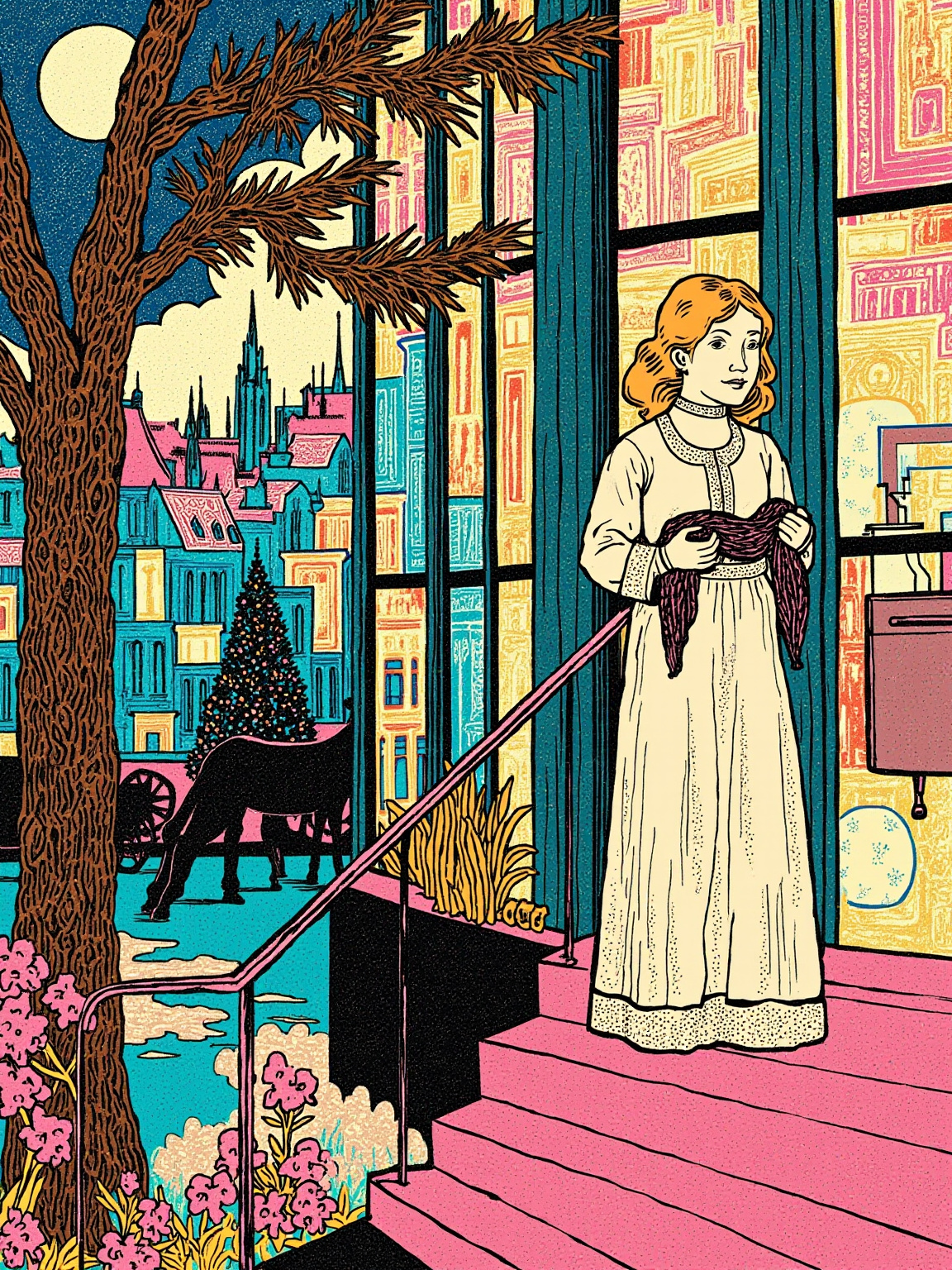
He did not lose to any one marriage. He lost to a door inside his own mind. The aristocratic salon sat on one side of it; the ground he actually stood on, the only place that ever held his weight, sat on the other.
What This Novel Is Actually About
Two classes, one city, one generation coming apart at the seams. The aristocracy keeps up appearances on pawned goods and arranged marriages; the merchants build a new city on labor and numbers. Positivism wants to save Poland with reason, and Wokulski himself is the one who lets reason drown in a single unrequited love. The title works as a pun in both languages: Izabela is a doll worked by her aristocratic upbringing, and Wokulski is a doll worked by his own desire. By the end of the book, it is impossible to say which one is pulling whose strings.
He traded an entire empire for a marriage that would never love him back, the deepest tragedy of the nineteenth-century Polish bourgeoisie.
Why the Book Still Holds Up Today
Prus was writing at almost the same moment as Dostoevsky and ahead of Zola, and what he produced is some of the earliest psychological realism in Polish fiction. Wokulski's long inner monologue, running back and forth between the ledger, the salon, and the battlefield, is still complicated enough today to keep a reader restless in their chair. How a rationalist gets slowly undone by his own romantic impulse has not gone out of date as a subject. The book holds restraint, humor, and melancholy together without ever once reaching for sentiment, and that coldness down to the bone is exactly what no summary can give you.
Reasons to Go Read the Original
A companion guide is the map. The novel is the land. Three things this guide cannot give you. First, the hundreds of pages of interior monologue running between the counting room and the salon, where Wokulski talks himself, step by step, from a shrewd businessman into a fool willing to ruin himself for love. That process of self-persuasion only exists in the original text. Second, the texture of Warsaw itself in the 1870s and 80s: cobblestone streets, the market in the Jewish quarter, fog off the Vistula, the bell of carriages after the theater lets out. Prus turned all of it into the earliest urban lyric poetry in Polish fiction. Third, the particular Polish strain of dry humor: the old bookkeeper's endless nostalgia for Napoleon, the grande dames undercutting each other in the salon, the sharp asides of his Jewish partner in the counting room, details light enough to make you forget, for pages at a time, that this is a tragedy. Knowing the ending going in only makes you read it slower.
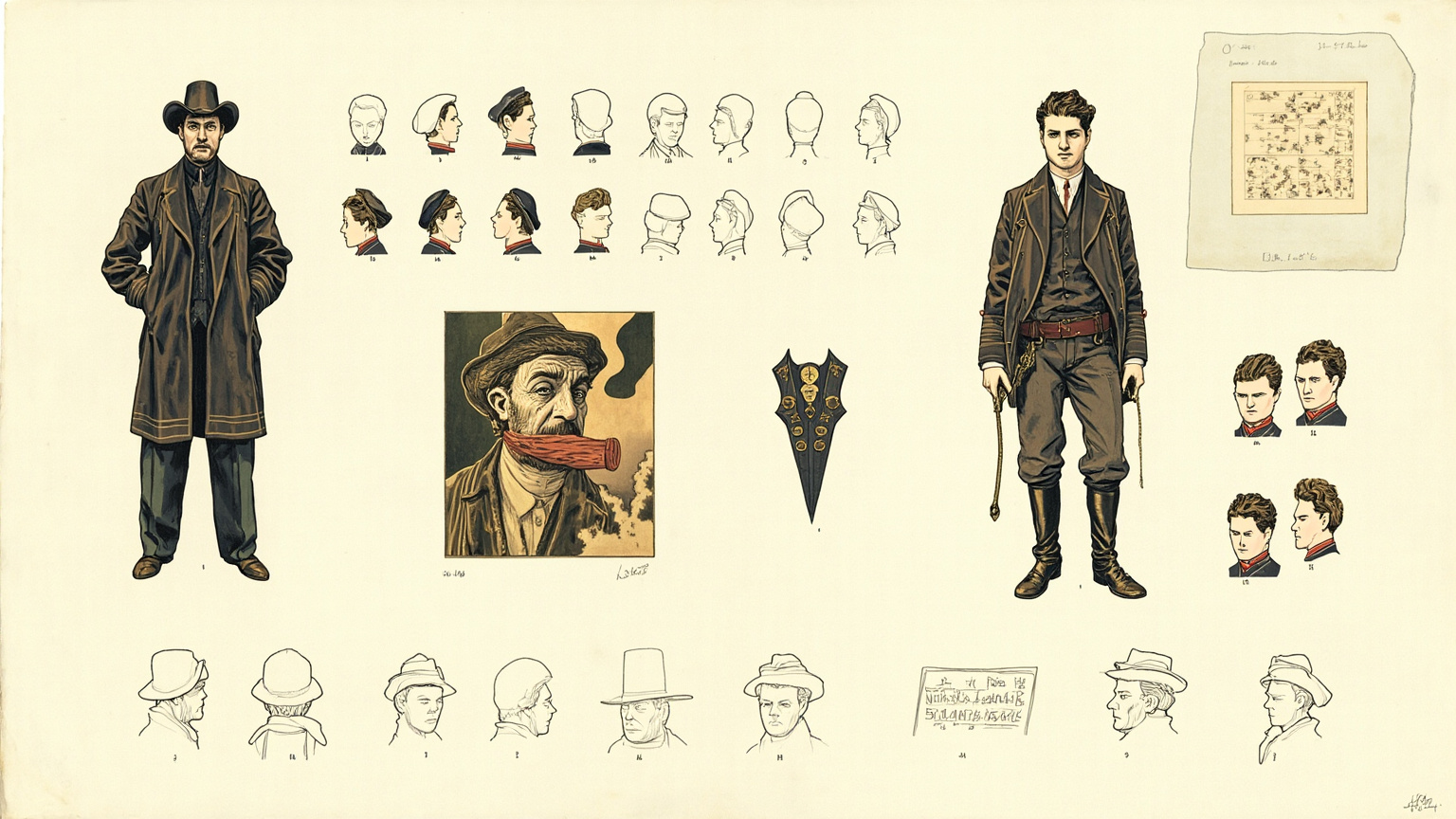
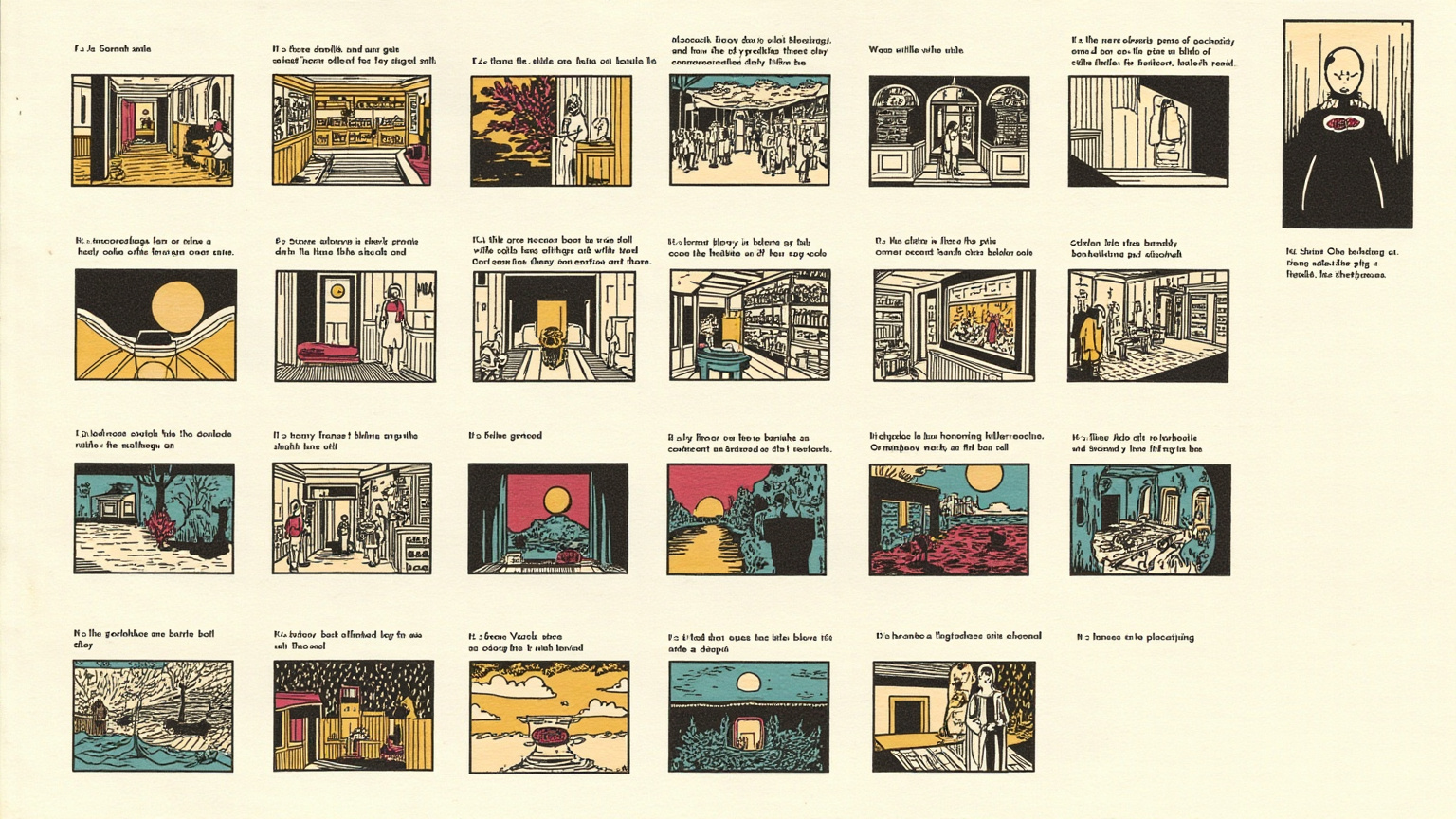
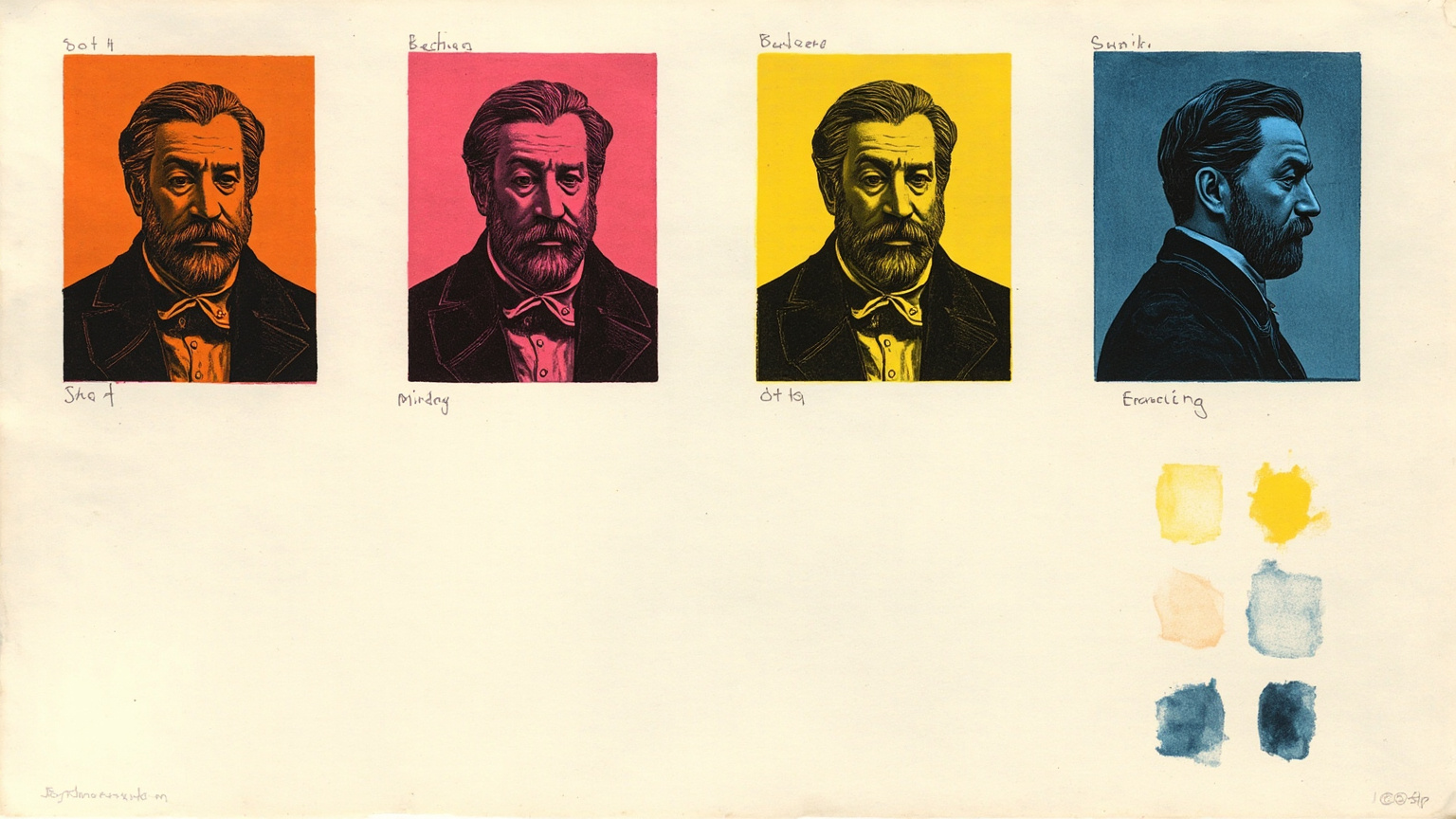
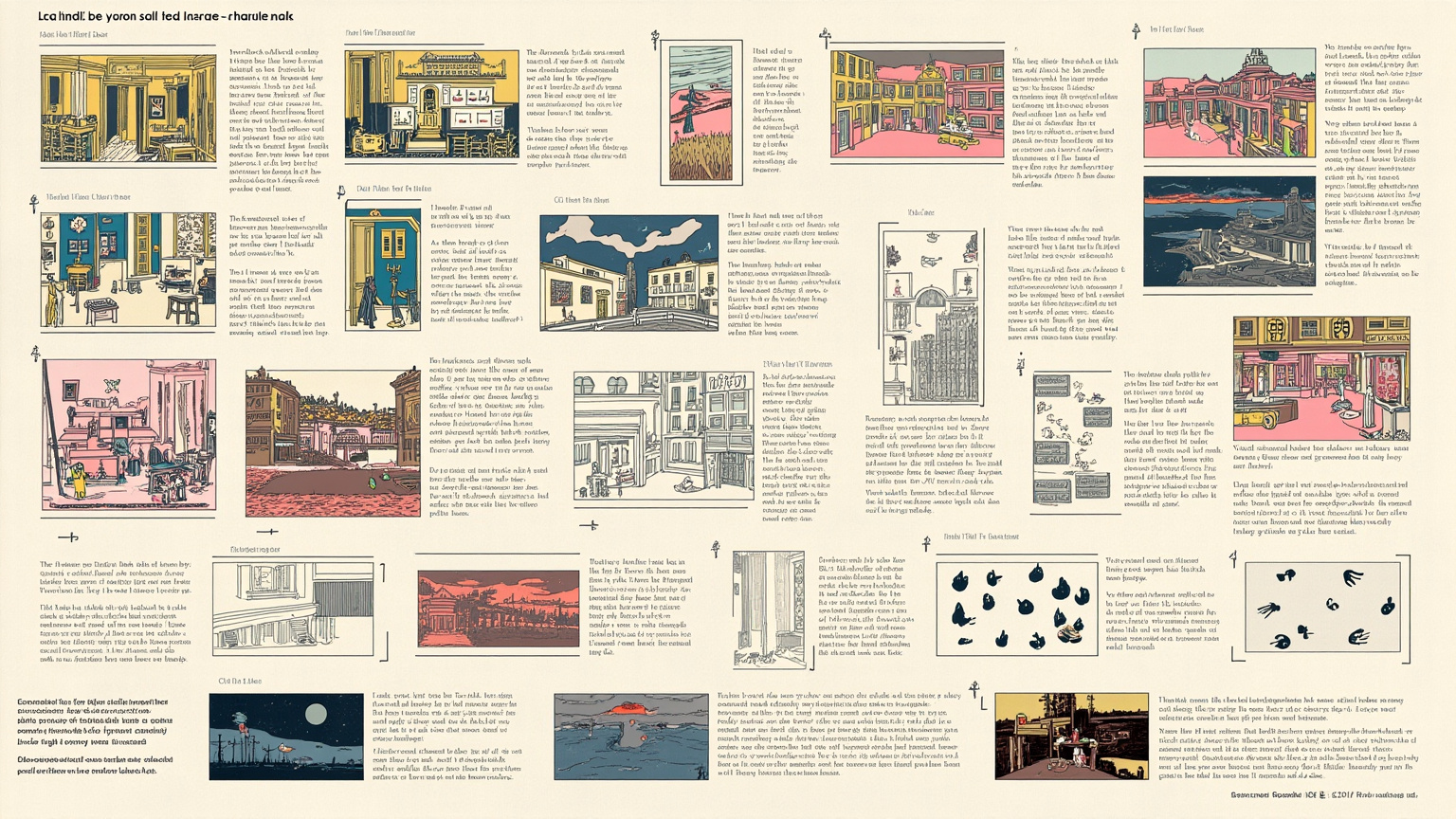
Art Direction4 plates
Before the guide was written, this book got a visual foundation — every illustration you just read grew out of it.