The Eight Dog Chronicles (Nansō Satomi Hakkenden) · Companion Guide
南总里见八犬传
八颗灵珠滚落关东八方,八个身携牡丹胎记的少年,以仁义礼智忠信孝悌八德相认归一,助里见家于妖狐怨灵之乱中兴复家国。
To start: what the eight beads hold
One bead floats to the surface of the water, and carved into it is a single character: benevolence. Below it comes another, righteousness, then propriety, wisdom, loyalty, sincerity, filial piety, brotherly duty. Eight beads, eight characters, scattered across the moors, mountains, and river crossings of the Kantō, each one tucked inside the shirt of a different boy. On the shoulder or arm of every boy grows a birthmark shaped like a peony, red, as if someone had stamped it there with vermilion ink. The beads speak for themselves: each one recognizes its owner. Get the owner wrong and the bead stays silent. Get it right and two boys who have never met hand over their lives on the spot. The whole secret of this book is packed into these eight small things as they roll from hand to hand.
What kind of book this is
Nansō Satomi Hakkenden, known in English as The Eight Dog Chronicles, was written by the late-Edo author Kyokutei Bakin, born Takizawa Okikuni. He began it in the early nineteenth century and kept at it into the middle of the century, nearly twenty-eight years, until it ran to ninety-eight volumes. By the second half of the project Bakin had gone blind and worked entirely by dictation, with his daughter-in-law Michi taking down every word by hand. The manner of its making alone earns it respect. It is the longest and most widely read work of popular fiction from the Edo period, part of the yomihon tradition, and it has nothing in common with Ihara Saikaku's Life of an Amorous Man or with kabuki scripts. Its story is set in the old days of the Satomi house, from the Warring States period into the Azuchi-Momoyama years, but the people actually reading it were Edo townsfolk turning pages by lamplight late into the night, and what the book carries at its core is their own idea of loyalty and duty to house and country. Pull it off the shelf of Japanese classics and the shelf sags the way it would without The Tale of the Heike.
Characters and world
The story opens with Satomi Yoshizane, head of the Satomi house in Awa. His daughter, Princess Fuse, is the fuse of the whole book, and its charge as well. In a cave among the five peaks of Mount Toyama, a spiritual bond forms between her and a being who is not human: Yatsufusa, a dog the Satomi house honors as a loyal retainer. This bond belongs to the Edo taste for the uncanny as a plot mechanism, not a marriage, not a romance, and certainly not intimacy between a woman and a dog. It works more like a pact. Fuse stakes her life on it, and whether the Satomi bloodline survives depends on whether that pact is honored. Beside all this stands Tamazusa, a fox spirit and vengeful ghost of someone the Satomi house once put to death, and she becomes the thread of disruption running through the entire book.
At the other end of the world are eight boys. Call them eight sons of Japan's countryside, not from the same village, and nowhere close to blood brothers. Inuzuka Bansaku comes from a river crossing in Shimōsa, a fisherman's son. Inukawa Shōsuke grew up deep in the mountains of Shinano, raised in a hunter's family. Inuyama Dōsetsu is a swordsman who runs wild across the Musashino plain. Inukai Genpachi is quick-witted and often serves as the group's strategist. Inue Shinbei puts loyalty above everything. Inumura Daikaku is upright and unshakably sincere. Inuzaka Keno lives by filial devotion. Inuzuka Shino honors his elder brothers and looks after the younger. Each name carries the character engraved on the bead he holds, worked directly into his own name: the one who holds the bead for benevolence gets that character folded into his, the one who holds righteousness gets that one, and so on down the line. Eight faces, eight temperaments, eight different upbringings, and the only way they know each other is by bead and birthmark.
Where the eight beads came from
After Princess Fuse seals that spiritual bond in the cave at Mount Toyama, she proves it with her own death, and that death is the hinge the whole book turns on. It is her act that sends the eight engraved beads scattering out of her body, each one becoming its own small object and rolling off into a different corner of the Kantō countryside. I stopped short reading this part: Bakin never describes how she dies. No blade, no blood, no farewell. Just the word scatter. It is an extremely restrained choice: Fuse is not really a person in this scene, she is a mechanism, the reason the eight beads exist at all, so Bakin will not even let her death claim much of the reader's feeling.
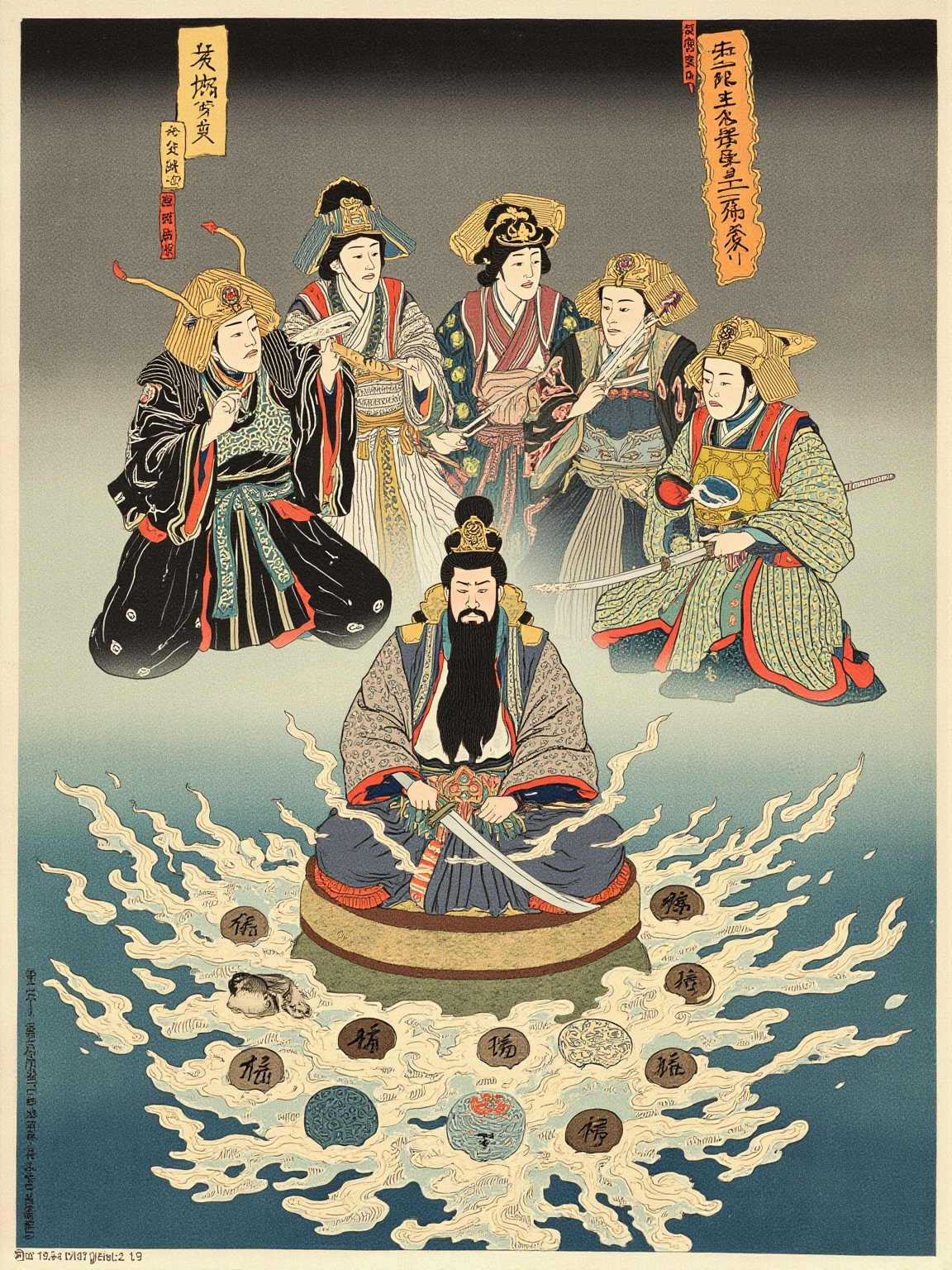
Eight pearls, each one graven with a single character, scattered through the eastern provinces — and upon the shoulders of the youths who bore them, the peony-shaped birthmarks burned like a brand of fate.
八颗灵珠各镌一字,散落关东八方的乡土——八位少年的肩头臂上,皆烙着那朵牡丹形的胎记,如宿命之印,烫人而不熄。
金句 · 第八回 · 伏姫自证灵窟
Shimōsa, Musashino, Shinano — eight boys, each growing up alone
The eight beads scatter, and the eight children grow up each in his own corner of the world. The damp air off the Shimōsa crossing raises Bansaku. The frost winds of the Musashino plain temper Dōsetsu. The snow piling up in the Shinano mountains presses that hardness into Shōsuke. Every one of them carries a silent bead and a burning peony-shaped birthmark, and not one of them knows that seven more like him exist anywhere in the world. Bakin gives each boy a distinct rural origin on purpose, building them into eight sons of Japan's countryside: fishing village, deep mountains, open plain, a hunter's household, a townsman's son. No noble house among them, no blood tie, just boys pulled straight out of the dirt. That choice is what gives their eventual recognition of one another so much force. They were never supposed to meet. Fate simply drags them together.
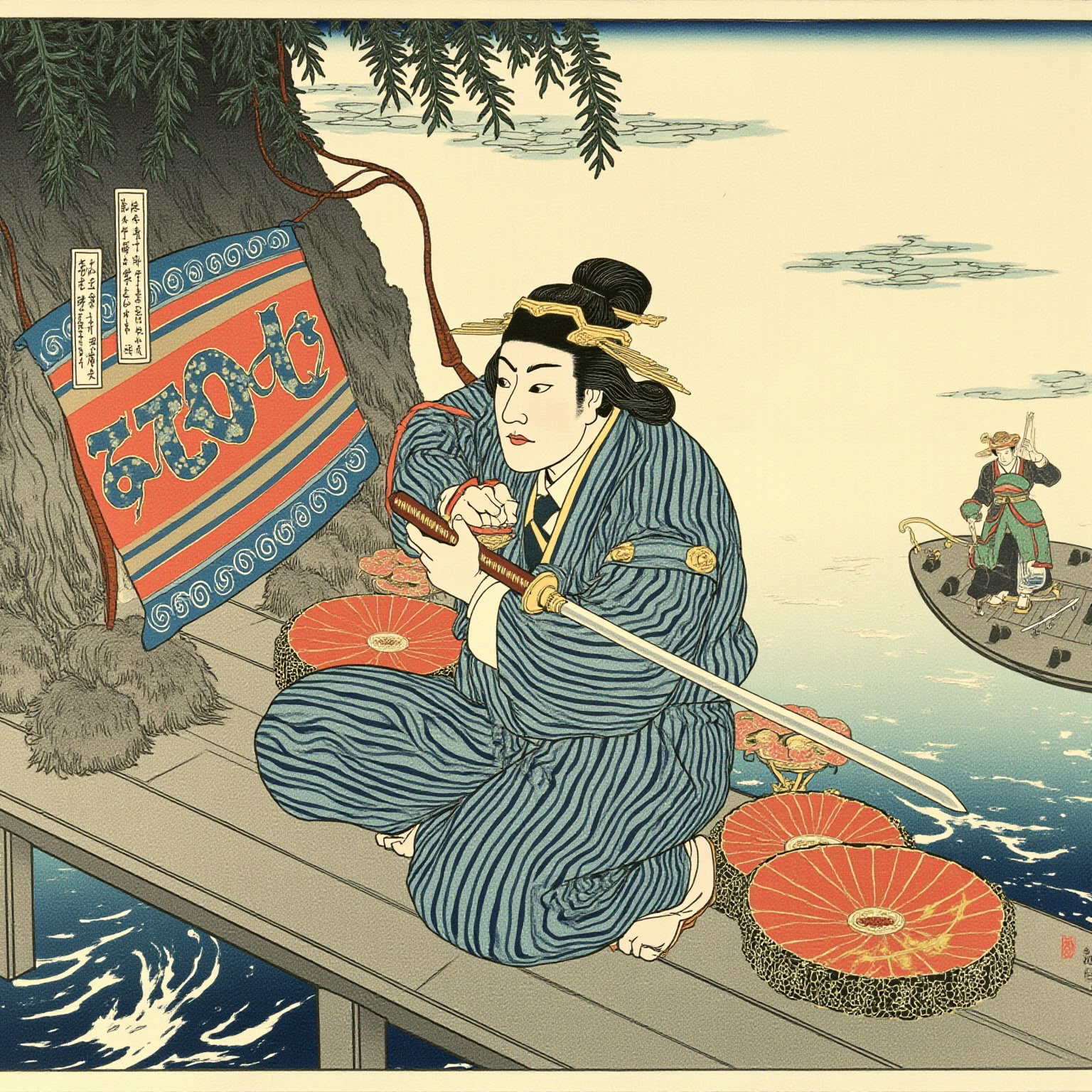
Bansaku of Inuzuka was reared by the salt-wet airs of Shimōsa's ferry; Dōsetsu was whetted by the frost-winds of Musashino; Shōsu of Inukawa was hammered into hardness by the snows of Shinano.
犬塚番作受下总渡口水汽之长,犬山道节经武藏野原霜风之砺,犬川庄助由信浓深山之雪压出那一身硬骨。
金句 · 第十回 · 八士各据乡土
Knowing each other by bead and birthmark
The recognition scenes are the most captivating part of the book. Two boys meet on a narrow path and draw their swords on instinct, and then the bead tucked in each one's shirt gives a sudden jolt, and the birthmark burns as if someone had jabbed it with a needle. Both freeze, drop their weapons, crouch down, and hold out the bead and the mark for the other to see. Eight characters match up with eight men, and that is how they hand over their lives to one another. Bakin barely dresses up these moments — he writes the word recognition and one jolt of the bead and leaves it there — but the reader fills in the rest: two country boys who have gone more than a decade without meeting anyone like themselves, and today, finally, they have.
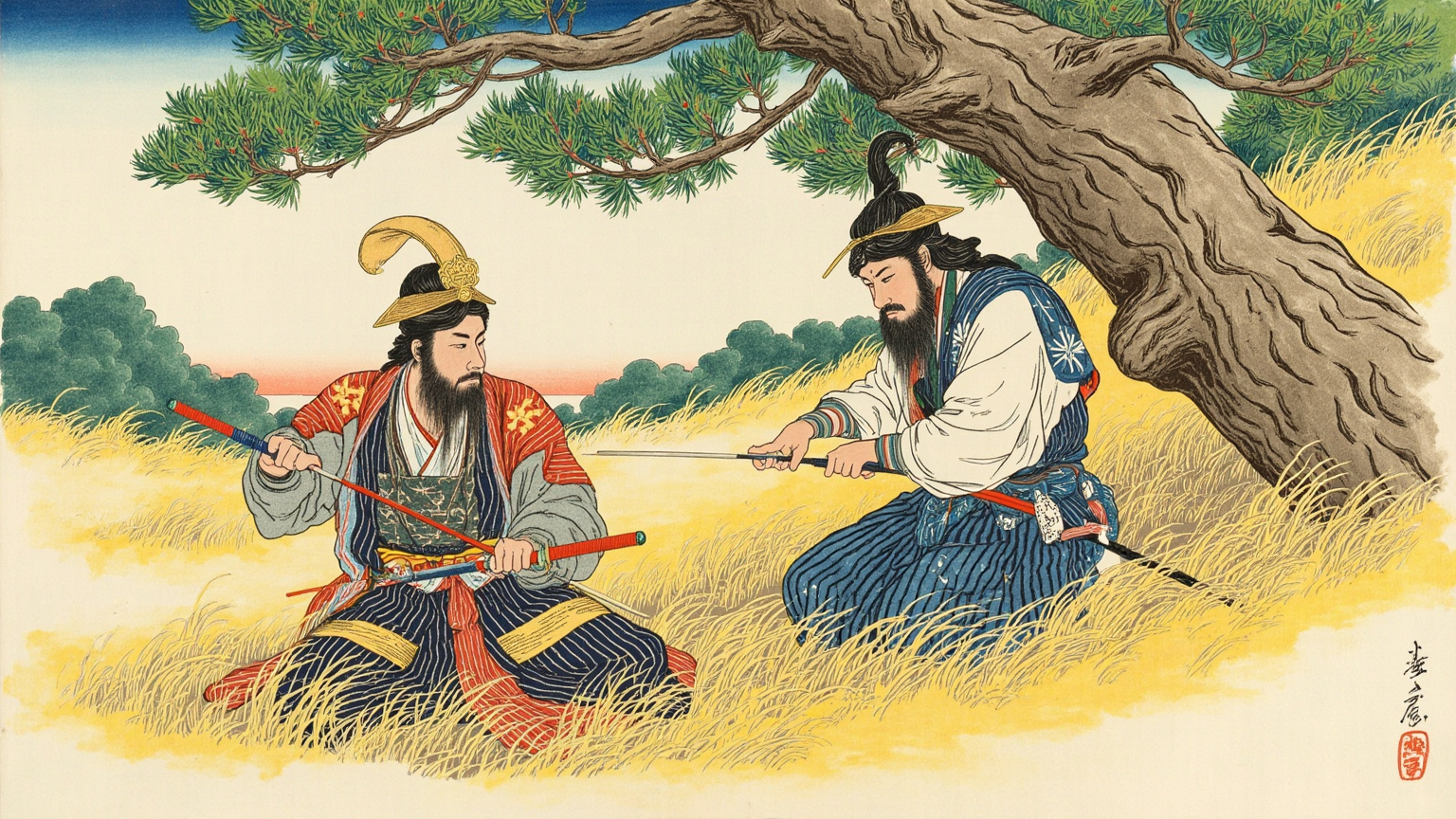
Two youths stood at sword's edge — then the pearl within the breast trembled, and the peony-mark upon the shoulder stung as if pricked by a needle. Swords were lowered; the eight characters met, and eight lives were surrendered.
二士狭路拔刀相向,怀中灵珠忽然一震,臂上胎记如被针挑,灼痛难忍——两人丢开兵器,亮珠亮印,八字对上,便把此命相托。
金句 · 第二十六回 · 珠鸣印合
Tamazusa's disruption: the uncanny reported only in outcome
Tamazusa's thread runs through the entire book, but she never takes center stage. Bakin's treatment of her is deliberately restrained: he reports only the results of her interference with the Satomi house, never the process. He does not show her devouring anyone, possessing anyone, changing shape. The reader simply learns that trouble has struck the Satomi again, and only later discovers Tamazusa behind it. This has two advantages. It leaves room for the eight dog warriors' story to gather without letting the supernatural steal the show, and it keeps the Satomi house's troubles feeling like something fate is chasing them down with, since the reader always learns who caused the disaster a step before the eight warriors do.
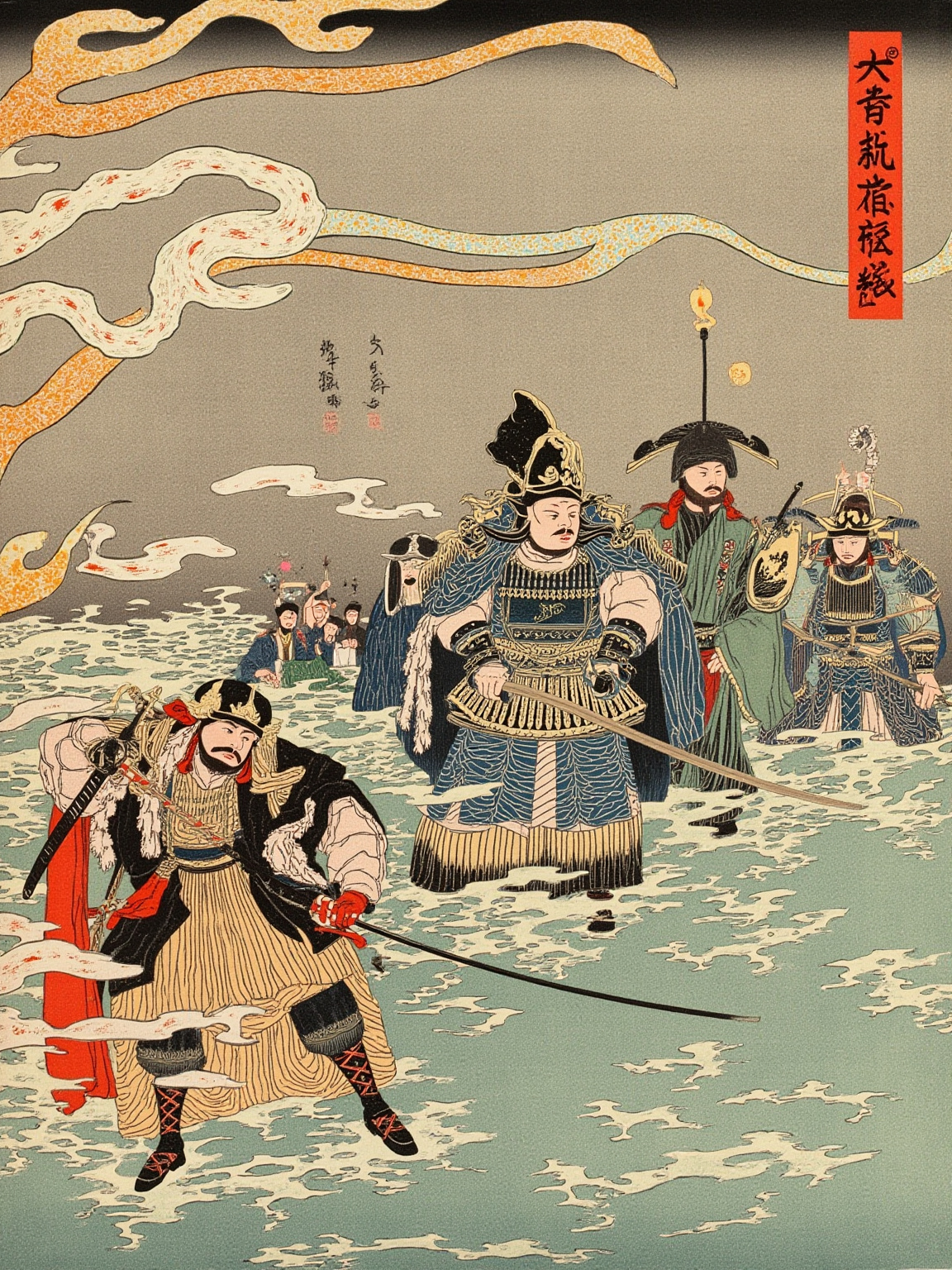
The vengeful spirit of Tamazusa is named, and named again — yet never shown. The chronicler writes only the ruin she leaves upon Satomi, never the shape she takes.
玉梓怨灵之名为读者所闻,所闻再三——然其形其迹,马琴一字不写,唯留她施于里见之祸患。
金句 · 第四十二回 · 妖狐祸里见
Eight become one, and the Satomi rise again
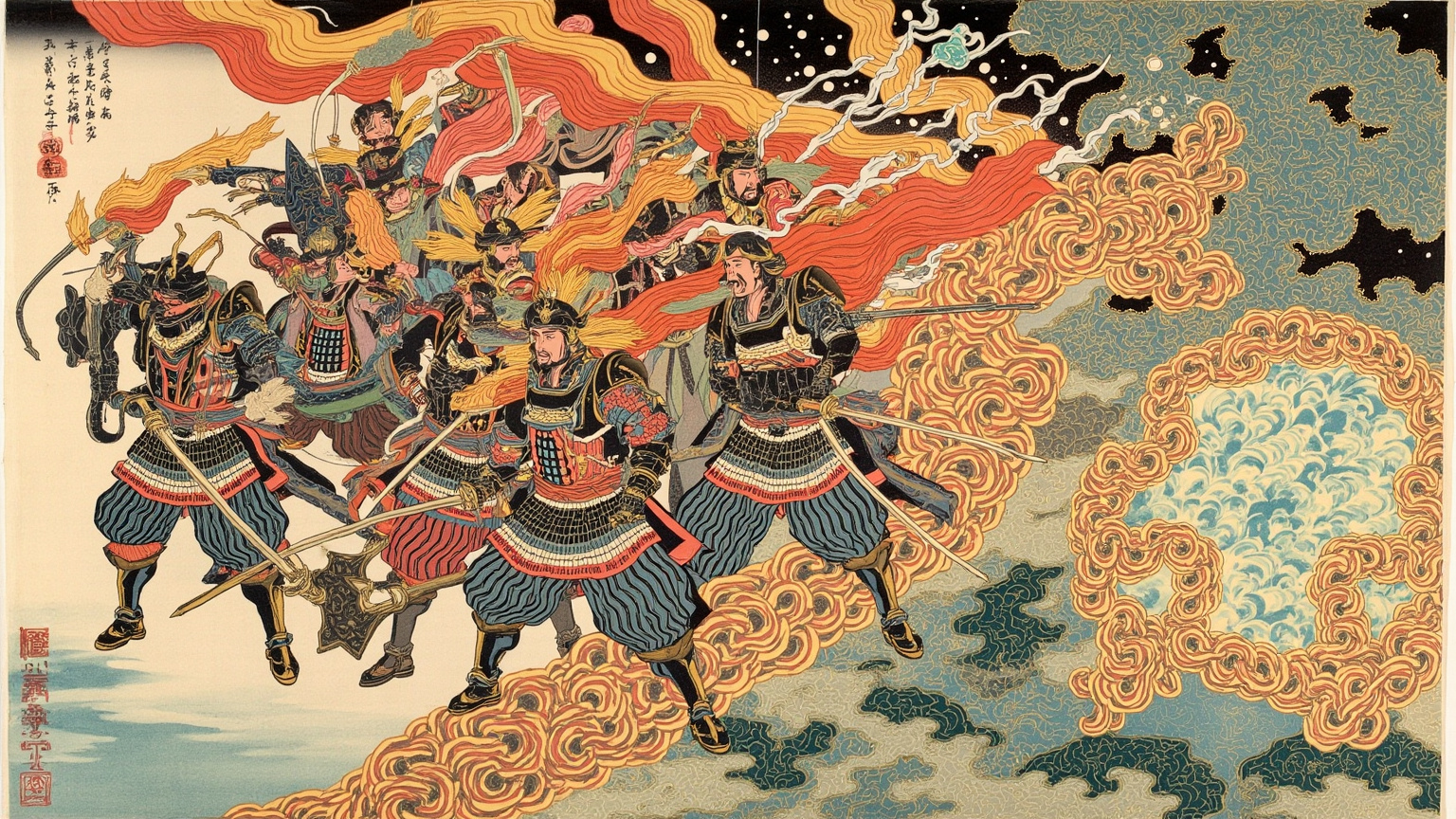
By the middle and later stretches, the eight dog warriors converge and unite in the Satomi house's hour of danger. Each man occupies his own square in the grid of benevolence, righteousness, propriety, wisdom, loyalty, sincerity, filial piety, brotherly duty. Genpachi plots strategy, Shinbei holds a position to the death with his spear, Daikaku and Dōsetsu lead the charge, Keno serves his mother with total devotion, Shino honors his elders and looks after the young. Eight virtues stand like eight pillars holding up a household. Bakin never writes the moment of union as eight heroes lining up to flex. What he writes is division of labor: who guards which gate, who cuts off the retreat, who goes to see the head of the house. The eight of them turn like eight interlocking gears. That is how the Satomi house catches its breath after the disruption of the supernatural and rises again from decline.
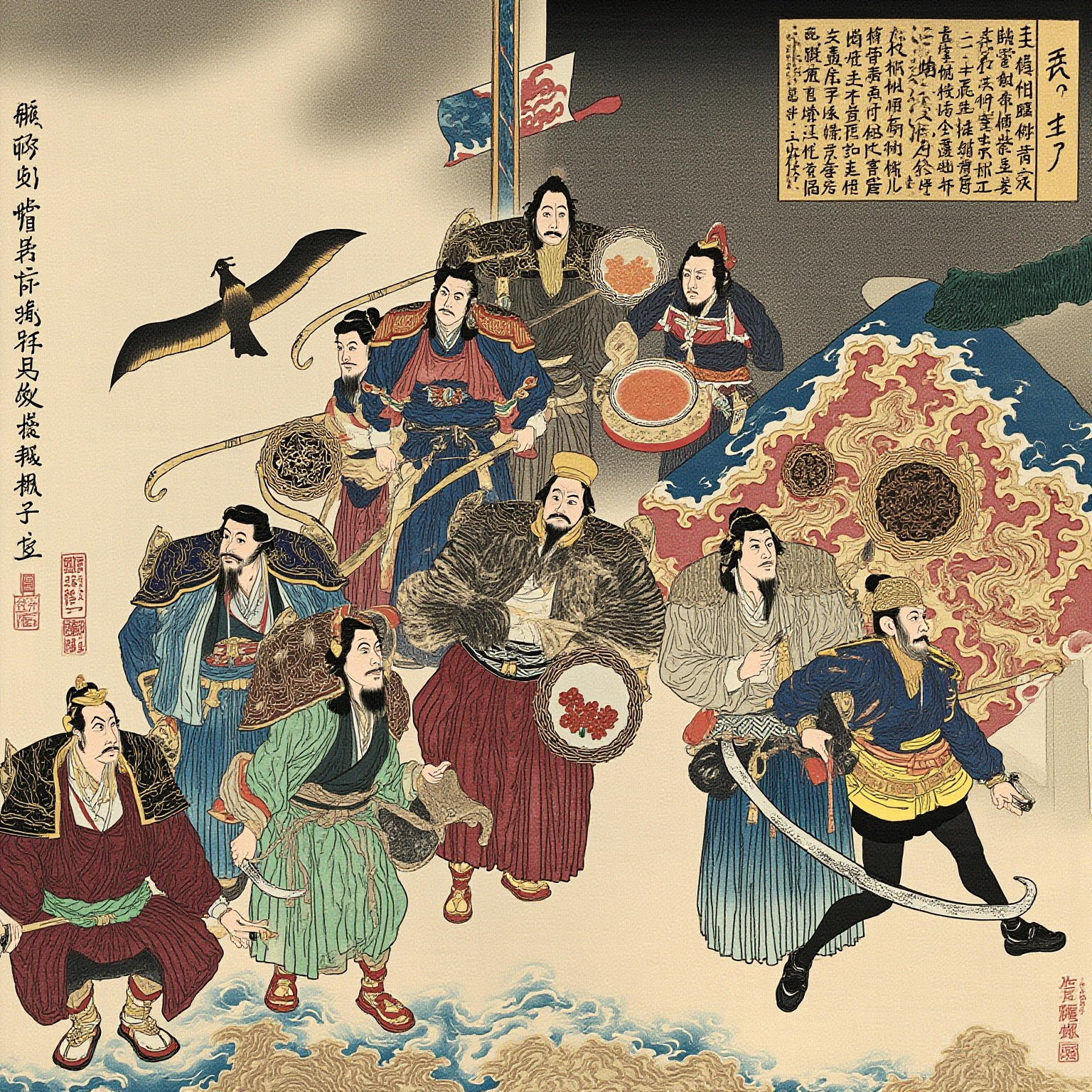
Eight virtues, eight pillars: Gennai plans, Kinbee dies at his post, Ōkaku and Dōsetsu charge, Chino tends her mother in filial devotion, Nobuaki honors his elder in brotherly grace — eight columns upholding a single house.
八德八柱:现八出谋,亲兵卫执戈死守,大角与道节冲锋陷阵,毛野事母以孝,信乃敬兄以悌——八柱撑起一家之覆。
金句 · 第八十三回 · 八士归一里见兴
How ninety-eight volumes got finished
Ninety-eight volumes across twenty-eight years. By the second half, Bakin could no longer see at all. His eyes had failed and he could no longer hold a brush, so his daughter-in-law Michi ground the ink and held the brush beside him, taking down what he spoke aloud, volume after volume, until it was done. That manner of finishing the book is itself the single greatest legend to come out of the yomihon tradition. The longest work of popular fiction in the language, spoken by a blind old man and written down by a member of his own household, ended up a mountain range unto itself on the shelf of Japanese classics. Bakin was not short of help. He was short of eyesight. This was a man working before the industrial age, and he carried ninety-eight volumes to the finish line on nothing but a voice and a family.
Theme and method: eight virtues, collection, unity
The core of this book is a single idea: eight virtues becoming one. Benevolence, righteousness, propriety, wisdom, loyalty, sincerity, filial piety, brotherly duty — the eight qualities Edo readers prized above all — get broken apart by Bakin, packed into eight beads, and planted in eight country children, each one sent out to carry his single virtue through the world, take his losses, learn his lessons, and eventually rejoin the other seven. What no one of them can accomplish alone becomes possible once all eight come together. This is the first time the power of gathering, so central to Japanese storytelling, gets written out this completely. Trace the line forward and you land on Goku hunting down the Dragon Balls across the world in Dragon Ball, on RPGs built around collecting eight sacred relics, on shōnen manga where seven or eight companions band together for the quest. All of it runs back to this book. It is the origin point of the collect-and-recognize story.
Bakin's method is distinctly Edo: restrained, expansive in its pacing, patterned like a woodblock print. The supernatural gets only its results, never its devouring or shapeshifting. Fuse's death is stripped down to a single plot function, its process withheld. Recognition scenes get the jolt of a bead and the sting of a birthmark, never tears or embraces. He presses all the feeling into objects and lets the reader supply the rest. Read today, this actually lands harder: contemporary stories lean on dialogue to push emotion at every turn, and Bakin refuses that route entirely, letting a bead and a birthmark speak in a person's place. The yomihon tradition favored heavy ink lines and crowded composition, and Bakin carries that habit into his prose itself, writing in a kind of stamped, emblematic shorthand: a bead, a birthmark, a name, each one a seal pressed into the page.
Eight beads roll through the dirt of the Kantō countryside — this is not a treasure hunt, it is the origin of Japanese collection storytelling.
Why the original text is worth reading
A companion piece gives you the map. The text itself is the land. Reading this essay, you will know how the eight beads scattered, how the eight men gathered, how the house rose again, but some experiences only the prose itself can give you: the briny air off the Shimōsa crossing, the hiss of Shinano snow against a straw raincoat, the sting of Musashino wind across a cheek. Only the original delivers that physical sense of being there. And there is Bakin's stamped, restrained style — taking only the outcome of the supernatural and none of its process, only the jolt and the sting of recognition and none of the tears — which, once retold by any companion piece, collapses into a plot summary. You can only feel the pressure of it by following his lines one after another in the original text. So here is the point: knowing the ending is exactly why you should read it, because the real pleasure of this book is not in how it ends but in how it makes you unwilling, page after page, to skip ahead.
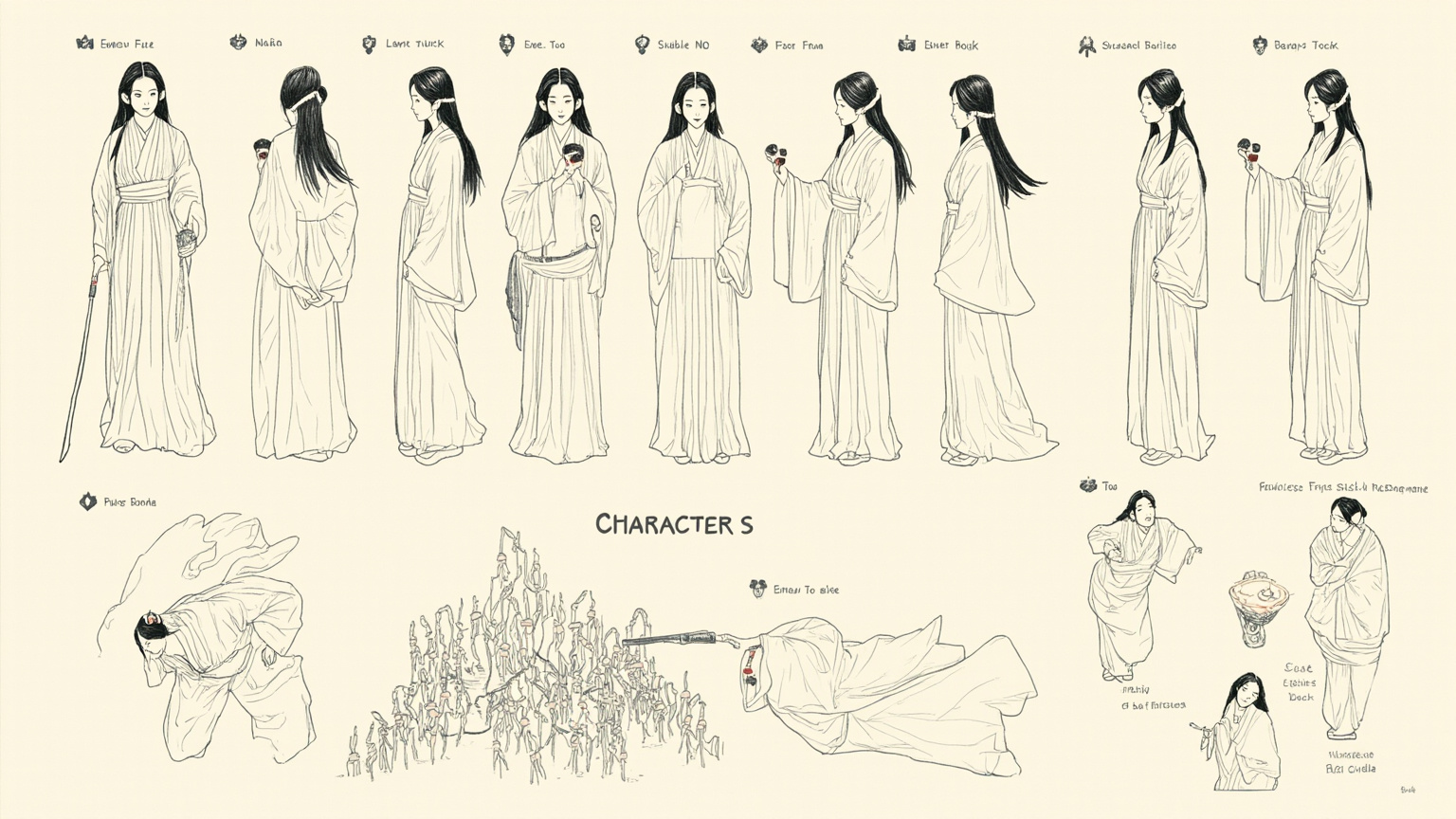
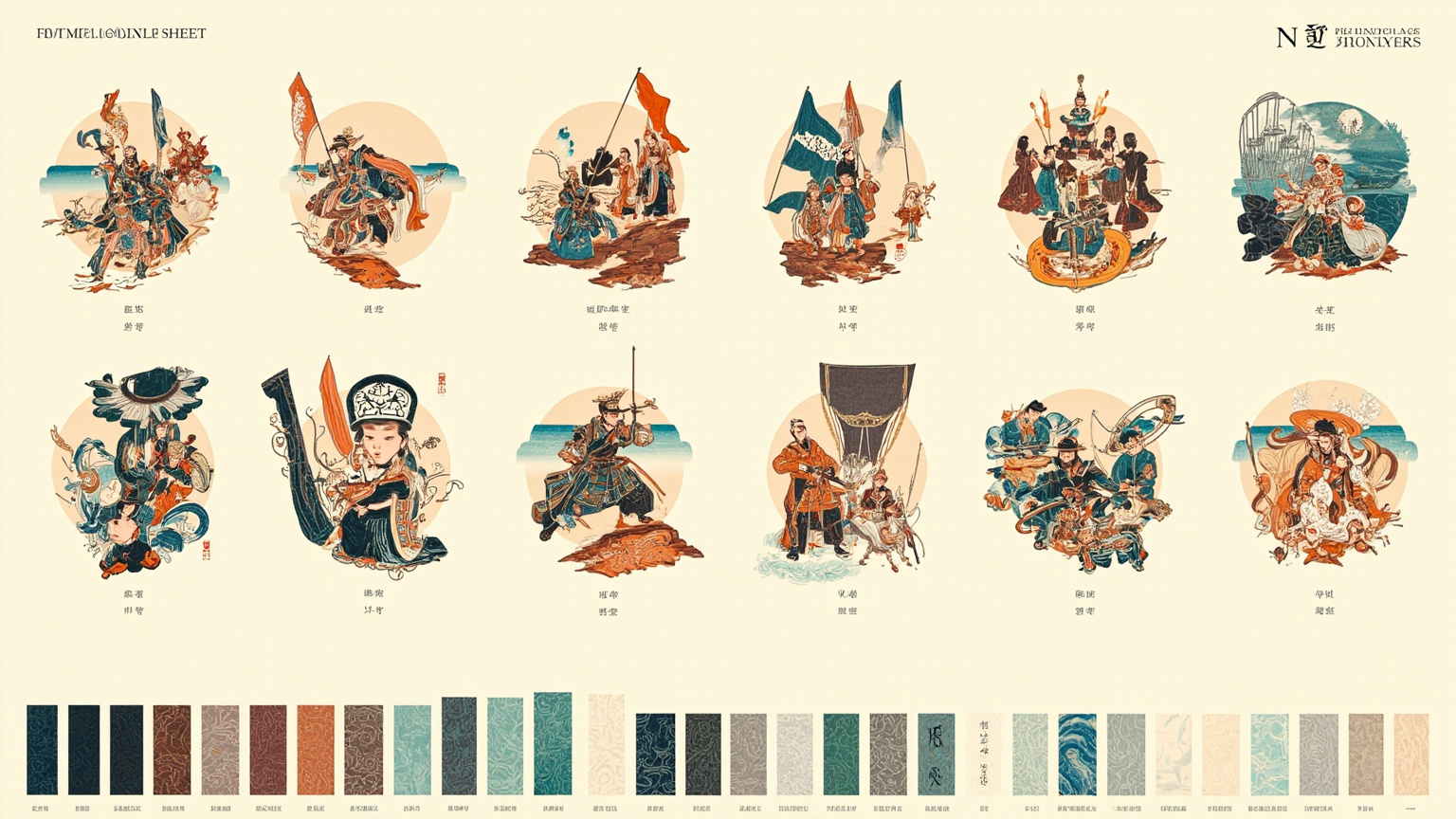
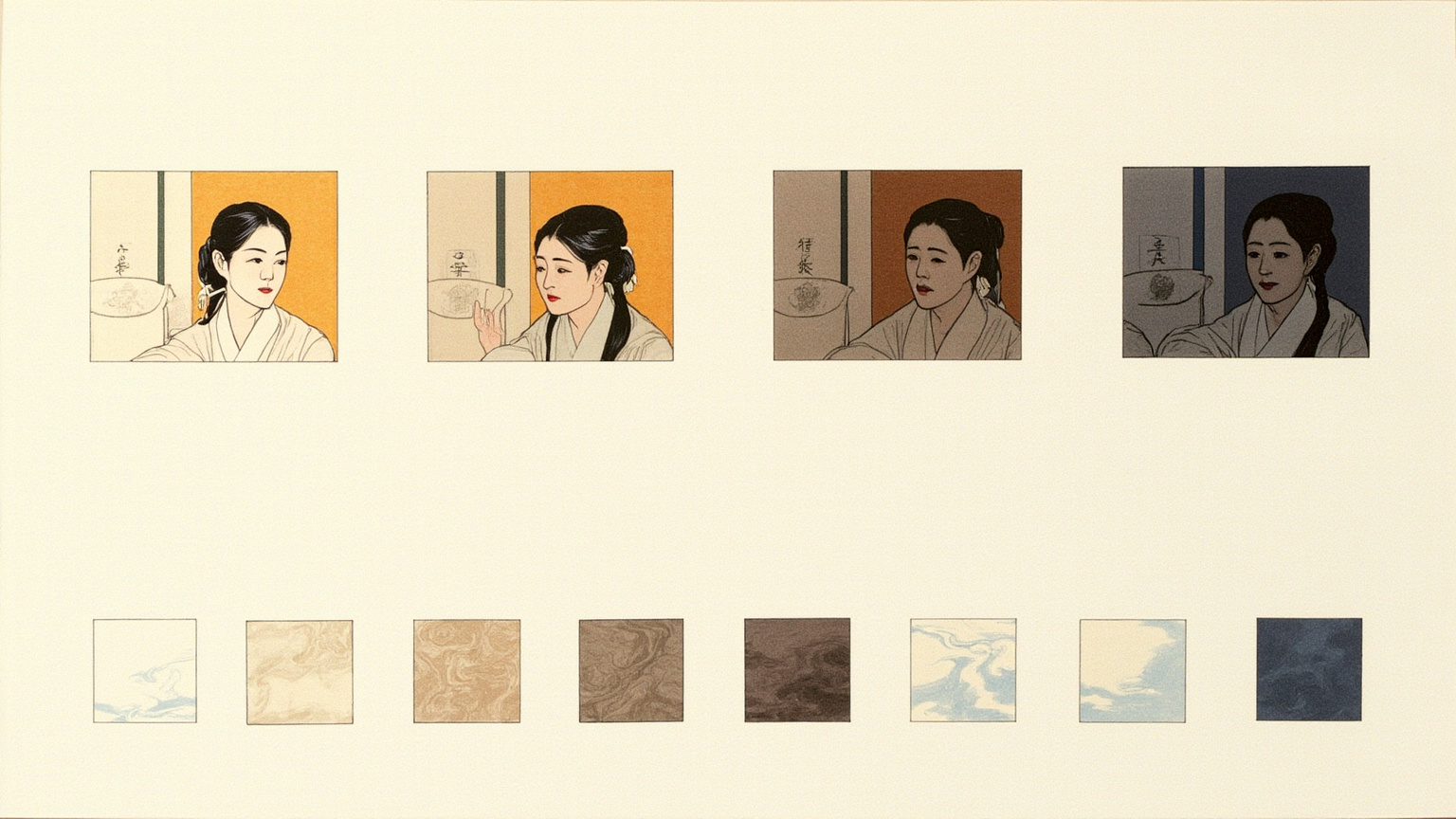
Art Direction4 plates
Before the guide was written, this book got a visual foundation — every illustration you just read grew out of it.