The Epic of King Gesar of Ling · Companion Guide
格萨尔王传
神子从天界坠入贫寒,在赛马上登顶为王,又冲入地狱救母——藏族最长活态史诗的三界循环,至今仍在草原篝火旁被唱下去。
The Opening Hook
A wandering bard in a felt hat unslings a scroll from his back and lifts it overhead — painted on it, a man in a crown-shaped helmet, riding a deep red divine mule. The bonfire lights the thangka, and he opens his mouth and sings, his voice carrying over the low wind. This could happen at any felt tent, monastery, or campfire across the Tibetan plateau: he is reciting The Epic of King Gesar, an epic still being told.
What Kind of Book Is This
The Epic of King Gesar is a living oral epic, built up over generations by Tibetan bards and passed down by mouth. Its earliest form took shape around the eleventh century; the first written version appears in the Yuan-dynasty zaju drama Ling Gesar in the thirteenth century, and in 2009 it was inscribed on UNESCO's Representative List of the Intangible Cultural Heritage of Humanity. Alongside the Mongolian Jangar and the Kyrgyz Manas, it is counted as one of China's three great epics — and at more than 120 known volumes and over ten million words in Tibetan, it dwarfs the Iliad and the Odyssey combined. Why has it lasted? Because it is still being sung across the Tibetan plateau today, still growing, rather than sealed behind museum glass.
Characters and World
The hero is Gesar, in full Joru Gesar Döndrup, a god's son sent down to earth as the child of the White Brahma King. As a boy he wanders into the kingdom of Ling as a poor shepherd named Joru, then wins the horse race against all odds and is crowned the Lion King, girded with his sword Yutse Wangchuk and mounted on his deep red, thousand-league divine mule. His mother is a naga princess — a detail that sets up his later descent into hell to save her.
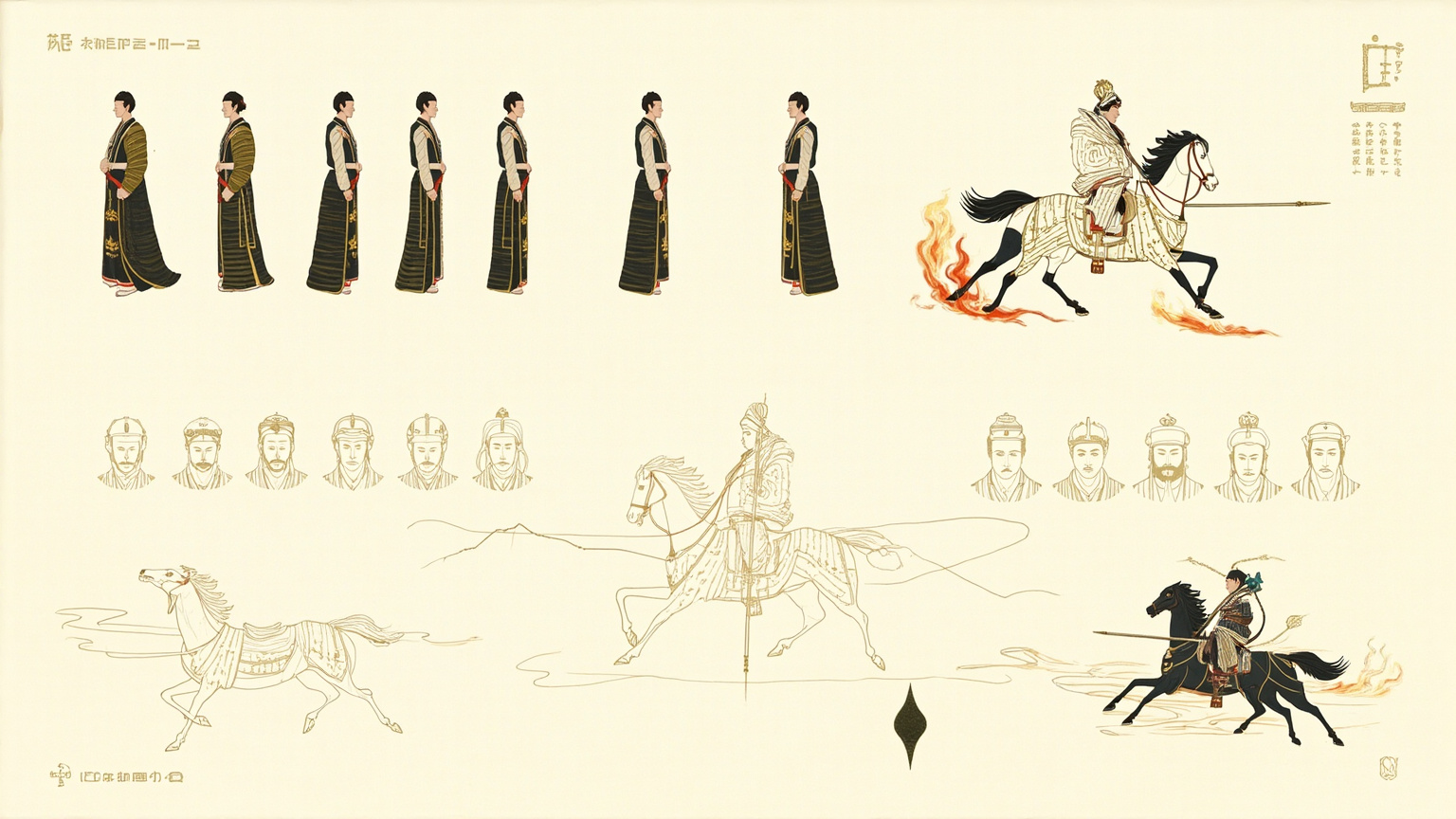
His queen is Drukmo, in full Gyalo Sengcham Drukmo, daughter of the Gyalo clan and a foreign princess with Arab blood on her mother's side. Her necklace of a hundred cowrie-shell agates, worn with coral and turquoise headpieces, became the model for the 'Drukmo headdress' in Tibetan decorative art. The epic's central conflict among its women turns on her: abducted by the demon kingdom, then won back. The men around her: her half-brother Gyatsa Shakar, Ling's chief general, who appears again and again as the 'White Helmet War God' — white armor, white horse, white banner; the old general Denma, first among Ling's Seven Valiant Ministers, riding black with a black banner and a black cloak; and her uncle Trotung, the minister who is greedy, envious, and repeatedly in league with Ling's enemies — a scorpion in the court who nearly brings the kingdom down.
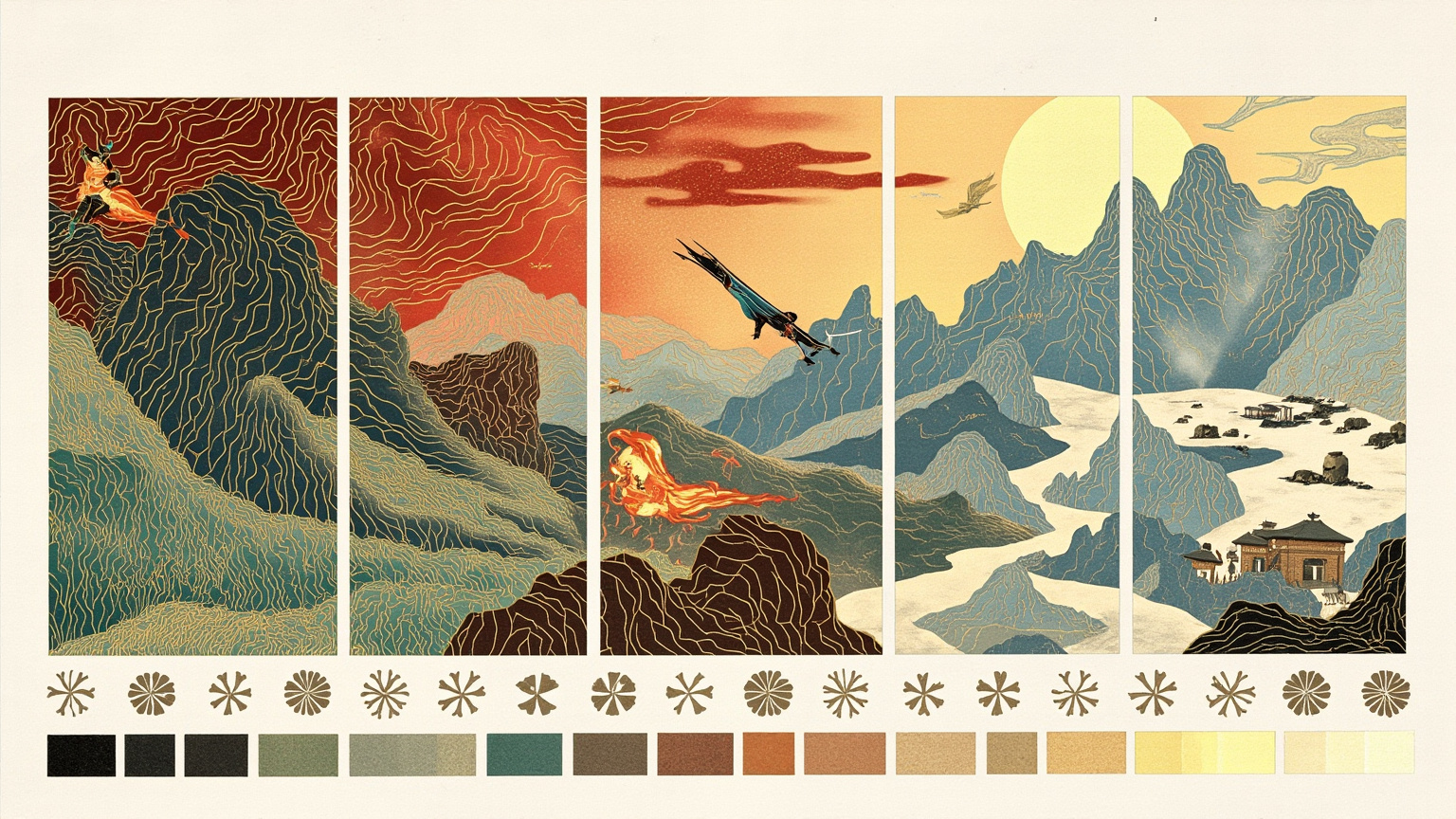
The story unfolds across the Tibetan lands of antiquity through the medieval period — Tubo and the surrounding snow-covered plateau of Ling. It moves freely across three realms: up to the heavens, the domain of the White Brahma King; down to the underworld, the demon kingdoms of King Lutsen and Azhamana; and in between, the tribal alliance of the human world. Snow mountains, grasslands, lakes, deserts, and old-growth forest run through the Qinghai-Tibet plateau, and the kingdom of Ling is anchored on Amnye Machen. The mountain god of Amnye Machen appears again and again riding a white-maned white horse, in a white robe and white helmet — Gesar's protector deity.
How the Plot Moves
The story opens in the heavens. Thöpa Gawa, son of the White Brahma King, descends to be reborn as Joru, a poor boy in the kingdom of Ling. Mother and son depend on each other to survive, until his uncle Trotung drives them out to wander as herders. This is the god-child's fall — from the divine seat down into the dust, from heaven into poverty. The sharpest move in the telling: before letting its omniscient, all-powerful son of heaven do anything else, it makes him feel what it is to be thrown out of his own home.
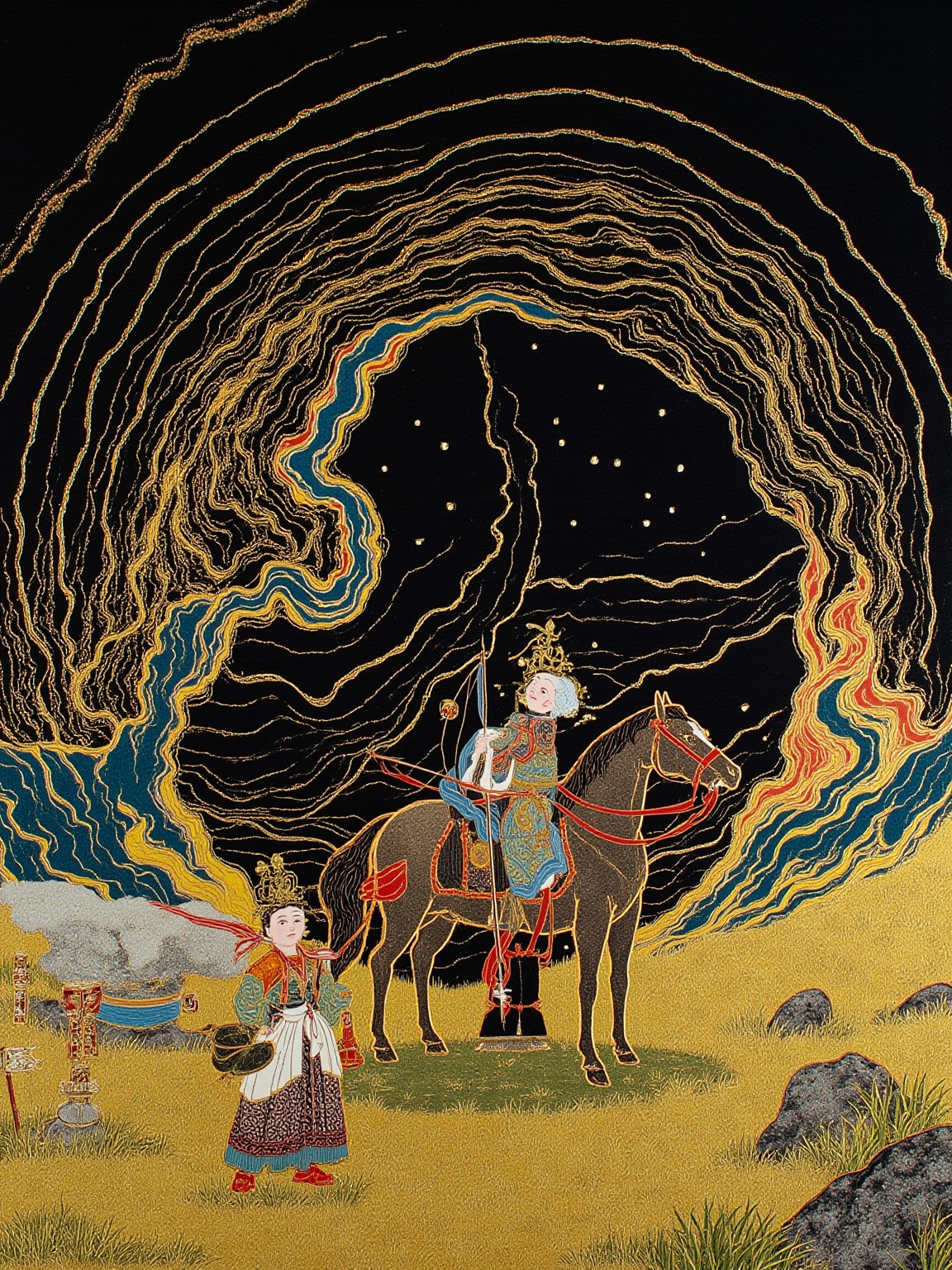
Heaven above, and yet his swaddling clothes are the wind.
神子投胎,母子相依——他从白梵天落下来,穿的第一件衣裳,是风。
金句 · 神子下凡章 · 角如流放
Joru returns to Ling from his wandering and enters the horse race. No one gives him a chance — no one thinks him worth a second look. Then he wins, impossibly, and is crowned the Lion King, taking Drukmo of the Gyalo clan as his queen. The turn that makes this work is the drop before the rise: the orphan driven out at the start of the story is lifted up by the entire tribe in a public rite. That leap from the dust to the throne is the standard proof-of-destiny move in Tibetan heroic epic — but Gesar lands it harder, because the reader has just watched him take that exile on the chin.
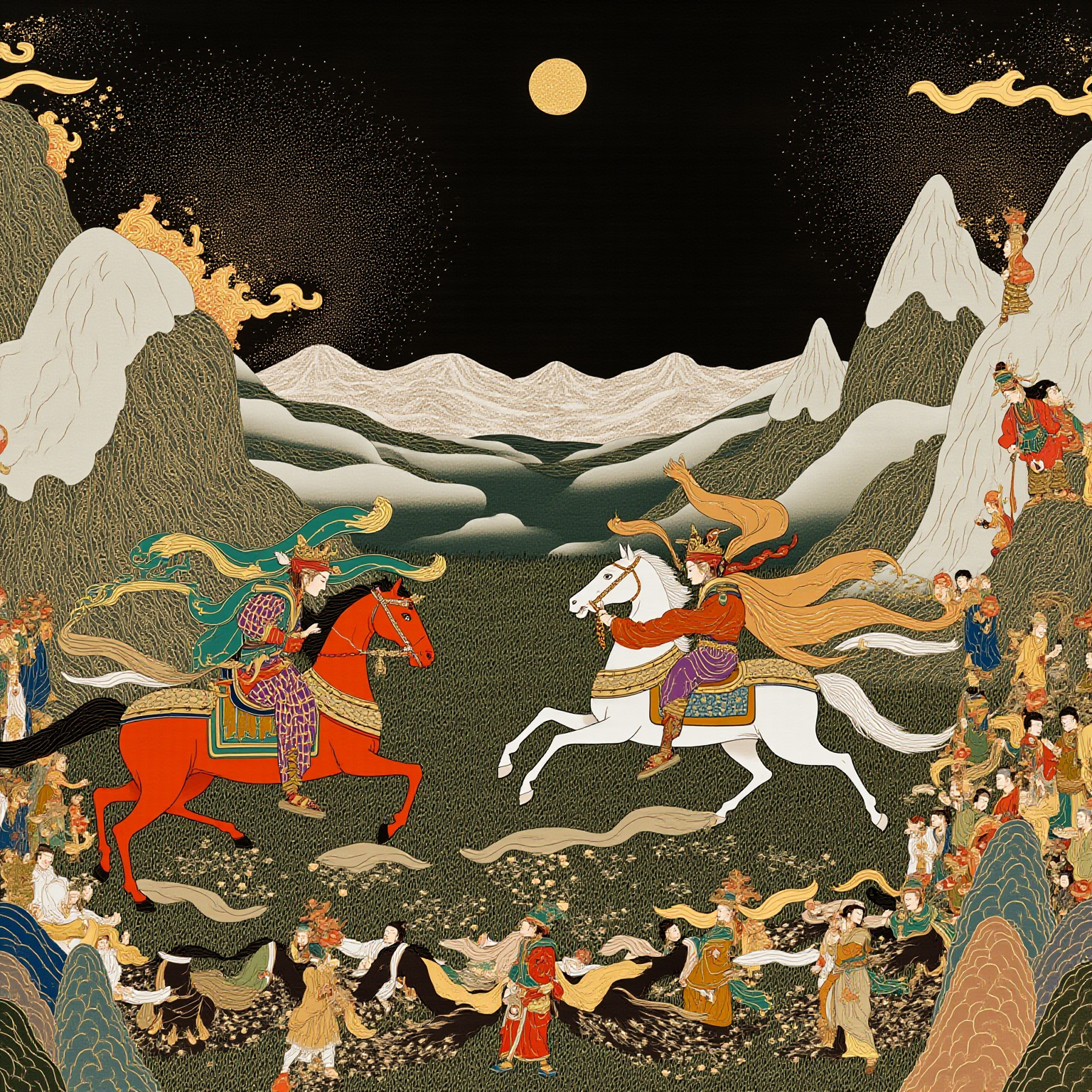
The boy they drove out to herd horses rode in as king.
被赶到草原上放马的那个少年,骑着马,从人群里走上了王座。
金句 · 赛马称王章 · 登顶
After he becomes king, a shadow of demons rises in the north. The demon king Azhamana abducts Drukmo and kills Gyatsa, setting off the Hor-Ling War. This is the central conflict of the whole epic. Gesar drives deep into the demon kingdom, wages a war of wits against its demons, outmaneuvers the demon king, wins Drukmo back, and takes into his service the surrendered Hor general Sinba Meruk — the 'crimson vanguard' in red armor on a red horse — along with the demon country's own female general, Metsa Bumgyi. Gyatsa is Gesar's half-brother, and his death turns 'slaying the demon' from a heroic feat into a blood debt: Gesar is not just avenging his brother now, he is also buying back his wife.
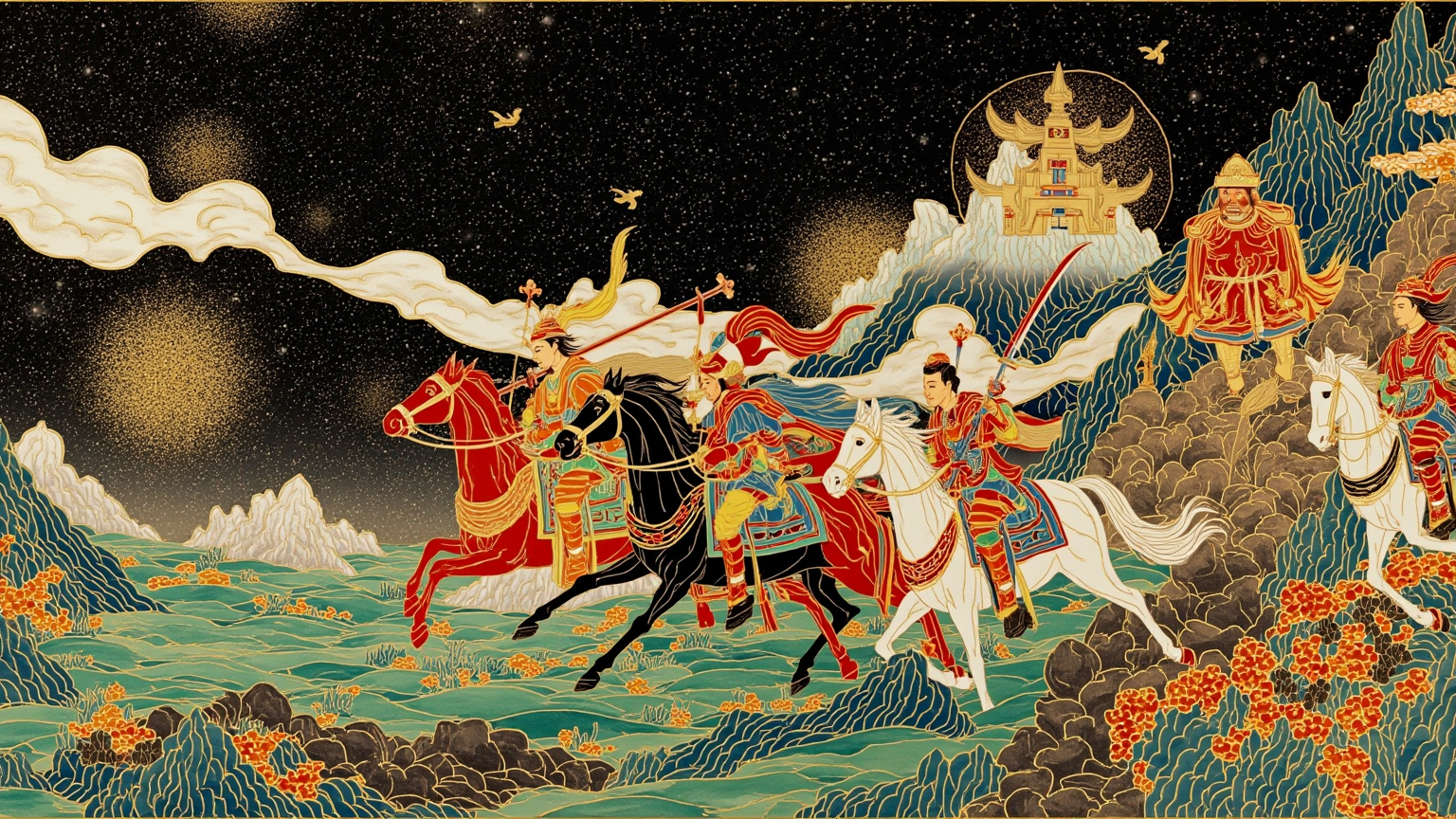
The black wind rose from the north, and the queen's tent grew cold.
黑风从北方卷过来,珠牡的帐子,从此不再暖。
金句 · 霍岭大战章 · 魔王掠妻
With the north settled, Gesar marches in every direction. He subdues the demon kingdom in the north, the kingdom of Jang in the south, Hor in the west, and Mön in the east, and brings the ancient kingdom of Zhangzhung to heel as well. Denma and the rest of the Seven Valiant Ministers each get their moment to shine, and Ling grows from a tribe into a power of the high plateau. The writing shifts here from single combat to an ensemble in rotation — every minister gets his own passage, every kingdom its own song. This is where the epic's sheer bulk opens up: any one volume stands on its own, and stacked together they read as the expansion history of a plateau people.
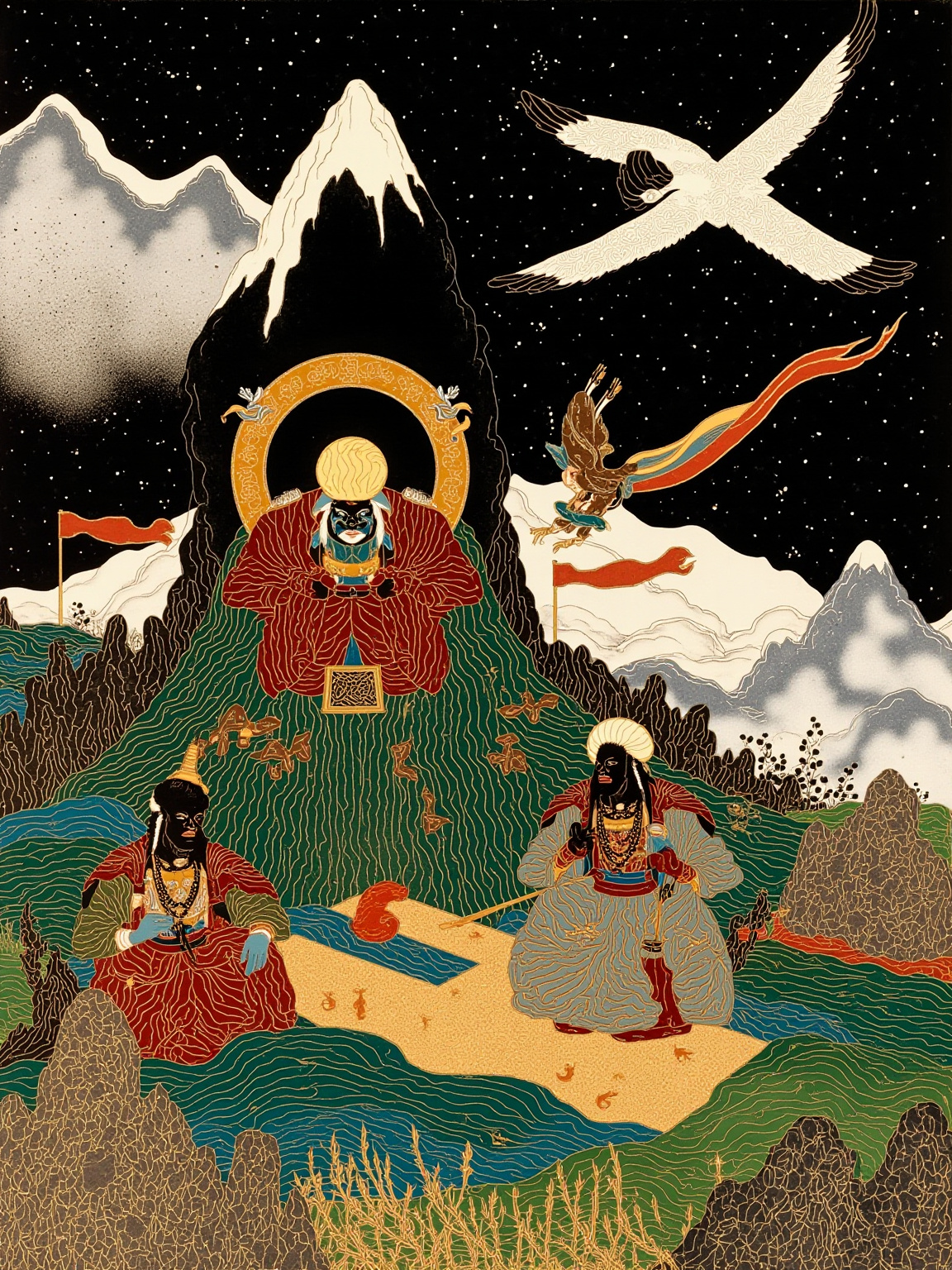
Seven heroes, one wheel of war—north, south, east, west answered the Lion King.
七勇臣一肩担四方——南北东西,四面山河都答了雄狮王一声。
金句 · 四方出征章 · 七勇臣
The wars pause, but a debt to family remains unpaid. His birth mother dies and falls into hell. Gesar storms the eighteen levels of the underworld and uses his divine power to persuade the Lord of Death to release her, along with countless other condemned souls, back into the heavens. This is the epic's great mythic set piece, and it is not a battle — it is a rescue. A Lion King who has conquered demon after demon kneels in the hall of the Lord of Death and pleads. The move that makes it land is the reversal of role: moments after being a conqueror in the demon lands, he turns and becomes a supplicant in hell.
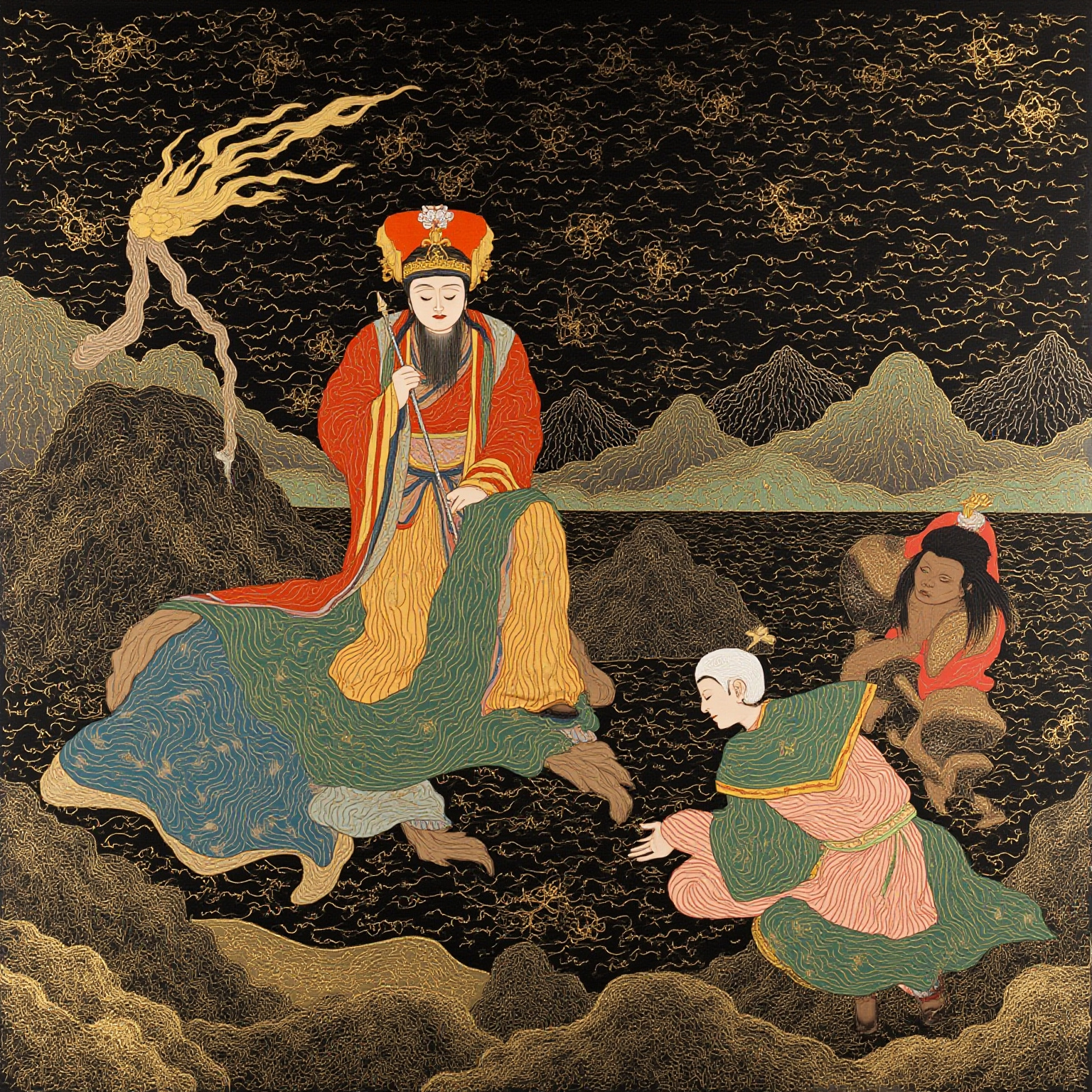
He who had slain every demon knelt before the Lord of the Dead.
降过无数魔的英雄,跪在了阎罗殿前。
金句 · 地狱救母章 · 阎王殿
His mission on earth complete, Gesar leaves behind a vow — if the black-headed people of Tibet ever suffer again, he will return — and rises into the sky with Drukmo and his ministers, back to the White Brahma King's heaven. The story closes here. But close the book and you find it hasn't actually ended. It goes back to the bard by the bonfire at the beginning. He is still singing, and he has to keep singing. This is what sets this epic apart from every other: its ending is not a period. It is a comma.
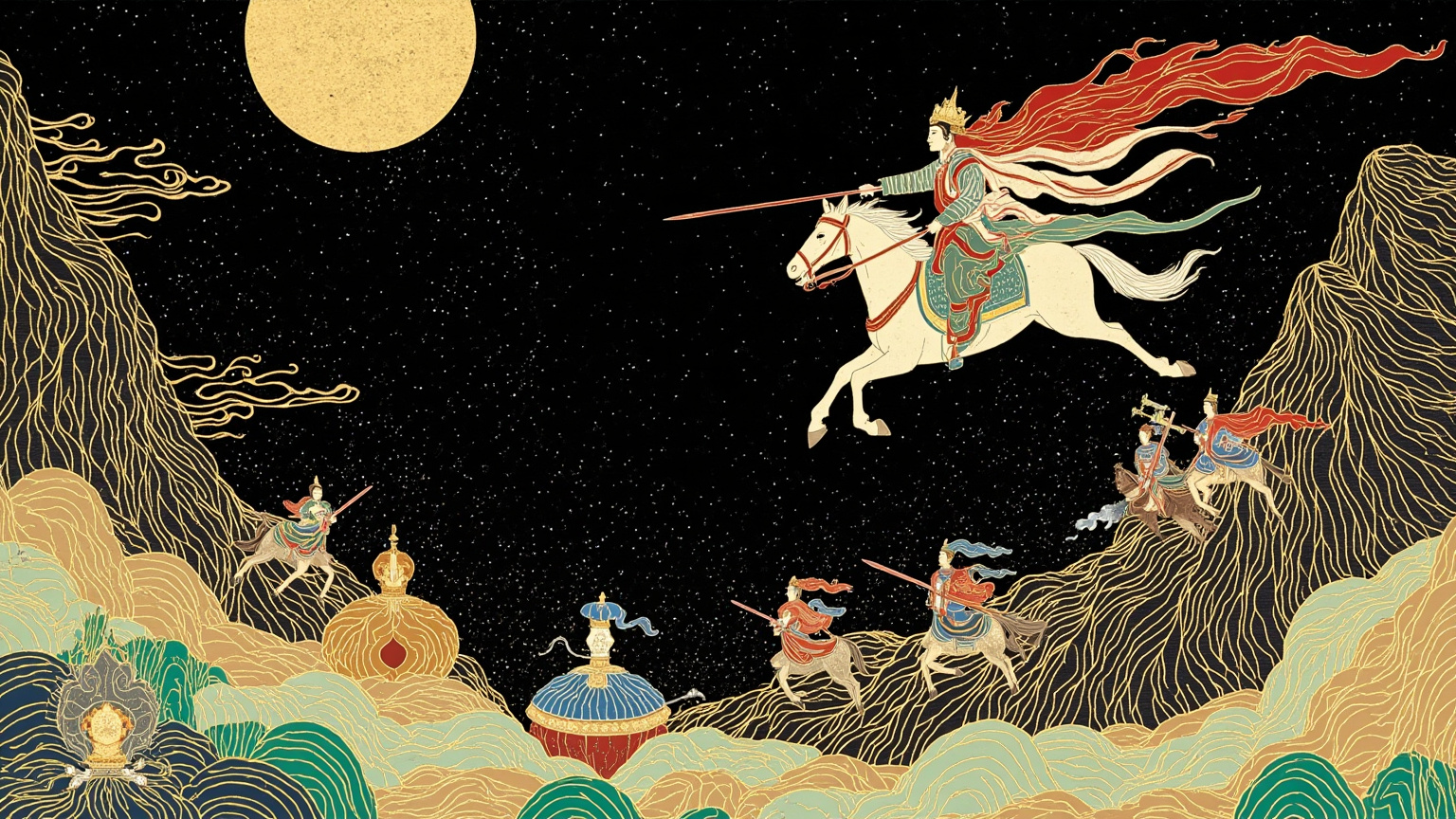
When the song ends, it is only the next verse that begins.
别的史诗唱完就完了,这部史诗唱完,只是下一段的开始。
金句 · 重返天界章 · 归天誓愿
Themes and Craft
This book is doing three things. First, a hero taming demons while his people expand: a plateau epic told from Ling's point of view, with Gesar dead center, celebrating a Lion King who single-handedly subdues demons, settles his people, unifies the four directions, and puts all three realms in order. Second, a cycle running through heaven, earth, and the underworld: the god-child descends, wins a kingdom at a horse race, marches out to fight demons, searches hell for his mother, and returns to heaven — this great arc of descent and return is the core expression of native Tibetan cosmology. Third, karma and the blending of Buddhism and Bön: Gesar is a son of heaven on earth, a rescuer in hell, a conqueror in demon lands, and the epic fuses the Tibetan Buddhist idea of salvation with Bön's system of gods of sky and earth.
Why is it considered a great work? Scale is part of it — more than 120 known volumes, over ten million words in Tibetan, and still growing. But what lands harder is that it is alive: not a text sealed in place, but an epic still in growth, retold generation after generation by its bards, absorbing new place names, new heroes, new demons as it goes. This is the real reason it made UNESCO's Representative List of the Intangible Cultural Heritage of Humanity in 2009. Reading it today, you are reading more than a hero's story — you are reading a way of telling that is still going, one that asks you to accept that the story is not finished. For a reader used to endings, that alone resets how you think about what a story is.
Other epics end when they end. The Epic of King Gesar ends only at the start of the next telling.
The Hook to Go Read It
A guide like this can give you a map. It cannot give you the bonfire. The sound of a bard's voice cutting through the low wind on the grassland, the way Gesar's eyes in a thangka shift under changing light, the frayed cuff of a Tibetan robe worn thin against a sword hilt — you only run into these in the text itself. Read the horse race for the first time, then flip back to the page where Joru gets driven out, and it will stop you cold: the boy thrown out of his own home turns out to be the one who saves the snow lands. No summary can give you that moment of being stopped cold.
Art Direction4 plates
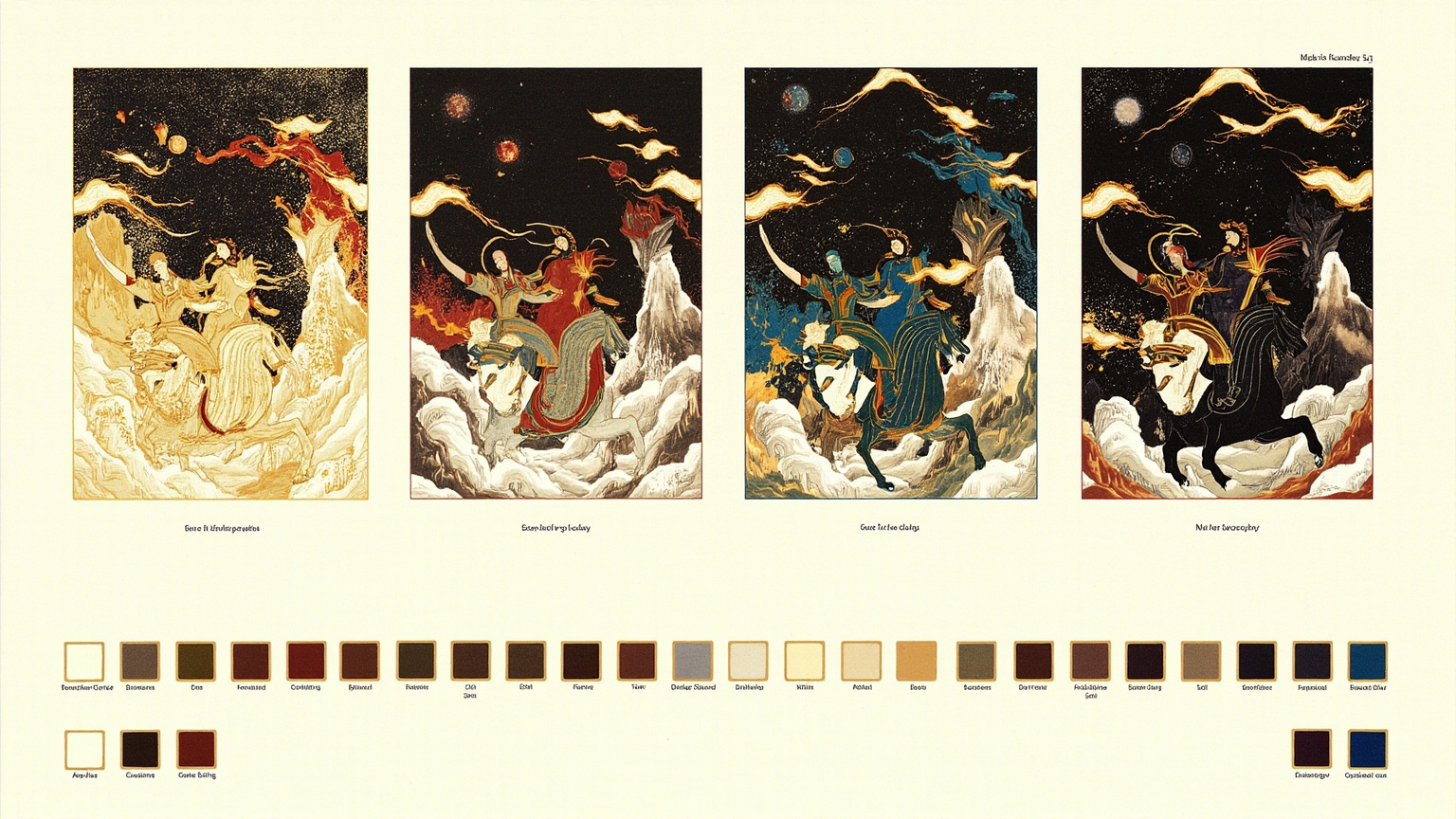
Before the guide was written, this book got a visual foundation — every illustration you just read grew out of it.