The Essays of Montaigne (Les Essais) · Companion Guide
蒙田随笔
一个法国乡绅把自己锁进塔楼,把拇指的肿痛和怕死写成了西方散文的源头
The Man Who Carved Fifty-Seven Sayings Into His Ceiling
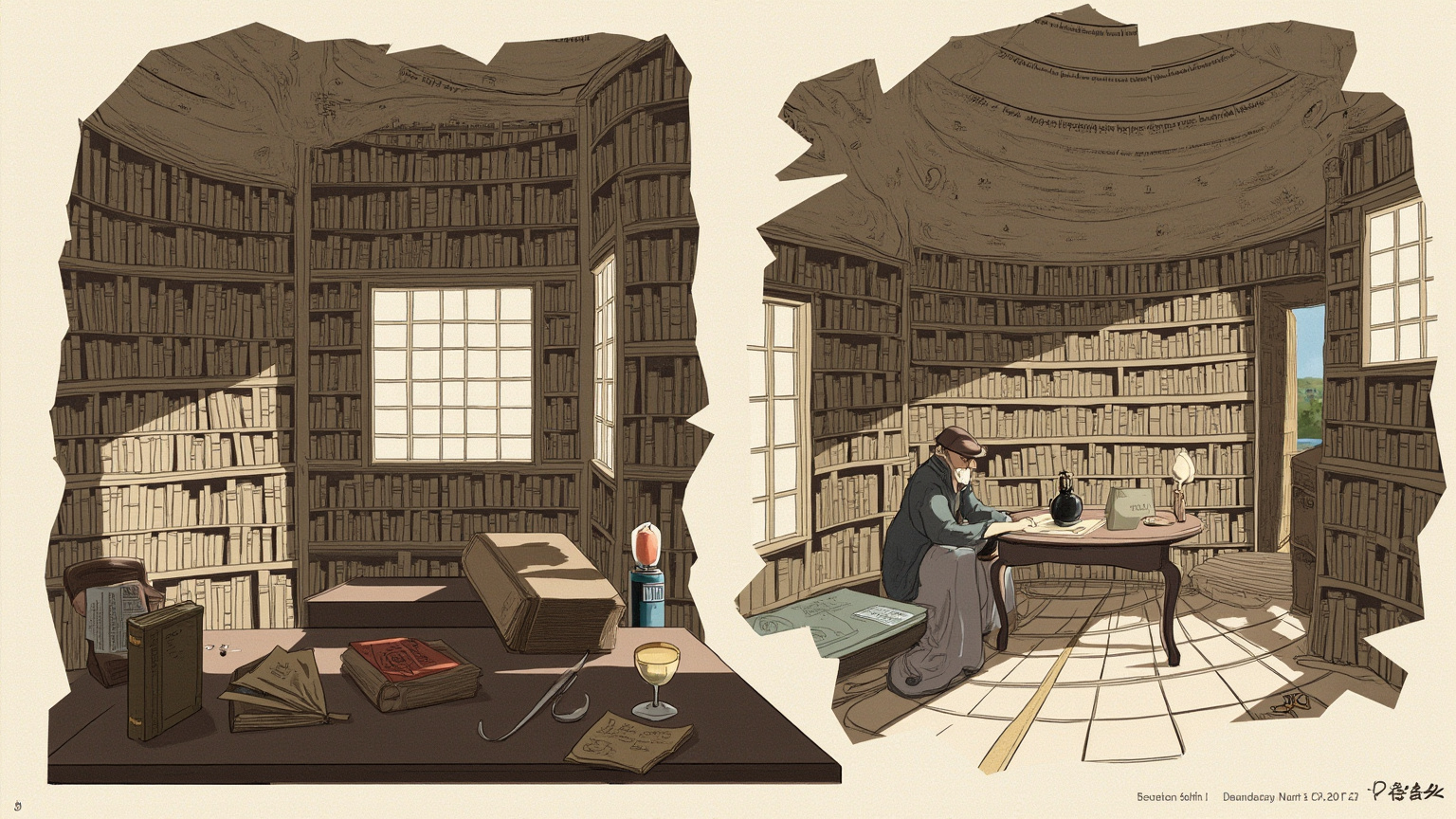
A thumb, swollen, too sore to hold a pen. He wrote it into the book anyway. Not as an aside — as a proper subject: what is wrong with my thumb, how it gets in the way of my writing, what that makes me think about. This happened in southwestern France in the second half of the sixteenth century, in a three-story round tower in the Périgord region. The top floor was a study, lined with more than a thousand books, its ceiling beams carved by the owner's own hand with fifty-seven maxims in Latin and Greek. Outside the windows: vineyards, and now and then an army passing through on its way to the religious wars.
What Kind of Book This Is
The Essays is the work of the French country gentleman Michel de Montaigne — a first edition of two books published in the early 1580s, an expanded three-book edition at the end of that decade, and a posthumous text assembled after his death by his self-declared spiritual daughter, Marie de Gournay, whose edition became the source for every version that followed. Its place in literary history fits in one sentence: the entire Western category called the essay was Montaigne's invention. The word itself means an attempt — he promises you no conclusions, only the process of trying to think something through, laid open on the page. In the four centuries since, Bacon, Shakespeare, Pascal, Nietzsche, Woolf, and Borges have all taken something out of that tower study.
Put another way, this is not a book remembered for telling a great story — it has no story at all. It is remembered for inventing a posture: the writer stops pretending to survey the truth from some height and instead sits down across from you, admitting he is an ordinary man who is afraid of dying, who suffers kidney stones, who argues with the ancients about the right way to sit a horse.
The Cast and the World
There is only one character — Montaigne himself, carried through the whole book in the first person. He enters the story pushing forty, having sold his seat as a magistrate in the Bordeaux law courts, retreating to the tower his father left him, and announcing that he would make himself the book's subject. That sounds unremarkable now. In his own time it was close to scandalous: prose was supposed to concern justice, great deeds, theological questions — who treated a sore thumb, a kidney stone, or the fear of death as a fit subject?
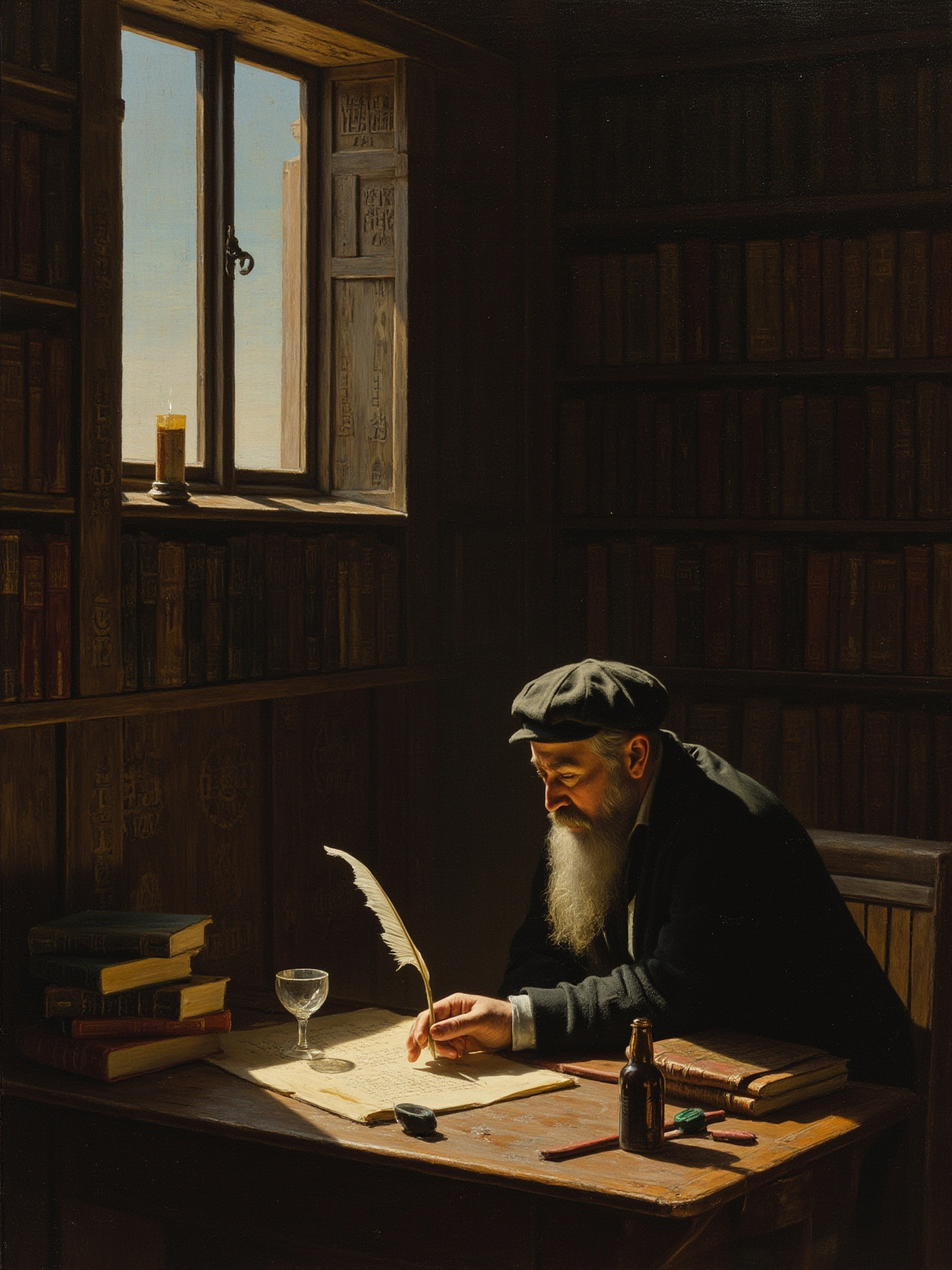
I have no other end in this writing but to discover myself, who shall be read of me ere long.
我不为别的目的而写,只是要把我自己呈现出来——趁我自己还能读到。
金句 · 《论书籍》II.10 · 退隐塔楼
Two figures haunt the tower without ever quite being in it. One is Étienne de La Boétie, Montaigne's closest friend, a magistrate and Latin poet a few years his senior. They met at a civic banquet in Bordeaux around the middle of the sixteenth century and were nearly inseparable for four years. La Boétie died young, before Montaigne ever began writing, and he never appears as a character in the Essays — yet he runs through the whole book, because Montaigne is carrying on a conversation with a dead friend. The other is Marie de Gournay, a young woman nearly thirty years his junior, whom he met after she read La Boétie's unpublished writings at a Paris bookstall; he called her his adopted daughter. After Montaigne's death she took charge of the manuscript, and her edition became the source text for everything that followed. As for the rules of that world: this is France in the second half of the sixteenth century, with the Catholic League and the Protestant Huguenots cutting each other down, plague running through the countryside, and armies occasionally passing beneath the windows of Montaigne's study. Montaigne himself served two terms as mayor of Bordeaux, a Catholic threading his way between both sides well enough to keep his head. That politics is never separate from the writing — the skepticism, the scrutiny of custom, the attentiveness to the body's fragility all grow out of that ground of blades and corpses.
Retreating to the Tower, Carving Fifty-Seven Maxims
The story starts the year his father died. Montaigne sold his seat as magistrate, retired to his family's tower, and carved fifty-seven maxims in Latin and Greek into the ceiling beams with his own hand as mottoes — sentences drawn from a teacher of his youth and from classical authors, the kind of thing he could look up and run into while writing. He declared that from then on he would keep himself inside that study, and began a wholly new form: the essai, not a story but an attempt, a testing-out of whatever crossed his mind at the moment.
The key is in that word attempt. Montaigne refuses to hand you a conclusion — he writes down the thinking itself, reverses himself halfway through, admits partway along that he does not know. This became the shared ancestor of four centuries of essays, columns, blogs, and private writing: from this tower onward, prose no longer had to answer for itself. It only had to try.
The First Two Books: The Thumb and the Kidney Stone Enter the Text
The first two books came out in Bordeaux. The subjects look scattered: Of Smells, Of Fear, Of Friendship, Of Idleness, Of Cannibals, Of Some Verses of Virgil, Of Experience, Of Cripples — but underneath every one of them sits the same move: making himself the subject. A swollen thumb, how he curls up in a carriage when a kidney stone hits, which foot he puts in the stirrup first, how frightened of dying he felt walking home from a session at the courts — details that had never before been fit subjects for prose, and he set them down without flinching.
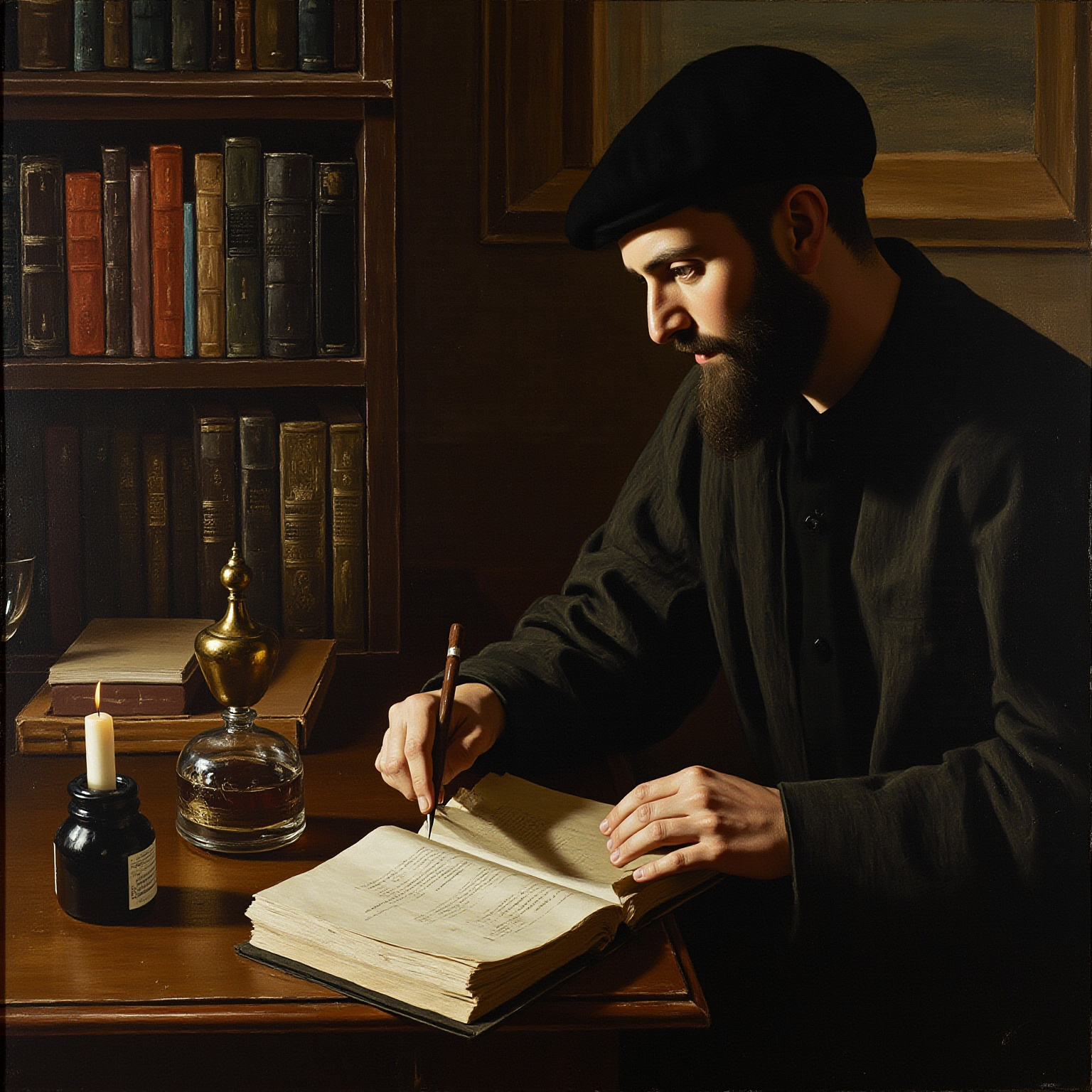
Every man bears the whole form of man's estate, in so far as it is human.
每个人身上都负载着人类境况的完整形式——只要他还是人。
金句 · 《论食人部落》I.31 · 把自己当题材
Readers meeting the passage in Of Smells where he describes his own body odor for the first time usually stop cold — why would anyone put that in a book? Then it lands: he is not making a spectacle of himself. He is proving a point — that a person is body and soul together, whole, and should not be cut in two by academic rhetoric. It is a revolution in form, quiet and complete.
A Ghost Conversation With a Dead Friend
One character runs through the whole book without ever appearing in it: La Boétie. They met at a banquet in Bordeaux and were nearly inseparable for four years; La Boétie died young, before Montaigne began writing. Montaigne kept his twenty-nine short Latin poems and the manuscript of the Discourse on Voluntary Servitude close at hand, reading them over and over, and out of that came the famous essay Of Friendship (I.28). What stays with readers is its central claim: the friendship was perfect precisely because each man remained whole and independent, neither one swallowing the other nor needing the other — because it was he, because it was I.
By the time the Essays first appeared, La Boétie had already been dead for years; by the time Montaigne himself died, nearly thirty. Montaigne never set the conversation down, and readers keep running into an absent dead man between the pages. It is a peculiar kind of haunting on the page — the dead friend is not brought back to life, but every act of writing pulls him a little closer. Few pieces of writing in the Western literature of friendship manage this density.
Mayor, Traveler, and Keeping His Head
Sick and traveling anyway, Montaigne went through Switzerland, Austria, Rome, and the baths at Lucca seeking a cure for his kidney stones, leaving behind some of the earliest travel writing built around treating one's own illness. Henry III summoned him to court, and back home he served two terms as mayor of Bordeaux. Outwardly he was a Catholic; in practice he was maneuvering between the Catholic League and the Protestant Huguenots.
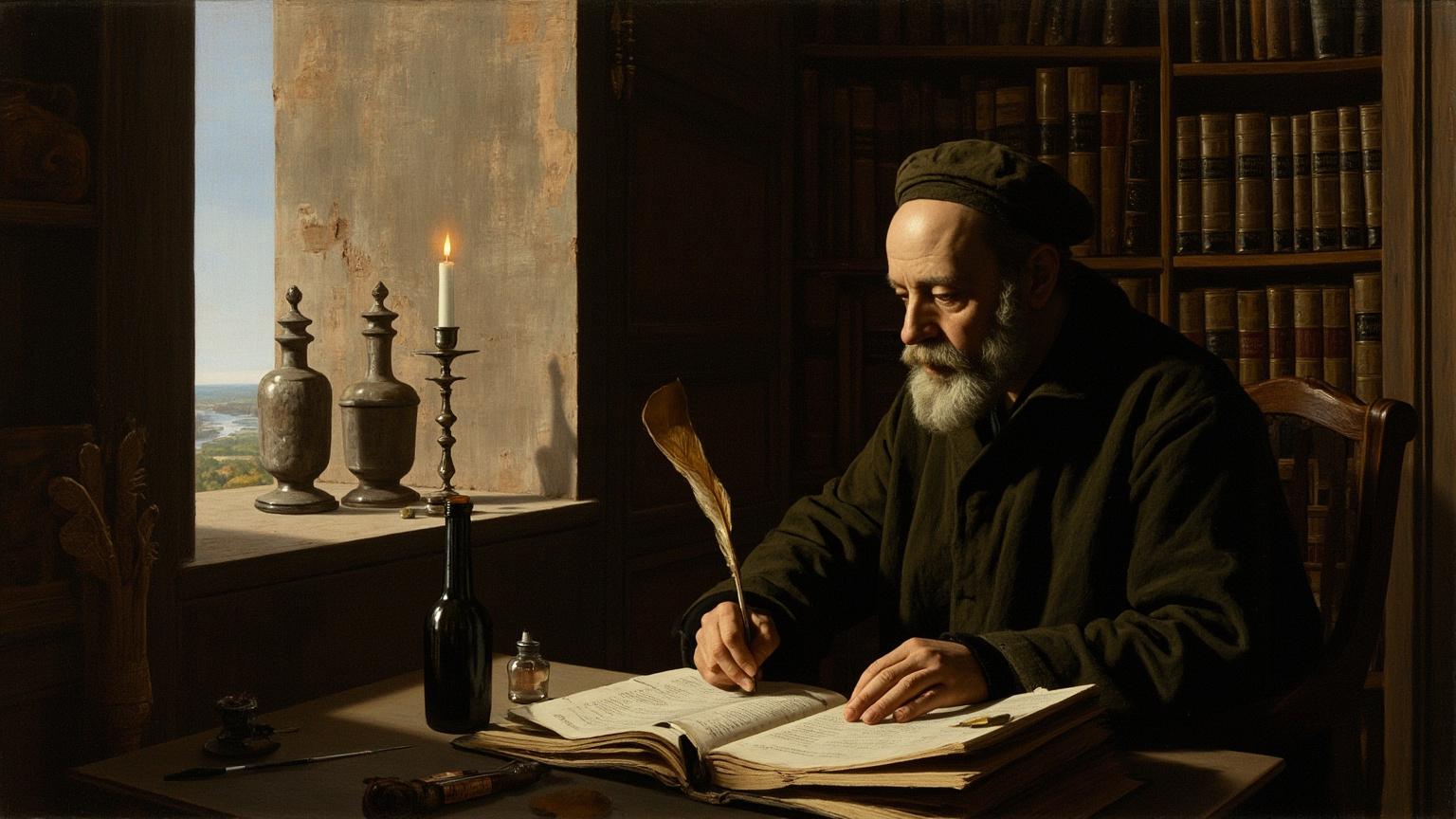
We must needs tarry for a light from on high to guide us in this enterprise.
这等事业里,我们需要等一束自上而下的光来引路。
金句 · 《论经验》III.13 · 市长与宗教战争
None of this political experience was decoration. It fed directly into the Essays' judgments about custom, hypocrisy, and the fragility of civilization — you only write that kind of skepticism, loose on the surface and cold to the bone underneath, after watching both sides cut each other down, watching plague take one neighboring household after another, watching the smoke rise off a stake. Montaigne was never a philosopher theorizing from an armchair. He had mud on his boots.
Cannibals, and What Europeans Do to Their Own Kind
The expanded three-book edition put Of Cannibals (I.31) squarely on the page for the first time. It is not a curiosity piece — Montaigne is not narrating how people are eaten. He uses the cannibal customs of Brazil and the West Indies to turn the mirror on Europeans and what they do to their own kind: colonizers, butchers of the religious wars, so-called civilized men who tie people to stakes and burn them. His conclusion is cold and level: custom is not natural truth, and what gets called savage or civilized is often just a matter of where you are standing.
This one move fixed his place in intellectual history: that gesture of looking at the self through the eyes of an other became one of the deepest roots of later anthropology and cultural studies. Read this essay for the novelty of cannibalism and you have missed it entirely. What actually raises the hair on your neck is the last turn — that what Europeans did to their own kind was far worse than anything his cannibals ever did.
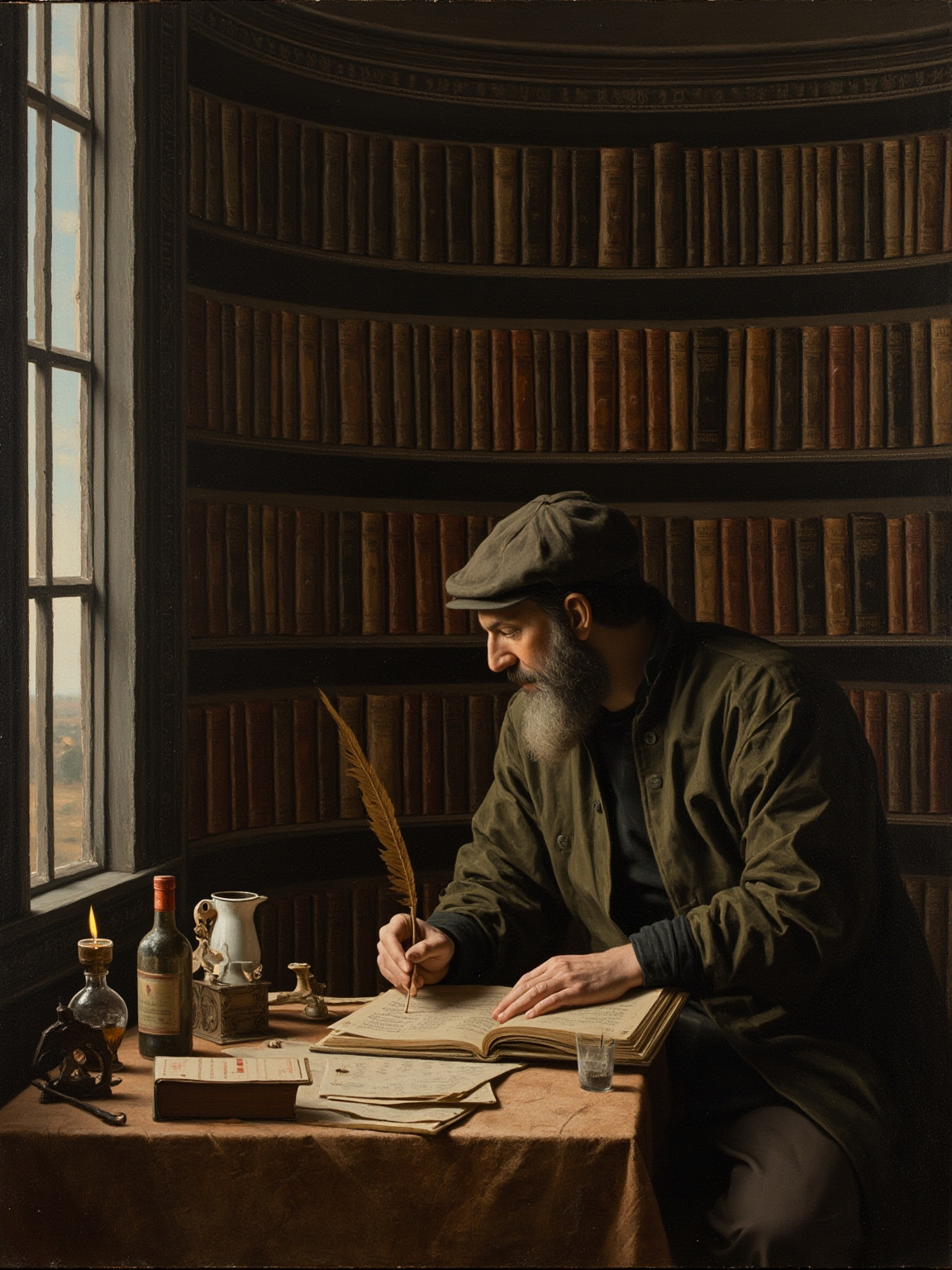
I conceive there is more barbarity in eating a man alive than in eating him dead.
活活把人生吞下去,比吞一个死人更野蛮。
金句 · 《论食人部落》I.31 · 反观欧洲人
Que sais-je — What Do I Know
Running through all of it is the phrase he had struck on his medal: Que sais-je — what do I know. This is not despairing nihilism, and it is not the shrug of a relativist. It is a clear-eyed position: having admitted the limits of human judgment, you go on living, go on trying anyway. Montaigne trusted no ancient authority blindly — he quotes Seneca, Plutarch, and Cicero, and argues back at all three — and he trusted his own self-justifications no more.
Why do modern readers keep coming back to it? Not because it teaches you to doubt everything, but because it shows you what comes after — you can doubt everything and still sit down at your desk and keep writing, still drink with friends, still serve as mayor, still get through a year of plague. This is a doubt you can live inside.
Doubt is not an ending. It is where the days start being lived — Montaigne's tower is the proof.
Death, and a Manuscript Left to a Woman Thirty Years Younger
Montaigne's last trip to Paris landed him in the middle of Henry III's assassination and Henry IV's accession. He died in his own tower, leaving behind a printed copy of the Essays crammed with marginal revisions. Before he died he entrusted the manuscript to Marie de Gournay — the young woman he had met at that Paris bookstall, who had been studying under him for years by then. Her edition became the source text for everything after, and she wrote a well-known preface defending Montaigne's conversational French, including the very turns of phrase the French Academy would later call incorrect.
So Western prose ends up with an odd family tree: a tower study, a man who put his own thumb in a book, a woman thirty years his junior, and a collection of essays the grammarians of the day dismissed as bad French. Out of that one room, the essay traveled to Bacon, to Shakespeare, to Nietzsche, to Borges, and on to everyone writing a blog post or a personal essay today.
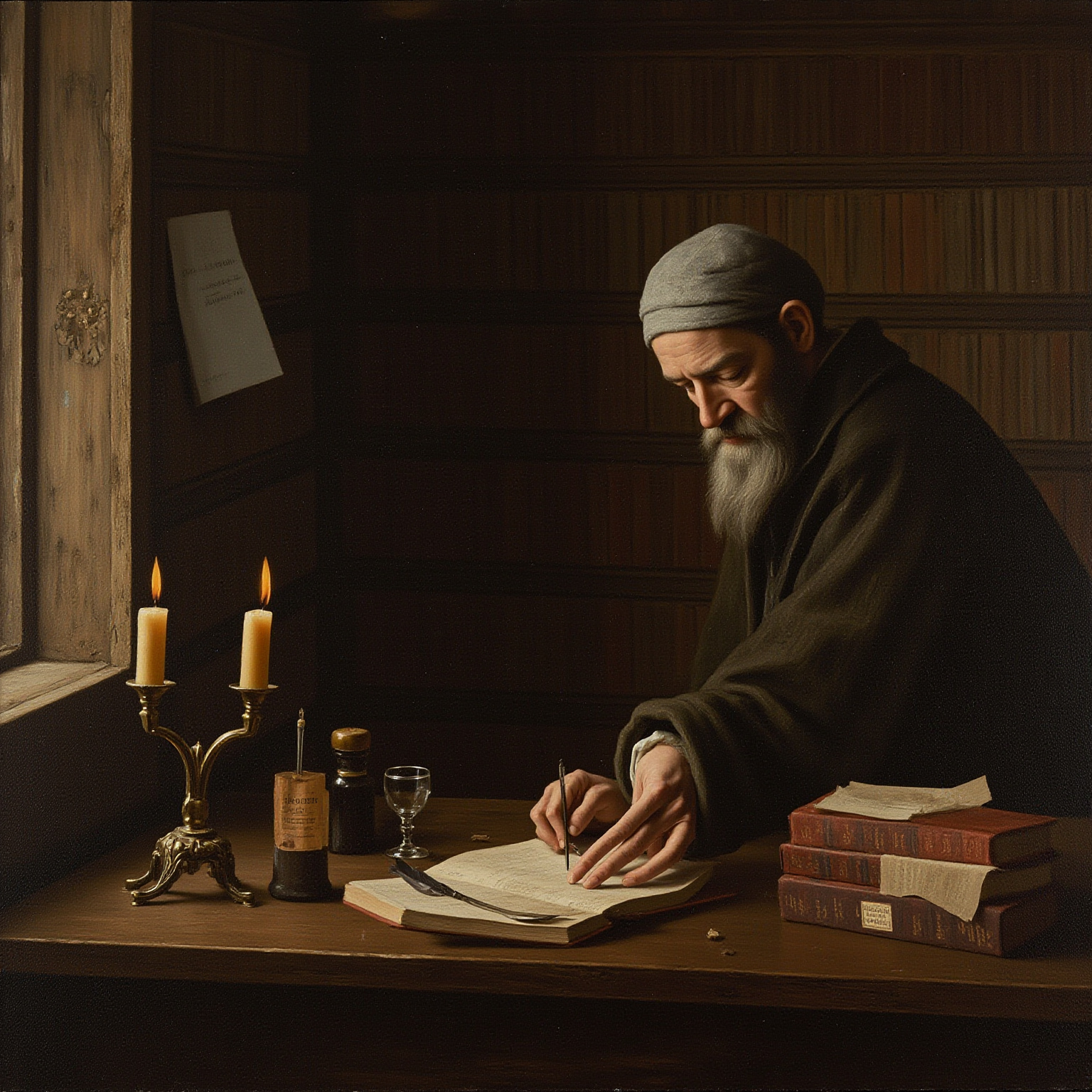
He who should teach a man to be a good riddler of his life would teach him to be a good riddler of the rest.
谁学会了好好地结束一生,谁就学会了好好地结束其余一切。
金句 · 《论学习哲学即学习死亡》I.20 · 遗稿与古尔奈
Why It's Still Worth Reading Four Hundred Years Later
Montaigne lived through religious war, plague, and the early deaths of people close to him, and his skepticism was never an armchair exercise — he used it to hold himself up so he would not collapse into despair. That is why the sick, doctors, caretakers, politicians in the middle of a crisis, and the simply worn-out keep reading him: he lived through the worst of times and left instructions for not dying of despair.
Read the Text Itself, for What No Summary Can Give You
A guide gives you the map. The text is the ground itself. There is one thing about the Essays that no retelling can give you: the sense of sitting across from him while he argues with himself out loud — he praises himself in one line, undercuts it in the next, argues against his own rebuttal, and finally admits he does not actually know. That ongoing attempt has a pulse to it. Reading him, you are not taking in a conclusion — you are keeping a man company in a sixteenth-century study while his kidney stone acts up and he tells you whether he is afraid of dying today. No machine can do that for you. You have to sit in that tower yourself for a while.
Art Direction4 plates
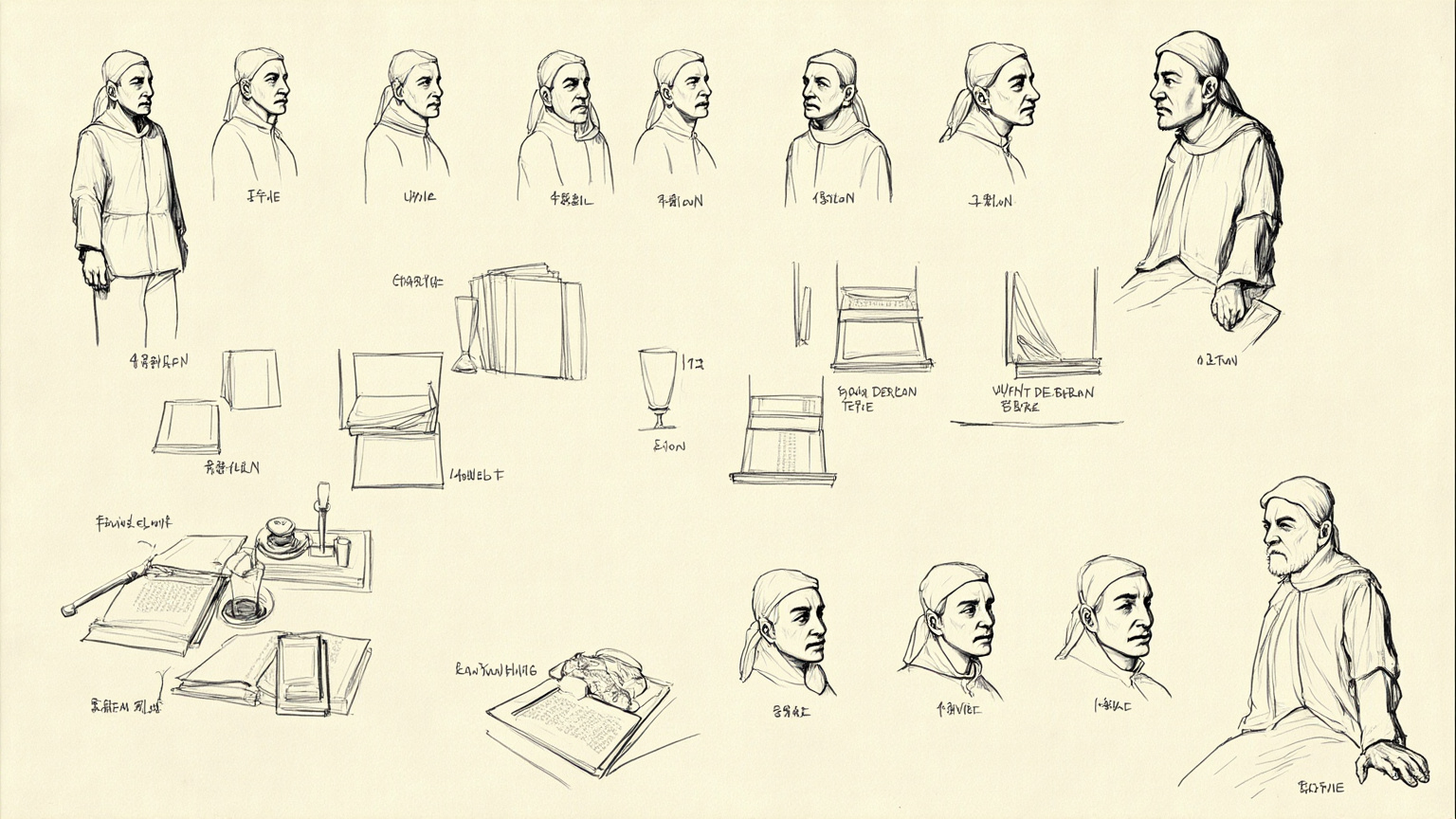
Before the guide was written, this book got a visual foundation — every illustration you just read grew out of it.