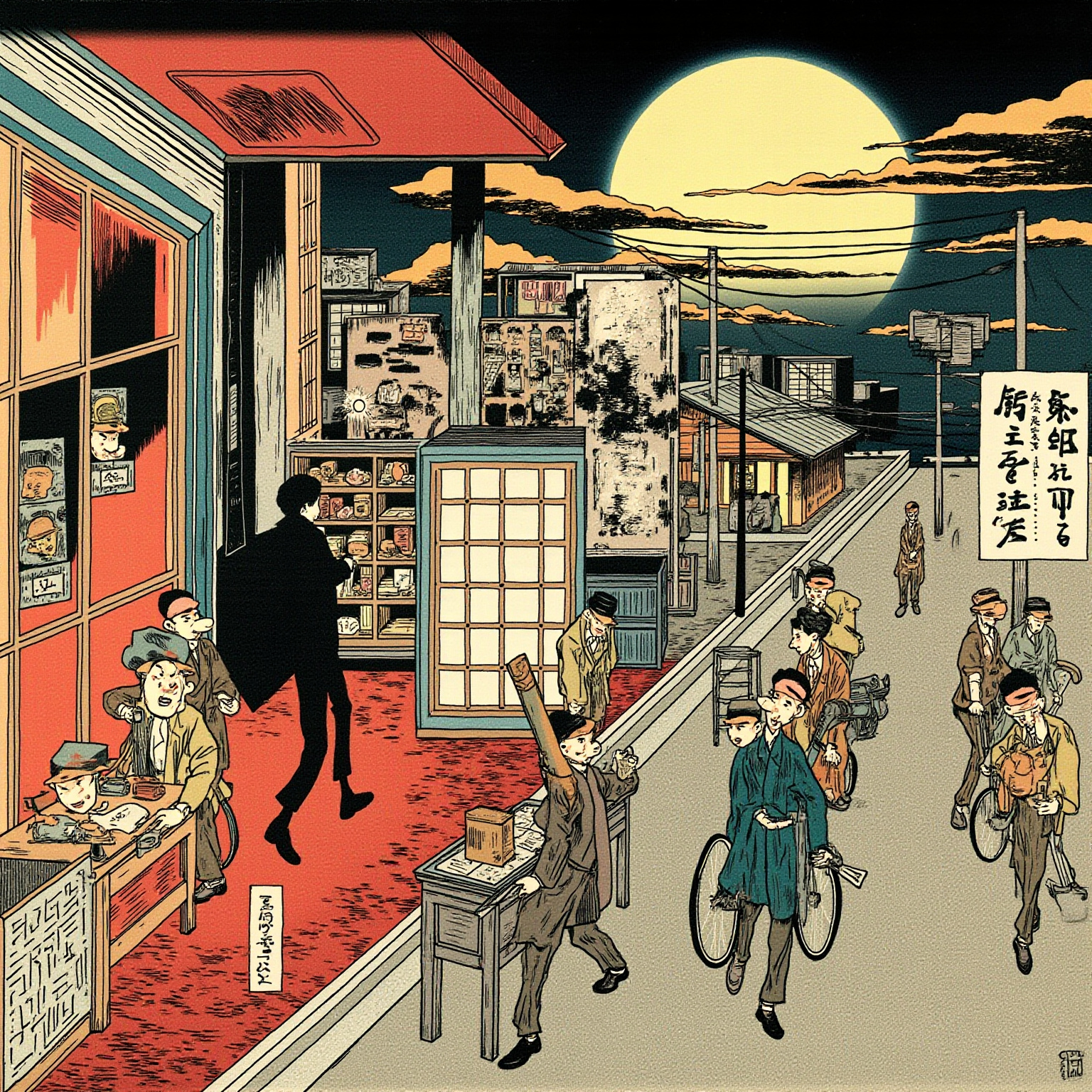
Announcements, disguises, boys on bicycles carrying ciphers — the origin of the Japanese boy-detective genre
Text and illustrations produced by the pipeline

A letter reaches the police before the crime does. It states the day, the treasure, and the fact that it will vanish from under heavy guard and land in the hands of the Fiend with Twenty Faces. It's signed with a silhouette of a clown in a top hat. All of Tokyo holds its breath over that single sheet of paper. Announce first, steal second, leave at leisure — the thief has turned that ritual into his trademark.
The Fiend with Twenty Faces was published in 1936, written by Edogawa Rampo, born Hirai Taro. Within his body of work it is the brightest book, and the least characteristic one. No voyeurism, no deformity, no corpses. The darker instincts of his pen were deliberately shelved, leaving young readers a stage they could walk into without fear. Rampo also gave his thief an iron rule: no killing, no weapons. The whole book becomes a race of wits and disguise instead. Nearly every Japanese boy-detective story that followed — including the Kaitou Kid and the boy detectives still running in Detective Conan today — traces its first shape back to this slim book for young readers.
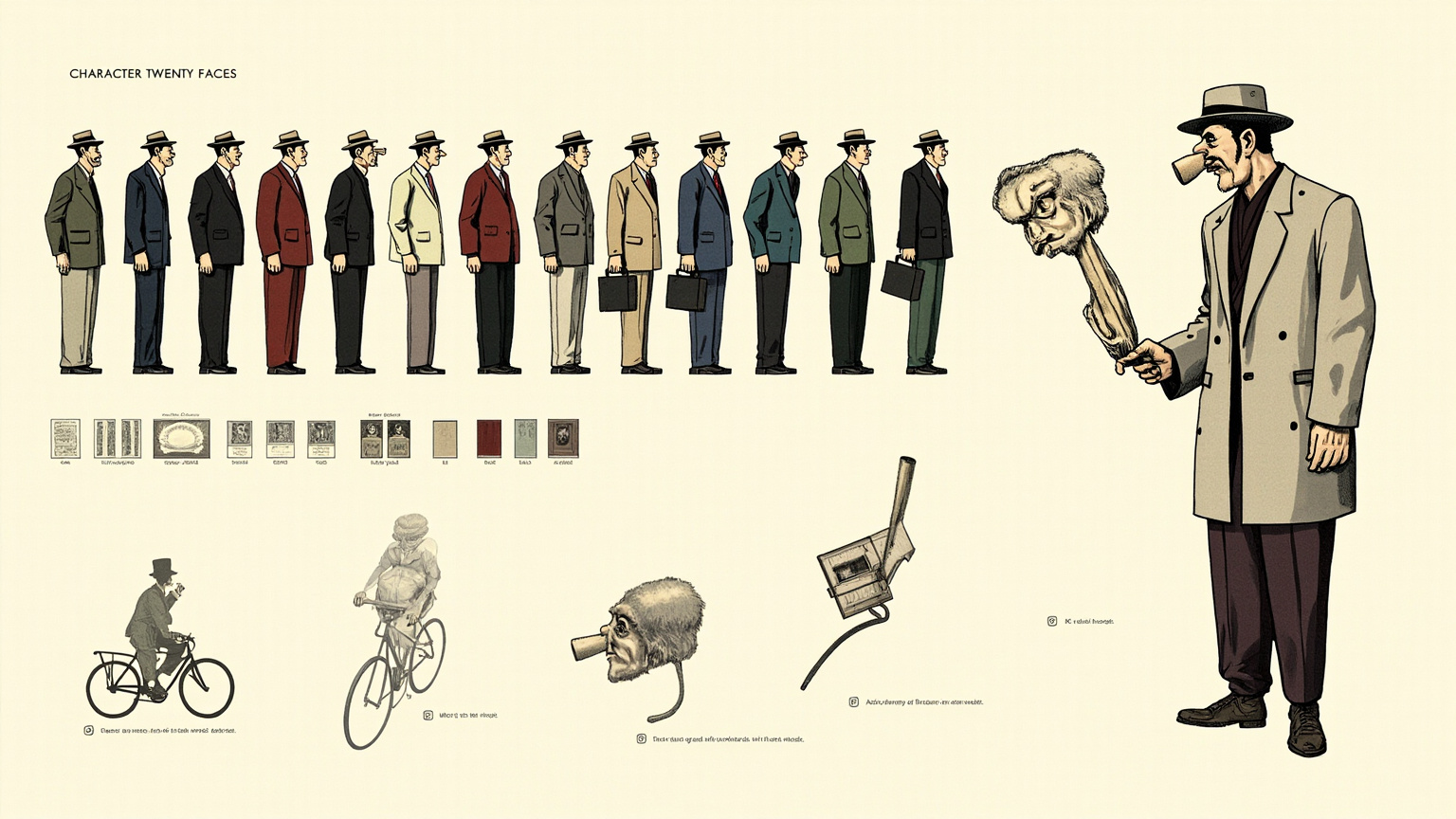
The lead is the thief himself, who switches among twenty faces with wigs, masks, and a trunk of costumes — an old man, a housewife, a gentleman, a servant, each taking a turn, so that no one ever knows who just brushed past them. His opponent is Akechi Kogoro, Rampo's template for the great detective: kimono, a long pipe, sitting with unhurried ease on a chair caught between a Western parlor and a tatami room, ready to pull the whole net tight the moment the case calls for it. The third player is the Boy Detectives Club, led by Kobayashi Yoshio, a band of kids who race across the city on bicycles, flashlights lit, trading signals no adult can read.


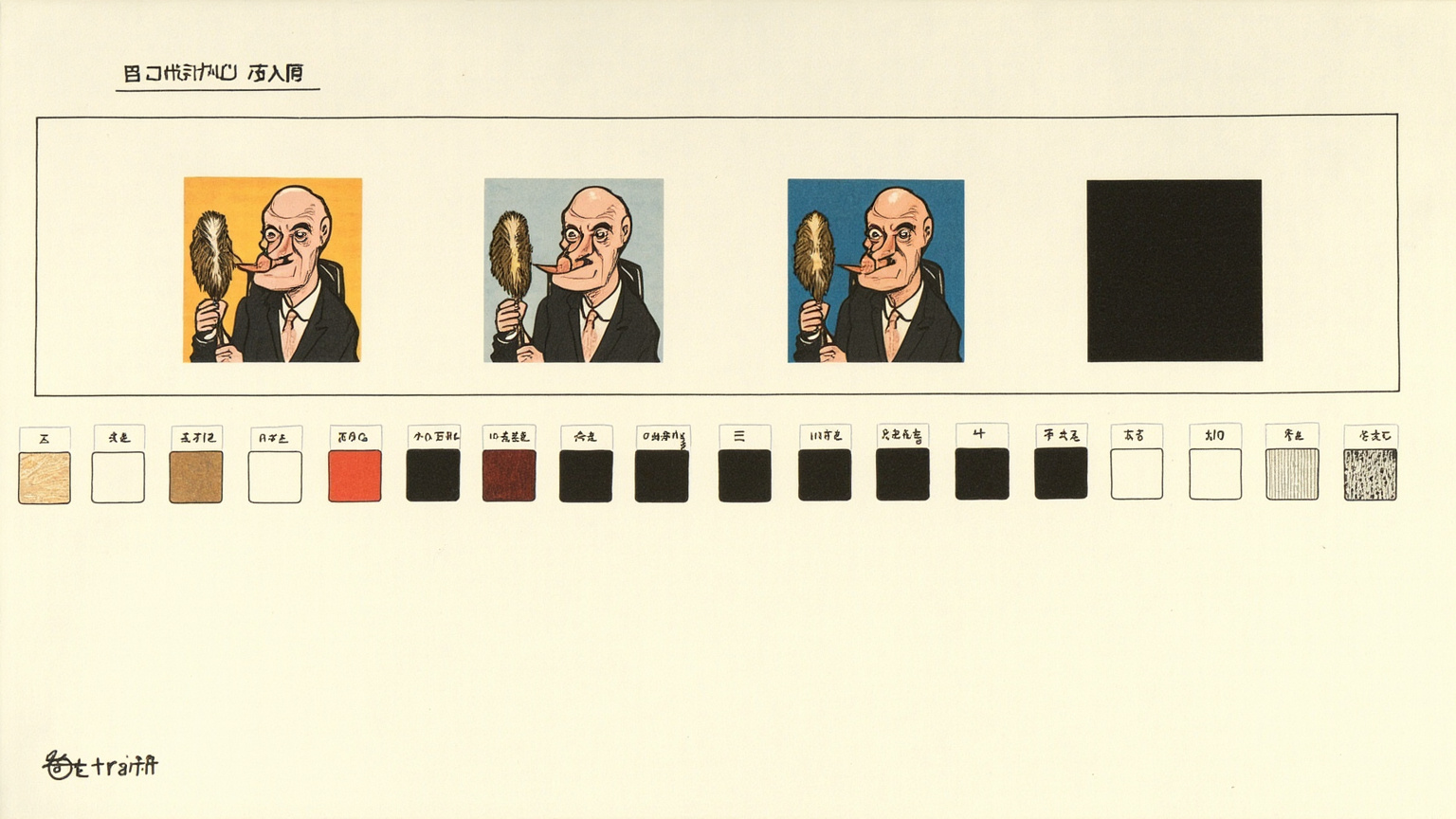
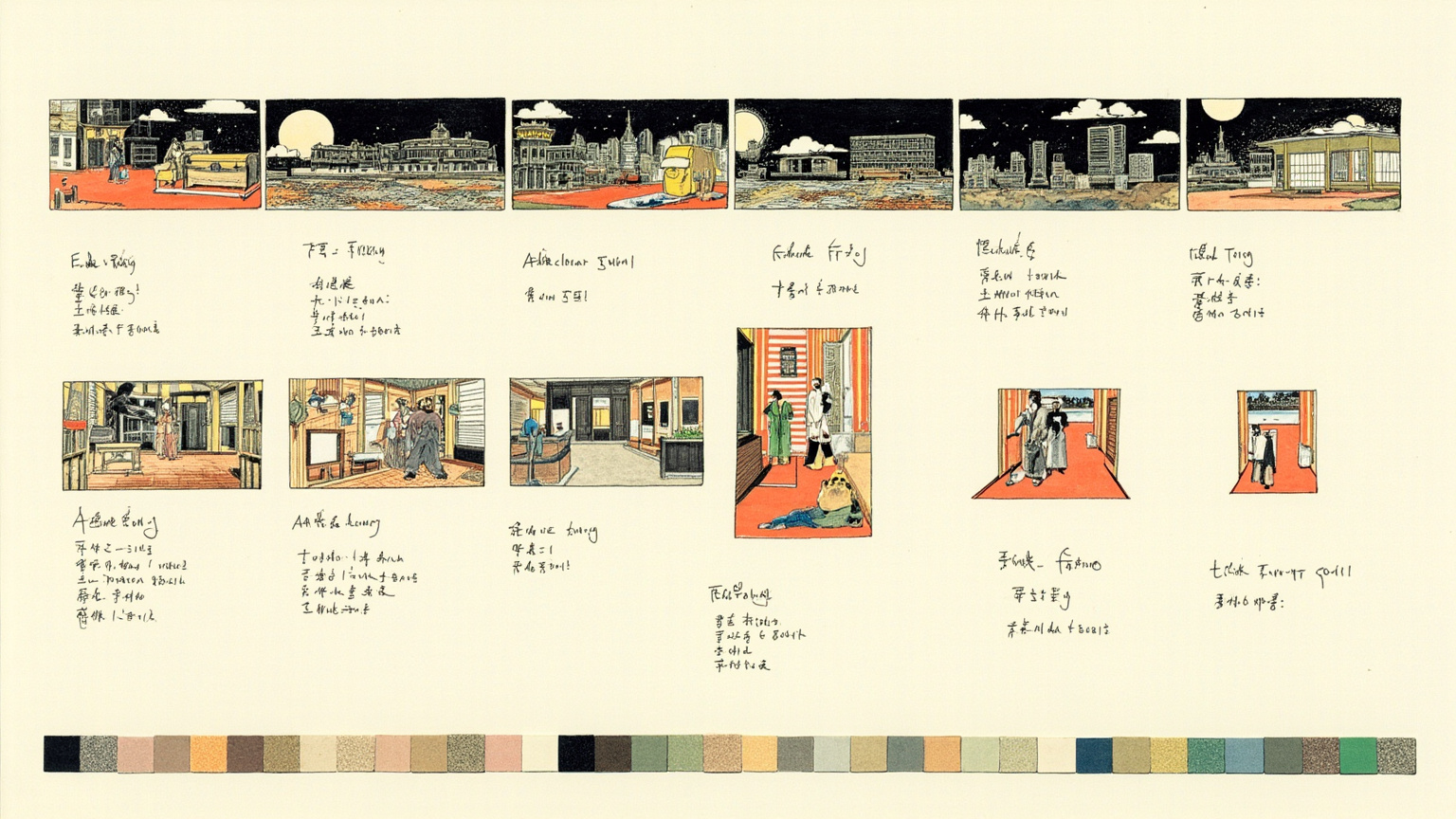
Before the guide was written, this book got a visual foundation — every illustration you just read grew out of it.
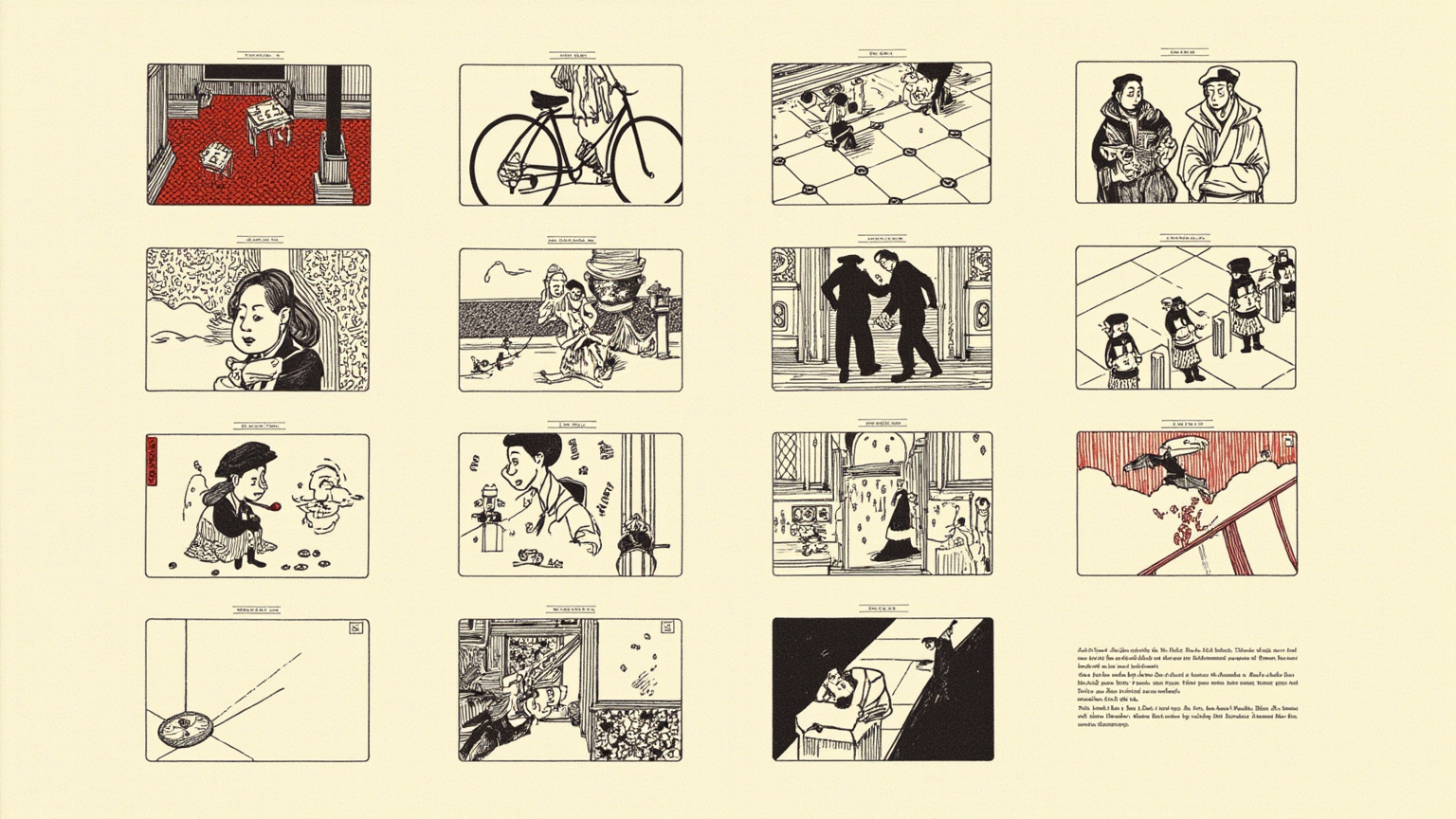
Thief, detective, and boy squad form an equilateral triangle. The thief wants the thrill of pulling it off while everyone is watching. The detective wants the thrill of seeing through the trick. The boys want the thrill of catching the culprit with their own hands and growing up a little in the process. The three pleasures cancel each other out; no one gets to win outright.
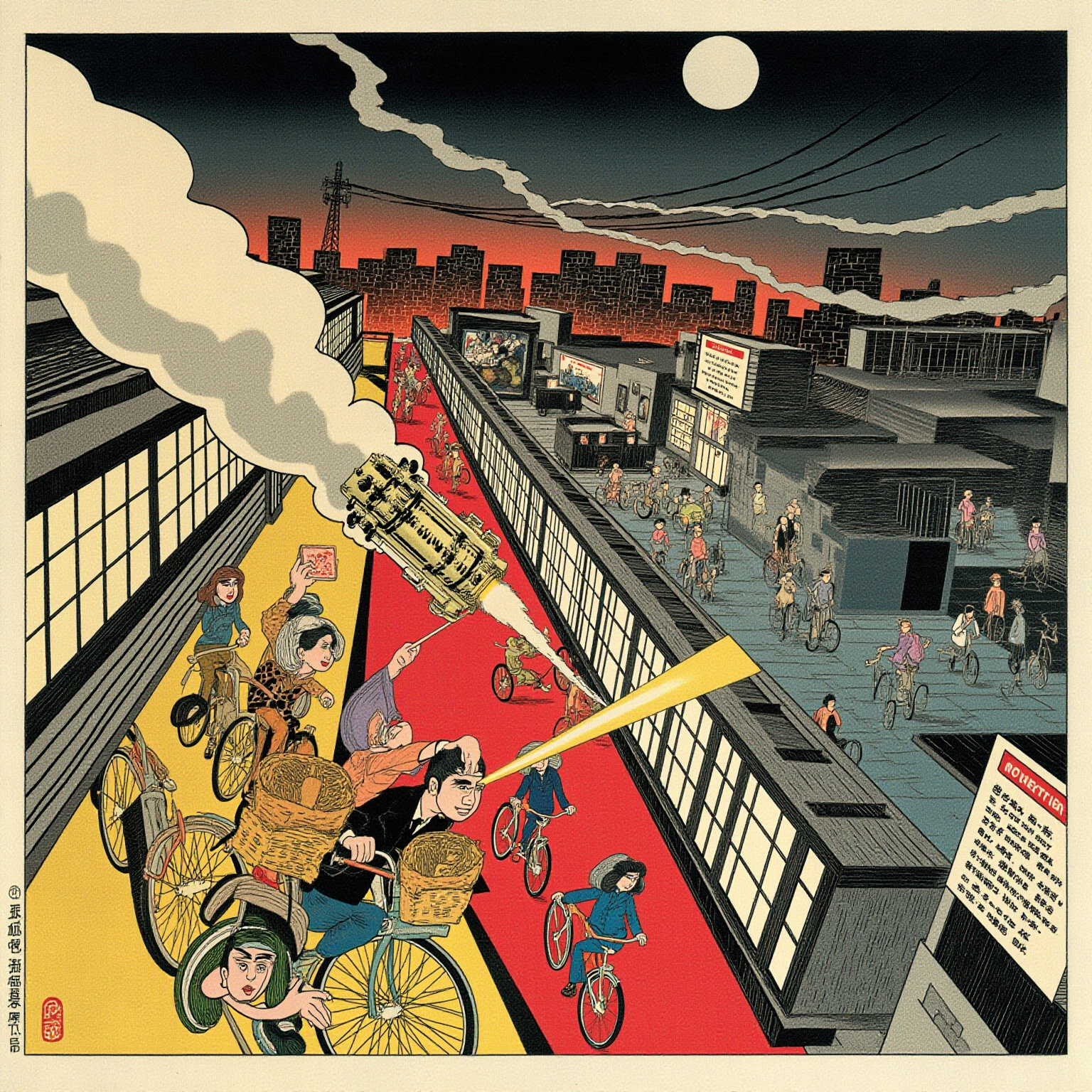
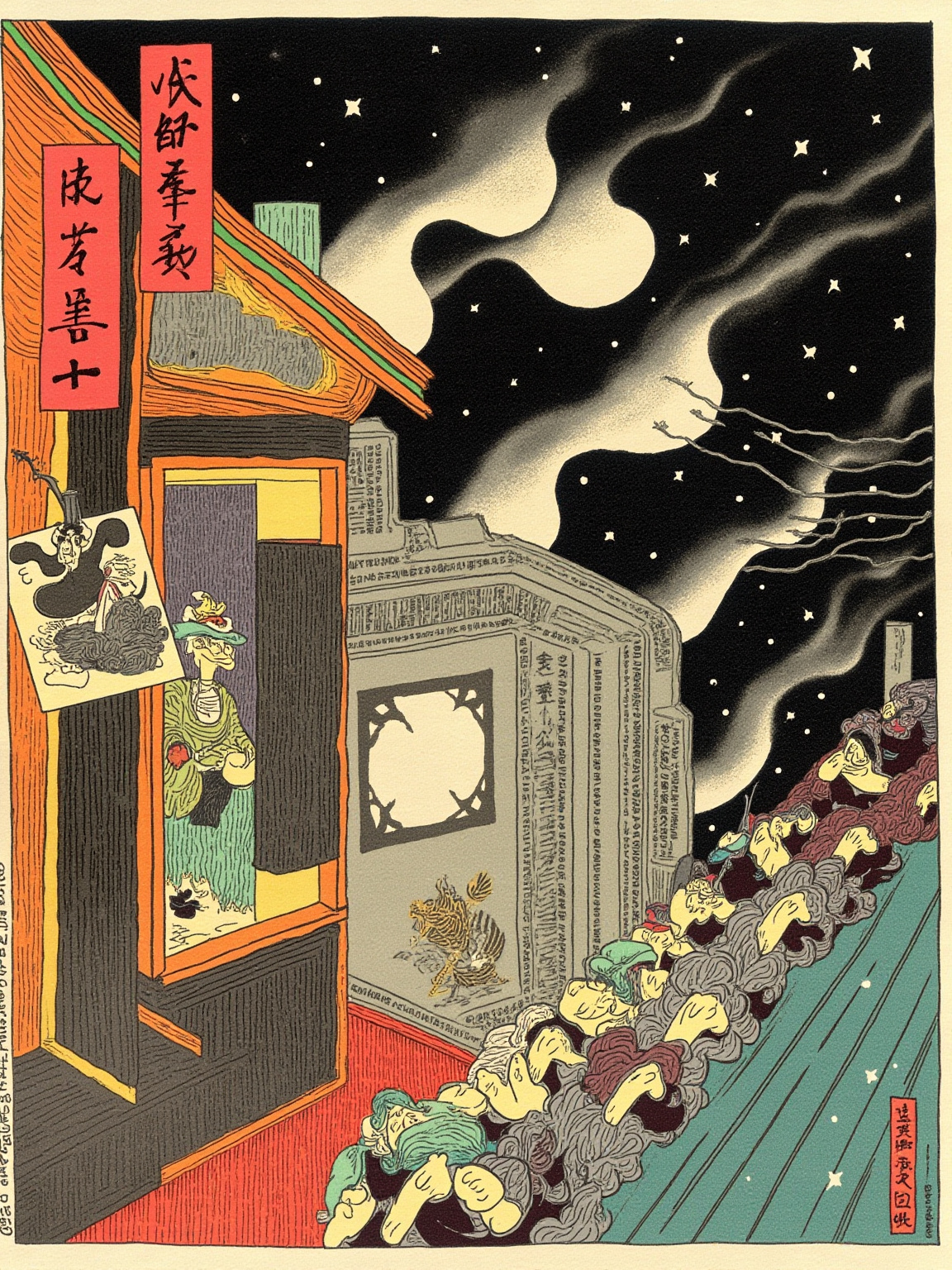
The story opens with a string of these warnings. Each one is an open declaration of war — the date, the target, the place, spelled out and handed to the police with time enough to prepare. And each time, the treasure still vanishes in plain sight. Rampo doesn't scare his readers with blood; he scares them with the feeling of watching a disaster you know is coming and still cannot stop. The Fiend's real face stays hidden behind the makeup, and the reader guesses along with the detective, comes up empty along with him, gets led by the nose across half of Tokyo. Wherever a warning lands, an extra edition of the newspaper follows it into print. Boys crowd the newsstands, bicycle bells ring in a ragged chorus, and that commotion is itself part of the city's scenery.
Disguise is the book's real specialty. In a single night the Fiend can be a gentleman viewing the art museum's collection, then an old servant pouring tea in a Western-style mansion, then a porter hauling crates in a department store warehouse. Every face is complete enough to fool anyone, down to the voice. Rampo never treats disguise as some exotic conjuring trick; each false face comes with a full set of posture, accent, and props. The white-bearded gentleman carries a pocket watch and a monocle. The old servant hides a custom key in his cuff. The porter's shoulders always smell of crates freshly coated in tung oil. This is craft, a tradesman's work, not a superpower. Before every appearance, the Fiend opens his trunk backstage and buttons himself into the next face, compartment by compartment, in front of a mirror — that trunk, packed into its compartments, is the thief's true arsenal.
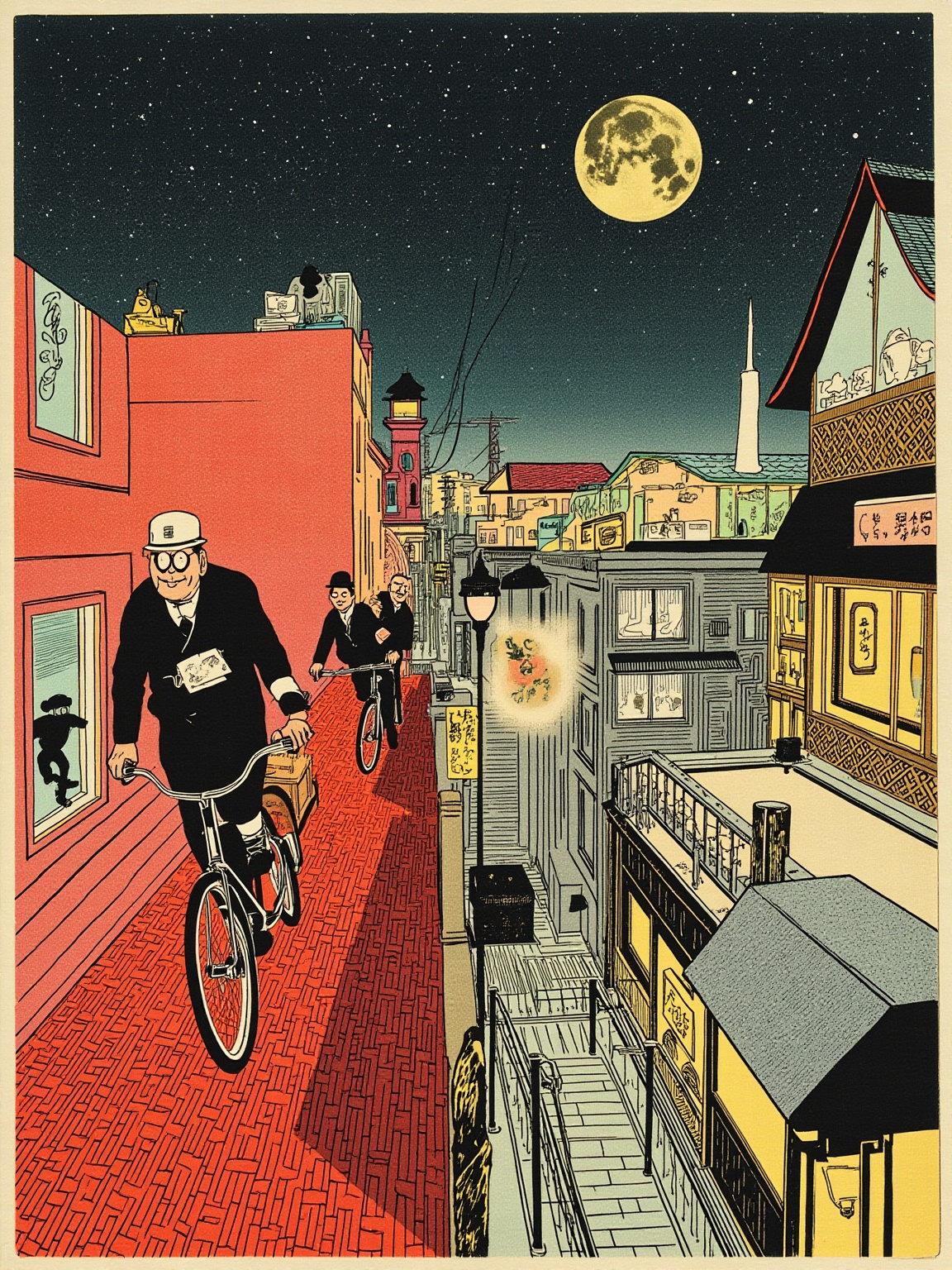
No detective, however sharp, can outrun the thief's feet, and that's where the Boy Detectives Club comes in. Kobayashi Yoshio and his crew cut through the night on bicycles, trading signals in flashes of torchlight. They aren't set dressing; they are the story's real eyes. The adult detective directs from a distance while the boys use their agility and their nerve to cut off the thief's last way out. In one scene a boy walks straight into a trap the Fiend has laid, knows he is about to be caught, and shines his flashlight into the thief's face anyway, buying his teammates one second to make out the real man underneath. In that second the beam slips through a grating and catches an unnatural mole on the man's jaw — the seam where a false skin meets real skin, lifting slightly where sweat has loosened the glue.
Akechi Kogoro never reasons after the fact. He stitches together every stray, seemingly unrelated detail right as the thief is making his exit, and pulls the net shut. Just as the Fiend thinks he has won, he turns around and finds the detective already standing there. The ending plays fair: the treasure returns to its case, the thief is caught — or, as these stories usually go, the case closes with a seed planted for the next warning letter. Akechi takes the pipe from his mouth, and before the smoke has cleared he is already drawing the next warning from his pocket, written by the thief himself, declaring the next war. The cycle starts again.
Edogawa Rampo's signature works are known for their darkness — voyeurism, deformity, and the back alleys of human nature are regulars there. The Fiend with Twenty Faces was deliberately tuned as the exception: no killing, no weapons, playful from cover to cover. It isn't a watered-down Rampo for children; it's the book Rampo wrote for children, the blade sheathed and only wit and nerve left on stage. That restraint is harder to write than his more famous, darker novels. It's also why the book has been read and reread ever since, becoming the foundation stone of the entire boy-detective genre. A foundation doesn't need ornament. The steadier it sits, the more gets built on top.
The thief's charm has nothing to do with what he steals. He announces the crime to everyone's face, steals it anyway, and finishes the job with his rival watching the whole time.
By the end, the book has nailed down four elements that would become the template for every Japanese boy-detective story after it: the warning letter, the disguise, the great detective, the boy detectives club. Once that four-piece set took shape, it became standard equipment on the assembly line — the gentleman thief of Lupin III, the phantom thief who turns up in Yaiba, Kaitou Kid and the boy detectives club running through Detective Conan, are all distant descendants of this slim 1936 book. Put another way, every kid chasing a phantom thief across a screen today is standing on the first brick laid right here.
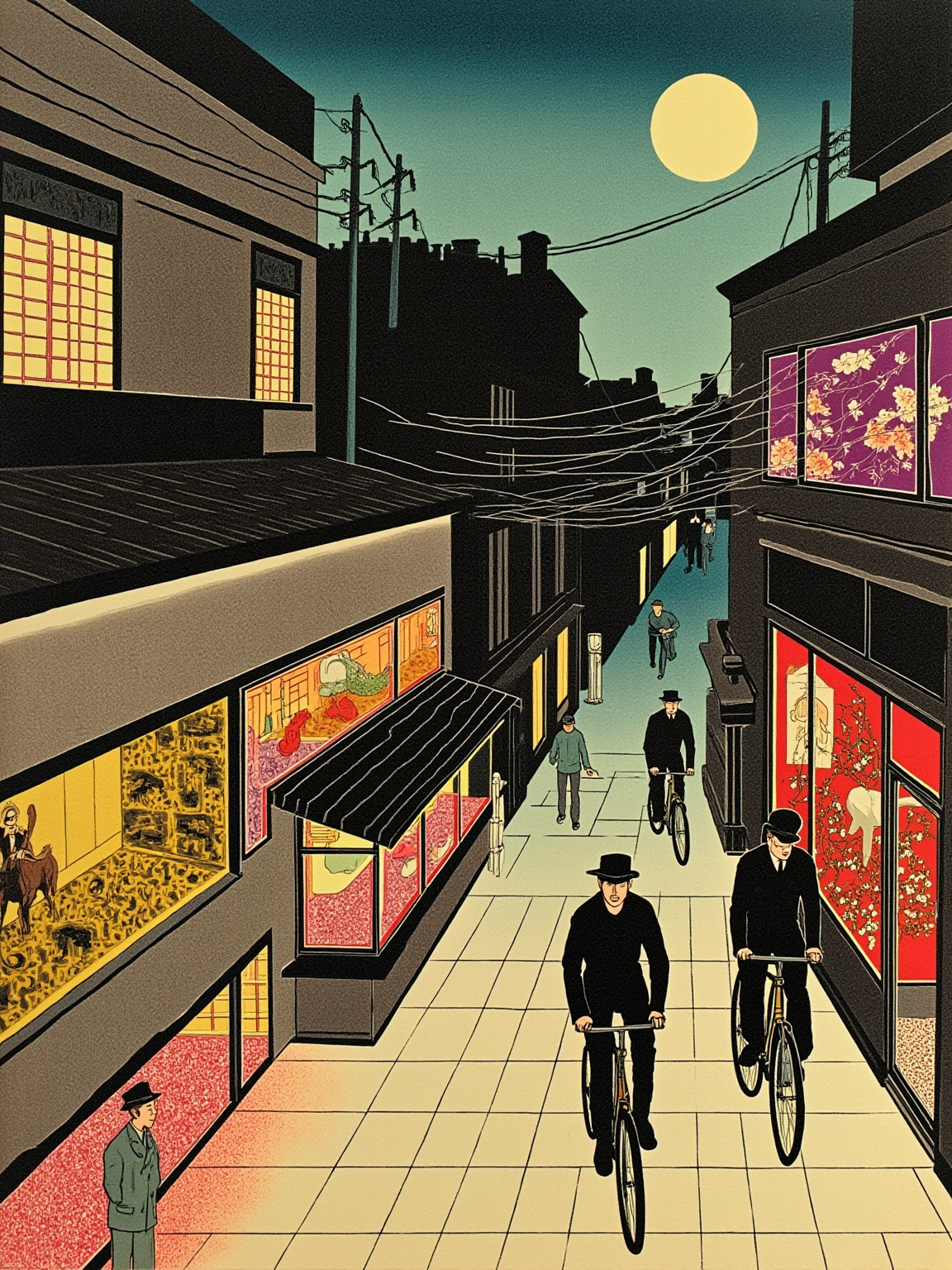
Don't overlook the setting itself. Western-style mansions, the art museum, Ginza, bicycle bells glinting at night, extra editions drifting off the newsstands — in Rampo's hands, early Showa Tokyo becomes, for the first time, a modern city young readers can actually adventure through. Every shop window, every telephone wire, every beam of flashlight is written as an alley a boy reader could pedal down himself. The city isn't backdrop; the thief and the boys run, hide, and trade signals inside it. The city itself is the fifth lead. Moonlight on a utility pole, jewelry behind a department store window, an exhibition poster the thief tears down on his way out: all of it is the city's own invitation to its young readers.
A companion guide can hand you a map. It cannot hand you the feel of the ground underfoot. When Rampo writes a disguise, he fills in the accent, the props, the walk of every false face — that kind of craftsman's density only comes through once you're in the actual text. Akechi's languor and the boys' flickering flashlight signals are two different rhythms, one slow and one fast, meshing against each other. And the Fiend's last laugh at the close of every case, the cockiest line on every warning letter, that boyish urge to taunt a rival he's already beaten, only the original text will actually make you laugh at it. The map is in your hands now. The ground still has to be walked.