The Glass Bead Game (Das Glasperlenspiel), also published as Magister Ludi · Companion Guide
玻璃球游戏
一个把一生献给纯粹精神王国的人,在登顶之日辞职下山;走进世俗生活的第一个清晨,湖水收走了他。
Opening
By a mountain lake, the morning water blazed painfully bright. A middle-aged man who had just resigned from the nation's highest spiritual office jumped in to swim and never came up. He would not return to the corridors on the mountain — because he himself had closed that door the night before. His name was Joseph Knecht, which in German means "servant." The servant drowned in the lake. The whole book turns on this one gesture.
The drowning is not Hesse's punishment, nor the escape he sought. It is the life that seizes him the moment he takes his first step, swallowing him whole. Knowing the end, and going back over his life, the reader is left with only one question: what courage does it take to walk out of the purest kingdom of the intellect, and what must be left behind?
What Kind of Book Is This
The Glass Bead Game is Hesse's 1943 novel and the work that won him the 1946 Nobel Prize in Literature. Throughout his career, this German writer kept returning to the same type of figure: a person torn apart by their own inner contradictions — East and West, spirit and flesh, order and rebellion. The book is his final report on a lifetime of tearing. It takes an unusual form: a fictional "biography" written by a future editor, with poetry interspersed throughout and three appendices at the end. The main text is that editor's retelling of Knecht's life. A writer writing about a writer writing about another writer's life — two layers of remove. Hesse wanted exactly that distance, to let you look back at a man through time.
Characters and World
The story takes place in a distant, unspecified future in Castalia — a province of academies devoted to music, contemplation, and the glass bead game, separated from the noisy secular world beyond by an invisible wall. In the mountains, stone corridors and arched windows; in the scriptorium, parchment scrolls spread across long tables; in the monastery bell tower, the bells toll morning and evening. The palette is cool, almost religiously serene. The glass bead game is not a board game, not chess, not beads rolled around to determine winners. It is a fictional supreme intellectual activity: participants use a shared symbolic language to weave music, mathematics, philosophy, and art into a single network of meaning. Visually, it appears as floating geometric forms and threads of light — an abstract spiritual event, no physical beads ever touch a board.
A few pillars hold up this world: the Music Master, Joseph's spiritual father, who picked him out of the crowd before he could even read; Plinio Desinori, who came in from the outside as an exchange student in childhood and became Joseph's lifelong mirror, showing him what living people outside the walls looked like; Father Jacob, the historian at Mariafeller Abbey, whose appearance forces Joseph to reconsider Castalia — an intellectual opponent and catalyst; Tegularius, Joseph's closest friend in Castalia, a genius at the glass bead game but with a disposition as fragile as glass, another mirror for Joseph; Thomas von der Travia, the previous Master, the perfect example of what Joseph's predecessor was, the target Joseph wanted to reach while he lived, and after whose death the position was left open for him; Tito Desinori, Plinio's child, Joseph's final student, symbolizing the work Joseph left unfinished.
Plot Overview
Joseph was an orphan, raised from childhood in an academy devoted to music and contemplation. He did not remember his parents and never asked about them. One ordinary autumn day, the school's music master passed by the great hall, heard him harmonizing with the choir, walked to the back row and took his hand—and from that moment he was led into the mountain fastness of Castalia. The author writes this passage almost as a miracle, without any buildup: just a chance encounter. The master did not say he heard something beautiful. He said he heard someone who could "listen."
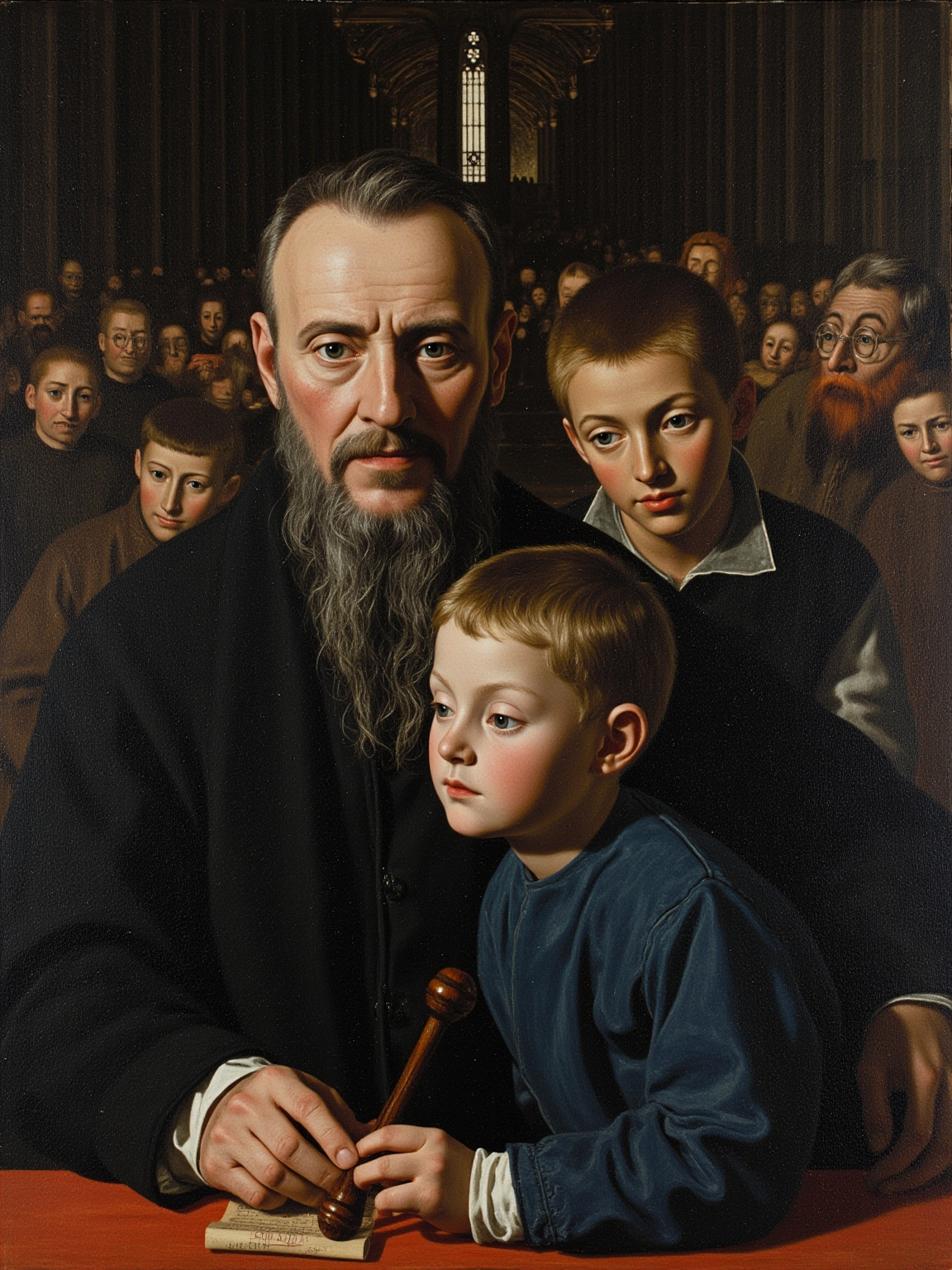
It was not a plan but an act of simple obedience to that gentle and unquestionable voice within him.
那不是一项谋划,只是顺从了心底一道温柔而不容置疑的声音。
金句 · 开篇章节 · 召唤
Once inside Castalia, Joseph was like a carefully cultivated tree. Mornings were for sutra recitation, mornings for classical languages and symbols, afternoons in the scriptorium copying musical scores or doing calculations. He did not marry outside, did not engage with politics, did not even worry about firewood, rice, or oil. To outsiders this purity seemed luxurious; to those within, it was simply how things were—until an exchange student from outside named Princio Desinori sat down and began arguing with Joseph: "You lot spend your days embroidering flowers on the mountaintop while people down below are starving." For the first time, Joseph was left speechless.
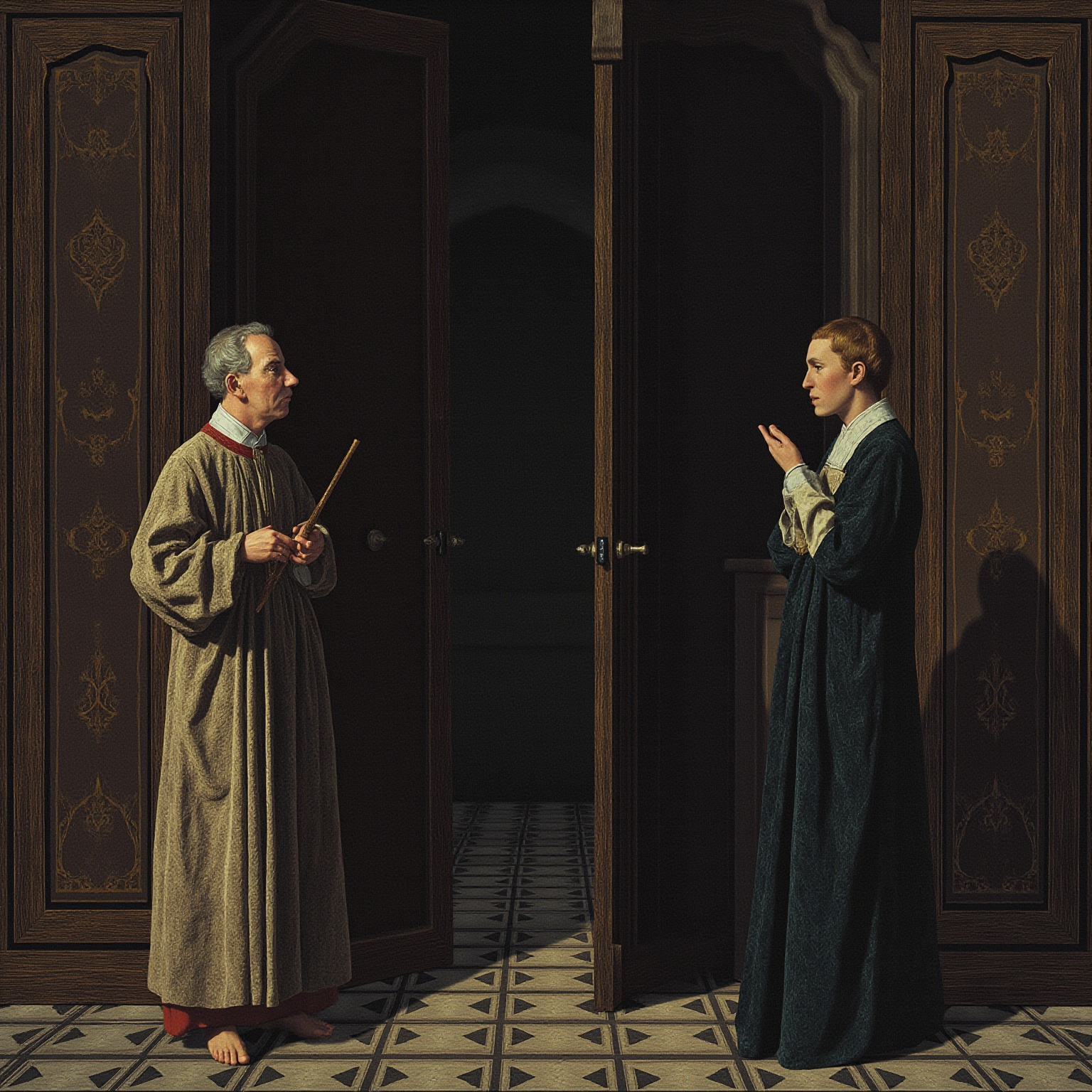
He was given over to the Order, and the Order received him as a mother receives a child.
他把自己交付给学园,学园便如母亲接过孩子一般收下了他。
金句 · 早期学园章节 · 入团
The debate had no conclusion. But it planted a thorn in Joseph's heart. As an adult, he entered the elite circle of the Glass Bead Game, working alongside his brilliant friend Tegularius, threading needles between symbols—each interpretation like a soul's acrobatics, written by the author with extreme restraint, all technical terms and perfectly still images. But readers can sense that kind of purity comes at a cost: Tegularius's neurotic breakdown is the warning. Pure intellect, if it never touches ground, gradually empties a person into a paper lantern shaped like a human form.
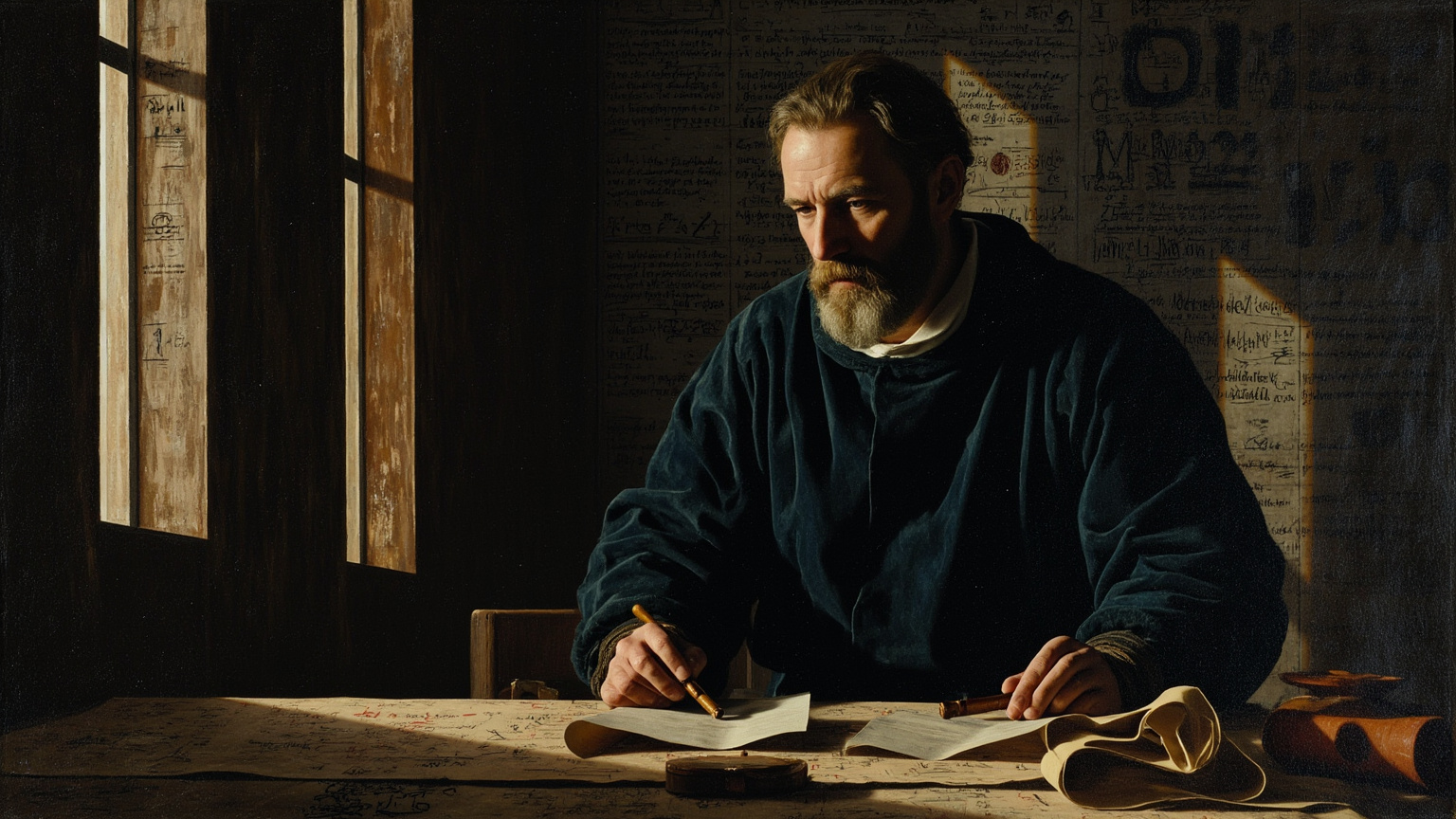
We two sat for hours debating whether the way of life of the Castalian Order was right or wrong, better or worse than that of the uninitiated world.
我俩对坐数小时,争论着卡斯塔利亚修士的生活方式究竟是对是错,是否胜过那未被启蒙的尘世。
金句 · 少年辩论章节 · 普林尼奥
The academy sent him on a mission to the Benedictine monastery of Mariafels beyond the mountains, a tricky diplomatic task. There he met Father Jacob—a historian who carried the whole of human history in his head. The father did not argue; he only told stories: of medieval plagues, of famine victims in the Thirty Years' War, of all the people who had "loved, lived, and died within history." For the first time, Joseph encountered a wisdom beyond Castalia: not transcendent purity, but flesh and blood within history.
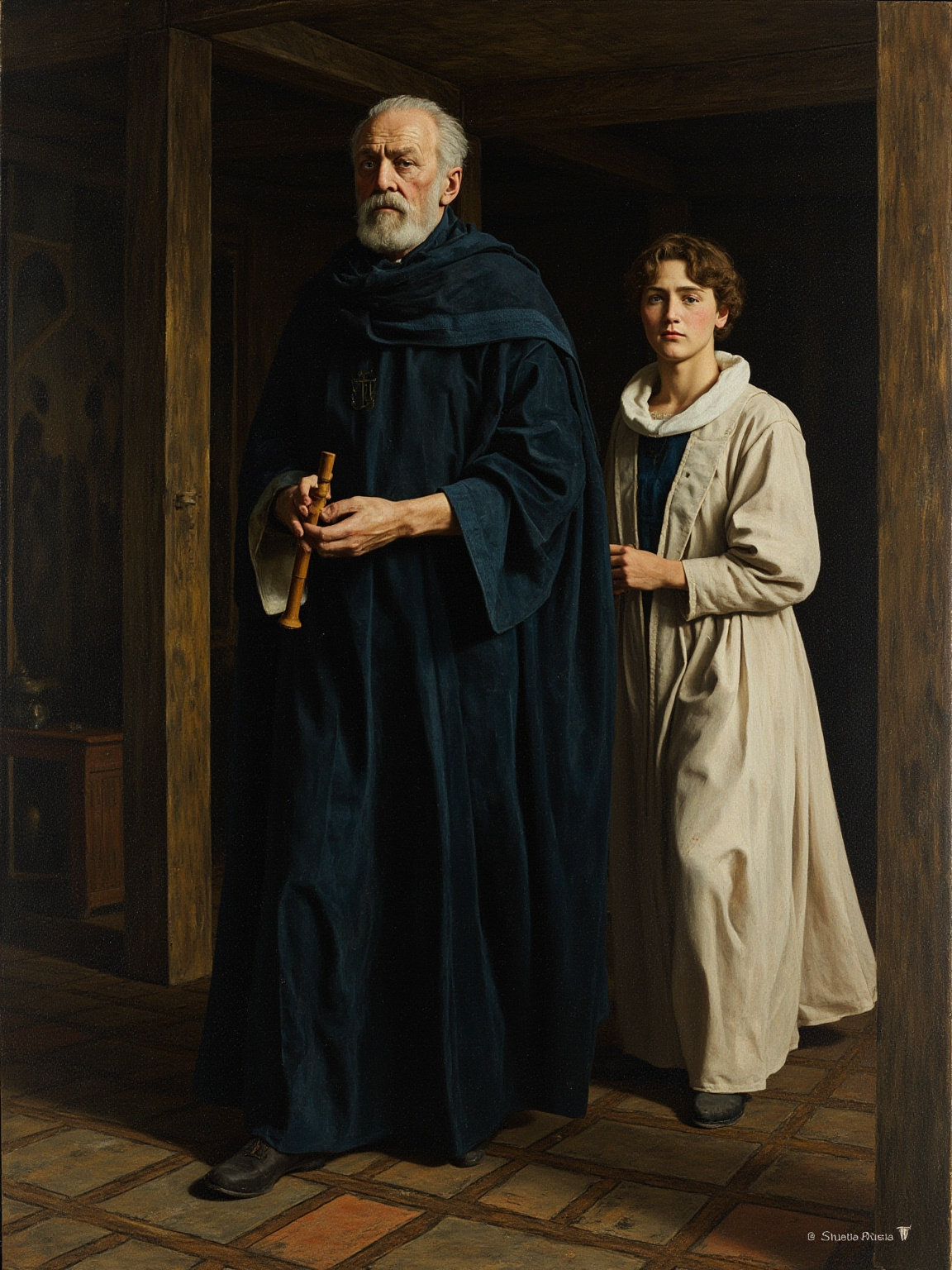
He told us of the plague and of the starving, of the wars and the persecutions, and the more he spoke the more living and real everything became.
他向我们讲述瘟疫、讲述饥饿的百姓、讲述战争与迫害;他说得越多,一切便越是鲜活,越是真实。
金句 · 玛丽亚费尔章节 · 雅各布神父
Back on the mountain, the former Master Thomas von der Trave had died. He was a man who played the title "Game Master" to perfection—elegant, authoritative, a living monument. Joseph was elected to succeed him, taking the highest spiritual office in the Provincial academy. At just over thirty, the supreme position in a realm of pure intellect—in an ordinary story, that would be the end. But Hesse would not have it so.
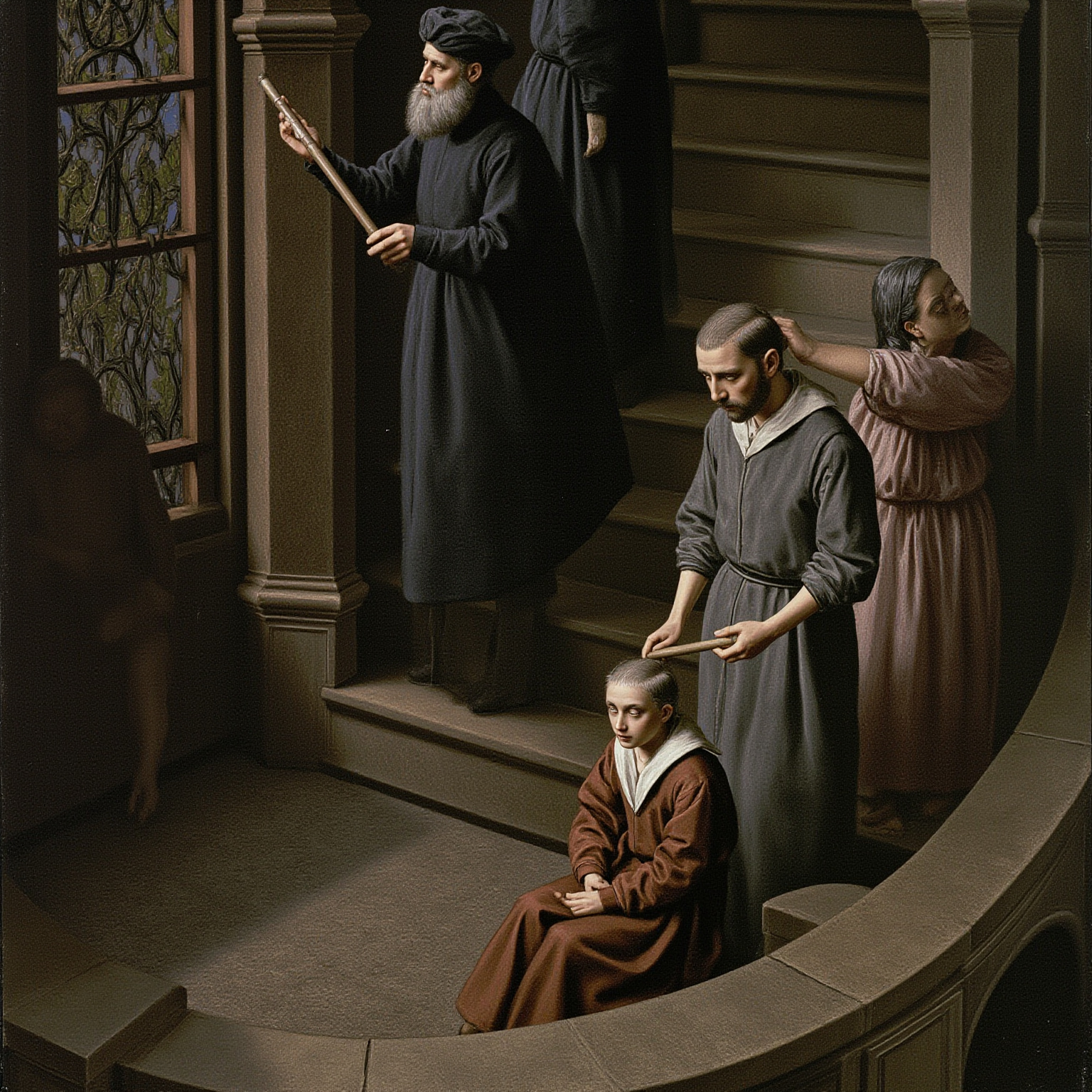
The post of Magister Ludi was for him both a peak and a precipice: he had reached it only to discover that he must overleap it.
玻璃球游戏大师之位于他,既是峰顶亦是悬崖:他攀到这里才发现自己还得纵身一跃。
金句 · 大师继任章节 · 顶峰
After reaching the summit, the author writes with even colder precision than during the ascent. Joseph walked alone through the long corridors, listening to the echo of his footsteps, and suddenly realized something: everything he had done for ten or twenty years had not been "used" for any living person. The Game was perfect, the research exquisite, the academy orderly—but this was a mountain without children. The more refined Castalia became, the more he doubted: had pure intellect closed itself off into a kind of religious idol? For the first time, he inwardly pronounced his own name—Knecht, the Servant.
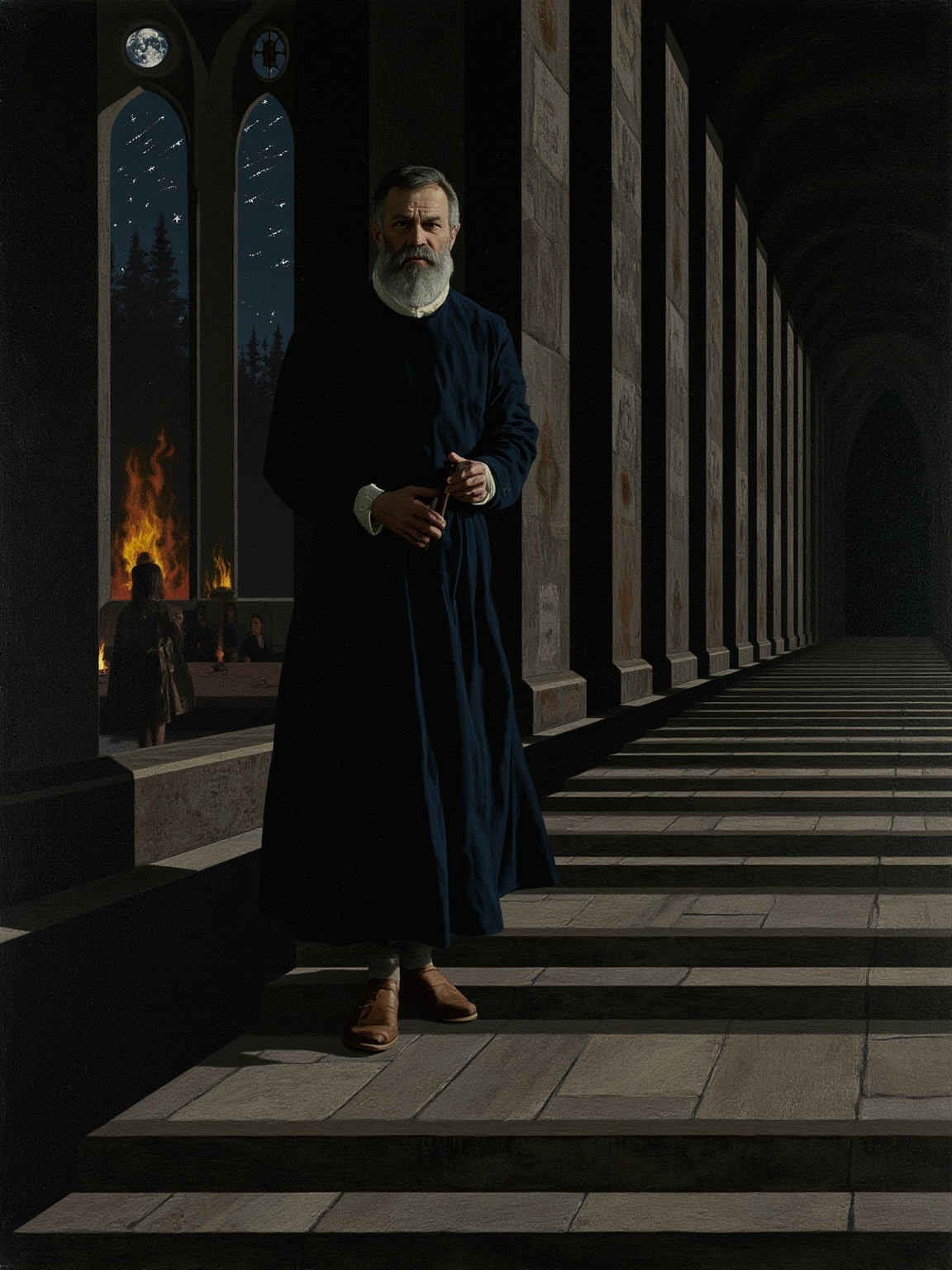
As Master, he did something no one expected—he resigned, submitting his resignation to the Provincial academy. The reason was neither weariness nor humiliation, but that "a servant cannot forever attend to purity from within the tower." He would go down the mountain, into the secular world, to work as an ordinary tutor—to do truly "useful" small things.
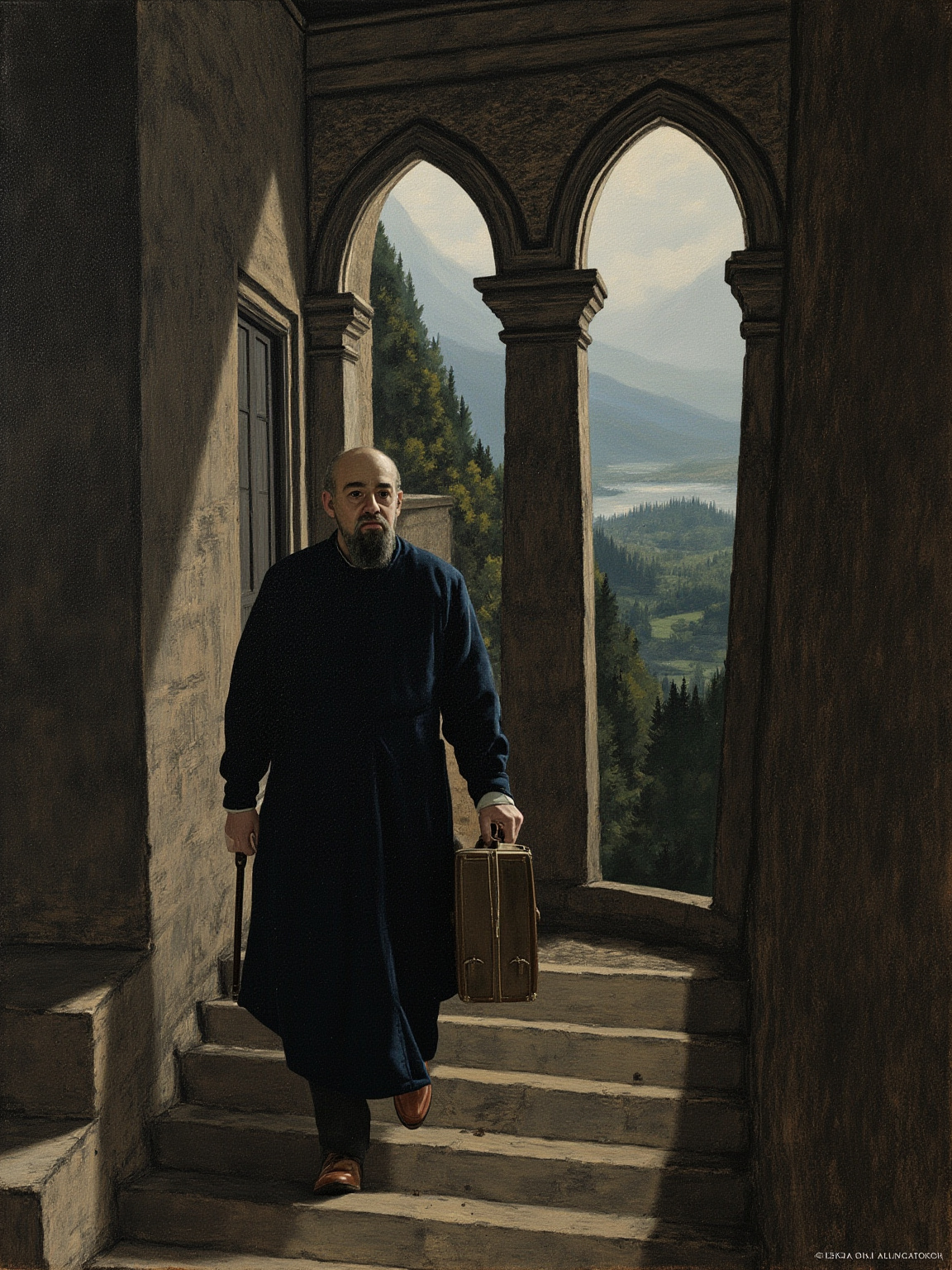
I will no longer be a hierophant of purity; I will go down among the men of the world, and be content to be, where I am, a simple servant and pupil.
我不再做纯洁的祭司;我要下山去,走进世人之中,满足于此地,做一个卑微的仆人与学徒。
金句 · 辞行章节 · 出走
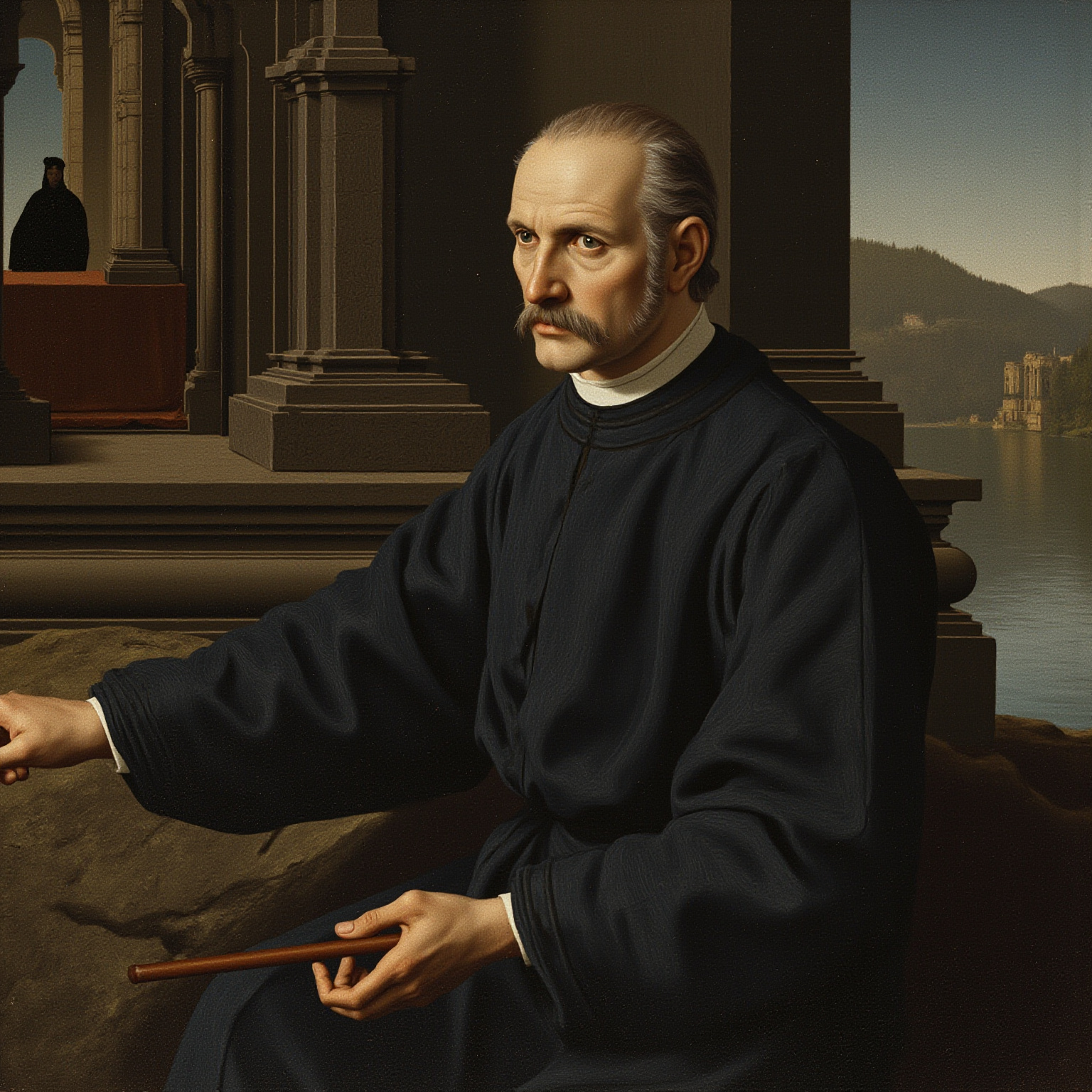
The first stop downhill is the home of his old friend Prinio. Prinio has become a political figure now, and in his household there is a young man named Tito, the very student Joseph has come to teach. The two old friends, not having seen each other for years, shook hands at the door, with a thousand words pressed behind them. They agreed to begin their new life early the next morning. The next morning, Prinio pushed open the window and looked down — the lake surface was so flat it gleamed, and Joseph was nowhere to be seen. The servant found his clothes neatly folded on the shore. He never came back up from the water.
Theme and Technique
What this book truly wants to say is neither "the spirit is useless" nor "the worldly is superior." It says: if pure spirit does not actively humble itself into becoming a servant, it will slowly transform from life into decoration. The name Knecht means servant — it took him half a lifetime to hear the line hidden in his own name. This tearing between otherworldliness and worldly engagement runs through Hesse's entire life. From the early works Beneath the Wheel and Steppenwolf all the way through Siddhartha and The Glass Bead Game, his protagonists always stand between two worlds, one foot in the monastery and one foot in the market. The difference in The Glass Bead Game is that Hesse pushes this tearing to its extreme — to the point where a person must answer it in a way that is almost self-destructive: "walking down the mountain."
In terms of technique, Hesse did something counter to the prevailing style: a novel whose protagonist spans an entire life, yet the plot has almost no "events" — no wars, no murders, no romance, no antagonists, almost no women (Castalia is a province of male academies). All the drama happens in the heart. He used the layer of "fictional biography" to create distance, then employed poetry and appendices to give the rhythm room to breathe — the result is a book that reads like tapping on slate, with bells occasionally pouring in. Its meaning for today's readers lies in this: in an era where everyone is caught up in "rat race" and "getting to shore," The Glass Bead Game poses a question rarely taken seriously — whether polishing oneself to the purest extreme becomes a form of escape in itself.
Reasons to Read the Text
The commentary can tell you what he did, why he did it, and what it cost. But it cannot give you three things: the touch Hesse uses when writing about the mountain air and bells of Castalia — that almost religious chill you must feel for yourself on the page; the tonal contrast between the two boys during the debate — this passage will catch in your throat halfway through; and the drowning scene, which is extremely short, extremely quiet, says nothing at all — you must see that lake with your own eyes to understand why the book should end here. It is still worth reading knowing the plot because the book's greatest event is not Joseph's death but the faint bell that rings in his soul with every step he takes in the first forty chapters. The commentary can only point to where that bell is; the ringing is your own doing.
The servant is not someone sent to wait on others — it is someone who actively chooses no longer to stand at the top of the tower.
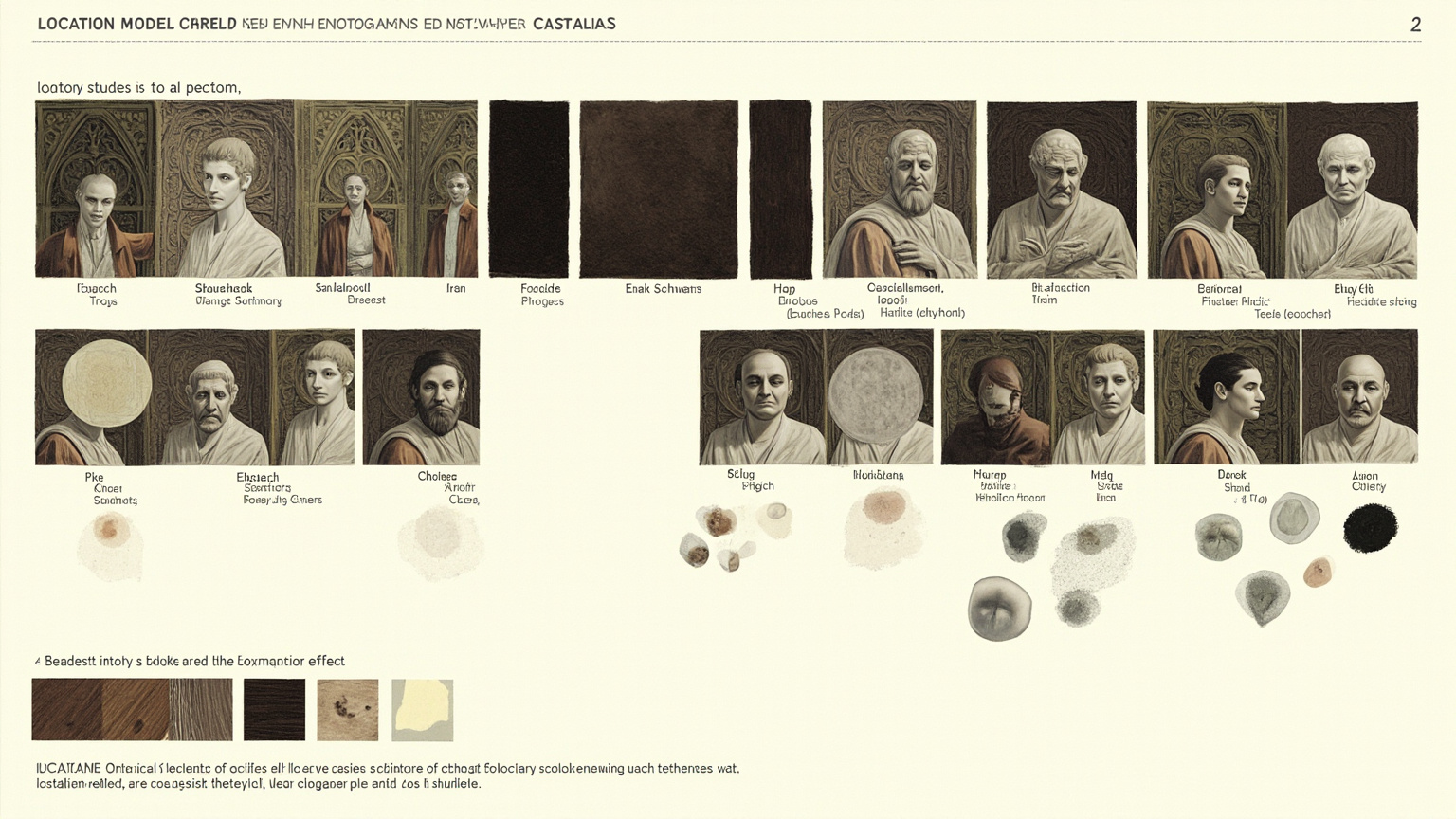
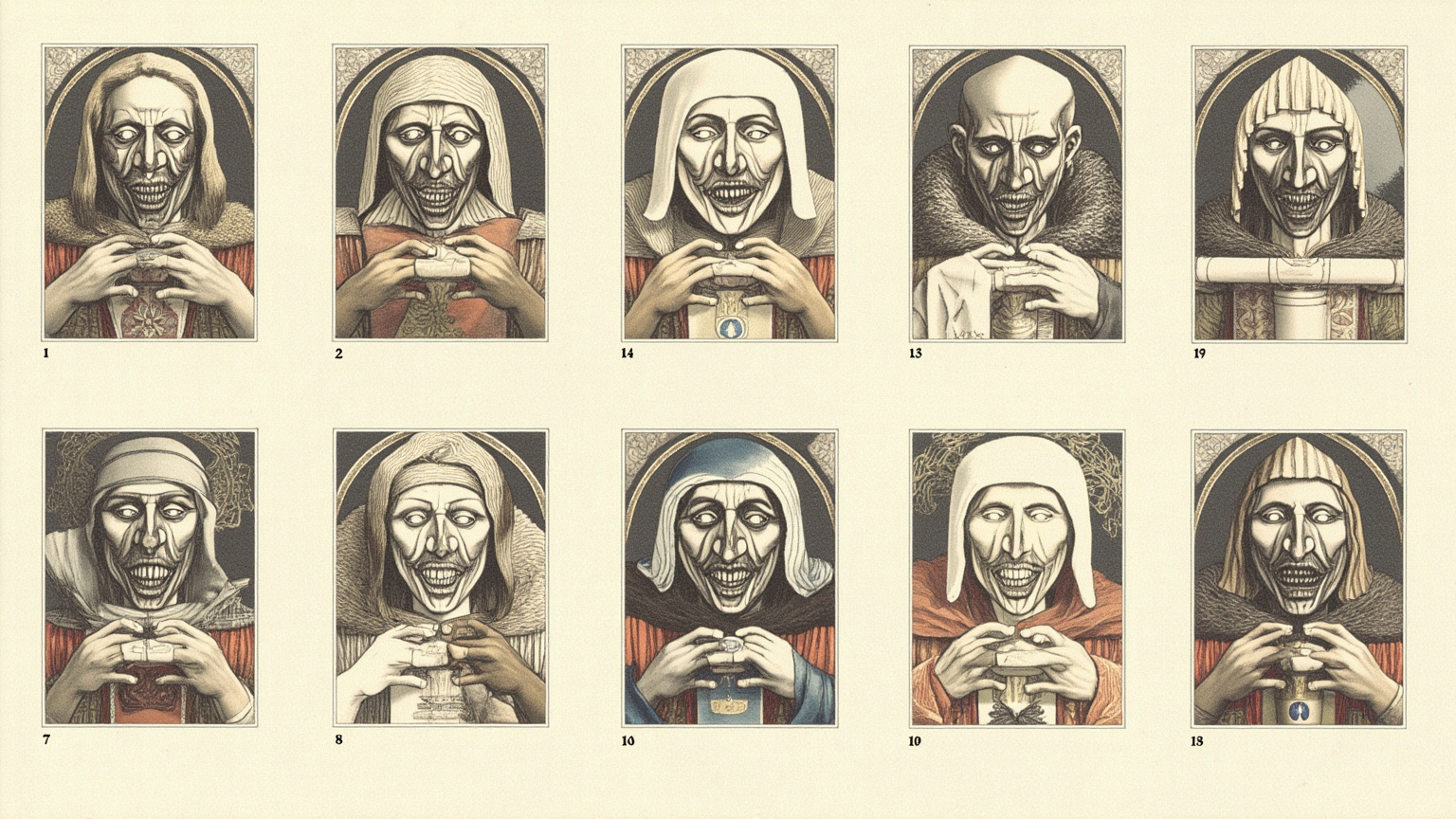
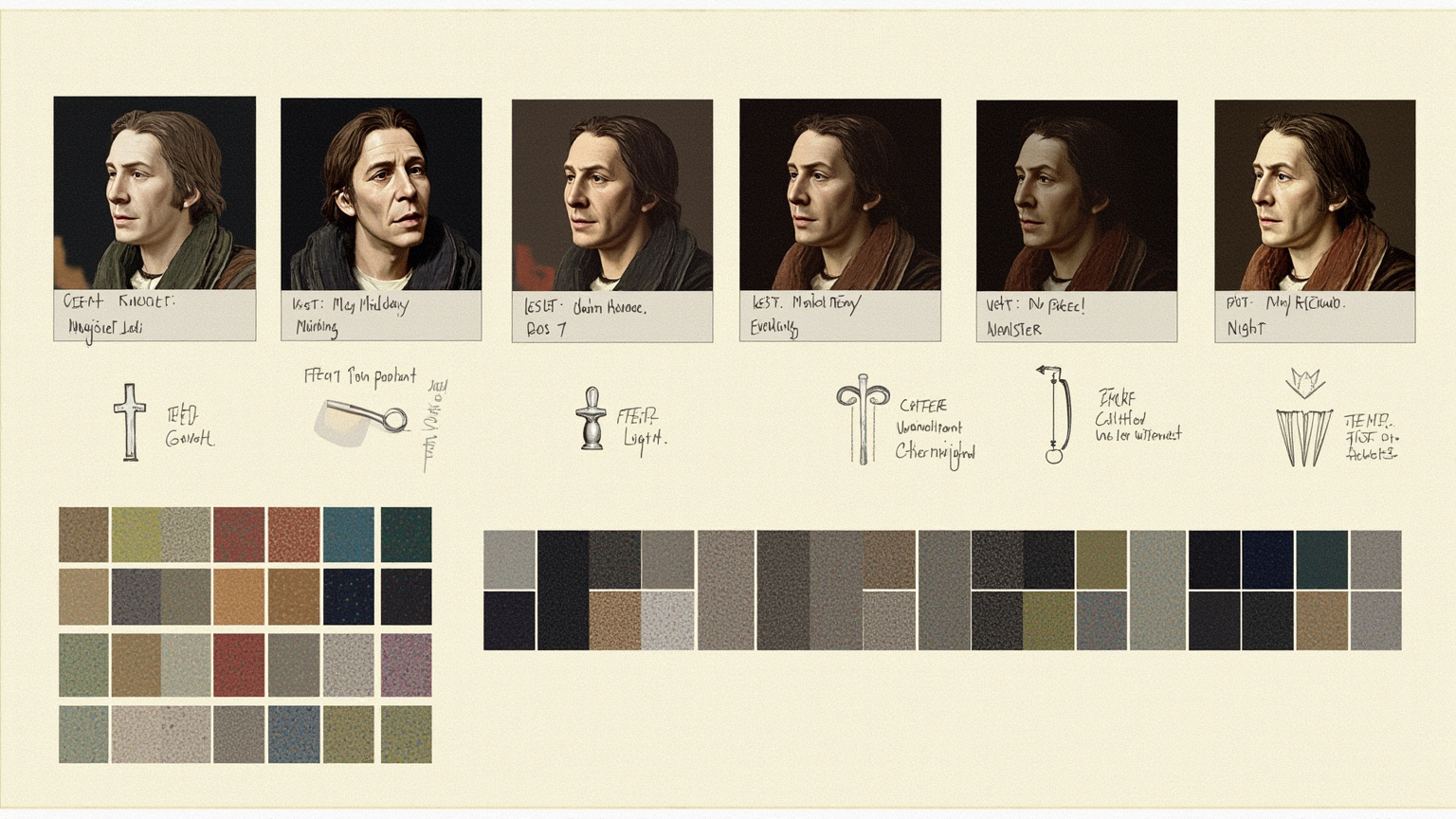
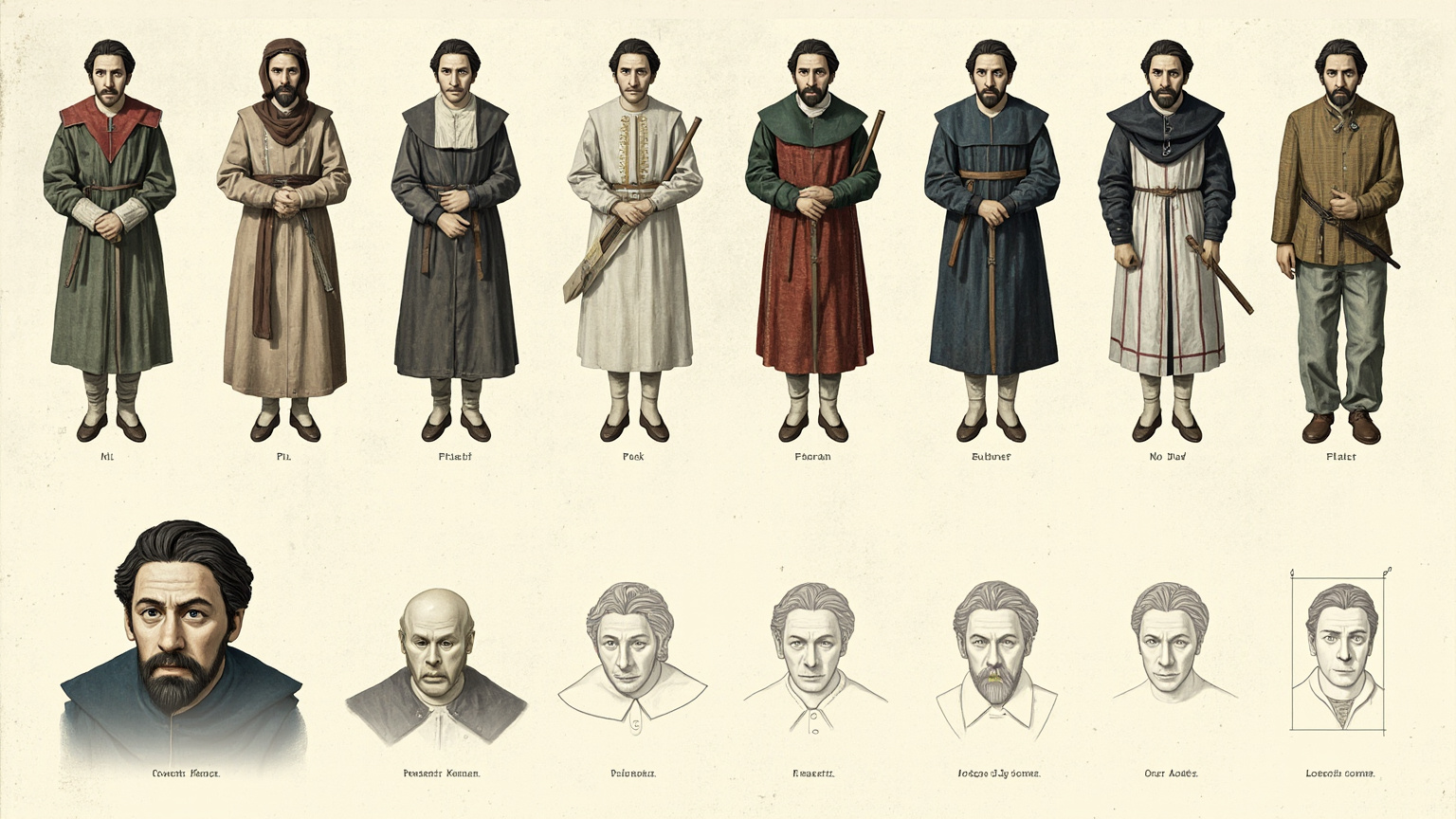
Art Direction4 plates
Before the guide was written, this book got a visual foundation — every illustration you just read grew out of it.