The Guide for the Perplexed (Moreh Nevukhim / Dalālat al-Ḥā'irīn) · Companion Guide
迷途指津
一封十二世纪的长信,教一个失眠的青年如何同时不背叛信仰与理性——王宫最深处那位从未被看见的王,是终点也是永远的未竟。
Opening
A twelfth-century letter, still reprinted today. On one side, the all-powerful, jealous, wrathful God of the Hebrew Torah. On the other, the passionless universe Aristotle laid out through logic. The man writing it stacked both on the same desk — and the young man caught between them couldn't sleep.
What kind of book is this
The Guide for the Perplexed — in Arabic, Dalalat al-Ha'irin — was written by Moses Maimonides, known to Jewish tradition as Rambam, in Fustat, Egypt, at the end of the twelfth century. In form it is a long letter to one particular student; in substance it is the high point of medieval Jewish philosophical theology, forging the Aristotelian-Arabic philosophical tradition and the Hebrew Torah and rabbinic Talmud into a single key. Without it, Aquinas's rational theology and Spinoza's monism would each be missing an important stepping stone. It was never a bestseller, but almost anyone who has seriously wrestled with how faith and reason can live together eventually runs into it.
People and world
The cast is small. The letter's author is Maimonides himself — court physician, leader of the Jewish community, philosopher, past fifty — present as a guide, never stepping into the foreground. The recipient is Joseph, a young scholar in Alexandria who loves philosophy and fears betraying his faith, the two vocabularies at war in his head; Maimonides calls him the perplexed one. The whole book is a conversation between these two. But the parable of the palace brings out a procession of seekers, ranked by how far their understanding reaches — the book's most vivid group portrait.
The physical setting is Fustat under Saladin at the close of the twelfth century, a city where several faiths lived side by side, where a Jewish scholar could also be a court physician, where Aristotle's logic and Hebrew scripture lay open on the same desk. The other setting is one Maimonides builds himself: a palace where seekers stand at different distances according to how much they understand — outside the walls, at the gate, in the outer hall, in the inner hall, in the innermost chamber, where a king who is never seen sits at the center, spoken of only by saying what he is not.
Origins: a sleepless young man in Alexandria
Joseph wrote from Alexandria. Reading the Torah, he said, he kept running into contradictions; reading philosophy, he found himself won over by a different set of arguments, and he could not let go of either. He couldn't sleep. He was afraid that one wrong turn would cost him his faith. Maimonides wrote back admitting that he had walked the same hard road as a young man. The book's opening line concedes that he too had once been lost — this is not an answer handed down from above, it is someone who has been there catching another man mid-fall.
That opening sets the tone for the whole book. It is not a verdict, not a catechism, but an extraordinarily patient conversation between two generations of seekers. Maimonides's tone is gentle, but his logic never gives an inch — and in the Guide, neither ever yields to the other.
Part One: Loosening reason
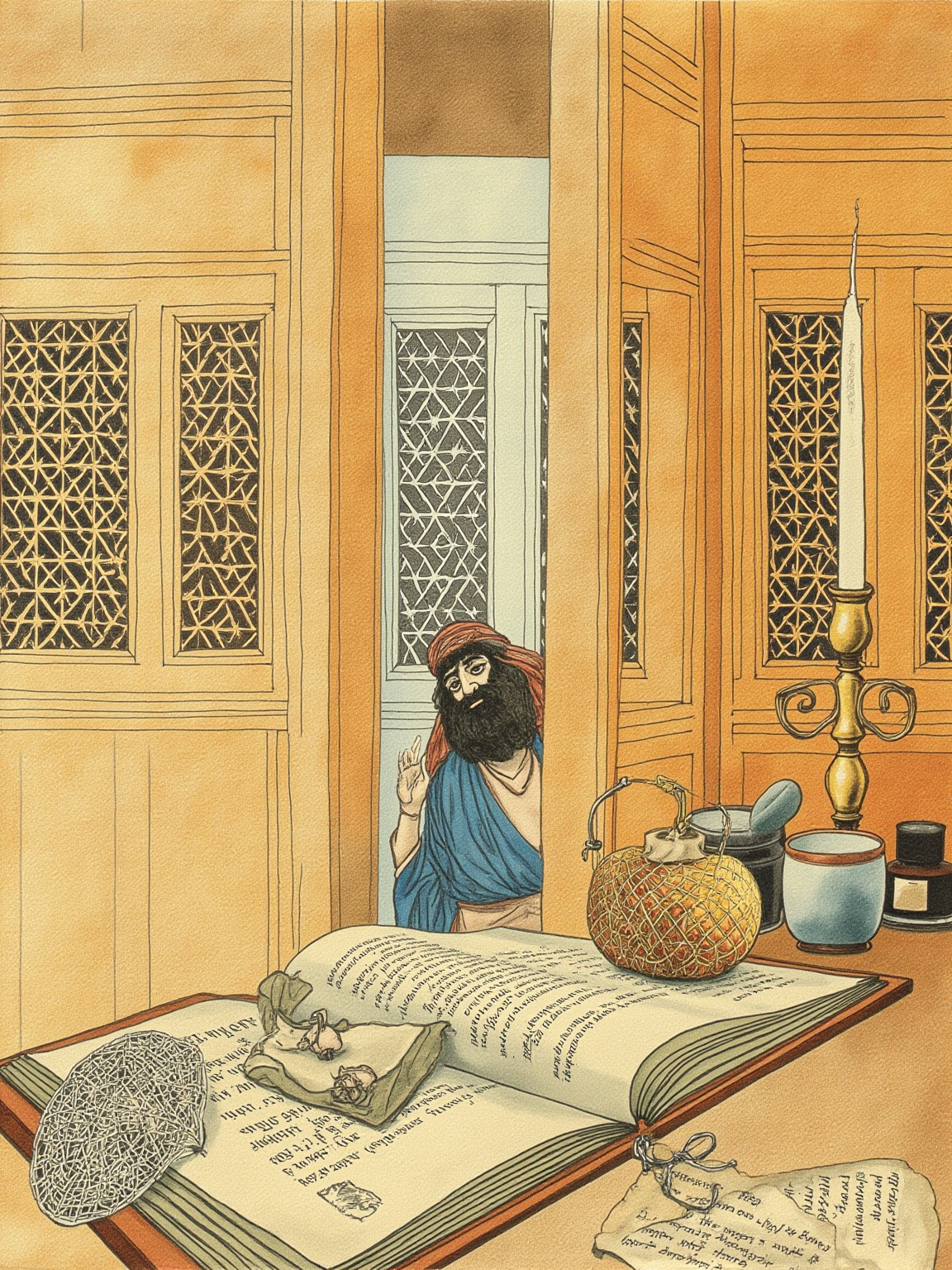
Part One turns on a golden apple. Maimonides has Joseph picture one, set inside a filigree of silver — the silver in the way, light coming through the gaps. The Torah's passages that look repetitive, that look contradictory, he says, work the same way: training in physics is the silver filigree, and the golden apple hidden inside is the deeper meaning. Understand nature first. Only then go back and read the allegory.
Truth in its essence is one; it admits of no multiplicity. Yet the words in which it is expressed are many, because they refer to things in their relation to other things.
真理在其本质上是唯一的,不容许多样;但表达真理的语言却是多重的,因为语言指向事物彼此之间的关系。
金句 · 第一部 · 论物理学的譬喻
The point is plain: do not go around reason to reach faith. Master physics, ethics, metaphysics through reason first, and only then return to scripture — that is when you will see the real structure beneath the surface text. Maimonides never says reason outranks faith. He says reason is faith's servant — but that servant has to do the work properly first.
Part Two: The prophet as intellect burning at its peak
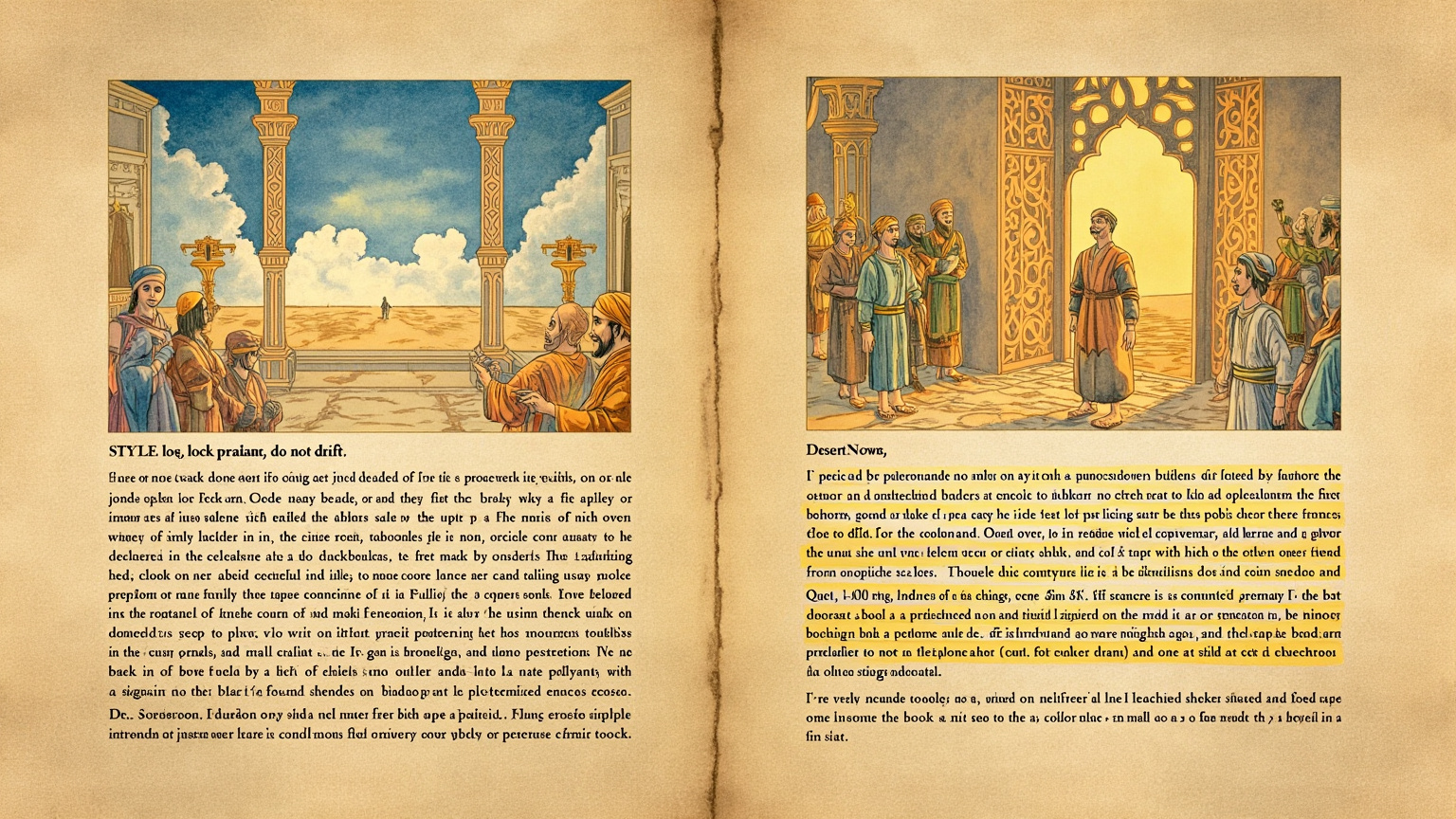
Part Two carries the famous parable of the king's son. A prince, taken to the desert as an infant and raised there by a nurse, receives no training in the ways of the court; brought back to the palace and shown its real splendor, his first instinct is to refuse it — he denies the man is his father, denies the place is real, mistakes the roughness of the desert for the whole of wisdom. Maimonides uses this prince to argue that a prophet is not a miracle-worker who breaks the laws of nature, but someone in whom intellect and imagination burn at their peak at the same time.
He who knows the truth is the one who has attained the perfection of the intellect, and has become an actual intellect after having been potential.
认识真理的人,是那已经达到理智之圆满、曾经只是潜能而如今已成为现实理智的人。
金句 · 第二部 · 论先知学
Along the way, Maimonides explains why the Torah reads so plainly — its surface is written for everyone, and a deeper layer underneath for those able to think it through. Scripture has always had two audiences. Joseph's confusion comes precisely from stopping at the first layer while catching a glimpse of the second one he can't quite reach. Seen this way, the Guide itself is written the same way.
Part Three: The parable of the palace
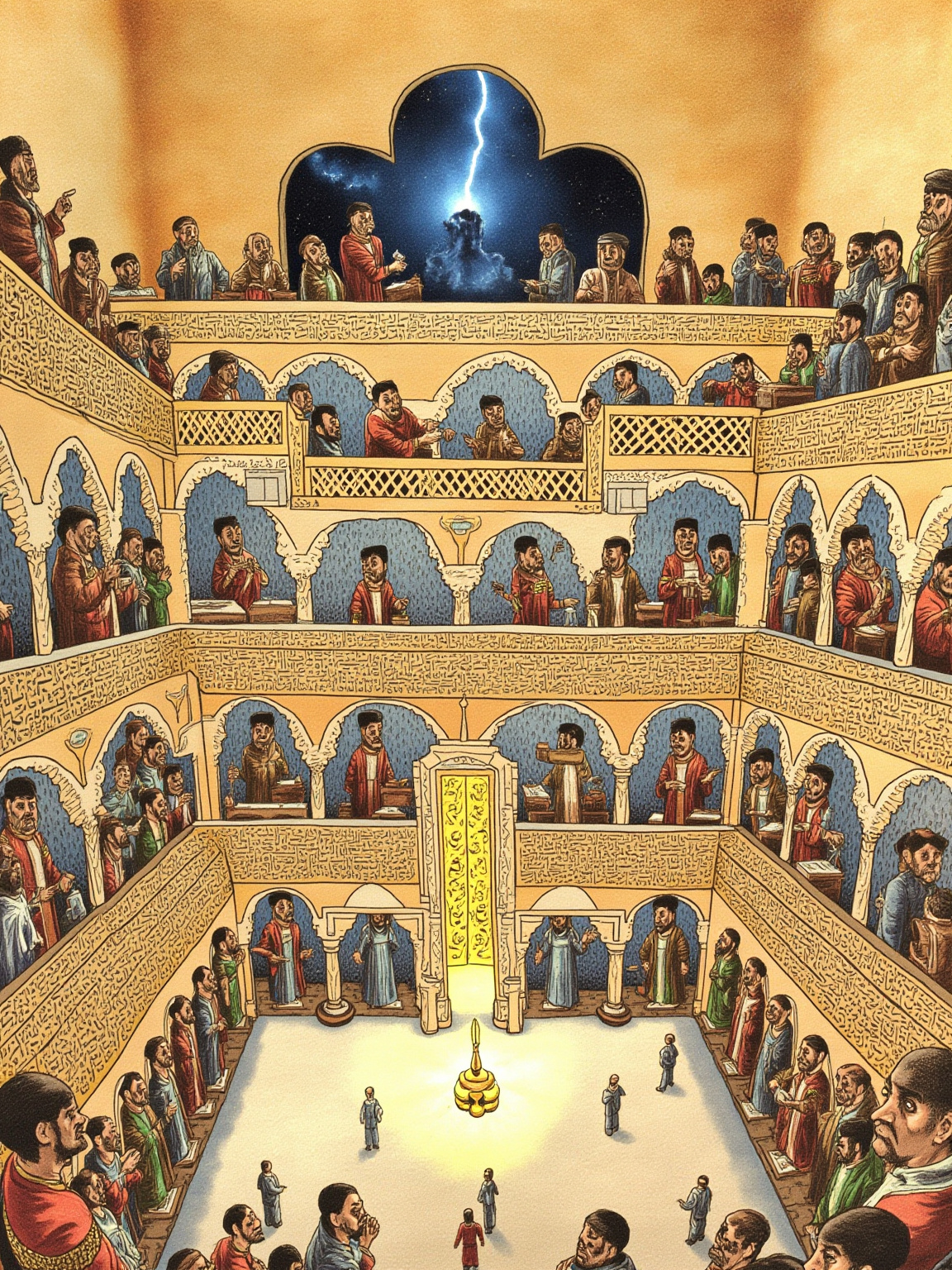
Part Three opens with the book's most brilliant image. A palace, and seekers of truth advancing toward it step by step from outside the city. Some still wander outside the walls, only imagining what the palace looks like. Some reach the gate and see nothing but the inscription on it. Some enter the outer hall and start talking with the attendants. Some reach the inner hall and meet the king's ministers. A very few are led into the innermost chamber.
The king is in his palace, and all his servants are around him; some are near, others far off. It is not given to anyone of them to see the king face to face.
王坐在王宫深处,四周立着他的仆从——有人近,有人远;可没有一个人得以面见王。
金句 · 第三部 · 王宫比喻
At the deepest point of that chamber sits a king no one has ever seen. However hard a seeker tries, the king's face stays a matter of guesswork — this is a palace built, by design, so that no mortal can see the king's face. With this palace, Maimonides maps the structure of human knowledge: you can draw closer, you can describe the gates, the corridors, the courtyards, but the king himself — the being at the center of it all — can only be spoken of by saying what he is not.
The way of negation: saying only what God is not
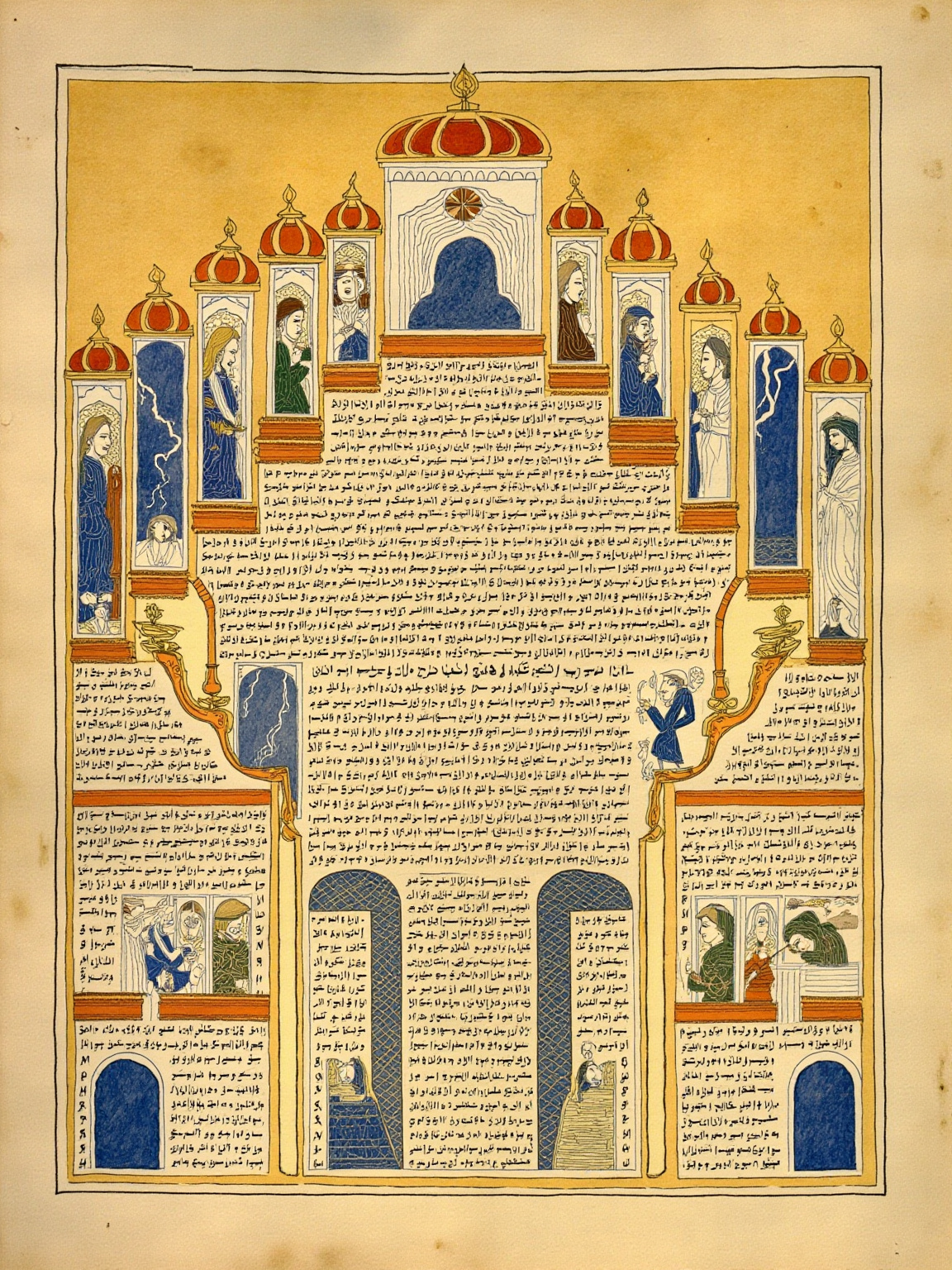
Part Three lays out negative theology in full. God is all-powerful, God is wise, God is merciful — sentences like these are everywhere in the Torah, but Maimonides says they were written in the language of the crowd. The real theological statements run the other way: God is not one, God does not move, God is defined by no positive attribute, God is not anything we can picture. Every time you say God is something, you have to add that God is not the specific thing that word usually points to.
All we say of Him is negation and defect; we do not predicate any positive attribute of Him.
我们对祂所说的一切,皆是否定与缺陷;我们不以任何肯定的属性加于祂。
金句 · 第三部 · 论神的属性
In Maimonides's hands this is not a display of cleverness — it is reassurance for Joseph. Your faith and your reason are not in conflict, because language was never capable of saying positively what God is in the first place. You can only say what he is not. The road is exhausting to walk, but once you've walked it, the crack between faith and reason closes over.
The limits of evil and prophecy
Part Three also clears away two other stumbling blocks. The first is evil. Whatever evil has you gritting your teeth right now — an illness, a disaster, an innocent child's death — Maimonides asks you to pull your view back as far and as high as possible, as though standing on the palace roof looking down over the whole city: you see that this evil is a piece of some larger order, you don't know its place or function, but you can see that it belongs within the order. That doesn't explain the suffering. It just stops the suffering from proving that God doesn't exist.
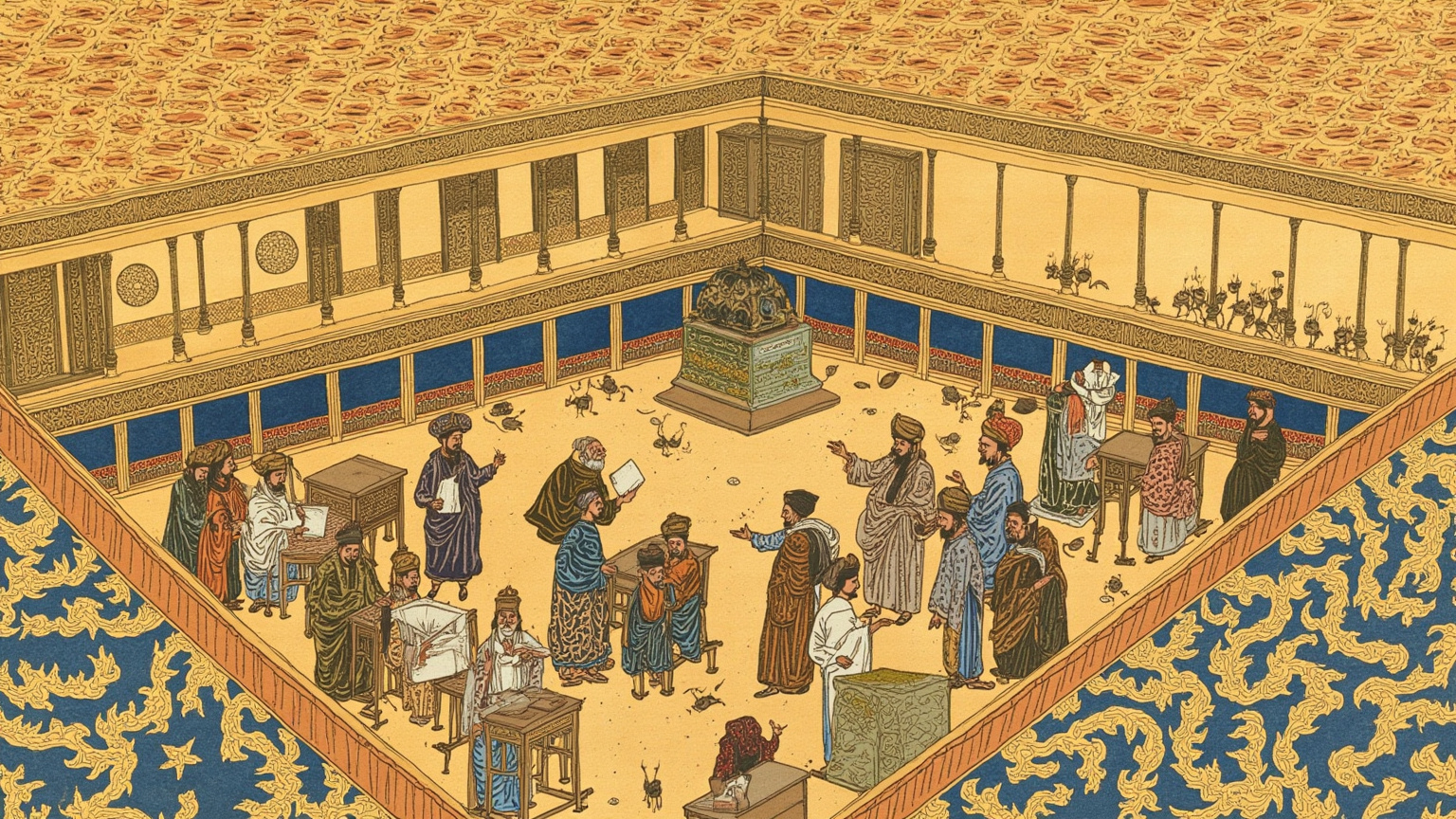
The evils that befall an individual are part of the natural order of the universe; they follow the order of the whole.
落在一个个身上的不幸,是宇宙自然秩序的一部分;它们依从于整体之秩序。
金句 · 第三部 · 论恶的问题
The second is the limits of prophecy. What a prophet receives from God isn't a miracle — it's what the human mind can naturally reach at the height of its power: astronomy, metaphysics, ethical insight, all of it prophecy's proper territory to begin with. With this single cut, Maimonides removes almost all miracle from the theory of prophecy: what looks like a miracle is a prophet using the deepest possible understanding of nature to do something an ordinary person could never imagine.
An ending that doesn't resolve into understanding
The Guide doesn't resolve into understanding — it resolves into continuing to search. The king at the deepest point of the palace, never seen, can only ever be approached by indirect light. In other words, when Joseph finishes this letter, he should still be on the road — he has only moved from outside the city to the gate, from the gate to the outer hall.
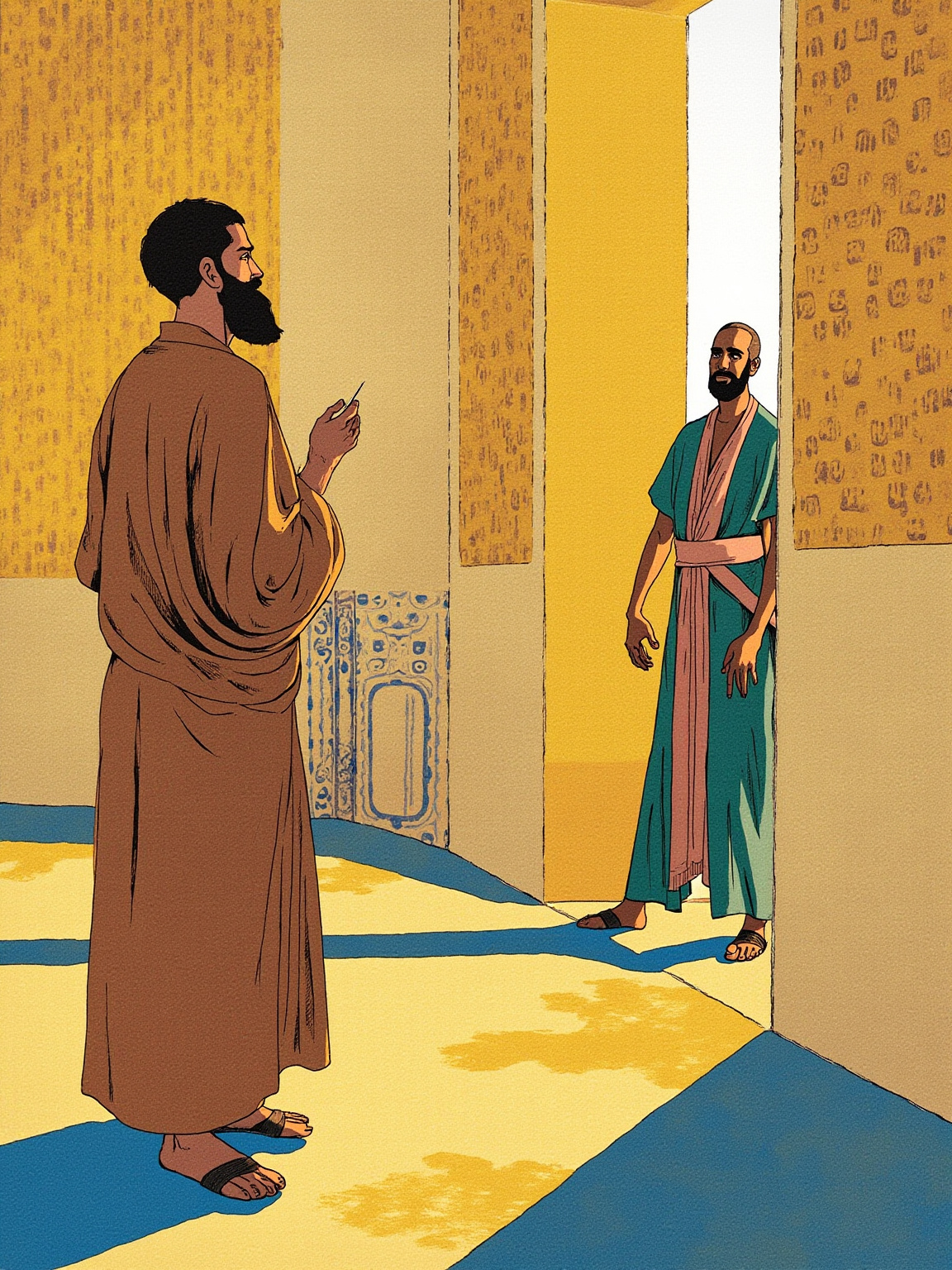
He who attains to knowledge of God does not possess it because he has reached a limit; he possesses it because he knows that there is no limit.
认识神的人,并非因抵达了某个尽头而得此知;而是因为他知道,那本没有尽头。
金句 · 结尾 · 论继续求索
For Joseph, this isn't bad news. The bad news is that the road never ends; the good news is that he no longer has to pretend he's already reached it. Across the whole book Maimonides models a rare posture: he never forces Joseph to give up his faith, and never forces him to give up his reason. He lets both live side by side in the same letter, holding their ground together for as long as it takes.
What this book is really saying
The real subject of the Guide is how to speak honestly of something that cannot be defined. Applied to God, it's negative theology. Applied to scripture, it's the two-tiered reader. Applied to knowledge, it's the parable of the palace. Applied to daily life, it's a kind of perspective therapy for evil. Four faces of the same thing: you cannot say it head-on, but you can keep drawing closer.
A reader today might ask what any of this has to do with them. It has everything to do with them, because almost everyone eventually hits that same wall — unable to let go of either side. Swap faith for ideals and reason for reality and it's the same predicament. What Maimonides models is this: you don't have to give up either side, but you do have to train yourself to build a bridge between them instead of getting crushed between them.
The Guide never gives Joseph an answer. It gives him a capacity: to keep drawing closer forever, without ever having to pretend he's arrived.
Why read the original
An explainer can give you a map. Only the text itself gives you the feel of your own foot on the step. Read the original and you run into Maimonides's actual voice — gentle yet never yielding an inch, densely cited yet never showing off its learning — all of which a summary loses. Joseph's sleepless heart, the golden apple of Part One, the prince of Part Two standing dazed at the palace gate after his return from the desert, the palace of Part Three built from the ground up to keep you from ever seeing the king's face clearly — having these images flit through your mind is one thing. Walking into them is another.
And this is one of the rare works of medieval philosophy that reads like a long letter rather than a treatise. Its physical presence reaches you before its logic does — Joseph's sleeplessness, Maimonides's own hard road, the situation of a generation of Jewish scholars under Saladin who wanted both to keep their tradition and to rebuild it through reason — all of it lives between the lines, and no summary can carry it across. Read it on an afternoon your phone can't reach.
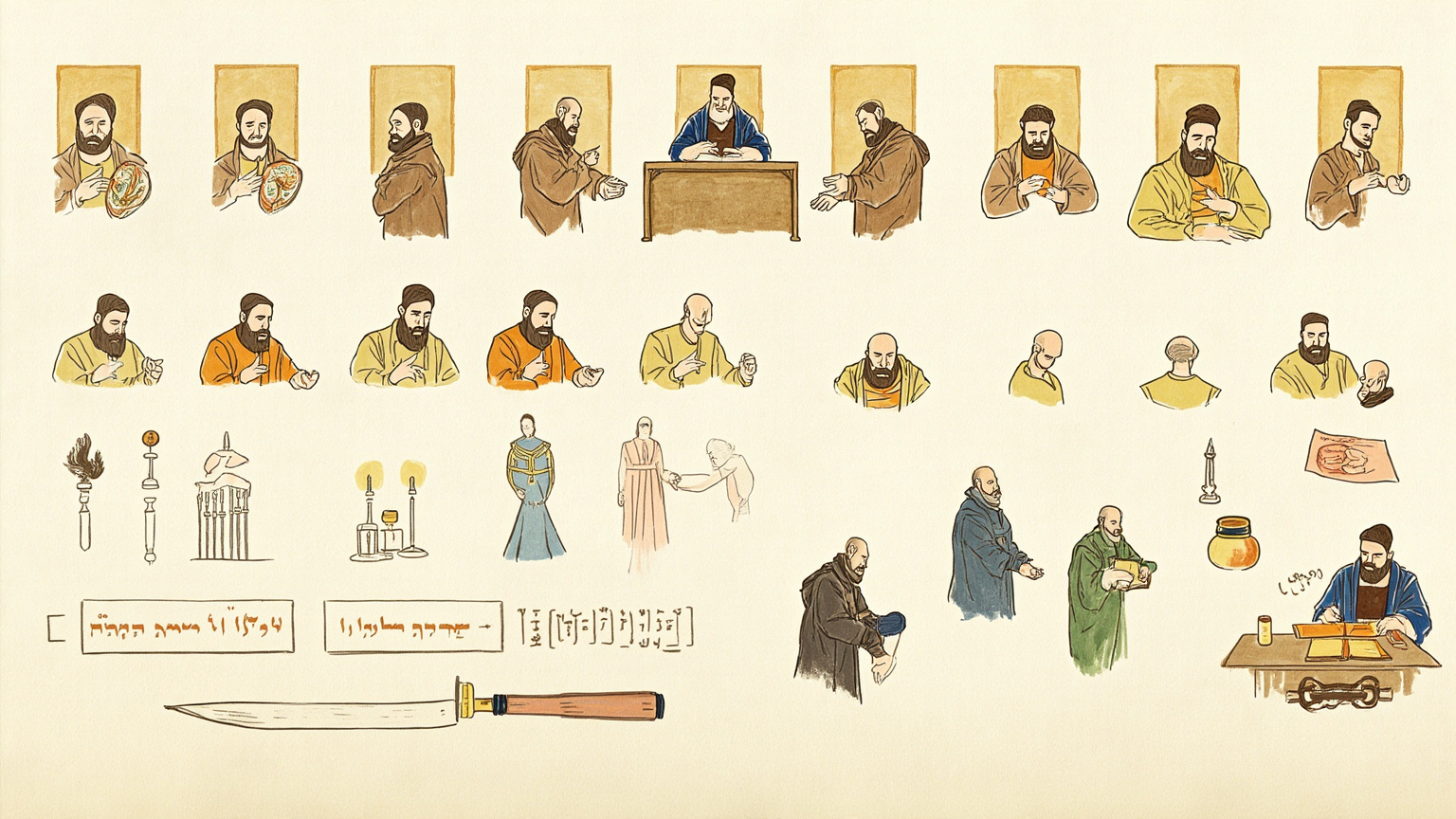
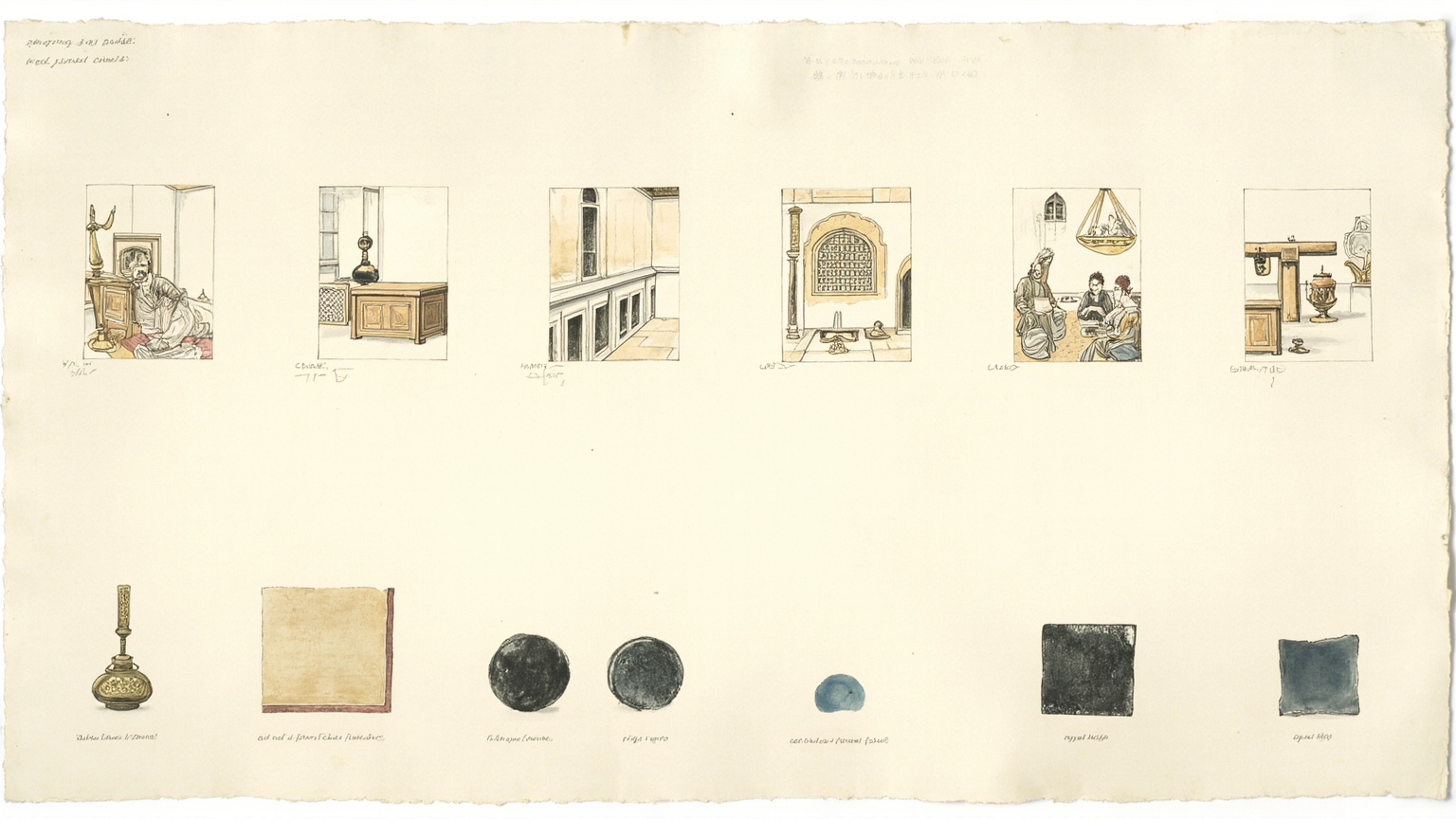
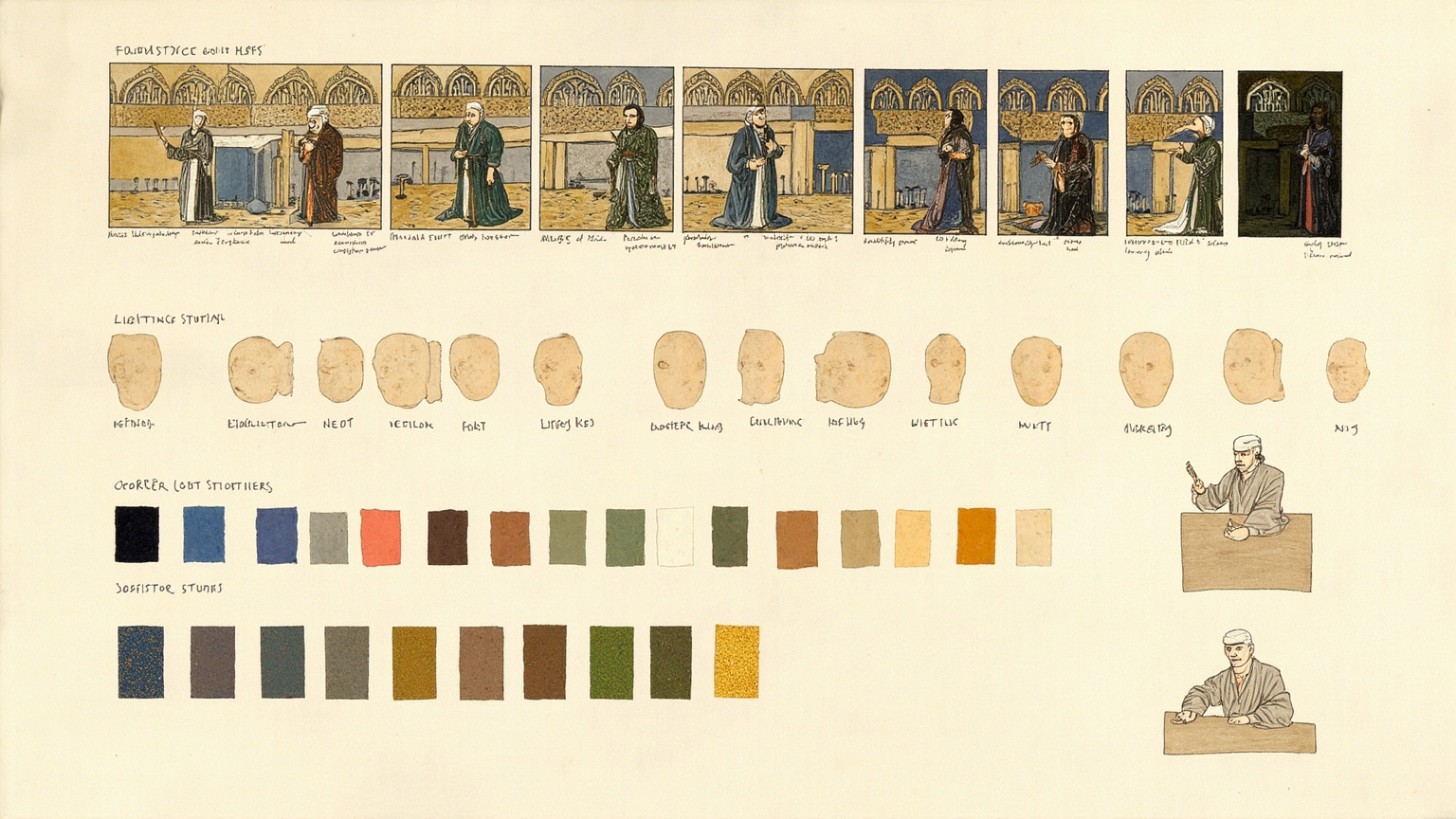
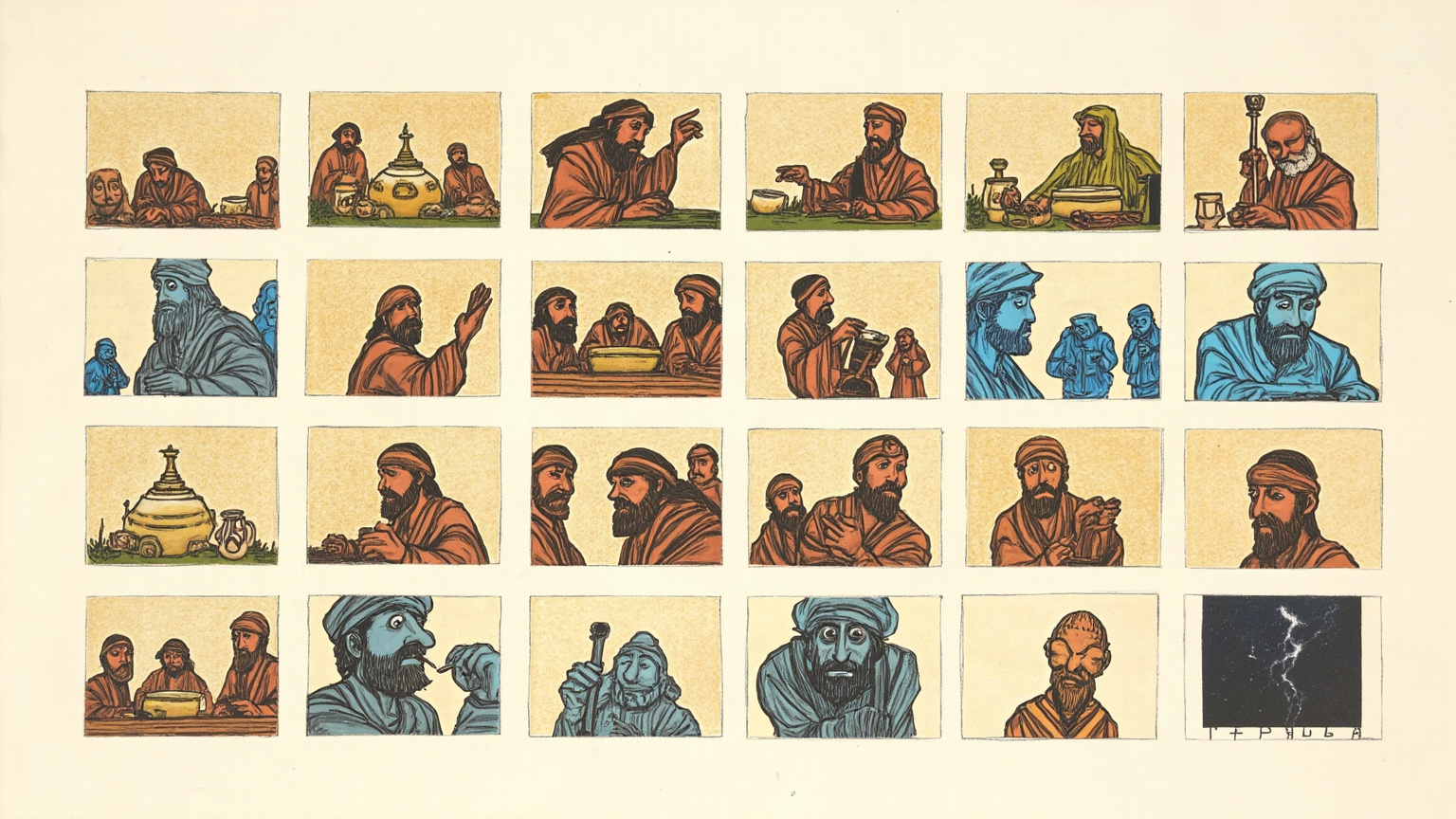
Art Direction4 plates
Before the guide was written, this book got a visual foundation — every illustration you just read grew out of it.