Shirley Jackson's 1959 house never lets a single thing be seen
Text and illustrations produced by the pipeline

A house where the doorframes sit just off true, the floors refuse to run parallel, and the spiral staircase's lines are wrong in every direction you check. On the fourth night there, it roars and tilts around everyone's ears — and there is nothing at the end of the hallway. That's not the opening shot of a horror movie. It's a novel published in 1959, The Haunting of Hill House, and its author, Shirley Jackson, spends the whole book doing exactly one thing: letting you see nothing, start to finish, while frightening you worse than any jump scare could.
Shirley Jackson was born in 1916 and died in 1965, an American writer. The Haunting of Hill House was her third novel, published by Viking Press in 1959. Stephen King later paired it, in Danse Macabre, with Henry James's The Turn of the Screw as the two greatest supernatural novels of the last hundred years. She was in her early forties when the book came out, already known for the short story "The Lottery," about a small town's ritual killing by drawing lots, a story that still raises the hair on the back of your neck. The gothic mansion, the breakdown, the family secret — Jackson took these old motifs and rebuilt them into modern psychological horror: the ghost is never something outside you. The ghost is yourself.
Eleanor Vance, thirty-two. Eleven years spent nursing a paralyzed mother, who has just died, leaving Eleanor cut out of the will by her sisters and drifting between other people's spare rooms. She has never once made a decision for herself. Hill House is the first place she has ever chosen. Luke Sanderson, the great-nephew of the house's owner, Hugh Crain, and its nominal heir — a distant relative along for the experiment mainly to protect the property, glib and unserious, the one person in the house who makes Eleanor feel a little less alone. Theodora, the invited outsider, flamboyant and striking, is the first person to treat Eleanor as a friend, and later the first to abandon her. Dr. Montague, a college lecturer who studies the supernatural, is the one who placed the newspaper notice that brought all three to Hill House. He thinks of himself as science's representative, though he never once understands what he has actually set in motion.


The horror was never at the end of the hallway. It was in the narration itself coming apart — you and Eleanor, together, unable to tell what's real from what's her breaking down.
The fifth night, or the sixth — no one can say for certain — Hill House tilts and roars around all of them at once. The walls, the stairs, the ceiling, as if some invisible hand had given the whole house a wrench. Sound pours in from every direction, the temperature swings wildly, the geometry warps until no one can stand upright. And still there is nothing in the hallway — no shadow, no face, no shape you could point to and call the horror. Only the structure itself, unbearable. Luke is hurt, not badly, in the chaos. Theodora screams and breaks down. Eleanor comes apart completely — laughing, then crying, then shouting her mother's name into the empty air.

The Haunting of Hill House isn't really about a haunting. It's about a woman who has never once been treated kindly, making a choice for herself for the first time in her life, and being swallowed by that very choice. The real killer in Hill House was never the ghost. It was isolation. It's the caretakers' line every day — no one comes, see to yourself. It's Theodora abandoning her first, in her own panic. It's Montague running an experiment under the banner of science that he never understood himself. It's her sisters, who never once made room for her. The house just gives that isolation a shape: a tilted geometry, and a knock on the door.
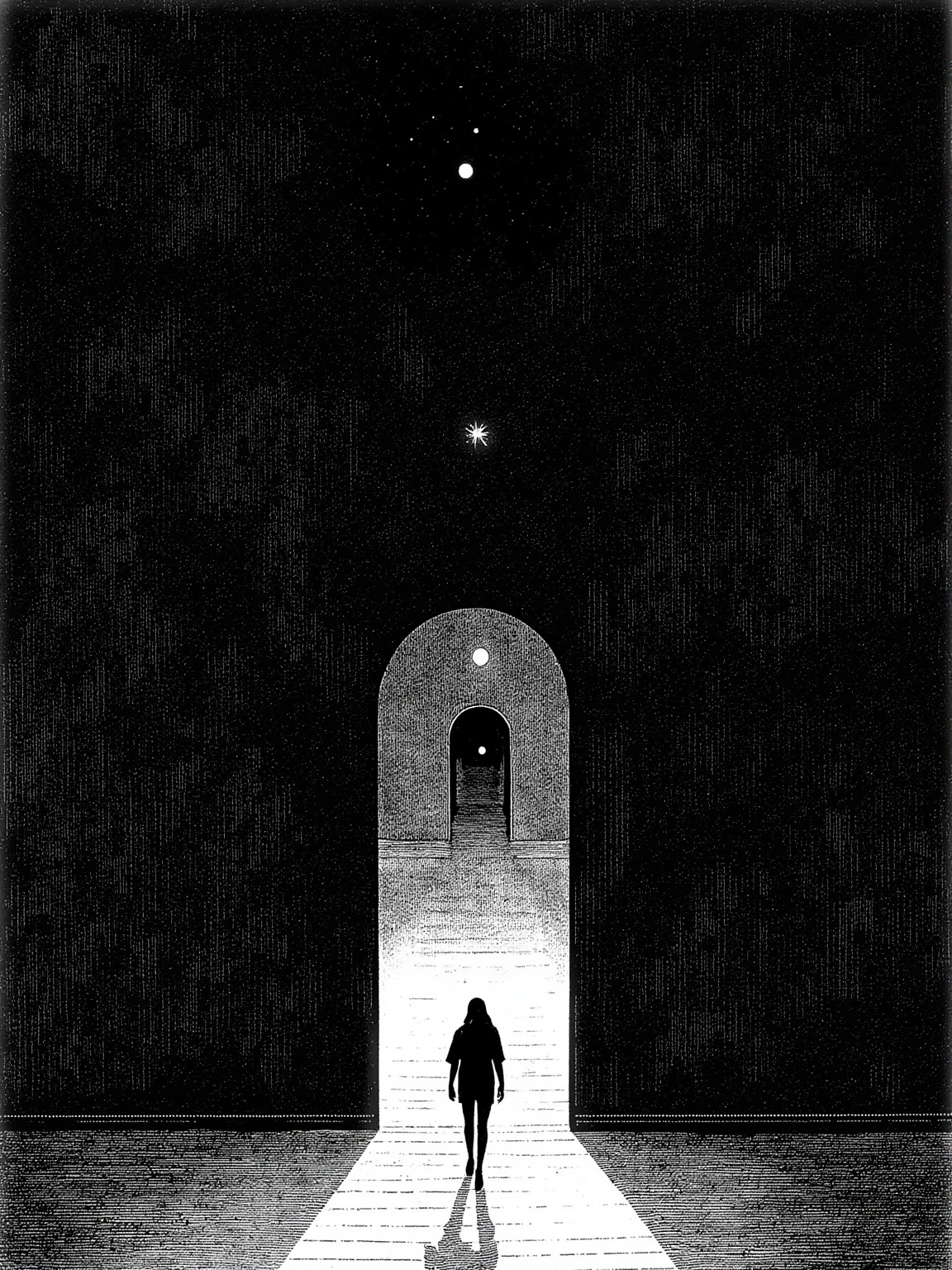
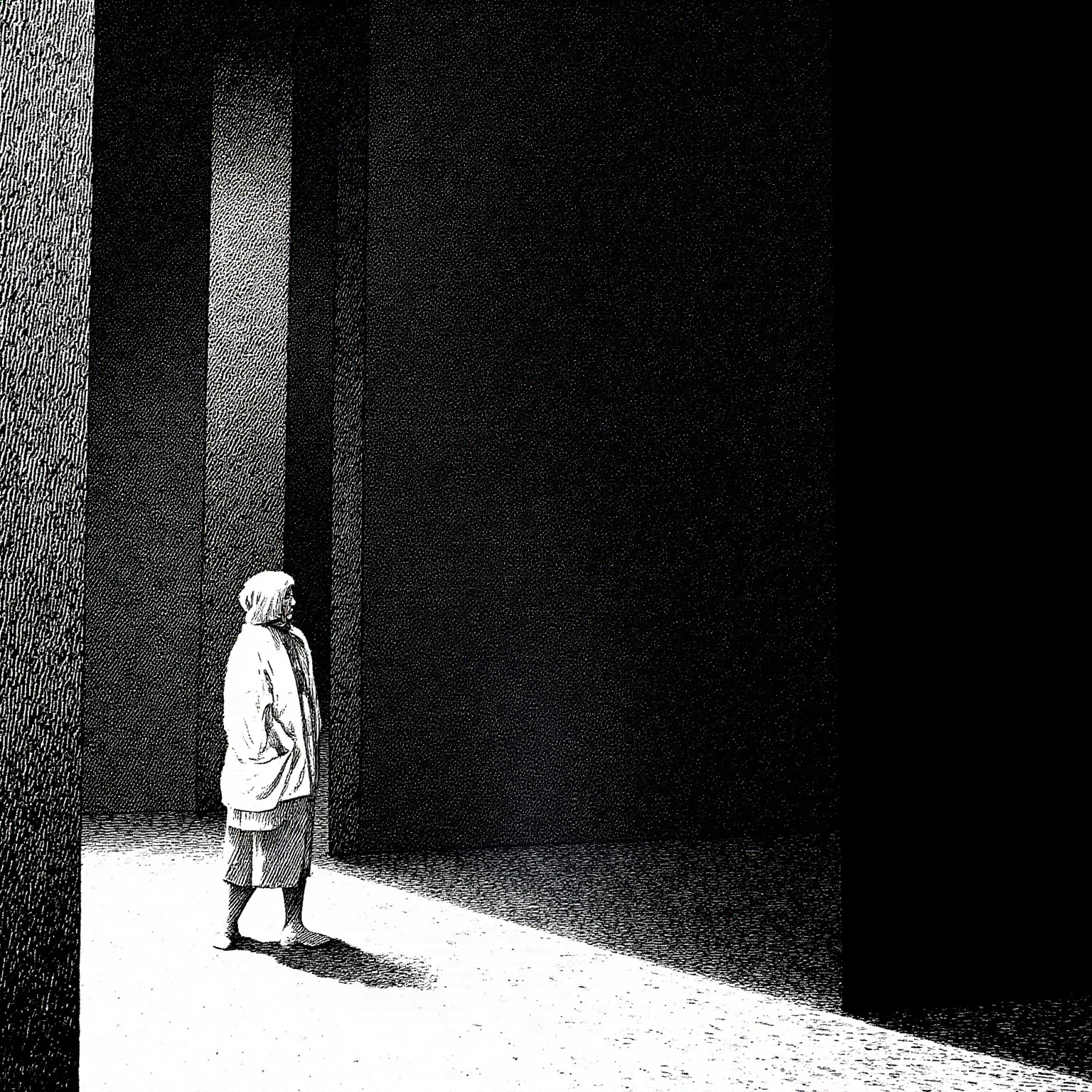
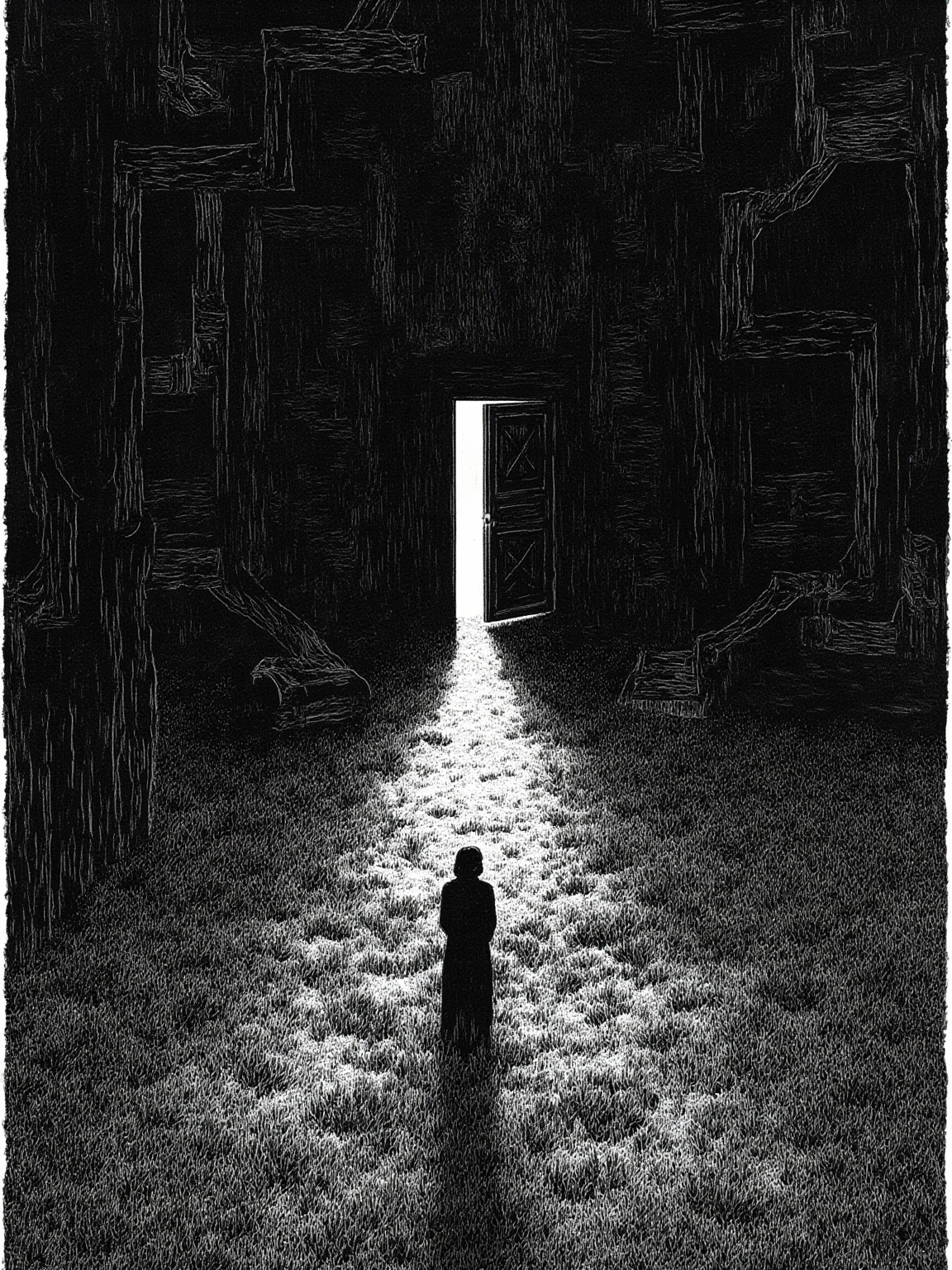
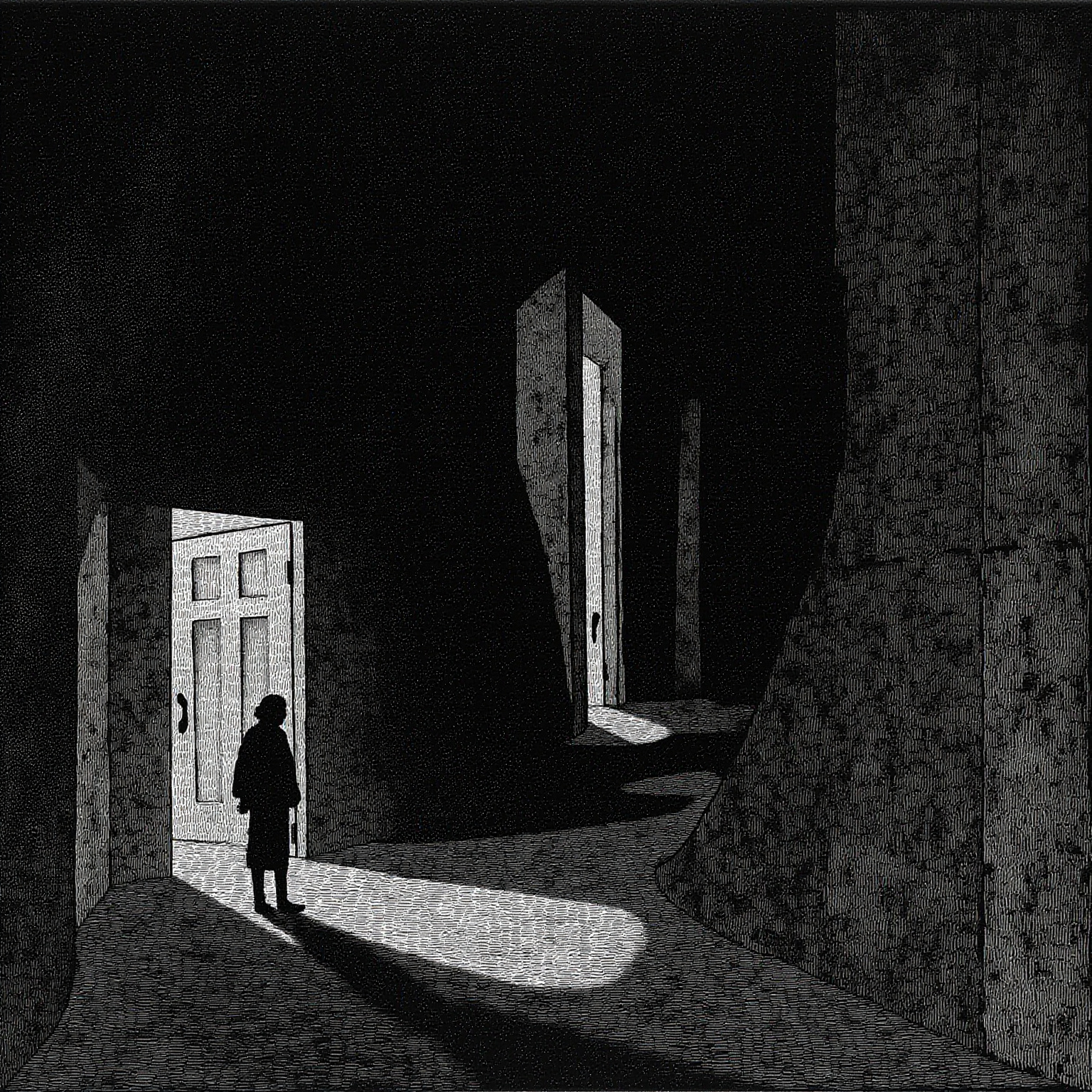
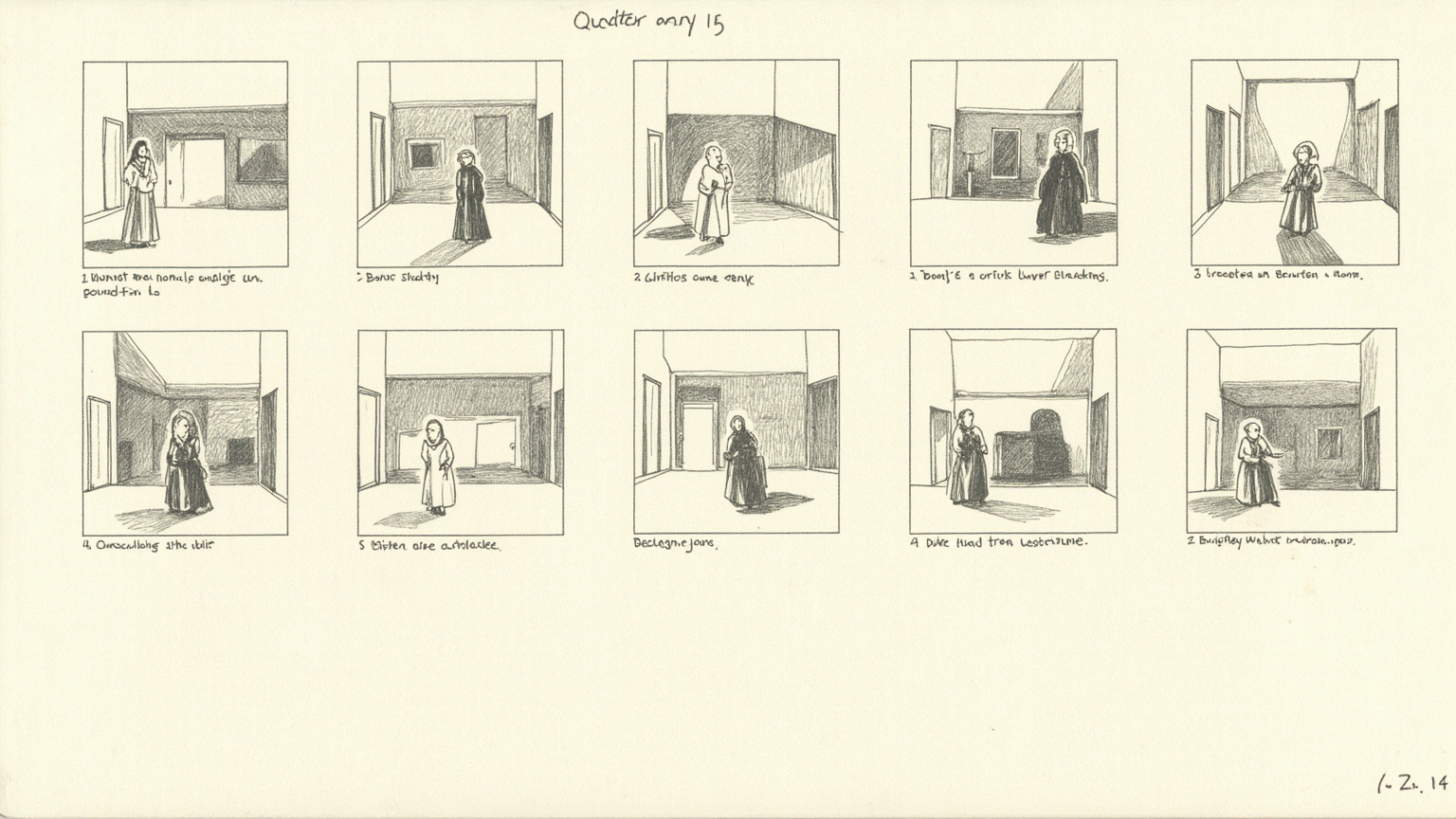
Before the guide was written, this book got a visual foundation — every illustration you just read grew out of it.


The caretaker couple live at the gatehouse and aren't counted among the four. But the line they repeat once each morning and once each evening is one of the coldest in the book: "No one comes at night. Whatever you need this evening, you'll have to see to yourself." Then they turn and go, keys already back in their pockets. That single line locks the four of them onto the mountain for good — you could die up there and no one would come.
Hill House was built in the 1880s by the nineteenth-century squire Hugh Crain, somewhere remote in the hills of New England. The novel's most famous conceit is its geometry: no door meets its frame at a right angle, the floors tilt just slightly, and nothing about the tower or the spiral staircase runs parallel to anything else. This isn't decay. The wrongness is built into the foundation — your feet register that something is off before your eyes can say what. A lone mountain road, an iron gate, a stream the drive has to curve around, and past that, no one.
Dr. Montague placed a newspaper ad looking for people who had "experienced" a haunted house, willing to move into Hill House for a while. Theodora and Luke arrive first. Eleanor drives up in a borrowed car, straight from her sister's house — she has taken her mother's old books, a lipstick, and an address nobody else wanted. She tells no one, not her sisters, not anyone. For the first time in thirty-two years, she has made a decision without waiting for someone else to nod along — not a large decision, not a trip somewhere far away, just an agreement to move into a house no one else would live in. It is the entire, small store of freedom she has, and she is betting all of it. The car climbs the mountain road, the way narrowing, the iron gate coming into view ahead. I stopped short the first time I read this: a woman who has never once lived for herself, and the most rebellious act of her life turns out to be agreeing to move into a haunted house.
Once inside, Montague sets up the experiment — daytime interviews, night watches taken in turns, everything logged. The first night, nothing happens. The second night, Hill House doesn't knock on anyone's door — except Eleanor's. The knocking starts rhythmic, almost polite, like something asking "may I come in," then turns into a continuous pounding. She shares a room with Theodora, who hears nothing at all. In the daytime, Montague is still reaching for a rational frame: air pressure, temperature, suggestion. Luke starts cracking jokes. Theodora grows more excited by the day. Eleanor grows more isolated.
Then comes the cold. In the blue room with the iron door and iron handle, the floor turns cold only under her feet — in patches, the temperature shifting so sharply it's as if someone had drawn a map on the wood in ice. Later, the writing on the wall. Marks like chalk dust, spelling out HELP ELEANOR COME HOME. She tells no one. She starts hearing her mother's voice, scolding her for leaving the bed, for abandoning her — and she starts talking to a version of herself that is already dead.
By the middle of the novel, the sharpest move in the book becomes visible only gradually: the narrator's own reliability is failing, bit by bit. Shirley Jackson does it so quietly you almost miss it — a sentence that corrects itself mid-breath, in parentheses: this was the moment I was most afraid, that was the moment I was least afraid. You can no longer tell whether this is Eleanor's mind coming apart, the house working its way through her thoughts, or the author quietly warning you not to trust a single word she's written. By day, the four of them grow more guarded with each other: Theodora keeps pressing Eleanor about what she heard the night before, Eleanor says she doesn't remember, Luke plays it all off as nothing, and Montague leans on science to hold the room together.
Morning comes. Dr. Montague calls off the experiment. Theodora and Montague leave first — she wrenches the car door open in terror, and he climbs in after her. Luke runs after them, trying to stop the car. It drives off anyway, leaving Eleanor standing alone on the mountain road. They let her drive her own borrowed car down by herself. The road winds downward, Hill House still on the mountain behind her — and the house is still talking to her, in her mother's voice, in the words on the wall, in her own voice.
The text stops there. Its last line runs, in effect: whatever went wrong in Hill House was hers alone; whatever the house did, it did only to her, because she was herself. She never left the house — the author refuses to write it as killed by a ghost, and refuses just as firmly to write it as suicide. It is simply the lonely settling of accounts between one person and a house's geometry. Shirley Jackson keeps that moment deliberately unclear, stranding the reader with her in that one instant, unable to say whether the last decision was Eleanor's or the house's.
Why does this book still frighten people? Because its horror was never on the outside. There was never anyone at the end of the hallway. The book never once lets you see anything — only hear it, feel it, and come apart alongside the narrator. Shirley Jackson took the old gothic-mansion motifs and rebuilt them as modern psychological horror: the most frightening thing was never being chased by something. It was not being able to tell whether you were still yourself.
An explainer gives you the map. The text is the land. Knowing that Eleanor never leaves Hill House doesn't dull the fear of reading it, because Shirley Jackson's skill was never the ending — it was how, step by step, she puts you in the exact same mental place as Eleanor. You have to walk that crooked hallway yourself, feel that cold patch of floor yourself, read those self-corrections in parentheses yourself, and decide for yourself which words came from the house and which came from her own mind. No explainer can give you that. When you finish, you'll sit still for a moment, and run your hand over the table to check that it's level.