
The House of Mirth · Companion Guide
欢乐之家
镀金时代纽约最后一抹粉彩光环下,一个美貌而无嫁妆的女人被上流的温柔机器安静地碾过——她没做错任何事,只是没有钱。
One. The Opening: A Woman No One Answers
The telephone rings, and no one answers it. Lily Bart is sitting alone in the drawing room of a great house — not her house, someone else's. She is twenty-nine, beautiful, born into old money that has since run dry, the kind of woman every hostess in the season wants at her dinners, in her opera box, on her lawn at the country club. What she does not have is a dowry of her own. In New York's upper circles in the early 1900s, that meant one thing: fail to marry well again, and her name comes off the list. Across from her sits Selden, a lawyer with a taste for books and, it must be said, some feeling for her. The most practical thing he can offer is a life lived 'poor and honest,' on her own. She doesn't nod. She can't.
Wharton's opening move is the interesting part. She doesn't show Lily arriving at a party or surrounded by admirers; she shows her trapped in a drawing room where the phone goes unanswered. Selden's offer of a life 'poor and honest' looks like a way out, but it works more like a mirror: he is inviting her to leave the circle, and Lily cannot turn back from it. Two people sit there, one who won't reach out and one who can't move — class, feeling, and pride all locked into that silence. This is Edith Wharton's The House of Mirth, published in 1905. She called it, in her own preface, 'a novel of manners'; later readers simply made it the template for the American novel of social ruin. The New York that Fitzgerald stared at when he wrote The Great Gatsby is the New York Wharton opened up for him first.
Two. The Rules of the World: Beauty Gets You In, a Dowry Keeps You There
Let's do the arithmetic first. The hard currency of this circle is not love; it is marriage and respectability. Whether a woman keeps her place on the Fifth Avenue dinner list depends on whom she marries and how much she brings to it. Lily has everything except money. Around her stand the people who will decide her fate: Grace, the kind, old-money cousin; Simon Rosedale, a Jewish banker newly rich; Lawrence Selden, the on-again, off-again object of her affection for years; and the grandes dames whose lineage runs back generations. Each is running a separate calculation. Rosedale has money, but Lily thinks him too rich to be respectable. Selden has feeling, but he will not risk his own standing to marry a woman the circle has already ruined. And the grandes dames are not holding out friendship — they are holding tickets of admission.
In other words, this is a city that seats people according to their family balance sheet. Lily has a chair in the front row — but it could be pulled out from under her at any moment.

She was so evidently the victim of a civilized society which had produced her own type that she felt herself almost a woman of a different century.
她是那套专门培育出她这种女人的精致社会的牺牲品——意识到这一点,她几乎觉得自己属于另一个世纪的女人。
金句 · 第1章 · 贝尔德式客厅里的塞尔登长谈
Three. The Stage: The Gilded Age's Last Blaze of Finery
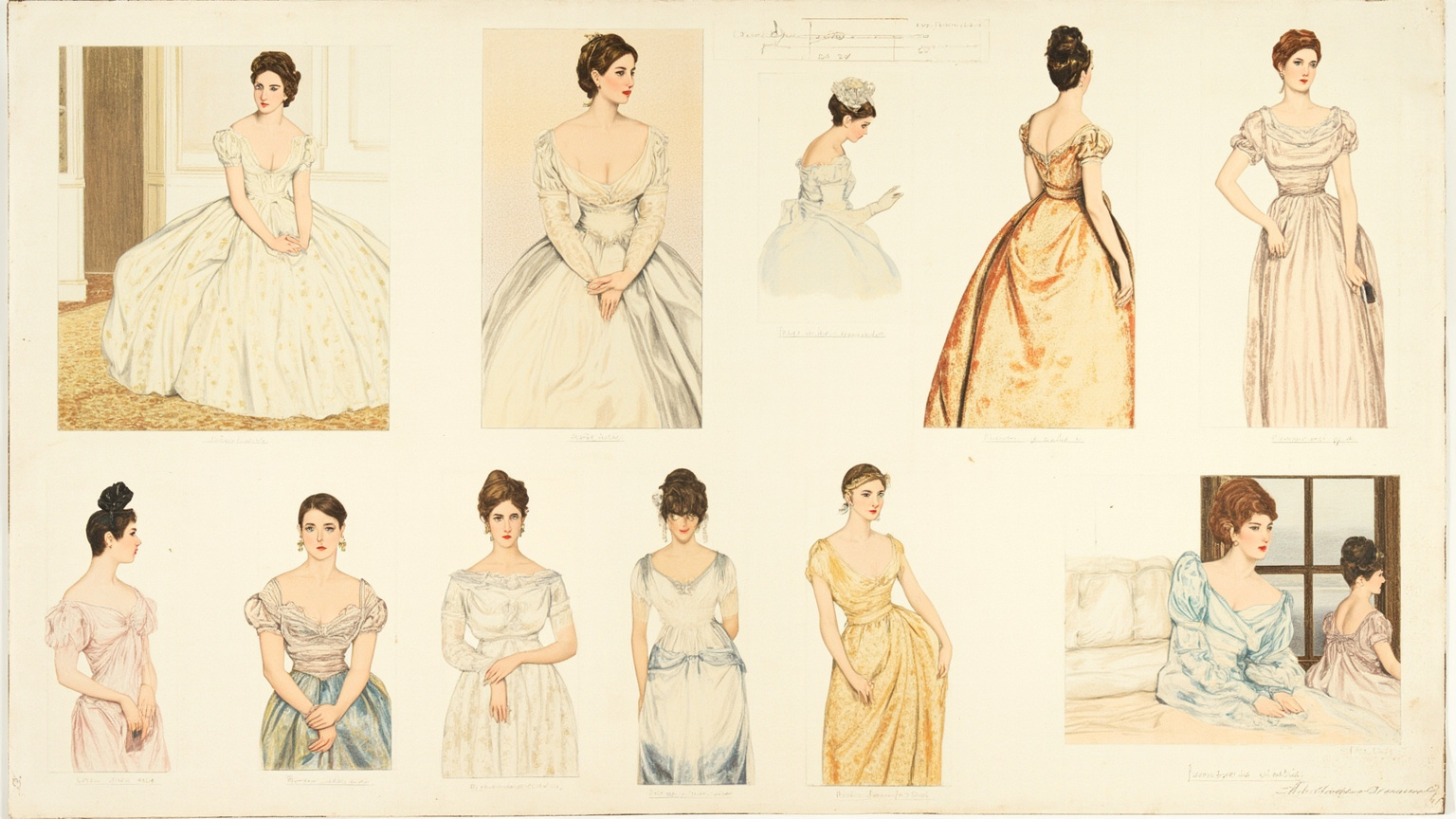
Visual richness is this book's natural gift — the scenes practically stage themselves. Opera boxes, parasols on the country-club lawn, rows of long gloves and pearl necklaces in the drawing room: these are the trappings New York's upper crust had not yet shed in the Gilded Age's last years. Wharton renders them closely enough that you can hear silk brushing the back of a chair. There is one signature set piece besides: the tableaux vivants at a charity benefit, where living people hold still on stage, costumed as figures from famous paintings, while the ladies in the audience raise their opera glasses and keep score. That scene anchors chapter six, and it is the peak of Lily's brief moment in the light.
The first time I read the tableaux vivants scene, it stopped me too — the whole idea sounds strange today, but at the time it was a real social event. Who got picked to perform, and who stood center stage, was itself a map of the pecking order.
Four. The First Cut: A False Rumor Is Deadlier Than a Real Scandal
That night Lily takes the stage as a goddess from a famous painting, and the room applauds. But on that same night, something else has already been set in motion. Bertha, a married socialite and Lily's chief rival in the circle, arranges a train compartment so that her hot-tempered husband, Dorset, 'happens' to share it with Lily. Nothing happens between them — Lily doesn't even want it to — but the scene is seen, remembered, and repeated. Once a rumor is inside the circle, it doesn't need facts to survive.
This is exactly what Bertha wants. Her own husband has been unfaithful for years, and she needs a scapegoat to carry the blame so she can walk away clean. Lily becomes that scapegoat.
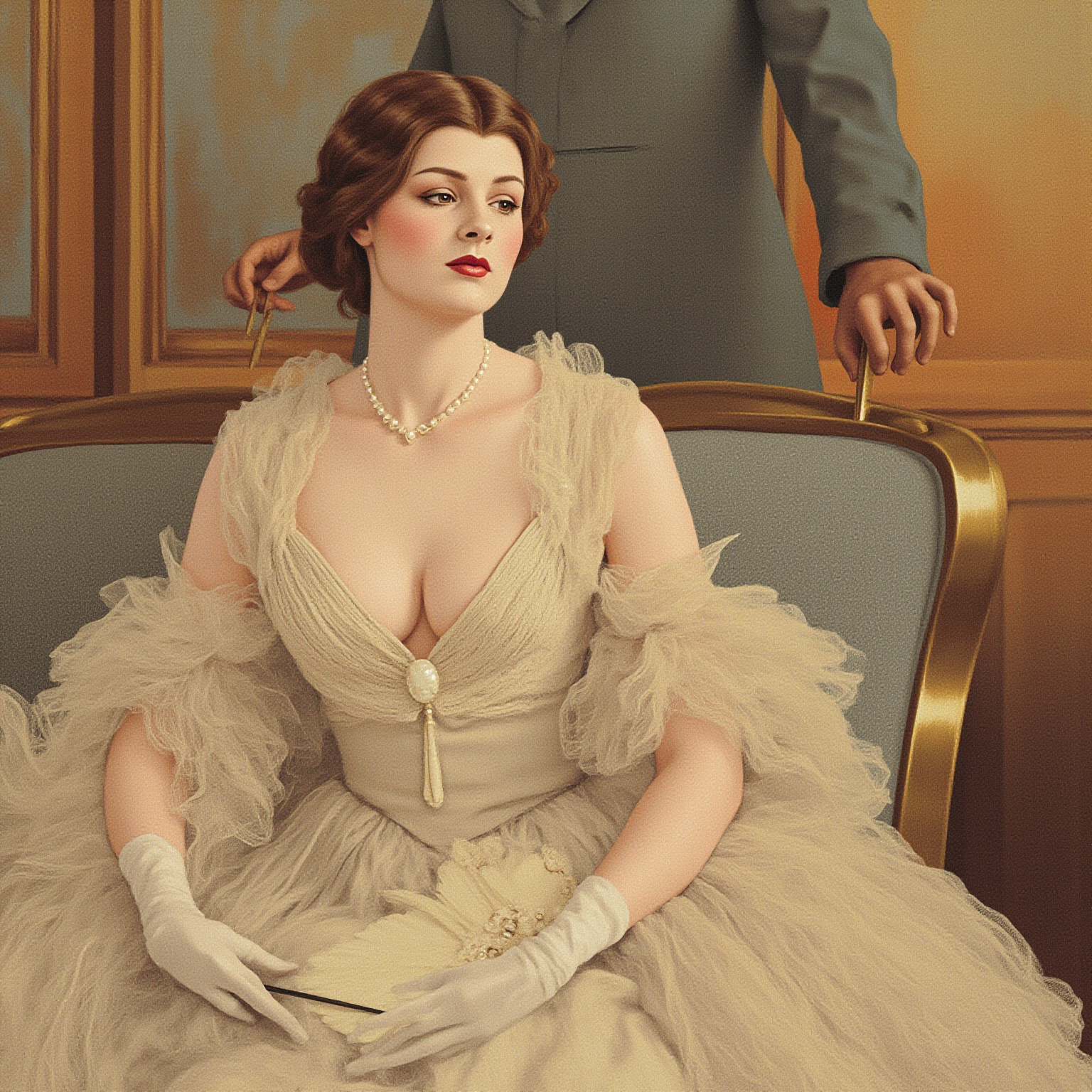
In the silence following his speech she felt the faint margin of her fate reverberating against the walls of the sleeping house.
在他话音落下之后的沉默里,她觉出自己命运的细小边缘,正贴着这座酣睡之宅的墙壁回响。
金句 · 第6章 · 火车卧铺包厢之后
Five. Social Murder: The Moment Her Name Gets Crossed Off
Lily goes to the Dorset house on a friend's behalf, to calm Dorset himself, who is coming apart. The moment she walks in, Bertha meets her with tears and accusations — the whole 'you and my husband' routine, staged on the spot. By the time Lily understands what has happened, her name is already off the invitation list. She appeals to the grandes dames and is turned away politely. She goes to Selden, and Selden hesitates — he will not spend his own future on a woman the circle has already branded 'compromised.' He has feeling for her, but not more than he has regard for his standing.
The skill in how Wharton writes this scene is that Lily never breaks down, and no one ever raises a hand against her. What kills her is a string of small refusals — a letter never answered, an invitation never sent, a back turned in a hallway, pretending not to see.
Six. The Second Cut: From the Drawing Room to the Millinery
Lily runs up debts at the bridge table and had once counted on marrying her way out of trouble through Mr. Gryce, an aging, unremarkable collector — that match falls through too. What she does next is something no woman raised in a respectable household is supposed to do: she goes to work in a millinery shop. The head of the workroom, Mooney, is a skilled hand who quietly helps her and finds her a cheap room in Chelsea. By day Lily sews hats in the workshop; by night she secretly copies documents for Selden's law office. This is as close as she ever comes to living 'poor and honest' — and, in the cruelest turn, she had to be thrown out of the entire circle first to get there.
Here's the trick: Wharton never has Lily fight back. She is simply pushed to the margins. A week goes by with no dinner invitation, a month with no one asking her to dance, a season with no one even saying her name — the circle's machinery for cutting someone loose runs quietly, like clockwork.
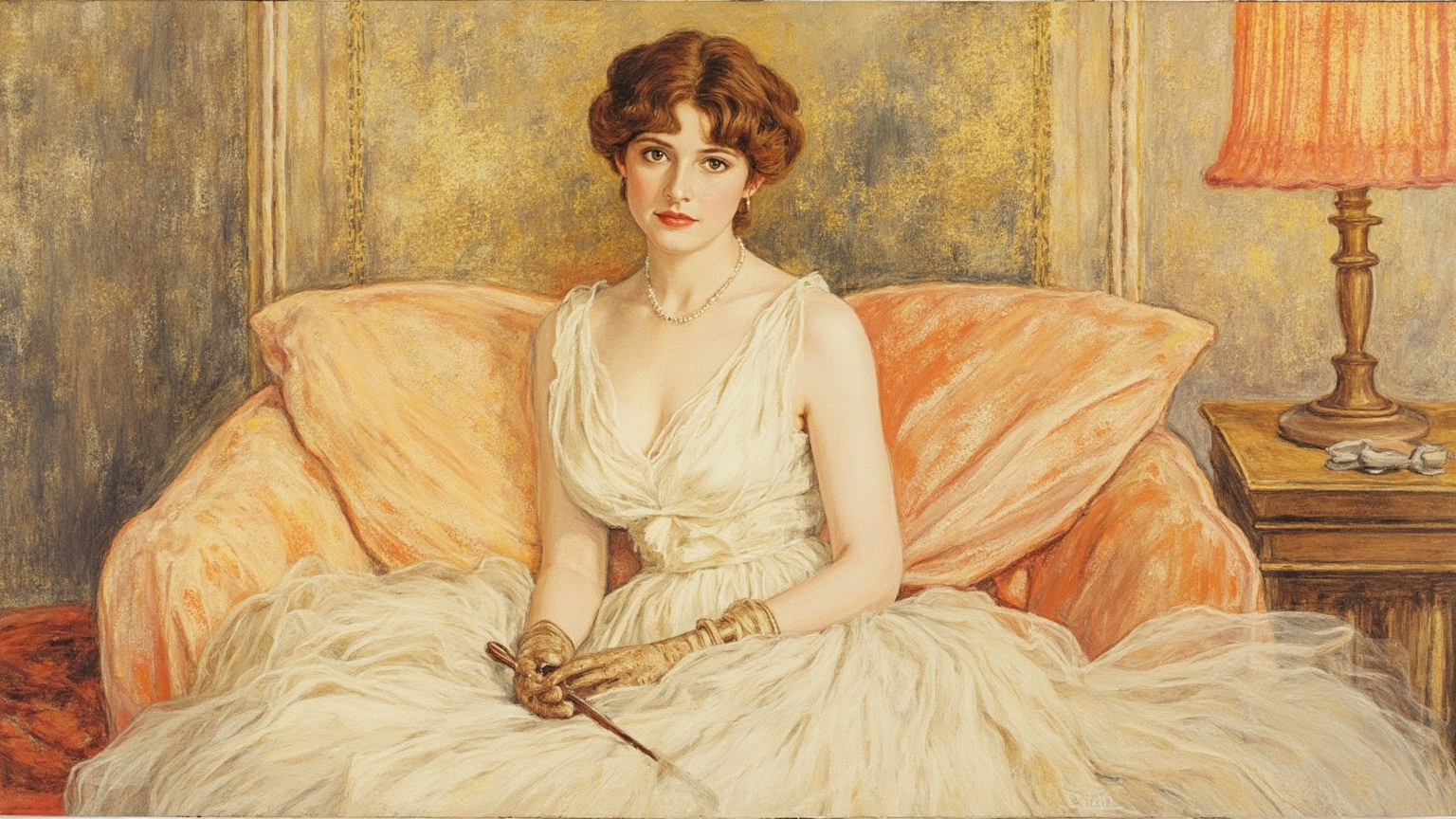
It was the first time she had been treated as the equal of the people she sat with: the fact emphasized the hand of the social gulf across which she had been beckoned.
这是她头一回被人当作平坐之客来对待——而这一事实本身,恰恰把手伸过来比了比那道隔开他们的鸿沟有多深。
金句 · 第13章 · 帽坊做工的日子
Seven. The Exonerating Letter and the Step She Never Takes
Dorset is broken by the fallout from Bertha's scandal and develops heart trouble; still, he manages to write Lily a letter admitting that Bertha staged the whole thing — Lily was never unfaithful. That letter is the key to clearing her name. She takes it to Selden. But that same night, another card is on the table: Rosedale has offered terms — leave for Europe the next day and marry him there, a respectable ending handed to her. She weighs it, sets it down, weighs it again, and in the end does not leave the house that night. She turns the words 'a marriage of convenience' over in her head a hundred times, and her feet never carry her out the door.
Wharton never says what exactly she is hesitating over — fear of Rosedale, an inability to let go of Selden, or simply being crushed by the weight of it all. She just stops. That stopping is the most unbearable moment in the entire book.
Eight. The Ending: An Overdose and a Sliver of Morning Light
Late at night, in a cheap rented room in Chelsea, Lily takes an overdose of sleeping draught. By the time Selden hears the news and arrives, she is already gone. On the nightstand sits a letter she never sent; through a gap in the curtains, a sliver of morning light gets in. Wharton deliberately refuses to settle whether this was a deliberate suicide — even in her manuscripts and private letters, she went back and forth on it herself. That blank space is the cruelest stroke in the whole book: she won't let Lily play the tragic heroine, and she won't let her play the confused victim either. She just leaves her suspended in ambiguity.

The morning light lay cold upon the floor, and the long outlook over the roofs of Chelsea seemed to stretch toward a horizon whose faint line was not broken by any visible height.
清晨的光冷冷地铺在地板上,从切尔西那片屋顶上望出去,长长的视野一直伸向一条被任何凸起的地标都未曾打断的平线。
金句 · 第14章 · 切尔西廉租公寓的清晨
Many adaptations, and many readers of the Chinese translations, like to read this as a clear-cut suicide. But the ambiguity in the original is deliberate — she leaves the ending open so that you go back and reread every earlier scene, weighing again each moment when Lily failed to take the step.
Nine. What Makes It Work: The Tension of a Slow Fall
The House of Mirth isn't the kind of tragedy with a drawn knife or a leap off a cliff. It runs on a woman's passivity — she doesn't marry badly, doesn't steal, doesn't run, doesn't make a scene. She is simply pushed to the margins by the system, one step at a time. Twenty-nine years old, no dowry, rumored about, crossed off the list, forced into work, and finally still in a cheap rented room. That tension of a slow fall suits visual storytelling better than any melodramatic confrontation — it is a descent built entirely out of refusals, dead silences, and things left unsaid.
Worth restating where this book sits: it is the founding text for the American motif of the Gilded Age beauty who falls in New York. Fitzgerald traces back to it, and so do countless films and novels that came after. Wharton's plain description of this world belongs in a museum — the color of a drawing room, the cut of a hat, the seating order at a dinner, the placement of bodies at a charity benefit — she renders it so precisely that a reader a hundred years later can simply see it.
Ten. What It Means for Readers Today
What stings most, reading it today, is not the period costumes or the drawing rooms — it's that the same rules are still running under new skin: marriage as currency, respectability as the entry fee, connections as the moat around it all. That logic is still operating in cities a hundred and twenty years later. Lily doesn't commit any real wrong; she just lacks one ticket in, and refuses to grovel for it. That particular bind doesn't feel foreign at all today.
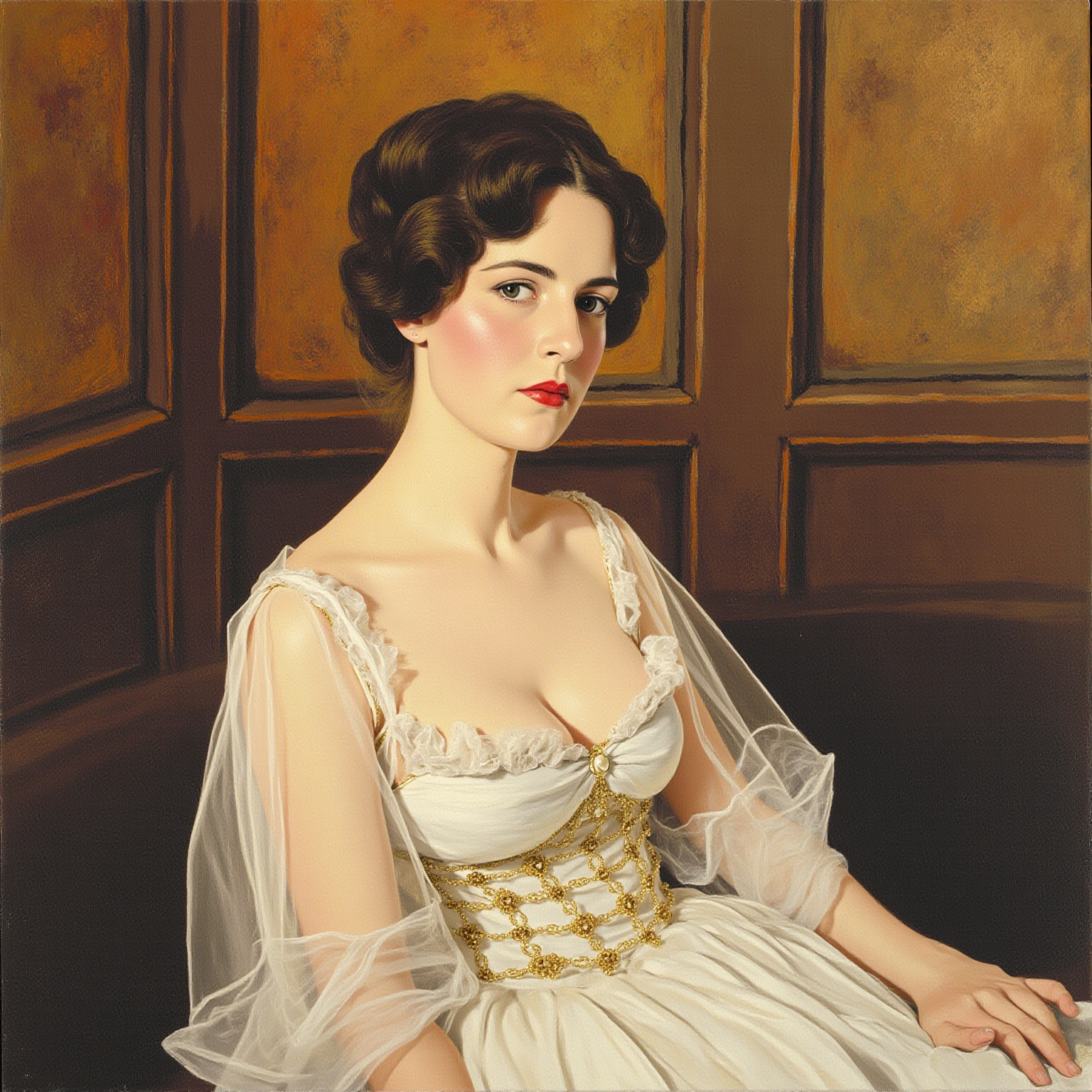
What kills her isn't the rumor. It's the moment the rumor enters the circle and everyone, all at once, pretends not to have heard it.
Eleven. Why Read the Book Itself: Worth It Even Knowing the Ending
You already have the plot, from everything above. But what The House of Mirth actually gives a reader is texture — the rustle of silk against a chair back, the shadow a long glove casts under gaslight, the moment an IOU gets slid across the bridge table. Knowing that Lily dies and sitting through that afternoon with her, that dinner, that unanswered phone call, are two different things. The detail Wharton packs into every page is not something a companion piece can hand you secondhand. The particular texture of a person being slowly consumed under the Gilded Age's last blaze of finery — you only get that by reading it yourself.
There is one more thing: the open question of whether it was suicide. You already know now that it stays unresolved. But when you arrive at the door of that rented room in the pages themselves, and see that sliver of light through the curtains, the weight of that moment is something no companion guide can give you. Go read it.
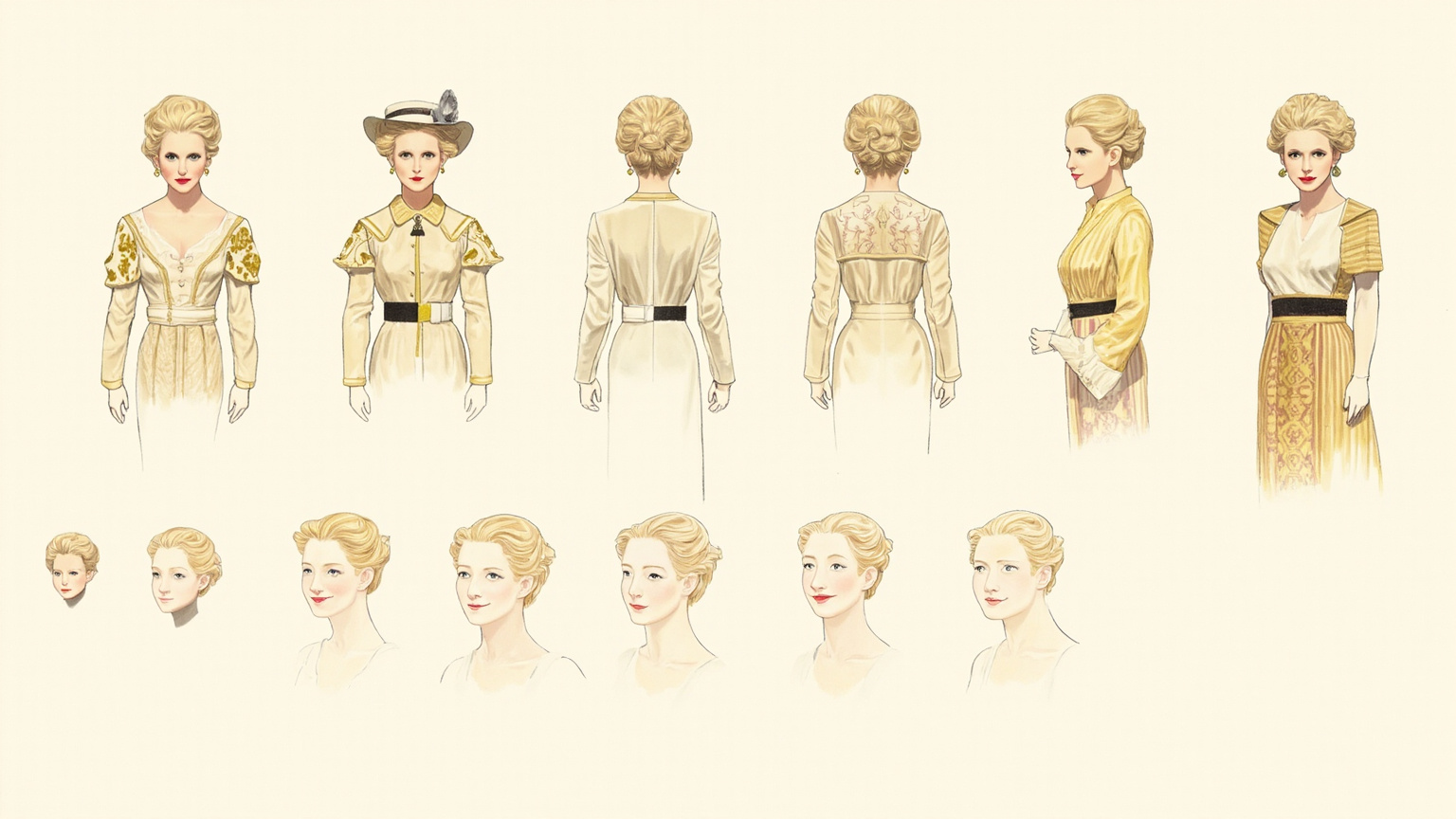
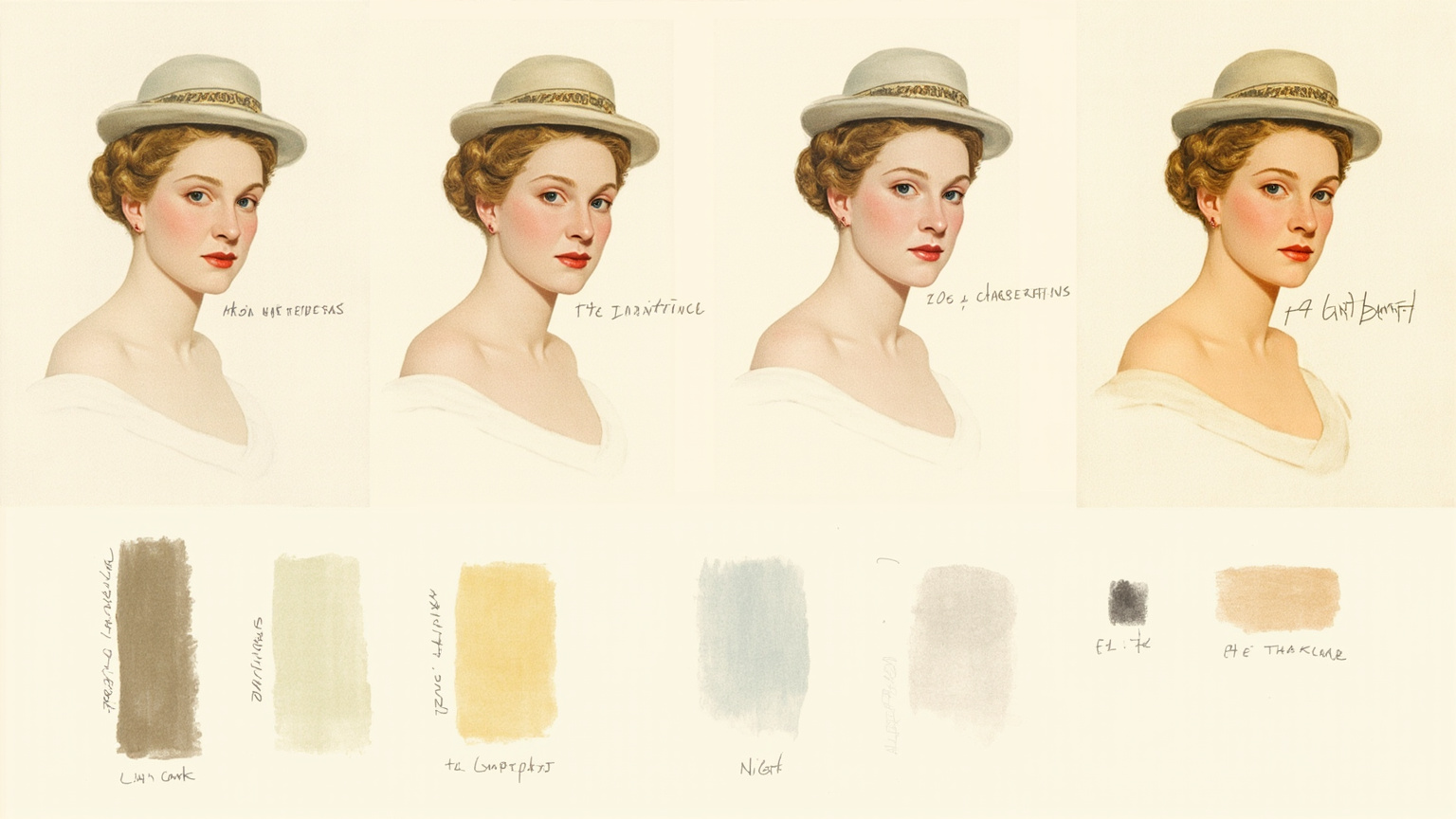
Art Direction4 plates
Before the guide was written, this book got a visual foundation — every illustration you just read grew out of it.