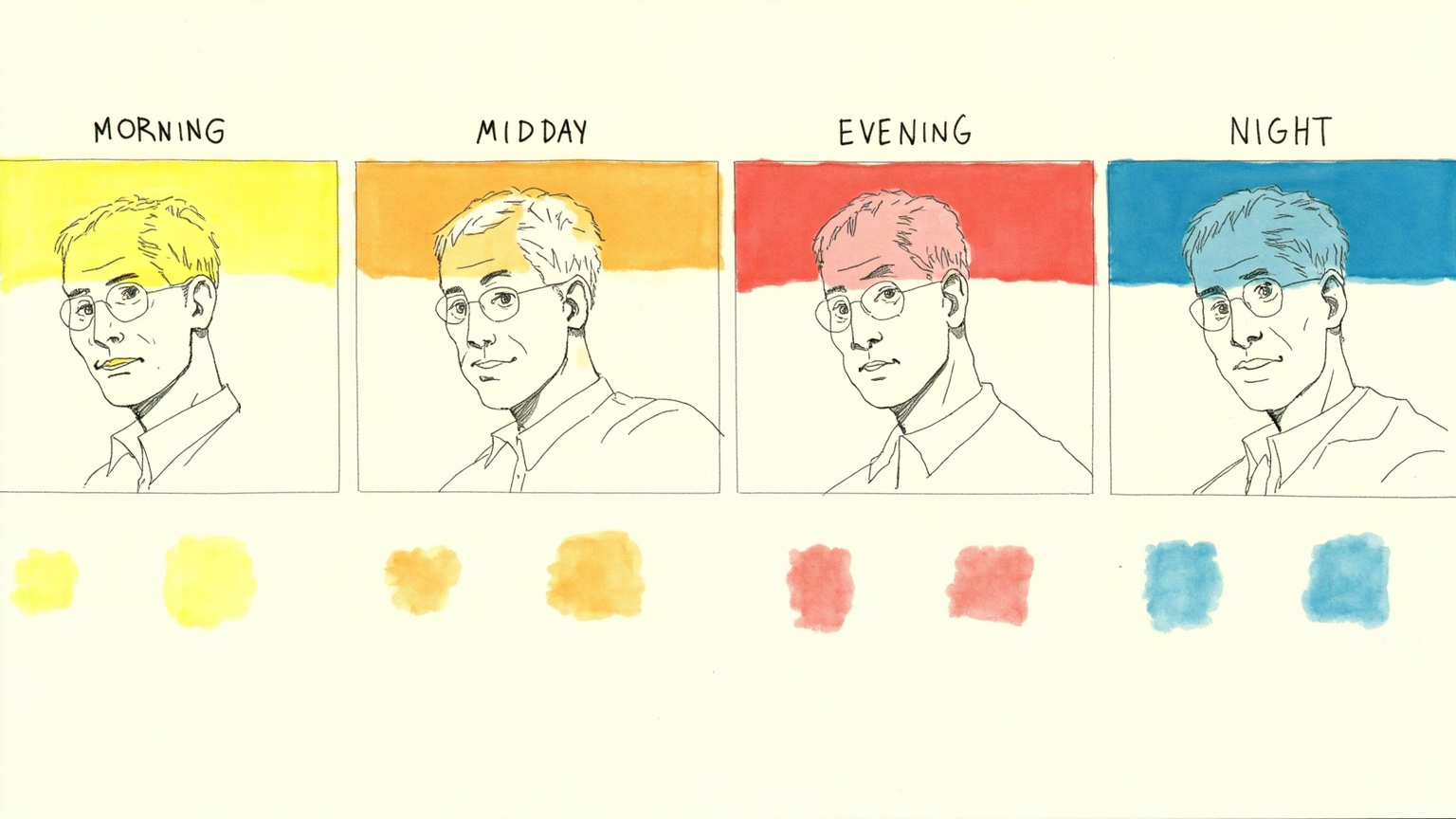
Prime numbers, baseball, and notes pinned against a fading memory stitch together a friendship across a generation.
Text and illustrations produced by the pipeline
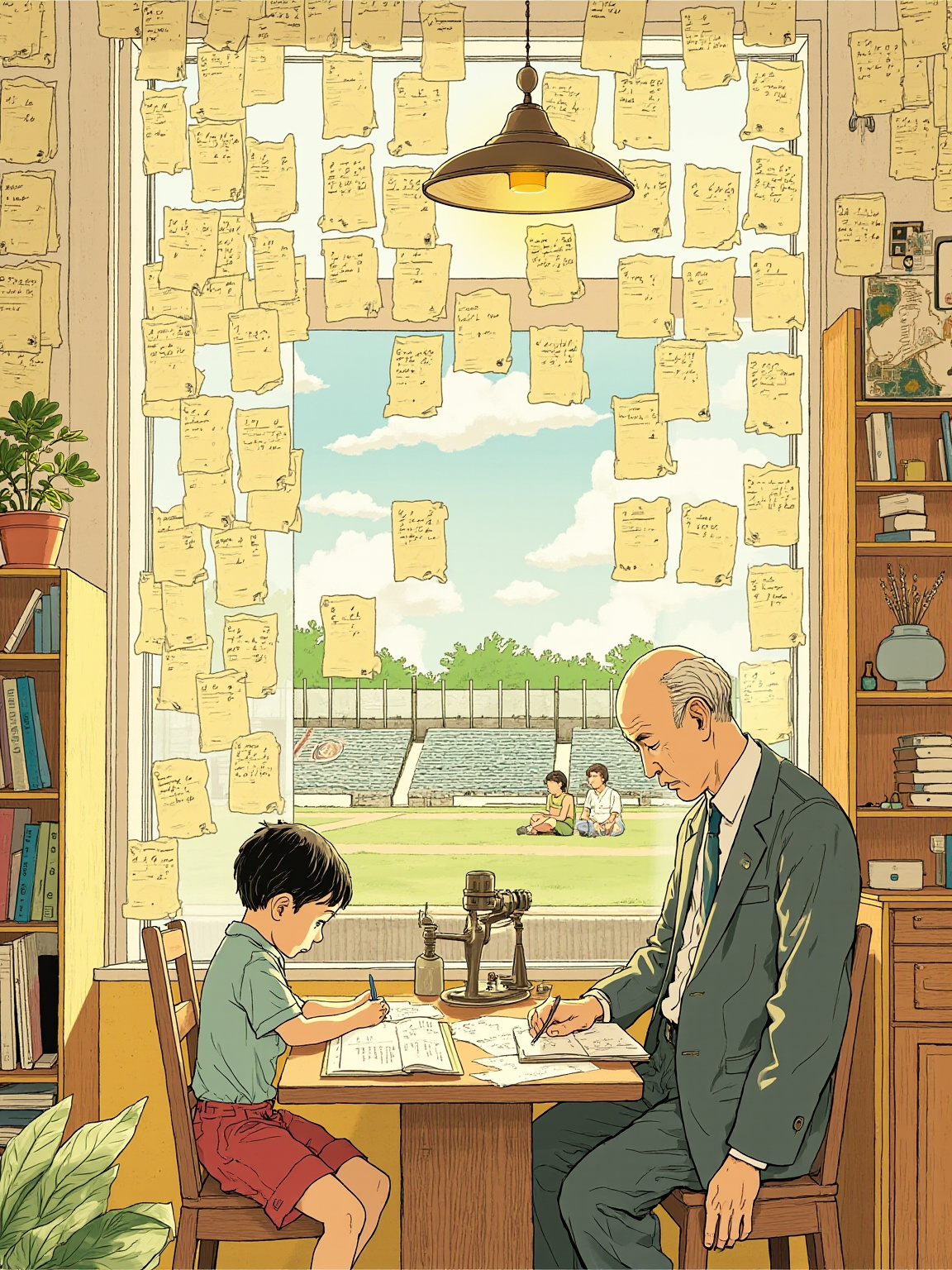
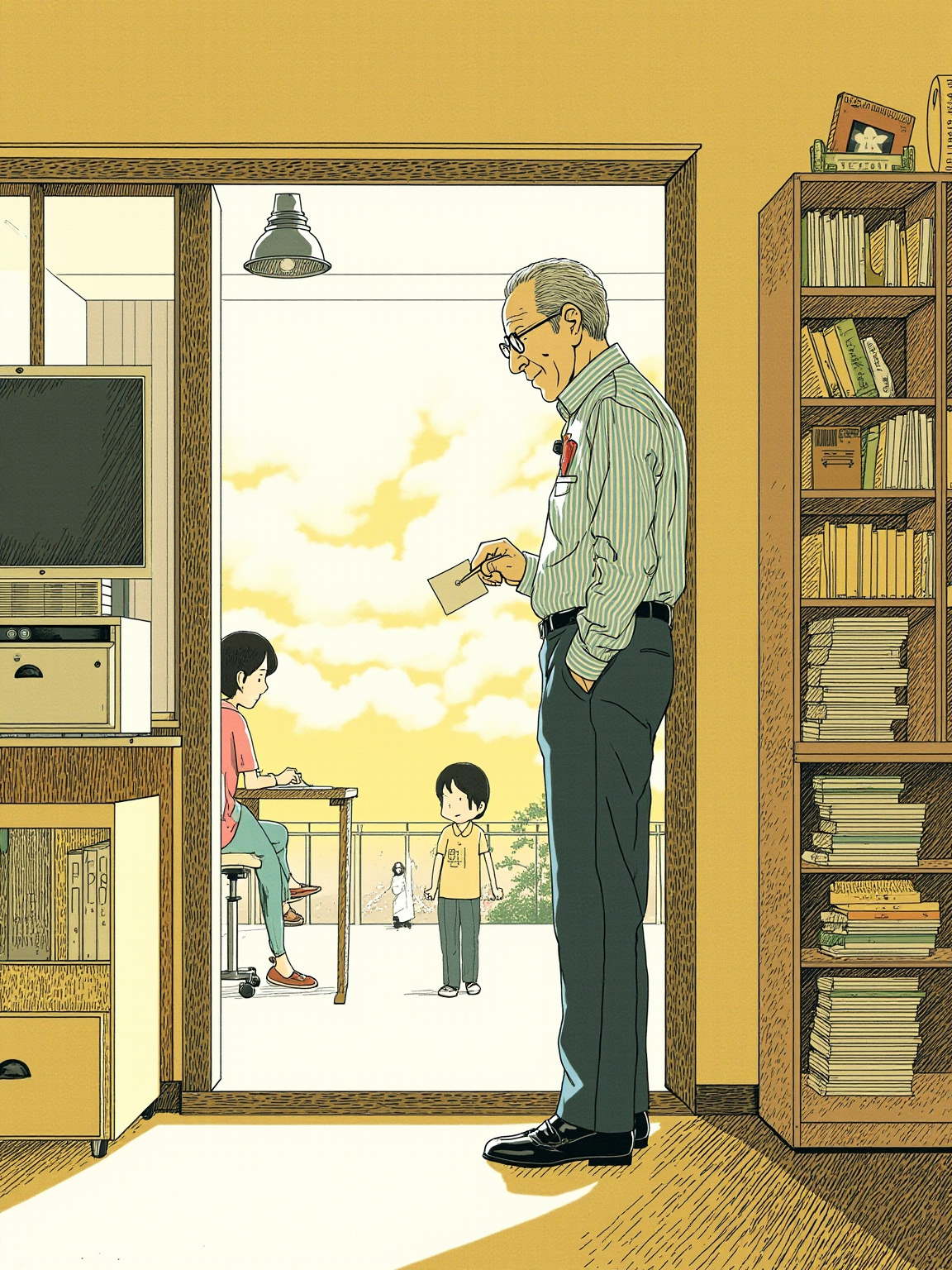
A yellowed slip of paper hangs from a safety pin on the lapel of an old suit jacket. On it is a drawing of a woman's face — the eyebrows a little crooked, one eye bigger than the other, but the corners of the mouth turned up with real care. Underneath, in shaky handwriting: This is the new housekeeper. Every morning a woman stands in front of this old man, and every morning he unpins the note, glances down at it, looks back up at her, and smiles. He asks if she's the new housekeeper. He tells her he's the Professor, and that they said someone new would be coming today. She smiles back. She has been coming to care for him for over a year now. This is the two hundredth-odd time she has heard him introduce himself.
The Housekeeper and the Professor is the quiet novel Yoko Ogawa delivered at the start of the century, published in Japan by Shinchosha in 2003, though English readers didn't get it until 2009, in Stephen Snyder's translation. It isn't the kind of book that announces itself from a shelf. It tells the story of a retired mathematics professor, a twenty-eight-year-old single mother working as his housekeeper, and her ten-year-old son — and somehow fits prime numbers, perfect numbers, Hanshin Tigers baseball, and a house wallpapered in handwritten notes all inside the same doorframe of one old house in a small Japanese town.
It's since become one of the most tender cross-generational stories in contemporary Japanese fiction, adapted into a film under the same title, translated into a long list of languages, quietly remembered by generation after generation of high schoolers and math teachers who finished it. What people remember isn't the plot, which barely turns at all. What they remember is a question the book answers with the lightest possible touch, one that's both small and enormous: if someone has to meet you fresh every single day, what do you call the love between you?
So many people remember this book, and it isn't for the plot, which barely rises or falls at all. There's no villain, no twist, no miracle. What makes it work are a few things that look effortless and are anything but.
First, it writes mathematics like a poem meant to be read aloud. The solitude of a prime number, the wholeness of a perfect number, the way 220 and 284 answer each other — words that used to live at the bottom of a homework page, and Ogawa pulls them, gently, straight into the reader's chest. Second, the eighty-minute memory span was never a sentimental illness trope. It functions as the book's physical engine, producing the strange rhythm of a day that keeps starting over, and forcing the reader to ask what love runs on when memory never accumulates. Third, the note with the housekeeper's face on it never moves from its spot for the entire book, and yet it grows softer and softer with handling: the warmest object in the story, and the most painful one.
Before the guide was written, this book got a visual foundation — every illustration you just read grew out of it.
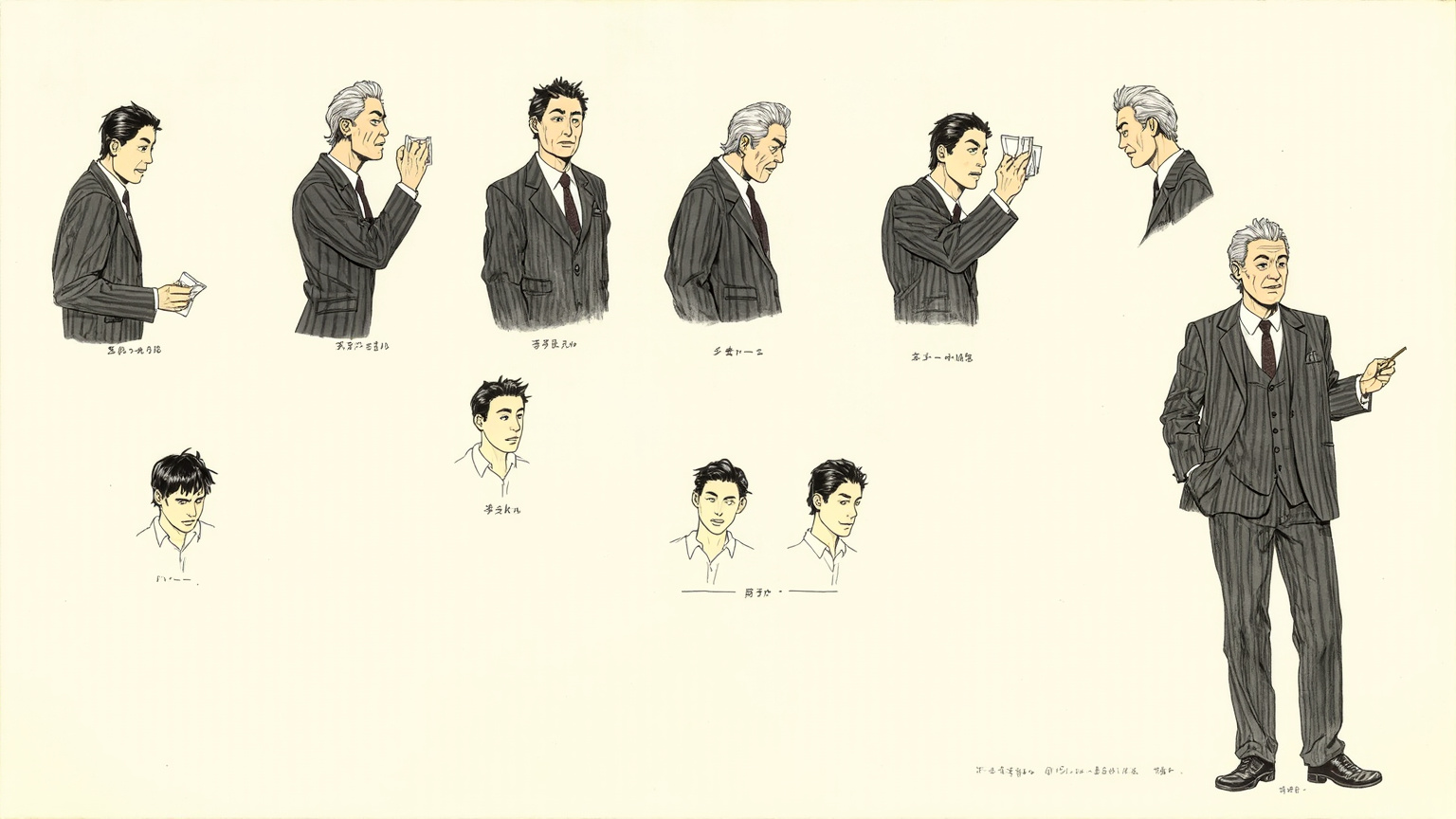
The story comes to us through that twenty-eight-year-old housekeeper. A single mother, she was the ninth one the agency sent to this house; the previous eight had all quit, one after another, over the Professor's strange rules. Her name never appears anywhere in the book; in the telling she is simply 'I,' a dutiful woman raising a ten-year-old boy on her own. The boy is called Root, a name the Professor gave him. He wears his hair cropped close and flat, and on his first day doing homework at the house, the Professor stared at the back of his head for a long half-minute before something seemed to strike him. Your hair, he said. It's just like that symbol — √. From then on the boy was Root. The Professor himself is a retired mathematician whose new memories, ever since a car accident decades earlier, last only eighty minutes. Everything before the accident he remembers perfectly — prime numbers, the windup of the pitcher Yutaka Enatsu — but he cannot hold on to who called ten minutes ago.
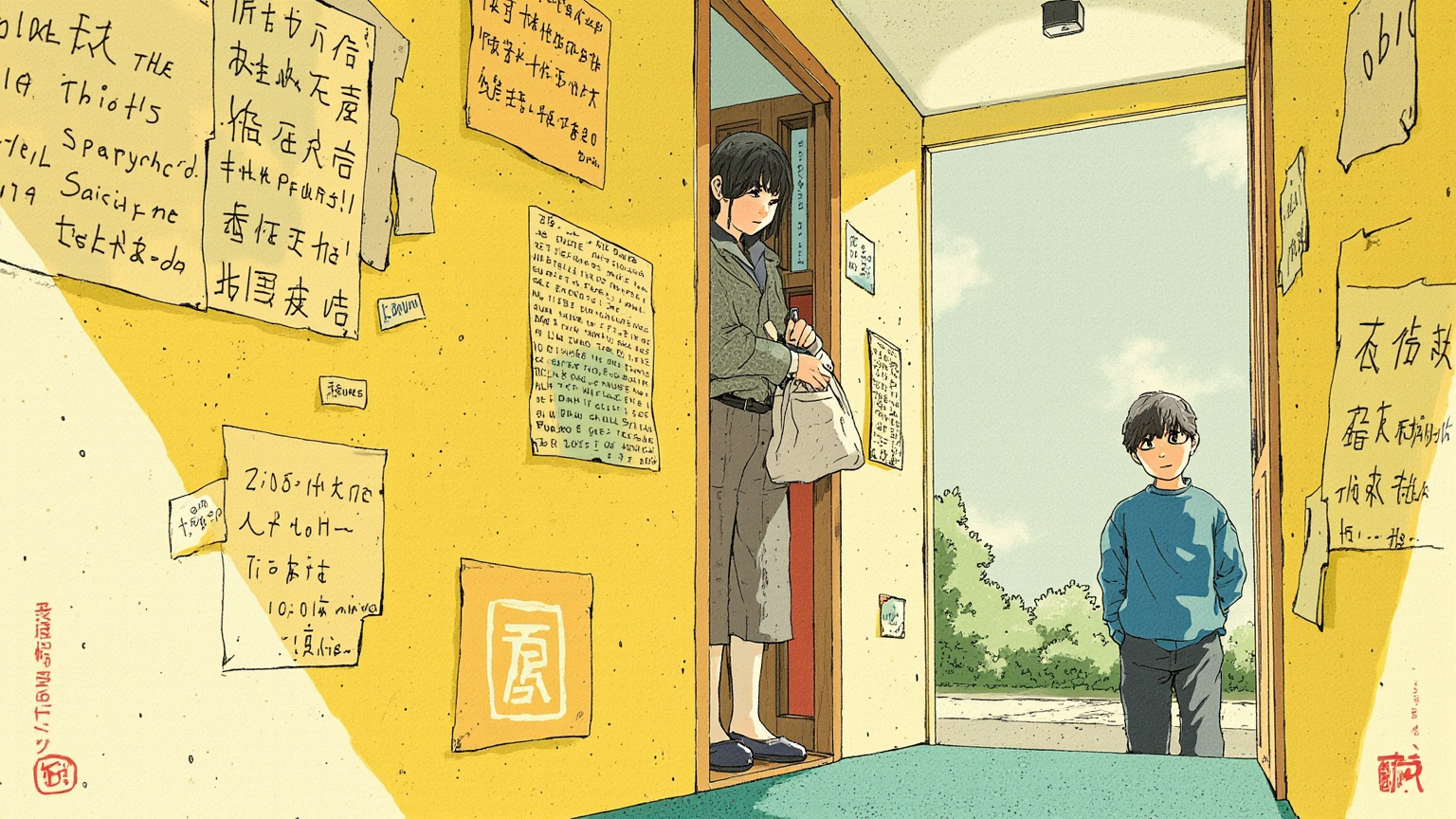
In the early spring of the nineteen-nineties, this young woman pushed open that wooden door plastered with notes for the first time. The house looked buried alive in paper — on the walls, on the doorframes, on the mirrors, even on the handle of a pot lid in the kitchen, yellowing slips reading This is the faucet, or The phone is in the second drawer on the right, or Today is Wednesday. She met the Professor: a thin man past sixty, a row of safety pins on his old suit lapel, each one holding a note, one of which was a drawing of her face. He pulled that note from his pocket, studied it, and looked up smiling. Ah, the new housekeeper? She nodded, thinking: you've already looked at this same note more than two hundred times. For the first month all she wanted was to quit — the rules were too strange, and there were too many of them. But she stayed, because the world the Professor showed her held up far better than his rules did.
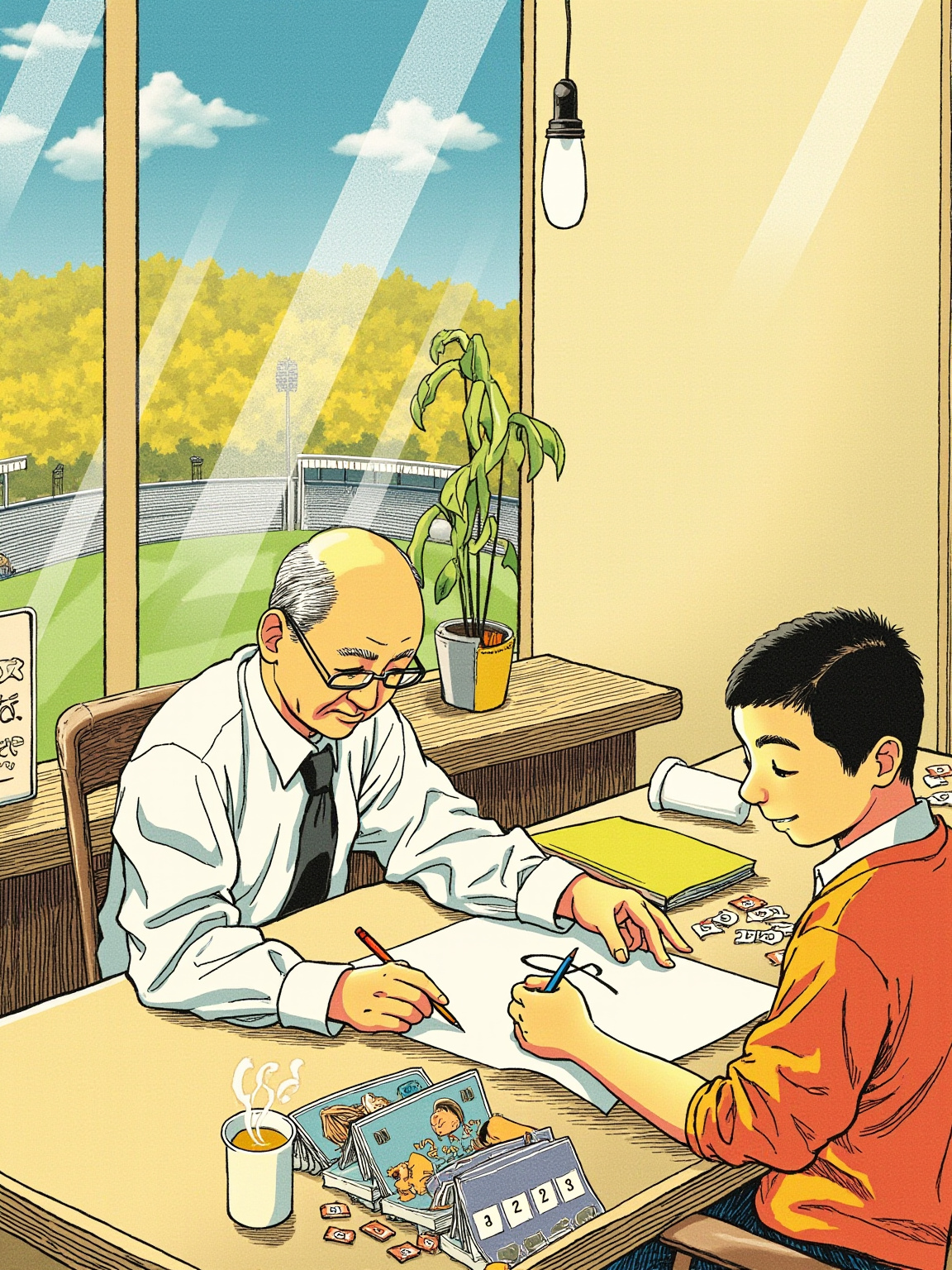
The turn came one afternoon that spring, after school. Somehow the Professor learned that the housekeeper's ten-year-old son spent every afternoon home alone, and his face changed at once. He dug a small blackboard out of his study and wrote, urgently: He must come here to do his homework after school. The boy showed up the next day. He walked in with his hair buzzed short, went straight for the old books on the Professor's shelf, and the Professor kept staring at the back of his round head. Then, suddenly short of breath, the Professor grabbed a pencil, drew a √ on the table, wrote a number inside it, and held it up in front of the boy. Look, he said. Doesn't it look like your head? The boy touched his own flat-top and laughed — and from then on he had a name that only this old man would ever call him by.
The Professor was never really teaching math. He was using numbers to say things people say to each other. A prime number can be divided only by 1 and itself; it sits alone on the number line. This, he told Root again and again, is a kind of solitude that answers to nothing else, a number that has learned to keep its own company. A perfect number is one whose divisors add up to the number itself — 6, say, since 1 plus 2 plus 3 comes to exactly 6 — which is why it means wholeness. 28 is also a perfect number, and that fact would later become a private code running through the baseball chapters. But what actually made the housekeeper's heart skip was amicable numbers. One evening at the table the Professor announced, perfectly serious: 220 and 284 are amicable numbers. The proper divisors of 220 add up to 284, and the proper divisors of 284 add up to 220 — each one is complete in itself, yet neither possesses the other. He looked her in the eye. This, he said, is one of the most beautiful relationships in the world.
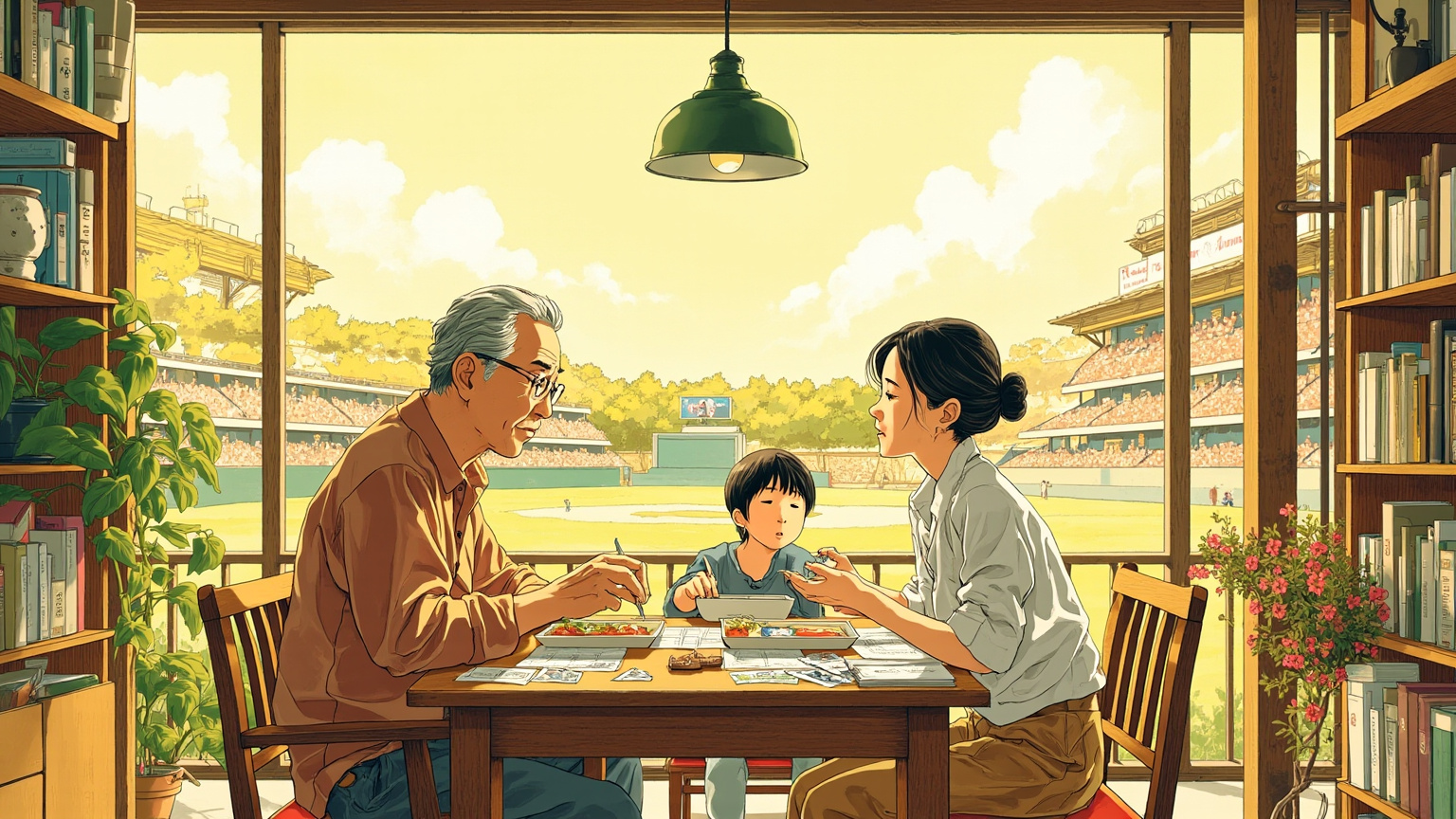
The Professor was a lifelong Hanshin Tigers fan, and his shelves were covered in old photographs and baseball cards of Yutaka Enatsu. He told the boy and his mother, over and over, how great this pitcher named Enatsu had been — but what really held him was the number 28 on Enatsu's jersey. 28 is a perfect number: 1 plus 2 plus 4 plus 7 plus 14 add up to 28 itself. It was a piece of self-consistent romance in the Professor's private world, baseball and mathematics and a deep reverence for one man, all strung together on a single number. That summer the Professor announced, thrilled: I'm taking you both to see the Tigers play. The three of them squeezed into the outfield seats at Koshien Stadium, Root asking again and again which one was Enatsu, the Professor pointing him out to the boy each time as if for the first time. The housekeeper knew nothing about baseball, but she never forgot the lights that night, the cold drinks, the Professor shouting out calls like a kid, and Root asleep against her leg, pressed there by the crowd.
This is the book's quiet undercurrent: the Professor's new memories last exactly eighty minutes. Every evening before the housekeeper leaves, he adds one more line to his notes; every morning she returns, he takes the note down and studies it as though meeting a stranger. But something strange was happening underneath all that. He started recognizing her faster. At first he needed a long look at the note; then just a glance; and eventually he was smiling at her in the entryway before she'd even finished taking off her shoes. Good morning, my housekeeper. He had forgotten everything she'd said the day before, but not the way she said it. What began as discomfort for the housekeeper became, in time, an understanding: a relationship doesn't have to be built frame by frame out of memory. A body, a voice, a smell — these can do memory's work instead.
The Professor doesn't live alone in this old house. His widowed sister-in-law lives in the main residence. She never sets foot in the Professor's cottage, yet she is the one arranging everything behind the scenes: the schedule, the pay, which housekeeper gets sent. She and the Professor have almost no direct contact at all. On the surface it looks like something close to coldness, but the truth is that ever since the accident, being near her leaves him shaking with anxiety, and so she has gone on quietly covering every expense of this house from the far side of the main residence. That restraint lands harder than any warmth would — this makeshift household of three turns out to be held up by a woman who never once appears on stage. She is the one who actually contracts with the housekeeper on the Professor's behalf, and structurally, she is the coldest, hardest brick in the whole arrangement.
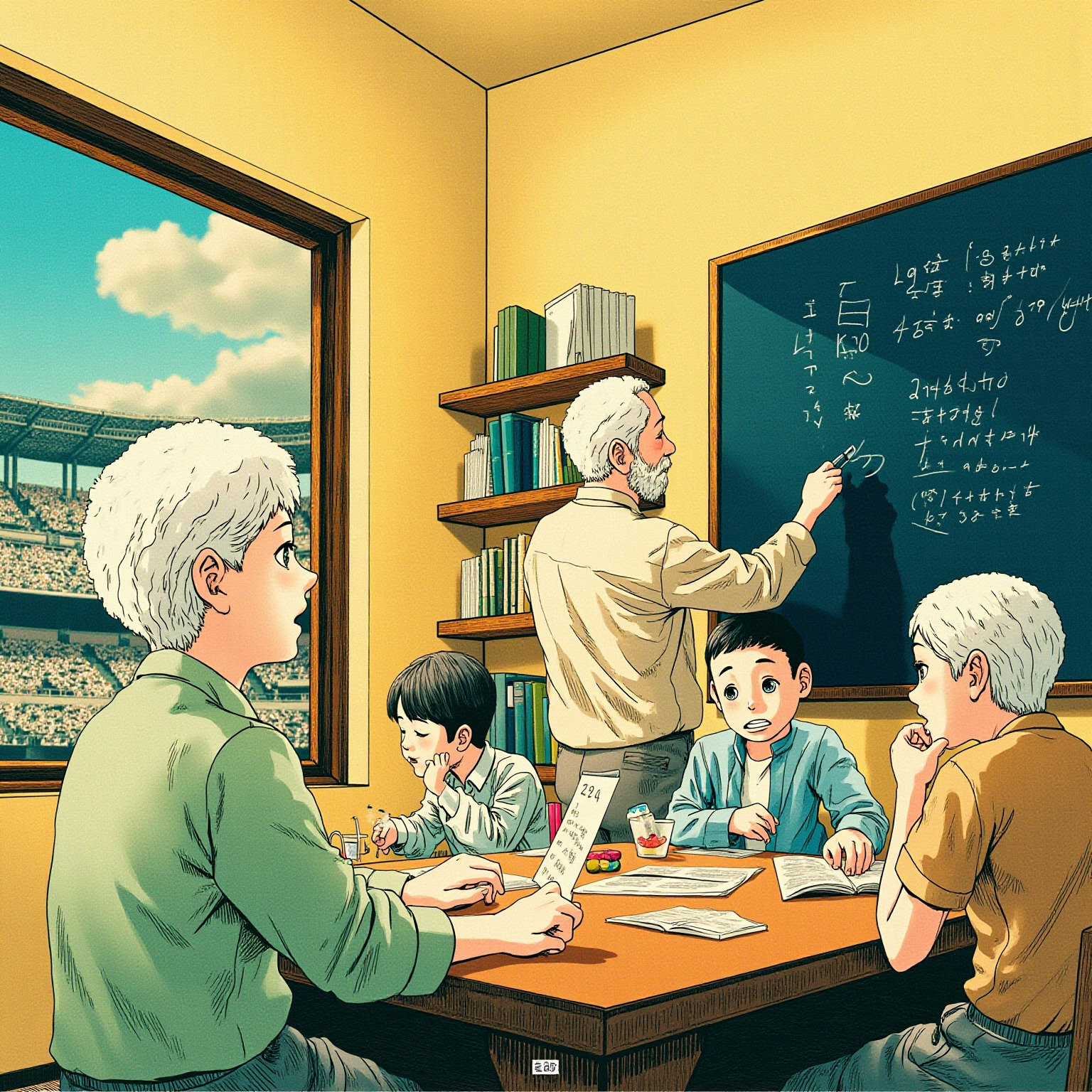
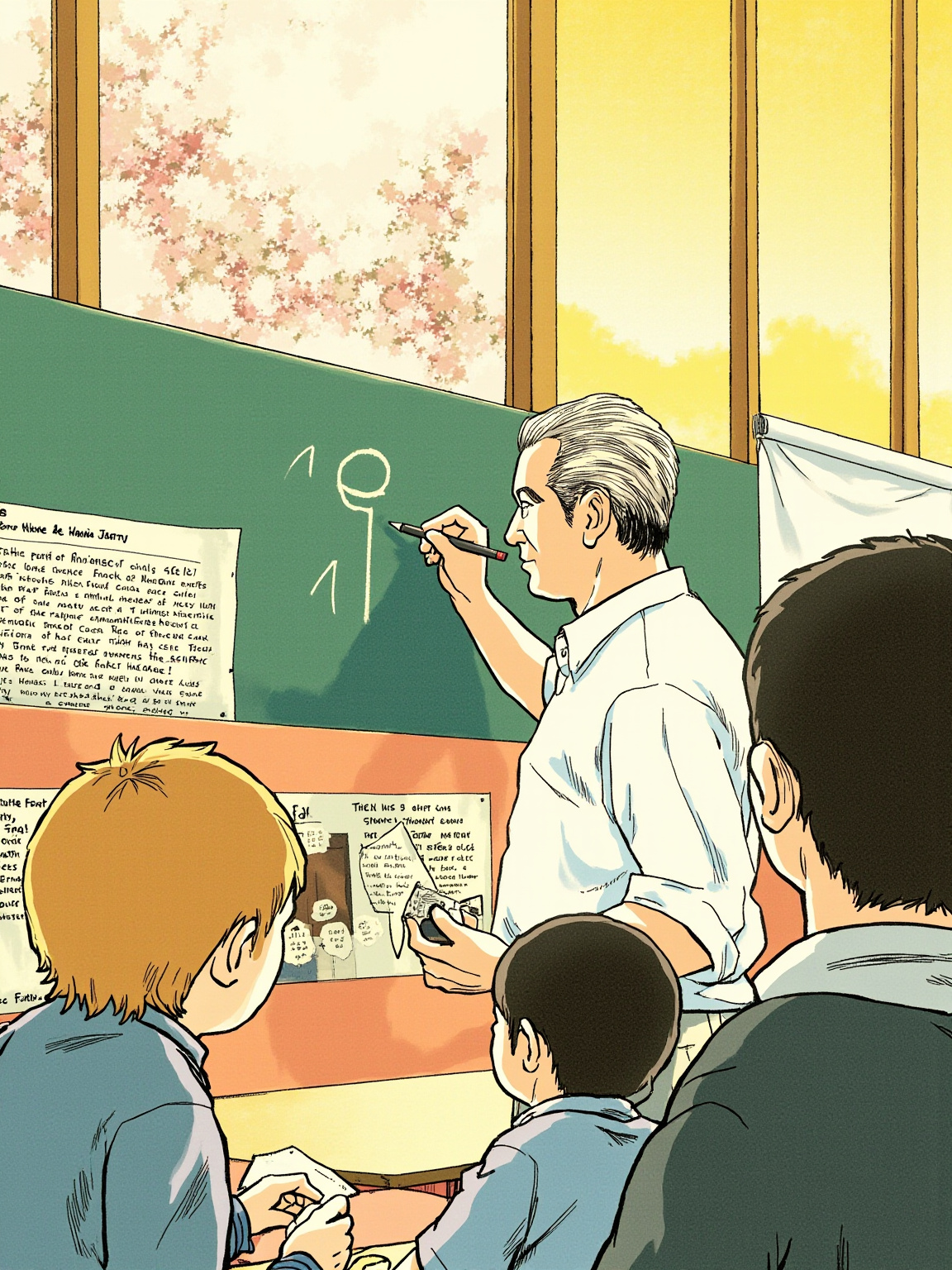
Here time quietly bends. The perspective shifts away from the housekeeper of those years to Root, grown up, now a junior high math teacher, standing at the front of a classroom telling children about primes and perfect numbers. The Professor is long gone; the cold drinks the three of them shared in the outfield at Koshien belong to some expired past. But when Root holds a piece of chalk between his fingers, he sometimes feels, out of nowhere, as if someone were watching the back of his head again. Only now does the reader catch up: the primes, the amicable numbers, the Hanshin Tigers were never just company for one particular summer. They were the starting point of Root's whole life.
A guide like this can hand you a map, but no map can draw the speed at which a cup of tea goes cold. There are reasons to open the book itself that no summary can hold. You want to feel the small tremor that runs through the house every time the words good morning, we're meeting for the first time land in it. You want to watch that note about 220 and 284 pass quietly between two grown-ups and a ten-year-old boy who barely understand numbers between them. You want to know whether, and how, whatever is left of a person after he's forgotten everything can still love someone.
He forgets her every single day, and still remembers the way she talks — the trick of this book is making you believe love never needed memory stacked up frame by frame in the first place.