The Italian, or the Confessional of the Black Penitents · Companion Guide
意大利人
那不勒斯的钟声里一眼误终身,阿布鲁佐山的悬崖上一秒定生死——告解室里被推迟的真相,比毒酒更让人窒息。
Opening scene: a locked room at midnight, a poisoned cup at the lips
A stone room, the candle burned down almost to nothing. A pale, high-strung man holds a cup of wine and crosses slowly toward a woman asleep on the bed. He believes she is his own illegitimate daughter, lost long ago, and that tonight she must be dealt with, or the family will be disgraced. He brings the cup to her lips. His hand stops. Staring at her face, he suddenly recognizes something familiar in the line of her brow — not a daughter. A niece. The cup withdraws. This is the psychological core of The Italian: a killing of one's own blood that almost happens, a riddle of parentage untangled only because the truth is kept waiting.
The second the cup withdraws, the Gothic novel plays its best card: the fear is not in the blood that is spilled, but in the blood that almost is. Ann Radcliffe builds the entire book on that almost.
What kind of book this is
The Italian, or the Confessional of the Black Penitents was published in 1797 by Ann Radcliffe. She was in her early thirties, at the exact moment the English Gothic novel was pushing its way from the margins onto the drawing-room shelf. The same year brought The Monk, on the same territory; the two authors were soon paired off as Gothic fiction's twin poles, and they took the genre in opposite directions — which is the real subject of what follows. Radcliffe wrote little in her lifetime, but The Italian is widely taken as her capstone, ranked alongside The Castle of Otranto, The Mysteries of Udolpho, and Melmoth the Wanderer among the five foundational works of Gothic fiction. It is remembered chiefly for two things: it was the first serious answer to the argument over what terror should actually look like on the page, and it produced Schedoni — pale, ascetic, tearing himself apart from the inside — the distant ancestor of every brooding villain Byron would later write.
People and world: two lives under a triple noose
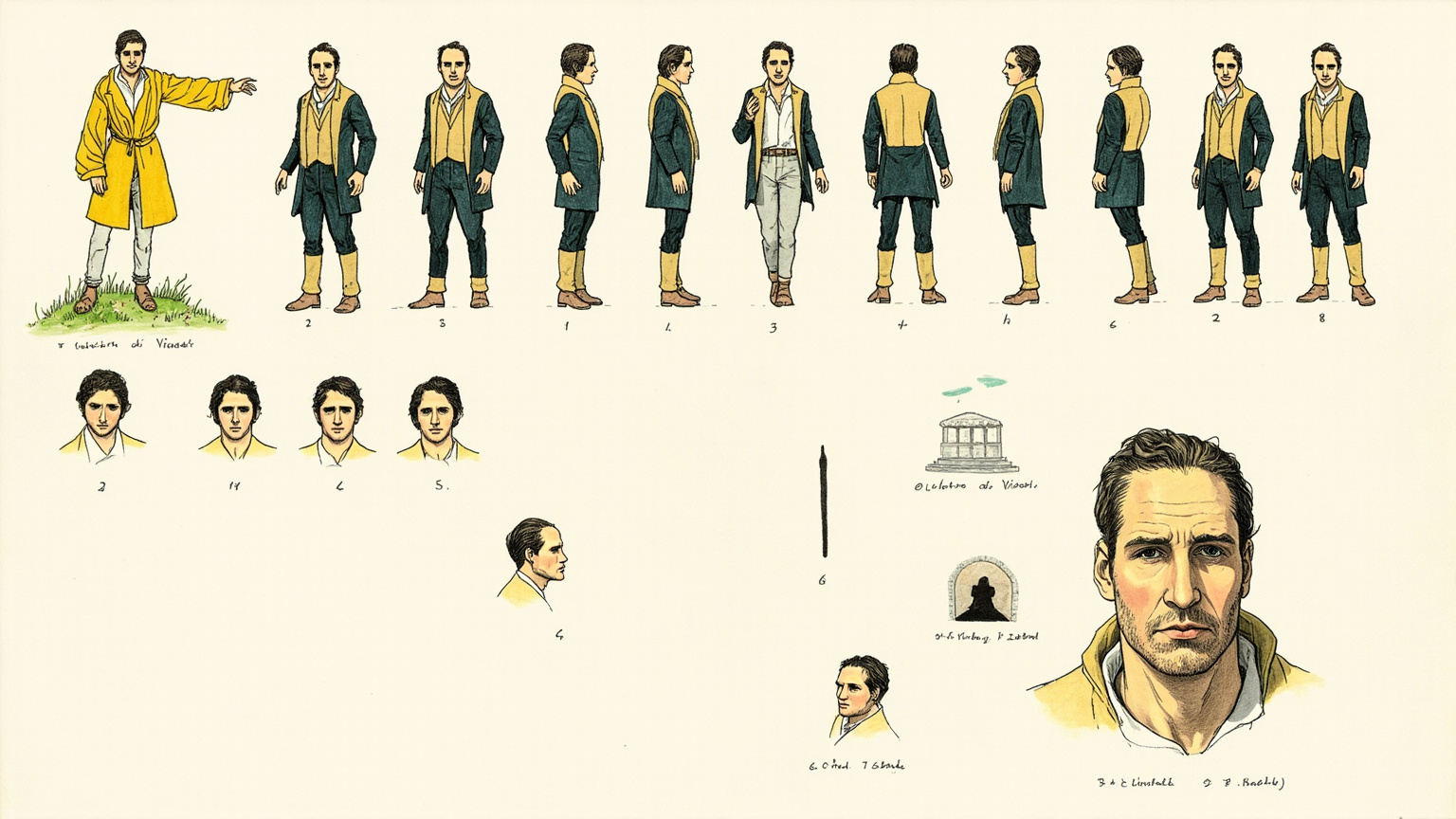
The hero, Vincentio di Vivaldi, is a young Neapolitan nobleman: romantic, hot-blooded, willing to risk everything. He catches sight of a girl, Ellena di Rosalba, during a religious procession in Naples, falls for her on the spot, and proposes almost immediately. Ellena is the illegitimate daughter of a Capuchin superior — later revealed to be Schedoni — and was raised from childhood by an aunt in Calabria: strikingly beautiful, devout, soft-hearted. The story's real tension is not whether the two of them love each other. It is three ropes, tightening from outside at the same time.
The first is his father, the Marchese di Vivaldi, obsessed with lineage, who considers Ellena's birth beneath the family and moves to break them up by force. The second is the Confraternity of the Black Penitents — a religious order that really existed in Naples — which in the novel becomes an arm of the Inquisition, headed by the book's chief villain, the monk Schedoni. The third is the Inquisition itself, the machinery of the state. All three forces push the two young people from different directions toward the same stone cell. The rule of this world fits in one sentence: in an eighteenth-century Italy where the Inquisition is still alive, a person can legally vanish for the crime of loving someone.
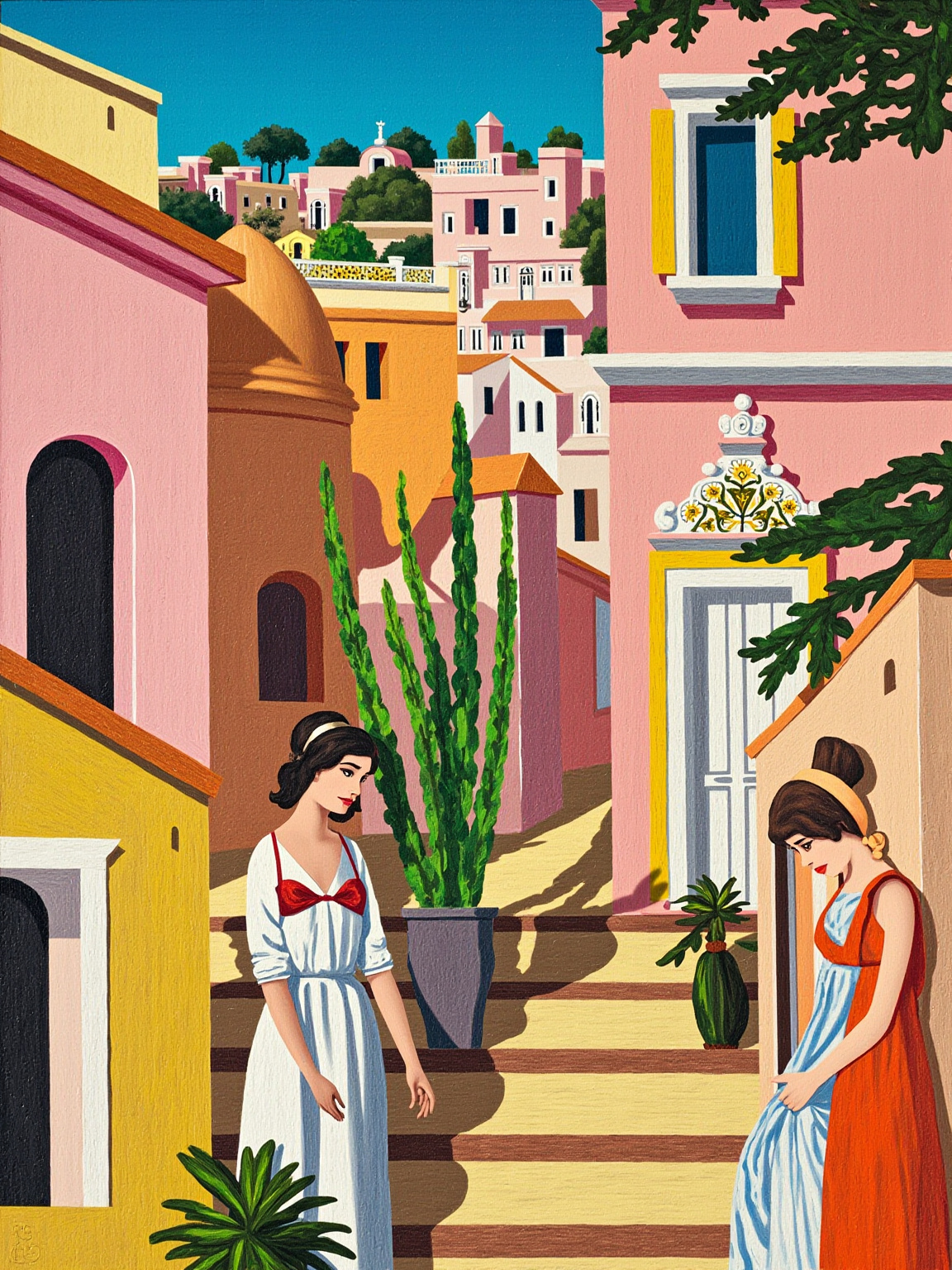
He paused, and the deep silence of midnight was only broken by the low murmuring of the winds, that swept at intervals along the deserted corridors.
他停了一停,深夜的寂静只被风偶尔掠过空荡回廊的低吟所打断。
金句 · 黑色忏悔修士团章节 · 那不勒斯礼拜堂前的人群与钟声
The plot: from Naples to a mountain escape in the Abruzzi
The first half of the story plays out in Naples. During a religious procession, the crowd packed into the narrow lane in front of a church, Vivaldi looks up — a girl is watching from a second-floor window. Radcliffe writes the encounter in a few lines, over in seconds, and it leaves a pull that lasts the rest of the book. The romance is snuffed out almost immediately by his father. The Marchese thinks Ellena's birth is beneath his son and will not tolerate defiance. He hands Ellena over to the monk Schedoni for safekeeping — a respectable solution, in his eyes; in his son's, handing her straight into the grinder.
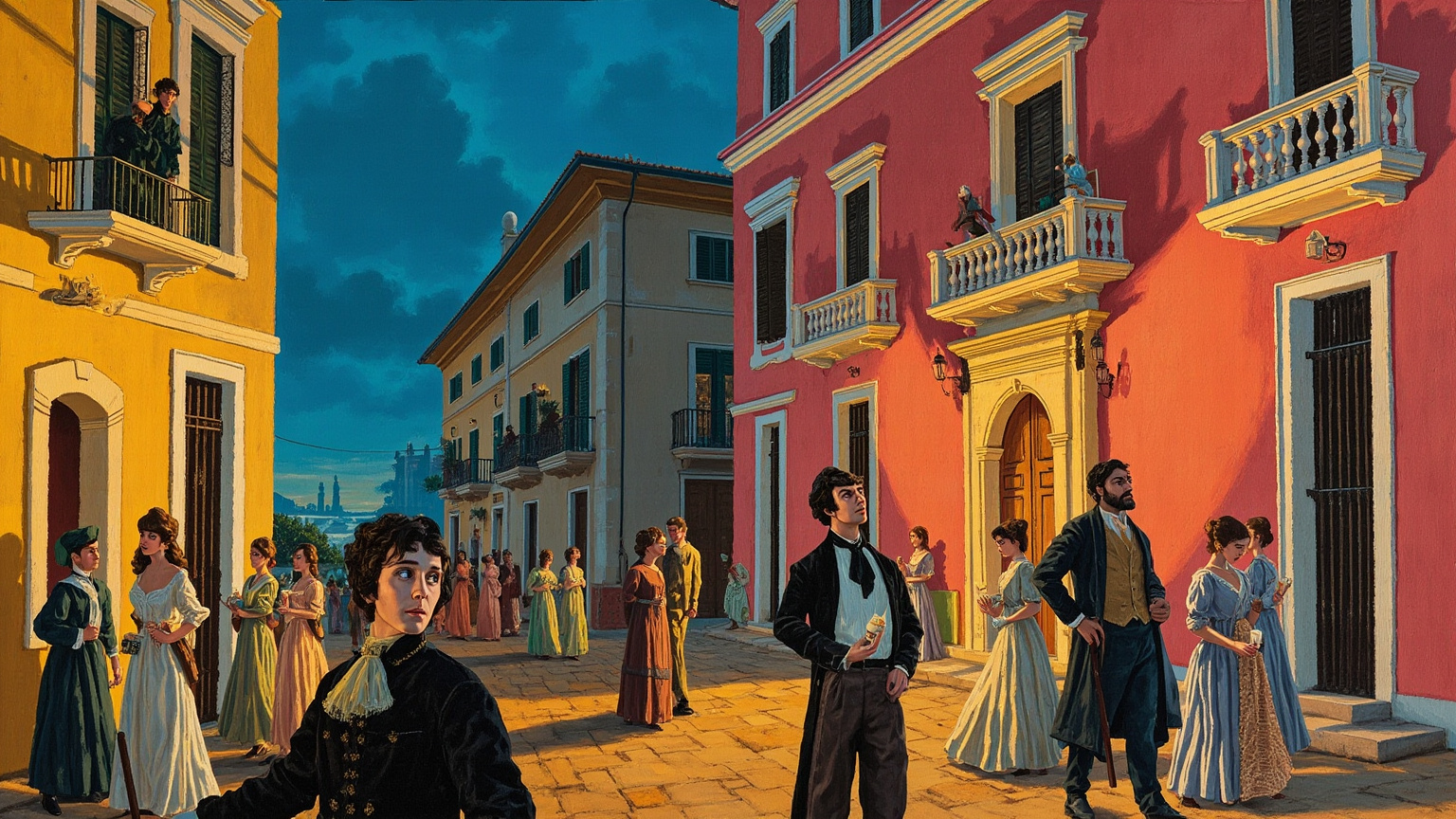
He took the cup from her hand—her hand trembled—and held it towards her; she raised it to her lips—he checked her arm.
他从她手中接过酒杯——她的手在发抖——把酒递向唇边;他骤然按住了她的手臂。
金句 · Schedoni 密室段 · 差一秒就递到唇边的毒酒
Schedoni took on the charge as a trap. An informant had told him Ellena was his own illegitimate daughter — and if it were true, family honor as he understood it demanded that she disappear. He picked a night, let the candle burn low, and carried a cup of doctored wine toward the sleeping Ellena: this is the failed murder that opens the guide. The cup reaches her lips. He hesitates, recognizes her mother's face in hers — not a daughter, a niece. The cup withdraws. He came within a breath of killing someone he had no reason to kill — but he still had her taken to the monastery of San Stefano, on a cliff in the Abruzzi mountains, and locked in a cell there, carrying out the sentence by other means.
Vivaldi did not sit waiting in the city. He disguised himself as an ordinary man and slipped into the Naples headquarters of the Confraternity of the Black Penitents — the chapel still stands today in Naples' Spaccanapoli district, called Santa Maria della Pietà dei Sette Dolori — trying to learn where Ellena had been taken. Someone among the brothers recognized him, and the Inquisition seized him, interrogated him, and brought him close to death more than once. Outside, his loyal servant Scipio carried messages, hunted down a lawyer, and greased whatever palms needed greasing. Inside the mountain monastery, the monk Paolo, Schedoni's subordinate, worked the gloomy corridors passing word between the two lovers.
The mountain monastery is where the book's real terror lives. Perched on a cliff, built of stone, standing alone. The cell window looks out over a drop, its iron bars rusted through. Ellena is held here, nearly dies by poison, and is locked into a stone cell afterward. Half of Italy away, Vivaldi is trapped at the same time in the Inquisition's cells below ground. Each of them endures inside stone while, outside, loyal servants and sympathizers run the errands between them.
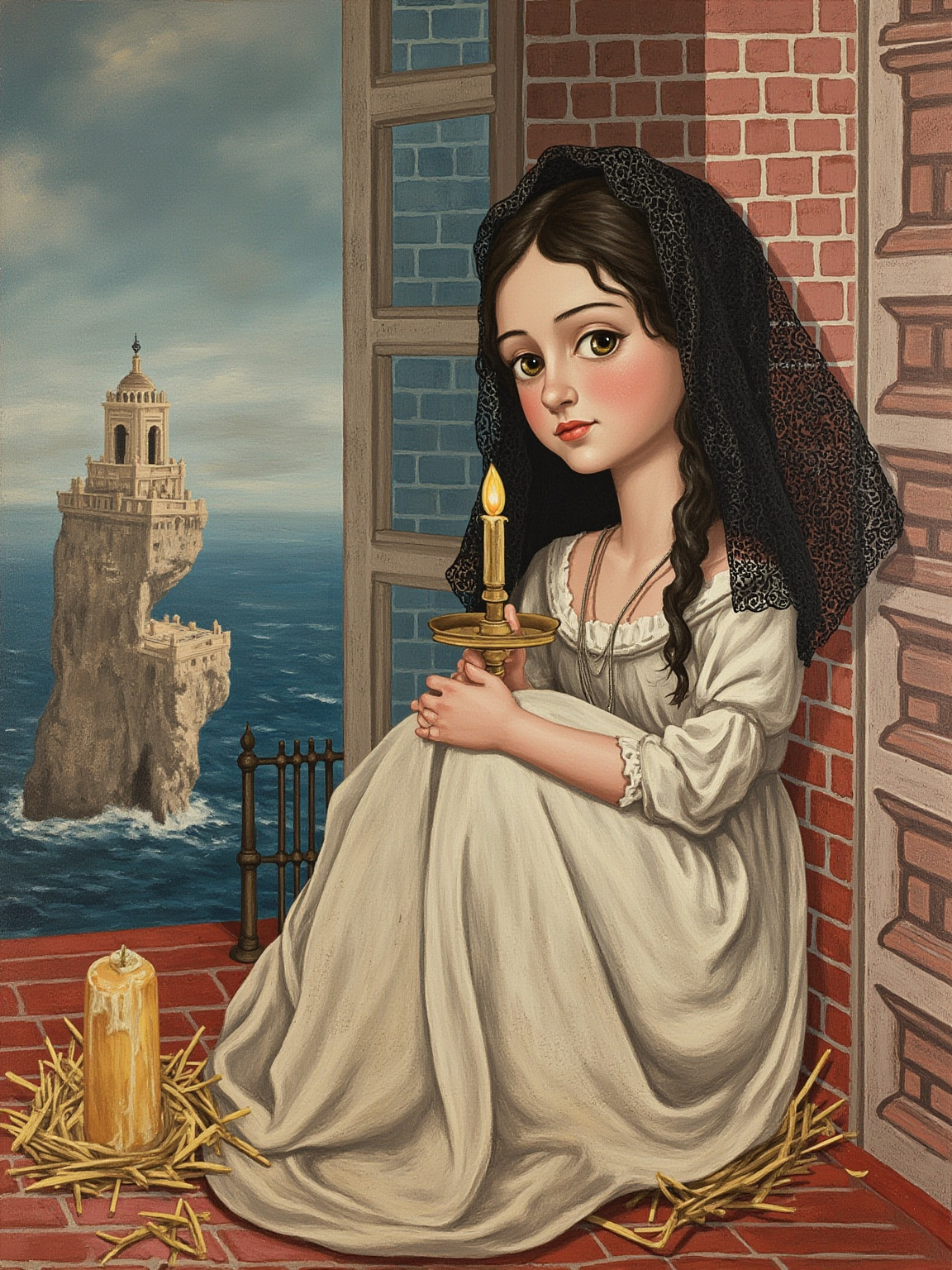
She saw the dark brow of the precipice rise almost perpendicularly above her, and the long shades of the mountains stretch in gloomy grandeur.
她看见悬崖的黝黑岩壁几乎垂直地压在头顶,群山的狭长阴影以阴沉的巍峨铺向远方。
金句 · 阿布鲁佐山段 · 圣斯特凡诺修道院的囚室窗洞
The rescue is lit by a fire. Scipio and Paolo secretly set the monastery ablaze, draw the guards off in the confusion, and Ellena escapes her cell, stumbling into the forest. At the same time, on the other side of the mountains, Vivaldi breaks free of the Inquisition's net. The two of them are reunited in the hills — and here Radcliffe holds back, almost no embracing, no weeping, just a few lines of each seeing that the other is still alive.
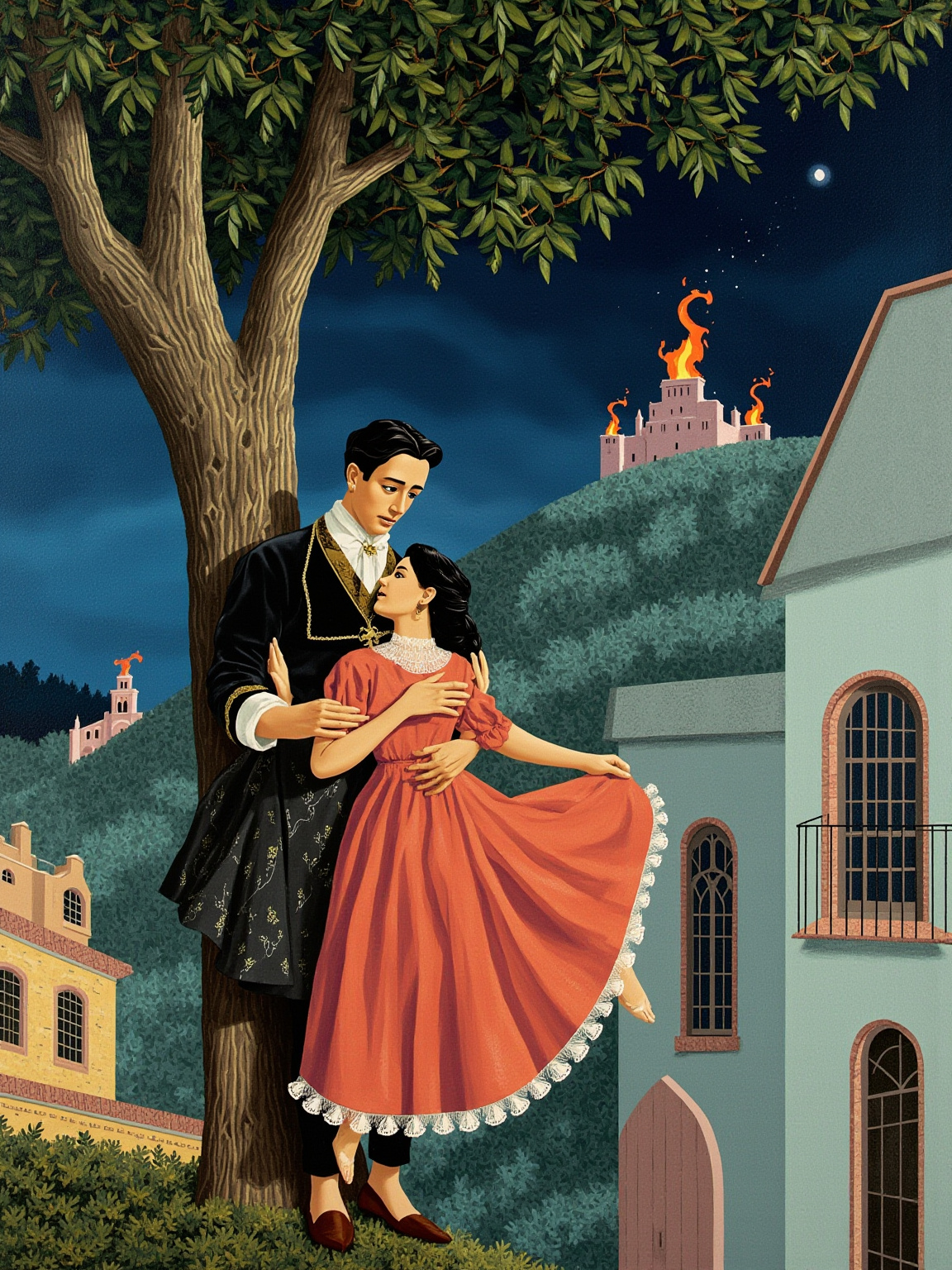
The fire dies down, but the mountain has not finished with its business. Schedoni's crimes come out one by one: attempted murder by poison, the unlawful imprisonment of a nobleman's daughter, and, worse for a judge of the Inquisition, knowingly breaking the very law he was sworn to enforce. He takes his own life in some corner of the monastery. Ellena's parentage is settled in the same breath: she is not Schedoni's daughter, only his niece, and the shadow of incest hanging over the whole book turns out to have been a misreading from the start. The reader breathes out here — he never actually committed the crime he believed himself guilty of. This is Radcliffe's best trick: the horror was never the crime itself. It was being allowed to believe the crime for so long before the truth arrived.
Theme and technique: two ways to write horror, and she chose the harder one
The real achievement of The Italian is not its plot but the road it chose. In 1796 Lewis published The Monk, turning the monastery into a torture chamber — blood, rape, incest, the horror route stated plainly, and it detonated across literary London. Radcliffe, working the same territory in nearly the same year, went the other way: no torture is ever staged, no cruelty ever lands on the page. Where does the fear come from instead? From scale — vaulted ceilings that swallow sound and throw it back distorted. From light — a guttering candle that warps the shadows. From delay — the informant is real, the imprisonment is real, but the truth is allowed to surface only chapters later. She coined her own term for it, terror, and set it against horror: terror is what you build yourself, in your own head; horror is what someone else paints for you. It is the single most important statement of direction in the history of the Gothic novel.
Terror, not horror, is the companion of the reader of these scenes; the mind is to be agitated, not shocked.
陪伴读者走过这些场景的,是暗示的恐惧,不是直白的惊悚;他要被激动,而不是被击倒。
金句 · 拉德克利夫自陈手法段 · 《意大利人》论 terror 与 horror 之别
Schedoni is the book's other legacy. He is not a villain in the ordinary sense — he is a man torn apart from within by his own nerves, by a family secret, by a warped sense of honor. Pale, ascetic, riddled with self-doubt: this is the spiritual prototype of the Byronic hero. Every brooding, guilt-ravaged villain who came after has Schedoni's blood in him.
This is a book about the second before — the second before the cup reaches the lips, before the fire kills, before the truth becomes unbelievable. Radcliffe delays every worst thing by one beat, and leaves you outside the stone wall to fill it in yourself.
For today's reader: it is still alive
More than two centuries later, The Italian still does not read as old. The lines it works are still running today: patriarchal authority vetoing marriage, a religious machine swallowing the individual, a delayed truth reshaping the person it belongs to. Schedoni's almost-murder is recognizable in any contemporary story about paternal power, honor, or a hidden parentage. Radcliffe also handed the genre a whole dictionary of southern-European Gothic imagery — Neapolitan baroque churches, a monastery stranded on an Abruzzi cliff, Capuchin monks, candlelight and shadow — and the Italy that Byron, Shelley, and Pushkin later wrote was drawn wholesale from her stock.
Why read the text itself: the map is not the territory
A guide like this one can tell you who fell in love with whom, who almost killed whom, how the monastery caught fire. What it cannot give you is the pressure in a character's chest at the moment the stone walls close in. That does not travel through plot summary. It needs Radcliffe's actual method — dimming the light paragraph by paragraph, slowing the footsteps, stretching a sentence to twice its natural length and then pulling it back — to make you sit inside the scene rather than read about it. A novel written three hundred years ago that can make you afraid to look out the window tonight after the lights go off: that is what the text itself gives you, and nothing else can.
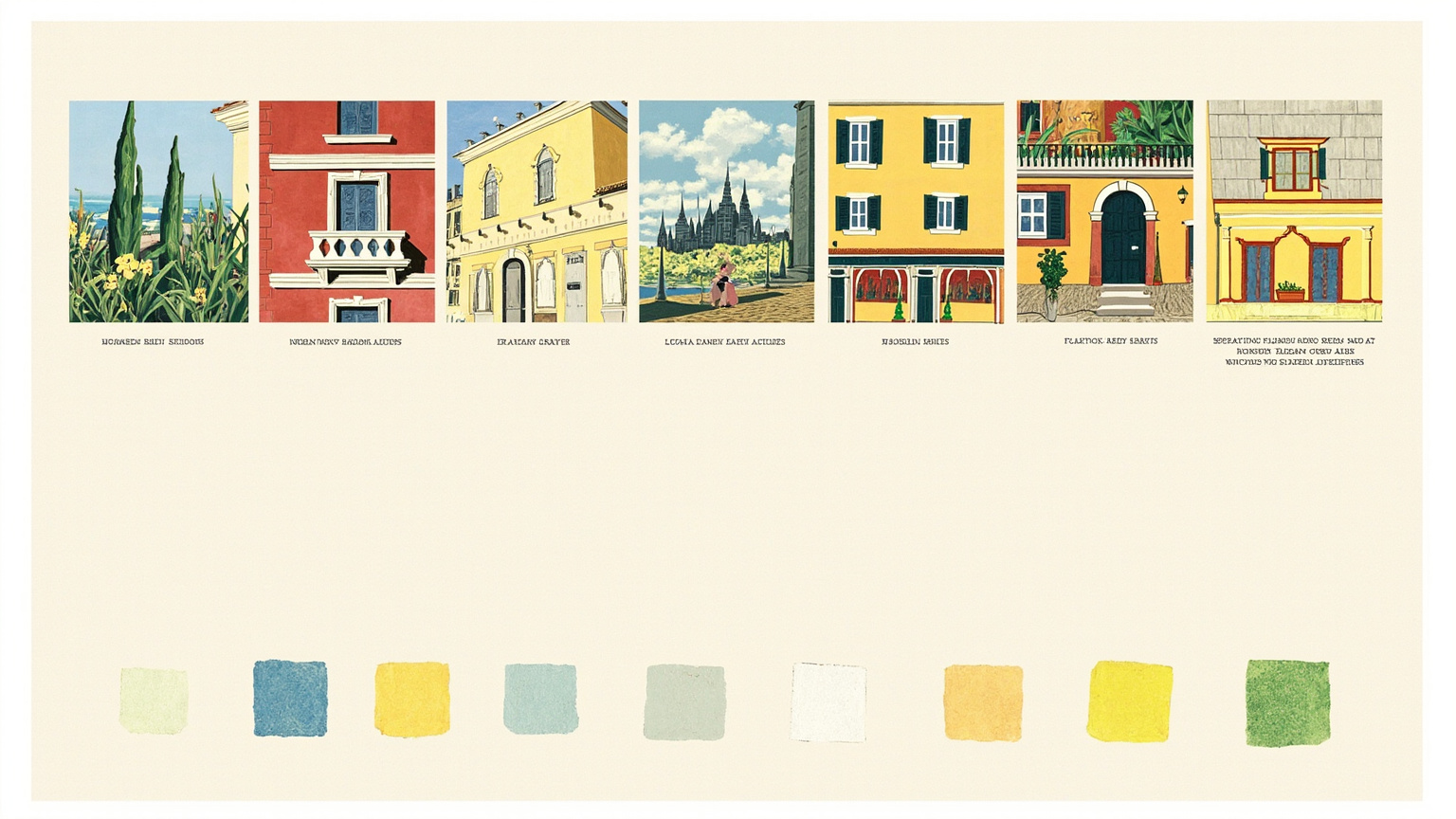
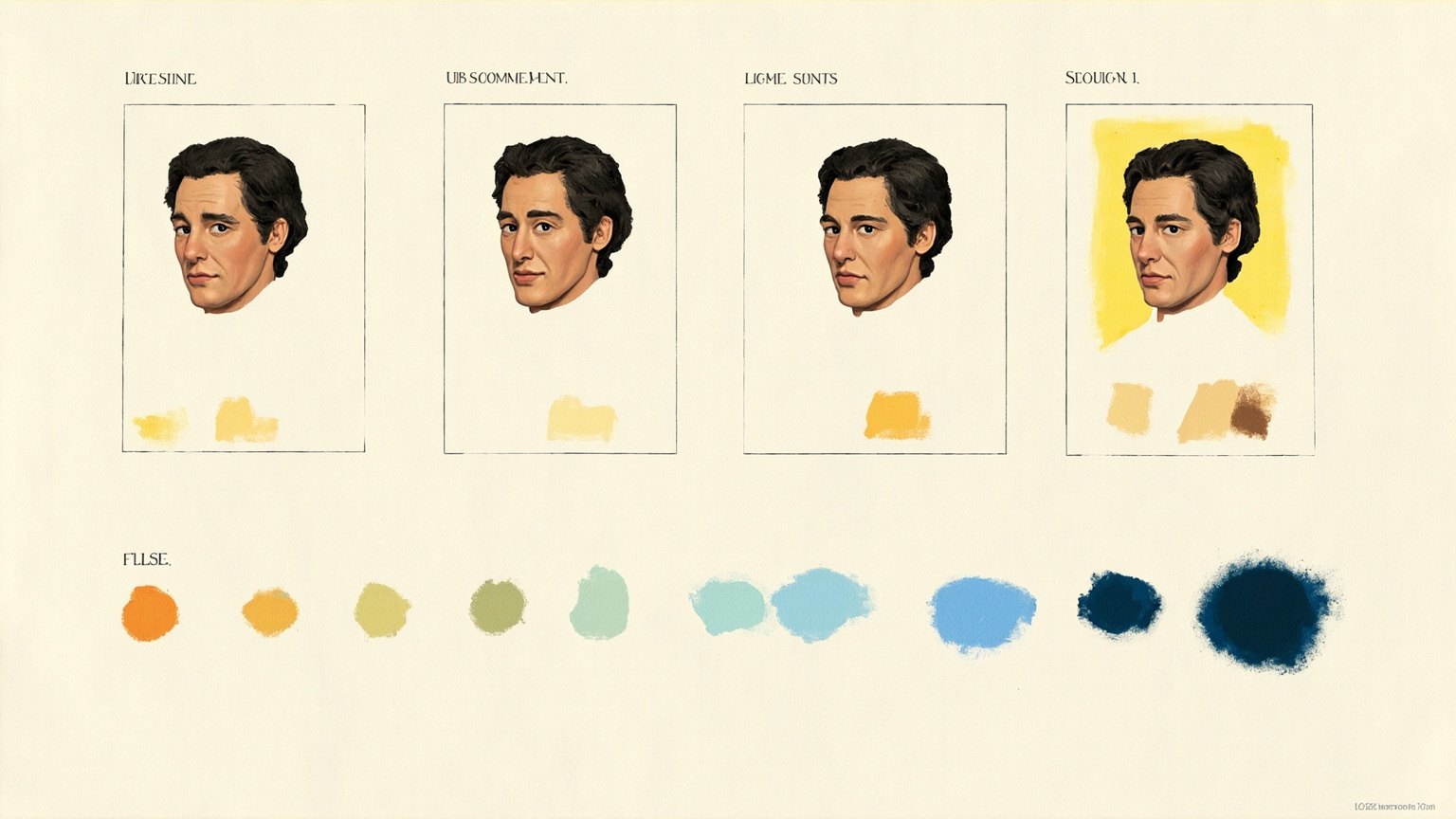
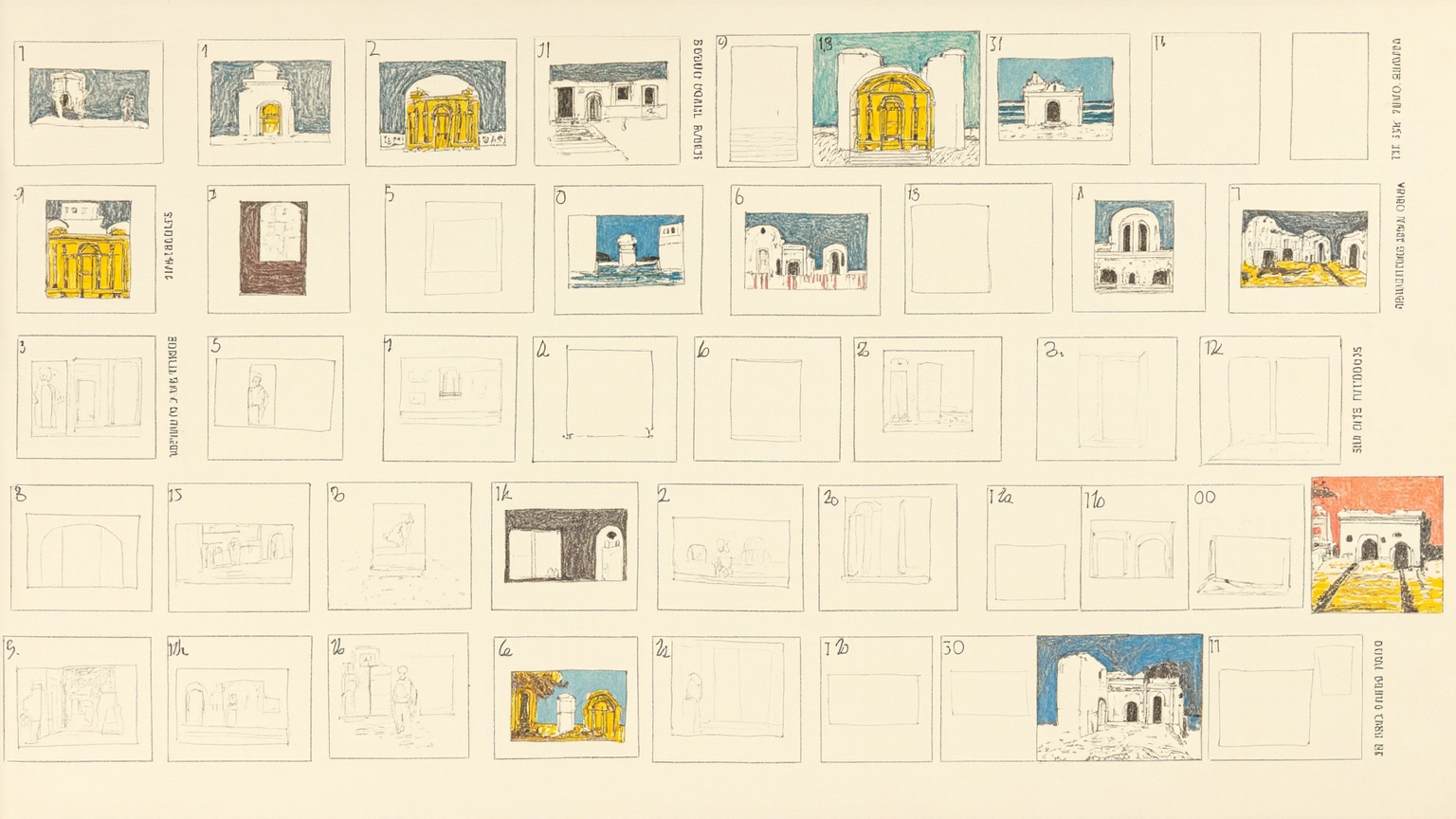
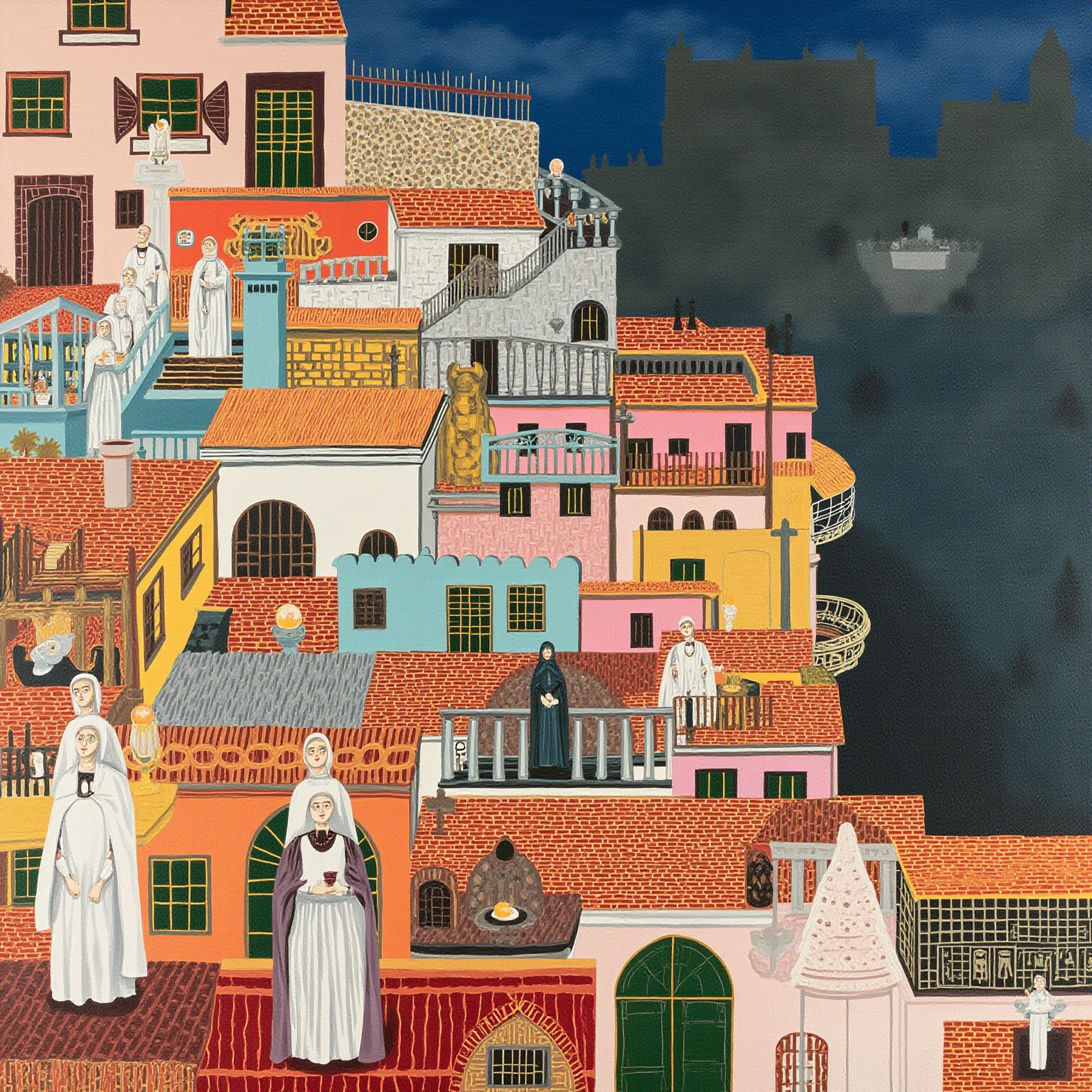
Art Direction4 plates
Before the guide was written, this book got a visual foundation — every illustration you just read grew out of it.