The Jewish War (Bellum Judaicum / Περὶ τοῦ Ἰουδαϊκοῦ πολέμου) · Companion Guide
犹太战记
一个从火里活下来的犹太将领,替焚毁圣殿的征服者写下这场覆灭。
Opening Hook
On the day the white stone and gold of Jerusalem's Second Temple collapsed into the flames, Titus's Roman legions kept every Jewish chronicler away, except one: a general just taken captive, marched to the edge of the fire and made to watch the whole thing. Years later, in a comfortable house in Rome, he unrolled papyrus and wrote the entire course of that war for the very imperial family that had destroyed his temple.
What Kind of Book This Is
The Jewish War was originally titled Peri tou Ioudaikou polemou, written in Greek and finished sometime in the late 70s CE. Its author, Flavius Josephus, born Joseph ben Matityahu, claimed descent from a priestly family in Jerusalem, with a maternal line reaching back to the Maccabean-Hasmonean royal house. He lived to nearly sixty-five, spanning almost the whole of the first century, and was a rare double figure for his age: steeped in Pharisee teaching, yet able to write this history in Greek under the patronage of the Roman court.
Its place in Western historiography cannot be summed up in one line. Call it a firsthand war history, and any later account of the Temple's destruction in 70 CE, the fall of Masada, or the siege of Jerusalem has to pass through it. Call it the official record of a patronized historian, and its bias alone would fill a treatise on method. Call it the source of a collective memory, and you find Christianity reading divine judgment out of it and the Jewish nation reading Masada out of it, the same history cast into two modern narratives that refuse to agree. The book is remembered not because it avoided bias, but because its bias was so complete, and arrived so early.
People and World
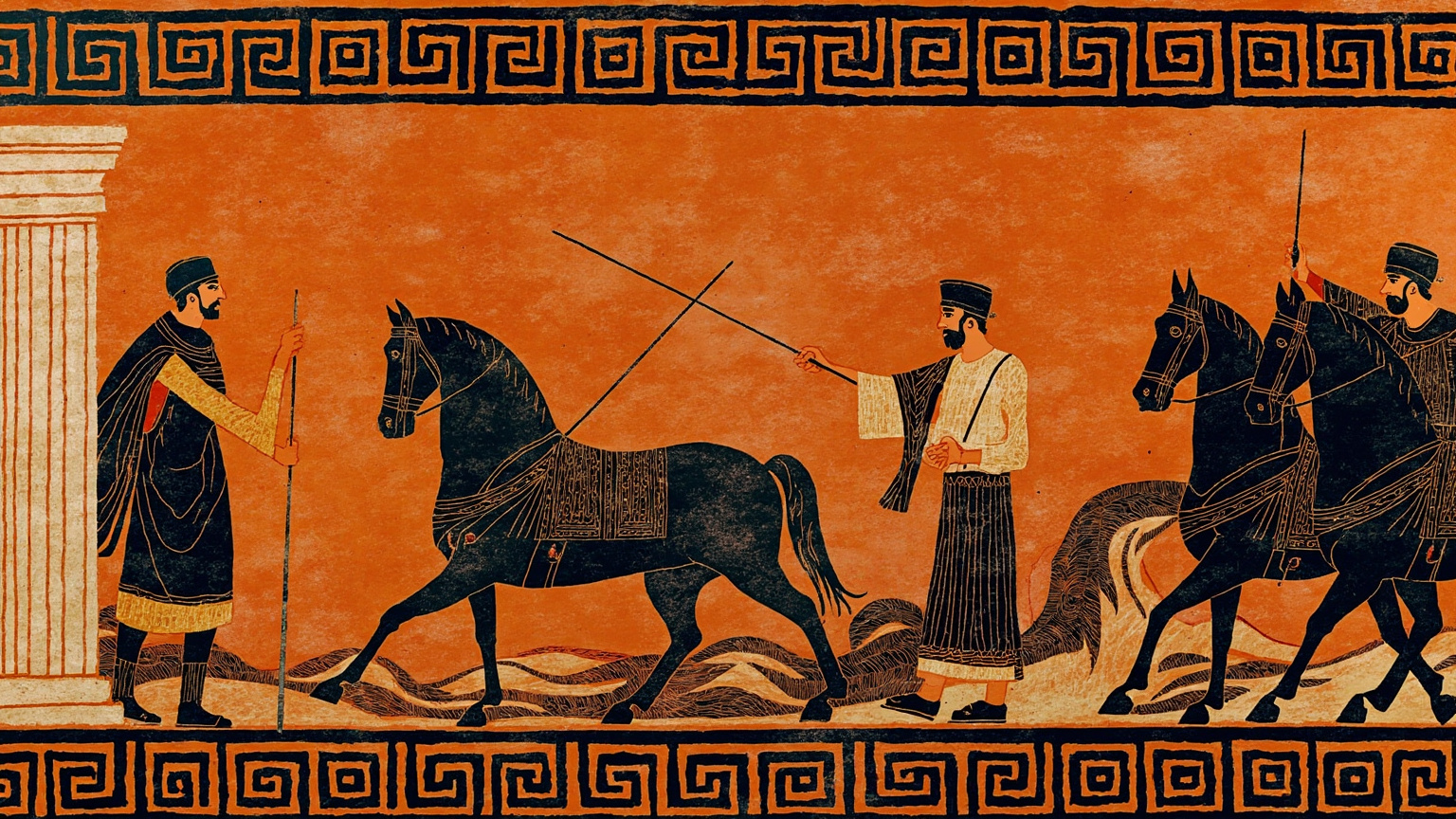
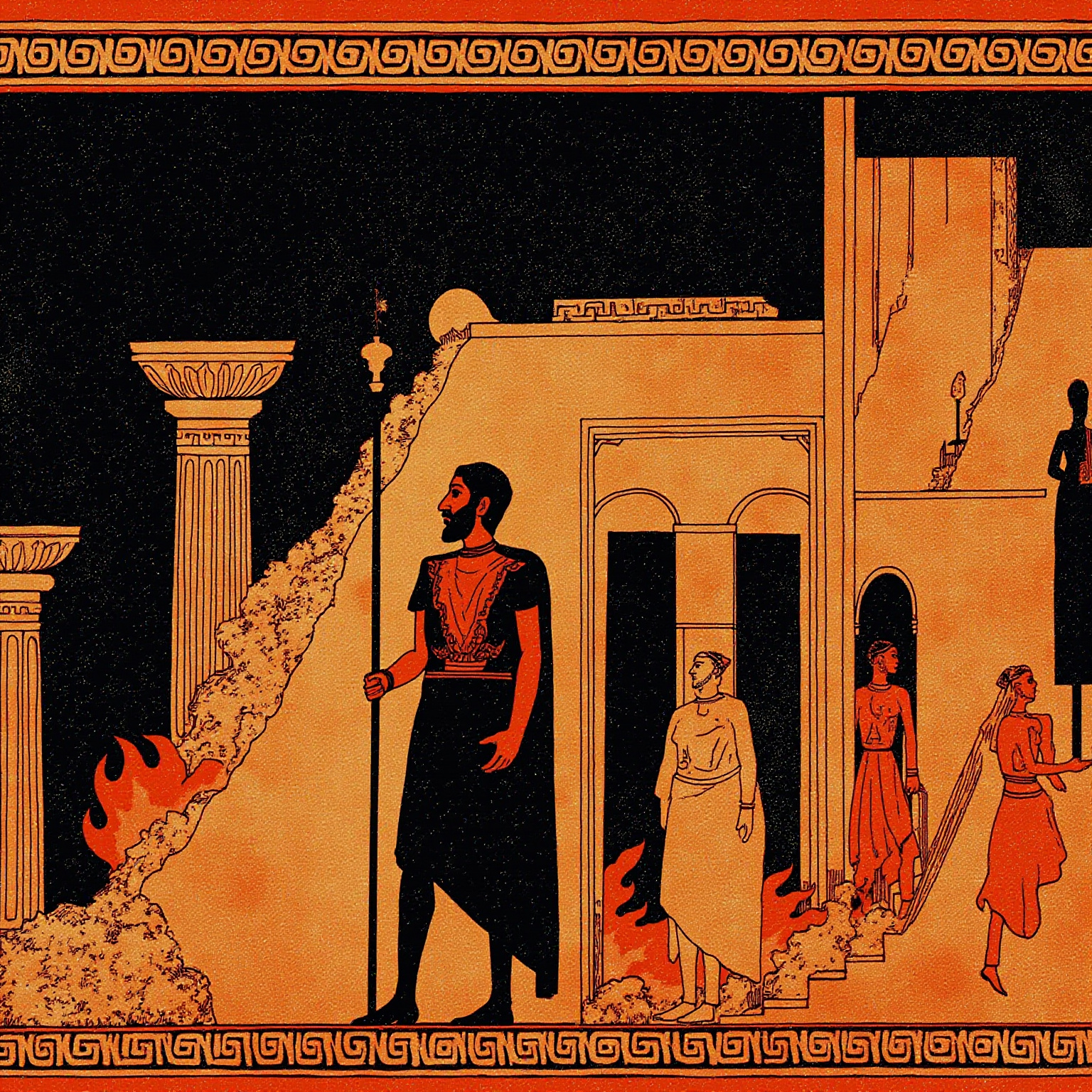
The scene opens in the hill country of Galilee in 66 CE. Josephus, then just past thirty, had been sent by the rebel high command in Jerusalem to the northernmost front, tasked with commanding a hastily assembled Jewish militia against the regular Roman army. On the Roman side stood Vespasian, a battle-hardened commander already past sixty, who would go on to become emperor; at his side was his own son Titus, just past thirty himself. Josephus, Vespasian, and Titus form the book's central triangle: two conquerors, and one defeated man who lived to record it all.
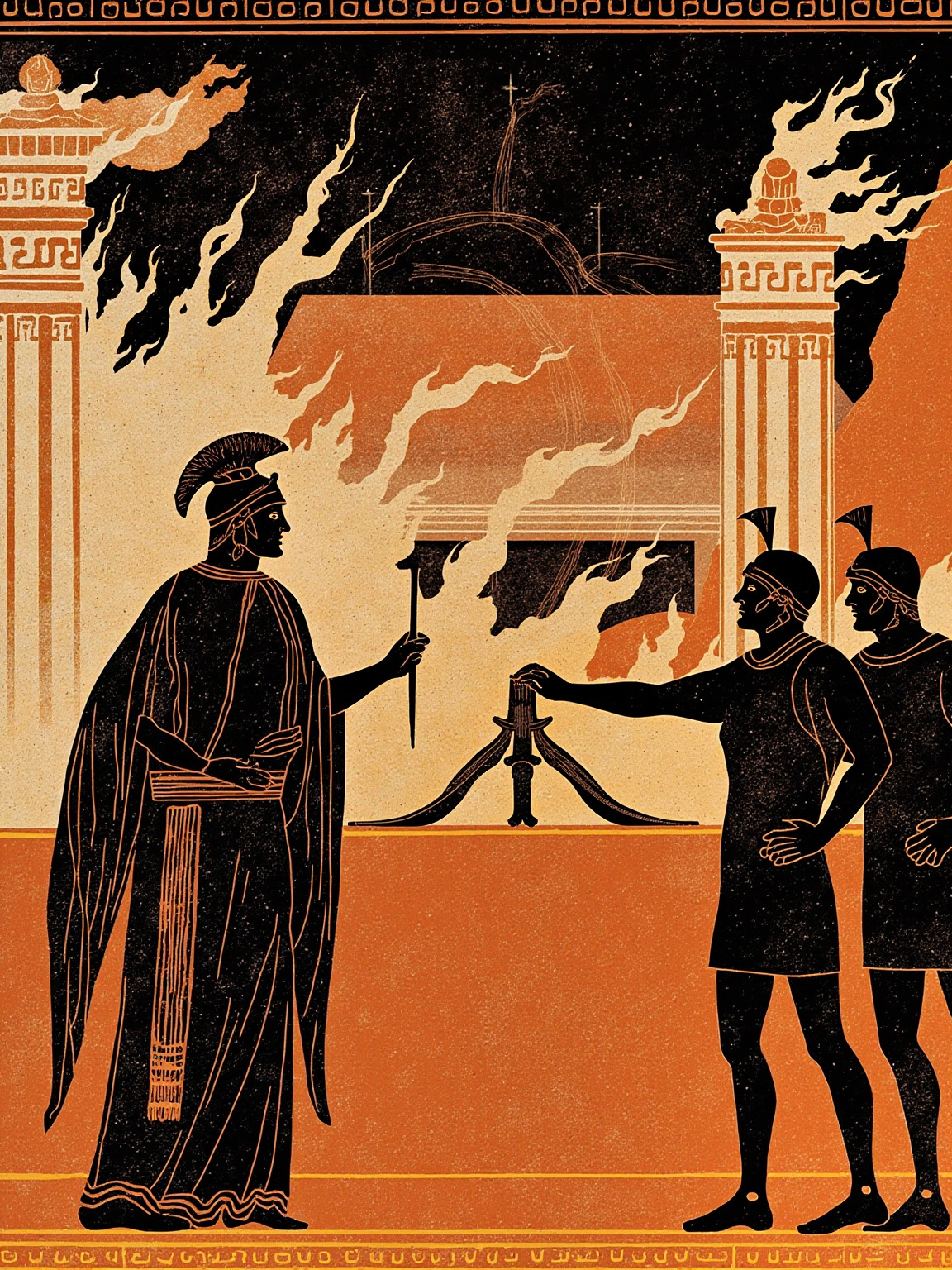
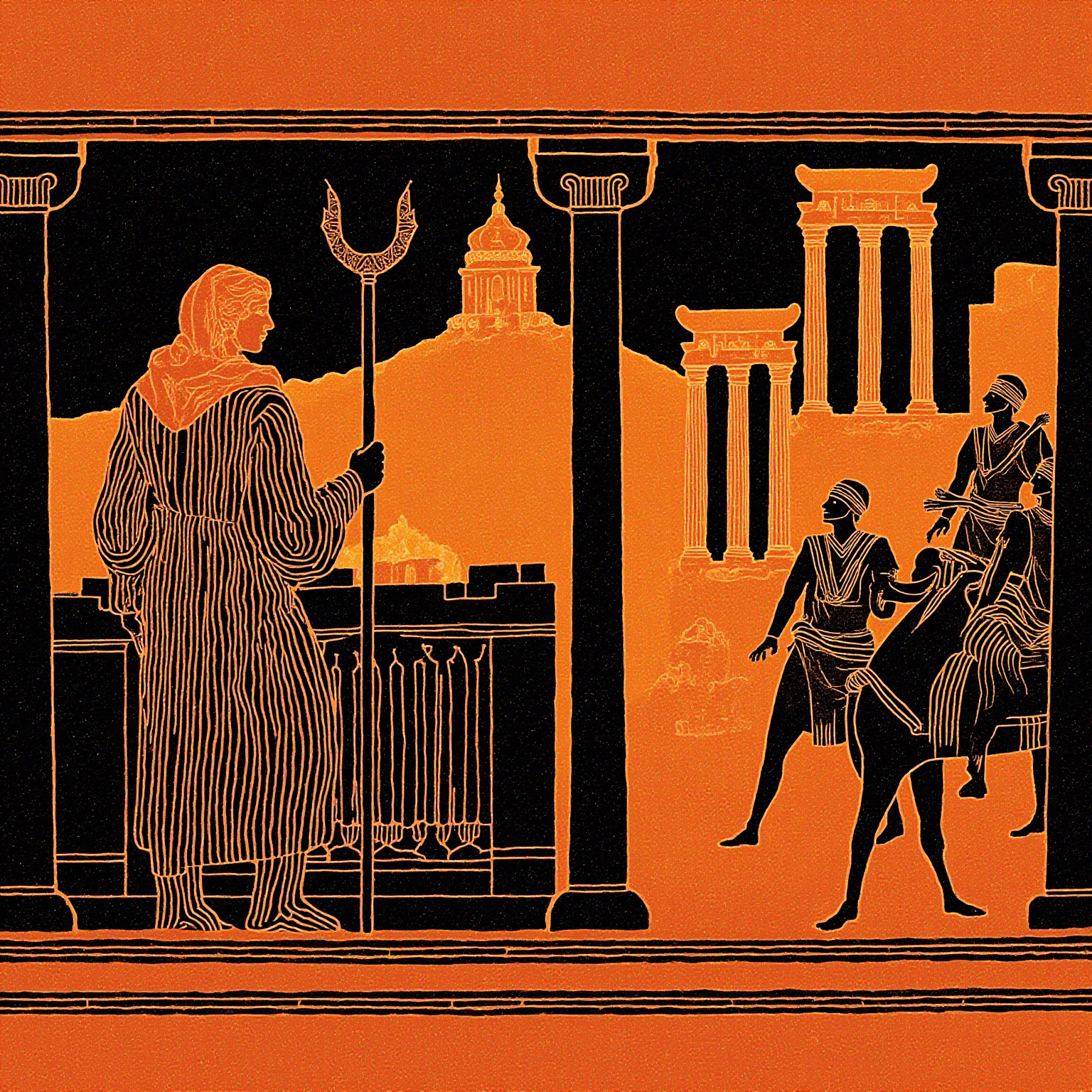
The story's world spans two layers of geography. To the north lies Galilee, its stone villages and olive groves, with Jotapata driven into a ridge like a nail. To the south is Jerusalem, where crowds packed the great platform of the Temple Mount during the festivals, the white stone facade of the Temple blazing in the sun. Further south still, on the cliffs above the Dead Sea's western shore, stands the fortress of Masada, built at the desert's edge. The Roman legions pushed inland from Caesarea on the Mediterranean coast along a march route as straight as a ruled line, and that line is the book's spatial spine.
How the Plot Moves
The Contract Set in the Preface
At the very start, Josephus clears his position: this is not an enemy's indictment of an enemy, nor a friend's occasional piece for a friend. He defines his task as setting the record straight on how the Jews managed to hold off the full Roman army for years. In two short lines he names the book's double audience, Roman and Jewish. The first wants to see a war won with honor; the second wants to see a war lost with dignity. The two demands pull against each other through the whole book.
I shall not be deterred, though a war has befallen us beyond all expectation, from setting forth the precise facts in its narrative.
纵此战事出乎万民所料,我亦不稍避,当据实以记其始末。
金句 · 前言 · 立约之书
A Three-Hundred-Year Establishing Shot
Josephus does not jump straight to 66 CE. In the first two books he races through nearly three hundred years: the Seleucid king Antiochus IV sacking Jerusalem in 168 BCE, the Maccabean revolt, the splendor and tyranny of Herod's reign, and finally the open plunder of Jerusalem's people by the governor Gessius Florus. None of this sweep is filler; it pins the revolt of 66 CE to the intersection of two timelines, the Jewish cycle of restoration and humiliation, and Rome's ongoing conquest of the world. Before the reader even reaches the siege, the war has already been made to feel inevitable.
So the nation was enslaved by the Macedonians and their kings, who by the smallest affront broke the laws and plundered the temple.
于是这民族为马其顿人与诸王所奴役;他们以微隙坏其律,劫掠其圣殿。
金句 · 卷一 · 三百年长镜头
Jotapata: The Hill Eaten Away Inch by Inch
The scene cuts to 67 CE, at Jotapata in Galilee. The Roman army first surrounds the hill, digs trenches, raises a siege ramp, and builds siege towers, and Josephus writes it all in strikingly technical terms: how Roman engineers measured the slope, how the Jewish defenders climbed the wall by night to sabotage the works, how the wooden arm of the siege tower ate away the hilltop inch by inch. The craft here is that he never turns sentimental. He does not dwell on the defenders' despair; he notes which day the engineers' timber arrived, how many feet the ramp had risen above the wall. That restraint is exactly what makes the fall of the city and the capture that follows land so heavily.
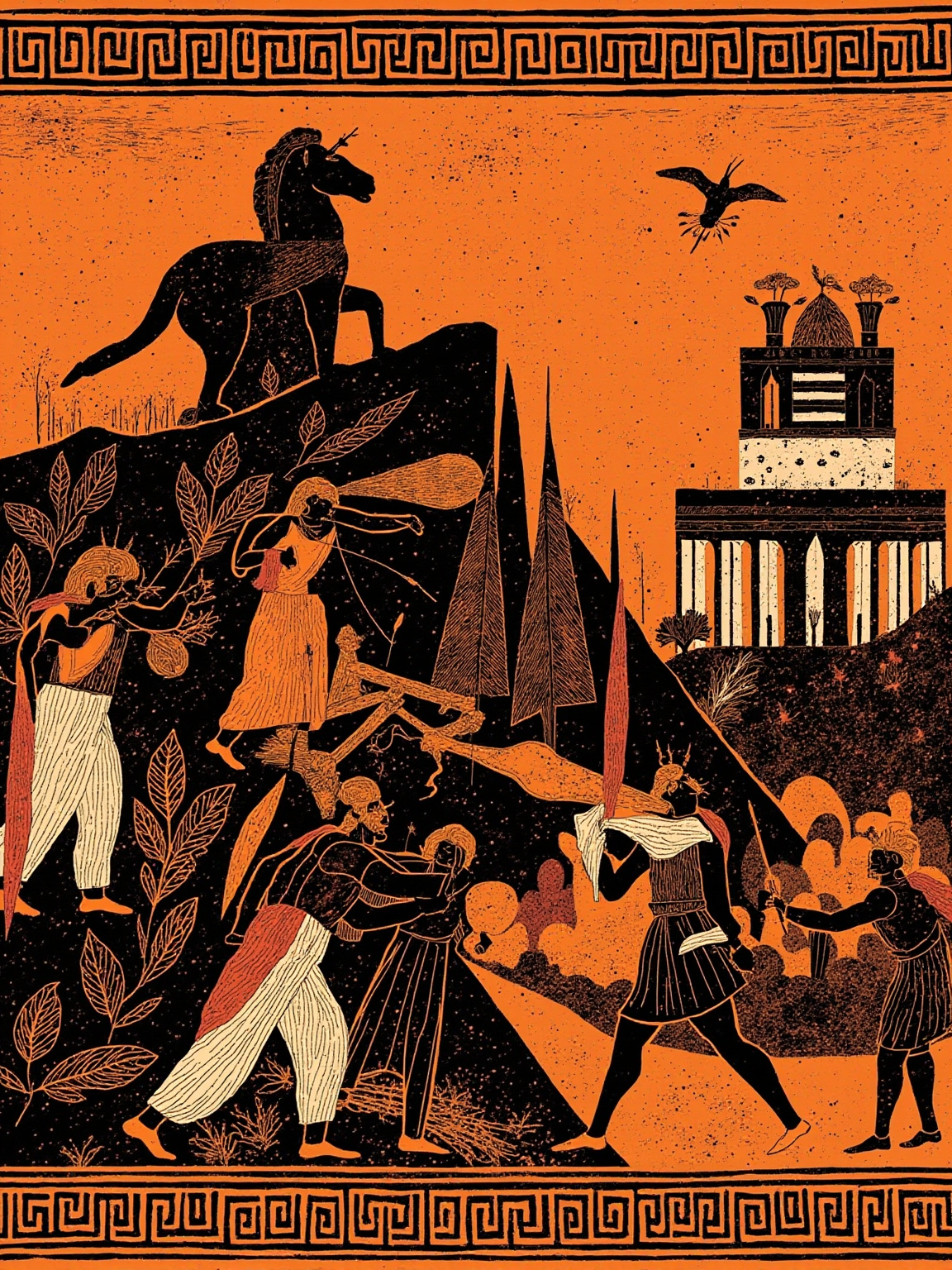
The Romans were now masters of the wall, and at last the city was taken on the ninety-third day of the siege.
罗马人既登城垣,此邑终以九十三日之围而降。
金句 · 卷三 · 约塔帕塔之围
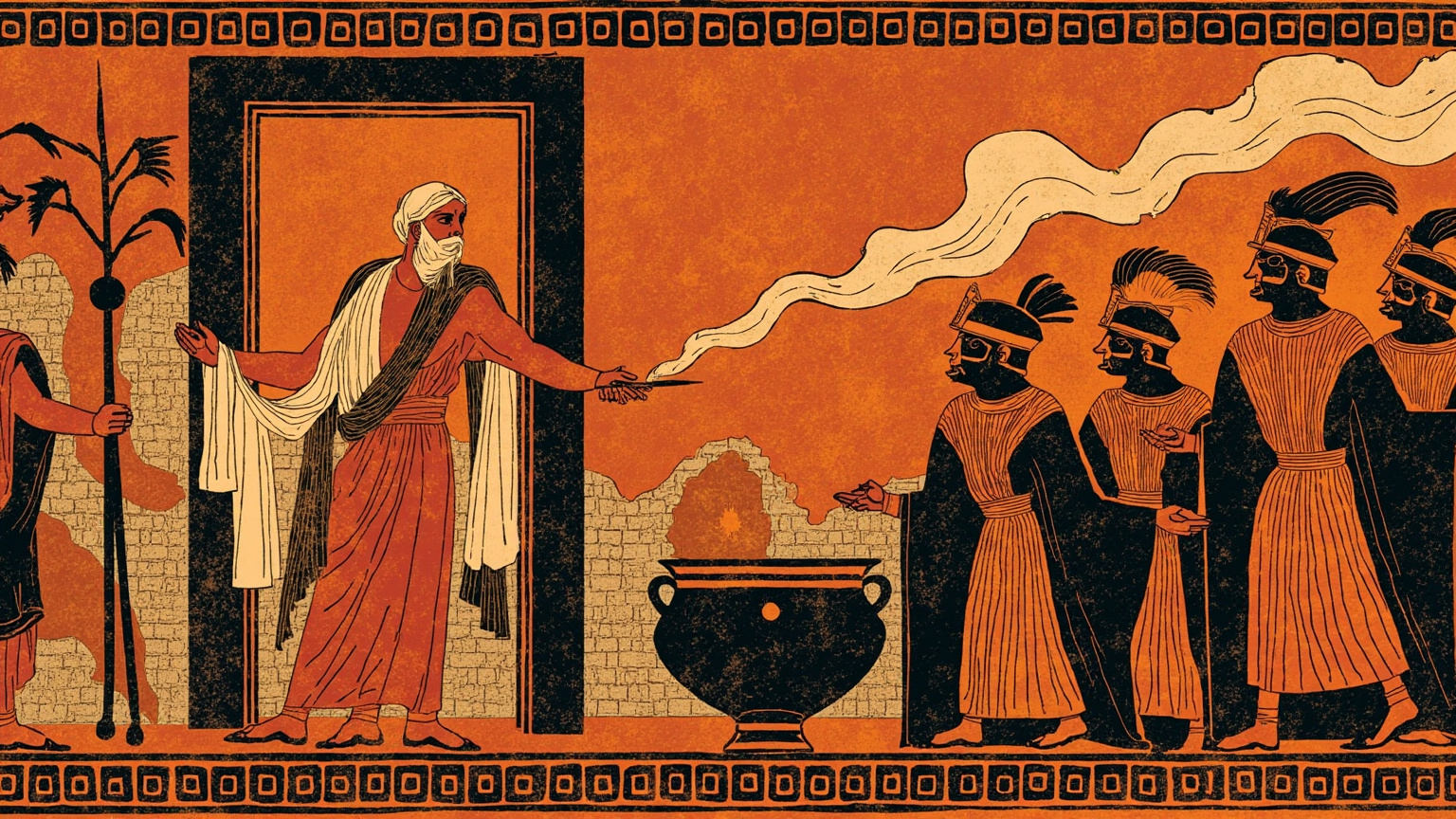
The night the city fell, Josephus and a group of companions hid in an underground cistern. The Romans put a price on his capture, and when the prisoners were counted, one commander was missing. What happened next comes only from his own account: in the cave, he proposed a suicide lottery; when only he and one other man were left, he talked the other into dying first, and survived to be brought before Vespasian. At that famous meeting, he claimed to have foretold that Vespasian would become emperor. The prophecy came true, he was freed, and the name Flavius was added before his own, from prisoner of war to imperial client. It is the hinge on which his whole life turns.
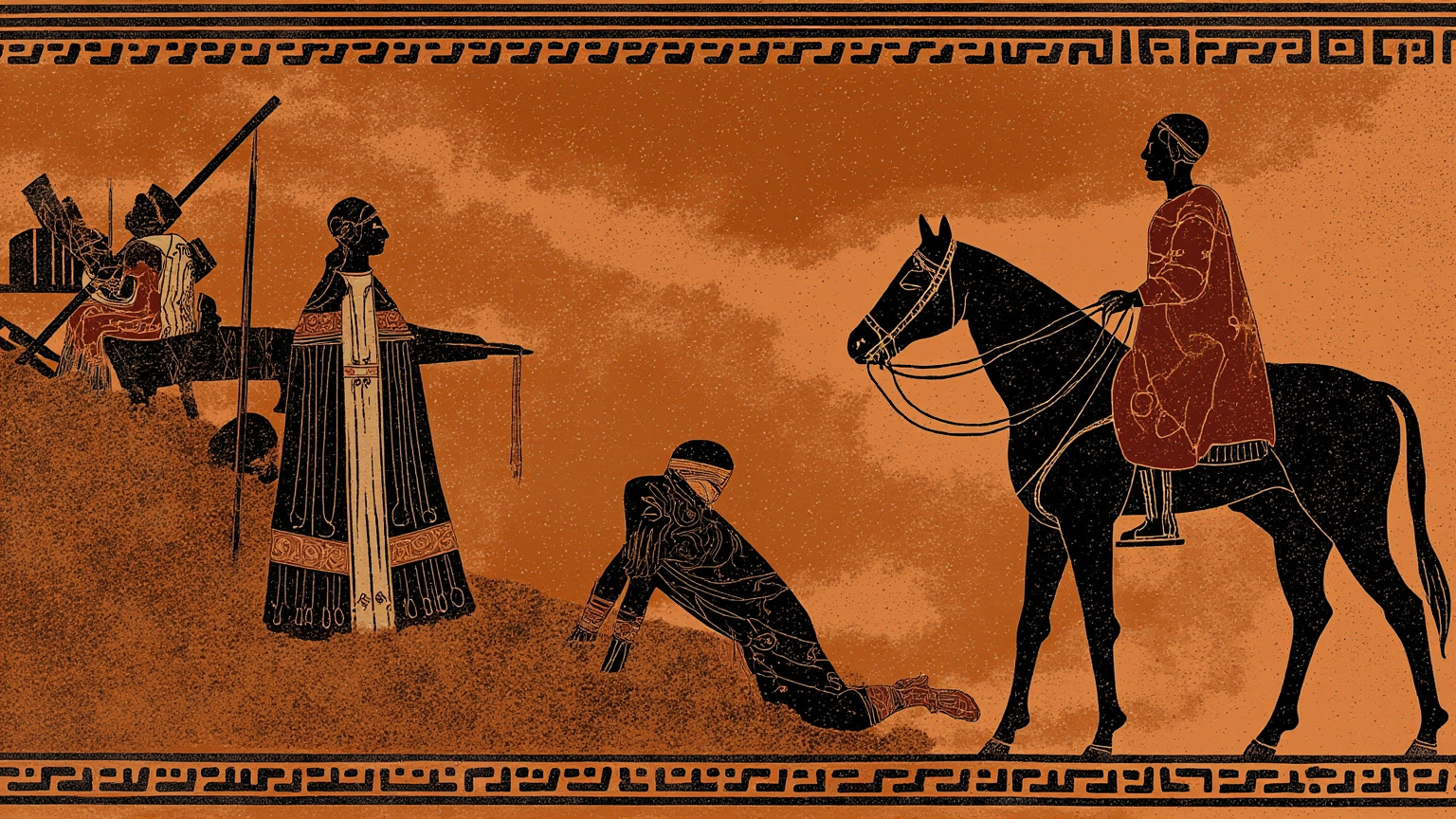
Riding Back with the Conqueror to Write the Temple's Destruction
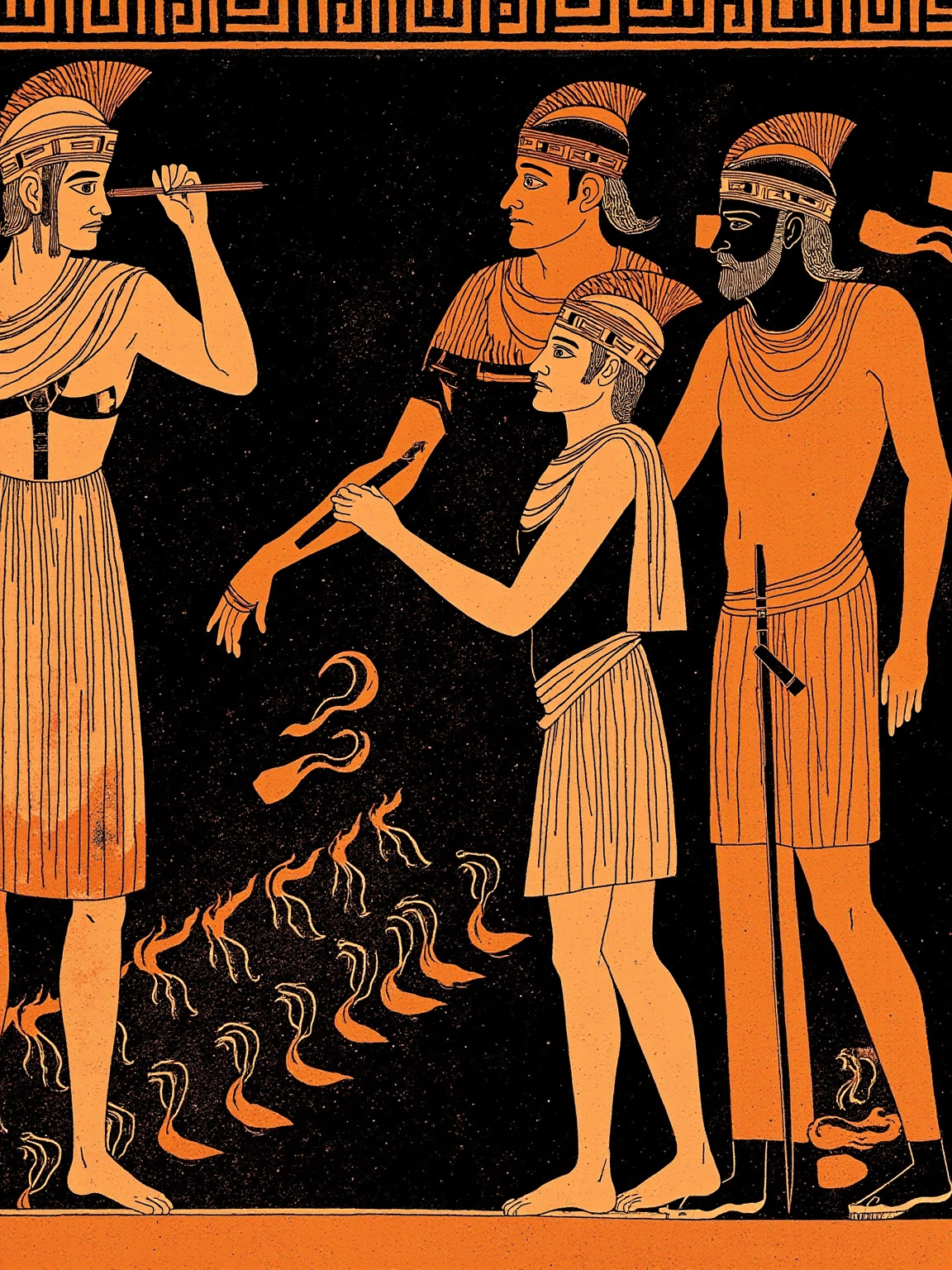
By 70 CE, Titus had taken command of the Roman forces and marched on Jerusalem. Josephus arrived with the army as an insider of sorts, fluent enough in Hebrew to call for surrender from beneath the walls, fluent enough in Greek to write the dispatches. Through the months of the siege, the city was tearing itself apart in factional civil war, famine drove people to gnaw on leather straps, and the Roman army worked methodically through the walls, section by section. The details of the day the Temple fell, Roman soldiers hurling torches at the golden gate, the white stone cracking apart, the veil before the Holy of Holies, where the Ark had once stood, torn open, are where nearly every later account of the catastrophe gets its material.
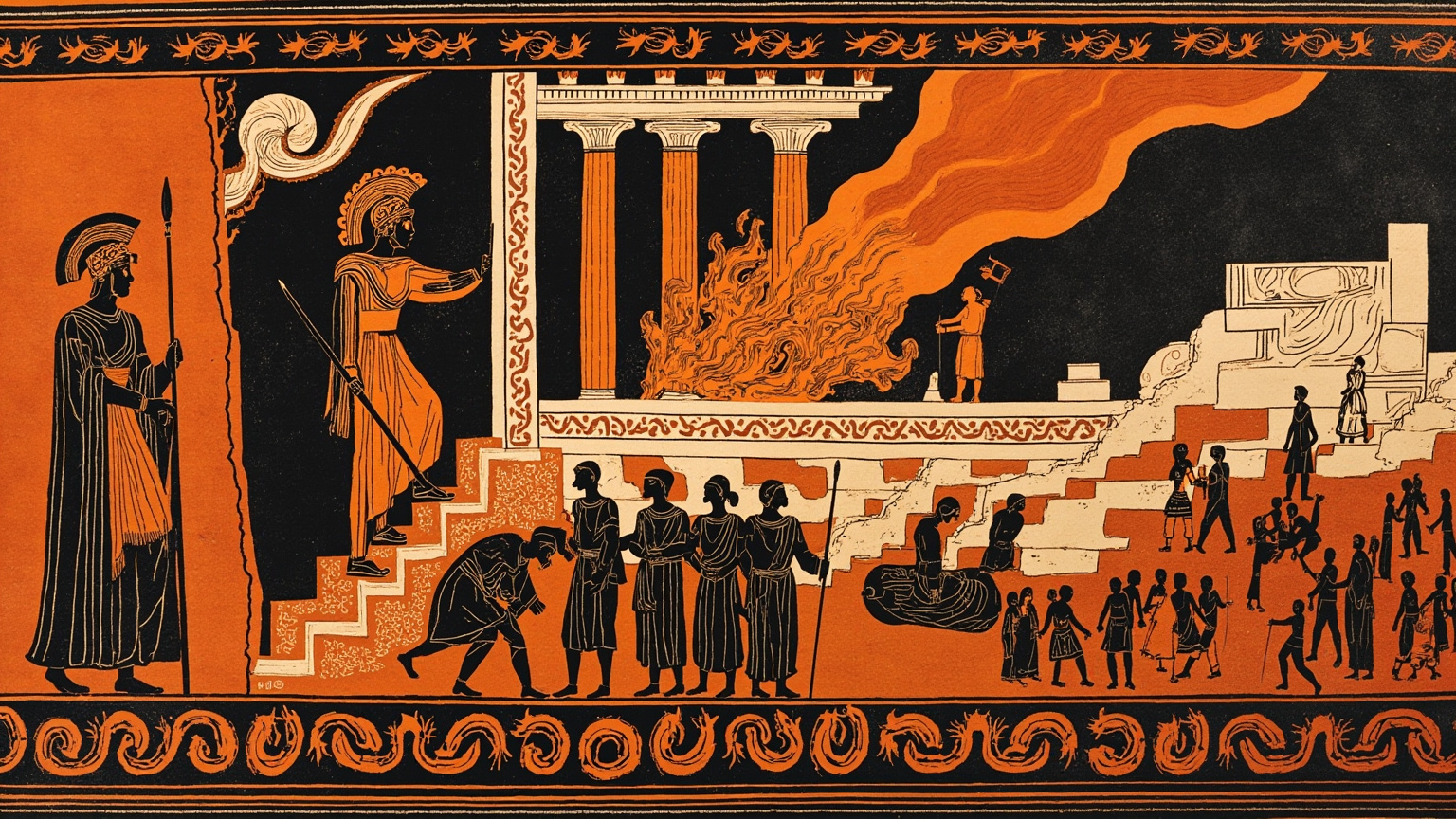
While the sanctuary was burning, nothing could be heard from the city but the shrieks of the dying; yet more dreadful was the stillness that followed.
圣殿火起,满城所闻唯垂死之号呼;然号呼之后之沉寂,尤可怖。
金句 · 卷七 · 圣殿之焚
This is the sharpest paradox in the whole book: the man writing the Temple's destruction is a defeated Jew, and part of his purpose is to leave his Roman patrons satisfied with the reading. Josephus's solution is to make the destruction self-inflicted: internal factional fighting, bloodshed inside the sanctuary, repeated refusals of Roman offers to surrender. He lays the blame, step by step, on the Jews themselves, while carefully casting Titus as a merciful conqueror who kept offering surrender and was refused until force was the only option left. The restraint in the writing works as a two-sided mirror: it shows his bind, and it shows his choice.
The Triumph and the Final Close
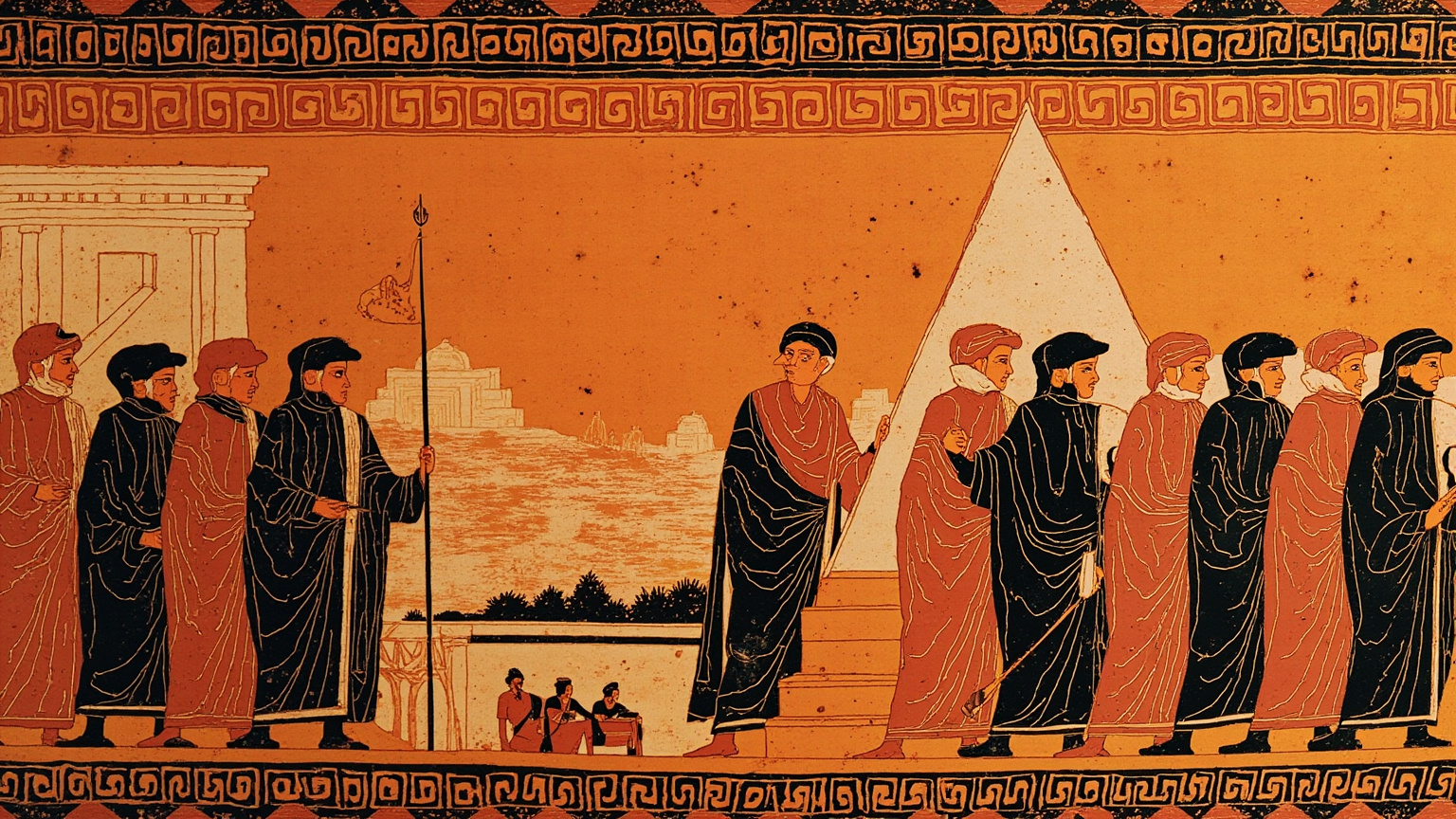
In 71 CE, Titus returned to Rome for a triumph, with Jewish captives carrying the Temple's furnishings in the procession. The relief later carved on the Arch of Titus in Rome, showing the menorah and its seven golden lamps, follows Josephus's description almost exactly. But the book does not end in the cheering crowds of Rome. It pulls back to the Judaean province: the fall of the fortresses of Herodium, Machaerus, and Masada, and the death of the last Sicarii fighter at Masada under Roman blades, closing the whole work on the death of the last man still resisting. Rome's view and Judaea's view finally converge into a single image at the end.
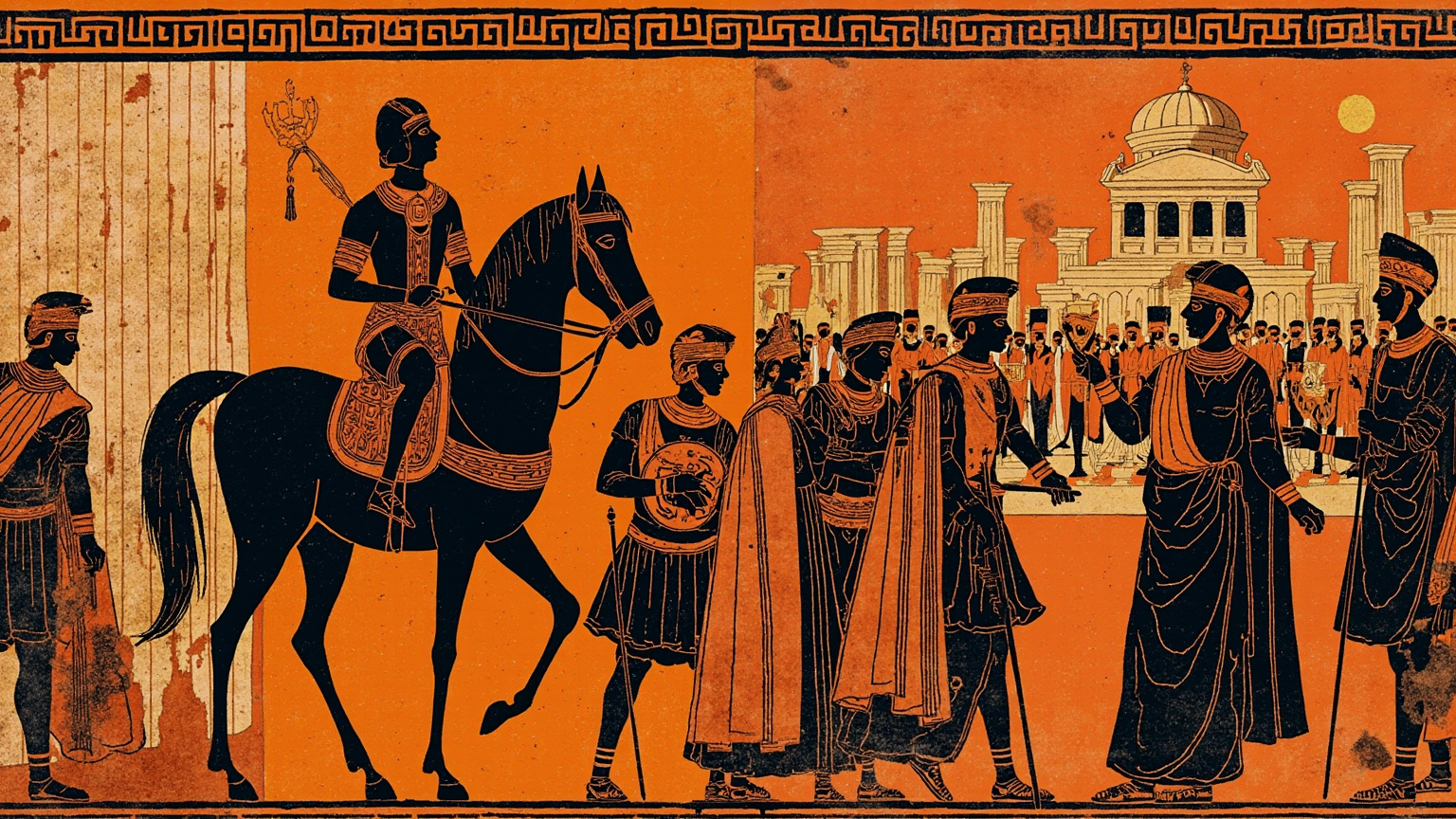
All the spoils captured by the Romans were borne in procession; but the most conspicuous of all was the seven-branched candelabrum.
罗马人所掠之物悉过街衢,而众目所集,无逾七枝之烛台。
金句 · 卷七 · 提图斯凯旋式
Themes and Craft
What is this book actually about? On the surface, a siege history. Underneath, the story of how a man who surrendered came to write his own people's ruin for the men who caused it. He declares his position in the opening lines, neither an enemy's piece nor a friend's occasional one. But the reader soon sees that this very disclaimer is itself the deepest form of involvement. That is the whole secret of the book's rhetorical tension: the same sentence has to persuade Roman readers that this war was hard won, and persuade Jewish readers that losing it was no act of cowardice. Divided loyalty is not rare in historical writing. What is rare is how completely he pulls it off, without a single sentence visibly breaking down.
There is no getting around the methodological catch here: he is nearly our only firsthand narrator, and he is also a historian kept by the Flavian dynasty. Reading this book means reading a confession of its own sources. Wherever it praises Roman military virtue, wherever it insists the Jews brought this on themselves, some discount is owed. That does not make the book untrustworthy; it means knowing who he was writing for. Through the Middle Ages his work was nearly silenced within Jewish tradition, Jewish readers did not want a man they saw as a traitor speaking for their Temple's destruction, and it was not until a Hebrew translation appeared in the nineteenth century that this suppressed history of reception reopened.
Why Read the Original, Once You Understand It
An explainer gives you the map; the text itself is the ground. This essay can tell you what happened in 70 CE, who Josephus was, and how the book has been read since, but it cannot substitute for a few things that only opening the original gives you. First, the technical description of the siege tower at Jotapata reads almost like an engineering report, and that restraint carries its own weight. Second, Titus's repeated speeches offering surrender read like the record of a failed negotiation, and between the lines you can feel the Roman army's own dread of its own casualties. Third, the irony in those two opening lines, neither enemy nor friend, rings in an entirely different register once you have made it through all seven books. Knowing the story is not the same as having read the book, the way knowing how a tragedy ends is not the same as having watched it performed.
One Line to Take With You
The strangest thing about this book is not that it was forged into a later icon of the Temple, but that the man who wrote the Temple's destruction for its conquerors was himself someone who survived the fire.
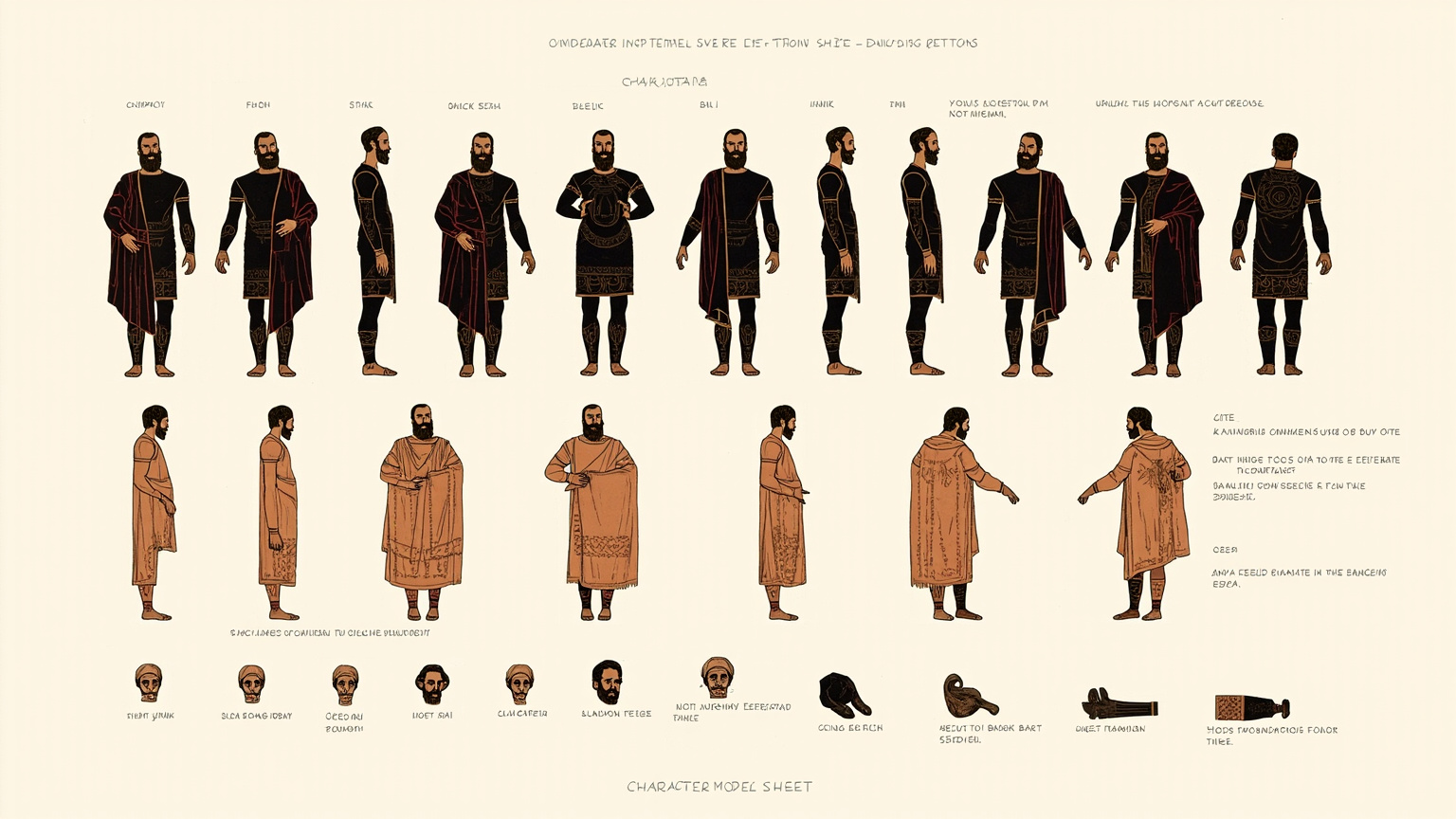
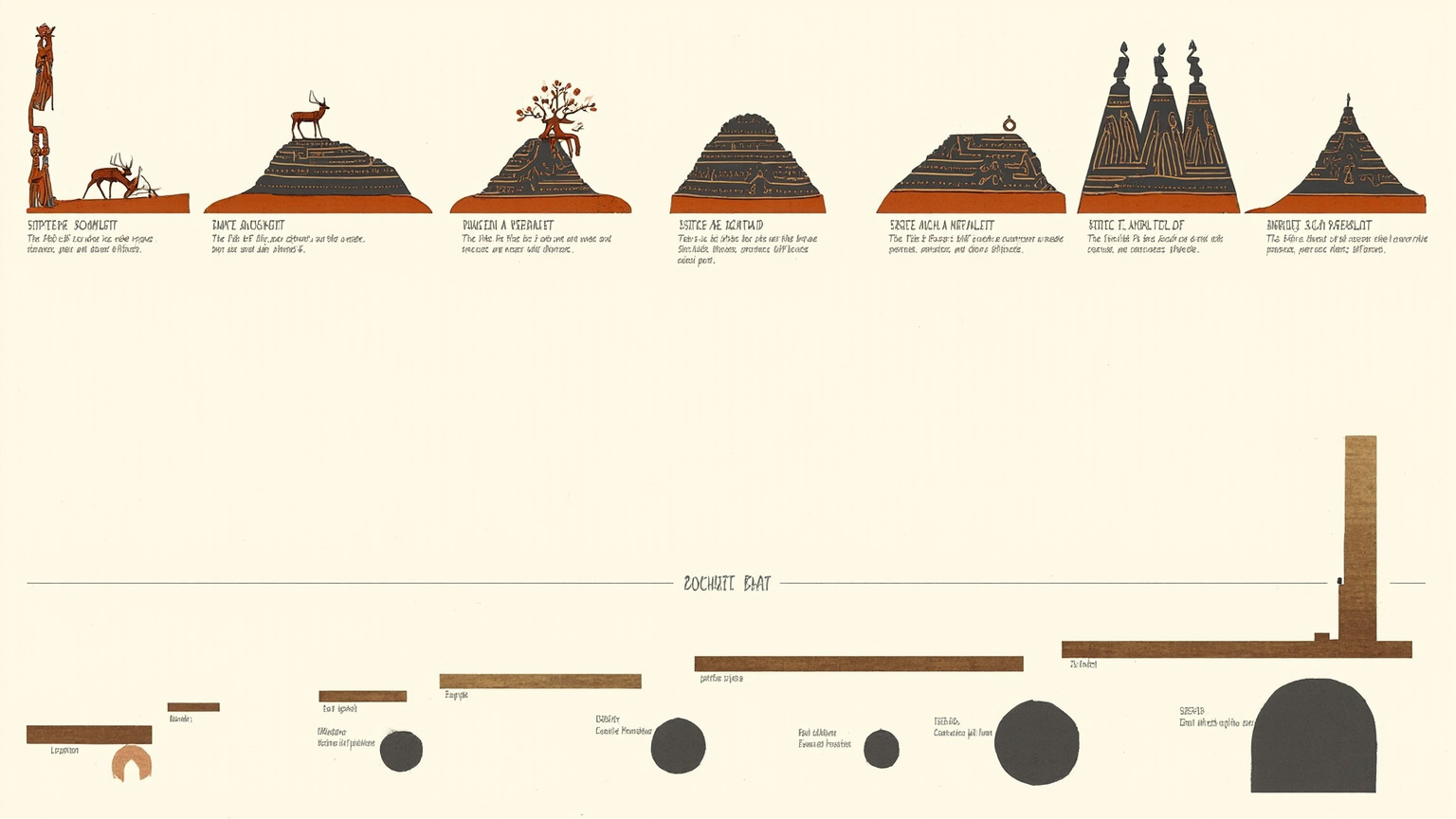
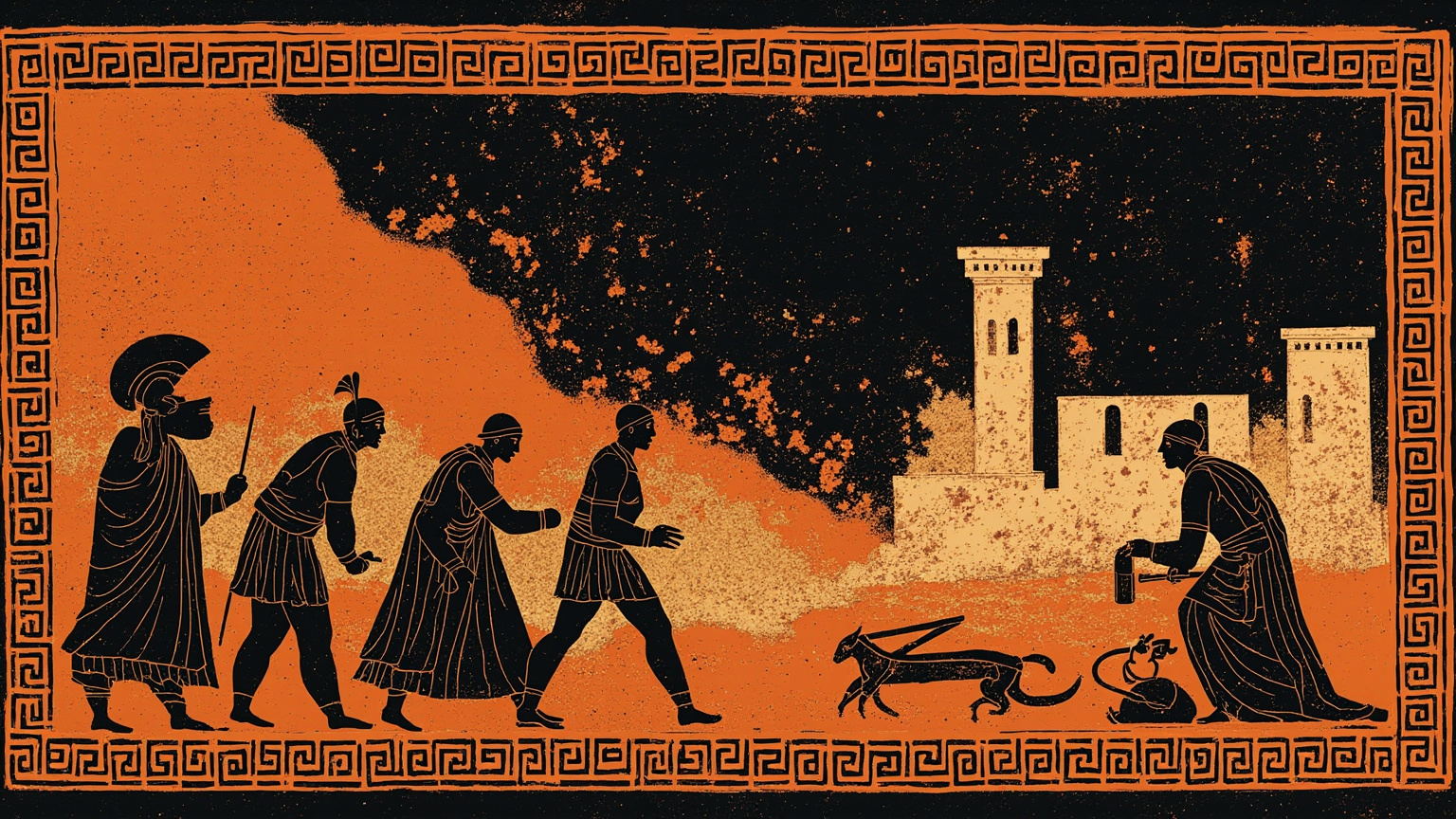
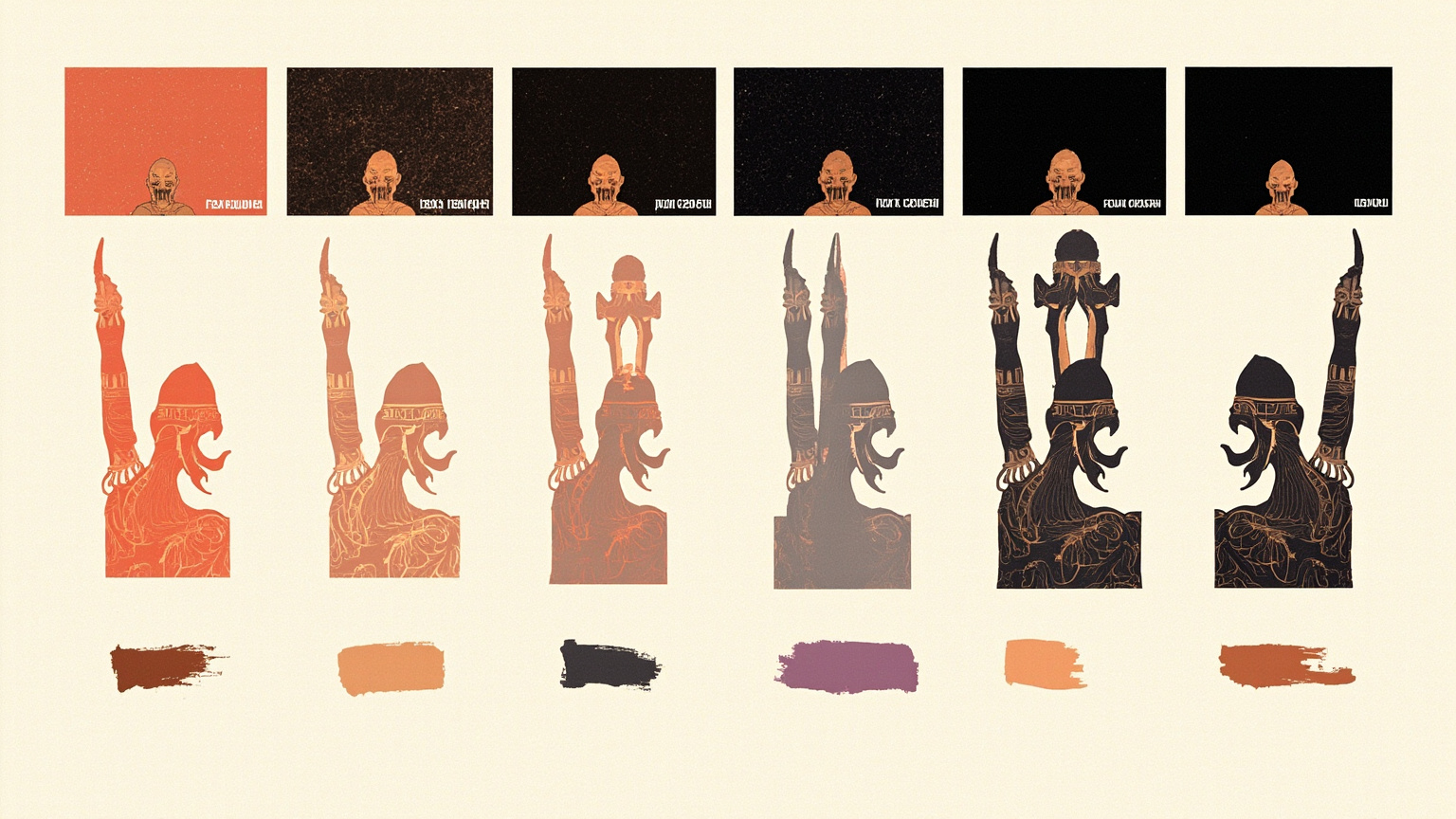
Art Direction4 plates
Before the guide was written, this book got a visual foundation — every illustration you just read grew out of it.