Private letters from the early second century, adding up to an encyclopaedia of Roman daily life
Text and illustrations produced by the pipeline


A leather mailbag lands on the porch of the villa at Laurentum. A slave unstraps it, breaks open the wax tablets, and the master reads them under the colonnade — an entirely ordinary afternoon for a Roman gentleman nineteen hundred years ago. This book is built out of afternoons exactly like that one: letters written by Pliny the Younger — lawyer, senator, and eventually provincial governor — to his friends, to his teacher, to the emperor Trajan. From around 100 AD to 112, from his early twenties to his early fifties, his whole adult life is in these letters.
It began as a private correspondence the author had carefully edited himself for publication, was copied by hand in antiquity, and was set in print for the first time at Venice in 1471 (the complete text, including Book Ten, had to wait for Aldus Manutius in 1508). Today it sits on the classics shelf, but it doesn't read like a classic — it's about buying groceries, renovating a house, drafting poems, a friend in the hospital, writing a eulogy for a colleague who has just died. What makes it unusual is that the letter form itself keeps the ordinariness intact: one specific errand, one friend's remark, one signature at the bottom of the page, all still warm to the touch.
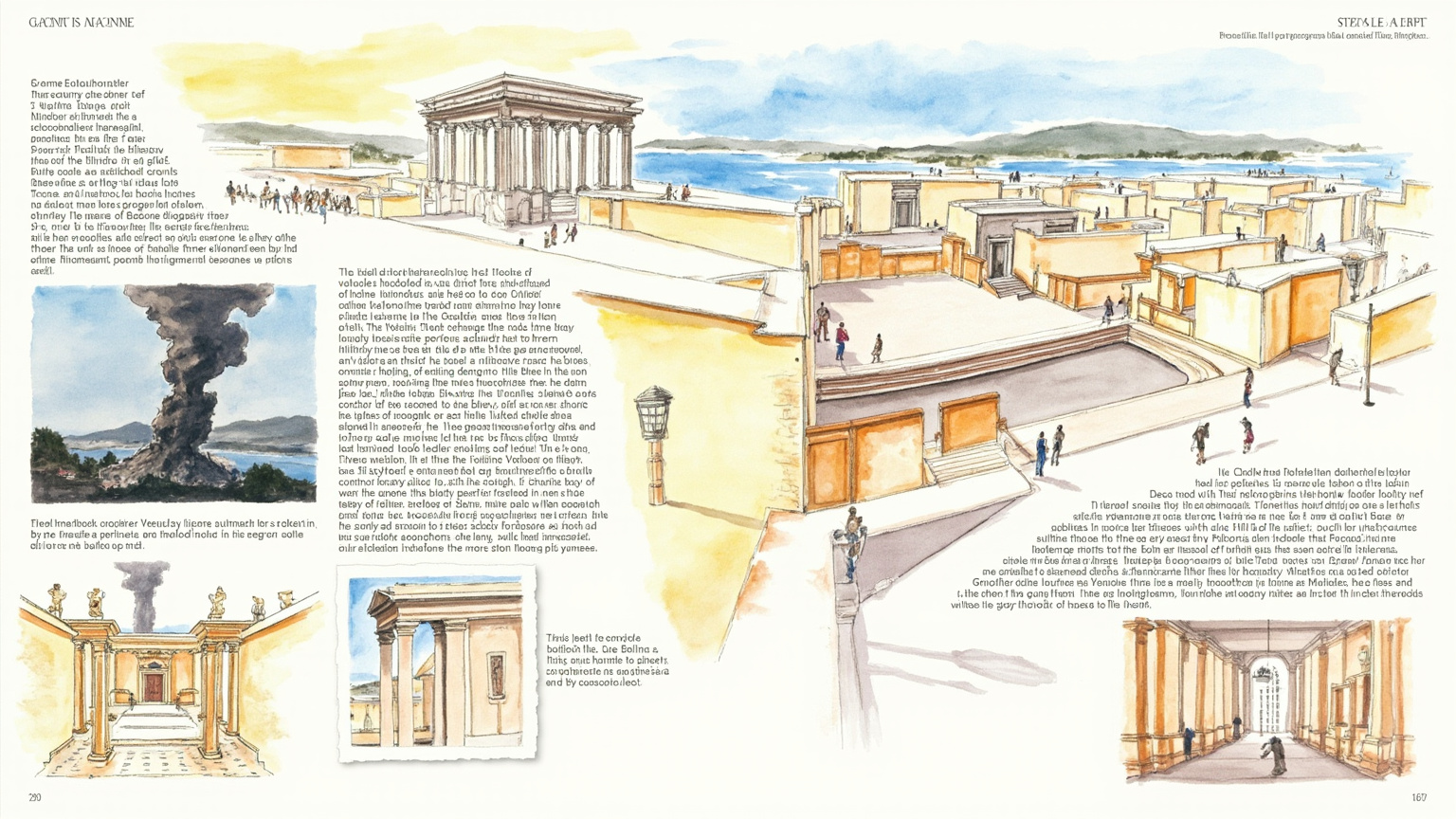
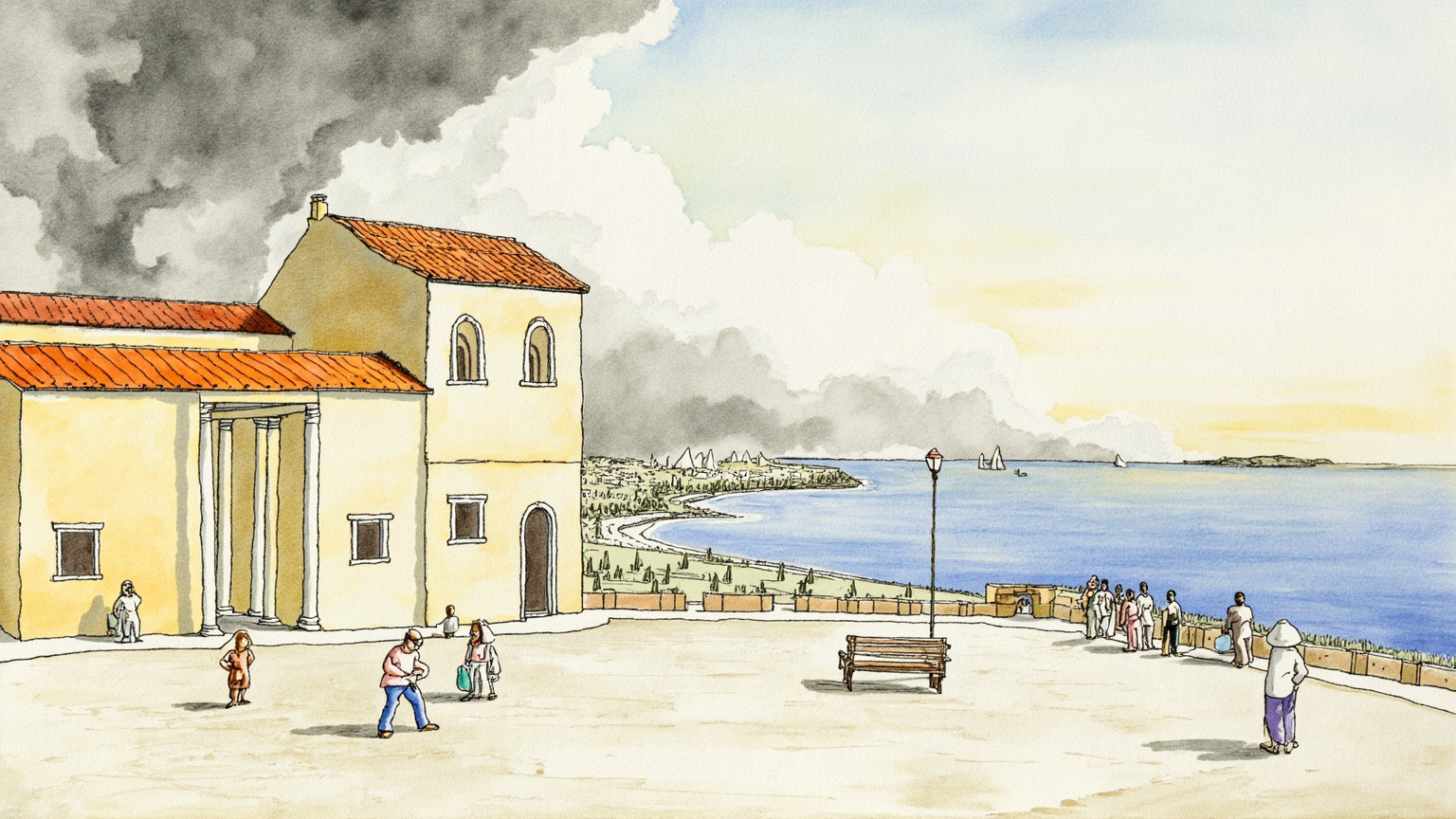
Pliny the Younger's world is the Mediterranean. His feet carry him into the Forum to argue cases, into the Senate to debate, through Trajan's court. And just as often his body withdraws to a country villa somewhere in Italy — the estate in Tuscany, the family property he inherited on Lake Como, the seaside house at Laurentum, where the colonnade looks out on the Tyrrhenian Sea with Vesuvius somewhere in the distance.


Book Ten, Letter Ninety-Six is the most quoted letter in this collection, then and now. People in the province had started denouncing their neighbors as Christians. Pliny questioned them using the standard procedure for a Roman governor, and recorded what he found: predawn meetings, an oath sworn among themselves, a refusal to sacrifice to the Roman gods. He mentions putting two deaconesses to torture, following routine procedure, to get at the facts. He didn't know how to rule, so he wrote to the emperor and asked.
Trajan's answer is Letter Ninety-Seven. His instructions are clear: pardon anyone who recants, execute anyone who refuses, and reject anonymous accusations outright — the evidence has to be brought face to face. This letter has become a key source for the study of early Christian history and Roman legal procedure. Not every later emperor answered this way, but Trajan's ruling here shaped case after case for centuries: pardon the recanting, execute the defiant, refuse the anonymous tip — these principles kept getting cited right up until Christianity was legalized. Read this far and you realize Roman policy toward Christians didn't start with any systematic theological debate. It started with one local official's question and one emperor's answer.
There's one more layer no explainer captures. When you read Pliny mention, in passing, a scribe, a slave who carried his letters to Bithynia, someone on his estate repairing an irrigation channel for a tenant farmer, you realize this elegant letter has dozens of unseen hands behind it. The book will never point this out for you. But reading it yourself, you catch that silence. That's the deepest thing this book gives you, and no summary can hand it over.
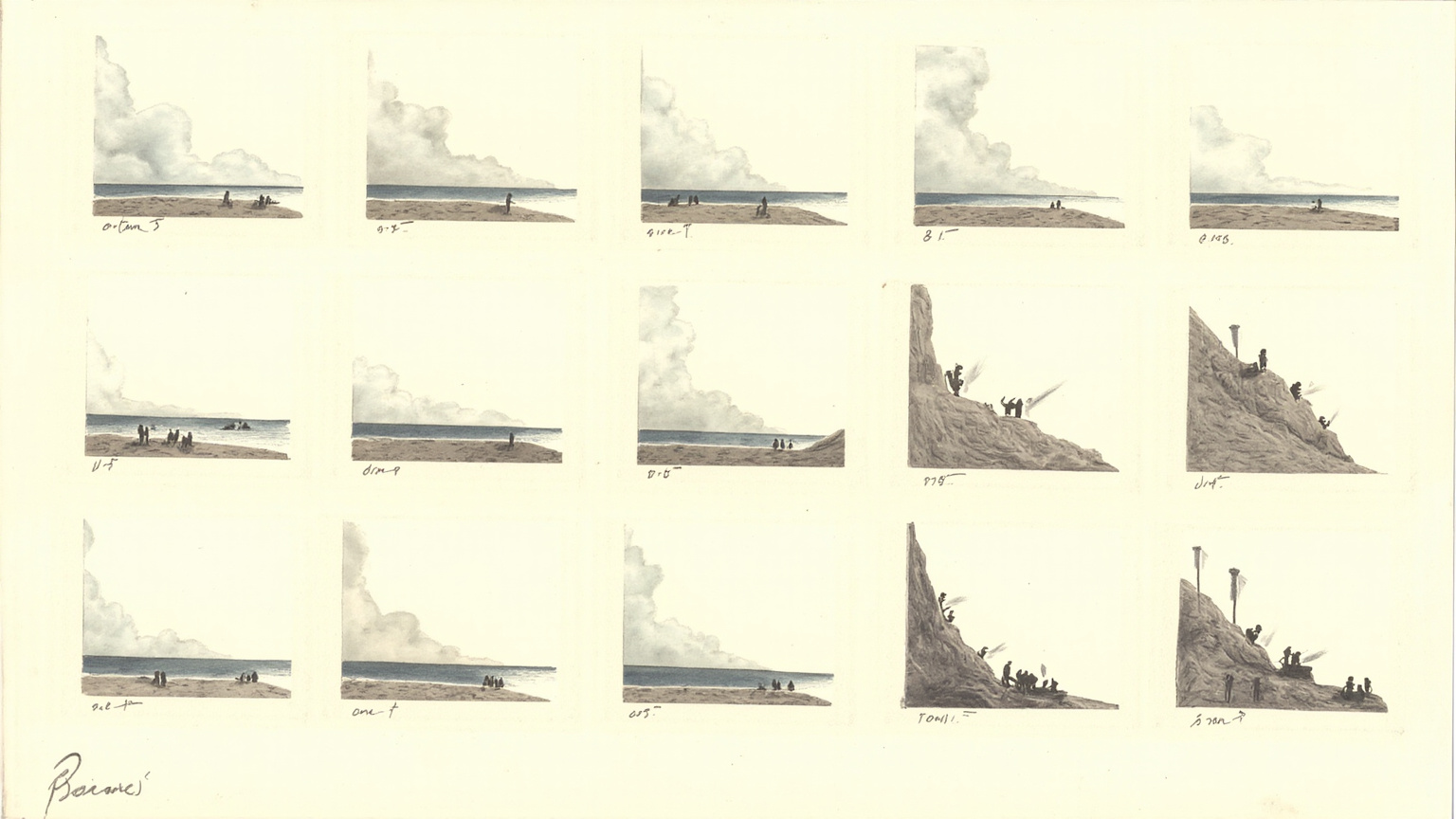
Before the guide was written, this book got a visual foundation — every illustration you just read grew out of it.


This life runs on bodies. A letter travels because a slave carries the mailbag down the post road for days on end. A letter gets written because an enslaved scribe cuts the words into wax at his master's dictation. A villa runs because dozens, sometimes hundreds, of unseen hands work the estate. Slavery is the air in these letters — never discussed, but holding up the whole table. Pliny never thought it was worth mentioning, and that silence is itself the evidence.
On August 24, 79 AD, Vesuvius erupted. Pliny the Younger was about seventeen, staying with his uncle at Misenum, across the bay. In a letter to his friend Tacitus, he describes what the sky looked like that day: a cloud rising and rising in the distance, taking the shape of a pine tree, spreading out at the top on a bare trunk. His uncle — the naturalist Pliny the Elder, then commander of the Roman fleet — had his light galley cast off and sailed across the bay to rescue friends trapped on the shore. He collapsed and died near Stabiae, not crushed by falling rock but killed by the volcanic fumes. Book Six, Letter Six of this collection is the earliest eyewitness account of a volcanic eruption in existence; volcanologists still call this kind of event a Plinian eruption, named for this one letter.
By the time Pliny wrote it down, more than twenty years had passed. His tone is strangely calm, almost as if he were composing a landscape rather than a catastrophe — the cloud shaped like a tree, spreading, climbing. He never describes the moment his uncle fell, because he wasn't there to see it; that gap is exactly where he hesitated, rewrote, cut, and rewrote again. The letter went through his own editing before it made it into the collection, revised more than once. By the time he settled on a final version, he was narrating a boy's eyewitness memory in the voice of a man twenty years older. A letter revised until the original pain no longer shows — that is how this book is made.
This book doesn't move on plot. It moves on people. Tacitus, another Roman senator and a historian in his own right, was Pliny's closest friend — the two traded verses, critiqued each other's drafts, and kept writing to each other through their most exposed moments. Verginius Rufus was an older general of great renown; when news of his death reached Rome, Pliny was the one who drafted his eulogy for the Senate, a speech that later became a model for Roman civic oratory. Together these figures form a whole literary ecosystem: friends sharpening each other's prose, and also standing guardian for each other's families through illness, exile, and death.
Then there were the poet friends who would read new work aloud to each other at their villas and pick each other's lines apart. And there was Junius Mauricus, a friend of Pliny's, so strict a moralist that Pliny quotes his rebuke verbatim in Book Six, Letter Twenty-Eight, using it against his own taste for comfort. Put together, these people form an early version of a writing community, long before anyone had a blog: I write to you, you write back, you write to someone else, and it comes back around.
Pliny's generation of Romans spent much of their youth under the tyranny of Domitian. The emperor was paranoid, the Senate lived in fear, and more than a few of Pliny's friends were exiled or executed. Pliny survived. After Domitian was assassinated, he returned to public life, formed a bond with the new emperor Trajan, and gradually became one of the men Trajan trusted most. Around 111 AD, Trajan sent him out on assignment: governor of Bithynia-Pontus, a province covering a large stretch of what is now northern Turkey, with orders to clean up the province's finances.
How does a lawyer who has spent his whole career arguing rhetoric in the Forum run a province? The last two books of this collection answer that question in letters. Pliny writes to the emperor for guidance every few days, and Trajan answers almost every one of them seriously. Whether to build an aqueduct, whether to release prisoners who have been held too long, what procedure to follow when a slave has run off — he checks with the emperor on all of it. I stalled the first time I read this section: the day-to-day job of a Roman provincial governor looks, on the page, exactly like a regional office filing paperwork back and forth with the capital.
Rome's policy toward the Christians began as nothing more than one official's question and one emperor's answer. History is sometimes only as thick as a letter.
Pliny's prose is restrained, almost like a modern columnist's — he reports, he doesn't sob; he quotes a friend without commenting on him; every so often he pokes fun at his own habit of building too many villas. He never delivers a sermon in these letters. He lets you see one specific thing: a sick man's breathing, which way a new bathhouse faces, which volume should file a copy of the emperor's reply. That restraint is what makes the book readable straight through — nothing like Cicero's high rhetoric, much closer to one living person writing to another.
Its value as evidence outstrips its value as literature. Much of what we know about Roman villa architecture — how rooms were laid out, how a bathhouse was built, which way a colonnade faced — comes straight from the orientations, rooms, and bathhouses these letters describe. Tacitus wrote about the year Vesuvius erupted too, in his own Annals, and the two accounts stand independently and confirm each other. This is the one thing no modern book can replace: it lays out, page after page, the material life of a Mediterranean gentleman at the start of the second century.
I've laid out the plot of this book — the volcano, the provincial governor, the emperor's rulings — but a summary can only gesture at those things. Read the letters themselves and you'll find things no explainer can hand you: the faint mismatch, in Book Six Letter Six, between a boy's voice and the grown man's voice writing the final draft twenty years later; the letter-by-letter rhythm in Book Ten by which a governor and an emperor keep an empire running; the restrained, almost emotionless way each letter signs off — this is how Romans said goodbye. You only get these by reading them yourself.