In a mountain sanatorium, three voices go to war — a medical chart of the European spirit
Text and illustrations produced by the pipeline
You set out to visit a sick cousin and asked for only three weeks off work. Then the doctor happened to take an X-ray of you too — and you were kept back, for seven years. It sounds like a punchline, but it is the coldest and most serious move at the start of The Magic Mountain. Thomas Mann sends Hans Castorp, a twenty-three-year-old German, up to the Berghof sanatorium in Davos, Switzerland, for the most worldly, weightless of reasons, then lets us watch a mountain swallow him whole. What we want to talk about today is what actually happened across those seven years.
It is a long German novel published in 1924 by Thomas Mann, called The Magic Mountain. In literary history it stands alongside Ulysses and In Search of Lost Time as one of the great peaks of twentieth-century modernist fiction — but it is the least novel-like of novels, more a history of ideas wearing a novel's clothes. Mann uses a tuberculosis sanatorium to frame the entire spiritual condition of Europe on the eve of the First World War, so that reading it today often produces a strange sense of foreknowledge: the argument between the Italian humanist and the radical Jesuit that makes your head hurt is exactly what Europe would spend the next twenty years living out.
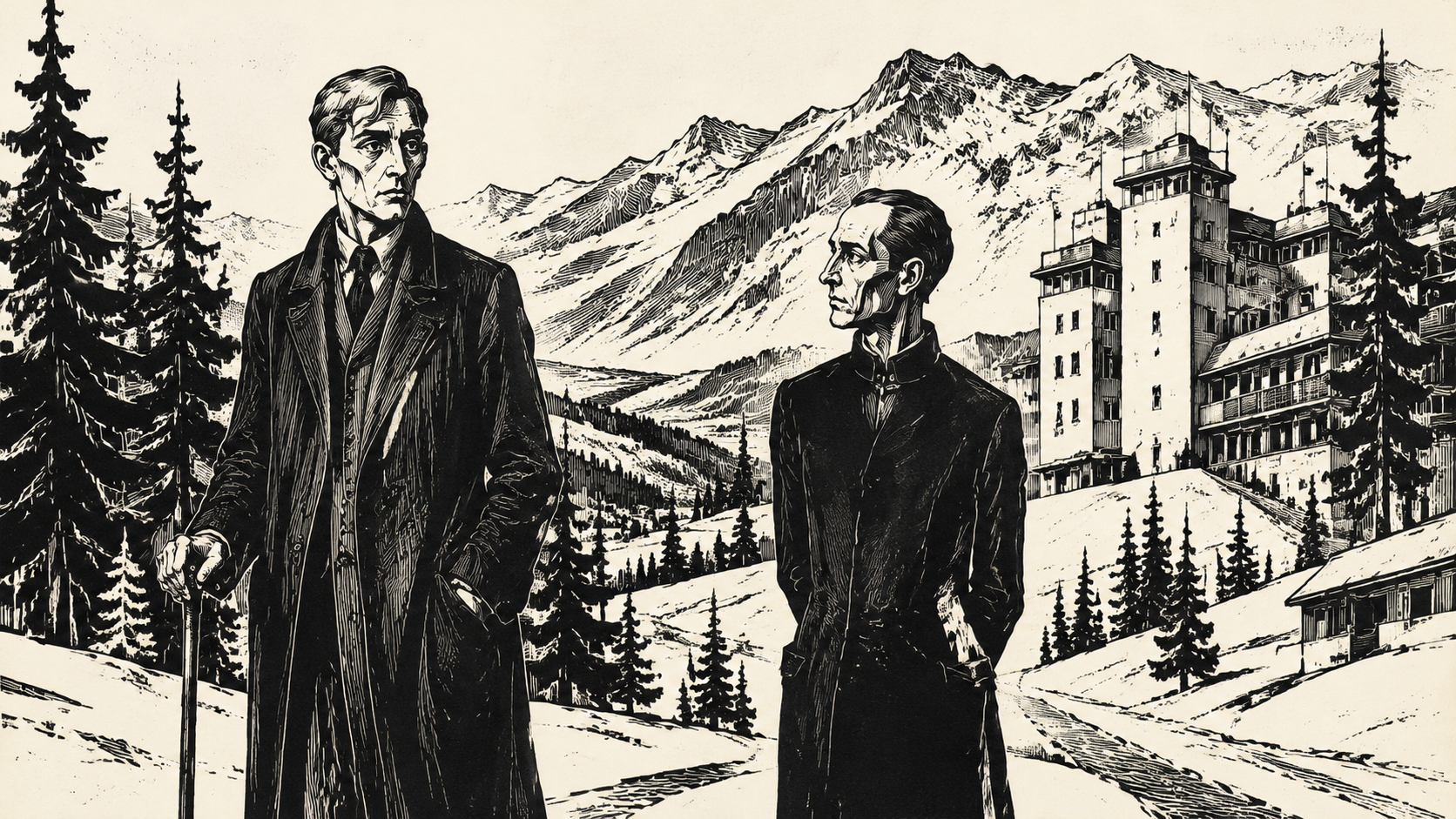
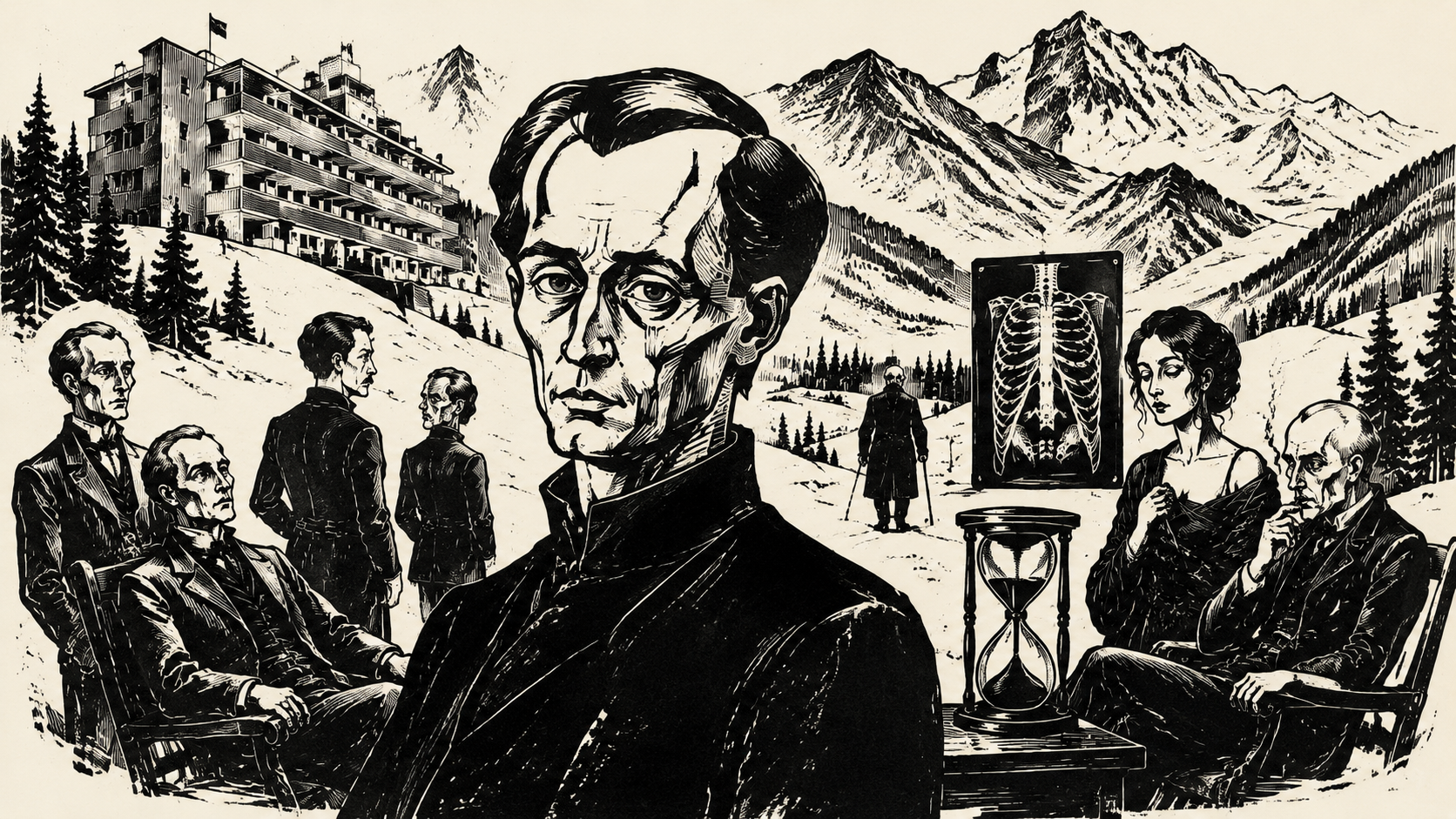
When the story opens, Hans Castorp is twenty-three, a German engineer fresh out of school, up on the mountain to visit his cousin Joachim, a soldier. Joachim is sicker, yet desperate to get back down and rejoin his regiment — he is the mountain's representative of normal time: he believes in the world below, in the barracks, in deadlines. Hans is different. He is soon diagnosed with lung trouble of his own, which gives him every excuse to stay.
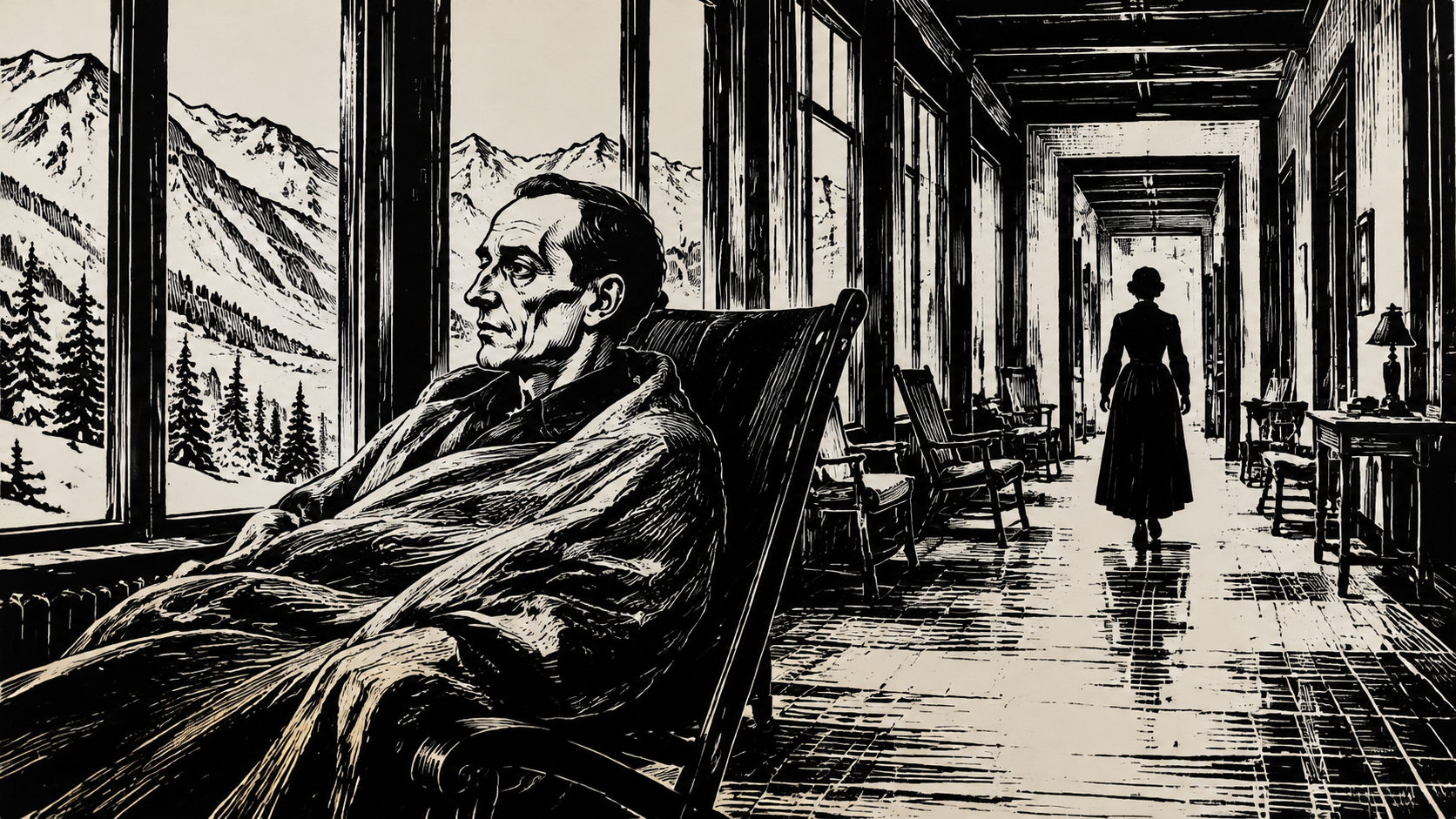
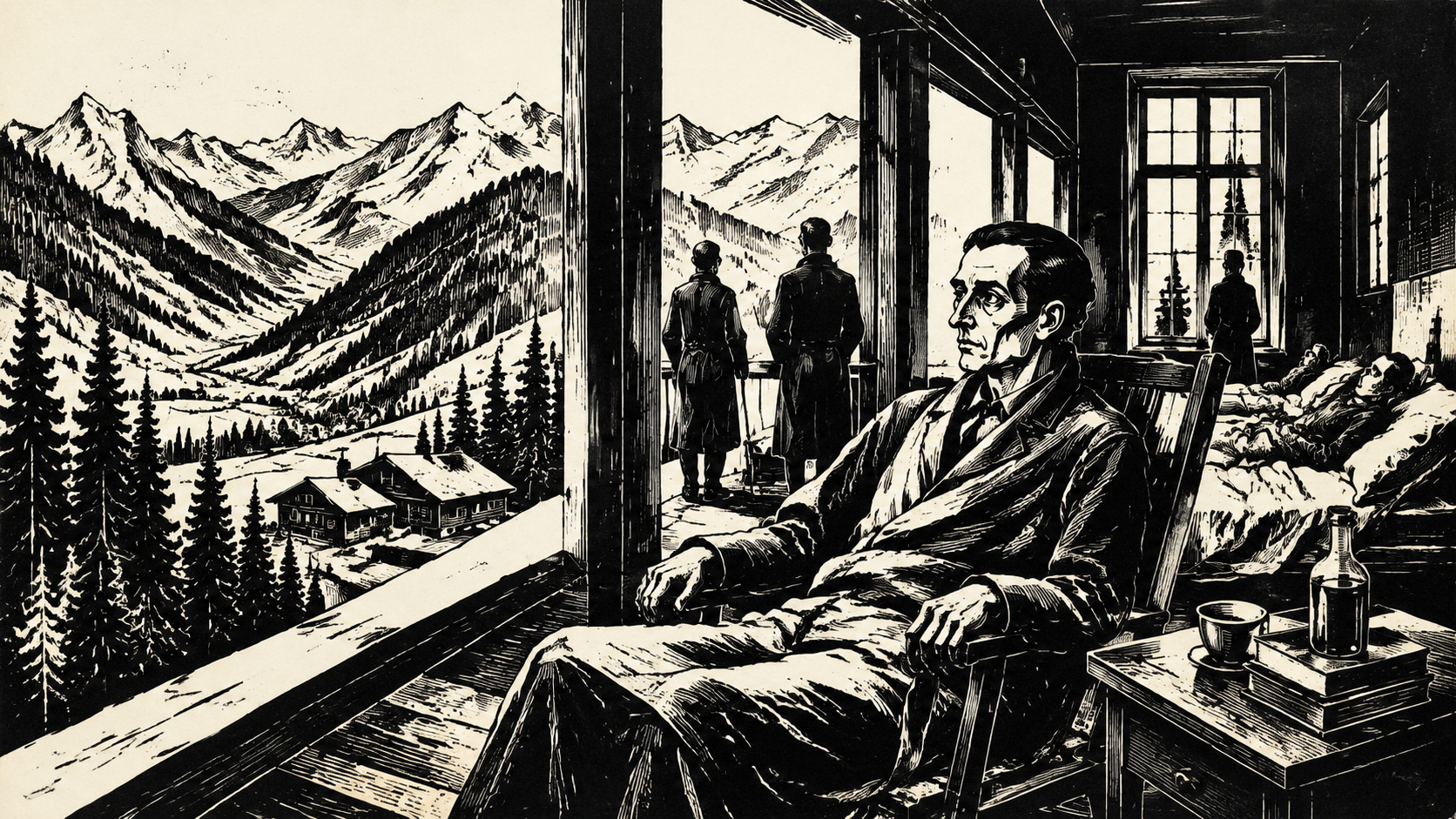
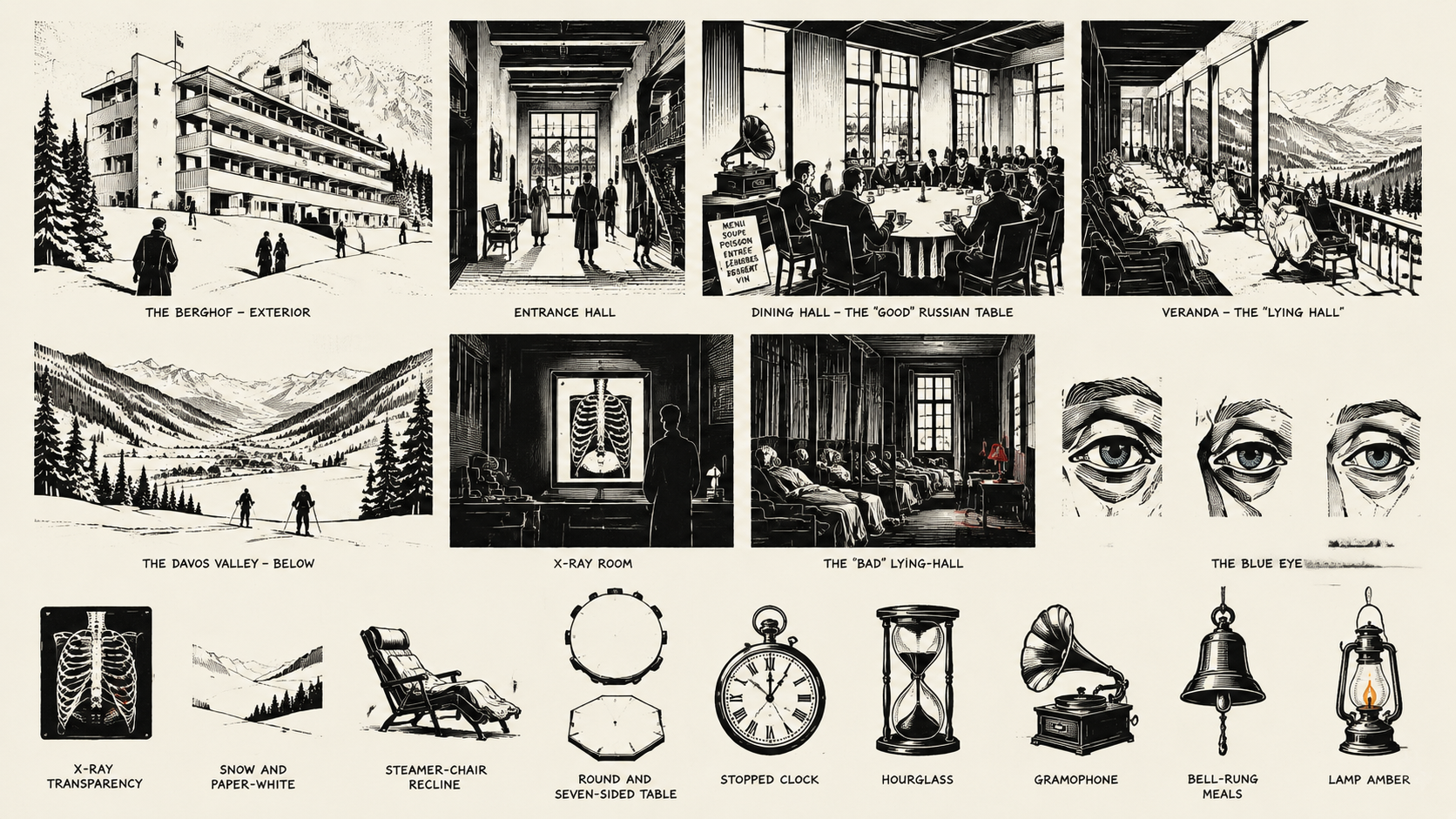
The world up the mountain has its own rules. Hofrat Behrens, the chief physician, is authoritative with a chilly kind of wit, and he presides over a vertical world: above a certain altitude, time slows, manners tighten, and people are left with nothing but hospital gowns, meal trays, X-rays, and afternoons so long they turn faintly frightening. This set of rules is the novel's real premise — not a medical backdrop, but a philosophical one.
The plot's final beat is Hans finally going back down the mountain. Not because he is cured, not because he has worked anything out, but because war breaks out in the summer of 1914 and conscription begins below. He puts on civilian clothes that no longer quite fit, picks up a small suitcase, and walks into the train station — and what meets him is propaganda posters, uniforms, recruitment offices. Mann writes this with something close to cold violence: he stops detailing Hans's inner life and instead hammers the sound of the outside world into the reader's head through dense, clipped sentences. Hans has spent seven years building intellectual muscle on the mountain, and the first reality that greets him is a draft notice.
The novel's last line does not tell you whether Hans will die in the trenches — that suspense is deliberately left hanging. What Mann wants is not Hans's individual fate but the shared fate of an entire generation: the moment they wake from the dream of time, they are thrown straight under history's wheels.
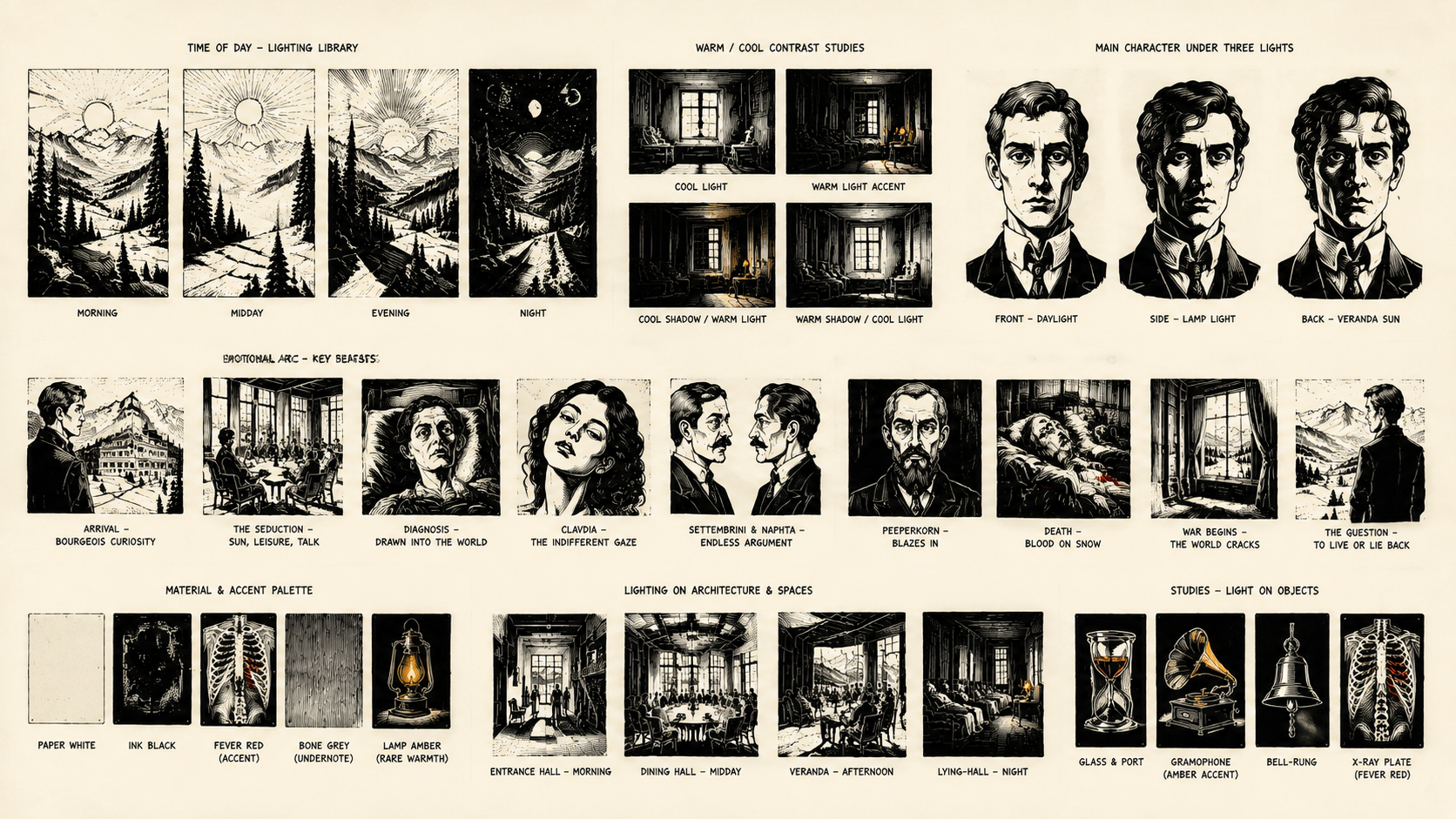
Before the guide was written, this book got a visual foundation — every illustration you just read grew out of it.
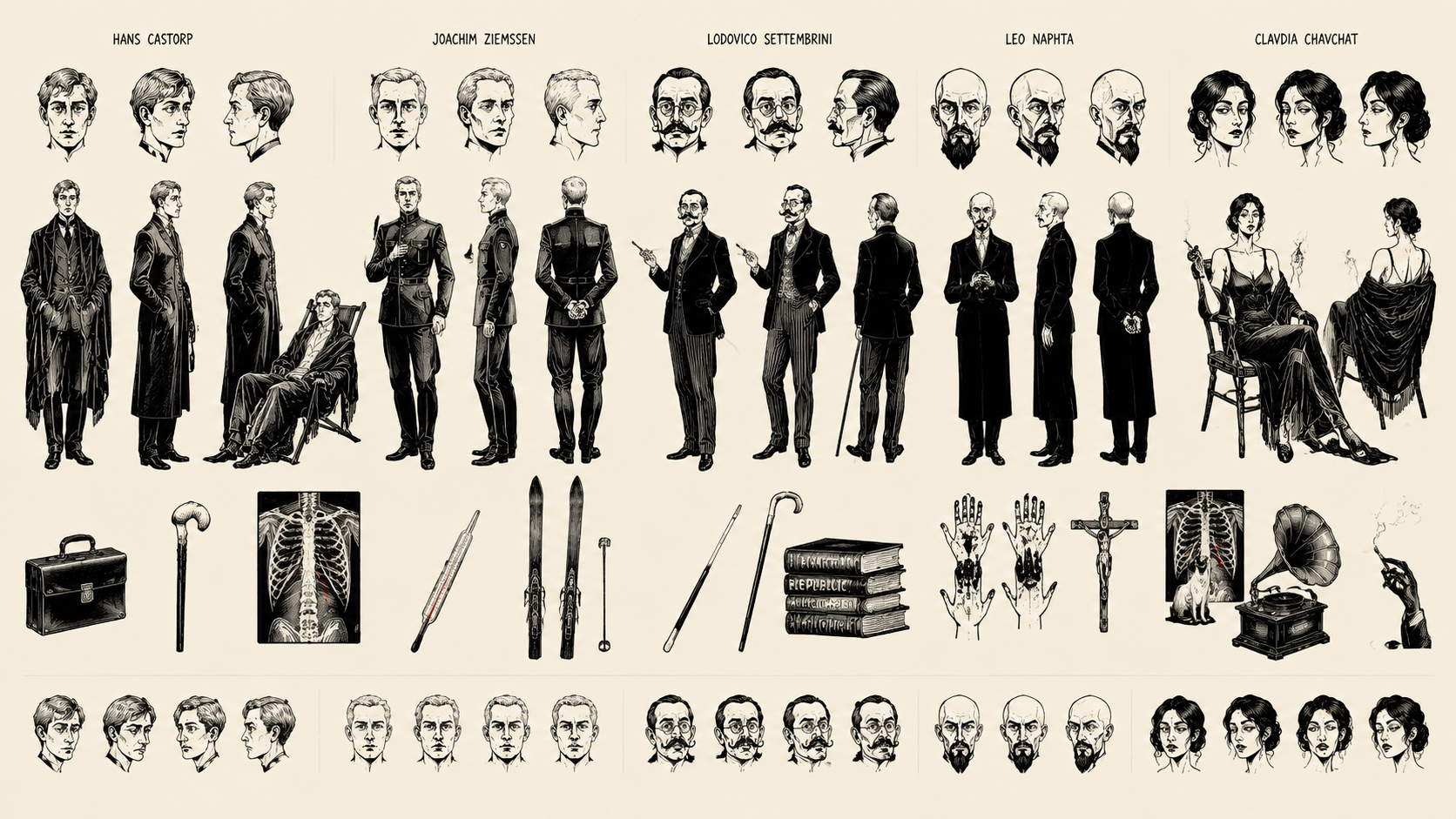
The plot's first foundation is the quiet swapping-out of Hans's sense of time. When he first goes up, he still keeps track of the date, still thinks about his leave, still thinks about the job waiting for him in Hamburg. But he soon finds that no one up here is in a hurry: the doctors will not let him think in terms of which month, which day, the same dishes keep reappearing in the dining room, and the snow outside falls winter after winter. Joachim applies more than once to go back down and rejoin his unit, and each time Behrens turns him back with a reason to observe a while longer. Mann does something quite sly here: he slows down the narration itself. For the first few dozen pages you are simply following Hans on his walks, his meals, his checkups, listening to the wind and snow, and it feels tedious — but look back and the months printed in the chapter headings have quietly leapt forward.
Three weeks become three months, three months become a year, and then it is the seventh year. Hans himself never quite registers how terrifying this is — not until the moment he finally decides to go back down, and the world outside is already at war. The whole novel simulates the physical sensation of being swallowed by time: reading it, you experience the same slowness, the same stretching-out, the same inability to say what year it is, that Hans does.
The plot's second foundation is Clavdia Chauchat. A patient with a Russian name, languid, her gaze unfocused, and Hans falls for her almost the instant he sees her. The infatuation is written with remarkably little romance to it — its keywords are recognition and misrecognition. What Hans sees in Clavdia is not really Clavdia herself, but something entirely absent from his respectable life in Hamburg: a total slackening of the senses, an unashamed ease with illness, and a faint, vaguely Eastern permissiveness. Clavdia is repeatedly absent from the novel, leaves, and returns, and every reappearance pulls Hans a little further up the mountain.
What is more intriguing is the relationship between this infatuation and Hans's education. He reads the pamphlets of Enlightenment that Settembrini keeps pressing on him, all the while with Clavdia's silhouette running through his head. Mann deliberately lets these two things happen side by side on the page, so you can see that in this one young man, reason and the flesh do not cancel each other out — they feed on each other. The love plot here is not the sweetener; it is the hook. It is the hand that turns Hans from a visitor into a patient-cum-student.
The plot's third foundation is a long, at times almost suffocating, war of words. Settembrini is an Italian humanist, always impeccably dressed, endlessly eloquent, forever holding up words like reason, progress, and human dignity as a shield. He wants to mold Hans into a proper European citizen, a clear-eyed modern man.
Then Naphta arrives. A radical Jesuit, small, sharp-tongued, possessed of an almost frightening clarity. Naphta's positions — that terror and violence are permissible when necessary, that faith outranks reason, that the state can be a sacred instrument — read today almost like news reports. The two men never come to blows, it is all combat in words, but the words grow steadily more like hand-to-hand fighting. Hans sits between them, and the more he listens, the more he starts writing his own essays, mounting his own rebuttals — he becomes the debate's third corner.
This is the part readers most often skip, and also the one Mann cared about most. He is not writing two eccentrics squabbling; he is telling you that this was the temperature of European intellectual life before 1914. Hans thinks he is sitting in on a philosophy lecture; in fact he is inhaling the last year of smoke before the First World War. What makes this debate work as writing is that the two men never truly change each other's minds, yet the air on the mountain shifts subtly after every exchange — and the reader gets pulled back and forth between the two voices right along with Hans.
The plot's fourth foundation is a Dutch merchant named Mynheer Peeperkorn. Everyone fears him; everyone defers to him. The old man barely speaks — or rather, when he opens his mouth it comes out as fragments, exclamations, vague interjections, and yet no one in the room dares to interrupt him. After Peeperkorn's arrival, the emotional center of gravity around Clavdia subtly shifts. Hans's earlier infatuation with her now looks more like a young man's self-projection; Peeperkorn's entrance is the arrival of a genuine personality, and for the first time Hans sees a whole human being that is not himself.
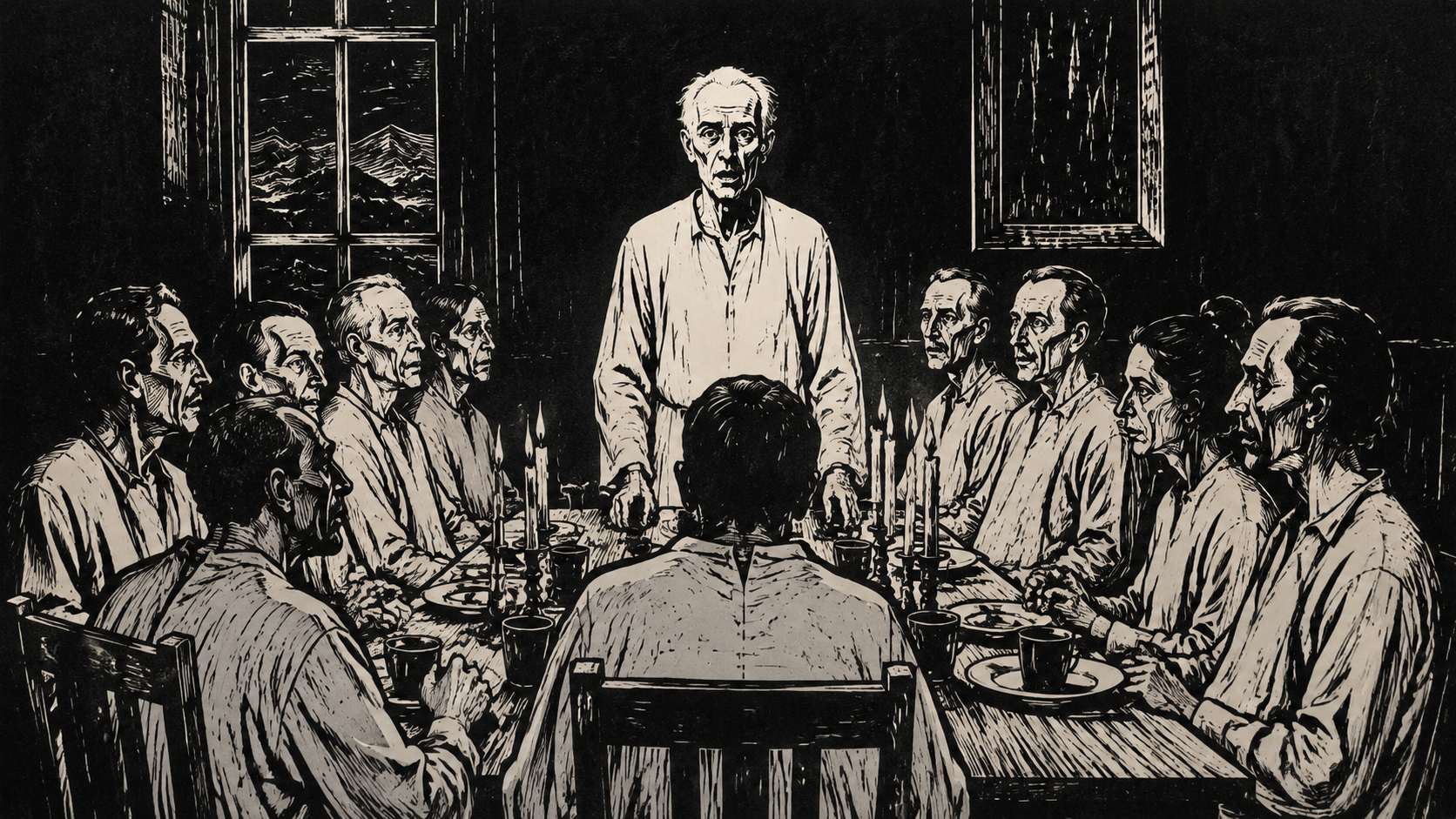
The chapters covering the end of Peeperkorn's life are written with extraordinary restraint and extraordinary extravagance at once. The manner of his death has an exaggerated ceremoniousness to it — that farewell all but spends the entirety of his remaining life force. Mann drops in a rather ironic proposition here: Settembrini and Naphta have spent the whole debate trying to crush each other with words, and yet the person who actually silences the room is an old man almost incapable of finishing a sentence. It is the novel's most silent mockery of rational argument.
Not long after he dies, the endless argument between Naphta and Settembrini finally slides toward an irreversible cliff edge. A man who believes any means are justified in defense of faith, and a man who stands for reason and human dignity, end up in a duel — and the outcome is not victory for either side, but a chilling tragedy. This is the novel's most bone-cold moment: it tells you that the European intelligentsia on the eve of the First World War did not fail to see the danger coming — they saw it, they argued about it, and in the end neither side convinced the other, and it was settled in the coldest way imaginable.
Mann sets this scene on a snowy night on the mountain, just months before the actual war. As a piece of construction, the outcome of this duel is a lock that seals the mountain's whole peacetime debate directly into history.
On the surface this book is about a tuberculosis sanatorium, a love affair that goes nowhere, and a debate between two intellectuals. At its core it is about a double metaphor of sickness and time. Time on the mountain is itself a kind of illness — it strips away urgency, strips away any feel for the living people below, and lets you mistake thought for action. Hans being diagnosed with lung disease is a perfectly concrete physical event; but the illness he actually catches is falling in love with a state of never having to answer for anything.
For readers today, The Magic Mountain still stings. It forces you to ask: which mountain have you been stuck on too long? Is there a three weeks of your own that has quietly turned into seven years?
A companion piece can give you the map, but it cannot give you the experience of actually being stuck on the mountain. That sensation of time stretched thin, faded out, all but muffled under snow — it only really gets under your skin once you turn the pages yourself, one at a time. The unspectacular but blush-inducing moments when Hans and Clavdia simply look at each other; the snow falling harder and harder outside the window while Settembrini and Naphta argue late into the night; the dinner before Peeperkorn's death that makes you hold your breath — none of this survives being retold. It only holds up inside the original's slow, almost provocative rhythm. So: knowing the ending and then reading it is the right way into this book.
The Magic Mountain is about how an ordinary young man is taught by a mountain that there is no need to hurry — and the price he pays is forgetting that the world below is on fire.