The Man Who Laughs (L'Homme qui rit) · Companion Guide
笑面人
一张被刻成永恒笑容的脸,走进猩红议席控诉苦难——台下哄堂大笑。畸零者向庙堂开口,庙堂只看见那张嘴。
Opening
A face, always laughing. The corners of his mouth are carved into his cheekbones, his eyes stretched into two narrow slits. Passersby see a clown; beasts see a clown too. But beneath this face, a child abandoned in the snow is pressed down. The snow has stopped. He holds an even smaller child in his arms — her eyes blind, frozen nearly to death. He presses his face to hers to warm her. She doesn't know that face is laughing; she only feels it's a gentle place.
The child's name is Gwynplaine. He grows into a wandering performer who earns his living by selling laughter. This year, a scheming court official will dig him out of the muddy marketplace, drape him in a crimson robe, and thrust him into the English House of Lords. He thinks this is redemption. The nobles burst into laughter — laughing at the eternal smile on his face, not at his words.
What Kind of Book Is This
The Man Who Laughs is the novel Victor Hugo completed in 1869, though he slapped its setting back to late seventeenth-century England, the court of Queen Anne. When writing The Hunchback of Notre-Dame, he confined his character to a bell tower in deformity; when writing Les Misérables, he had his character redeem himself under a streetlamp. In this work, he simply stacks two faces together — a face forever laughing, tossed into a court forever scheming. Half the book is blizzard, marketplace, and caravan; half is robes, emblems, and parliamentary seats. This is the sharpest blade of Hugo's later Romanticism.
Characters and World
The story's world divides into two halves. Outside is England's wild coast and small seaside towns, Dover's waves crashing against white cliffs, market torches lighting curious onlookers. Inside is London's House of Lords, crimson robes spreading like a sea, emblems glinting on chests. Between these two halves runs an invisible wall — one where a wandering performer sells laughter, the other where upright men sell their very lives.
Gwynplaine's entire childhood clings to the outside of this wall. His savior is Ursus — a cynical traveling doctor, pushing a caravan with a tamed wolf named Homa. Homa can pull the cart, guard the home, and on snowy nights nudge the two children into its warmth to survive. Ursus takes in all four of them: himself, Gwynplaine, a blind baby girl named Dea, and the wolf. No blood ties, all foundlings — yet more of a true family than many biological ones.
Dea could not see. She did not know what Gwynplaine's face looked like — she only knew that when he held her, the world was warm. She became his entire light. That forever-smiling face which made strangers flinch, she pressed into, burying her head in his chest. Between these two lay an invisible membrane: he could see her, she could not see him, but precisely because of that, she could see him.
Snow Night Covenant: The Traveling Performers
The snow buried everything. Gwynplaine's face had been mutilated in childhood, abandoned on the shore, a perpetual smile carved into his features forever. He did not know what that smile was — only that strangers ran at the sight of him, and market children threw stones. In the snowy night wind, he heard a smaller cry — a baby girl, eyes blind, nearly frozen to death. He crouched and tucked her into his own chest. That year, he was still a child himself.
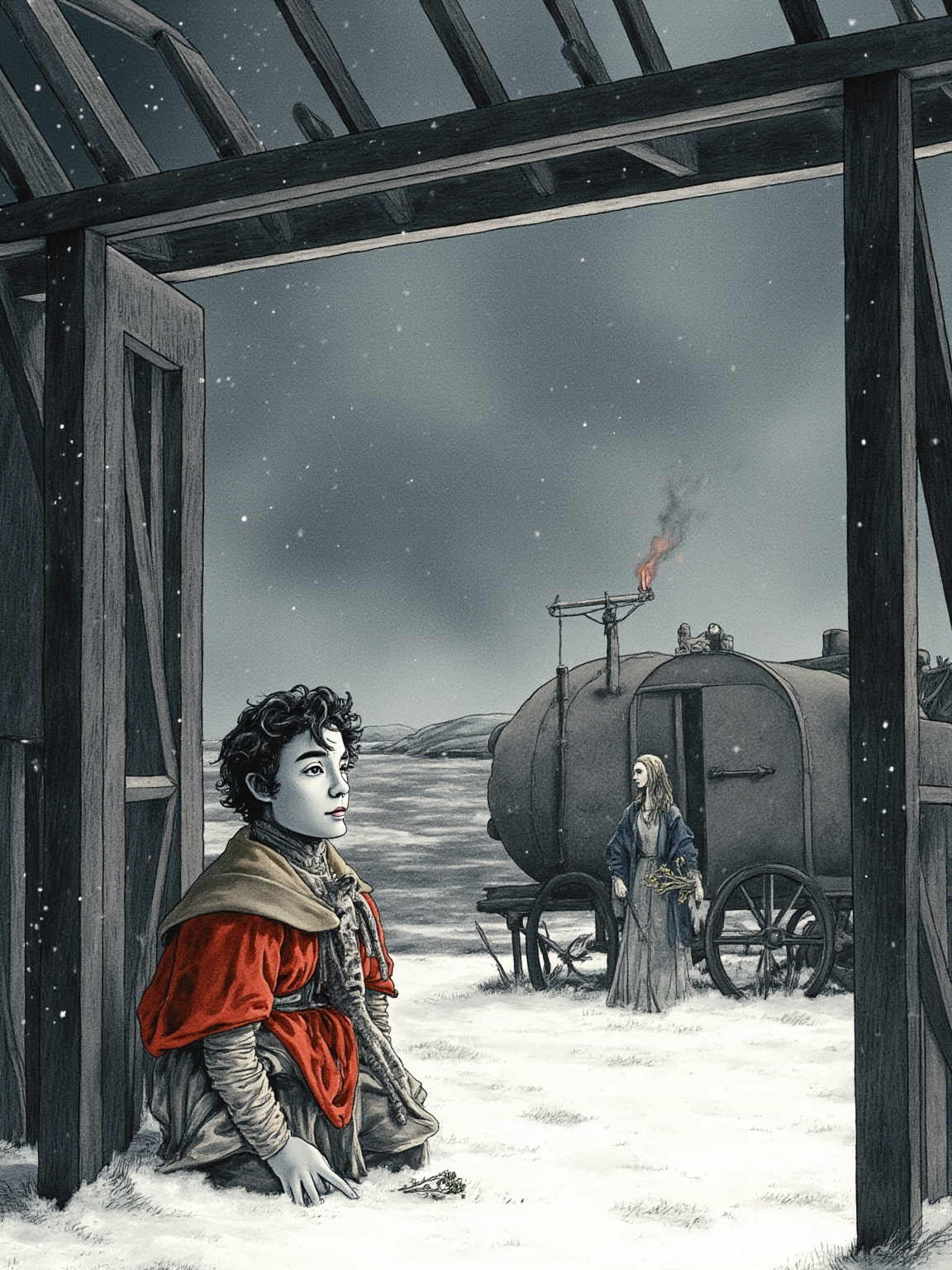
The snow had ceased; the wind had fallen. The cold was so intense that it bound the drifting sand of the beach, and made the surf slow in rolling.
雪止了,风也歇了。冷得这般厉害,连海边漂流的沙都被冻住,海浪翻卷的速度都迟缓下来。
金句 · 卷一第一编 · 极地之夜的冰与火
When Ursus jumped down from the wagon, he cursed and grumbled — but finished by dragging both frozen-purple children into the vehicle. Oms sniffed at the doorway, then did not bite. From that day, the family was set: Ursus, Gwynplaine, Dea, Oms. The wolf recognized the family, because the wolf had better taste than people. The wagon creaked and rumbled through England's muddy roads, carrying an old man, a smiling face, a blind girl, and a wolf.
The Stage of the Laughing Man
Gwynplaine grew up and ate from that face. Ursus pushed him in front of the curtain. At the fair, he laughed — not because he wanted to, but because his face could only laugh. Spectators threw coppers in, took one look at the freak, had their laugh, and left. Backstage, he returned to the wagon where Dea sat in the corner humming, her blind eyes turned toward him. She found him by sound. The moment he sat beside her, she grabbed his hand and held it tight.
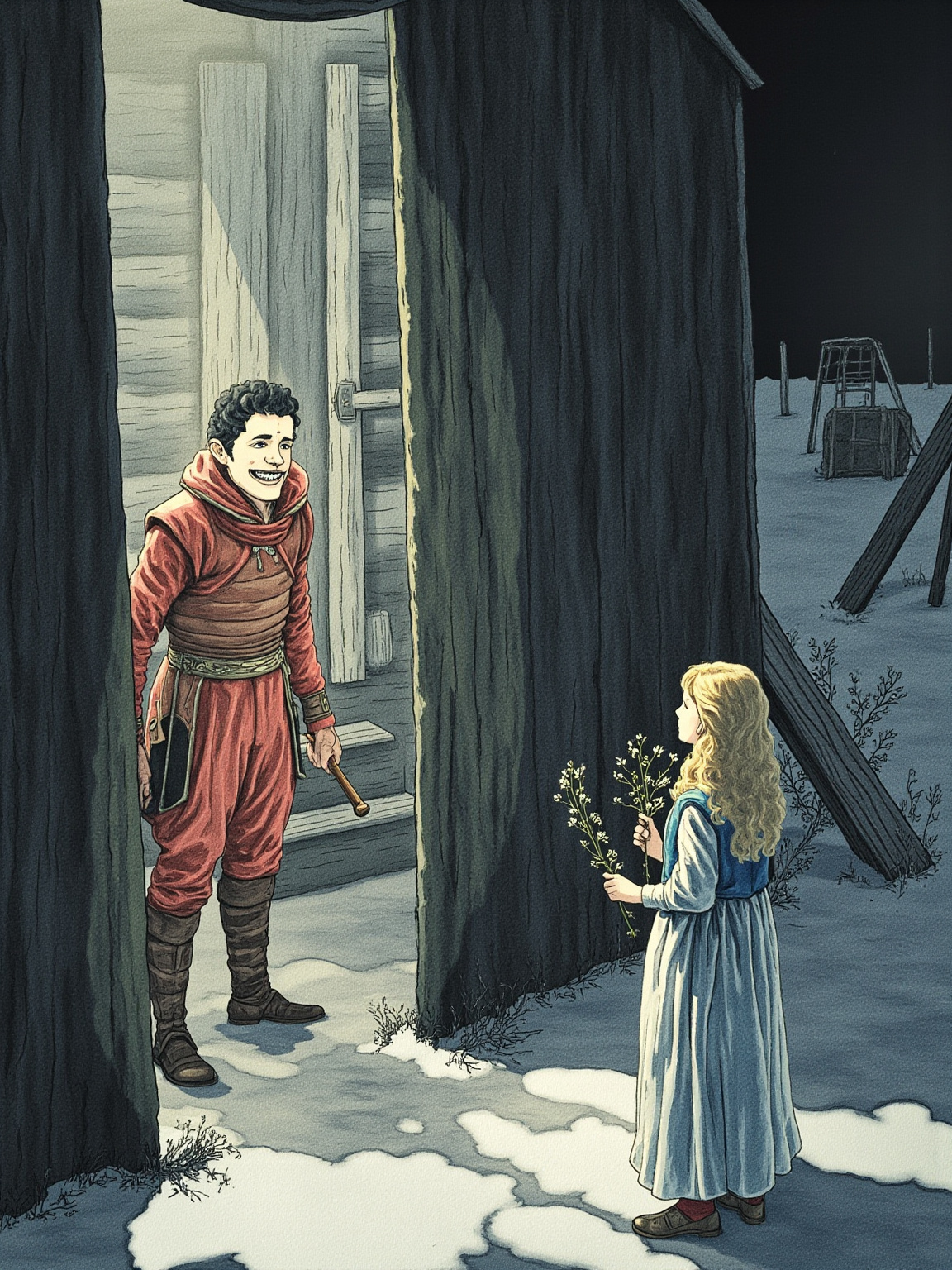
He laughed, and it was a frightful thing, this laugh of a man who never laughs.
他笑了,这一笑多么可怕——一个从不曾笑过的人,竟在笑。
金句 · 卷一第二编 · 卖笑的哲学
This family is the warmest note in Hugo's writing. No blood relation, no property — only a broken wagon and a wolf — yet more like a home than any palace. Hugo wrote them without tragedy, wrote them nuzzling warmth into each other, protecting each other to survive. Dea was Gwynplaine's entire world — she could not see his deformity, so he did not have to pretend before anyone.
The Conspiracy at Court
The trouble started when someone looked at Gwynplaine a moment too long. There was a minor official at court named Barkilphedro — plain-looking, but more malicious than anyone. He stumbled on a secret: this laughing beggar, this outcast who sold smiles for a living, was in fact the rightful heir of Lord Clancharlie, murdered more than a decade ago, the title vacant ever since. Barkilphedro presented this secret to Queen Anne, presenting it with a smile, presenting it with dark intent.
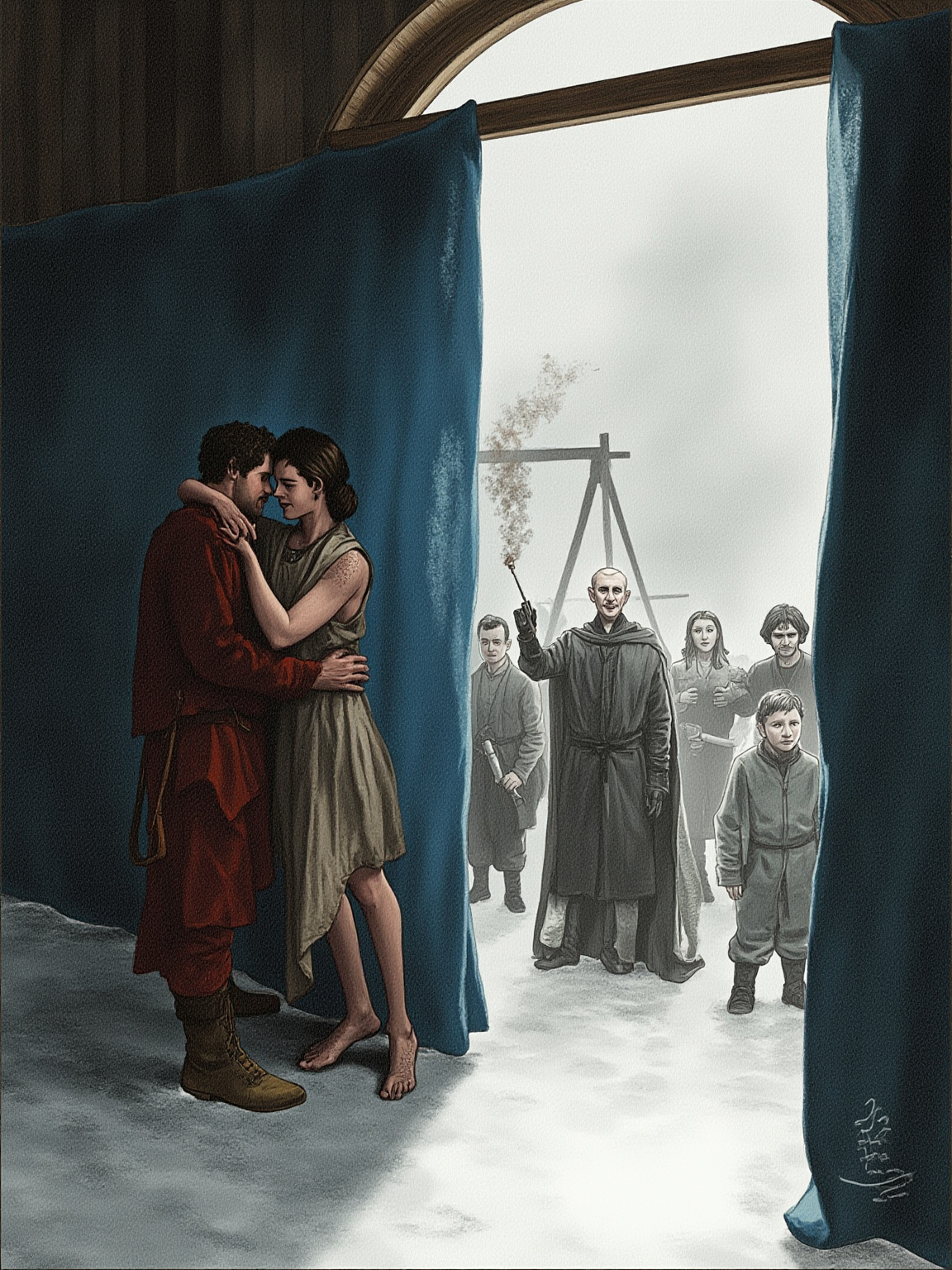
Gwynplaine was a member of the House of Lords. He was a lord. Such things happen.
格温普兰成了贵族院的一员。他是一位勋爵。荒唐的事便是这样发生的。
金句 · 卷二第三编 · 始料未及的升迁
Overnight, Gwynplaine went from fairground freak to London lord. The scarlet robe draped across his shoulders, the badge pinned to his chest — the caravan, Ursus, Dea, Homo, all of it left behind. He was thrust into a world he didn't recognize, unable to walk, unable to hold a spoon. This was not salvation. It was another kind of kidnapping.
The Absurdity of the Scarlet Seat
The House of Lords was England's most dignified room, walls hung with ancestral portraits, the floor covered in long scarlet carpets. Gwynplaine was led to his seat, stood, and began to speak. He accused what he had seen with his own eyes: child traffickers, famine, gallows, orphaned girls, abandoned children, faces carved into monsters. He spoke with passion, he spoke with every word dripping blood. The lords listened, initially stunned — then burst out laughing.
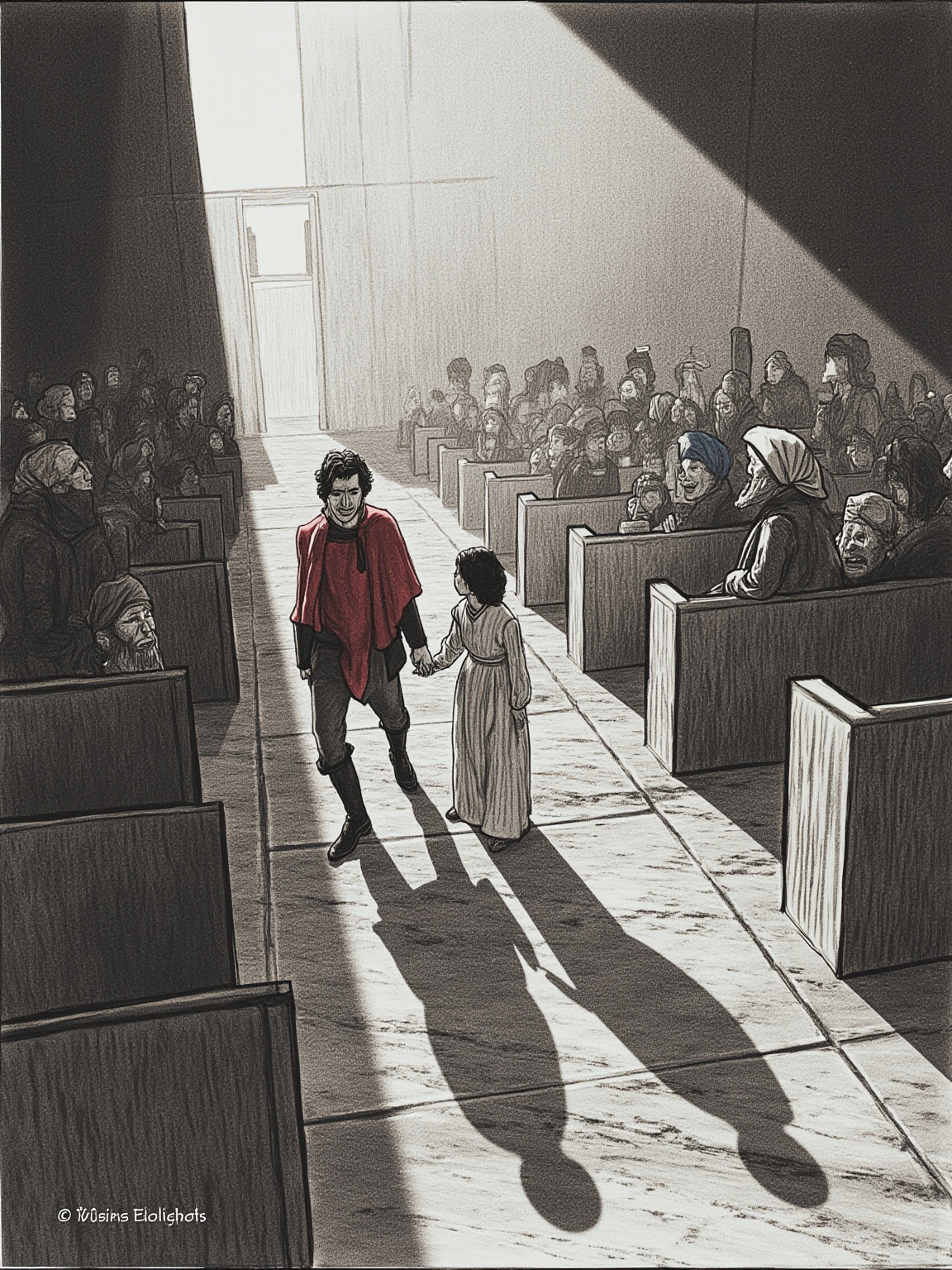
They laughed, not at his words, but at his face. The House of Lords was convulsed.
他们笑的不是他的话,是他的脸。贵族院笑成一片,身子直颤。
金句 · 卷二第四编 · 议席前的控诉
They weren't laughing at his words. They were laughing at his face. There stood Gwynplaine, delivering a passionate speech, but he himself was the most absurd silent play — a mouth forever smiling, voicing the saddest words, the audience laughing until they swayed. Hugo's cut was ruthless: he made an outcast accuse fate, and fate made the corners of his mouth turn up, his voice tremble, the accusation itself becoming a laughingstock.
I stared at this scene for a long time the first time I read it. What Hugo was doing wasn't mocking the lords — the lords had always been that way — he was mocking the absurdity of the whole thing: a person wants to do something serious, but his face won't cooperate. That face was the tool that kept him alive, and also the reason he could never enter that world. Physical deformity and spiritual deformity collided, colliding into a hall of laughter.
Awakening and Escape
Gwynplaine wasn't mad. He simply saw it clearly: change the robe, and the person inside was still the one who crawled out of the snow. He stripped off the scarlet robe on his seat, cast the title of lord to the ground, and walked out of the House of Lords. Outside: rain, London's mud, the direction where his caravan should be. He was going back to find Dea.
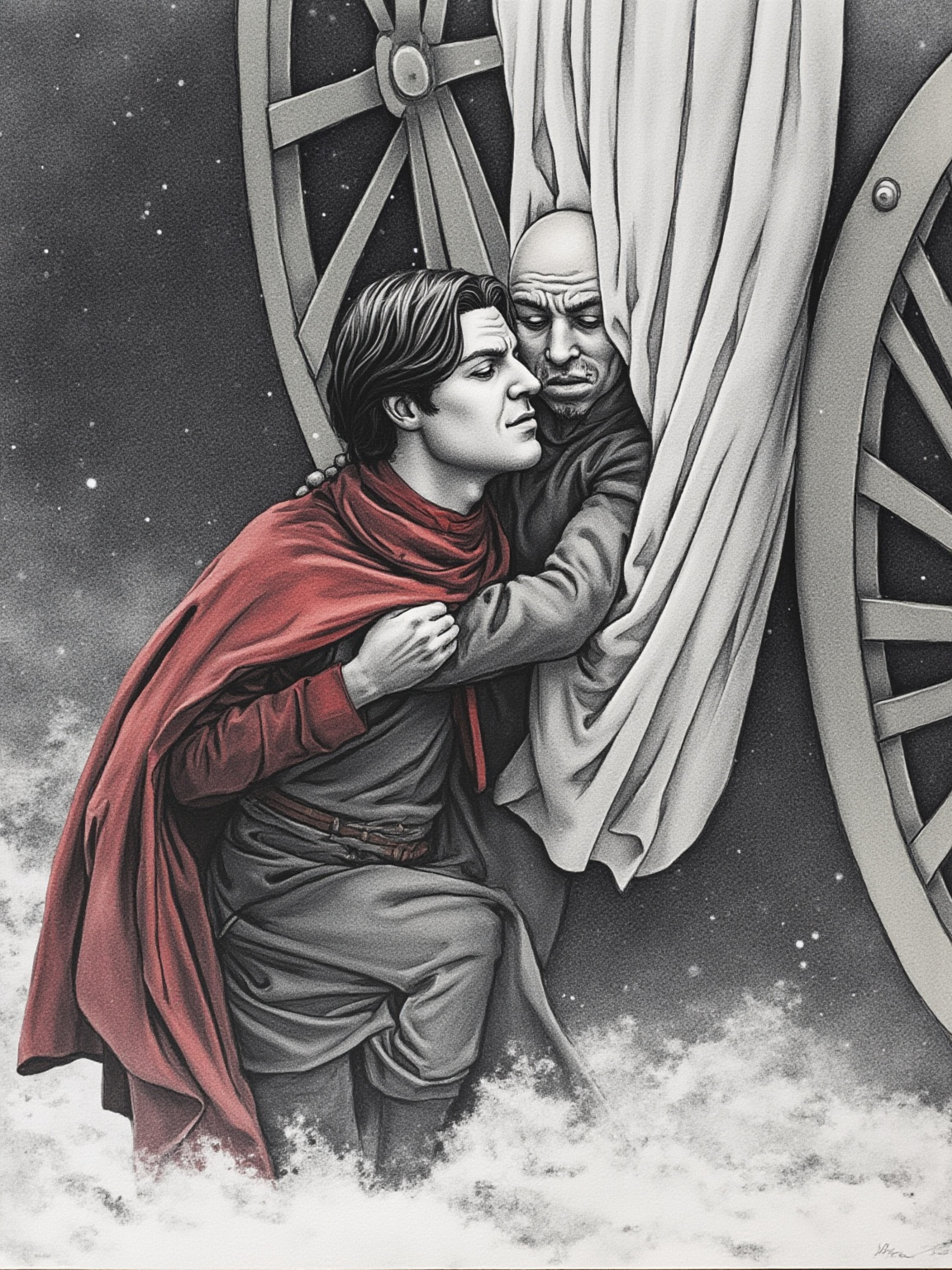
The man who had been a lord was again the mountebank. The mountebank was again the outcast.
当过勋爵的人又成了江湖艺人,江湖艺人又成了被遗弃的人。
金句 · 卷二第五编 · 弃袍而去
He didn't hesitate. What he wanted was not power — it was the moment when Daya took his hand, leaned on his shoulder, and said "I can't find you." He returned to the cart with that eternally smiling face and lifted the curtain.
Daya's Death and Her Sea Burial
He lifted the curtain. Daya lay there. Ursus knelt beside her, and Homo lay at her feet. Her illness had reached her bones — she had been waiting for him to return. When Gwynplaine held her, she was still smiling. She couldn't see his face, but she knew he was there. She called his name, squeezed his hand tighter than usual, and then grew still.
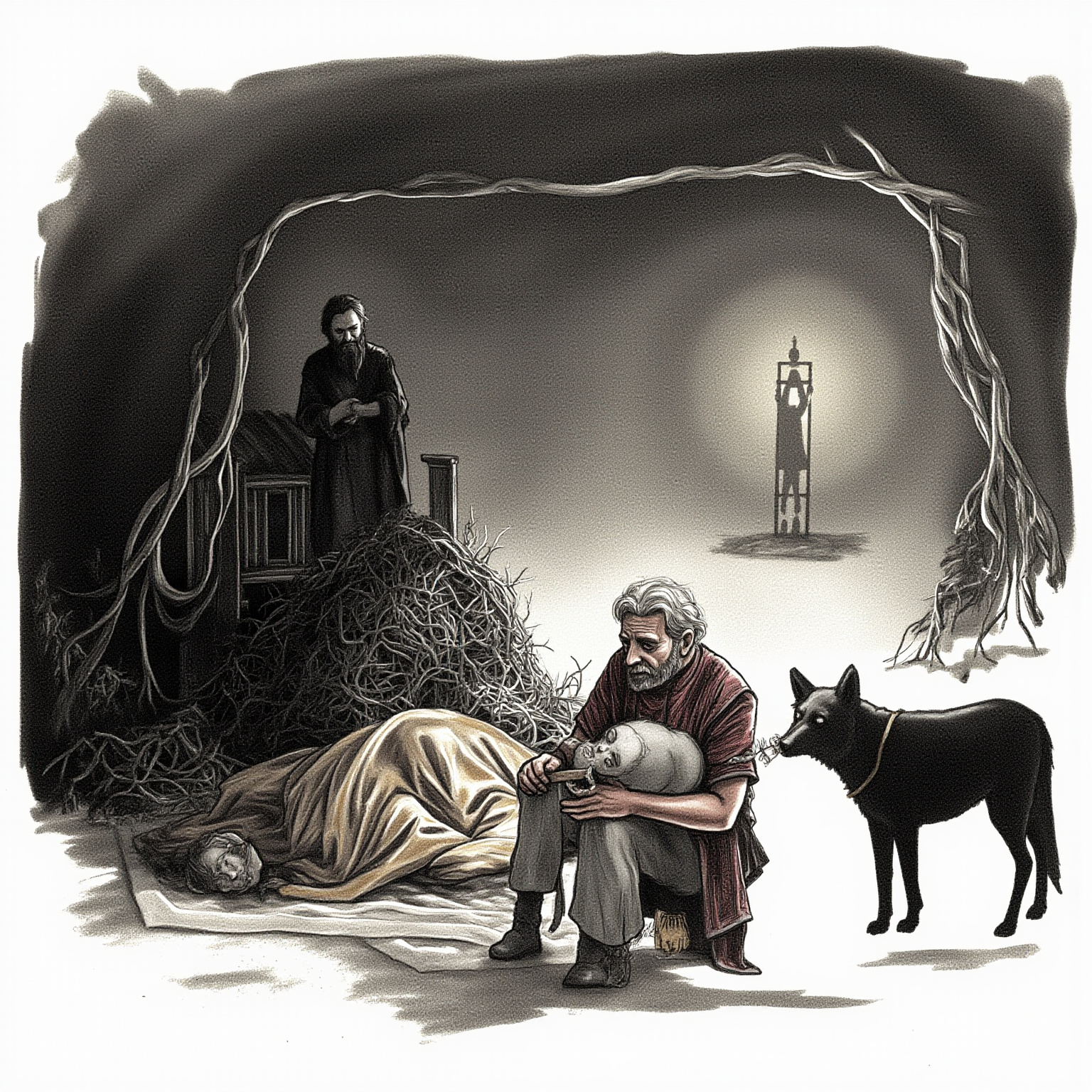
She died. The night was very dark. Dea was no longer anything but a shadow.
她死了。夜色那样深。黛娅已什么都不是了,只剩一缕影。
金句 · 卷二第六编 · 黛娅之死
Gwynplaine carried Daya out of the cart and walked along the shore. Dover's white cliffs gleamed in the dawn, the sea crashing below them. He didn't stop. His face was smiling, his whole body was crying — but even his crying was that smile. This face had followed him since he was five. He thought he could hold on while Daya was alive, but once she was gone, he couldn't hold on anymore.
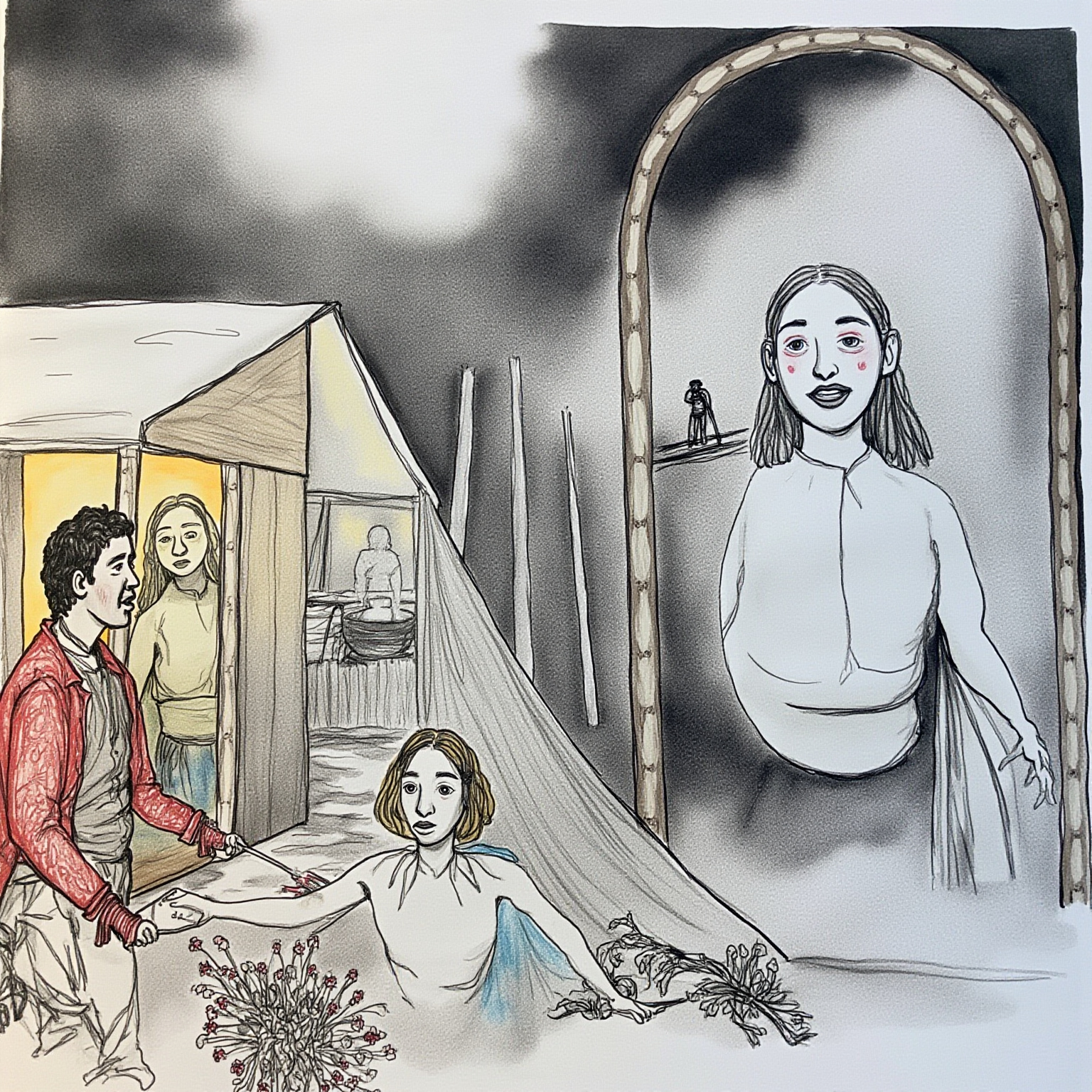
He didn't look back. Ursus and Homo watched from a distance but didn't stop him. The wolf didn't howl, the old man didn't speak. Gwynplaine walked down into the sea carrying Daya, and the water received him. The traveling performer family reunited in death in this way. When Hugo finished this ending, he set down his pen — throughout his life, he had given a Gypsy girl death in exchange for dignity, Jean Valjean living to atone for his sins, and here, he let a smiling face and a blind girl sink together into the morning tide of England.
What Hugo Is Saying
Hugo spent his life writing a contrast: those with deformed bodies have sound hearts; those dressed impeccably are hollow inside. The Man Who Laughs pushes this contrast to its extreme. Gwynplaine's face is deformed, but when he denounces suffering, every word is genuine; the nobles wear their robes stiffly, but when they hear of suffering, they laugh. Laughter and crying are misaligned in Gwynplaine — his face is always laughing, his heart is always crying; in the temples, it's reversed, with mouths full of pity for the world but eyes full of business.
Another theme is the absurdity of identity. Gwynplaine thought the noble's robe would let him speak — he was wrong. The robe didn't let him speak; the robe made him an even bigger joke. Hugo's cut points not just at the British aristocracy, but at all those who think "changing positions will change something." Whether a person can be heard never depends on which chair they sit in, but on whether that room wants to listen. When Gwynplaine opened his mouth to speak, the room laughed and treated him like a circus act.
That face of his was the tool that kept him alive, and the reason he could never go back — physical deformity and spiritual deformity colliding, colliding into laughter throughout the hall.
Why This Book
The Man Who Laughs is a figure that literary history has borrowed over and over — that forever-smiling face, later walked into the makeup of countless clowns. But Hugo's original sketch was far more vicious: he didn't want a freak, he wanted a mirror, so that after you watched you'd wonder, who is the real freak. This book is unusual in Hugo's catalog: no long redemption arc like Les Misérables, no brick-like sense of history like Notre-Dame de Paris — it's a simple contrast — a smiling face and a cold room. Short, and therefore sharp.
Read the Text
A commentary can give you a map, but it can't give you the feeling of being shoved into the House of Lords and laughed at. Hugo writes this passage slowly — the seats, the carpet, the oil paintings, the candlelight, the folds of the robes — he wants you to walk step by step into it, to the point where you yourself start to feel something is wrong, and when the laughter rises you feel the awkwardness in your own body. That bodily sense is something commentary can't take from you. Then there's the scene where Gwynplain carries Déa to the shore at Dover — dawn, white cliffs, waves, the prose itself has a weight that can't be undone. Once you know the plot, you still have to read that passage for yourself, because Hugo wants you to walk with him. Walk it once, and you understand what he's writing.
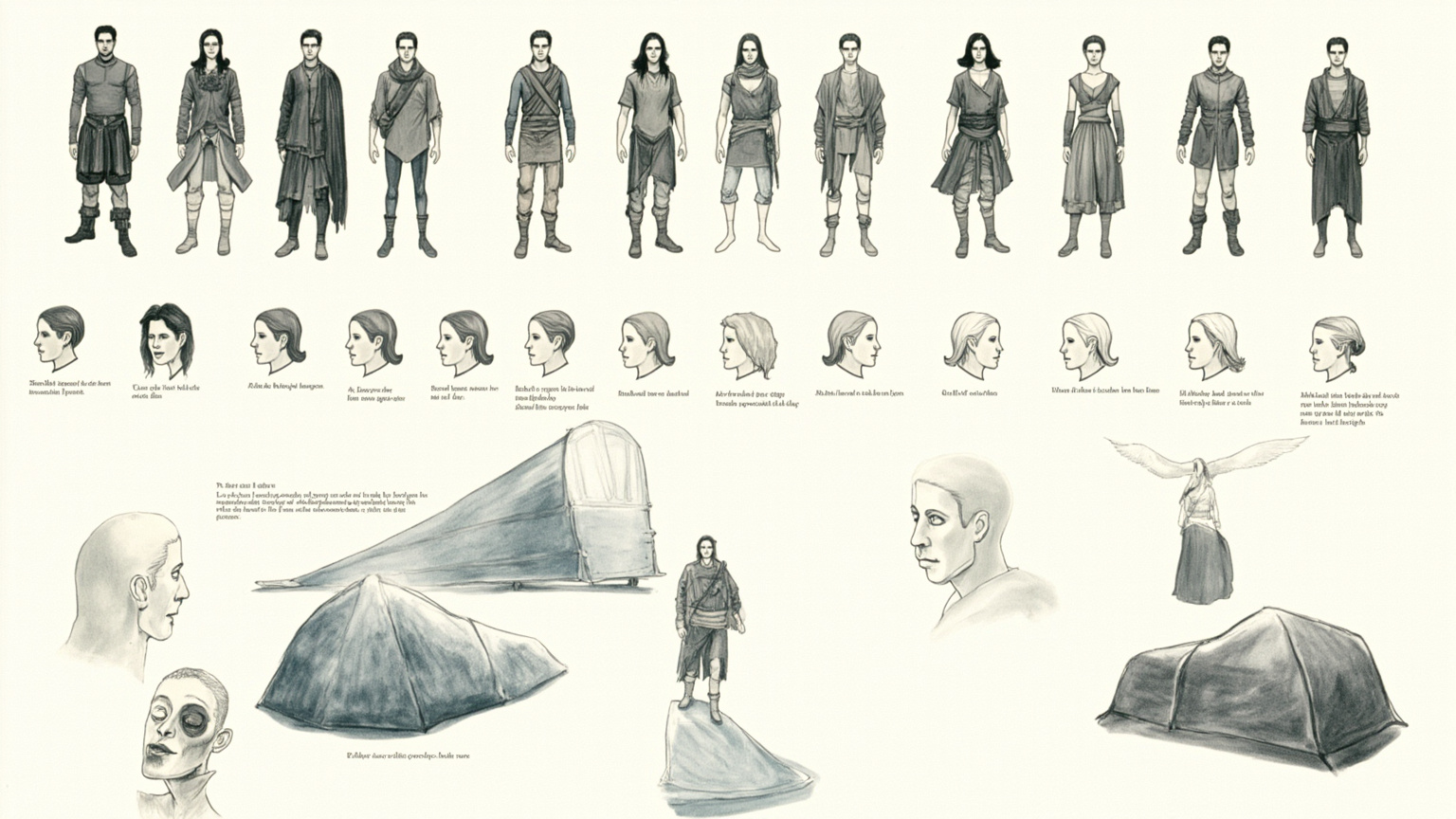
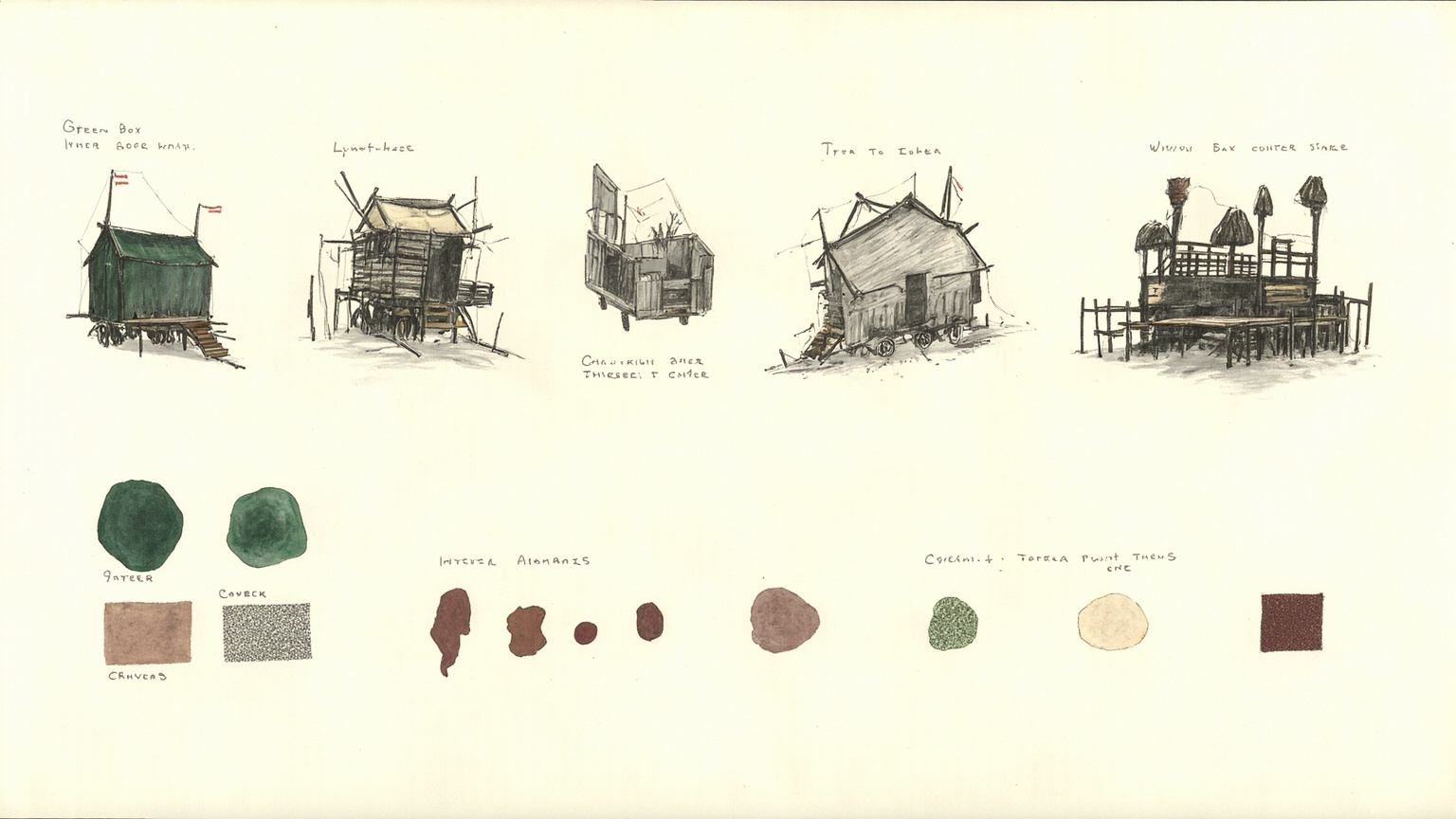
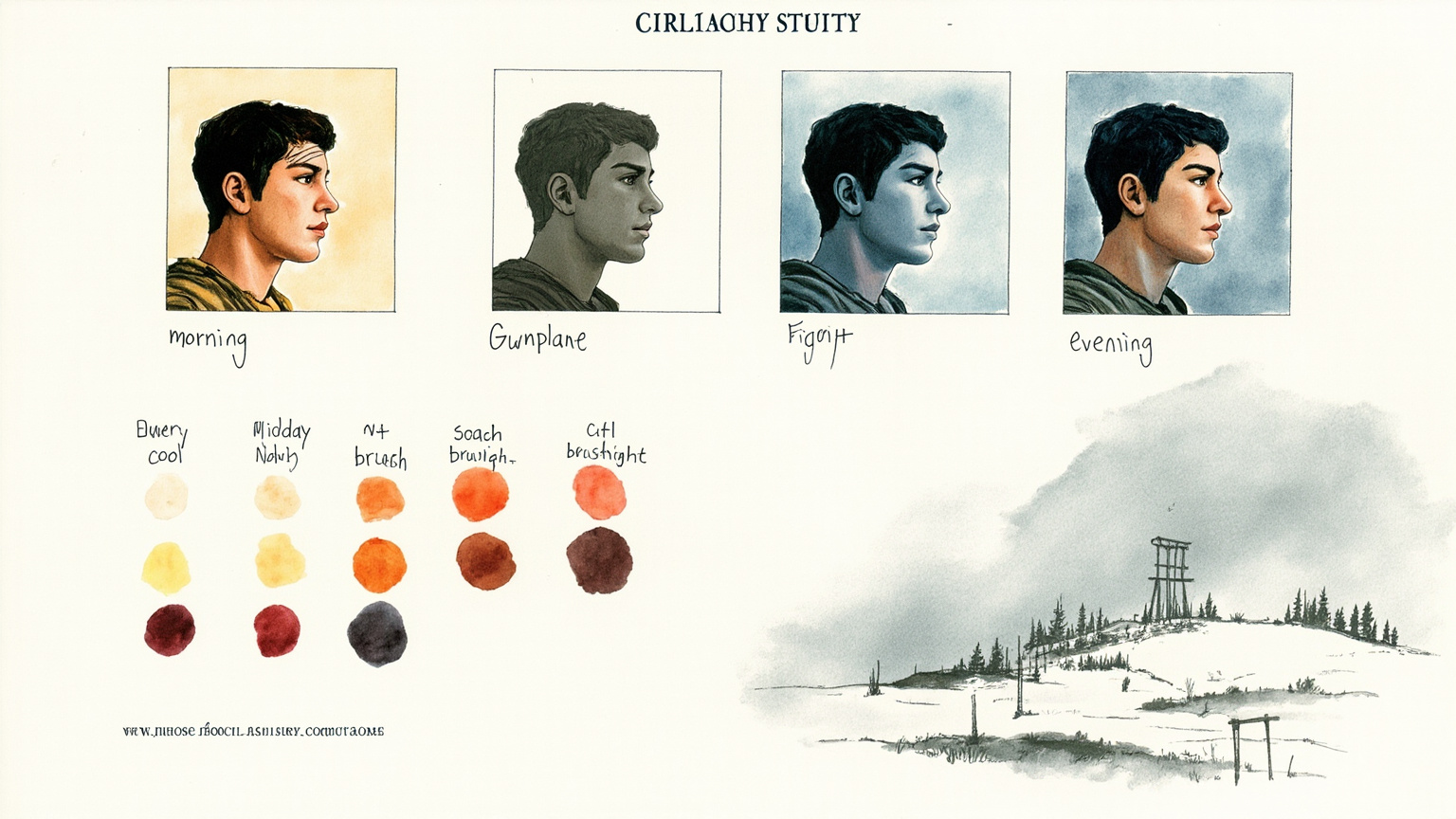
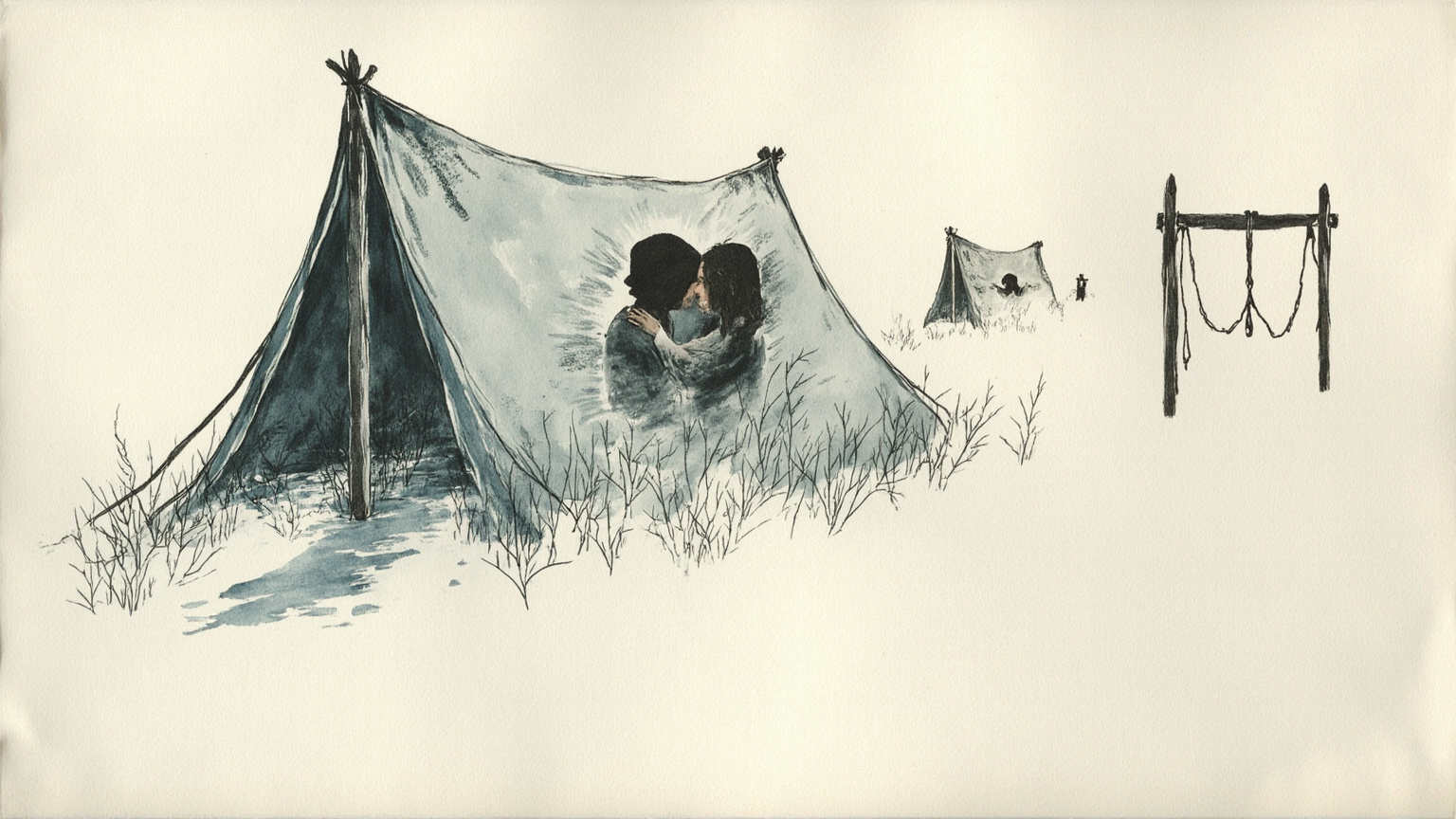
Art Direction4 plates
Before the guide was written, this book got a visual foundation — every illustration you just read grew out of it.