The Man Who Was Thursday: A Nightmare · Companion Guide
代号星期四
在一个全世界都以为自己是间谍的荒诞世界里,一名诗人警探必须追逐一个从不露面的影子,而那个影子早已在等他。
The opening hook: seven strange shapes under a lamp
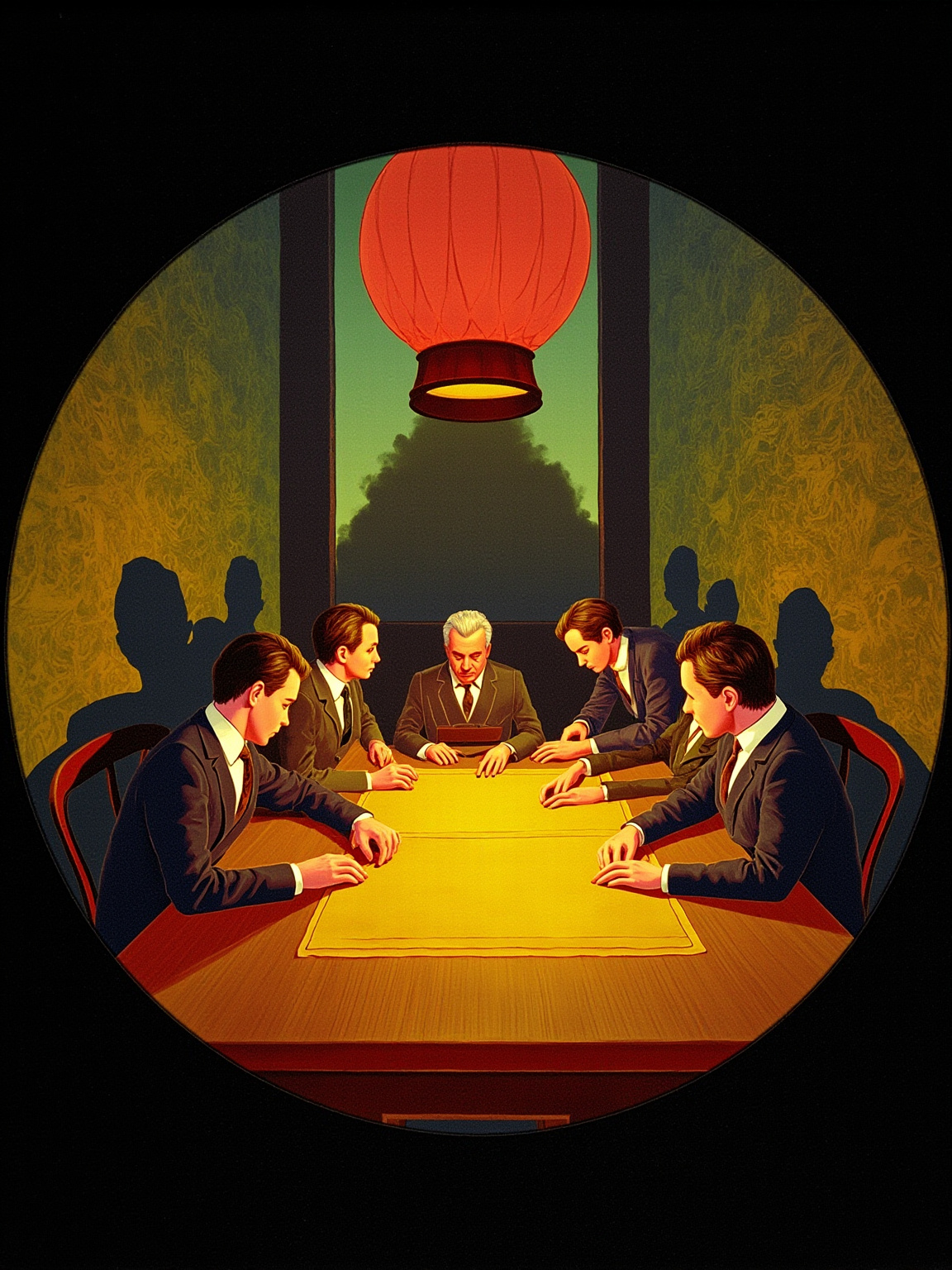
A scarlet lamp hangs almost as large as a fireplace, and seven figures sit around it. The President is built like a small mountain; the rest are a rogues' gallery — a bearded Pole, a sullen, corpulent French marquis, an old man tottering on a cane, a young man behind black glasses. One of them is called Syme, a mild-mannered young poet on the outside, and right now he is quietly terrified, because underneath, he is a policeman.
"When you've seen Sunday for a split second you'll leave off calling him clever."
等你瞥见星期日哪怕一秒钟,你就再也不会管他叫聪明人了。
原文金句 · 莱斯特广场地下会所 · 初见主席
What kind of book is this, really
Published in England in 1908, written by G.K. Chesterton. The book hangs a detective-thriller sign over the door, but what's inside is a philosophical parable wrapped in a nightmare. The subtitle, A Nightmare, is Chesterton's own warning: don't read this as a realistic cops-and-robbers story. The further in you go, the more it slides into paradoxical comedy, theological allegory, and an almost surreal absurdity. It stands as one of the twentieth century's earliest experiments in smuggling metaphysical questions inside a popular story's shell.
Characters and world: who is chasing whom
Syme, the hero, starts out as a young poet in an artists' colony on the edge of London. After a costumed poetry gathering, he is secretly recruited into a new anti-anarchist division Scotland Yard has just set up. The man who recruits him never shows his face — he speaks to Syme only in a darkened room, then vanishes without a trace.
Ranged against him is a council of anarchists named after the days of the week. The President, Sunday, is a giant on a scale beyond ordinary men; merely sitting there is enough to unsettle a room. The other six each carry the name of a day. Syme's job is to infiltrate the council, learn who they are, and let the police close the net. The trouble is that the deeper he digs, the less he can tell who is the enemy, who is a fellow officer, and who is simply playing a part.
The plot: six days hunting a shadow
It all starts with an argument about poetry at a garden party in Saffron Park. Gregory, a red-haired poet, declares that only chaos and rebellion deserve to be sung; Syme fires back on the spot — a train timetable that never runs late is more poetic than any lyric. Stung, Gregory drags Syme that same night down to an anarchist cell beneath London, determined to expose this champion of order in front of everyone.
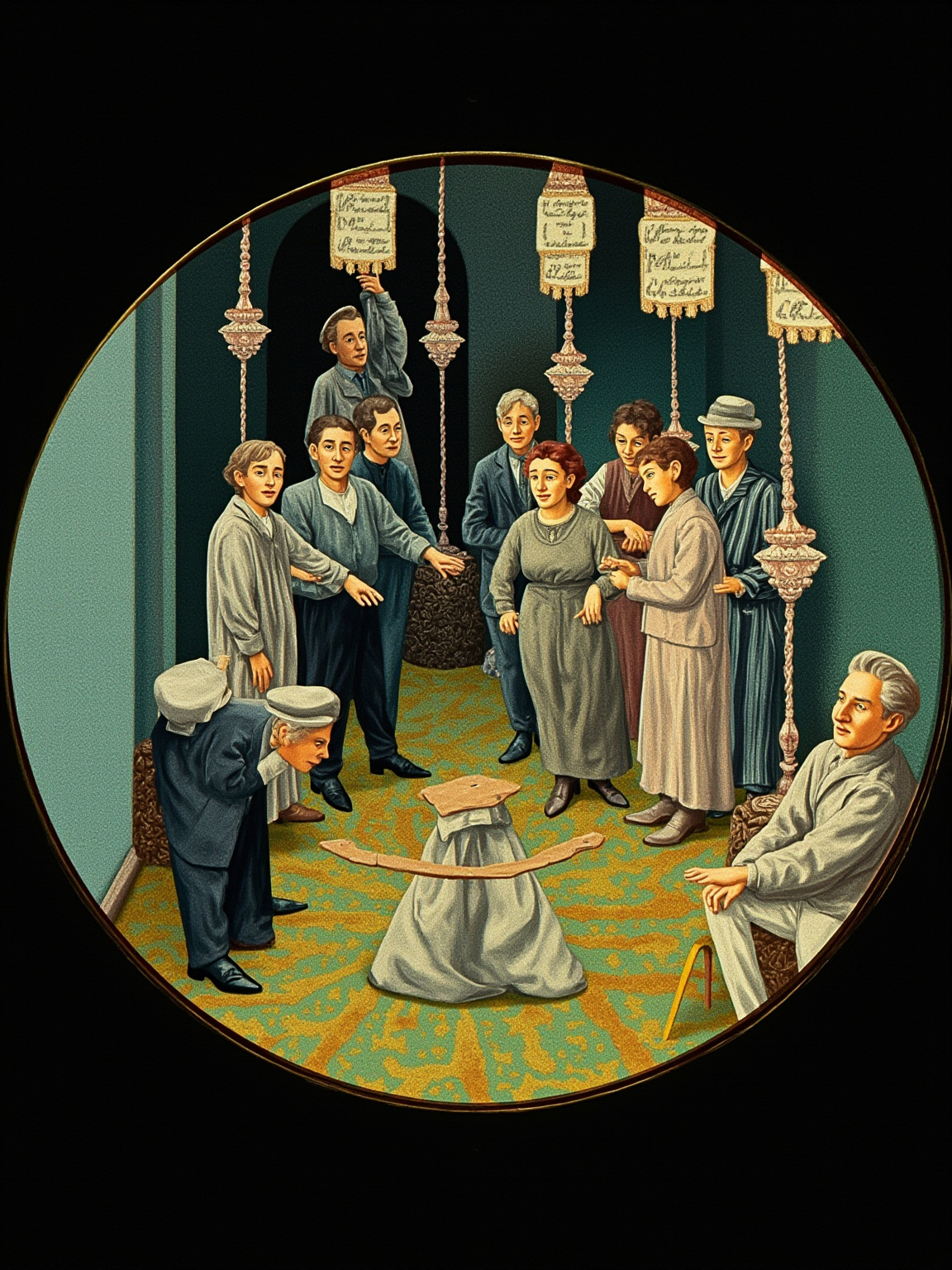
Then after a pause he said, "But may I ask if you have been standing out here in the dark only to resume our little argument?"
他顿了顿,然后问:“不过,容我插一句——您一直站在外头暗处,难道只是为了接续我们刚才那场小小的辩论?”
原文金句 · 萨弗伦公园 · 夜初辩论
Before they go down, Syme quietly tells Gregory the truth: he is a policeman. Confession made, he follows Gregory into the meeting anyway, and walks straight into the council's nomination for the new Thursday. Gregory should have won it easily, but Syme outdoes him with a more violent, more inflammatory speech delivered on the spot. The seat changes hands, Gregory is knocked out of the running, and Syme finds himself, quite by accident, holding one day of the week.
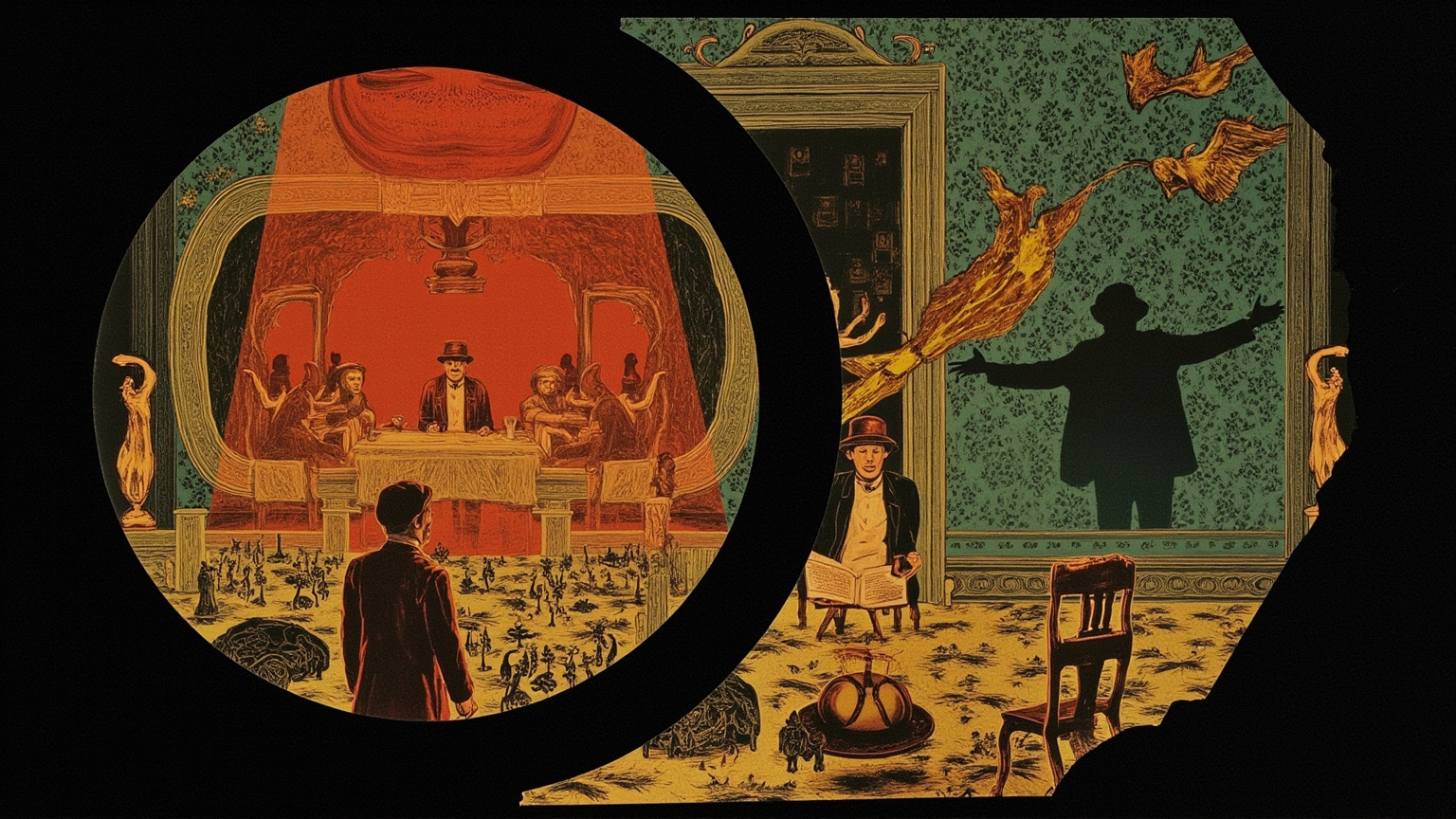
You need not fear to give me information, because, as you remember, you very wisely extorted from me a promise not to tell the police, a promise I shall certainly keep.
您不必顾虑向我透露消息,因为——您一定记得——您非常精明地逼我许下诺言,绝不告发警方;而我,一定会遵守那个承诺。
原文金句 · 前往地下支部途中 · 坦白的一刻
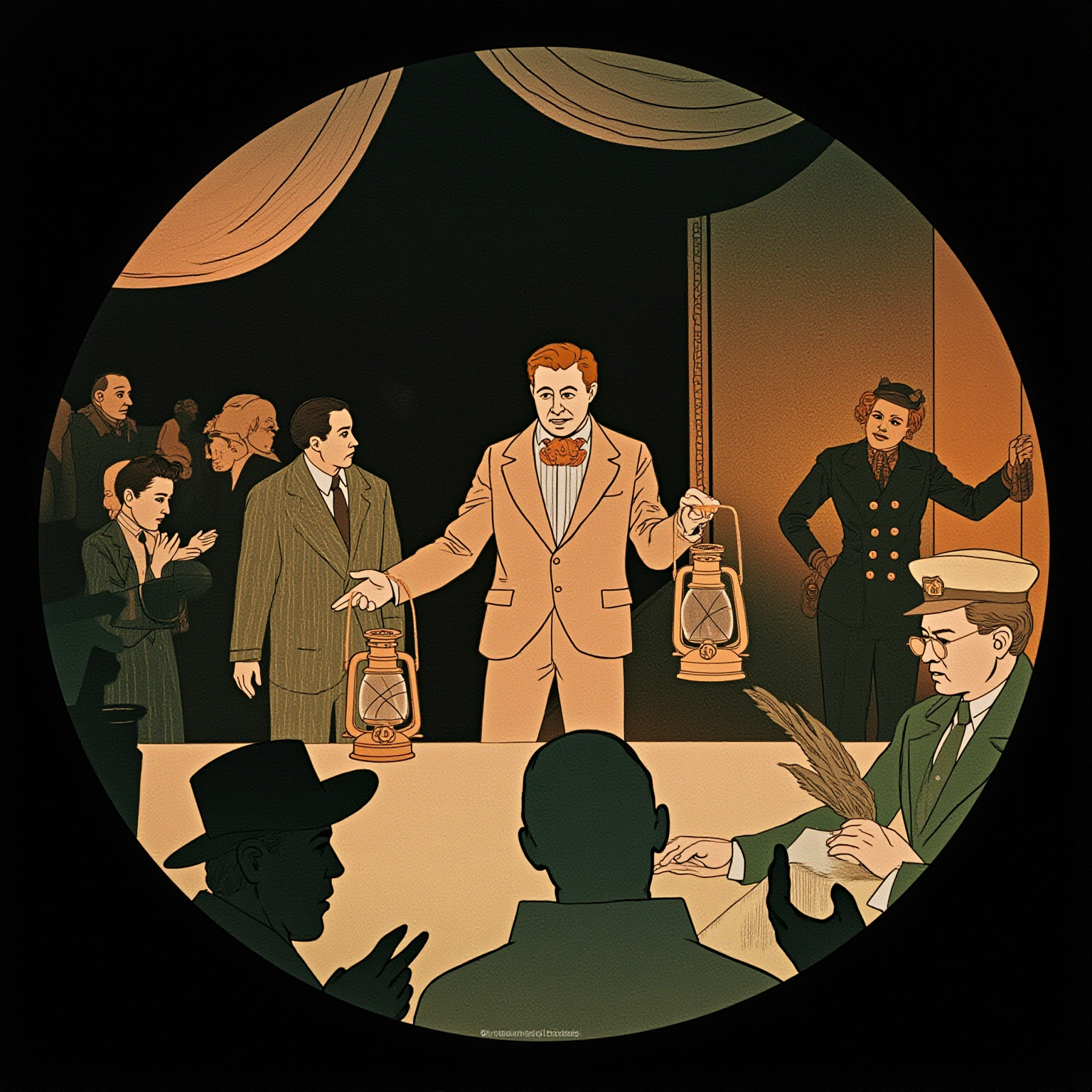
For the first time, Syme takes his seat at the central table below Leicester Square. A scarlet lamp hangs from the ceiling, nearly the size of a small fireplace. President Sunday sprawls at the far end of the table, monstrous in size and unreadable, like a statue misplaced in a committee room. The others speak in turn; Syme notes down every password and code, already plotting, in his head, how the arrests will go.
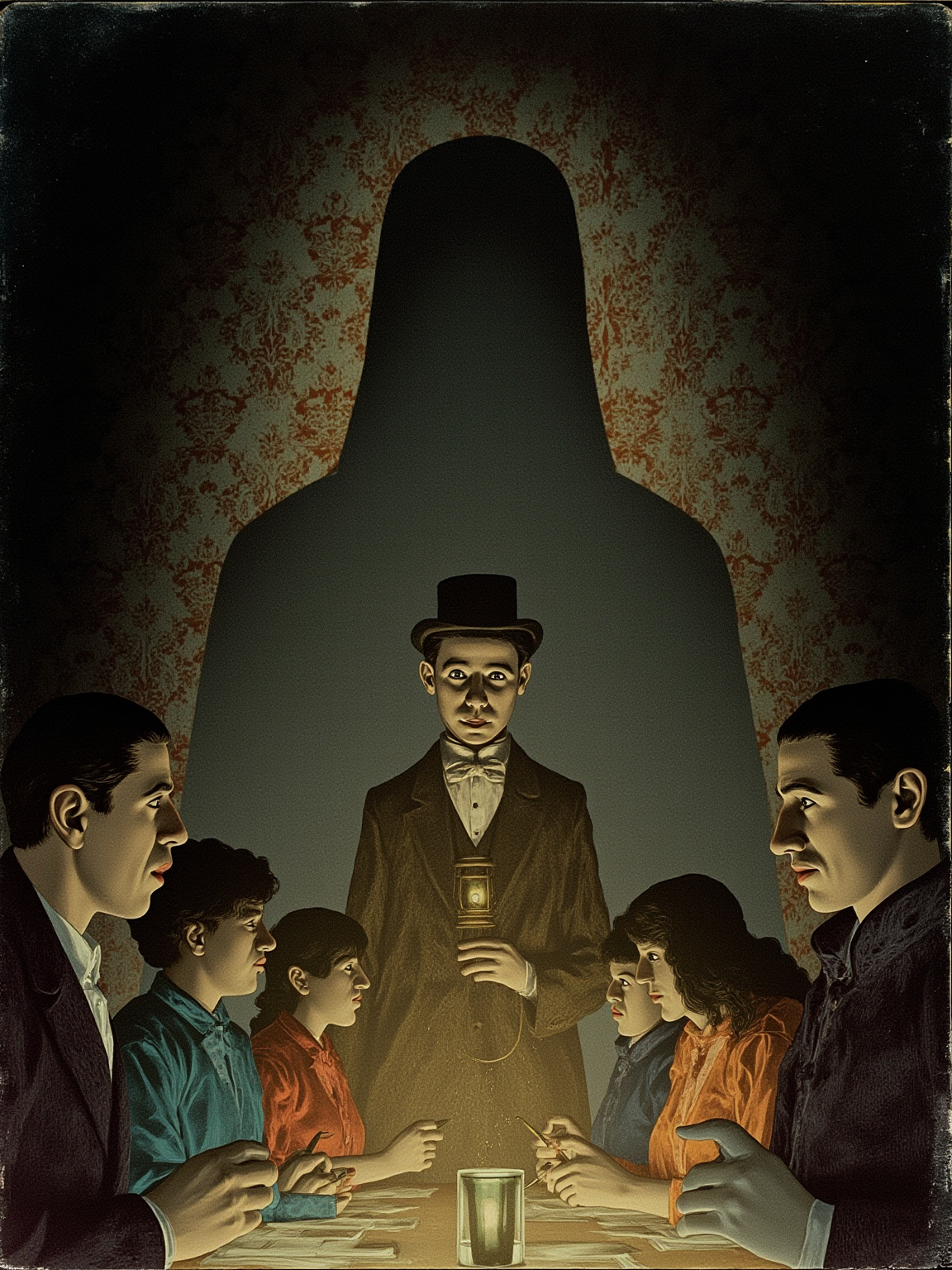
Compared to him, burglars and bigamists are essentially moral men; my heart goes out to them.
与这人相比,窃贼与重婚者都算得上是道德人了;我打心眼里同情他们。
原文金句 · 中央议会 · 桌旁的骇人度量
The chase that follows plays out like peeling an onion. One by one, the bearded man, the sullen marquis, the tottering old man, the young man in black glasses — every anarchist Syme trails turns out to carry the same dark-room recruitment sign. They are detectives too, planted by that same mysterious chief. It turns out that all six core anarchists besides the President are on the same side. Each man believed himself the only mole in the room, and each discovers, when the cards turn over, that the whole table is colleagues.
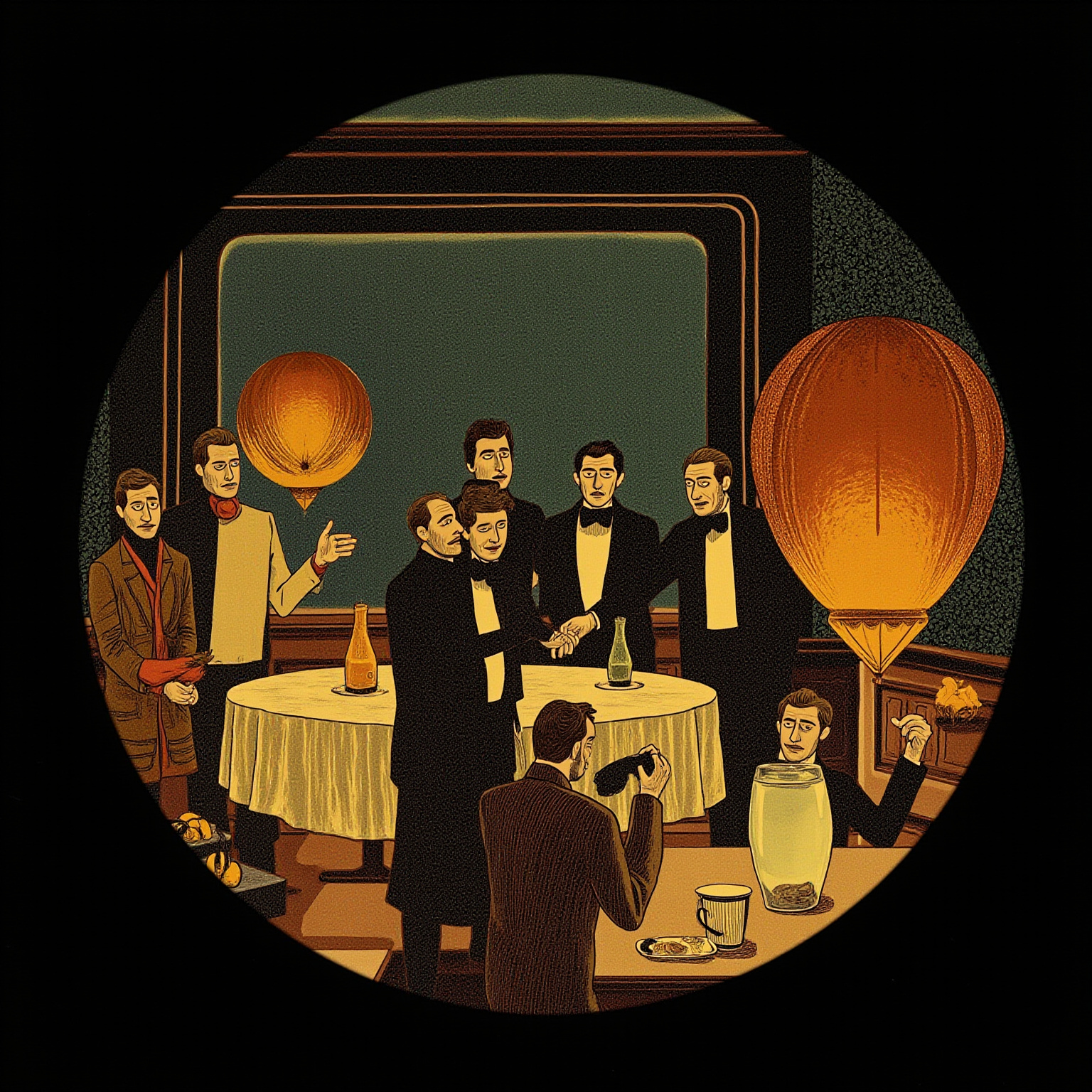
With that settled, the six real detectives turn to hunting President Sunday in earnest. The chase gets absurd enough to feel like a dream: cabs and fire engines tangle in the London streets, a borrowed circus elephant joins the pursuit, and finally a hot air balloon carries them over the English Channel and drops the whole contest into the French countryside. Between gasps, Syme keeps wondering what kind of police operation this is supposed to be.
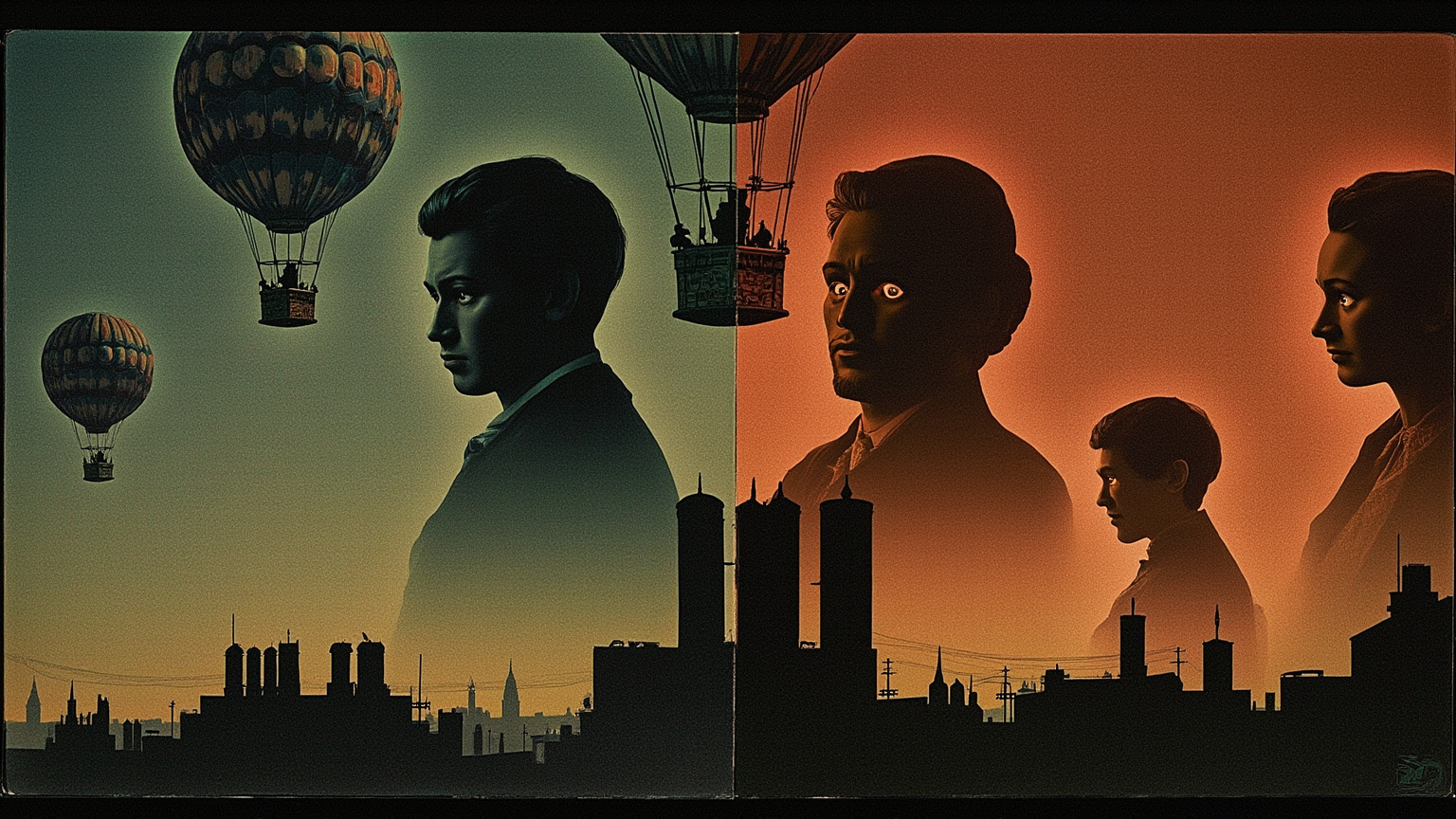
I didn't care about catching the train; I cared about whether the train caught me, and now, by God!
我才不在乎能不能赶上那趟火车;我在乎的是那趟火车会不会逮住我。而现在,老天!
原文金句 · 乡野火车追逐 · 噩梦的速度
Clue by clue, they get dragged back to England, arriving at a lavish costume procession that doubles as a garden party. Only then do they discover that Sunday is the very officer who recruited every one of them in that dark room. The six undercover detectives are asked to attend the celebration of order dressed as something close to the cosmic embodiments of the seven days of Creation.
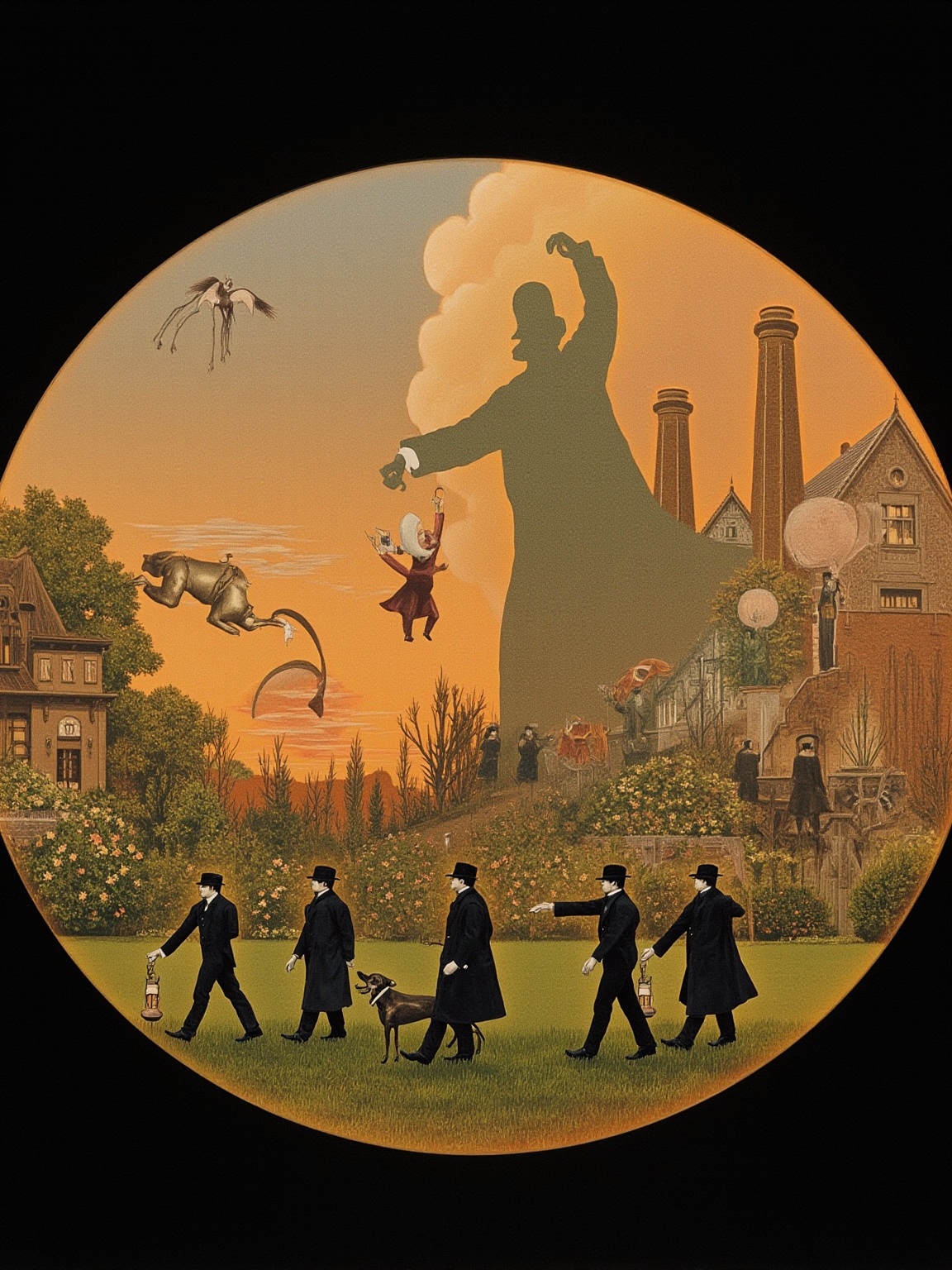
"I suppose we might find it out from him; but I confess that I should feel a bit afraid of asking Sunday who he really is."
我想我们可以直接去问他;但坦白说,一想到要开口问星期日他到底是谁,我还真有点发怵。
原文金句 · 化装游行 · 真相的边界
Gregory, who should have been finished off underground in London, turns up out of nowhere at the party and accuses this whole guard of order of never having suffered, which makes their order a game. Syme rises to answer him, delivering a thoroughly Chestertonian defense that weaves together courage, suffering, and order. The book closes in an absurdity that feels closer to theological parable than plot resolution: whether Sunday is a man, a god, or nature itself is left forever unsettled. The subtitle, A Nightmare, makes its final entrance, a reminder that closing the book is no guarantee you have woken up.
Theme and technique: why a nightmare
The finest piece of design is the chain of reversals in identity: Syme disguises himself as an anarchist, then discovers the whole council except the President is made of fellow policemen, then finally learns that the real villain he has been chasing for most of the book is the very officer who recruited him in the first place. Every unmasking turns out to be one more disguise, and it is that uncertainty about who anyone really is that drives the whole machine.
The pleasure here isn't cracking the case; it's discovering, right alongside the hero, that the author fooled you all the way to the last page, and being glad of it.
Why read the book itself
This guide gives you the map; the text itself is the ground that bites. Chesterton's pen has something almost extinct in fiction now: he can write a manhunt as a carnival, a carnival as a mass, and a mass as a joke told at the reader's expense. No summary can hand you that particular vertigo of pacing. You have to walk into the basement with the scarlet lamp yourself, and listen to six men in top hats gasping for breath while they suspect everyone around them.
Art Direction4 plates
Before the guide was written, this book got a visual foundation — every illustration you just read grew out of it.